
 Login
LoginHow Miami Celebrates the Holidays: Cuban Roast Pig
As I write this, it’s 85 degrees in Miami. Not the sort of Christmas weather I was used to when I lived in New England. Yes, everything is different here in Miami, include the barbecue. Which brings us to a dish that will be served in countless households here in South Florida. Lechon Asado—Cuban style roast pig.
Miami’s Lechon Asado – Cuban Pig Roast
The day before Christmas, Miami’s sky is filed with smoke from a thousand backyard barbecues. Not just any smoke: I’s the fragrant aroma of lechon asado, pork marinated in a garlicky adobo, wrapped in banana leaves, and slow roasted over an ember-filled pit. It’s the quintessential smell of Miami this time of year, and everywhere you turn preparations are underway for la Noche Buena, the traditional Cuban Christmas Eve feast
In South Florida, the Cuban Americans Jokingly refer to Miami as the fifteenth province of Cuba. And at Christmas, Miami’s Cuban roots are at their most visible— and most festive. Butcher shops advertise young pigs, while supermarket produce sections bulge with yucea, sour oranges, and ripe plantains. Bakeries are crowded with customers buying buñuelos(syrup-soaked fritters) and a nougat like candy called turron.
Catholics around the world honor Christmas Eve, but Latin Americans—particularly Cubans— have made it one of the most festive days (or more accurately nights) of the year. The holiday begins with a late-night feast, followed by dancing and socializing. At midnight, people attend a misa del gallo, literally a rooster mass, so called because it’s said to end around the time the first rooster crows. A Cuban Noche Buena celebration in Miami combines the belt loosening largesse of American Thanksgiving with the conviviality of a Fourth of July barbecue.
My own Initiation into the Noche Buena festivities came from a man who knows a thing or two about pig roasts, Octogenarian Efrain Veiga Sr. whom my wife and I call Papi, was a butcher in Havana and continued to work in the meat industry after immigrating to the United States in 1959. (His son, also named Elrain, opened the nation’s first Nuevo Latino restaurant, YUCA,) The family invited me to participate in a traditional Noche Buena—and help with everything from buying the pig to eating it
Picking A Pig
My alarm clock went off at 6am. After fortifying ourselves with steaming cups of café con leche Papi and I drove to Cabrera’s in Hialeah Gardens, a blue cinder block building on the outskirts of Miami. Even at this very early hour, we found a line at the rough-and-tumble slaughterhouse. We waited our turn to get our pig, a forty-nine-pound macho (male) that Papi had selected on account of its plumpness. On a normal day, Cabrera’s will process three hundred pigs: right before Christmas, they process twelve hundred in a single day! It’s customary for the whole family to come along to Cabrera’s when the pig Is selected for a Noche Buena dinner.
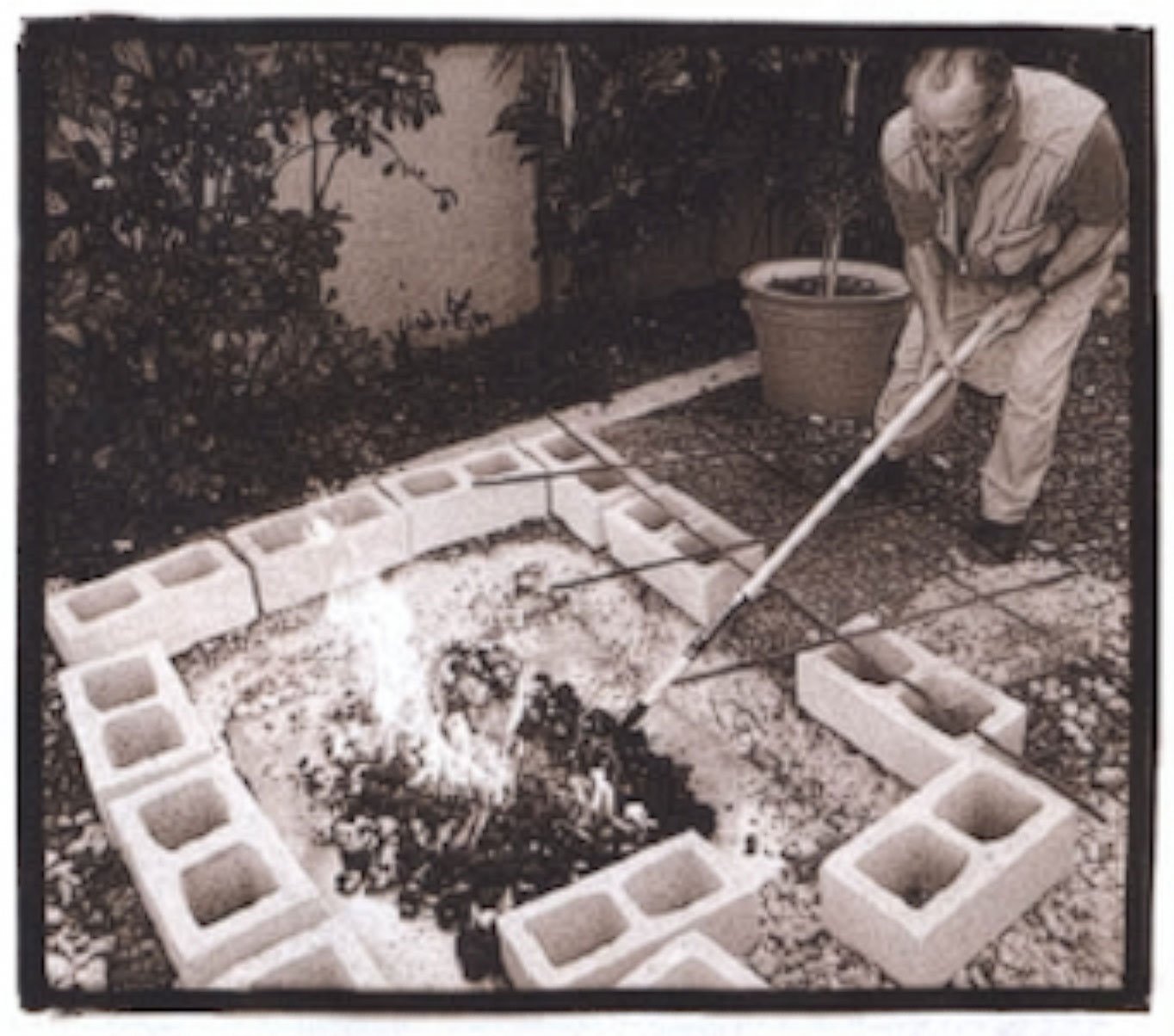
Building the pit with cinder blocks, chicken wire, and rebar.
The honor of making the choice is given to the grandfather. Thanks to our early arrival, we left forty-five minutes later with el macho safely stowed in the trunk.
Preparing The Pig
Once back home, our first task was to soak the pig in a tangy marinade called adobo. Adobo turns up throughout the Spanish speaking world, varying widely from country to country. Mexico’s adobo, for example, is a spicy paste of ancho chiles and orange juice. Cuban adobo pits the breath-wilting pungency of fresh garlic (lots of it) against the fragrance of cumin and oregano with a greenish fruit called rraranja agria (sour orange) providing a snappy acidity.
Papi supervised the digging of the pit, a rectangular hole, about one foot deep, three feet wide, and four feet long, dug at the end of the driveway. When the dimensions of the hole were just right, Papi lined the pit with a sheet of galvanized steel, then built a fire with a couple of bags of charcoal.
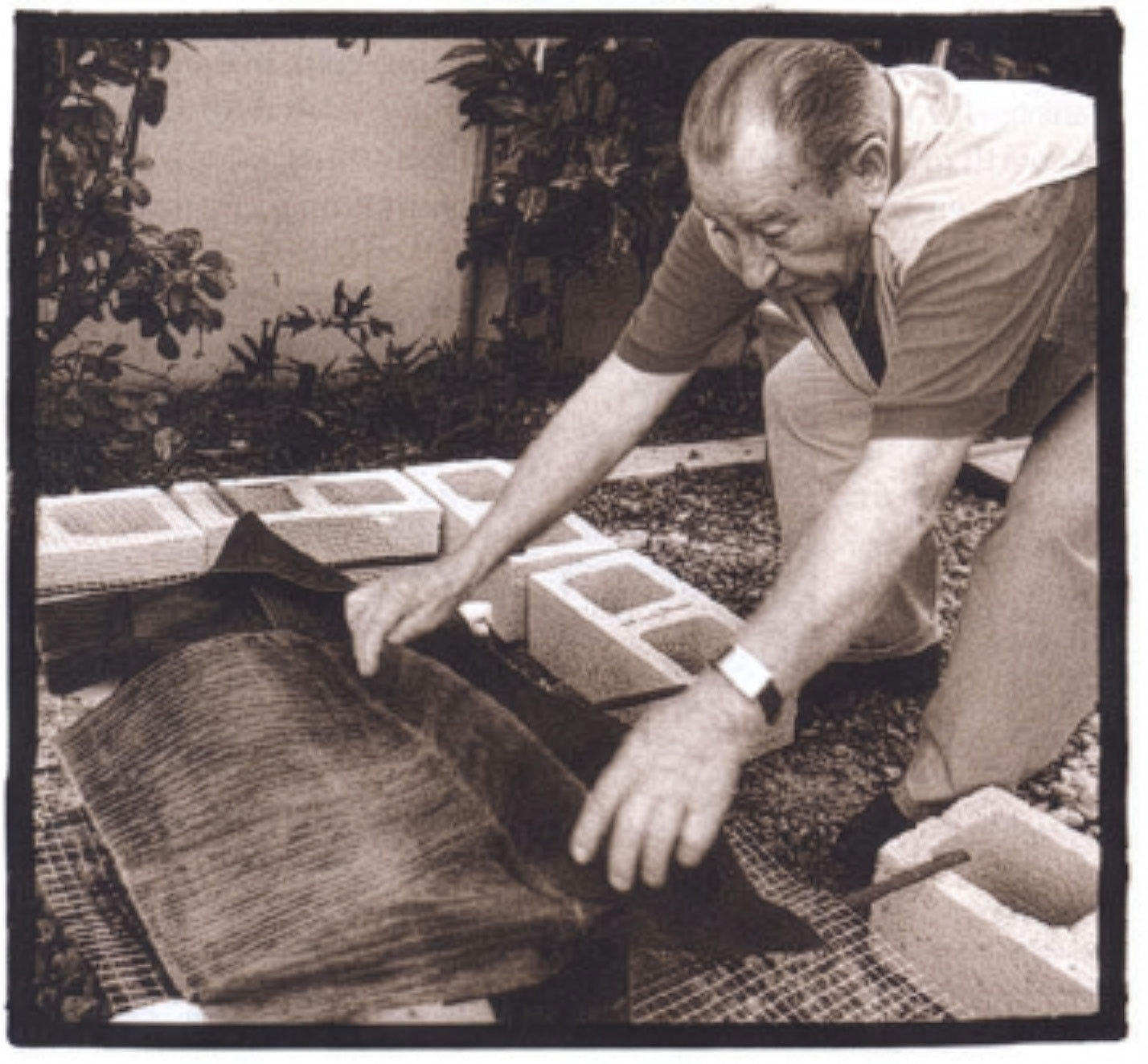
Banana leaves are placed over the pig to hold in the smoke and moisture.
As the coals blazed down to embers, Papi raked them into an area roughly the size of el macho, with extra coals at either end to cook the shoulders and hams more quickly. We placed the pig, skin side down, on a grate fashioned from rebars and chicken wire. We splashed on more adobo and covered the pig with banana leaves. The leaves will hold in the moisture and smoke while imparting a distinctive flavor, Papi explained
Meanwhile, Esther “Mami” Velga worked on the accompaniments, for no Noche Buena would be complete without a trio of classic Cuban side dishes: moros y christianos, yuca con mojo, and fried plantains. The first, literally Moors and Christians, is a Cuban staple consisting of soupy black beans ladled over white rice. Yucea is Cuban comfort food, starchy white tuber that tastes vaguely buttery but mostly bland. It’s enjoyed the way Anglos eat boiled or mashed potatoes, but instead of adding a mere pat of butter, Cubans use an explosively flavorful sauce called mojo, made with fried garlic, cumin, and sour orange juice. The same sauce will be slathered over the grilled pork. As for plantains, these jumbo cooking bananas are another mainstay of the Cuban table and Mami took great pains to procure the softest blackest, ripest plantains she could find, for these will be delectably sweet
Like all great barbecue, lechon asado requires bursts of intense activity, followed by lots of sitting around watching the pig roast. As we sipped beer, Papi recalled his last Noche Buena in Cuba. He and his friends cooked an enormous pig, which they strung between two palm trees like a hammock. They swung it back and fourth over the fire until the skin was as crisp as a potato chip, “But Castro changed all that,” Papi said and sighed.
After two hours, we tuned the pig over, its skin now brown. and crackling, We added enough fresh coals for an additional hour and a half of roasting. Our talk turned to another artifact of a Cuban Noche Buena: the caja china, or Chinese box. This is a metal crate a bit larger than a steamer trunk, which many Cubans use in place of a barbecue pit. You place the pig in the box, close it, and shovel coals on the top. The box acts like a giant oven and produces pork of extraordinary succulence. You can buy cajas chinas at hard- ware stores in Miami, But Papi and I agreed that we’d miss the live fire flavor that comes from roasting the pig over a pit.
Feliz Navidad
By nightfall, el macho was as shiny and dark as mahogany and tender enough to pull apart with your fingers, precisely what Papi invited me to do. The table sagged under the weight of lechon asado and its various accompaniments. We splashed garlicky mojo over the pork and licked our fingers. At the end, Mami brought out a shimmering flan delicately flavored with lemon and cinnamon for dessert.

Cooking a whole pig can be challenging if you’re an apartment dweller—or even if you’re an accomplished griller. Click here, you’ll find a recipe for making lechon asado with a more manageable cut, pork shoulder. Like the pig, the roast marinates in garlicky adobo, and for additional flavor you can poke holes in the meat, so it absorbs even more marinade. But if you’re ever in Miami on Christmas Eve, try to get yourself invited to a Noche Buena dinner. You won’t regret it.
Excerpted from Barbecue USA.
Lechón Asado: Frequently Asked Questions
What is lechón asado?
Why is lechón asado eaten on Christmas Eve?
What does lechón asado taste like?
How is lechón asado traditionally cooked?
Can you make lechón asado without roasting a whole pig?
Related Posts
- BarbecueBible’s Best Ever Holiday Grilling Menu
- How to Cook a Holiday Goose
- Texas Meets Tradition: Smoked-Braised Brisket
Check out our 1000+ Recipes section here on Barbecue Bible.ComAlso, sign up for our Up in Smoke newsletter so you don't miss any blogs and receive some special offers! PLUS get Raichlen's Burgers! PDF for free!
Follow Steven on Facebook, Instagram, YouTube, TikTok, Reddit, and Pinterest!
Check out our store powered by BBQGuys!
The post How Miami Celebrates the Holidays: Cuban Roast Pig appeared first on Barbecuebible.com.
