Reading view

There are new articles available, click to refresh the page.

Q&A: Sensi Brands CEO Tony Giorgi on Leadership, Culture and Global Expansion

Tony Giorgi, CEO of Canada-based Sensi Brands Inc., discusses the company’s growth and strategies in an interview with Eugenio Garcia, founder and CEO of Cannabis Now. Launched in January of 2020, Sensi Brands has achieved significant success with innovative products like multi-pack and infused pre-rolls, leading to a significant market penetration in Canada. The company operates five distribution paths, including wholesale distribution, CPG brands distribution, medical cannabis clinic, national medical cannabis marketplace, and a retail farm gate store. Despite market challenges, Sensi Brands recently acquired a state-of-the-art facility capable of producing 110,000 kilos annually, aiming for global expansion, particularly in the U.S., EU and AUS markets.

As we kick off 2026, Giorgi offers business advice to fellow entrepreneurs and delves into the Sensi Brands work culture, along with the company’s big goals for the future.
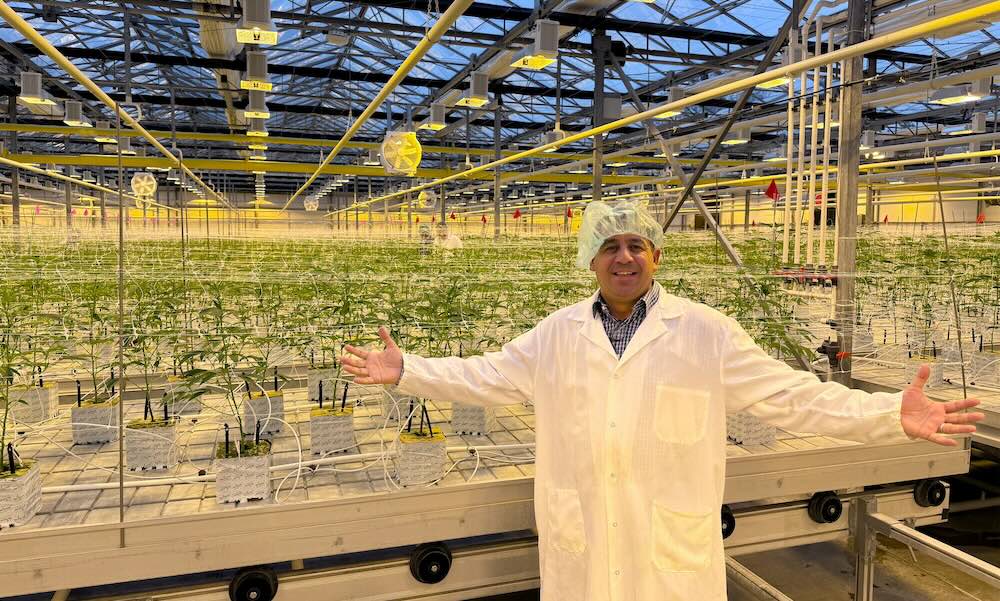
CEO Tony Giorgi oversees a newly planted crop of Sensi Brands Inc.’s latest proprietary genetics.

Eugenio Garcia: To start, tell us about your background as an entrepreneur.

Tony Giorgi: I’ve earned a bit of a reputation here in Canada for being a serial startup specialist, taking companies from ideation to full production and commercial operations. I have been part of 6 successful start-ups over the last 30 years. The first four were in technology. The largest transaction was a company called Q9 Networks, where we built highly secure and system-redundant data centers housing the computing infrastructure and data for the likes of banks and government, supporting their mission-critical data applications. That company sold to Bell Canada in 2012 for $1.2 billion.

Post that, I co-founded a digital transformation company called K2 Digital targeting the financial services vertical. I got introduced to the senior leadership team of MedReleaf. MedReleaf was one of Canada’s first medical cannabis companies…I had met them in 2015, and by 2016 the master grower had resigned his role and we started up what became the Flowr Corporation out of Kelowna, BC.

And so, the Flwr Corporation was my first foray into cannabis. We built the largest indoor facility in the country. It quickly became renowned for being one of the best-quality facilities in the country. I took the company public in September of 2018 and at that point I stepped down to go focus on building what now is today known as Sensi Brands.

EG: And what’s been your approach to building Sensi Brands?

TG: Sensi Brands started off in 2020. We took a very unique approach to the market because, if you recall, everybody that got into the cannabis industry—whether it was south of the border or whether it was in Canada—everybody took the approach of wanting to become the largest cultivator or the largest extractor. The example that we always give is that we’d be sitting here in our offices, and the next licensed producer would go on LinkedIn and say, “Woo hoo. We just got our license, and we’re launching a soccer mom brand.” And we went to look at what a soccer mom brand is, and they were underpinning it with a 22% indica strain that would put a soccer mom through the soccer parking lot. There’s a whole evolution and strategy and process to developing a brand. And unfortunately, in the cannabis industry, the entire process was completely orphaned. People were just making stuff up, and their brands were failing. There were no real brands that were gaining market share, or any type of loyalty to the brand because of the poor execution of those brands.

So we launched Station House, our first brand. We pioneered the first multi-pack pre-roll in Canada that was offered in 6, 12, 18 and 24 pack configurations. When we launched, nobody at the time was doing multi-packs. In fact, the majority of licensed producers were using undesirable product or oversupply for the purposes of putting up KPI numbers for yields, which would then inevitably be either destroyed, burnt or would be milled and used for pre-rolls.

EG: What is it that makes those pre-rolls so compelling for consumers?

TG: We took a very serious approach to pre-rolls, perfecting how to make them. None of the automation equipment, even to this day, scales appropriately to be cost-effective on making pre-rolls. We’ve tested a vast majority of the pre-roll automation technology and realized that we needed to come up with our own automation process. We believe we make the best pre-rolls today. But not only that, we use the best paper. We only use single-strain whole flower. We don’t blend lots. We don’t use trim or any other waste material. It’s all high-quality, single-strain flower that we then mill to multiple specifications so that we know that the granular mill inputs fit much tighter together, which gives us a better burn. And on top of all that, everything is quality assured and hand-finished by our employees. You’re getting the best quality burning pre-roll underpinned with the best quality cannabis input. With that strategy and launching it into a multi-pack, we very quickly became the number one multi-pack player in the country.

EG: Well, you look like a man who should be smiling, and also a man who’s been working really hard at something really special, with a crackerjack team. Before you were a serial entrepreneur, where did you get your foundation for business? Did it come naturally? Did you have a mentor? Was it schooling?

TG: Honestly, my family. I would say that my business acumen is all grassroots street smarts, negotiation. I’ve been working since I was 13 years old—got my first paper route at 10, you know, I did the whole McDonald’s and Burger King and fast food, but it was just always hustling, always negotiating.

I’m a salesman at heart. So when I started building my first company, it was really through a sales-driven lens. And then, of course, over the last 30 years, I’ve been able to really sharpen my skills in terms of business acumen and learning how to run a very effective business.

EG: Is there a secret sauce to it all?

TG: Look, we’re immigrants—we love to work. We don’t know anything different. And so we work hard, long days. At the end of the day, it’s just learning those skill sets and how to run a business over time. There are three pillars that I would highly encourage any business person across any business and industry to focus on. It all comes down to three things: Innovate. Make sure that you’ve got the best products that you’re proud to stand behind, that will be highly desired. Automate. Make sure that you automate the shit out of everything, so that you reduce your cost structures as low as you possibly can, and outshine everybody. And lastly, you execute. I’ve kind of lived by those three pillars, and that’s kind of what’s made Sensi Brands, in my opinion, one of the best standing cannabis companies in Canada today.
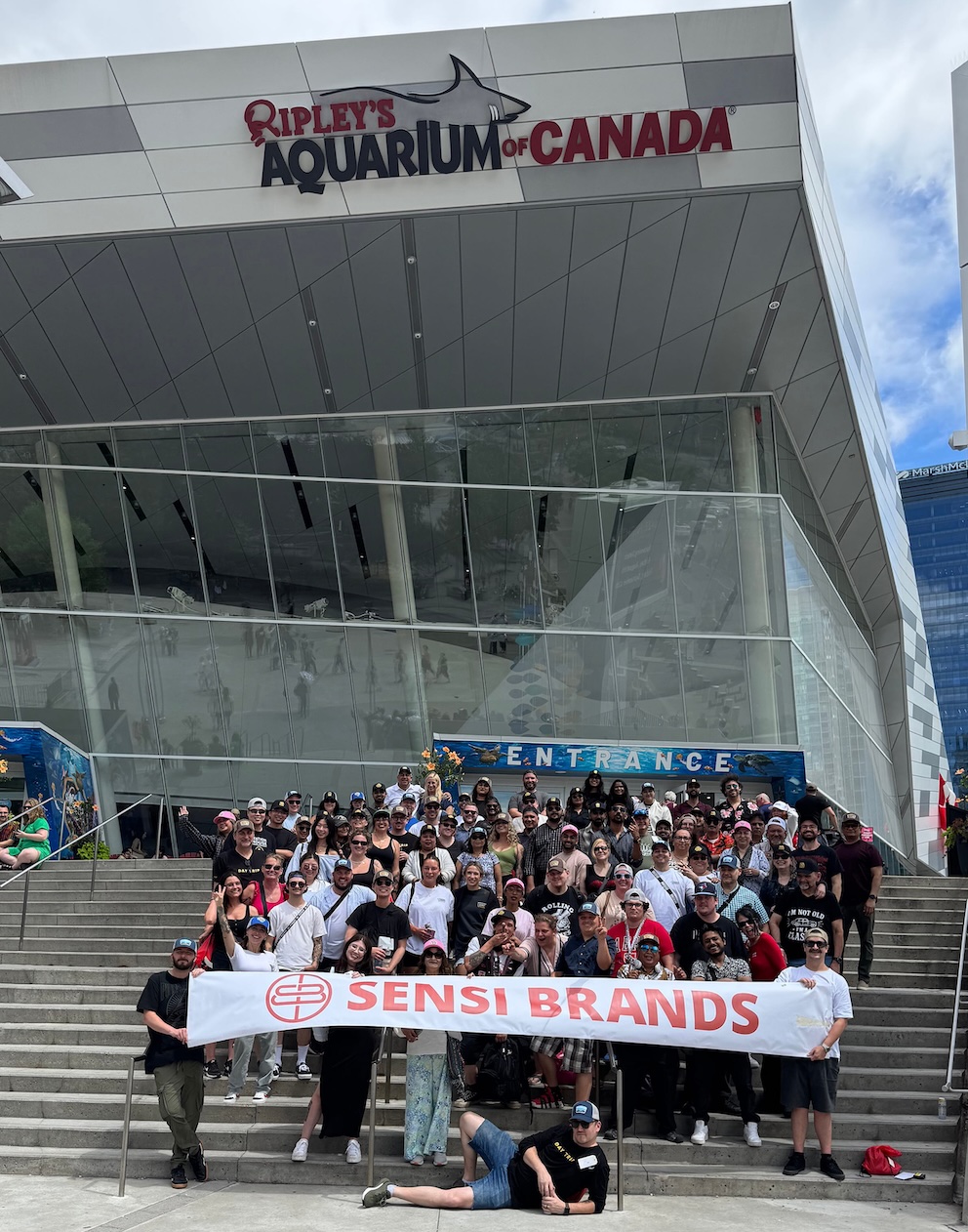
Sensi Brands team
Sensi Brands employees on a team outing.

EG: You’ve talked about the long days it takes to build a company at this scale—what kind of culture have you built at Sensi Brands, and how do you keep your team energized and invested?

TG: We’ve built an incredible culture—culture’s everything. The company is made up of family and friends. The theory was, “How cool would it be if we could build a company that attracted people that I genuinely like spending time with so that when I walk into the office every day I get a big smile on my face because I’m working with the people that I genuinely love, that genuinely make me laugh, and are playing at the top of their game in their respective discipline.”

EG: Love that. What are you smoking on there? And how important is it for you to actually understand the product that you’re producing? Because, quite frankly, a lot of people in your position, and it’s not a negative, but they don’t understand the product, and they don’t consume the product.

TG: I love the question. I’m a big, big believer that you need to eat your own dog food and experiment with your product. Years ago, I was an experimental weed smoker. When I launched the Flwr Corporation, I went all in. So I’m a certified cannabis sommelier—and have my level one and level two sommelier certification. Today, I consume daily and intimately understand the effects of our products. In fact, our entire senior leadership team is certified as cannabis sommeliers and we are all active consumers.

And to answer the first part of your question, I am religiously loyal to Amnesia Haze and Ghost Train Haze—as my favorite strains. I only smoke sativa-dominant cultivars. To me, indicas are very sedative and chilled experiences, whereas a sativa actually inspires and energizes me. I’m all in to making sure that I understand our product as well, or as better, than our competitions, which I think gives us a competitive advantage. I take pride in leading our discussions in the R&D room. Today, we proudly distribute 365+ SKUS across Canada, and I have been part of formulating every single product, from our pre-rolls and how we infuse and coat them, to all of our vape formulations, to personally leading the launch of our THC oral pouches—one of the first to market. I would not have been able to contribute to our product innovations without being a consumer and have experience with the product.”
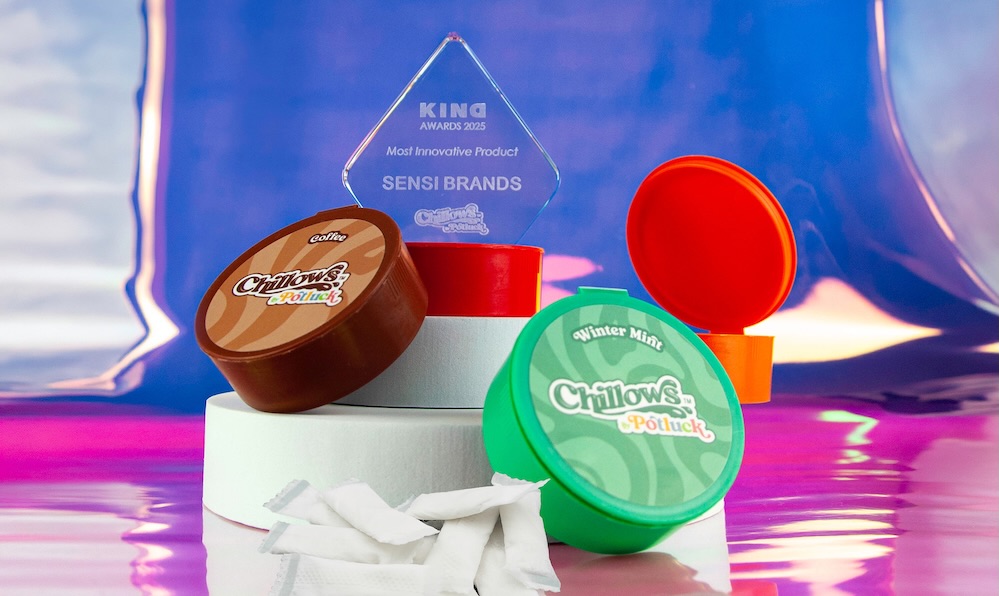
Potluck Chillows
Sensi Brands has launched the one of the world’s first oral THC pouch, a testament to their innovation and continued drive to continue pushing boundaries.

EG: I know that Canada has very serious restrictions on packaging, on advertising. How have you guys transcended that obstacle and effectively marketed your products to have the success that you’ve had in retail?

TG: I think it comes down to, again, innovating products that resonate with consumers. In terms of marketing, we are very restricted by HealthCanada Regulations, so we tend to lean on the quality of product. We’ve also done an incredible job in all of our trade marketing materials, digital promotions, as well as executing at the major trade conferences.

EG: You mentioned the massive export business you have with Australia. How big is the international potential and focus for you guys?

TG:  So, couple things: One, we have been working with a tolling partner over the past couple of years, and been distributing and selling product into Australia. Now that we have our own EU GMP (European Union Good Manufacturing Practice) license, we are now able to sell directly into international markers. We recently signed a $5 million deal today for product going into Germany. The EU markets are sizable with expansion into UK, Poland, Spain with France around the corner. The EU market is massive, and we think with the quality of our supply, we should be able to sell well into those markets.

We’re looking to enter the US market. I don’t want to say too much more on that, because I want to get further down into the process before we divulge. But we are definitely targeting the US, entering with our brands Station House and Potluck.
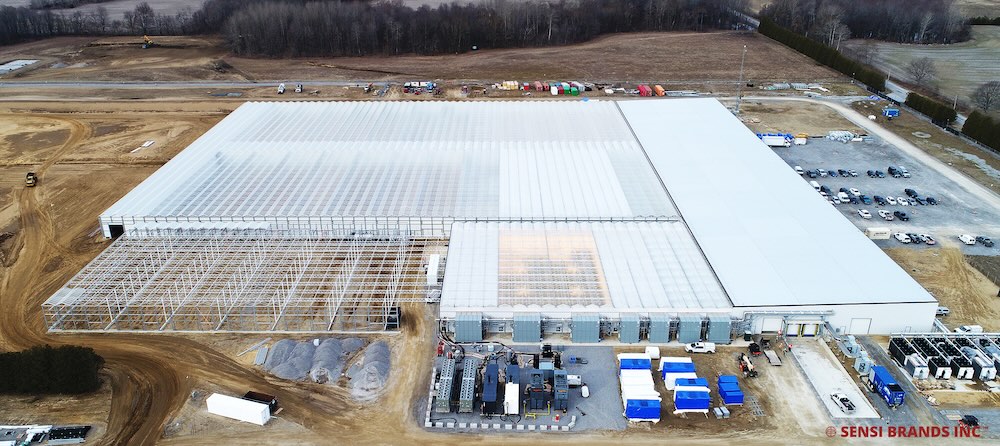
Sensi Brands cannabis facility
A bird’s-eye view of Sensi Brands’ new state-of-the-art facility.

Eugenio Garcia: In the next three to five years, where do you see Sensi Brands landing—and how do you view the broader global cannabis landscape: accelerating opportunity or continued pushback?

TG: Where we’re going to be is hard to tell. But the goal is that we’re going to be one of the last few standing. I think we built up an incredible company. Our pipeline of new products is extensive, and we’re excited for some of the new products that we’re launching. I think the walls are going to come down to the US. It looks like Mr. Trump intimated that he’s starting to remove those barriers. And I think once the US opens, it’s going to create a massive opportunity for the entire cannabis industry as whole to which I hope that Sensi Brands and our brands will participate in, so huge expectations with the US opportunity and same goes for the European markets and international markets.

At some point, I think there’s going to be a lot of consolidation. It’s already happening…We hope to be one of the companies that has a meaningful market share and recognized as a global and trusted brand of cannabis products.

Our dream and goal is to be able to walk into a German dispensary or an Australian dispensary, or a Spain dispensary and see Potluck and Station House products available for sale and being promoted in those markets in particular.

The post Q&A: Sensi Brands CEO Tony Giorgi on Leadership, Culture and Global Expansion appeared first on Cannabis Now.
Q&A: Christine Apple on Grön’s Next Chapter With Wyld

On Monday, January 5, leading cannabis edibles company Wyld announced the acquisition of Grön, a women-led brand focused on creating delicious, handcrafted, cannabis-infused edibles. The deal brings together two of the most recognized and respected names in edibles—both from Oregon—combining Grön’s premium, innovation-driven portfolio with Wyld’s extensive distribution reach across North America. According to the companies, the partnership is designed to accelerate growth while preserving what makes each brand beloved by consumers—a shared commitment to quality, creativity and authenticity.

“This acquisition is about scaling a brand that’s already winning,” stated Aaron Morris, founder and CEO of Wyld in Monday’s press release. “Grön has built exceptional products and a deeply trusted brand. Our goal is to support its continued growth by pairing Grön’s creativity and innovation with Wyld’s infrastructure, reach and operational strength—without compromising what makes Grön special.”

Grön Founder and CEO Christine Apple is equally excited about the company’s future. When deliberating on how to grow the brand so that it can carry on for generations, Apple asked herself, “What is the brand’s best opportunity for success to continue to grow and grow rapidly?” She concluded that “Wyld has the platform to be able to do that, and they’re the only company, I think, in this entire space, that can do it better than I can. And I mean that.”

Beyond Apple’s belief in the power of the Wyld brand and infrastructure to expand, Apple, perhaps more importantly, is in line with Morris’ vision. “I couldn’t imagine someone that I could trust more to carry this brand forward,” she candidly shared in a conversation with Cannabis Now’s own founder and CEO, Eugenio Garcia, on Tuesday. “We share a lot of common values, and he’s really committed to keeping the brand as it is.”

Join us as Apple takes us down memory lane, back to her Oregon kitchen when only medical cannabis was legal, and weed was far less socially acceptable. Apple shares insight on how she’s found success by staying lean, efficient, privately funded and “laser focused” as well as her unwavering passion for Grön—“her baby,” so to speak—and all that the brand represents. It’s certainly been a labor of love over the past decade, and now she’s finally ready to let Grön leave the nest and soar to new heights as the legacy carries on.  

Christine Apple is an architect-turned-chocolatier who launched Grön from her home kitchen in Oregon back in 2014.

Eugenio Garcia: To kick things off, can you share Grön’s origin story?

Christine Apple: So, I am a recovering architect. I joke about that. I graduated from architecture school at the University of Texas in ‘99 and moved up to Oregon and started working at an architecture firm, and did that for about 16 years, 14 years—something like that.

On a whim, I started making chocolate edibles in my home kitchen, just dinking around. What started as a side project kind of grew into a monster in all the best ways. I actually had a day job as an architect, and I would make chocolates at night and back then it was medical days, but [cannabis] wasn’t legal, or “adult-use.” From the social side, it was frowned upon, so I was kind of living a double life.

At some point—I think 2014 in Oregon—they passed adult-use, and I took a gamble and cashed in my stock options and left my architecture firm and bought chocolate machines and said, “I’m going to give this a go.” We’ve really not taken any outside capital until this past year, which has been probably one of the defining factors of our success, because the industry is so volatile. We’re very lean. We run a really efficient machine. And yeah, it’s been the journey of my life, that’s for sure.

EG: Wow, good for you. What is the current footprint of the brand?

CA: We are in nine states right now—Oregon, Arizona, Nevada, Ohio, Missouri, Illinois, Pennsylvania, New York, New Jersey. We’re currently in the process of relaunching Nevada and Canada. I think our penetration across the markets that we’re in is well over 75% on average; most states we’re closer to 90%. We’re the number one edible up in Canada as well. Grön is on a on a tremendous growth trajectory. The time was right to be able to leverage the distribution channels and the real platform that Wyld is able to offer to continue to grow the brand.

EG: What does the name Grön mean? Does it have any significance?

CA: It does. So I studied abroad in Scandinavia during college [for architecture], and it means “green” in Swedish. It’s simply the word “green.” The funny thing about this is, there was no business plan, there was no intent to start a business—I just started making chocolate. Then I had to come up with a name. It was an hour-long exercise coming up with things that were meaningful to me and looking at cool words. I was researching chocolate companies, and if you think of all the interesting chocolate brands, a lot of them have words that are hard to pronounce. From this side of the world, sustainability is important, and it’s green for the plant. Grön is kind of a cool word that’s a little difficult to say and the umlauts make it fun, although difficult to type.

EG: I love that. And although you’ve expanded from chocolates, Grön soley offers edibles, right?

CA: Yes, we’ve stayed laser focused. And I think again, that’s another real strong point to the company and our success and profitability—staying really laser focused and building the brand. I can look back on it now and say it takes a long time to mature a brand to a place where it’s really a brand—a brand isn’t a brand if you don’t recognize it and people aren’t following it and really understanding it and believing in it, and it takes years to generate that kind of trust.

EG: Moving into Grön’s next chapter, how did you and Wyld’s CEO Aaron Morris come to meet?

CA: So both Grön and Wyld grew up during the Oregon medical days, so my founder’s story is not very different from his. It was the same timeline. He and I have lived in Portland for the entire duration of these companies’ existence, and we had never met in person until about six months ago. Seth Yakatan, a dear friend, actually introduced Aaron and Draper Bender, president of Grön. They went for coffee, and Draper came back to me and said, “I have an idea. What do you think about this?” I said, “No way. You’re out of your mind.” And then I slept on it. And, you know, the reality is, both these companies—everyone in this industry—is trying to figure out what to do next.

For years, we’ve been expanding into new markets, and that’s a great strategy until you run out of new markets to open, and then you’ve got to figure out how to grow. And this industry is just really stifled by the federal legislation. Wyld has gone to all the states, and they dominate in all the states, but they need to figure out how to continue to grow, too. We have conquered all of the new states, but we kind of passed over those older legacy states that are more saturated like California, Colorado, Washington and Michigan. It’s time for us to figure out how to enter those markets. The reality is: Wyld is the largest player in all those markets.

There are so many similarities with what these companies are it just, it really makes sense with the synergies between the two companies, both being Oregon-based, and we share a lot of common values, and he’s really committed to keeping the brand as it is. I couldn’t think of someone that could be better positioned to carry it forward.

EG: It’s January 2026 and we have the pending completion of Trump’s executive order to reschedule cannabis that he announced at the end of last year. How has that announcement changed your 2026 plans or affected your business?

CA: It hasn’t affected us at all to be honest, you know, we’re a private company. There’s been news and talk for years and years and we kind of just blur out the noise and keep moving forward. For us right now, it’s strictly business as usual, delivering excellence and bringing products to the people who want them. That’s what we do.

EG: With Grön, we’ll go back to your slogan, “the best-tasting edible on the planet.” Where does that come from? Is it in the ingredients? Is it the process? How do you live up to that?

CA: Well, from the very beginning, when I started making chocolate at home, one of the reasons that the product took off was because it actually tasted good. And edibles are traditionally not very good. They taste like weed. And you’ll never make something taste better by adding cannabis to it. It’s my opinion, and there may be some people that disagree with that, but I think the majority of people agree.

There are three pillars to any product success: It has to taste good, look good and feel good. And you have to hit all three pillars. Every product that we make, that we put on market, has to. So, we’ve spent a lot of time with flavor and terpene profiles and adding different levels of acidity, which counters the cannabis flavor. It’s been a really fun journey.

Gron THC Pearls
The Grön umbrella offers four product lines, including Pearls, Megas, Pips and Chocolate.

EG: A lot of conversations I’ve had in 2025 with industry leaders have been surrounding this big question of “How do we survive? How do we thrive?” It’s been a bit of a challenging four years for a lot of companies and leaders, and one of the answers to that was, “It’s time to team up.” It’s time to create alliances and think of business more in that vein rather than people playing in their own silo. And so, with your decision to team up with Wyld, what were some of the biggest decision-making factors behind that?

CA: Everything that I’ve done with this brand from the time it started has been intentional, and it’s to put the brand first so that it can carry on for generations. I look at where it’s at now, and I said, “What is the brand’s best opportunity for success to continue to grow and grow rapidly?” Wyld has the platform to be able to do that, and they’re the only company, I think, in this entire space, that can do it better than I can. And I mean that. I believe Aaron can do this better than I can, and he will accelerate the brand’s growth.

I am Grön’s biggest fan, and I will be her cheerleader until I die, and I want to see this brand carry on as a legacy brand in this cannabis space. This industry is still really young, and there’s a lot of volatility, and most brands won’t make it. You saw it with the tech world. Who’s left? Google? I want Grön to be a lasting brand. And selfishly, that is what’s critically important to me: setting her up for long term success. And I believe that this does that. So I’m really pleased that we were able to pull this together.

Remarkably Grön and Wyld, don’t eat each other’s market share on shelves. When we go to markets together, we actually grow the category, so we’re bringing consumers in. We see it in all the all the markets that we’re in, it’s remarkable. Combined, the two companies are close to 30% of the market.

EG: You’ve spoken of Grön as a “she,” giving her an identity. How did you come up with that?

CA: Well, probably because I reflect a lot of birthing and raising this company as if I’m raising a child. This has been 11 years of my life—fully committing this brand to a point where it can stand on its own and has the stability and an identity of her own. And, she is female. She’s fun, and, I mean the brand has a has a personality. It helps us connect with consumers. There’s not a lot of females in this industry, and Grön is one of ‘em.

EG: What’s one of the most important things in creating a brand identity and differentiating yourself?

CA: What’s so important is finding something that is relatable to people. People follow brands that they love and trust. It’s a commitment to clean, honest, transparent communication, and that comes through your marketing and the relationships you have with consumers and retailers. I think part of our reputation in the industry has come from that—making sure that we’re being honest, that we’re delivering excellence every single time, that we take care of people and that we take care of our products and that we’re being good stewards of the planet. All of those things come through, and people like it. People want to buy things they like and believe in.

The post Q&A: Christine Apple on Grön’s Next Chapter With Wyld appeared first on Cannabis Now.

From Buds to Seeds: The Evolution of a Cannabis Pioneer

In an industry where many come and go, some names become synonymous with integrity and staying powerful. Aaron Justis is one of them. For over 15 years, he’s been at the helm of Buds & Roses, a Los Angeles dispensary renowned for its unwavering commitment to quality and community. As a pioneer in “veganic” cultivation and a tireless advocate for industry reform, he has faced down a host of challenges, from the persistent illegal market to the complexities of legalization.

But for a true entrepreneur, the journey never stops. Now, Justis is branching out with a new venture, Seeds and Clones, taking his decades of experience and passion for genetics to a global audience.

In this exclusive interview, Cannabis Now CEO and Founder Eugenio Garcia and the veteran operator discuss the highs and lows of his career, the motivation behind his latest business and his vision for the future of cannabis.

Aaron Justis, cannabis pioneer and founder of Buds & Roses

Cannabis Now: Aaron, thank you for joining me today. When did you get started in the cannabis industry?

Aaron Justis: I’ve been involved with cannabis since I was a teenager. In 1998, I had a hemp clothing company and actually won a High Times Cannabis Cup award in Amsterdam for it. I purchased Buds and Roses in 2010. It wasn’t a well-known dispensary, but it had been registered in 2007, so it had a license and the potential to become a licensed dispensary. After many years of work, maybe six or seven years later, we got a license in the legal California market.

CN: Were you one of the first licensed dispensaries in Southern California?

AJ: Yes, we were.

CN: Give me and the readers a little bit of a recap. What have been the highs and lows of the last 15 years of running Buds & Roses?

AJ: The beginning was really exciting. My cultivation team and I pioneered “veganics,” a vegan organic cannabis, and won several awards, including “Best in the United States” and “Best Flower Overall.” We received a lot of media attention, and I was deeply involved in advocacy with groups like the National Cannabis Industry Association and the Greater Los Angeles Collectives Alliance.

At the same time, the journey has also had its challenges. The last six or seven years have been a difficult time to operate in the industry.

Even with legalization, we’ve had to compete against thousands of illegal operations that still thrive due to a lack of enforcement. Legalization brought new complexities and tremendously high taxes and regulatory costs, making the last several years particularly difficult. Despite these challenges, Buds & Roses is still here, and customers are still happy.

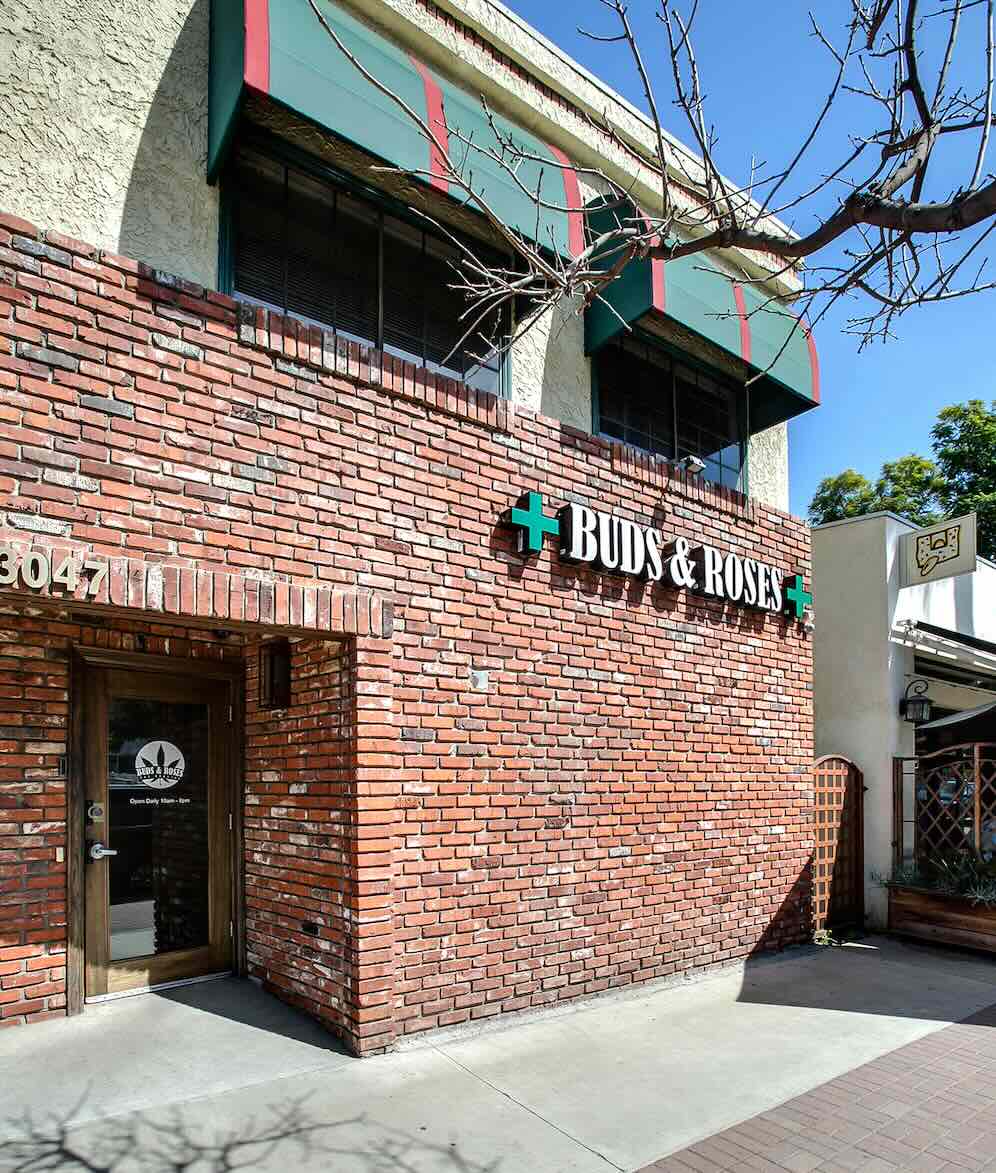
Buds & Roses cannabis dispensary

CN: What do you think has been a differentiator or a highlight that has kept your customer base committed to you?    

AJ: It sounds simple, but it’s all about quality products. Our customers are happy because we select products based on their quality, ensuring they get the best product for their price point. Unlike many retailers who focus on what’s popular or heavily marketed, we have a strict rule, especially with flower. My team and I—many of whom have been with me for over a decade—personally vet everything. The product has to be just right for the price. We’ve often pushed back against brands, telling them we can’t carry their entire line because it’s rare for companies to have more than one or two truly great strains. We’re a boutique in that way, bringing only the best to our customers.

CN: How do you build trust with your community, from long-time enthusiasts to first-time customers?

AJ: Our staff has always been a key part of our reputation. They’re knowledgeable, respectful and committed to educating our customers. I was lucky to have great mentors like Steve D’Angelo at Harborside and Eric Pearson at Spark who taught me how to build a well-respected, quality dispensary.

This approach has allowed us to become a positive force in our community. We have discerning customers who are true connoisseurs, but we also have plenty of elderly people—some in their 80s, and 90s—who shop with us because they feel comfortable and safe. We’re in a great location in an upscale neighborhood, and about a year and a half ago, we were honored with a hand-painted certificate of recognition from the City of Los Angeles. It thanked us for being a community staple and for helping to shape the culture in Studio City. That was a true honor.

CN: Wow. Good job on that. It takes a lot of hard work to be recognized in that capacity. If you look back at your history, you’ve received lots of awards and recognitions. You’ve shaken hands with politicians and celebrities and done collaborations. So, coming from that background and having a very good, established reputation in the industry and your community, what was the motivation to branch out and start this new venture, Seeds and Clones?

AJ: We’ve always sold seeds and clones at our dispensary, at least for the last 12 or 13 years. We also have a nursery license where we make our own clones and seeds. We’ve sold plenty of other operators—the best known in the industry in California—and have resold their seeds and even some of their clones. We took all clones in-house about five years ago because there were issues. A lot of those operators were in Northern California and there were issues with transport. So, we stopped reselling theirs at the store and just do our own in-house genetics. Going online was just a way to scale what we’ve already been doing and bring that to people outside of our area. It’s a natural evolution of things.

CN: Had you been sitting on the name “Seeds and Clones” for a while, or did you get lucky one night?

AJ: It’s a crazy story. One day I was meditating and the name “seeds and clones” popped into my head. It’s similar to “Buds & Roses,” so I thought it would be a great name. I wanted to get the website and someone else had owned it. It was available for rent for $8,000 a year, or for lease for about $700 a month. I still have this text message, I believe. I sent it to my graphic designer and said, “I want to get this, but it’s probably not worth leasing it. They could shut it down at any time after we build it up.” The next day, he messaged me and said, “I got the website.” And I said, “What do you mean? I didn’t say I wanted it. It’s $700 a month.” He said, “No, it’s $700.” He sent it to me. I don’t know what happened overnight, because I sent him a screenshot that said specifically “$700 a month.” The next day, he bought it for $700, and we got the site.

CN: That’s amazing. The universe was waiting for its rightful shepherd.

AJ: Exactly. It sure was.

CN: And from that time to launch, when did you formally launch the website?

AJ: About two years ago.

CN: So it’s been a couple of years, and now I bumped into you at Spannabis in Barcelona. This isn’t just a California play or a US play, but this website could be global. Have you intentionally set it as an international platform, or is this mainly for the US and North America?

AJ: It’s definitely international. With all these emerging markets around the world, I’m getting out there to figure out what’s legal, where it’s legal and building relationships. That is a key part of it—laying the groundwork and exploring different opportunities. I’m used to state-by-state regulations in the legal industry. With Seeds and Clones, we’ve been able to go nationwide, but now it’s back to a country-by-country opportunity. There are some countries where you can ship seeds within them and then there are some that are completely standalone. I’m just trying to figure out what’s happening in those different markets and setting up the foundation to be able to scale this on a global level.

CN: Since it’s been two years since launch, are the genetics that are being sold on the platform only genetics that you control or own? Or is it more of a marketplace?

AJ: It goes beyond what we control or own, just like with the store. You will find Buds & Roses seeds there; you will find clones branded Buds & Roses. But we are working with all the same leaders that we’ve been selling at the store for many years, like Humboldt Seed Company, Compound Genetics and Origin Seed Co. We are also expanding to operators who used to be in the market but didn’t make it to legalization, such as The Cali Connection and James Loud Genetics. So, we are reselling all the best genetics companies on our site. We plan on adding five to ten times more brands in the next few years. I am focused on companies that have a good reputation, where I know the owners and the breeders—people we can trust. I’m knocking those out one by one while still running my dispensary full-time and our operations there. It’s a place where you can find many different brands. I believe we have well over 20 different brands right now and over 1200 varieties available.

CN: Wow. Is it only available for business-to-consumer purchasing online and in your retail store? Do you also offer B2B seeds and clones, or is that a different game?

AJ: There are a lot of business operations that order from us, but there are also mom-and-pop cultivators. We are just bringing these genetics to whoever needs them. We do have options for people to buy trays of clones or 100-plus clones. A lot of these businesses only need one or two clones to get those genetics and then they’ll make a mother and make their own clones from it.

CN: And with Seeds and Clones, the end goal is home growing, either for a community, a household or an individual. Is there a greater demand for seeds on this platform or for clones? Or is it split down the middle?

AJ: Seeds are always in higher demand than clones. I think people are a little intimidated by clones and they’re not quite sure about that process. So seeds are the majority of our sales.

CN: I understand putting seeds in an envelope or box and shipping them. But clones seem like a more delicate scenario. How have you figured out how to ship those?

AJ: We have our system dialed in to where we have a 99% success rate with our clone shipping. We guarantee all our clones to arrive healthy and pest-free.

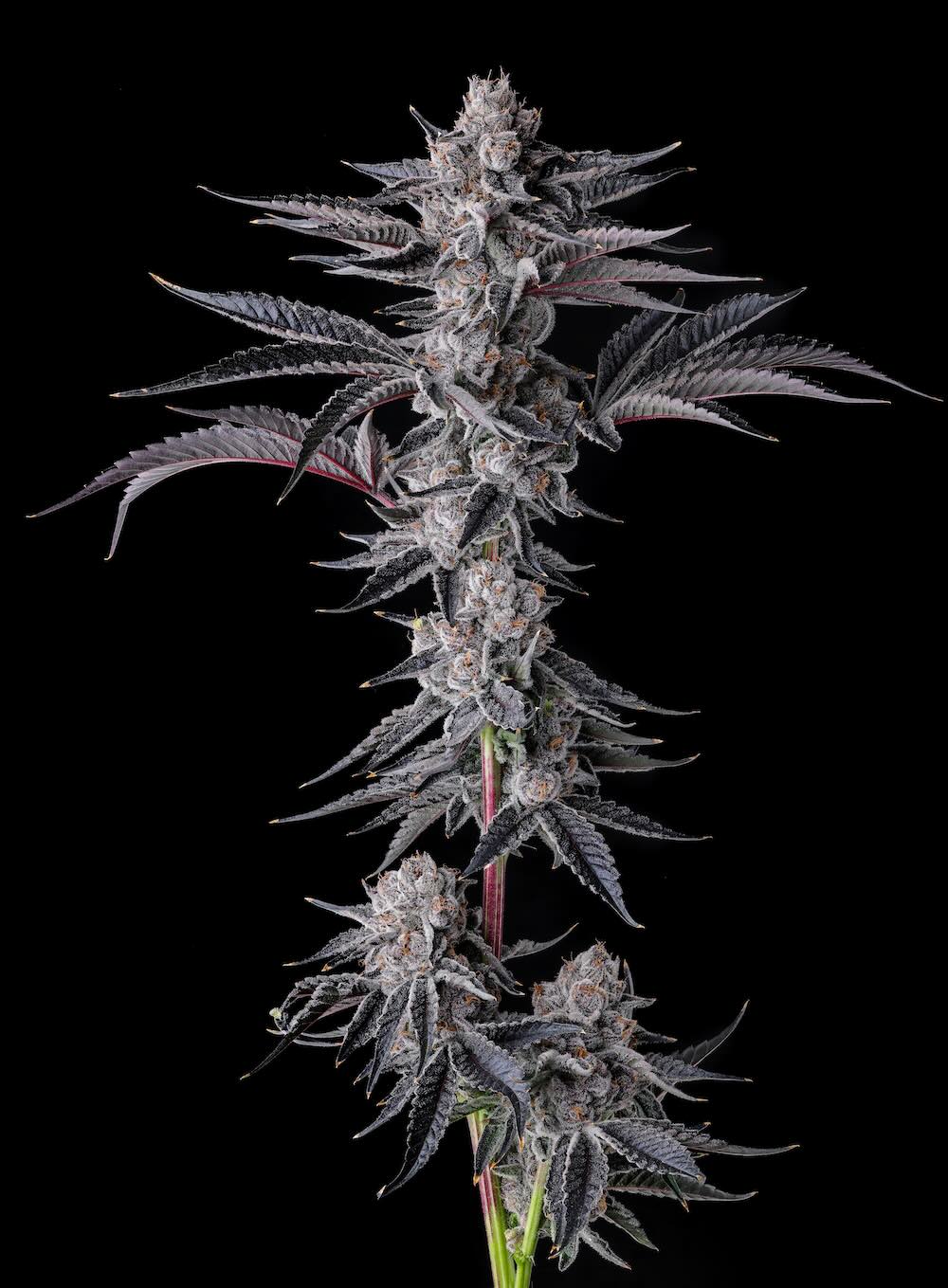
New Money strain
New Money strain

CN: Amazing. Give me two or three genetics that you are super proud of, or that are special and why.

AJ: Our Strawberry Cough clone is probably the most special, although it has had some issues. It hasn’t been available for a little bit, but it’s about to be available again. We’ve won multiple High Times Cannabis Cups with it. It’s just an amazing strain that is always in high demand. It’s a great Sativa. It’s not the easiest strain to grow, but the end result is a great Sativa with a lot of medicinal properties. It has a wonderful high and it smells, looks and tastes good. So that’s very popular.

Also, our Platinum Cookies, which is a Girl Scout Cookie phenotype. It could be the original Girl Scout Cookies; we obtained it back in 2011 in Oakland. We’ve won at least three High Times Cannabis Cups with it, and it just has amazing flavor and taste. The effects are great. It looks amazing.

We also have a seed line, Origin Seed Co., that is very affordable for the average grower. They are classic, foundational strains for a good price. They are what we say they are and customers have been very happy with that seed brand for the strains available, the affordability, the germination rate and the finished product.

CN: Those sound like some exciting genetics. I can’t wait to see some of them in action. Do you offer customization? For example, a brand might come to you and say, “We would like this type of experience and or flavors.” Will you pheno-hunt and create genetics, or do you source them from artists and then make them available?

AJ: We do have some international opportunities in the works for that. We have a very long-standing seed company from Amsterdam looking to create all-new genetics here in the United States, using their genetics with ours.

We do pheno-hunting in-house. We are a retailer, and we resell other people’s products. We’ve acquired some amazing genetics over the years for the clones that we sell and we always give a shout-out to the source or the breeder. We’ve completed our third run for Buds & Roses seeds, where we’re finding a male and we’re selecting that through a rigorous process. Then we’re crossing it with about 20 of our best-selling clone varieties. We don’t actually name the strains; we just say what the cross is.

A lot of people have been very happy with pheno-hunting those seeds and coming out with real winners because we are crossing some of the best-selling strains, from Strawberry Cough to Platinum Cookies to AJ Sour Diesel and classics like Gelato 33 or Legend OG.

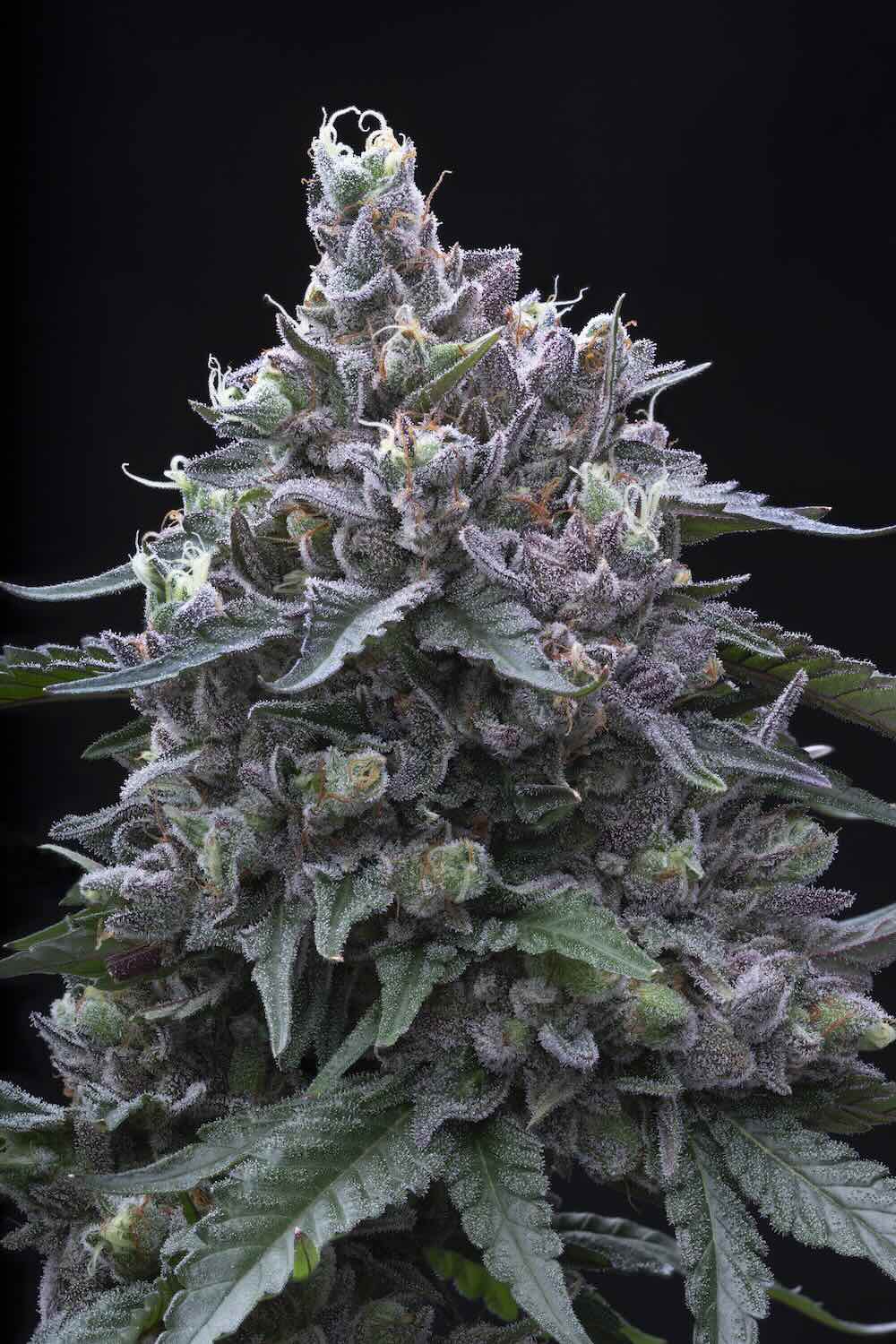
GG4 x Gelato cannabis strain from Bus & Roses
GG4 x Gelato

We also have a Mother Pucker strain, which we haven’t made available as a cutting yet. We pheno-hunted that from seeds from The Real Cannaado and came out with this amazing genetic.

CN: Mother Pucker, that sounds like a doozy.

AJ: It has an amazing flavor. It always has the strongest terpene profile of anything we have. It’s citrusy, but it’s also gassy and the high is amazing. It’s about a 50/50 hybrid. So that’s something that cultivators really like. We’ve had a lot of success with the Buds & Roses seeds. Again, we breed those using our best-selling genetics.

CN: Well, thank you very much for this first look at your new endeavor and a little look back at your past. My final question is, What’s your vision for yourself and this brand for the next year? Are you optimistic about the cannabis space in general?

AJ: With Buds & Roses, we’re doing our best to keep bringing the customer the best quality products we can, to give them the customer service they expect, and to stay true to the plant as we always have. For Seeds and Clones, the plan for the next year is to continue adding brands and to expand into other countries and markets by forming strong partnerships with reliable sources and operators. For myself, I’m focused on the international scene, by speaking at international conferences and seeing where I can best assist.

This story was originally published in issue 52 of the print edition of Cannabis Now.

The post From Buds to Seeds: The Evolution of a Cannabis Pioneer appeared first on Cannabis Now.

❌