Ethiopia has confirmed the acquisition of Russian-made Orion-E reconnaissance and strike unmanned aerial vehicles, marking the first verified export of the Orion drone system, according to aircraft displayed at Aviation Expo 2026. A Russian Orion-E unmanned aerial vehicle was shown in the Ethiopian Air Force exhibition area during the event, confirming that Addis Ababa has […]
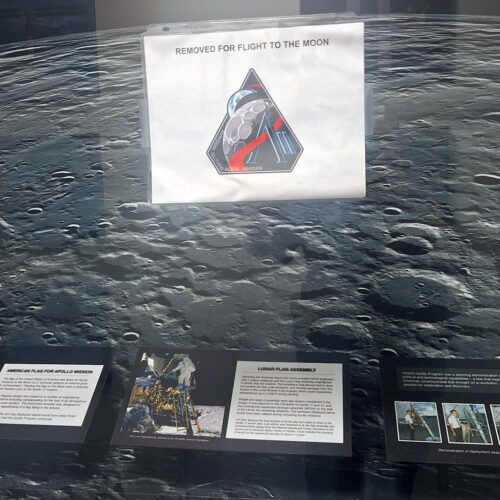
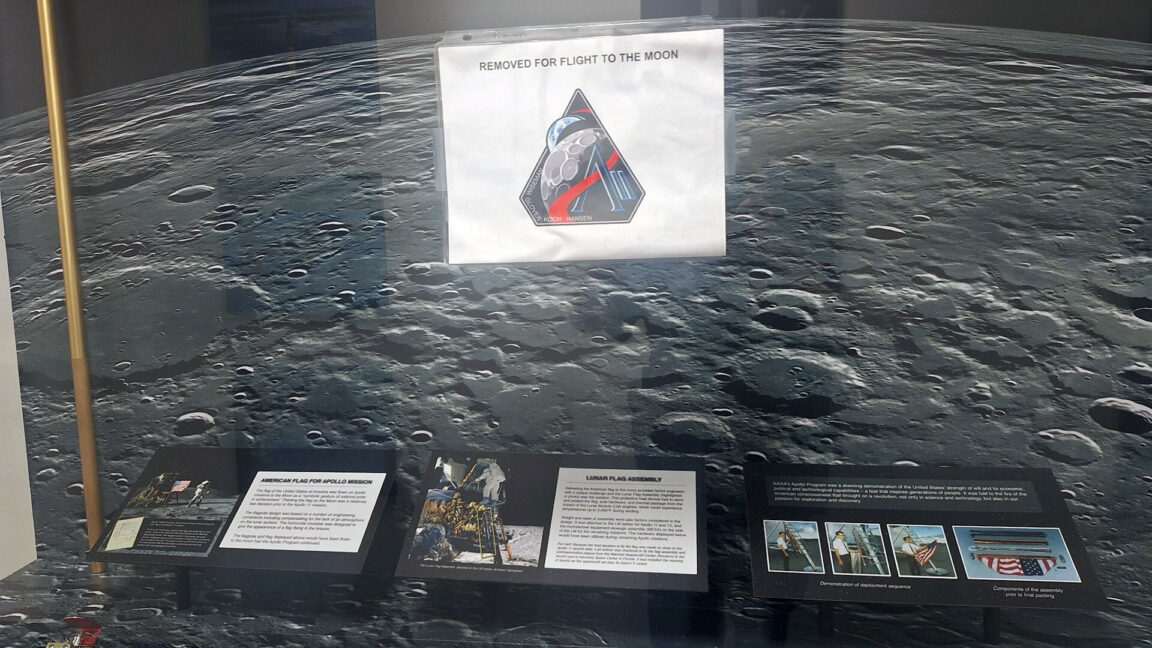
NASA's first astronauts to fly to the Moon in more than 50 years will pay tribute to the lunar and space exploration missions that preceded them, as well as aviation and American history, by taking with them artifacts and mementos representing those past accomplishments.
NASA, on Wednesday, January 21, revealed the contents of the Artemis II mission's Official Flight Kit (OFK), continuing a tradition dating back to the Apollo program of packing a duffel bag-sized pouch of symbolic and celebratory items to commemorate the flight and recognize the people behind it. The kit includes more than 2,300 items, including a handful of relics.
"This mission will bring together pieces of our earliest achievements in aviation, defining moments from human spaceflight and symbols of where we're headed next," Jared Isaacman, NASA's administrator, said in a statement. "Historical artifacts flying aboard Artemis II reflect the long arc of American exploration and the generations of innovators who made this moment possible."
KENNEDY SPACE CENTER, Florida—Preparations for the first human spaceflight to the Moon in more than 50 years took a big step forward this weekend with the rollout of the Artemis II rocket to its launch pad.
The rocket reached a top speed of just 1 mph on the four-mile, 12-hour journey from the Vehicle Assembly Building to Launch Complex 39B at NASA's Kennedy Space Center in Florida. At the end of its nearly 10-day tour through cislunar space, the Orion capsule on top of the rocket will exceed 25,000 mph as it plunges into the atmosphere to bring its four-person crew back to Earth.
"This is the start of a very long journey," said NASA Administrator Jared Isaacman. "We ended our last human exploration of the moon on Apollo 17."
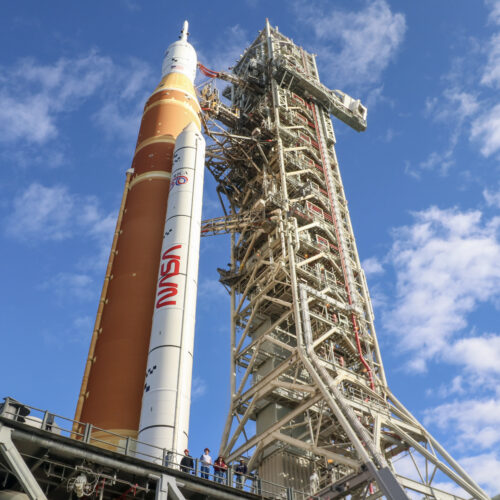
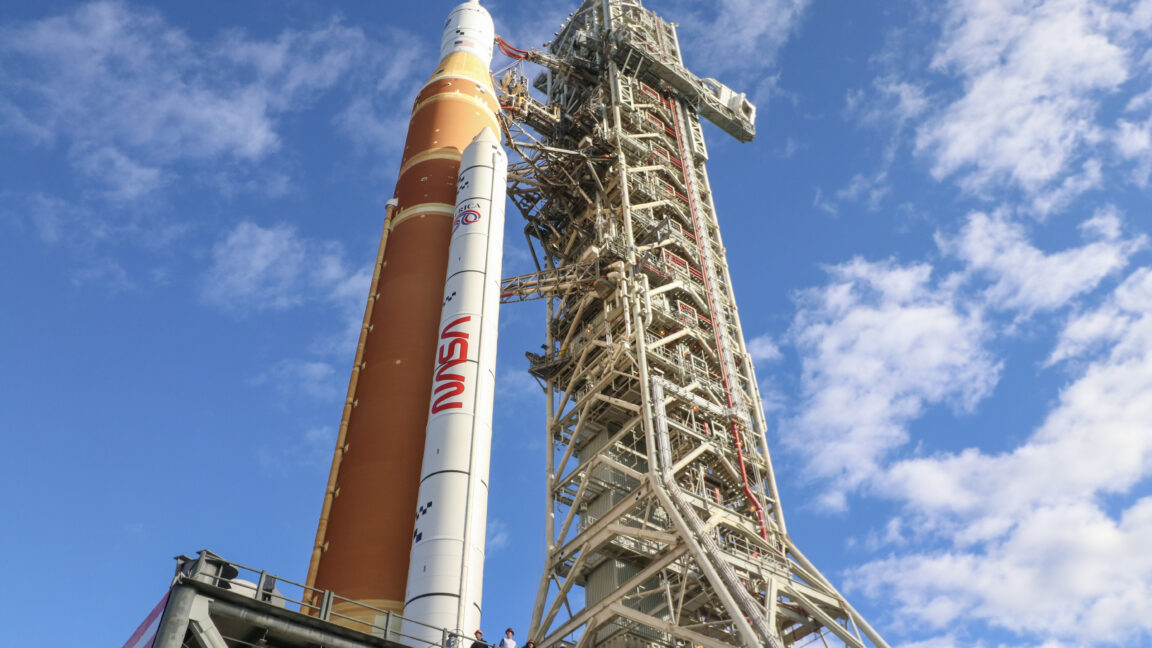
NASA’s Space Launch System rocket and its mobile launcher head for the launch pad. (NASA Photo / Keegan Barber)
NASA’s massive Space Launch System rocket crept to its Florida launch pad today at a top speed of about 1 mph, marking the first step in a journey that will eventually send astronauts around the moon for the first time in more than 50 years.
The 4-mile trek to Launch Complex 39B at NASA’s Kennedy Space Center began at 7 a.m. ET (4 a.m. PT) and lasted nearly 12 hours. Because the rocket with its mobile launcher stands more than 300 feet tall and weighs millions of pounds, the trip required the use of a crawler-transporter — the same vehicle used for the Apollo and space shuttle programs, now upgraded for NASA’s Artemis moon program.
Liftoff for the Artemis 2 mission could come as early as Feb. 6, but there’s lots to be done in the weeks ahead. After today’s rollout, the mission team will conduct a thorough checkout of the Space Launch System and its Orion crew spacecraft. Then there’ll be a “wet dress rehearsal,” during which the launch team will fuel the rocket and count down to T-minus 29 seconds.
“We have, I think, zero intention of communicating an actual launch date until we get through wet dress,” NASA Administrator Jared Isaacman told reporters.
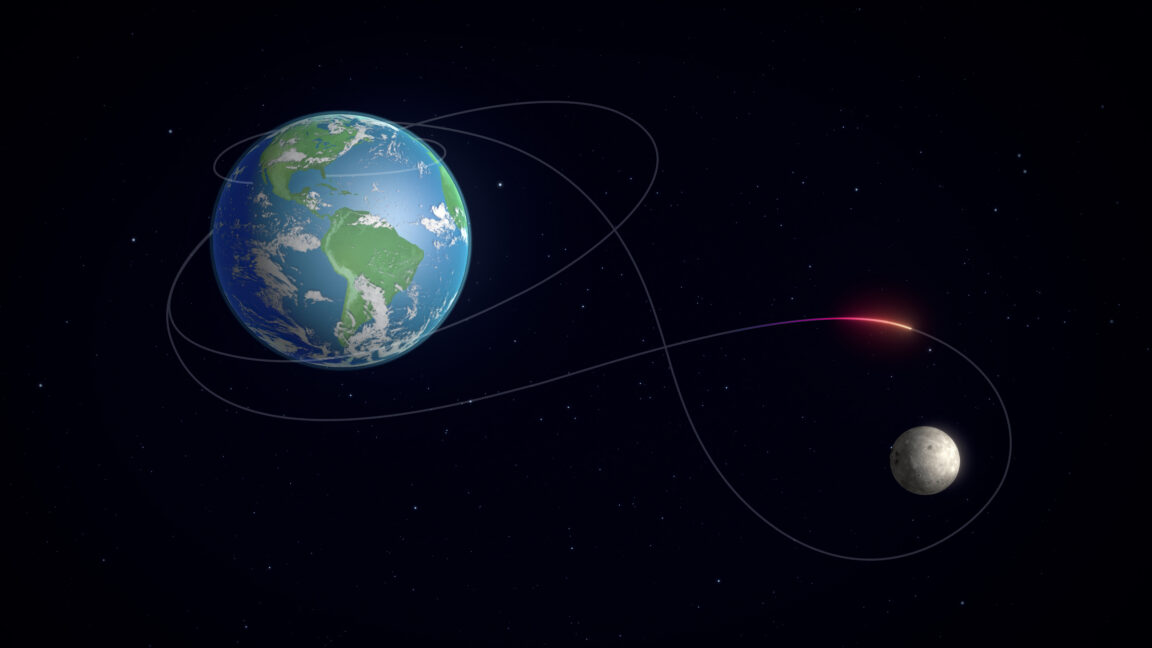
Artemis 2 is slated to send three NASA astronauts and one Canadian astronaut on a 10-day journey tracing a figure-8 route around the moon. The trip will take them as far as 4,800 miles beyond the lunar far side — farther out than any human has gone before.
One of the crew members, Christina Koch, recalled an exchange she had with Apollo 13’s Fred Haise at a commemorative event. “Before I even said, ‘Hello, sir, great to see you,’ he goes, ‘I heard you’re going to break our record,'” she said.
Mission commander Reid Wiseman said he’s already seeing the moon in a different light.
“One of the most magical things for me in this experience is, when I looked out a few mornings ago, there was a beautiful crescent in the morning sunrise, and I truly just see the far side,” he said. “You just think about all the landmarks we’ve been studying on that far side, and how amazing that will look. And seeing Earthrise, just flipping the moon over and seeing it from the other perspective, is what I think when I look out right now.”
Although Artemis 2 will be historic in its own right, the mission’s main purpose is to prepare the way for Artemis 3, which will put humans on the lunar surface for the first time since Apollo 17 in 1972. That mission is officially set for no earlier than mid-2027, but industry experts expect the schedule to slip.
During today’s news briefing, Isaacman took an even longer view. “This is the start of a very long journey,” he said. “I hope someday my kids are going to be watching, maybe decades into the future, the Artemis 100 mission.”
Isaacman, who served as the billionaire CEO of the Shift4 payment processing company before becoming NASA’s chief last month, said that America’s space effort is sending humans back to the moon “to figure out the orbital and lunar economy, for all of the science and discovery possibilities that are out there, to inspire my kids, your kids, kids all around the world, to want to grow up and contribute to this unbelievable endeavor that we’re on right now.”
Blue Origin’s New Glenn rocket is expected to send an uncrewed cargo version of the Blue Moon lander to the moon sometime in the next few months. Isaacman hinted that Blue Origin could be in for a bigger role in the lunar economy as the Artemis program hits its stride.
“I will say I did meet with both Blue Origin and SpaceX on their acceleration plans. These are both very good plans,” he said. “If we are on track, we should be watching an awful lot of New Glenns and Starships launch in the years ahead.”
KENNEDY SPACE CENTER, Florida—The rocket NASA is preparing for sending four astronauts on a trip around the Moon will emerge from its assembly building on Florida's Space Coast early Saturday for a slow crawl to its seaside launch pad.
Riding atop one of NASA's diesel-powered crawler transporters, the Space Launch System rocket and its mobile launch platform will exit the Vehicle Assembly Building at Kennedy Space Center around 7:00 am EST (11:00 UTC). The massive tracked transporter, certified by Guinness as the world's heaviest self-propelled vehicle, is expected to cover the four miles between the assembly building and Launch Complex 39B in about eight to 10 hours.
The rollout marks a major step for NASA's Artemis II mission, the first human voyage to the vicinity of the Moon since the last Apollo lunar landing in December 1972. Artemis II will not land. Instead, a crew of four astronauts will travel around the far side of the Moon at a distance of several thousand miles, setting the record for the farthest humans have ever ventured from Earth.
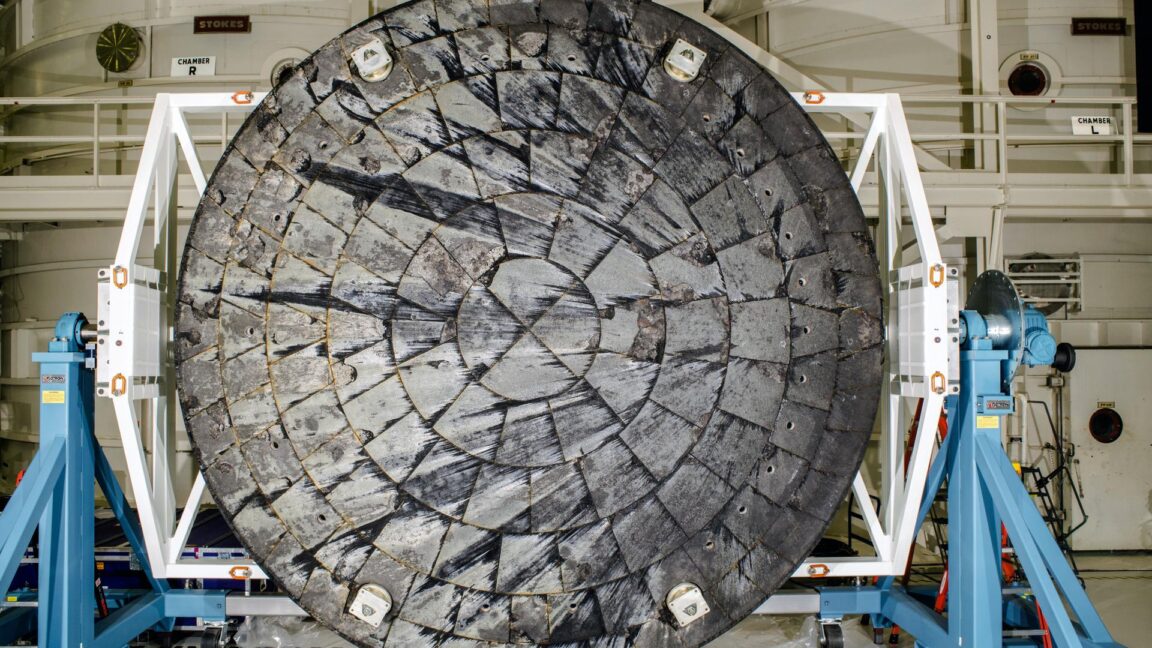
WASHINGTON, DC—This week, NASA's new administrator, Jared Isaacman, said he has "full confidence" in the space agency's plans to use the existing heat shield to protect the Orion spacecraft during its upcoming lunar mission.
Isaacman made the determination after briefings with senior leaders at the agency and a half-day review of NASA's findings with outside experts.
"We have full confidence in the Orion spacecraft and its heat shield, grounded in rigorous analysis and the work of exceptional engineers who followed the data throughout the process," Isaacman said Thursday.

 Login
Login Ethiopia has confirmed the acquisition of Russian-made Orion-E reconnaissance and strike unmanned aerial vehicles, marking the first verified export of the Orion drone system, according to aircraft displayed at Aviation Expo 2026. A Russian Orion-E unmanned aerial vehicle was shown in the Ethiopian Air Force exhibition area during the event, confirming that Addis Ababa has […]