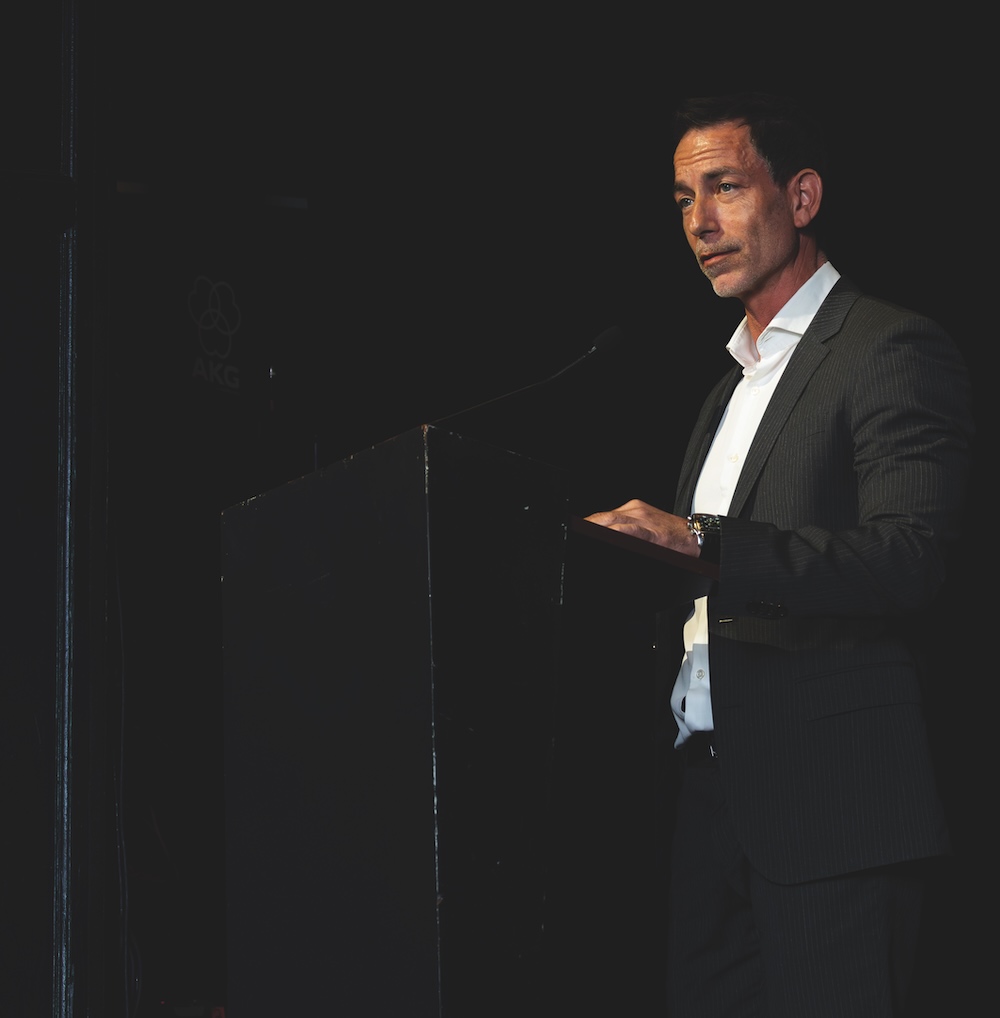
As CEO and co-founder of Innexo, Dominique van Gruisen leads one of Europe’s most advanced cannabis research and development facilities, where cultivation science meets pharmaceutical precision. Innexo is a Dutch cannabis contract research organization that designs and conducts cultivation and technology trials for clients across the cannabis sector, helping companies test innovations under controlled, data-rich conditions.
His impressive career in cannabis spans two decades and encompasses Belgian patient advocacy and clinician networks, as well as European biotech lobbying and cultivation consulting on both sides of the Atlantic. Van Gruisen’s goal is ambitious: to take cannabis beyond cultivation and into a world of validated data, reproducible genetics and true pharmaceutical reliability, which demands consistency. So, how do you do that?
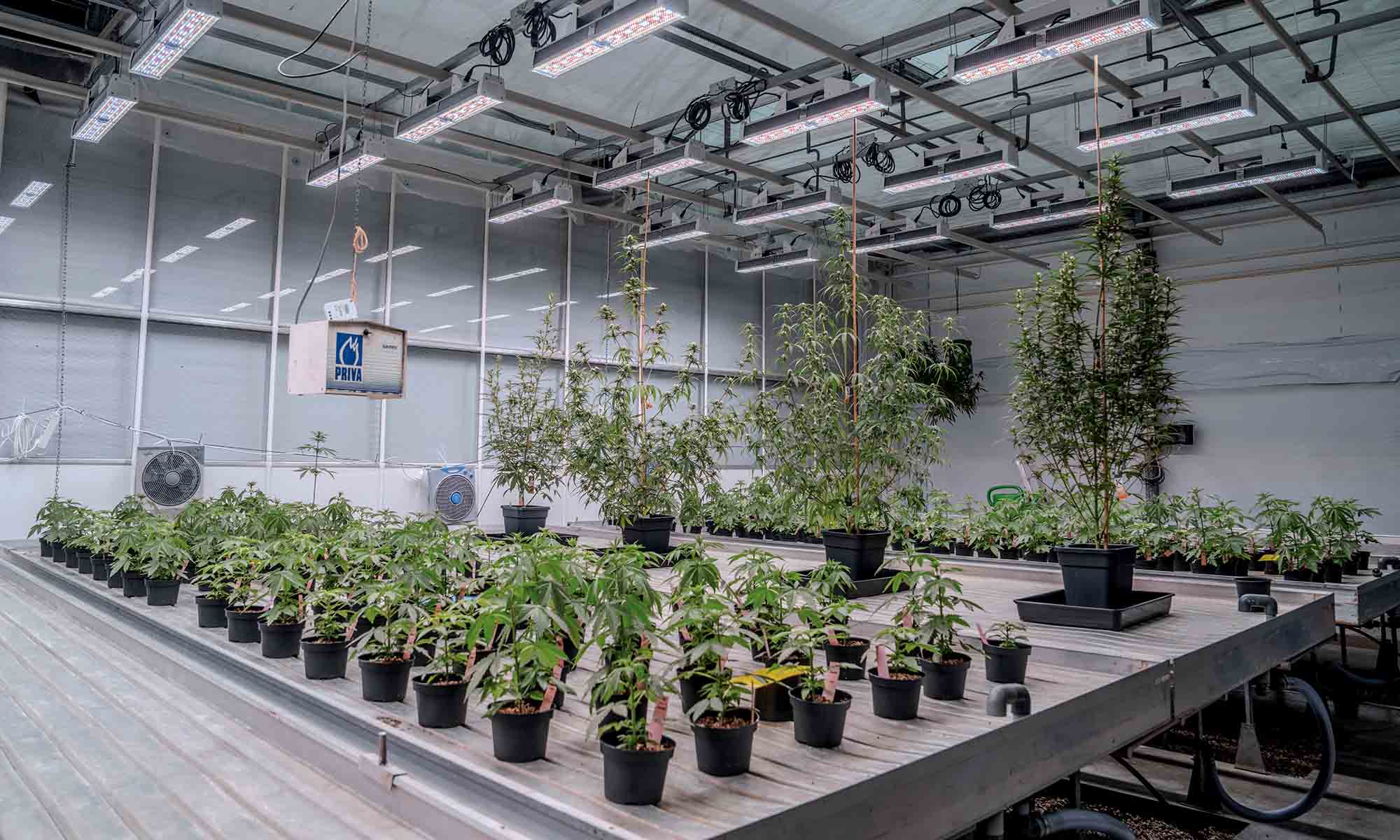
Innexo’s indoor grow facility at work.
Based in Meterik, a village in The Netherlands, Innexo is conducting independent trials on lighting, nutrients and genetics in an effort to generate measurable, reproducible data that brings cultivation closer to pharmaceutical standards. And through some key partnerships, they’ve come up with some profound techniques. The research center is currently working with Las Vegas-based lighting company Fohse, examining how precision lighting from their Cobra LED system affects plant structure, cannabinoid expression and energy efficiency.
“We’re using the Cobra Pros, and soon we’ll have tunable-spectrum models from Fohse,” van Gruisen says. “They have sensors that constantly read the natural light in the greenhouse and adjust automatically. If we can work with a dynamic spectrum that mirrors the sun, we can replicate the same conditions anywhere on Earth, in any season.”
The study benchmarks a range of metrics—from cannabinoid and terpene expression to morphology and energy use—to quantify how light affects consistency. “Their system fills your stack with data,” van Gruisen says. “That’s what we’re after: information that lets us build validated cultivation models rather than assumptions.”
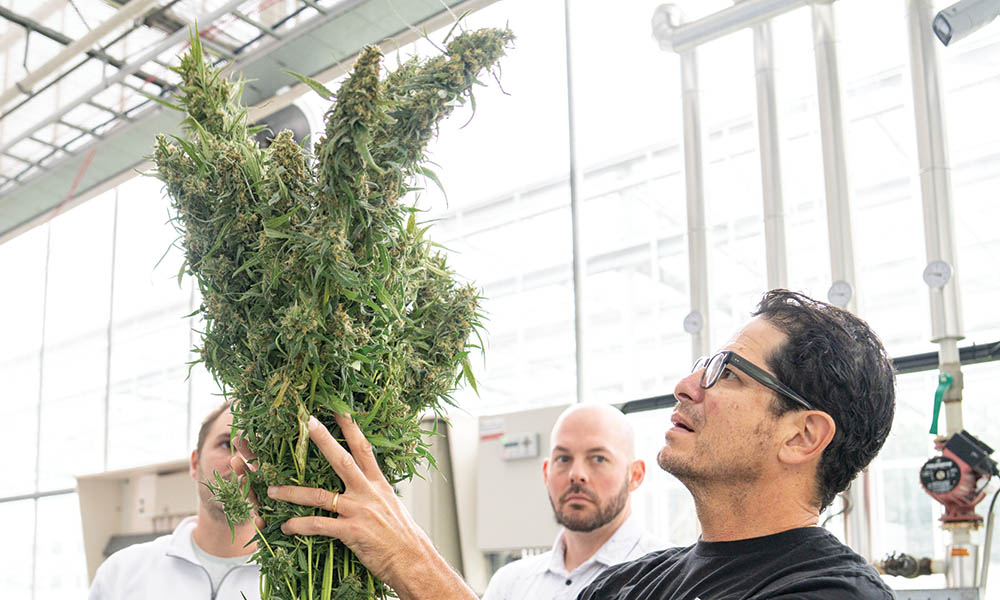
Fohse’s Michael Rosenfeld admires the latest grow.
Lighting defines the environment; genetics define the foundation. To address that, Innexo partnered with sister companies Innoveins Seed Solutions and SeQso to develop—wait for it—the world’s first AI-driven seed-sorting system for cannabis.
“They collect the spectral data of each seed in a non-destructive way,” van Gruisen says. “Then they grow that seed, record its traits, feed those traits back into the system and the algorithm learns which spectral patterns predict which plant characteristics.”
When he first heard of the technology, van Gruisen says, “I literally pulled my car over to call people.” Tests confirmed it worked for cannabis, opening the door to non-destructive quality-control certification at the seed level. “If there’s something you can distinguish, you can design a seed-sorting algorithm and push a batch through to separate the good from the bad,” he says.
The implications of this technology stretch beyond yield. AI analysis can detect pathogens such as hop latent viroid and certify genetic quality before cultivation begins. “Companies are developing F1 hybrids—stabilized lines,” van Gruisen says. “By scanning the seeds, you can fine-tune even further so your starting material is as robust as it can be.”
“By scanning seeds, you can fine-tune even further so your starting material is as robust as it can be,” van Gruisen says.
Van Gruisen believes AI-based seed fingerprinting could also reduce the industry’s dependence on cloning. “Even when you use clones, you still find big deviations in secondary metabolites depending on the season or humidity,” he says. “It’s very difficult to provide a consistent product in flower form.” Regulatory frameworks, he notes, demand pharmaceutical precision.
“When regulators say cannabis has to be a medicine, they mean it should be 98 to 102 percent consistent with what’s on the label,” he says. “That’s almost impossible with a natural product. But with solid F1 hybrid genetics that start from seed, you add another quality-control checkpoint.”
For cultivators, F1 seeds offer cleaner starts, lower costs and easier scalability. For patients, they promise reliability—the same genetics, the same relief—every time.
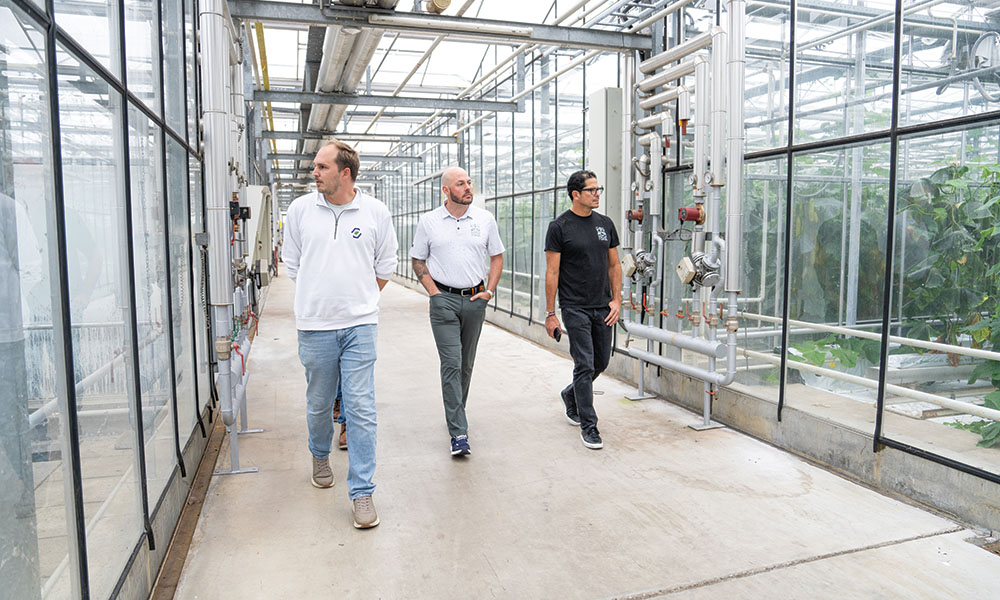
walk this way. Innexo Co-Founder and CEO Dominique van Gruisen, Tom Stanchfield, Fohse’s Senior Vice President and Michael Rosenfeld, Fohse’s Chief Marketing Officer admire the impressive Innexo complex in the village of Meterik in The Netherlands.
Van Gruisen describes Innexo as a link between two sectors that rarely speak the same language. “Growers talk in grams per square meter,” he says. “Pharma talks in validated datasets and deviation tolerances. We sit in the middle, making those conversations possible.”
That bridge extends beyond technology. Innexo is also reviving iconic legacy cannabis genetics—long-flowering, terpene-rich cultivars—and reintroducing them through advanced lighting and AI-guided cultivation. He aims to right some of the wrongs the industry has made. “We took a lot of wrong turns with cannabis in the last 20 years,” he says. “It’s time to rediscover what made this plant valuable in the first place and do it with proper science.”
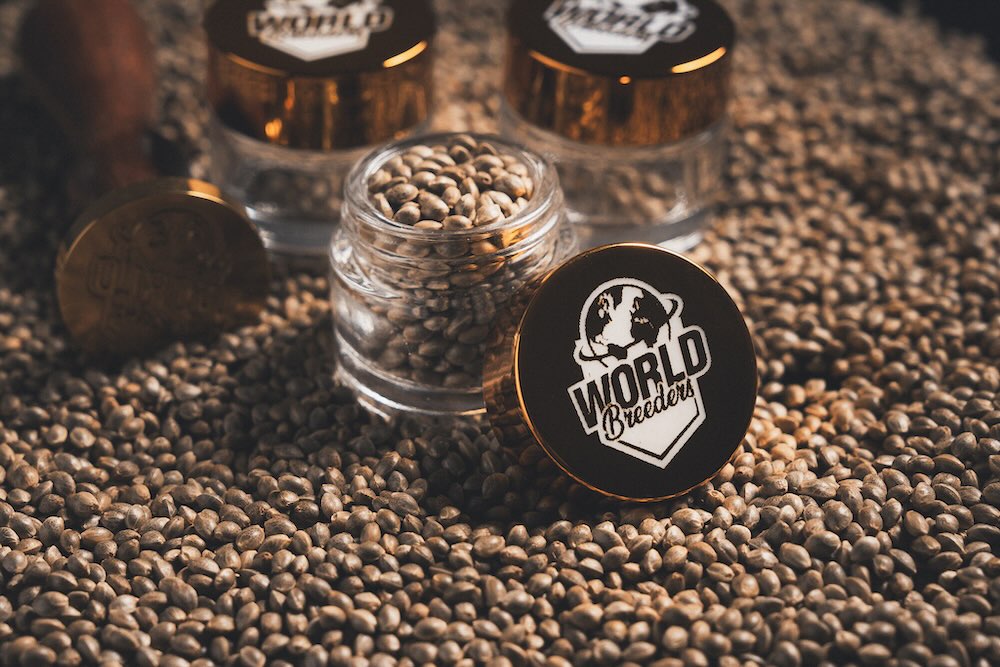
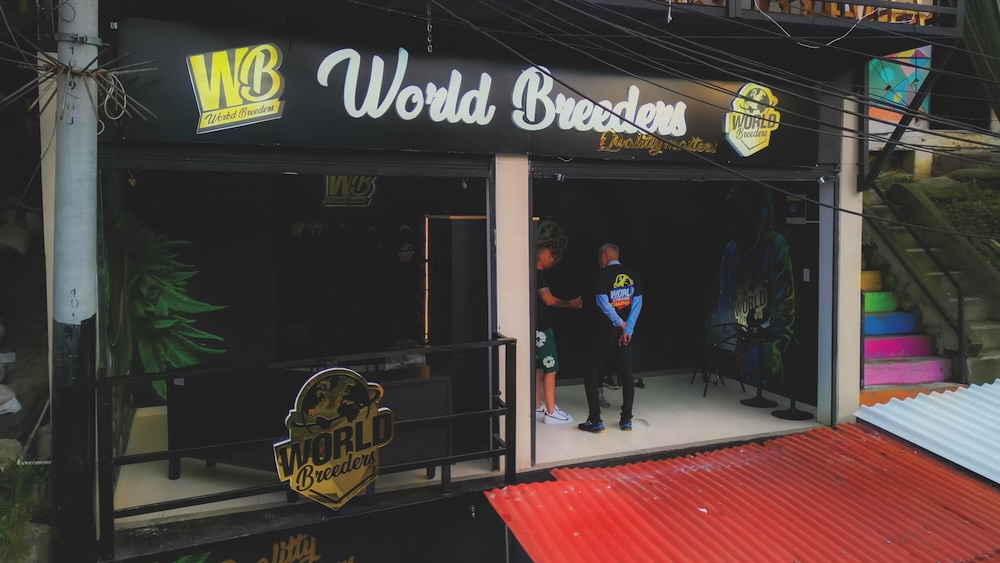
World Breeders, a cannabis seed company with who is making good on its promise to export seeds worldwide, has three founders, and it’s taken them all to shape the trajectory they have now—from working in cannabis on the “underground side,” as co-director Gorka Cid Luaces says, to an enterprise with operations on three continents and the momentum to fulfill their ambitions.
Jon Urriola Rementeria—responsible for seed development, genetics and research—was growing tomatoes for Spanish supermarkets before he switched to hierba with the emergence of the first “cannabis associations” in the País Vasco, Spain’s northeast Basque Country. Leandro García Rodriguez handles client and concept development, while Cid Luaces is responsible for overall management of the company. García Rodriguez is originally from Seville, while Rementeria and Cid Luaces are native to the Basque Country.
World Breeders claims to have dedicated itself to selecting and developing its own genetics with meticulous attention to details.
Rementeria and Cid Luaces first came together in GreenFarm Éibar, which was among the first cannabis associations in Euskadi, as the País Vasco is known in the Basque language. They produced flower for the association in a mixed greenhouse and outdoor operation, with the local police informed.
“The experience with GreenFarm marked our entry into the cannabis industry,” Cid says. “It was a highly rewarding stage, yet also one filled with tension. Working constantly on the edge of legality takes a heavy psychological toll.”
GreenFarm was a member organization of the Federation of Cannabis User Associations of Euskadi (EUSFAC) which coordinates rules and standards for a sector operating in a kind of legal gray area. These regulations allowed private cultivation for the associations but limited members to two grams per day, to be consumed on club premises. Several associations closed during the pandemic in 2020, as these restrictions became untenable, and the sector never fully recovered. Associations continue to thrive in the regions of Catalonia and Andalusia, but regional authorities in País Vasco cracked down, with some clubs busted and herb confiscated.
The GreenFarm veterans moved into the commercial space, anticipating an expanding market for the recreational side as policy in several European countries liberalized. World Breeders was registered as a seed company in the Czech Republic in 2019, though they had already been working with third partner García Rodriguez from Medical Weed Sevilla, one of the first associations in Andalusia’s southern region, for some time with different companies.
Seeking a suitable country for production, the trio settled on the rising industry player of Colombia. Cannabis had been decriminalized there since 1994 and medical marijuana was legalized in December 2015 by decree of then-president Juan Manuel Santos—who would the following year win the Nobel Peace Prize for negotiating peace with the guerillas. Along with the historic peace deal in 2016, Colombia’s Congress that year approved commercial cannabis cultivation under government license.
“We knew we wanted to continue working in the cannabis industry—it’s our passion, and our professional path,” Cid says. “But we were equally clear that we wanted to do it within a fully legal framework. Colombia offered the chance to operate under official licenses, with a transparent regulatory environment and the ability to develop genetics and production at scale, without legal uncertainty. That’s why we took the leap and established our operations there.”
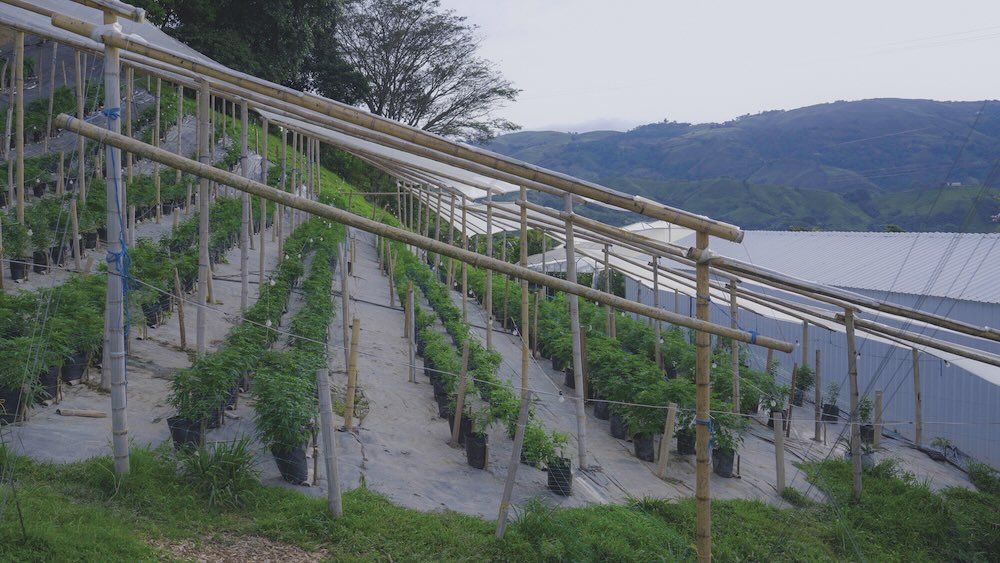
In 2020, World Breeders set up its mixed indoor/greenhouse production facility in Antioquia in the northwest region of the country. Their first greenhouses were in Guarne, a charming mountain town in the Andes. Production began in January 2021 and licensed export of seed to Spain began that year.
The seed stock they’d been working with initially had difficulties adjusting to higher altitude and new, more acidic soil and water conditions. Operations later moved to Ebéjico, on the outskirts of the Medellín metropolitan area, where the altitude is lower and the climate warmer.
Based in Colombia since 2020, World Breeders’ new environment creates exceptional photoperiods: 12 hours of daylight and 12 hours of darkness per day. “It’s ideal for complex terpene profiles,” says co-founder Gorka Cid Luaces.
Conditions here, as it turns out, are exceptional. The light offers perfect photoperiods: about 12 hours of daylight and 12 hours of darkness per day. And the altitude of some 1,400 meters above sea level, Cid describes as “ideal for complex terpene profiles.”
“Over the years, we have dedicated ourselves to selecting and developing our own genetics with meticulous attention to details,” their website boasts.
The company, a seed bank marketing its genetic creations to specialty growers, currently offers nine strains, with names including Clementine Slush, Fizzy Gum and Pink Truffle. Cid takes pride in the descriptive accuracy of these appellations. “If we say it tastes like clementine, it really tastes like clementine,” he assures.
A recent addition is La Hokuzan, developed in cooperation with Barcelona-based Hidden Group Genetics. The Catalan group had bred its own indica-heavy hybrid Hokuzai, which World Breeders crossed with their own Fizzy Gum for a more “sparkling and fruity” feel.
Just coming online is Pilot, developed in conjunction with Spanish rapper JC Reyes, combining his favorite traits—a three-way cross of Pink Watermelon x Jokerz x WB Bubba.
World Breeders is also currently working with growers in the Rif Mountains of Morocco to develop a line of triploid seeds. Triploid strains have three sets of chromosomes, as opposed to the traditional diploid varieties with two sets—one from each parent plant. They typically don’t collect pollen and therefore don’t produce seeds. (Most of the bananas we eat are triploid, as well as seedless watermelons.) This is important for cannabis, because a female plant that doesn’t get fertilized will keep secreting resin indefinitely throughout the growing season, even if there are male plants in the vicinity. A triploid line could be a breakthrough for the centuries-old tradition of hashish production in the Rif, and a boon to growers everywhere.
“We’re confident that this new line will mark a before-and-after in the genetic development of cannabis, positioning World Breeders as a benchmark for innovation and quality in the sector,” Cid predicts.
But expanding markets in Europe represent the real opportunity on the imminent horizon, Cid says, pointing to recent moves toward permitting adult-use cultivation in Portugal and Germany. “What began as a dream of the World Breeders team is now a consolidated reality,” he says.
This story was originally published in issue 52 of the print edition of Cannabis Now.
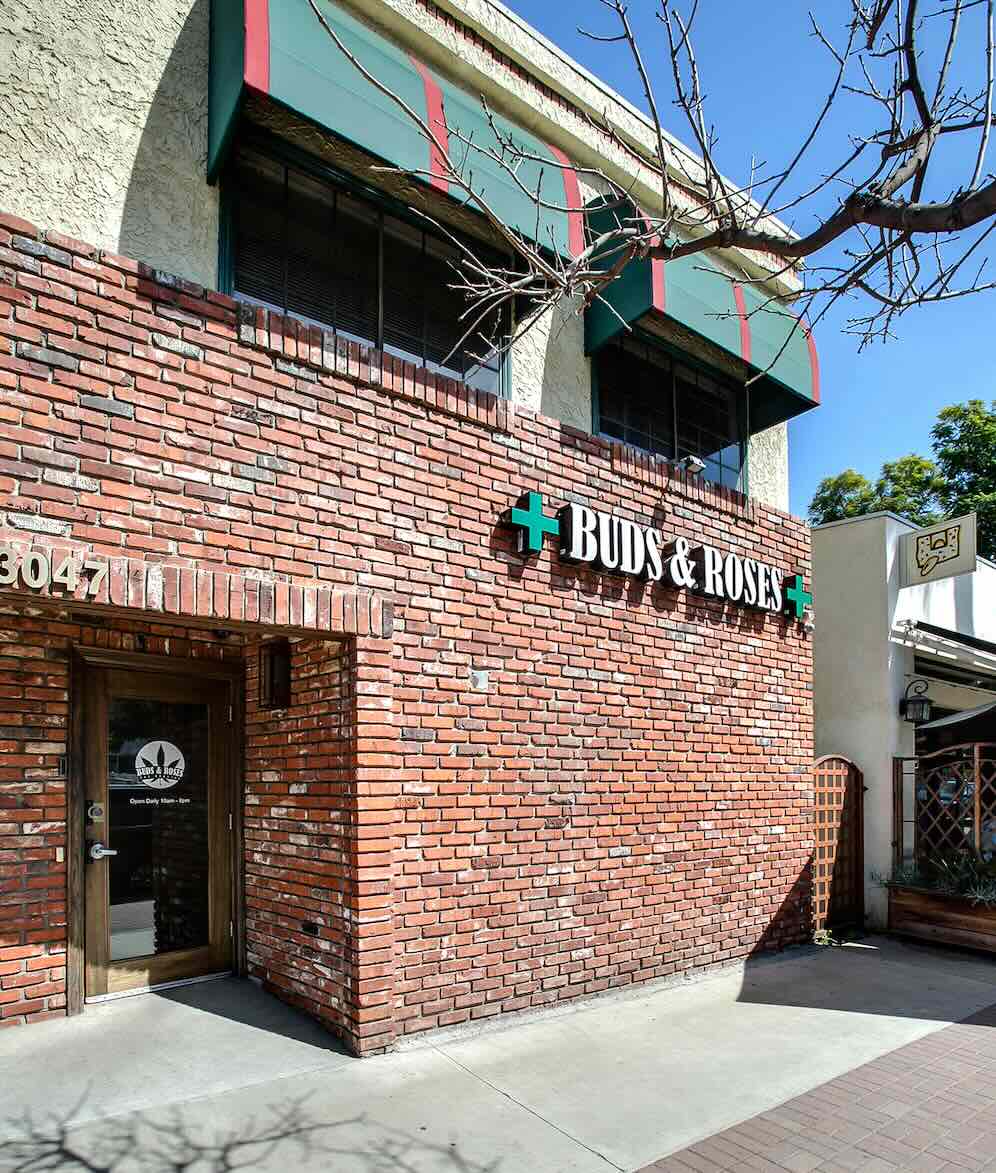
In an industry where many come and go, some names become synonymous with integrity and staying powerful. Aaron Justis is one of them. For over 15 years, he’s been at the helm of Buds & Roses, a Los Angeles dispensary renowned for its unwavering commitment to quality and community. As a pioneer in “veganic” cultivation and a tireless advocate for industry reform, he has faced down a host of challenges, from the persistent illegal market to the complexities of legalization.
But for a true entrepreneur, the journey never stops. Now, Justis is branching out with a new venture, Seeds and Clones, taking his decades of experience and passion for genetics to a global audience.
In this exclusive interview, Cannabis Now CEO and Founder Eugenio Garcia and the veteran operator discuss the highs and lows of his career, the motivation behind his latest business and his vision for the future of cannabis.
Cannabis Now:Aaron, thank you for joining me today. When did you get started in the cannabis industry?
Aaron Justis: I’ve been involved with cannabis since I was a teenager. In 1998, I had a hemp clothing company and actually won a High Times Cannabis Cup award in Amsterdam for it. I purchased Buds and Roses in 2010. It wasn’t a well-known dispensary, but it had been registered in 2007, so it had a license and the potential to become a licensed dispensary. After many years of work, maybe six or seven years later, we got a license in the legal California market.
CN:Were you one of the first licensed dispensaries in Southern California?
AJ: Yes, we were.
CN:Give me and the readers a little bit of a recap. What have been the highs and lows of the last 15 years of running Buds & Roses?
AJ: The beginning was really exciting. My cultivation team and I pioneered “veganics,” a vegan organic cannabis, and won several awards, including “Best in the United States” and “Best Flower Overall.” We received a lot of media attention, and I was deeply involved in advocacy with groups like the National Cannabis Industry Association and the Greater Los Angeles Collectives Alliance.
At the same time, the journey has also had its challenges. The last six or seven years have been a difficult time to operate in the industry.
Even with legalization, we’ve had to compete against thousands of illegal operations that still thrive due to a lack of enforcement. Legalization brought new complexities and tremendously high taxes and regulatory costs, making the last several years particularly difficult. Despite these challenges, Buds & Roses is still here, and customers are still happy.
CN:What do you think has been a differentiator or a highlight that has kept your customer base committed to you?
AJ: It sounds simple, but it’s all about quality products. Our customers are happy because we select products based on their quality, ensuring they get the best product for their price point. Unlike many retailers who focus on what’s popular or heavily marketed, we have a strict rule, especially with flower. My team and I—many of whom have been with me for over a decade—personally vet everything. The product has to be just right for the price. We’ve often pushed back against brands, telling them we can’t carry their entire line because it’s rare for companies to have more than one or two truly great strains. We’re a boutique in that way, bringing only the best to our customers.
CN:How do you build trust with your community, from long-time enthusiasts to first-time customers?
AJ: Our staff has always been a key part of our reputation. They’re knowledgeable, respectful and committed to educating our customers. I was lucky to have great mentors like Steve D’Angelo at Harborside and Eric Pearson at Spark who taught me how to build a well-respected, quality dispensary.
This approach has allowed us to become a positive force in our community. We have discerning customers who are true connoisseurs, but we also have plenty of elderly people—some in their 80s, and 90s—who shop with us because they feel comfortable and safe. We’re in a great location in an upscale neighborhood, and about a year and a half ago, we were honored with a hand-painted certificate of recognition from the City of Los Angeles. It thanked us for being a community staple and for helping to shape the culture in Studio City. That was a true honor.
CN:Wow. Good job on that. It takes a lot of hard work to be recognized in that capacity. If you look back at your history, you’ve received lots of awards and recognitions. You’ve shaken hands with politicians and celebrities and done collaborations. So, coming from that background and having a very good, established reputation in the industry and your community, what was the motivation to branch out and start this new venture, Seeds and Clones?
AJ: We’ve always sold seeds and clones at our dispensary, at least for the last 12 or 13 years. We also have a nursery license where we make our own clones and seeds. We’ve sold plenty of other operators—the best known in the industry in California—and have resold their seeds and even some of their clones. We took all clones in-house about five years ago because there were issues. A lot of those operators were in Northern California and there were issues with transport. So, we stopped reselling theirs at the store and just do our own in-house genetics. Going online was just a way to scale what we’ve already been doing and bring that to people outside of our area. It’s a natural evolution of things.
CN:Had you been sitting on the name “Seeds and Clones” for a while, or did you get lucky one night?
AJ: It’s a crazy story. One day I was meditating and the name “seeds and clones” popped into my head. It’s similar to “Buds & Roses,” so I thought it would be a great name. I wanted to get the website and someone else had owned it. It was available for rent for $8,000 a year, or for lease for about $700 a month. I still have this text message, I believe. I sent it to my graphic designer and said, “I want to get this, but it’s probably not worth leasing it. They could shut it down at any time after we build it up.” The next day, he messaged me and said, “I got the website.” And I said, “What do you mean? I didn’t say I wanted it. It’s $700 a month.” He said, “No, it’s $700.” He sent it to me. I don’t know what happened overnight, because I sent him a screenshot that said specifically “$700 a month.” The next day, he bought it for $700, and we got the site.
CN:That’s amazing. The universe was waiting for its rightful shepherd.
AJ: Exactly. It sure was.
CN:And from that time to launch, when did you formally launch the website?
AJ: About two years ago.
CN:So it’s been a couple of years, and now I bumped into you at Spannabis in Barcelona. This isn’t just a California play or a US play, but this website could be global. Have you intentionally set it as an international platform, or is this mainly for the US and North America?
AJ: It’s definitely international. With all these emerging markets around the world, I’m getting out there to figure out what’s legal, where it’s legal and building relationships. That is a key part of it—laying the groundwork and exploring different opportunities. I’m used to state-by-state regulations in the legal industry. With Seeds and Clones, we’ve been able to go nationwide, but now it’s back to a country-by-country opportunity. There are some countries where you can ship seeds within them and then there are some that are completely standalone. I’m just trying to figure out what’s happening in those different markets and setting up the foundation to be able to scale this on a global level.
CN:Since it’s been two years since launch, are the genetics that are being sold on the platform only genetics that you control or own? Or is it more of a marketplace?
AJ: It goes beyond what we control or own, just like with the store. You will find Buds & Roses seeds there; you will find clones branded Buds & Roses. But we are working with all the same leaders that we’ve been selling at the store for many years, like Humboldt Seed Company, Compound Genetics and Origin Seed Co. We are also expanding to operators who used to be in the market but didn’t make it to legalization, such as The Cali Connection and James Loud Genetics. So, we are reselling all the best genetics companies on our site. We plan on adding five to ten times more brands in the next few years. I am focused on companies that have a good reputation, where I know the owners and the breeders—people we can trust. I’m knocking those out one by one while still running my dispensary full-time and our operations there. It’s a place where you can find many different brands. I believe we have well over 20 different brands right now and over 1200 varieties available.
CN:Wow. Is it only available for business-to-consumer purchasing online and in your retail store? Do you also offer B2B seeds and clones, or is that a different game?
AJ: There are a lot of business operations that order from us, but there are also mom-and-pop cultivators. We are just bringing these genetics to whoever needs them. We do have options for people to buy trays of clones or 100-plus clones. A lot of these businesses only need one or two clones to get those genetics and then they’ll make a mother and make their own clones from it.
CN:And with Seeds and Clones, the end goal is home growing, either for a community, a household or an individual. Is there a greater demand for seeds on this platform or for clones? Or is it split down the middle?
AJ: Seeds are always in higher demand than clones. I think people are a little intimidated by clones and they’re not quite sure about that process. So seeds are the majority of our sales.
CN:I understand putting seeds in an envelope or box and shipping them. But clones seem like a more delicate scenario. How have you figured out how to ship those?
AJ: We have our system dialed in to where we have a 99% success rate with our clone shipping. We guarantee all our clones to arrive healthy and pest-free.
New Money strain
CN:Amazing. Give me two or three genetics that you are super proud of, or that are special and why.
AJ: Our Strawberry Cough clone is probably the most special, although it has had some issues. It hasn’t been available for a little bit, but it’s about to be available again. We’ve won multiple High Times Cannabis Cups with it. It’s just an amazing strain that is always in high demand. It’s a great Sativa. It’s not the easiest strain to grow, but the end result is a great Sativa with a lot of medicinal properties. It has a wonderful high and it smells, looks and tastes good. So that’s very popular.
Also, our Platinum Cookies, which is a Girl Scout Cookie phenotype. It could be the original Girl Scout Cookies; we obtained it back in 2011 in Oakland. We’ve won at least three High Times Cannabis Cups with it, and it just has amazing flavor and taste. The effects are great. It looks amazing.
We also have a seed line, Origin Seed Co., that is very affordable for the average grower. They are classic, foundational strains for a good price. They are what we say they are and customers have been very happy with that seed brand for the strains available, the affordability, the germination rate and the finished product.
CN:Those sound like some exciting genetics. I can’t wait to see some of them in action. Do you offer customization? For example, a brand might come to you and say, “We would like this type of experience and or flavors.” Will you pheno-hunt and create genetics, or do you source them from artists and then make them available?
AJ: We do have some international opportunities in the works for that. We have a very long-standing seed company from Amsterdam looking to create all-new genetics here in the United States, using their genetics with ours.
We do pheno-hunting in-house. We are a retailer, and we resell other people’s products. We’ve acquired some amazing genetics over the years for the clones that we sell and we always give a shout-out to the source or the breeder. We’ve completed our third run for Buds & Roses seeds, where we’re finding a male and we’re selecting that through a rigorous process. Then we’re crossing it with about 20 of our best-selling clone varieties. We don’t actually name the strains; we just say what the cross is.
A lot of people have been very happy with pheno-hunting those seeds and coming out with real winners because we are crossing some of the best-selling strains, from Strawberry Cough to Platinum Cookies to AJ Sour Diesel and classics like Gelato 33 or Legend OG.
GG4 x Gelato
We also have a Mother Pucker strain, which we haven’t made available as a cutting yet. We pheno-hunted that from seeds from The Real Cannaado and came out with this amazing genetic.
CN:Mother Pucker, that sounds like a doozy.
AJ: It has an amazing flavor. It always has the strongest terpene profile of anything we have. It’s citrusy, but it’s also gassy and the high is amazing. It’s about a 50/50 hybrid. So that’s something that cultivators really like. We’ve had a lot of success with the Buds & Roses seeds. Again, we breed those using our best-selling genetics.
CN:Well, thank you very much for this first look at your new endeavor and a little look back at your past. My final question is, What’s your vision for yourself and this brand for the next year? Are you optimistic about the cannabis space in general?
AJ: With Buds & Roses, we’re doing our best to keep bringing the customer the best quality products we can, to give them the customer service they expect, and to stay true to the plant as we always have. For Seeds and Clones, the plan for the next year is to continue adding brands and to expand into other countries and markets by forming strong partnerships with reliable sources and operators. For myself, I’m focused on the international scene, by speaking at international conferences and seeing where I can best assist.
This story was originally published in issue 52 of the print edition of Cannabis Now.
Los Angeles has no shortage of dispensaries. Every neighborhood has one—or three—and most promise the same mix of premium flower, polished interiors and loyalty points. The Chronic, in El Sereno, has managed to stand apart by leaning on something that can’t be manufactured: history.
For decades, “The Chronic” has meant high-grade California weed. The name was embedded in 1990s hip-hop and LA street life long before the plant was legal. When founder Orlando Padilla opened his ivy-covered flagship a little more than two years ago, he built the concept around that legacy. “The mission was clear: build something for the people, by the people,” he says. “Cannabis and culture have always been intertwined—we just brought that truth into the modern space.”
built to last: “With The Chronic, we built something that represents cannabis culture, Padilla says of his LA streetwear and hip-hop influenced dispensary.
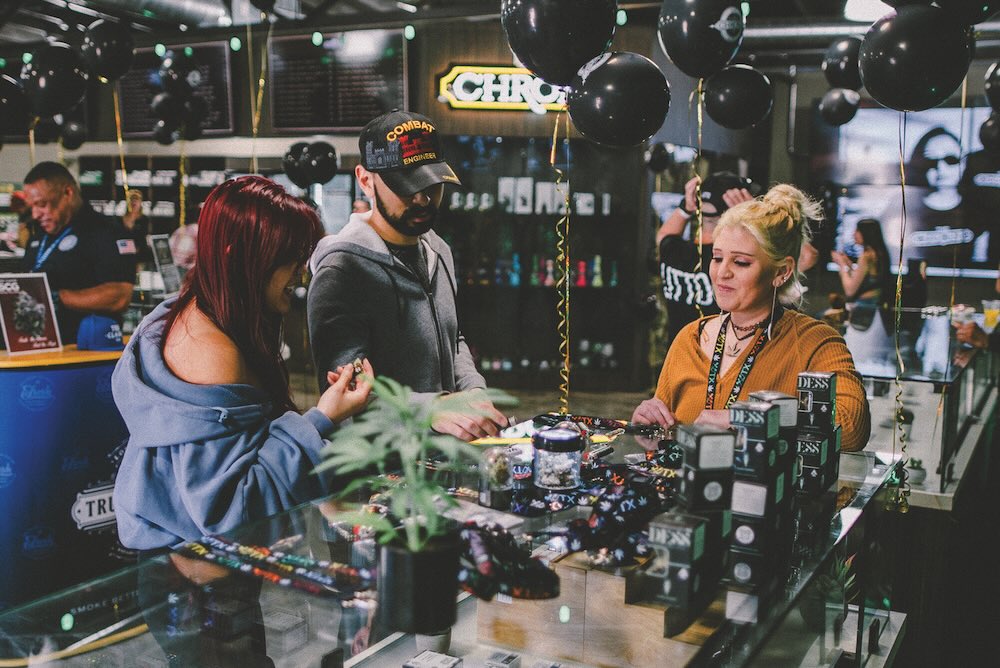
The shop sits quietly on Alhambra Avenue, its black-and-gold signage a deliberate nod to LA’s streetwear and hip-hop lineage. The design is minimal but intentional: Greenery softens the dark facade; inside, warm light and gold accents give the space an easy confidence. It’s top-tier without being uptight. Customers come from the surrounding neighborhood and across the city, drawn by word of mouth and the store’s mix of accessibility and polish.
Padilla insists that the culture comes first. “We didn’t just build a dispensary,” he says. “We built something that represents cannabis culture.” His team is mostly local, and that sense of community, he says, shapes both the atmosphere and the service. “We treat customers like family because that’s how we want to be treated—we’re from the neighborhoods we serve.”
The Chronic’s ambitions reach beyond retail. Padilla is developing Chronic Genetics, an in-house line of proprietary strains, alongside a forthcoming branded collection of flower, vapes and edibles. A streetwear label, coded into the store’s black-and-gold aesthetic, is in the works. Padilla says the company plans to host cultural events and collaborations with local artists and creative types. “The Chronic has always stood for high-quality cannabis and the culture surrounding it,” he says. “We’re just showing what that legacy looks like in today’s legal world,” he adds of his lifestyle empire ambitions.
That legacy is complicated in a market as competitive as Los Angeles. The city’s cannabis retail landscape is saturated, and even well-known shops struggle to maintain relevance as regulations, taxes and new brands flood the space. Padilla says The Chronic’s advantage is authenticity—its roots in a community that understands cannabis as more than a product.
“Professional doesn’t have to mean corporate,” he says. “You can set a high standard and still keep it real.”
The Chronic has rapidly built a loyal following and a recognizable aesthetic without losing its neighborhood feel. It hasn’t reinvented SoCal cannabis so much as reminded people what it’s supposed to feel like: personal and grounded in culture. In a city that often treats cannabis as fashion, The Chronic’s success suggests that the old rules—connection, respect and good weed—still might work.
This story was originally published in issue 52 of the print edition of Cannabis Now.

 Login
Login