Login
LoginSarson ka Saag – Punjabi Style
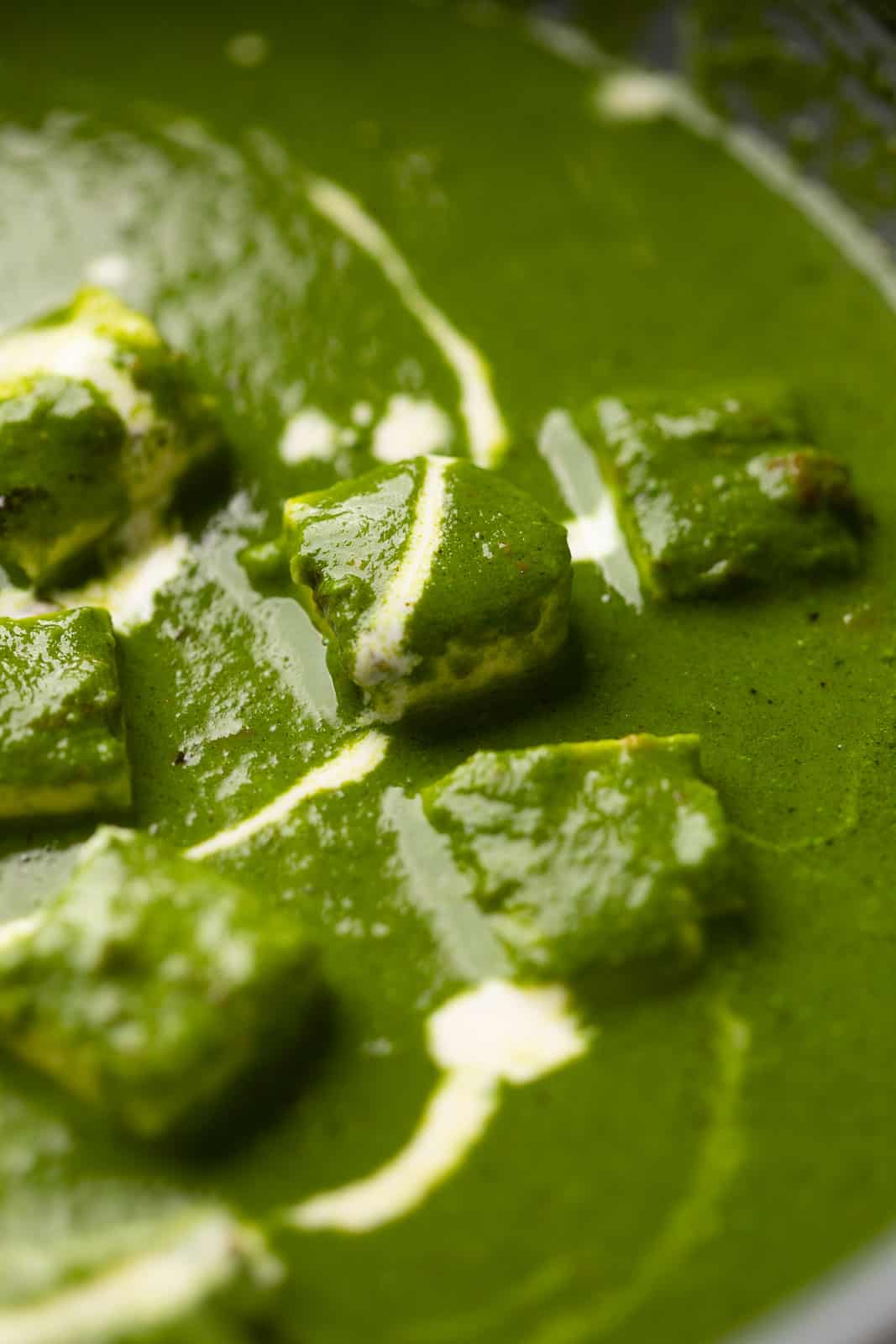
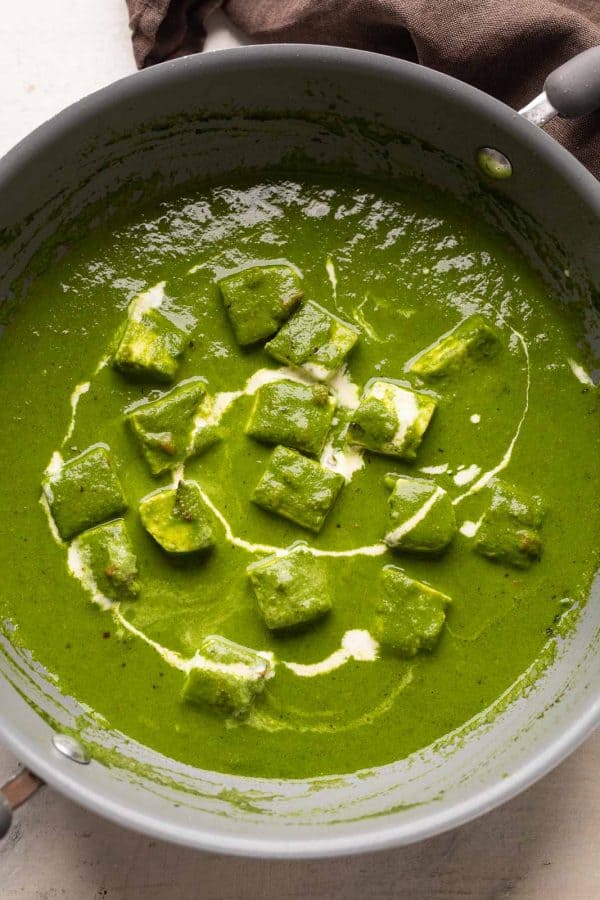
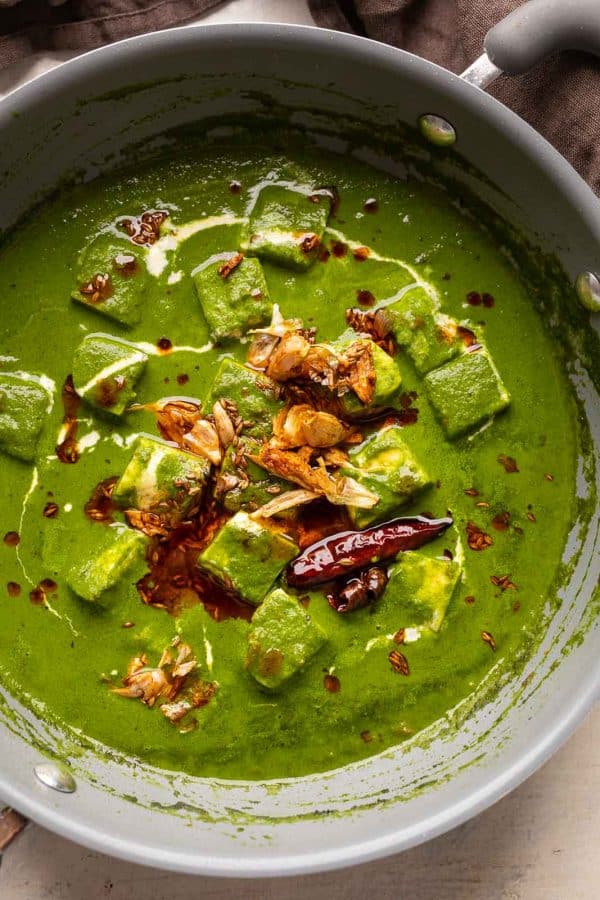
Sarson ka Saag is not just a North Indian winter dish, it is an emotion. Made with fresh winter greens this curry is bursting with warm, rustic flavours and nutrition. Serve it with a generous dollop of homemade butter, hot makki roti and jaggery for a heart-warming meal.
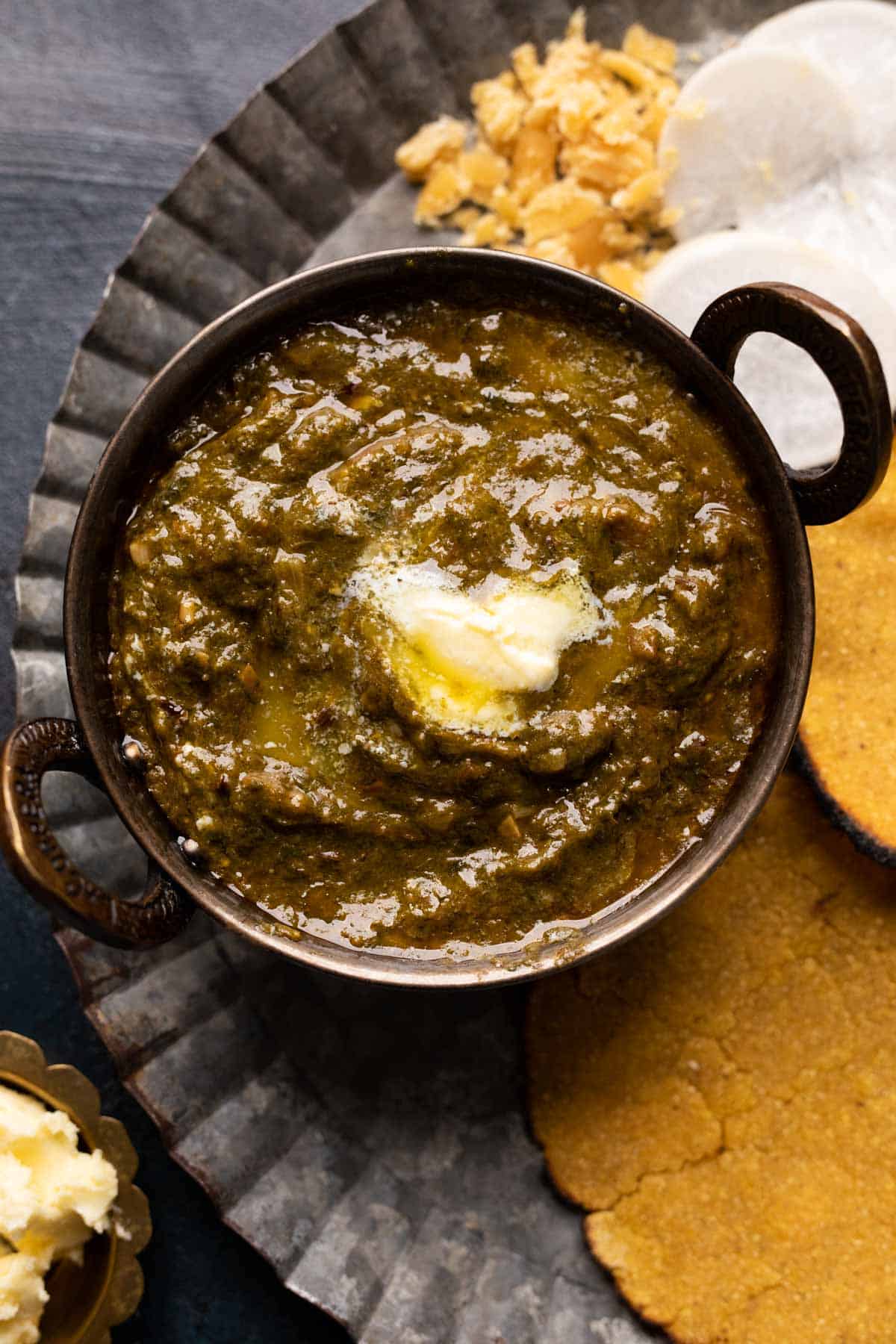
Come winters, making sarson da saag and makki roti is an absolute must. But traditionally, making sarson ka saag is quite a lengthy process that involves cooking the leafy greens in a large earthen pot until they’re soft and mushy. It is then ground to a coarse paste using a wooden whisk, before finally tempering it with ghee, onions, tomatoes and a few spices.
But my sarson ka saag recipe is simpler and a whole lot quicker. We use a pressure cooker to cook the greens a lot faster, before tempering it as usual. But don’t worry, using a pressure cooker doesn’t affect the taste or texture in way.
Jump to section: Sarson ka Saag
Why You’ll Love This Recipe
- By pressure cooking the greens, the cooking time is reduced to nearly half and the entire dish comes together in less than an hour.
- It is the perfect way to include greens and other fresh winter produce in your family’s diet.
- Despite its long list of ingredients, this dish is surprisingly easy to make.
- Can be made in a large batch and frozen for future use.
- Can be made ahead as this dish tastes a lot better the next day.
- The combination of leafy greens makes this dish a rich source of fibre, antioxidants and vitamins.
- This recipe is naturally gluten free and can be easily made vegan by excluding ghee and curd.
Ingredient you Need
Here are the main ingredients you’ll need to make some delicious sarson ka saag this winter:
- Sarson/mustard leaves: Sarson or mustard leaves have a dark green colour and a sharp, pungent taste. This winter produce is the star ingredient of this recipe. While it is best to use fresh leaves, you can easily replace them with pre-cut, cleaned and even frozen mustard leaves.
- Other greens: This recipe uses spinach and bathua leaves to balance out the sharp taste of sarson and add a dash of earthiness. If you don’t have access to bathua, you can easily replace it with methi (fresh fenugreek leaves), kale, collard greens or arugula.
- Radish and radish greens: Radish and radish greens enhance the flavour of mustard.
- Ginger and garlic: For flavour, balance and aroma
- Green garlic: Optional but adding a dash of green garlic when cooking the greens makes this more garlicky
- Makki atta: Makki atta or maize flour is used to thicken and make the saag creamy
- Ghee: Ghee is used along with mustard oil in the tempering process
- White butter: A must in my opinion for a well rounded flavour
How to make Sarson ka Saag
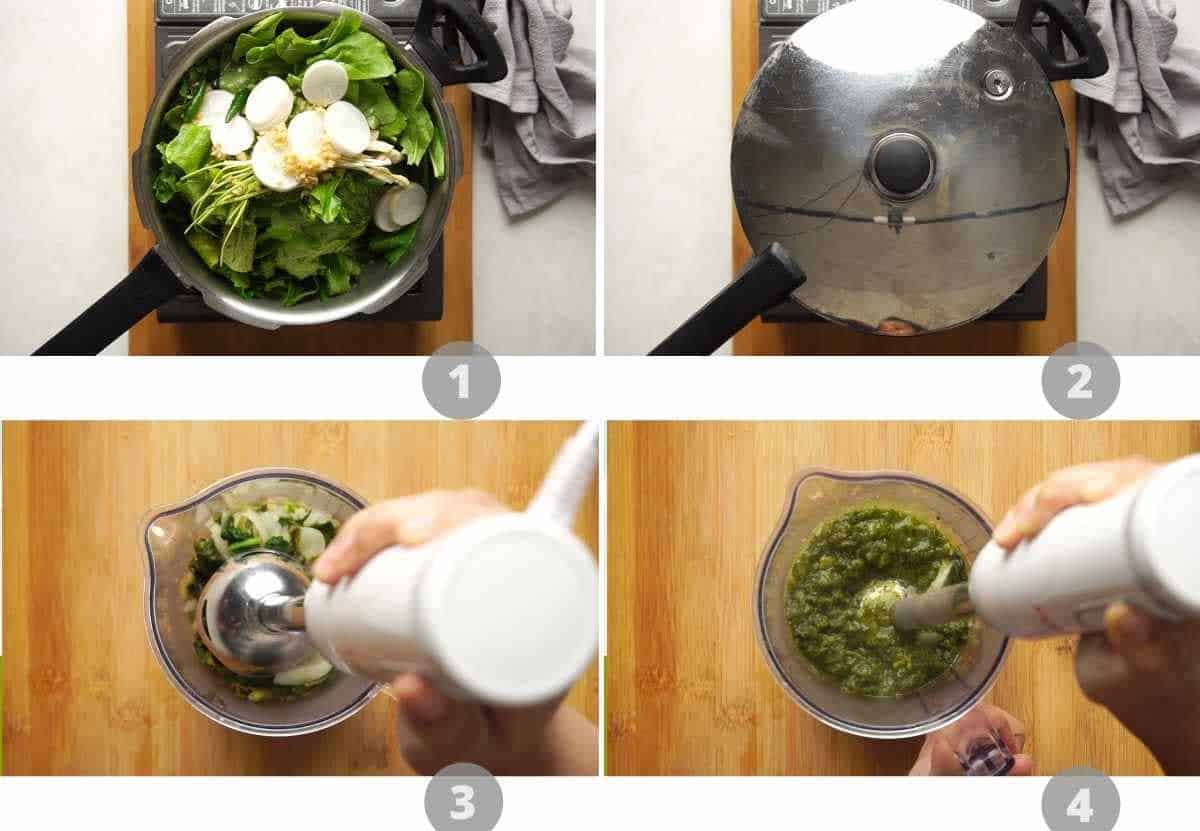
- Pressure cook mustard leaves, bathua, spinach, radish leaves, radish, green garlic, ginger, garlic, green chillies with a cup of water for 2-3 whistles or approx 10-15 minutes
- Let the steam escape completely before opening the pressure cooker
- Let this cool and grind only the greens to a coarse paste, while reserving any water in the pressure cooker.
- I prefer using a stick blender so I can control the blending. The consistency should be coarse and it should look like the greens were chopped finely. If you don’t have a stick blender, pulse the mixture in a mixture grinder and check every few seconds
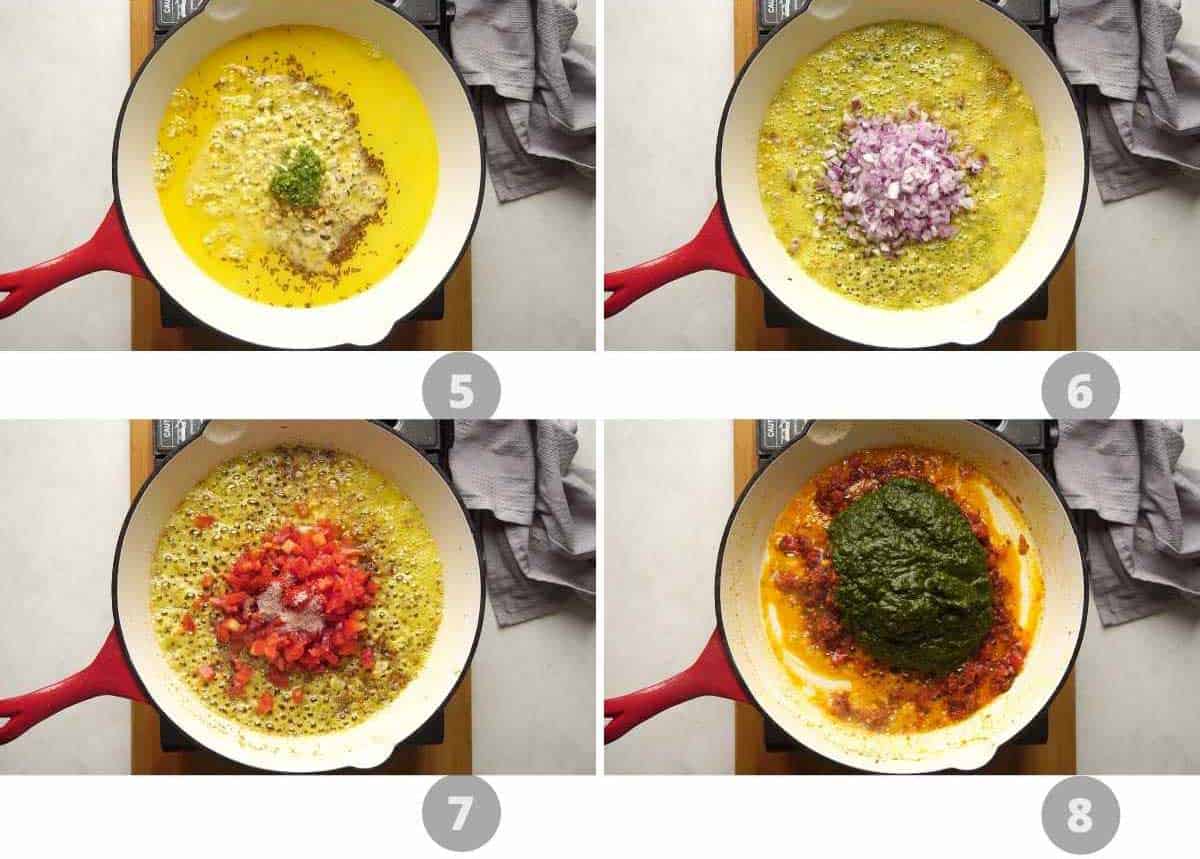
5. Heat mustard oil and ghee and add jeera, ginger, garlic, green chilli paste.
6. Saute for a minute and add onions. Cook till translucent
7. Add tomatoes, chilli powder and salt and cook till mushy.
8. Add the greens mixture to the onion tomato paste
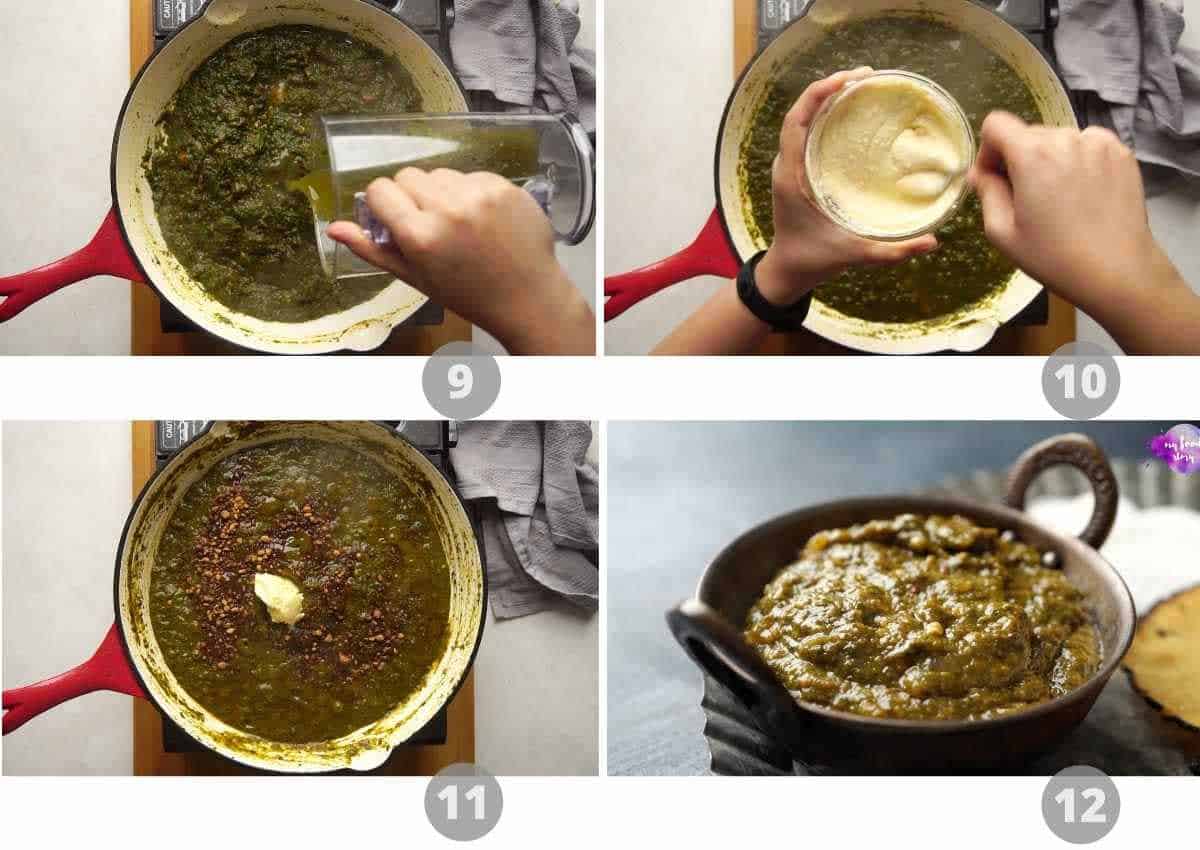
8. Also add the reserved water plus an additional half cup of water and cook for 5-10 minutes till you start seeing some oil on top.
9. Whisk together curd and makki atta and add the mixture along with jaggery to the pan. Bring this to a quick boil while stirring continuously to avoid any lumps.
10. Once it starts boiling; reduce the flame, adjust water if required and cook covered for 5-10 minutes or till you start seeing specks of fat float on top. Add a big dollop of makhan on top.
11. Serve hot with makki ki rotis
Frequently Asked Questions
After separating the leaves from the stem, place the leaves in a large bowl. Fill it up with water and swish the leaves around. Remove the leaves and you’ll notice all the dirt settling in the water at the bottom. Throw the water and repeat the process a few times till there is no more dirt. Always wash the leaves just before using so that they don’t rot from the moisture.
Absolutely! Sarson ka saag is freezer-friendly and stays well for up to a month both with or without the tadka. I usually cook a large batch of the greens, allow them to cool down completely and then store them in zip lock bags in the freezer. When I want to eat it, I simply allow it defrost on the counter, reheat and add the tadka. It tastes absolutely delicious every time.
Sarson or mustard leaves naturally have a slightly bitter and pungent taste. But if your greens taste excessively bitter, you can simply reduce their quantity and add more spinach and/or other greens. The tempering process and using green garlic, ginger and tomatoes will further help reduce the bitterness.
Richa’s Top Tips
- Leafy greens are usually covered in dirt and mud. Thoroughly wash the leaves under running water to get rid of all the impurities before cooking them.
- Since we are grinding the greens in this recipe, there’s no need to chop them. But if you want to try the traditional method of using a wooden whisk to mash the greens, make sure to finely chop all the greens before adding them to the pressure cooker.
- Sarson da saag usually has a coarse, creamy texture. I like to achieve this using a stick blender in place of the usual mixture-grinder. A stick blender allows for better control and helps me attain that beautiful coarse texture every time.
- If you don’t have a stick blender, pulse the mixture in a mixture grinder and check every few seconds.
- This recipe can even be prepared with frozen greens. Just thaw and squeeze out any excess liquid before cooking it.
Storage Tips
- If you are making a large batch, refrigerate the extra saag in an airtight container without tempering. This saag recipe stays good in the refrigerator for up to 4 days.
- It’s also very freezer-friendly and can be frozen for up to a month.
Customisation Tips
- For a more wholesome dish, you can always add paneer or chicken to the saag. Check out my recipes for authentic saag paneer and saag chicken for some inspiration.
- If you don’t have access to any greens mentioned in the recipe (except sarson), feel free to replace it with methi (fresh fenugreek leaves), kale, collard greens or arugula.
Serving Ideas
- Serve hot sarson ka saag with makki di roti and a generous dollop of white butter or homemade makhan on top.
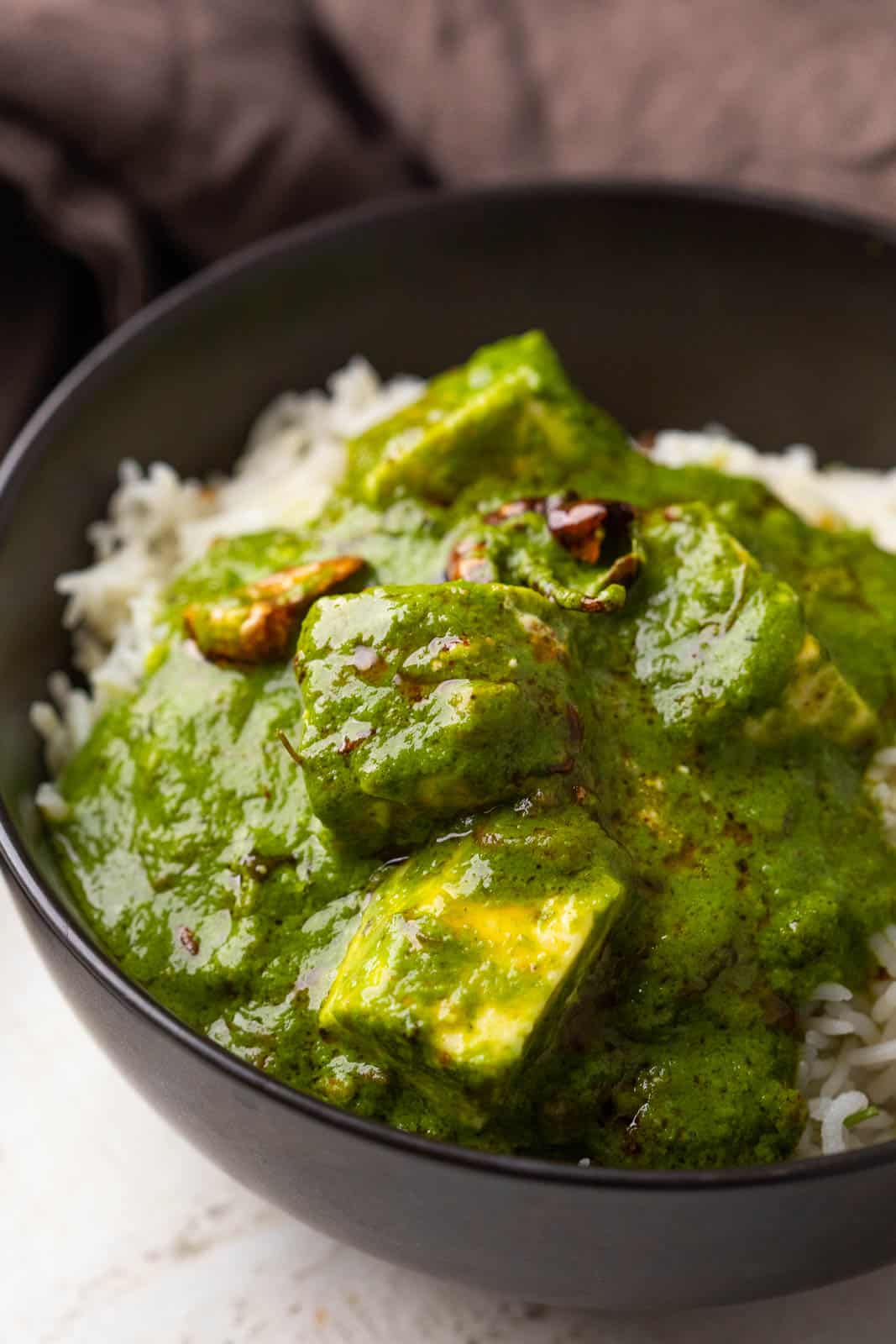
- Pair it with steamed basmati rice for a comforting, everyday meal.
- Add a side of jaggery or gur to balance the earthy bitterness of the greens.
- Serve alongside cucumber raita and sliced onions with lemon and green chillies for freshness and crunch.
- Turn leftovers into a fuller spread by pairing the saag with plain parathas or rotis for an easy next-day lunch.
Sarson ka saag is the perfect dish to celebrate winters and the bountiful fresh produce. The creamy texture and the garlic-y rustic flavours are sure to leave you craving for more.
If you make this recipe, don’t forget to tag me on stories and send me your recreations over in my DMs @my_foodstory.
Watch Sarson Ka Saag Recipe Video
LOVE THIS RECIPE? Subscribe to my newsletter and be the first to receive all new recipes!

Punjabi Style Sarson ka Saag
Equipment
Ingredients
Pressure Cook
- 2 bunches Mustard Leaves approx 200g, washed and stems removed
- 1 packed cup Bathua leaves approx 65g, washed and stems removed
- 1 packed cup Spinach Leaves approx 50g, washed and stems removed
- 1 packed cup Radish Leaves leaves for 1-2 radishes
- 1 small Radish diced, approx 70g
- 10 g Green Garlic Scapes if unavailable use 1 tablespoon chopped Garlic instead
- 1 tablespoon chopped Ginger
- 2 Green Chillies
Other Ingredients
- 1/4 cup Mustard Oil
- 2 tablespoons Ghee
- 1 teaspoon Cumin Seeds
- 2 tablespoons finely chopped Garlic
- 1 teaspoon chopped Ginger
- 1 teaspoon Green Chilli Paste
- 3/4 cup chopped Onions approx 90g
- 1 cup chopped Tomatoes
- 1 teaspoon Chilli Powder or paprika
- 1-1.5 tsp Salt
- 1/2 cup Curds or yoghurt
- 3 tablespoons Makki Atta
- 1/4 cup grated Jaggery
- 2-3 tablespoons White Butter for serving
Instructions
- Pressure cook mustard leaves, bathua, spinach, radish leaves, radish, green garlic, ginger, garlic, green chillies with a cup of water for 2-3 whistles or approx 10-15 minutes
- Let this cool and grind only the greens to a coarse paste, while reserving any water in the pressure cooker. I prefer using a stick blender so I can control the blending
- Heat mustard oil and ghee and add jeera, ginger, garlic, green chilli paste and onions. Cook till translucent and add tomatoes, chilli powder and salt and cook till mushy.
- Meanwhile, whisk together yoghurt and makki atta and keep aside.
- Add the greens mixture to the onion tomato paste along with the reserved water plus an additional half cup of water and cook for 5-10 minutes till you start seeing some oil on top.
- Add the curd mixture along with jaggery. Bring this to a quick boil while stirring continuously. Once it starts boiling, reduce the flame, adjust water if required and cook covered for 5-10 minutes or till you start seeing specks of fat float on top. Serve hot with makki ki rotis
Video
Notes
- Leafy greens are usually covered in dirt and mud. Thoroughly wash the leaves under running water to get rid of all the impurities before cooking them.
- Since we are grinding the greens in this recipe, there’s no need to chop them. But if you want to try the traditional method of using a wooden whisk, make sure to finely chop all the greens before adding them to the pressure cooker.
- Sarson da saag usually has a coarse, creamy texture. I like to achieve this using a stick blender in place of the usual mixture-grinder. A stick blender allows for better control and helps me attain that beautiful coarse texture every time.
- This recipe can even be prepared with frozen greens. Just thaw and squeeze out any excess liquid before cooking it.
- If you are making a large batch, refrigerate the extra saag in an airtight container without tempering. This saag recipe stays good in the refrigerator for up to 4 days and can be frozen for up to a month.
Nutrition
This article has been researched and written by Urvi Dalal
The post Sarson ka Saag – Punjabi Style appeared first on My Food Story.