Reading view

There are new articles available, click to refresh the page.

How to use Workout Buddy with Apple Watch and iOS 26

By: Rob Webb

Apple’s iOS 26 and watchOS 26 introduced a new fitness companion called Workout Buddy. This feature uses Apple Intelligence to provide spoken feedback during workouts and give motivation based on your activity history. Workout Buddy analyzes your pace, heart rate, distance and other metrics to deliver real-time encouragement and performance insights directly through connected Bluetooth headphones. It works in conjunction with the Workout app on Apple Watch and is partially controlled through the Fitness app on iPhone. This guide walks you through everything needed to set up and use Workout Buddy effectively during workouts.

What Workout Buddy does

It’s important to note that Workout Buddy is not a full coaching program. Instead, it adds to your workout with spoken cues that reflect how your session is going. Workout Buddy can remind you of your weekly activity totals, alert you to personal bests or performance milestones and provide an overview when you’re finished. It is designed to feel like a supportive training partner rather than a strict coach.

The feature operates in English by default and uses a text-to-speech model trained on voices from Apple Fitness+ trainers. It is available for a subset of workout types, including running, walking, cycling, high-intensity interval training (HIIT) and strength training. It requires on-device Apple Intelligence, which means you’ll need to keep one of the latest iPhones running updated software nearby during workouts. 

Supported models include iPhone 15 Pro, iPhone 15 Pro Max and any iPhone 16 model. You’ll also need an Apple Watch running watchOS 26.  

Requirements before you begin

Before Workout Buddy appears in your Fitness app or Workout app you must ensure a few things are in place. First, your Apple Watch must be running watchOS 26 or later and paired to an iPhone with iOS 26 installed. Second, your iPhone must be capable of on-device Apple Intelligence, meaning you must own one of the supported iPhone models we mentioned above and have Apple Intelligence enabled in the phone’s settings.

You’ll also need Bluetooth headphones paired with either your iPhone or your Apple Watch. Workout Buddy’s audio feedback cannot play through the watch speaker so headphones are essential. Lastly, your device language must be set to English, at least initially. If any of these things are missing, the option to enable Workout Buddy may not appear.

How to turn on Workout Buddy from iPhone

While much of the interaction with Workout Buddy happens on Apple Watch during workouts, you can enable it and choose voice options from the Fitness app on iPhone.

Open the Fitness app on your iPhone and tap the Workout tab at the bottom. Scroll through the list of workout types until you find one you plan to use with Workout Buddy. Tap the waveform bubble icon associated with that workout. This will bring up settings where you can turn on Workout Buddy. Flip the toggle to enable it and choose a voice from the available options. Once you have selected a voice, close that screen and your choice is saved. When you start this workout type on Apple Watch, Workout Buddy will activate.

Enabling Workout Buddy for a workout type on iPhone means you do not need to toggle it on separately on Apple Watch each time for that specific workout. However, you may still adjust it from the watch interface for more granular control.

How to turn on Workout Buddy on Apple Watch

To use Workout Buddy during a session, open the Workout app on your Apple Watch. Turn the Digital Crown to scroll through and select the workout you want to do, such as Outdoor Run, Outdoor Walk, Outdoor Cycle, HIIT or Strength Training. If you want to see all available workouts, tap the Add button at the bottom.

Once the workout type is selected, look for the Alerts button on screen. Tap Alerts then scroll until you see Workout Buddy. Tap Workout Buddy and flip the switch to on. You will then be asked to choose a voice if one is not already selected on your iPhone. After selecting the voice, return to the previous screen and tap Start. Workout Buddy will begin working as soon as the workout does.

Using Workout Buddy during a workout

Once you start an exercise on your Watch or iPhone, Workout Buddy will speak to you through your connected headphones. The feedback is designed to be encouraging and relevant to your pace, performance or milestones. It may mention your current progress toward activity goals, pace, splits, personal bests or other highlights from your fitness data. At the end of your session Workout Buddy will offer a summary of key metrics like duration distance and calorie burn.

While a workout is active, you can temporarily mute the audio if you need silence. On Apple Watch during the session, swipe right to reveal controls then tap Mute. This pauses Workout Buddy’s spoken commentary without disabling the feature entirely.

Customizing and managing Workout Buddy settings

Workout Buddy is enabled on a per-workout-type basis. If you prefer voice feedback for running but silence for strength training, you can enable it for one and leave it off for the other. The Fitness app on iPhone allows you to set a default voice preference for each workout type. On Apple Watch you can quickly toggle the feature on or off before starting a session.

If Workout Buddy does not appear as an option for a particular workout type, you may need to check compatibility. Apple’s documentation indicates that only certain types* are supported initially and that the option will not appear for unsupported workouts.

*Apple Watch SE (2nd generation), Apple Watch SE 3, Apple Watch Series 6, Apple Watch Series 7, Apple Watch Series 8, Apple Watch Series 9, Apple Watch Series 10, Apple Watch Series 11, Apple Watch Ultra, Apple Watch Ultra 2, Apple Watch Ultra 3

Troubleshooting common issues

If Workout Buddy fails to activate make sure your devices meet the requirements outlined above. Confirm that your iPhone with Apple Intelligence is nearby and that Bluetooth headphones are connected. If audio feedback is missing, ensure headphones are paired correctly and that the language is set to English. Some users have reported that if the headphones are paired only to the Watch rather than the iPhone, it can interfere with feedback. Switching to the iPhone often resolves that issue.

For workout types where Workout Buddy previously worked but suddenly does not appear, you may try toggling the feature off and on again in the Fitness app or rebooting both devices. In rare cases removing and re-adding the workout type on Apple Watch can refresh the settings.

This article originally appeared on Engadget at https://www.engadget.com/wearables/how-to-use-workout-buddy-with-apple-watch-and-ios-26-130000922.html?src=rss

©
A weird, itchy rash is linked to the keto diet—but no one knows why

By: Beth Mole

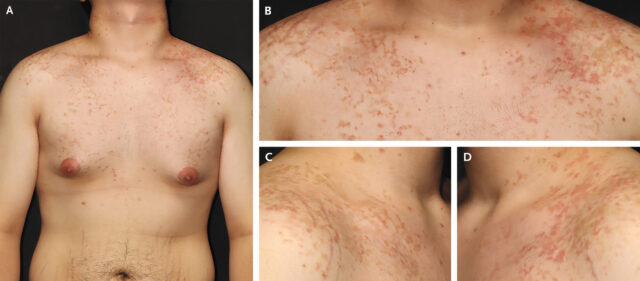
A 20-year old man in Taiwan went to a dermatology clinic for a strange rash that had developed across his shoulders and chest. The raised, red, and itchy condition had been bothering him for a full month. By this point, he had also developed patches of pigmented skin interlaced with the red rash.

According to a case report in the New England Journal of Medicine, a skin biopsy showed swelling between his skin cells and inflammation around blood vessels, but testing came up negative for other common signs of skin conditions, leaving doctors with few leads. The doctors ultimately came to a diagnosis not by analyzing his skin further but by hearing about his diet.

The man's chest and shoulders, showing his rash and hyperpigmentation. Credit: New England Journal of Medicine, 2026
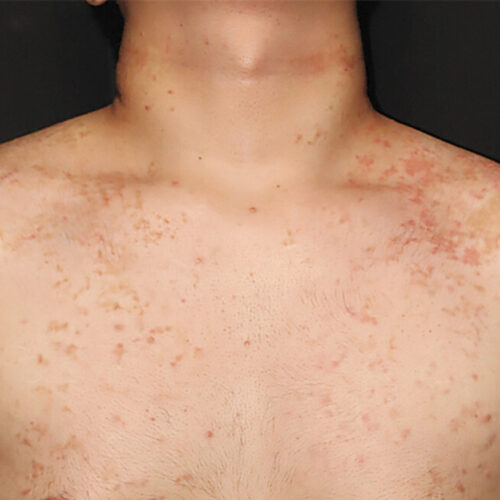
The man told doctors that two months prior to his clinic appointment—a month before his rash developed—he had switched to a ketogenic diet, which is a high-fat but very low-carbohydrate eating pattern. This diet forces the body to shift from using glucose (sugar derived from carbohydrates) as an energy source to fat instead.

Read full article

Comments

© New England Journal of Medicine, 2026

Measles is surging in the US. Wastewater tracking could help.

This week marked a rather unpleasant anniversary: It’s a year since Texas reported a case of measles—the start of a significant outbreak that ended up spreading across multiple states. Since the start of January 2025, there have been over 2,500 confirmed cases of measles in the US. Three people have died.

As vaccination rates drop and outbreaks continue, scientists have been experimenting with new ways to quickly identify new cases and prevent the disease from spreading. And they are starting to see some success with wastewater surveillance.

After all, wastewater contains saliva, urine, feces, shed skin, and more. You could consider it a rich biological sample. Wastewater analysis helped scientists understand how covid was spreading during the pandemic. It’s early days, but it is starting to help us get a handle on measles.

Globally, there has been some progress toward eliminating measles, largely thanks to vaccination efforts. Such efforts led to an 88% drop in measles deaths between 2000 and 2024, according to the World Health Organization. It estimates that “nearly 59 million lives have been saved by the measles vaccine” since 2000.

Still, an estimated 95,000 people died from measles in 2024 alone—most of them young children. And cases are surging in Europe, Southeast Asia, and the Eastern Mediterranean region.

Last year, the US saw the highest levels of measles in decades. The country is on track to lose its measles elimination status—a sorry fate that met Canada in November after the country recorded over 5,000 cases in a little over a year.

Public health efforts to contain the spread of measles—which is incredibly contagious—typically involve clinical monitoring in health-care settings, along with vaccination campaigns. But scientists have started looking to wastewater, too.

Along with various bodily fluids, we all shed viruses and bacteria into wastewater, whether that’s through brushing our teeth, showering, or using the toilet. The idea of looking for these pathogens in wastewater to track diseases has been around for a while, but things really kicked into gear during the covid-19 pandemic, when scientists found that the coronavirus responsible for the disease was shed in feces.

This led Marlene Wolfe of Emory University and Alexandria Boehm of Stanford University to establish WastewaterSCAN, an academic-led program developed to analyze wastewater samples across the US. Covid was just the beginning, says Wolfe. “Over the years we have worked to expand what can be monitored,” she says.

Two years ago, for a previous edition of the Checkup, Wolfe told Cassandra Willyard that wastewater surveillance of measles was “absolutely possible,” as the virus is shed in urine. The hope was that this approach could shed light on measles outbreaks in a community, even if members of that community weren’t able to access health care and receive an official diagnosis. And that it could highlight when and where public health officials needed to act to prevent measles from spreading. Evidence that it worked as an effective public health measure was, at the time, scant.

Since then, she and her colleagues have developed a test to identify measles RNA. They trialed it at two wastewater treatment plants in Texas between December 2024 and May 2025. At each site, the team collected samples two or three times a week and tested them for measles RNA.

Over that period, the team found measles RNA in 10.5% of the samples they collected, as reported in a preprint paper published at medRxiv in July and currently under review at a peer-reviewed journal. The first detection came a week before the first case of measles was officially confirmed in the area. That’s promising—it suggests that wastewater surveillance might pick up measles cases early, giving public health officials a head start in efforts to limit any outbreaks.

There are more promising results from a team in Canada. Mike McKay and Ryland Corchis-Scott at the University of Windsor in Ontario and their colleagues have also been testing wastewater samples for measles RNA. Between February and November 2025, the team collected samples from a wastewater treatment facility serving over 30,000 people in Leamington, Ontario. 

These wastewater tests are somewhat limited—even if they do pick up measles, they won’t tell you who has measles, where exactly infections are occurring, or even how many people are infected. McKay and his colleagues have begun to make some progress here. In addition to monitoring the large wastewater plant, the team used tampons to soak up wastewater from a hospital lateral sewer.

They then compared their measles test results with the number of clinical cases in that hospital. This gave them some idea of the virus’s “shedding rate.” When they applied this to the data collected from the Leamington wastewater treatment facility, the team got estimates of measles cases that were much higher than the figures officially reported. 

Their findings track with the opinions of local health officials (who estimate that the true number of cases during the outbreak was around five to 10 times higher than the confirmed case count), the team members wrote in a paper published on medRxiv a couple of weeks ago.

There will always be limits to wastewater surveillance. “We’re looking at the pool of waste of an entire community, so it’s very hard to pull in information about individual infections,” says Corchis-Scott.

Wolfe also acknowledges that “we have a lot to learn about how we can best use the tools so they are useful.” But her team at WastewaterSCAN has been testing wastewater across the US for measles since May last year. And their findings are published online and shared with public health officials.

In some cases, the findings are already helping inform the response to measles. “We’ve seen public health departments act on this data,” says Wolfe. Some have issued alerts, or increased vaccination efforts in those areas, for example. “[We’re at] a point now where we really see public health departments, clinicians, [and] families using that information to help keep themselves and their communities safe,” she says.

McKay says his team has stopped testing for measles because the Ontario outbreak “has been declared over.” He says testing would restart if and when a single new case of measles is confirmed in the region, but he also thinks that his research makes a strong case for maintaining a wastewater surveillance system for measles.

McKay wonders if this approach might help Canada regain its measles elimination status. “It’s sort of like [we’re] a pariah now,” he says. If his approach can help limit measles outbreaks, it could be “a nice tool for public health in Canada to [show] we’ve got our act together.”

This article first appeared in The Checkup, MIT Technology Review’s weekly biotech newsletter. To receive it in your inbox every Thursday, and read articles like this first, sign up here.

US officially out of WHO, leaving hundreds of millions of dollars unpaid

By: Beth Mole

As of today, the US is no longer a member of the World Health Organization—and it leaves the United Nations health agency with hundreds of millions of dollars in unpaid bills, according to reporting by Stat News.

A year ago today, the US informed the WHO of its intent to exit, setting the clock for a one-year withdrawal period mandated in a 1948 joint resolution of Congress. But, in practice, the withdrawal was immediate, with the Trump administration cutting all ties with WHO upon the announcement. In explaining his reasoning for leaving the WHO, Trump referenced his long-standing complaints about the agency’s handling of the COVID-19 pandemic, dues payments, and alleged protection of China. Trump had attempted to extract the US from WHO during his first term, but the Biden administration rescinded the withdrawal on the first day in office, well before the one-year notice period was reached.

The joint resolution also stipulated that the US would have to pay its financial obligations in full before departing. But, that too has not been honored by the Trump administration. According to Stat, the US owed the WHO $278 million in dues, which are a percentage of each member state’s gross domestic product. That dues payment covered the country's 2024–2025 membership, as WHO runs on a two-year budget cycle.

Read full article

Comments

© Getty | FABRICE COFFRINI

VA officially lifts hiring freeze, but staffing caps still in place for shrinking workforce

The Department of Veterans Affairs is officially lifting a hiring freeze on its health care workforce, after shedding tens of thousands of positions last year.

But the VA, which saw the first-ever workforce net decrease, is unlikely to hire its way to a higher headcount than what it currently has.

A report from Democrats on the Senate VA Committee released Thursday finds VA facilities are still operating “within strict staffing caps.”

“Facility leadership in the field are still reporting denials and severe delays in hiring approvals for all positions from clinical staff to custodians to claims processors,” lawmakers wrote.

The report claims the VA lost more than 40,000 employees last year, and that 88% of them worked in health care. About 10,000 of those employees worked in frontline positions that the department has struggled to fill.

VA workforce data shows the department saw a net decrease of 3,000 registered nurses last year, a net decrease of 1,000 physicians and a net decrease of 1,550 appointment schedulers.

In a typical year, the VA’s workforce sees a net gain of about 10,000 employees. But under the Trump administration, the VA sought to eliminate 30,000 positions through attrition by the end of fiscal 2025. The department previously envisioned cutting 83,000 jobs in part through layoffs.

VA Press Secretary Pete Kasperowicz disputed several of the report’s findings. He said the VA achieved its headcount reduction goal of 30,000 employees, but didn’t lose 40,000 employees, as Senate Democrats claim. The VA also disputes the report’s claims that veterans, in some cases, are seeing longer wait times for VA mental health care appointments. 

Committee Ranking Member Richard Blumenthal (D-Conn.) told reporters in a call that the report shows a “diminished” VA that is unable to keep up with the needs of veterans.

“The loss of talent is so deeply regrettable, and the results are basically longer wait times,” Blumenthal said.

Kasperowicz said in a statement that, “while Blumenthal stages political theater, VA is making major improvements for veterans under President Trump.”

The VA fired about 2,400 probationary employees last year, but largely reduced its workforce through voluntary separation incentives.

VA workforce data shows the department made about 21,000 hires last year, offsetting the total impact of these workforce cuts.  The latest data from the Office of Personnel Management shows the VA saw a net reduction of more than 27,000 positions in 2025.

But Blumenthal said these new hires have done little to improve the VA’s capacity.

“They are not the same skilled people as have been either fired or lost because of the toxic environment that’s been created in many areas of the VA,” he said.


VA workforce data shows the department made about 21,000 hires last year, offsetting the total impact of these workforce cuts.  The latest data from the Office of Personnel Management shows the VA saw a net reduction of more than 27,000 positions in 2025 (Source: OPM)In a memo last week, VA Under Secretary for Health John Bartrum told department leaders that “all hiring freeze restrictions” still in place at the Veterans Health Administration have been lifted.

Bartrum wrote in the memo that each Veterans Integrated Service Network (VISN) “has been allocated a baseline number of positions calculated on their budgeted FTE plus anticipated needs for growth,” and that requests to exceed that headcount must be approved by the VA Strategic Hiring Committee.

“Leaders and managers must manage operational needs within their cumulative full-time equivalent (FTE) budget and position thresholds,” Bartrum wrote.

The report claims veterans are seeing longer wait times for mental health care appointments. In early January, new-patient wait times for individual mental health care appointments in 14 states exceeded 40 days — twice the wait time threshold that allows veterans to seek treatment outside the VA’s health care network. Those states include California, Colorado, Connecticut, Iowa, Idaho, Kansas, Maryland, Maine, North Carolina, North Dakota, Nebraska, New Hampshire, New Mexico, and Virginia. According to the report, the national mean for new patients to sign up for individual mental health care appointments is 35 days.

However, Kasperowicz said VA data shows wait times for mental health care were under six days for established patients, and 19 days for new patients. 

The VA eased requirements for veterans to seek care from non-VA “community care” last year, and has increased spending on community care. The department is embarking on a $1 trillion next-generation community care contract, one of the largest government contracts in U.S. history.

House VA Committee Chairman Mike Bost (R-Ill.) said in a hearing Thursday that the contract, “if done properly,” would give the VA “unprecedented flexibility” to award contract and task orders that would lead to better health care outcomes for veterans.

In their report, Senate VA Committee Democrats found the VA last year cancelled about 2,000 contracts and let another 14,000 expire without plans to renew or replace those services.

VA Secretary Doug Collins has repeatedly defended his plans for a smaller workforce. He told lawmakers last May that increased staffing hasn’t always led to better outcomes for veterans.

Last year, the department decreased its backlog of benefits claims by nearly 60% despite a net decrease of about 2,000 VA claims processors.

Kayla Williams, a former VA assistant secretary and a senior advisor for the Vet Voice Foundation, said the department reduced the initial claims backlog, but has grown the volume of claims requiring higher-level review.

“These actions were never about efficiency or cost savings,” Williams said.

The VA anticipated a spike in the backlog after Congress passed the PACT Act, making more veterans eligible for VA health care and benefits, because they were exposed to toxic substances during their military service.

Lindsay Church, the executive director of Minority Veterans of America, said 1.2 million veterans have lost their VA providers under the Trump administration.

“Clinics can’t keep care teams staffed. Appointments are being canceled or delayed, and veterans who rely on consistent, trauma-informed care are being forced into instability and pressured into community care. Mental health access, which has always been a crisis for our community for decades, has deteriorated rapidly,” Church said.

Mary Jean Burke, the first executive vice president of the American Federation of Government Employees National VA Council, said that by the end of 2026, most VA facilities are on track to lose about 2-5% of their psychologists — and that locations, including Seattle and Buffalo, are on track to see “double-digit” attrition.

Burke said VA health care employees have left because the VA has slashed jobs, stripped away remote work and telework, and brought staff back into “overcrowded” spaces.

“These punishing policies haven’t just lowered morale, they end up compromising the quality of care we provide,” Burke said.

Collins is scheduled to testify before the Senate VA Committee next Wednesday, in a hearing about the department’s ongoing reorganization efforts.

The post VA officially lifts hiring freeze, but staffing caps still in place for shrinking workforce first appeared on Federal News Network.

© AP Photo/Charles Dharapak

The seal is seen at the Department of Veterans Affairs building in Washington, June 21, 2013. (AP Photo/Charles Dharapak, File)

“Dr. Google” had its issues. Can ChatGPT Health do better?

For the past two decades, there’s been a clear first step for anyone who starts experiencing new medical symptoms: Look them up online. The practice was so common that it gained the pejorative moniker “Dr. Google.” But times are changing, and many medical-information seekers are now using LLMs. According to OpenAI, 230 million people ask ChatGPT health-related queries each week. 

That’s the context around the launch of OpenAI’s new ChatGPT Health product, which debuted earlier this month. It landed at an inauspicious time: Two days earlier, the news website SFGate had broken the story of Sam Nelson, a teenager who died of an overdose last year after extensive conversations with ChatGPT about how best to combine various drugs. In the wake of both pieces of news, multiple journalists questioned the wisdom of relying for medical advice on a tool that could cause such extreme harm.

Though ChatGPT Health lives in a separate sidebar tab from the rest of ChatGPT, it isn’t a new model. It’s more like a wrapper that provides one of OpenAI’s preexisting models with guidance and tools it can use to provide health advice—including some that allow it to access a user’s electronic medical records and fitness app data, if granted permission. There’s no doubt that ChatGPT and other large language models can make medical mistakes, and OpenAI emphasizes that ChatGPT Health is intended as an additional support, rather than a replacement for one’s doctor. But when doctors are unavailable or unable to help, people will turn to alternatives. 

Some doctors see LLMs as a boon for medical literacy. The average patient might struggle to navigate the vast landscape of online medical information—and, in particular, to distinguish high-quality sources from polished but factually dubious websites—but LLMs can do that job for them, at least in theory. Treating patients who had searched for their symptoms on Google required “a lot of attacking patient anxiety [and] reducing misinformation,” says Marc Succi, an associate professor at Harvard Medical School and a practicing radiologist. But now, he says, “you see patients with a college education, a high school education, asking questions at the level of something an early med student might ask.”

The release of ChatGPT Health, and Anthropic’s subsequent announcement of new health integrations for Claude, indicate that the AI giants are increasingly willing to acknowledge and encourage health-related uses of their models. Such uses certainly come with risks, given LLMs’ well-documented tendencies to agree with users and make up information rather than admit ignorance. 

But those risks also have to be weighed against potential benefits. There’s an analogy here to autonomous vehicles: When policymakers consider whether to allow Waymo in their city, the key metric is not whether its cars are ever involved in accidents but whether they cause less harm than the status quo of relying on human drivers. If Dr. ChatGPT is an improvement over Dr. Google—and early evidence suggests it may be—it could potentially lessen the enormous burden of medical misinformation and unnecessary health anxiety that the internet has created.

Pinning down the effectiveness of a chatbot such as ChatGPT or Claude for consumer health, however, is tricky. “It’s exceedingly difficult to evaluate an open-ended chatbot,” says Danielle Bitterman, the clinical lead for data science and AI at the Mass General Brigham health-care system. Large language models score well on medical licensing examinations, but those exams use multiple-choice questions that don’t reflect how people use chatbots to look up medical information.

Sirisha Rambhatla, an assistant professor of management science and engineering at the University of Waterloo, attempted to close that gap by evaluating how GPT-4o responded to licensing exam questions when it did not have access to a list of possible answers. Medical experts who evaluated the responses scored only about half of them as entirely correct. But multiple-choice exam questions are designed to be tricky enough that the answer options don’t give them entirely away, and they’re still a pretty distant approximation for the sort of thing that a user would type into ChatGPT.

A different study, which tested GPT-4o on more realistic prompts submitted by human volunteers, found that it answered medical questions correctly about 85% of the time. When I spoke with Amulya Yadav, an associate professor at Pennsylvania State University who runs the Responsible AI for Social Emancipation Lab and led the study, he made it clear that he wasn’t personally a fan of patient-facing medical LLMs. But he freely admits that, technically speaking, they seem up to the task—after all, he says, human doctors misdiagnose patients 10% to 15% of the time. “If I look at it dispassionately, it seems that the world is gonna change, whether I like it or not,” he says.

For people seeking medical information online, Yadav says, LLMs do seem to be a better choice than Google. Succi, the radiologist, also concluded that LLMs can be a better alternative to web search when he compared GPT-4’s responses to questions about common chronic medical conditions with the information presented in Google’s knowledge panel, the information box that sometimes appears on the right side of the search results.

Since Yadav’s and Succi’s studies appeared online, in the first half of 2025, OpenAI has released multiple new versions of GPT, and it’s reasonable to expect that GPT-5.2 would perform even better than its predecessors. But the studies do have important limitations: They focus on straightforward, factual questions, and they examine only brief interactions between users and chatbots or web search tools. Some of the weaknesses of LLMs—most notably their sycophancy and tendency to hallucinate—might be more likely to rear their heads in more extensive conversations and with people who are dealing with more complex problems. Reeva Lederman, a professor at the University of Melbourne who studies technology and health, notes that patients who don’t like the diagnosis or treatment recommendations that they receive from a doctor might seek out another opinion from an LLM—and the LLM, if it’s sycophantic, might encourage them to reject their doctor’s advice.

Some studies have found that LLMs will hallucinate and exhibit sycophancy in response to health-related prompts. For example, one study showed that GPT-4 and GPT-4o will happily accept and run with incorrect drug information included in a user’s question. In another, GPT-4o frequently concocted definitions for fake syndromes and lab tests mentioned in the user’s prompt. Given the abundance of medically dubious diagnoses and treatments floating around the internet, these patterns of LLM behavior could contribute to the spread of medical misinformation, particularly if people see LLMs as trustworthy.

OpenAI has reported that the GPT-5 series of models is markedly less sycophantic and prone to hallucination than their predecessors, so the results of these studies might not apply to ChatGPT Health. The company also evaluated the model that powers ChatGPT Health on its responses to health-specific questions, using their publicly available HeathBench benchmark. HealthBench rewards models that express uncertainty when appropriate, recommend that users seek medical attention when necessary, and refrain from causing users unnecessary stress by telling them their condition is more serious that it truly is. It’s reasonable to assume that the model underlying ChatGPT Health exhibited those behaviors in testing, though Bitterman notes that some of the prompts in HealthBench were generated by LLMs, not users, which could limit how well the benchmark translates into the real world.

An LLM that avoids alarmism seems like a clear improvement over systems that have people convincing themselves they have cancer after a few minutes of browsing. And as large language models, and the products built around them, continue to develop, whatever advantage Dr. ChatGPT has over Dr. Google will likely grow. The introduction of ChatGPT Health is certainly a move in that direction: By looking through your medical records, ChatGPT can potentially gain far more context about your specific health situation than could be included in any Google search, although numerous experts have cautioned against giving ChatGPT that access for privacy reasons.

Even if ChatGPT Health and other new tools do represent a meaningful improvement over Google searches, they could still conceivably have a negative effect on health overall. Much as automated vehicles, even if they are safer than human-driven cars, might still prove a net negative if they encourage people to use public transit less, LLMs could undermine users’ health if they induce people to rely on the internet instead of human doctors, even if they do increase the quality of health information available online.

Lederman says that this outcome is plausible. In her research, she has found that members of online communities centered on health tend to put their trust in users who express themselves well, regardless of the validity of the information they are sharing. Because ChatGPT communicates like an articulate person, some people might trust it too much, potentially to the exclusion of their doctor. But LLMs are certainly no replacement for a human doctor—at least not yet.

The best fitness trackers for 2026

If you're looking to get fit, sleep better or just keep a closer eye on your health, a fitness wearable is a great place to start. Whether you're into intense workouts or just want to hit your step goal each day, the best fitness trackers available today can offer loads of helpful features, from sleep tracking and resting heart rate monitoring to built-in GPS and stress tracking. Some are even subtle enough to wear 24/7, like smart rings, while others double as stylish smartwatches.

There are great options out there for beginners as well as more advanced users, and the variety of features means there’s something for every lifestyle and budget. In this guide, we’ll walk you through the best fitness trackers you can buy right now, and explain who each one is best suited for.

Best fitness trackers for 2026

What do fitness trackers do best?

The answer seems simple: Fitness wearables are best at monitoring exercise, be it a 10-minute walk around the block or that half marathon you’ve been diligently training for. Obviously, smartwatches can help you reach your fitness goals too, but there are some areas where fitness bands and smart rings have proven to be the best buy: focus, design, better battery life, durability and price.

When I say “focus,” I’m alluding to the fact that fitness trackers are made to track activity well; anything else is extra. They often don’t have the bells and whistles that smartwatches do, which could distract from their advanced health tracking abilities — things like all-day resting heart rate monitoring, stress tracking, and even detailed sleep tracker insights. They also tend to have fewer sensors and internal components, which keeps them smaller and lighter. Fitness trackers are also a better option for those who just want a less conspicuous gadget on their wrists all day.

Battery life tends to be better on fitness trackers, too. While most smartwatches last one to two days on a single charge, fitness bands offer between five and seven days of battery life — and that’s with all-day and all-night use even with sleep tracking features enabled. Many fitness trackers also slot nicely into your existing ecosystem, syncing seamlessly with your smartphone, other fitness apps and cloud storage to keep all your data in one place.

When it comes to price point, there’s no competition. Most worthwhile smartwatches start at $175 to $200, but you can get a solid smart band starting at $70. That makes them a great entry point for beginners who want to track their progress without committing to a full smartwatch. Yes, more expensive bands and smart rings exist (and we recommend a few here), but you’ll find more options under $150 in the fitness tracker space than in the smartwatch space.

When to get a smartwatch instead

If you need a bit more from your wearable and don’t want to be limited to a fitness or activity tracker, a smartwatch may be the best buy for you. There are things like on-watch apps, alerts and even more robust fitness features that smartwatches have and the best fitness trackers don’t. You can use one to control smart home appliances, set timers and reminders, check weather reports and more. Some smartwatches let you choose which apps you want to receive alerts from, and the options go beyond just call and text notifications. Just make sure your smartwatch is compatible with your Android or iPhone, however, before purchasing, as not all of them work with both operating systems.

But the extra fitness features are arguably the most important thing to think about when deciding between a fitness tracker and a smartwatch. The latter devices tend to be larger, giving them more space for things like GPS, barometers, onboard music storage and more. While you can find built-in GPS on select fitness trackers, it’s not common.

If you’re someone who’s seriously training — say for a race or an endurance challenge — a dedicated running watch may be worth considering. These often provide more in-depth cardio analytics, recovery insights, and real-time pace data that go beyond what standard trackers can deliver.

Other fitness trackers we've tested

Fitbit Inspire 3

The Fitbit Inspire 3 strips out all the luxury features from the Charge 6 and keeps only the essential tracking features. You won’t get built-in GPS tracking or Fitbit Pay or Spotify control but you do get solid activity tracking, automatic workout detection, smartphone alerts and plenty more. The updated version has a sleeker design and includes a color touch display and connected GPS, the latter of which lets you track pace and distance while you run or bike outside while you have your phone with you. When compared to the Charge 6, the Inspire 3 is more fashionable, too. Its interchangeable bands let you switch up the look and feel of your tracker whenever you want, and it’s slim enough to blend in with other jewelry you might be wearing. We were also impressed by its multi-day battery life: Fitbit promises up to 10 days on a single charge, and that checked out for us. After four days of round-the-clock use, the Inspire 3 still had 66 percent battery left to go.

Fitness tracker FAQs

How long do fitness tracker batteries last?

The battery life of fitness trackers can vary depending on the model and its features. On average, most fitness trackers last between five to seven days on a single charge. Basic models with limited features could stretch up to 10 days or more. However, more advanced trackers with features like continuous heart rate monitoring, GPS, or always-on displays may need recharging after one to three days. If you're using GPS or streaming music through your fitness tracker, you'll find that this drains the battery faster. By using these features less, or turning them off, you'll extend battery life. 

This article originally appeared on Engadget at https://www.engadget.com/wearables/best-fitness-trackers-133053484.html?src=rss

©

© Fitbit / Engadget

Best fitness trackers

mRNA cancer vaccine shows protection at 5-year follow-up, Moderna and Merck say

By: Beth Mole

In a small clinical trial, customized mRNA vaccines against high-risk skin cancers appeared to reduce the risk of cancer recurrence and death by nearly 50 percent over five years when compared with standard treatment alone. That's according to Moderna and Merck, the two pharmaceutical companies that have collaborated on the experimental cancer vaccine, called intismeran autogene (mRNA-4157 or V940).

So far, the companies have only reported the top-line results in a press release this week. However, the results align closely with previous, more detailed analyses from the trial, which examined rates of recurrence and death at earlier time points, specifically at two years and three years after the treatment. More data from the trial—a Phase 2 trial—will soon be presented at a medical conference, the companies said. A Phase 3 trial is also underway, with enrollment complete.

The ongoing Phase 2 trial included 157 patients who were diagnosed with stage 3 or stage 4 melanoma and were at high risk of having it recur after surgical removal. A standard treatment to prevent recurrence after such surgery is immunotherapy, including Merck's Keytruda (pembrolizumab). This drug essentially enables immune cells, specifically T cells, to attack and kill cancer cells—something they normally do. But, in many types of cancers, including melanoma, cancer cells have the ability to bind to receptors on T cells (called PD-1 receptors), which basically shuts the T cells down. Keytruda works by physically blocking the PD-1 receptors, preventing cancer cells from binding and keeping the T cells activated so they can kill the cancer.

Read full article

Comments

© DeFodi Images

Amazon is adding AI-powered assistant to One Medical

Amazon is introducing an AI-powered assistant to One Medical, the tech-forward primary care provider it acquired in 2023. Dubbed 'Health AI,' Amazon says the tool "provides 24/7 personalized health guidance based on your medical records."

The company says Health AI can explain lab results, help manage medications, and book appointments for patients. Amazon also says it can "analyze images" but doesn't specify whether this means medical imaging or user uploaded photos. While the company specifically says the tool "complements, but does not replace," a patient's healthcare provider, it also vaguely says the AI can "answer general and complex health questions" while "considering your unique health history."

"Health AI recognizes when symptoms, situations, or specific queries require or benefit from human clinical judgment," reads the company's announcement, while giving few details on just how much medical advice the AI tool is empowered to give.

Use of AI tools brings up data privacy concerns, and Amazon says it follows HIPAA-compliant privacy and security practices. The company says that a user's conversations with Health AI are "not automatically added to your medical record." This of course implies the option to do just that. It also says the company doesn't sell members' protected health information.

One Medical has a limited number of brick-and-mortar offices in major metros throughout the US, but the focus of the company seems to be telehealth services. These services are offered as part of an annual subscription, which is discounted for Amazon Prime members. This is only the latest investment Amazon has made in the healthcare space. In recent years the tech giant has begun same-day prescription deliveries in certain markets, and built vending machines for prescription drugs.

Health AI follows the trend of AI companies competing to enter healthcare with their AI-powered chatbots. Google added an AI health coach to the Fitbit app last year, and OpenAI announced a dedicated health portal within ChatGPT in January.

This article originally appeared on Engadget at https://www.engadget.com/ai/amazon-is-adding-ai-powered-assistant-to-one-medical-180803368.html?src=rss

©

© Amazon/One Medical

Amazon's Health AI in the One Medical app
❌