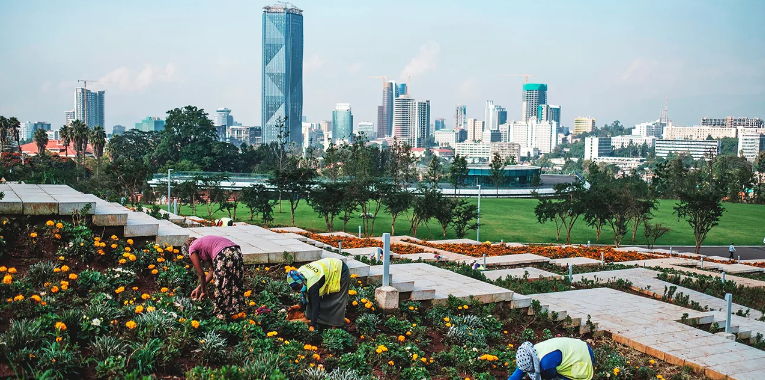
Africa is seeing a quiet shift in how people send and hold value. Mobile phones are central. According to Vera Songwe, a former UN under-secretary-general, millions who lack bank accounts can use stablecoins to protect savings and move money faster. That access matters in places where inflation has been high and bank fees are steep.
Use By Businesses And Everyday People
Reports have disclosed that stablecoins now make up around 43% of all crypto transaction volume in sub-Saharan Africa. Nigeria alone processed nearly $22 billion in dollar-linked stablecoin activity over a recent 12-month span.
That money is used for remittances, payroll and business settlements. Firms and market traders are among the biggest users, but many everyday people are joining in too.
In countries such as Egypt, Nigeria, Ethiopia and South Africa, demand is driven by volatile local currencies and rules that limit access to dollars. Mobile money networks help push adoption along.
Stablecoins Speed Up Cross-Border Payments
Traditional remittances can be costly. At a World Economic Forum panel in Davos, Switzerland on Thursday, Songwe noted that sending $100 through traditional money transfer services in Africa often costs around $6, making cross-border payments both slow and costly.
Stablecoins cut those costs and shorten wait times from days to minutes for many transfers. Small payments and wages can be settled quickly, and that speed changes how businesses plan cash flow.
Local Rules Are Changing Fast
Governments are reacting in different ways. Ghana passed a Virtual Asset Service Providers law to bring trading into a formal framework. On January 13, Nigeria required crypto platforms to link transactions to tax ID numbers, a move meant to bring activity into official records.
South Africa’s central bank has warned that stablecoins and other tokens could pose risks to financial stability as use grows. Policy is being written while users and tech firms keep pushing ahead.
Risks And The Road Ahead
High inflation remains a core reason people are turning to stablecoins. Reports say inflation has exceeded 20% in 12 to 15 countries since the pandemic, and that reality pushes people to look for alternatives to local notes.
Everyday Use, Measured Change
What started as a tech niche has grown into a practical tool for many across the continent. For small and medium businesses, the benefit is clear: faster settlements and lower costs.
For people without bank accounts, a smartphone can now open a route to store value in currencies less tied to local inflation. Adoption will likely keep rising, but how quickly it becomes part of mainstream finance will depend on stronger rules, better safeguards, and the continued spread of simple mobile services that people trust.
Featured image from Unsplash, chart from TradingView
With more stablecoin transfers in 2024 than Visa and Mastercard combined, the asset-pegged token is shifting from niche crypto instrument to a foundational e...
Ethiopia has announced it is looking for a global partner to build a state-backed Bitcoin mining operation, moving from a model of hosting private miners toward something run with government involvement.
The call for partners was made at the Finance Forward Ethiopia 2026 event and signals a clearer role for the state in the country’s crypto plans.
State Seeks Global Partner
Reports say Ethiopian Investment Holdings, the country’s sovereign fund, will lead the search and help set up the project with outside capital and technical know-how.
This shift aims to turn cheap, surplus hydropower into a steady source of foreign income instead of leaving it unused.
The move is simple on paper. Use local power. Create jobs. Bring in money. But the reality is quite complex. Ethiopia has already seen miners move in, drawn by low rates and access to hydroelectric plants.
Some deals have been quietly signed. The government hopes that a formal partner will bring better oversight and clearer returns to the state rather than the piecemeal contracts that came earlier.
Hydropower And Money
Large miners have started running rigs in Ethiopia, and one company from the UAE brought a 30MW facility online late last year, tapping into hydropower near Addis Ababa. That project is one example of how outside firms are already scaling operations in the country.
For Ethiopia, this is a revenue play. Reports show the state power utility earned tens of millions of dollars by selling electricity to miners in a recent period, money that would otherwise not have been realized. Those receipts helped make the argument that mining can be folded into national plans for growth.
Some observers worry about tradeoffs. Mining uses lots of equipment and steady power. That can crowd out industrial customers if not managed well. It can also tie a portion of the grid to a business whose income swings with Bitcoin prices.
Still, the government says it wants a partner to reduce these risks and to share expertise so the country benefits more directly.
What Comes Next
Finding the right partner will take time. Reports list interest from firms across the Middle East and Asia, and the government will need to balance foreign deals with local priorities.
The plan also sits inside the wider Digital Ethiopia 2030 effort, which links technology projects to economic goals.
Featured image from Unsplash, chart from TradingView
Multinational naval exercises “Will for Peace 2026” began on January 10 in South Africa’s territorial waters, the Russian Embassy in South Africa confirmed in an official statement. According to the embassy, the drills are taking place from Simon’s Town, the headquarters of the South African Navy. The statement said the exercises involve naval forces from […]
Ghana has legalized bitcoin and crypto trading after parliament passed the Virtual Asset Service Providers Bill, 2025, ending years of regulatory uncertainty around digital assets in the West African nation.
The law establishes a formal framework for licensing, supervising, and regulating crypto-related businesses, according to Bloomberg reporting.
It also grants the Bank of Ghana authority to oversee the sector, with a focus on consumer protection, financial stability, and risk management.
Bank of Ghana Governor Dr. Johnson Asiama announced the development over the weekend in Accra, saying the legislation brings crypto activity “within clear, accountable, and well-governed boundaries.”
Under the new framework, individuals will no longer face arrest or legal risk for trading cryptocurrency. However, companies offering digital asset services must now obtain licenses, comply with reporting requirements, and submit to ongoing supervision, according to reports.
Operators that fail to meet standards may face sanctions or closure.
The central bank said the move responds to concerns about fraud, money laundering, and misuse of customer funds, while recognizing the scale of adoption in the country.
Ghanaians are starting to use crypto
Officials estimate that nearly 3 million Ghanaians — about 17% of the adult population — have engaged in cryptocurrency transactions.
Crypto transactions in Ghana reached roughly $3 billion in the year through June 2024, according to estimates by Web3 Africa Group. While smaller than Nigeria’s market, the figure highlights the growing role of digital assets in everyday commerce, remittances, and informal finance.
Asiama said regulation would also lower costs for banks, improve customer experience, and support small and medium-sized businesses. He added that a clear rulebook could attract responsible investors, exchanges, and fintech firms that previously avoided Ghana due to legal risk.
The Bank of Ghana said they plan to roll out licensing and supervisory rules in phases during 2026. Existing virtual asset service providers will be required to register and meet compliance standards to continue operating.
Officials said lessons from the 2022 global crypto market downturn influenced the legislation, particularly the need for safeguards against systemic risk and weak oversight.
DEEP DIVE — Entire cities in the Darfur region of Sudan have been burned and razed, millions have fled their homes, and unspeakable terror and violence plague those left behind. When fighting erupted on April 15, 2023, between the Sudanese Armed Forces (SAF) under Abdel Fattah al‑Burhan and the Rapid Support Forces (RSF) led by Mohamed Hamdan Dagalo, better known as Hemedti, few predicted the conflict would become one of Africa’s worst humanitarian disasters.
There is, however, more to this war than just an internal battleground. The war in Darfur is no longer simply a domestic power struggle. It has become a multilayered proxy battlefield involving Egypt, Turkey, the United Arab Emirates (UAE), Saudi Arabia, Russia, Iran and more — each supporting rival Sudanese actors to secure strategic footholds.
“The current phase has Darfur as a killing field. The Sudanese protagonists have sorted out somewhat the areas each controls. Still, on the political front, both are committed to eliminating the other in a fight to the finish,” United States Ambassador to Sudan during the George W. Bush administration, Cameron Hume, tells The Cipher Brief. “There may be agreement on a time-limited humanitarian ceasefire, but no one is aiming at a durable political settlement between the two main parties.”
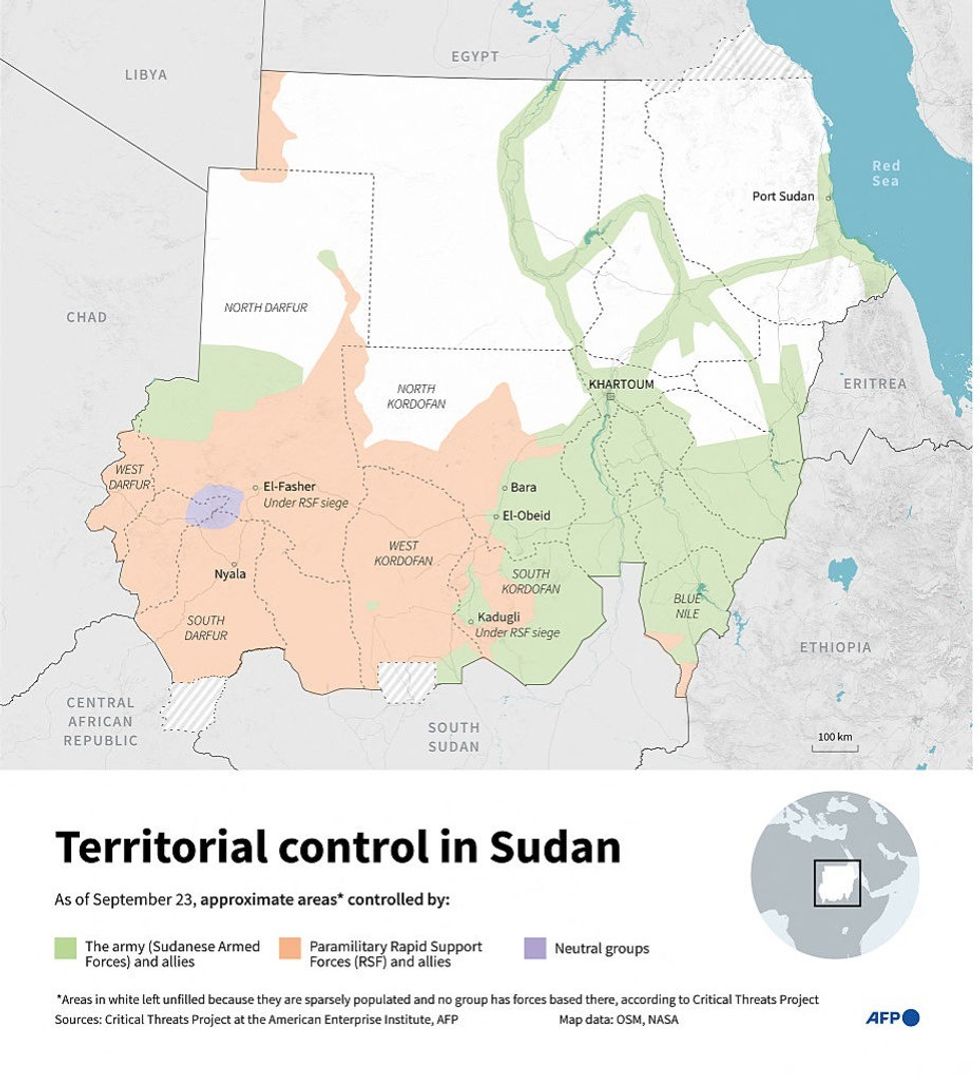
Infographic with a map showing areas controlled by the army, the Rapid Support Forces and neutral groups in Sudan as of September 23, 2025, according to the Critical Threats Project at the American Enterprise Institute and the AFP. (Infographic with a map showing areas controlled by the army, the Rapid Support Forces and neutral groups in Sudan as of September 23, 2025, according to the Critical Threats Project at the American Enterprise Institute and the AFP (Graphic by AFP) (Graphic by Olivia Bugault, Valentina Breschi, Nalini Lepetit-Chella/AFP via Getty Images)
United Arab Emirates
Despite official denials, the UAE remains the RSF’s cornerstone patron in Darfur, suspected of funneling advanced weaponry — including Chinese CH-95 and “Long Wang 2” strategic drones for 24-hour surveillance and strikes, Norinco-guided bombs, howitzers, and thermobaric munitions —via a covert air bridge of more than 240 UAE-chartered flights from November 2024, often landing at Chad’s Amdjarass airfield or South Darfur’s Nyala base.
These supplies, additionally routed through Libyan intermediaries like Khalifa Haftar’s networks and Ugandan/Somali airfields, have empowered RSF assaults, such as the latest siege and takeover of El Fasher. Economically, UAE-based firms like Hemedti’s Al-Junaid control Darfur’s Jebel Amer and Songo gold mines, exporting $1.6B in 2024, reportedly laundered via seven sanctioned Dubai entities to fund RSF salaries, Colombian mercenaries and further arms.
“The United Arab Emirates is the key sponsor of the RSF in strategic terms. Its interest is to convert influence in western Sudan into leverage over corridors, gold monetization and logistics, and to prevent an outcome in which Islamists consolidate in Khartoum,” Dr. Andreas Krieg, Associate Professor at King’s College London, tells The Cipher Brief.
Sudan’s gold — its primary export — has also become a lifeline for the UAE, feeding Dubai’s markets with more than ten tons a year from RSF-controlled areas. The trade aligns with Abu Dhabi’s long-term ambitions and its stance against the Muslim Brotherhood, as well as its past reliance on RSF fighters in Yemen. Despite Emirati denials and Sudan’s failed genocide case against the UAE at the ICJ, evidence ties the UAE directly to embargo breaches, from passports recovered in Omdurman to Emirati-made vehicles found at RSF sites.
As the UAE expands its influence through RSF control of Darfur’s 700-kilometer Red Sea corridor, reviving stalled DP World and AD Ports projects to rival Saudi NEOM, it effectively uses the militia as a proxy to secure resources and block SAF dominance. Approximately 70 percent of Sudan’s gold production from RSF-controlled areas is smuggled through Dubai, while overall illicit exports account for around 40 percent of the country’s total gold output.
Need a daily dose of reality on national and global security issues? Subscriber to The Cipher Brief’s Nightcap newsletter, delivering expert insights on today’s events – right to your inbox. Sign up for free today.
Turkey
Ankara, seeing the Darfurian conflict as both a threat to its regional ambitions and a challenge to Islamist allies, has backed al-Burhan’s forces with drones worth $120 million, delivered through Egypt. Their weapons supply assisted SAF in retaking Khartoum earlier this year but comes with deeper incentives: ideological ties with Burhan’s Islamist faction and strategic objectives for Red Sea access.
“Turkey’s quiet intelligence-sharing and counterterrorism pacts give it outsized sway over local regimes,” John Thomas, managing director of strategic policy firm Nestpoint Associates, tells TheCipher Brief.
The result, experts say, is a dangerous and growing proxy war between the UAE and Turkey — one now fought with advanced drones and air defenses across Sudan’s skies. The stalemate has fractured the country, spilled instability into Chad and Libya, and left tens of thousands dead, a toll experts warn could further destabilize the Horn of Africa.
Beyond the pace and scale of Turkish arms transfers, the presence of Turkish private military contractors (PMCs) in Africa merits closer scrutiny.
“In addition to the pace and spread of Turkey’s arms flow, I would say the presence of Turkish PMCs in Africa is something policymakers really ought to focus on more closely,” Will Doran, Turkey researcher at the Foundation for Defense of Democracies, tells The Cipher Brief. “A lot of these PMCs, like Erdogan himself, are warm towards the Muslim Brotherhood and have some questionable ties to Islamist militias on the ground in the Sahel. This isn’t to say Turkey is backing the region’s big names in terrorism. For one, Ankara’s deployed against al-Shabaab in Somalia, but the PMC trend is worrisome nonetheless.”
Egypt
Egypt views Sudan as a vital flank for its national interests. The Nile River flows from Sudan into Egypt, and Cairo has long been vigilant about any instability upstream. Egypt supports General Abdel Fattah al-Burhan and his Sudanese Armed Forces (SAF) because Cairo views them as the most dependable group to safeguard Egypt’s key national interests — namely, the Nile River corridor, which is Egypt’s sustenance for water and trade, and the southern border, which it shares with Sudan.
According to Dr. Krieg, “Egypt is the principal state backer of the army.”
“Its strategic priorities are the security of the Nile heartland, avoidance of an Islamist resurgence, and denial of hostile basing or rival influence along the Red Sea,” he continued.
Egypt, already hosting more than a million refugees, also fears that if Khartoum collapses into chaos, the resulting instability — such as refugee flows, arms trafficking, or militant activity — could spill over the border into its territory. Diplomatically, Cairo has kept direct intervention limited and insists on a Sudan-led solution, yet it retains close military and political ties to Burhan.
Saudi Arabia
Riyadh shares a parallel concern: as the Gulf kingdom pursues its Vision 2030 and Red Sea coastal investments, it has an interest in a stable Sudan firmly aligned with its regional agenda. Riyadh has backed the SAF via financial and diplomatic support, while also positioning itself as a mediator.
“Saudi Arabia is perhaps the outside player with potential influence that gets the least attention,” said Amb. Hume.
Dr. Krieg also observed that “Saudi Arabia has positioned itself as a convenor and would prefer a unified state that secures the Red Sea.”
“Chad and the Haftar camp in eastern Libya function as corridors and logistics enablers, and their choices directly affect the intensity of fighting in Darfur,” he explained. “Those intermediaries in Libya and Chad are all part of the UAE’s Axis of Secessionists; a network of non-state actors that are all tied to Abu Dhabi directly or indirectly.”
Are you Subscribed to The Cipher Brief’s Digital Channel on YouTube? There is no better place to get clear perspectives from deeply experienced national security experts.
Iran
Since late 2023, Iran has resumed ties with SAF leader Abdel Fattah al-Burhan after a seven-year break, sending Mohajer-6 and Ababil drones, artillery, and intel via seven Qeshm Fars Air flights to Port Sudan from December 2023 through July 2024. This aid helped SAF retake Khartoum in March 2025 and strike RSF in Darfur. In addition, Iran uses Sudan’s Yarmouk arms factory to counter the UAE-backed RSF. Tehran’s overarching goal? Access to Port Sudan to support the Houthis in Yemen and spread Shiite influence — risking wider regional proxy conflict.
“Iran’s military support has helped shift momentum toward the SAF. As one of many foreign actors exacerbating Sudan’s internal tensions, Iran contributes to the country’s unfolding humanitarian disaster,” Jonathan Ruhe, Director of Foreign Policy at the JINSA Gemunder Center for Defense & Strategy, tells The Cipher Brief. “And as one of many foreign actors trying to claim concessions from the government and vying to exploit Sudan’s natural resources, Iran helps worsen the country’s already high levels of impoverishment.
Research Fellow at the Foundation for the Defense of Democracies, Husain Abdul-Hussain, also underscored that while Iranian involvement in Sudan is still in its infancy, “it will certainly grow as the war grinds on.”
“The more reliant Islamist militias become on Iran, the stronger they become and the more indebted to Tehran,” he explained. “Eventually, relations between Iran and Sudanese Islamist militias will be similar to its relations with Islamist militias in Lebanon (Hezbollah), Iraq (Hashd Shaabi), Gaza (Hamas) and Yemen (Houthis). Note that Sudan Islamist militias are Sunni (like Hamas in Gaza), and unlike Shia Iran and its Lebanese and Iraqi Shia militias. The Houthis are their own breed of Islam (Yazidis) but are allied with Shia Iran.”
Russia
Moscow, meanwhile, has played both sides in Sudan’s civil war for profit and power. Before 2024, the Wagner Group, now under Russia’s Defense Ministry, backed the RSF with arms like surface-to-air missiles, in return for gold from RSF-held mines like Jebel Amer — smuggling up to 32.7 tons worth $1.9 billion via Dubai from 2022 to 2023 to skirt Ukraine war sanctions and fund operations. This fueled RSF violence, including the 2023 to 2025 massacres in el-Geneina and el-Fasher.
Around midway through last year, in the aftermath of Prigozhin’s demise, Moscow flipped to bolstering the SAF in its quest for a Port Sudan naval base. Russia subsequently vetoed a UN ceasefire resolution last November to keep up its influence in Khartoum, while reports emerged of Russian mercenaries operating in West Darfur, worsening the fear and displacement.
“Russia linked commercial and security networks remain present around gold flows and in facilitation roles close to the RSF camp,” said Dr. Krieg.
Why So Many Foreign Players?
At the heart of Sudan’s crisis lie three intertwined forces: geography, resources, and regional rivalry. Poised along the Nile, the Red Sea, and the Horn of Africa, Sudan is pivotal to everything from Cairo’s water security to the maritime goals of Gulf States to the influence ambitions of Moscow and Ankara. Moreover, its ports and resource-rich land have morphed domestic infighting into a lucrative war economy.
“Material backing has lengthened the war and structured its geography,” Mr. Krieg said. “The result is not a decisive victory for either side but a hardening of zones, with the RSF advantaged in a peripheral theatre where it can police corridors and extract revenue, and the army entrenched where the state’s core institutions, population and donor attention reside.”
Why It’s So Hard to End the War
With so many players in the field and a deep distrust among warring parties, ending the war in Sudan has become extraordinarily difficult. The United States, for its part, leads the “Quad” alongside the UAE, Egypt, and Saudi Arabia, pushing for a three-month humanitarian truce. The RSF agreed to a deal on November 6, and Washington is now pressing the Sudanese army to do the same in hopes of easing the fighting and starting talks on the war’s deeper causes.
If the war in Sudan continues, the U.S. faces a growing humanitarian catastrophe: estimates suggest more than 150,000 deaths and over 14 million people displaced, with nearly 25 million facing acute hunger. Regionally, unchecked control of the RSF in Darfur could destabilize the Red Sea corridor, a vital route for global trade and U.S. allies. Domestically, failure to resolve the conflict would erode U.S. credibility on human rights and genocide prevention, heighten refugee pressures in North Africa and Europe, and contradict the moral precedent set during the 2003 Darfur genocide.
“Washington will be paying more attention,” one White House-connected source tells The Cipher Brief. “It isn’t ignored. It is a conflict Trump wants to see ended.”
Dr. Krieg asserted that Sudan is entering a consolidation phase in which the Rapid Support Forces have turned Darfur into a defensible rear area and administrative base. The fall of El Fasher removed the last significant government foothold in the region. It gave the RSF control of the interior lines across West, South, Central, and much of North Darfur, as well as access to Libya and Chad for resupply and commerce.
He thus asserts that Sudan’s future is likely to go one of two ways.
“The Sudanese Armed Forces still hold the Nile corridor, the capital area and much of the east, which creates a west versus centre geography. That configuration points to two near-term paths. Either the front stabilises into a frozen conflict that resembles an informal partition, or the RSF seeks to push east through North Kordofan and test the approaches to the center,” Dr. Krieg added. “Humanitarian conditions are acute, with siege tactics, displacement and food insecurity now baked into the conflict economy. The political tempo has slowed rather than accelerated, since battlefield gains in Darfur give the RSF reasons to bank advantages before contemplating concessions.”
Read more expert-driven national security insights, perspective and analysis in The Cipher Brief because National Security is Everyone’s Business.
DEEP DIVE — On the night of June 20, 2025, the Nigerien village of Manda became the stage for one of the deadliest massacres in the Sahel in recent memory. As dozens of worshippers gathered at a mosque for evening prayers, militants from the Islamic State’s Sahel Province encircled the village and opened fire without pause. Bullets tore through the congregation,killing at least 71 men, women, and children and wounding dozens more.
Survivors later recalled the horror of lying motionless beneath the bodies of neighbors and relatives to avoid being shot, while houses were torched and families scattered in the chaos. The bloodshed was not only an assault on a remote community in Tillabéri, but a stark signal of how deeply jihadist violence has penetrated this once quiet borderland.
In the span of a few hours, Manda joined the growing list of towns and villages reduced to symbols of terror, underscoring the reality that groups like Islamic State in the Sahel now operate less as rogue insurgents than as entrenched power brokers whose reach stretches across Niger, Mali, and Burkina Faso. For the United States, the massacre is more than a humanitarian catastrophe — it is a sobering reminder that the doctrine of forward defense faces its most formidable test yet in Africa’s most fragile frontier.
“The threat from Sahelian jihadists is really two-fold,” Caleb Weiss, editor of FDD’s Long War Journal, tells The Cipher Brief. “They are destabilizing wider West Africa, particularly the Gulf of Guinea states, which have been firm U.S. and Western allies. And secondly, there is worry about European security if jihadis in the Sahel are allowed to operate freely. The Sahel can become a base of operations from which to launch or even sponsor attacks into continental Europe.”
Hans-Jakob Schindler, Senior Director of the Counter Extremism Project, frames the problem in similarly stark terms.
“There are two primary terrorist threats that can be identified,” he tells The Cipher Brief. “First of all, the rapid expansion of the al-Qaeda affiliate JNIM as well as the ISIS affiliates ISSP and ISWAP in the Sahel region has destabilized several countries, in particular Burkina Faso, Mali and to a growing extent also Niger, with continuing serious security problems in the North of Nigeria.”
From Margins to Mainstream: The Rise of Sahelian Jihadism
The massacre in Mandareflects a decade-long unraveling of state control. Thecollapse of Libya in 2011 unleashed vast armories and fighters into the desert, reigniting dormant rebellions and enabling extremist groups to entrench themselves in northern Mali. The Malian state itself fragmented in 2012 following a coup, allowing jihadist coalitions to seize major northern cities.
Over time, groupssplintered and reformed. Jama’at Nusrat al-Islam wal Muslimeen (JNIM), an al-Qaeda affiliate, emerged in 2017, while the Islamic State in the Greater Sahara (ISGS) evolved into the Islamic State’s Sahel Province. These factions began imposing taxes, adjudicating disputes, and governing their respective territories. According to Vision of Humanity, the Sahelaccounted for 51 percent of global terrorism deaths in 2024, with nearly 25,000 conflict-related fatalities — a neartenfold increase since 2019.
Liam Carnes-Douglas of the Terrorism Research & Analysis Consortium (TRAC) says the rise reflects more than battlefield victories.
“Some of the most urgent threats posed by Sahel-based jihadist groups stem from the destabilization of key regional partners,” he tells The Cipher Brief. “Once among the strongest U.S. allies in counterterrorism, these governments have shifted rapidly from fragile democracies to military juntas, fueled in part by the failures of Western-backed security initiatives. That has sidelined the United States as anti-Western sentiment grows.”
Andrew Lewis, president of the operational intelligence firm Ulysses Group, agrees that the power vacuum extends beyond the battlefield.
“In the truest sense, the U.S. has limited national security interests in the region. But we do have resource and energy interests that underpin our national security strategy — particularly in Niger, Mali, and Burkina Faso,” he tells The Cipher Brief. “The control of trade routes, ports, and export conduits of critical minerals is a strategic concern. We would like to see JNIM, ISIS, and their affiliates contained before they threaten those supply chains.”
Need a daily dose of reality on national and global security issues? Subscriber to The Cipher Brief’s Nightcap newsletter, delivering expert insights on today’s events – right to your inbox. Sign up for free today.
Tactical Adaptation and Regional Spillover
Over the last eighteen months, jihadist groups in the Sahel have evolved their tactics in ways that suggest a larger ambition. Motorcycles enable lightning raids across ungoverned stretches. Drone warfare — once limited to surveillance — has evolved into an offensive capability. JNIM has carried out more than 30 confirmed drone strikessince late 2023.
“Both al-Qaeda’s JNIM and the Islamic State’s Sahel Province have deployed suicide drones,” Weiss noted. “They’re also utilizing Starlink to stay connected in remote areas. Helping counter drones, exploiting Starlink’s vulnerabilities, and shutting off externally sourced financing would help the region tremendously.”
Carnes-Douglas also warns that “rapid technological advancements are increasingly shaping warfare.”
“Drones and Starlink-enabled communications stand out as particularly transformative, yet both regional security forces and U.S. capabilities lag significantly behind,” he continued, pointing out that lessons from Ukraine “demonstrate how these technologies are quickly adapted for combat,” and their proliferation “signals that warfare in the Sahel is entering a transitional, high-tech phase.”
Schindler underscores a connected, transnational risk.
“The Sahel region is also a key network hub for the international drug transportation pipeline of Hezbollah-linked drugs that are transported from South America via West Africa to Europe for sale there,” he explained. “This pipeline directly funds Hezbollah’s activities in Lebanon. Given the central role that the U.S. is playing in the current negotiations between Hezbollah and Israel, this income stream for Hezbollah will continue to ensure that this terror group will be able to continue to fund its activities both within Lebanon and beyond.”
Across Niger, Mali, and Burkina Faso, militants are consolidating control.
“Islamic State in the Greater Sahara has long used the tri-border area to evade interdiction,” Carnes-Douglas explained. “That makes coordinated regional responses not just useful but necessary.”
The violence, however, is also spilling outward.
“Sahelian jihadis are now inching closer to Senegal,” Weiss said. “They’re creating a jihadist land bridge between the Sahel, littoral West Africa, and Nigeria — effectively one large area of jihadist operations encompassing a significant chunk of the continent.”
This expansion also has a sectarian dimension. Lewis surmised that more than 50,000 Christians have beenmurdered in Nigeria since 2009, “with more than 7,000killed in 2025 alone.”
“It’s difficult to assess the true scale of persecution Islamist militant groups are carrying out,” he underscored. “But it’s happening.”
Schindler also highlights an alarming operational trend: “Currently they are not only able to conduct multi-layered attacks against single targets (such as a military camp) but also to conduct simultaneous and coordinated attacks on multiple targets across relatively large geographic areas.”
Are you Subscribed to The Cipher Brief’s Digital Channel on YouTube? There is no better place to get clear perspectives from deeply experienced national security experts.
U.S. Policy Today: A Detachment Problem?
For years, the U.S.viewed the Sahel as a key front in counterterrorism, maintaining drone bases and training missions in Niger. But the 2023 coup upended that equation. Washington froze over $500 million in aid and limited cooperation even as the juntaexpanded ties with Russia’s Wagner Group. The result is a fragile balance between limited engagement and strategic erosion.
“Outside of JSOC, U.S. efforts in the region have been marginal at best. That’s evident in the surge in violence and the formation of the Alliance of Sahel States, which pivoted away from the West to Russia,” Lewis said. “None of our 333 programs in the region has dented terror operations. We rely heavily on intelligence-led frameworks but have very little real-time intelligence since withdrawing key assets from Niger.”
Carnes-Douglas echoes that concern. “American counterterrorism efforts have achieved tactical successes but strategic failures,” he observed. “Short-term gains from drone strikes or training are constantly undermined by state fragility, coups, and shifting alliances.”
Moreover, while France’s drawdown from Operation Barkhane — the 2014–2022 French-led counterterrorism campaign across the Sahel that deployed more than 5,000 troops to combat Islamist insurgencies in Mali, Niger, and Chad — created a vacuum, “the U.S. has not yet developed a sustainable replacement strategy,” Weiss stressed. “There are some indications the U.S. has resumed limited intel support to Sahelian juntas, but nothing that matches previous levels of engagement,” he continued.
Schindler argues that the disengagement itself has worsened the crisis.
“Although a lot of criticism has been levied against the UN, EU and US counter terrorism operations in West Africa and the Sahel in the past, the current situation, in which the UN, the EU and the US have largely disengaged from the region clearly demonstrates that overall, the counterterrorism efforts had been successful in stemming the tide of terrorist expansion in the region,” he said.
A Strategic Imperative: What Must Washington Do Next
Analysts emphasize that the path forward requires reimagining engagement. Weiss argues that U.S. support should focus on technology denial and intelligence integration, not just kinetic strikes.
“Helping counter drones, exploiting the use of Starlink and the data vulnerabilities therein, and helping to shut off externally sourced financing would help the region tremendously,” he said.
Washington, Lewis highlighted, must also think pragmatically about force posture.
“If we want to contain JNIM and ISIS, the focus should be on protecting the coastal regions with ISR and targeted strikes where success is measured by territory denied, not by how many host forces we train,” he said. “But that requires basing rights, logistics, and political will, and China and Russia hold significant leverage over potential host countries.”
Indeed, Beijing’s influence looms large.
“China has financed major ports, railways, and industrial projects across Ghana, Côte d’Ivoire, Nigeria, and Senegal,” Lewis explained, noting that this gives it immense leverage to counter U.S. influence and deny access to infrastructure critical for forward operations.
Carnes-Douglas, meanwhile, advocates for a recalibrated diplomacy that acknowledges political realities.
“Although U.S. foreign policy appears to be shifting away from involvement in these conflicts, Washington should recommit pragmatically to directly limit jihadist groups’ ability to threaten American interests,” he asserted. “This, in turn, would form stronger relationships with the newly formed governments and in turn could be an industrial and economic boon, as well benefiting all partners.”
Schindler proposes a containment-first approach, prioritizing direct engagement with the littoral Gulf of Guinea states.
“One primary goal should be containment, ensuring that the expansion of terrorist activities and control in the region does not affect additional countries, in particular the littoral states of the Gulf of Guinea,” he said.
The slaughter at Manda, the border ambushes, the drone blitzes — all are signs of a metastasizing threat.
“Through the increasing influence and power of these terrorist affiliates in the Sahel region, the threat to US interests in the region, as well as potentially to the US homeland, is increasing in parallel,” he added.
Read more expert-driven national security insights, perspective and analysis in The Cipher Brief because National Security is Everyone’s Business.
InfoSecSherpa: Your Guide Up a Mountain of Information!
One of my mentees, Elizabeth Ekedoro, received a scholarship to attend the Women in Cybersecurity (WiCyS) conference in Dallas, Texas.
Her scholarship does not cover airfare, and Lizzie needs to fly from Lagos, Nigeria (LOS) to Dallas, Texas (DFW) to attend this event she worked so hard to qualify for.
I became her mentor through the CyberSafe Foundation’s CyberGirls program a few years ago. Elizabeth Ekedoro is deserving of this scholarship and is a rising star in African cybersecurity.
Please help to make the WiCyS 2025 conference a reality for her by helping with her fundraising campaign. It would really me a lot to her, of course, but also to me. Thank you!

 Login
Login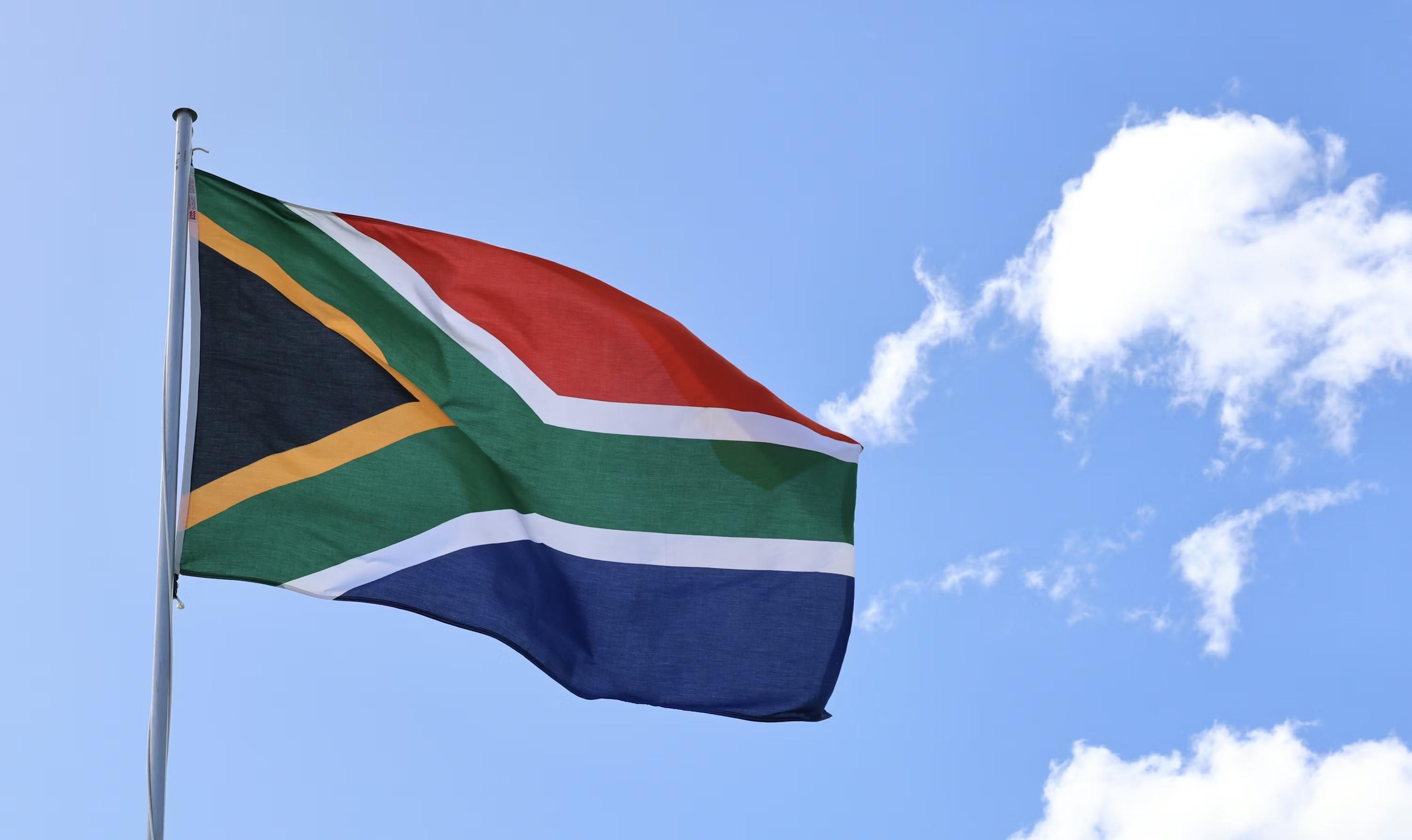

 Multinational naval exercises “Will for Peace 2026” began on January 10 in South Africa’s territorial waters, the Russian Embassy in South Africa confirmed in an official statement. According to the embassy, the drills are taking place from Simon’s Town, the headquarters of the South African Navy. The statement said the exercises involve naval forces from […]