❌

Reading view

There are new articles available, click to refresh the page.

Crazy Old Machines

Al and I were talking about the IBM 9020 FAA Air Traffic Control computer system on the podcast. It’s a strange machine, made up of a bunch of IBM System 360 mainframes connected together to a common memory unit, with all sorts of custom peripherals to support keeping track of airplanes in the sky. Absolutely go read the in-depth article on that machine if it sparks your curiosity.

It got me thinking about how strange computers were in the early days, and how boringly similar they’ve all become. Just looking at the word sizes of old machines is a great example. Over the last, say, 40 years, things that do computing have had 4, 8, 16, 32, or even 64-bit words. You noticed the powers-of-two trend going on here, right? Basically starting with the lowly Intel 4004, it’s been round numbers ever since.
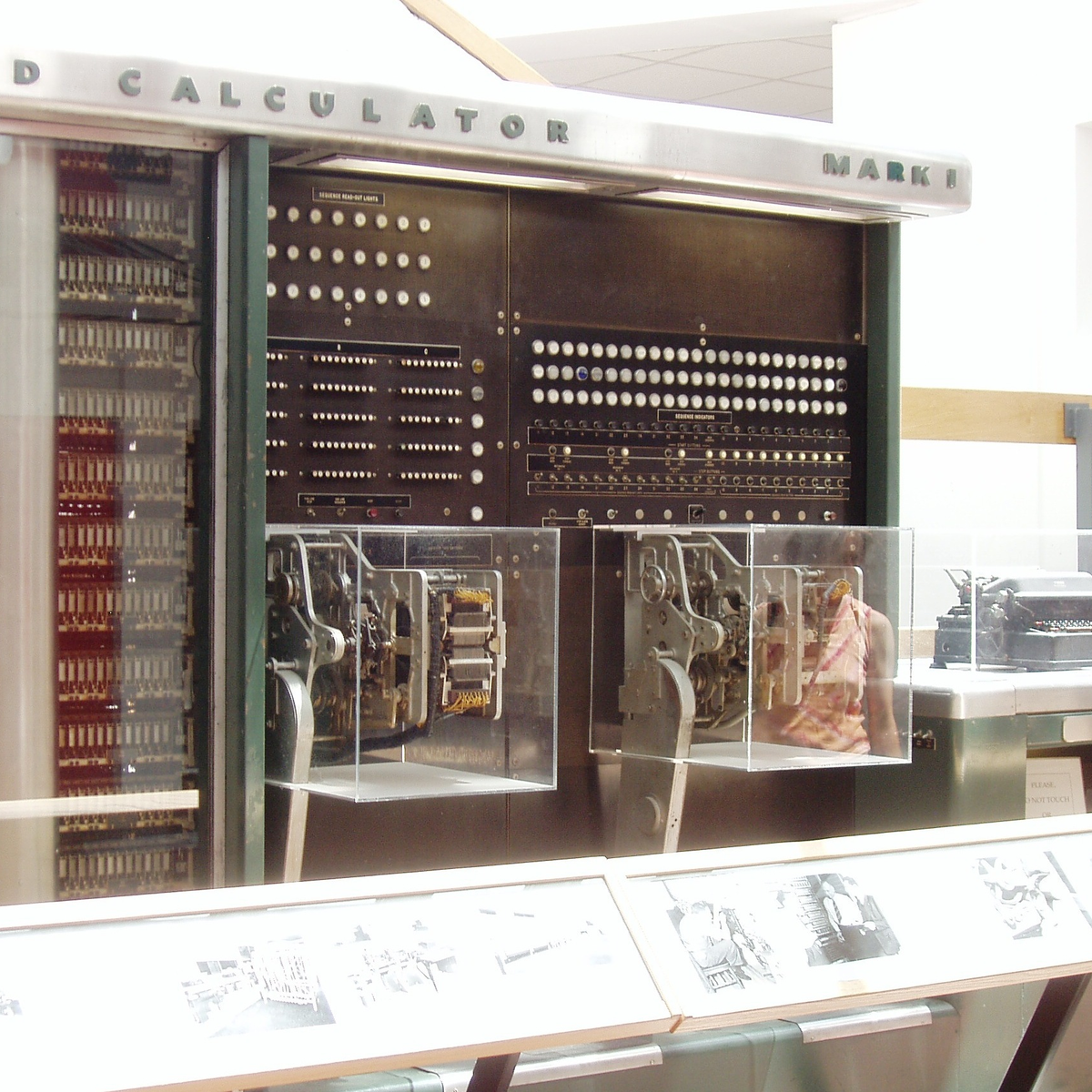
Harvard Mark I, by [Topory]
On the other side of the timeline, though, you get strange beasts. The classic PDP-8 had 12-bit words, while its predecessors the PDP-6 and PDP-1 had 36 bits and 18 bits respectively. (Factors of six?) There’s a string of military guidance computers that had 27-bit words, while the Apollo Guidance computer ran 15-bit words. UNIVAC III had 25-bit words, putting the 23-bit Harvard Mark I to shame.

I wasn’t there, but it gives you the feeling that each computer is a unique, almost hand-crafted machine. Some must have made their odd architectural choices to suit particular functions, others because some designer had a clever idea. I’m not a computer historian, but I’m sure that the word lengths must tell a number of interesting stories.

On the whole, though, it gives the impression of a time when each computer was it’s own unique machine, before the convergence of everything to roughly the same architectural ideas. A much more hackery time, for lack of a better word. We still see echoes of this in the people who make their own β€œretro” computers these days, either virtually, on a breadboard, or emulated in the fabric of an FPGA. It’s not just nostalgia, though, but a return to a time when there was more creative freedom: a time before 64 bits took over.


This article is part of the Hackaday.com newsletter, delivered every seven days for each of the last 200+ weeks. It also includes our favorite articles from the last seven days that you can see on the web version of the newsletter. Want this type of article to hit your inbox every Friday morning? You should sign up!

Get Bored!

My son went over to a friends house this afternoon, when my wife had been planning on helping him with his French homework. This meant she had an hour or so of unexpected free time. Momentarily at a loss, she asked me what she should do, and my reply was β€œslack off”, meaning do something fun and creative instead of doing housework or whatever. Take a break! She jokingly replied that slacking off wasn’t on her to-do list, so she wouldn’t even know how to start.

But as with every joke, there’s more than a kernel of truth to it. We often get so busy with stuff that we’ve got to do, that we don’t leave enough time to slack, to get bored, or to simply do nothing. And that’s a pity, because do-nothing time is often among the most creative times. It’s when your mind wanders aimlessly that you find inspiration for that upgrade to the z-stage on your laser cutter, or whatever the current back-burner project of the moment is.

You don’t get bored when you’re watching TV, playing video games, or scrolling around the interwebs on your phone, and it’s all too easy to fall into these traps. To get well and truly bored requires discipline these days, so maybe putting β€œslack” into your to-do list isn’t a bad idea after all. My wife was right! And that’s why I volunteered to take my son to parkour on Sundays – it’s and hour of guaranteed, 100% uninterruptible boredom. How do you make sure you get your weekly dose of slack?

This article is part of the Hackaday.com newsletter, delivered every seven days for each of the last 200+ weeks. It also includes our favorite articles from the last seven days that you can see on the web version of the newsletter. Want this type of article to hit your inbox every Friday morning? You should sign up!

For the Fun of It

I was off at the Chaos Communication Congress last weekend, and one of the big attractions for one who is nerdily inclined is seeing all of the personal projects that everyone brings along with them. Inevitably, someone would ask me what my favorite is. Maybe it’s my decision paralysis, maybe it’s being forced to pick a favorite child on the spot, or maybe it’s just that I’m not walking around ranking them, but that question always left me drawing a blank.

But after a week of thinking about it, I’m pretty sure I know why: I don’t actually care what I think of other peoples’ projects! I’m simply stoked to talk to everyone who brought anything, and bathe in the success and failure, hearing about the challenges that they saw coming, and then the new challenges they met along the way. I want to know what the hacker thinks of their project, what their intention was, and how their story went. I’m just a spectator, so I collected stories.

The overwhelming, entirely non-surprising result of listening to a couple hundred hackers talk about their projects? They’re all doing it for the fun of it. Simply for the grins. And that held equally well for the supremely planned-out and technical projects as well as their simpler I-bought-these-surplus-on-eBay-one-night relatives. β€œWe were sitting around and thought, wouldn’t it be fun…” was the start of nearly every story.

That’s what I absolutely love about our community: that people are hacking because it makes them happy, and that the amazing variety of projects suggests an endless possibility for hacker happiness. It’s hard to come away from an event like that without being energized. Some of that comes from the sharing of ideas and brainstorming and hanging out with like-minded folks, but what I find most important is simply the celebration of the joy of the project for its own sake.

Happy hacking!

This article is part of the Hackaday.com newsletter, delivered every seven days for each of the last 200+ weeks. It also includes our favorite articles from the last seven days that you can see on the web version of the newsletter. Want this type of article to hit your inbox every Friday morning? You should sign up!
❌