Reading view

There are new articles available, click to refresh the page.

The World’s First AI-Driven Cannabis Seed-Sorting System Is Here

As CEO and co-founder of Innexo, Dominique van Gruisen leads one of Europe’s most advanced cannabis research and development facilities, where cultivation science meets pharmaceutical precision. Innexo is a Dutch cannabis contract research organization that designs and conducts cultivation and technology trials for clients across the cannabis sector, helping companies test innovations under controlled, data-rich conditions.

His impressive career in cannabis spans two decades and encompasses Belgian patient advocacy and clinician networks, as well as European biotech lobbying and cultivation consulting on both sides of the Atlantic. Van Gruisen’s goal is ambitious: to take cannabis beyond cultivation and into a world of validated data, reproducible genetics and true pharmaceutical reliability, which demands consistency. So, how do you do that?

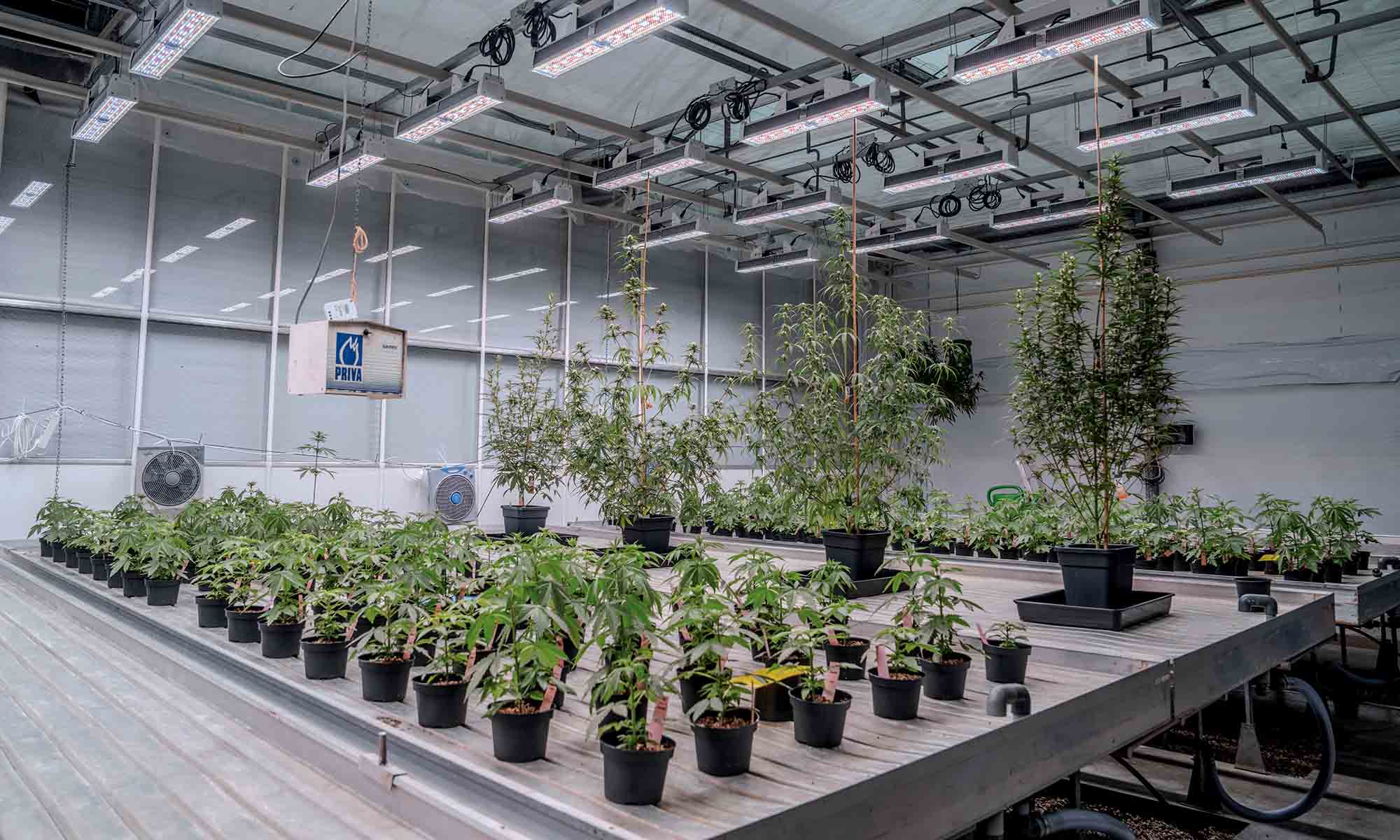
Innexo’s indoor grow facility at work.

Based in Meterik, a village in The Netherlands, Innexo is conducting independent trials on lighting, nutrients and genetics in an effort to generate measurable, reproducible data that brings cultivation closer to pharmaceutical standards. And through some key partnerships, they’ve come up with some profound techniques. The research center is currently working with Las Vegas-based lighting company Fohse, examining how precision lighting from their Cobra LED system affects plant structure, cannabinoid expression and energy efficiency.

“We’re using the Cobra Pros, and soon we’ll have tunable-spectrum models from Fohse,” van Gruisen says. “They have sensors that constantly read the natural light in the greenhouse and adjust automatically. If we can work with a dynamic spectrum that mirrors the sun, we can replicate the same conditions anywhere on Earth, in any season.”

The study benchmarks a range of metrics—from cannabinoid and terpene expression to morphology and energy use—to quantify how light affects consistency. “Their system fills your stack with data,” van Gruisen says. “That’s what we’re after: information that lets us build validated cultivation models rather than assumptions.”

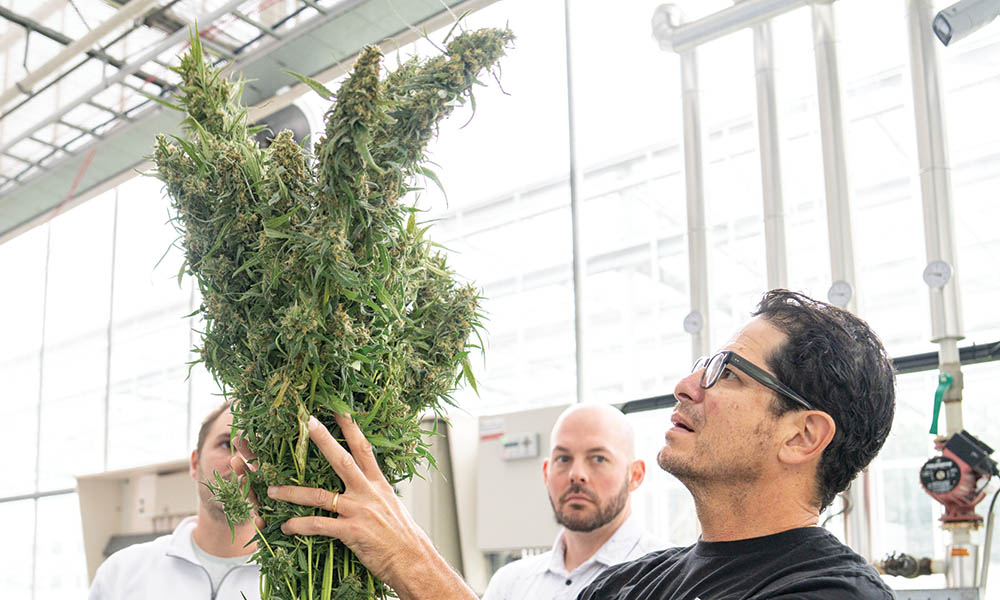
Fohse’s Michael Rosenfeld admires the latest grow.

Lighting defines the environment; genetics define the foundation. To address that, Innexo partnered with sister companies Innoveins Seed Solutions and SeQso to develop—wait for it—the world’s first AI-driven seed-sorting system for cannabis.

“They collect the spectral data of each seed in a non-destructive way,” van Gruisen says. “Then they grow that seed, record its traits, feed those traits back into the system and the algorithm learns which spectral patterns predict which plant characteristics.”

When he first heard of the technology, van Gruisen says, “I literally pulled my car over to call people.” Tests confirmed it worked for cannabis, opening the door to non-destructive quality-control certification at the seed level. “If there’s something you can distinguish, you can design a seed-sorting algorithm and push a batch through to separate the good from the bad,” he says.

The implications of this technology stretch beyond yield. AI analysis can detect pathogens such as hop latent viroid and certify genetic quality before cultivation begins. “Companies are developing F1 hybrids—stabilized lines,” van Gruisen says. “By scanning the seeds, you can fine-tune even further so your starting material is as robust as it can be.”

“By scanning seeds, you can fine-tune even further so your starting material is as robust as it can be,” van Gruisen says.

Van Gruisen believes AI-based seed fingerprinting could also reduce the industry’s dependence on cloning. “Even when you use clones, you still find big deviations in secondary metabolites depending on the season or humidity,” he says. “It’s very difficult to provide a consistent product in flower form.” Regulatory frameworks, he notes, demand pharmaceutical precision.

“When regulators say cannabis has to be a medicine, they mean it should be 98 to 102 percent consistent with what’s on the label,” he says. “That’s almost impossible with a natural product. But with solid F1 hybrid genetics that start from seed, you add another quality-control checkpoint.”

For cultivators, F1 seeds offer cleaner starts, lower costs and easier scalability. For patients, they promise reliability—the same genetics, the same relief—every time.

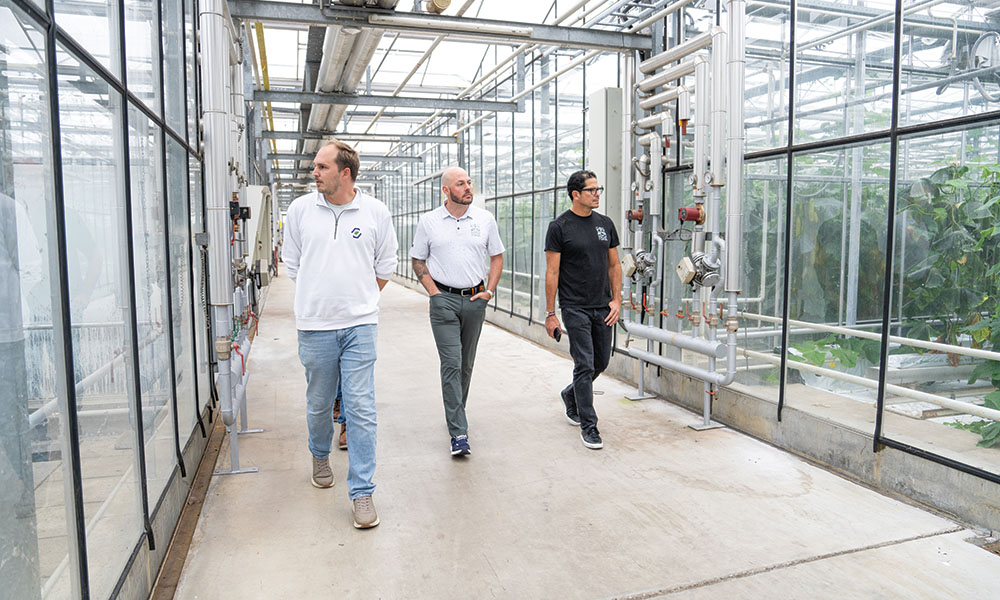
walk this way. Innexo Co-Founder and CEO Dominique van Gruisen, Tom Stanchfield, Fohse’s Senior Vice President and Michael Rosenfeld, Fohse’s Chief Marketing Officer admire the impressive Innexo complex in the village of Meterik in The Netherlands.

Van Gruisen describes Innexo as a link between two sectors that rarely speak the same language. “Growers talk in grams per square meter,” he says. “Pharma talks in validated datasets and deviation tolerances. We sit in the middle, making those conversations possible.”

That bridge extends beyond technology. Innexo is also reviving iconic legacy cannabis genetics—long-flowering, terpene-rich cultivars—and reintroducing them through advanced lighting and AI-guided cultivation. He aims to right some of the wrongs the industry has made. “We took a lot of wrong turns with cannabis in the last 20 years,” he says. “It’s time to rediscover what made this plant valuable in the first place and do it with proper science.”

The post The World’s First AI-Driven Cannabis Seed-Sorting System Is Here appeared first on Cannabis Now.

Inside the “Amazon of THC”: Edibles.com Reinvents Cannabis E-Commerce

With the nationwide launch of Edibles.com last spring, Edible Brands, the company behind Edible Arrangements, is entering bold new territory: THC. Yes, that Edible Arrangements — the name behind the flower-shaped pineapples and chocolate-covered strawberries gracing teachers’ desks and mother-in-laws’ kitchen islands since 1999.

The idea of transitioning to THC had been percolating for a while, with the brand acquiring the domain name a year ago after settling a cybersquatting lawsuit to release the name from World Media Group, an entity that had acquired the site with the hope of turning a profit by reselling it. Soon after, Edible Brands hired cannabis business professional Thomas Winstanley as executive vice president and general manager of the new venture, Edibles.com. Later that year, Somia Farid Silber stepped up as CEO after eight years with the company.

The synergy comes not only from the name, but also from the brand’s trusted reputation. In a market dominated by gas station grams and poorly labeled edibles in prohibition states, Edible Arrangement’s trusted reputation is a salve for those seeking regulation and reliability.

Thomas Winstanley

Edibles.com now reaches more than 65% of Americans with lab-tested, federally compliant THC products, offering same-day delivery in select markets. It’s a first-of-its-kind e-commerce network built for a category that, until recently, was defined by patchwork regulation, consumer uncertainty and underground connections.

Cannabis Now recently spoke with Winstanley to understand how this new model came to life, and what it means for the new era of cannabis commerce.

Building the “Amazon of THC”

Winstanley has described his ideal model as “The Amazon of THC.” In the same way Amazon helped build trust and ease in e-commerce, Edibles.com seeks to educate and serve as a central hub for THC nationwide.

“We shied away from that moniker initially, but the parallels are there.” Winstanley says. “Amazon started with one category, books, that made sense for e-commerce. For us, that entry point is functional ingestibles: products that are safe, tested and outcome-driven.”

But Winstanley’s ambitions go beyond product aggregation. “Amazon built an ecosystem that educated consumers about online shopping. We’re trying to do the same for cannabis,” he explains. “Our goal is to demystify the access point—to help people understand what they’re buying, why it’s legal and how to shop by outcome rather than just strain or potency.”

At the end of the day, Edibles.com’s is focused on consumer health and wellness—helping people enhance their wellbeing through hemp while being able to skip the hassle of going to the store. “Wellness is our guiding principle: highly categorized products that focus on outcome,” Winstanley says. “We have a lot of folks who are purchasing products online for the first time and having them delivered to their door.”

Even within such a massive framework, starting a new business is never easy. “In some ways, we’re beginning a business within a company. This is not an extension of more ways to sell strawberries, but a whole new portfolio of substances,” he says, adding that Edibles.com is currently primarily speaking to Edible Arrangements’ existing audience.  

Designed for Function

Edibles.com’s UX/UI mirrors the company’s mission to deliver outcome-driven products. Rather than overwhelming users with a dispensary-style menu of hundreds of SKUs, Edibles.com organizes its offerings by need: sleep, stress, pain management, energy and mood uplift.

That health-forward lens, he notes, aligns more with Target’s vitamin aisle than a traditional cannabis shop. “My wife and I love Olly Sleep Gummies,” he says. “Our products belong in that same conversation. We’re not marketing ‘getting high’; we’re marketing better sleep, less stress and overall functional outcomes. That’s the bridge between cannabis and wellness.”

This framing places THC as a nootropic along the lines of ashwagandha, demystifying the ingredient as a part of the larger wellness landscape. Winstanley describes their framing as “more aligned with nutraceuticals than controlled substances.”

The Compliance Maze

With each state comes a new set of laws, bylaws and risk assessments, along with a separate set of legal reviews and ongoing vetting. “We move fast, but we’re also cautious,” he says. “Every day involves balancing innovation with compliance. You want to grow quickly, but you can’t jeopardize consumer trust or partner integrity.”

That trust is earned through curation and transparency. Edibles.com only features brands with established reputations, such as Wyld, Wana, Kiva, and Cann—all of which undergo rigorous compliance audits before being listed. “This is our varsity lineup,” Winstanley says. “It sets us up to reach further outside the margins.”

Restoring Confidence in a $28B Market

While the U.S. hemp-derived THC market now exceeds $28 billion, consumers remain skeptical of its legality. “We get asked all the time: ‘How is this legal?’” he says. “We’re talking about the same molecule, just different extraction processes due to regulation.”

Since hemp plants legally contain less than 0.3% THC, industry practice requires hemp-derived THC to take the route of using CBD to convert into THC. This process requires more sophisticated techniques, such as isomerization. “Marijuana” plants, however, have a naturally higher THC content, lending themselves to a more straightforward extraction process (including solvents, ethanol or CO2). 

“Hemp leveled the playing field,” he says. “It allows for a vibrant, more diverse community of entrepreneurs and businesses that are no longer locked out of the market and can pursue their goals, finding a manufacturing contract with a brewery or gummy company, rather than in a regulated market.”

However, in November, President Trump signed a spending bill to end the 43-day government shutdown, which included a ban on all hemp-derived THC products. While nothing has taken effect yet—and industry professionals are pushing back—it remains a very real threat. Winstanley is one of those professionals, pledging to use the one-year grace period to organize resistance: “Farmers, brands, and consumers, once fragmented, are now mobilizing together to defend what they’ve built and to finally push for the federal framework the hemp industry has long demanded.”

“We’re executive directors of the US Hemp Roundtable. We’re aiming to ensure that federal laws don’t eliminate the $28 billion industry, 3,000 jobs, and revenue for farmers that they currently generate from soy and corn production. I’m fortunate to have to solve these problems; I think there’s a major generational shift happening – the issues we’re arguing about now will be so far in the rearview mirror in the next ten years. The pain will be worth it in the end.”

A Responsible Revolution

For Winstanley, the stakes go beyond business. “We’re not just selling THC, we’re proving we can do it responsibly at scale,” he says.

He’s candid about the risks that keep him up at night, the first concern being the very real consumer health threat posed by unregulated products. “I have a four-year-old and one-year-old, and if my son saw a Nerd’s Rope-infused gummy, he’s more likely to try something he shouldn’t. That’s why we self-regulate, use age gates, and push for better policies.”

Amid the challenges, Winstanley remains optimistic. “THC can help our country,” he says. “It’s grown, processed and sold here: a true homegrown supply chain. What excites me most is that we’re finally bringing cannabis into the same conversation as wellness, health and happiness.”

The post Inside the “Amazon of THC”: Edibles.com Reinvents Cannabis E-Commerce appeared first on Cannabis Now.

‘Kiss My Grass’ Speaks Truth

By: K. Astre

Legal weed looks good on paper. Dispensaries that feel like Apple stores. Influencer product drops. Celebrities launching “wellness” brands from Manhattan to Malibu. But peel back the shiny packaging and the question hits hard: Who’s really cashing in on cannabis, and who’s still paying the price?

That’s the heartbeat of Kiss My Grass, a short documentary that refuses to let the industry off the hook. Written by Roy Wood, Jr., directed by Mary Pryor, Mara Whitehead, co-directed by Tirsa Hackshaw and narrated by actor and activist Rosario Dawson, the film doesn’t waste time glamorizing the Green Rush. Instead, it zooms in on the people of color, particularly Black women, who’ve had to fight their way into a market that was never built for them.

In less than 20 minutes, Kiss My Grass manages to hit every nerve with candid interviews that strip the false promises of legalization down to its bones. It’s in these raw, personal stories from trailblazers including Kim James, Matha Figaro, Jessica Jackson and Coss Martewhere the documentary hits hardest. Watching them, you’re forced to confront a painful reality: Legalization was sold as a new beginning, but the same old systems keep showing up with new branding.

Kiss My Grass film poster

After watching the film, I had a lot of questions about what it actually takes to make progress in such a complicated system and had the opportunity to ask some of the featured individuals about what’s changed, what hasn’t and what needs to happen.

“True equity requires structural repair,” says Jackson, director of social equity for Minnesota’s Office of Cannabis Management. “That means reinvestment into harmed communities; expungement and record repair; rules that prevent hidden ownership and monopolization; workforce protections; and readiness tools like technical assistance—all interventions Minnesota provided from the start in Chapter 342 legislation.”

While the cannabis industry is expected to hit $45 billion in 2025, equity programs meant to level the field often feel more like public relations stunts than progress in some states. The numbers from around the country tell the story: Only 0.35 percent of venture capital reaches Black women founders. Black people are still 3.7 times more likely to be arrested for possession.

“Access to capital, affordable real estate, and navigating complex regulations are major barriers,” says James, who leads Detroit’s Office of Cannabis Management. “Many equity programs don’t address the systemic economic disadvantages experienced by people who come from communities disproportionately impacted by the War on Drugs.”

Wanda James at her Simply Pure Dispensary
Kiss My Grass appeared at the prestigious Tribeca Fim Festival this past summer in advance of its wider digital release. Wanda James, Simply Pure’s CEO and Regent at the University of Colorado, appears in the movie.

It’s just even more of a reminder that legal doesn’t mean fair for the communities that got felonies instead of spots on the Forbes list for selling cannabis.

As Coss Marte, founder of fitness empire CONBODY, puts it, “If you’re making millions off cannabis, you have a moral obligation to invest in the communities that paid the price for prohibition,” he says. “That means jobs, ownership and capital—not charity optics. Repair starts when money, mentorship and opportunity flow directly to the people most impacted.”

Still, this isn’t a film that wallows in defeat. It’s about persistence. You feel the exhaustion, but also the refusal to give up. You see the discouragement, but also a spark of hope for the future. If there’s one message this film makes clear it’s that equity won’t grow on its own, but it can take root if we tend to it.

For Figaro, the founder behind ButACake and CannPowerment, the future of cannabis isn’t just about who gets in the door now, but what the next generation of women of color will inherit. When asked what needs to change to make that possible, she didn’t hold back. “My hope is that future generations inherit thriving cannabis businesses and the tools to bring underrepresented voices to market,” she says. “But to get there, we must dismantle the small-minded and misinformed policymakers writing rules they’ll never be forced to follow.”

After making its debut at the Tribeca Film Festival this past summer, Kiss My Grass is set for a wider digital release at a later date. Whether you work in cannabis or just care about justice, it’s essential viewing about what happens when an industry sells progress but delivers privilege. It leaves you moved. It leaves you mad. And, just maybe, that’s the point.

The post ‘Kiss My Grass’ Speaks Truth appeared first on Cannabis Now.

MLK & Marijuana: How the Civil Rights Leader’s Work Informs the Push for Legal Pot

Martin Luther King Jr. might have turned 96 years old this month if he had not been felled by an assassin’s bullet on April 4, 1968. It is, of course, impossible to know what the United States would look like today if he had lived — or what he would think about the political dilemmas of our own time.

Yet there are certain obvious parallels between his time and ours. The country continues to be bitterly divided along political lines. And many activists and scholars argue that the racist power structure that King fought has re-congealed—this time in the guise of the “War on Drugs” and mass incarceration. His legacy, therefore, holds lessons for those now fighting for cannabis legalization.

Cycles of Repression and Revolution  

Foremost among those scholars is Michelle Alexander, author of the 2010 bestseller The New Jim Crow: Mass Incarceration in the Age of Colorblindness. Alexander takes a long view of the struggle for racial justice in the United States and paints a grim picture. She illustrates how many of the gains that King won in his life are being reversed after his death — this time in a new “race-neutral” guise that only serves to mask continued institutionalized racism.  

Alexander notes that in 1972, there were under 350,000 people in prisons and jails nationwide. Today there are 2 million. In fact, the US has the most people behind bars of any nation on Earth, in both per capita and absolute terms. This is certainly an irony for the country that touts itself as the “land of the free.” 

Among those 2 million people in prison are 40,000 who remain incarcerated in state or federal prisons on cannabis-related convictions— about half of them for marijuana offenses alone. When those waiting to see a judge in local jails are added in, the figure may approach 100,000 on any given day. And the racial disparity could not be more obvious. A 2013 American Civil Liberties Union report, Marijuana in Black and White: Billions of Dollars Wasted on Racially Biased Arrests, crunched the national data. It found that black people are more than three times as likely as whites to be arrested for cannabis — despite consuming the plant at essentially similar rates.  

And this is not the first time the country has seen significant and hard-won racial progress being in large part (at least) reversed, with the same power structure re-establishing itself in new guise. Slavery was abolished in the aftermath of the Civil War. But, as Alexander quotes historian and early civil rights activist W. E. B. Du Bois, from his 1935 book Black Reconstruction in America, “The slave went free, stood a brief moment in the sun, then moved back again toward slavery.”

In the South under occupation by Union troops after the Civil War, black people for the first time voted, served on juries and held elected office — until the backlash came. In 1877, the federal troops were withdrawn. In subsequent years, without federal interference, Ku Klux Klan terror enforced legal apartheid in the southern states — the system known as Jim Crow. Blacks were often reduced to a state of near-slavery through share-cropping and were barred from the vote by systematic disenfranchisement.  

It wasn’t until nearly a century after the Civil War that this system would be challenged. In his book Why We Can’t Wait, an account of the 1963 Birmingham Campaign to desegregate Alabama’s biggest city, King wrote of “America’s third revolution — the Negro Revolution.” 

By King’s reckoning, the country’s first revolution had been the one we actually call “the Revolution” — the War of Independence, although it left the slave-owning aristocracy of the South thoroughly in place. The second was arguably far more revolutionary — the Civil War, in which the slave system was broken. King’s Civil Rights Movement was avowedly nonviolent, but it was still a revolution — the overturning of a power structure by physical as well as moral opposition.

Despite the violent backlash, both from the police and Ku Klux Klan terrorists, the campaign ultimately swayed the nation, resulting in the passage of the Civil Rights Act of 1964 and other landmark legislation that finally ended legal apartheid in America.

But the year of King’s assassination saw the country’s national political establishment embracing the backlash — exactly as in 1877. In the 1968 presidential campaign, Republican candidate Richard Nixon first adopted the rhetoric of a “War on Drugs” (although he would actually coin that phrase three years later, when the Controlled Substances Act was passed). And, in just barely coded terms, Nixon was promoting the rhetoric of racism.

In her book, Alexander quotes Nixon’s special counsel John Ehrlichman explicitly summing up the campaign strategy in his 1982 memoir, Witness To Power: The Nixon Years: “We’ll go after the racists.” Ehrlichman unabashedly wrote how throughout the 1968 race, “subliminal appeal to the anti-black voter was always present in Nixon’s statements and speeches.” 

Alexander did not mention, however, another quote attributed to Ehrlichman in which he just as explicitly made the connection between this subliminal racism and the anti-drug drumbeat. Journalist Dan Baum in the April 2016 edition of Harper’s recalls a quote he says he got from a 1994 interview with Ehrlichman: “The Nixon campaign in 1968, and the Nixon White House after that, had two enemies: the antiwar left and black people… by getting the public to associate the hippies with marijuana and blacks with heroin, and then criminalizing both heavily, we could disrupt those communities. We could arrest their leaders, raid their homes, break up their meetings, and vilify them night after night on the evening news. Did we know we were lying about the drugs? Of course we did.”

And the backlash was just beginning.

Birth of the New Jim Crow 

The new order would be consolidated over the next decade. In 1973, the same year the federal Drug Enforcement Administration was created, New York state’s Rockefeller Laws imposed the nation’s first mandatory minimum sentences for drug offenses. In 1977, New York decriminalized cannabis, overturning the harsh Rockefeller Laws where personal quantities of marijuana were concerned — but the draconian provisions for cocaine and heroin remained intact.

With the election of Ronald Reagan in 1980, the “drug war” rhetoric was revived with a vengeance, and the Anti-Drug Abuse Act of 1986 imposed mandatory minimum sentences nationwide. Ten years later, an ACLU report would find that the law “devastated African American and low-income communities.” 

The 1986 law also instated the sentencing disparity for crack and powder cocaine — as crack was flooding black communities and landing people with the far longer sentences. This was also reflected in public perceptions and media portrayals. In the early ’80s, powder cocaine was a status symbol for white yuppies. When crack hit the streets from New York to Los Angeles, it was immediately stigmatized by association with the criminal (read: black) underclass.

This period also saw the rapid militarization of police forces, and the War on Drugs, in Alexander’s words, went “from being a political slogan to an actual war.” The 1981 Military Cooperation with Law Enforcement Act started to erode the firewall that had existed between the armed forces and police since the end of Reconstruction.

The DEA joined with local police forces to instate Operation Pipeline, a program of traffic stops and vehicle searches that was protested by the ACLU as based on systematic “racial profiling.” 

This was enabled by a series of bad Supreme Court decisions — Terry vs Ohio in 1968, Florida vs. Bostick in 1991, Ohio vs. Robinette in 1996 — that dramatically eroded the Fourth Amendment. Alexander writes that these decisions enabled “consent searches” — in which the motorist (or pedestrian, or home resident) verbally consents to the search, but actually does so under police intimidation.

All-white juries were more likely to convict black people, of course — and prosecutors were still able to strike non-whites from serving as jurors despite the 1986 Supreme Court decision Batson v. Kentuckywhich barred discrimination on the basis of race in jury selection. As Alexander writes, “the only thing that has changed is that prosecutors must come up with a race-neutral excuse for the strikes.” 

In a vicious cycle, mass incarceration itself served to entrench the system of mass incarceration. Convicted felons are excluded from juries in many states, and only Maine and Vermont allow prison inmates to vote (as most Western European countries do).

Nor did this system turn around when the Democrats returned to the White House. The Bill Clinton years saw a 60% drop in federal spending on public housing, and a 170% boost in prison spending up to $19 billion. Prison construction would finally begin leveling off in the 2000s, but the actual prison population broke new records in 2008, “with no end in sight.”

Alexander writes: “Ninety percent of those admitted to prison for drug offenses in many states were black or Latino, yet the mass incarceration of communities of color was explained in race-neutral terms, an adaptation to the needs and demands of the current political climate. The New Jim Crow was born.” 

And this was utterly out of proportion to any real threat posed by illegal drugs. In the 1980s, there were some 22,000 drunk driving deaths per year, among 100,000 alcohol-related deaths. In Alexander’s words: “The number of deaths related to all illegal drugs combined was tiny compared to the number of deaths caused by drunk driving.”

Among the numberless stories of police terror in the name of drug enforcement, one recounted by Alexander is that of Alberta Spruill—a 57-year-old Harlem woman who died of a heart attack in May 2003 after police officers broke down her door and threw a concussion grenade into her apartment. No drugs or any contraband were found in the apartment. The cops were acting on a bad tip from snitches snared on a marijuana rap. 

A Fourth Revolution? 

Thanks in large part to growing public consciousness, there certainly appears to have been some progress in the fight against the War on Drugs over the past decade. In 2009, following a hard-fought activist campaign, the Rockefeller Laws were finally overturned in New York. Eleven states have now legalized cannabis, and nearly all have at least some kind of provision for medical use of cannabis — significantly lifting the pressure on one federally controlled substance.

But even amid the progress, there are clear and frustrating signs that a mere change in the law isn’t enough. From New York City (where cannabis arrests have been de-emphasized by policy) to Colorado (where cannabis is now legal), overall arrests for pot are significantly reduced — but the stark racial disparity persists in those arrests that continue under various loopholes.

Michelle Alexander concludes with a litany of necessary legal reforms and then states that, ultimately, they are insufficient: “Mandatory drug sentencing laws must be rescinded. Marijuana ought to be legalized (and perhaps other drugs as well)… The list could go on, of course, but the point has been made. The central question for racial justice advocates is this: are we serious about ending the system of control, or not?” 

She quotes from Martin Luther King’s book of collected speeches, A Testament of Hope“White America must recognize that justice for black people cannot be achieved without radical changes in the structure of our society. The comfortable, the entrenched, the privileged cannot continue to tremble at the prospect of change in the status quo.”

There are many other quotes from the great civil rights leader that shed equal light on the current impasse, in which the limitations of mere legal progress are becoming clear. In his April 1963 Letter from Birmingham Jail, King justified his civil disobedience in these words: “An unjust law is a code that a numerical or power majority group compels a minority group to obey but does not make binding on itself.”

This recalls both the relative impunity for white coke-snorters in the ’80s as black communities were militarized in the name of drug enforcement — and the white entrepreneurs now disproportionately getting rich off legal cannabis, while black users remain disproportionately criminalized.  

In Why We Can’t Wait, King wrote of how the country needed a “Bill of Rights for the Disadvantaged” — anticipating the current demands for drug war reparations, wedding legal cannabis to addressing the harms caused by prohibition and the related matrix of social injustice.

The notion that cannabis legalization is necessary but not sufficient recalls King’s 1967 report to the staff of the Southern Christian Leadership Conference, the main coordinating body of the civil rights campaign. 

In the “Report to SCLC Staff,” he noted how the 1965 Selma to Montgomery March culminated in passage of the Voting Rights Act later that year — a critical victory. Yet, he wrote: “We have moved from the era of civil rights to the era of human rights, an era where we are called upon to raise certain basic questions about the whole society. We have been in a reform movement… But after Selma and the voting rights bill, we moved into a new era, which must be the era of revolution. We must recognize that we can’t solve our problem now until there is a radical redistribution of economic and political power.”

If cannabis legalization is to truly undo the social harms of prohibition, its advocates may be in for a similar reckoning in the coming period.

The post MLK & Marijuana: How the Civil Rights Leader’s Work Informs the Push for Legal Pot appeared first on Cannabis Now.

Q&A: Sensi Brands CEO Tony Giorgi on Leadership, Culture and Global Expansion

Tony Giorgi, CEO of Canada-based Sensi Brands Inc., discusses the company’s growth and strategies in an interview with Eugenio Garcia, founder and CEO of Cannabis Now. Launched in January of 2020, Sensi Brands has achieved significant success with innovative products like multi-pack and infused pre-rolls, leading to a significant market penetration in Canada. The company operates five distribution paths, including wholesale distribution, CPG brands distribution, medical cannabis clinic, national medical cannabis marketplace, and a retail farm gate store. Despite market challenges, Sensi Brands recently acquired a state-of-the-art facility capable of producing 110,000 kilos annually, aiming for global expansion, particularly in the U.S., EU and AUS markets.

As we kick off 2026, Giorgi offers business advice to fellow entrepreneurs and delves into the Sensi Brands work culture, along with the company’s big goals for the future.

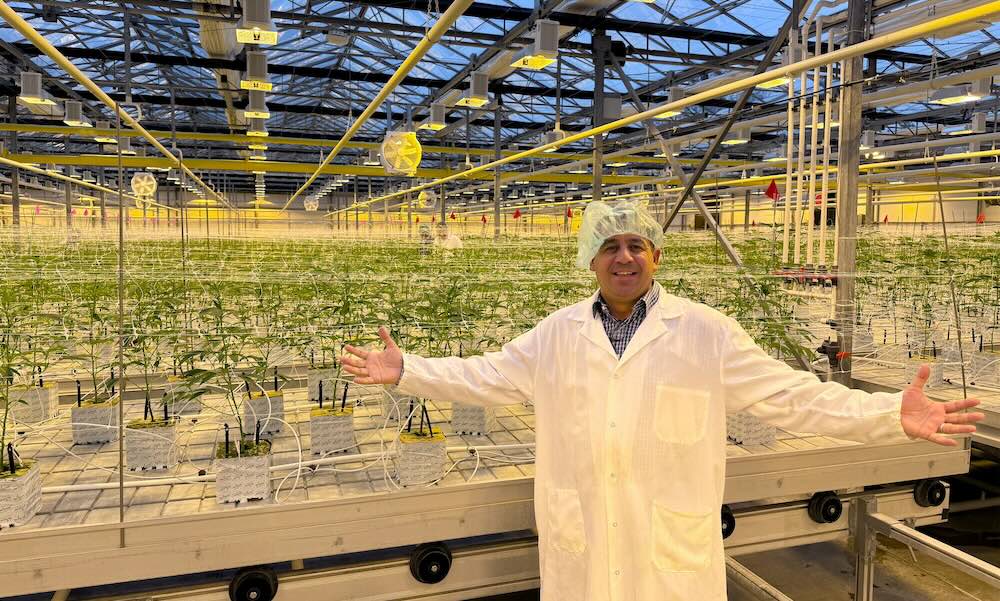
CEO Tony Giorgi oversees a newly planted crop of Sensi Brands Inc.’s latest proprietary genetics.

Eugenio Garcia: To start, tell us about your background as an entrepreneur.

Tony Giorgi: I’ve earned a bit of a reputation here in Canada for being a serial startup specialist, taking companies from ideation to full production and commercial operations. I have been part of 6 successful start-ups over the last 30 years. The first four were in technology. The largest transaction was a company called Q9 Networks, where we built highly secure and system-redundant data centers housing the computing infrastructure and data for the likes of banks and government, supporting their mission-critical data applications. That company sold to Bell Canada in 2012 for $1.2 billion.

Post that, I co-founded a digital transformation company called K2 Digital targeting the financial services vertical. I got introduced to the senior leadership team of MedReleaf. MedReleaf was one of Canada’s first medical cannabis companies…I had met them in 2015, and by 2016 the master grower had resigned his role and we started up what became the Flowr Corporation out of Kelowna, BC.

And so, the Flwr Corporation was my first foray into cannabis. We built the largest indoor facility in the country. It quickly became renowned for being one of the best-quality facilities in the country. I took the company public in September of 2018 and at that point I stepped down to go focus on building what now is today known as Sensi Brands.

EG: And what’s been your approach to building Sensi Brands?

TG: Sensi Brands started off in 2020. We took a very unique approach to the market because, if you recall, everybody that got into the cannabis industry—whether it was south of the border or whether it was in Canada—everybody took the approach of wanting to become the largest cultivator or the largest extractor. The example that we always give is that we’d be sitting here in our offices, and the next licensed producer would go on LinkedIn and say, “Woo hoo. We just got our license, and we’re launching a soccer mom brand.” And we went to look at what a soccer mom brand is, and they were underpinning it with a 22% indica strain that would put a soccer mom through the soccer parking lot. There’s a whole evolution and strategy and process to developing a brand. And unfortunately, in the cannabis industry, the entire process was completely orphaned. People were just making stuff up, and their brands were failing. There were no real brands that were gaining market share, or any type of loyalty to the brand because of the poor execution of those brands.

So we launched Station House, our first brand. We pioneered the first multi-pack pre-roll in Canada that was offered in 6, 12, 18 and 24 pack configurations. When we launched, nobody at the time was doing multi-packs. In fact, the majority of licensed producers were using undesirable product or oversupply for the purposes of putting up KPI numbers for yields, which would then inevitably be either destroyed, burnt or would be milled and used for pre-rolls.

EG: What is it that makes those pre-rolls so compelling for consumers?

TG: We took a very serious approach to pre-rolls, perfecting how to make them. None of the automation equipment, even to this day, scales appropriately to be cost-effective on making pre-rolls. We’ve tested a vast majority of the pre-roll automation technology and realized that we needed to come up with our own automation process. We believe we make the best pre-rolls today. But not only that, we use the best paper. We only use single-strain whole flower. We don’t blend lots. We don’t use trim or any other waste material. It’s all high-quality, single-strain flower that we then mill to multiple specifications so that we know that the granular mill inputs fit much tighter together, which gives us a better burn. And on top of all that, everything is quality assured and hand-finished by our employees. You’re getting the best quality burning pre-roll underpinned with the best quality cannabis input. With that strategy and launching it into a multi-pack, we very quickly became the number one multi-pack player in the country.

EG: Well, you look like a man who should be smiling, and also a man who’s been working really hard at something really special, with a crackerjack team. Before you were a serial entrepreneur, where did you get your foundation for business? Did it come naturally? Did you have a mentor? Was it schooling?

TG: Honestly, my family. I would say that my business acumen is all grassroots street smarts, negotiation. I’ve been working since I was 13 years old—got my first paper route at 10, you know, I did the whole McDonald’s and Burger King and fast food, but it was just always hustling, always negotiating.

I’m a salesman at heart. So when I started building my first company, it was really through a sales-driven lens. And then, of course, over the last 30 years, I’ve been able to really sharpen my skills in terms of business acumen and learning how to run a very effective business.

EG: Is there a secret sauce to it all?

TG: Look, we’re immigrants—we love to work. We don’t know anything different. And so we work hard, long days. At the end of the day, it’s just learning those skill sets and how to run a business over time. There are three pillars that I would highly encourage any business person across any business and industry to focus on. It all comes down to three things: Innovate. Make sure that you’ve got the best products that you’re proud to stand behind, that will be highly desired. Automate. Make sure that you automate the shit out of everything, so that you reduce your cost structures as low as you possibly can, and outshine everybody. And lastly, you execute. I’ve kind of lived by those three pillars, and that’s kind of what’s made Sensi Brands, in my opinion, one of the best standing cannabis companies in Canada today.

Sensi Brands team
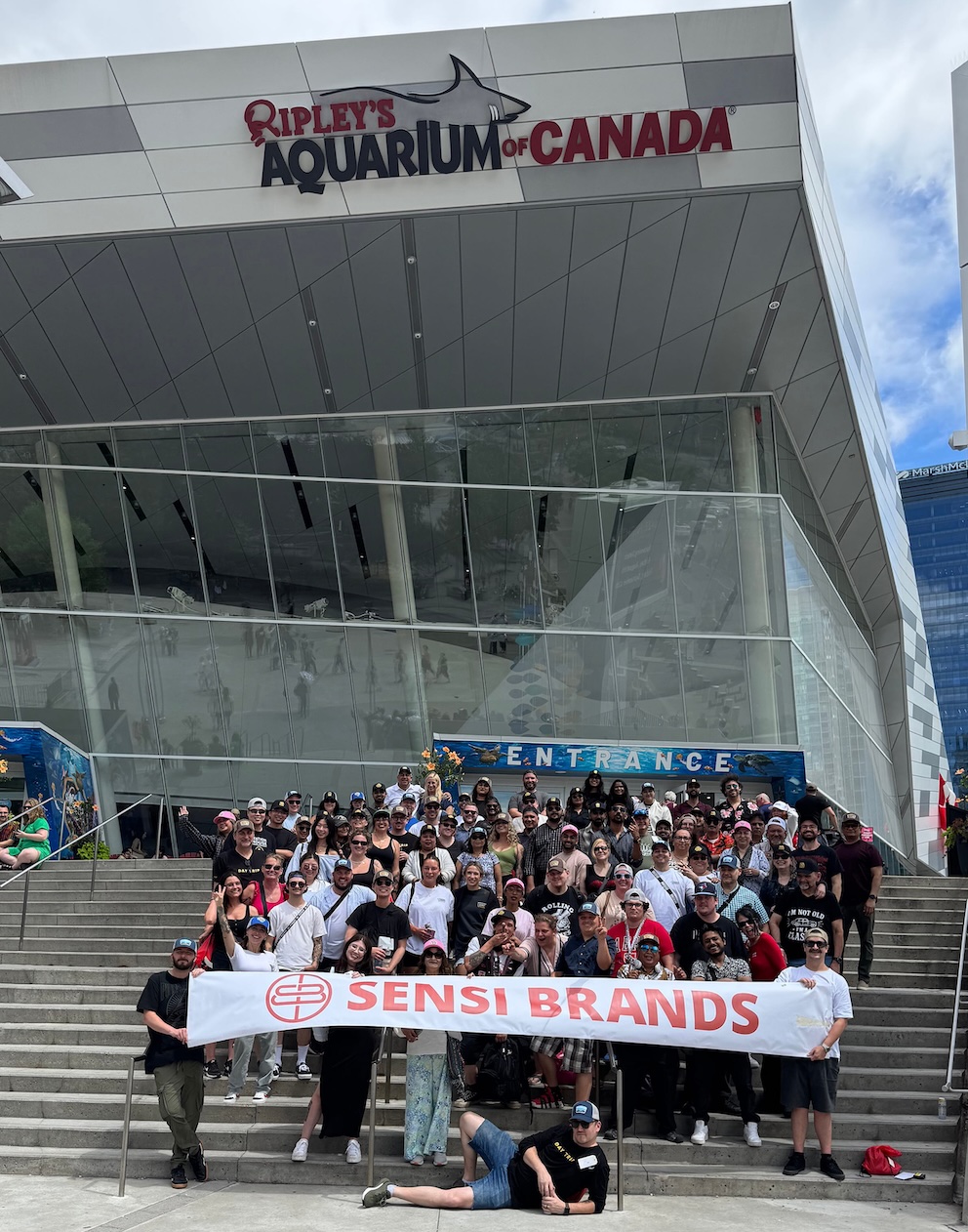
Sensi Brands employees on a team outing.

EG: You’ve talked about the long days it takes to build a company at this scale—what kind of culture have you built at Sensi Brands, and how do you keep your team energized and invested?

TG: We’ve built an incredible culture—culture’s everything. The company is made up of family and friends. The theory was, “How cool would it be if we could build a company that attracted people that I genuinely like spending time with so that when I walk into the office every day I get a big smile on my face because I’m working with the people that I genuinely love, that genuinely make me laugh, and are playing at the top of their game in their respective discipline.”

EG: Love that. What are you smoking on there? And how important is it for you to actually understand the product that you’re producing? Because, quite frankly, a lot of people in your position, and it’s not a negative, but they don’t understand the product, and they don’t consume the product.

TG: I love the question. I’m a big, big believer that you need to eat your own dog food and experiment with your product. Years ago, I was an experimental weed smoker. When I launched the Flwr Corporation, I went all in. So I’m a certified cannabis sommelier—and have my level one and level two sommelier certification. Today, I consume daily and intimately understand the effects of our products. In fact, our entire senior leadership team is certified as cannabis sommeliers and we are all active consumers.

And to answer the first part of your question, I am religiously loyal to Amnesia Haze and Ghost Train Haze—as my favorite strains. I only smoke sativa-dominant cultivars. To me, indicas are very sedative and chilled experiences, whereas a sativa actually inspires and energizes me. I’m all in to making sure that I understand our product as well, or as better, than our competitions, which I think gives us a competitive advantage. I take pride in leading our discussions in the R&D room. Today, we proudly distribute 365+ SKUS across Canada, and I have been part of formulating every single product, from our pre-rolls and how we infuse and coat them, to all of our vape formulations, to personally leading the launch of our THC oral pouches—one of the first to market. I would not have been able to contribute to our product innovations without being a consumer and have experience with the product.”

Potluck Chillows
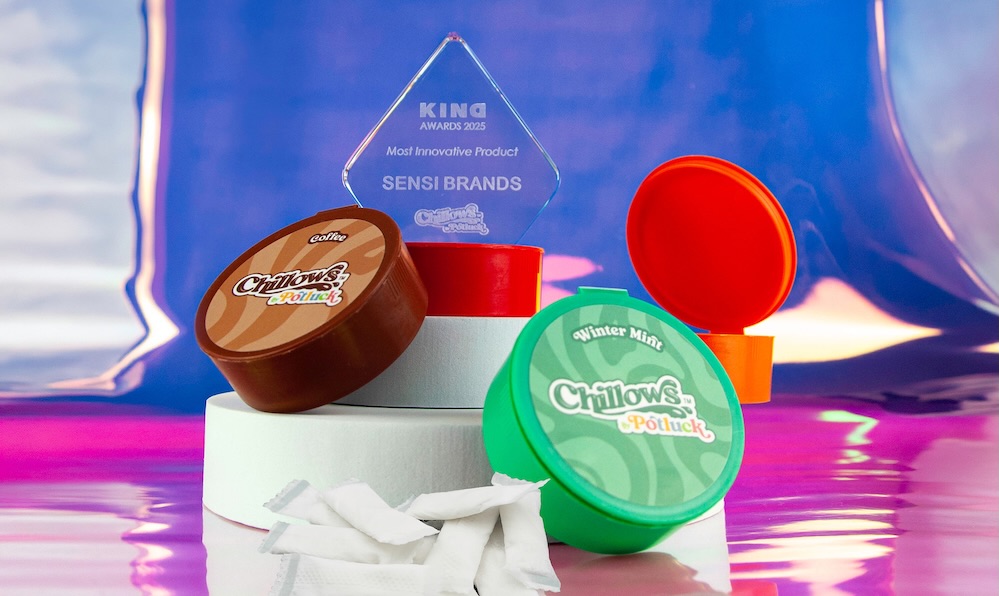
Sensi Brands has launched the one of the world’s first oral THC pouch, a testament to their innovation and continued drive to continue pushing boundaries.

EG: I know that Canada has very serious restrictions on packaging, on advertising. How have you guys transcended that obstacle and effectively marketed your products to have the success that you’ve had in retail?

TG: I think it comes down to, again, innovating products that resonate with consumers. In terms of marketing, we are very restricted by HealthCanada Regulations, so we tend to lean on the quality of product. We’ve also done an incredible job in all of our trade marketing materials, digital promotions, as well as executing at the major trade conferences.

EG: You mentioned the massive export business you have with Australia. How big is the international potential and focus for you guys?

TG:  So, couple things: One, we have been working with a tolling partner over the past couple of years, and been distributing and selling product into Australia. Now that we have our own EU GMP (European Union Good Manufacturing Practice) license, we are now able to sell directly into international markers. We recently signed a $5 million deal today for product going into Germany. The EU markets are sizable with expansion into UK, Poland, Spain with France around the corner. The EU market is massive, and we think with the quality of our supply, we should be able to sell well into those markets.

We’re looking to enter the US market. I don’t want to say too much more on that, because I want to get further down into the process before we divulge. But we are definitely targeting the US, entering with our brands Station House and Potluck.

Sensi Brands cannabis facility
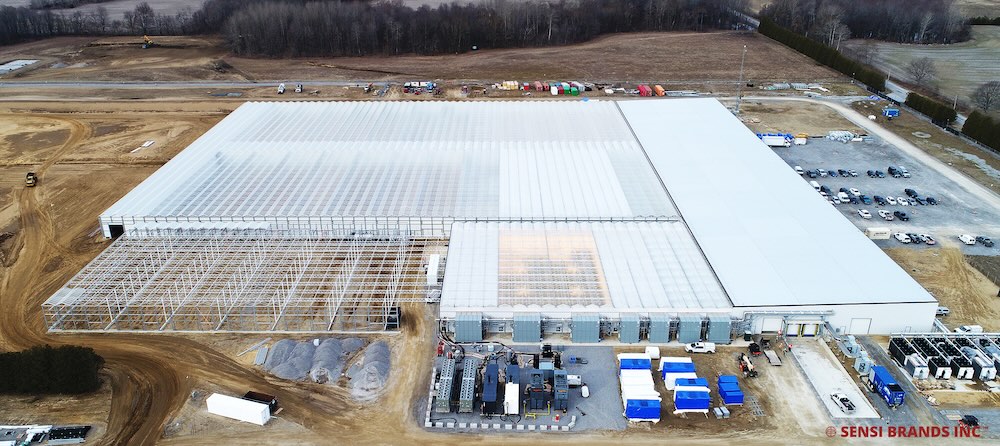
A bird’s-eye view of Sensi Brands’ new state-of-the-art facility.

Eugenio Garcia: In the next three to five years, where do you see Sensi Brands landing—and how do you view the broader global cannabis landscape: accelerating opportunity or continued pushback?

TG: Where we’re going to be is hard to tell. But the goal is that we’re going to be one of the last few standing. I think we built up an incredible company. Our pipeline of new products is extensive, and we’re excited for some of the new products that we’re launching. I think the walls are going to come down to the US. It looks like Mr. Trump intimated that he’s starting to remove those barriers. And I think once the US opens, it’s going to create a massive opportunity for the entire cannabis industry as whole to which I hope that Sensi Brands and our brands will participate in, so huge expectations with the US opportunity and same goes for the European markets and international markets.

At some point, I think there’s going to be a lot of consolidation. It’s already happening…We hope to be one of the companies that has a meaningful market share and recognized as a global and trusted brand of cannabis products.

Our dream and goal is to be able to walk into a German dispensary or an Australian dispensary, or a Spain dispensary and see Potluck and Station House products available for sale and being promoted in those markets in particular.

The post Q&A: Sensi Brands CEO Tony Giorgi on Leadership, Culture and Global Expansion appeared first on Cannabis Now.

Europe’s Cannabis Market Is (Finally) Growing Up

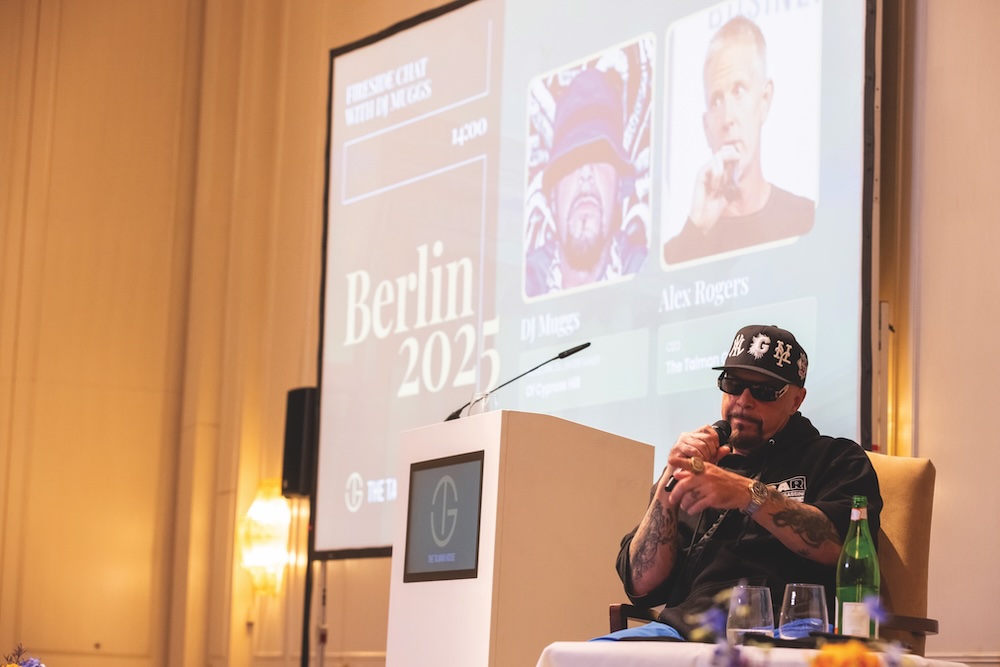
In a chandelier-lit ballroom at Berlin’s Hotel Adlon Kempinski, a quiet revolution is unfolding. Dozens of investors lean in as founders from Zurich, Barcelona, Lisbon and Warsaw pitch a room full of international cannabis investors and the CEOs of the EU’s next cannabis giants. This is a Talman House event, and it’s where European cannabis capital finds its match.

After years of uneven reform, Europe’s cannabis market is finally entering its investment era. As North America wrestles with oversupply and political fatigue, European operators are drawing global attention to their pharmaceutical precision, export potential and growing regulatory stability.

From Albania to Spain and everywhere in between, governments are expanding medical cannabis access and homegrow rights in various forms. In Germany, the new conservative CDU government is cautious on cannabis, but indications suggest they’ll still advance adult-use legalization. Personal possession of up to 25 grams is allowed in public in Germany. Meanwhile, medical supply chains are growing across Western and Eastern Europe through controlled licensing and pilot programs.

Europe remains a frontier defined by both opportunity and red tape. Many deals favor convertible debt or structured instruments over pure equity. Despite the cautiousness, institutional interest is rising. Germany’s Demecan, for example, recently hit a €100 million valuation backed partly by US investors. Last September, Canada’s High Tide purchased a 51 percent interest in cannabis pharma operator Remexian AG with an option to pick up the other 49 percent. Europe’s cannabis infrastructure is maturing and investors are watching closely.

With most national markets still small in scale, the long-term play centers on trading internationally. Companies are positioning themselves to supply EU GMP-certified cannabis and cannabinoid-based pharmaceuticals across the region. While the legal framework is evolving, transparent governance and robust due diligence are non-negotiable for investors. Recent scandals like the collapse of the JuicyFields Ponzi scheme have left many wary.      

Among the new generation of European investment platforms, The Talman Group stands out as a credible, selective, membership-based network connecting cannabis and cannabis-adjacent companies with global investors. Its model blends exclusive events in prestigious venues with curated deal sourcing and introductions to sophisticated investors who want compliant and investable opportunities.

In April 2025, Talman hosted more than 140 participants at the Adlon Kempinski in Berlin, where a handful of highly curated companies pitched to investors in a Shark Tank-style setting. As the investment arm of Europe’s largest B2B conference and expo, International Cannabis Business Conference (ICBC), Talman lends a layer of legitimacy to an industry still working to shake its early growing pains in the adolescence of Europe’s cannabis industry.

DJ Muggs at Talman House cannabis event in Berlin
return on investment: Last April’s Talman House event presented cannabis rockstar DJ Muggs, whose investment portfolio is as impressive as his 35-year music career.

Talman serves as a figurative mentor guiding Europe’s cannabis industry toward maturity. Its role extends beyond matchmaking. The platform provides a buffer of due diligence by screening decks, tracking market intelligence and connecting founders to legal, financial and strategic advisors. Creating the conditions for credible, sustainable industry growth, Talman’s curated network brings much-needed capital into reach for operators bridging a capital desert.

And the opportunity is real in these undercapitalized European markets. Early entrants can enjoy “first mover” status, and if they utilize the head start efficiently, can parlay that into market leadership and delight their investors. Additionally, success in one jurisdiction often opens doors across the EU’s emerging regulatory patchwork. The evolution of policies in Germany, the Netherlands and the United Kingdom could provide compliant, scaled operators with significant upside.

All that said, uncertainty due to evolving regulations continues. Pilot programs have faced repeated delays in the Netherlands and Switzerland. Shallow public markets limit exits, and scandals and bankruptcies remind investors that gaps in oversight can be costly.

Big conglomerates such as British American Tobacco and Tilray entering the space raise the bar for smaller firms as well. Investors have witnessed how market exuberance can outpace fundamentals, but greed is a powerful blinder. Valuation discipline will be essential.           

Europe’s cannabis story is unfolding in distinct phases. There are policy harmonization efforts across EU member states, with standardized licensing and quality controls being considered. Simultaneously, cross-border consolidation through multi-country acquisitions and partnerships is already underway. Expect consolidation to pick up speed in 2026 as more North American companies consider Europe’s potential. As the cycle matures, institutional investors will participate by having pension and health funds make cautious allocations. That typically triggers financial innovation (e.g. REITs and special-purpose investment vehicles). Lastly, as compliance standards mature, de-risking through transparency becomes the norm.

Europe’s cannabis investment story isn’t about chasing another green rush. It’s about building the infrastructure that makes the rush possible. Platforms like the Talman Group are helping investors see Europe not as 27 fragmented markets, but as one evolving opportunity. For those willing to navigate complexity, the reward may be as lasting as the reform itself.

This story was originally published in issue 52 of the print edition of Cannabis Now.

The post Europe’s Cannabis Market Is (Finally) Growing Up appeared first on Cannabis Now.

Delta-3 Carene: The Terpene That Promotes Healthy Bones (& Dry Mouth)

Of the 200 aromatic molecule varieties called terpenes that may manifest in a particular example of the cannabis herb, none is better at repairing bones and promoting their growth than delta-3 carene (also called alpha-carene or simply carene).

Beginning in the 1960s, researchers began to note the medicinal efficacy of phytochemicals from plants such as cannabis. Among these chemicals are cannabinoids (the most famous examples are tetrahydrocannabinol (THC) and cannabidiol (CBD), terpenes (such as myrcene and pinene) and flavonoids.

Terpenes were first believed simply to convey a sometimes pungent aroma in plants like cannabis. From an evolutionary perspective, these molecules serve the purpose of protecting the cannabis plant from pests and predators, many of which find these chemicals offensive or toxic.

The Details of Delta-3 Carene

Delta-3 carene conveys a sweet, pungent scent composed of citrus, cypress, pine and wood. It is produced by plants other than cannabis, including rosemary, pine trees and cedar trees. Delta-3 carene is utilized by the cosmetics industry as a fragrance and is employed as an insect repellent at the industrial level (it is a natural constituent of turpentine).

Regarding medicinal efficacy, the terpene provides significant qualities to combat systemic inflammationrepair diseased and damaged bones and is said to promote mental focus and concentration. Strains of cannabis rich in the delta-3 carene have been found to benefit those with arthritis, fibromyalgia and even Alzheimer’s disease. This terpene is found most commonly in strains of cannabis, including AK-47, Arjan’s Ultra Haze, Jack Herer, OG Kush and Super Lemon Haze, among others.

Beyond the repair of bones, the terpene is unique due to its power to draw out liquids (one of its chief applications within the cosmetics industry). This drying effect makes it a candidate for use as an antihistamine and in products targeting excessive menstruation or mucus production. This quality is also responsible for anecdotal reports of dry mouth (cottonmouth) and red-eye among cannabis smokers and vapers.

The Research

Research has revealed the medicinal efficacy of terpenes such as delta 3 carene since the 1980s. A 1989 study entitled “Comparative Study of Different Essential Oils of Bupleurum Gibraltaricum Lamarck” that was published in the journal Europe PMC investigated the anti-inflammatory properties of delta-3 carene, concluding “the essential oil of the Cázulas Mountains population was most active against acute inflammation owing to its high delta-3 carene content.”

2007 study entitled “Low Concentration of 3‐carene Stimulates the Differentiation of Mouse Osteoblastic MC3T3‐E1 Subclone 4 Cells” published in the journal Phytotherapy Research tested 89 natural compounds for their ability to maintain bone repair, deal with bone disease and promote overall healthy bones.

Concluded the study’s researchers, “Further studies are needed to determine the precise mechanism, but the anabolic activity of 3‐carene in bone metabolism suggested that the use of natural additives to the diet, including essential oils, could have a beneficial effect on bone health.”

Originally published on https://cannabisaficionado.com.

The post Delta-3 Carene: The Terpene That Promotes Healthy Bones (& Dry Mouth) appeared first on Cannabis Now.

❌