 Login
LoginBitcoin payments held back by tax policy, not scaling tech: Crypto exec

Crypto sales are taxable under current United States policy, but lawmakers have proposed tax exemptions for small transactions.

Crypto sales are taxable under current United States policy, but lawmakers have proposed tax exemptions for small transactions.
The Nietzschean Penguin (PENGUIN) memecoin had a market capitalization of about $387,000 before the US White House published its post.

The Bitcoin proposal caps arbitrary data in an attempt to combat spam from non-monetary transactions on the Bitcoin network.

Most prop firms believe the hardest part is the evaluation. It isn’t.
The evaluation phase is structured, constrained, and explicit. Traders are told exactly what not to do. Risk is visible. Failure is immediate. Behavior is shaped by clear boundaries.
Funding changes everything.
Once capital scales, rules thin out. The leash comes off, but the thinking framework doesn’t evolve with it.
And that’s where firms quietly lose their best traders.
During evaluations, traders are not learning how to trade profitably.
They are learning how to avoid disqualification.
That distinction matters.
Constraint-driven behavior works when:
Funding removes the binary outcome.
Suddenly, the trader isn’t asking:
“How do I pass?”
They’re asking:
“How do I not give this back?”
That shift is subtle… and lethal if unaddressed.
Most funded traders don’t blow accounts. They decay.
The equity curve doesn’t collapse — it bleeds.
From the firm’s side, this looks like:
From the trader’s side, it feels like:
Silence is often interpreted as stability. This is far from the truth.
Many traders internalize “control risk” as:
“Don’t lose.”
Many firms operationalize risk control as:
“Don’t break rules.”
Neither addresses decision-making quality under scaled capital.
Losses are not the enemy; unexamined behavior is.
A trader can follow every rule and still slowly exit profitability if they’re trading defensively against imagined threats instead of structured risk.
This is especially common among traders who passed evaluations cleanly — because they were good at constraint, not ambiguity.
👉 “Why Most Traders Fail After Passing Prop Firm Evaluations”

The firms that survive long-term don’t simply loosen rules after funding.
They replace constraint with reasoning.
They help traders answer questions like:
This isn’t motivation. It isn’t community hype. And it isn’t more dashboards. It’s thinking infrastructure.
Most firms stop teaching once the account is live.
That’s when teaching should actually begin.
👉 Execution Under Pressure: Why Most Traders Fail When It Actually Matters
When this post-funding gap goes unaddressed, firms experience:
Marketing doesn’t fix this. More flexible rules don’t fix this. Lower fees don’t fix this. The problem isn’t acquisition.
It’s retention through clarity.
If your funded traders are quiet, compliant, and slowly shrinking in activity, that isn’t stability.
It’s uncertainty without guidance.
The firms that win the next phase of this industry won’t be the loudest. They’ll be the ones that understand how traders think once the leash comes off.
If this perspective resonates, it’s likely because you’ve already noticed fragments of it inside your own trader base.
I spend most of my time studying post-evaluation behavior. Not to coach traders emotionally, but to understand how decision-making changes once capital scales.
If exchanging notes on this gap would be useful, a quiet conversation is usually enough to tell whether there’s alignment.
Why Most Prop Firms Lose Traders After Funding (And Mistake Silence for Stability) was originally published in Coinmonks on Medium, where people are continuing the conversation by highlighting and responding to this story.

Most traders think the goal is to win more.
That belief quietly destroys accounts.
The real objective in trading is not performance. It’s survival long enough for performance to matter.
That distinction sounds obvious. It isn’t practiced.
Most traders don’t fail because they’re wrong.
They fail because:
They don’t lose one trade. They lose the right to continue.
Most traders don’t quit after one big loss. They quit after months of doing the right things with no visible reward.
That’s a different kind of drawdown. I’ve lived that one.
There was a period when my execution was clean.
My routines were consistent.
My risk was controlled.
Objectively, my performance had improved. And yet, week after week, the profitability didn’t show up.
That’s when the thoughts started:
“My performance looks really good.
So I should be profitable by now.”
That sentence quietly drained more capital than any losing trade ever did.
Not financial capital — emotional capital.
I wasn’t blowing accounts. I was wearing myself down.
This is how traders disappear.
Not explosively. Not dramatically. But through exhaustion caused by delayed validation.
Capital is:
You can destroy an account without blowing it.
You do it by:
By the time the account is gone, the trader has already been gone for weeks.

Pro traders understand one brutal truth:
You don’t control returns.
You control exposure.
So they ask different questions:
Amateurs ask:
Different questions. Different outcomes.
You don’t need advanced math to understand this:
That spiral has nothing to do with strategy. It’s structural failure.
Many traders hear “preservation” and think:
That’s ego talking. Preservation is confidence that doesn’t need proving.
Pro traders don’t size up to feel important. They size so they can show up tomorrow unchanged.
Drawdowns don’t test skill.
They test:
Most traders change behavior in drawdowns:
Pro traders do the opposite:
Longevity lives here.
This is where trading stops being exciting and starts being sustainable. Most never make this transition.
You don’t need the best strategy to survive.
You need:
Longevity is not flashy, but it is undefeated.
It demands something most traders never train for:
The ability to operate correctly without reinforcement.
Capital Preservation & Longevity — The Trading Edge Nobody Wants to Practice was originally published in Coinmonks on Medium, where people are continuing the conversation by highlighting and responding to this story.

“You should never move your stop loss.”
This is one of the most famous statements any trader will come across in their career, whether a newbie or an experienced trader.
My setup was solid. I was calm, composed (at least I thought I was), and knew what was expected of me. Executed my entry to perfection. I even took a screenshot to brag to my future self about how “perfect trades” get executed.
Little did I know, my trade had just begun. The price oscillated for hours around my breakeven level. I could feel the heaviness building up in my jaw with every price point move against my position.
There was no major news this day, so the price inched lower and lower, slowly heading towards my stop loss. “This is not fair. Why me?” I remember asking. “But hey… I am an experienced trader. I can beat the market. If only I could move my stop — and let this trade breathe a little. Only this once!”
Once became twice, then three times, and then four times. By the time I snapped out of it, I was negative 30% down on my account balance. That’s when I realized that I just met the Guy who trades my account.
That story isn’t about mistakes. It’s about identity exposure. Every trader has moments where the market removes excuses and leaves only one question:
“Who are you when execution actually costs something?”
Week 7 is about answering that honestly. Not with discipline. With identity.
Most traders believe consistency comes from:
That belief keeps them trapped. Because discipline is conditional.
Identity is not.
You don’t become consistent by trying harder. You become consistent when inconsistency becomes psychologically expensive. Until then, discipline will always fail on schedule.
Discipline depends on variables the market is designed to attack:
When any of these shift, discipline collapses.
That’s why traders can look “disciplined” for:
…and then implode.
Not because they’re lazy. Because discipline was never the controlling force. Identity was.
Here’s the uncomfortable truth:
Most traders act like traders, but identify as gamblers trying to improve.
So under pressure:
Your actions will always obey your identity — not your goals.
If you still need:
You already know which identity is in control.
Pro traders don’t ask:
“How do I stay disciplined here?”
They ask:
“What does someone like me do in this situation?”
That question removes:
Consistency stops being forced. It becomes self-aligned behavior. This is not mindset. It’s identity enforcement.

These are not traits. They are standards with consequences.
Consistent traders do not need this trade to work.
They measure success by:
If your self-worth moves with P&L, consistency is impossible.
Pro traders understand this rule clearly:
A profitable trade with broken rules is logged as a loss.
If rules are violated:
No exceptions. No emotional accounting.
Inconsistency begins the moment you say “just this once.” Pro traders do not violate rules to win.
They understand something amateurs don’t:
Rule violation is the real loss.
Winning while breaking rules trains the wrong identity. So they enforce this standard:
If you can’t follow your process on bad days, you don’t own a process — it owns you.
Consistency is impossible without self-trust.
And self-trust is not confidence.
It is evidence accumulated over time.
It’s built by:
No evidence = no trust. No matter how good today feels.
Because consistency is boring.
No adrenaline.
No hero moments.
No dramatic recoveries.
Just:
Most traders don’t fail from a lack of skill. They fail because their ego needs stimulation. Boredom is the price of staying in the game. Most traders won’t pay it.

Markets are noisy.
Participants are emotional.
Information is abundant.
Consistency is rare. And rarity creates edge. Not because it’s complex, but because it’s uncomfortable to maintain. If you can do what others won’t sustain, you don’t need to outsmart them.
You just outlast them.
This is where the roadmap stops being theory and starts becoming behavior. If identity doesn’t change here, nothing downstream holds.
You don’t become consistent by forcing discipline.
You ONLY become consistent when:
Consistency is not something you do. It’s who you are when no one is watching.
And if your behavior changes when no one is watching, your identity hasn’t changed.
Consistency Is Not Discipline — It’s Identity was originally published in Coinmonks on Medium, where people are continuing the conversation by highlighting and responding to this story.
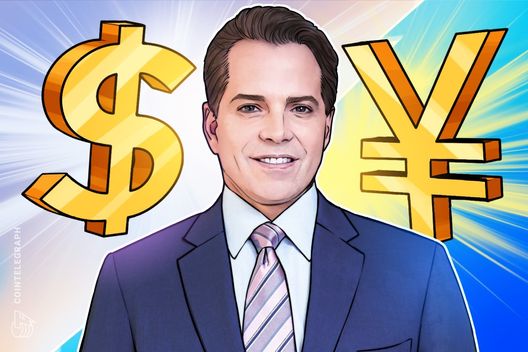
The expanded prohibition on stablecoin yield in the CLARITY Act makes the US dollar less competitive than the digital yuan, Scaramucci said.

Overregulation of the crypto industry would negatively impact markets and gut decentralized finance (DeFi), according to Michaël van de Poppe.

Coinbase CEO Brian Armstrong said the industry is working on several ideas to help community banks in the CLARITY market structure bill.

The company began accepting Bitcoin as a method of payment in May 2025, following hundreds of store closures between 2018 and 2025.

The bill is still a "priority," White House Crypto Council Director Patrick Witt said, but interagency legalities remain a challenge.
I recently had to turn off the chat feature on my website; https://growingweedindoors.org because I was being asked one question every day over and over: Why Are My Marijuana Plants Flowering Early and How Can I Revert Them Back to Vegetative?
First a long story short; female cannabis plants start to flower when they detect less light unless they are plants grown from auto flower seeds.
So I always ask, “Are you sure you didn’t purchase auto flower seeds”?
If they are not auto flowers then the female plants detected less light and started flowering. Since it’s the beginning of summer how could the plants detect less light? This is a great question with an easy answer if you take a moment to think about it.
If you’re starting your plants indoors to get a jump on the outdoor season your plants are getting 18 to 24 hours of artificial light each day. After a month indoors, your plants expect that same amount of light each day which keeps them in the vegetative cycle.
When the plants are moved outdoors, it doesn’t matter if you have a typical housing situation with trees, fences, buildings etc partially blocking sunlight or they are in a wide open field. There is a very good chance those plants will start to flower because they are looking for their usual 18-24 hours of light and they’re only getting about 15, and that’s if they’re lucky.

If you move your indoor plants outside and they start to flower early just let them be. They will flower for about 3-4 weeks, get used to the new light and revert back to the veg cycle all on their own. This will cost you 4-6 weeks or more of grow time.
What I mean is your plants won’t grow much when they are recovering from the stress brought on by inconsistent light timings. The plants won’t be perfect and they may turn into a hermaphroditic plant and I don’t recommend doing this. Another long story short; there isn’t much THC in a hermaphroditic weed plant even though I am smoking hermed buds right now that are 18 months old and I do get a buzz, usually only in the morning. In the evening not so much so think about the next suggestion.
Another option is to add light outside to make up what’s missing. The plants should then be grown normally under the sun and extra light until they start to flower again. This does stress your plants and will most likely add to your growing time. You’ll lose the 14 days reversion time plus more as the plant recovers from the stress it’s been placed under.
If you had little buds started you’ll see weird looking single leaves growing out of them when the reversion commences. You can leave them or pick them off. DO NOT cut off the little buds that are forming.
IMO the best way to handle premature flowering is moving the plants back indoors giving them 24 hrs of light. They’ll revert faster and resume growing in the vegetative cycle. Warning; if you bring them back out with the same light conditions after they revert, they will herm again. I think it’s best just to finish the grow indoors but if you’re dead set on bringing them back out after they revert you’ll have to set them up for success.
First start with 24 hours of light to induce the reversion process for two days. Reduce the light to 20 hours for two days then down to 18 hours. Our goal is to keep the plants in the veg cycle with indoor light down to 15 or 16 hours each day. After two days on 18 change to 15 hours and watch them closely for 7 days. This brings us to a total 11 days of reversion indoors. If they continue reverting you can bring them outdoors and hopefully they will stay in the veg cycle until they start to flower naturally.
If you notice they are flowering again your only choice is to grow them indoors, Go 24 hours of light for a couple of days then switch to your regular schedule; I now use 20 hours on during the veg cycle. As you can see growing outdoors is not as easy as it seems; especially in the mid-west. Besides bugs and critters, early flowering is a pain and is why I prefer to grow indoors.
If you have this problem right now and you can’t move them back indoors, you must add light to your plants outdoors to enable them to revert back to the vegetative cycle. If they were grown indoors under 18-24 hours of light I would suggest you add enough light to your plants so they have at least a solid 18 hours of light and it has to be good light. It doesn’t have to be as intensive as the sun or indoor grow lights but it can’t be just one bulb.
In the future if you plan on starting your plants indoors than moving them outdoors during the veg cycle, you must run your lights only 14-15 hours per day. This will keep your seedlings growing indoors in the veg cycle and they won’t start to flower when you move them outside. If your area has more or less hours of light during the growing season then adjust your indoor timings appropriately. One thing you must realize: all of this is strain dependent so make sure you read about the strain you’re trying to grow.
I would love to hear what you think about this article and your experience. Be sure and leave comments below. I check all the time and will respond or answer questions ASAP.
Visit my website at https://growingweedindoors.org/ for more tips from a grower with 38 years’ experience.
[/fusion_text][/fusion_builder_column][/fusion_builder_row][/fusion_builder_container]
