Reading view

There are new articles available, click to refresh the page.

Former NYC mayor backed token tumbles on Solana amid liquidity fears

  • Some crypto community members accused the project team of removing liquidity, sparking rug pull fears.
  • Rune flagged data suggesting $3.4 million was drained from the token’s liquidity pool.
  • Bubblemaps showed $2.5 million in USDC removed near the peak, with $900,000 not returned after partial additions.

Former New York City Mayor Eric Adams has launched a Solana-based meme coin that he said is aimed at fighting antisemitism and supporting the next phase of innovation in the city.

The token, called the New York City token (NYC), was announced in a Jan. 13 post on X and quickly went live for trading on the Solana decentralised exchange Jupiter.

In the post, Adams shared a link to the token’s official website and said the project was built to fight the spread of antisemitism and anti-Americanism across the US and New York City.

The NYC token initially saw strong momentum after it began trading.

It rallied to a high of $0.58 and briefly reached a market cap of $580 million, according to DEXScreener data.

Liquidity movements trigger rug pull allegations

As the price fell, accusations surfaced online that the team behind the token may have removed liquidity, adding to fears of a potential rug pull.

Crypto analyst Rune flagged data indicating that at least $3.4 million had been drained from the token’s liquidity pool.

Separately, analytics posted by Bubblemaps suggested that a wallet linked to the token’s deployer removed $2.5 million in USDC liquidity when the token was trading near its peak.

After the price had already plunged by more than 60%, about $1.5 million in USDC was added back.

Still, roughly $900,000 was not returned, which further fuelled suspicion among some community members and investors.

The allegations have not been confirmed, but the timing and size of the liquidity movements quickly became a central focus of discussion.

Team cites TWAP strategy to manage volatility

In response to the concerns, the NYC token X account released a statement claiming the project is using Time-Weighted Average Price (TWAP) mechanisms to manage price stability.

The account said funds were being added to the liquidity pool gradually to reduce the risk of further disruption after the initial volatility seen during the launch.

Despite that explanation, the episode has kept attention on how liquidity is handled for newly launched meme coins, especially when trading activity accelerates rapidly across decentralised markets.

Website details token split and proposed use cases

While the token’s official website offers limited detail about the project’s long-term direction, Adams said in a Fox Business interview that proceeds from the NYC token would go toward nonprofits focused on raising awareness about antisemitism and anti-Americanism through educational campaigns.

Other proposed use cases include funding blockchain and crypto education, along with scholarships for students in underserved communities.

Adams officially stepped down as mayor on Jan. 1, after being replaced by Zohran Mamdani.

During his time in office, he was one of the most outspoken political figures in support of cryptocurrency.

His initiatives included converting his first three paychecks into Bitcoin and Ethereum, creating the Office of Digital Assets and Blockchain Technology, and launching the NYC Blockchain Plan to encourage responsible innovation and attract Web3 businesses.

The post Former NYC mayor backed token tumbles on Solana amid liquidity fears appeared first on CoinJournal.

Event Recap: Business of Cannabis NY 2025

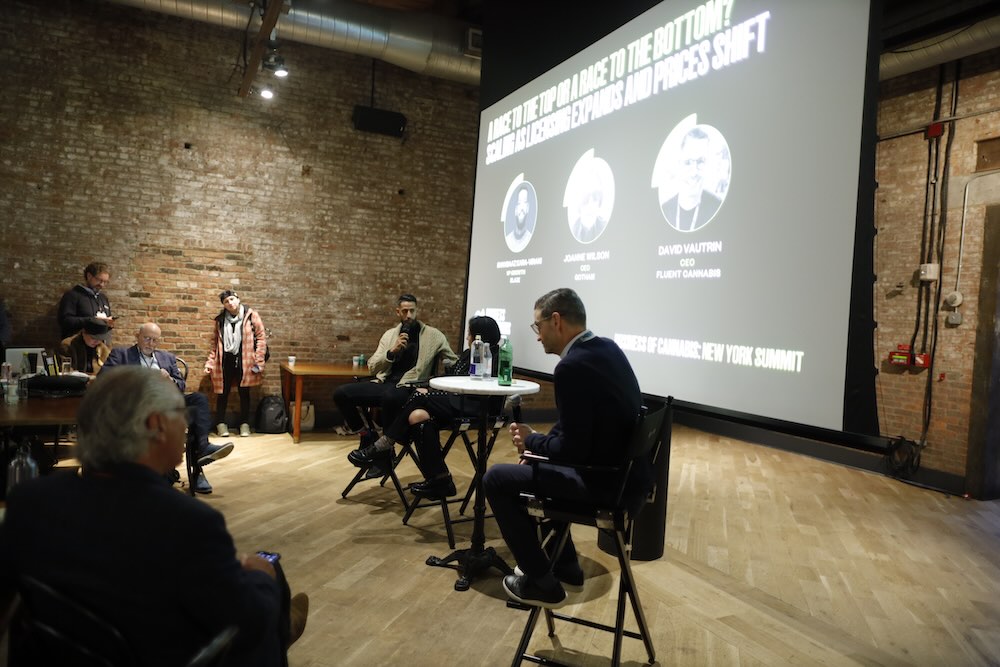
The Business of Cannabis: New York Summit took place earlier this month on November 6 at the Wythe Hotel in Williamsburg, New York. The crowd was composed of dispensary owners, growers, legal experts, marketing professionals, educators and brand leaders. The historic brick-walled space overlooking the East River was filled with conversation, cautious optimism, and shared curiosity about what the next chapter of New York’s legal cannabis market might bring.

The energy in the room was shaped by the industry’s complex moment. New York’s cannabis market has expanded rapidly since legalization, but the state’s industry has also been confronted with major challenges, including delayed licensing and confusion within the Office of Cannabis Management. For many entrepreneurs and advocates who gathered at the summit, the recent election of New York City Mayor Zohran Mamdani was viewed as the biggest variable in what might come next.

The Cannabis-Friendly Mayor

During a candidate debate, Mamdani was asked, “Have you ever purchased anything in a cannabis shop, and what did you buy?”

“I have, I have purchased marijuana at a legal cannabis shop,” Mamdani replied with a chuckle.

Laughter was heard from the audience at the debate, but the comment was received differently within the cannabis industry. Mamdani’s admission was regarded as more than a humorous moment; it was seen as a rare display of candor by an elected official when addressing cannabis. His words were quickly circulated across industry circles and social media feeds, prompting discussions about the type of administration he might lead and how open he might be to engaging with those who have built the city’s legal market from the ground up.

In the days following the election, curiosity was replaced by a mix of excitement and anxiety. Operators, brand founders and policy advocates questioned whether the new mayor might signal a more collaborative approach to regulation and enforcement.

The Mamdani Effect

When Mamdani’s potential impact on the New York market was discussed, CuraLeaf’s executive vice president and regional leader Robert Sciarrone offered his view. “It’s too early to tell in New York, to see what the new mayor is going to do here,” Sciarrone said. “I’m just happy to hear that he visited a shop in New York during the debates.”

Sciarrone’s remarks were met with nods and agreement from attendees. For many, the comment served as a reminder that even small signs of understanding from elected officials carry importance. A mayor who has stepped inside a licensed cannabis store, observed its operations, and spoken with its staff may have developed a deeper appreciation for the work behind compliance and community impact.

Rather than focusing on uncertainty, Sciarrone encouraged the community to take initiative and advocate whenever possible. “Like any regime change, everybody is on a menu for a hot topic for them to bite down on. It’s our responsibility as operators in the state to get out in front of it and have conversations with Mamdani and make sure he understands that we are fighting for our business. All we can do is hope he listens. I can’t predict what’s going to happen, but all I know is we have to talk about it or else…we’re on a menu. We’ve to get out there with urgency and have a good conversation.”

Taking Action

His call to action was echoed throughout the event. In smaller breakout sessions and hallway discussions, strategies were developed. Some participants concentrated on job creation, SKU analysis and tax revenue, while others discussed strategies for engagement with the Office of Cannabis Management. Many operators spoke about the need to humanize their stories so that the mayor and his team could better understand that behind every dispensary counter and cultivation license are individuals building legitimate businesses after years of prohibition. Above all, concern was expressed about the hemp market and the impact of illegal markets on cannabis. The event took place just days ahead of President Trump’s signing of the new federal budget bill, which bans hemp-derived THC and will surely bring additional challenges for those working in the hemp consumables space.

The Wythe’s atmosphere was described as a crossroads between celebration and vigilance. Attendees congratulated one another for surviving the turbulence of recent years but repeatedly returned to a shared theme: the urgent need for city and state cannabis operators in New York to form a cohesive coalition. The absence of such a coalition within the state was described as one of the most harmful issues facing the market today, hindering collaboration and collective political negotiation. A sense prevailed that New York’s cannabis market might either fragment or flourish depending on its engagement with new political leadership.

Collaboration Between Competitors

As the day concluded, sunlight streamed through the tall industrial windows, and attention shifted toward next steps. Contact information was exchanged, working groups were organized, and commitments were made to attend future events such as the upcoming MJBizCon in Las Vegas.

For those in attendance of the Business of Cannabis event, the takeaway was clear: New York’s cannabis industry cannot wait for clarity from above. Messaging must be created that both challenges and educates. The future of the market will depend not only on new regulations, but also on relationships, persistence and the willingness to continue discussions even when outcomes remain uncertain.

The post Event Recap: Business of Cannabis NY 2025 appeared first on Cannabis Now.

Enjoy some of New York’s best deals this Green Wednesday at Verilife

This Green Wednesday, Verilife is celebrating the season by offering a special discount for their medical patients. They’re marking down some of their top products, and that’s not all. On the week of 11/23, medical patients who stop by any New York Verilife location can get a chance to redeem a doorbuster with just a […]

The post Enjoy some of New York’s best deals this Green Wednesday at Verilife appeared first on Leafly.

Attend the Headstash Bowl in NYC

Powered by Cannifest, The Headstash Bowl is a premier cannabis community competition open to all those over the age of 21. With categories for homegrowers and rosin makers, both non-commercial and commercial, The Headstash Bowl is an opportunity for cannabis producers to win cash, prizes, bragging rights, and the coveted Headstash Bowl trophy.  Each Headstash […]

The post Attend the Headstash Bowl in NYC appeared first on The Weed Blog.

New York City Officials Pledge Crackdown on Illicit Pot Shops

New York City officials announced this week that they would take new steps to address the city’s growing number of unlicensed cannabis retailers in a bid to bolster the rollout of the regulated market for recreational marijuana. At a press conference in Manhattan on Tuesday, New York City Mayor Eric Adams and Manhattan District Attorney Alvin L. Bragg, Jr. said they would also target the landlords of retailers selling weed without a license from the state.

New York’s mayor and leading prosecutor noted that the district attorney’s office had filed complaints against four unlicensed shops selling cannabis in Manhattan. The complaints allege that an NYPD officer had observed the shops selling cannabis to underage individuals and that the city is moving to shut down the shops for making illegal sales of cannabis and operating without a license.

“Legalizing cannabis was a major step forward for equity and justice — but we’re not going to take two steps back by letting illegal smoke shops take over this emerging market,” Adams said in a statement from the mayor’s office. “Today, we are proud to announce we are taking direct action against four unlicensed smoke shops in the Ninth Precinct, which will complement our efforts with District Attorney Bragg to hold these illegal businesses accountable. We are laser-focused on protecting the health and well-being of New Yorkers and ensuring this emerging industry delivers equity to those who deserve it the most.”

Last month, city leaders pledged to take action against the multitude of illicit marijuana retailers that have set up shop in New York City since the state legalized marijuana for adults last year. In December, New York City Mayor Eric Adams launched a pilot interagency task force to address the growing number of unlicensed retailers. The task force, which includes the Sheriff’s Office, the NYPD, the Department of Consumer and Worker Protection, and the Office of Cannabis Management, has identified at least 1,200 unlicensed marijuana shops in the city. An analysis by city council staff revealed 11 unlicensed shops selling cannabis within a 10-block radius of the city’s first licensed retailer.

Warnings Sent To 400 Smoke Shops

In addition to the four complaints against unlicensed shops, Adams and Bragg said that the district attorney’s office had sent letters to the more than 400 smoke shops in Manhattan, warning them that the city could initiate eviction proceedings for unlawful cannabis sales. The letter specifically informs commercial entities that the city is prepared to use its authority under New York real estate law “to require owners and landlords to commence eviction proceedings of commercial tenants who are engaged in illegal trade or business, and to take over such eviction proceedings if necessary.” The letter also noted that within five days of written notice that prosecutors would “take over such eviction.”

“For nearly two years, we’ve seen a proliferation of storefronts across Manhattan selling unlicensed, unregulated, and untaxed cannabis products. It’s time for the operation of unlicensed cannabis dispensaries to end,” said Bragg. “Just as we don’t allow endless unlicensed bars and liquor stores to open on every corner, we cannot allow that for cannabis. It’s not safe to sell products that aren’t properly inspected and regulated for dosage, purity, and contaminants. And it certainly isn’t fair to competing businesses.”

Mark Sims, the CEO of cannabis investment firm RIV Capital, said in an email that the proliferation of unlicensed businesses hurts both the newly licensed adult-use cannabis retailers and existing medical marijuana firms including Etain Health, a chain of New York medical marijuana dispensaries operated by RIV, and called for more action from the state.

“While we commend Mayor Adams’ actions to combat the illicit market—it’s a positive step forward—the problem of illicit smoke shops cannot be viewed or solved in isolation,” Sims wrote in an email. “With more than 1,200 illicit shops (which is double the number of Starbucks in New York) suspected to be trafficking in illicit cannabis products, products that have been shown to be unsafe for human health, a more holistic approach must be taken to successfully combat the steady flow of illicit market product.”

The post New York City Officials Pledge Crackdown on Illicit Pot Shops appeared first on High Times.

The Road to New York’s Potentially Massive Cannabis Market

Graffiti in New York

The New York state cannabis market is projected to be one of the biggest in the world, with some industry estimates forecasting sales to surpass $2 billion within just a few years. But the state’s recreational industry is just starting to get off the ground, with multiple players eyeing how to break in and make money.

The city’s first state-sanctioned adult-use dispensary opened in December, and its second – but first social-equity licensed store – just opened this week. Meanwhile, smoke shops are popping up on seemingly every corner, and medical marijuana dispensaries are holding on to prime real estate as both await what they hope will be their turn in the licensing process.

This month, Green Market Report joined forces with our sister publication Crain’s New York to take a closer look at the rollout:

We also asked some of the various stakeholders to share their thoughts on where the rollout is – and where they think it should go. Contributors include:

This package really is just a snapshot of an evolving market and industry – one that we’ll be keeping a close eye on in the weeks and months to come.

Thanks to Telisha Bryan, managing editor of Crain’s New York, and her team for helping us create this package for you, and to Buck Ennis for capturing the industry in pictures.

The post The Road to New York’s Potentially Massive Cannabis Market appeared first on Green Market Report.

Potency Tax Could be a Major Buzzkill for Sanctioned Cannabis Retailers

This story was written in partnership with Crain’s New York, the trusted voice of the New York business community. 

One of the most controversial aspects of New York’s new recreational cannabis market is its tax system, which some have worried will undermine licensed businesses by driving consumers to cheaper underground dealers.

A white paper published in December by a pair of New York tax attorneys, just weeks before the formal start of recreational marijuana sales on Dec. 29, warned of that very possibility. It predicted—and was proven accurate after sales launched—that a legal eighth of cannabis flower in New York with 30% THC would cost about $75.

Prices at Housing Works—the first state-sanctioned cannabis retailer in the five boroughs—proved to be not far below that, with prices fluctuating because taxes are based on THC potency. According to the nonprofit’s online menu, an eighth of cannabis flower ranges in price and potency from 19% THC for $40 to 27% for $60. With the 13% excise tax added, out-the-door prices would be between $45 and $68, respectively.

But if customers remain price-sensitive, as data from other mature recreational marijuana markets suggest, then they’ll broadly be willing to pay only as much as 10% to 15% above prices on the unregulated market, according to the paper, authored by attorneys Jason Klimek and James Mann.

By contrast, unlicensed street vendors in New York City last month were peddling cannabis eighths for between $10 and $45, Green Market Report found.

Combine that with overall lax enforcement to date against the underground market, and the situation has the potential to undercut state-licensed retailers—particularly smaller and less-capitalized businesses—before they can truly get off the ground, Klimek and Mann asserted.

Charles King, CEO of Housing Works / photo by Buck Ennis

Charles King, the CEO of Housing Works, said in early January that he doesn’t think the situation is that dire, and companies such as his will be able to survive as long as they stick to a solid retail business plan and tap the immense tourism market.

“I think people know that you’re paying for quality, you’re paying for the taxes and all the rest of what goes with the regulated, licensed market,” King said.

Still, there will have to be more of a focus on enforcement against illicit competition by state authorities, King said.

It’s a big undertaking, as many illicit operators already have brand recognition by offering legally produced but illegally shipped cannabis from California and Oregon, such as the famed SoCal brand Jungle Boys. That’s one brand name New York City resident Joe Lustberg, managing partner at Upwise Capital, said he ran into recently at a smoke shop.

“For some cannabis operator who’s competing with the smoke shop next door [that is] able to sell California eighths for $30 [and] that’s better weed than what they’re selling at Housing Works, it’s tough,” Lustberg said.

The tax structure also might be altered by the Legislature, because making the system more business-friendly is a top priority of industry interests in Albany, including for the Cannabis Association of New York.

“I do feel confident that the state is very much aware of the issue with the potency tax and, at the very least, open to reform,” said Brittany Carbone, a board member of CANY and a cannabis farmer upstate. “It’s been well proven that more reasonable tax structures actually result in higher rates of purchase in legal dispensaries, which results in a net positive win for the state, in terms of tax revenues.”

Even if the tax structure doesn’t change, cannabis attorney Lauren Rudick said, the THC-based potency tax will probably encourage the creation and sale of a more diverse range of cannabinoid products that don’t rely only on THC to please consumers. And that could be just what the burgeoning industry needs: more product variety.


By the Numbers:

$68

Highest price, with taxes added, for an eighth of cannabis with 27% THC sold at Housing Works

$10

Lowest price for an eight of cannabis bought on the street

The post Potency Tax Could be a Major Buzzkill for Sanctioned Cannabis Retailers appeared first on Green Market Report.

❌