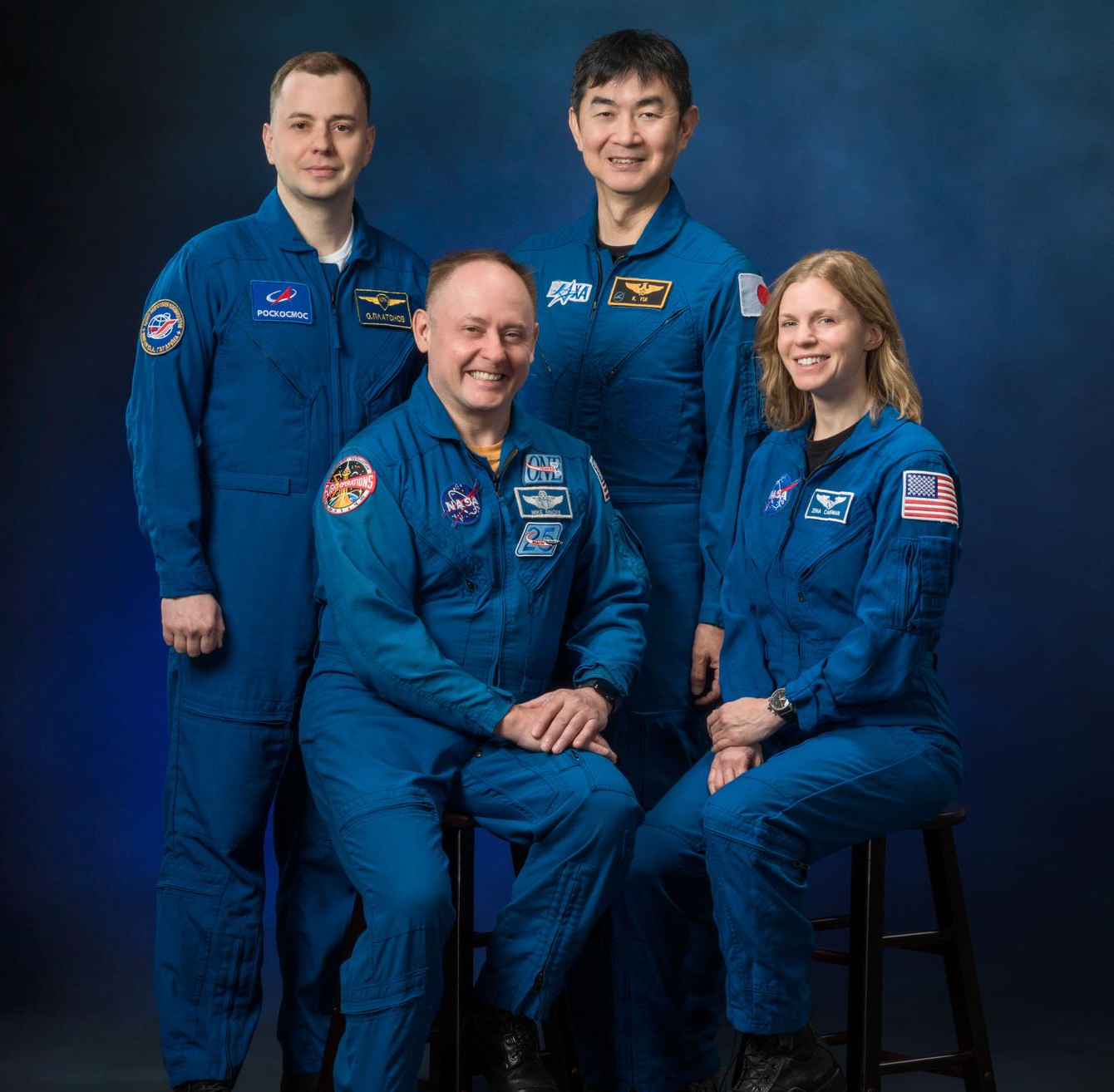
An anonymous reader quotes a report from the BBC: Four astronauts evacuated from the International Space Station (ISS) have landed back on Earth after their stay in space was cut short by a month due to a "serious" medical issue. The crew's captain, Nasa astronaut Mike Fincke, exited the spacecraft first, smiling and wobbling slightly on his feet before lying down on a gurney, following normal procedures. Nasa's Zena Cardman, Japan's Kimiya Yui and cosmonaut Oleg Platonov followed, waving and beaming at cameras. "It's so good to be home!", said Cardman.
It is the first time astronauts have been evacuated due to a health issue since the station was put into Earth's orbit in 1998. The team, known as Crew-11, will now receive medical checks before being flown back to land after the splash down off the coast of California. In a news conference after splash-down, Nasa administrator Jared Isaacman said the sick astronaut is "fine right now" and in "good spirits." Judging by past Nasa communications about astronauts' health, it is unlikely that the identity of the crew member or details of the health issue will be released to the public.
Control of the ISS has been handed over to Russian cosmonaut Sergey Kud-Sverchkov and two other crew members. The astronauts arrived on the ISS on August 1 expecting to complete a standard six and a half month stay. They were due to come home in mid-February. But last week, a scheduled spacewalk by Fincke and Cardman was called off at the last minute. Hours later, Nasa revealed a crew member had become ill.
Over the course of its nearly 30 years in orbit, the International Space Station has played host to more “firsts” than can possibly be counted. When you’re zipping around Earth at five miles per second, even the most mundane of events takes on a novel element. Arguably, that’s the point of a crewed orbital research complex in the first place — to study how humans can live and work in an environment that’s so unimaginably hostile that something as simple as eating lunch requires special equipment and training.
Today marks another unique milestone for the ISS program, albeit a bittersweet one. Just a few hours ago, NASA successfully completed the first medical evacuation from the Station, cutting the Crew-11 mission short by at least a month. By the time this article is released, the patient will be back on terra firma and having their condition assessed in California. This leaves just three crew members on the ISS until NASA’s Crew-12 mission can launch in early February, though it’s possible that mission’s timeline will be moved up.
What We Know (And Don’t)
To respect the privacy of the individual involved, NASA has been very careful not to identify which member of the multi-nation Crew-11 mission is ill. All of the communications from the space agency have used vague language when discussing the specifics of the situation, and unless something gets leaked to the press, there’s an excellent chance that we’ll never really know what happened on the Station. But we can at least piece some of the facts together.
Crew-11: Oleg Platonov, Mike Fincke, Kimiya Yui, and Zena Cardman
On January 7th, Kimiya Yui of Japan was heard over the Station’s live audio feed requesting a private medical conference (PMC) with flight surgeons before the conversation switched over to a secure channel. At the time this was not considered particularly interesting, as PMCs are not uncommon and in the past have never involved anything serious. Life aboard the Station means documenting everything, so a PMC could be called to report a routine ailment that we wouldn’t give a second thought to here on Earth.
But when NASA later announced that the extravehicular activity (EVA) scheduled for the next day was being postponed due to a “medical concern”, the press started taking notice. Unlike what we see in the movies, conducting an EVA is a bit more complex than just opening a hatch. There are many hours of preparation, tests, and strenuous work before astronauts actually leave the confines of the Station, so the idea that a previously undetected medical issue could come to light during this process makes sense. That said, Kimiya Yui was not scheduled to take part in the EVA, which was part of a long-term project of upgrading the Station’s aging solar arrays. Adding to the mystery, a representative for Japan’s Aerospace Exploration Agency (JAXA) told Kyodo News that Yui “has no health issues.”
This has lead to speculation from armchair mission controllers that Yui could have requested to speak to the flight surgeons on behalf of one of the crew members that was preparing for the EVA — namely station commander Mike Fincke and flight engineer Zena Cardman — who may have been unable or unwilling to do so themselves.
Within 24 hours of postponing the EVA, NASA held a press conference and announced Crew-11 would be coming home ahead of schedule as teams “monitor a medical concern with a crew member”. The timing here is particularly noteworthy; the fact that such a monumental decision was made so quickly would seem to indicate the issue was serious, and yet the crew ultimately didn’t return to Earth for another week.
Work Left Unfinished
While the reusable rockets and spacecraft of SpaceX have made crew changes on the ISS faster and cheaper than they were during the Shuttle era, we’re still not at the point where NASA can simply hail a Dragon like they’re calling for an orbital taxi. Sending up a new vehicle to pickup the ailing astronaut, while not impossible, would have been expensive and disruptive as one of the Dragon capsules in rotation would have had to be pulled from whatever mission it was assigned to.
So unfortunately, bringing one crew member home means everyone who rode up to the Station with them needs to leave as well. Given that each astronaut has a full schedule of experiments and maintenance tasks they are to work on while in orbit, one of them being out of commission represents a considerable hit to the Station’s operations. Losing all four of them at once is a big deal.
Granted, not everything the astronauts were scheduled to do is that critical. Tasks range form literal grade-school science projects performed as public outreach to long-term medical evaluations — some of the unfinished work will be important enough to get reassigned to another astronaut, while some tasks will likely be dropped altogether.
Work to install the Roll Out Solar Arrays (ROSAs) atop the Stations original solar panels started in 2021.
But the EVA that Crew-11 didn’t complete represents a fairly serious issue. The astronauts were set to do preparatory work on the outside of the Station to support the installation of upgraded roll-out solar panels during an EVA scheduled for the incoming Crew-12 to complete later on this year. It’s currently unclear if Crew-12 received the necessary training to complete this work, but even if they have, mission planners will now have to fit an unforeseen extra EVA into what’s already a packed schedule.
What Could Have Been
Having to bring the entirety of Crew-11 back because of what would appear to be a non-life-threatening medical situation with one individual not only represents a considerable logistical and monetary loss to the overall ISS program in the immediate sense, but will trigger a domino effect that delays future work. It was a difficult decision to make, but what if it didn’t have to be that way?
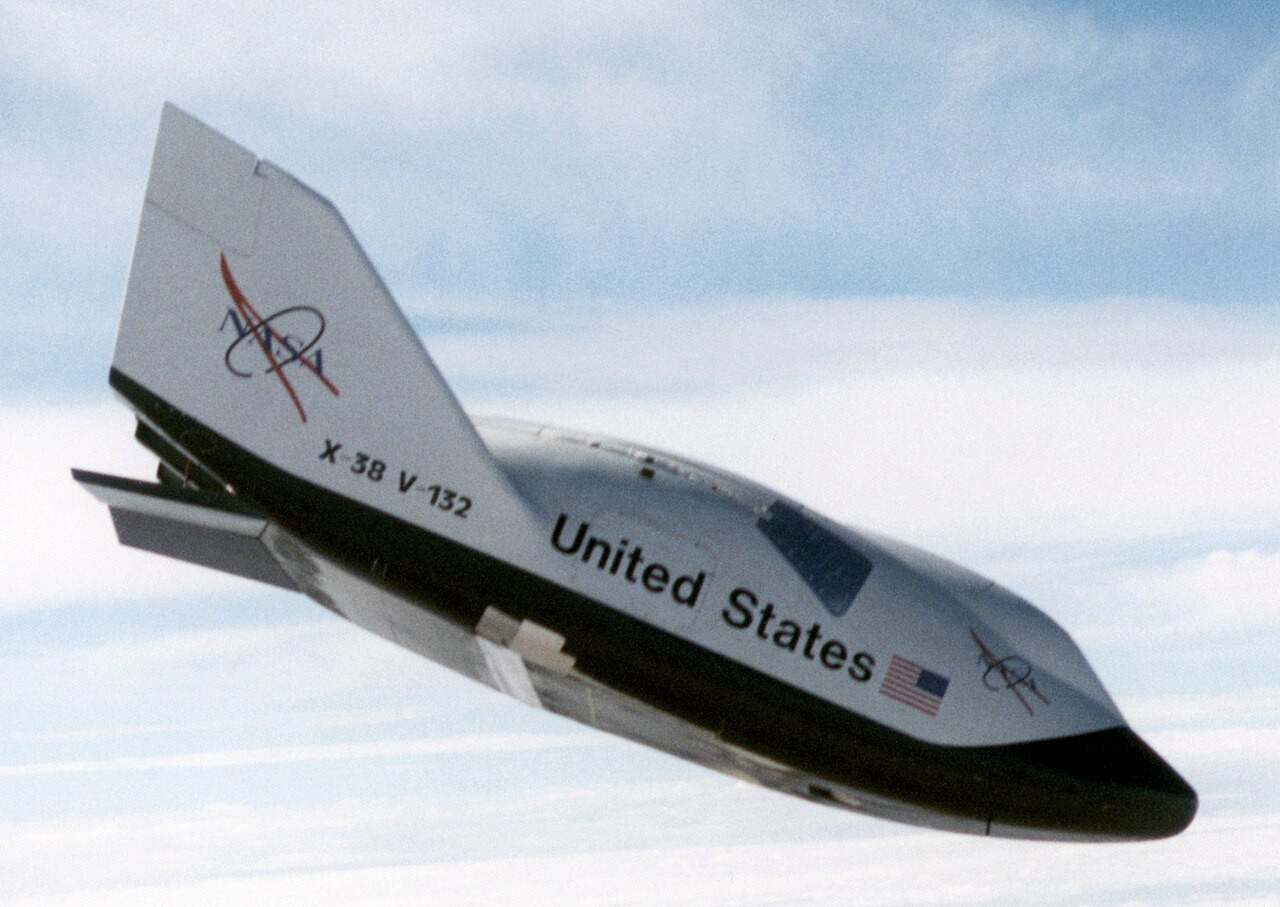
The X-38 CRV prototype during a test flight in 1999.
In other timeline, the ISS would have featured a dedicated “lifeboat” known as the Crew Return Vehicle (CRV). A sick or injured crew member could use the CRV to return to Earth, leaving the spacecraft they arrived in available for the remaining crew members. Such a capability was always intended to be part of the ISS design, with initial conceptual work for the CRV dating back to the early 1990s, back when the project was still called Space Station Freedom. Indeed, the idea that the ISS has been in continuous service since 2000 without such a failsafe in place is remarkable.
Unfortunately, despite a number of proposals for a CRV, none ever made it past the prototype stage. In practice, it’s a considerable engineering challenge. A space lifeboat needs to be cheap, since if everything goes according to plan, you’ll never actually use the thing. But at the same time, it must be reliable enough that it could remain attached to the Station for years and still be ready to go at a moment’s notice.
In practice, it was much easier to simply make sure there are never more crew members on the Station than there are seats in returning spacecraft. It does mean that there’s no backup ride to Earth in the event that one of the visiting vehicles suffers some sort of failure, but as we saw during the troubled test flight of Boeing’s CST-100 in 2024, even this issue can be resolved by modifications to the crew rotation schedule.
No Such Thing as Bad Data
Everything that happens aboard the International Space Station represents an opportunity to learn something new, and this is no different. When the dust settles, you can be sure NASA will commission a report to dives into every aspect of this event and tries to determine what the agency could have done better. While the ISS itself may not be around for much longer, the information can be applied to future commercial space stations or other long-duration missions.
Was ending the Crew-11 mission the right call? Will the loses and disruptions triggered by its early termination end up being substantial enough that NASA rethinks the CRV concept for future missions? There are many questions that will need answers before it’s all said and done, and we’re eager to see what lessons NASA takes away from today.
It’s turned into an unusual mission for SpaceX’s Crew-11. Instead of remaining at the International Space Station (ISS) for the full duration of their mission, the four crew members are coming home a month early due to a medical issue with one of the astronauts. Crew-11 departed the ISS on Wednesday afternoon and is due […]
Imaging of a rat heart created using Alpenglow Biosciences technology. (Photo courtesy of Azalia M. Martinez Jaimes and Karen M. Gonzalez of the Red Horse Lab at Stanford University)
Seattle-based Alpenglow Biosciences today announced a partnership with PathNet, a leading U.S. pathology laboratory, to help commercialize use of the startup’s 3D microscope technology in clinical settings. The effort aims to modernize critical diagnostic tests for prostate and bladder cancers.
The company also confirmed $250,000 in new funding from Mike Rice, former CEO of BioLife Solutions and an Alpenglow advisory board member.
Alpenglow, which spun out of the University of Washington in 2018, has developed tools for quickly creating multi-dimensional images from biological tissue samples and accurately analyzing the results.
The technology is already in use in academic research labs and pharmaceutical companies. The move into clinical applications serving patients requires additional rigor.
“People’s lives are depending on it,” CEO and co-founder Dr. Nick Reder said in an interview. “So there’s a lot more regulatory compliance and validation that needs to be done.”
Alpenglow has been collaborating with the international optics pioneer Zeiss to engineer the unique microscope hardware and analytics software needed for clinical use. PathNet will take the technology from that partnership and use it at its Little Rock, Ark., lab to develop and validate tools for cancer diagnoses.
Jason Camilletti, CEO of PathNet, praised Alpenglow’s “revolutionary 3D platform.” The new partnership, he added in a statement, can “modernize genitourinary cancer diagnostics for clinicians and patients across the country.”
Nick Reder, co-founder and CEO of Alpenglow Biosciences. (LinkedIn Photo)
Reder launched the company to solve problems he experienced as a medical resident in pathology at the University of Washington.
“I wasted hundreds, no thousand of hours of my time, sifting through the images and trying to make sense of them,” Reder said.
Alpenglow’s AI-trained algorithms, he said, can analyze biological samples “and then predict ‘this is your risk for metastasis,’ or ‘this is the likelihood that you’ll respond to a drug.’ And so it really adds a lot of value to the diagnostic workflow.”
The startup has 22 employees and raised approximately $10 million from investors. It has also received roughly $10 million in grant support.
Last year the company was awarded $2 million in federal funding to create a prostate cancer diagnostic tool alongside CorePlus, a pathology software company. Alpenglow is also part of a multi-institution, five-year project worth up to $21 million that launched as part of the Biden administration’s Cancer Moonshot. The effort is developing technology for identifying tumor margins during cancer surgeries.
Alpenglow has customers including GSK (formerly GlaxoSmithKline), InSight Biopharmaceuticals, dermatology companies and others.
The other co-founders are Jonathan Liu, an affiliate professor in the UW’s Department of Mechanical Engineering; Adam Glaser, now a senior scientist at the Allen Institute; and the UW’s Lawrence True.
Reder is pleased to reach this point of development with the company after so many years of work.
“Actually getting into the clinic this year and then hopefully regulatory approval next year and all these big landmarks, it’s really exciting,” he said. “That was always the goal.”
A small section of the International Space Station that has experienced persistent leaks for years appears to have stopped venting atmosphere into space.
The leaks were caused by microscopic structural cracks inside the small PrK module on the Russian segment of the space station, which lies between a Progress spacecraft airlock and the Zvezda module. The problem has been a long-running worry for Russian and US operators of the station, especially after the rate of leakage doubled in 2024. This prompted NASA officials to label the leak as a "high likelihood" and "high consequence" risk.
However, recently two sources indicated that the leaks have stopped. And NASA has now confirmed this.
Good morning, readers, and happy Friday. Welcome to This Week in Space, our Friday morning roundup of the week’s most important space news. Today we’ve got a bunch of good news, including a newfound exoplanet and a dozen new moons orbiting Jupiter. We’ve also got a report of an absolutely wild idea — a literal moonshot — for fighting climate change with moon dust.
SpaceX Starship Aces Static Fire Test
Thursday afternoon, SpaceX ran a successful static fire test of its gigantic Starship rocket. With 33 separate Raptor engines, Starship has the most engines of any rocket ever. Together, their thrust is twice that of a Saturn V or the Space Launch System. Is anyone else amazed the struts can hold that thing on the gantry?
Only 31 of the 33 engines fired. However, that’s actually good news because it means Starship can handle multiple engine failures.
SpaceX hopes to attempt a test flight for Starship in March. “That first flight test is going to be really exciting. It’s going to happen in the next month or so,” said Gwynne Shotwell, SpaceX’s president and chief operating officer.
“We will go for a test flight and we will learn from the test flight and we will do more test flights,” Shotwell added. “The real goal is to not blow up the launch pad. That is success.”
ISS Astronauts Work On Plasma Crystals, Space Plumbing
We’ve talked about how the folks aboard the International Space Station have to become polymaths to keep up with the demands of life in orbit. This winter, among many other pursuits, NASA astronauts on the ISS have been tending tomatoes and working on avant-garde methods of space propulsion. But the most recent projects in low-earth orbit make space tomatoes sound outdated. Over the past few days, crew on the ISS have been working on plasma crystals, servicing jetpacks, and… doing space plumbing.
NASA astronaut Frank Rubio and JAXA astronaut Koichi Wakata spent Thursday doing maintenance on the station’s water recovery system and orbital plumbing for the station’s bathroom, respectively. Meanwhile, station commander Sergey Prokopyev worked inside the Columbus lab “configuring video hardware that records how clouds of highly charged particles, or plasma crystals, behave in microgravity.”
Hubble Captures New Portrait of Tarantula Nebula
The Tarantula Nebula is the brightest star-forming region in our cosmic neighborhood. It’s not even in our galaxy — it’s in the Large Magellanic Cloud, one of the Milky Way’s satellite galaxies. But it’s so bright that it dazzles even at that distance. Astronomers recently used the Hubble space telescope to capture this image of the Tarantula Nebula in all its splendor:
What you see here is actually a joint effort between two different astronomy projects. One team sought to analyze the properties of dust grains floating between stars — a proposal dubbed Scylla by the Hubble team. Those dust grains create the dark, wispy clouds spread across the frame. The other, called Ulysses, studies interstellar dust and starlight interactions.
Curiosity Finds Clues to Mars’ Watery Past
NASA’s Perseverance rover went to Mars with a plan: Scour the planet’s surface for evidence that can teach us about Mars’ history and tell us whether the Red Planet might once have supported life. During its two years on Mars, the rover has found silicate clay and other minerals, signs that liquid water once flowed across Mars’ surface. But none of its discoveries have had evidence of water as visually obvious as a photograph that the agency’s Curiosity rover recently captured. The rover caught a photo of sandstone rock with ripples carved out of its surface, showing that the rock was once at the bottom of a lake.
The ripples support our observations of Mars’ weather and climate. Gentle, constant winds create standing ripple patterns like these. This fits with the constant prevailing winds and planetwide dust storms we’ve seen on Mars. It’s also exciting evidence that Mars indeed had liquid water once upon a time.
Russia Launches Progress Spacecraft to International Space Station
Russia successfully launched a Progress capsule aboard a Soyuz rocket this week, bound for the International Space Station. The rocket launched from Russia’s Baikonur aerodrome early Thursday morning, local time. This capsule, ISS Progress 83 (83P), carries about three tons of supplies, including food, water, and air. It will dock with the Russian Zvezda module on Saturday morning, replacing the Progress capsule that left Monday afternoon.
What happens to Progress 82 once it departs? Progress capsules are expendable. This means that the crew on the ISS loads the capsules with trash from the station while it’s docked. Then, hours or days after the capsule undocks, it burns up in the atmosphere.
CAPSTONE Lunar Satellite Reports In After 11-Day Glitch
NASA’s CAPSTONE satellite is finally responding to hails after nearly two weeks incommunicado. A software glitch left the probe unresponsive on Jan. 26 until it rebooted itself Monday.
“The spacecraft remained overall healthy and on-course throughout the issue,” NASA said in a blog post. “On Feb. 6, an automatic command-loss timer rebooted CAPSTONE, clearing the issue and restoring two-way communications between CAPSTONE and the ground.”
The satellite has made twelve successful circuits in its near-rectilinear halo orbit (NRHO) — twice what its original mission expected. That’s great news for NASA. CAPSTONE is trying out the fancy new NRHO orbit because it’s more fuel efficient than other lunar orbits we’ve used. In twelve orbits, CAPSTONE has only had to fire its engine twice. This smashing success means the agency may use the new orbital pattern for lunar support satellites under the aegis of its Artemis project.
Rolls-Royce Building Nuclear Engine For Spaceships
Did you know Ball makes Mason jars — and parts for space telescopes? Ball made parts for Hubble and the mirrors for the JWST. In a similar fashion, Rolls-Royce appears to be branching out. Way out. The luxury automaker’s subsidiary, Rolls-Royce Holdings, has announced plans to build a nuclear engine for deep space exploration.
Webb Telescope Breaks Own ‘Speed Limit’ Tracking DART Impact
NASA’s Guaranteed Time Observation program gives a certain amount of telescope time to those who worked on the JWST. One GTO project: Making observations of NASA’s DART kinetic asteroid redirect test. However, the project brought an unlooked-for surprise. Wednesday, JWST deputy project scientist Stefanie Milam explained how the telescope broke its own speed limit watching the asteroid impact.
Webb launched with the ability to track objects moving through the sky as fast as Mars. But scientists who study fast-moving small bodies like asteroids, comets, and interstellar objects “really wanted to study objects that moved faster than Mars,” said Milam. So, the team set out to show that not only could Webb exceed this “notional speed limit,” it could go much faster. Their efforts paid off when it came time to observe the DART asteroid impact.
NASA’s DART kinetic asteroid redirect test, as seen by the JWST. Image: NASA/JPL
The video Webb captured of the Dimorphos impact showed that the telescope can move its field of regard at more than triple its original maximum speed. Most of the time, though, Milam says the telescope will confine itself to double its original turning speed. Darn.
Chris Hadfield Meets With King Charles III
On Thursday, Canada’s favorite astronaut, Chris Hadfield, met with King Charles III at Buckingham Palace. The two sat down to discuss “efforts to encourage sustainability in space,” according to the Royal Family’s official Twitter.
“What a pleasure and privilege to be asked to advise and assist, and make the King laugh,” Hadfield wrote afterward.
While we don’t yet have specifics, Charles is a longtime environmentalist. Could it be that the King is interested in cleaning up space junk?
A Shield of Lunar Dust Could Help Cool Earth
Astrophysicists are pondering the pros and cons of a literal moonshot to blunt the effects of climate change. In a recent study, a group of researchers proposed launching moon dust into orbit around Earth to create a dusty shield that would reduce Earth’s exposure to the Sun. Evidently, lunar dust grains are just the right size and composition to block some of the solar energy that would hit the Earth.
For six days out of the year, the researchers say, the dust cloud would shield Earth from a few percent of the Sun’s radiation. To carry out this plan, the researchers’ numbers require dredging up some 22 billion pounds of lunar dust. They could fire the dust into orbit from the Moon or a platform in orbit — potato, poterrible idea. Surely there is some lower-hanging fruit?
Scientists Find a Dozen New Moons Orbiting Jupiter
In October 2019, astronomers at the Carnegie Institution for Science found 20 new moons orbiting Saturn. This made Saturn the “moon king” of the Solar System, with a total of 83. However, the same team has announced they’ve found a dozen new moons orbiting Jupiter.
An international team of astronomers has reported a newfound exoplanet in our cosmic backyard. The new planet, Wolf 1069 b, is between 1 and 1.4 Earth masses and just 8% bigger. Calling it Earth-like might be a stretch: Wolf 1069 b zips around its low-mass red dwarf star in just 15 Earth days. However, it’s just 31 light-years away.
Unlike our nearest neighbor, Proxima Centauri, Wolf 1069 doesn’t show the characteristic bursts of violent flares we frequently see in red dwarf stars. This could mean it has managed to retain an atmosphere. If so, the planet’s surface temperature could be about 55 degrees Fahrenheit. If not, it’s more likely an iceball, too cold to sustain liquid water.
Skywatchers Corner
Comet C/2022 E3 (ZTF) is a once-in-an-epoch visitor from the outer solar system. We haven’t seen it since the time of the Neanderthals, but it’s come back for one last visit. The outbound comet passed close to Earth last week. Now, it’s buzzing Mars.
It’s green! Comet C/2022 E3 (ZTF) and its twin tails. Image: NASA
The green comet will be near Mars in the constellation of Taurus for the next several days. After sunset, look high in the sky for the best shot at catching it through binoculars or a telescope. After Feb. 14, the comet will start heading toward Orion and Eridanus.
If you don’t have a good shot at viewing the comet where you are, you can still catch it online. This weekend, the Virtual Telescope Project is webcasting a free livestream of the comet’s approach to the Red Planet. The livestream will begin this Saturday, Feb. 11, at 2 p.m. EST (1900 GMT). You can watch it on the project’s website and YouTube channel.
Feature image: This week’s waning gibbous moon, taken from the International Space Station. Courtesy of NASA HQ Flickr.

 Login
Login