Reading view

There are new articles available, click to refresh the page.

Binance Founder CZ Addresses Trump‑Related Controversy In Latest Statement

Binance founder and former CEO Changpeng Zhao (CZ) has pushed back against growing scrutiny surrounding his relationship with President Donald Trump, saying his ties to the president and his family have been widely misunderstood following Trump’s decision to grant him a pardon last year.

CZ Rejects Allegations Of Binance’s Political Links

Attention on Zhao intensified after President Trump issued a pardon in October 2025, a move that prompted renewed criticism from Democratic lawmakers and fueled questions about Binance’s alleged political and business connections. 

Addressing the controversy in a recent interview with CNBC, Zhao said claims of a business relationship with the Trump family are inaccurate. “There’s no business relationship whatsoever,” Zhao stated. The former executive added that the narrative surrounding the pardon and Binance’s alleged ties to Trump had been “misconstrued.”

Much of the scrutiny centers on Binance’s connection to the Trump-linked decentralized finance (DeFi) venture World Liberty Financial (WLFI). 

That connection traces back to a $2 billion investment made in March 2025 by MGX, a state‑owned firm based in Abu Dhabi, United Arab Emirates. MGX invested in Binance using USD1, a stablecoin created by World Liberty Financial.

Zhao emphasized that the payment method was chosen by the investor, not Binance. “MGX is the investor. They choose USD1,” he said. “My request to them was they pay us in crypto. I don’t want to deal with banks, really.” 

According to Zhao, the use of the venture’s USD1 stablecoin has been wrongly interpreted as evidence of a deeper relationship. “Many people misconstrued that,” he added.

WLFI Push Back On Political Influence Claims

In a statement, WLFI spokesperson David Wachsman said the company played no role in the pardon process. “As we have stated many times, WLFI is not a political organization and had zero role in the pardon process,” Wachsman said. “To imply otherwise is dangerous and false.”

Trump himself downplayed any personal connection in a November interview with CBS’s 60 Minutes. “I have no idea who he is,” the president said of Zhao. Trump added that he had been told Zhao was “a victim, just like I was and just like many other people, of a vicious, horrible group of people in the Biden administration.”

Additional attention has focused on Binance’s lobbying efforts in Washington. NBC News reported during the week of the pardon that Binance had hired Checkmate Government Relations, a lobbying firm led by Charles McDowell, who is a friend of Donald Trump Jr. 

According to disclosures, the firm was paid $450,000 to lobby the White House and the Treasury Department on matters including “executive relief” and digital asset‑related financial services policy.

Zhao denied that any lobbying effort was connected to his pardon. “There is a lot of media saying that there is some deal in place to get me the pardon,” he told CNBC in Davos. “As far as I know, that does not exist at all.”

Binance’s former CEO also said he has never spoken directly with President Trump. “The closest that I got to him was today when he was doing the Board of Peace session,” Zhao said. “I was in the audience, about 30 to 40 feet away from him.”

Binance

At the time of writing, Binance Coin (BNB) was trading at $893, having recorded a 4% drop over the previous week. However, it is one of the few cryptocurrencies to have retained gains year-to-date, with an increase of 30% in that time. 

Featured image from OpenArt, chart from TradingView.com 

Monero, Zcash, And Dash Prohibited In India Amid Money-Laundering Crackdown

India’s Financial Intelligence Unit (FIU‑IND) has launched a fresh anti‑money‑laundering crackdown aimed at privacy‑focused cryptocurrencies. The move targets Monero (XMR), Zcash (ZEC), and Dash (DASH), which together represent the largest and most widely used privacy coins globally.

India Tightens Crypto Oversight

Details of the action were shared on Friday by market analyst MartyParty on social media platform X (previously Twitter), who notes that FIU‑IND has issued a directive to crypto exchanges registered in India, instructing them to immediately suspend deposits, withdrawals, and trading activity for Monero, Zcash, and Dash. 

At the heart of the regulator’s concerns is the technology underpinning these assets. Privacy coins rely on advanced cryptographic techniques designed to obscure transaction details, wallet balances, and user identities. 

Monero uses ring signatures to hide the sender and receiver, Zcash allows shielded transactions that conceal transaction data, and Dash offers optional privacy features. 

While these tools are valued by users seeking confidentiality, regulators argue they make it difficult for exchanges to meet know‑your‑customer (KYC) and transaction‑monitoring obligations. The regulator views these features as posing elevated risks related to money laundering, terrorist financing, and sanctions evasion. 

The latest directive applies to all cryptocurrency exchanges registed in the country, which currently includes crypto platforms operating in compliance with Indian regulations. They have been instructed to stop supporting the assets, including delisting, blocking all deposits and withdrawals, and disabling any associated trading pairs.

Monero, Zcash, And Dash Show Mixed Market Reaction

The latest action builds on a broader regulatory push by Indian authorities. In October 2025, FIU‑IND ordered internet service providers to block access to 25 offshore crypto exchanges that failed to register. 

By contrast, only a handful of exchanges currently remain fully registered and compliant in the country. Binance, Mudrex, Coinbase, CoinSwitch (CoinSwitch Kuber), and ZebPay continue to operate legally in India.

Despite the regulatory pressure, market prices for the targeted privacy coins showed short‑term resilience. Over the past 24 hours, all three assets posted gains after recovering from sharp losses earlier in the week. 

Monero was trading at $524 at the time of writing, up 3.5% on the day. Zcash also rebounded modestly, rising 2.2% to trade at $372. Dash recorded the strongest daily performance, jumping 11.6% during the same period.

However, the broader trend remains negative. According to CoinGecko data, Monero, Zcash, and Dash are still down sharply on a weekly basis, with losses of approximately 21%, 8%, and 20% respectively over the past seven days. 

Monero

Featured image from DALL-E, chart from TradingView.com

Expert Forecasts $5 XRP Price As Exchange Balances Plummet By 57%

XRP has given back all of its early‑year gains, sliding toward the $1.90. Despite the pullback, several on‑chain and market indicators are pointing to a possible breakout from current levels, driven largely by a sharp decline in XRP held on exchanges. 

XRP Exchange Balances Slide To 1.5B

Market analyst Sam Daodu notes that over the past months, a substantial portion of XRP has steadily moved off centralized trading platforms and into long‑term storage and institutional custody. 

On‑chain figures indicate that XRP exchange balances dropped from roughly 4 billion tokens in early 2025 to about 1.5 billion by late December. This 57% decline represents the steepest annual reduction in XRP exchange supply on record.

Data from CryptoQuant reinforces this trend, showing shrinking XRP reserves on major trading platforms such as Binance, where balances continued to fall into early 2026. At the same time, wallet accumulation has increased, particularly among institutional custody accounts. 

Daodu argues that with fewer tokens available on exchanges, buying pressure that previously moved XRP only marginally can now drive gains of 10% to 15% within days. 

When combined with approximately $1.37 billion in XRP exchange-traded fund (ETF) inflows recorded since November 2025, Daodu believes the conditions favor a potential breakout toward the $4 to $5 range, rather than another rally that stalls below $3.

Bullish, Base, And Bearish Scenarios

Looking ahead, Daodu outlines three broad price paths for XRP, each tied to how exchange balances and ETF inflows evolve. In a bullish scenario, the altcoin could move into the $4 to $5 range if monthly ETF inflows average $300-$500 million and exchange balances fall below 1.5 billion tokens. 

A more neutral outcome would see XRP trading between $2.50 and $3.50. This scenario assumes ETF inflows slow to roughly $50 million to $70 million per week and exchange balances continue to decline at a steadier pace. 

The bearish case hinges on the possibility that the supply contraction thesis proves overstated. If rapid transfers refill exchange order books, escrow releases increase selling pressure, or ETF demand slows due to tighter macroeconomic conditions, XRP could lose support. 

In that scenario, prices may fall below $2.00 and revisit the $1.60 level during periods of risk aversion. Prolonged uncertainty could see XRP trading between $1.50 and $2.00 for much of 2026, according to the analyst. 

XRP

At the time of writing, the altcoin was trading at $1.94. This represented losses of 4% and 8% over seven and fourteen-day periods, respectively. This positions the fifth-largest cryptocurrency in terms of market cap 46% below the current all-time high of $3.64 reached back in July of last year.

Featured image from DALL-E, chart from TradingView.com 

Crypto Company Ledger Plans US IPO With Valuation Expected To Top $4 Billion

Ledger, the French maker of hardware wallets for crypto assets, is reportedly moving ahead with plans for a potential initial public offering (IPO) in New York, signaling continued momentum in public market interest for digital asset companies. 

The listing would place Ledger among a growing group of crypto firms seeking access to US capital markets, following the recent public debut of BitGo earlier this week.

Ledger Taps Wall Street Giants For US IPO

The move comes amid a broader initial public offering wave that gained strong traction throughout 2025, when several major crypto-native companies either went public or began laying the groundwork to do so. 

Firms such as Circle (CRLC), Bullish (BLSH), eToro (ETOR), Figure (FIGR), and Gemini (GEMI) have already gone public in the US, while Grayscale and Kraken remain part of the renewed IPO push, with filings submitted and preparations still underway.

According to a report by the Financial Times, Ledger has engaged investment banks including Goldman Sachs and Barclays to advise on its initial public offering in the United States. 

People familiar with the matter say the offering could value the company at more than $4 billion. While the IPO could take place as soon as this year, sources cautioned that the plans remain subject to change.

Ledger’s reported IPO ambitions come as BitGo opened trading on Thursday with its shares jumping 24.6%, giving the company a valuation of approximately $2.59 billion. 

BitGo and several of its existing shareholders sold 11.8 million shares priced above the initially marketed range of $15 to $17, raising $212.8 million in the process.

BitGo Sets Tone For 2026 Crypto IPOs

Market experts have pointed to BitGo’s performance as an important signal for the broader crypto IPO landscape. Lukas Muehlbauer, an IPOX research associate, described BitGo’s listing as the first major test of investor demand for crypto-related offerings in 2026. 

He noted that while Gemini went public near the peak of the crypto market last year, BitGo entered the market during a period of recent selloffs, making its reception particularly telling. 

Muehlbauer added that BitGo’s positioning as a profitable and regulated “digital asset infrastructure company,” rather than a business tied directly to token price movements, helped insulate it from “Bitcoin’s (BTC) day-to-day volatility.”

Beyond Ledger, expectations are building that the pipeline of crypto IPOs will continue to grow. In addition to Kraken and Grayscale, industry experts believe the coming year could bring an even larger number of crypto-related IPOs in the US. 

“2025 marked the professionalization of crypto, and the public markets noticed,” said Mike Bellin, a partner at PwC who leads the firm’s US IPO practice. 

Some offerings, however, have faced delays. Elliot Han, chief investment officer at C1 Fund, said that the fourth quarter could have seen an even higher number of IPOs. 

He pointed to the federal government’s prolonged shutdown as a key factor that pushed several listings into the first quarter of 2026. Han also noted that heightened stock market volatility toward the end of the third quarter added further complications.

Ledger

Featured image from DALL-E, chart from TradingView.com 

Binance Leads Push To Offer Tokenized US Stocks Outside Traditional Markets

Major cryptocurrency exchanges are reportedly positioning to bring tokenized stock trading onto the blockchain, signaling a renewed push to merge traditional financial markets with digital assets. 

According to a report published Friday by The Information, platforms such as Binance are exploring ways to offer crypto tokens that track publicly listed US companies, effectively creating new channels for equity exposure through tokenized instruments.

Binance And OKX Explore Tokenized Stocks

The report says Binance is considering reintroducing stock tokens to its platform, several years after pulling similar products in 2021 amid regulatory uncertainty. 

The plan, cited by a person familiar with the matter, reflects a broader shift within the industry as exchanges revisit tokenized equities under evolving market and compliance frameworks. 

OKX is also said to be evaluating the possibility of offering tokenized stocks, according to Haider Rafique, the company’s global managing partner and chief marketing officer.

Binance has framed the move as part of its long-term strategy to connect traditional finance with the crypto ecosystem. In a statement to CoinDesk, a Binance spokesperson said the exchange is focused on expanding user choice while maintaining strict regulatory standards. 

The company noted that it began supporting tokenized real-world assets (RWAs) last year and recently launched what it described as the first regulated traditional finance perpetual contracts settled in stablecoins. 

Exploring tokenized equities, the spokesperson said, is a natural progression as Binance continues to build infrastructure, collaborate with established financial institutions, and develop new products for users and the wider industry.

Binance and OKX are not alone in this effort. Several major crypto firms, including Robinhood (HOOD), Gemini (GEMI), and Kraken, have already rolled out tokenized stock offerings in Europe. Meanwhile, Robinhood and blockchain startup Dinari are seeking regulatory approval to introduce similar products in the United States.

Tokenized Shares Gain Increased Interest

Robinhood took a significant step in June of last year when it launched trading in tokens linked to publicly listed companies and announced plans to expand into tokenized shares of private firms. 

As part of the rollout, the company distributed tokens pegged to OpenAI. According to Robinhood’s terms and conditions, those tokens function as derivative contracts backed by the firm’s ownership of fund units in a special-purpose vehicle that holds OpenAI convertible notes. 

Coinbase (COIN), on the other hand, is reportedly in discussions with the US Securities and Exchange Commission (SEC) about launching tokenized securities that would grant investors the same legal rights and benefits as conventional shares

Several issuers involved in the space say they are closely adhering to established rules around securities law, anti-money laundering requirements, bankruptcy protections, and investor safeguards.

Industry leaders argue that, when structured properly, tokenization can strengthen rather than weaken investor protections. Ian De Bode, chief strategy officer at Ondo Finance, said that a careful approach to tokenized securities can enhance safeguards while unlocking efficiencies that traditional markets struggle to achieve.

Binance

Featured image from OpenArt, chart from TradingView.com 

Expert Analyzes XRP, Ethereum, And Solana: Predictions For The Next Altcoin Season

As the crypto market faces uncertainty and continues in a consolidation phase, market expert Sam Daodu has issued a report examining the potential for XRP, Ethereum (ETH), and Solana (SOL) to emerge as frontrunners if a new altcoin season arises in 2026. 

XRP, ETH, And SOL Price Forecasts

Daodu began his analysis by pointing out that Bitcoin’s (BTC) dominance is currently hovering around 59%, alongside an Altcoin Season Index reading of 55. These indicators suggest that 2026 could herald a substantial rotation towards altcoins, mirroring significant shifts experienced during cycles in 2016-2017 and 2020-2021.

The expert outlines several bullish scenarios for each. For XRP, he envisions a potential surge past the $6-$8 range if exchange-traded fund (ETF) inflows maintain a monthly average exceeding $400 million and RippleNet continues to expand its influence in global banking. 

ETH, on the other hand, could see itself climbing toward $12,000-$18,000 if Layer 2 (L2) adoption unlocks broader usage and ETF inflows rebound. 

Daodu highlights that active addresses are at cycle highs, indicating organic demand that may translate to higher prices once institutional sentiment shifts positively.

For SOL, the outlook is similarly optimistic. Solana might rocket to the range of $500-$800 if its transaction finality of 150 milliseconds and low fees attract a new wave of applications. Additionally, the rise in ETF filings could lead to significant capital inflows.

Potential Risks Ahead 

In more stable scenarios, Daodu suggests that XRP might consolidate between $2.50-$3.50 if institutional adoption progresses steadily without dramatic catalysts. 

He also speculates that Ethereum could trade within the range of $5,000-$9,000, benefiting from consistent demand driven by staking yields and decentralized finance (DeFi) growth.

Meanwhile, Solana might trend between $200-$350, assuming that developer growth and retail adoption continue at their current pace without major breakthroughs. 

However, Daodu cautions that XRP could fall below $1.50 if demand for ETFs wanes or if regulatory uncertainties arise. Similarly, ETH could fall below $2,500 if scalability issues arise or if regulatory challenges become more pronounced. SOL could drop below $100 if outages persist or if it faces increased competition from other Layer 1 platforms.

What AI Models Anticipate

AI predictions provide additional insight into the expected performance of these altcoins. For XRP, forecasts vary significantly, with ChatGPT estimating a range of $0.80-$3.00, while Grok presents a more bullish outlook with a target of $1.50-$6.00. 

Ethereum’s AI predictions show a range of $3,000-$9,000 from ChatGPT, while Gemini anticipates a high of $7,000-$18,000 through increased tokenization. 

Lastly, Solana’s predictions range from $120-$350 from ChatGPT to a more optimistic $300-$800 from Gemini, depending on the growth of consumer applications.

XRP

XRP was trading at $1.93 at the time of writing, down 2% in the previous 24 hours. ETH traded at roughly $2,952, while SOL traded at $128, both experiencing comparable declines during the same time period. 

Featured image from DALL-E, chart from TradingView.com  

Coinbase Announces New Board Of Experts To Combat Rising Quantum Computing Risks

The crypto industry is preparing for a potential security challenge with the anticipated arrival of quantum computing. In response to this potential threat, Coinbase (COIN) has announced the formation of an advisory board composed of external experts. 

Coinbase Chief Security Officer’s Warning 

According to a report from Fortune, the newly established board includes academics from Stanford, Harvard, and the University of California, specializing in fields like computer science, cryptography, and fintech. 

Officially titled the Coinbase Independent Advisory Board on Quantum Computing and Blockchain, the group also features experts from the Ethereum Foundation, the decentralized finance (DeFi) platform EigenLayer, and Coinbase itself.

Jeff Lunglhofer, Coinbase’s Chief Information Security Officer, elaborated on the potential impact of quantum computing on current encryption methods. 

He explained that the encryption protecting wallets and private keys of Bitcoin (BTC) holders relies on complex mathematical problems that would take conventional computers thousands of years to solve. 

However, with the computational power that quantum computers promise—potentially a million times greater—these problems could be solved much more swiftly, Lunglhofer asserted.

Although the security implications of quantum computing are genuine, Lunglhofer reassured that they are not expected to become an immediate concern for at least a decade. The purpose of the new advisory board is to examine the upcoming challenges posed by quantum computing in a measured manner. 

This involves fostering initiatives within the blockchain industry that are reportedly already underway to enhance the resilience of Bitcoin and other networks against quantum attacks.

Blockchain Networks Expected To Implement Larger Keys

At present, Bitcoin secures its wallets through private keys, which consist of long strings of random characters. These keys are accessible to their owners but can only be estimated through extensive trial-and-error computations. 

The advent of quantum computing, however, would make it feasible to deduce private keys using trial-and-error methods in a fraction of the time. 

In response to this looming threat, Fortune disclosed that blockchain experts speculate that networks will implement larger keys and add “noise” to obscure their locations, making them more difficult to detect. Implementing these defensive upgrades across blockchain networks is said to take several years. 

In the meantime, the newly formed Coinbase Advisory Board is gearing up to publish research papers and issue position statements aimed at helping the cryptocurrency industry brace for the impacts of quantum computing. 

Their first paper, which will address quantum’s influence on the consensus and transaction layers of blockchain, is expected to be released within the next couple of months.

Coinbase

At the time of writing, Coinbase’s stock, which trades under the ticker symbol COIN on the Nasdaq, is trading at $225.10. This represents a slight drop of 1.2% over the last 24 hours. 

Featured image from OpenArt, chart from TradingView.com 

Senate Ag Committee Unveils Crypto Market Structure Bill Draft, Markup Set For Jan. 27

Following the unsuccessful markup of the long-awaited crypto market Structure bill (CLARITY Act) by the Senate Banking Committee, the Senate Agriculture Committee unveiled a new draft of the bill, with a scheduled markup session for Tuesday, January 27.

Stablecoin Yield Regulations Excluded

The Agriculture Committee’s version of the bill primarily addresses regulations under the Commodity Futures Trading Commission (CFTC), which would gain expanded authority to regulate cryptocurrencies like Bitcoin (BTC) and Ethereum (ETH). 

In contrast, the Senate Banking Committee’s section of the legislation focuses on the Securities and Exchange Commission (SEC) and its oversight. Notably, the Agriculture draft allocates $150 million to support the CFTC in the implementation of the proposed law.

Market expert James Murphy reviewed the key provisions of the new draft and expressed optimism about its implications. He highlighted that the bill creates a pathway for decentralized finance (DeFi) to avoid CFTC regulation, providing important protections for developers and specific service providers from liability. 

The Senate Agriculture Committee’s draft also excludes any regulations concerning stablecoin yields. This decision is significant, particularly as it addresses a critical provision that resulted in Coinbase (COIN) withdrawing its support for the Banking Committee’s version of the bill last week. 

The Banking Committee’s version of the CLARITY Act aims to limit the yield that stablecoin platforms can offer. While banks support this approach due to concerns about deposits potentially flowing out, crypto firms oppose it, arguing that such restrictions hinder competition. 

In contrast, the Agriculture Committee bill seeks to exempt stablecoins from CFTC regulations and relies on existing frameworks like the already passed stablecoin bill, or GENIUS Act, which mandates that stablecoins be fully backed.

Banking Committee Delays Crypto Bill’s Consideration

Senate Agriculture Chair John Boozman expressed appreciation for the collaborative efforts among lawmakers, particularly mentioning Senator Cory Booker and his staff for their contributions to consumer protections and CFTC authority. 

Despite the remaining differences in fundamental policy issues with its Democratic counterpart, the Committee’s chair emphasized the importance of moving the bill forward:

While it’s unfortunate that we couldn’t reach an agreement, I am grateful for the collaboration that has made this legislation better. It’s time we move this bill, and I look forward to the markup next week. 

But amid the broader cryptocurrency industry’s optimism surrounding the Agriculture Committee’s version of the market structure bill, the timeline for advancing the overall legislation remains uncertain. 

Bloomberg reported that the Senate Banking Committee is expected to delay consideration of its own portion of the bill, which could push discussions into late February or even March.

Crypto

Featured image from OpenArt, chart from TradingView.com 

Binance Forms New Company In Greece, Moves Forward With MiCA Licensing

Cryptocurrency exchange Binance has taken a significant step toward strengthening its regulatory standing in Europe by establishing a formal presence in Greece and applying for a Markets in Crypto-Assets (MiCA) license ahead of the July 1 deadline.

Binance’s Greek Subsidiary

Corporate filings show that Binance has set up a new wholly owned subsidiary in Greece under the name “Binary Greece.” The entity has been incorporated as a single-shareholder public limited company with an initial share capital of €25,000. 

Binary Greece has been structured as a holding company. According to its articles of association, its primary activities include acquiring and managing equity stakes in companies both within Greece and internationally. 

It is also authorized to provide advisory services related to capital structuring, investment strategy, and liquidity management. 

Leadership of the new entity has been assigned to Gillian Majella Lynch, a senior executive with experience in banking, fintech, and digital assets. Lynch joined Binance in mid-2025 as Head of Europe and the United Kingdom. 

Greece’s Regulatory Stability Key In License Bid

A Binance spokesperson confirmed to Fortune that the besides formally applying for a MiCA license in Athens, the cryptocurrency exchange is currently engaged in discussions with Greece’s Hellenic Capital Market Commission (HCMC). 

The spokesperson emphasized that Binance sees the MiCA framework as a positive development, offering regulatory clarity and a consistent set of rules that support innovation while ensuring compliance across the European Union.

Commenting on the choice of Greece, the exchange’s spokesperson noted that the country plays an important role in the European economy, highlighting that Greece’s economy is growing faster than the EU average and operates within a regulatory environment that Binance considers essential. 

Binance

Featured image from DALL-E, chart from TradingView.com 

Kansas Senator Proposes Bill For State’s Strategic Bitcoin Reserve And ETF Investment

On Thursday, Senator Craig Bowser introduced a new piece of legislation aimed at creating a Strategic Bitcoin and cryptocurrency reserve for Kansas state. 

The proposal, filed as Bill 352, would permit the Kansas Public Employees Retirement System (KPERS) to allocate up to 10% of its total funds into Bitcoin exchange-traded funds (ETFs).

Kansas Bitcoin Bill 

Under the bill’s framework, KPERS would not be obligated to sell its Bitcoin ETF holdings if their value grows beyond the 10% allocation threshold, unless the board determines that doing so would better serve the interests of beneficiaries. 

If enacted, the legislation would also require the KPERS board to conduct an annual review of the investment program, with the results formally submitted to the governor for oversight and evaluation.

Kansas’ move follows a growing trend among US states exploring BTC as a strategic asset as the regulatory environment surrounding crypto has significantly shifted under President Donald Trump’s administration. 

US States Move Toward Crypto Reserves

Texas set an early benchmark last November when it became the first state to formally incorporate cryptocurrency into its treasury strategy by purchasing $10 million worth of Bitcoin. 

In North Dakota, lawmakers are considering BTC investments as a potential hedge against inflation. Oklahoma has also entered the conversation, with Senator Dusty Deevers introducing the Bitcoin Freedom Act.

Meanwhile, Tennessee introduced a new bill last week—HB1695—designed to establish its own Strategic Bitcoin Reserve. West Virginia has put forward Senate Bill 143, which proposes allocating 10% of certain state funds toward a cryptocurrency reserve. 

Missouri has made notable progress as well, advancing House Bill 2080 to create a Strategic Bitcoin Reserve Fund. That measure has already passed its second reading and is now moving forward for further consideration in the state House.

Bitcoin

Featured image from DALL-E, chart from TradingView.com 

Hong Kong To Grant Stablecoin Licenses In Q1, Financial Secretary Reveals At Davos

At the World Economic Forum in Davos, Switzerland, Hong Kong’s Financial Secretary, Paul Chan Mo-po, announced the region’s plan to issue licenses for stablecoin providers in the first quarter of this year as the city seeks to strengthen its position as a leading hub for financial technology.

Hong Kong’s Regulatory Framework

Chan highlighted Hong Kong’s regulatory framework for digital assets, describing it as “responsible and sustainable.” He emphasized the importance of a balanced approach to support the growth of both finance and technology, noting that these two sectors are “mutually reinforcing.” 

Chan articulated the benefits of digital assets, pointing out that they can enhance transparency, improve risk management, and facilitate more efficient capital movement. “We view digital assets as a financial innovation that we should embrace proactively,” he stated.

The Finance chief elaborated on the necessity of ensuring that digital assets serve the real economy while simultaneously implementing strong guardrails to mitigate risks related to financial stability, market integrity, and investor protection. 

He reiterated the principle of “same activity, same risk, same regulation,” which is designed to promote a healthy, responsible, and sustainable environment for digital asset development. The government and regulators, he asserted, will act as “market enablers,” setting a precedent for innovation.

First Stablecoin Licenses Soon

Over the past couple of yeaers, Hong Kong has prioritized strengthening its position as a fintech hub, particularly in light of the US’s efforts to fulfill President Donald Trump’s vision of establishing the country as the global centre for crypto

Chan pointed out that since 2023, the city has issued three batches of tokenized green bonds totaling $2.1 billion. Additionally, Hong Kong has already established a licensing framework for virtual asset trading platforms. 

Notably, last November, the Hong Kong Monetary Authority (HKMA) launched a controlled pilot program to facilitate real-value transactions using tokenized deposits and digital assets.

During his remarks, Chan specifically mentioned the upcoming licensing regime for stablecoins, indicating that the first batch of licenses is expected to be issued soon. 

According to reports from the HKMA, the authority received formal stablecoin license applications from 36 institutions by September 30, nearly half of the 77 expressions of interest recorded in August. 

Applicants for these licenses include a diverse range of entities, such as banks, technology firms, securities and asset management companies, e-commerce platforms, payment service providers, and Web3 startups.

A spokesperson for the HKMA stated that the authority will review all submission materials meticulously and conduct approvals in line with the new Stablecoin Ordinance and relevant regulatory requirements. 

While the HKMA aims to announce the first batch of licensed stablecoin issuers between the first and second quarter, it has advised that the licensing process will be stringent, with only a limited number of licenses granted during this initial phase.

Stablecoin

Featured image from OpenArt, chart from TradingView.com 

‘I’m Very Bullish’: Ripple CEO Forecasts Record Performance For Crypto In 2026

Despite a mixed performance in the early weeks of 2026, Ripple CEO Brad Garlinghouse remains optimistic about the future of crypto markets, predicting new record highs for digital assets this year. 

Ripple CEO Optimistic About Long-Term XRP Potential

Speaking at the World Economic Forum in Davos, Switzerland, Garlinghouse noted that recent regulatory developments, including the landmark GENIUS Act, have “unlocked a lot of activity” in the sector.

When asked about crypto performance during an interview with CNBC, Garlinghouse confidently stated, “I’m very bullish, and yes, I’ll go on record as saying, I think we’ll see an all-time high.” 

He emphasized that major financial institutions are increasingly showing interest in cryptocurrencies, labeling this shift as a “massive sea change.” However, he believes that this development is not fully reflected in current market prices.

Despite his optimistic outlook, XRP, Ripple’s associated cryptocurrency, was trading at $1.88 and had experienced a notable 13% decline over the past week. The current market performance has led analysts to speculate about the possibility of a new bear market on the horizon. 

Ripple

Nonetheless, he expressed confidence in the long-term potential of the XRP ecosystem, stating, “We are a very vested party in what goes on in the XRP ecosystem. In another five or 10 years, you’re going to see continued, very positive momentum.”

Garlinghouse Confident CLARITY Act Will Pass

Garlinghouse also anticipated that 2026 would see significant use cases for digital assets, mentioning that cryptocurrency exchange Binance is likely to re-enter the US market. 

He asserted that the GENIUS Act would facilitate the growth of stablecoins, potentially making operations like payroll more efficient. He believes cryptocurrencies are well-positioned for growth over the next decade.

Regarding the crypto market structure bill, or the CLARITY Act, a vital framework for regulating crypto, Garlinghouse voiced confidence that it will eventually succeed. “It’ll get done. We are as close as we have ever been,” he said. 

However, the proposed market structure bill has encountered significant challenges, particularly after key provisions came under scrutiny. Coinbase CEO Brian Armstrong withdrew support for the bill just 24 hours before an anticipated markup scheduled for January 15, leading to a postponement of the process.

Garlinghouse was taken aback by Armstrong’s strong opposition to the CLARITY Act, noting that “the rest of the industry, including exchanges that compete with Coinbase, were still supporting it.” 

The executive claimed that he still remains hopeful that industry leaders can navigate the current legislative impasse. “If we want the industry to continue to grow, we need things like the GENIUS Act and the CLARITY Act,” he affirmed.

Featured image from OpenArt, chart from TradingView.com 

Solana Policy Institute President’s Top Priorities For CLARITY Act And Latest Update On The Bill

As discussions surrounding the CLARITY Act—often referred to as the crypto market structure bill—continue in Washington, Kristin Smith, President of the Solana Policy Institute, has provided insights on the current status of the legislation and the organization’s top priorities

Solana Policy Institute’s Optimism For CLARITY Act 

One of the main priorities disclosed by Smith in a recent post on social media platform X (formerly Twitter), is the importance of protecting open-source developers in the legislative landscape.

Smith pointed out that the recent delay in the markup of the market structure bill last week after Coinbase’s withdrawal should be seen as a temporary setback. “Despite the delay, industry engagement remains robust, and there is clear bipartisan support to achieve durable regulatory clarity for market structure,” she noted.

The Senate Agriculture Committee is making advancements with its own draft of the legislation expected to be released on Wednesday, as earlier reported by Bitcoinist.

Smith also highlighted a shared objective: to create a framework that protects consumers, fosters innovation, and provides certainty for developers operating in the United States. A central tenet of this goal is the safeguarding of developers, which Smith argued is crucial for the success of the industry.

Smith Advocates For Developer Protections

The Solana Institute was founded to ensure that policymakers gain a comprehensive understanding of public blockchains and the protocols that underpin them. 

Smith articulated the critical role that open-source software plays within the crypto ecosystem, noting that developers around the world collaborate to produce software that anyone can inspect, use, or improve. “Openness is a strength—not a liability,” she asserted.

However, she raised concerns regarding the case against Roman Storm of Tornado Cash, indicating that it treats open-source innovation as something questionable. Smith warned that penalizing developers merely for writing and publishing open-source code endangers all those involved in such collaborative efforts. 

She emphasized the “chilling effect” that the prosecution could have on open-source developers, asserting that writing code is an expressive act protected by the First Amendment.

Smith called for clear policy that differentiates between bad actors and developers working on lawful, general-purpose tools. To bolster this cause, she encouraged supporters to draft letters expressing their stance in favor of open-source protections.

Roman Storm responded to Smith’s support, thanking her and the broader community for advocating for open-source principles. He remarked, “Criminalizing the act of writing and publishing code threatens not just one developer, but the foundations of digital security, privacy, and innovation.” 

Solana

At the time of writing, Solana’s native token, SOL, was trading at $130.33, mirroring the performance of the broader crypto market, dropping 11% in the weekly time frame.   

Featured image from DALL-E, chart from TradingView.com

Crypto Boom Ahead? Pantera Capital Pinpoints Major Catalysts For 2026 Success

On Wednesday, Pantera Capital, one of the largest venture capital firms in the crypto industry, released its latest blockchain letter. In this edition, the firm reflects on the challenges faced in 2025 while projecting optimism for the remaining months of 2026.

Pantera Capital Identifies Growth Catalysts

Pantera begins by acknowledging that last year was not fundamentally driven when it came to returns within the crypto markets. It cites macroeconomic factors, market positioning, and structural influences as the main drivers that shaped performance, particularly for assets beyond Bitcoin (BTC). 

The firm highlights several positive developments, including the passage of the GENIUS Act and the rise of digital asset treasuries (DATs). These factors contributed to a more stabilized market sentiment, especially with the onset of Federal Reserve (Fed) rate cuts.

However, the firm also describes a challenging fourth quarter in 2025, where a significant selloff on October 10 led to the largest liquidation cascade in crypto history. 

Despite this and many other setbacks during last year’s performance, Pantera expresses optimism about the future, identifying several catalysts poised to drive growth in the coming months.

First and foremost, institutional adoption of blockchain technology continues to expand. Many enterprises are now integrating blockchain into their core offerings, with examples like Robinhood’s tokenized equities and JPMorgan’s initiatives.

Moreover, the firm distinguished that there has been a notable drop in barriers to entry for major financial players into the crypto market, including sovereign reserves and large asset management firms.

Crypto Sectors Set To Rise In 2026

Pantera Capital also explored specific sector predictions for 2026. They anticipate that Real-World Assets (RWAs) will take off. They expect that treasuries and private credit could double, with tokenized stocks and equities experiencing rapid growth as well.

The firm further forecasts that prediction markets will attract acquisition interest as they consolidate around institutional infrastructure. The demand for sports-focused platforms is also expected to grow, expanding their presence in the market.

In terms of banking innovation, ten major banks are reportedly exploring the issuance of a consortium stablecoin pegged to G7 currencies, which could provide a compliant and risk-managed way for people and institutions to utilize digital currencies.

The macro perspective remains positive as well, with a significant percentage of Bitcoin now held by public companies, exchange-traded funds (ETFs), and nations, indicating a shift towards compliance and institutional investment in the crypto market.

Finally, Pantera asserts that 2026 is poised to be a landmark year for Initial Public Offerings (IPOs) in the digital asset space. Following a significant uptick in 2025, expectations for further growth in crypto-friendly listings are high, as companies look to tokenize assets and expand their portfolios.

Crypto

Featured image from DALL-E, char from TradingView.com 

Senate Ag Committee To Release Latest Crypto Market Structure Bill Draft Today

The Senate Banking Committee delayed the anticipated markup of its crypto market structure bill draft, prompting the Agriculture Committee to take action. The Agriculture Committee is set to release its own version of the bill’s draft today, just ahead of a crucial vote scheduled for next week.

Coinbase Faces Pressure To Negotiate Yield Deal

Eleanor Terret, a reporter with Crypto In America who has been closely monitoring congressional developments regarding cryptocurrency, reported that staffers from the Banking Committee hope a successful bipartisan agreement spearheaded by their counterparts in the Ag Committee could facilitate a smoother markup process.

The responsibility now largely falls on Coinbase—whose sudden withdrawal of support for the bill contributed to the halt in the markup process—to negotiate a deal with banking leaders on yield. At the same time, Binance and Ripple’s leadership have expressed support for the bill’s latest version during their appearance in Davos. 

Coinbase CEO Brian Armstrong expressed his apprehensions regarding the implications of the bill last week. He raised concerns that the legislation could prohibit tokenized equities, impose restrictions on decentralized finance (DeFi), and expand government access to financial data, potentially sacrificing individual privacy. 

The executive also cautioned that the bill could shift regulatory power from the Commodity Futures Trading Commission (CFTC) to the Securities and Exchange Commission (SEC), which may eliminate stablecoin rewards and hinder competition within the crypto sector.

President Trump Optimistic About Crypto Market Bill

Adding to the tension, Patrick Witt, Executive Director of the White House Crypto Council, took to social media late Tuesday to criticize Coinbase, warning that the delay in the market structure bill could invite stricter regulations under an administration less favorable to digital assets. 

Witt’s remarks seemed to corroborate reports from Crypto In America indicating that the White House is frustrated with Coinbase’s withdrawal, which has contributed to the legislative stall.

In a related note, President Donald Trump acknowledged the ongoing efforts surrounding the market structure legislation during his speech in Davos on Wednesday. 

He expressed hope that Congress would finalize the bill soon, stating, “Congress is working very hard on crypto market structure legislation, which I hope to sign very soon, unlocking new pathways for Americans to reach financial freedom.”

Crypto

Featured image from OpenArt, chart from TradingView.com 

Where Does Hyperliquid (HYPE) Stand Now? A Deep Dive Into Key Metrics Post-2025

After a tumultuous conclusion to 2025, characterized by heightened volatility and the impactful October 10 crypto crash, Hyperliquid (HYPE), one of the market’s largest decentralized exchanges (DEXs), faced significant challenges as it entered 2026. 

With less than two weeks remaining in January, market research firm GLC released an interesting report assessing Hyperliquid’s current standing and evaluating its recovery metrics.

Post-October 10 Downturn

The report highlights that Hyperliquid’s trading volume and open interest suffered a considerable decline following the liquidation event on October 10, marking the onset of a downtrend for the platform. 

Since that date, trading volume has decreased by 44.3%, dropping from $10.17 billion to $5.66 billion. Open interest has also experienced a decline of 35.7%, falling from $14.75 billion to $9.48 billion. 

However, there are signs of recovery. Notably, since December 1, 2025, trading volume on the platform has seen a slight decrease of 3.2%, while open interest has surged by 45.6%.

Year-to-date metrics reveal a more optimistic picture: trading volume has increased by 59.2%, rising from $3.56 billion to $5.66 billion, and open interest has grown by 24.7%, going from $7.60 billion to $9.48 billion. 

While open interest has started to recover since the October event, trading volume has not rebounded at the same rate. This disparity has caused the volume-to-open interest (OI) ratio to decline from 0.90 on December 1 to 0.60 as of mid-January, likely due to decreased market volatility, which has dampened trading activity.

Despite these challenges, there is a positive trend indicating that traders are beginning to open larger positions on Hyperliquid, and the recovery in volume on a year-to-date basis is promising. 

The report suggests that open interest is a more reliable indicator of trader confidence and long-term positioning, while trading volume tends to be influenced by broader market conditions. Although current metrics remain below pre-October 10 levels, the trend indicates that recovery is underway.

Will 2026 Mark A Surprising Resurgence For Hyperliquid?

The recent volume and open interest data are said to be bullish, with the 7-day average volume increasing by over 130% year-to-date, primarily driven by one active deployer, XYZ, which accounts for roughly 80% of that volume. The 7-day average open interest has also risen by more than 60%.

Moreover, Hyperliquid is regaining market share from centralized exchanges (CEXs) as seen in the chart below, with its open interest currently representing about 14.6% of Binance’s, gaining momentum against platforms like Bybit and OKX.

Hyperliquid

Another key factor that could further contribute to the platform’s recovery this year is the rollout of portfolio margin. Currently live on testnet, this feature will enable traders to borrow and lend against their collateral, unlocking numerous new use cases. 

Historical evidence from other exchanges, such as Bybit, suggests that introducing portfolio margin can be a significant growth catalyst, potentially translating to a substantial increase in trading volume for Hyperliquid.

Overall, core metrics are gradually improving, and several catalysts lie ahead, such as the growing adoption of equity perpetuals and the introduction of portfolio margin. GLC’s report asserts: 

…If improving market conditions are combined with the catalysts outlined above, and potentially another S3 season bringing in new traders, Hyperliquid will surprise the market once again.

Hyperliquid

At the time of writing, the platform’s HYPE token is trading at around $21.84. This represents a significant 9% retracement within the last 24 hours alone, placing the altcoin 63% below its all-time high of $59.30.

Featured image from OpenArt, chart from TradingView.com 
What Binance’s Co-CEO Said At Davos: Exploring US Comeback Plans And Ripple’s Vision

A recent report from CNBC reveals that Binance’s co-CEO, Richard Teng, is contemplating a return to the US market after exiting in 2023 as part of a regulatory agreement that also resulted in the departure of the exchange’s former CEO, Changpeng Zhao (CZ). 

Ripple CEO Predicts Positive Impact From Binance’s Return

During an interview at the World Economic Forum in Davos on Tuesday, Teng emphasized that Binance is taking a “wait-and-see” stance regarding its reentry into the US, a market he considers “very important.”

In tandem with Teng’s comments, Brad Garlinghouse, Ripple’s CEO, shared his optimistic outlook for the world’s leading exchange comeback in a separate interview with CNBC. 

Garlinghouse remarked that the US market is significant and suggested that Binance had previously been a major player within it. “I think they’ll come back because they’re a capitalistic, innovative company that wants to solve larger market challenges and continue to grow,” he stated.

Not only that, but Garlinghouse also believes that Binance’s entry into the country’s cryptocurrency market could increase competition and ultimately attract more users. He noted: 

I think it will actually have the positive impact of bringing more people into the market, in part because it’ll reduce pricing. Today their pricing is lower on a global basis than what we see here in the U.S.

Teng, Garlinghouse Call For Support Of Key Crypto Bills

The discussion of Binance’s future in the US comes amidst a turbulent regulatory environment for cryptocurrencies. The recent cancellation of the crucial markup for the crypto market structure bill, known as the CLARITY Act, reflects ongoing challenges. 

Teng, a former regulator himself, weighed in on the state of US crypto regulations, asserting that “any regulation will be better than no regulation.” He explained that having regulatory clarity allows companies to navigate the framework effectively. 

“Once you have clarity, you can then start working around those rules,” Teng added, acknowledging that initial regulations may not be perfect but can be refined over time.

This backdrop of regulatory uncertainty is further complicated by recent developments in the industry. The CEO of Coinbase, Brian Armstrong, stepped back from supporting the crypto market structure bill just 24 hours before its markup, leading to its eventual suspension. 

Garlinghouse, who continues to support the bill in its latest form, was surprised by Armstrong’s “vehemence” against the CLARITY Act. He noted that “the rest of the industry, including exchanges that compete with Coinbase, were still supporting it.”

Looking ahead, Garlinghouse is hopeful that industry leaders will find a way to overcome the current impasse. “If we want the industry to continue to grow, we need things like the Genius Act and the Clarity Act,” he affirmed.

Binance

At the time of writing, Binance’s native token, Binance Coin (BNB), had dropped to $893.65, marking a 3.7% decline over the previous 24 hours. Ripple’s associated XRP token retraced towards $1.90, suffering even greater losses of 5.5% in the same time frame. 

Featured image from OpenArt, chart from TradingView.com 

Bitcoin Bear Market Depths: A Closer Look At How Low BTC Could Go

On Tuesday, Bitcoin (BTC) dipped below the significant $90,000 mark once again, raising concerns about the possibility of entering a new bear market and casting doubt on the cryptocurrency’s prospects. Market analyst Raun Neuner published a new analysis of the situation in a post on X (formerly Twitter).

Is $37,000 On The Horizon?  

Neuner highlighted that while stocks are performing robustly and commodities are experiencing what he calls a “supercycle,” the crypto market still struggles to gain traction. This situation raises the critical question: What is the worst-case scenario for Bitcoin?

Historically, Bitcoin’s bull markets tend to peak approximately 532 days after each Halving event. Applying this pattern to the current cycle suggests that Bitcoin could have reached its peak around early October, where it briefly touched $125,000. 

Historical trends show that following these peaks, Bitcoin typically endures a substantial decline of 70 to 80%. If this framework holds for the current cycle, Neuner estimates a potential downturn to around $37,000 in the event of a full bear market.

Zooming out to consider broader traditional market dynamics provides further context. After a year marked by strong performances in both stocks and commodities, market corrections are to be expected. 

During risk-off periods in equity markets, Bitcoin has historically amplified these downward moves, contributing to building pressure toward the lower end of the spectrum. The analyst indicates that a key reference point for Bitcoin might be around the $57,000 mark, where the 200-week moving average (MA) resides.

Critical Bitcoin Support Levels To Watch

The immediate factors contributing to Bitcoin’s recent drop below the $90,000 threshold are linked to heightened volatility in global bond and equity markets, exacerbated by geopolitical tensions. 

Walter Bloomberg, an expert in market analysis, pointed out that the new downtrend has been spurred by various macroeconomic factors, including renewed threats from President Trump regarding tariffs on Greenland and Japan’s fiscal strategies that have added to market instability. 

Consequently, investors have turned to safe-haven assets like gold, which recently reached a record price exceeding $4,700. In response, Bloomberg warns that macro risks may be underappreciated. 

Demand for downside protection in Bitcoin’s options market is also rising, indicating that investors are aware of the potential for further declines.

The next significant levels for the Bitcoin price in the near term, according to Bloomberg, lie between $84,000 and $85,000, which are expected to act as support for BTC. If the cryptocurrency fails to hold these levels, fears of a deep bear market may become more pronounced.

Bitcoin

Featured image from DALL-E, chart from TradingView.com 

Trump Media Set to Issue Non-Transferable Crypto Tokens, Cutoff Date February 2

Trump Media & Technology Group Corp. (DJT) has officially announced the date for its highly anticipated distribution of a new digital token to its shareholders, as part of its partnership with cryptocurrency exchange Crypto.com. The record date for this digital token initiative will be February 2, 2026.

Trump Media’s New Crypto Initiative

According to the announcement, eligible shareholders will include ultimate beneficial owners and registered holders of at least one whole share of DJT stock as of the record date. In order to ensure a smooth distribution process, Trump Media will gather information from broker participants about eligible holders. 

After the record date, Trump Media plans to collaborate with Crypto.com to mint the digital tokens, which will be displayed on the blockchain and held in custody until distribution.

In addition to the digital tokens, Trump Media has indicated that various rewards will be made available to record-date shareholders throughout the year. These rewards may include benefits or discounts associated with Trump Media’s offerings, such as Truth Social, Truth+, and Truth Predict.

CRO Token Plummets

The partnership between Crypto.com and Trump Media dates back to August last year, when the Trump-linked company announced a $6.4 billion investment in the crypto exchange’s native token, CRO, as part of a strategic reserve.

Devin Nunes, Trump Media’s CEO and Chairman, expressed his enthusiasm about the latest move and the partnership with Crypto.com, stating: 

We look forward to leveraging Crypto.com’s blockchain technology consistent with Securities and Exchange Commission guidance to benefit our shareholders and promote transparency, including by obtaining a clear picture of bona fide beneficial ownership as of the record date.

Crypto

Despite the latest announcement, Crypto.com’s native token failed to capitalize on the news, dropping to $0.089 on Tuesday amid the broader crypto market’s retracement. It has recorded an 11% drop in the past week alone. 

Featured image from OpenArt, chart from TradingView.com 
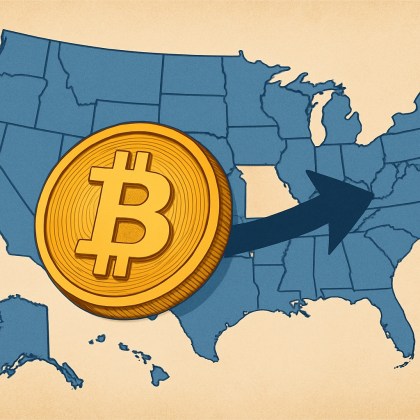
US Treasury Secretary Discusses Strategic Bitcoin Reserve Plans As Price Crashes Below $90,000

On Tuesday, US Treasury Secretary Scott Bessent confirmed plans for the country’s Strategic Bitcoin Reserve (SBR), coinciding with a sharp decline in BTC and the overall cryptocurrency market. 

All Seized Bitcoin To Be Held In Strategic Reserve

In a discussion about the government’s approach to BTC and the recent seizures of the cryptocurrency, Bessent reassured the public that the administration would cease all sales of seized Bitcoin. 

Instead of auctioning off these assets, the government plans to add the seized Bitcoin to the Strategic Bitcoin Reserve, which was set up in March last year by President Donald Trump’s administration. 

This decision, however, did little to mitigate BTC’s plummet on Tuesday, as the lack of any plans to purchase additional coins from the market contributed to continued downward pressure on prices. 

Bessent elaborated that the initiative is part of a broader strategy aimed at fostering digital asset innovation within the United States while maintaining federal oversight of confiscated cryptocurrencies. 

“This administration’s policy is to add seized Bitcoin to our digital asset reserve,” Bessent stated, marking a decisive shift in the government’s handling of Bitcoin assets.

Political Climate Leads To $215 Billion Crypto Market Dip

Bitcoin has experienced a decline of nearly $5,800—coinciding with political tensions after President Trump hinted at a 10% tariff on the European Union (EU) in an attempt to compel Denmark to sell Greenland. 

This geopolitical maneuver has not only affected Bitcoin but has also resulted in a staggering loss of approximately $215 billion in total market capitalization across the crypto sector.

Market analyst Ted Pillows warned that BTC must maintain its position above the $89,000 mark. He expressed that failing to hold this level would signal the end of the short-term upward trend, further complicating an already tumultuous condition for the cryptocurrency.

Bitcoin

When writing, BTC still holds above the key level outlined by Pillows at $89,497, but has declined by 3.7% in the last 24 hours. 

Featured image from OpenArt, chart from TradingView.com

❌