NATO defense officials have confirmed that European allies, led by the United Kingdom and Scandinavian countries, currently carry the primary responsibility for Arctic military operations, as the United States lacks sufficient forces and experience for sustained activity in the High North, according to The Times. The assessment follows recent allied exercises and internal NATO evaluations […]
The Shiba Inu price crashed to as low as $0.000007683 yesterday, sparking bearish sentiment towards the meme coin. This crash came on the back of a transfer of billions of SHIB tokens, which raised concerns of a potential sell-off by the whale in question.
Why The Shiba Inu Price Crashed
The Shiba Inu price crashed amid significant selling pressure, with a SHIB whale sending billions of tokens to Robinhood, likely to offload these tokens. Arkham data shows that the whale (0x2d0…9f7bB) first sent 210.365 billion SHIB tokens, worth $1.63 million, to the crypto exchange. These tokens represented about 97% of the whale’s SHIB holdings.
Further data from Arkham shows that the SHIB whale sent an additional 1.52 billion tokens to Robinhood and 7 billion tokens to liquidity provider B2C2 Group, which could be an OTC sale. The Shiba Inu price has notably crashed by over 7% in the last week, and it suffered its worst drop during this period yesterday amid the whale’s transfers. The whale now holds only 5.86 billion SHIB, worth $46,790.
The Shiba Inu price also crashed due to the sell-off in the broader crypto market, led by Bitcoin. BC dropped to as low as $87,000 yesterday amid concerns over trade tensions between the U.S. and Europe stemming from the Greenland-linked Trump tariffs. However, the market recovered towards the end of the day as Trump announced that he had canceled the proposed tariffs, having reached a Greenland deal with NATO.
Despite the recent Shiba Inu price crash, the meme coin is still up over 15% year-to-date (YTD) and ranks among the best-performing crypto assets this year. However, SHIb is still far off from its current all-time high (ATH) of $0.00008845.
Exchange Netflows For SHIB Remains Mixed
SHIB’s exchange netflows have remained mixed, indicating there is no clear accumulation pattern for the meme coin at the moment. CryptoQuant data shows that today’s net flows are negative, totaling just over 7 billion Shiba Inu tokens, suggesting that more coins are flowing into exchanges than out.
However, the total exchanges’ netflows yesterday were positive, at 1.6 billion tokens, indicating more tokens leaving exchanges, which is bullish for the Shiba Inu price as it hints at accumulation from whales. On January 16, SHIB’s netflows were also positive, totaling around 115 billion tokens. However, the positive netflows on that day were overshadowed by the negative flows of 214 billion SHIB recorded on January 20.
Crypto traders still remain bullish on the Shiba Inu price as CoinGlass data shows the long/short ratio is currently above 1. Derivatives trading volume has also jumped by over 20% while the open interest is up almost 3%.
At the time of writing, the Shiba Inu price is trading at around $0.000007978, up in the last 24 hours, according to data from CoinMarketCap.
The Norwegian Armed Forces, alongside about 3,000 United States Marines and other U.S. and NATO units, will conduct Exercise Cold Response 26 in northern Norway in March 2026, with allied forces beginning cold-weather training deployments as early as January, U.S. and Norwegian officials confirmed. The exercise is a Norwegian-led, routine winter drill designed to test […]
NATO Air Command confirmed that Italian Eurofighter Typhoon jets deployed to Amari Air Base in Estonia were scrambled at 11:30 a.m. on January 16 to intercept a Russian Be-200 aircraft approaching the Baltic Sea. The interception took place as part of NATO’s routine air policing mission in the region, aimed at monitoring and responding to […]
United States Army soldiers from the 3rd Armored Brigade Combat Team, 1st Cavalry Division conducted Bradley Fighting Vehicle gunnery on Jan. 11-12 at the General Silvestras Zukauskas Training Area in Pabrade, Lithuania. The training involved live-fire exercises designed to validate crew performance and maintain readiness along NATO’s eastern flank. According to the U.S. Army, the […]
Ukrainian Air Force pilots operating F-16 fighter jets were forced to revise NATO-taught air combat tactics after returning from training abroad, as the methods proved unsuitable for the realities of combat near the front line in Ukraine, according to a report published by Militarnyi citing official Air Force video footage. In comments shown in the […]
U.S. Marines with Marine Corps Base Camp Blaz, Northern Mariana Islands, hand out toys to children during the Toys for Tots campaign, San Jose, Tinian, on Dec. 18, 2025. This year marks the 78th year of the national Marine Corps Toys for Tots Campaign and the 9th year in the Commonwealth of the Northern Mariana Islands. The mission of the Toys for Tots Program is to collect new, unwrapped toys and distribute those toys to children at Christmas. (Photo credit: U.S. Marine Corps/Lance Cpl. Afton Smiley)
An update from the North American Aerospace Defense Command (NORAD) Tracks Santa Call Center: As of late afternoon Dec. 24, the bustling call center, staffed by volunteers, received more than 100,000 calls from families around the world tracking Santa’s journey on Christmas Eve. “Thank you to our volunteers who are answering phones and helping keep this holiday tradition going strong,” organizers said on Facebook. (Photo credit: NORAD Tracks Santa on Facebook)
Onlookers take in the National Menorah during the annual lighting ceremony in celebration of Hanukkah. The event took place on the Ellipse near the White House in Washington, Sunday, Dec. 14, 2025. (Photo credit: AP Photo/Jose Luis Magana)
At the African Burial Ground National Monument, visitors on Dec. 26 can take part in Kwanzaa festivities and learn more about the holiday. According to the National Park Service, Kwanzaa is an annual, non-religious cultural holiday that takes place from Dec. 26 to Jan. 1. Established in 1966 by Maulana Karenga, the seven-day celebration of Black culture, history and community draws on African harvest festival traditions, promoting unity and self-determination and connecting people of African descent with their heritage. The name originates from the Swahili phrase matunda ya kwanza, meaning “first fruits.” (Photo credit: NPS)
Looking for inspiration this holiday season? NPS hosts winter festivities and holiday happenings at parks across the country and joins in the many historical and cultural traditions of the season. Pictured here is a holiday display from the Harry S. Truman National Historic Site in Independence, Missouri. (Photo credit: NPS)
The Fish and Wildlife Service has holiday card “fin-spiration” for, in their words, “all the fish aficionados and feather freaks in your life.” So light those Hanukkah candles, decorate that Christmas tree, or prepare to dance alone under the Solstice moon. However you celebrate this December, have a safe and totally not “crappie” holiday. Explore the gallery of holiday e-cards online and send one upstream to your fishy friends and family. (Photo credit: USFWS/Candy Darter Christmas Card, Erin Huggins)
The Nordic Air Forces offered Christmas greetings from the air as Sweden invited Finland and Denmark to join its Christmas tree flight over all three nations. Meanwhile, Norway continued its iconic F-35 Christmas star. This celebratory show case had it all: a festive salute from the air, an entertaining exhibition of cooperation and valuable precision-flying training for the crews. (Photo credit: NATO Air Command)
U.S. Ambassador to Belgium Bill White met with Jewish leaders in Brussels to celebrate the Jewish Festival of Lights. “My husband Bryan Eure and I marked Hanukkah in Brussels by celebrating light, resilience, and hope at the Great Synagogue. Even more so after the antisemitic terror attack in Sydney, we stand in solidarity with Jewish communities in Belgium and around the world. We must work together to confront and eliminate antisemitism decisively and collectively,” White posted on X.
“Fa-la-la-la-law, we’ll fund it all:” On X, the House Appropriations Committee showcased a holiday-themed overview of their work, culminating on Day 12 with a post highlighting “three bills signed into law with care, not folly.” Those would be fiscal 2026 Military Construction-VA, Legislative Branch and Agriculture-FDA, according to the committee. (Photo credit: House Appropriations GOP on X.)
Need more Fish and Wildlife Service holiday inspo…this time, for Kwanzaa? You’re in luck. Check out “A Very Paddlefish Kwanzaa Holiday Card.” (Photo credit: USFWS/Gwen Bausmith)
Unlike some gifts, the US Consumer Product Safety Commission’s posts never disappoint. On Christmas Eve, they reminded all Americans to exercise ATV safety — in all scenarios.
“A very Merry Christmas from all of us at CPSC! We hope you have a wonderful (and safe) holiday! Take it slow on your new e-bike/e-scooter/hoverboard and stand by your pan!” they followed up, on the big day.
NASA’s “Cosmic Snowman:” Icons of winter are sometimes found in unexpected places. In one striking example, a series of oval lagoons in a remote part of Siberia forms the shape of a towering snowman when viewed from above. (Photo credit: NASA Earth Observatory image by Michala Garrison, using Landsat data from the U.S. Geological Survey)
But wait, there’s more! Don’t miss a few great video greetings:
The Expedition 74 crew aboard the International Space Station sends warm wishes for happy holidays and a stellar New Year from orbit, where they’re celebrating a year of science, teamwork, and discoveries that connect us all. (Video courtesy NASA)
The 39th Commandant of the Marine Corps, Gen. Eric M. Smith, and the 20th Sergeant Major of the Marine Corps, Sgt. Maj. Carlos A. Ruiz, provide a message to the force on holidays at the Pentagon, Arlington, Virginia. (U.S. Marine Corps video by Communication Directorate/Headquarters Marine Corps)
Space Force Chief of Space Operations Gen. B. Chance Saltzman and Chief Master Sgt. of the Space Force John F. Bentivegna send holiday wishes across the Guardian force and beyond: “Thank you to every Guardian and family member for your commitment to our mission, especially those standing watch over the holidays. We hope you each find time to relax, recharge, and enjoy this special time with loved ones. Semper Supra.”
EXPERT INTERVIEW — Ukraine’s President Volodymyr Zelensky was in Berlin on Monday for an intense round of diplomacy with top U.S. and European officials, part of a fast-moving push to find a workable plan to end the war. His meetings follow an unusually long session on Sunday with President Donald Trump’s envoys, Jared Kushner and Steve Witkoff, who claimed significant progress in their discussions.
Meanwhile, a stream of European leaders - including Finland’s president, Britain’s prime minister, France’s president, and NATO’s secretary general are joining the talks. Russia was not invited.
The major sticking point among Western partners remains what concessions Ukraine might be asked to make. Washington has floated the idea of Kyiv giving up some territory Russia has not yet taken, a suggestion Ukraine rejects and most European leaders fear would reward Russian aggression.
Zelensky has signaled a willingness for Ukraine to pause its bid to join NATO if the U.S. provides firm security guarantees against future Russian attacks. European leaders are generally supportive of a deal that allows Ukraine to keep the territory it currently controls while securing long-term protection from Washington.
The mood in Ukraine, meanwhile, is bleak. Former Senior CIA Executives Ralph Goff and Glenn Corn, both of whom are also Cipher Brief Experts, just returned from a 5-day trip in the country. We caught up with them in Krakow, Poland for some on the ground insights about both the mood and maneuvering inside Ukraine, as President Zelensky navigates a harrowing political environment. Our interview has been lightly edited for length and clarity.
THE INTERVIEW
Kelly: Having traveled to Ukraine with you both in the past, I am imagining that this latest trip must have felt like some of the most difficult days that Ukraine has faced in terms of how this war may come to a conclusion. What is the mood like there? What are people talking about?
Corn: The mood in Ukraine is not great. The Ukrainians are very concerned about a number of issues. One, they feel a lot of pressure from the U.S. to make a deal, which many Ukrainians are confused about. They’re trying to understand what's going on. And of course, they're not pleased with their own internal political situation. The Operation Midas corruption scandal was a blow, so there's a lot swirling around and it's clearly impacting the people that we spoke with. They're trying to keep a brave face, given what they're facing. They’ve been at war since 2014, and since February 2022, they've been in a horrific war, a full scale war, and they're just trying to keep their nose above water right now. And as one Ukrainian officer told me, we just have to get through the winter and survive these dark times.
Goff: There's also disappointment amongst our Ukrainian allies with the United States. Not all of it is unexpected, but at the same time they've got this war to fight, so there's a very business-like attitude like, ‘Okay, we're still going to fight this thing’. And what's interesting is that they're not asking for anything new. They’ve made the same requests over and over. They need air defense weapons. There was a night when the Russians launched 84 missiles at Ukrainian territory and more than 500 drones in one night. We heard air raid sirens every night that we were there. The attacks are spread out across the country. It's clearly a campaign of terror by the Russian side.
And at the same time, the nature of the front - the battle - has changed completely from what it was just six months to a year ago. This is not the same war that was fought in 2022 or 2023 or 2024. This is a new war, and so the Ukrainians are asking for air defense weapons. They're asking for money. We can talk later about the idea of getting reparations money from the seized Russian assets, which they need. But at no point have they said they need troops. At no point have they asked for NATO’S Article Five to be invoked. They still want to fight this thing on their own, but they need help from the West.
Kelly: The battlefront has changed so much just in the past few months. Could you describe what it's like now?
Corn: Every Ukrainian we spoke with, whether it was civilians, military people in the defense industry, they all said that this war is being fought by drones, by FPVs [first-person drones] and some artillery. Intelligence is critical, electronic warfare is critical. But the troops on the ground and the concept of infantry has changed completely. The Ukrainians continue to innovate very quickly, but as they've warned for the last year, the Russians are also innovating very quickly and they're scaling that innovation in a way that the Ukrainians can’t because of a lack of resources and maybe a lack of depth.
Goff: That's correct. It is no longer an infantry man's war. The front is changed considerably. For 20 kilometers on either side of the front line, it’s almost a no-go lethal zone for humans. It's all electronic warfare. All drones and counter drones. I spent a day near the Zaporizhzhia front and even 40 kilometers back from the front lines, you're seeing drone netting set up everywhere and military vehicles using camouflage and taking extra precautions. So it’s completely different from when we visited there just a few months ago. But the losses continue.
For instance, in a single day recently, the Russians lost close to 1,300 soldiers. In one day. So Putin is still using pure raw manpower to his advantage, whereas Ukrainians have a manpower shortage. In one month, they recruited over 30,000 fighters, but out of that number, they're lucky if they can produce even a small percent of that. I'm not going to say the number because it's classified, but they're very lucky if they can get a decent number out of that. So it's tough for Ukrainians and they have to conserve their troops. They have to fight in a combat style that preserves human lives.
Kelly: In another way that we know the battlefield has changed, soldiers are now verifying kills or takedowns of targets, whether they're other drones, whether they're tanks on the ground, and they're using points earned from those drone missions to purchase equipment that is then delivered to them on the front. What can you tell us about the other ways in which the battlefield is evolving?
Corn: Battlefield integration has got to be seamless. The Ukrainians are working on that. We've spoken to a couple of people that are directly involved with that, and they're doing an incredible job. And one thing I was struck by during our last two or three visits is that now, more than ever, almost everyone we spoke with in a leadership position has no prior military experience. They're coming from private industry. Bankers, investment bankers. One guy we spoke with was running a tour agency overseas when he came back to fight. Now it’s computer programmers, IT folks, and they're all in the fight now. I spoke with one guy who was in a very senior government position before the war, and he told that he was 47-years-old before he put on a uniform, and he is leading a lot of the innovation stuff, and it's really impressive to see. We heard last time we were in Ukraine in September that the United States needs to pay attention to this and figure out how to integrate civilians into the military structure very quickly like Ukrainians have had to do.
Need a daily dose of reality on national and global security issues? Subscribe to The Cipher Brief’s Nightcap newsletter, delivering expert insights on today’s events – right to your inbox.Sign up for free today.
Goff: Suzanne, this is all about data integration. This is all about integrating all the information that comes from your airborne sensors, your ground sensors, your human observation, pulling intelligence into that. Tracking the emitters on the Russian side and then putting that all into a combat picture, particularly for the Ukrainians because they're fighting with reduced resources. So like I said, every human life is precious, but every weapon, every shot is also precious. In the old days when an artillery piece could maybe fire a hundred rounds in a day, now because they have to be so careful about being spotted when they're in action, they might fire 30 or 40 rounds. That means those 30 or 40 rounds really have to be on target. So it's all about the data. It's all about data management. And the Ukrainians, as Glenn said, are doing amazing work in that field. The biggest problem is that they're undercapitalized.
Kelly: President Zelensky has been in Europe gathering support from the Europeans as he tries to navigate a complicated series of pressures to end this war. Is the feeling on the ground in Ukraine that that will be enough?
Corn: I would say that the Ukrainians are in a bit of shock to see that the United States seems to be walking away - or their sense is that the United States is walking away. Let's hope that's not the case. But they're concerned that there is a rift between Europe and the United States. I think they appreciate what the Europeans are doing, but almost every discussion we’ve had centers on the fact that they need the United States here. They need the United States to provide some kind of long-term security guarantees. And by the way, the Ukrainians have been saying for over a year that they are ready to come to an agreement. They are ready to be realistic and compromise. It's the Russians that are not doing that. It's the Russians that continue to push maximalist demands and that continue to scuttle the peace process, not the Ukrainians. And the Ukrainians are very frustrated that they seem to be being made the bad guys in this struggle when their country was the one that was attacked. Their cities are being bombed, their children are being killed, their schools are being destroyed, their infrastructure is being destroyed, and they don't really understand what's going on right now. And I hope that we can get back to the position of the United States where we've traditionally been, which is the U.S. standing with people who are fighting for their freedom and their sovereignty against a much larger and more dangerous dictatorship.
Goff: And of course, the recent high-level scandal involving the primary advisor to the President, Andriy Yermak, and his resignation has now been turned around by the Russians who are pointing a finger at this country, and it's resonating within certain circles in the United States. But that's laughable. This is coming from a country - Russia - which is a kleptocracy. Some have said that Ukraine is more corrupt than Russia. That's absurd. Russia is a kleptocracy. It's more like an organized criminal gang than anything else. And the idea that they would accuse Ukraine of being worse than them is crazy. But amongst Ukrainians, I think there's almost this kind of hope that this is some sort of a bad dream that will go away, that America will wake up at some point before it's too late and come riding to the rescue. But at the same time, the pragmatists here realize that maybe that's not going to happen, and it's time for Europe to step up. It's just like Putin gave the Ukrainians their national identity by invading them. The Trump administration is giving Europe the challenge to step up and take charge of their destiny.
Kelly: With Andriy Yermak stepping down as President Zelensky’s chief advisor we know that there's another way of looking at this, which is that Ukraine has set up these independent institutes to investigate and root out corruption at every level and it looks like they’re determined to do that which is an indicator that Ukraine's own anti-corruption efforts are working to some degree, but that message seems to be completely lost.
Corn: Yes. We've heard for a while now, that anyone who knows Ukraine, knows they have a problem with corruption. I've always said that it's baked into their system. The Russians baked this into the system going back hundreds of years, so you have to be realistic. They know it, and they talk about it, and they often talk about it openly. Having worked in Russia, it doesn't happen that way. People don't talk about it. They don't go to the streets and protest without being arrested and basically disappearing or being thrown out of windows. In Ukraine, there is a civil society element here. There is some control over the government, over the presidency, and there has been opposition and resistance to steps that were taken to try and squash the anti-corruption efforts. So, you have to give the Ukrainians credit because they're fighting a war, a horrendous war, and they are also trying to bring the country out of this ugly reality of corruption, which every country has and faces. But to deal with it, when you're in a full-scale war, it's something special. So in my opinion, we need to give 'em credit, and we also need to be clear-eyed and realistic and understand that without the United States' support, they're going to have a hell of a time making the changes that they need to make, and that many, many Ukrainians want to see made. They want their children to grow up in a country which has much less corruption and much more transparency.
Goff: This is a country where national polling has shown that people are more concerned about corruption than they are about the war at present. For the first time, polls have shown that corruption's a bigger problem than the war itself. That shows the awareness of the Ukrainian people. Corruption - we're not trying to downplay it - is a problem, clearly. But there are people who have exaggerated it to the point where if corruption were as bad as some would say it is, they would've lost this war three years ago, because that stuff has to get to the front. It's all going into the pockets of ministers.
Kelly: Has there been anything on this particular trip that surprised you or that you didn't expect?
Corn: Well, I mean for me personally, just I think the shock of the recent release of the National Security Strategy and the sense that somehow Europe is a problem or Europe is the enemy. I don't know if that was the intent of that document, but that worries the Ukrainians, and of course it worries many of our European partners. For those people, I have to say, yeah, we have our differences with Europe, and as an American I've often felt that the Europeans should be doing a lot more, but the Europeans have also done a lot with us over the years, and for all the Europeans out there, for those I've worked with over the years, I am very appreciative of everything that you did to support the United States in many, many hard parts of the world where we served side by side together. So, Europeans are not the enemy, and by the way, we've never done that with the Russians, and I doubt we ever will. I doubt the Russians will stand side by side with us on the battlefield and support us the way that our European partners have done.
Goff: I think my biggest surprise here was the fact that the lights are still on. With all the bombings, like I said, we had air raids every night. Every few nights the pattern seems to be that the Russians husband their missiles and drones so that at least once or twice every five to seven days, they have a massive attack of 50, 60 missiles accompanied by 400, 500, 600 drones. And they're going after the energy infrastructure here. The lights are still on but with reduced power. There are some places that are down to a few hours a day, but you know what? They've still put up Christmas lights. They've still put up decorations. People are still trying to cling to some sense of normalcy for the season to get through this winter, and that just shows that these people are incredibly resilient.
Kelly: What are you sensing will happen next based on who you've talked to and what you've seen since you've been on the ground in Ukraine?
Corn: I think the Russians are not going to make a peace agreement unless they get everything they want, and let's hope that we don't give them everything they want because they don't deserve it, they haven't earned it, and they're not in a position to accomplish it by the means that Putin keeps threatening to do it, which is military force. The Ukrainians have proven that they can hold the line. That's number one.
Number two, I hope that we come around to understanding that basically the right side here is the side of the Ukrainians. The Russians should be ashamed of themselves for what they're doing. They need to stop what they're doing, and we need to stand with the Ukrainians and teach Vladimir Putin a lesson as well as other dictators or potential autocrats like Putin and aggressors, that we're not going to stand on the sidelines, and we're not going to punish those people that try and defend themselves and support those people that aggress other people.
We have common values with the Ukrainians, which I was raised to believe in. I'm not speaking as a former intelligence professional. I'm speaking as an American, whose father served in the Army, whose brother served in the Army, and who dedicated his life to the United States of America. We did that because we believe in the values that the Ukrainians are fighting for right now, every day - in terrible conditions - and we shouldn't abandon them.
Goff: I think we're going to see some type of mobilization, an increased mobilization on the Russian side. Their losses are high while their territorial gains remain low and the Russian economy is faltering and Putin has not been able to browbeat the Ukrainians to give in and come to the table to seek just any deal. Ukrainians will come to the table. This is where I think the administration is making a mistake. The Ukrainians will come to the table if there is a more fair deal. The ideal arrangement will be where both sides are unhappy, but at this point, despite all the negative pressure on the Ukrainians, they're not going to just sign any deal that gets to the table, and that's going to put more pressure on Putin to continue the war. He's got to show some gains. So I think we're going to see some sort of mobilization on the Russian side.
Are you Subscribed toThe Cipher Brief’s Digital Channel on YouTube? There is no better place to get clear perspectives from deeply experienced national security experts.
Read more expert-driven national security insights, perspective and analysis inThe Cipher Brief because National Security is Everyone’s Business.
EXPERT PERSPECTIVE — For more than three decades after the Cold War, Europe lived under the illusion that history had settled in its favor. Liberal democracy seemed ascendant, global markets expanded without friction, and American military primacy insulated the continent from hard-power competition. Under those conditions, the European Union could focus on enlargement, regulation, and internal integration rather than geopolitics.
That era is finished.
A new multipolar world, shaped primarily by the United States, China and Russia has taken hold, and Europe’s place within it is increasingly uncertain. The EU now faces a destabilizing combination of external pressures and internal constraints that call into question its long-term strategic relevance. The next decade will determine whether Europe becomes a genuine pole of power or resigns itself to being a geopolitical appendage.
The End of Post-Cold War Certainties
The post-1991 Western order rested on three assumptions: U.S. military dominance, deepening globalization, and the notion that political liberalization would eventually spread worldwide. Each of these pillars has eroded.
U.S. primacy is no longer guaranteed. Washington is now stretched between deterring China in the Indo-Pacific, supporting Ukraine, and managing crises in the Middle East. American policymakers—across both parties—increasingly resent Europe’s reliance on U.S. defense guarantees and expect the EU to realign its China policy with America’s priorities. Europe’s security depends on a partner whose long-term predictability it cannot ensure.
Globalization is fragmenting. The pandemic, geopolitical rivalries, and technological decoupling between Washington and Beijing have shattered faith in frictionless global supply chains. Europe, whose prosperity hinges on exports, advanced manufacturing, and access to global markets, feels the squeeze.
Authoritarian resilience has replaced Western convergence. China’s techno-authoritarian model and Russia’s militarized nationalism offer alternatives to liberal democracy. Across Africa, the Middle East, and South Asia, states increasingly hedge rather than take sides, reducing the EU’s ability to shape norms or export its model. The world is no longer moving toward Europe. It is moving away from it.
The New Power Triangle: Washington, Beijing, Moscow
1. The United States: indispensable, but increasingly impatient
The U.S. remains the only actor capable of deterring Russia on Europe’s behalf, and without American intelligence, logistics, and weaponry, Ukraine’s position would be far more precarious. Yet Washington’s strategic focus is shifting eastward. In every administration, the question recurs: Why should America subsidize European security indefinitely?
Growing U.S. skepticism combined with the possibility of future political shifts exposes Europe’s most dangerous vulnerability: dependence on an ally whose priorities are changing faster than Europe can adapt.
China is indispensable to European industries from electric vehicles to renewable energy to pharmaceuticals. Yet Beijing’s industrial subsidies, strategic investments, and political influence operations challenge the EU’s economic model and internal cohesion. As Washington accelerates decoupling, Europe is pressured to follow suit at high cost to its own industry.
China is no longer just a market; it is a shaping force in a global system that Europe struggles to influence.
3. Russia: the security threat that will not disappear
Russia’s invasion of Ukraine shattered Europe’s illusions of a “post-historic” continent. Even after the initial shock, Moscow’s ongoing militarization signals a long-term confrontation. Europe’s sanctions, energy diversification, and support for Kyiv have been substantial but the EU still lacks the military and industrial backbone to sustain a prolonged, high-intensity conflict without the United States.
Russia is not a temporary crisis. It is a structural challenge.
Europe’s Structural Weakness: Power Without Agency
Europe has economic weight, technological capability, and regulatory influence but struggles to convert them into geopolitical power.
1. Fragmented decision-making. EU foreign policy requires unanimity, making coherent action nearly impossible. France pushes for “strategic autonomy,” Germany for economic stability, Poland for deterrence, Italy for flexibility. Diverging priorities fracture the bloc at every major juncture, from China policy to Middle East diplomacy.
2. Military insufficiency. Despite increases in defense spending, Europe remains dependent on the U.S. for intelligence, logistics, command-and-control, missile defense, and advanced weapons. The continent’s defense industry is fragmented into dozens of incompatible national systems that a luxury Europe can no longer afford.
3. Economic vulnerabilities. From semiconductors to critical minerals, Europe relies on external suppliers. In a world defined by technological blocs and industrial rivalry, the EU risks being squeezed between U.S. security demands and Chinese economic dominance.
4. Demographic decline. Aging societies and shrinking workforces reduce the EU’s long-term competitiveness and its ability to project power.
These vulnerabilities do not make Europe irrelevant—but they do make it reactive.
Three Possible Futures
Scenario 1: Strategic Autonomy Becomes Real
Europe could choose to become a coherent geopolitical actor—pooling defense procurement, adopting majority voting on foreign policy, investing heavily in its defense industry, and crafting a unified China strategy. This would give the EU real agency.
But achieving this requires political courage that Europe has rarely demonstrated.
Scenario 2: Renewed Atlantic Dependence
The EU may double down on the U.S. alliance, accepting a secondary role in global geopolitics while focusing on economic and regulatory power. This is the easiest path both politically and financially but it leaves Europe dangerously exposed to America’s domestic turmoil.
Scenario 3: Fragmentation and Decline
If member states continue to pursue conflicting national policies and U.S. attention continues shifting to Asia Europe risks strategic irrelevance. In this scenario, global powers shape Europe’s environment, while Europe merely adapts.
This path is unlikely to be dramatic. Decline rarely is. It is slow, quiet, and comfortable until suddenly it is not.
Europe Must Choose Power Over Comfort
The multipolar world will not wait for Europe to get its act together. The question is no longer whether the EU wishes to become a global actor; it is whether it can afford not to.
Europe’s future is binary:
A genuine geopolitical pole, capable of defending its interests. A subordinate ally, protected but strategically constrained. Or a divided continent, overshadowed by the ambitions of others. For three decades, Europe believed it had escaped history. Now history has returned with force. Whether Europe survives the new multipolar world depends on whether it chooses power over comfort, strategy over complacency, and unity over drift.
The Cipher Brief is committed to publishing a range of perspectives on national security issues submitted by deeply experienced national security professionals.
Opinions expressed are those of the author and do not represent the views or opinions of The Cipher Brief.
Have a perspective to share based on your experience in the national security field? Send it to Editor@thecipherbrief.com for publication consideration.
Read more expert-driven national security insights, perspective and analysis in The Cipher Brief
The German Public Prosecution Service confirmed that a bunker functioning as an illegal cyber center had ties to a right-wing dissident movement and possibly to WikiLeaks. These revelations came to light when the main suspect – Herman Johan Verwoert-Derksen (60), also known as ‘Johan X.’ – reacted to his criminal case for the first time.
According to German media, the employees of the cyber center saw the hosting of servers for dissident groups as a lucrative endeavor. One group is specifically mentioned: Generation Identity. That right-wing movement has chapters in several European countries, such as France, Germany, Austria, and the United Kingdom.
Through encrypted messages, an employee of the bunker communicated with a member of Generation Identity. For just thirty euros a month, the cyber bunker would host a cloud server for the group. A very competitive price because other tenants paid hundreds of euros a month for the same service. That may indicate that the employees of the bunker had some degree of sympathy for the ideology of Generation Identity.
The cyber bunker offered a host of IT services, without requiring contracts or personal details. Furthermore, the bunker hosted many websites on the dark web involved in the distribution of drugs, weapons, and even child pornography. The center was also connected to dark web markets such as Wall Street Market, Cannabis Road, and Flugsvamp 2.0. Moreover, massive cyber attacks were conducted from the bunker, sometimes targeting a million routers at the same time.
In 2013, Johan X. – the head of the organization – bought the former NATO bunker located in Traben-Trarbach, a town in Western Germany. In secret, he converted the former bunker into an underground data center. In addition to the main suspect, the police arrested twelve other men, all German and Dutch nationals. They claim to provide a high degree of privacy and thus do not know illegal content was hosted on their servers.
In 2002, Johan X. was involved in a similar case, running a data center in the South West of the Netherlands. His customers were mostly legal pornographers. The police also discovered an ecstasy laboratory in the same building, although he was never convicted in that case.
architectureofdoom: Former Cold War bunker turned into a dark web cyberbunker, Traben-Trarbach, Germany https://t.co/1h5fKSiGO6
Johan X. claims to be a victim of political persecution. He believes the German authorities only showed interest because his data center hosted the servers of WikiLeaks. The public prosecutor denies those allegations, stating that investigators did not found any server belonging to WikiLeaks. Furthermore, WikiLeaks is not even mentioned in the indictment.
Regardless of the outcome, (former) employees of Johan X. are already making plans for a new data center. Several countries showed interest, including Bahrain, Moldova, Zimbabwe, and Vietnam.

 Login
Login NATO defense officials have confirmed that European allies, led by the United Kingdom and Scandinavian countries, currently carry the primary responsibility for Arctic military operations, as the United States lacks sufficient forces and experience for sustained activity in the High North, according to The Times. The assessment follows recent allied exercises and internal NATO evaluations […]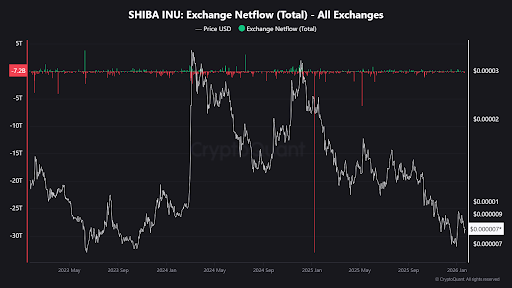

 The Norwegian Armed Forces, alongside about 3,000 United States Marines and other U.S. and NATO units, will conduct Exercise Cold Response 26 in northern Norway in March 2026, with allied forces beginning cold-weather training deployments as early as January, U.S. and Norwegian officials confirmed. The exercise is a Norwegian-led, routine winter drill designed to test […]
  NATO Air Command confirmed that Italian Eurofighter Typhoon jets deployed to Amari Air Base in Estonia were scrambled at 11:30 a.m. on January 16 to intercept a Russian Be-200 aircraft approaching the Baltic Sea. The interception took place as part of NATO’s routine air policing mission in the region, aimed at monitoring and responding to […]
  United States Army soldiers from the 3rd Armored Brigade Combat Team, 1st Cavalry Division conducted Bradley Fighting Vehicle gunnery on Jan. 11-12 at the General Silvestras Zukauskas Training Area in Pabrade, Lithuania. The training involved live-fire exercises designed to validate crew performance and maintain readiness along NATO’s eastern flank. According to the U.S. Army, the […]
  Ukrainian Air Force pilots operating F-16 fighter jets were forced to revise NATO-taught air combat tactics after returning from training abroad, as the methods proved unsuitable for the realities of combat near the front line in Ukraine, according to a report published by Militarnyi citing official Air Force video footage. In comments shown in the […]


 architectureofdoom: Former Cold War bunker turned into a dark web cyberbunker, Traben-Trarbach, Germany