Reading view

There are new articles available, click to refresh the page.

Belly Up for Pork Belly

Pork belly is best known as the cut that becomes bacon, but in its fresh form it has earned its rightful place in barbecue. You can slice, cube, or cure it—smoke it or grill it. You’ll be rewarded with killer barbecue that—unlike brisket or ribs—won’t break the bank.

What Is Pork Belly — and Why It Loves Fire

Pork belly comes from the underside of the pig and is cut as a flat slab with distinct layers of meat and fat. It’s a high-fat cut, and that fat is what gives pork belly its richness.

Fresh pork belly isn’t the same as bacon. Bacon is pork belly that’s been cured (usually with salt and sugar) and often smoked. Fresh, uncured pork belly can be cooked directly—grilled, smoked, or braised—or it can be cured first if you want to make bacon at home.

Homemade Bacon

On the grill or in the smoker, pork belly performs so well because its fat renders slowly. As it cooks, that fat bastes the meat, keeping it moist while it absorbs smoke and seasoning. The result is a cut that builds deep flavor and resists drying out, which is why pork belly has become a staple on grills and smokers around the world.

Best Ways to Cook Pork Belly

Pork belly can be cooked in several distinct ways, depending on how it’s cut and how you plan to use it.

Grilled Pork Belly
Sliced pork belly cooks well over direct heat, where the fat can render and the edges can crisp without drying out the meat. Thin or medium slices work best. This approach is especially common in Korean barbecue, where pork belly is grilled simply and served with sauces or wraps that balance its richness. The key here is to slice it thin.

Barbecued Pork Belly

Pork Belly Burnt Ends
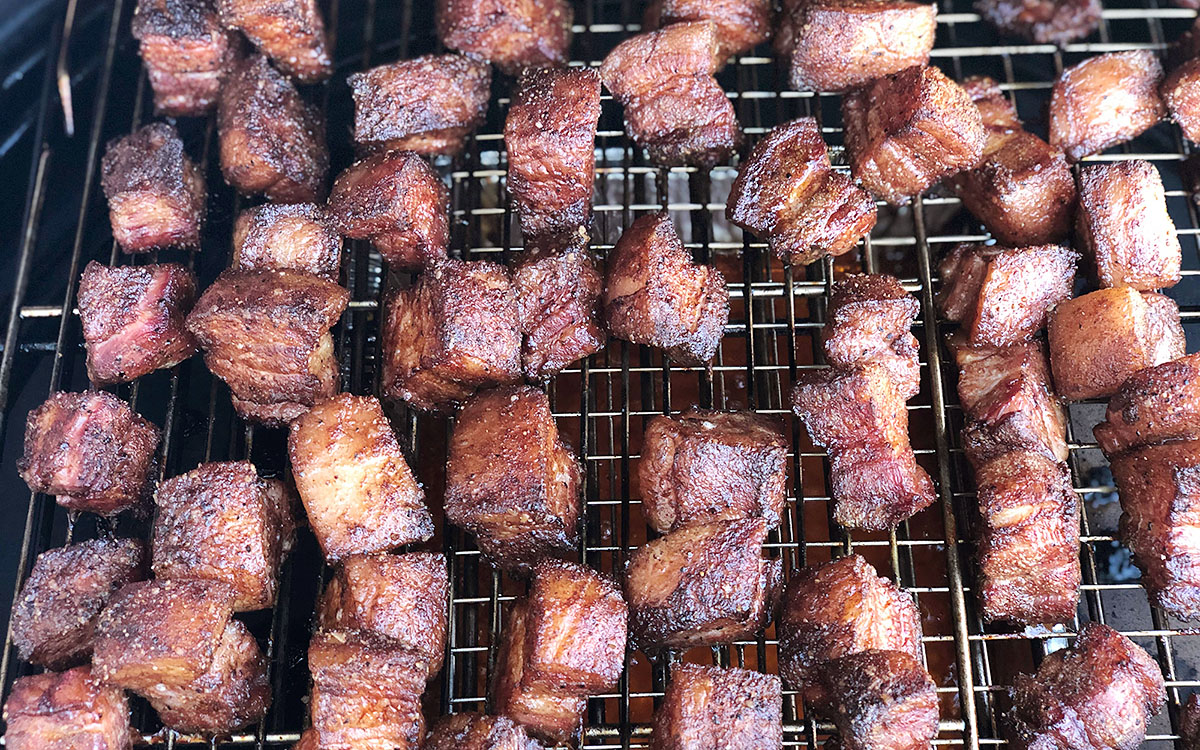
Cubed pork belly is a popular alternative to brisket burnt ends. The cubes are smoked until tender, then finished with sauce to create a sticky exterior and a rich, soft interior. Pork belly’s fat content allows it to stay moist while building deep flavor over the course of the cook.
Smoked Pork Belly

Smoked Pork Belly
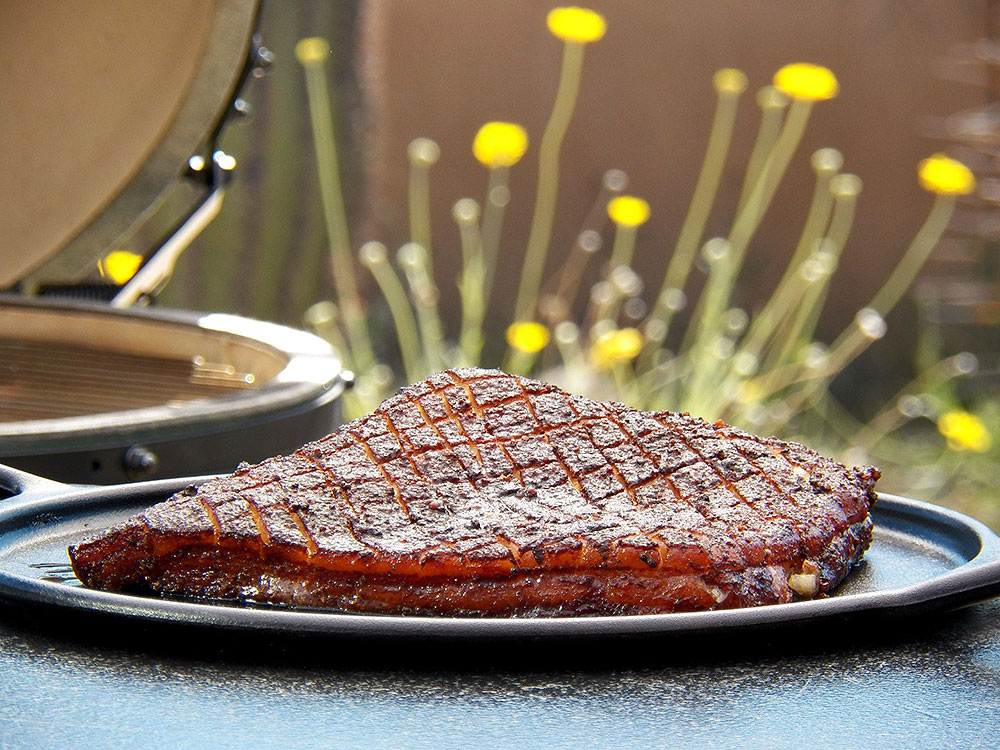
Whole slabs or larger pieces of pork belly can be smoked slowly to develop a deep, smoky flavor and a tender, sliceable texture. Smoked pork belly can be served on its own, sliced for sandwiches, or used in dishes like tacos, steamed buns, or grain bowls.

Slab of Bacon

Steamed or Braised, Then Finished Over Fire
In some preparations, pork belly is gently steamed or braised before being finished over fire. This approach softens the meat and renders some of the fat first, while the final cook adds color and texture. Japanese chashu uses this same cut but relies entirely on braising; finishing pork belly over fire adds browning and smoke while preserving that tenderness.

Making Bacon at Home
Pork belly is the starting point for homemade bacon. After curing with salt and seasonings, the belly is smoked and sliced. Making bacon at home offers full control over flavor, smoke level, and thickness, and it begins with understanding pork belly in its fresh, uncured form.

Pork Belly Around the World

Pork belly appears in traditional dishes across many cuisines, each using the cut a little differently but relying on the same balance of meat and fat.

In Korea, pork belly is best known as samgyeopsal, where thick slices are grilled over high heat and eaten with ssamjang, garlic, and leafy wraps. The goal is crisp edges, rendered fat, and contrast from fresh accompaniments.

In Japan, pork belly is commonly prepared as chashu, a braised cut served with ramen. Rolled or slab-style pork belly is simmered in a seasoned liquid until tender, producing soft slices with distinct layers of meat and fat.

Chinese cuisines make frequent use of pork belly in dishes like hong shao rou (red-braised pork belly), where slow cooking turns the fat silky and rich rather than crisp. Try braising the pork belly in your smoker.

Must try pork belly recipes

With these traditions and techniques in mind, here are some of our favorite pork belly recipes—especially satisfying in the winter!

Barbecued Pork Belly

Thick slices of pork belly cooked over fire until the fat renders and the exterior browns, finished simply to let the pork shine.

Barbecued Pork Belly

Get The Recipe »

Old Arthur’s Pork Belly Burnt Ends

Cubed pork belly smoked until tender, then glazed and finished for a sticky, rich take on classic burnt ends.

Old Arthur Pork Belly Burnt Ends

Get The Recipe »

Korean Grilled Pork Belly (Samgyeopsal)

Sliced pork belly grilled hot and fast, served with traditional accompaniments that balance richness with freshness.
Korean Grilled Pork Belly

Get The Recipe »

Pork Belly Steamed Buns

Tender pork belly paired with soft buns and bold flavors, showing how pork belly works beyond the grill grate.

Pork Belly Steamed Buns

Get The Recipe »

8 Steps to Making Bacon at Home

A step-by-step guide to curing and smoking pork belly into homemade bacon, with full control over seasoning and smoke.

8 Steps to Making Your Own Bacon at Home

Get The Recipe »

Pork Belly Tips Before You Start

  • Skin on or skin off:
    Skin-on pork belly works best for roasting or crisping the skin; skin-off is usually easier for grilling, burnt ends, and smoking.
  • Portion size matters:
    Pork belly is rich. Plan smaller portions than you would for lean cuts.
  • Seasoning goes a long way:
    Pork belly doesn’t need heavy rubs. Salt, pepper, and a balanced sauce are often enough.
  • Sauce late, not early:
    Sugary sauces can burn. Apply them toward the end of cooking.
  • Rest before serving:
    Let pork belly rest briefly so the fat settles and the texture improves.

Pork Belly: Frequently Asked Questions

Is pork belly the same as bacon?
No. Bacon is made from pork belly, but it has been cured and usually smoked first. Fresh pork belly is uncured and can be grilled, smoked, braised, or turned into bacon at home.
Do I need to remove the skin from pork belly?
It depends on how you plan to cook it. Skin-on pork belly works well for roasting or crisping the skin, while skin-off pork belly is easier to grill, smoke, or cut into burnt ends.
What’s the best temperature for cooking pork belly?
Pork belly is forgiving, but most barbecue methods work best at moderate temperatures, typically between 250°F and 300°F for smoking. For grilling sliced pork belly, higher direct heat works well to render fat and brown the surface.
How do I know when pork belly is done?
Pork belly is done when it is tender and the fat has rendered. Internal temperature is a guide, but texture matters more—properly cooked pork belly should feel soft and flexible rather than tight or rubbery.
Why is pork belly so popular for burnt ends?
Pork belly’s high fat content keeps it moist during long cooks and helps it absorb smoke and sauce. That combination makes it well suited for rich, tender burnt ends with a sticky exterior.

Pork belly earns its place in barbecue because it’s both forgiving and rewarding. It works across techniques, shows up in traditions around the world, and delivers flavor that few cuts can match. Once you start cooking pork belly over fire, it’s a cut that’s hard to stop coming back to.

Related Blogs

Check out our 1000+ Recipes section here on Barbecue Bible.Com

Also, sign up for our Up in Smoke newsletter so you don't miss any blogs and receive some special offers! PLUS get Raichlen's Burgers! PDF for free!

Follow Steven on Facebook, Instagram, YouTube, TikTok, Reddit, and Pinterest!

Check out our store powered by BBQGuys!

The post Belly Up for Pork Belly appeared first on Barbecuebible.com.

AI-crafted bid protests are on the rise, but what’s the legal fallout?


Interview transcript:

Stephen Bacon We’re seeing a lot more protests, particularly at the Government Accountability Office, in the last several months that have been filed using AI — a party that’s not represented by counsel using AI to generate the protest and then file it. But we’re seeing some problems with that in some of the decisions that are coming out of the GAO.

Terry Gerton So tell me more about how companies are using AI. You mentioned that they’re doing this without the help of legal counsel as well.

Stephen Bacon That’s right, at least the ones that we’ve seen so far in public decisions at GAO. It’s not entirely clear how the protesters are using it, but we can imagine that maybe they’re taking the debriefing information that they’re getting from the agency, they’re uploading that into an LLM like ChatGPT or Claude, and using it to develop a protest argument that they can file with the GAO. And what we’re seeing in the decisions is that many of the protests that have been filed using AI contain hallucinations. Case citations that don’t exist to actual cases that have decided by GAO. So the legal precedent that the protesters are relying on, in fact, don’t exist. And that’s one of the inherent limitations of LLMs is that they hallucinate. They come up with decisions, citations that don’t exist. To be clear, we’re not just seeing this by protesters that are not represented by counsel. This is happening in courts all across the country where attorneys are using AI to help generate legal filings and then getting in trouble with the courts when those citations don’t actually exist. Because when you file a protest or any kind of legal filing that has a citation in it, the court is relying on you to make an accurate representation that the legal authority that you’re relying on is in fact correct and is in fact a decision that has been issued in the past. And so both courts and the GAO now are saying that you can get in trouble, you can be sanctioned as a protester if you submit a protest that has some kind of fake citation that’s inaccurate.

Terry Gerton What does that mean to be sanctioned as GAO reviews the case?

Stephen Bacon At GAO, they have inherent authority to sanction protesters, and really the main sanction that they have is to dismiss a protest. If you happen to file a protest that contains fake citations, they reserve the right to dismiss your protest. Even if you have legally valid grounds to protest — maybe you have identified an error in the agency selection process — if GAO determines that you relied on fake citations in your protest, they could dismiss the protest, even if the actual merits of it may have some validity to it.

Terry Gerton So there’s some interesting intersections of situation going on here, I think. There’s a lot of uncertainty on the contractor side about the new FAR regulations and how those are going to be enforced, certainly across different agencies. We’ve had a reduction in the contractor workforce, so there are fewer contractors managing more acquisitions. And now we have AI coming in to sort of simplify, but potentially also make much more complex, the whole protest market. So do you expect all of this to be leading to an increase in protests? And what does that mean for GAO as they’re trying to sort out the validity of all the claims?

Stephen Bacon I think it certainly has the potential to, if what we’re seeing in the decisions is a trend towards more pro se protesters — pro se being parties that are not represented by counsel — using AI. To the extent that that trend continues, I think that there’ll be a lower barrier for protesters to file at GAO if they think that they can use an LLM to generate a protest without having to spend legal fees on outside counsel. Which is understandable, particularly for small businesses who may have resource constraints. If they feel like they can use an LLM to help them challenge an award decision, we may see more of that at GAO. I think what GAO is saying in these opinions that have come out…at first, they’re warning protesters that using LLMs that create fake citations is sanctionable. They didn’t actually take the step of issuing a sanction. But finally, in the last several months, we saw that they did, in fact, take that step of dismissing a protest, actually several protests that were filed by the same company, that contained fake citations. They actually took that step and dismissed those protests on the grounds that they misrepresented legal authority in their filings with the GAO.

Terry Gerton I’m speaking with Stephen Bacon. He’s a partner in the government contracts practice group at Rogers Joseph O’Donnell. You mentioned small businesses and their capacity constraints in terms of they may not have in-house counsel, they may have a lot of folks who can review all of this. But does this have the effect of sort of adding some equality into the protest market where they can use AI to submit? And do you think then that that’s going to change the protest space? Is this just the tip of the iceberg in terms of transformation?

Stephen Bacon It certainly lowers the barrier for companies. The GAO was set up to be a relatively informal forum to allow for the quick and efficient resolution of protests. I don’t think what GAO is saying necessarily is that AI cannot be used. But what they are saying is that we have a process to resolve bid protests and we want to maintain the integrity of that. And if you’re going to use AI, you need to be sure that you verify that what you’re filing is accurate. For anybody that is thinking about using AI to generate a protest, there needs to be some level of quality-checking of what is in the draft that’s generated by an LLM to be sure that you’re making accurate representations to the GAO in your protest. So that means checking the legal citations to make sure that the cases actually exist. That basic level of quality-checking needs to happen. Otherwise, GAO could just be flooded with protests that have no merit and that have lots of inaccuracies in them. And that’s not going to help them resolve protests in a way that’s efficient and achieves their ultimate goal.

Terry Gerton So where do you think we go from here, and what’s your guidance to the companies who are considering using AI to file their protests?

Stephen Bacon For any company that’s contemplating using an AI to generate protests, the basic point: If you’re going to do it, you have to verify that the citations are accurate. You have verify that what an LLM is generating is citing to a decision that has been published by GAO in the past. And that’s relatively easy to do. GAO has all of their decisions on their website, and you can go and check those and verify not only that the citations are accurate, but the legal proposition that you’re asserting is supported by the case that’s being cited. That’s important, too. That’s kind of table stakes. But the other thing I would say is that what we’re seeing in a lot of these decisions, where it’s obvious from the decision that AI has been used and that GAO is pointing out that there are these fake citations, is that oftentimes those protests are being dismissed for procedural defects as well. So things like timeliness and bid protest standing. Those kinds of procedural issues are being missed by the protesters who are using LLMs to generate the filings. And that’s because of another inherent limitation of an LLM; it often will tell you what you want it to say in a lot of ways. So if you tell the LLM, generate me a protest on this issue or that issue, it will do that and it might produce something that looks, on its face, credible and compelling. But if you don’t have the domain knowledge of the timeliness rules and the standing rules, you’re often going to overlook those things and the LLM is not going to catch it for you. And so you may be in a situation where you file something that looks on its face credible, but is in fact an untimely protest.

The post AI-crafted bid protests are on the rise, but what’s the legal fallout? first appeared on Federal News Network.

© Getty Images/tadamichi

Man touching AI icon.

Scotch Eggs Texas Style

Scotch Eggs Texas Style Scotch Eggs Texas Style, our friend Jason came for lunch and to delive   Scotch Eggs Texas Style Recipe Type: Appetizer Cuisine: American Author: Chef Ken Prep time: 15 mins Cook time: 55 mins Total time: 1 hour 10 mins Scotch Eggs Texas Style, our friend Jason came for lunch and […]

Scotch Eggs Texas Style

Scotch Eggs Texas Style Scotch Eggs Texas Style, our friend Jason came for lunch and to delive   Scotch Eggs Texas Style Recipe Type: Appetizer Cuisine: American Author: Chef Ken Prep time: 15 mins Cook time: 55 mins Total time: 1 hour 10 mins Scotch Eggs Texas Style, our friend Jason came for lunch and […]

Smoked Porterhouse Steak with Bacon Tallow Butter

Smoked Porterhouse Steak with Bacon Tallow Butter

Smoked Porterhouse Steak with Bacon Tallow Butter

Porterhouse Steak smoked on a Drum Smoker and topped with Bacon Tallow Butter – A steak like this can make anyone happy… WHAT MALCOM USED IN THIS RECIPE: Print
Smoked Porterhouse Steak

Smoked Porterhouse Steak with Bacon Tallow Butter


Description

Porterhouse Steak smoked and topped with Bacon Tallow Butter


Ingredients


Instructions

  1. Prepare drum smoker for indirect cooking at 275°F using lump charcoal for fuel.
  2. Drizzle each side of the porter house steaks with olive oil to lightly coat and season with a layer of Prime Beef rub followed by the Steak Rub. Allow the steaks to rest at room temperature for 20 minutes.
  3. Place the steaks on the smoker and insert a probe thermometer into the center of one steak to monitor internal temp.
  4. Smoke the steaks until the internal temperature reaches about 118° flipping half way through for even cooking.
  5. Take half of the bacon tallow/drippings and mix with 1/2 stick of melted butter. Season with a dash or two of Prime Beef and Steak Rub. Rest in the refrigerate until ready to use.
  6. Remove the lid from the drum and baste each steak with the bacon drippings. Flip the steaks and continue cooking (with the lid off to sear the steaks) until the internal temperature reaches about 125-128°F.
  7. Remove the steaks from the grill, top each with a big dollop of the bacon tallow butter and rest for 7-10 minutes before serving.

Malcom Reed
Connect on Facebook
Follow me on TikTok
Subscribe to my YouTube Channel
Follow me on Instagram

Have a Question About This Recipe?

Connect with us in our HowToBBQRight Facebook group for recipe help, to share your pictures, giveaways, and more!

The post Smoked Porterhouse Steak with Bacon Tallow Butter appeared first on HowToBBBQRight.

❌