EuroTrophy GmbH has signed a €330 million ($383 million) contract with KNDS Deutschland to supply Trophy Active Protection Systems for Leopard 2A8 main battle tanks ordered by Lithuania, the Netherlands, the Czech Republic, and Croatia, the company announced on January 19, 2026. The agreement covers the delivery of Trophy APS units for the four national […]
Ukraine has paused additional orders of HX-2 strike drones from German defense technology firm Helsing after the systems showed technical problems during frontline testing, according to Bloomberg. The decision follows field trials conducted by Ukraine’s 14th Regiment, a unit specializing in unmanned aerial systems, where the HX-2 experienced repeated difficulties during launch and operation. The […]
In a chandelier-lit ballroom at Berlin’s Hotel Adlon Kempinski, a quiet revolution is unfolding. Dozens of investors lean in as founders from Zurich, Barcelona, Lisbon and Warsaw pitch a room full of international cannabis investors and the CEOs of the EU’s next cannabis giants. This is a Talman House event, and it’s where European cannabis capital finds its match.
After years of uneven reform, Europe’s cannabis market is finally entering its investment era. As North America wrestles with oversupply and political fatigue, European operators are drawing global attention to their pharmaceutical precision, export potential and growing regulatory stability.
From Albania to Spain and everywhere in between, governments are expanding medical cannabis access and homegrow rights in various forms. In Germany, the new conservative CDU government is cautious on cannabis, but indications suggest they’ll still advance adult-use legalization. Personal possession of up to 25 grams is allowed in public in Germany. Meanwhile, medical supply chains are growing across Western and Eastern Europe through controlled licensing and pilot programs.
Europe remains a frontier defined by both opportunity and red tape. Many deals favor convertible debt or structured instruments over pure equity. Despite the cautiousness, institutional interest is rising. Germany’s Demecan, for example, recently hit a €100 million valuation backed partly by US investors. Last September, Canada’s High Tide purchased a 51 percent interest in cannabis pharma operator Remexian AG with an option to pick up the other 49 percent. Europe’s cannabis infrastructure is maturing and investors are watching closely.
With most national markets still small in scale, the long-term play centers on trading internationally. Companies are positioning themselves to supply EU GMP-certified cannabis and cannabinoid-based pharmaceuticals across the region. While the legal framework is evolving, transparent governance and robust due diligence are non-negotiable for investors. Recent scandals like the collapse of the JuicyFields Ponzi scheme have left many wary.
Among the new generation of European investment platforms, The Talman Group stands out as a credible, selective, membership-based network connecting cannabis and cannabis-adjacent companies with global investors. Its model blends exclusive events in prestigious venues with curated deal sourcing and introductions to sophisticated investors who want compliant and investable opportunities.
In April 2025, Talman hosted more than 140 participants at the Adlon Kempinski in Berlin, where a handful of highly curated companies pitched to investors in a Shark Tank-style setting. As the investment arm of Europe’s largest B2B conference and expo, International Cannabis Business Conference (ICBC), Talman lends a layer of legitimacy to an industry still working to shake its early growing pains in the adolescence of Europe’s cannabis industry.
return on investment: Last April’s Talman House event presented cannabis rockstar DJ Muggs, whose investment portfolio is as impressive as his 35-year music career.
Talman serves as a figurative mentor guiding Europe’s cannabis industry toward maturity. Its role extends beyond matchmaking. The platform provides a buffer of due diligence by screening decks, tracking market intelligence and connecting founders to legal, financial and strategic advisors. Creating the conditions for credible, sustainable industry growth, Talman’s curated network brings much-needed capital into reach for operators bridging a capital desert.
And the opportunity is real in these undercapitalized European markets. Early entrants can enjoy “first mover” status, and if they utilize the head start efficiently, can parlay that into market leadership and delight their investors. Additionally, success in one jurisdiction often opens doors across the EU’s emerging regulatory patchwork. The evolution of policies in Germany, the Netherlands and the United Kingdom could provide compliant, scaled operators with significant upside.
All that said, uncertainty due to evolving regulations continues. Pilot programs have faced repeated delays in the Netherlands and Switzerland. Shallow public markets limit exits, and scandals and bankruptcies remind investors that gaps in oversight can be costly.
Big conglomerates such as British American Tobacco and Tilray entering the space raise the bar for smaller firms as well. Investors have witnessed how market exuberance can outpace fundamentals, but greed is a powerful blinder. Valuation discipline will be essential.
Europe’s cannabis story is unfolding in distinct phases. There are policy harmonization efforts across EU member states, with standardized licensing and quality controls being considered. Simultaneously, cross-border consolidation through multi-country acquisitions and partnerships is already underway. Expect consolidation to pick up speed in 2026 as more North American companies consider Europe’s potential. As the cycle matures, institutional investors will participate by having pension and health funds make cautious allocations. That typically triggers financial innovation (e.g. REITs and special-purpose investment vehicles). Lastly, as compliance standards mature, de-risking through transparency becomes the norm.
Europe’s cannabis investment story isn’t about chasing another green rush. It’s about building the infrastructure that makes the rush possible. Platforms like the Talman Group are helping investors see Europe not as 27 fragmented markets, but as one evolving opportunity. For those willing to navigate complexity, the reward may be as lasting as the reform itself.
This story was originally published in issue 52 of the print edition of Cannabis Now.
Germany’s second-largest lender DZ Bank has received authorization under the European Union’s Markets in Crypto-Assets Regulation, clearing the way for the launch of a retail crypto trading platform across the country’s cooperative banking sector.
The German Federal Financial Supervisory Authority, BaFin, granted the MiCAR license at the end of December.
With the approval, DZ Bank will roll out “meinKrypto,” a digital asset trading platform designed for customers of Volksbanken and Raiffeisenbanken, Germany’s network of cooperative banks.
The platform allows local cooperative banks to offer retail clients access to cryptocurrency trading within an existing banking environment.
DZ Bank acts as the central institution, while each cooperative bank must submit its own MiCAR notification to BaFin before activating the service for customers.
Once approved and integrated into the VR Banking App, meinKrypto will function as a wallet and trading interface for self-directed investors. At launch, the platform will support Bitcoin and other crypto.
Germany’s crypto cooperative banks
DZ Bank said additional assets could be added later, subject to regulatory review.
The rollout will follow a decentralized model. Each cooperative bank will decide whether to offer crypto trading based on its own strategy and risk assessment.
Customers will be able to buy, sell, and hold digital assets without using external exchanges, keeping activity within the regulated banking system.
The technical infrastructure behind meinKrypto was developed by Atruvia, the IT provider for the cooperative financial group, in partnership with DZ Bank. Stuttgart Stock Exchange Digital will provide crypto custody services, ensuring asset safekeeping under German and EU regulatory standards.
The move reflects growing interest in digital assets across Germany’s cooperative banking sector.
A September 2025 survey by the German Cooperative Banking Association found that 71% of Volksbanken and Raiffeisenbanken were considering crypto services, up from 54% the previous year.
About one-third of banks exploring crypto said they planned to launch offerings within five months.
DZ Bank’s entry into retail crypto trading follows earlier efforts focused on institutional clients. The Frankfurt-based lender began offering digital asset services for institutions through partnerships with regulated market infrastructure providers. The new MiCAR license extends that strategy to private customers through the cooperative network.
In a separate development, DZ Bank announced this week that it has joined Qivalis, a European banking consortium working on a regulated euro-denominated stablecoin.
The group of 11 banks plans to launch the stablecoin next year through a new Dutch entity under the same name.
Qivalis is seeking approval from the Dutch central bank to operate as an e-money institution, with a target market entry in the second half of 2026. The consortium says the project aims to support payments and settlement for European businesses and consumers within a regulated framework.
Together, the meinKrypto rollout and the stablecoin initiative signal a broader push by Germany’s cooperative banking sector to integrate digital assets into mainstream financial services under MiCAR.
The emerging legal cannabis industry in Germany is one of the most exciting markets globally by many measures. Legal medical cannabis sales through pharmacies launched in the European nation in 2017, and lawmakers approved a historic national adult-use cannabis legalization measure in 2024. A considerable amount of market data is now flowing out of Germany, providing valuable insights for investors, entrepreneurs and policymakers.
As Germany’s medical cannabis sector has progressed and matured over the years, it has become clearer just how many patients the sector serves. Unlike state-level medical cannabis programs in the United States, in which there is typically a central registry that makes it easier to pinpoint the number of registered patients at any given time, Germany’s patient count is less straightforward to calculate. Some medical cannabis patients receive reimbursements through the public healthcare system, while others are “self-payers” and acquire their medicine through private means.
Evaluating Germany’s Medical Cannabis Patient Count
According to leading international cannabis economist Beau Whitney, founder of Whitney Economics, there are an estimated 200k-300k medical cannabis patients in Germany who are not self-payers, and an estimated 500k-600k self-paying medical cannabis patients in the country. The rise in the use of telemedicine in Germany in recent years has directly contributed to a steady increase in medical cannabis patients making their purchases through legal sources.
Another major contributing factor to increased legal safe medical cannabis access in Germany is the number of medical cannabis pharmacies operating in the European nation. As cited in a German Cannabis Business Association (BvCW) newsletter, roughly 2,500 of Germany’s 17,000 registered pharmacies now offer medical cannabis.
Medical Cannabis Imports
One of the most insightful sources of data that puts into context how much Germany’s medical cannabis industry has increased in size in recent years pertains to medical cannabis imports. Germany’s Federal Institute for Drugs and Medical Devices (BfArM) publishes quarterly data for imports, and in just the third quarter of 2025 alone, Germany imported nearly 57 tons of medical cannabis products.
To put that figure into perspective, consider that in the third quarter of 2024, about 20.654 tons of medical cannabis products were imported, which was a record at that time. In the first nine months of 2025, Germany imported over 142 tons of medical cannabis products. That is a mind-boggling amount, and a testament to the growth of Germany’s legal medical cannabis industry.
Researchers at the IPE Institute for Policy Evaluation conducted a market analysis, determining that Germany’s self-payer medical cannabis market may be worth as much as 2.9 billion euros annually. That is a massive cost saving for Germany’s public healthcare system.
Widespread Benefits
The rise of the legal medical cannabis industry in Germany doesn’t just benefit patients and members of the industry. All of German society benefits to some degree, including from the increased output that a more productive workforce provides the nation via reduced sick days. The German Association of Pharmaceutical Cannabinoid Companies (BPC) estimates that the economic benefit of reduced sick days for cannabis patients in Germany is more than 3.7 billion euros.
As is the case in every large cannabis market, the potential of Germany’s adult-use cannabis sector is much larger than the medical sector from the perspective of the total population. According to the European Union Drugs Agency’s annual estimates, 17.2% of adults in Germany report having consumed cannabis at least once in the last year. Additionally, 8.4% of German adults report having consumed cannabis within the last month. That works out to a total adult-use market of several million consumers.
A vast majority of the German adult-use cannabis market remains unregulated, but that is slowly changing as consumers are afforded more legal options. Germany’s legal recreational cannabis model is built on a handful of components, with all of them having the potential to help the nation’s legal market capture more market share with every passing month.
Germany’s Homegrow Market
Home cultivation is a major facet of Germany’s legal sourcing model, and is proving to be popular among adult consumers. Survey data compiled by the Department of Horticultural Economics at Geisenheim University found that one in ten adult cannabis consumers in Germany have cultivated cannabis since it became legal in April 2024. Another eleven percent “could imagine” doing so in the future.
Cultivation associations are another big component of Germany’s legalization model. According to the German Federal Association of Cannabis Cultivation Associations’ (BCAv) most recent data, 368 cultivation association applications have been approved so far nationwide. A total of 806 applications have been submitted. Considerably more cultivation associations need to be approved for Germany’s legal industry to sufficiently compete with the unregulated market, but the overall total is continuing to increase slowly but surely.
Pilot Trials Needed
A major gap in Germany’s industry right now is that there are still no regional adult-use cannabis commerce pilot trials approved in the country. Dozens of jurisdictions have applied to launch trials, but so far, the number of approvals remains at zero, to the detriment of legal cannabis access and to the detriment of the country’s professed cannabis policy and industry goals. Pilot trials are already operating in several jurisdictions in the Netherlands and Switzerland, with no major issues reported, and hopefully Germany’s government moves forward on approvals sooner rather than later.
With so much going on in Germany right now, and the country continuing to serve as the top market on the continent, it is more important than ever for people interested in getting in on the action to learn about current opportunities and network with industry leaders. The perfect opportunity to do that is in Berlin in April at the International Cannabis Business Conference (ICBC).
Security researcher in "Martha Root" in Pink Power Ranger deletes white supremacist dating sites live onstage, leaks 8,000 profiles and 100GB of data at Chaos Communication Congress (CCC) 2025.
A key component of adult-use cannabis legalization in Germany involves ongoing evaluations by researchers and government officials to gauge if the nation’s cannabis policies and regulations are effective. The data derived from the evaluation efforts, especially the EKOCAN project, will be heavily relied upon by German lawmakers when they make future decisions about German cannabis laws and industry regulations.
Several initial evaluation data points and findings have recently surfaced, and the results are favorable. The information from researchers heavily focuses on three main components:
Child and youth protection
Public health outcomes
Cannabis-related crime
Focus #1: Child and Youth Protection
Regarding the first area of focus, the results of a recent government study found that youth consumption rates have decreased since the first provisions of adult-use cannabis legalization were enacted on April 1, 2024. The German Federal Institute for Public Health recently published data regarding youth cannabis usage rates post-legalization. The “Drug Affinity Study 2025” surveyed 7,001 young people between the ages of 12 and 25 from April to July 2025, and the results were then compared to those from a similar study conducted between April and June 2023.
According to the Federal Institute for Public Health’s assessment of the data before and after legalization, the proportion of youth aged 12 to 17 who reported having consumed cannabis within the last year fell from 6.7% during the survey period in 2023 to 6.1% this year. The proportion of youth who reported having consumed cannabis more than ten times in the past 12 months decreased from 1.3% in 2023 to 1.1% this year. The data effectively debunks predictions by cannabis opponents that adult-use legalization would result in a spike in youth consumption rates.
Focus #2: Public Health Outcomes
Measuring public health outcomes as they relate to cannabis policy modernization efforts is somewhat challenging. However, a key measurement comes in the form of surveying consumers to see if they source their cannabis from legal channels. The theory behind using that measurement is that if consumers obtain their cannabis through home cultivation or regulated sources instead of unregulated sources, the products they consume will be safer and thus public health outcomes will be improved. That is the argument that German lawmakers successfully made to obtain European Union approval for legalization.
“The Cannabis Act (CanG) led to significant changes in the supply channels among adults: 88.4% generally purchased legally produced cannabis in the last six months (home cultivation, including cultivation by friends, cultivation associations, pharmacies); before the law, 23.5% used the now legal sources.” stated the Institute for Addiction Research at the Frankfurt University of Applied Sciences and the Evangelical University of Freiburg about a recent collaborative survey they conducted (translated from German to English).
It is worth noting that the reported significant changes in consumer purchasing behavior come at a time when the adult-use cultivation association sector is still experiencing significant bureaucratic hurdles in Germany. According to the most recent data from the Federal Association of Cannabis Cultivation Associations (BCAv), the total number of approved German cultivation association applications is now at 323. BCAv lists that 743 total applications have been submitted to date. Germany’s cannabis community can support exponentially more cultivation associations across the country if afforded the opportunity. The average membership of current German associations is 275 members, according to a recent survey.
Focus #3: Cannabis-Related Crime
The third major focus of ongoing German legalization research and evaluation efforts revolves around how the historic law has impacted cannabis-related crime enforcement in the European nation. According to Jörg Kinzig, Director of the Institute of Criminology at the Eberhard Karls University of Tübingen, cannabis-related crime data demonstrates that such offenses have decreased by over 53 percent after legalization was enacted, from 215,000 offenses in 2023 to 100,000 during the last year.
Cannabis opponents in Germany continue to try to thwart forward progress on the nation’s cannabis policy modernization efforts. However, they have seemingly struggled to spin the currently available data in their favor. A full reversal of adult-use legalization, which some opponents have expressed a desire to pursue, is not justified. Some opponents appear to have pivoted their approach to some degree, and instead of pushing for a full reversal, are trying to pursue changes to the law, such as reducing the number of plants that adults can cultivate in their private residences. Adults in Germany are currently permitted to cultivate up to 3 plants.
Lack of Pilot Trials Hinder Cannabis Legalization System
One major hole that continues to exist in Germany’s legalization system is the lack of approved regional adult-use cannabis commerce pilot trials. Pilot trials are a key component of Germany’s legalization model, and dozens of pilot trial proposals have been submitted and are pending approval from the Federal Office for Agriculture and Food. Pilot trials are already operating in the Netherlands and Switzerland with no major issues reported, and when they are finally launched in Germany, they will provide consumers with more options to source their cannabis products legally. It will further erode Germany’s unregulated market. Pilot trials will also be an important source of additional data for researchers, regulators, and lawmakers in Germany.
All of these topics and facets of Germany’s cannabis public policies, ongoing research efforts, and industry sectors will be discussed extensively at the upcoming International Cannabis Business Conference in Berlin in April 2026.
German authorities have dismantled 47 exchange services involved in facilitating anonymous crypto transactions for criminal activities. These platforms bypassed anti-money laundering protocols, enabling cybercriminals to exchange digital currencies without identity verification. The takedown follows a series of other operations targeting major cybercrime networks. With seized user and transaction data, authorities are set to pursue further […]
The German Public Prosecution Service confirmed that a bunker functioning as an illegal cyber center had ties to a right-wing dissident movement and possibly to WikiLeaks. These revelations came to light when the main suspect – Herman Johan Verwoert-Derksen (60), also known as ‘Johan X.’ – reacted to his criminal case for the first time.
According to German media, the employees of the cyber center saw the hosting of servers for dissident groups as a lucrative endeavor. One group is specifically mentioned: Generation Identity. That right-wing movement has chapters in several European countries, such as France, Germany, Austria, and the United Kingdom.
Through encrypted messages, an employee of the bunker communicated with a member of Generation Identity. For just thirty euros a month, the cyber bunker would host a cloud server for the group. A very competitive price because other tenants paid hundreds of euros a month for the same service. That may indicate that the employees of the bunker had some degree of sympathy for the ideology of Generation Identity.
The cyber bunker offered a host of IT services, without requiring contracts or personal details. Furthermore, the bunker hosted many websites on the dark web involved in the distribution of drugs, weapons, and even child pornography. The center was also connected to dark web markets such as Wall Street Market, Cannabis Road, and Flugsvamp 2.0. Moreover, massive cyber attacks were conducted from the bunker, sometimes targeting a million routers at the same time.
In 2013, Johan X. – the head of the organization – bought the former NATO bunker located in Traben-Trarbach, a town in Western Germany. In secret, he converted the former bunker into an underground data center. In addition to the main suspect, the police arrested twelve other men, all German and Dutch nationals. They claim to provide a high degree of privacy and thus do not know illegal content was hosted on their servers.
In 2002, Johan X. was involved in a similar case, running a data center in the South West of the Netherlands. His customers were mostly legal pornographers. The police also discovered an ecstasy laboratory in the same building, although he was never convicted in that case.
architectureofdoom: Former Cold War bunker turned into a dark web cyberbunker, Traben-Trarbach, Germany https://t.co/1h5fKSiGO6
Johan X. claims to be a victim of political persecution. He believes the German authorities only showed interest because his data center hosted the servers of WikiLeaks. The public prosecutor denies those allegations, stating that investigators did not found any server belonging to WikiLeaks. Furthermore, WikiLeaks is not even mentioned in the indictment.
Regardless of the outcome, (former) employees of Johan X. are already making plans for a new data center. Several countries showed interest, including Bahrain, Moldova, Zimbabwe, and Vietnam.
A Moscow court has ordered the seizure of the crypto wallet of one of the alleged administrators of darknet market Hydra. Media reports reveal, however, that the man — who was arrested in Russia in mid-April — is refusing to share access to his presumed crypto stash with Russian law enforcement.
Investigators Fail to Obtain Hydra Market Operator’s Cryptocurrency
The Russian judiciary wants to confiscate what it believes to be a record amount of cryptocurrency from a drug dealer’s crypto wallet, the business daily Kommersant reported this week, quoting a post on the Telegram news channel Mash.
The crypto stash belongs to an alleged co-founder and administrator of arguably the largest online marketplace on the dark web, Hydra, which was shut down by Germany not long ago.
Dmitry Olegovich Pavlov, a 30-year-old businessman from Cherepovets, was detained last month on a warrant from the Meshchansky District Court of Moscow and accused of production, sale, and distribution of drugs under Russia’s Criminal Code.
His arrest came shortly after the U.S. Department of Justice announced criminal charges against a Russian resident with the same names for conspiracy to distribute narcotics and conspiracy to commit money laundering.
According to the report, Pavlov’s wallet was seized with a court order and investigators think it stores hundreds of millions of dollars’ worth of cryptocurrency. Whether the state will be able to obtain the coins, however, is another question.
The owner refuses to give Russian authorities access to his wallet and the exact amount of digital currency stored there is yet to be established. Aside from the crypto wallet, Pavlov has been otherwise cooperative and police already have his phones and computers, Kommersant revealed.
Dmitry Pavlov is the first Hydra operator detained in the history of the Russian-language marketplace, the newspaper noted. The platform had been active since at least 2015 and had around 17 million customers before it was busted in early April when German law enforcement seized its server infrastructure and took down the darknet market’s website with support from U.S. agencies.
Do you expect Russian authorities to eventually gain access to Dmitry Pavlov’s crypto wallet? Tell us in the comments section below.
Law enforcement agencies in Germany have targeted Hydra, a leading darknet market (DNM). As part of an operation conducted with U.S. support, the German police were able to establish control over the servers of the Russian-language platform in the country and take down its website.
Investigators Hit Hydra in Germany, Confiscate Millions in Crypto
Hydra Market, one of the largest marketplaces on the darknet, has been shut down by German authorities which seized its server infrastructure. According to an announcement by the Federal Criminal Police Office (BKA), law enforcement agents also confiscated bitcoin worth around €23 million ($25 million). The following message appeared on Hydra’s website on Tuesday:
BKA carried out the raid together with the Central Office for Combating Cybercrime (ZIT) at the Public Prosecutor’s Office in Frankfurt which is leading the investigation against Hydra’s operators and administrators. They are wanted for running illegal online platforms facilitating the trade of drugs and money laundering.
The German police noted that Hydra had been active since at least 2015 before the seizures which came after extensive investigations by the BKA and ZIT. They started in August last year and were conducted with the participation of several U.S. agencies.
The darknet marketplace, which was accessible via the Tor network, was targeting Russian speakers. It had around 17 million customers and over 19,000 registered sellers, the press release detailed. Besides banned substances, these also offered stolen data, forged documents and digital services.
Hydra became a major darknet market after overtaking another Russian platform, DNM Ramp. According to the data compiled by the blockchain forensics company Chainalysis, the region of Eastern Europe sends more digital currency to darknet marketplaces than any other region.
Washington has been alleging Moscow’s involvement with malicious cyber actors like DNMs, ransomware groups and other crypto-related crime. In September, the U.S. Department of the Treasury’s Office of Foreign Assets Control (OFAC) sanctioned the Russia-based crypto broker Suex which is believed to have received more than $20 million from darknet markets like Hydra.
The Treasury Department has imposed sanctions against Hydra and a crypto exchange called Garantex. The trading platform, which has been operating mostly out of Russia, is suspected of processing over $100 million in transactions linked to illicit actors and darknet markets, including $2.6 million from Hydra.
Meanwhile, the U.S. Department of Justice announced criminal charges against a Russian resident, Dmitry Pavlov, for conspiracy to distribute narcotics and conspiracy to commit money laundering. The 30-year-old Pavlov is allegedly the administrator of Hydra Market’s servers.
German law enforcement officials think that Hydra was likely the darknet market with the highest turnover globally. BKA and ZIT have estimated that its sales reached at least €1.23 billion in 2020 alone. They also noted that the investigations were hampered by the platform’s own ‘Bitcoin Bank Mixer’ service.
Do you think other darknet markets will be targeted after Hydra? Let us know in the comments section below.

 Login
Login EuroTrophy GmbH has signed a €330 million ($383 million) contract with KNDS Deutschland to supply Trophy Active Protection Systems for Leopard 2A8 main battle tanks ordered by Lithuania, the Netherlands, the Czech Republic, and Croatia, the company announced on January 19, 2026. The agreement covers the delivery of Trophy APS units for the four national […]
  Ukraine has paused additional orders of HX-2 strike drones from German defense technology firm Helsing after the systems showed technical problems during frontline testing, according to Bloomberg. The decision follows field trials conducted by Ukraine’s 14th Regiment, a unit specializing in unmanned aerial systems, where the HX-2 experienced repeated difficulties during launch and operation. The […]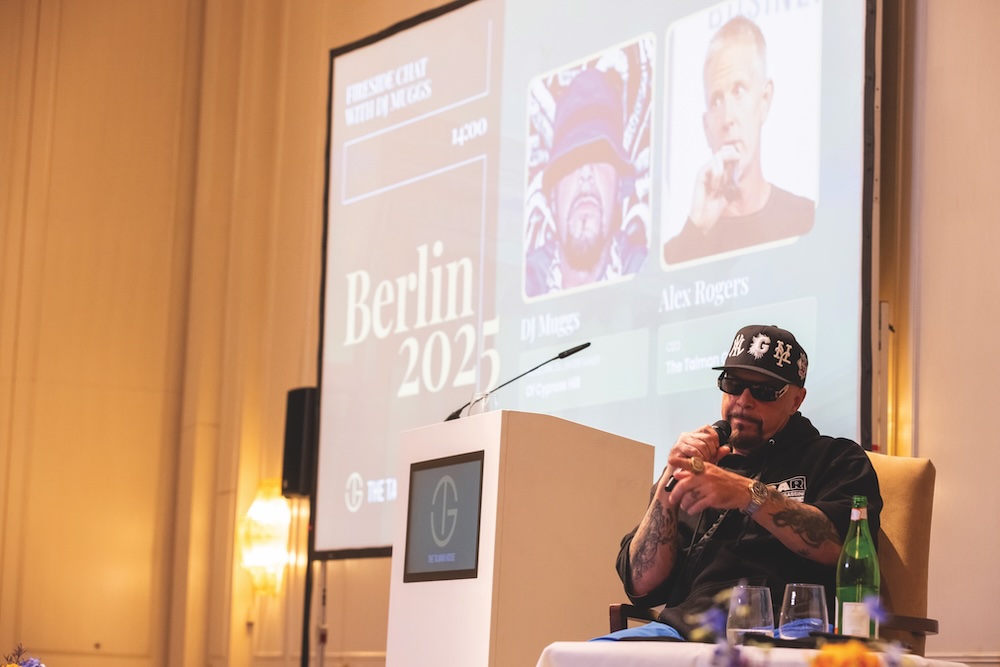

 German authorities have dismantled 47 exchange services involved in facilitating anonymous crypto transactions for criminal activities. These platforms bypassed anti-money laundering protocols, enabling cybercriminals to exchange digital currencies without identity verification. The takedown follows a series of other operations targeting major cybercrime networks. With seized user and transaction data, authorities are set to pursue further […]
  architectureofdoom: Former Cold War bunker turned into a dark web cyberbunker, Traben-Trarbach, Germany