
❌

Reading view

There are new articles available, click to refresh the page.

Converting a Nebra Cryptocurrency Miner To a Meshcore Repeater
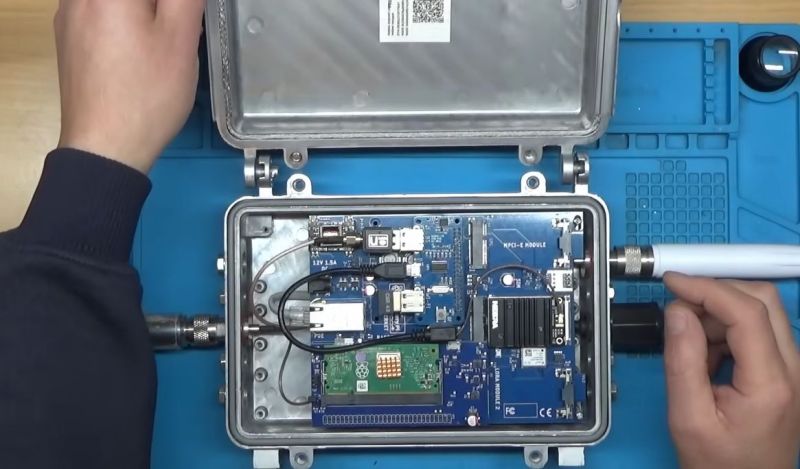
After the swivel by Helium Inc. towards simply running distributed WiFi hotspots after for years pushing LoRaWAN nodes, much of the associated hardware became effectively obsolete. This led to quite a few of these Nebra LoRa Miners getting sold off, with the [Buy it Fix it] channel being one of those who sought to give these chunks of IP-67-rated computing hardware a new life.

Originally designed to be part of the Helium Network Token (HNT) cryptocurrency mining operation, with users getting rewarded by having these devices operating, they contain fairly off-the-shelf hardware. As can be glanced from e.g. the Sparkfun product page, it’s basically a Raspberry Pi Compute Module 3+ on a breakout board with a RAK 2287 LoRa module.Β The idea in the video was to convert it into a Meshcore repeater, which ought to be fairly straightforward, one might think.

Unfortunately the unit came with a dead eMMC chip on the compute module, the LoRa module wasn’t compatible with Meshcore, and the Nebra breakout board only covers the first 24 pins of the standard RPi header on its pin header.

The solutions involved using a Β΅SD card for the firmware instead of the eMMC, and doing some creative routing on the bottom of the breakout board to connect the unconnected pins on the breakout’s RPi header to the pins on the compute module’s connector. This way a compatible LoRa module could be placed on this header.

Rather than buying an off-the-shelf LoRa module for the RPi and waiting for delivery, a custom module was assembled from an eByte E22 LoRa module and some stripboard to test whether the contraption would work at all. Fortunately a test of the system as a Meshcore repeater showed that it works as intended, serving as a pretty decent proof-of-concept of how to repurpose those systems from a defunct crypto mining scheme into a typical LoRa repeater, whether Meshcore or equivalent.
Demonstrating The Sheer Lack Of Security In First Gen Cellular Networks

By: Lewin Day

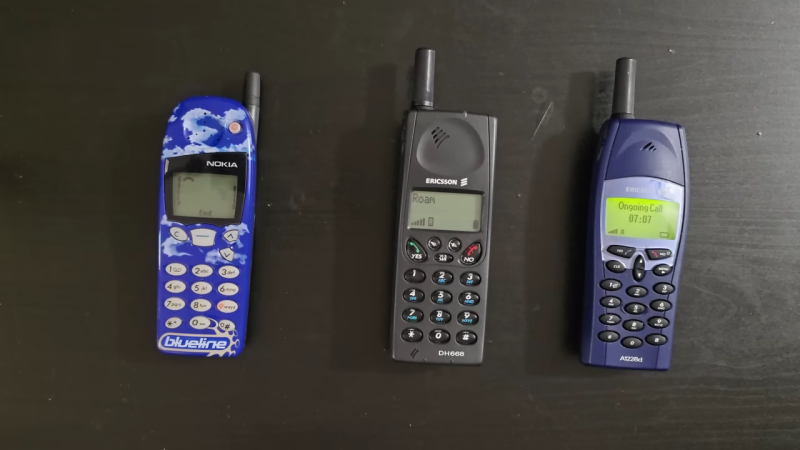
Modern cellular networks are built to serve millions upon millions of users, all while maintaining strict encryption across all communications. But earlier cellular networks were by no means so secure, as [Nostalgia for Simplicity] demonstrates in a recent video.

The video begins with an anecdote β€” our narrator remembers a family member who could listen in on other’s conversations on the analog AMPS phone network. This was easily achieved simply by entering a code that would put an Ericsson handset into a test mode, in which it could be switched to tune in any desired AMPS channel. Since the communications were transmitted in a purely analog manner, with no encryption of any sort, any conversation on such a network was basically entirely open for anyone to hear. The video shows a recreation of this method, using a software-defined radio to spin up a low-power, very local AMPS network. A phone call is carried out between two handsets, with a third handset able to listen in just by using the special test mode.

If you’re particularly keen to build your own first-generation AMPS phone network, just know that it’s not really allowed due to rules around spectrum allocations. Still, it’s entirely possible as we’ve covered before. It doesn’t even take much hardware in our modern SDR era.

Review and Demo of the Zoyi ZT-QB9 Smart Clamp Meter

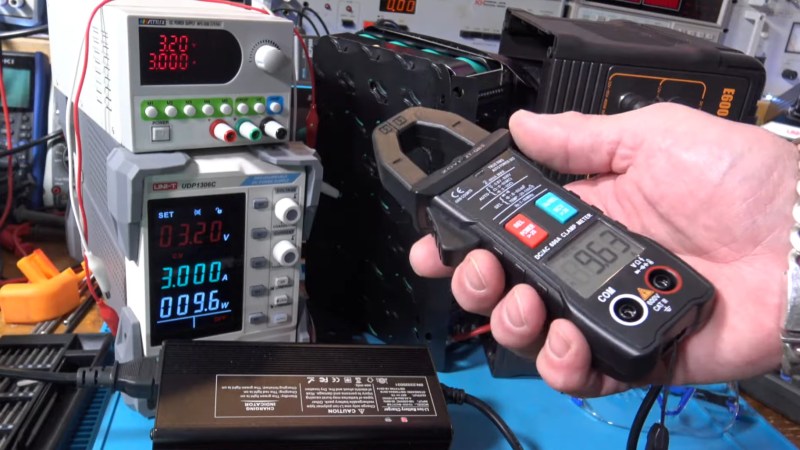
A hand holding the Zoyi ZT-QB9 Smart Clamp meter

Over on YouTube [Kiss Analog] reviews the New Zoyi ZT-QB9 Smart Clamp meter.

If you’re putting together an electronics lab from scratch you absolutely must get a multimeter to start. A typical multimeter will be able to do current measurements but it will require you to break the circuit you’re measuring and interface it to your meter using its mechanical probes.

A good choice for your second, or third, multimeter is a clamp-based one. Many of the clamp meters have the clamp probe available for current measurements while still allowing you to use the standard 4mm banana jack probes for other measurements, particularly voltage and resistance.

If you’re curious to know more about how clamp meters work the answer is that they rely on some physics called the Hall Effect, as explained by the good people at Fluke.

In the video the following clamp meters are seen: Zoyi ZT-QB9, PROVA 11, and Hioki CM4375. If you’re in the market for a clamp meter you might also like to consider the EEVblog BM036 or a clamp meter from Fluke.

We have of course posted about clamp meters before. Check out Frnisi DMC-100: A Clamp Meter Worth Cracking Open or ESP32 Powers DIY Smart Energy Meter if you’d like to know more. Have your own trusty clamp meter? Don’t need no stinkin’ clamp meter? Let us know in the comments!

❌