Reading view

There are new articles available, click to refresh the page.

Russia uses export-version S-400 missiles to strike Ukraine

Russia has used export-version surface-to-air missiles intended for foreign customers to strike ground targets in Ukraine, according to an investigation published Friday by Defense Express. Fragments recovered after recent strikes show that Russia fired 48N6E2 missiles, an export variant of the long-range interceptor used by the S-300PMU2 Favorit and S-400 air defense systems. As reported […]

Indian Army activates world’s highest armored repair site

The Indian Army has flagged off the first batch of Armoured Recovery Vehicles (ARVs) repaired at its newly established Tank Medium Repair Facility in Ladakh, marking the start of frontline maintenance operations at the world’s highest armored repair site. The facility, located in the high-altitude Ladakh region, is designed to provide on-site repair and restoration […]

India Crypto Executives Push to Roll Back 1% TDS, Ease 30% Tax Ahead of Budget

By: Amin Ayan

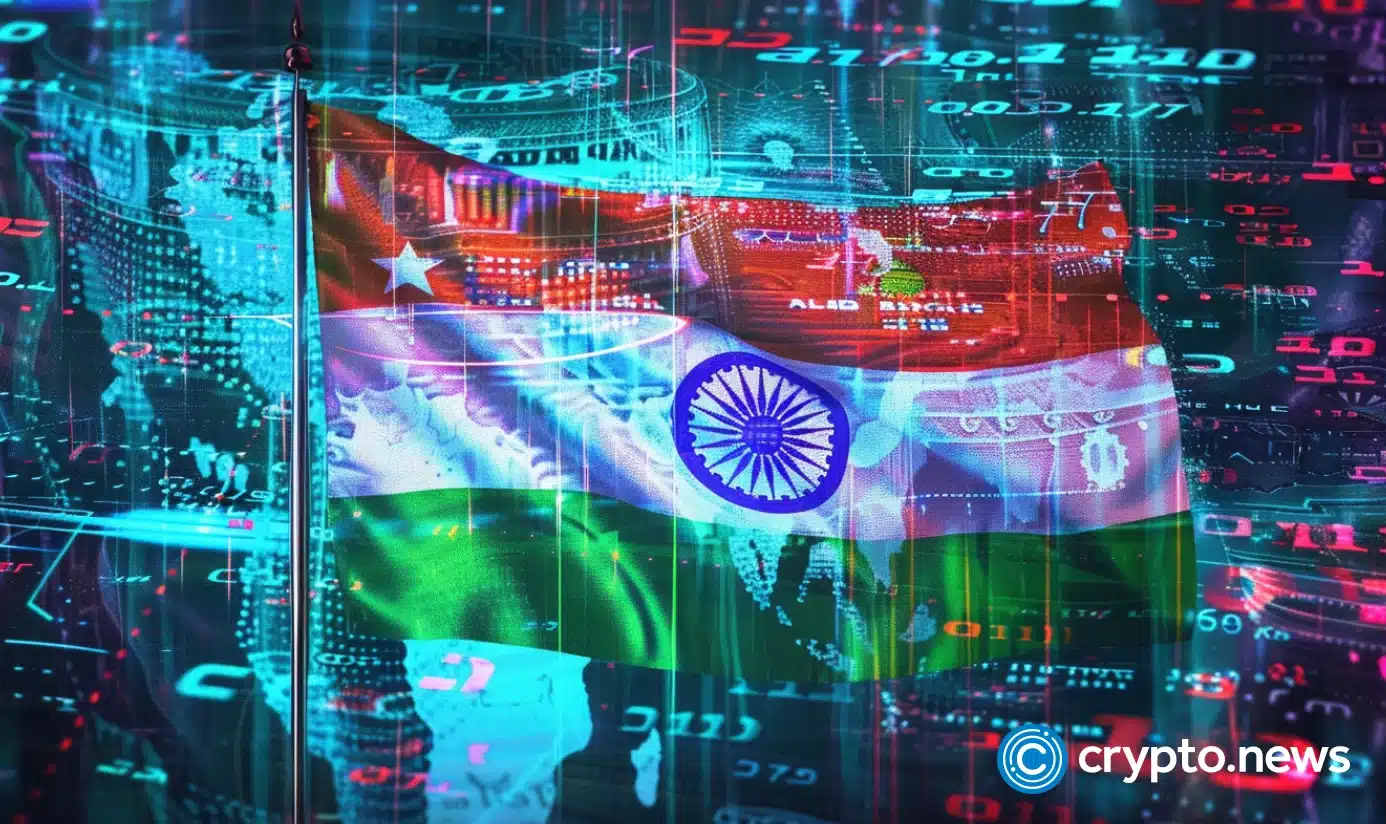
India’s crypto industry is renewing its call for tax reform ahead of the Union Budget, arguing that the current regime is driving trading activity offshore.

Key Takeaways:

  • Crypto firms want Budget 2026 to ease the 1% TDS and 30% VDA tax to curb offshore trading.
  • India’s 2022 crypto tax rules improved traceability but drained onshore liquidity.
  • Executives warn offshore platforms weaken consumer protection and export jobs and tax revenue.

Senior executives from WazirX and Delta Exchange say the government has an opportunity in Budget 2026 to recalibrate its approach by easing the 1% transaction-level tax deducted at source (TDS) on crypto trades and revisiting the flat 30% tax on virtual digital asset (VDA) gains, which currently does not allow losses to be offset.

India’s Crypto Tax Push Improved Traceability but Drained Liquidity

India introduced the 30% VDA tax and the 1% TDS in 2022 as part of a broader push to bring digital asset activity into the formal tax net.

While the measures succeeded in improving transaction traceability, industry participants say they have also had unintended consequences, including a sharp drop in onshore liquidity and a migration of traders to overseas platforms beyond Indian jurisdiction.

“As India prepares for Budget 2026, there is a clear opportunity to fine-tune a framework that supports transparency and compliance while fostering innovation,” said Nischal Shetty, founder of WazirX.

He added that a reduction in TDS and a review of loss set-off rules could help keep more economic activity within India’s regulated perimeter without weakening oversight.

Executives argue that the global crypto market has evolved significantly since the tax rules were introduced, with greater institutional participation and clearer regulatory approaches emerging in several major jurisdictions.

Sad to see

India 🇮🇳 has the most crypto owners in the world, with 93M+ users.

Yet, we still have no clear crypto policy.

While countries like Singapore, Dubai, and U.S are trying to become crypto hubs, India is stuck with:

– 30% tax on every trade
– 1% TDS on every… pic.twitter.com/2pIrL5U8oT

— Sujal Jethwani (@SujalJethwani) January 7, 2026

The industry is also framing the debate in terms of economic leakage.

According to estimates cited by Delta Exchange, Indian users contributed nearly ₹5 lakh crore in trading volume on offshore exchanges between October 2024 and October 2025.

Executives warn that when platforms operate outside Indian oversight, consumer protection weakens and jobs and tax revenues flow overseas.

“Relying on non-accountable foreign platforms for critical financial infrastructure introduces systemic risk,” said Pankaj Balani, CEO and co-founder of Delta Exchange, calling for a “Make in India” approach that backs compliant domestic platforms while acting decisively against unauthorised operators.

India Tax Officials Warn Crypto Could Weaken Enforcement of Tax Rules

Earlier this month, Indian tax officials renewed concerns over cryptocurrency activity, warning that the growing use of digital assets could undermine the country’s ability to enforce tax rules effectively.

The caution was raised by the Income Tax Department (ITD), which operates under the Central Board of Direct Taxes, during a recent parliamentary standing committee on finance.

As reported, India has also moved to tighten oversight of cryptocurrency platforms, with the Financial Intelligence Unit introducing stricter identity and monitoring requirements aimed at curbing illicit activity.

The new rules require platforms to go beyond basic document uploads during onboarding.

Reporting entities must carry out live identity verification and implement stronger Client Due Diligence (CDD) processes, reflecting concerns about the speed and pseudonymous nature of crypto transactions.

The post India Crypto Executives Push to Roll Back 1% TDS, Ease 30% Tax Ahead of Budget appeared first on Cryptonews.

India to unveil LRAShM hypersonic weapon system

India is set to publicly unveil its Long Range Hypersonic Anti-Ship Missile (LRAShM) during the Republic Day parade on January 26, marking the first official presentation of the country’s longest-range hypersonic strike weapon developed for maritime operations. The missile, formally known as the Long Range Anti-Ship Missile, is a boost-glide hypersonic system developed by the […]

India buys Belarus-made Berkut-BM attack drones

India has reportedly acquired dozens of Belarus-made Berkut-BM one-way attack drones, according to defense industry sources. The Berkut-BM is a jet-powered kamikaze drone developed by the Indela company in Belarus and designed to strike time-sensitive battlefield targets before they can relocate. The system is powered by compact Chinese-made micro turbojet engines produced by Swiwin, giving the […]

India moves toward major Rafale fighter procurement

India is moving toward approving a large-scale purchase of Rafale fighter jets, as New Delhi prepares for French President Emmanuel Macron’s visit next month, according to senior officials familiar with the process. Indian Air Force leaders have submitted a proposal to acquire what the service described as a “substantial” number of new aircraft under a […]

India showcases new long-range rocket system

India publicly showcased its new Suryastra multiple launch rocket system during rehearsals for the Army Day parade in Jaipur, marking the first public appearance of the indigenous long-range rocket artillery platform. The system was displayed on a wheeled launcher carrying two 370mm Predator Hawk missiles and four 306mm extended-range rockets, highlighting its ability to fire […]

India tightens crypto oversight as exchanges move under FIU monitoring

  • FIU reviews linked crypto transactions to scams, fraud, gambling networks, and serious criminal activities.
  • Non-compliant crypto platforms were fined ₹28 crore in FY 2024–25 for AML breaches.
  • Authorities are building intelligence on transaction hotspots and high-risk digital assets.

India is accelerating its push to regulate the crypto sector as enforcement agencies sharpen their focus on financial crime risks linked to digital assets.

During the 2024–25 financial year, 49 cryptocurrency exchanges formally registered with the Financial Intelligence Unit, marking a decisive step toward tighter anti-money laundering and counter-terror financing controls.

The move reflects a broader regulatory recalibration as authorities respond to growing evidence of crypto misuse and expand scrutiny across platforms operating in the country.

The regulatory shift has also triggered wider discussion within the domestic crypto ecosystem.

A recent post on X by CoinDCX CEO Sumit Gupta drew attention to the intensifying compliance environment, as exchanges increasingly operate under FIU supervision.

The post circulated as registration, monitoring, and enforcement became central themes in India’s crypto policy during the financial year.

FIU flags misuse risks

A review of Suspicious Transaction Reports submitted by crypto platforms during FY 2024–25 revealed repeated patterns of high-risk activity, reported the Press Trust of India.

The analysis found crypto funds linked to scams, fraud, gambling networks, unaccounted transfers, and peer-to-peer misuse.

The FIU also identified more serious risks, including links to dark net services, terror financing, and child sexual abuse material.

Exchanges under one regulator

Of the 49 registered exchanges, 45 are based in India, and four operate overseas.

Unlike several jurisdictions where crypto oversight is split across multiple agencies, India has designated the FIU, which operates under the Ministry of Finance, as the single authority responsible for supervising crypto exchanges.

Industry leaders have pointed out that India’s crypto market is more competitive than it is often perceived, with multiple platforms vying for users and liquidity.

This competitive environment, they argue, can support innovation, provided regulatory expectations are clear and consistently enforced across all players.

Compliance rules explained

Crypto exchanges in India are classified as Virtual Digital Asset Service Providers and have been covered under the Prevention of Money Laundering Act since 2023.

As part of this framework, platforms are required to submit Suspicious Transaction Reports, identify wallet owners, track token fundraising activity such as IPO-style launches, and monitor transfers between hosted and un-hosted wallets.

Following registration, exchanges must also disclose their banking relationships, appoint compliance officers, conduct internal audits, apply risk-based customer checks, screen transactions against sanctions lists, and carry out regular risk assessments.

All relevant data must be shared with the FIU to support ongoing supervision.

Enforcement and penalties

Enforcement has accompanied registration. During FY 2024–25, crypto platforms that failed to meet Anti Money Laundering (AML) obligations were fined a combined ₹28 crore.

The FIU also mapped regional transaction hotspots and identified digital assets frequently associated with illicit activity, strengthening the government’s broader monitoring and intelligence capabilities.

The post India tightens crypto oversight as exchanges move under FIU monitoring appeared first on CoinJournal.

India tests Pinaka long-range guided rocket

India on Dec. 29 conducted the first successful flight test of the Pinaka Long Range Guided Rocket, validating a maximum strike range of 120 kilometers during a trial at the Integrated Test Range in Chandipur, according to an official statement issued in New Delhi. The maiden test of the Pinaka Long Range Guided Rocket, designated […]

Coinbase gains India regulatory clearance for CoinDCX investment

  • Coinbase has been an investor in CoinDCX since 2020 and disclosed the latest infusion in October.
  • The approval follows Coinbase’s reopening of user registrations in India after a two-year hiatus.
  • CoinDCX reported a $44.2 million wallet-related security breach in July without customer fund losses.

India’s competition regulator has cleared Coinbase’s plan to deepen its ties with CoinDCX, marking another step in the US-based exchange’s renewed engagement with the Indian crypto market.

The approval allows Coinbase to acquire a minority stake in DCX Global Limited, the parent company of CoinDCX, at a time when global exchanges are reassessing their exposure to high-growth but tightly regulated jurisdictions.

For India, the decision signals a willingness to permit foreign participation in the digital asset sector under formal regulatory scrutiny, even as policy uncertainty and elevated taxes continue to shape market behaviour.

The clearance was issued by the Competition Commission of India on Wednesday, following a review of the proposed transaction.

It comes shortly after Coinbase reopened user registrations in India, ending a two-year pause in local onboarding.

Together, the developments point to a cautious but deliberate attempt by Coinbase to rebuild its presence in one of the world’s largest potential crypto markets.

CCI clears Coinbase CoinDCX deal

The Competition Commission of India approved the transaction involving Coinbase Global Inc. and DCX Global Limited, enabling the acquisition of a minority shareholding.

The regulator confirmed the decision through an official disclosure shared on social media platform X, stating that the proposed combination had received approval.

Coinbase has been associated with CoinDCX since 2022, having invested in the Indian exchange during its earlier expansion phase.

The latest approval formalises an additional capital infusion that was disclosed by Coinbase in mid-October, but required regulatory sign-off before completion.

Coinbase India return strategy

The investment approval aligns with Coinbase’s broader effort to re-enter India after scaling back operations in 2023.

Last week, the exchange resumed onboarding Indian users, initially enabling crypto-to-crypto trading.

According to company plans, a rupee on-ramp is expected to follow in 2026, expanding access beyond token swaps and improving local usability.

This phased approach reflects the constraints of operating in India’s regulatory environment, where compliance requirements and payment restrictions have previously limited foreign exchanges.

By strengthening its stake in CoinDCX, Coinbase gains indirect exposure to local market infrastructure while maintaining regulatory distance from day-to-day operations.

CoinDCX security and market context

The approval also comes after a turbulent year for CoinDCX.

In July, the exchange disclosed a $44.2 million security breach involving one of its wallets.

The company said at the time that customer funds were not impacted, but the incident added pressure in an already cautious market environment.

India continues to pose challenges for crypto platforms due to high transaction taxes and unresolved regulatory frameworks.

Despite these hurdles, the competition watchdog’s decision suggests that authorities are prepared to accommodate global firms, provided investments are structured and subject to oversight.

For Coinbase, the clearance offers a regulated pathway back into India.

For the broader market, it highlights how foreign exchanges may increasingly rely on minority investments and partnerships to navigate complex local rules.

The post Coinbase gains India regulatory clearance for CoinDCX investment appeared first on CoinJournal.

Microsoft investing $17.5B in India to accelerate AI infrastructure, skills training and more

Microsoft CEO Satya Nadella, left, with India Prime Minister Narendra Modi in New Delhi on Tuesday. (Microsoft Photo)

Microsoft is pouring $17.5 billion into India — its largest investment in Asia — to boost the country’s AI infrastructure and diffusion, the company announced Tuesday.

The funding, planned over four years between 2026 and 2029, comes after an earlier $3 billion commitment announced earlier this year.

Microsoft’s aim is to help advance India’s cloud and AI infrastructure, skilling and ongoing operations. The tech giant said the partnership will help India make the leap from “digital public infrastructure to AI public infrastructure in the coming decade,” toward “a future that is more equitable and uniquely Indian in its scale and impact.”

Microsoft CEO Satya Nadella is in the country this month as part of a multi-city “India AI” tour. He met with Prime Minister Narendra Modi in New Delhi on Tuesday and will deliver a keynote address on Wednesday: “Leading in the New Age of AI.”

The investment will target three primary areas:

  • Scale: A key priority is building hyperscale infrastructure to enable AI adoption in India. Microsoft said significant progress is being made at the India South Central cloud region, based in Hyderabad, that is set to go live in mid-2026. Microsoft will also continue to expand its three existing operational data center regions in Chennai, Hyderabad and Pune.     
  • Skills: Microsoft is doubling its January commitment to equip 20 million Indians with essential AI skills by 2030. The company said it has already trained 5.6 million people since January, and its programs have helped more than 125,000 people gain work or entrepreneurial opportunities.  
  • Sovereignty: Microsoft is introducing Sovereign Public Cloud and Sovereign Private Cloud for Indian customers, designed to give Indian organizations more control over data, compliance, and operational sovereignty. In security terms, these offerings will address data residency, regulatory compliance, governance, and operational isolation.

Microsoft also announced that 310 million informal workers in India will benefit from advanced AI capabilities being integrated into two key digital public platforms of the Ministry of Labour and Employment — e-Shram and the National Career Service.

Microsoft employs 22,000 people across Bengaluru, Hyderabad, Pune, Gurugram, Noida and other cities, representing numerous company business lines.

Elsewhere on Tuesday, Microsoft President Brad Smith announced new commitments to Canada, adding $5.4 billion over the next two years to its continued investment in building out digital and AI infrastructure in the country.

Smith highlighted many of the same goals the company outlined for India, including boosting skills training and digital sovereignty in Canada.

The Delhi Blast and Pakistan’s Proxy War: Why Another Clash Looks Likely

OPINION — South Asia has once again returned to the global spotlight after a suicide bombing struck the heart of India’s capital on November 10. The bomber detonated explosives in a car near Delhi’s historic Red Fort, killing 13 and injuring 25 others. This attack—the first major attack in the Indian capital in over a decade—points to the threat of Pakistan-based terrorism beyond the border regions.

According to Indian authorities, the Delhi bombing was part of a broader plot that security agencies disrupted in the days leading up to the attack. The suicide bomber, allegedly recruited by the Pakistan-based group Jaish-e-Mohammad (JeM), reveals how Pakistan-backed outfits are upgrading their recruitment methods and fundraising tactics following Indian airstrikes in May that destroyed several of their operational centers. These developments highlight the fragility of regional security as both India and Pakistan edge closer to another military confrontation. With this backdrop, the United States must reassess its growing ties with Pakistan’s military establishment, which remains the epicenter of South Asia’s instability.

The Rise of a “White-Collar” Terror Network

Prior to the Delhi attack, Indian authorities uncovered a terror network across three provinces in India, including Jammu and Kashmir. Authorities seized nearly 2,900 kilograms of explosive materials near Delhi, including 360 kilograms of ammonium nitrate, confiscated assault rifles, and arrested at least ten doctors linked to the operation.

The scope of the seizure suggests that the “white collar” terrorist cell planned multiple coordinated attacks capable of mass casualties far exceeding the Delhi bombing. A hypothesis remains that the Delhi suicide bomber, Dr. Umar Nabi, acted independently after authorities preempted the larger plot and detained his associates. Nabi and another doctor from Kashmir were allegedly connected with JeM recruiters via Telegram and met their handlers in Turkey. It can be assessed with high confidence that the duo’s alleged meeting with their handlers overseas likely facilitated access to explosives, funding, and logistical support.

The revelation of the white-collar terrorist network in India marks a shift in Pakistan-based terrorist groups’ recruitment strategies—from radicalizing uneducated youth to mobilizing educated professionals with specialized skills. At the same time, JeM and other groups have shifted their financing from traditional banking channels to fintech platforms, mobile wallets, and decentralized digital payment systems. Together, these trends illustrate a strategic recalibration: a move toward more sophisticated, less detectable forms of proxy warfare aimed at destabilizing India’s internal security and social cohesion.

What national security news are you missing today? Get full access to your own national security daily brief by upgrading to Subscriber+Member status.

The Pakistan Angle

A day after the Delhi bombing, another suicide attack outside Islamabad’s District Court killed 12 people. Pakistan’s Prime Minister Shehbaz Sharif and Defense Minister Khawaja Asif immediately blamed India, claiming the attacks were “orchestrated from Afghanistan at India’s behest.” However, the Pakistani Taliban (TTP) offshoot Jamaat ul Ahrar (JuA) claimed responsibility, contradicting the government’s narrative. Although no direct link has been established between the Delhi and Islamabad attacks, the latter exposes Pakistan’s deteriorating counterterrorism capacity and its flawed internal security policies. Official data from October indicates more than 4,700 terrorist incidents occurred in Pakistan this year alone, killing over 1,000 people despite 62,000 reported counterterrorism operations carried out by security forces. This paradox points to a chronic failure of strategy rather than a lack of effort.

Instead of reinforcing counterinsurgency grids in its northwest, Pakistan has relied on punitive airstrikes and heavy-handed tactics—often targeting civilian areas in Afghanistan. In early October, Pakistani jets carried out an airstrike in Kabul intended to kill TTP leader Noor Wali Mehsud. The botched operation, however, damaged civilian infrastructure and provoked international condemnation. Mehsud later released a video clip confirming he remains active within Pakistan, further embarrassing Islamabad. Additional airstrikes in Afghanistan’s Paktia Province killed three athletes, inflaming tensions along the Afghanistan-Pakistan border and triggering sporadic cross-border shelling. These misdirected operations have played directly into the TTP’s hands, enabling its expansion and emboldening more radical offshoots like JuA, which has increasingly targeted civilians in major Pakistani cities.

Pakistan’s motivations appear less about counterterrorism and more about geopolitical signaling. Its October 9 airstrike in Kabul coincided with Taliban Foreign Minister Amir Khan Muttaqi’s visit to India—the first such diplomatic outreach since the Taliban takeover of Kabul. The timing suggests Pakistan’s strikes were designed to warn Kabul against strengthening ties with New Delhi. Yet, Afghanistan has refused to yield and continues to deepen cooperation with India in healthcare and infrastructure development.

Nominations for outstanding leaders in national security and intelligence are now open for the 2026 Cipher Brief Honors Dinner. Find out more here.

Another Conflict Remains Imminent

As domestic terrorism surges, Pakistan’s civil-military leadership has diverted its focus to countering India’s strategic positioning in the region by inflicting punitive strikes on Afghanistan and increasing military cooperation with the interim government of Bangladesh, which is hostile to New Delhi. Simultaneously, Field Marshal Asim Munir, Pakistan’s Chief of Army Staff, recently consolidated power after parliament passed the 27th constitutional amendment, granting him sweeping authority and lifetime immunity from prosecution. This move has sparked widespread criticism within Pakistan. Three senior judges have resigned in protest, and prominent civil society figures warn that the country has entered a new phase of authoritarian rule. Munir’s expanding authority mirrors the military’s long-standing playbook: when legitimacy wanes, external crises—particularly with India—serve as instruments of political survival.

The conditions for another India-Pakistan confrontation are steadily aligning. Pakistan’s military, under domestic pressure, could once again resort to conflict with India to restore its standing. Meanwhile, Indian Army Chief General Upendra Dwivedi has warned that any future operation would be far more severe than Operation Sindoor—the codename for India’s May 2025 strikes on Pakistani terrorist and military infrastructure. General Dwivedi’s statement that territory remains the “currency of victory” signals India’s willingness to pursue limited territorial gains in Pakistan-occupied areas of Jammu and Kashmir in the event of renewed hostilities.

The May India-Pakistan conflict has set a precedent that Pakistan will use nuclear saber-rattling to secure a ceasefire with India. Yet, Indian strategists increasingly regard Pakistan’s nuclear threats as coercive posturing designed to provoke U.S. intervention rather than as credible deterrence. If another conflict erupts, India may not be deterred by Pakistan’s nuclear signaling. The Indian calculus appears to favor limited conventional offensives aimed at degrading Pakistan’s militant infrastructure and securing limited territorial gains while testing Islamabad’s actual nuclear resolve. Such a confrontation would dramatically alter South Asia’s deterrence dynamics and expose the fragility of Pakistan’s “bleeding India with a thousand cuts” doctrine.

Conclusion

For the United States, these developments present a dilemma. As I warned in The Cipher Brief in September, America’s national security priorities cannot align with Pakistan’s objectives in the region. Washington’s growing diplomatic and economic engagement with Pakistan risks undermining long-term regional stability if it fails to address Islamabad’s dual game—presenting itself as a counterterror ally while nurturing militant proxies.

Washington must reexamine the foundations of its Pakistan strategy. The United States should leverage its political influence and aid frameworks to condition engagement on measurable counterterror reforms: dismantling militant networks, enforcing digital financial oversight, and halting cross-border militant activity. Without such conditionality, the United States risks legitimizing a regime that fuels the very instability it claims to combat.

The Cipher Brief is committed to publishing a range of perspectives on national security issues submitted by deeply experienced national security professionals.

Opinions expressed are those of the author and do not represent the views or opinions of The Cipher Brief.

Have a perspective to share based on your experience in the national security field? Send it to Editor@thecipherbrief.com for publication consideration.

Read more expert-driven national security insights, perspective and analysis in The Cipher Brief

Afghanistan Is Becoming India and Pakistan’s Proxy Battlefield—Again

OPINION — On Oct. 15, 2025, Islamabad and Kabul announced a 48-hour ceasefire after days of shelling and cross-border clashes around Spin Boldak/Chaman and in Kurram. That same week New Delhi hosted Taliban Foreign Minister Amir Khan Muttaqi, the highest-profile Taliban visit to India since 2021. These two parallel events are not accidental. They are the visible symptoms of a strategic pattern that has, for decades, made Afghanistan an arena for India–Pakistan competition. If left unchecked, that competition will once again turn Afghan territory, institutions, and people into collateral damage.

The recent clashes underscore a simple truth: kinetic escalation along a porous frontier is a multiplier. Airstrikes, artillery duels, and intermittent border closures do not remain local nuisances. They force displacement, interrupt trade and humanitarian access, and create openings for transnational violent actors to regroup and expand. At the same time, high-level diplomatic gestures, like India’s reception of a Taliban foreign minister—help normalize engagement without demanding verifiable commitments from Kabul on terrorism, human rights, or governance. The result is a dangerous two-track dynamic: escalation on the ground and normalization in the capitals.

A brief history of the rivalry on Afghan soil

Pakistan’s footprint in Afghanistan is old and deep. From the anti-Soviet jihad to the 1990s civil war, Pakistan’s Inter-Services Intelligence (ISI) cultivated proxies, trained fighters in madrassas and camps, and hosted Taliban decision-making bodies in Quetta, Peshawar, and Miramshah. By the time I led Signals Intelligence at NDS, the material flows, explosives, trainers, and fighters—were a familiar pattern. As U.S. forces drew down after 2014, Islamabad’s public posture shifted; in private and in some diplomatic forums, Pakistan presented the Taliban as a political reality to be accommodated. That accommodation was always transactional, however, and it produced deep leverage inside Afghanistan—from provincial commanders to elements inside Kabul.

India’s engagement followed a different logic but with equally transactional ends. Delhi invested heavily in infrastructure, education and development—roads, power projects, scholarships that sent Afghans to Indian universities. Those investments built goodwill and administrative capacity. But India also positioned itself as a counterweight to Pakistan. New Delhi’s network of consulates, including two on Pakistan’s border, provided both soft-power reach and strategic insight. My colleagues and I at NDS were aware that New Delhi’s intelligence service (RAW) cultivated contacts in border provinces and maintained links that could be used against Pakistan. At the time the Afghan republic rationalized these partnerships: the enemy of our enemy was a useful ally. That pragmatic logic blinded us to a harsher reality—India’s support for Afghan institutions was, ultimately, calibrated to New Delhi’s competitive needs, not an unconditional commitment to the Republic’s survival.

Two anecdotes illustrate the corrosive effect of external rivalry on Afghan sovereignty. First, while intercepting communications as head of Signals Intelligence I once heard General Dostum pleading on the phone with Pakistan’s ambassador—an exchange that revealed how quickly even vocal opponents could seek patronage. Second, a private meeting with the RAW station chief in Kabul—held months before the Republic collapsed—left me with a hollow certainty: Indian intelligence was preparing contingency plans for the Republic’s fall rather than mobilizing to prevent it. Those were not betrayals born of malice but of strategic realism: both Delhi and Islamabad were optimizing for their own survival and leverage.

The Cipher Brief brings expert-level context to national and global security stories. It’s never been more important to understand what’s happening in the world. Upgrade your access to exclusive content by becoming a subscriber.

Why this rivalry matters now

Three features make the current moment particularly risky.

First, even when attacks originate with state-adjacent actors inside Afghanistan, their effects are interstate: whether Islamabad acknowledges strikes in Kandahar or Taliban-aligned groups carry out violence, the result is cross-border harm — civilians killed, infrastructure damaged, and humanitarian access disrupted.

Second, diplomatic gestures without conditionality distort incentives. India’s public reset—receiving a Taliban foreign minister—grants political space to a movement whose internal policies remain deeply repressive. If major regional powers normalize ties without demanding verifiable changes, they risk entrenching a governance model that enables radicalization and denies basic rights, particularly for women and minorities.

Third, Afghans pay the price. External competition saps Afghan agency. Political elites are incentivized to cultivate foreign patrons rather than build domestic coalitions. Former security personnel, civil servants and vulnerable communities are either abandoned or become leverage for outside actors. The human cost—displacement, loss of livelihoods, shrinking civic space—is the clearest metric of failure.

A three-part policy approach: sovereignty, de-escalation, and conditional engagement

If Washington and its partners are serious about stability in South and Central Asia, they should adopt a compact focused on three priorities.

Prevent Afghanistan from becoming the battlefield. The U.S. should lead a regional security initiative—narrow in scope but backed by monitoring and consequence mechanisms—bringing together India, Pakistan, Iran, China, and key Central Asian states. The initiative would pledge non-use of Afghan territory for hostile proxy activity, create impartial border monitoring mechanisms, and establish rapid-response channels to defuse incidents before they spiral.

Push India and Pakistan back to bilateral dialogue. The most durable way to remove Afghan soil from the rivalry is to reduce the rivalry itself. Washington should use calibrated incentives and diplomatic leverage to get Delhi and Islamabad into issue-specific talks—starting with confidence-building measures on border management, refugee handling, counter-narcotics cooperation, and a hotline for counterterrorism incidents. These are pragmatic, tradeable commitments that build reciprocity without demanding grand concessions.

Condition engagement with Kabul on verifiable benchmarks. Engagement with the de facto authorities will continue for humanitarian and security reasons—but it must not reward predation. Bilateral ties should be tied to transparent, public benchmarks: demonstrable counter-terrorism cooperation, protections for civilian populations (especially women and minorities), and steps to prevent Afghan soil from being used by transnational violent actors. Parallel support must be scaled for civil society, independent media, and the Afghan diaspora—networks that preserve the political capital needed for a future inclusive order.

Need a daily dose of reality on national and global security issues? Subscriber to The Cipher Brief’s Nightcap newsletter, delivering expert insights on today’s events – right to your inbox. Sign up for free today.

Realism with consequences

Some will argue that Delhi’s and Islamabad’s actions are driven by existential fears and that external pressure has limited purchase. That is true. But realism also recognizes that incentives, reputational costs, and monitoring can alter strategic calculations. The goal is not to force idealism but to make proxy strategies less profitable—politically, economically and reputationally—than cooperation.

Conclusion

The recent ceasefire and high-profile diplomatic activity are warnings more than signals of resolution. Afghanistan’s sovereignty must not be treated as negotiable currency in a broader regional rivalry. If the international community fails to act, Afghans will continue to suffer as their country becomes the chessboard for others’ strategies. The path forward is straightforward, if politically difficult: prevent kinetic escalation, push India and Pakistan toward practical dialogue, and condition engagement with Kabul on measurable protections for Afghan people. For the sake of Afghanistan—and for regional security—that is the responsible, pragmatic choice.

The Cipher Brief is committed to publishing a range of perspectives on national security issues submitted by deeply experienced national security professionals.

Opinions expressed are those of the author and do not represent the views or opinions of The Cipher Brief.

Have a perspective to share based on your experience in the national security field? Send it to Editor@thecipherbrief.com for publication consideration.

Read more expert-driven national security insights, perspective and analysis in The Cipher Brief

❌