Reading view

There are new articles available, click to refresh the page.

Master Class – Mastering the Art of Pork Ribs

A BarbecueBible.com Master Class

Barbecuebible.com is thrilled to announce a new series of masterclasses—each devoted to a dish that everyone should know how to grill or barbecue.

And up first, what’s considered by many to be the ultimate barbecue: the pork rib.

Actually, there are four kinds of pork ribs and at least three recommended ways to cook them. Everyone should know how to barbecue ribs, so read on:

The various types of pork ribs:

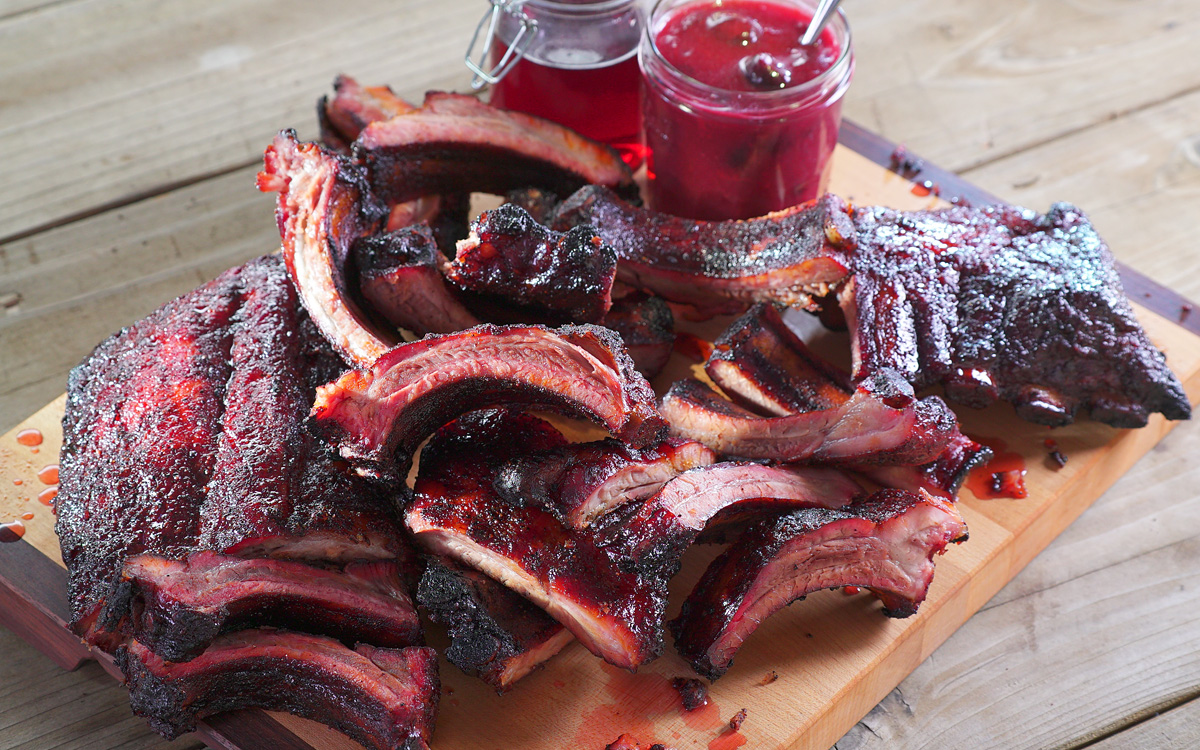
The most popular is the baby back rib, aka top loin rib. Cut from high on the hog (next to the backbone), it’s tender, well-marbled, and relatively quick cooking. Everybody loves baby back ribs.

Spice Rubbed Baby Backs with Chipotle Bourbon Barbecue Sauce

Below the baby back (anatomically speaking) comes the spare rib—a meaty rack that’s larger, slightly tougher, and intensely flavorful. It should be cooked “low and slow” (at a low temperature for a long time) to achieve the requisite tenderness.

3-2-1 Barbecued Spare Ribs

Trim the cartilaginous bottom (called rib tips), the last two ribs on the narrow end of the rack, and some of the fat off a rack of spareribs and you get a St. Louis cut—a spare rib that looks and cooks like a baby back. Pro tip: Use the rib tips and any meaty trim to flavor baked beans, soup, or pork stock.

St. Louis Ribs at Barbecue University

The fourth kind of rib—the country-style rib—isn’t really a rib at all. It’s an odd cut from the hog’s neck that looks and cooks like a thick elongated pork chop. It may or may not have a bone. It should be direct grilled, exactly as you’d do with a pork steak or chop. Pro tip: Boneless country-style ribs can easily be turned into kebabs by slicing the meat into 1-inch cubes. Marinate, if desired, then skewer and grill with your favorite accompaniments. (We love pineapple. Tacos al pastor, anyone?)
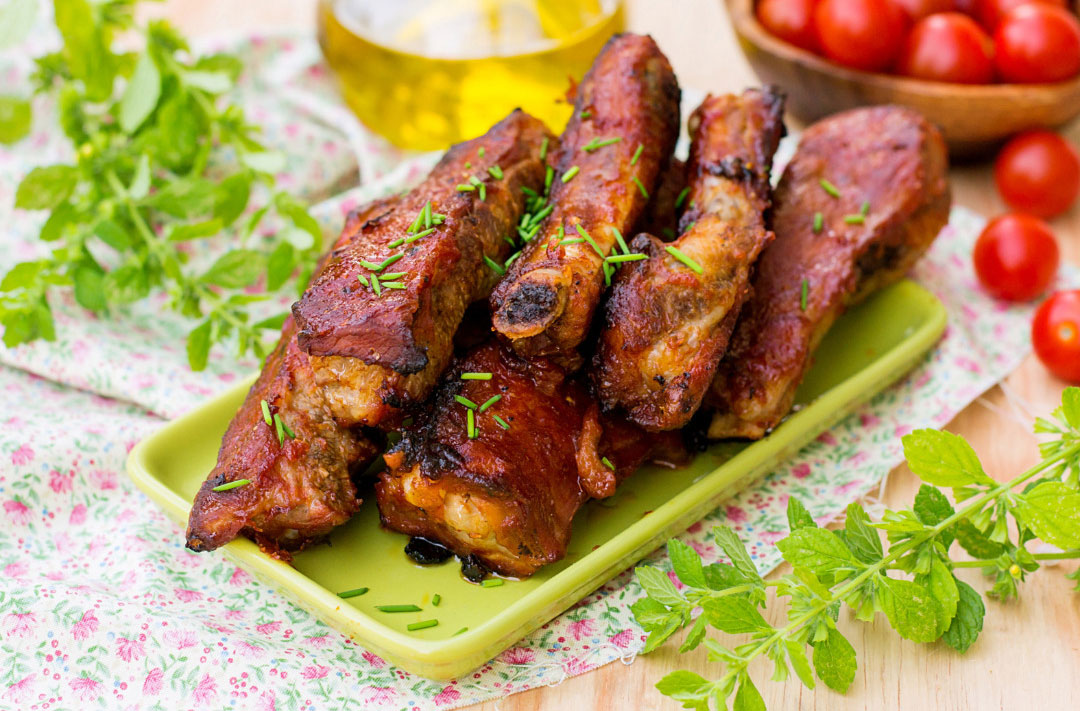
Country Style Pork Ribs

The various ways to cook ribs:

Ribs are highly versatile in that they can be cooked a variety of ways. Baby backs can be indirect grilled at a higher temperature (300 to 325 degrees)—a process that will take around 2 hours, or smoked like true barbecue at 225 to 250 degrees (closer to 3-1/2 to 4 hours). Hawaiians cook them on the rotisserie. St. Louis-cut ribs can be cooked either way, too.
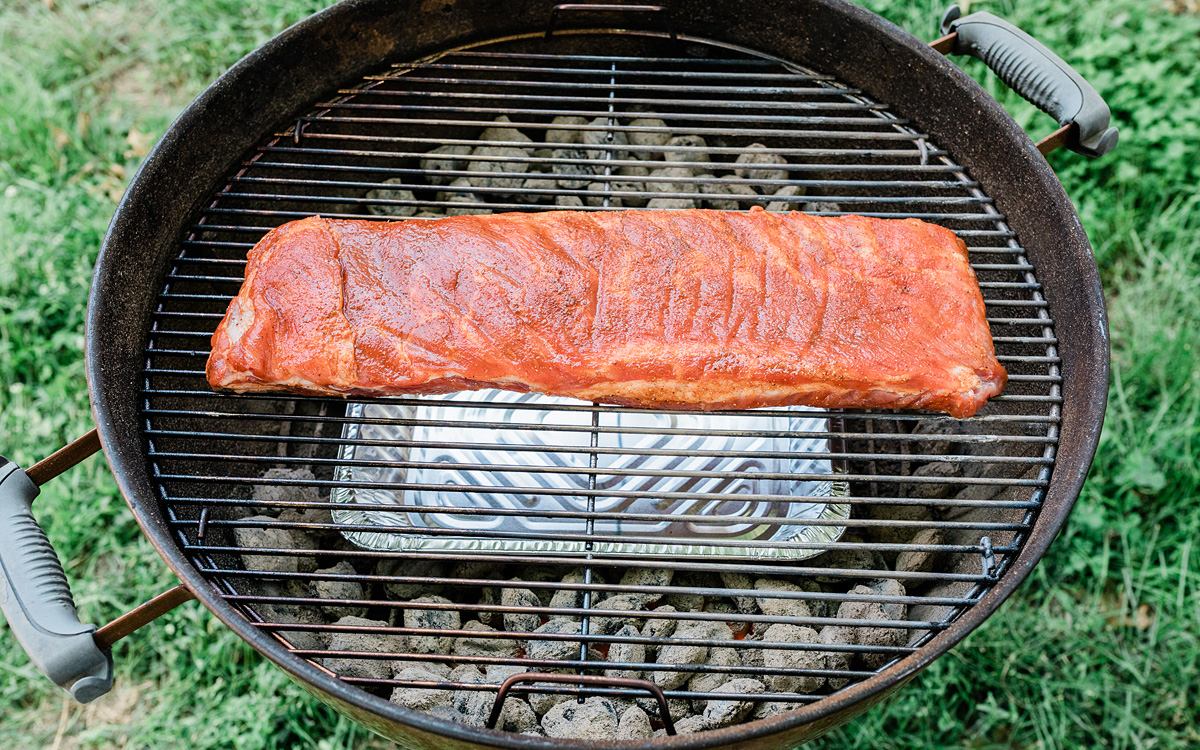
3-2-1 Barbecued Spare Ribs - Step 4

Spareribs should be cooked low and slow in a smoker: figure on 4 to 5 hours. Hickory is the traditional wood for smoking spareribs, but any hardwood works great.

Country-style ribs should be direct grilled—3 to 5 minutes per side over a medium-high flame should do it.

How to trim ribs:

A papery membrane covers the inside (the concave part) of your rib. Many pit masters remove it. (It’s said to interfere with the absorption of the spice and smoke flavors.). To do so, pry it up at the end of a couple of the rib bones with the end of a spoon handle. Grab it with a paper towel (it’s slippery and pull it off. At the same time, you can cut off any gross gobs of fat or dangly parts.

How to flavor ribs:

Take a page from the competition barbecuer’s playbook. Layer the flavors on your ribs. Start with a rub sprinkled over the ribs and rubbed into the meat. During the cook, you can spray your ribs apple cider, beer, or wine. Right at the end, brush on your favorite barbecue sauce, then sizzle the ribs directly over the fire for a minute or two—just long enough to sear the sauce into the meat. Do not apply the sauce too early, or the sugar in it will burn. Pro tip: Before applying a rub, slather the rack of ribs with yellow mustard.

3-2-1 Barbecued Spare Ribs - Step 8

The three-two-one method:

This one was all the rage on social media a few years ago. In a nutshell, you smoke the ribs uncovered for 3 hours, then wrapped in foil with butter and apple juice for 2 hours, then finish uncovered for 1 additional hour. Those numbers work for spareribs, but for baby backs, I recommend 3-1-1 timing.

How do you know when the ribs are cooked:

Ribs should be tender, but still have a little chew to them. In my opinion, the meat should not fall off the bone. (Such ribs were probably boiled or braised before grilling.)

Ribs should be cooked until the meat shrinks back from the ends of the bones by 1/4 to 1/2 inch.

Another test for doneness is to lift the rack in the middle with tongs. The meat should start to tear at the top.

Yet another test is to pull a rib off the rack. You should be able to tear it apart with your fingers.

So what else should you know?

Where your pork comes from matters as much as how you cook it. I’m partial to heritage breeds like Duroc or Berkshire.

invest in a rib rack, which holds the racks upright so you can fit four racks instead of two on your grill. A must for a small cooker, like a Weber Kettle or Smokey Mountain.
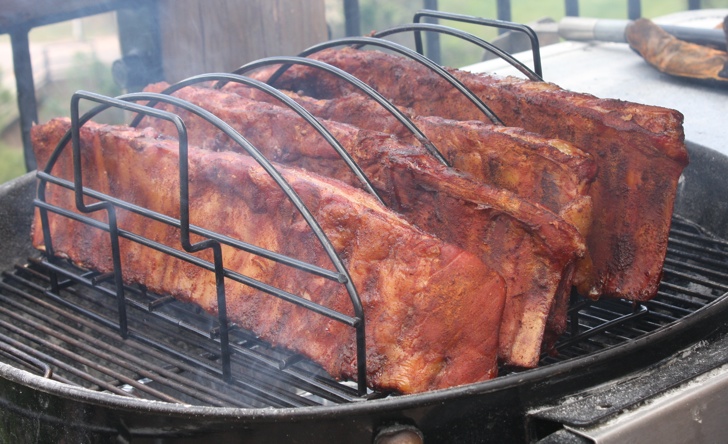
Ribs in Rack

Beef ribs are a whole different animal which we’ll cover in a new masterclass.

And now, the recipes to put your master class to use:

I’ve been cooking ribs for decades, and I’m still learning new things every time I fire up the grill or smoker. If you want to go deeper, I devoted an entire book to the subject—Best Ribs Ever: A Barbecue Bible Cookbook—because ribs reward curiosity, patience, and practice. Use this masterclass as your foundation, then keep experimenting. The best ribs you’ll ever cook are the ones that teach you something along the way.
Pork Ribs: Frequently Asked Questions

What are the different types of pork ribs?
There are four main types of pork ribs: baby back ribs, spareribs, St. Louis–cut ribs, and country-style ribs. Baby backs are tender and quick cooking, spareribs are meatier and best cooked low and slow, St. Louis ribs are trimmed spareribs that cook evenly, and country-style ribs are not true ribs and should be grilled like pork chops.
What temperature should I cook pork ribs?
For traditional barbecue, pork ribs should be cooked at 225–250°F until tender. Baby back ribs and St. Louis–cut ribs can also be indirect grilled at a higher temperature, around 300–325°F, to reduce cooking time while keeping them juicy.
Do I need to remove the membrane on pork ribs?
Many pit masters remove the thin membrane on the bone side of ribs because it can block seasoning and smoke from penetrating the meat. While not mandatory, removing it helps improve texture and flavor.
How do I know when pork ribs are done?
Pork ribs are done when they are tender but still have some chew. The meat should pull back from the ends of the bones by about ¼ to ½ inch, and the rack should bend easily when lifted with tongs, with the meat beginning to tear.
When should I add barbecue sauce to ribs?
Barbecue sauce should be applied near the end of cooking. Adding it too early can cause the sugars in the sauce to burn. Brush it on during the final minutes, then briefly sear the ribs over direct heat to set the sauce.

Related Posts

Check out our 1000+ Recipes section here on Barbecue Bible.Com

Also, sign up for our Up in Smoke newsletter so you don't miss any blogs and receive some special offers! PLUS get Raichlen's Burgers! PDF for free!

Follow Steven on Facebook, Instagram, YouTube, TikTok, Reddit, and Pinterest!

Check out our store powered by BBQGuys!

The post Master Class – Mastering the Art of Pork Ribs appeared first on Barbecuebible.com.

Oven Pork Spare Ribs

By: Charlie

I used to think great ribs needed a smoker or perfect grilling weather. Then I tried this oven method and never looked back. These baked pork spare ribs take just 15 minutes of prep, then your oven handles the rest. The mustard binder and homemade rub build incredible flavor, while foil wrapping keeps everything juicy. […]

The post Oven Pork Spare Ribs appeared first on Simply Meat Smoking.

Smoked Dino Ribs

By: Charlie

Smoked dino ribs are hands down one of the most impressive things you can pull off a smoker. I’m talking about beef plate ribs so massive they look like they came straight from the Flintstones. The first time I made these for a family barbecue, everyone stopped what they were doing when I brought them […]

The post Smoked Dino Ribs appeared first on Simply Meat Smoking.

How to Grill Rib Wings Like a Pitmaster

Updated November 2025

Barbecue fans love a great mash-up — and rib wings are exactly that. Part baby back rib, part chicken wing in spirit, these trimmed rib bites deliver crispy bark and tender, smoky meat in a single bite. Perfect for tailgates or backyard feasts, they’re easy to cook hot and fast over live fire, with that irresistible “rib-by” chew that keeps everyone reaching for more.

Ribs Take Wing

First came Beer Can Chicken. Then the Bacon Explosion. Then Bacon Wrapped Onion Rings and Pork Shooters.

So the next way cool thing that will rock the barbecue blogosphere?

We’re putting our Bitcoins on Rib Wings.

Rib Wings are made by slicing a rack of ribs into individual ribs before cooking. The process resembles how chicken wings are divided into drumettes and flats.

Which brings us to the debate as to who in the barbecue world first created the rib wing. Forbes.com writer and Barbecue University alum Larry Olmsted credits Mike Hiller with the Rib Wing (Forbes, May 2021).

I’m a diehard mad scientist when it comes to barbecue. I love experimenting when I cook. I like to see how changing the rub, the sauce, or the grill produces new flavors and textures. For example, the ribs I cook low and slow in a Big Green Egg XL will taste and look different than the ribs I hang in my Pit Barrel Cooker. Check out my “Ultimate Rib” blog to read more about my ribs experiments.

Rib Wings are my latest experiment. A rack of ribs is typically sliced into individual ribs after cooking; why not cook them that way? And why did no one think of it earlier?

How to Grill Rib Wings

Here is how my Rib Wings came together. I started by slicing a rack of St Louis cut spareribs into individual ribs. I normally remove the membrane from a rack of ribs before cooking. Slicing the ribs before cooking eliminates that tedious step per Hiller. I liberally seasoned the ribs with one of my homemade spice rubs. (You could also use Steven’s Kansas City Smoke Rub.

I then placed the ribs on a wire rack to make it easier to move them on and off the grill. I left space between each rib so the smoke would circulate evenly. My plan was to cook the ribs low and slow, spray the ribs with an apple cider vinegar mixture while cooking, and then baste with barbecue sauce at the end as outlined by Hiller.

I set up a Big Green Egg XL for indirect grilling by inserting the diffuser plate and obtained a temperature of 250 degrees. I used apple chucks to create wood smoke. After smoking the ribs for one hour, I started spraying the ribs with a mixture of apple cider vinegar, Worcestershire, and hot sauce.

Rib Wings 1 hr in

I continued to spray the ribs every 30 minutes. To finish the ribs, I increased the temperature to 375 degrees for the last 20 minutes and basted the ribs with my homemade spicy peach barbecue sauce. Total cooking time was three and half hours. I knew the ribs were done when the meat was pulled back from the bones.

Here is what I learned by cooking ribs individually. The smaller ribs cooked faster than the meatier middle ribs. The ribs from the ends of the rack were fall of the bone tender, but I prefer my ribs to hold together when I take a bite. The meatier ribs held together beautifully. The ribs developed a dark mahogany color, almost to the point of looking burnt. I feel the dark color was a result of the Worcestershire sauce in the spray mixture. The dark color occurred before I added the spicy peach barbecue sauce, so it was not due to burning the sauce.

Rib Wings on butcher paper

The process of seasoning and smoking the ribs individually definitely boosts the flavor compared to the whole rack method. Every bite had a heightened level of sweetness, spiciness, and smokiness. The combination of the rub and smoke created a crisp texture that reminded me of the “bark” I love on brisket. One minor shortcoming of smoking individual ribs is the smaller end ribs were a hint less tender on the inside. The most noticeable advantage to the “Rib Wing” is that each bite of the rib has a blast of flavor that comes from exposing all sides of the rib to spice rub and smoke.

I think Rib Wings would make a great appetizer for a cookout. I wondered if I could cook enough to make a meal, so I ran a second test. The second test was going to be performed on my Pit Barrel Cooker, which is one of my favorite methods to cook multiple racks of ribs or wings for a large group. I can hang 6-8 racks of ribs or cook over seventy chicken wings on the hanging skewers in the barrel cooker. I sliced the ribs and seasoned them with Steven’s Kansas City rub. Apple wood chips were added to create wood smoke. The barrel cooks at a higher temperature so I anticipated a different texture and shorter cooking time.

I wanted to skewer the ribs and hang them like I do chicken wings. After a few attempts, I didn’t feel the ribs were secure on the hanging skewers and might fall off as the meat pulls back from the bones. Disappointed, I placed the individual ribs on the grate.

I started to spray the ribs with the same apple cider vinegar mixture after 30 minutes. The ribs started to pull back from the bones after an hour and a quarter. I then basted the ribs with Steven’s Chipotle Molasses barbecue sauce and cooked for an additional 15 minutes. Total cooking time was an hour and a half.

Rib Wings with sauce

Due to the higher temperature of the barrel cooker the rub and sauce caramelized and produced a sweet and smoky exterior. The aroma of wood smoke was present despite the shorter time exposed to the smoke. The time required to cook the larger ribs caused the smaller end ribs to become too crispy. The ribs developed the same dark color on the ribs as in the first test. The ribs had an appealing sweet with a little heat flavor due to the combination of Steven’s rub and sauce. The ribs held together with each bite. The only drawback? I was disappointed I could not hang the ribs. I thought it would be a cool way to cook enough rib wings for a larger group.

I enjoyed both experiments because they were so incredibly tasty. Seasoning all sides of the ribs and adding sauce elevated the flavor of the ribs. I hope this inspires you to run your own flavorful experiment.

So blogsphere—get ready for rib wings. You’ll never think about ribs—or wings—the same way!

Rib wings are one of those sleeper hits that turn a regular cookout into something memorable. Once you’ve tried them, you’ll wonder why more people don’t grill ribs this way. For more creative rib ideas and live-fire inspiration, check out Project Smoke, Project Fire, or browse the Ribs section on BarbecueBible.com.


Steve Nestor is the fire wrangler on Project Fire and at Barbecue University. More importantly, he’s an incredibly skilled physical therapist in the Boston area. If leaning over a hot grill or pulling heavy briskets from smoker leaves you with weak knees or a sore back, give him a call. At very least, sign up for his newsletter.

https://nestorphysicaltherapy.com/

Grilled Rib Wings: Frequently Asked Questions

What exactly are rib wings?
Rib wings are sections cut from the baby back rib rack near the loin. They’re smaller than full ribs, with just enough meat and fat to cook quickly and still stay juicy.
How do you grill rib wings?
Season with your favorite rub, then grill over medium-high heat (375–400°F) for about 20–25 minutes, turning often until the meat is browned and tender. Brush with sauce at the end if desired.
Should I use direct or indirect heat?
Start over direct heat to crisp the exterior, then finish over indirect heat until the internal temperature reaches about 190°F. This gives you a tender bite without burning the rub.
What rubs or sauces pair best?
Try Steven Raichlen’s Basic Barbecue Rub or Project Smoke All-Purpose Rub for seasoning. Finish with your favorite barbecue sauce or glaze for a sweet-smoky finish.
Can rib wings be smoked instead of grilled?
Absolutely. Smoke them at 250–275°F for 1.5 to 2 hours with fruitwood or hickory until tender and lightly charred. They’ll take on a deeper, more traditional barbecue flavor.

Related Posts

Check out our 1000+ Recipes section here on Barbecue Bible.Com

Also, sign up for our Up in Smoke newsletter so you don't miss any blogs and receive some special offers! PLUS get Raichlen's Burgers! PDF for free!

Follow Steven on Facebook, Instagram, YouTube, TikTok, Reddit, and Pinterest!

Check out our store powered by BBQGuys!

The post How to Grill Rib Wings Like a Pitmaster appeared first on Barbecuebible.com.

If You Spot Three BBQ Flags on a Desolate Road, Pull Over

portrait of employees standing in front of restaurant exteriorHit the blinker as soon as you spot the trio of BBQ flags waving outside Kirby’s BBQ. The speed limit is 50 miles per hour on Loop 494, and there’s just a wide strip of gravel between the low-slung, metal-roofed shack and the two-lane road. Kirby’s may have the look of a long-standing establishment, but it opened in May, the newest barbecue joint in New Caney, just northeast of Houston.After the cloud of dust settled from my sudden stop in the makeshift parking lot, I walked up the steps to the screened-in porch, where employee Svea Bailey greeted me and took my order. The building only houses the kitchen, so the dining area is limited to the picnic tables lining the porch. I found a…

The post If You Spot Three BBQ Flags on a Desolate Road, Pull Over appeared first on Texas Monthly.

This Cheap, Saturdays-Only Special Might Be the Best Deal in Texas Barbecue

photo of tyler eating a ribFinding a great deal at a barbecue joint these days is like scoring a shaded spot at H-E-B in the summer. So on an early August stop at Tyler’s Barbeque, in Amarillo, I was surprised to see beef short ribs on the specials board for only $16 per pound. Surely, that price for this Saturdays-only offering was for a half pound, a common gambit to delay customers’ sticker shock. I double- and triple-checked the board while in line, as I inched ever closer to the counter, then asked the cutter for one of those ribs, one on the smaller side if possible. It was rung up at just $1 an ounce, and I felt like I was getting away with something as I scurried off…

The post This Cheap, Saturdays-Only Special Might Be the Best Deal in Texas Barbecue appeared first on Texas Monthly.

An Amarillo Veteran Went From Managing a Nuclear Arsenal to Tending Offset Smokers

The stress of running a barbecue trailer is nothing compared with keeping the country’s nuclear arsenal safe. “It’s not work if you love what you’re doing,” Charles Carr, owner of Class-1 Barbecue, in Amarillo, told me when he explained why smoking meat became his retirement plan. He had been a facility manager at the Pantex plant, northeast of Amarillo, “where the U.S. arsenal for nuclear weapons is assembled and disassembled,” Carr explained. That position followed thirteen years of military service and three tours in the Army for Carr. “I got tired of running and gunning,” he said. He opened the trailer with his wife, Maria, last November.You could say he went from Class V (ammunition and explosives) to Class I (food and water), which are…

The post An Amarillo Veteran Went From Managing a Nuclear Arsenal to Tending Offset Smokers appeared first on Texas Monthly.

Caveman Beef Ribs

  Caveman Beef Ribs, good, meaty beef ribs are almost impossible to find. For years all I have ever seen are racks of bone with most of the meat trimmed away. We were out looking for beef short ribs and Juan Carlos the meat manager at the El Toro market showed us these. He cuts […]

3-2-1 Ribs Revisited: Is It Time for New Math?

Most serious practitioners consider barbecue an art, the outcome of which depends on knowledge, skill, and intuition. Which is why I’m skeptical of formulaic approaches like the 3-2-1 method for cooking pork spare ribs. Last year, in what turned out to be one of my most visited blog posts to date, I wrote:

And if you serve ribs cooked by the 3-2-1 method, 95 percent of the people who taste them will react with delight and will declare you a genius. My guests sure did, and I did not deflect their praise. And yet … and yet … I felt a certain discomfort accepting my guests’ compliments. These were good ribs. Safe ribs. Ribs by rote. These were ribs almost anyone could love on account of their moistness and tenderness.

(If you are unfamiliar with it, the 3-2-1 approach calls for smoking the ribs for 3 hours, cooking for 2 hours tightly wrapped in foil, and unwrapping for the final hour for a total of 6 hours.)

This barbecue-by-the-numbers method is undeniably popular among backyard pit masters and on the competition circuit, where it is believed to have originated. So why do I keep revisiting it? I have never been totally satisfied with ribs barbecued according to the 3-2-1 formula. Sometimes, the chew skews from tender to mushy. The bark softens in the steam while the ribs are foiled. The rub disappears. The flavors seem dialed down, a bit washed out, almost like boiled ribs.

3-2-1 Barbecued Spare Ribs - Step 8

After experimenting, I identified the primary cause of the problems: The ribs were simply spending too much time in the steamy environment of the foil.

I’m now a proponent of the 3-1-1 method. (Not as catchy as 3-2-1, but oh well.) Below are the particulars. Note: If using baby back ribs, cut the smoking time down to 2 hours.

Step-by-Step Guide to the 3-1-1 Method Ribs

  • Start with the best spare ribs you can buy, preferably heritage breed and never frozen. Buy St. Louis-style ribs or trim them yourself. One rack feeds 2 to 3 people. Remove the papery membrane from the bone side of the ribs as it impedes the absorption of smoke and spices.

    St. Louis Ribs on the smoker - 3-1-1 Ribs

  • Apply your favorite rub (I’m partial to my Planet Barbecue Kansas City Smoke Rub) to both sides of the ribs an hour or so before you intend to cook. The salt in the rub draws some of the moisture from the surface of the meat, giving you better bark.

  • In the meantime, set up your smoker according to the manufacturer’s instructions and preheat to 250 degrees F. (Alternatively, set up your charcoal grill for indirect grilling and preheat to the same temperature.) If using wood chips to generate smoke, soak in water for at least 30 minutes, then drain. (I don’t bother soaking wood chunks.) Place a shallow pan of water in the cook chamber if not using a smoker with a built-in water pan. You could add moisture to the ribs by mopping, but repeated opening and closing of the lid compromises the temperature’s stability.

  • Once the temperature has stabilized in your smoker or grill, arrange the ribs on the grate, bone side down. If smoking several racks at once, use a rib rack. Immediately close the lid. Smoke for 3 hours, replenishing the fuel, water, and/or smoking wood as necessary.

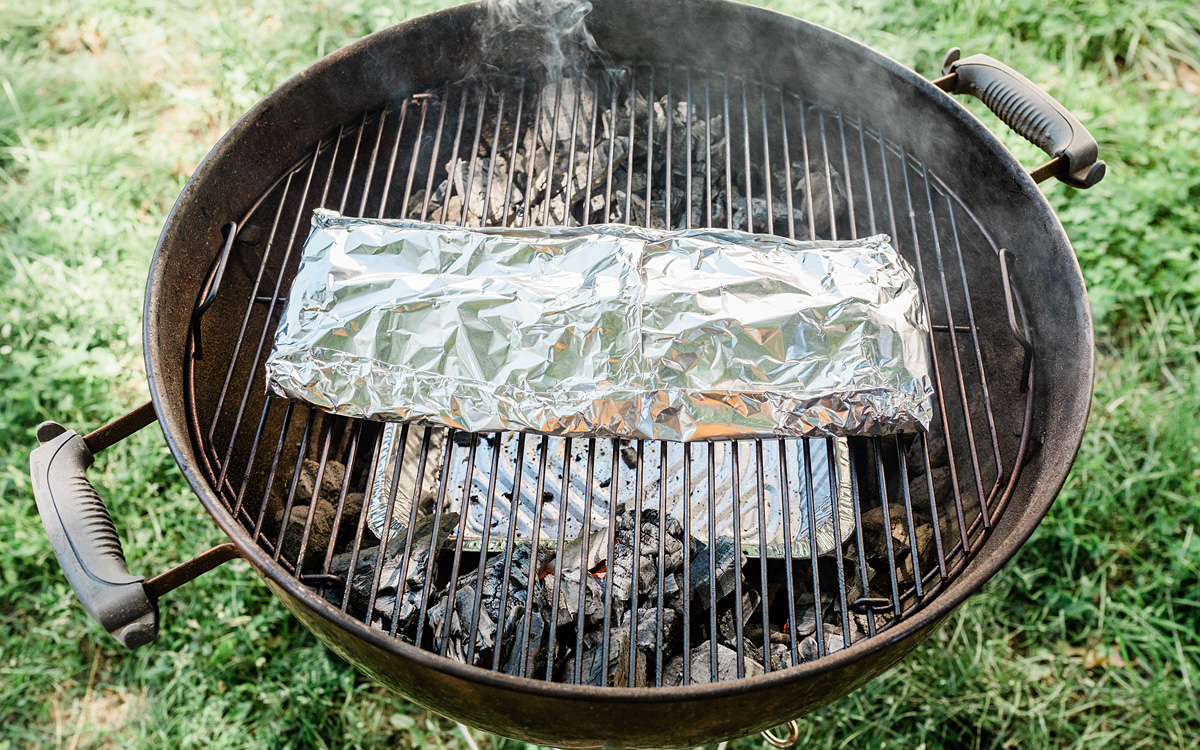
  • For each rack of ribs, tear off a rectangle of heavy-duty aluminum foil large enough to completely enclose the ribs. Quickly remove the ribs from the smoker or grill and replace the lid to avoid heat loss. Place each rack, meat side down, on a piece of aluminum foil and bring up the sides. If desired, pour 1/4 cup of apple cider, beer, ale, or other flavorful liquid on top of the bones and dot with thin slices of butter. Bring the edges of the foil together and fold to make a tight package. Return to the smoker or grill and cook for 1 hour. (You no longer need to add smoking chips or chunks to the fire.)

    3-1-1 Barbecued Spare Ribs

  • Remove the ribs from the smoker or grill. (Again, work quickly to maintain cooking temperatures.) Carefully open the foil package; wear heatproof food gloves to avoid steam burns. Insert a toothpick between the bones in the thickest part of the meat; it should penetrate fairly easily. Using tongs, lift the ribs from the foil. Discard the foil. Reserve the juices, if desired, and boil down to make a glaze. Don’t bother if you’re only doing 1 or 2 racks.

  • If desired, dust the ribs lightly with more rub. Return to the smoker or grill, meat side up, or to the grill rack. Cover and continue to cook for 1 hour. Again, insert a toothpick between the bones to test for doneness. If the toothpick doesn’t penetrate easily, continue to cook until it does, testing at 15-minute intervals. (Another test for doneness requires you to lift the rack of ribs up by one end. If it begins to bend and form a shreddy crack between the middle bones, the ribs are tender.) If you made a glaze, apply it now. I like to serve barbecue sauce on the side. But you can apply it the last 30 minutes of the cook or sizzle it in over a hotter grill for the last 5 minutes. Please note that sweeter sauces burn easily, so watch them carefully.

St. Louis Ribs at Barbecue University

Bottom line? The success of ribs, like brisket or pork shoulder, still depends on human intuition. Use the above formulas as guidelines, recognizing that a particular rack of ribs might need more or less time on the grill. Be flexible. If the ribs are done before your guests arrive, loosely wrap them in foil and stow in an insulated cooler until serving time. If the ribs need more time, have some interesting grilled appetizers at the ready.

Do you have a fail-safe method for barbecuing ribs? Please share it with us on social media!

Related Reads

Check out our 1000+ Recipes section here on Barbecue Bible.Com

Also, sign up for our Up in Smoke newsletter so you don't miss any blogs and receive some special offers! PLUS get Raichlen's Burgers! PDF for free!

Follow Steven on Facebook, Instagram, YouTube, TikTok, Reddit, and Pinterest!

Check out our store powered by BBQGuys!

The post 3-2-1 Ribs Revisited: Is It Time for New Math? appeared first on Barbecuebible.com.

Hot Honey Ribs

Hot Honey Ribs

These Smoked Hot Honey Ribs are next-level BBQ! The spare ribs are coated with hot sauce and hot rub, then smoked low and slow over hickory wood and wrapped with a buttery, sweet & Hot Honey Sauce for an irresistible bite. If you love your bbq sweet with a little heat, these ribs will make do the rib dance!

WHAT MALCOM USED IN THIS RECIPE

Print

Hot Honey Ribs


5 Stars 4 Stars 3 Stars 2 Stars 1 Star

No reviews

Description

A little sweet… a little savory… and a kick of spice. These Hot Honey ribs are not only beautiful, they are down-right delicious1


Ingredients

For the Rib Wrap:

  • 1 cup light brown sugar
  • 10oz apple juice
  • 1/4 cup Mike’s Hot Honey
  • 1/4 cup Killer Hogs Vinegar Sauce
  • 3 sticks salted butter (split in half lengthwise)

For the Rib Glaze:


Instructions

  1. Trim ribs and remove membrane. Apply light coat of hot sauce for a binder and season well with Killer Hogs Hot Rub.
  2. Prepare pit for smoking at 275°F using hickory wood for smoke flavor. I used my Outlaw stick burner pit but any smoker/indirect grilll will work just keep the temp steady at 275°F.
  3. Place the ribs on the pit and smoke for 2 hours. Spritz with water if the outside starts to look dry after an hour in the smoke.
  4. Make the rib wrap liquid – combine brown sugar, apple juice, hot honey, and vinegar sauce in a glass measuring cup. Microwave for 3 1/2 minutes and allow to cool at room temp.
  5. To wrap the ribs remove each slab from the pit; use a double layer of aluminum foil; place the ribs meat side down on the foil, add 1/2 cup of wrap liquid to each slab; place 1 stick of the butter over the top; and close the foil around the ribs.
  6. Place the ribs back on the pit and cook for 1 1/2 hours or until tender. Internal temp should be around 202-205°F.
  7. Rest the ribs in a dry cooler for 1 hour before glazing.
  8. To glaze: place each rack on a foil covered raised cooling rack meat side down; dust with a little Hot Rub and place back on the pit for 5 minutes; brush with The BBQ Sauce and cook for 7 additional minutes. Flip the ribs over and dust the meat side with Hot Rub and return to the pit for 5 minutes. Brush the meat side with The BBQ Sauce and drizzle with Hot Honey; blend the honey in with the bbq sauce and return to the pit for 7 additional minutes to set.
  9. Cut the slabs into individual bone pieces and serve.

Malcom Reed
Connect on Facebook
Follow me on TikTok
Subscribe to my YouTube Channel
Follow me on Instagram

Buy Killer Hogs Products Here

The post Hot Honey Ribs appeared first on HowToBBBQRight.

Charcoal Grilled Ribs

Charcoal Grilled Ribs

If you love your ribs to have a grill flavor – this is the recipe for you! They cook fast, they stay juicy and the flavor is better than the best grilled pork chop you’ve ever had. Plus you can get creative with this one – use whatever rubs you like, use whatever mop you like and just get to burning and turning some ribs!


WHAT MALCOM USED IN THIS RECIPE:


Print

Charcoal Grilled Ribs


5 Stars 4 Stars 3 Stars 2 Stars 1 Star

No reviews

Description

This method cooks some FIRE ribs really fast. We use the charcoal and the grill to impart some serious flavor – and we baste the ribs the entire cook so they come out juicy, tender and oh so delicious!


Ingredients

  • 2 slabs St. Louis Cut Spare Ribs
  • 1/4 cup Killer Hogs Hot Rub
  • 28oz apple cider vinegar
  • 1/4 cup fine sea salt (feel free to add less salt to suite your taste)
  • 1/4 cup ground cayenne pepper
  • juice from one lemon

Instructions

  1. Trim the excess fat and remove the membrane from each slab of ribs.
  2. Season the ribs on both sides with a light coat of Killer Hogs Hot Rub.
  3. Prepare a charcoal grill for 2 zone cooking at 300°F.
  4. Place the ribs over the direct heat side of the grill – the cool zone is just in case you need to get them away from the fire. These ribs cook over the direct heat side the entire cook.
  5. Combine the vinegar, salt, cayenne pepper, and lemon juice in a quart mason jar. Shake it well.
  6. Flip the ribs every ten minutes keeping the grilll temperature steady at 300°F.
  7. Once the outside begins to dry out start mopping with the basting liquid using a bbq mop.
  8.  Continue to flip and mop until the internal temperature reaches 198-200°F.
  9. Move the ribs over to the indirect heat side for 5-10 minutes.
  10. Cut the ribs into individual bone pieces and serve with additional mopping sauce for dabbing.

Malcom Reed
Connect on Facebook
Follow me on TikTok
Subscribe to my YouTube Channel
Follow me on Instagram

Buy Killer Hogs Products Here

The post Charcoal Grilled Ribs appeared first on HowToBBBQRight.

Beef Flanken Ribs

Beef Flanken Ribs

Flanken Ribs have a rich, beef flavor – and when you take the time to marinade them and then chargrill them directly over hot coals, you get a delicious bite of beefy goodness!

For this recipe I went with an Asian inspired marinade… but you could go with any flavors. You could glaze them with a sauce at the end… get real creative with this recipe.


WHAT MALCOM USED IN THIS RECIPE:

Print
Beef Flaken Ribs

Beef Flanken Ribs


5 Stars 4 Stars 3 Stars 2 Stars 1 Star

No reviews

Description

Grilled Beef Flaken Ribs – Flaken Ribs have a rich, beef flavor – and when you take the time to marinade them and then chargrill them directly over hot coals, you get a delicious bite of beefy goodness!


Ingredients

  • 4lbs flanken-cut beef ribs
  • 1 bunch green onions – chopped divide the green and white parts
  • 2 heaping teaspoons minced garlic
  • 2 teaspoons minced ginger
  • 1/4 cup soy sauce
  • 1/4 cup worcestershire sauce
  • 1/8 cup balsamic vinegar
  • 2 Tablespoons Hoisin sauce
  • 1 Tablespoon Killer Hogs TX Rub

Instructions

  1. Place the white parts of the onion in a mixing bowl and add: minced garlic, ginger, soy, worcestershire, balsamic vinegar, hoisin, and TX. Stir to combine.
  2. Add the beef flanken cut ribs to a large ziplock bag and pour in the marinade. Squeeze the air out of the bag and gently toss the ribs around so everything is coated in the marinade. Place the bag in the refrigerator for at least an hour.
  3. Prepare a grill for 2 zone cooking – hot side and cool side. Grill the ribs over the direct heat zone (hot side) of the grill. Work in batches so the grill isn’t over crowded. Cook the ribs on each side until they begin to char about 3-4 minutes each side. Then move them over to the cool zone until all of the ribs are char-grilled.
  4. Place the ribs on a foil lined baking sheet, wrap the foil around the top to seal off the heat, and rest the ribs for 20-30 minutes.
  5. To serve place the ribs on a large cutting board or platter and top with the green tops of the onions.

Malcom Reed
Connect on Facebook
Follow me on TikTok
Subscribe to my YouTube Channel
Follow me on Instagram

Buy Killer Hogs Products Here

The post Beef Flanken Ribs appeared first on HowToBBBQRight.

Gas Grill Ribs

Gas Grill Ribs

If all you have is a gas grill, you can still cook some mighty fine ribs!


WHAT MALCOM USED IN THIS RECIPE:


For this recipe I kept the flavors pretty simple, used a “smoke bomb” to add even more flavor and finished these 2 slabs of baby backs “dry” instead of glazing a sauce on at the end.

Print

gas grill ribs

Gas Grill Ribs


5 Stars 4 Stars 3 Stars 2 Stars 1 Star

No reviews

Description

Baby Back ribs seasoned simply and cooked on a propane grill (with a smoke bomb for added flavor). These ribs turned out juicy, tender and you can really taste the pork!


Ingredients

For the wrap:


Instructions

  1. Apply a thin line of mustard to each rack of ribs and season with the AP Seasoning and The BBQ Rub on all sides.
  2. Fire up a gas grill adjusting the burners so the grill temperature is 250-275 degrees. Make a smoke bomb by adding wood chips to a small pan, cover it with foil, and poke holes in the foil. Place the pan to one side of the grill centered over a burner.
  3. Place the ribs on the grill and cook for one hour, flip the ribs over for even grilling and continue to cook for another hour.
  4. Wrap the ribs in a double layer of aluminum foil – add a little extra dry rub, zero sauce, and a splash of apple juice to the wrap.
  5. Return the ribs to the grill and cook meat side down until the internal temperature reaches at least 202 degrees between the bones. It should take about an hour.
  6. Carefully take the ribs out of the wrap and place back on the cooking grate. Season with additional dry rub. Cook for 30 additional minutes to set the bark at this point you can sauce the ribs for a “wet style” or serve them dry.


Malcom Reed
Connect on Facebook
Follow me on TikTok
Subscribe to my YouTube Channel
Follow me on Instagram

Buy Killer Hogs Products Here

The post Gas Grill Ribs appeared first on HowToBBBQRight.

Caveman Beef Ribs

  Caveman Beef Ribs, good, meaty beef ribs are almost impossible to find. For years all I have ever seen are racks of bone with most of the meat trimmed away. We were out looking for beef short ribs and Juan Carlos the meat manager at the El Toro market showed us these. He cuts […]

Country Ribs Texas Style

  Country Ribs Texas Style, we love ribs in any form. These are also known as country strips. They were thick and meaty with a bone in (Patti’s preference), but they also come boneless. Either way is just right seasoned with Briggs True Texas Seasoning and thickly basted with Briggs True Bourbon Bacon Barbeque Sauce […]

Honey Jalapeño Ribs

Honey Jalapeno Ribs

Honey Jalapeño Ribs

Smoked Ribs with a Honey Jalapeño Glaze WHAT MALCOM USED IN THIS RECIPE: Print
Honey Jalapeño Ribs

Honey Jalapeño Ribs


Description

Ribs with a Honey Jalapeño Glaze smoked on the new Traeger Timberline XL


Ingredients

Honey Jalapeno Rib Glaze Recipe:


Instructions

  1. Prepare Traeger grill for indirect smoking at 225°F using signature blend pellets.
  2. Season ribs on both sides with garlic jalapeño rub and Killer Hogs The BBQ Rub.
  3. Smoke ribs for 2 1/2 hours on pellet grill, remove from grill and place on a sheet of aluminum foil.
  4. Wrap the ribs with: pats of butter, Mike’s Hot Honey and sweet fire pickle juice.
  5. Place the wrapped ribs back on the Traeger and increase the grill temperature to 275 degrees. Continue to cook the ribs until internal temperature reaches 200 degrees between the rib bones.
  6. Carefully unwrap the ribs and glaze on both sides with honey jalapeño rib glaze recipe below. Return the ribs to the grill for 10-15 minutes to set the glaze.
  7. Cut into individual portions and serve.
  8. For The Honey Jalapeno Rib Glaze Recipe: In a small pot over medium heat, sauté the slices of fresh jalapeño in butter until soft. Add in the brown sugar, honey, and vinegar sauce. Stir to combine. Once sauce hits a light boil, reduce heat to simmer and continue to cook for 10-15 minutes until sauce has thickened. Transfer to glass jar and cool to room temperature. Can be stored in the refrigerator for 1 week.

Keywords: Honey Jalapeno Ribs, honey jalapeno bbq ribs recipe, smoked bbq ribs, jalapeno bbq ribs, jalapeno ribs, jalapeno honey ribs, jalapeno honey bbq sauce

Malcom Reed
Connect on Facebook
Follow me on TikTok
Subscribe to my YouTube Channel
Follow me on Instagram

Have a Question About This Recipe?

Connect with us in our HowToBBQRight Facebook group for recipe help, to share your pictures, giveaways, and more!

The post Honey Jalapeño Ribs appeared first on HowToBBBQRight.

❌