Reading view

There are new articles available, click to refresh the page.

Epoch Ventures Predicts Bitcoin Hits $150K in 2026, Declares End of 4-Year Halving Cycle

By: Juan Galt

Bitcoin Magazine

Epoch Ventures Predicts Bitcoin Hits $150K in 2026, Declares End of 4-Year Halving Cycle

Epoch, a venture firm specializing in Bitcoin infrastructure, issued its second annual ecosystem report on January 21, 2026, forecasting robust growth for the asset despite a subdued 2025 performance.

The 186-page document analyzes Bitcoin’s price dynamics, adoption trends, regulatory outlook, and technological risks, positioning the cryptocurrency as a maturing monetary system. Key highlights include a prediction that Bitcoin will reach at least $150,000 USD by year-end, driven by institutional inflows and decoupling from equities. The report also anticipates the Clarity Act failing to pass, though its substance on asset taxonomy and regulatory authority may advance through SEC guidance. Additional forecasts cover gold rotations boosting Bitcoin by 50 percent, major asset managers allocating 2 percent to model portfolios, and Bitcoin Core maintaining implementation dominance.

Eric Yakes, CFA charterholder and managing partner at Epoch Ventures, brings over a decade of finance expertise to the Bitcoin space, having started his career in corporate finance and restructuring at FTI Consulting before advancing to private equity at Lion Equity Partners, where he focused on buyouts. He left traditional finance in recent years to immerse himself in Bitcoin, authoring the influential book “The 7th Property: Bitcoin and the Monetary Revolution,” which explores Bitcoin’s role as a transformative monetary asset, and has since written extensively on its technologies and ecosystem. Yakes holds a double major in finance and economics from Creighton University, positioning him as a key voice in Bitcoin venture capital through Epoch, a firm dedicated to funding Bitcoin infrastructure.

The Death of the Four-Year Cycle
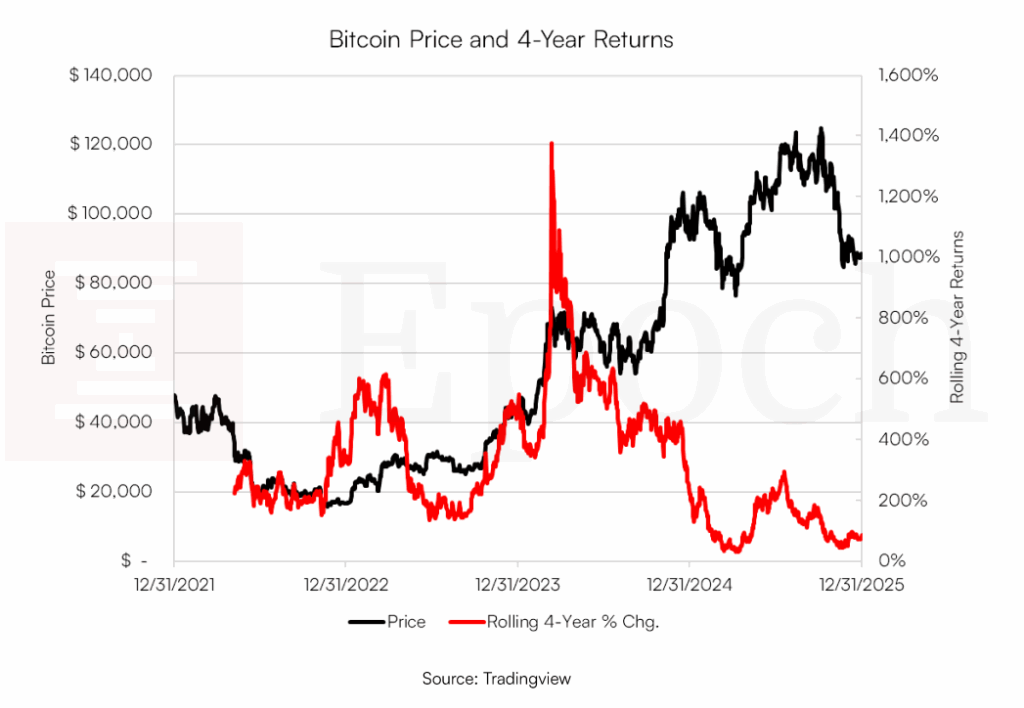
Bitcoin closed 2025 at $87,500, marking a 6 percent annual decline but an 84 percent four-year gain that ranks in the bottom 3 percent historically. The report states the death of the 4-year cycle in no uncertain terms: “We believe cycle theory is a relic of the past, and the cycles themselves probably never existed. The fact is that Bitcoin is boring and growing gradually now. We make the case for why gradual growth is precisely what will drive a ‘gradually, then suddenly’ moment.” 
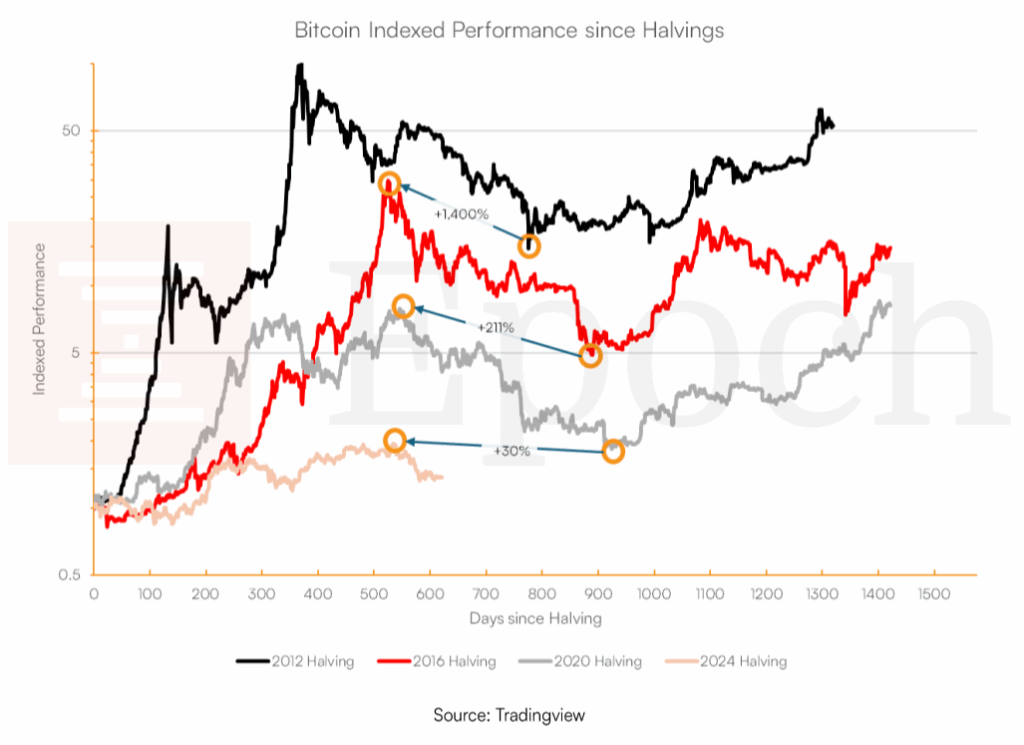
The report goes on to discuss cycle theory in depth, presenting a view of the future that’s becoming the new market expectation: less volatility to the downside, slow and steady growth to the upside. 

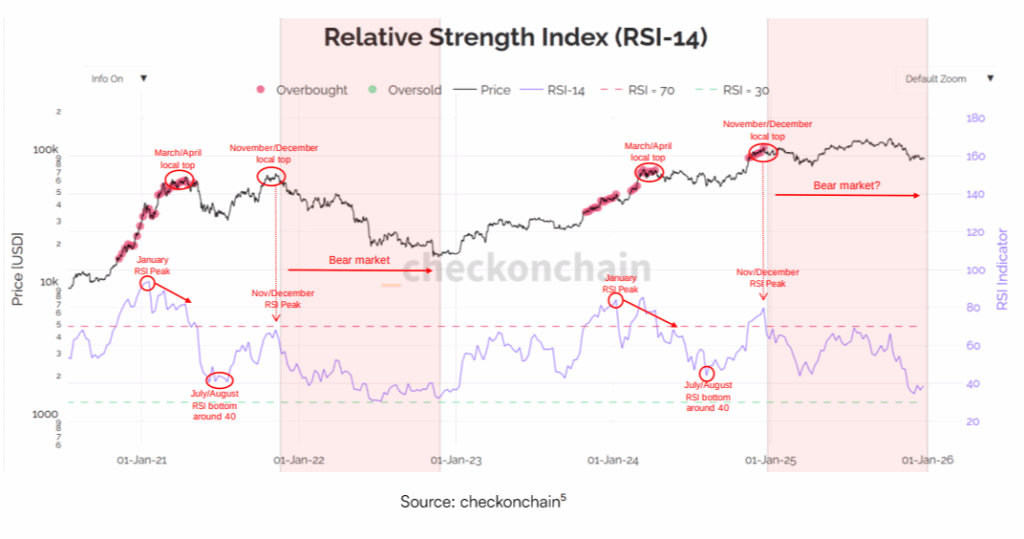
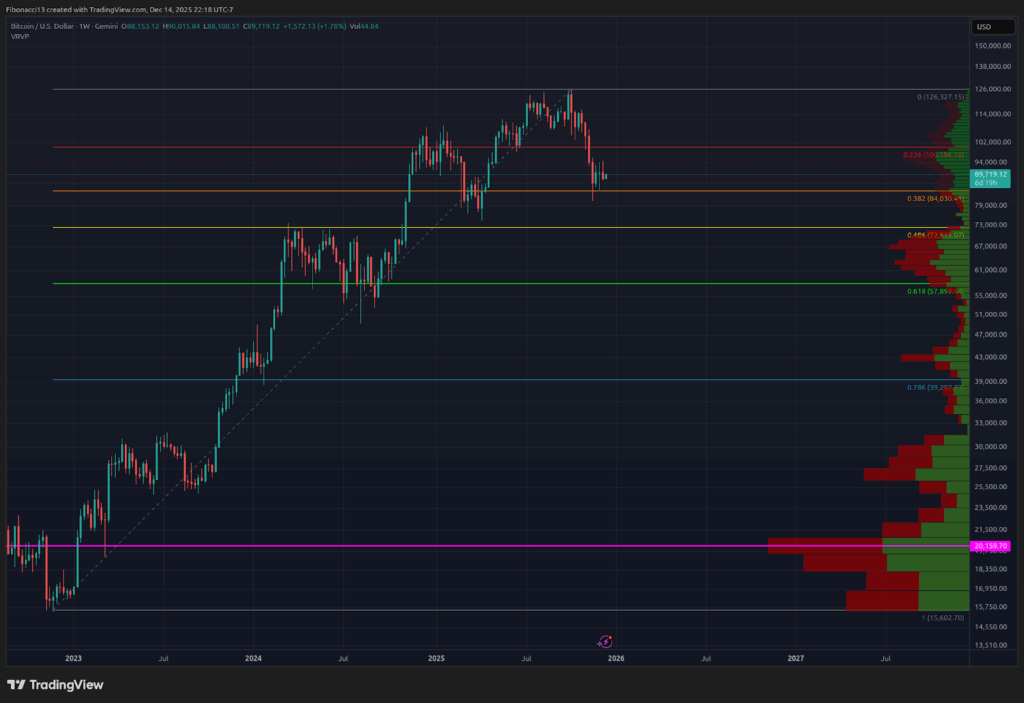
Price action suggests a new bull market commenced in 2026, with 2025’s drop from $126,000 to $81,000 potentially being a self-fulfilling prophecy due to cycle expectations, as RSI remained below overbought since late 2024, suggesting bitcoin already went through a bear market and we are commencing a new kind of cycle. 
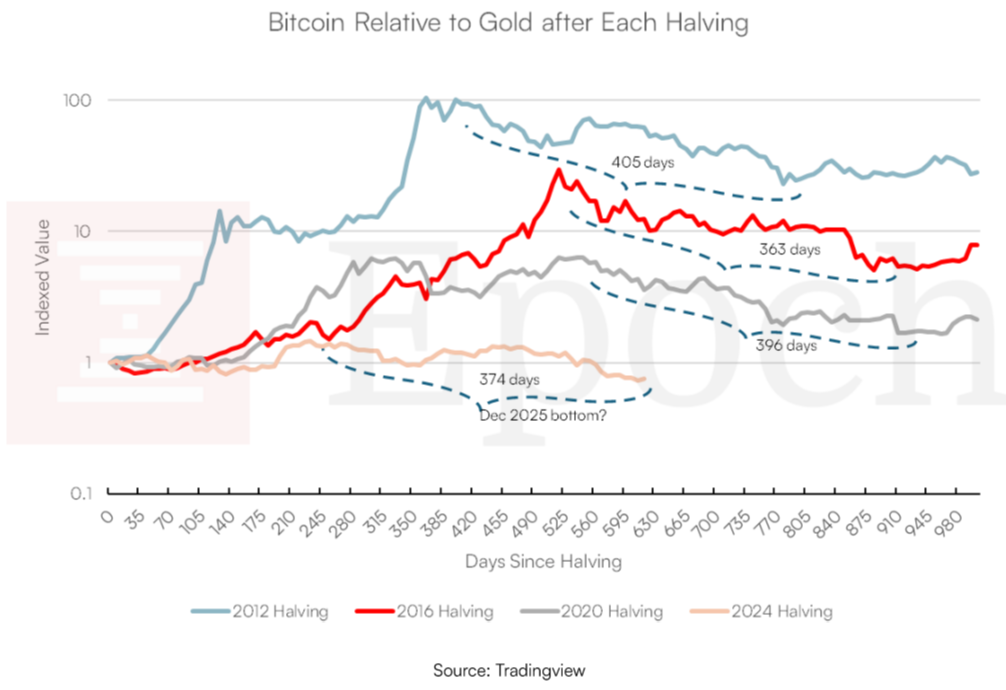
Versus gold, Bitcoin is down 49 percent from its highs, in a bear market since December 2024. Gold’s meteoric rise presents a potential price catalyst for bitcoin; a small rebalancing reallocation from gold of 0.5% would induce greater inflows than the U.S. ETFs; at 5.5%, it would equal bitcoin’s market capitalization. Gold’s rise makes bitcoin more attractive on a relative basis, and the higher gold goes, the more likely a rotation into bitcoin. Timing analysis, as seen in the chart below, which counts days from the local top, suggests Bitcoin might be nearing a bottom versus Gold.
In terms of volatility bitcoin has aligned with mega-caps like Tesla, with 2025 averages for Nasdaq 100 leaders exceeding Bitcoin’s, suggesting a risk-asset decoupling and limiting drawdowns. Long-term stock correlations persist, but maturing credit markets and safe-haven narratives may pivot Bitcoin toward gold-like behavior. 

The report goes in-depth into other potential catalysts for 2026, defending its bullish thesis, such as:

  • Consistent ETF Inflows
  • Nation State Adoption
  • Mega-cap Companies Allocating to Bitcoin
  • Wealth Managers Allocating Clients
  • Inheritance Allocation

FUD, Sentiment and Media Analysis
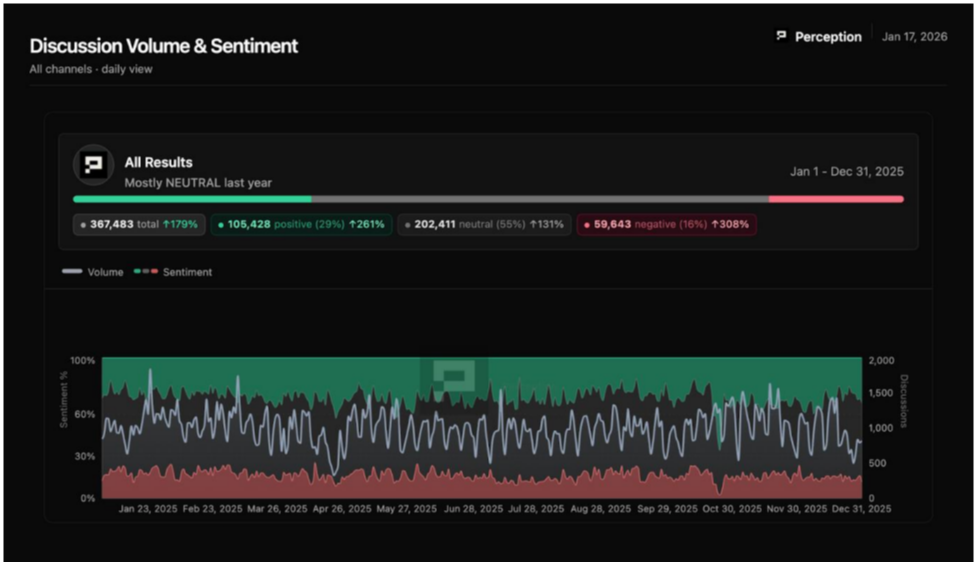
Analysis of 356,423 datapoints from 653 sources reveals a fractured sentiment landscape, with “Bitcoin is dead” narratives concluded. FUD is stable at 12-18 percent but the topics rotate, crime and legal themes are up 277 percent, while environmental FUD is down 41 percent.

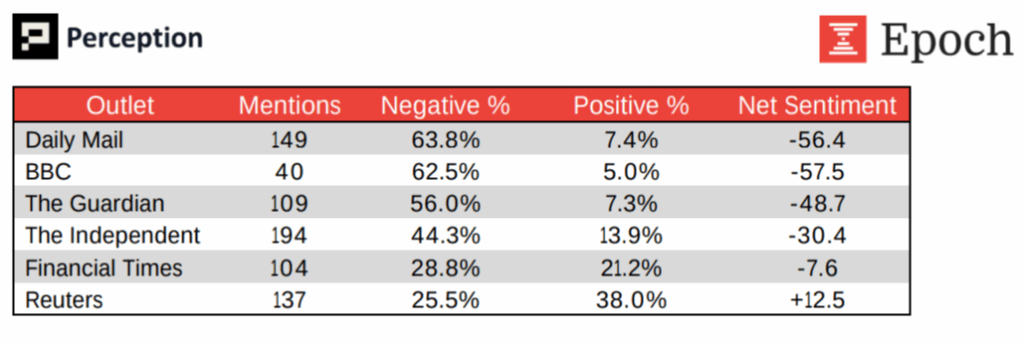
A 125-point perception gap exists between conference attendees (+90 positive) while tech media is generally negative at (-35). UK outlets show 56-64 percent negativity, 2-3 times international averages. 
The Lightning Network coverage dominates podcasts at 33 percent but garners only 0.28 percent mainstream coverage, a 119x disparity. Layer 2 solutions are not zero-sum, with Lightning at 58 percent mentions and Ark up 154 percent.

Media framing has caused mining sentiment to swing 67 points: mainstream outlets cover the sector at 75.6 percent positive, while Bitcoin communities view it at only 8.4 percent positive, underscoring the importance of narrative and audience credibility for mining companies.

Bitcoin Treasury Companies

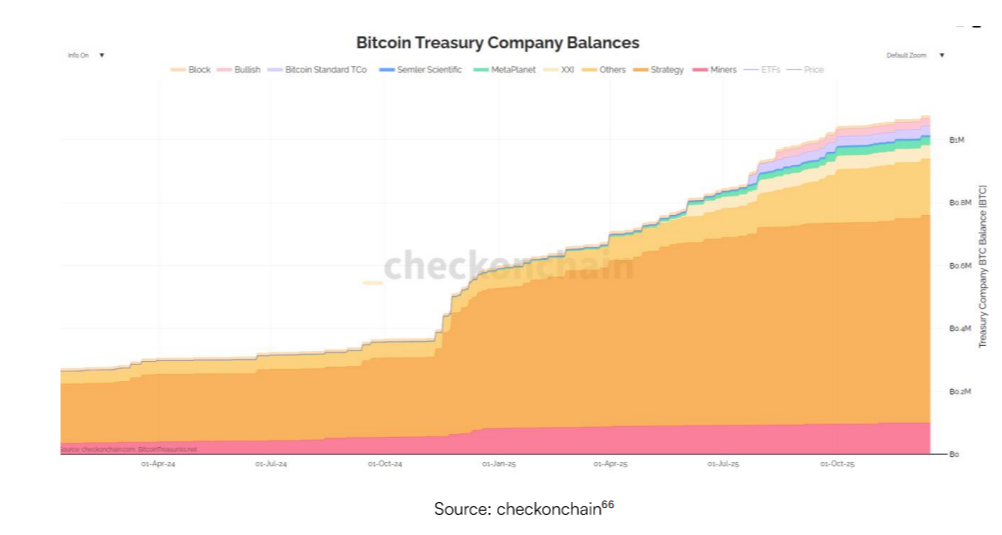
More companies added Bitcoin to their balance sheets in 2025 than in any previous year, marking a major step in corporate adoption. Established firms that already held Bitcoin—known as Bitcoin treasury companies, or BtcTCs—bought even larger amounts, while new entrants went public specifically to raise money and purchase Bitcoin. According to the report, public company bitcoin holdings increased 82% y/y to ₿1.08 million and the number of public companies holding bitcoin grew from 69 to over 191 throughout 2025.65 Corporations own at least 6.4% of total Bitcoin supply – public companies 5.1% and private companies 1.3%. This created a clear boom-and-bust pattern throughout the year.

Company valuations rose sharply through mid-2025 before pulling back when the broader Bitcoin price corrected. The report explains that these public treasury companies offer investors easier access through traditional brokers, the ability to borrow against holdings, and even dividend payments, though with dilution risks. In contrast, buying and holding Bitcoin directly remains simpler and preserves the asset’s full scarcity.
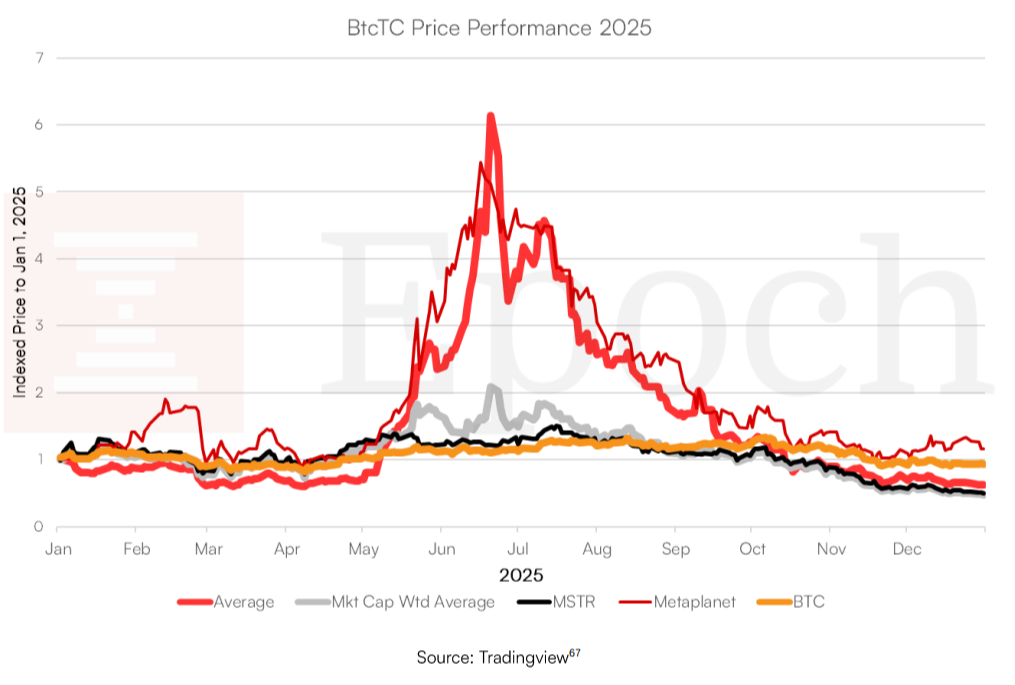
Looking ahead, Epoch expects Japan’s Metaplanet to post the highest multiple on net asset value (mNAV)—a key valuation metric—among all treasury companies with a market cap above $1 billion. The firm also predicts that an activist investor or rival company will force the liquidation of one underperforming treasury firm to capture the discount between its share price and the actual value of its Bitcoin holdings. 

Over time, these companies will stand out by offering competitive yields on their Bitcoin. In total, treasury companies acquired roughly 486,000 BTC during 2025, equal to 2.3 percent of the entire Bitcoin supply, drawing further corporate interest in Bitcoin. For business owners considering a Bitcoin treasury, the report highlights both the growth potential and the risks of public-market volatility.

The Bitcoin Treasury Companies section of the report explores: 

  • The fundamentals of a Bitcoin treasury allocation including the potential benefits and risks of Bitcoin treasury company investing. 
  • The 2025 timeline of Bitcoin Treasury companies. 
  • Current valuations of BtcTCs. 
  • Our opinion on BtcTCs broadly, and how we view them compared to owning Bitcoin directly. 
  • Commentary on specific BtcTCs. 
  • Predictions on Bitcoin treasury companies in the coming years. 

Regulation Expectations for 2026

Epoch predicts the Clarity Act—a proposed bill to clarify digital asset oversight by dividing authority between the SEC and CFTC—will not pass Congress in 2026. However, the report expects the bill’s main ideas, including clear definitions for asset categories and regulatory jurisdiction, to advance through SEC rulemaking or guidance instead. The firm also forecasts Republican losses in the midterm elections, which could trigger new regulatory pressure on crypto, most likely in the form of consumer protection measures aimed at perceived industry risks. On high-profile legal cases, Epoch does not expect pardons for the founders of Samurai Wallet or Tornado Cash this year, though future legal appeals or related proceedings may ultimately support their defenses. 

The report takes a critical view of recent legislative efforts, arguing that bills like the GENIUS Act (focused on stablecoins) and the Clarity Act prioritize industry lobbying over the concerns of everyday Bitcoin users, especially the ability to hold and control assets directly without third-party interference (self-custody). 
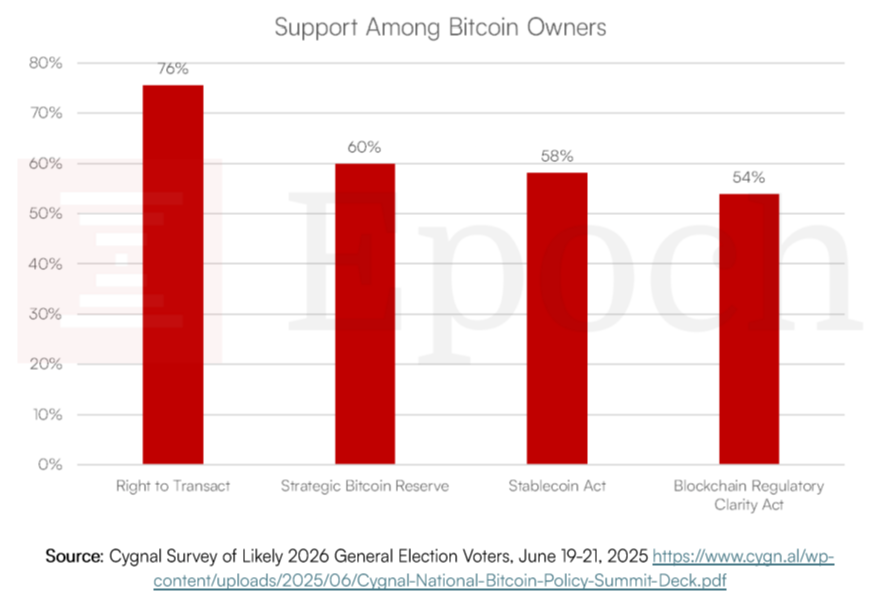
The report points out a discrepancy between what crypto-owning voters want — a majority preferring above all, the right to transact. While the Clarity and Genius Acts focus on less popular special interests, they just fall within the 50% support range. Epoch warns that “This deviation between the will of the voters and the will of the largest industry players is an early warning sign of the potential harm from regulatory capture (intentional or otherwise)”.  

The report is particularly critical of the way the GENIUS Act set up the regulatory structure for stablecoins. The paragraph on the topic is so poignant that it merits being printed in its entirety:

“Meet the new boss, same as the old boss:

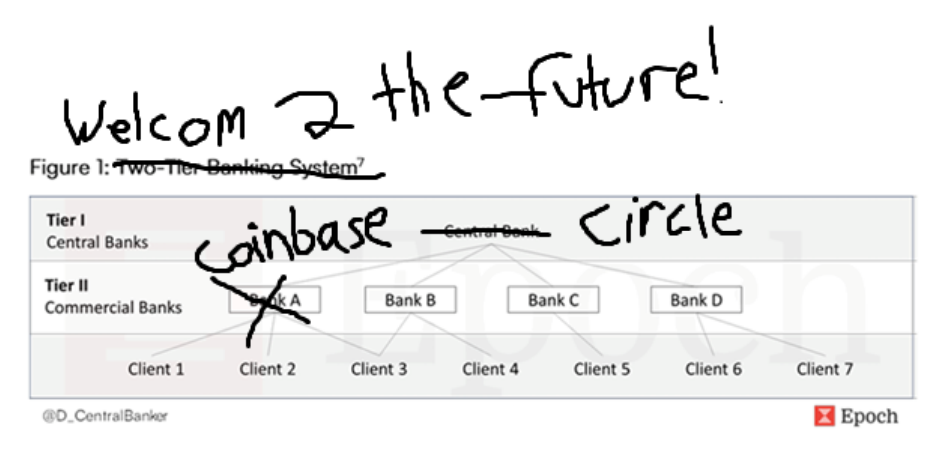
Last year, in our Bitcoin Banking Report, we discussed the structure of the 2-tier banking system in the US (see figure below). In this system, the Central Bank pays a yield on the deposits it receives from the Tier II Commercial banks, who then go on to share a portion of that yield with their depositors. Sound familiar?

The compromise structure in the GENIUS Act essentially creates a parallel banking system where stablecoin issuers play the role of Tier I Central Banks and the crypto exchanges play the role of Tier II Commercial Banks. 

To make matters worse, stablecoin issuers are required to keep their reserves with regulated Tier II banks and are unlikely to have access to Fed Master accounts. The upshot of all this is that the GENIUS act converts a peer-to-peer payment mechanism into a heavily intermediated payment network that sits on top of another heavily intermediate payment network.”
The report goes into further depth on topics of regulation and regulatory capture risk, closing the topic with an analysis of how the CLARITY Act might and, in their opinion, should take shape. 

Quantum Computing Risk

Concerns about quantum computing potentially breaking Bitcoin’s cryptography surfaced prominently in late 2025, in part contributing to institutional sell-offs as investors reacted to headlines about rapid advances in the field. The Epoch report attributes much of this reaction to behavioral biases, including loss aversion—where people fear losses more than they value equivalent gains—and herd mentality, in which market participants follow the crowd without independent assessment. The authors describe the perceived threat as significantly overhyped, noting that claims of exponential progress in quantum capabilities, often tied to “Neven’s Law,” lack solid observational evidence to date.

“Neven’s law states that the computational power of quantum computers increases at a double exponential rate of classical computers. If true, the timeline to break Bitcoin’s cryptography could be as short as 5 years. 

However, Moore’s law was an observation. Neven’s law is not an observation because logical qubits are not increasing at such a rate. 

Neven’s law is an expectation of experts. Based on our understanding of expert opinion in the fields we are knowledgeable about, we are highly skeptical of expert projections,” the Epoch report explained.

They add that current quantum computers have not succeeded in factoring numbers larger than 15, and error rates increase exponentially with scale, making reliable large-scale computation far from practical. The report argues that progress in physical qubits has not yet translated into the logical qubits or error-corrected systems needed for factorization of the large numbers underpinning Bitcoin’s security.

Implementing quantum-resistant signatures prematurely — which do exist — would introduce inefficiencies, consuming more block space on the network, while emerging schemes remain untested in real-world conditions. Until meaningful advances in factorization occur, Epoch concludes the quantum threat does not warrant immediate priority or network changes.

Mining Expectations

The report forecasts that no company among the top ten public Bitcoin miners will generate more than 30 percent of its revenue from AI computing services during the 2026 fiscal year. This outcome stems from significant delays in the development and deployment of the necessary infrastructure for large-scale AI workloads, preventing miners from pivoting as quickly as some market narratives suggested.

Media coverage of Bitcoin mining shows a stark divide depending on who is framing the discussion. Mainstream outlets tend to portray the industry positively—75.6 percent of coverage is favorable, often emphasizing energy innovation, job creation, or economic benefits—while conversations within Bitcoin communities remain far more skeptical, with only 8.4 percent positive sentiment. This 67-point swing in net positivity highlights how framing and audience shape perceptions of the same sector, with community credibility remaining a critical factor for mining companies seeking to maintain support among Bitcoin holders.

The report has a lot more to offer including analysis of layer two systems and Bitcoin adoption data on multiple fronts, it can be read on Epoch’s website for free. 

This post Epoch Ventures Predicts Bitcoin Hits $150K in 2026, Declares End of 4-Year Halving Cycle first appeared on Bitcoin Magazine and is written by Juan Galt.

Bitcoin Price Outlook: Bulls Eye $98,000 Breakout After Holding $90,000 Zone

Bitcoin Magazine

Bitcoin Price Outlook: Bulls Eye $98,000 Breakout After Holding $90,000 Zone

Bitcoin Price Weekly Outlook

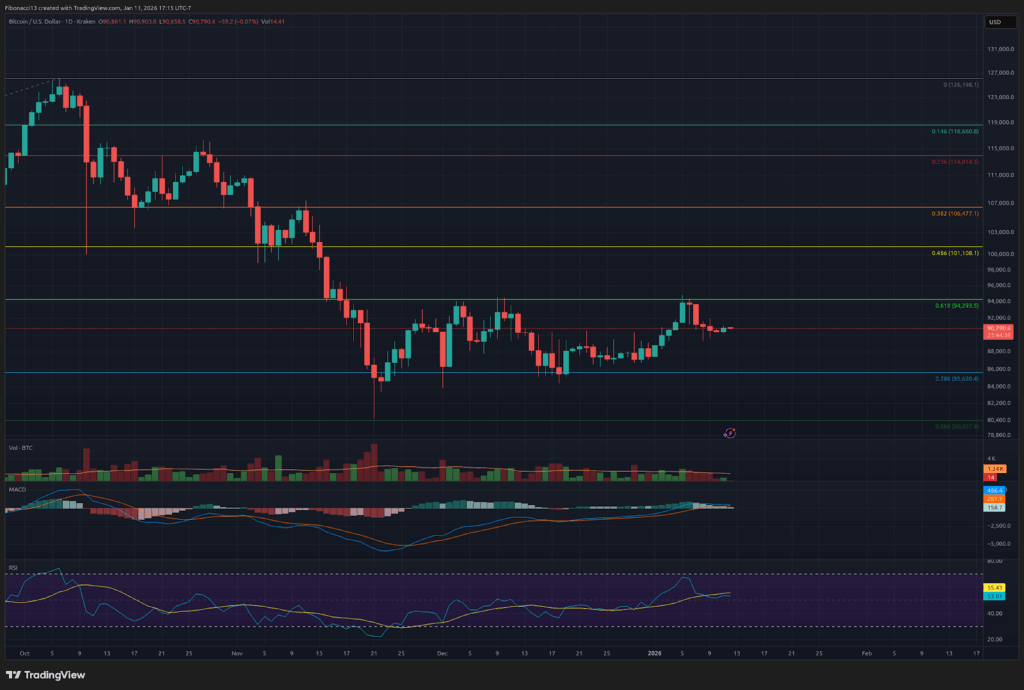
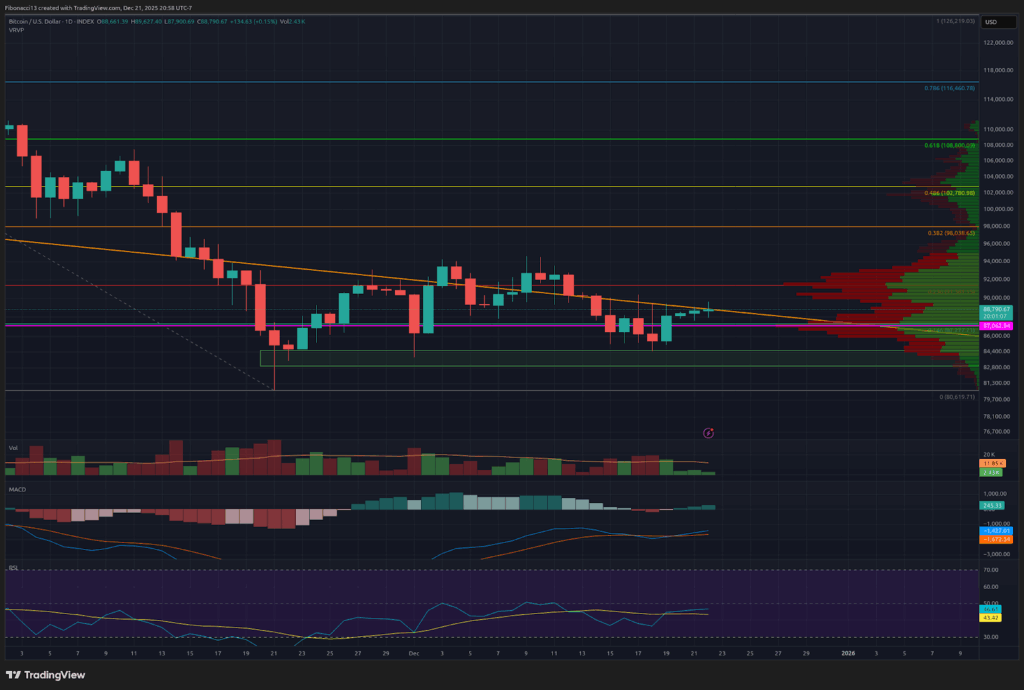
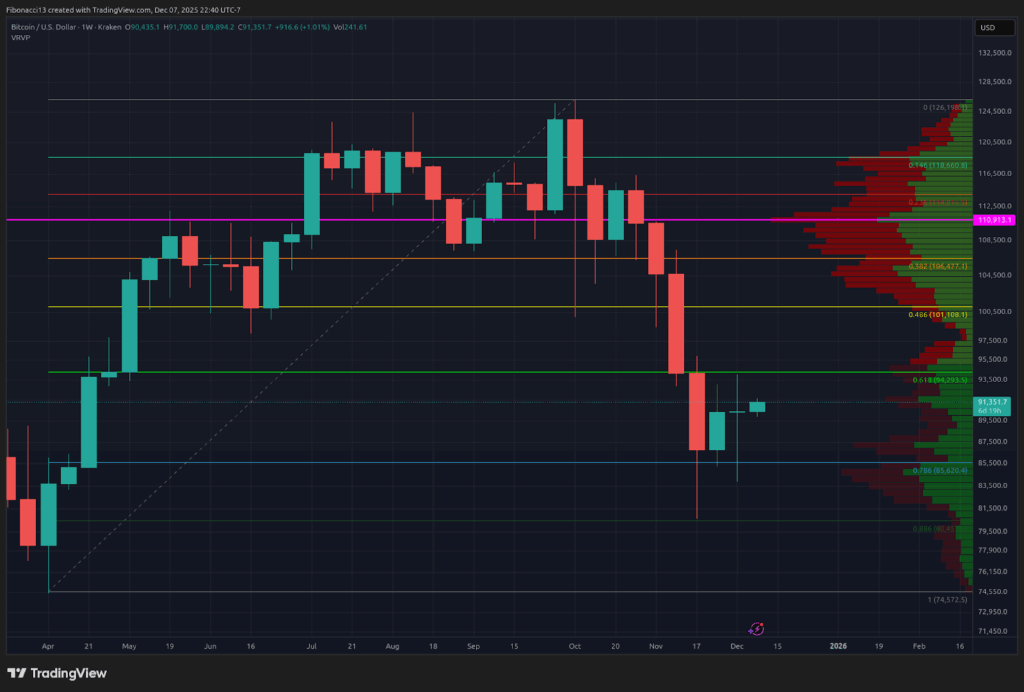
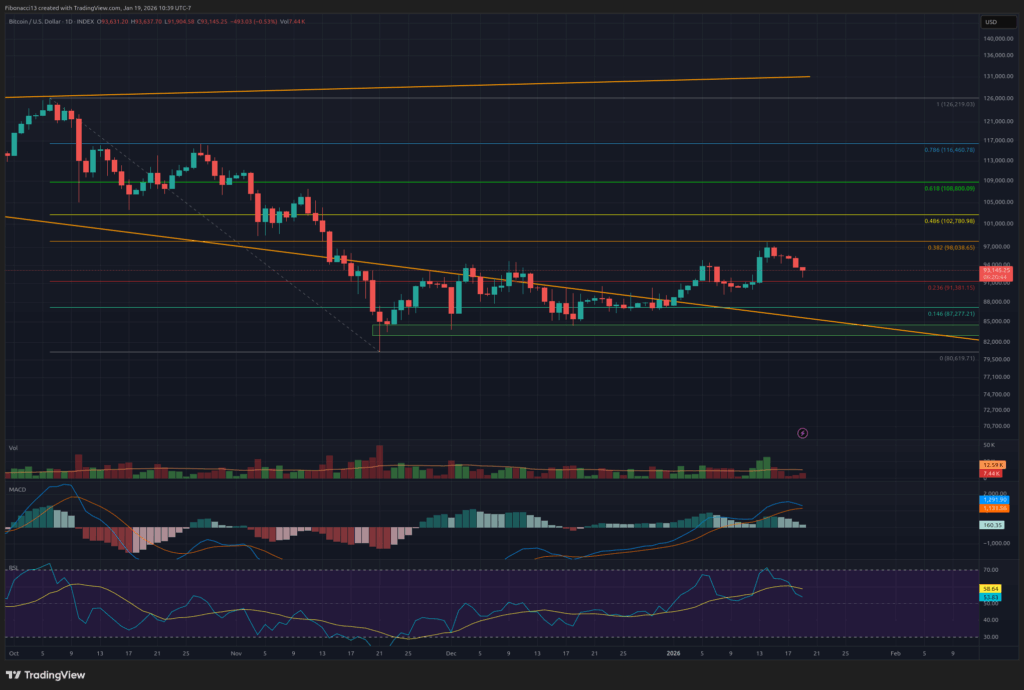
Well, the bitcoin price action was looking quite bearish after last week’s close, but the bulls managed to maintain the bullish structure around the $90,000 level and made that push up to $98,000 resistance. The price retreated from there and closed the week out at $93,638. Expect the bulls to take another run at the $98,000 resistance level this week and aim for the upper end of this resistance zone at $103,500 if they can sustain price action above $98,000. Early in the week, support at $91,400 may be tested and must hold for the bulls to continue their charge.

Key Support and Resistance Levels Now

The bulls have finally made some progress, chipping away at overhead resistance. The bulls will look to regain the $94,000 level as short-term support this week. If they can keep the momentum going, they will once again challenge the $98,000 resistance and try to push to the upper end of this zone at $103,500. Closing days at the upper end of this zone should usher in a move up to the next major resistance zone at $106,000 to $109,000. This area should be very strong resistance, but $116,000 lies beyond this range at the 0.786 Fibonacci retracement if the bulls’ strength can persist.

Look for bulls to defend the $91,400 level with authority, as losing this level would give the bears some renewed confidence to push the price down even lower. $87,000 would look to contain price action below there, and act as a doorway to the major $84,000 support level. Breaking $84,000 support opens up the low $70,000 area for a test.

Outlook For This Week

Bulls should attempt to capitalize on their recent resolve heading into this week. Look for another test of $98,000 if they can manage to regain $94,000 early this week. However, a more bearish test of the $91,400 support is possible here as well, but as long as bulls can hold this level, bullish bias remains, and re-challenging $98,000 is in the cards. Closing a day above $98,000 should lead the price towards $103,500.

Market mood: Slightly Bullish – The bulls finally managed to show some resilience here as they defended the $90,000 area last week. Price action leans in their favor heading into this week.

The next few weeks
The bulls have held onto some momentum over the past week, but they are entering some heavier resistance areas now. If bulls can push even higher, above $100,000, they will start entering an area where we could see a major price reversal. $103,500 to $109,000 should be a tough zone to conquer, and we should not be surprised to see price kicked back down with authority from this area over the coming weeks. Holding support from there would be critical in determining whether this rally can keep going to new highs or if it finally gives way to new lows below $80,000.

Terminology Guide:

Bulls/Bullish: Buyers or investors expecting the price to go higher.

Bears/Bearish: Sellers or investors expecting the price to go lower.

Support or support level: A level at which the price should hold for the asset, at least initially. The more touches on support, the weaker it gets and the more likely it is to fail to hold the price.

Resistance or resistance level: Opposite of support.  The level that is likely to reject the price, at least initially. The more touches at resistance, the weaker it gets and the more likely it is to fail to hold back the price.

Fibonacci Retracements and Extensions: Ratios based on what is known as the golden ratio, a universal ratio pertaining to growth and decay cycles in nature. The golden ratio is based on the constants Phi (1.618) and phi (0.618).

This post Bitcoin Price Outlook: Bulls Eye $98,000 Breakout After Holding $90,000 Zone first appeared on Bitcoin Magazine and is written by Ethan Greene - Feral Analysis and Juan Galt.

Time2Build 2025 Winners: Breez Awards Bitcoin Prizes for Lightning Integrations in BTCPay Server, Primal, and More

By: Juan Galt

Bitcoin Magazine

Time2Build 2025 Winners: Breez Awards Bitcoin Prizes for Lightning Integrations in BTCPay Server, Primal, and More

The Time2Build developer challenge just announced its 2025 winners. It was organized by Breez in collaboration with partners including TetherLightsparkFulgur VenturesPlan ₿ NetworkPlebLabGeyser, and Draper University. The initiative, which ran from October 7 to November 15, 2025 (with a merge period through December 16), focused on integrating self-custodial Lightning Network payments into existing open-source applications using the Breez SDK.

More than 50 developer communities worldwide participated, resulting in a range of plugins, tools, and integrations designed for long-term use rather than one-off demonstrations. The challenge emphasized practical Bitcoin functionality in areas such as merchant payments, social platforms, identity protocols, and Nostr-based applications.

Key trends observed across submissions included:

  • Lightning as an interoperability layer — Developers frequently paired Lightning with protocols like Nostr and Cashu to enable value transfer between systems without altering native designs.
  • Preference for plugins over deep integrations — Participants favored lightweight plugins for content management systems, forums, game engines, and creator tools. This approach allowed faster deployment, independent iteration, and reduced dependence on upstream maintainer approval.

The winners selected by a panel of judges, including Abubakar, Giacomo, Jeff, Kevin, Keyan, Lisa, Roy, and Subash. Prizes were paid in Bitcoin.

$3,500 Prize Winners

BTCPay Server plugin (Team: Aljaz) — The plugin enables Lightning payments on BTCPay Server, the open-source payment processor used by merchants globally, by leveraging the Breez SDK. It eliminates the need for operators to manage a full Lightning node, including channel liquidity, while maintaining self-custodial Bitcoin functionality.

Evento (Team: Brianna, Andre, and Aaliyah) — Lightning was added to Evento, a social events platform for community building. Users can tip participants, support hosts, send/receive sats, and interact with services like Bitrefill purchases directly in the app, enabling peer-to-peer value flow within events.

Portal (Team: Alessandro, Gianluca, Gabriele, and John) — The team integrated the Breez SDK into Portal, a protocol and mobile app for identity and payments. Lightning becomes a native protocol feature, allowing any application built on Portal to inherit send/receive Bitcoin capabilities.

Primal (Team: Daniel) — Lightning was incorporated into the Primal web client, a widely used Nostr application. The Breez SDK provides a self-custodial wallet experience, replacing a previous custodial onboarding process that required KYC and could fail due to location or email restrictions. Onboarding now requires no personal information and completes in approximately one minute.

$1,000 Prize Winners and Special Mentions

Additional $1,000 awards went to projects including:

Special prizes from Draper University and PlebLab recognized additional contributions in education gamification and Nostr-focused wallets. Winners of these special prices were:

  • Lib de Satoshi & B4OS — A community platform that integrated Lightning to gamify education. Rewarded by DraperU.
  • Sparkihonne — A Nostr-focused wallet experience blending identity, messaging, and payments. Rewarded by PlebLab.

Other notable non-winning submissions included Sabi Wallet, Backend for CDK mints, Jumble, Breez MCP Server – Docker Catalog, CoFi Lab, OpNode, and BitNGN.

The challenge demonstrated growing developer interest in embedding Bitcoin payments where users already engage, particularly through plugins and Lightning as a bridging layer. Organizers stated that future development will depend on continued builder participation in areas such as messaging apps, wallets, and new applications.

The Breez team shared their enthusiasm in a press release with Bitcoin Magazine, saying; “For us, the next steps are clear. The era of building has begun. Whether that means adding Bitcoin to messaging apps like Signal, integrating it into leading crypto wallets, or bringing Lightning into entirely new apps with use cases we’ve yet to dream up, we can’t wait to see what you do next. It’s time to build.” 

This post Time2Build 2025 Winners: Breez Awards Bitcoin Prizes for Lightning Integrations in BTCPay Server, Primal, and More first appeared on Bitcoin Magazine and is written by Juan Galt.
The State of Bitcoin Self-Custody in 2026 W/ Casa CEO

By: Juan Galt

Bitcoin Magazine

The State of Bitcoin Self-Custody in 2026 W/ Casa CEO

As Bitcoin enters 2026 with sustained institutional adoption and price stability following the 2024-2025 bull run, self-custody remains a cornerstone of the asset’s sovereignty promise. Yet the landscape has evolved significantly. Spot Bitcoin ETFs have unlocked access to passive investors comfortable with Wall Street’s “trust me, bro” brokerage models, while physical attacks on crypto users have surged to record levels, known as “wrench attacks”. So, is self-custody a thing of the past, a dead meme many of us fell for, or is it transforming as Bitcoin matures? 

In a recent interview with Bitcoin Magazine, Casa CEO Nick Neuman provided a candid perspective of these dynamics, positioning his company’s multisig solutions as a bridge between the vision of pure self-sovereignty and practical usability for high-value holders, tailor-made to deal with modern security challenges and even geopolitical risk. 

Casa, founded in 2018, targets users securing meaningful Bitcoin amounts—typically five figures or more—where financial freedom is more important than convenience. Neuman described Casa’s north star as “maximizing sovereignty and security in the world” through Bitcoin and private key cryptography. In recent years, this has solidified into “building the Swiss bank for the sovereign individual”—a service for those who view money as integral to personal autonomy. 

Bitcoin Magazine has covered the company’s progress extensively throughout the years, including a November 2024 interview with Neuman by Frank Corva and a June 2025 story on its partnership with Swiss platform Relai for multisig security and inheritance planning. 

ETFs and the Promise of Convenience

“Not everyone wants to be a sovereign individual right now,” Neuman noted when discussing the challenges self-custody faces in 2026, pointing to an increasingly obvious reality: Bitcoin self-custody demands high personal responsibility and a significant amount of technical competence. These remain true despite best efforts in user interface design. NVK, the founder of the Coldcard Q, has joked publicly that trying to design self-custody products capable of resisting nation-state intrusions, with “grandma” levels of ease of use, might be a pipe dream. At the very least, the personality type and technical competence needed for maximum self-custody remain a limiting factor on the realization of the cypherpunk utopia. 

ETFs offer plug-and-play exposure to a new and broad userbase, while self-custody appeals mostly to high-agency users unwilling to accept black-box custodian risks — and that’s the good news, “at scale, you simply can’t afford to trust that Coinbase or anyone else is getting every process right,” he said.  

Institutions such as family offices, corporations, custody banks, and investment funds are also starting to understand the risks of outsourcing Bitcoin custody. Neuman revealed that “Increasingly over the last year, Casa is helping large institutions that need to have provable security and provable control to secure their assets,” adding that institutions “are starting to realize that in a lot of ways regulators are requiring them to have actual control over this asset.”

In 2025, for example, the OCC clarified that national banks and federal savings associations have the liberty to custody crypto assets for clients, adding the caveat that “As with any activity, a bank must conduct crypto-asset custody activities, including via a sub-custodian, in a safe and sound manner and in compliance with applicable law”. The GENIUS Act provided further structure by giving the green light to full reserve Stablecoins in U.S. financial markets. 

The SEC’s January 2025 rescission of SAB 121 (via SAB 122) removed capital penalties for crypto custody, making it more practical for banks. Some banks publicly known to be developing independent crypto custody platforms for their users include BNY Mellon, State Street, Citi, and JPMorgan. This is in contrast to outsourcing all custody to the most popular custodians like Coinbase, which some worry poses systemic risks to the Bitcoin network and its investors.

Neuman points out that self-custody multi-signature platforms like Casa address the concerns and needs of institutional players. Multisig requires multiple keys to sign a valid transaction, but also enables key rotations for personnel changes, with added auditability. “If someone who controlled a key leaves, you can rotate that key out completely… We make that process straightforward, and for institutions, we’ve added extra guardrails, auditability, and visibility,” said Neuman. 

As a result of this growing trend, we might soon start to see a wave of competition in retail facing custodial bank-like services in the U.S., while institutional players might begin to decouple from the plug-and-play custody outsourcing we have seen so far, a step towards custody decentralization of Bitcoin. 

Defeating Wrench Attacks

Physical coercion attacks—known as “$5 wrench attacks”—reached unprecedented levels in 2025. Jameson Lopp,  Casa’s chief security officer, maintained a decade-long database, documenting approximately 65–70 incidents, the highest on record, with at least four fatalities. Alena Vranova, co-founder of Trezor, now running a wrench attack prevention startup called Glok.me, places the number at 292, breaking down the data into various categories. 

France emerged as a hotspot, with at least 10 reported wrench attacks in 2025, often linked to tax reporting, potentially exposing addresses and identities, including a case where a tax official was convicted for selling taxpayer data to criminals. The United States is leading the pack in total numbers of known crypto-related attacks.

However, it is important to weigh data of this sort with a grain of salt. It should be considered on a per capita basis, as countries like the U.S. have close to 400 million residents compared to France with around 70 million. Comparisons to fiat fraud like identity theft and other forms of violent crime are often not included in these type statistics. It is nevertheless an alarming trend and a common talking point, giving crypto users pause when deciding to take self-custody. 

Neuman believes, however, that the public is misunderstanding the problem at hand, thinking that giving custody to a third party is actually the solution; it is not. He shared a non-violent case that challenges this “just use a custodian” narrative: A Casa client was drugged and coerced at a bar. Funds in Casa’s multisig stayed secure due to dispersed keys — the user did not have enough keys on him to sign a transaction —  but a small Coinbase balance was drained from the client’s phone app. “It just completely flips the prevailing wisdom,” Neuman noted, “Actually, that doesn’t always solve the problem.”

Best practices on this front revolve around not becoming a target in the first place, as in not becoming an influencer flaunting crypto wealth. But it also means not exposing data that reveals you have crypto wealth, a privacy risk legacy finance is particularly vulnerable to, as seen by the incredible rise in financial data hacks and identity theft. Though hardware wallet manufacturers like Ledger have suffered multiple payment infrastructure-related hacks that have resulted in user data being compromised, putting users at risk.  

Casa counters physical threats of this sort with multisig key distribution, making it so that users do not have enough access to their Bitcoin to be able to send it all under duress. The app also includes an emergency lockdown feature, and the recovery key Casa holds in these multi-sig accounts won’t co-sign a transaction without proper authentication. Users can configure their Casa service to require video verifications and pre-arranged duress procedures. “If you have used our product correctly and followed our guidance, you can be assured that the attacker at least won’t get your money,” Neuman explained.

Casa’s pseudonymous support—allowing users to avoid sharing names, faces, or locations—draws from Lopp’s own experiences, including being swatted, and is embedded in the company’s privacy-focused DNA.

Geopolitical Hedge

The brokerage model of Bitcoin custody, such as ETFs, further insulates users from organized crime types of wrench attacks, but introduces new risks like rehypothecation – sale of fake shares or under-collateralized paper Bitcoin. Furthermore, Neuman points out that criminals could still come after ETF users, thinking they have self-custody bitcoin as well, “it doesn’t really solve the problem of you getting hurt.” ETFs are also vulnerable to politically motivated persecution. 

Casa has observed this specific use case, which it refers to as a geopolitical hedge, where political operatives or influencers protect their wealth from the current political administration in their countries, in times when they find themselves on the back foot. “Right now, we see that Democrats are worried about the Trump administration confiscating their money… But four years ago… we had people who were Republicans doing the exact same thing,” Neuman explained. 

Clients of this sort set up Bitcoin wallets that are outside of the immediate reach of the current administration, by, for example, giving a key to a law firm outside of the country, placed in foreign safe deposit boxes, with trustees, or family members, ensuring mobility if domestic assets are frozen. Casa’s recovery key also provides everyday usability without frequent travel, with manual authentication of the user. Bitcoin, in this example, serves as a solution to what you might as well call a nation-state-level wrench attack. 

Self-Custody Insurance

A new generation of insurance has also emerged to serve Bitcoin holders who take self-custody. Specifically, companies like AnchorWatch and Bitsurance protect user wealth up to certain limits backed by giants like Lloyd’s of London. If a user does get kidnapped, they can potentially give up their insured coins, minimizing harm to themselves, and then call their insurer, who will have a strong incentive to prevent that from happening. 

Neuman acknowledged the innovation but highlighted limitations: “When a lot of people think about insurance with their self-custody, they’re thinking about… affordable insurance… And that just doesn’t exist.” Broad coverage often requires transaction approvals, increasing provider reliance—a compromise many sovereign users reject. Casa, nevertheless, has explored partnerships with this emerging insurance industry.

The Self-Custody Specialist

the client advisory role in bitcoin self-custody, specialized team, story or two? quote. ledger screen story rofl.

Casa has also developed a specialized advisory team, focused on serving its client base with tools the company developed. Advisors complete a six-month training program, shadowing experts who serve clients in emergency situations, as well as answer normal questions and educate their users. “Our advisors bring humanity to Bitcoin, and they bring humanity to helping you be a sovereign individual… that’s really valuable in this world of don’t trust verify,” Neuman said.

Clients praise advisors by name. A recent Bitcoin wallet rescue mission by Casa saved 100 BTC for a pseudonymous client with a Ledger hardware wallet whose screen had died—advisors shipped a replacement Ledger and guided the user to replace the screen themselves. A case study is forthcoming.

Open-Source and Self-Custody

With a lean team of about 35, Casa optimizes for longevity, open-sourcing software products selectively, like their recent YubiKey integration. Their wallet, while not open-source, does not tend to do transaction signing, since its user base primarily signs transactions with hardware wallets that are often already open-source. The Casa app primarily helps users assemble the necessary key material, and according to Neuman, the Casa app’s behaviour can be verified and replicated by using advanced desktop wallets like Sparrow. 

Overall, while some recent trends appear to put self-custody on the back foot, the cypherpunk vision continues to move forward, looking to address real-world user needs and threats, one step at a time. Quietly developing a new layer of property rights defense that the highest agency player in the world is now keenly aware of. 

This post The State of Bitcoin Self-Custody in 2026 W/ Casa CEO first appeared on Bitcoin Magazine and is written by Juan Galt.
Bitcoin Bears Hold $94K Resistance as Price Drops to $90,891 Weekly Close

Bitcoin Magazine

Bitcoin Bears Hold $94K Resistance as Price Drops to $90,891 Weekly Close

Bitcoin Price Weekly Outlook

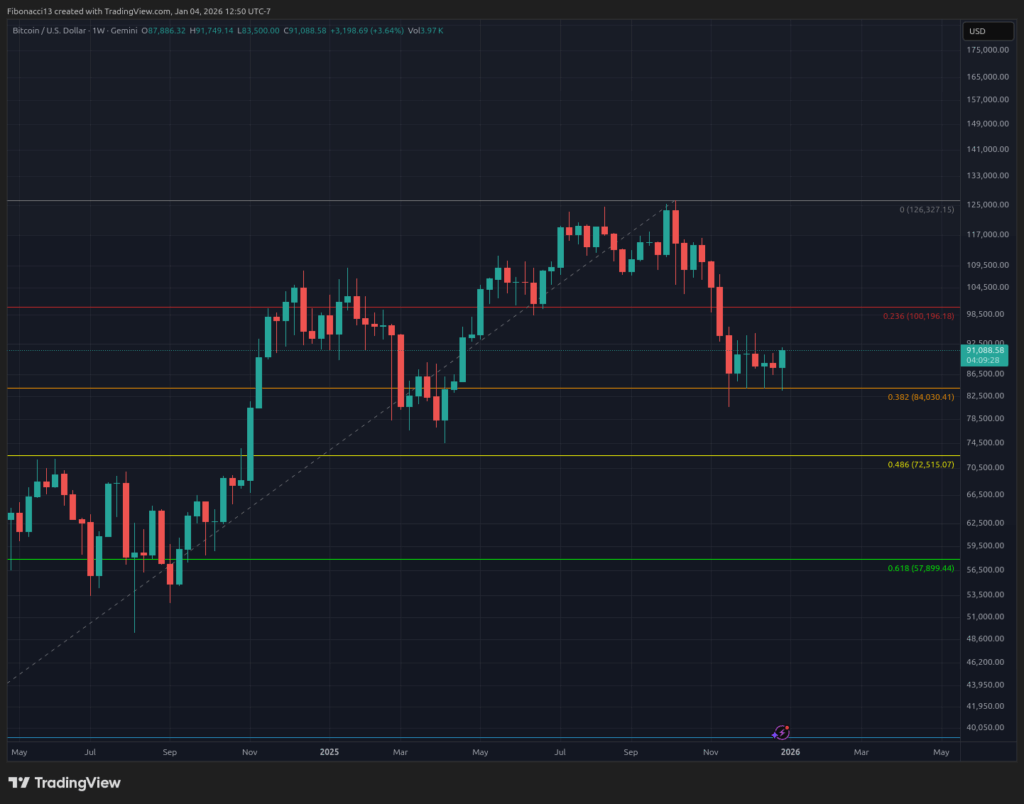
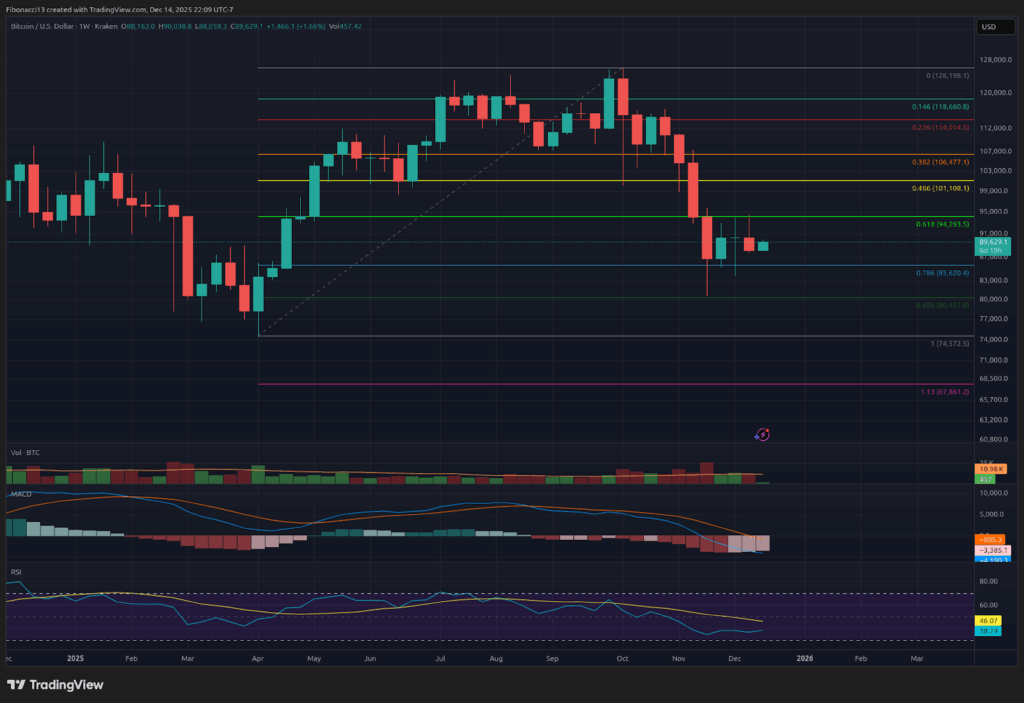
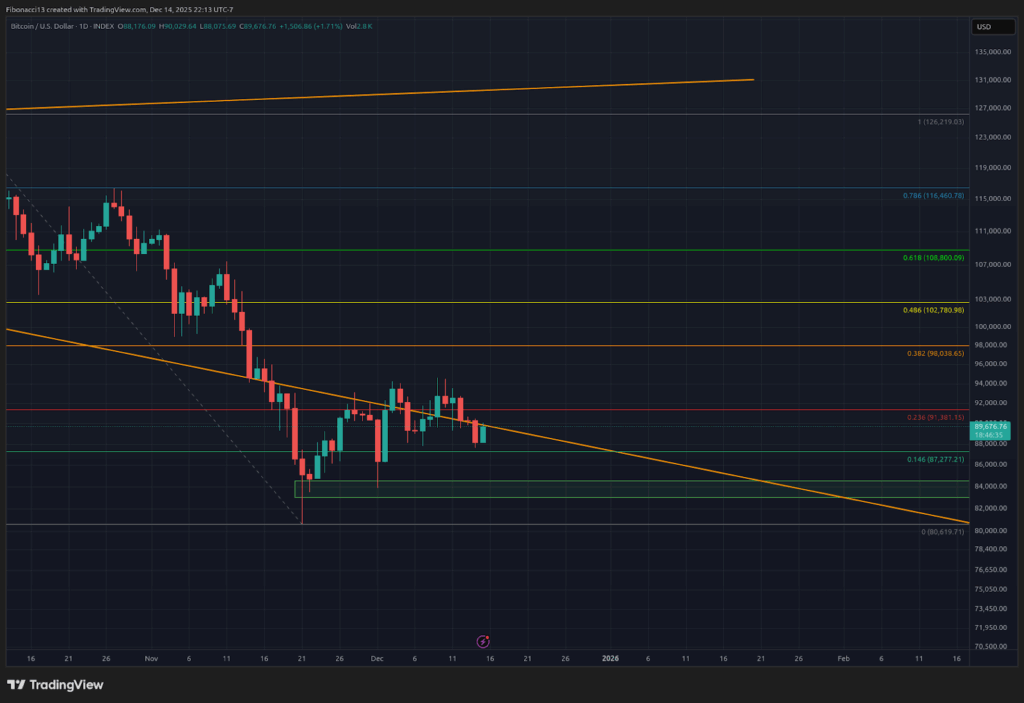
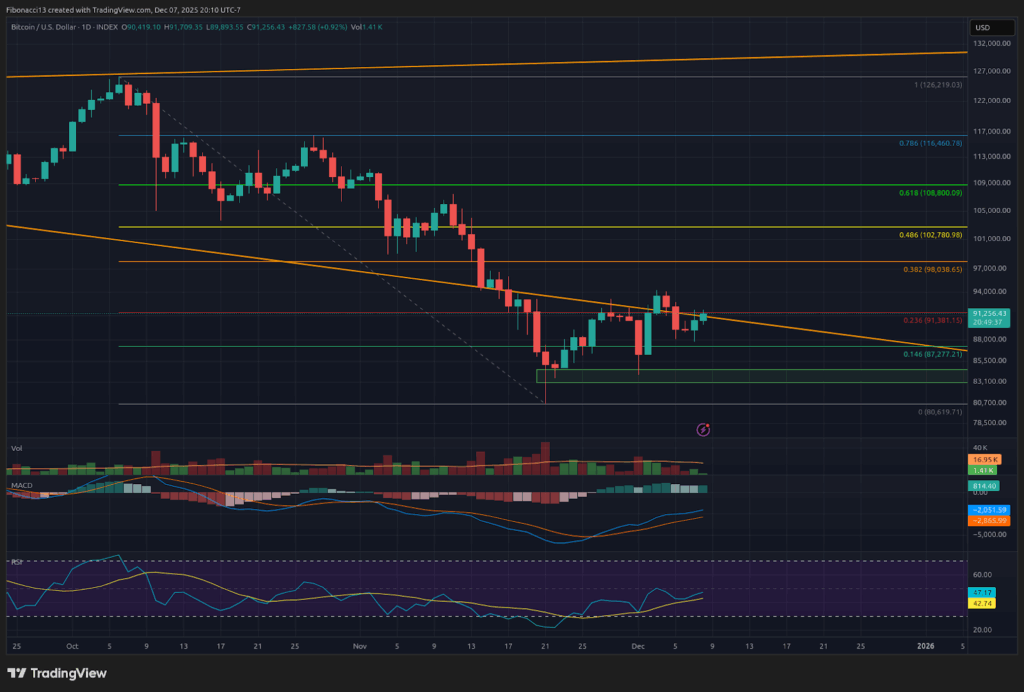
Bitcoin buyers made a nice push to $94,000 resistance again last week, but the price promptly sold off again from this level to close the week out at $90,891. Sunday’s close gave us a doji candle, indicating indecision and a potential reversal back in the bears’ favor. The bulls are once again looking lethargic as they lack the follow-through necessary to overtake resistance. Bears are in the driver’s seat heading into this week. Look for them to try to push the price down through the $87,000 support level to make another attempt at breaking $84,000 support.

Key Support and Resistance Levels Now

The bulls are looking for support at the $87,000 level to hold if bears manage to keep the push lower going here. $84,000 still sits as strong support below here, but will weaken with any further pressure. If the bears can manage to break this support, the price is sure to accelerate down to the low $70,000 area, with a close below $68,000 required to lose this support level. Below this zone, bulls will look to gain some sort of strength off the 0.618 Fibonacci retracement at $58,000.

Bears will look to defend the $91,400 level as resistance over the short term here. The resistance at $94,000 has done its job so far, but it will be under heavy pressure if bulls can muster the strength to get the price back up there. Above $94,000, there is a resistance zone that stretches from $98,000 up to $103,500. Above here, we have another resistance zone from $106,000 up to $109,000 at the 0.618 Fibonacci retracement from the drop from the top down to $80,000.

Outlook For This Week

Wounded bulls need some help to hang on to momentum this week. Look for the bears to push the price down to $87,000 early in the week and possibly below it. Bulls will try to stop the price from closing any days below $87,000. If the bears manage a daily close below here, $84,000 support will be under heavy threat, and the bulls will need buyers to step up to the plate with some big volume to hold this support level once again.

Market mood: Bearish – After a weekly shooting star doji candle close, the bulls’ momentum has faded. The bears have tilted control slightly in their favor to start this week.

The next few weeks
Price action may remain choppy and confined within a range over the next few weeks. Bulls need to see a close above $94,000 to break above this range and look for upward momentum, while bears need to see a close below $84,000 to try to break down below this major support level. Between $94,000 and $84,000 is now a neutral zone, where bulls and bears may battle back and forth. Neither side is poised to take firm control of the price action until either of these boundaries is broken.

Terminology Guide:

Bulls/Bullish: Buyers or investors expecting the price to go higher.

Bears/Bearish: Sellers or investors expecting the price to go lower.

Support or support level: A level at which the price should hold for the asset, at least initially. The more touches on support, the weaker it gets and the more likely it is to fail to hold the price.

Resistance or resistance level: Opposite of support.  The level that is likely to reject the price, at least initially. The more touches at resistance, the weaker it gets and the more likely it is to fail to hold back the price.

Shooting Star Candle: A candlestick that occurs after an uptrend, marked by a long wick upwards above the candle body and a smaller wick (or no wick) to the downside. The long wick up indicates strong selling near the highs. This candle can often indicate the end of an uptrend.

Doji Candle: A candlestick that closes at nearly the same price at which it opened. This candle indicates indecision, and can signal a reversal in price action if it occurs after an uptrend or downtrend.

Fibonacci Retracements and Extensions: Ratios based on what is known as the golden ratio, a universal ratio pertaining to growth and decay cycles in nature. The golden ratio is based on the constants Phi (1.618) and phi (0.618).

This post Bitcoin Bears Hold $94K Resistance as Price Drops to $90,891 Weekly Close first appeared on Bitcoin Magazine and is written by Ethan Greene - Feral Analysis and Juan Galt.

Vexl: Empowering Peer-to-Peer Bitcoin Exchange Through Social Networks

By: Juan Galt

Bitcoin Magazine

Vexl: Empowering Peer-to-Peer Bitcoin Exchange Through Social Networks

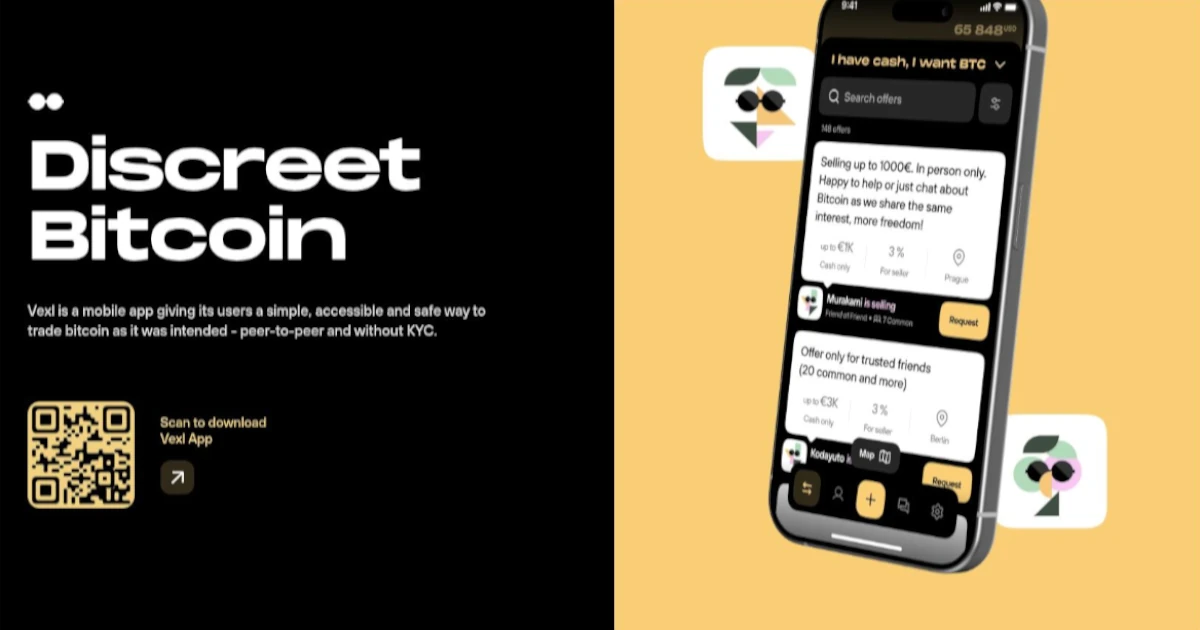
In an era where centralized exchanges dominate cryptocurrency trading, Vexl stands out as a peer-to-peer (P2P) application designed to connect Bitcoin users within their personal networks for direct, non-custodial trades. The app facilitates buying and selling Bitcoin without intermediaries, emphasizing in-person meetings for cash exchanges while also supporting fiat transfers arranged privately between users.

As Viliam Klamarcik, CEO of Vexl, explained in an interview with Bitcoin Magazine, “we are an application that helps people to buy and sell Bitcoin directly with each other, without any intermediaries, without KYC. Vexl works without custody, so peer-to-peer, but what’s most important is that it is always within your own community, meaning we are not a global marketplace. We are basically a peer-to-peer notice board where you can connect with your first and second-level connections.”

At its core, Vexl prioritizes privacy, functioning as a high-trust notice board within your personal social network, rather than an exchange. It does not escrow Bitcoin or fiat, it does not hold user funds, nor store balances, messages, or personal data. All communications occur via end-to-end encrypted chats, and trades happen off-app, placing responsibility on users to verify counterparts. This design aligns with Vexl’s mission to support non-KYC Bitcoin acquisition and local economies, as confirmed on the app’s official website, which states, “We do not store any personal information or any of your messages, period.” 

User connections in Vexl are built on a web-of-trust model, drawing from imported phone contacts to create a personalized order book. Offers are visible only to first- and second-degree connections—your contacts and their contacts—enhancing liquidity while maintaining high trust through shared social links. This limits exposure to strangers, reducing scam risks, and usernames remain anonymous until users mutually reveal identities. Klamarcik noted, “The biggest difference between Vexel and the other applications is, first of all, its web of trust, which means you don’t trade with users; you trade with people with whom you are connected through real social links.” The app’s privacy measures include hashing contact data and separating components like profiles, chats, offers, and contacts into microservices that converge only on the user’s device, ensuring no centralized database exists.

To enable this system, Vexl requires a phone number for registration, serving as proof of humanity to deter bots and facilitating contact imports. Privacy concerns are addressed through encryption and hashing; as the website affirms, “Your chats always remain encrypted, while the phone numbers are hashed.” Klamarcik acknowledged imperfections but emphasized its necessity: “The phone numbers are a big topic, and we are aware of that. And it’s not perfect, but also it’s probably the best solution that we have out there to build trust upon that.” This mirrors mechanisms in apps like Signal and major social networks, primarily as a spam-prevention and authentication tool.

For users hesitant to import full contacts—particularly in privacy-focused regions like Germany—Vexl offers “clubs,” curated groups managed by local moderators, often meetup organizers. These act as public rooms where members can view offers without broad network sharing, though trust shifts to the moderator. Entry requires a one-time code or QR scan, regenerable for security, providing an onboarding boost for newcomers until they build direct connections.

Vexl is available on both Android and iOS, but iOS users face restrictions. The app is not officially listed on the App Store, limited to TestFlight beta slots or sideloading in the EU, due to Apple’s claims of “reckless behavior” for encouraging in-person trades (Tinder, however, remains in iOS without restrictions). Android offers seamless access via Google Play or APK downloads, making it the optimal platform for unrestricted use.

Vexl runs under a non-profit foundation model, accepting donations and grants to preserve its privacy and peer-to-peer ethos. On the topic, Klamarcik said, “From the very beginning, Vexl was intended as a gift to the Bitcoin community: an open-source tool built to help people transact peer-to-peer, without custody, surveillance, or extracting value from users. The project operates as a non-profit with an essential goal in its core – to keep bitcoin usable in everyday life and accessible to anyone, anywhere. Funding through donations and grants allows Vexl to stay focused on building simple, resilient tools for freedom. As an open-source project supported by SatoshiLabs, the creators of the Trezor hardware wallet, Vexl follows a long tradition of building infrastructure first.” Vexl is fully open source and is a project by Satoshi Labs, the creators of the Trezor hardware wallet.

The non-profit model has become increasingly popular among privacy-focused projects, as for-profit incentives tend to lead to data collection business models like advertisement, while Bitcoin-specific privacy apps have been actively prosecuted on the basis of monetizing “money laundering”. Samourai Wallet’s founders were accused of money laundering conspiracy, though ultimately were only imprisoned for unlicensed money transmission charges, after facilitating over $2 billion in transactions via a non-custodial Bitcoin wallet. Tornado Cash faced U.S. sanctions in 2022 for billions in volume, under similar charges for a service that profited from giving Ethereum users basic financial privacy. These cases highlight how privacy-focused entities are being targeted by governments.

Looking ahead, Klamarcik signaled expansion: “This year is hopefully going to be the year when we actually go overseas and also focus on markets outside of Europe when it makes sense.”

This post Vexl: Empowering Peer-to-Peer Bitcoin Exchange Through Social Networks first appeared on Bitcoin Magazine and is written by Juan Galt.

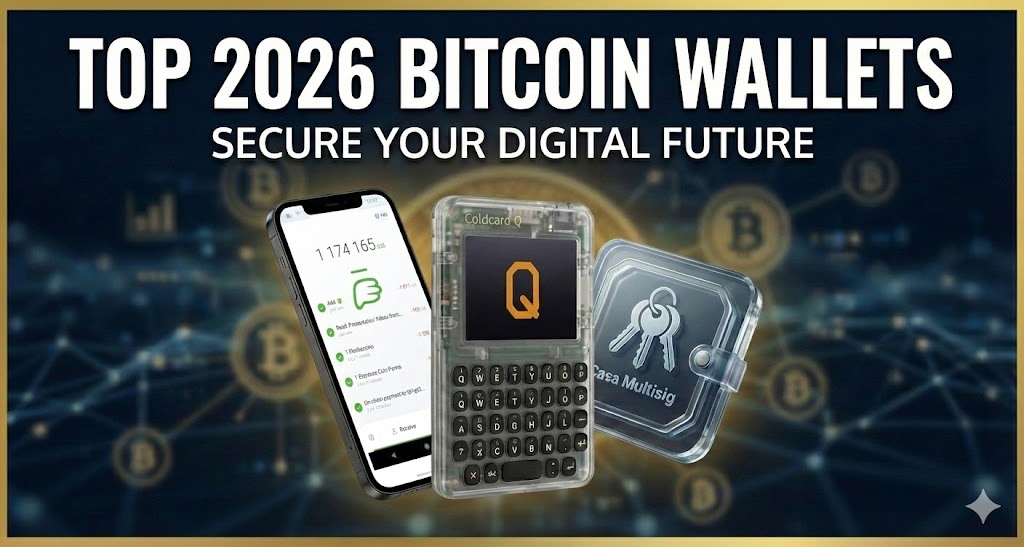
Top Self Custody Bitcoin Wallets for 2026

By: Juan Galt

Bitcoin Magazine

Top Self Custody Bitcoin Wallets for 2026

As we stroll past January 3rd, the day Bitcoin was effectively born, an old tradition in the Bitcoin industry passed us by, the “not your keys, not your coins” day, which was celebrated widely for a few years in a row back in 2014. While the news cycle this year was dominated by geopolitics and many Bitcoiners are entering the industry via ETFs, Bitcoin self-custody nevertheless remains a core value proposition of Bitcoin and one that merits a deep dive into the best options available to users to date.

To that end, here’s the top mobile, desktop, hardware, seed backup, and multi-signature wallets for Bitcoin-specific users in the market today, as far as I am concerned. 

Opinions expressed in this article are entirely the author’s and do not necessarily reflect those of BTC Inc. or Bitcoin Magazine.

Mobile Bitcoin Wallet Apps

The first self-custody wallet everyone should try is probably on a mobile device. The comfort and speed of sending Bitcoin from your phone across the world, be it to a relative abroad or to donate to a special cause, is unparalleled with Bitcoin. The first way people are likely to use the digital currency is also through a mobile wallet. Not all mobile wallets are made equal; however, most software wallets are closed source and contain a bunch of crypto coins, which means they don’t specialize in any of them, often a sign of mediocre user experiences to come. Below is a list of the best Bitcoin-only or Bitcoin-savvy wallets that a discerning user should consider. 

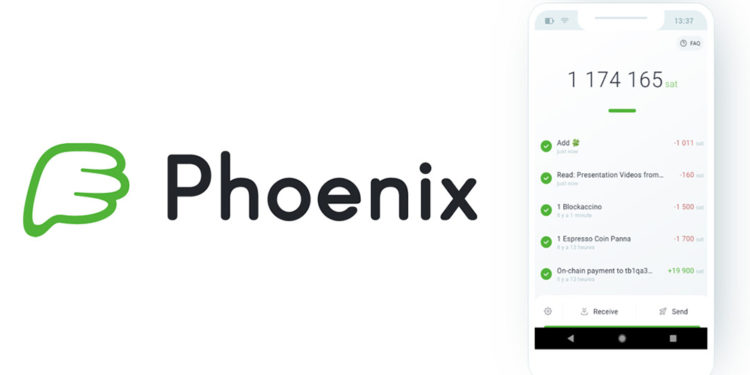
Phoenix Wallet

Leading the charge of the Bitcoin-only mobile world is arguably Phoenix Wallet. At the top of their game from a UI and back-end perspective, Acinq continues to deliver the best optimized experience for Bitcoiners concerned with self-custody. On the on-chain front, they support full self-custody, with on-chain payments at a decent fee rate, letting users make payments to all standard Bitcoin address types. Users can also fund the wallet to an on-chain address, which will automagically load up that balance into a lightning channel.

While Phoenix is not the best on-chain wallet by any means, it is, for most purposes, good enough. Where Phoenix shines, however, is on the lightning payments side. It supports a wide range of standards and has one of the best integrated and funded nodes on the network, giving users maximum reliability. The lightning arrangement with Phoenix is one of mixed self-custody, where the user has all the relevant key material, with some dependency on Phoenix and minimum trust. 

The wallet can be side-loaded into Android via an APK, for those so inclined, and its back end can be run using phoenixd for app developers and node runners.

Phoenix requires a minimum of about 10,000 satoshis to be spent the first time the wallet is set up, to cover on-chain fees for Lightning channels and to buy capacity on the Lightning Network. This friction point can be awkward when setting up new users with Lightning. Making it an advanced yet powerful and easy-to-use Bitcoin wallet. Phoenix has a variety of open source tools and software available online. 

Blockstream Wallet

Blockstream Wallet, brought to you by Blockstream Corporation of Adam Back fame, is a reliable Bitcoin wallet with well-rounded support for Bitcoin on-chain transactions, as well as native support for the Liquid Network. Liquid has gained popularity in recent years for supporting a similar user experience as on-chain Bitcoin with comparable speeds to the Lightning Network, and a security model that is probably good enough, leveraging a multinational federation.

Blockstream Wallet can hold USDT on top of Liquid, though it does not include a built-in swap interface, introducing significant frictions and exposing users to third-party fees for swapping in and out of the networks and into more popular USDT base chains. Nevertheless, liquid provides users remarkable privacy, as it encrypts amounts at the base layer similar to some of the most popular privacy coins, giving users some of the best privacy available in Bitcoin in exchange for some of the other UI pain points we just discussed. 

Blockstream Wallet is open source and remains one of the top choices for Bitcoin self-custody today. 

Bull Bitcoin Wallet

A new entrant into the wallet space, Francis Pouliot’s Bull Bitcoin Mobile wallet has left a strong impression among self-custody advocates, with its purist yet pragmatic design philosophy. The wallet is fully open source and on an MIT license. It includes the Bull Bitcoin exchange as an optional service, available in Canada, Europe, Mexico, Argentina, and Colombia, Puerto Rico (bitcoin jungle wallet), letting users buy bitcoin, automate purchases in dollar cost average format, sell bitcoin for local fiat, and even make payments to third parties. The user sends bitcoin, and the recipient gets the local fiat. 

While the Bull Bitcoin Mobile wallet is designed for new users to have all the payment tools they need to use Bitcoin as money, the wallet also supports a variety of advanced features under the hood. 

It’s one of the first to implement the async Payjoin protocol, which provides users with great privacy on-chain when using compatible wallets. This Payjoin feature is backwards compatible and invisible to the user, so it introduces no friction, just privacy benefits.  

The wallet leverages the Liquid network to hold small amounts of bitcoin at rest, while natively supporting the Boltz protocol for swapping out into the Lightning Network, letting users make Lightning payments without issue, as well as receive Lightning payments with minimum trust, since Boltz uses non-custodial atomic swaps, delivering the value to users on a Liquid address.

The wallet also has full Bitcoin on-chain support, with NFC tap to pay for hardware wallets like the Coldcard Q, which are designed for deep self-custody, high-value transactions. All and all, Bull Bitcoin Mobile stands to be one of the most promising Bitcoin wallets for 2026, making design decisions that address the everyday needs of the active Bitcoin user.  

Zeus Wallet

Zeus Wallet is a lightning payments app that has made incredible progress in taking Lightning Network self-custody to the limit. Bitcoin’s layer to payment network is very fast and has significant privacy benefits compared to the base on-chain payment rails of Bitcoin, but the downsides are seen when users attempt to take self-custody, as control over funds depends far more on running a lightning node. Zeus makes running a lightning node on a mobile phone easy and mostly automated. 

Initially created as an interface for managing self-hosted home lightning nodes, it now supports a deep range of tools for advanced users alongside a full onboarding interface for new users, offering a superior onboarding experience to even Phoenix Wallet. The only downside is that it can be a bit slow to open and sync up, and eventually does start to demand users move up the learning curve, for the right person it might be a great choice. Zeus Wallet is also open source

Cake Wallet

Cake Wallet has become an increasingly important player in the Bitcoin and crypto privacy space, as it has led the charge, bringing advanced privacy technologies to the mobile platform. They support a variety of privacy initiatives like the Payjoin foundation and were the first major wallet to integrate its protocol as well as the Silent Payments standard. Cake supports coins other than Bitcoin, such as Monero, Ethereum, and various other tokens, including stablecoins. Cake Wallet is also open source.

Desktop Wallets

Sparrow Wallet

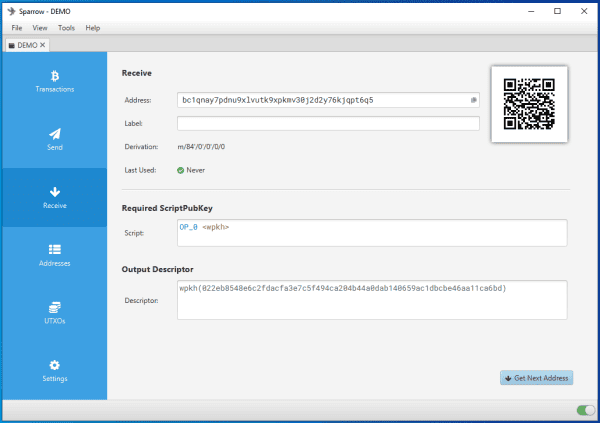
On the Desktop front, Sparrow Wallet has emerged as the Swiss Army Knife of Bitcoin wallets. Easy to install, capable of connecting to local nodes as well as without them, with access to the full range of bitcoin address types, multisig, hardware wallet support, etc. Sparrow has, by most standards, reached the kind of “pro” level of feature richness and positive renown that the Electrum wallet has enjoyed for more than a decade. It is, of course, fully open source.

Electrum

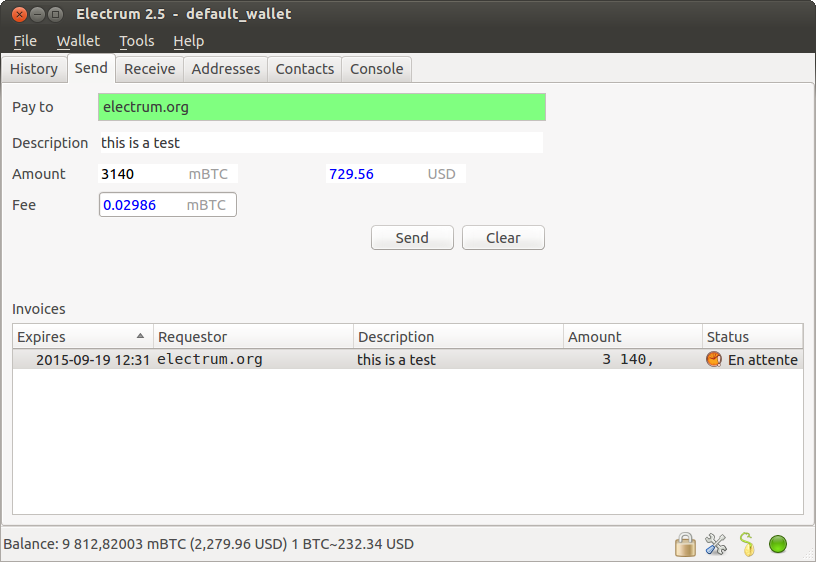
Electrum wallet continues to be a staple of Bitcoin self-custody wallets, capable of connecting to most hardware wallets, with an interface so stable and straightforward that it very much defined user expectations of a desktop wallet, similar to the Bitcoin core QT, but much easier to run and use. Electrum even has a lightning wallet mode, which works surprisingly well, defying the idea that it is a feat for advanced users. 

Electrum tries to default to its own 12-word standard, which is not compatible with most wallets, a technical decision that, in my opinion, has added unnecessary friction to the onboarding and recovery processes, but it is one that can be opted out of. It is also fully open source and can be run with its back-end companion, electrumX server, which indexes the full Bitcoin blockchain, making it easy to search for user balances, with very strong privacy. 

Hardware Wallets 

Coldcard Q

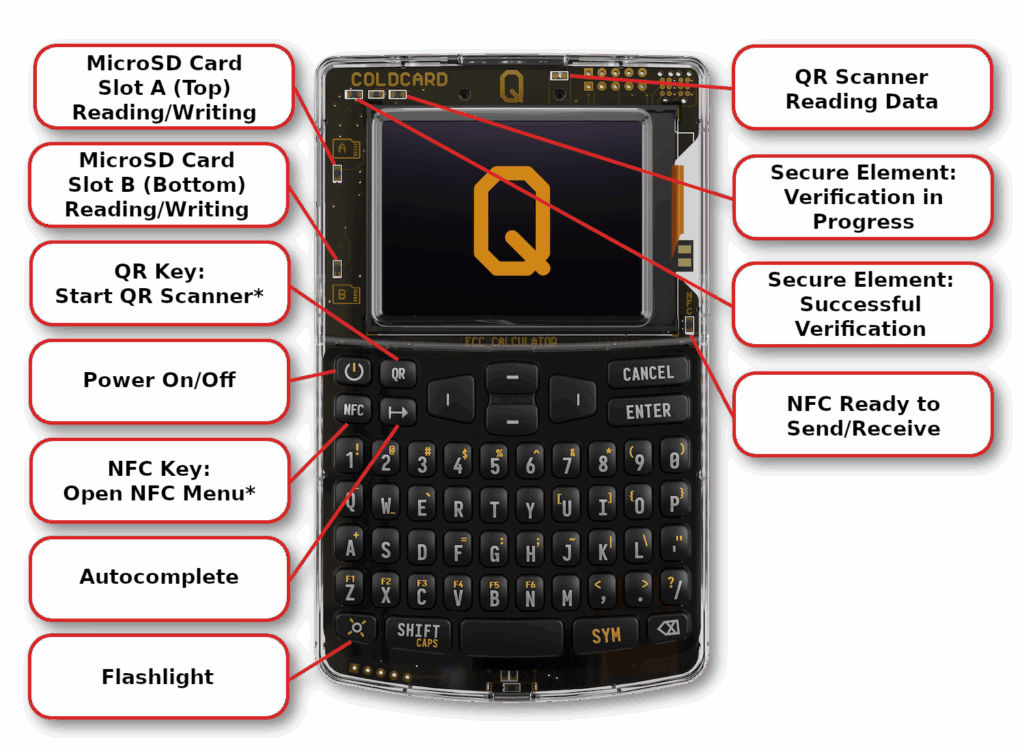
The Coldcard Q made a strong impact in the self-custody world in 2025 with its counter-tendency design decisions. Unlike many hardware wallets in the industry, it refuses to add Bluetooth support. NVK, the co-founder and CEO, considers it too risky, given the range and the black box code it depends on. Instead, to serve the rising user experience demands of the market, the Q comes with a high-quality laser scanner for QR codes and NFC antennas, covering both the input of bitcoin transaction data into the device and output, to send transactions onto the network. This flow is particularly useful when signing pre-signed transactions in the construction, for example, of a multisig, and should be easy to integrate with Payjoin privacy schemes.

Opting for its hard cypherpunk aesthetic, the device has a transparent shell that lets the user verify the hardware inside, while bringing back the nostalgic Blackberry-style keyboard with comfortable buttons, leaving touch screens in the dust. The device screen rocks an orangy golden font over deep black, the Bitcoin version of the Matrix code color scheme. Finally, the device takes three AA batteries, letting it operate without power cables, entirely unplugged from any machines and de-risking it from battery malfunctions, bricking the devices as has been observed in some hardware wallets with integrated batteries.

All in all, the Coldcard Q is undoubtedly the gold standard of Bitcoin hardware wallet security, with all the downsides that its purity entails, such as Bitcoin only support, not even stablecoins are allowed in. 

The firmware, hardware, and most, if not all, related software are source available under various licenses.

Trezor Safe 7

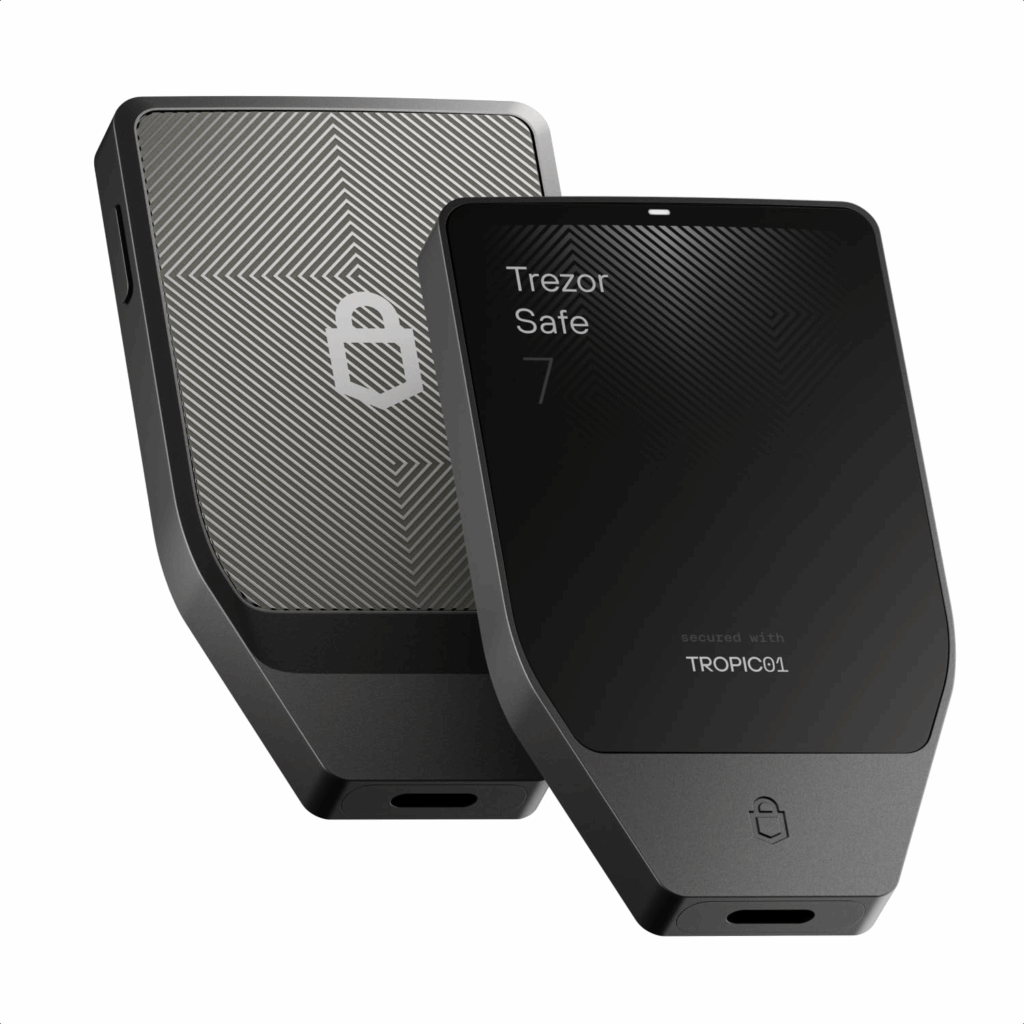
For those more crypto practical, Trezor continues to make excellent hardware wallet products, guided by its over 10 years of experience in the industry; they arguably created the industry, in fact, launching the first hardware wallet, the Trezor One, which still holds out well enough today. Nevertheless, they’ve recently launched a new version of their hardware, the Trezor Safe 7, with a wider screen and a variety of wireless-related user experience upgrades for the professional and active crypto user. Trezor firmware, hardware designs, and a variety of its software tools are open source under various licenses. 

Multi-Signature Bitcoin Wallets 

Casa Wallet

Casa Wallet, the multi-signature Bitcoin and Ethereum Wallet company led by Jameson Lopp, continues to be the spearhead of user experience and self-custody for those so inclined. The app enables users to leverage two general models of self-custody: 2 of 3 keys needed to sign and 3 of 5. With some variability and advanced settings that let users choose their own path. They support most hardware wallets for key management and offer their recovery key solution by default on both plans, a key pillar of their inheritance solution offering for advanced subscriptions.

In recent years, they added Ethereum support, a controversial but realist move which unlocked stablecoin storage in the multisig security model for crypto whales. The company remains defensive of its user data and collects the minimum amount required legally, letting users pay for their subscriptions with Bitcoin, which range from $250 a year up to $2100, depending on the model and services needed. They also offer custom support to individuals who have non-standard threat models, are famous, or are high-net-worth individuals with very specific demands.

Casa also offers support and technical guidance at various levels, depending on the user plan, and is known to respond quickly to support emails in general. Jameson Lopp has a deep range of articles covering Bitcoin and crypto security best practices, which can be found at Lopp.net

Nunchuck Wallet

Nunchuck Wallet is another multi-signature focused Bitcoin app that has gained significant renown in the industry in recent years. They were born and forged in the fires of COVID drama up in Canada, learning important lessons from the censorship that took place and getting a front seat to how Western governments can go rogue. The app lets users set up a wide range of different multi-signature accounts with a wide range of hardware wallet support, including some of the most advanced Bitcoin smart contracting tools available today, specifically in the form of miniscript support.

Nunchuck also offers an inheritance solution via a subscription service, holding a recovery key for emergencies and technical support. Their app is primarily a mobile wallet, considered by some “The Sparrow of Mobile”, given its deep advanced tooling, though the interface keeps things simple enough. Nunchuck Wallet is also open source.

Seed Backup

CryptoSteel

Last but not least, there’s a variety of 12-word backup companies that have emerged over the years to offer Bitcoin hodlers weather and tamper-proof storage solutions to those delicate magic words, which can give someone access to their holdings. Cryptosteel is one of the most renowned companies in this niche and offers a wide range of steel backup tools that let users protect their backup words from events like flooding or fires, and opens up new avenues for hiding and storing this essential recovery information. 

This post Top Self Custody Bitcoin Wallets for 2026 first appeared on Bitcoin Magazine and is written by Juan Galt.
Bitcoin Weekly Analysis: Momentum Builds Toward $98,000 Amid Neutral Mood

Bitcoin Magazine

Bitcoin Weekly Analysis: Momentum Builds Toward $98,000 Amid Neutral Mood

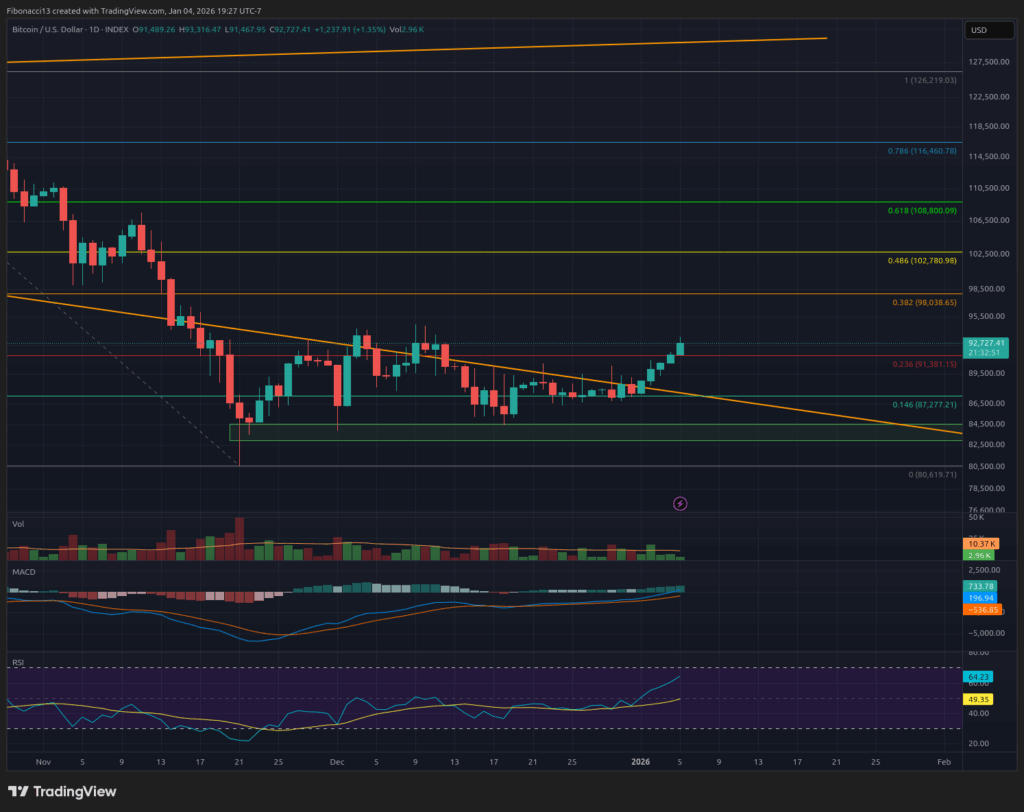
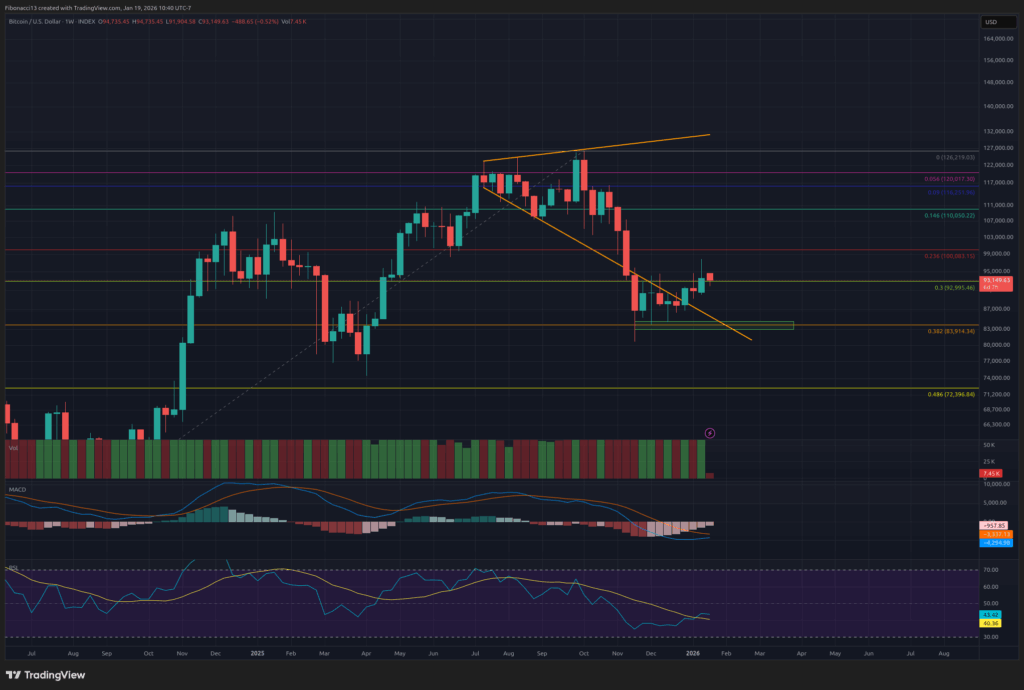
After remaining relatively sideways through the Christmas and New Year’s weeks, the bitcoin price made a small move higher over this past weekend. Bitcoin price closed the week at $91,489, just above the short-term resistance level at $91,400. If bulls can sustain above this level, they should take another run at the $94,000 resistance level this week, which has kept a lid on the price since mid-November. $98,000 is within reach this week as well.

Key Support and Resistance Levels Now

Bulls will try to carry some momentum into the New Year here and take out the $94,000 resistance level. Above $94,000, we have $98,000, where resistance really starts to pick up, and stretches from there all the way up to $103,500. This area is poised well to reject the price if it can climb above $94,000. $109,000 provides a likely final ceiling for the price that will be extremely tough to conquer. If the price gets above $109,000, we can start talking about potentially seeing new highs.

The bulls will want to hold support at $87,000 if the bears can manage to drive the price down there. $84,000 is still strong support below there, but it will weaken with further touches. If $84,000 support fails, we will look down to the $72,000 to $68,000 support zone as a strong level to produce a bounce.

Outlook For This Week

Sleepy bears have let up a little over the past few weeks. This week, the bulls will likely try to take advantage of this by continuing to push the price higher into the next resistance level, so look for the bulls to make another attempt at $94,000. $98,000 should keep a lid on things this week if bulls can manage to push past $94,000. If bulls fail to hold the $91,400 level this week, look for them to defend the $87,000 level to give themselves another attempt at getting above it and taking on $94,000 once again.

Market mood: Neutral – Bulls have managed to hold support levels over the past few weeks and have a bit of upward momentum this week. The bearish mood has softened to a more neutral level.

The next few weeks
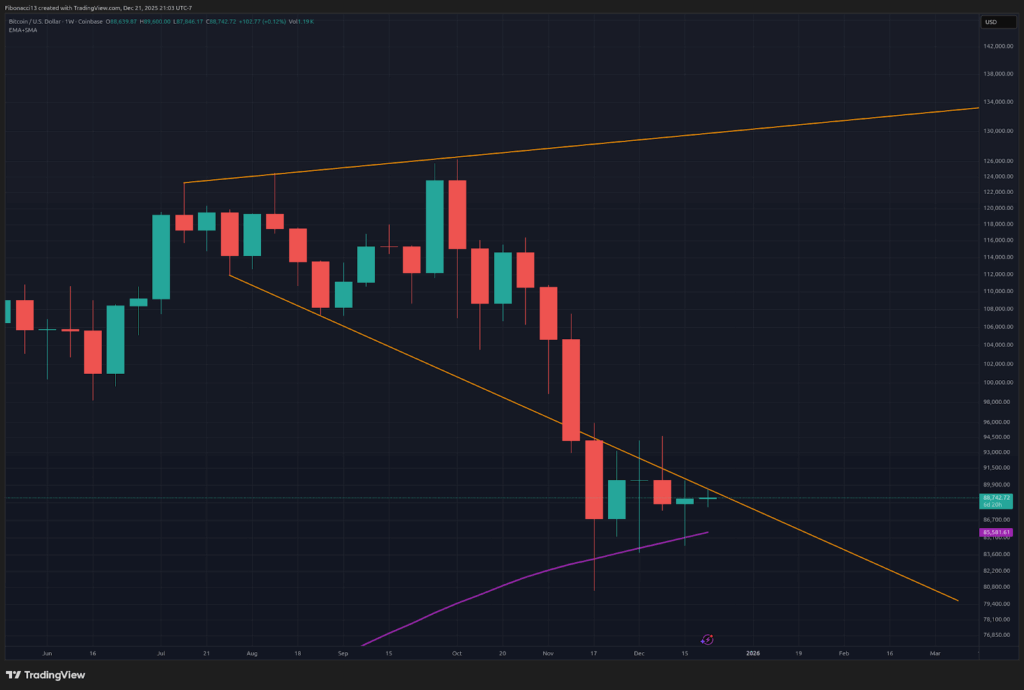
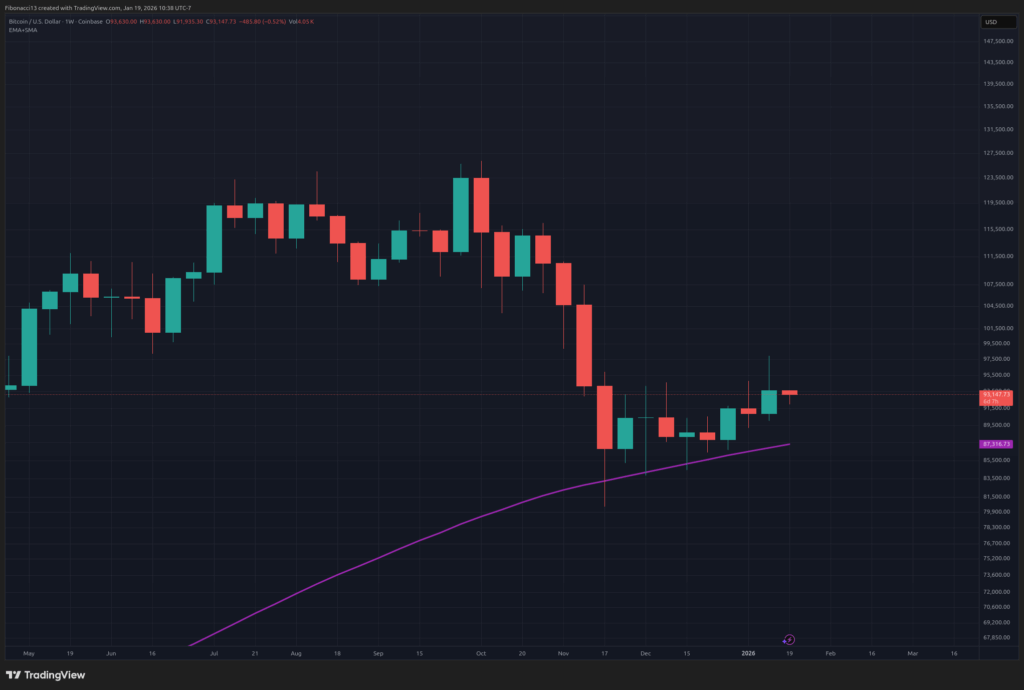
The weekly chart has been sandwiched between the lower trend line of the broadening wedge above and the weekly 100 SMA below for several weeks now. One of them had to break, and for now, it is the trend line resistance that has eroded away to give the bulls a chance to push higher. Long-term bias is still bearish, however, so look for any bullish move to find a top over the coming weeks and come back down to test support at $87,000 to $84,000. Closing any weeks below $84,000 at this point will set bears up to drop the price down to the next support level in the low $70,000 range. On the upside, the bulls will need to sustain weekly closes above $100,000 to try to turn the long-term trend around.

Terminology Guide:

Bulls/Bullish: Buyers or investors expecting the price to go higher.

Bears/Bearish: Sellers or investors expecting the price to go lower.

Support or support level: A level at which the price should hold for the asset, at least initially. The more touches on support, the weaker it gets and the more likely it is to fail to hold the price.

Resistance or resistance level: Opposite of support.  The level that is likely to reject the price, at least initially. The more touches at resistance, the weaker it gets and the more likely it is to fail to hold back the price.

SMA: Simple Moving Average. Average price based on closing prices over the specified period. In the case of RSI, it is the average strength index value over the specified period.

Broadening Wedge: A chart pattern consisting of an upper trend line acting as resistance and a lower trend line acting as support. These trend lines must diverge away from each other in order to validate the pattern. This pattern is a result of expanding price volatility, typically resulting in higher highs and lower lows.

Fibonacci Retracements and Extensions: Ratios based on what is known as the golden ratio, a universal ratio pertaining to growth and decay cycles in nature. The golden ratio is based on the constants Phi (1.618) and phi (0.618).

This post Bitcoin Weekly Analysis: Momentum Builds Toward $98,000 Amid Neutral Mood first appeared on Bitcoin Magazine and is written by Ethan Greene - Feral Analysis and Juan Galt.

Why MSCI’s Upcoming Decision on Bitcoin Treasury Companies Matters

By: Juan Galt

Bitcoin Magazine

Why MSCI’s Upcoming Decision on Bitcoin Treasury Companies Matters

In a move that could shape corporate Bitcoin adoption, index provider MSCI is set to decide whether to exclude companies holding significant Bitcoin reserves from its global benchmarks. The outcome, due January 15, may influence billions in forced selling and set precedents for how Wall Street views Bitcoin as a treasury asset.

MSCI Inc., a New York-based publicly traded company listed on the NYSE with a market capitalization of $43.76 billion and a stock price of $565.68 as of January 2, is a key player in the investment world. It curates over 246,000 equity indexes daily, with more than $18.3 trillion in assets under management benchmarked to them. These indices serve as blueprints for funds and portfolios, helping investors gain exposure to specific market segments.

Unlike the NASDAQ, which operates as both a stock exchange where companies list and trade and a composite index tracking those listings, MSCI focuses solely on index creation. The S&P 500, managed by S&P Dow Jones Indices, is similarly an index but targets the 500 largest U.S. companies by market cap. MSCI’s offerings, such as the MSCI World Index covering developed markets, provide broader global and thematic coverage, influencing trillions in investment decisions.

The issue began on October 10, 2025, when MSCI issued a consultation proposal to exclude companies with 50% or more of their assets in digital assets like Bitcoin or other cryptocurrencies from its Global Investable Market Indexes. The rationale: such firms operate more like funds than traditional businesses. The proposal named 39 companies, including Bitcoin holders like Strategy and Metaplanet. The announcement triggered an immediate market reaction, with Bitcoin experiencing a sharp intraday plunge of roughly $12,000 on the same day, marking the start of a broader price correction.

Broader awareness grew in late November 2025, when JPMorgan analysts highlighted the risks in a report, estimating $2.8 billion in outflows from Strategy alone and up to $8.8 billion if other index providers followed suit. This may have amplified selling pressure on affected stocks and contributed to Bitcoin’s ongoing pullback amid a broader market downturn. Estimates of total forced selling, if implemented, range from $10 billion to $15 billion over a year, per Bitcoin for Corporations (BFC) analysis.

The consultation period, open for stakeholder feedback, closed on December 31, 2025. BFC, a coalition accelerating corporate Bitcoin adoption, mobilized quickly. They launched a website detailing the proposal’s flaws, including a technical appendix outlining potential market impacts. BFC drafted a letter opposing the change, gathering over 1,500 signatures in two weeks and delivering it to MSCI on December 30. Eight of the 39 affected companies are BFC members.

After initial outreach, BFC held a call with MSCI’s head of research and leadership. “We had a very constructive conversation,” said George Mekhail, BFC’s executive director. “I think they were very much still in a listening and learning posture. I think a lot of this just really has to do with a lack of education and understanding of Bitcoin itself, as well as these Bitcoin treasury companies and the significance of their operating businesses.”

Mekhail noted the proposal appeared driven by genuine analytical concerns rather than malice, triggered by Metaplanet’s recent preferred share issuance, not Strategy’s larger holdings. A key gap: MSCI made no distinction between Bitcoin and other cryptocurrencies, treating all digital assets alike. This has fostered temporary alignment between Bitcoin advocates and the broader crypto sector in opposition, highlighting an ongoing education gap between the Bitcoin industry and Wall Street institutions.

Next, MSCI announces its decision on January 15, 2026. If approved, exclusions take effect February 1. Mekhail outlined three scenarios: implementation (worst case, forcing sales), a delay for further review (most likely, per his assessment), or full withdrawal (best case). Polymarket bettors currently give a 77% chance of Strategy’s delisting from MSCI by March 31.

Most financial fallout would hit Strategy, which holds the vast majority of affected Bitcoin treasuries. Founder Michael Saylor’s firm has engaged MSCI directly, issuing its own letter and working behind the scenes. Other opposition includes letters from Strive Asset Management and investor Bill Miller.

Industry pushback has been robust and visible, with no major groups publicly supporting the proposal. This asymmetry underscores Bitcoin’s organized, motivated constituency versus dispersed critics, echoing dynamics in recent political shifts like the 2024 U.S. election.

A withdrawal would boost corporate Bitcoin strategies; implementation could deter treasuries. As Mekhail put it, “The most bullish outcome is that they take it to heart and they withdraw the proposal.” The decision tests Wall Street’s adaptation to Bitcoin’s role in balance sheets.

Bitcoin Magazine is wholly owned by BTC Inc., which operates Bitcoin For Corporations, a platform focused on corporate adoption of Bitcoin. BFChas a variety of relationships with Bitcoin businesses, including some of those mentioned in this article. 

This post Why MSCI’s Upcoming Decision on Bitcoin Treasury Companies Matters first appeared on Bitcoin Magazine and is written by Juan Galt.
Async Payjoin, the HTTPS of Bitcoin Privacy 

By: Juan Galt

Bitcoin Magazine

Async Payjoin, the HTTPS of Bitcoin Privacy 

Async Payjoin is the best hope for strong privacy in Bitcoin. Modeled after HTTPS, which enabled secure payments for the web, the Payjoin foundation has been quietly building up this privacy toolkit, which must be adopted by a large number of Bitcoin wallets, to deliver privacy at scale. 

Modeled after the Bitcoin and Lightning dev kits — which have become quite popular among wallet developers — and built with the same cryptographic primitives already in Bitcoin core, such that it can be easily integrated into the main Bitcoin implementation, Async Payjoin is designed from the bottom up for mass adoption. 

Following in the footsteps of Let’s Encrypt, which in the 2010s led the mass adoption of HTTPS on the web via open source, free software tooling, Async Payjoin looks to solve Bitcoin’s biggest privacy pain points through an open privacy standard. Unlike specific privacy-focused wallets like Samourai Wallet and Wasabi, Async Payjoin is a software library that any bitcoin payments app can integrate, joining an open standard of privacy, similar to HTTPS on the web. 

Async Payjoin is also referred to as Payjoin V2 by the Foundation, as it differs from V1, an older implementation that requires both users to be online while they transact for the Payjoin to work. A growing list of Bitcoin wallets support the Payjoin Foundation’s V1 and V2 standards today, including:  

Async Payjoin is backwards compatible, such that users with wallets that do not support the standard yet can still send to Payjoin addresses and QR codes without friction to the users. Fans of Bitcoin privacy should ask their favorite wallet providers to integrate this open source standard, which developers can find a technical reference for at Bip 77, alongside their plug-and-play dev kit on GitHub

The PayJoin Foundation Team

The nonprofit PayJoin Foundation, launched in August 2025 to sustain open-source privacy development, receives funding from OpenSats and Cake Wallet, while Spiral, Human Rights Foundation, Maelstrom, and Btrust have supported many of the open-source developers who contributed to the project. Their GitHub shows 37 contributors just on the Rust implementation of Async Payjoin.

Async Payjoin, the HTTPS of Bitcoin Privacy 

Development of the Async Payjoin protocol, also known as Payjoin V2 via Bip 77, is spearheaded by Dan Gould, executive director of the Payjoin Foundation and lead maintainer of the Payjoin DevKit. Dan has pioneered Bitcoin privacy tools since the TumbleBit era, forked Wasabi Wallet for mobile use, and co-authored BIP 77 with Yuval Kogman, advisory board member and Spiral Bitcoin Wizard with over two decades of programming experience. Kogman has done extensive work in the Bitcoin privacy field, such as developing WabiSabi DoS protections and whistleblowing vulnerabilities in various CoinJoin implementations

Armin Sabouri has also joined the team as R&D lead with prior roles as CTO at Botanix and engineer at Casa, co-winner of the 2021 MIT Bitcoin Hackathon by getting Bip 78 CoinJoin working on Mac OS via Tor, and is a co-author of BIP 347 (OP_CAT). 

Gould told Bitcoin Magazine that they are always fundraising and that “none of this work is possible without the funders.” He also went into detail about why they decided to start a Payjoin foundation rather than a for-profit entity, saying that “Bitcoin privacy — for-profits have basically been killed.” 

According to Gould, a nonprofit is more sustainable to solve the problem because it aligns the incentives; “I think the for-profits have an incentive to sell something that doesn’t necessarily guarantee privacy because if they make a sale, they earn profit. And we’ve seen on the internet that it was attempted. Phil Zimmerman started a company that developed PGP. But HTTPS was a decentralized nonprofit effort, as was Tor”. Gould says the Payjoin Foundation has applied for 501 (c) (3) status, which is pending approval. Donors can contact him at donate@payjoin.org

How does Payjoin work?

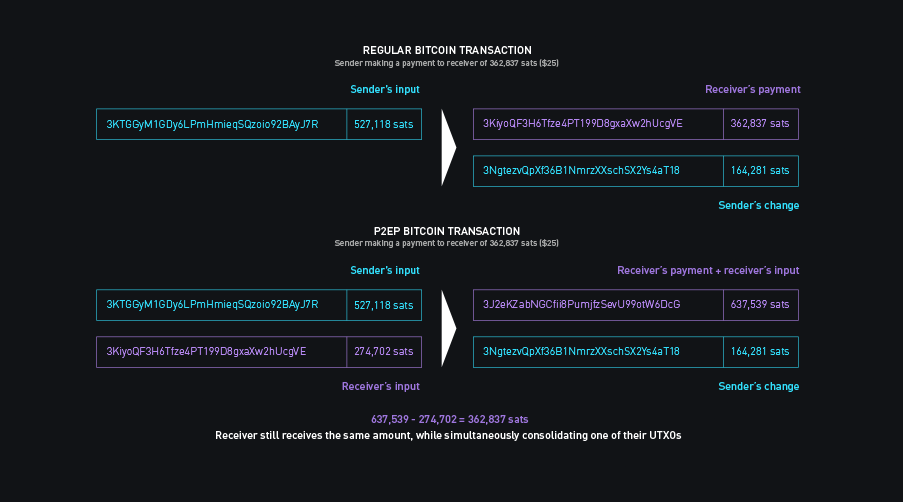
Payjoin provides privacy to Bitcoin by breaking a common pattern of normal transactions, where the sender has one input that gets split up into two to make a payment. Of the resulting outputs, one is likely to be the payment and the other the change back to the sender. 

Users often have multiple UTXOs (unspent transaction outputs), which are like pockets of coins. If a transaction tries to send more than is in one UTXO, it will pull from another, linking two of these pockets of coins, which up until that point might have had no connection to each other on the chain. This reduces the privacy of users in the eyes of blockchain analysts, who can assume the two UTXO packets belong to the same entity. 

Async Payjoin, the HTTPS of Bitcoin Privacy 
(image by Atlas21)

Payjoin dissolves the standard input heuristic by facilitating coordination between the sender and the receiver, resulting in transactions that appear to have two inputs and two outputs, where one of the inputs is from the receiver. The receiver gets the same amount he is expecting; both parties simply coordinate on the amounts and co-create the transaction. As a result, what would have been a single-input, two-output transaction now has two inputs and two outputs, confusing on-chain analysts. The more transactions of this type exist, the less reliable the single-input heuristic becomes, resulting in more privacy for all users, as the core assumption of on-chain analysis breaks down.   

This process is entirely non custodial, with full control over amounts signed and sent by both parties, it is atomic, if both parties don’t agree, the transaction is not valid. 

Gould cautioned about how much information is leaked with normal bitcoin transactions today, referring to organizations like Chain Analysis, which can, in some circumstances, get access to exchange user data to try and identify owners of a given UTXO, “if you snoop on that, you can see who you’ve transferred money to in the past. You can see who someone transfers money to in the future. You can see how much money someone has. You can see how much money someone makes.”

Enhancements to Bitcoin privacy of this sort are crucial to the success of Bitcoin as they enforce the fungibility of the asset, an important quality of sound money. Fungibility means that all coins are considered equal and interchangeable; one is not different from the other based on its history. 


Cryptocurrencies that focus on maximizing on-chain privacy, like Zcash or Monero, offer higher default degrees of on-chain privacy by encrypting the amounts transferred among parties. This, however, comes at a high cost; validation of the total supply of coins in these alternative cryptocurrencies is much more complicated. As a result, bugs in the related cryptography could lead to inflation bugs that are undetectable, a risk which undermines scarcity, another critical quality of sound money.

Payjoin in turn provides Bitcoin a higher degree of on-chain privacy without encrypting the amounts transferred between parties, respecting the scarcity of Bitcoin while enhancing fungibility. The main trade-off is that it can not be a protocol-level change; it needs wallet adoption and thus user engagement.

It’s also important to note that fiat-level privacy already protects users from third-party analysis by being a closed private system, or tries to anyway. Government agencies and executives working at banks have much greater visibility into user balances, but organized crime does not. There are also many laws in countries throughout the world defending user financial privacy, which Async Payjoin is looking to elevate Bitcoin to. 

Network privacy and the client-server V2 model, the Async part of the protocol. 


One of the challenges historically with traditional Payjoin is that it required both parties to be online to coordinate the creation of the transaction. To solve this, Payjoin V2 introduces a blinded directory server to provide asynchronous Payjoin coordination among parties, using the well-known Internet standard, Oblivious HTTP.

Gould told Bitcoin Magazine that “the cool thing is the protocol has the directory server blinded. The directory server is only reachable by oblivious HTTP, which is basically a forced proxy. So the IP addresses (of users) are never leaked to the directory server.” Adding that, “the payload (pre-signed transaction) is actually end-to-end encrypted between the sender and the receiver anyway. So the directory just gets an 8-kilobyte uniform encrypted blob. They don’t see anything.”

In fact, Gould compared the use of OHTTP to Tor, explaining that “The reason we used it is because it’s a web standard. So it’s gone through the rigorous review process. OHTTP is literally supported in the iOS operating system. It’s used in browsers.” adding that “OHTTP it’s kind of like the minimal viable product of Tor where Tor layers encryption and does multiple hops and this is just the most minimal version where you just have one hop. You just have one layer of encryption.” Similar multi-hop network encryption is used in the Lightning network to protect user privacy. 

The Payjoin V2 servers provide no financial reward to those who run them, similar to Tor exit nodes, which have sustained these privacy networks on a volunteer basis for decades.  

What about compliance?

Regulators and, as a result, exchange operators often have concerns about Bitcoin privacy technologies, as they are perceived to be in conflict with topics of compliance. Gould considers this a misconception, saying that “the reality is that a compliance regime is totally independent from the nature of the chain. If an exchange wants to collect your baby’s name, know the place you live, your phone number, and what source of funds, having privacy by default doesn’t stop them from doing that. Doesn’t stop them from asking for it in order to do business with the user.” Adding that “It just doesn’t give them complete insight into your whole wallet, past, present, and future. So it puts the power to consent to reveal the information about your money in your own hands.”

This post Async Payjoin, the HTTPS of Bitcoin Privacy  first appeared on Bitcoin Magazine and is written by Juan Galt.
Bitcoin Price Outlook: Bulls Target $94,000 Break for Momentum Into New Year

Bitcoin Magazine

Bitcoin Price Outlook: Bulls Target $94,000 Break for Momentum Into New Year

Last week, bulls needed to hold closes above $85,000 to stave off the bears, and they managed to do just that. Bitcoin price dropped to support once again last week, and the bulls defended it well, pushing the price back up to close the week out at $88,656. The price on the weekly chart has been rejecting from the lower trend line of the broadening wedge pattern for several weeks now, but the trend line is so low now that the price should push above it this week. If it fails to do so this week, look for the price to take the next leg down into the low $70,000 range.

Bitcoin Price Outlook: Bulls Target $94,000 Break for Momentum Into New Year

Key Support and Resistance Levels Now

Bulls will want to continue the push this week, level by level if need be. Initial resistance sits at $91,400, with the next level at $94,000. Above here, we should see very strong resistance at $98,000. Then we should see a fairly strong resistance zone from $101,000 all the way up to $108,000. Closing above $108,000 would start to place severe doubts on the long-term top being in place here.

The $84,000 support level below is proving to be resilient, holding up again this past week. If it is lost, the expected support levels below have not changed. The $72,000 to $68,000 zone should be expected to support the price on a first test at the least. Closing below $68,000 likely leads to a slow grind down to the 0.618 Fibonacci retracement support at $57,000.

Bitcoin Price Outlook: Bulls Target $94,000 Break for Momentum Into New Year

Outlook For This Week

The bears may be getting a little flustered with their recent failure to break support. This week, look for the bulls to push back a bit harder as they gain some confidence after holding support once again. Market liquidity should be low for Christmas week, so price movement may be lacking. There are some very large long-dated bitcoin options expiring on December 26th, however, with a max pain price of $100,000, so look for the price to try to push closer to the $100,000 level this week.

Bitcoin Price Outlook: Bulls Target $94,000 Break for Momentum Into New Year

Market mood: Bearish – Bulls are pushing back a little here, but they still need to prove it to the bears with some positive price action.

The next few weeks
Bulls held back the bears from breaking down major support last week. If the bulls can finally manage to take out resistance at $94,000 over the next couple of weeks, they may be able to sustain some upward momentum into the new year as well. So if we see a weekly close above $94,000, look for the price to move towards $101,000. This momentum could continue to $108,000 with a close above $100,000. Resistance becomes extremely thick near this level, though, so a strong rejection near this level should be expected if we can make it there over the coming weeks.

Terminology Guide:

Bulls/Bullish: Buyers or investors expecting the price to go higher.

Bears/Bearish: Sellers or investors expecting the price to go lower.

Support or support level: A level at which the price should hold for the asset, at least initially. The more touches on support, the weaker it gets and the more likely it is to fail to hold the price.

Resistance or resistance level: Opposite of support.  The level that is likely to reject the price, at least initially. The more touches at resistance, the weaker it gets and the more likely it is to fail to hold back the price.

Broadening Wedge: A chart pattern consisting of an upper trend line acting as resistance and a lower trend line acting as support. These trend lines must diverge away from each other in order to validate the pattern. This pattern is a result of expanding price volatility, typically resulting in higher highs and lower lows.

Fibonacci Retracements and Extensions: Ratios based on what is known as the golden ratio, a universal ratio pertaining to growth and decay cycles in nature. The golden ratio is based on the constants Phi (1.618) and phi (0.618).

This post Bitcoin Price Outlook: Bulls Target $94,000 Break for Momentum Into New Year first appeared on Bitcoin Magazine and is written by Ethan Greene - Feral Analysis and Juan Galt.

Former Mt. Gox CEO Mark Karpelès Reveals Details of 2014 Collapse and Japanese Detention

By: Juan Galt

Bitcoin Magazine

Former Mt. Gox CEO Mark Karpelès Reveals Details of 2014 Collapse and Japanese Detention

In late 2025, Mark Karpelès, ex CEO of Mt. Gox, lives a quieter life in Japan, building a VPN and an AI automation platform. As Chief Protocol Officer at vp.net—a VPN that uses Intel’s SGX technology to let users verify exactly what code runs on servers—he works alongside Roger Ver and Andrew Lee, the founder of Private Internet Access. “It’s the only VPN that you can trust basically. You don’t need to trust it, actually, you can verify”. At shells.com, his personal cloud computing platform, he’s quietly developing an unreleased AI agent system that hands artificial intelligence full control over a virtual machine: installing software, managing emails, and even handling purchases with a planned credit card integration. “What I’m doing with shells is giving AI a whole computer and free rein on the computer”, a brilliant idea, really. AI agents on steroids.

The contrast with his past could not be starker. Fifteen years ago, Karpelès was the reluctant king of Bitcoin’s trading world, running Mt. Gox at a time when the exchange processed the vast majority of global bitcoin trades.

His journey began innocently enough in 2010. Operating a web hosting company called Tibanne under the brand Kalyhost, Karpelès received a request from a French customer based in Peru who was frustrated with international payment hurdles. “He’s the one who discovered Bitcoin, and asked me if he could use Bitcoin to pay for my services … I was probably one of the first companies to implement Bitcoin payments back in 2010”.

Roger Ver, an early evangelist, became a frequent visitor to Karpelès’ office. Unknowingly, his servers also hosted a domain linked to Silk Road—silkroadmarket.org—purchased anonymously with bitcoin. That connection would later fuel investigations: U.S. authorities briefly suspected Karpelès of being Dread Pirate Roberts himself. “That was actually one of the main arguments why I was investigated by U.S. law enforcement as maybe the guy behind the Silk Road… They thought that I was Dread Pirate Roberts”. The association complicated public perception and even surfaced in Ross Ulbricht’s trial, where, according to Karpelès, Ulbricht’s defense efforts briefly tried to cast doubt by linking Karpelès to the marketplace.

In 2011, Karpelès acquired Mt. Gox from Jed McCaleb, who went on to found Ripple and Stellar. The handover was marred from the start. “Between the time I signed the contract and the time I got access to the server, 80,000 bitcoins were stolen… Jed was adamant that we couldn’t tell users about it,” Karpelès alleged to Bitcoin Magazine. McCaleb faced no criminal liability for the Mt. Gox case, though he has been sued civilly and has been part of the public discourse around the case. Nevertheless, as far as Karpelès is concerned, he inherited a platform plagued by poor code and technical issues.

Mt. Gox exploded in popularity, becoming the primary on-ramp for millions entering Bitcoin. Karpelès maintained strict policies, banning users linked to illicit activities like drug purchases on Silk Road. “If you’re going to buy drugs with Bitcoin, in a country where drugs are illegal, you shouldn’t”, Karpelès told Bitcoin Magazine.

The Mt. Gox empire crumbled in 2014 when hacks—later tied to Alexander Vinnik and the BTC-e exchange—drained over 650,000 bitcoins. Vinnik pleaded guilty in the U.S. but was exchanged in a prisoner swap and returned to Russia without a trial, leaving evidence sealed. “It doesn’t feel like justice has been served,” said Karpelès, a moment that makes you wonder about the odd political value of Vinnik to the Russians. The 650,000 bitcoins stolen remain at large. 

The fallout was swift. Arrested in August 2015, Karpelès endured eleven and a half months in Japanese custody—a system notorious for its rigidity and psychological pressure. Early detention mixed him with colorful cellmates: Yakuza members, drug dealers, fraudsters. He passed the time teaching English, and inmates quickly dubbed him “Mr. Bitcoin” after spotting blanked-out headlines about him in newspapers given to them by the prison guards. One Yakuza even tried recruiting him, slipping a phone number for post-release contact. “… Of course I’m not going to be calling that,” Karpelès laughed.

The psychological tactics were brutal. Japanese police employed repeated rearrests: after 23 days, detainees were led to believe release was imminent, only to face a new warrant at the door. “They really make you think that you’re free and yeah, no, not you’re not free… That’s actually quite a toll in terms of mental health”.

Transferred to Tokyo Detention Center, conditions worsened: over six months in solitary confinement on a floor shared with death row inmates. “It’s still quite painful to spend more than six months in solitary confinement,” he recalled. Forbidden from letters or visits if claiming innocence, he coped by rereading books and writing stories—”the stuff I wrote is really crappy. I wouldn’t show it to anyone,” he said when asked if he would ever publish his writings. Armed with 20,000 pages of accounting records and a basic calculator purchased for his case, he dismantled embezzlement charges by uncovering $5 million in unreported revenue in the exchange.

Paradoxically, prison improved his health dramatically. Chronic sleep deprivation—often just two hours a night during his workaholic Mt. Gox days—gave way to regular rest. “Sleeping at night helps a lot… when I work I’m used to only sleeping two hours a night, which is a very, very bad habit” (00:22:18). Emerging physically transformed—”shredded,” as observers noted at the time—he surprised the Bitcoin community with fresh photos showing peak condition.

Released on bail after disproving key charges, Karpelès was convicted only on lighter record-falsification counts at the end of the ordeal. The Silk Road links had complicated perceptions, with Ross Ulbricht’s defense briefly attempting to implicate him to create plausible deniability for Ulbricht. Public narratives often painted him as complicit in Bitcoin’s dark side, despite his policies against it.

Emerging in 2016, rumors swirled of vast personal wealth from Mt. Gox’s remaining assets—once estimated at hundreds of millions or even billions due to Bitcoin’s price surge. Yet Karpelès says he receives nothing. The bankruptcy’s pivot to civil rehabilitation allowed creditors to claim in bitcoins, distributing value proportionally. I like to use technology to solve problems, and so I don’t really even do any kind of investment or anything like that because I like to make money by constructing things. To just get a payout for something that’s essentially a failure for me would feel very wrong, and at the same time, I’d want customers to get the money as much as possible.” Creditors, many now receiving far more in dollar terms due to Bitcoin’s rise, continue waiting.

Today, Karpelès collaborates with Roger Ver—the early visitor turned business partner—who recently settled U.S. tax claims for nearly $50 million. “I’m happy for him that he’s finally getting things cleared,” Karpelès said.

Today, Karpelès says he owns no bitcoin personally, though his businesses accept it as a form of payment. Discussing the current state of Bitcoin, he critiqued centralization risks in ETFs and figures like Michael Saylor: “This is a recipe for catastrophe… I like to believe in crypto in mathematics and different things, but I don’t believe in people”. On FTX: “They were running accounting on QuickBooks for a potentially multi-billion dollar company, which is crazy”.

From Bitcoin’s epicenter—hosting Silk Road links, onboarding the world, enduring Japan’s harshest detention—to building verifiable privacy tools, Karpelès’ arc reflects the industry’s maturation. His story marks the first roar of Bitcoin into mainstream culture, a time when his leadership as CEO of Mt. Gox placed him at the center of the storm. Clearest of all, his builder mindset remains a great example of the type of engineer and entrepreneur attracted to Bitcoin in those early days. 

This post Former Mt. Gox CEO Mark Karpelès Reveals Details of 2014 Collapse and Japanese Detention first appeared on Bitcoin Magazine and is written by Juan Galt.

Ledn Publishes Industry-First Monthly Loan Book and Proof of Reserves Data

By: Juan Galt

Bitcoin Magazine

Ledn Publishes Industry-First Monthly Loan Book and Proof of Reserves Data

Ledn, one of the world’s largest bitcoin lenders, announced its Open Book Report, a reserves transparency benchmark designed to expose the kind of risk that caused the 2022 FTX-driven crypto crash. 

According to a press release shared with Bitcoin Magazine, “Traditional lenders (including Citi, JPMorgan, Wells Fargo, BNY Mellon, Schwab, and Bank of America) are reportedly entering the space amid a regulatory vacuum in terms of rehypothecation practices and proof of reserves.” With the passing of the GENIUS Act, which greenlit treasury-backed stablecoins, Wall Street now has a road to service the crypto market and even upgrade its own rails and infrastructure. 

But there are still those who call for clearer regulatory structure for crypto counter parties, Ledn points out that “Global rules on crypto capital requirements & proof of reserves remain in flux, with the US and UK refusing to implement Basel’s proposed framework,” adding that “IOSCO is pushing regulators to hold crypto custody and lending to the standards of traditional finance, yet almost no institution has disclosed how bitcoin collateral is managed, whether it’s rehypothecated, or what happens in a liquidation scenario.” 

John Glover, Chief Investment Officer at Ledn and former Managing Director at Barclays, explained that “If lenders do not have to disclose how they use client collateral, the clients become the leverage. We saw what happened when BlockFi, Celsius, and Voyager operated in the dark. The difference now is that the balance sheets are bigger.” He warned that “This is how we get a 2022-style lending crisis at institutional scale.”

Ledn’s Open Book Report, launched today, showcases “the industry’s longest-running Proof of Reserves,” according to the press release. The report exposes Ledn’s BTC loan book, collateral levels, and aggregate loan-to-value ratios. According to the report, the Network Firm LLP, a U.S.-based certified public accounting firm, independently audited & confirmed that 100% of collateral is held in custody.

The report also reveals “$868 million in outstanding BTC-backed loans, with 18,488 BTC in collateral posted, held 100% BTC in custody; all BTC collateral is held in on-chain addresses and/or custodial accounts.” Ledn’s average loan-to-value ratio stands at 55%, an aggregate LTV well below industry liquidation thresholds. Since 2018, the company has funded “$10.2 billion in lifetime loans across 47,000 originations.”

This framework looks to move the industry past one-off snapshots—starting with monthly disclosures and laying the groundwork for more continuous, real-time transparency over time. Unlike self-reported wallet addresses, Ledn’s approach combines monthly reporting on loan book metrics—including outstanding loans, collateral posted, and average LTV—with reporting from The Network Firm LLP. Ledn also maintains Proof of Reserves attestations on a semiannual basis (every two quarters), confirming that assets exceed client liabilities, with “Merkle tree methodology” enabling clients to confirm their balances were included.

While some companies have announced “proof of reserves” by publishing wallet addresses, Glover argues this falls short. “True transparency requires independent reporting, regular updates, and methodologies anyone can check,” said Glover. “Clients shouldn’t have to take anyone’s word for it.”

Ledn recently received a strategic investment from Tether and has an impeccable track record of protecting client assets across its loan originations, surviving the 2022 crypto lender crisis, and at least one other bear market before that. 

The press release warns that “as traditional financial institutions accelerate their entry into bitcoin-backed lending, Ledn’s Open Book Report establishes the baseline against which these new entrants should be held, before regulators mandate it.” 

This post Ledn Publishes Industry-First Monthly Loan Book and Proof of Reserves Data first appeared on Bitcoin Magazine and is written by Juan Galt.

Jeff Booth, Oliver Velez, and Bitcoin Beach Founder Mike Peterson to Speak at Bitcoin Medellín 2026

By: Juan Galt

Bitcoin Magazine

Jeff Booth, Oliver Velez, and Bitcoin Beach Founder Mike Peterson to Speak at Bitcoin Medellín 2026

The second Edition of the Bitcoin Medellin Conference is coming. The small but high signal conference is set in the City of Eternal Spring, Medellin, a tourism hot spot for the Latin American countries, featuring rich food, landscapes, music, and culture, famous for the charisma and beauty of its people. Medelling also hosts a large international community with a strong entrepreneurship and start-up culture. 

The Bitcoin Medellin conference will take place on January 16- 17, 2026, in Plaza Mayor, a large event conference space near the heart of the city. The conference will feature international grade speakers like Jeff Booth, Venture Capitalist and author of The Price Of Tomorrow, Oliver Velez, Wall Street Veteran, author and educator, Mike Peterson, Founder and Director of El Salvador’s Bitcoin Beach, Frank Corva, Bitcoin Journalist, among many other Colombian and international Bitcoin entrepreneurs. 

The conference will feature two days of talks on various dimensions of Bitcoin, such as mining, finance, self-custody, investment strategy, and so on. It will feature talks in Spanish and English. 

There are two tiers of tickets, General and Premium, that give attendees access to speeches and the event hall or access to VIP spaces and side events. Both tiers have a massive discount for Colombian residents, encouraging evangelism and attendance from locals, a common model in Latin America.

The VIP Speakers mixer access dinner was a highlight of the conference last year, hosted at a 5-star Argentinian restaurant with an all-star attendance. 

Colombia is an under-appreciated Bitcoin and crypto hub, with a double digit percentage of its imports from China paid in stablecoins a long standing Bitcoin and crypto community that has deep peer to peer and OTC market, if you are shopping for conferences next year, this is one you’ll want to have a look at.

This post Jeff Booth, Oliver Velez, and Bitcoin Beach Founder Mike Peterson to Speak at Bitcoin Medellín 2026 first appeared on Bitcoin Magazine and is written by Juan Galt.
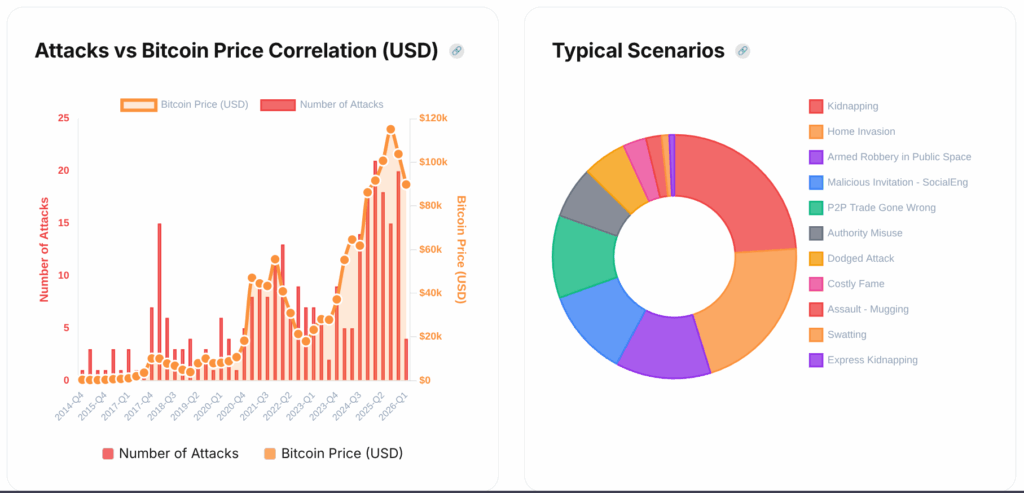
MetaMask Launches Native Bitcoin Integration for 30 Million Active Users

By: Juan Galt

Bitcoin Magazine

MetaMask Launches Native Bitcoin Integration for 30 Million Active Users

Metamask, the popular Ethereum and DeFi wallet, announces Bitcoin integration as the company continues its expansion into multiple chains other than Ethereum. The wallet boasts 143 million downloads and over 30 million monthly active users, making it one of the most popular crypto wallets in the world.

Developed by Consensys, an Ethereum-born software development arm, Metamask has become a beast of its own, achieving massive success and adoption in the crypto industry. Having operated for over a decade, Metamask defined the user experience of in-browser wallets, copied by many of its competitors. Up until recently, Metamask was an Ethereum-only wallet, focusing on helping users move their wealth across Ethereum bridges, but in October, the wallet announced its planned expansion into Solana, and now Bitcoin has entered the list of blockchains it supports natively.

The Bitcoin integration was made possible in part thanks to the Bitcoin Development Kit, an open-source Bitcoin wallet library designed to make Bitcoin app development very easy.

Welcome MetaMask users to self custodial #bitcoin! For all you devs checkout bdk-wasm (kudos to @dario_nakamoto) to see how it's done.https://t.co/IOxNBe6qyb https://t.co/HjGZiwg4Ny

— Bitcoin Dev Kit (@bitcoindevkit) December 16, 2025


Metamask’s Bitcoin integration marks a major milestone for the growing Bitcoin DeFi ecosystem, which was previously thought to be a niche only available to new blockchains like Ethereum, thanks to their smart contracting capabilities. In recent years, however, projects like Ordinals revealed that there are very powerful scripting tools available in Bitcoin, which drew the attention of DeFi developers across the industry.

As a result, a variety of layer two projects of all kinds have been launched, bootstrapping an integration and cross-collaboration between Bitcoin and the broader EVM-based (Ethereum virtual machine) DeFi ecosystem. Some examples of Bitcoin DeFi platforms include BOB, Botanix, Rootstock, and the Liquid Network. 

Metamask has also announced in October this year that it is preparing to go public in the U.S. markets, and has launched a variety of mainstream-facing features, such as a crypto-powered debit card or Metamask Card, in partnership with the Linea network, as well as “one of the largest on-chain rewards programs ever built”. 

This post MetaMask Launches Native Bitcoin Integration for 30 Million Active Users first appeared on Bitcoin Magazine and is written by Juan Galt.
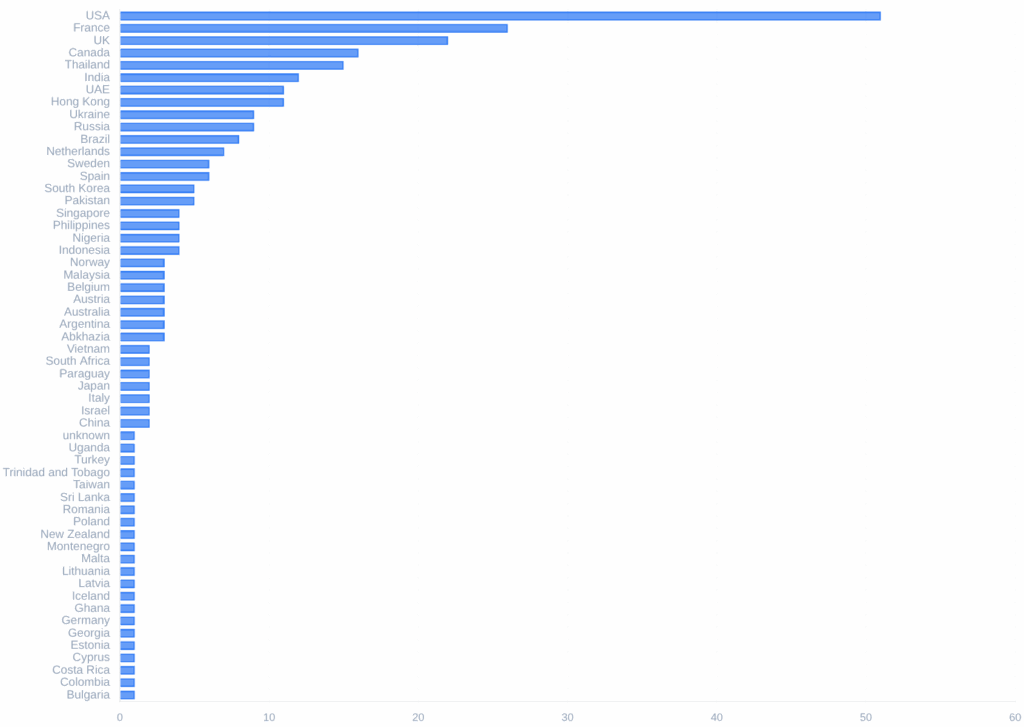
Bitcoin’s Weekly Close Signals Imminent Drop Below $84,000 Toward $70,000 Floor

Bitcoin Magazine

Bitcoin’s Weekly Close Signals Imminent Drop Below $84,000 Toward $70,000 Floor

Bitcoin Price Weekly Outlook

Bitcoin price is looking lethargic heading into this week. Last week saw prices reject once again from the $94,000 resistance level. The bulls were not able to gain any momentum whatsoever as the price bled down into Sunday to close at $88,170. This week, the bears will look to break the $84,000 support level and take the price into the low $70,000 range. The bulls will desperately try to hold onto this $84,000 level as support, but it may not be able to survive another test.

Bitcoin's Weekly Close Signals Imminent Drop Below $84,000 Toward $70,000 Floor

Key Support and Resistance Levels Now

With the $84,000 support level again under pressure this week, the bears will look to finally drive the price down below it. There’s a small chance bulls may be able to defend $85,000, but it’s unlikely to hold here unless we see big buying volume step in. The $72,000 to $68,000 support zone below should be a solid floor on initial tests, so it would likely take a few weeks to break down through this level if we get there. Below here, bulls will look to hang onto the 0.618 Fibonacci retracement support at $57,000.

Up higher, we have a blanket of resistance now from $94,000 all the way up to $118,000. If bulls can manage to finally conquer $94,000, they will look to $101,000 next, although sellers should step in strongly above $97,000. Above $101,000, it should be a slow go all the way to $107,000. Even more buying pressure would be necessary above $107,000 to push through this thick zone all the way to $118,000. None of these levels seem attainable anytime soon with the current price action, however.

Outlook For This Week

Bitcoin’s weekly red candle close was not what the bulls wanted to see last week. The bears got a much-needed rest over the past few weeks and should see renewed strength this week. Look for the bears to attempt to break the $84,000 support level at some point this week, with bulls potentially trying to put in a bounce to maintain higher lows around the $87,000 to $85,000 area. If price drops below $84,000 this week, I would expect to see acceleration down to at least $75,000 and likely into the low $70,000 area.

Bitcoin's Weekly Close Signals Imminent Drop Below $84,000 Toward $70,000 Floor

Market mood: Extremely Bearish – Bulls had some time to try to push the price above short-term support over the last couple of weeks and failed to do so. The bears are in control and should be well rested for renewed selling strength to the downside.

The next few weeks
Sellers received a much-needed break over the past few weeks, while buyers were only able to pause the bearish momentum. Bears should take advantage here to take out the $84,000 support level. In the next few weeks, look for the support zone in the $72,000 to $68,000 area to be hit. However, we should see a strong bounce from this area after an initial test. So if this zone is touched, look for price to at least re-test the $84,000 level from down there, with potential for an even stronger bounce. This zone is a potential area for a reversal out of the bear market, but if the “4-Year Cycle” holds true, then the price would likely test lower later into 2026.

Bitcoin's Weekly Close Signals Imminent Drop Below $84,000 Toward $70,000 Floor

Terminology Guide:

Bulls/Bullish: Buyers or investors expecting the price to go higher.

Bears/Bearish: Sellers or investors expecting the price to go lower.

Support or support level: A level at which the price should hold for the asset, at least initially. The more touches on support, the weaker it gets and the more likely it is to fail to hold the price.

Resistance or resistance level: Opposite of support.  The level that is likely to reject the price, at least initially. The more touches at resistance, the weaker it gets and the more likely it is to fail to hold back the price.

Fibonacci Retracements and Extensions: Ratios based on what is known as the golden ratio, a universal ratio pertaining to growth and decay cycles in nature. The golden ratio is based on the constants Phi (1.618) and phi (0.618).

This post Bitcoin’s Weekly Close Signals Imminent Drop Below $84,000 Toward $70,000 Floor first appeared on Bitcoin Magazine and is written by Ethan Greene - Feral Analysis and Juan Galt.

Why Trump Should Pardon The Developers of Bitcoins Non Custodial Samourai Wallet

By: Juan Galt

Bitcoin Magazine

Why Trump Should Pardon The Developers of Bitcoins Non Custodial Samourai Wallet

On December 18th, days before Christmas, Keonne Rodriguez, co-founder of the Bitcoin Samourai Wallet, will have to surrender to prison. His crime? Creating a software tool that gave Bitcoin users comparable privacy to that which banks are expected to provide. Samourai Wallet, the brand and technology stack built by Rodriguez and William Lonergan Hill, was shut down by the U.S. Government in April 2024 on a variety of charges, including money laundering, but only one charge stuck after a high-profile trial, the weakest charge of all, “unlicensed money transmission”.

What does it mean to transmit money? According to prosecutors, custodial control over user funds is no longer a requirement to need an MSB license; “a USB cable transfers data from one device to another, and a frying pan transfers heat from a stove to the contents of the pan, although neither situation involves exercising ‘control’ over what is being transferred.” If the DoJ can indict a frying pan, then USB manufacturers better lawyer up! 

While I’m no genius, the Supreme Court has emphasized that laws should be clear enough for an AVERAGE PERSON to understand

Let’s get into the minutiae of the specific subsection of the charge they pled to

What Keonne and Bill pled to was a violation 18 U.S. Code § 1960(b)(1)(C) pic.twitter.com/yGoDpZf8Eg

— lauren emily (@leamuirleyn) December 11, 2025


Remarkably, even FinCEN disagrees with the DoJ’s novel legal interpretation of what constitutes a money transmitter, as guidance at the time said non-custodial services could not be money transmitters because they do not exert control over money flows. FinCEN reasserted this fact to the DoJ prosecutors in a written statement, but they went forward with the charges anyway. This critical fact was withheld from the defense for almost a year, when it was finally revealed, “the judge denied the motion to present this evidence in the hearings, without even any argument,” according to Rodriguez. Critics argue this misconduct by the DoJ prosecutors is a violation of Brady v. Maryland, denying access to material that could have undermined the unlicensed money transmission charges, or, as Donald J. Trump would put it, this prosecution was rigged.  

Zack Shapiro, head of policy at the Bitcoin Policy Institute, warns the Trump administration and American software industry about the potential ramifications of this legal case, arguing that “collapsing the distinction between developing a tool and operating a service would introduce an untenable level of risk for anyone building privacy-enhancing or security-critical software.”

“Rodriguez and Hill ultimately accepted plea agreements in the face of substantial sentencing exposure, even though government records undermined the central regulatory theory of the case,” Shapiro added in a letter published on the BPI website, asking the Trump admin to pardon the Samourai Wallet devs. 

Fundamentally, the prosecutorial approach in the Samourai Wallet case risks establishing an influential precedent that threatens the financial privacy of American citizens and stifles innovation in the U.S. crypto industry. It could shape future prosecutions and regulatory developments, potentially reclassifying non-custodial services as money transmitters under federal law—requiring national MSB registration with FinCEN—and prompting stricter state-level licensing in jurisdictions like New York or California.

Echoing the trial against Ross Ulbricht a decade earlier, this rigged case against Samourai Wallet was set up during the Biden administration with support from anti-crypto politicians whom Trump defeated in the 2025 elections with the popular mandate. During his campaign at the 2024 Bitcoin Nashville speech, Trump said, “I will always defend the right to self-custody,” and got major support from the Bitcoin and crypto industries through the shared vision of making the United States the crypto capital of the world.

“I pledge to the Bitcoin community that the day I take the oath of office, Joe Biden and Kamala Harris’ anti-crypto crusade will be over,” – Donald J. Trump, Nashville 2024. 

Many libertarians in the broader crypto industry see entrepreneurs like Keonne Rodriguez and William Lonergan Hill, in the same category as Roman Storm and Roman Sterlingov of Tornado Cash and radio host Ian Freeman, as nothing more than political prisoners of an entrenched banking cartel. 

David Sacks, the venture capitalist and White House A.I. & Crypto Czar, should also pay attention to this issue; otherwise, what does it even mean to be the Crypto Czar? If Bitcoin wallets end up regulated the same as banks, despite having no counterparty risk, then whose interests are really being served, Mainstreet’s or Wallstreet’s?

While the Trump admin has been very conservative during the DoJ’s prosecution and trial of the Samourai Wallet devs — and perhaps, understandably so — that stage of the legal battle is over. 

It is time for the Trump administration to meet its promise to the American public and defend self-custody and the crypto industry in America. It is time for Trump to set the record straight and pardon Keonne Rodriguez and William Lonergan Hill, as well as the Tornado Cash devs, while we are at it, lest we have another Ross Ulbricht-style miscarriage of justice. 

The Bitcoin and crypto industry is well behind this effort and has begun gathering signatures at Change.org, totaling over 5000 so far and growing, with the only official fundraising campaign at GiveSendGo.

Should Trump pardon the Samourai Wallet devs, he would be sending a clear signal to those who want surveillance-based, central bank digital currency systems to enslave Americans and the world that Americans will not stand for it. That the United States stands with the fundamental human right to privacy, dignity, due process, and the presumption of innocence, and not the tactics of intimidation developed by the likes of Joseph Gorbles, where privacy is a crime. Mass, indiscriminate surveillance, without a warrant, without due process, that is the real crime. 

This post Why Trump Should Pardon The Developers of Bitcoins Non Custodial Samourai Wallet first appeared on Bitcoin Magazine and is written by Juan Galt.

The Samourai Wallet Trial: A Test of Financial Privacy and Developer Freedoms

By: Juan Galt

Bitcoin Magazine

The Samourai Wallet Trial: A Test of Financial Privacy and Developer Freedoms

This piece is featured in the print edition of Bitcoin Magazine, The Freedom Issue. We’re sharing it here as a sample of the ideas explored throughout the full issue.

On November 3, 2025, the freedom for developers to build financial privacy software is on trial.

Samourai Wallet was a Bitcoin privacy wallet developed by Keonne Rodriguez and William Lonergan Hill. It included specialized privacy tools that mixed the coins of wallet users in ways that required no third-party custody. The service’s servers helped coordinate “mixing” — methods to conceal the origin of coins and offer users some degree of forward privacy.

Rodriguez and Hill were arrested on April 24, 2024, on two charges: conspiracy to operate an unlicensed money transmitting business and conspiracy to commit money laundering.

The U.S. Department of Justice (DoJ) accused the Samurai Wallet developers of facilitating over $2 billion in unlawful transactions through their cryptocurrency mixing service between 2015 and February 2024. Additionally, the DoJ alleges that the developers helped launder more than $100 million in criminal proceeds from illegal dark web markets, such as Silk Road and Hydra Market, as well as other hacking and fraud schemes.

The case of United States v. Rodriguez and Hill threatens the established precedents of code as speech on two major fronts.

The first regards the “$2 billion in unlawful transactions” accusation. The prosecution implies that software that aids or facilitates the movement of money in any way is indistinguishable from money transmission and that it requires a money transmitter license, even if that software never holds custody of user funds. This is entirely at odds with the dynamic that had previously been established by FinCEN’s 2019 guidance and other legacy financial regulations.

The second implication is that software that defends the privacy of communications or transfer of value is not protected speech under the United States’ First Amendment.

Code is Speech

The United States has a long and unique tradition of defending freedom of speech.

Over the years, many court cases have reinforced these values, creating precedents that let developers create great software and share it online. That kind of software has made the United States the technological epicenter of the world, from AI to cryptographic finance; the freedom to build software today is critical to the economic success of the nation.

Texas v. Johnson (1989), for example, established that burning the U.S. flag in protest was indeed protected speech even though the “speech” in this case was “functional”, i.e., expressed in the destruction of the flag. 

In the 1990s, with the rise of the internet, landmark cases like Bernstein v. United States (1996-1999) established that discussions about cryptography — specifically the sharing of source code involving cryptographic algorithms — was not a “munition” governed and regulated by the Arms Export Control Act and the International Traffic in Arms Regulations. On the contrary, the publication of source code explaining how cryptography worked was expressive speech and thus fully protected under the First Amendment.

The Bernstein case marked a critical victory for the Cypherpunks of the ’90s, whose contributions to open source software laid the foundations for Bitcoin: Many of the technologies that Satoshi Nakamoto used in its construction were indeed invented in the internet forums of the time. It was there that the Cypherpunks discussed the application of cryptography to the defense of freedom of speech, digital privacy, and civil rights. 

In the Universal City Studios v. Corley (2001) case, however, something shifted slightly. Jon Lech Johansen, a Norwegian teenager, wrote software that jail-broke copyrighted movies from software locks placed there by Universal Studios, making movies playable in Linux systems. Eric Corley, a U.S. journalist, published the software online, which led to a massive lawsuit spearheaded by Universal Studios. 

This landmark case turned on the question of whether something is speech or conduct in the realm of software. It established that when speech in the form of software gained “function”, such as the breaking of a DVD encryption lock, it suddenly became a tool and could become subject to regulation.

While Corley’s free speech protections were eventually reaffirmed in the Second Circuit Court of Appeals, the distinction between source code publications as a form of expression and functional software as a tool that can be regulated was established. 

Despite the rulings — Corley even removed the copy of the DeCSS piracy software from his website — the damage was done. Internet civil disobedience spread the software far and wide, and the piracy wars of the 2000s raged on for years. They demonstrated not just the limits of free speech protections but also the limits of trying to enforce digital censorship.

Information simply wants to be free.

The Samourai case could face a similar challenge, and it is unclear whether “code is speech” can be a sufficient defense for Rodriguez and Hill. 

Chink in the Armor

A controversial project that created as many loyal superusers as it did haters and critics is now on the front lines of the Biden-era lawfare, and the principle that code is speech appears to be at stake once again. 

As a result, it has forced critics — myself included — to rise to the defense of a wallet that, while quite successful in its adoption, made many design choices that were questionable and for which they may be judged harshly in the coming months.

One potential weak point in their defense is their alleged enabling of sanctioned parties to “launder money” through their coin-mixing service. The U.S. Attorney’s Office for the Southern District of New York (SDNY) went as far as to embed a screenshot of the Samourai wallet account welcoming sanctioned oligarchs:

The Samourai Wallet Trial: A Test of Financial Privacy and Developer Freedoms

Coin mixers are akin to the virtual private networks (VPNs) used by law-abiding citizens and criminals alike. For privacy to exist, one must be able to hide in a crowd, their choices and personal information shielded from prying eyes, and to be revealed or judged after due process.

With that, the Samourai Wallet founders did not make themselves a difficult target. If the allegations by the prosecution are true, and they knowingly helped dress up wolves in sheep’s clothing, then they likely will have to pay a price for violating sanctions doctrines. A deeply chilling legal precedent could then be set, shaping the future of digital finance and directly harming the proliferation of such technology in the United States. 

However, there may be hope in the change to a more crypto-friendly administration under the leadership of President Trump.

“I Will Defend Your Right to Self Custody” – Trump

During his keynote speech at the Bitcoin Conference in Nashville in 2024, Trump made a promise, one that he still has the opportunity to keep. 

He promised to “defend the right to self custody”.

Without financial privacy, self custody is dramatically weakened, as seen by the growing wave of physical attacks on Bitcoiners in recent years. The liberty previously enjoyed by software developers to build self-custodial Bitcoin tools like Samourai Wallet, is on trial.

The chilling effect

The U.S. government has, for the most part, learned not to attack an already hardened legal precedent like freedom of expression. However, by going after the developers and maintainers of Samourai Wallet directly, the DoJ had a net negative effect on financial privacy in the U.S., and it spread a chilling effect among Bitcoin software developers. 


Immediately following the arrest of Rodriguez and Hill, Phoenix Wallet, arguably the best self-custodial Lightning wallet in the industry, exited the U.S. app stores — a decision made to protect their business from a U.S. government that appeared hostile to Bitcoin self-custody software. (As of April 2025, Phoenix is once more available in the U.S.) Wasabi Wallet, another financial privacy software company, stopped offering its noncustodial mixing services to the public. And wallets like Blink from El Salvador geofenced American users from their app entirely. 

If Trump is going to really defend the right to self custody, and stop the eventual deployment of a central bank digital currency (CBDC) in the United States (another election promise), he will have to address the need for financial privacy in the digital era and reverse the injustices set in course by the Biden administration. 

In one way or another, these cases will leave a mark on his presidential legacy.

Foundations of a CBDC

The Biden administration continued to sue, scrutinize, and debank the crypto industry — a policy that started under Obama with Operation Choke Point and ultimately resulted in Silicon Valley CEOs losing access to their bank accounts altogether. 

A sharp example of permissioned financial rails being abused was also witnessed in Canada in 2022 when the bank accounts of truckers and donors were frozen during the Freedom Convoy COVID protests in Ottawa, following the invocation of the Emergencies Act by then-Prime Minister Justin Trudeau.

Furthermore, top U.S. officials from the Treasury have stated that central bank digital currencies (CBDCs) would need to have strong identity tracking, even while “balancing consumer privacy”, striking at a trade-off that’s sacrificing user privacy altogether:


“The Report notes that ‘a CBDC system could increase the amount of data generated on users and transactions,’ which would pose ‘privacy and cyber security risks, but … offer opportunities for proper … supervision and law enforcement efforts.’”

Among the ideals of justice and fairness laid out by the Constitution is one where the privacy of the individual is granted by default, where there is a presumption of innocence, and the prosecution must prove the accused’s guilt beyond a reasonable doubt.

The Fourth Amendment rights of innocent Americans who were using Samourai Wallet in particular are under attack by the kind of lawfare seen in the Samourai case:

“The right of the people to be secure in their persons, houses, papers, and effects, against unreasonable searches and seizures, shall not be violated, and no Warrants shall issue, but upon probable cause, supported by Oath or affirmation, and particularly describing the place to be searched, and the persons or things to be seized.”

Our homes are no longer just made of brick and stone, and our words no longer contained within those four walls. They are often digitized and transmitted, and so is the value they hold and move. Like cash in a sealed envelope, the use of financial privacy software naturally fits the protections of the Fourth Amendment, especially when no custody of funds is ever taken by the infrastructure facilitating its transit. 

Yet the few tools that protect this default access to privacy have been systematically attacked and undermined in the digital age, akin to the government suing envelope manufacturers as money launderers for obfuscating the contents of a person’s exchanges.

It’s actually much worse. While developers of privacy software like Samourai Wallet are harassed, legacy financial institutions, in their attempt to be compliant with KYC and AML regulations — the same class of regulations used to prosecute Samourai Wallet today — are forced to gather excessive private information from their customers in order to report anything “suspicious” to the authorities.

These KYC data vaults are regularly hacked. Indeed, it’s impossible to keep them secure as they grow in size and become targets for cybercriminals, which exposes everyday people to organized crime in the form of identity theft and fraud. By 2012 in the U.S, identity fraud cost more than all other forms of theft combined, reaching over $21 billion, and this figure rose to $52 billion by the 2020s.

This surveillance infrastructure is doing profound and irreversible harm to U.S. citizens and the legacy financial system as a whole. 

It is nevertheless sold as the necessary evil that stops money laundering by cartels and ends terrorist financing via sanctions through mechanisms like the OFAC list. And yet it is these same banks who are regularly busted laundering hundreds of millions of dollars for cartels, like TD Bank last year, which had to pay a record fine to U.S. regulators of $3 billion. It was accused of failing to surveil $18 trillion in transactions, of which close to $700 million was allegedly moved by drug cartels. Despite all the regulations and compliance, it turns out it was the banks that were doing the bulk of the money laundering.

When it comes to sanctions, meanwhile, Russia has received the worst lot of U.S. sanctions in recent memory, perhaps in history, including freezing its foreign treasury reserves. Despite that, Russia has run over major territories in Ukraine during the invasion and managed to survive long enough to be in a very strong negotiating position on the other side of the conflict — effectively marking the end of the sanctions foreign policy regime. It is no coincidence that the Trump administration is so focused on tariffs, overseeing the flow of goods across borders instead of the flow of money. 


Also, let us not forget that when it comes to terrorist financing, it was the CIA that funded and trained the Afghan Mujaheddin in the ’80s, training guerrilla operatives like Osama bin Laden, who later on helped create Al Qaeda and carried out 9/11.  

None of these crimes were done by Bitcoin or Bitcoiners. But the consequences of these laws weigh heavily on civilian populations. And the exponential growth of identity theft, the demoralizing ironies of the war on cash, the micromanagement overhead of the public’s finances, and the chilling effect on privacy-oriented software developers are the direct consequence of the KYC panopticon being constructed all around us. 

All these policies can be summed up as flash points in the war on cash, a broad policy strategy of the pre-Trump era, that I believe was meant to set a foundation for the deployment of CBDCs, a state monstrosity that Trump specifically promised to protect us from.

Lesson Learned

The biggest concern I had with the Samourai Wallet’s mobile app was its backend design. Ambitious and commendable as it was to try and bring cutting-edge, self-custodial coin mixing to the masses, in order to achieve it, Samourai Wallet made some questionable compromises — compromises which competitors and critics doubted were worth the upside and which can be judged in the trial as well. The most obvious problem was the way the mobile client was said to handle the xpubs of their users.

Xpubs are very important cryptographic information in Bitcoin and crypto wallets. Similar to IP addresses in the world of VPNs, xpubs represent a key piece of identifying information for Bitcoin users. Anyone who has your xpub can deterministically recreate all public addresses you ever had or ever will have in that wallet, allowing them to know exactly what public Bitcoin addresses are within your control and which funds have moved through them.

In the marketing and debates about VPNs — which are in some sense the early web’s equivalent to Bitcoin mixers — IP addresses, and whether a service can or cannot keep IP logs, is critical to their credibility among a savvy user base. Services often boast about their processes and procedures around not keeping their users’ IP addresses, which, if shut down — as Samourai Wallet has been — could end up in the hands of prosecutors, compromising the browsing history of their users.

In the case of Samourai Wallet and xpubs, a similar rule of thumb should apply. Internet users throughout the decades have discovered that paranoia about the quality of the tools and implementations pays off in the end. This lesson has been learned the hard way as VPN services and privacy-oriented email providers have been hacked or seized by government prosecutors. If there’s user data accumulated, the service can become a juicy target.

We don’t yet know what data Samourai Wallet had in the 17 terabytes confiscated by the U.S. government. Most of it is likely on-chain analysis done by their research arm OXT. But if user data was kept, then the privacy of many of those users might be at risk as well.

The Trump Legacy? 

It is fascinating that the future of software developers and their freedom to build private self-custody software will be judged and shaped in an age where Michael Saylor argues that the coin is not a currency and Trump, the self-branded crypto president, promises to protect your self-custody rights.

As Rodriguez and Hill stand trial, those wrapping themselves in the orange flag and those who can influence public policy about financial privacy will also be on trial in the court of public opinion; history will be their judge.

For us plebs who cannot influence public policy directly and can only judge the tools we use on their merit, there is a moral to this story. Compromising on privacy for convenience — to avoid the learning curve otherwise required — does not come without risk.

And on a long enough time frame, only the paranoid crypto-anarchists survive.

This piece is featured in the print edition of Bitcoin Magazine, The Freedom Issue. We’re sharing it here as a sample of the ideas explored throughout the full issue.

This post The Samourai Wallet Trial: A Test of Financial Privacy and Developer Freedoms first appeared on Bitcoin Magazine and is written by Juan Galt.
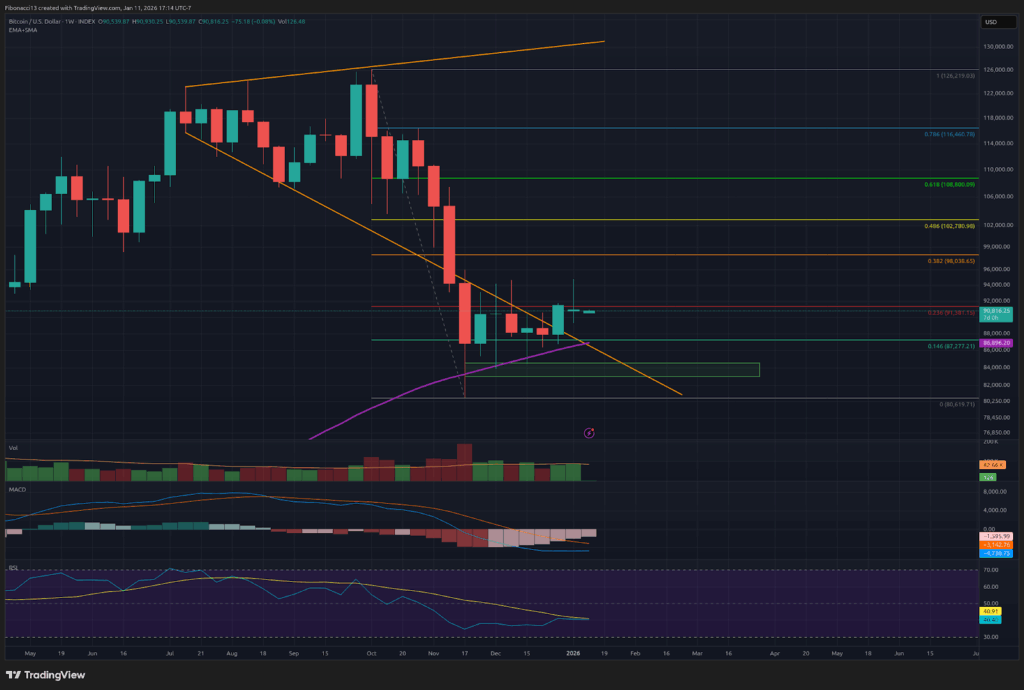
El Salvador’s AuthenticDoc Goes Live: Bitcoin-Powered Signatures Eye $60B DocuSign

By: Juan Galt

Bitcoin Magazine

El Salvador’s AuthenticDoc Goes Live: Bitcoin-Powered Signatures Eye $60B DocuSign

AuthenticDoc, a decentralized digital signature platform developed in El Salvador, launched on November 13, 2025, at the Adopting Bitcoin conference in San Salvador. The tool uses the Nostr protocol for its open-source, decentralized architecture, incorporating Bitcoin-compatible cryptography to enable tamper-proof document verification and user-controlled private keys.

Co-founder Fabian, of the Salvadoran firm illuminodes, announced the release during the conference. “The digital signature landscape is ripe for innovation, and AuthenticDoc is leading the charge,” Fabian said. “We’ve harnessed the power of decentralized open protocol technology to deliver unparalleled security and control, effectively eliminating single points of failure that plague traditional solutions. Our platform provides a robust, tamper-proof cryptographic verification and authentication solution that businesses can trust, all while making it accessible and affordable.”

Built by Bitcoiners, the start-up addresses vulnerabilities in centralized platforms like DocuSign, which holds about 70% of the $10 billion digital signature market. According to their press release, the sector is projected to grow to $60 billion by 2030 at a 40% compound annual growth rate, fueled by regulations such as the EU’s eIDAS and the U.S. ESIGN Act, alongside remote work trends and AI-driven authenticity challenges.

The platform’s core features include trustless identity verification, private key management for users, and ISO-standard compliance for enterprise use. It eliminates reliance on centralized storage by using Nostr’s event-based system, where documents and signatures are cryptographically signed and distributed across a network of relays, ensuring robust data storage and distribution.

Diego, head of technology at illuminodes, emphasized the shift from legacy systems. “Our decentralized architecture empowers users with private key control and trustless identity verification, moving beyond the vulnerabilities of centralized systems,” Adding that, “this is not just an incremental improvement; it’s a paradigm shift in how digital signatures are secured and managed.”

AuthenticDoc is free for basic use, with paid tiers based on volume for enterprises, undercutting competitors’ license-based models. The platform supports global expansion from its El Salvador headquarters, leveraging local talent and regulatory support to target markets in Latin America, North America, and Europe.

This post El Salvador’s AuthenticDoc Goes Live: Bitcoin-Powered Signatures Eye $60B DocuSign first appeared on Bitcoin Magazine and is written by Juan Galt.
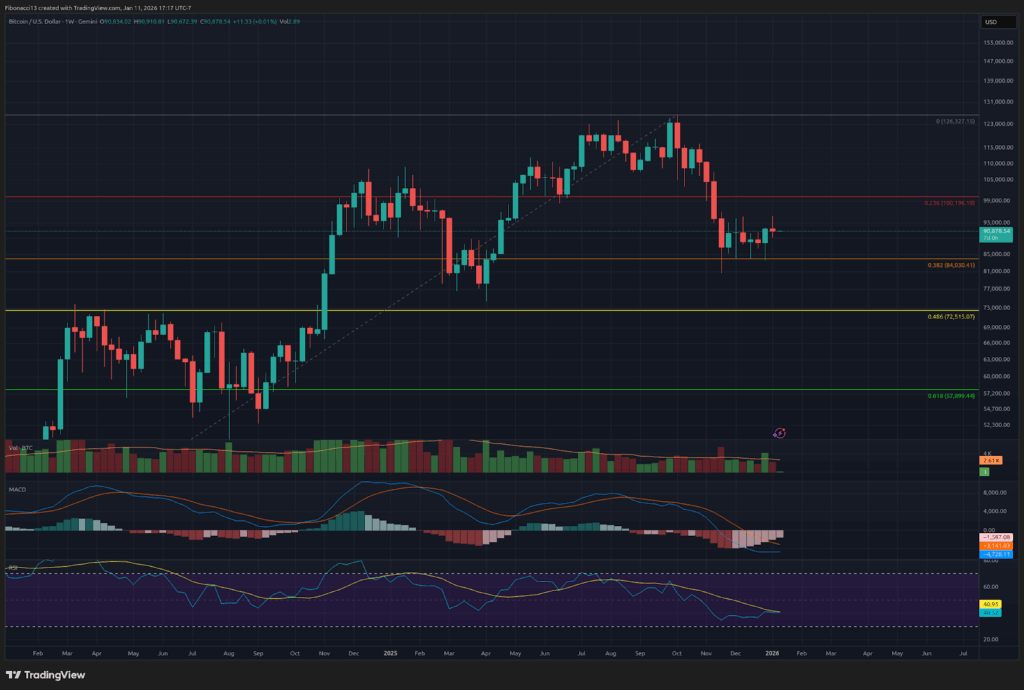
Bitcoin Bulls Eye $94K Breakout Ahead of Crucial FOMC Rate Cut Decision

Bitcoin Magazine

Bitcoin Bulls Eye $94K Breakout Ahead of Crucial FOMC Rate Cut Decision

Bitcoin Price Weekly Outlook

Last week was a bit of a roller coaster ride, while bears kicked the price down to the $84,000 support level early in the week, bulls stepped in down there to rally the price up to the $94,000 resistance level. From there, the price dropped once again, just below $88,000 on Sunday morning, before seeing a small rally to close the week out at $90,429. This week, bitcoin bulls will look to the FOMC meeting on Wednesday to produce a much-anticipated rate cut to help facilitate a better investment environment for bitcoin and other assets. Climbing above $94,000 will be key for the bulls this week, if they hope to sway the market more in their favor.

Key Support and Resistance Levels Now

Bitcoin closed the week as a doji candle on Sunday, indicating indecision between buyers and sellers. The short-term outlook is slightly in the bulls’ favor, who will look to conquer the $94,000 resistance level. If they can establish this level as support, they will look to $101,000 as the next major resistance level, with sellers likely to begin slowing momentum down above $96,000. Beyond $101,000, we look to $104,000 and then a resistance zone between $107,000 and $110,000. Resistance gets very thick above $100,000.

Looking down to support levels, bulls will want to see $87,200 hold any daily closes to avoid another test of the $84,000 support level below. Any further touches of $84,000 will weaken it and make it less likely to remain in place as a floor. There is a $72,000 to $68,000 support zone, which will look to buoy the price below here. Below $68,000 would likely see the price chop around some, but look to hang onto the 0.618 Fibonacci retracement at $57,700. It is unlikely we would test this lower level for at least several weeks, though, if it even comes.

Bitcoin Bulls Eye $94K Breakout Ahead of Crucial FOMC Rate Cut Decision

Outlook For This Week

Short-term momentum slightly favors the bulls early this week. The relative strength index (RSI) on the daily chart is showing some positive progress, generating higher highs off the 13 SMA support. This week, bulls will look for the 13 SMA to continue to act as support and help push the RSI above 60 into bullish territory. As long as bulls can remain above support levels heading into Wednesday’s FOMC meeting, they have a chance to tackle higher levels on a rate cut. If the FOMC meeting surprises everyone with no rate cut announcement, expect $84,000 support to fail.

Bitcoin Bulls Eye $94K Breakout Ahead of Crucial FOMC Rate Cut Decision

Market mood: Very Bearish – Bulls have managed to put in a small rally here over the prior two weeks, but the price action has been lackluster and is still favoring the bears.

The next few weeks
The bearish cross in place on the monthly MACD oscillator will continue to weigh on price throughout December and likely into January as well, barring any major moves up in price to undo it. Bitcoin price will need to continue to climb higher and maintain closes above the 100-week simple moving average (SMA), which sits at $84,700 heading into this week. Even if bulls can manage to keep momentum going over the coming weeks, there is heavy resistance sitting at $110,000 and above, and the price is very likely to pull back from that level (or lower) on the weekly chart. Doing so would put in a convincing lower high on the weekly chart and provide the bears with renewed conviction on a longer-term top being in place.

Terminology Guide:

Bulls/Bullish: Buyers or investors expecting the price to go higher.

Bears/Bearish: Sellers or investors expecting the price to go lower.

Support or support level: A level at which the price should hold for the asset, at least initially. The more touches on support, the weaker it gets and the more likely it is to fail to hold the price.

Resistance or resistance level: Opposite of support.  The level that is likely to reject the price, at least initially. The more touches at resistance, the weaker it gets and the more likely it is to fail to hold back the price.

SMA: Simple Moving Average. Average price based on closing prices over the specified period. In the case of RSI, it is the average strength index value over the specified period.

Fibonacci Retracements and Extensions: Ratios based on what is known as the golden ratio, a universal ratio pertaining to growth and decay cycles in nature. The golden ratio is based on the constants Phi (1.618) and phi (0.618).

Oscillators: Technical indicators that vary over time, but typically remain within a band between set levels. Thus, they oscillate between a low level (typically representing oversold conditions) and a high level (typically representing overbought conditions). E.G., Relative Strength Index (RSI) and Moving Average Convergence-Divergence (MACD).

RSI Oscillator: The Relative Strength Index is a momentum oscillator that moves between 0 and 100. It measures the speed of the price and changes in the speed of the price movements. When RSI is over 70, it is considered to be overbought. When RSI is below 30, it is considered to be oversold.

MACD Oscillator: Moving Average Convergence-Divergence is a momentum oscillator that subtracts the difference between 2 moving averages to indicate trend as well as momentum.

This post Bitcoin Bulls Eye $94K Breakout Ahead of Crucial FOMC Rate Cut Decision first appeared on Bitcoin Magazine and is written by Ethan Greene - Feral Analysis and Juan Galt.
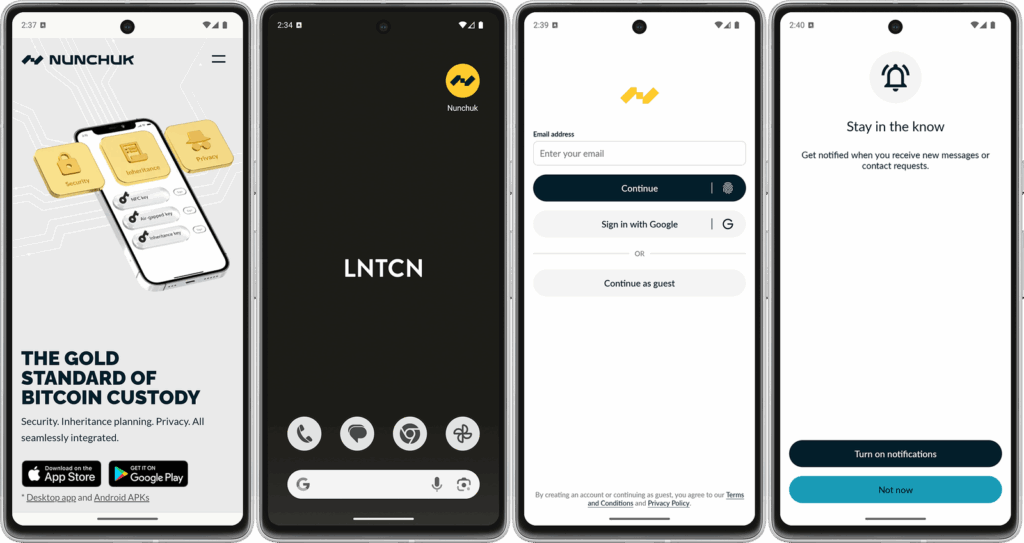
❌