5 Taste Uthappam is a popular South Indian Restaurant only menu. Variety of mini Uthappam served in a single banana leaf platter with coconut chutney and sambar. Some popular flavours include onion, masala, dry fruits, podi and vegetable. I had heard about this uthappam before, but I had never actually tasted it. During our last...
Spicy Indian red chicken curry is a rich, colorful and flavourful dish made with chicken, spices, curd, garlic and Kashmiri red chilli. The chicken pieces are marinated with spices and slowly cooked in the red chilli garlic paste. The red chicken curry pairs beautifully with roti, naan, parotta, pulav, biryani or even with hot steamed...
Kadala Curry for Puttu or Puttu Kadala Curry is a well known combo from Kerala. It is also known as kadala curry, kadala kari, kondakadalai curry which uses black chana or kala chana while chana masala use white chickpeas. Learn how to make this wholesome chana curry for breakfast with step by step pictures and...
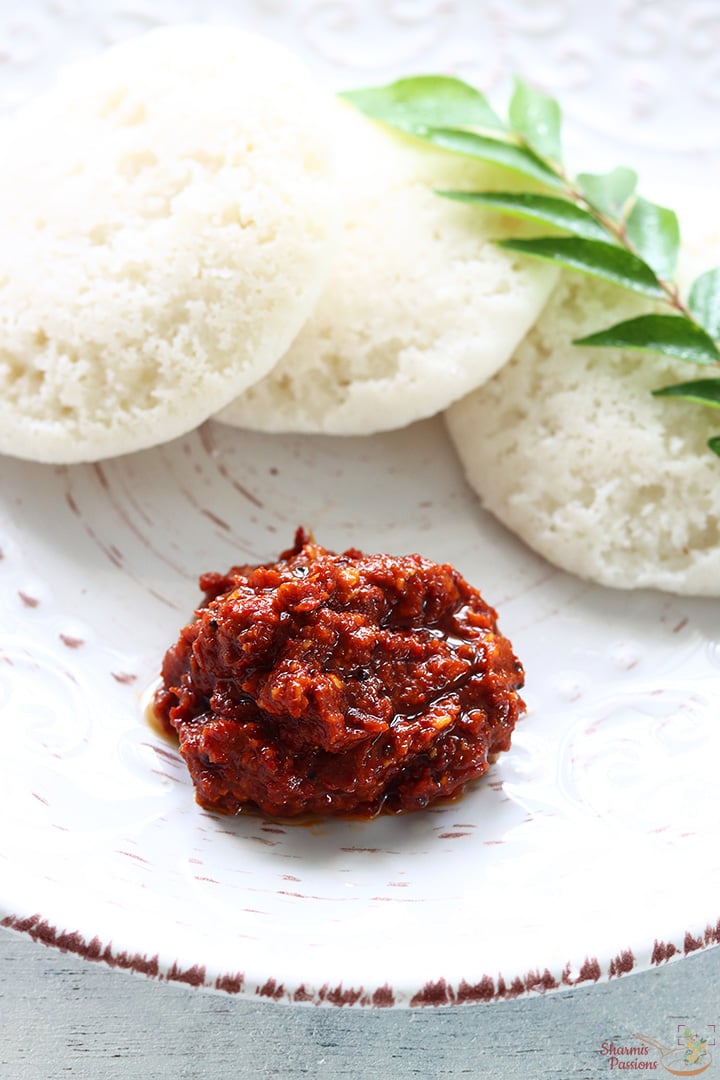
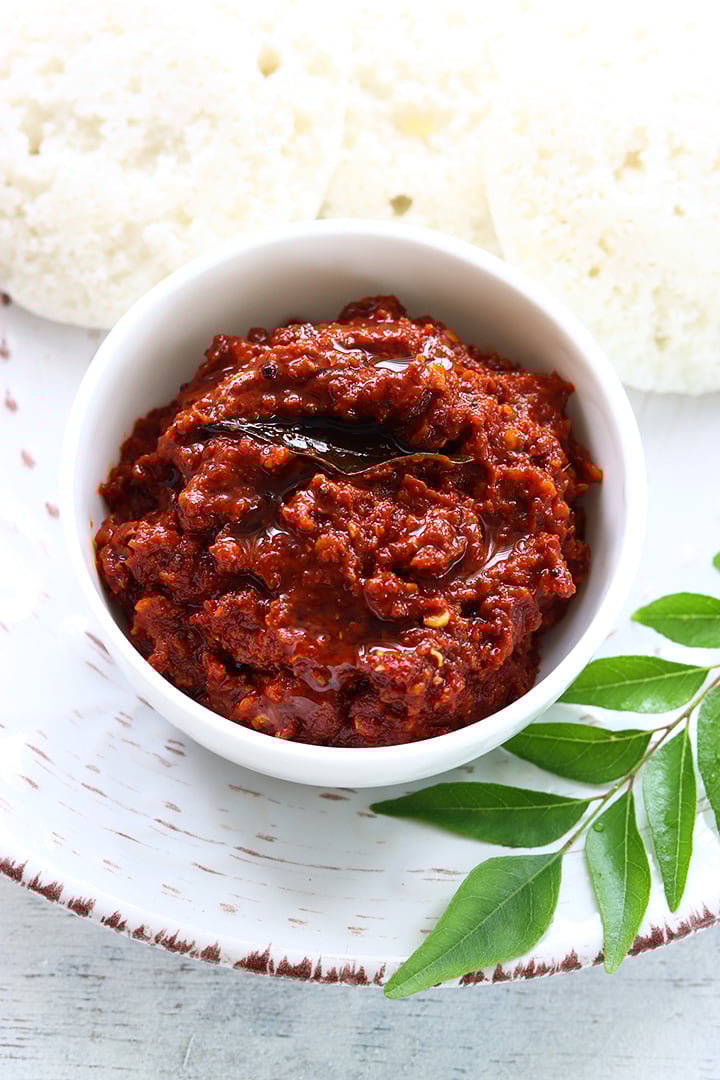
Chettinad Milagai Chutney is a spicy side dish made using dry chillies, garlic, small onion, tamarind and few basic spices. This milagai chutney recipe is Chettinad style perfect to relish with paniyaram, idli, dosa, uttapam etc. Chettinad Dry Chilli Chutney is simple and quick to make in minutes.
This chutney follows Chettinad style, so the flavor is bit stronger than the usual milagai chutney we make often. It lifts even a plain idli and makes it feel special. It tastes too good with paniyaram also because the spicy-sour taste balances well with the soft batter.
[feast_advanced_jump_to]
About Vara Milagai Chutney
Vara Milagai Chutney is a classic and popular red chilli chutney known for its bright color and simple rustic taste. This chutney is traditionally served wihVella Paniyaram in Chettinad homes. The dry chili, onion garlic paste is kept little coarse, so the texture feels more natural. The bright red color comes mostly from the mix of chillies. It cooks fast also, so it really helps on busy mornings.
It tastes bold, has good flavor, and goes well with almost any South Indian tiffin we make often. As it cooks, the raw smell slowly fades and the chutney becomes a deep red mix. Some versions add garlic or skip tomato, but the taste stays close to the traditional one only.
There are version using tomatoes in this chutney but the traditionally tomatoes are not used. But it is your preference if you want to reduce the heat then you can add tomatoes while grinding and make this chutney too.
You can adjust this chutney based on what you like. For a brighter color, add few more Kashmiri chillies. For sharper taste, increase regular chillies little. A pinch of jaggery also balances heat if you prefer mild. Small changes bring slightly new taste but the main chilli flavor stays the hero.
I usually make this chutney whenever we plan dosa or idli for brunch. It needs very little chopping and comes together so quick If you like chutneys with small punch but still homely, this one fits daily meals nicely.
Vara Milagai Chutney is one of those quick chutneys I make when I don't want to spend too much time in kitchen but still need something tasty for dosa or idli. We love it with soft hot idlis.
Chettinad Milagai Chutney Video
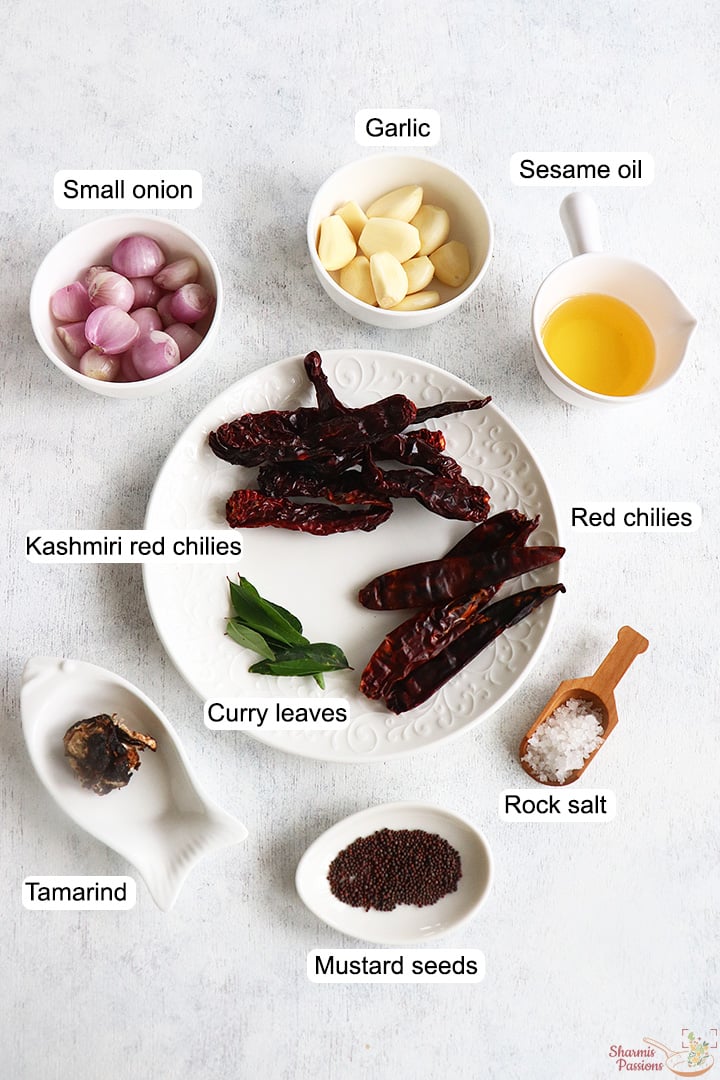
Vara Milagai Chutney Ingredients
Red chillies - I have used these for heat since they give that sharp spicy taste. You can reduce it if you want milder chutney.
Kashmiri red chillies - I added this mainly for color because it gives a nice deep red look. You can use only regular chillies also, but then the color comes a bit darker.
Small onion - I have used this for the base flavor, it gives a mild sweetness and blends well with the chillies. You can add regular onion if you don't have small ones.
Garlic - This adds great taste and flavor.
Tamarind - I added a small piece for slight tanginess which balance the spice nicely. You can add little more if you like extra sour taste.
Gingelly oil - I used this for tempering since it gives a lovely aroma and that usual traditional taste. If you don't have it, you can add little coconut oil also.
Mustard seeds - This is added for tempering and gives a light nuttiness when it splutters. You can skip if you don't like mustard flavor.
Curry leaves - This gives a fresh smell and blends so well with gingelly oil. You can add more leaves if you like stronger flavor.
How to make Chettinad Milagai Chutney Step by Step
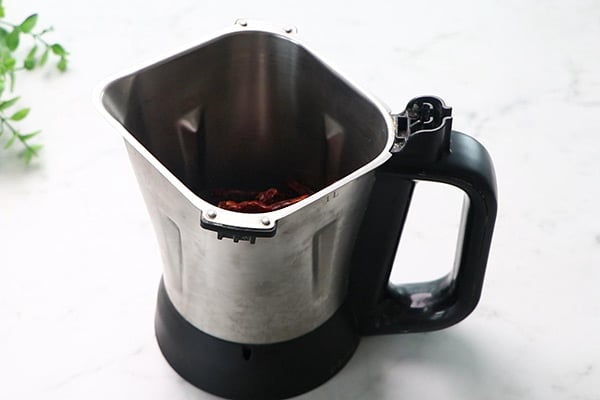
1.To a mixer jar add 10 kashmiri red chilies along with 5 regular red chilies.
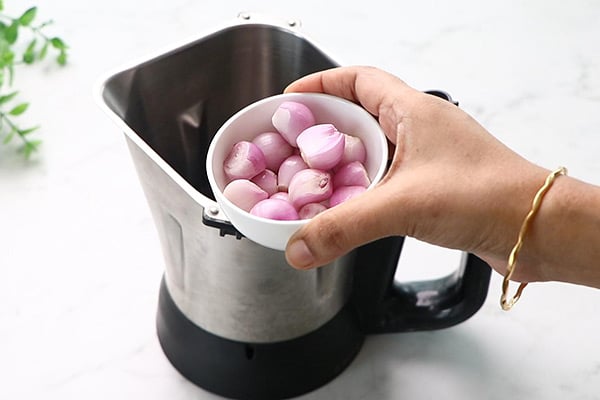
2.Add 15 small onion.
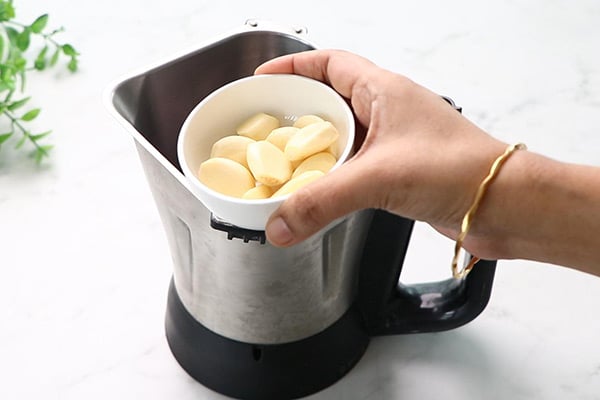
3.Add 10 garlic cloves.
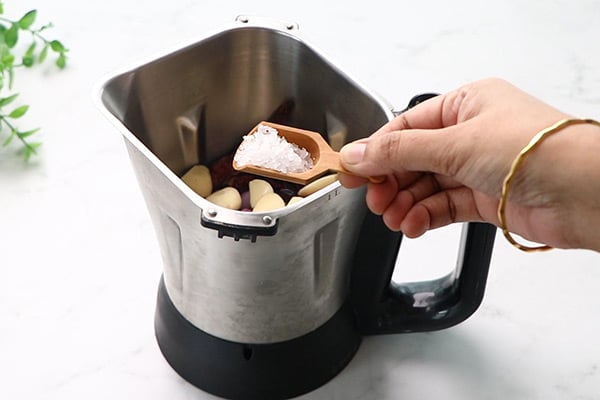
4.Add rock salt to taste.
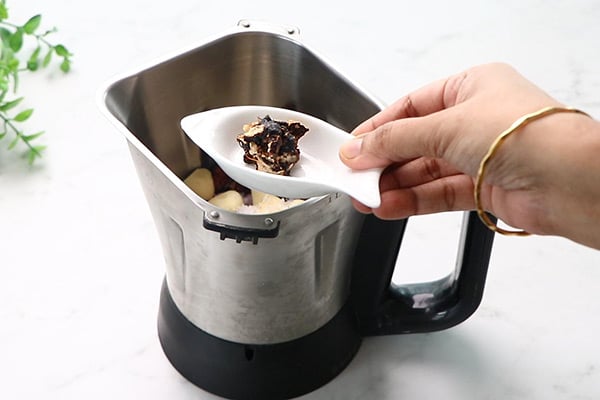
5.Add 1 teaspoon tamarind.
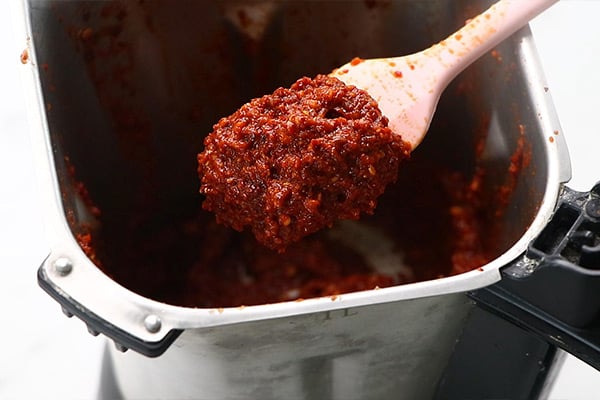
6.Add little water and grind it slightly coarse.
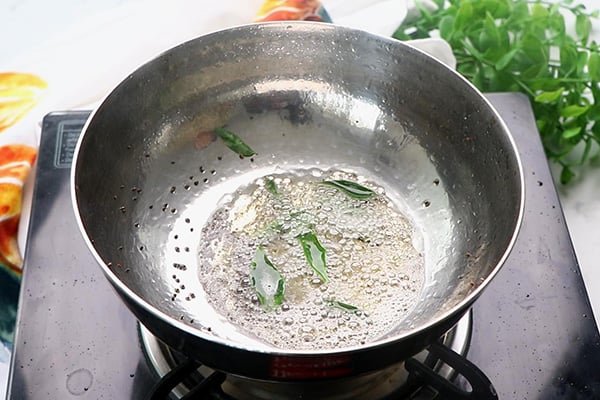
7.Heat 1 tablespoon sesame oil - add 1 teaspoon mustard seeds let it splutter then add few curry leaves, let it splutter.
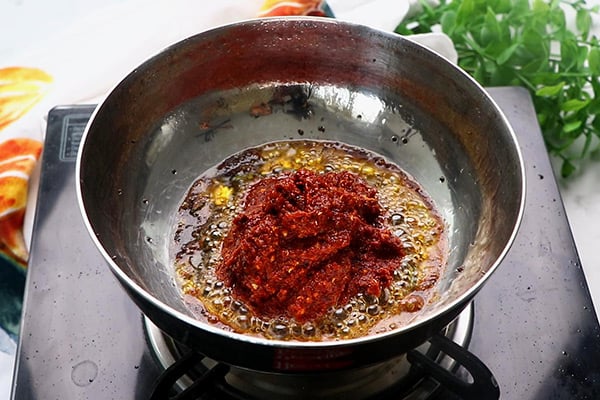
8.Add the prepared chili paste.
9.Saute well.
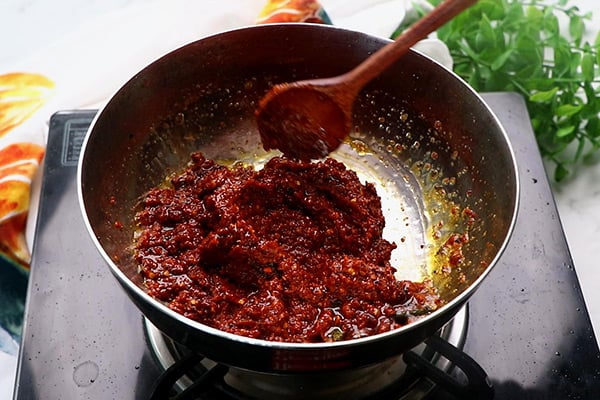
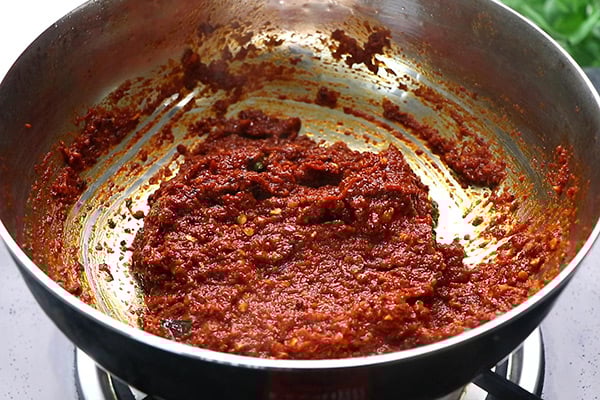
10.Cook for 5-7 minutes or until raw smell leaves.
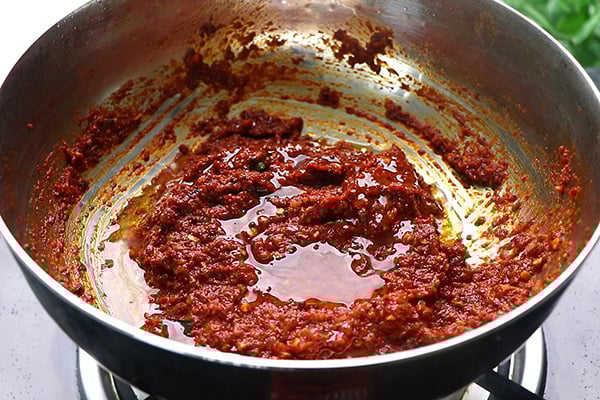
11.Finally add 1 tablespoon sesame oil.
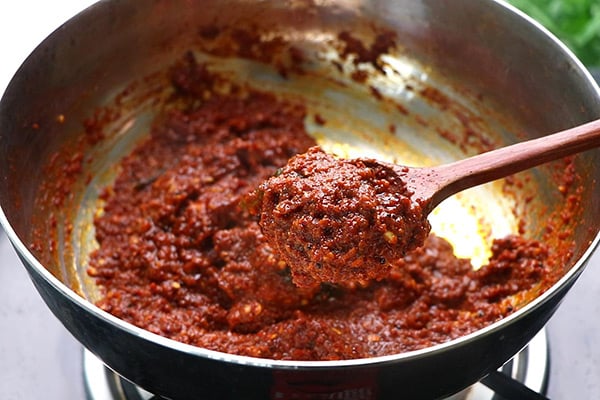
12.Mix it well and switch off.
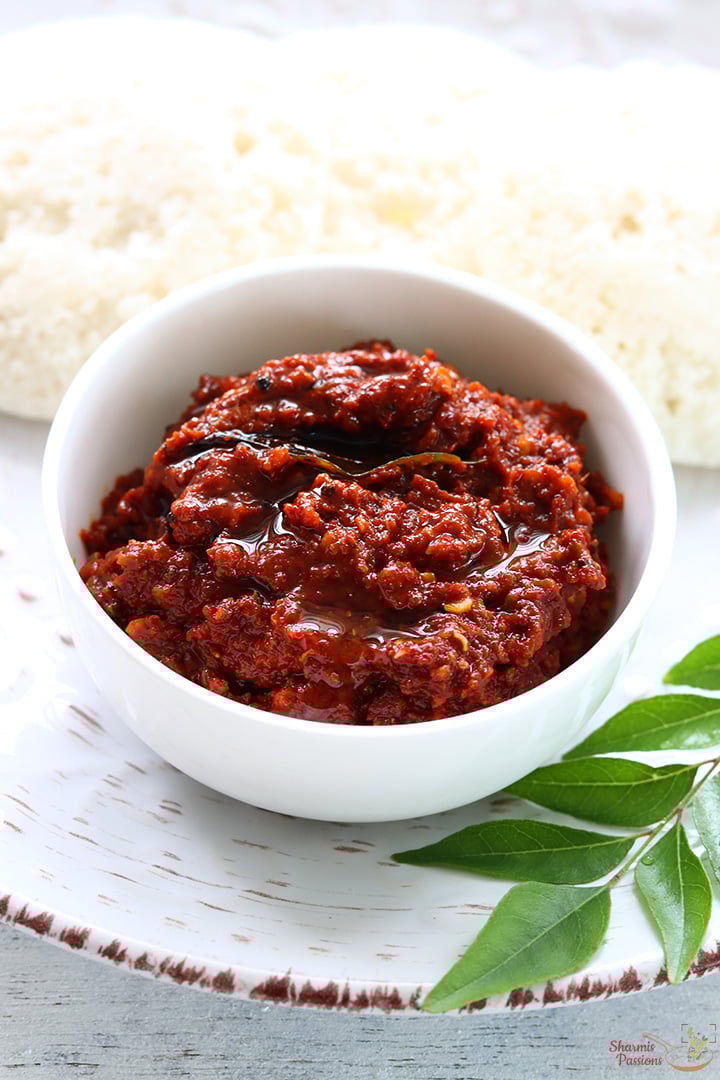
Chettinad style raw milagai chutney is ready.
Expert Tips
Grind texture - I grind the mixture slightly coarse as it gives better taste and rustic feel. Smooth grinding changes the flavor.
Oil quantity - I usually add little extra gingelly oil because this chutney tastes better when oil shows up. Try not to reduce it too much.
Cooking time - I cook till the raw smell goes fully, otherwise the chutney tastes harsh. Let it simmer slowly.
Chilli mix - Try mixing both regular and Kashmiri chillies as it gives the right color and heat. Only regular chillies make it too spicy.
Storage - Keep the chutney a little thick if you want to store it, thinner consistency doesn't stay fresh for long.
Balance - Add 1 teaspoon sugar for a tangy taste and balance.
Serving and Storage
Serve this chutney hot with idli, dosa, uthappam or even kuzhi paniyaram. It also goes nice with curd dosa or even chapathi if you enjoy a spicy side. Store the chutney in a tight jar and keep it in fridge. It stays good for around two days. You can warm it a bit before serving, just don't heat too much otherwise the color turns little dark.
FAQS
1.Can I add tomato?
Yes, you can add 1 tomato while grinding but chutney becomes less spcy. Traditionally tomatoes are not used for this chutney.
2.Can I make with Kashmiri chillies alone?
Yes you can, but then the chutney won't be much spicy, so adjust it how you like.
3.Can I add big onion?
Yes, you can add big onion but small onion adds more taste.
4.Can I make this chutney in advance?
Yes, it keeps well in fridge for two days. Just reheat a little before using.
5.Why sesame oil?
It gives the best flavor for this chutney, and it matches the chili taste so well.
If you have any more questions about this Milagai Chutney Recipe do mail me at sharmispassions@gmail.com. In addition, follow me on Instagram, Facebook, Pinterest ,Youtube and Twitter .
Tried this Milagai Chutney Recipe? Do let me know how you liked it. Also tag us on Instagram @sharmispassions and hash tag it on #sharmispassions.
Chettinad Milagai Chutney is a spicy side dish made using dry chillies, garlic, small onion, tamarind and few basic spices. This milagai chutney recipe is Chettinad style perfect to relish with paniyaram, idli, dosa, uttapam
etc. Chettinad Dry Chilli Chutney is simple and quick to make in minutes.
Course Side Dish
Cuisine Indian
Keyword 30 mins recipes, chettinad, chilli recipes, chutney recipes, dosa sidedish, idli side dish, oothapam kara chutney, Side Dish
Prep Time 5 minutesminutes
Cook Time 10 minutesminutes
Total Time 15 minutesminutes
Servings 4
Calories 150kcal
Author Sharmilee J
Ingredients
1tablespoonsesame oil
10kashmiri red chilies
5red chilies
15small onion
10garlic
1teaspoontamarind
rock salt to taste
To temper:
1tablespoonsesame oil
1teaspoonmustard seeds
few curry leaves
Instructions
To a mixer jar add 10 kashmiri red chilies along with 5 regular red chilies.
Add 15 small onion.
Add 10 garlic cloves.
Add rock salt to taste.
Add 1 teaspoon tamarind.
Add little water and grind it slightly coarse.
Heat 1 tablespoon sesame oil - add 1 teaspoon mustard seeds let it splutter then add few curry leaves, let it splutter.
Add the prepared chili paste.
Saute well.
Cook for 5-7 minutes or until raw smell leaves.
Finally add 1 tablespoon sesame oil.
Mix it well and switch off.
Chettinad style raw milagai chutney is ready.
Video
Notes
Grind texture - I grind the mixture slightly coarse as it gives better taste and rustic feel. Smooth grinding changes the flavor.
Oil quantity - I usually add little extra gingelly oil because this chutney tastes better when oil shows up. Try not to reduce it too much.
Cooking time - I cook till the raw smell goes fully, otherwise the chutney tastes harsh. Let it simmer slowly.
Chilli mix - Try mixing both regular and Kashmiri chillies as it gives the right color and heat. Only regular chillies make it too spicy.
Storage - Keep the chutney a little thick if you want to store it, thinner consistency doesn't stay fresh for long.
Balance - Add 1 teaspoon sugar for a tangy taste and balance.
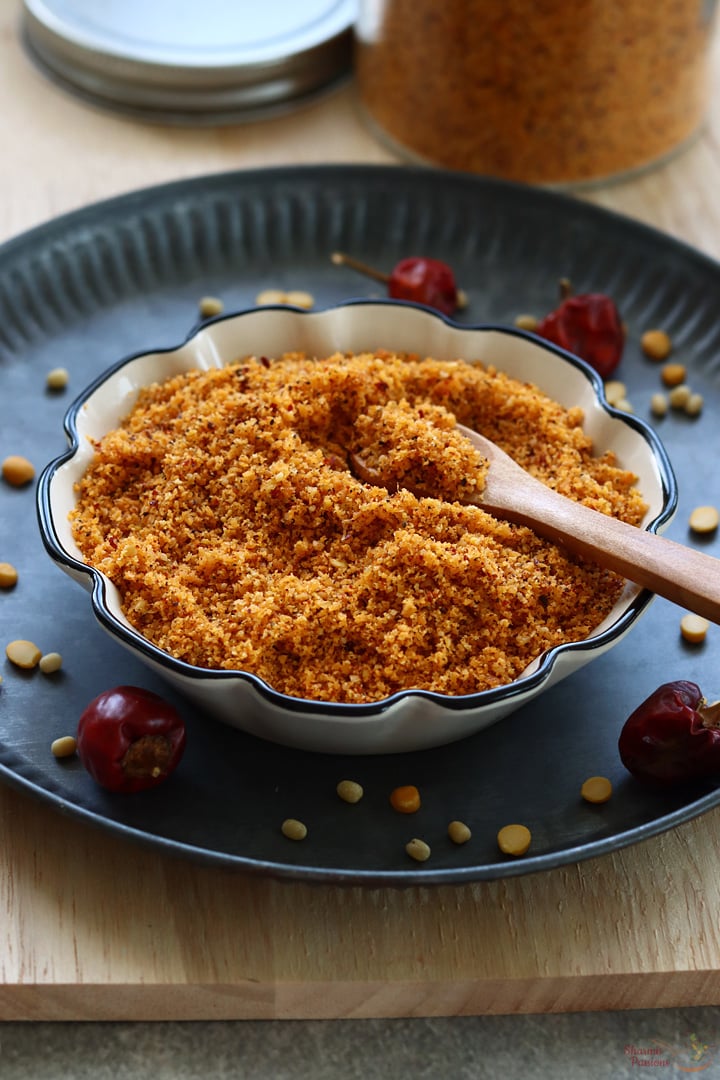
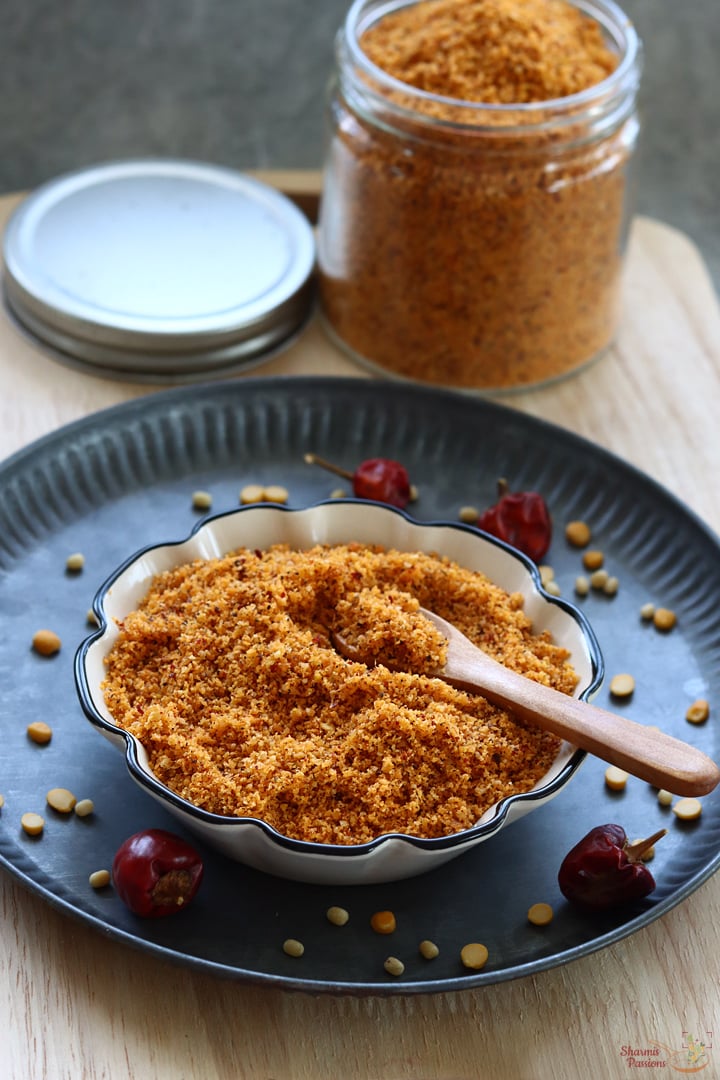
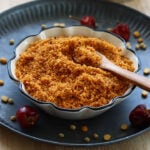
Thengai Podi is a simple coconut spice powder that serves as a great side dish for idli, dosa and rice. Also known as coconut podi, it has a nice roasted flavor with little bit spice, so it becomes a good choice when you want something quick on the side. It is easy to make and gives a tasty touch to a plain meal. The mix of coconut, dal and chilies gives a warm aroma that feels very tasty and comforting.
This is one of those podis you can make once and use for many days without much effort. It tastes good when mixed with ghee or even sesame oil. Since it uses dry roasted ingredients, it stores quite well also and stays fresh for long. It is a handy podi for busy mornings and also for quick weekend lunch.
[feast_advanced_jump_to]
About Thengai Podi
Thengai Podi is a spiced coconut powder made by dry roasting dried coconut along with dal and spices. It is used as a side for idli, dosa, rice by mixing with ghee/ oil and is relished by all spice powder lovers. This podi is quite common in many Tamil homes and often kept ready in the kitchen shelf for easy breakfasts.
The texture is slightly coarse and not fully powdered, and that gives a nice bite when mixed with ghee or oil. Kashmiri red chilies gives color and regular chilies gives heat but not too strong so perfect to serve for kids too. Adding tamarind for a bit of tang which balances the coconut taste well. Hing also brings a sharp flavor which goes well with the roasted dal.
There are small variations for this podi like adding chana dal along with urad dal or roasting the coconut extra brown for stronger taste, adding garlic etc. The flavor is mild but still rich because the coconut gets slightly golden and gives light sweetness.
Thengai Podi Video
Thengai Podi Ingredients
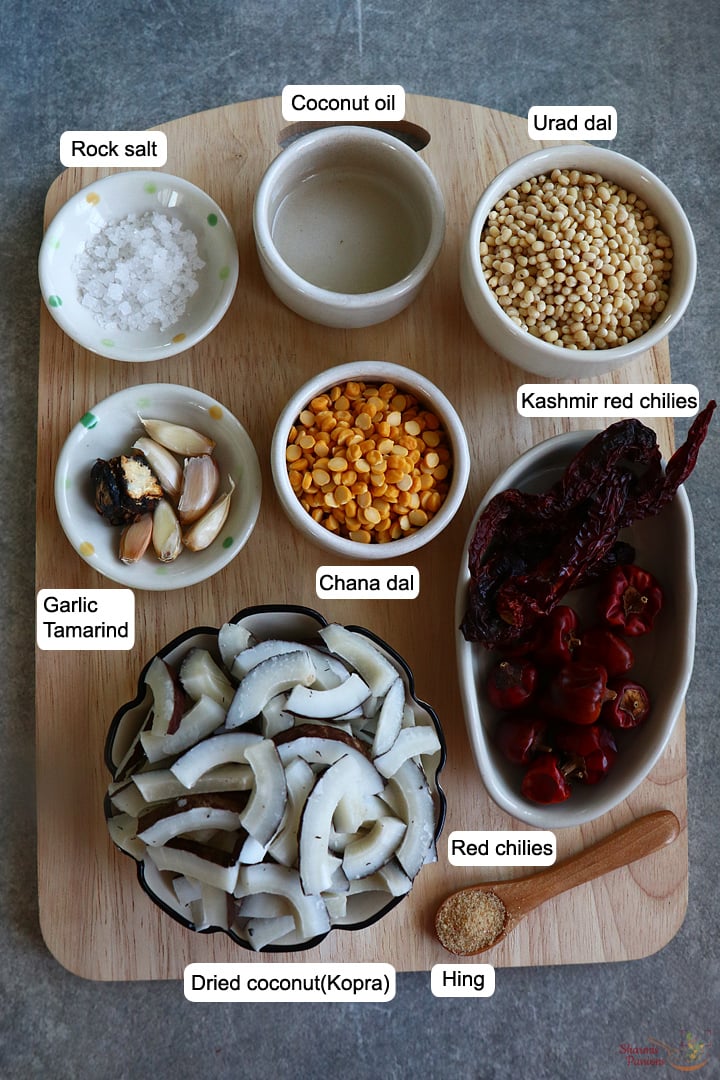
Coconut - I have used kopra (dried coconut) for more shelf life. You can use fresh grated coconut too. If using freshly grated coconut first grind all the other ingredients coarsely then add coconut and pulse it to get this texture.
Urad dal, Chana dal - I added whole urad dal, chana dal for roasting because it gives a nutty taste and volume to the podi.
Red chilies - I add Kashmiri chilies for color and regular chilies for heat. You can add more regular chilies if you want more spice.
Garlic - Adding garlic is purely optional but adds more flavor to the podi. Coconut with garlic combo is the best so I recommend adding it.
Tamarind - I have used little tamarind for mild tang which balances the coconut heaviness.
Hing - I have added a pinch of hing for flavor, it brings small lift to the podi.
Coconut oil - I have used coconut oil to roast the spices which gives a nice aroma. You can use regular oil but coconut oil suits better.
Rock salt - added to taste, if adding rock salt roast and add it to avoid it from letting out water.
You can reduce the spice for kids and use more coconut. This is one of those podis you can adjust easily according to your liking and still it turns good. I usually make this when I have extra coconut in the fridge because this podi helps use it up nicely without wasting.
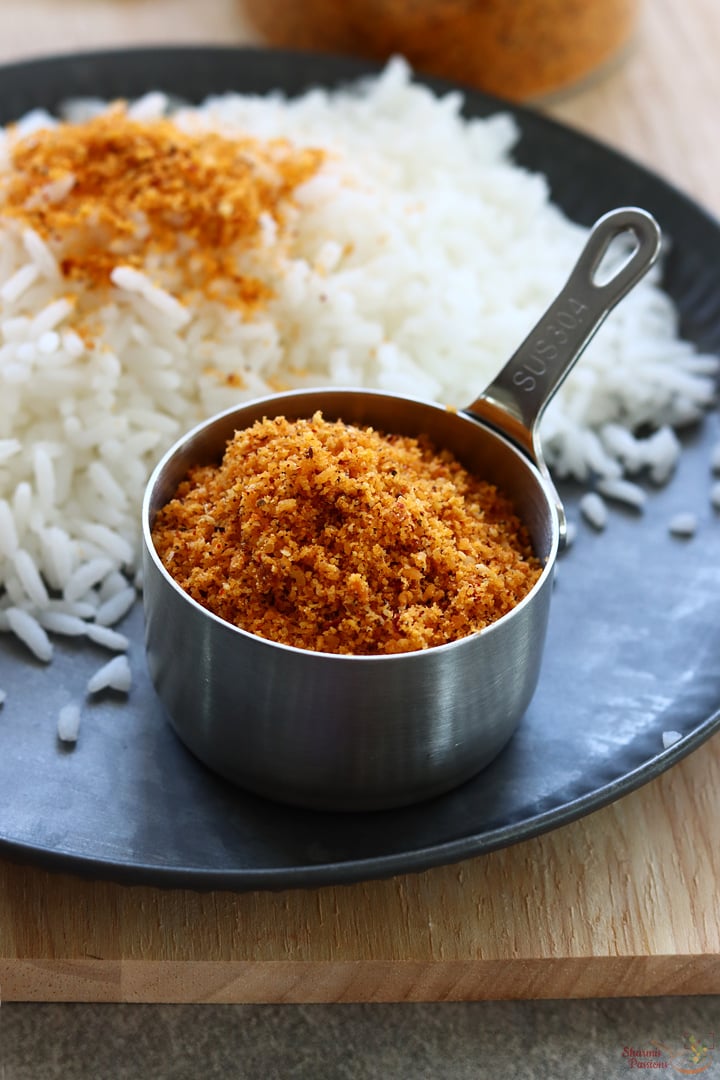
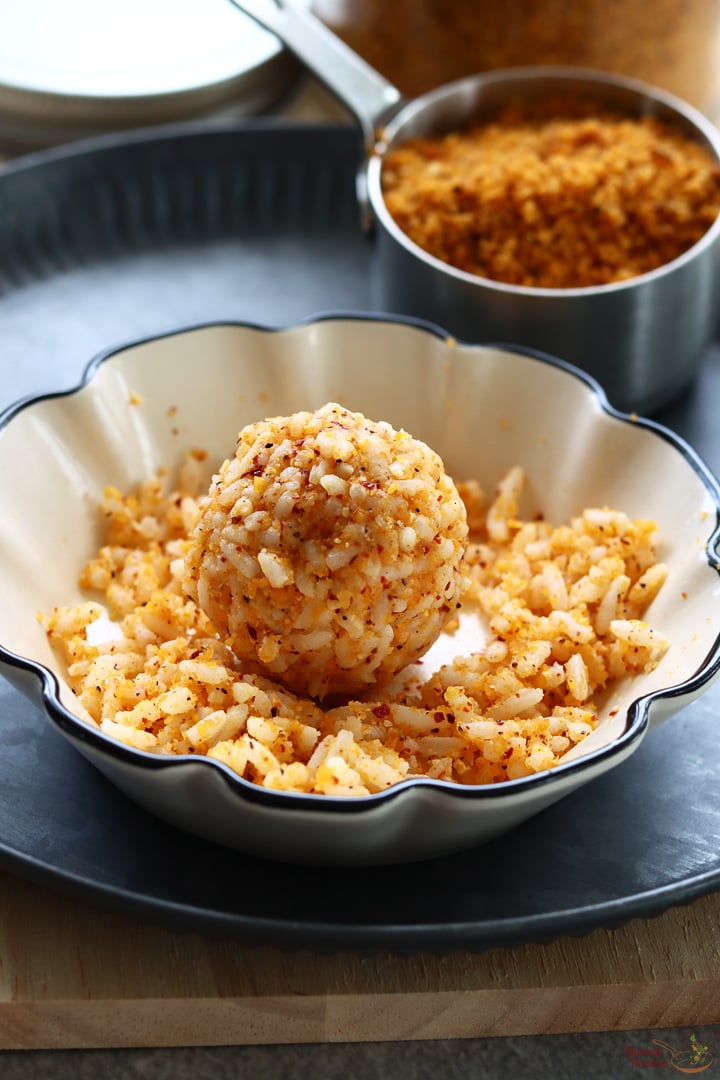
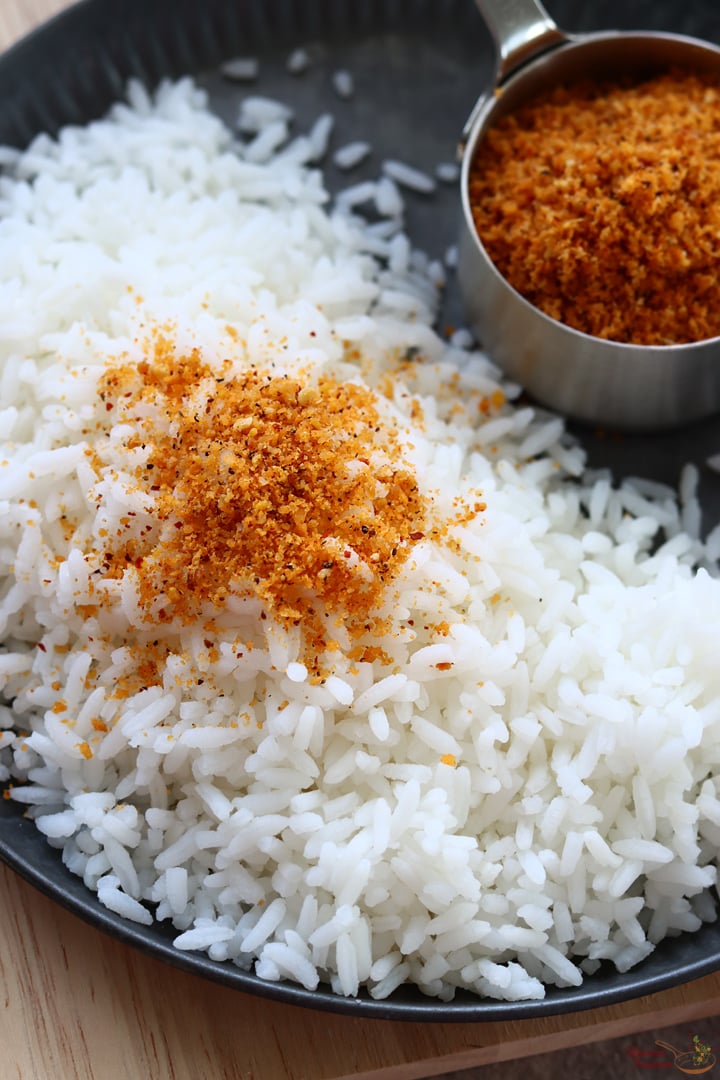
This podi serves great with rice, ghee and I love this coconut podi even with curd rice. This is such a versatile spice mix that can be used to serve as side dish.
Why This Recipe Works
It gives a fresh roasted flavor that tastes great with idli and dosa.
The podi is simple to prepare and uses basic ingredients from the kitchen only.
It stores well and stays good for long time since everything is roasted nicely.
You can adjust spice, texture or even tang based on what you like.
It mixes easily with ghee or oil, so even kids enjoy having it.
How to make Thengai Podi Step by Step
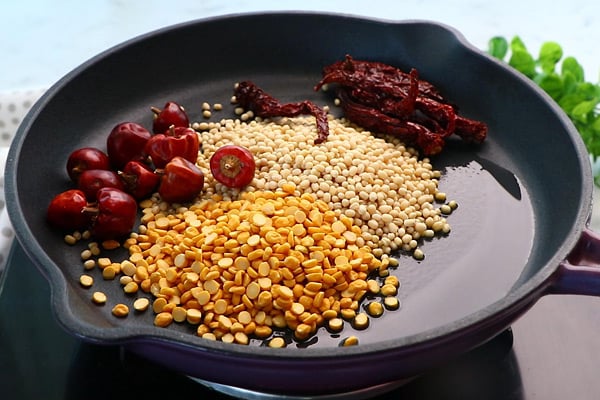
1.We need 1 tablespoon coconut oil in total, Add half of oil to a pan and heat it. Add ½ cup whole urad dal, 2 tablespoon chana dal, 10 red chilies along with 6 kashmiri red chilies.
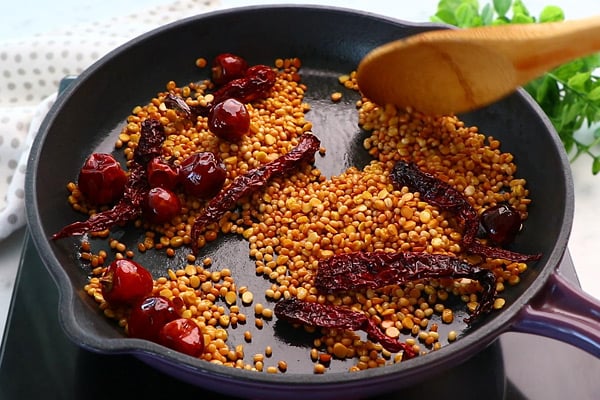
2.Roast until golden brown, Transfer to the plate and set aside.
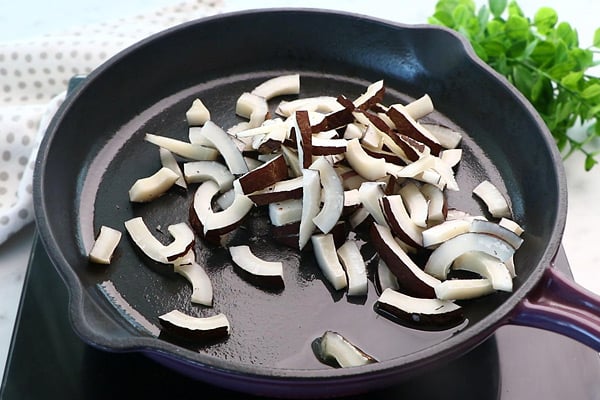
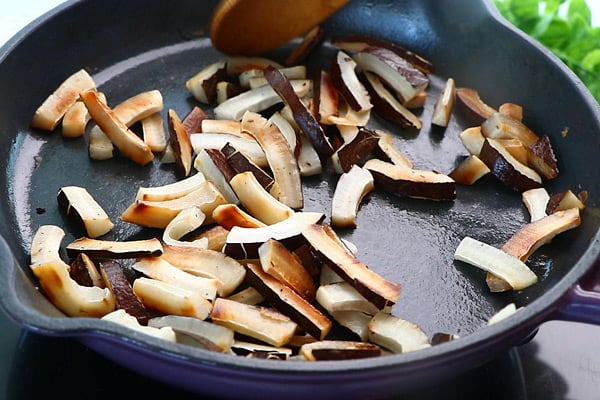
3.To the same pan add remaining oil then 2 cups dried coconut(kopra).
4.Roast until golden brown, Transfer to the plate and set aside.
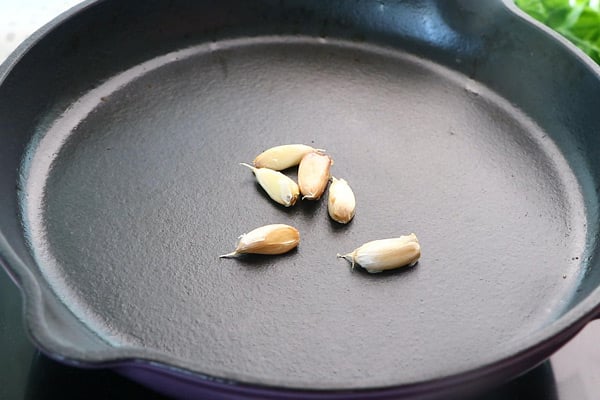
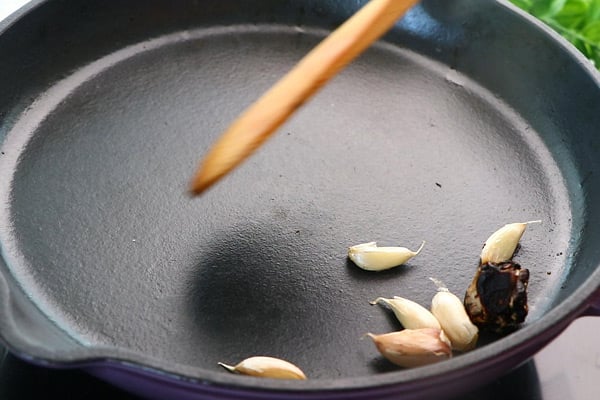
5.Add 6 cloves small sized garlic. Roast until golden.
6.Now add 1 teaspoon tamarind and roast for a minute. Transfer to the plate and set aside.
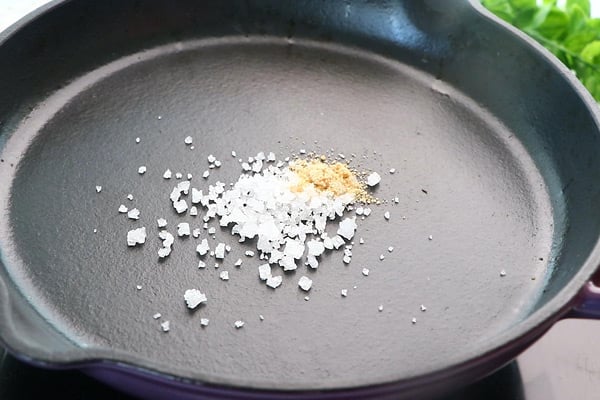
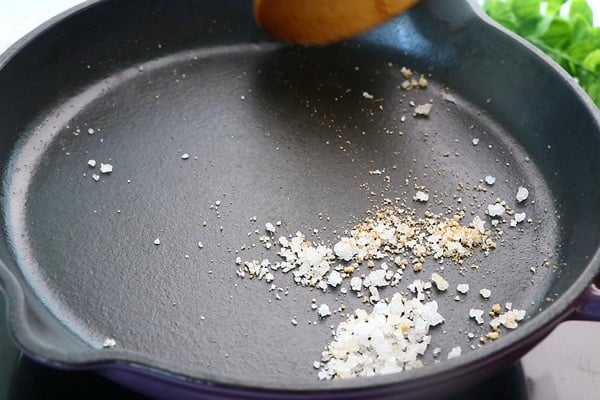
7.Add rock salt along with 1 teaspoon hing.
8.Switch off sauté for few seconds and transfer to the plate.
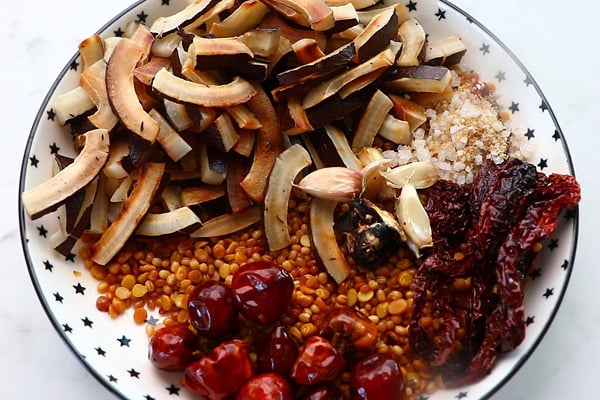
9.Cool down completely.
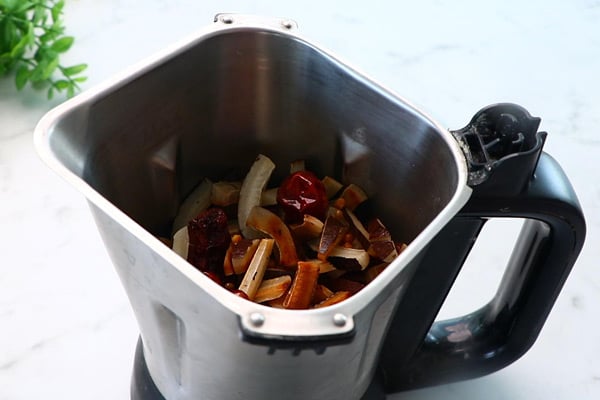
10.Transfer to a dry mixer jar.
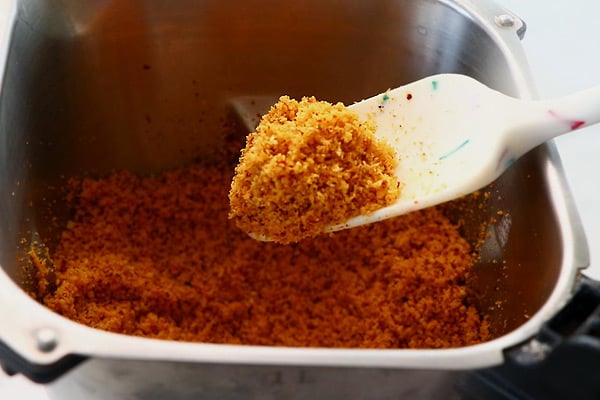
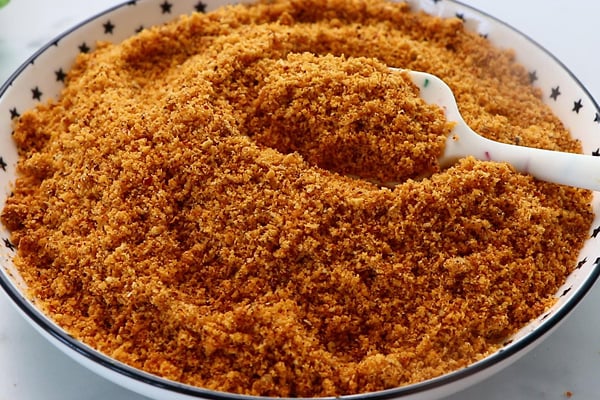
11.Grind it coarse like shown. Do not grind more as it will release oil.
12.Transfer to a plate, cool down then store.
Store in airtight container and enjoy!
Expert Tips
Roasting coconut - I usually roast the coconut slowly in low flame so it turns golden without burning. Adding dried coconut increases shelf life.
Grinding texture - Grind it coarse with texture. Do not grind more as coconut will release oil making the podi sticky.
Using tamarind - Adds a mild tang to the podi, roast it just for few seconds.
Salt choice - I usually add rock salt for podi. Make sure to roast it then add for grinding to prevent form letting out water.
Storage - I keep this podi in clean dry jar so it stays well for many days.
Serving and Storage
Serve this with idli, dosa or even with hot rice and ghee if you like simple meals. It taste very good when mixed with warm ghee as it brings out the coconut aroma. Store this podi in airtight container and keep it dry, it stays fresh for almost a month at room temperature.
FAQS
1.Can I add fresh coconut?
Yes you can, but roast it well until golden brown to increase shelf life. But dried coconut has more shelf life.
2.Is Kashmiri chili necessary?
Not required, but it gives bright color without too much heat.
3.What others can I add?
You can add few curry leaves, ½ teaspoon mustard seeds roast and add it for a variation.
4.Will the podi spoil fast?
No, as long you roast the coconut well and keep it dry, it stays good.
5.Can I grind finely?
You can, but the coarse texture tastes nicer with ghee.
If you have any more questions about this Thengai Podi Recipe do mail me at sharmispassions@gmail.com. In addition, follow me on Instagram, Facebook, Pinterest ,Youtube and Twitter .
Tried this Thengai Podi Recipe? Do let me know how you liked it. Also tag us on Instagram @sharmispassions and hash tag it on #sharmispassions.
Thengai Podi is a simple coconut spice powder that serves as a great side dish for idli, dosa and rice. Also known as coconut podi, it has a nice roasted flavor with little bit spice, so it becomes a good choice when you want something quick on the side. It is easy to make and gives a tasty touch for a plain meal. The mix of coconut, dal and chilies gives a warm aroma that feels very tasty and comforting.
Course Side Dish
Cuisine Indian
Keyword 30 mins recipes, coconut recipes, dosa sidedish, idli podi recipe, Idli recipes, idli side dish, Kerala Meal Sidedish, podi recipes, recipes, Side Dish
Prep Time 15 minutesminutes
Cook Time 15 minutesminutes
Total Time 30 minutesminutes
Servings 30
Calories 120kcal
Author Sharmilee J
Ingredients
2cupsdried coconutkopra
½cupwhole urad dal
2tablespoonchana dal
10regular red chilies
6kashmiri red chillies
1teaspoontamarind
1teaspoonhing
6small cloves garlic
rock salt / salt to taste
1tablespooncoconut oil
Instructions
We need 1 tablespoon coconut oil in total, Add half of oil to a pan and heat it. Add ½ cup whole urad dal, 2 tablespoon chana dal, 10 red chilies along with 6 kashmiri red chilies.
Roast until golden brown, Transfer to the plate and set aside.
To the same pan add remaining oil then 2 cups dried coconut(kopra).
Roast until golden brown, Transfer to the plate and set aside.
Add 6 cloves small sized garlic. Roast until golden.
Now add 1 teaspoon tamarind and roast for a minute. Transfer to the plate and set aside.
Add rock salt along with 1 teaspoon hing.
Switch off sauté for few seconds and transfer to the plate.
Cool down completely.
Transfer to a dry mixer jar.
Grind it coarse like show. Do not grind more as it will release oil.
Transfer to a plate, cool down then store.
Video
Notes
Roasting coconut - I usually roast the coconut slowly in low flame so it turns golden without burning. Adding dried coconut increases shelf life.
Grinding texture - Grind it coarse with texture. Do not grind more as coconut will release oil making the podi sticky.
Using tamarind - Adds a mild tang to the podi, roast it just for few seconds.
Salt choice - I usually add rock salt for podi. Make sure to roast it then add for grinding to prevent form letting out water.
Storage - I keep this podi in clean dry jar so it stays well for many days.
When dosa got a fancy makeover… Dosa is a type of thin, crisp, crepe-like pancake that is popular in South Indian cuisine. It is typically made from a batter of fermented rice and black lentils, and is often served with a variety of accompaniments, such as chutney, sambar, and coconut chutney. Dosa is a staple […]
Ghee roast dosa is a popular dish in South India, where it is often enjoyed as a breakfast food or a snack. The dish has a crispy texture on the outside and a soft and spongy interior, and ghee gives it a rich buttery flavor. The batter for ghee roast dosa is traditionally made by soaking and grinding rice and urad dal and then fermenting the mixture for several hours or overnight. This process helps to develop the flavor and texture of the dosa.
When making ghee roast dosa, the batter is spread thinly on a hot griddle or tawa and then cooked until it is crispy and golden brown. The ghee is added to the griddle before cooking the dosa and drizzles on top of it while it is cooking, which helps to enhance the flavor and crispiness.
Ghee roast dosa is typically served with various chutneys, such as coconut chutney or tomato chutney, as well as sambar, a spicy soup or stew made with lentils and vegetables. The dish can also be enjoyed with various other accompaniments, such as masala potatoes, or with different fillings, such as cheese or paneer (cottage cheese). Overall, ghee roast dosa is a delicious and versatile dish many people enjoy in India and beyond. Let us see how to prepare this recipe.
Enjoy the video of the Paper ghee roast. Subscribe for more recipes.
Hotel Style Ghee Roast Dosa Recipe | How to make Perfect Dosa Batter
Place idli rice, raw rice, urad dal, chana dal, and fenugreek seed in a bowl. Wash them thoroughly in water 2 to 3 times. Drain the water completely. Add enough fresh water and soak rice and lentils for 2 to 3 hours.
Now add soaked rice and dal along with a little water in the wet grinder or mixer. Add little by little water at a time while grinding. Grind it into a slightly coarse paste, as shown. Once done, remove the batter from the grinder and place it in a bowl.
Then add sugar and the required salt and mix it thoroughly using your hand.
Let it rest for 8-10 hours to ferment. I usually grind it in the evening and let it ferment overnight. You can see how well the batter is fermented from the picture.
Transfer the required amount of batter into another bowl. You can adjust the batter by adding water if it is a thicker consistency. The dosa batter should be slightly thinner than the idli batter.
Heat a pan and pour a ladle of batter, and spread it in a circular motion as shown. Drizzle a spoonful of ghee. Close a lid and let it cook on low flame until the dosa is cooked well. Then remove the lid and cook for one more minute until it turns crispy.
Now roll the dosa and serve hot with sambar, chutney, or any side dish of your choice.
Recipe Notes
An equal amount of raw rice and idli rice is used to get crispy dosa.
Use good quality urad dal.
Fermentation is essential to get crispy dosa.
If you are grinding in a mixie, it very often gets heated. So add ice-cold water to grind the batter.
To get a nice golden brown color of the dosa adding sugar is a must.
Crispy and crunchy ghee roast dosa is ready to relish.
If you found this post useful, I would really love it if you pin it or share it with your Facebook fans or Twitter followers, or Google+ circles today. All it takes is a simple click on the “pin it” “like,” “share,” “tweet,” or Google+ buttons below the post. It will keep me motivated. Thank you!
Dosa is a versatile dish. Set Dosa with Saagu dish is like a couple made in heaven. They complement each other just perfectly. Set dosa is very spongy and soft in texture and is also known as Aval Dosa or Poha Dosa. The batter you get and the method to cook/roast is just like how we make the pancakes. While Saagu is a mixture of vegetables cooked in a thick textured curry where a blend of some interesting spices come together. It is one yummy curry!
Set dosa is similar to mushti pola (another Konkani style dosas) which is very soft and fluffy and has grated coconut ingredient in it. At home, my mom made it once in a while, as everyone loved Plain Dosas. My husband loves this combo so much that I am forced to make it and I prefer to have it for dinner instead of breakfast. It fits perfectly in the dinner menu. Filling and Yumilicious!!
So let us take a look at the Set Dosa Recipe and Saagu Recipe as well.
Set Dosa Ingredients:
2 cups rice ( I use basmati because that is my staple rice)
1 cup parboiled rice of any kind
3/4 cup urad dal
3/4 cup thin poha (flattened rice)
1 tsp methi seeds
salt as per taste
1/2 - 1tsp sugar (optional)
oil for frying
Preparation:
Soak all the ingredients (preferably separately) except salt and sugar (duhh :)) for 6-8 hours or overnight. Drain the water and transfer to the blender.
Blend urad dal first by adding just enough water till it is immersed. Make a smooth paste and transfer it into a big bowl.
Then in 2 parts add rice and soaked poha, grind and transfer to the urad dal paste. Mix everything nicely.
Make the batter of pouring consistency not too thick nor running. Keep it in a warm place to ferment for good 8-12 hours.
Just before you are ready to make set dosas, add salt and sugar to the batter. Mix properly.Pre-heat a tawa till it's really hot, pour 2 ladles of batter (do not spread the batter like we do for plain dosas) and leave it to cook gradually over medium heat.
Drizzle some oil along the edges and let it cook for 2 more minutes or till nicely roasted. You will notice bubbles formation on it(see pictures) just like pancakes.
Flip the set dosa over (this is optional) and let it cook further for less than a minute or so till it is slightly roasted.
In a blender make a smooth paste by adding the ingredients under wet masala. Keep aside.
Then in a coffee grinder(maybe), make the powder using ingredients under dry masala.
Heat oil in a pressure cooker, add the mustard seeds and let them splutter. Add the onions and curry leaves and saute till transparent, just for a couple of minutes.
Add the mixed vegetables and combine well. Add salt and turmeric pwd and cook on medium heat for 2-3 minutes. Pour the wet ground masala paste, powdered dry spices masala and mix everything quickly. Add 1-1 1/2 cups of water, stir everything and pressure cook for 1 whistle, then simmer the gas and cook for 6-7 minutes. *
Switch off the gas, and wait for the steam to be released. Open the lid and your hot saagu is ready to be devoured.
Garnish it with cilantro leaves and serve with set dosa, poori, roti etc.
Notes:* You can cook it in a regular pan too. First, cook the vegetables till 3/4th done, then add all the masalas, water and cook till done. Health Benefits:
Dosa is a great source of complete protein for vegetarians as it is made of rice batter and urad dal (black gram lentil) Dosa contains healthy carbs which provide our body with the energy needed to carry out different functions. It is a good option for people on a weight loss diet as well. Cutting out carbs from your diet can make you lethargic, low on energy and also lead to depression in some cases. Protein is another essential nutrient required by our body. It keeps us full for longer as it slowly releases energy and also helps make our hair, bones, and muscles stronger. Lentils used in the Dosa helps us with that. It is a low-calorie dish. Saagu is a dish with healthy vegetables providing all adequate nutreints, minerals, and vitamins.
Rice is a staple food of more than half of the world’s population and is an inexpensive, nutritious source of energy. There are many varieties of rice that differ in color, flavor and nutritional value, such as brown rice, white rice, red rice, blackrice, etc.,
Red rice a.k.a cargo rice is a type of non-glutinous, russet-colored long grain rice, that is similar to brown rice, in that it is unpolished and is healthier than plain old white rice. It is nutty flavor and soft texture, that goes well with most of the dishes using in place of white rice.
As you all know white rice contains fewer nutrients than brown, black or red varieties, as itshusk, bran layer and the germ is removed. So, consuming whole grains over refined grains an excellent choice for health by making nutritious additions to your diet.
If you are looking for an alternative to your usual white/brown rice, consider trying red rice because it is a whole grain with a good source of fiber and iron and also fat-free. Red rice definitely makes a healthy addition to your diet.
Dosa is a very common, tasty and filling breakfast from south India. It’s more like a crepe, a thin pancake. The procedure of preparing dosa batter involves soaking rice, urad dal, and fenugreek seeds for 4-6 hours and grinding to a smooth paste and fermenting overnight. The fermented dosa batter is then spread on a hot tawa to yield a delicious dosa that can be enjoyed with any chutney or sambar. Making dosas is a tedious process but the end result is worth, a day-long wait to enjoy the irresistible scrumptious dosas. So why not make this dosa dish for the whole family to enjoy a healthy version. Here is a dosa recipe with the nutritious red rice along with watermelon rind making it, even more, healthier dish. Yes, you read it right! its watermelon rind in this dosa recipe.
Like its cousin-cucumber, the entire watermelon can be eaten, although people tend to only eat the inner pink flesh and throw away the watermelon rind. The black seeds and rind is entirely edible and has many health benefits. After using the flesh part, store the watermelon rind in the refrigerator in an airtight box and use it later to make many dishes from chutneys to pickles. Finding ways to use watermelon rind for food, such as pickles, relishes or jam, extends the functionality of this fruit.
But I tried adding the rind to dosa while making the batter, happy I found another best way to use the healthy rind in our daily food without wasting it, also dosas were as crispy and tasty as the normal dosas with added on health benefits. The dosas with rind do have a slight watermelon flavor that is so good and who would not love to try watermelon flavored dosa. Yummier than ever!!
I always use cast iron to make dosas. You could use a Non-Stick Tawa or Cast-Iron Tawa. Though Non-Stick Tawas make the job easier, I personally recommend using Cast iron and works best all the time I have made these dosas.
Cast iron cookware is inexpensive, hold a high heat capacity, free of chemicals, add trace amounts of iron to your food, and last—well—forever.
Remember to keep the cast-iron tawa/skillet well seasoned always and exclusive for making dosa. Using the same Tawa for making Roti/Chapathi, would make it harder for making dosas the next time.
The right temperature of tawa need to be maintained for making this dosa, also the consistency of the batter should be not too thick and not too watery. Don’t worry if dosa sticks anytime and you find hard to scrape out. Just get the tawa off the stove and scrape and once clean, rub oil using half cut onion/potato. The Tawa is all set to make dosas again.
Enjoy this dosa for breakfast or even an evening snack or pack it for lunch box. Serve Dosa with chutney of your choice and sambar.
Today I served dosa with yummy PEANUT CHUTNEYand Chutney Powder topped with ghee.
You might want to try chutney with Watermelon Rind
HOW TO MAKE RED RICE DOSA(with Watermelon Rind) STEP BY STEP:
1.Rinse 1 cup red rice, ¼ cup urad dal, ½ tsp methi, and ¼ cup red poha thoroughly and soak together in enough water for 5-6 hours.
2. Peel the green skin from watermelon rind(white part, some amount of red fruit is fine too). Roughly chop about a cup of rind and set aside. You could store remaining rind in the refrigerator for later use.
3. Drain the water from soaked rice and dal mixture. Grind the soaked rice and dal to a smooth batter, along with watermelon rind(i did not use any water while grinding)
4. Transfer the ground batter to a deep bowl(which has enough space for the batter to rise. Set in a warm place to ferment for about 8-10 hours or overnight.
5. Once the batter has well risen (doubles the volume), add salt as per taste and mix well. The batter should be thick and pouring consistency. Add water if required to attain pouring consistency, but I did not use water here, as the water from the rind was sufficient to attain the right consistency.
6. Heat a pre-seasoned Cast Iron Dosa Tawa on a med-low flame. When hot, sprinkle water and wipe with a clean towel. Drizzle a few drops of oil and wipe using a paper towel. Pour a ladle of dosa batter and spread in a circular motion. Drizzle oil/ghee on top and edges.
7. Once the dosa is firm and light brown, fold and serve hot with any curry or chutney or sambar.
Healthy & Tasty Dosa is Ready to Relish!!
If you want to know HOW TO SELECT & STORE WATERMELON, also 3 delicious WATERMELON COOLERS recipe, check out…
Red Rice Dosa with Watermelon Rind | ಕೆಂಪಕ್ಕಿ-ಕಲ್ಲಂಗಡಿ ತೊಗಟೆ/ಸಿಪ್ಪೆ ದೋಸೆ | Healthy Breakfast | Red Rice Crepes
Dosa is a very common, tasty and filling breakfast from south India. Here is a healthy dosa recipe with the nutritious red rice along with watermelon rind. Enjoy this dosa for breakfast or even an evening snack or pack it for lunch box. Serve Dosa with chutney of your choice and sambar.
Course Breakfast
Cuisine Indian
Keyword dosa
Prep Time 10minutes
Cook Time 5minutes
soaking and fermenting 10hours
Servings 10dosas
Author KaviRuchi
Ingredients
1cupRed Rice
¼cupUrad Dal
¼cupRed Pohaflattened rice
½tspMethi Seedsfenugreek seeds
1cupWatermelon Rindchopped
Saltto taste
Oil / Gheeto roast dosas
Instructions
Preparation(Soaking and Fermenting):
Rinse red rice, urad dal, methi and red poha thoroughly and soak together in enough water for 5-6 hours.
Peel the green skin from watermelon rind(white part, some amount of red fruit is fine too). Roughly chop the rind and set aside.
Drain the water from soaked rice and dal mixture. Grind the soaked rice and dal to a smooth batter, along with watermelon rind(i did not use any water while grinding).
Transfer the ground batter to a deep bowl(which has enough space for the batter to rise). Set in a warm place to ferment for about 8-10 hours or overnight.
Method (Making Dosa):
Once the batter has well risen (doubles the volume), add salt and mix well. The batter should be thick and pouring consistency. Add water if required to attain pouring consistency.
Heat a pre-seasoned Cast Iron Dosa Tawa on med-low. When hot, sprinkle water and wipe with a clean towel.
Drizzle a few drops of oil and wipe using a paper towel.
Pour a ladle of dosa batter and spread in a circular motion. Drizzle oil/ghee on top and edges.
Once the dosa is firm and light brown, fold and serve hot with any curry or chutney or sambar.
Healthy & Tasty Dosa is Ready to Relish!!
Video
Notes
Red rice is easily available in many Asian and health food stores and even online.
If Red rice is not available, add any normal idly rice/basmati rice/sona masuri rice in place.
Rice: Rind proportion I make is usually 1:1 (this recipe makes around 10 dosas for 1 cup rice)i.e., if you soak 2 cups rice add 2 cups watermelon Rind. Adjust rind(add more or less) to attain the consistency of batter required, without adding any water while grinding the batter.
This dosa can be made without watermelon rind, just replace rind with water while grinding. This dosa works well with or without watermelon rind.
After ferment add water only if required. I did not use any water while grinding or before making dosas.
The fermenting time might vary depending on the temperature condition in the place you live in. It normally takes 8-10 hours in warm weather. But in cold places, keep the batter inside the oven overnight, with the oven light on. This heat is sufficient enough for batter to rise well. You could even use the YOGURT mode in INSTANT POT for fermenting. Both ways have worked well for me. Try your convenient method and enjoy making dosas irrespective of weather conditions.
This Instant Quinoa oats dosa is one of my favorite and go-to recipes when I am in a hurry to make something healthy and delicious. Being a South Indian and a Dosa fanatic, I get these cravings of Dosa frequently and this recipe is a perfect option.
This tried and tested recipe uses quinoa instead of rice making it a great high protein option. Plus there is no need to ferment the batter, making it a great meal for busy lifestyles. But as we are adding few fenugreek seeds, it not only helps in digestion but also helps in fermentation if you like. Just let the batter sit on the kitchen counter at a warm place and voila, I promise you to get a lovely fermentation there.
Ingredients needed for this QUINOA OATS DOSA
Organic Quinoa – Any color, black, white, or red, or a mix of both. And it makes a great substitute for rice that is high in protein and fiber.
Rolled Oats – Quick or rolled oats. This adds fiber to the dish.
Rice – Gives the dosa a crispy texture
Urad Dal – Adds the traditional earthy dosa taste with creamy texture and proteins
Chana Dal – Helps make the dosa crispy
Fenugreek seeds – Helps in digestion and fermentation if you like it to be.
Salt
Is this DOSA vegan-friendly?
As we are using only plant-based and vegan ingredients it makes a great dish to add to your vegan diet. And it’s gluten-free too.
Look at that even golden crisp texture !! Shall we get into the detailed recipe now. But before that check out more delicious recipes from my blog.
In a mixing bowl add quinoa, chana dal, urad dal, rice, and wash them thoroughly until the water runs clear.
Now add in 5 cups of water in that bowl and add fenugreek seeds, rolled oats and keep aside.
Let everything soak for 5 hours or you can leave it overnight.
Let's make the batter now
Reserve the water from the soaked lentils, quinoa and oats.
In a blender jar add in soaked lentils, quinoa, rice and oats. And blend everything to a fine paste.
Add salt and water gradually just a tbsp at a time and grind to make a smooth batter.
Transfer the Batter into a container and it is ready. You can start making dosa's now. Note : You can refrigerate the batter and use it when needed, or if you like it to ferment just cover the container and let it ferment for 5-6 hours or overnight.
It's DOSA time
Heat a cast iron griddle / tawa / Dosa pan on medium flame, take a ladleful of batter at a time, pour it on tawa and spread it using the back of ladle. Starting from the center of the batter spread it even and thin in circular motion going outwards.
Once you start observing the Dosa turning golden brown, spread a tsp of oil evenly.
Allow the dosa to crisp up further for another couple of minutes and gently slide the spatula underneath the dosa and fold it into half.Note : If you like softer dosa lower the heat and take the dosa out when you see it cooked thoroughly.
Gently oil the griddle / tawa / Dosa pan using an onion or a paper towel before making another dosa. This step helps in achieving a perfect crisp dosa.
Serve hot Quinoa oats dosa with chutney and condiments of your choice.
Notes
You can refrigerate the batter and use upto 4 days.
While making the batter you can also add in some spices like green chilies, cumin seeds and fresh ginger to make it more flavorful. Throw in some greens like spinach or steamed veggies like beets or carrots to make it more nutritious.
Always make sure the griddle isn't too hot, else the batter might stick to the pan and will leave your dosas taste burnt. Keep the flame between low and medium.
If you’ve tried this recipe, please share your valuable feedback in the comments below. Also you can Tag your photo and share it with #mycurryveda on Instagram @mycurryveda or on Facebook .
Idli batter is prepared with idli rice and urad dal. In south India, vegetarian recipes index without idli dosa with sambar is incomplete. Idli recipe and dosa recipe has very important place in South India . IR 20 rice variety or vellaikar rice are best rice for idli. soft idli recipe goes well with coconut chutney, sambar, Kara chutney and tomato chutney
Idli ingredients:
Idly rice (vellaikar rice) – 1 kilogram
Ponni rice – ½ kilogram
Black Urad dal – 175 gram
White urad dal – 75 gram
Fenugreek seeds – 2 spoons
Water to soak and grind idly batter
Steps to grinding idli batter/ making batter :
To Begin soak idli rice in a bowl for minimum 4 hours
Soak white and black urad dal separately for 4 hours (add fenugreeks seeds in last 15 minutes).
After 4 hours, wash white urad dal two times and keep it aside.
Mean while take a black urad dal then remove black part of the urad dal and keep it a side.
Now put both urad dal in to grinder (table top grinder is best grinder for dosa batter preparation), and then grind up to 20 to 30 minutes till urad dal become fluffy.
At middle interval add ice cubes instead of water in urad dal, it will increase quantity of urad dal and reduce grinding heat.
Take a idli batter container and pour urad dal batter, and then pour washed rice in grinder and grind up to light semi coarse consistency by adding little amount of water(should not add too much water. consistency should be light thick).
Next mix urad dal batter and rice batter with required salt and ferment up to minimum 10 hours.
Once fermentation completed mix again and well and keep it a side.
The perfect batter is ready to make soft and spongy idllies.
idli batter proportion : vellaikar rice 1 Kg + Ponni rice 500 gram : Black urad dal 175 Gram + White urad dal 75 Gram.
Tips:
idli sambar recipe with chutney is very popular Indian break fast recipe
Are idli and dosa batter same :To make dosa batter recipe add little amount of water and make dosa. (Don’t add too much water; it will be semi flowing consistency)
If you want dosa very crispy means add 1:1 ratio of ponni rice and ration rice.
Otherwise you can also use aval (Flattened rice) for making dosa as crispy. (Probably 1 cup of aval)
some people preparing idli dosa batter recipe with mixie
Frequently asked questions:
how long should idli batter ferment: The dough prepared for making idli rises when kept overnight because of the production of carbon dioxide gas in it. This gas is produced as a byproduct of process of fermentation (anaerobic respiration/respiration in absence of oxygen) in batter of black lentils or rice which is used to cook idli.
what to do if idli batter is not fermented: You can leave it for couple more hours in the open. Mix the batter and leave it in a warm place.
Finger Millet is a nutritious grain which is staple food in most of the South India. This Ragi Dosa also know as Finger Millet Dosa and Nachni Dosa. Instant ragi dosa made with homemade sprouted ragi flour is a healthy breakfast/Dinner for babies, toddlers and kids. Lets see how to prepare Instant Ragi Dosa with simple steps
Ingredients:
Ragi flour – 1 cup
Water to mix ragi flour
Salt to taste
For seasoning:
Oil – 3 spoons
Mustard seeds – ½ tea spoon
Chana dal – 1 spoon
Big Onion – 1 (finely chopped)
Red chilli – 1 no
Curry leaves – 1 sprig
Steps to cook instant ragi dosa:
Take a bowl add one cup of ragi flour, required salt then mix well and keep it aside.
Turn on the stove. place a fry pan when it is heated add oil, after one minute add mustard seeds when it is splutters add chana dal fry for a second.
Now add finely chopped onion fry till it become transparent, then add red chilli and curry leaves then fry for a minute then switch off the stove.
Next take a ragi mixture in bowl add these fried item into ragi flour.
This is time to add required water in to ragi flour then mix well.
Ragi dosa batter should be in not thick and not thin consistency.
Switch on the stove place a dosa tawa, when it is heated sprinkle some water and pour the instant ragi dosa batter and make dosa.
Turn other side and cooked well both sides of ragi dosa.
Healthy, easy and instant ragi dosa is ready to serve.
Serve this ragi dosa with tomato chutney and coconut chutney etc.,
Here I used simple method to cook easy and healthy ragi dosa version and anyone can try it.
We can also prepare ragi dosa with curd. but i tried instant ragi dosa without curd.
Some people like to have ragi dosa with rice flour. Here i shared instant ragi dosa without rice flour. Even some people trying ragi dosa with urad dal.
These instant appam are quick and easy to make. All you need is rice flour, yeast and coconut milk for this recipe. It takes about 2~3 hours of rising time unlike the overnight fermentation needed for traditional appam recipe. The appam turn out spongy and fluffy. Perfect South Indian breakfast to serve with a spicy...

 Login
Login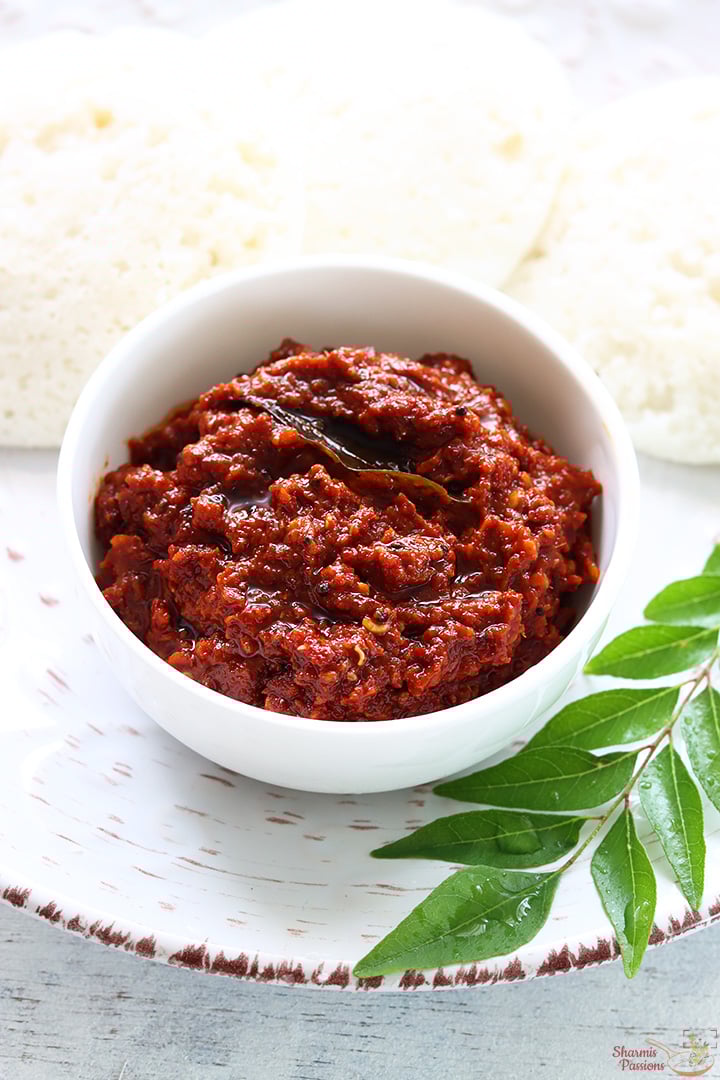


 I’d love to hear from you! Please share your food photo with hashtag #kaviruchi on


