Tech company Weedmaps is a connector at its core, best known for helping consumers find and order from dispensaries carrying their favorite cannabis products. But that theme of connection extends far past the screens, as Weedmaps moves from traditional to experiential marketing, building authentic moments rooted in the creativity and spirit of the cannabis community. Their 2025 collab with premier sneaker designer Ceeze is just one example of how the tech platform continues to find memorable, made-you-look ways to drive their mission forward.
“Sneakers have long served as a canvas for cultural storytelling, especially across art, streetwear and music—spaces where Weedmaps naturally lives,” says Jonathan “JJ” Jones, Weedmaps’ senior vice president of markets and culture. “Through this collaboration, we were able to highlight how cannabis inspires creativity while showcasing the diverse voices and artists that shape the culture.It also created a physical, limited-edition artifact that fans could connect with—something that doesn’t happen often in the cannabis space.”
The limited-edition sneakers, called the 420 1s, were released ahead of the 4/20 holiday and include detailed stitching that represents the evolution of cannabis legalization, paying homage to those who fought so hard for it. Hidden coordinates on select pairs mark the birthplace of San Francisco’s Cannabis Buyers Club, the first medical dispensary that helped push Prop 215 into law in 1996. The California cannabis warning symbol, introduced in 2018, is stamped on the heel and Weedmaps’ logo is featured on a custom woven tongue, marking the brand’s own spot on the cannabis timeline as pioneers in consumer access since 2008—the height of the fight for cannabis.
The Ceeze collab set the creative tone for Weedmaps’ entire 2025 cultural marketing campaign and into 2026, as they offer more elevated ways for people to connect with cannabis culture beyond the retail experience and into the realms of lifestyle, art and music. In Jones’ words, “Each activation reinforces our mission to celebrate cannabis as part of everyday culture.”
This story was originally published in issue 52 of the print edition of Cannabis Now.
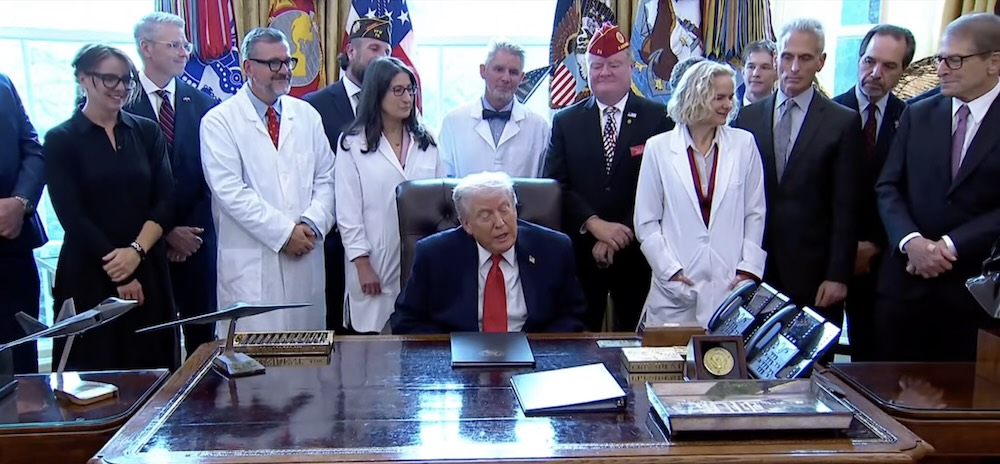
President Donald Trump today signed an executive order expediting the reclassification of cannabis as a less dangerous drug—moving it from Schedule I to Schedule III of the Controlled Substances Act.
The president was joined by several medical leaders during the signing, including Administrator of the Centers for Medicare & Medicaid Services, Dr. Mehmet Oz; Dr. Nora Volkow of the National Institute on Drug Abuse; FDA Commissioner Dr. Martin Makary; and Secretary of Health and Human Services Robert F. Kennedy Jr., among others.
“I have a very distinguished group of people behind me, mostly medical people and brilliant people and they really know what they’re doing,” the president said, prior to announcing he would sign an order to reschedule cannabis.
Trump emphasized the large public support for the reclassification, adding that the move polled at 82% in favor and will help patients “live a far better life.” He also made clear that the rescheduling is not the same as legalization saying, “I want to emphasize the order I’m about to sign doesn’t legalize marijuana in any way, shape or form.”
President Trump signs an executive order in the White House’s Oval Office. Washington, D.C.
Substances classified as Schedule I have a “high abuse potential with no accepted medical use; medications within this schedule may not be prescribed, dispensed or administered,” states the National Library of Medicine. Heroin, LSD, MDMA and cannabis currently fall under this categorization. Last Spring, the United States Drug Enforcement Agency (DEA), proposed that the substance be moved to the list of Schedule III drugs, which have less potential for abuse and are accepted for medical treatments. Other substances classified as Schedule III drugs include ketamine, testosterone and anabolic steroids.
While today’s executive order falls short of full legalization, the reclassification marks one of the most significant reversals in US drug policy in decades. This decision could have wide-ranging effects on the cannabis industry, criminal enforcement and access to research funding.
“Rescheduling cannabis to Schedule III is a meaningful step forward that will finally give legitimate cannabis businesses access to basic banking, tax relief, and the tools needed to operate like any other industry,” says Eugenio Garcia, Cannabis Now’s founder and CEO. “While this progress is welcome, true reform must also include justice—no one should remain incarcerated for cannabis as the nation moves toward acceptance and regulation. This moment is about unlocking economic opportunity while correcting the human cost of prohibition.”
Jamie Pearson, New Holland Group’s president and founder, comments on the progress as well as the work that remains for the cannabis industry: “Today’s executive action is a meaningful and long-overdue step toward aligning federal policy with medical reality. Directing the rescheduling of cannabis to Schedule III acknowledges its accepted medical use and begins to remove structural barriers to research, clinical guidance and responsible access,” she says. This was the message largely put forth by Trump and his supporters during the signing as well.
“That said, rescheduling is not legalization, nor does it resolve all of the regulatory and economic challenges facing the industry,” she says. “The real work now lies in thoughtful implementation, ensuring that research, patient access and public safety advance together, and that policy clarity follows intent. This is progress, and it should be treated with both optimism and discipline.
The prospect of reclassifying cannabis from Schedule I to Schedule III has prompted swift and varied reactions across the political and cannabis landscapes.
“It shows incredible leadership for the president to have the courage to take the lead on cannabis reform,” comments Dave Marrow, CEO of Lume Cannabis MI.
“Today’s executive order to reclassify cannabis is a meaningful step toward aligning federal policy with science and economic reality. Moving cannabis to Schedule III acknowledges its medical value while bringing long-overdue clarity to how cannabis is cultivated, researched, and commercialized. While it’s not the final destination, this shift will accelerate innovation, unlock investment and help professional cultivators and operators continue to raise standards across the industry. At FOHSE Lighting, we see this as real progress for sustainable growth in cannabis cultivation,” says FOHSE Lighting CEO and Co-founder Brett Stevens.
During the signing, those in attendance congratulated Trump for his leadership on the matter. “Thank you for your leadership and vision and finally getting to closure on this issue,” Kennedy, Jr. said. “This is a scientific question that has divided our country for many, many years.”
Trump allowed those alongside him to weigh in, ultimately reinforcing their shared view that increased research into cannabis is essential for advancing medical understanding and improving quality of life. “Research is crucial. Yes, cannabis can be addictive, but we cannot close our eyes to research,” he said. “What we need to do is research and learn how to optimally use it.”
Putting pen to paper, Trump said, “It’s an honor to do this.”

 Login
Login