United States missile manufacturing is failing to keep pace with the tempo of modern warfare, raising concerns about how quickly the military can replace precision weapons in a high-intensity conflict. To examine where the bottlenecks lie and how they affect readiness, Defence Blog sought comment from John Borrego, Senior Vice President of Aerospace and Defense […]
NATO defense officials have confirmed that European allies, led by the United Kingdom and Scandinavian countries, currently carry the primary responsibility for Arctic military operations, as the United States lacks sufficient forces and experience for sustained activity in the High North, according to The Times. The assessment follows recent allied exercises and internal NATO evaluations […]
The United States Air Force conducted Exercise Dragon Shield at Beale Air Force Base, California, in 2026, testing the ability of maintenance units to launch and recover U-2 Dragon Lady aircraft under simulated contested conditions, the service said in a released update. The exercise focused on the 9th Aircraft Maintenance Squadron (AMXS), which was tasked […]
The United States has increased deliveries of weapons systems, ammunition, and military equipment to the Middle East since late 2025, with U.S. Air Force transport aircraft conducting intensified flights from the continental United States to European logistics hubs and onward to bases in Jordan, Israel, Qatar, and Saudi Arabia, according to open-source flight tracking and […]
The United States Central Command has awarded defense technology firm Raft a new contract to deploy an artificial intelligence system designed for battlefield operations, following a competitive five-day evaluation hosted by CENTCOM, the company announced on January 22. Raft received the award through an Other Transaction Agreement (OTA) issued by the Chief Digital and Artificial […]
Castelion announced the launch of Project Ranger, a 1,000-acre hypersonic manufacturing campus in Sandoval County, New Mexico, aimed at supporting high-cadence production of U.S. hypersonic strike systems, the company said. The project represents more than $220 million in private investment and is expected to create about 300 manufacturing jobs as the company scales domestic production […]
Valkyrie Enterprises announced on January 21, 2026, that it has signed a Memorandum of Understanding with BAE Systems OneArc to jointly pursue business and technology development opportunities supporting the U.S. Department of War and allied nations, formalizing a new partnership focused on advanced military training and simulation systems. The agreement was signed on December 2 […]
Safran Federal Systems has completed a successful flight demonstration of its Blacknaute inertial navigation system aboard a U.S. Army UH-60 Black Hawk helicopter, the company announced on January 21, confirming the system’s ability to operate accurately in GPS-denied and electronically contested environments. The test flight validated that the Blacknaute system maintained precise navigation performance without […]
The United States Army has awarded a Small Business Innovation Research (SBIR) contract to enterprise browser developer HERE to build an artificial intelligence–based data interoperability layer for Army command-and-control systems, the company said on January 21, 2026. According to a press release from HERE, the project will use the company’s Enterprise Browser platform as a […]
The United States Missile Defense Agency has selected Protopia AI as an awardee under its Scalable Homeland Innovative Enterprise Layered Defense (SHIELD) contract vehicle, the company confirmed on January 20, 2026, opening the door for the firm to compete for future missile defense and homeland security task orders. According to a company statement, Protopia AI […]
Bitcoin (BTC) has recorded a dip below the $90,000 level. But how much of the drop was the result of various macroeconomic, geopolitical, and regulatory factors? Analysts have shared their valuable insights on the matter.
TLDR:
Euphoria over America’s commitment to crypto quickly faded;
Clarity Act is far more important to the future of digital assets than tariff news;
Clarity Act delay is likely just one in a series;
Bitcoin has remained “relatively resilient” over the past month;
Institutions are shifting from holding BTC to enabling it to function as productive capital;
Verbal intervention alone is unlikely to fully suppress volatility;
The sharp dislocation in sovereign bond markets once again highlights the fragility of traditional safe-haven assets.
Over the past 24 hours, Bitcoin has remained mostly unchanged by the time of writing (Thursday afternoon, UTC). It has gone up by just 0.2%, currently trading at $89,582.
Earlier in the day, it saw a notable drop to the $87,300 level, before climbing to the briefly held $90,295.
Source: TradingView
Observing its performance over the past week, we see it’s now down nearly 8%, trading between $87,653 and $96,875.
Clarity Bill is Far More Important for Market Than Tariff Noise
Nic Puckrin, digital asset analyst and co-founder of Coin Bureau, commented on the CLARITY Act being postponed in the US. The bill was supposed to be passed last year but is still being delayed.
Puckrin says that, despite President Donald Trump’s statement that the bill would be signed “soon”, there’s a reason he didn’t mention it until the very end of his speech in Davos.
“While he may say crypto is a priority, […] it’s clearly not the first item on the agenda,” Puckrin writes.
Bitcoin grinding sideways while gold surges isn’t a sign of fading conviction.
It’s the shift from a high-beta venture asset to a crystallised institutional balance sheet play.
In macro stress, gold absorbs the immediate scale and urgency because it remains the world’s primary…
However, BTC fell below $90,000 yesterday. The most significant lesson learned from the market’s reaction is that “tariff noise” is not that relevant. Instead, the bill is “far more important to the future of digital assets.”
Puckrin writes:
“The momentary euphoria over America’s commitment to crypto quickly faded, and even the cancellation of tariffs on NATO countries couldn’t lift it higher.”
Taking a long time to agree on a perfect piece of legislation is not a good idea, he argues. Instead, passing the bill quickly would bring more benefits. However, this is likely just the first of many delays to “this potentially game-changing digital asset legislation.” And yet, “the longer CLARITY is delayed, the longer uncertainty prevails.”
“The big concern is that this could take years rather than months, leaving the crypto industry in the same limbo it has been fighting so hard to emerge from,” the analyst warns.
Dom Harz, Co-Founder of BOB, commented that many are keeping an eye on BTC’s day-to-day price movements. However, Bitcoin has remained “relatively resilient” nonetheless. It’s up 2% this month (at the writing time) despite broader market volatility.
As Davos is wrapping up, he says, “conversations among institutional leaders and investors highlight the growing emphasis on resilience, efficiency, and the search for credible and reliable stores of value.”
Notably, “institutions are shifting from simply holding BTC to searching for opportunities that enable it to function as productive capital, while remaining anchored to Bitcoin’s base layer security,” Harz says.
Therefore, he argues, the focus now needs to be on developing Bitcoin DeFi infrastructure to support secure participation and scale mainstream adoption.
Bitunix analysts noted a recent (what appears to be) bond market liquidity shock. It is a stress test of policy credibility within the global financial system, they write.
“In the short term, markets trade on sentiment; in the medium term, on the boundaries of central bank action; and in the long term, on whether institutional demand for non-sovereign assets is genuinely awakened,” the analysts explain.
So, what happened exactly?
On 21 January, Japan’s long-dated government bond market saw a sudden wave of selling. 30-year and 40-year as Japanese Government Bond (JGB) yields jumped more than 25 basis points in a single session, Bitunix writes.
“The magnitude of the move was described as a ‘six-standard-deviation’ event and quickly spilled over into U.S. Treasuries, pushing the U.S. 10-year yield to its highest level since last August,” they explained.
Bitunix Analyst $BTC is still moving in a range around $90K, with price reacting mainly to liquidity levels.@coinglass_com data shows a short-liquidation cluster near $91K, which could be swept if momentum builds. On the downside, $89K–$87K holds dense long-liquidation… pic.twitter.com/lefuwLuZMz
Japanese Finance Minister and the U.S. Treasury Secretary both called for market calm at Davos. The goal is “to contain the spread of a ‘weaponization of bond markets’ narrative.”
However, the analysts warn that “verbal intervention alone is unlikely to fully suppress volatility.” Structural pressures remain intact. These include Japan’s rapidly rising domestic rates, election-related uncertainty, and market expectations of unconventional Bank of Japan bond-buying measures weighing on sentiment.
Therefore, “for the crypto market, the sharp dislocation in sovereign bond markets once again highlights the fragility of traditional safe-haven assets.”
The analysts predict that:
In the short term, simultaneous pressure on bonds and risk assets may dampen risk appetite in crypto markets.
Over the medium term, if the politicisation of bond markets and monetary intervention become persistent features, this dynamic could reinforce the allocation case for BTC as a non-sovereign asset.
Over the longer term, sustained erosion in global interest rates and currency stability could result in a repricing of crypto assets’ strategic weight within portfolio allocation.
The Norwegian Armed Forces, alongside about 3,000 United States Marines and other U.S. and NATO units, will conduct Exercise Cold Response 26 in northern Norway in March 2026, with allied forces beginning cold-weather training deployments as early as January, U.S. and Norwegian officials confirmed. The exercise is a Norwegian-led, routine winter drill designed to test […]
Textron Systems said on January 20, 2026, that it has been awarded a $163.4 million contract to deliver 65 COMMANDO Select Mobile Strike Force Vehicles to support Ukraine under the U.S. Ukraine Security Assistance Initiative, using the Foreign Military Sales mechanism, according to a company announcement. The three-year, firm fixed-price contract was awarded through the […]
The price of water and sewer services for American households has more than doubled since the early 1980s after adjusting for inflation, even though per-capita water use has actually decreased over that period. Households in large cities now spend about $1,300 a year on water and sewer charges, approaching the roughly $1,600 they spend on electricity. The main driver is federal regulation.
Since the Clean Water Act of 1972 and the Safe Drinking Water Act of 1974, the U.S. has spent approximately $5 trillion in contemporary dollars fighting water pollution -- about 0.8% of annual GDP across that period. The EPA itself admits that surface water regulations are the one category of environmental rules where estimated costs exceed estimated benefits.
New York City was required to build a filtration plant to address two minor parasites in water from its Croton aqueduct. The project took a decade longer than expected and cost $3.2 billion, more than double the original estimate. After the plant opened in 2015, the city's Commissioner of Environmental Protection noted that the water would basically be "the same" to the public. Jefferson County, Alabama, meanwhile, descended into what was then the largest municipal bankruptcy in U.S. history in 2011 after EPA-mandated sewer upgrades pushed its debt from $300 million to over $3 billion.
The United States State Department has approved a possible $2.316 billion Foreign Military Sale to Singapore for P-8A maritime patrol and reconnaissance aircraft, MK 54 lightweight torpedoes, and associated systems, the Defense Security Cooperation Agency said as it formally notified Congress of the decision. According to the certification delivered to lawmakers, the Government of Singapore […]
The North American Aerospace Defense Command confirmed on January 19 that multiple aircraft are en route to Pituffik Space Base in Greenland to support planned operational activities, an announcement made as political tensions rise over the Arctic island’s status. In a statement, NORAD said the deployment “will support various long-planned NORAD activities” and emphasized several […]
Sphere Entertainment plans to build a second U.S. Sphere near Washington, D.C., with a smaller 6,000-seat "mini-Sphere" proposed for National Harbor in Maryland. The venue would retain the signature LED exterior and immersive 4D tech of the Las Vegas Sphere, just at a more compact scale. The Verge reports: The second US sphere would be built in an area known as National Harbor in Prince George's County, Maryland. Located along the Potomac River, National Harbor currently features a convention center, multiple hotels, restaurants, and shops. While Abu Dhabi plans to build a sphere as large as the one in Las Vegas, the National Harbor venue would be one of the first mini-Sphere venues announced last March.
Its capacity would be limited to 6,000 seats instead of over 17,000. But the smaller Sphere would still be hard to miss with an exterior LED exosphere for showcasing the "artistic and branded content" that helped make the original sphere a unique part of the Las Vegas skyline. The inside of the mini-Sphere will feature a high-resolution 16,000 by 16,000 pixel wrap-around screen, the company's immersive sound technology, haptic seating, and "4D environmental effects." For the AI-enhanced version of The Wizard of Oz currently playing in Las Vegas, audiences experience effects like wind, fog, smells, and apples falling from the ceiling.
The American monoculture -- the era when three television networks, seven movie studios, and a handful of record labels determined virtually everything the country watched and heard -- is collapsing under the weight of algorithmic recommendation engines and infinite streaming options. An estimated 200 million tickets were sold for "Gone With the Wind" in 1939 when the U.S. population was 130 million; more than 100 million people watched the MAS*H finale in 1983.
Only three American productions grossed more than $1 billion in 2025, down from nine in 2019. "That broad experience has become a more difficult thing for us studio people to manufacture," said Donna Langley, chairman of NBCUniversal Entertainment. "The audience wants a much better value for their money."
YouTube became the most popular video platform on televisions not by having the hottest shows but by having something for everyone. The internet broke Hollywood's hold on distribution; anyone can now stream to the same devices Disney and Netflix use.
BrianFagioli writes: The New York Stock Exchange, owned by Intercontinental Exchange, is developing a platform for trading tokenized versions of U.S. listed stocks and ETFs around the clock, pending regulatory approval. The system would combine the NYSE's existing matching engine with blockchain-based settlement, enabling 24x7 trading, instant settlement, and fractional share purchases priced in dollar amounts. Shares would remain fully regulated securities, with dividends and voting rights intact, rather than cryptocurrencies, even though the backend would run on blockchain-style infrastructure.

 Login
Login United States missile manufacturing is failing to keep pace with the tempo of modern warfare, raising concerns about how quickly the military can replace precision weapons in a high-intensity conflict. To examine where the bottlenecks lie and how they affect readiness, Defence Blog sought comment from John Borrego, Senior Vice President of Aerospace and Defense […]
  NATO defense officials have confirmed that European allies, led by the United Kingdom and Scandinavian countries, currently carry the primary responsibility for Arctic military operations, as the United States lacks sufficient forces and experience for sustained activity in the High North, according to The Times. The assessment follows recent allied exercises and internal NATO evaluations […]
  The United States Air Force conducted Exercise Dragon Shield at Beale Air Force Base, California, in 2026, testing the ability of maintenance units to launch and recover U-2 Dragon Lady aircraft under simulated contested conditions, the service said in a released update. The exercise focused on the 9th Aircraft Maintenance Squadron (AMXS), which was tasked […]
  The United States has increased deliveries of weapons systems, ammunition, and military equipment to the Middle East since late 2025, with U.S. Air Force transport aircraft conducting intensified flights from the continental United States to European logistics hubs and onward to bases in Jordan, Israel, Qatar, and Saudi Arabia, according to open-source flight tracking and […]
  The United States Central Command has awarded defense technology firm Raft a new contract to deploy an artificial intelligence system designed for battlefield operations, following a competitive five-day evaluation hosted by CENTCOM, the company announced on January 22. Raft received the award through an Other Transaction Agreement (OTA) issued by the Chief Digital and Artificial […]
  Castelion announced the launch of Project Ranger, a 1,000-acre hypersonic manufacturing campus in Sandoval County, New Mexico, aimed at supporting high-cadence production of U.S. hypersonic strike systems, the company said. The project represents more than $220 million in private investment and is expected to create about 300 manufacturing jobs as the company scales domestic production […]
  Valkyrie Enterprises announced on January 21, 2026, that it has signed a Memorandum of Understanding with BAE Systems OneArc to jointly pursue business and technology development opportunities supporting the U.S. Department of War and allied nations, formalizing a new partnership focused on advanced military training and simulation systems. The agreement was signed on December 2 […]
  Safran Federal Systems has completed a successful flight demonstration of its Blacknaute inertial navigation system aboard a U.S. Army UH-60 Black Hawk helicopter, the company announced on January 21, confirming the system’s ability to operate accurately in GPS-denied and electronically contested environments. The test flight validated that the Blacknaute system maintained precise navigation performance without […]
  The United States Army has awarded a Small Business Innovation Research (SBIR) contract to enterprise browser developer HERE to build an artificial intelligence–based data interoperability layer for Army command-and-control systems, the company said on January 21, 2026. According to a press release from HERE, the project will use the company’s Enterprise Browser platform as a […]
  The United States Missile Defense Agency has selected Protopia AI as an awardee under its Scalable Homeland Innovative Enterprise Layered Defense (SHIELD) contract vehicle, the company confirmed on January 20, 2026, opening the door for the firm to compete for future missile defense and homeland security task orders. According to a company statement, Protopia AI […]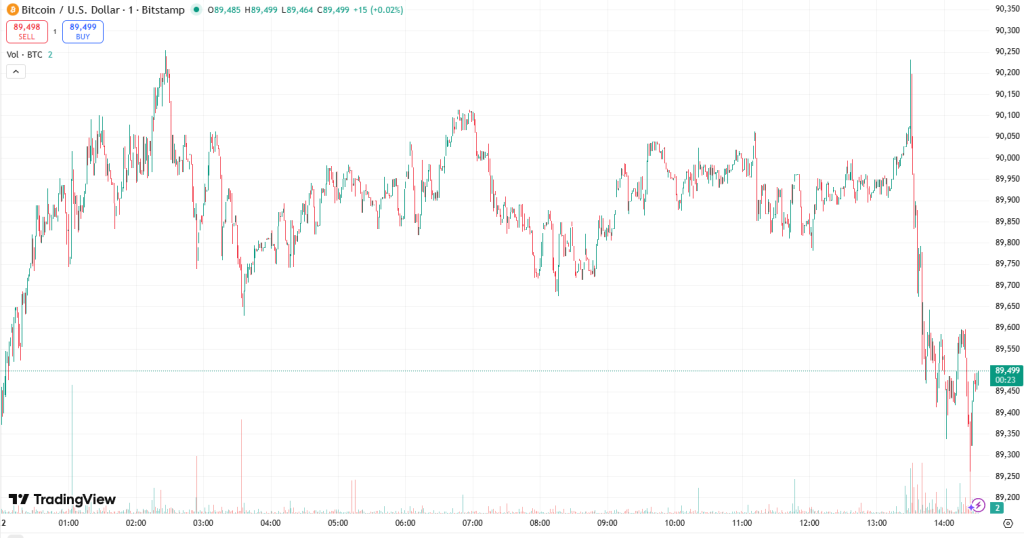


 The Norwegian Armed Forces, alongside about 3,000 United States Marines and other U.S. and NATO units, will conduct Exercise Cold Response 26 in northern Norway in March 2026, with allied forces beginning cold-weather training deployments as early as January, U.S. and Norwegian officials confirmed. The exercise is a Norwegian-led, routine winter drill designed to test […]
  Textron Systems said on January 20, 2026, that it has been awarded a $163.4 million contract to deliver 65 COMMANDO Select Mobile Strike Force Vehicles to support Ukraine under the U.S. Ukraine Security Assistance Initiative, using the Foreign Military Sales mechanism, according to a company announcement. The three-year, firm fixed-price contract was awarded through the […]

 The United States State Department has approved a possible $2.316 billion Foreign Military Sale to Singapore for P-8A maritime patrol and reconnaissance aircraft, MK 54 lightweight torpedoes, and associated systems, the Defense Security Cooperation Agency said as it formally notified Congress of the decision. According to the certification delivered to lawmakers, the Government of Singapore […]
  The North American Aerospace Defense Command confirmed on January 19 that multiple aircraft are en route to Pituffik Space Base in Greenland to support planned operational activities, an announcement made as political tensions rise over the Arctic island’s status. In a statement, NORAD said the deployment “will support various long-planned NORAD activities” and emphasized several […]