Reading view

There are new articles available, click to refresh the page.

Master Class – Mastering the Art of Pork Ribs

A BarbecueBible.com Master Class

Barbecuebible.com is thrilled to announce a new series of masterclasses—each devoted to a dish that everyone should know how to grill or barbecue.

And up first, what’s considered by many to be the ultimate barbecue: the pork rib.

Actually, there are four kinds of pork ribs and at least three recommended ways to cook them. Everyone should know how to barbecue ribs, so read on:

The various types of pork ribs:

The most popular is the baby back rib, aka top loin rib. Cut from high on the hog (next to the backbone), it’s tender, well-marbled, and relatively quick cooking. Everybody loves baby back ribs.

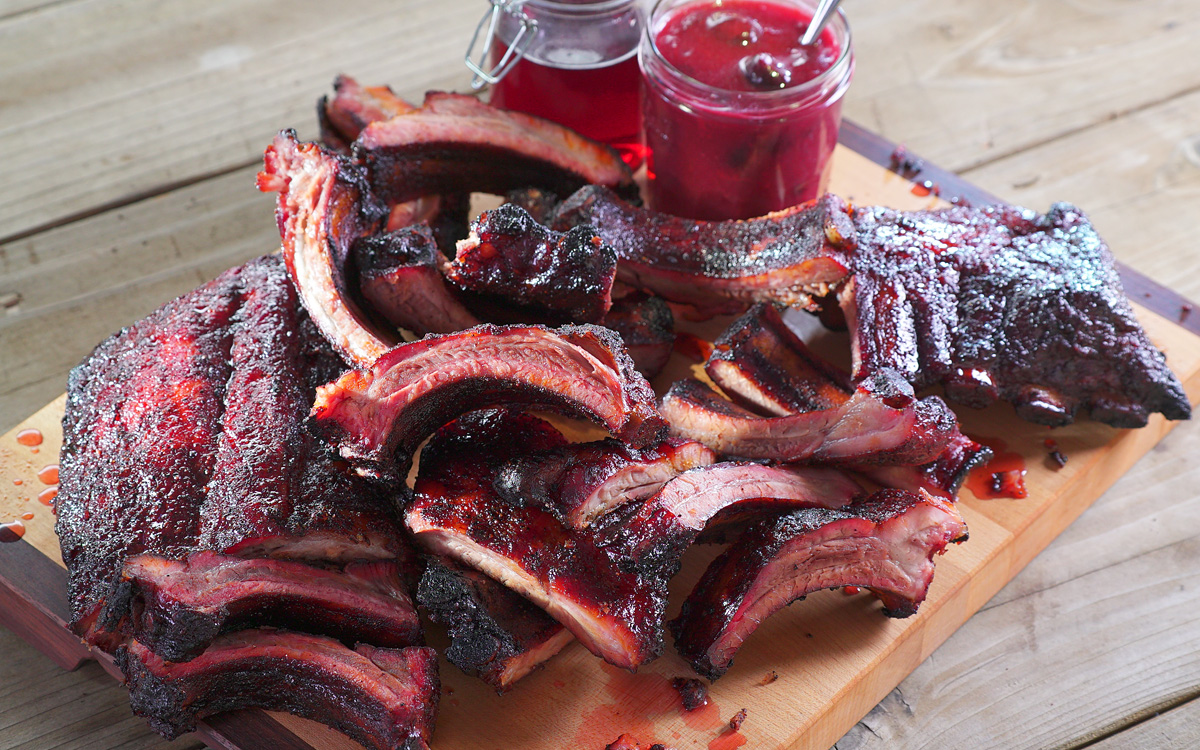
Spice Rubbed Baby Backs with Chipotle Bourbon Barbecue Sauce

Below the baby back (anatomically speaking) comes the spare rib—a meaty rack that’s larger, slightly tougher, and intensely flavorful. It should be cooked “low and slow” (at a low temperature for a long time) to achieve the requisite tenderness.

3-2-1 Barbecued Spare Ribs

Trim the cartilaginous bottom (called rib tips), the last two ribs on the narrow end of the rack, and some of the fat off a rack of spareribs and you get a St. Louis cut—a spare rib that looks and cooks like a baby back. Pro tip: Use the rib tips and any meaty trim to flavor baked beans, soup, or pork stock.

St. Louis Ribs at Barbecue University

The fourth kind of rib—the country-style rib—isn’t really a rib at all. It’s an odd cut from the hog’s neck that looks and cooks like a thick elongated pork chop. It may or may not have a bone. It should be direct grilled, exactly as you’d do with a pork steak or chop. Pro tip: Boneless country-style ribs can easily be turned into kebabs by slicing the meat into 1-inch cubes. Marinate, if desired, then skewer and grill with your favorite accompaniments. (We love pineapple. Tacos al pastor, anyone?)
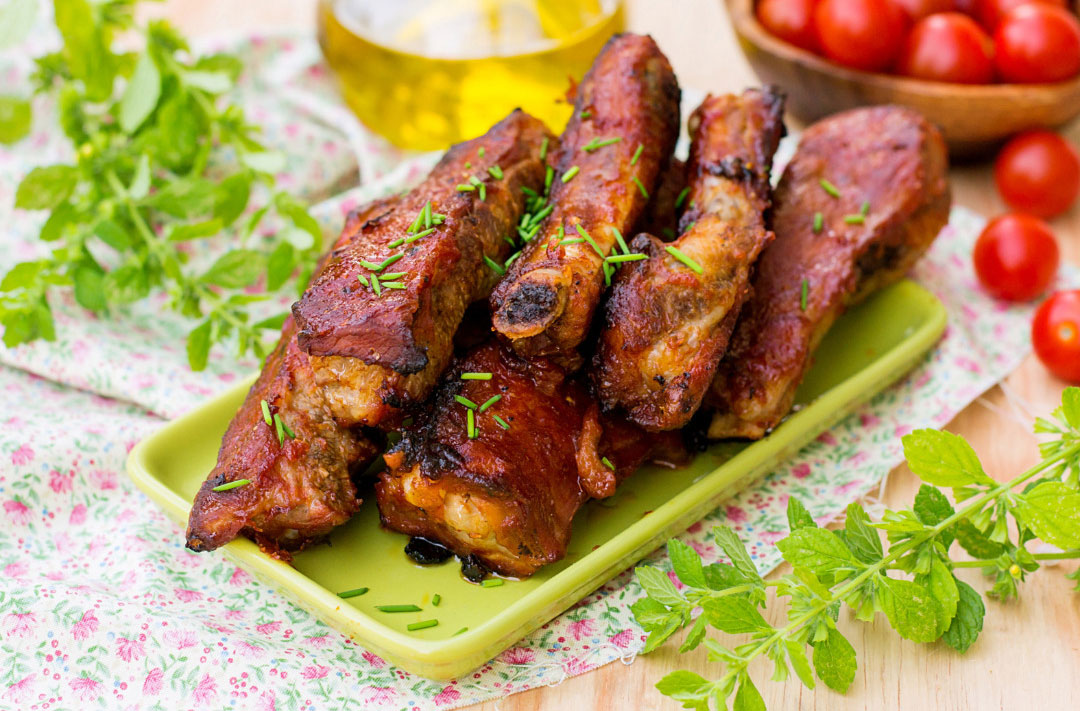
Country Style Pork Ribs

The various ways to cook ribs:

Ribs are highly versatile in that they can be cooked a variety of ways. Baby backs can be indirect grilled at a higher temperature (300 to 325 degrees)—a process that will take around 2 hours, or smoked like true barbecue at 225 to 250 degrees (closer to 3-1/2 to 4 hours). Hawaiians cook them on the rotisserie. St. Louis-cut ribs can be cooked either way, too.
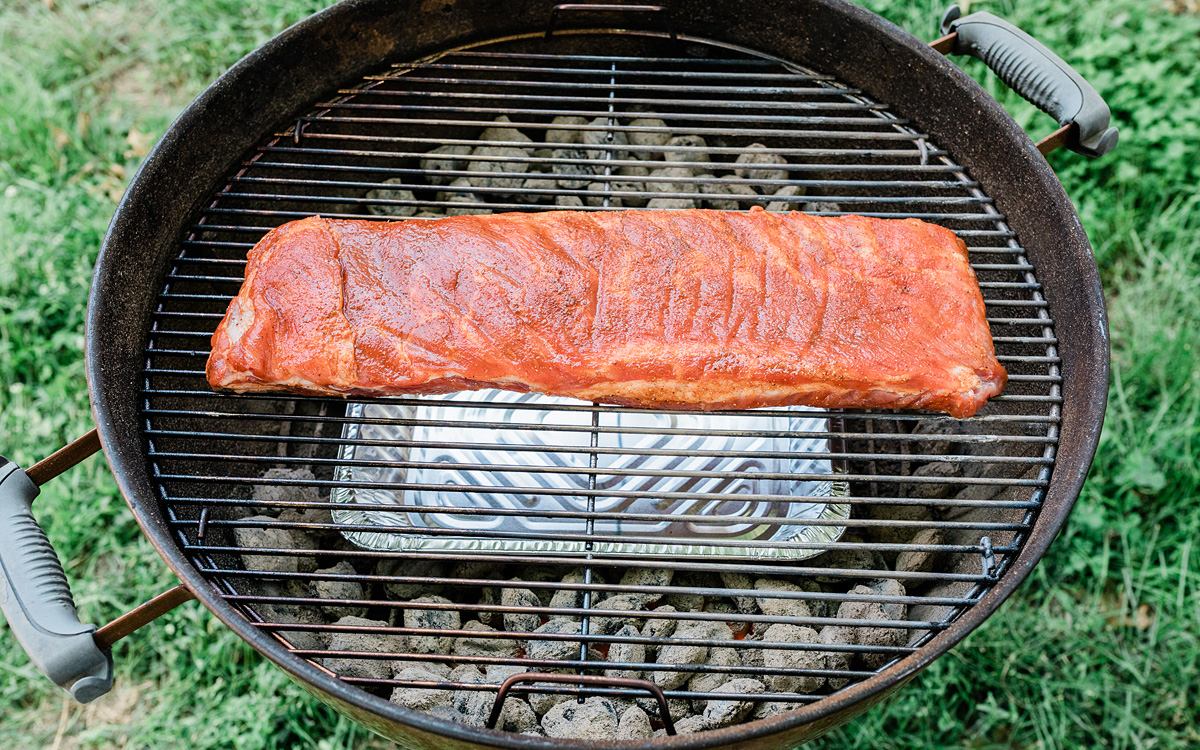
3-2-1 Barbecued Spare Ribs - Step 4

Spareribs should be cooked low and slow in a smoker: figure on 4 to 5 hours. Hickory is the traditional wood for smoking spareribs, but any hardwood works great.

Country-style ribs should be direct grilled—3 to 5 minutes per side over a medium-high flame should do it.

How to trim ribs:

A papery membrane covers the inside (the concave part) of your rib. Many pit masters remove it. (It’s said to interfere with the absorption of the spice and smoke flavors.). To do so, pry it up at the end of a couple of the rib bones with the end of a spoon handle. Grab it with a paper towel (it’s slippery and pull it off. At the same time, you can cut off any gross gobs of fat or dangly parts.

How to flavor ribs:

Take a page from the competition barbecuer’s playbook. Layer the flavors on your ribs. Start with a rub sprinkled over the ribs and rubbed into the meat. During the cook, you can spray your ribs apple cider, beer, or wine. Right at the end, brush on your favorite barbecue sauce, then sizzle the ribs directly over the fire for a minute or two—just long enough to sear the sauce into the meat. Do not apply the sauce too early, or the sugar in it will burn. Pro tip: Before applying a rub, slather the rack of ribs with yellow mustard.

3-2-1 Barbecued Spare Ribs - Step 8

The three-two-one method:

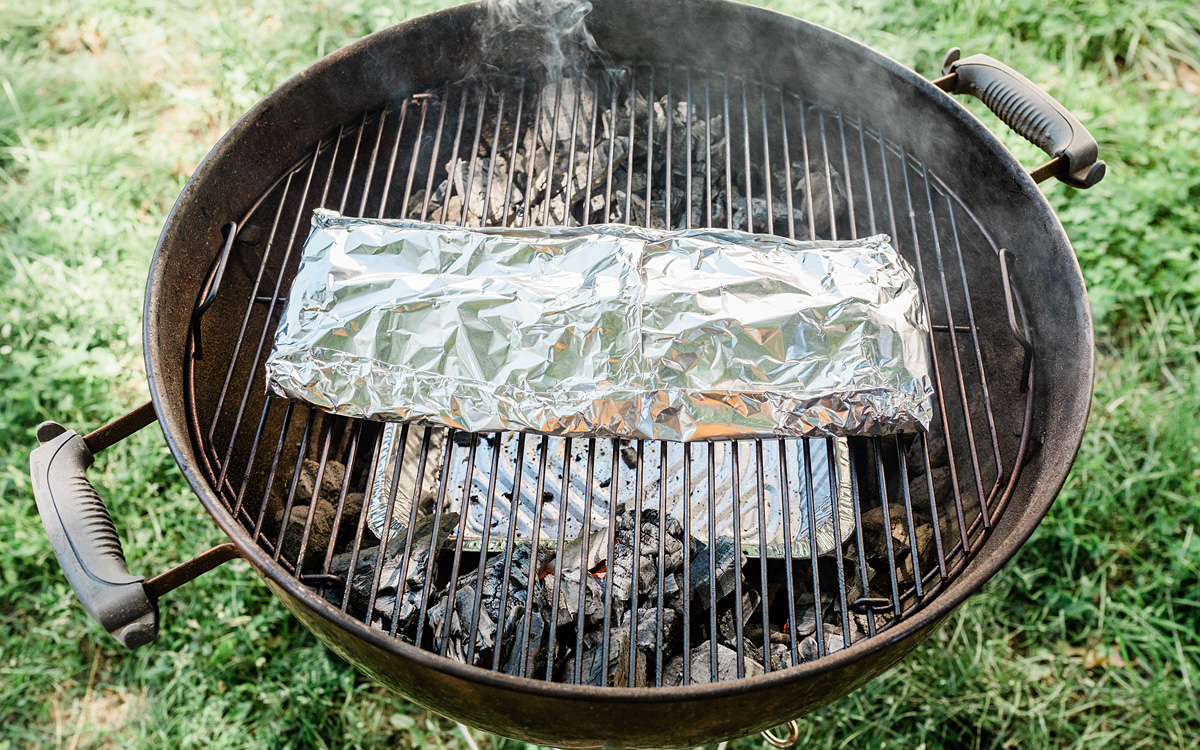
This one was all the rage on social media a few years ago. In a nutshell, you smoke the ribs uncovered for 3 hours, then wrapped in foil with butter and apple juice for 2 hours, then finish uncovered for 1 additional hour. Those numbers work for spareribs, but for baby backs, I recommend 3-1-1 timing.

How do you know when the ribs are cooked:

Ribs should be tender, but still have a little chew to them. In my opinion, the meat should not fall off the bone. (Such ribs were probably boiled or braised before grilling.)

Ribs should be cooked until the meat shrinks back from the ends of the bones by 1/4 to 1/2 inch.

Another test for doneness is to lift the rack in the middle with tongs. The meat should start to tear at the top.

Yet another test is to pull a rib off the rack. You should be able to tear it apart with your fingers.

So what else should you know?

Where your pork comes from matters as much as how you cook it. I’m partial to heritage breeds like Duroc or Berkshire.

invest in a rib rack, which holds the racks upright so you can fit four racks instead of two on your grill. A must for a small cooker, like a Weber Kettle or Smokey Mountain.
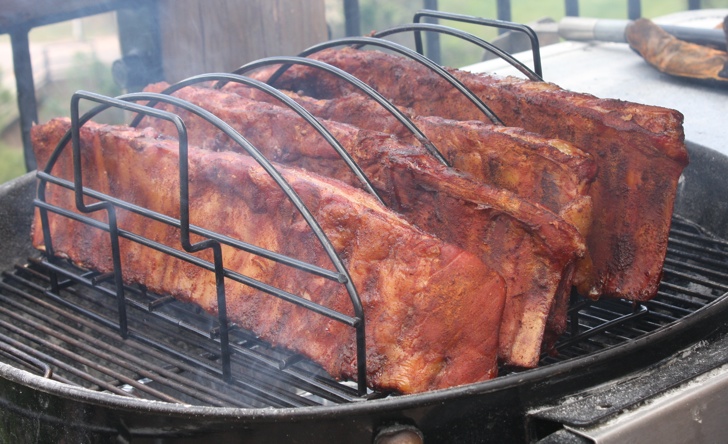
Ribs in Rack

Beef ribs are a whole different animal which we’ll cover in a new masterclass.

And now, the recipes to put your master class to use:

I’ve been cooking ribs for decades, and I’m still learning new things every time I fire up the grill or smoker. If you want to go deeper, I devoted an entire book to the subject—Best Ribs Ever: A Barbecue Bible Cookbook—because ribs reward curiosity, patience, and practice. Use this masterclass as your foundation, then keep experimenting. The best ribs you’ll ever cook are the ones that teach you something along the way.
Pork Ribs: Frequently Asked Questions

What are the different types of pork ribs?
There are four main types of pork ribs: baby back ribs, spareribs, St. Louis–cut ribs, and country-style ribs. Baby backs are tender and quick cooking, spareribs are meatier and best cooked low and slow, St. Louis ribs are trimmed spareribs that cook evenly, and country-style ribs are not true ribs and should be grilled like pork chops.
What temperature should I cook pork ribs?
For traditional barbecue, pork ribs should be cooked at 225–250°F until tender. Baby back ribs and St. Louis–cut ribs can also be indirect grilled at a higher temperature, around 300–325°F, to reduce cooking time while keeping them juicy.
Do I need to remove the membrane on pork ribs?
Many pit masters remove the thin membrane on the bone side of ribs because it can block seasoning and smoke from penetrating the meat. While not mandatory, removing it helps improve texture and flavor.
How do I know when pork ribs are done?
Pork ribs are done when they are tender but still have some chew. The meat should pull back from the ends of the bones by about ¼ to ½ inch, and the rack should bend easily when lifted with tongs, with the meat beginning to tear.
When should I add barbecue sauce to ribs?
Barbecue sauce should be applied near the end of cooking. Adding it too early can cause the sugars in the sauce to burn. Brush it on during the final minutes, then briefly sear the ribs over direct heat to set the sauce.

Related Posts

Check out our 1000+ Recipes section here on Barbecue Bible.Com

Also, sign up for our Up in Smoke newsletter so you don't miss any blogs and receive some special offers! PLUS get Raichlen's Burgers! PDF for free!

Follow Steven on Facebook, Instagram, YouTube, TikTok, Reddit, and Pinterest!

Check out our store powered by BBQGuys!

The post Master Class – Mastering the Art of Pork Ribs appeared first on Barbecuebible.com.
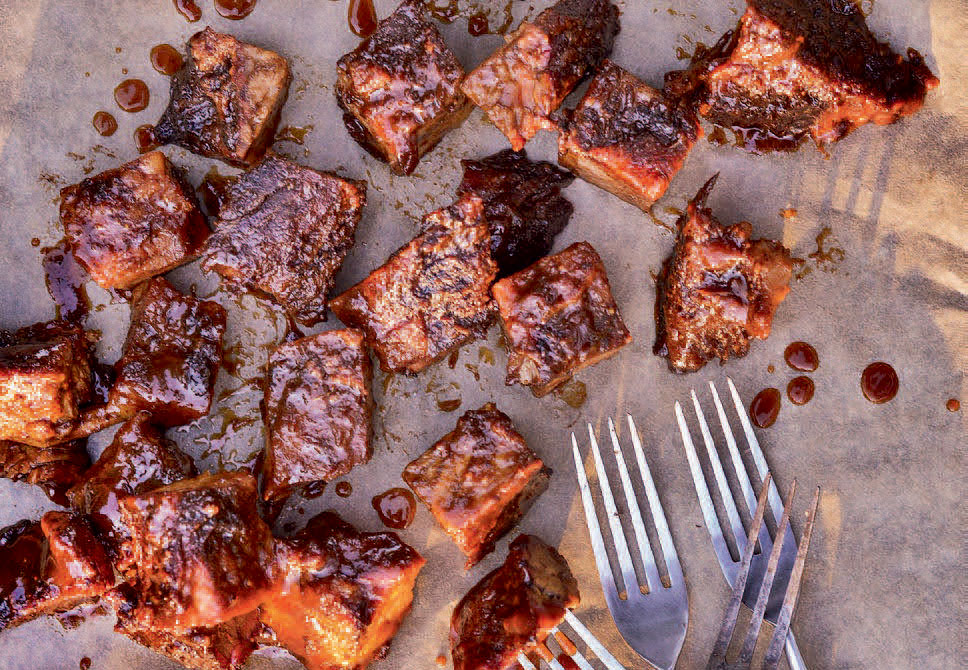
In Praise of Burnt Ends: Kansas City–Style Brisket Candy

In Praise of Burnt Ends

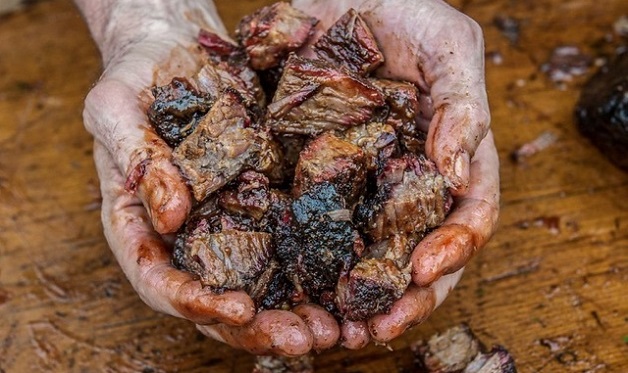
Burnt ends began as the crispy brisket trimmings served by legendary Arthur Bryant at his eponymous Kansas City restaurant. They didn’t cost a penny, and you got to sample them if you were at the head of the invariably long line that formed while waiting for the restaurant to open. Today, burnt ends have morphed into a specialty (and revenue source) in their own right, as many Kansas City restaurateurs now separate the point from the flat, serving the latter as barbecued brisket and the former as burnt ends. The modern burnt end might be described as brisket candy: you slather it with sweet barbecue sauce and roast it to caramelize the sugar. The following burnt ends start with cooked brisket.

Burnt ends may have started with brisket, but they don’t have to end there. The same smoky-sweet treatment works beautifully on other cuts—and even unexpected ingredients. Pork belly burnt ends deliver rich, bite-sized indulgence, while hot dog burnt ends turn a cookout staple into pure barbecue fun. Once you understand the method, burnt ends become less about tradition and more about creativity at the grill.

burnt ends recipe

Burnt Ends: Frequently Asked Questions

What are burnt ends?
Burnt ends are bite-sized cubes of smoked meat—traditionally brisket point—that are sauced and cooked again until caramelized and tender.
Are burnt ends always made from brisket?
No. While brisket is the classic choice, burnt ends can also be made with pork belly, hot dogs, and other well-marbled meats using the same technique.
What part of the brisket is best for burnt ends?
The brisket point is preferred because it has more fat, which keeps the cubes moist and rich during the second cook.
Do you need sauce to make burnt ends?
Sauce is traditional and helps create the signature sticky exterior, but you can make drier, rub-forward burnt ends if you prefer.
Can burnt ends be made on a gas or pellet grill?
Yes. As long as you use indirect heat and add smoke flavor when possible, burnt ends work well on gas, pellet, or charcoal grills.

Related Blogs

Check out our 1000+ Recipes section here on Barbecue Bible.Com

Also, sign up for our Up in Smoke newsletter so you don't miss any blogs and receive some special offers! PLUS get Raichlen's Burgers! PDF for free!

Follow Steven on Facebook, Instagram, YouTube, TikTok, Reddit, and Pinterest!

Check out our store powered by BBQGuys!

The post In Praise of Burnt Ends: Kansas City–Style Brisket Candy appeared first on Barbecuebible.com.

Steven Raichlen’s Crystal Ball: The Barbecue Trends that will Define 2026

Could it really be 2026 already?! It seems like I just wrote my 2025 barbecue trends blog. But time marches on, and how we grill continues to evolve. So I hauled out my metaphorical crystal ball (for once more articulate than ChatGPT) and asked what to expect in the coming year.

Here’s what I predict will move the barbecue world in 2026:

Barbecue Trends 2026

Move over beef tomahawks. Make way for flank steak (and other less expensive steaks).

Declarations from Washington to the contrary, inflation is still wreaking havoc with our wallets. My grocery bills are way higher now than they were last year—especially when it comes to beef. And if there’s one thing I’ve learned in life, prices go up, but they rarely come down. So in 2026, we’ll be looking for value, not bling, and affordable steaks like flank, sirloin, and flatiron will find a welcome place on our grills. For that matter, so will beef alternatives like pork shoulder steaks and tenderloins—a fraction of the price of their bovine counterparts.

Move over kettle grills. Make way for Santa Marias.

Derek Wold Fyr Grill

These charcoal and wood burners with raisable and lowerable grates are taking the grill world by storm. Mega-influencer Derek Wolf introduced his new Fyr grill earlier this year, and he can’t keep it in stock. Kalamazoo does a lively trade with its magisterial Gaucho grill, and Yoder has come out with some awesome Santa Marias too. Named for Santa Maria, California—the birthplace of the tri-tip—the Santa Maria grill boasts an ingenious pulley system that lets you raise and lower the grate with the turn of a crank or flywheel. That means greater heat control when grilling steaks, chops, seafood, and vegetables. Is it possible to indirect-grill on a Santa Maria? Raise the grate to its highest position and cook tougher cuts wrapped in foil.

Move over brisket. Make way for “trisket.”

Reverse Seared Tri-Tip with Smoked Tomato Salsa

No, it’s not a cracker. The trisket is the latest way barbecue folks are fighting the high price of what used to be a budget cut: brisket. Instead, get yourself a tri-tip—that flavorful triangle of beef cut from the bottom sirloin. Season it with salt and pepper (or your favorite barbecue rub) and smoke it low and slow as you would brisket. Rich, smoky, beefy flavor at a fraction of the price.

Move over griddles. Make way for braseros.

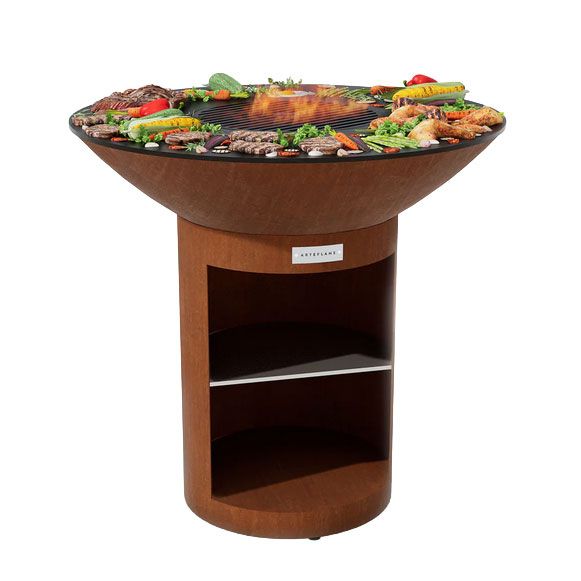
Arteflame Brasero

Picture a giant stand-up round or square griddle with a large hole in the center. In that aperture, you build a wood fire over which you position a grill grate. You’re grilling over a smoke-scented wood fire in minutes. But the real genius of a brasero is that it doubles as a griddle where you can cook eggs, pancakes, fragile fish fillets, and fried rice—foods you simply can’t cook on a conventional grill. One popular brand is Arteflame. Look for more brasero imports from Europe in the coming year.

Move over fresh meat. Make way for frozen.

Tajima Wagyu Ribeye Grilling Recipe

There will never be a substitute for great fresh meat from your local butcher. But frozen meat has lost the stigma it had when I came of age in barbecue. Today, some of the world’s most prestigious meats come frozen, from A5 wagyu from Japan to prime brisket points from boutique ranches in Colorado. The secret is to thaw frozen meat slowly in the refrigerator—overnight for steaks; several days for larger cuts like brisket—rather than the flash-thawing impatient guys like me used to do in a bowl of warm water.

Move over grill brushes. Make way for chain-mail grill cleaners.

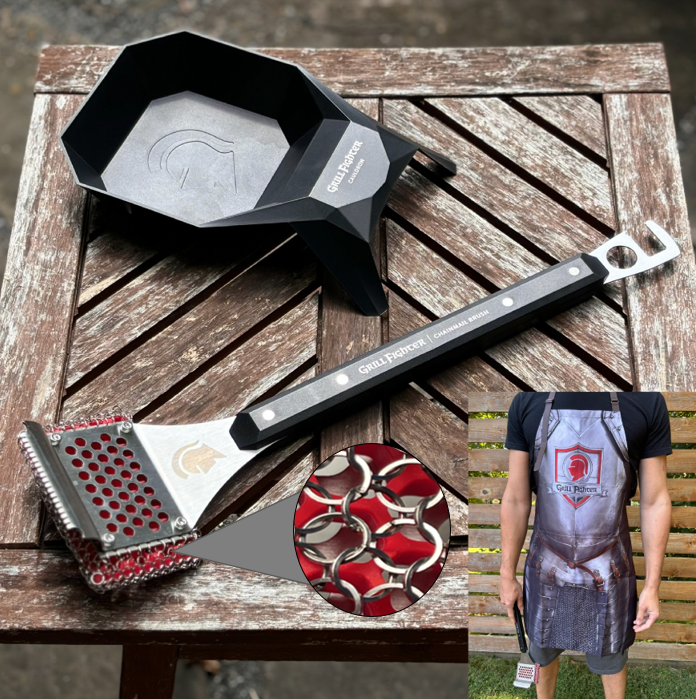
Grillfighter Grillbrush - Gift Guide

It doesn’t happen often, but on very rare occasions a wire bristle strays from your grill brush and winds up in your food—or worse, your innards. For a while, we turned to wooden scrapers, but they never cleaned as well as grill brushes. Enter the chain-mail grill cleaner, which scours your grate without leaving deadly bristles behind. Our go-to is the GrillFighter. It makes quick work of the grease and crud that accumulates on your grate. Just rinse it off with a hose or run through the dishwasher after each use.

Move over soy sauce. Make way for nuoc mam.

Nuoc Mam Dipping Sauce from Vietnam

Soy sauce has long been a barbecue mainstay—used in all manner of marinades, wet rubs, barbecue sauces, butters, and bastes. But more and more grillers are discovering fish sauce, a Southeast Asian condiment made from salt and fermented anchovies. Think soy sauce on steroids, with rich umami undertones. It sounds strange until you think of Caesar salad (made with anchovy dressing) or bagna cauda (the Italian vegetable dip made with anchovies, garlic, and cream). When mixed with other ingredients, fish sauce doesn’t taste fishy. My favorite brand is Red Boat—I use it all the time.

Move over dining out. Make way for elevated entertaining at home.

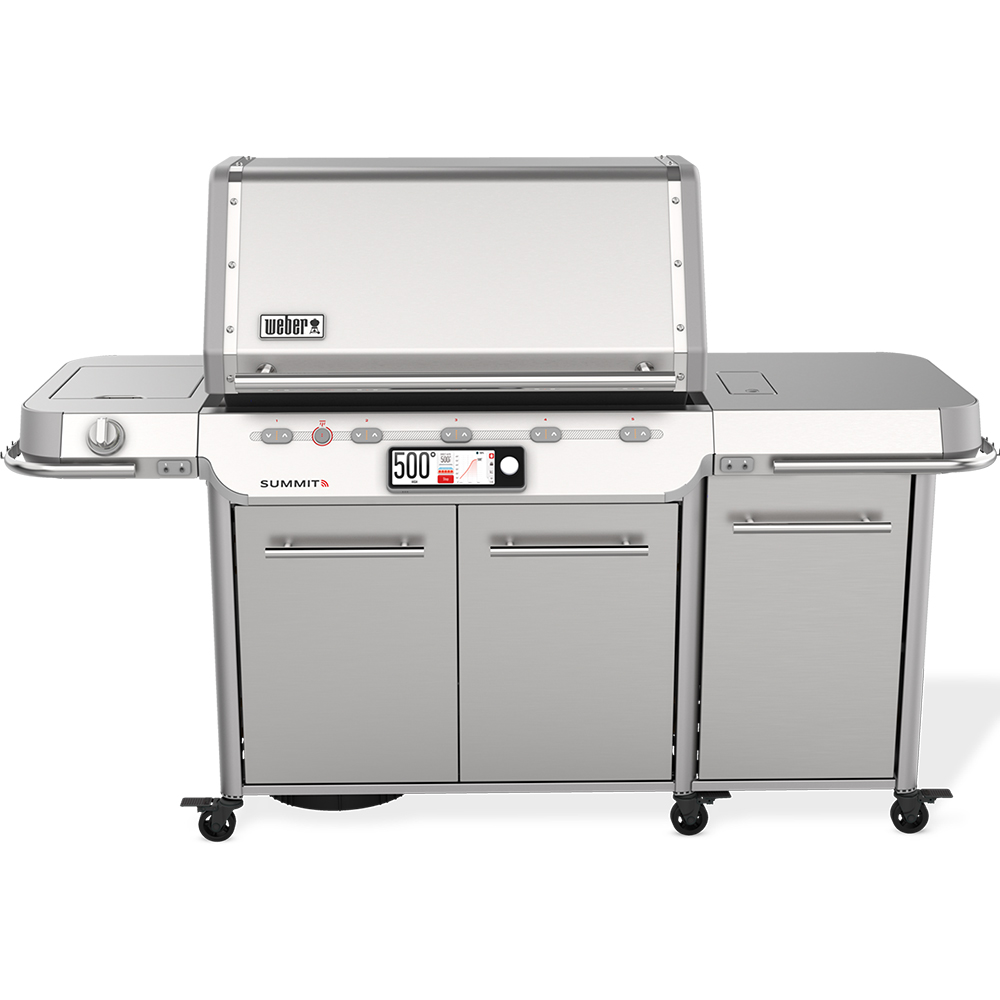
Weber Summit

A bright side to inflation? More and more of us are entertaining at home on high-tech grills like the Weber Summit FSX38, which has a built-in broiler—great for finishing shellfish and steaks. When you consider the cost of sitting in traffic, valet parking, and gratuities you’d pay at a restaurant, you can spend more time and money entertaining at home and still wind up ahead. Like Mrs. Raichlen says, “I always prefer a home-cooked meal to going out.”

Move over fried rice. Make way for fried noodles.

Yakisoba

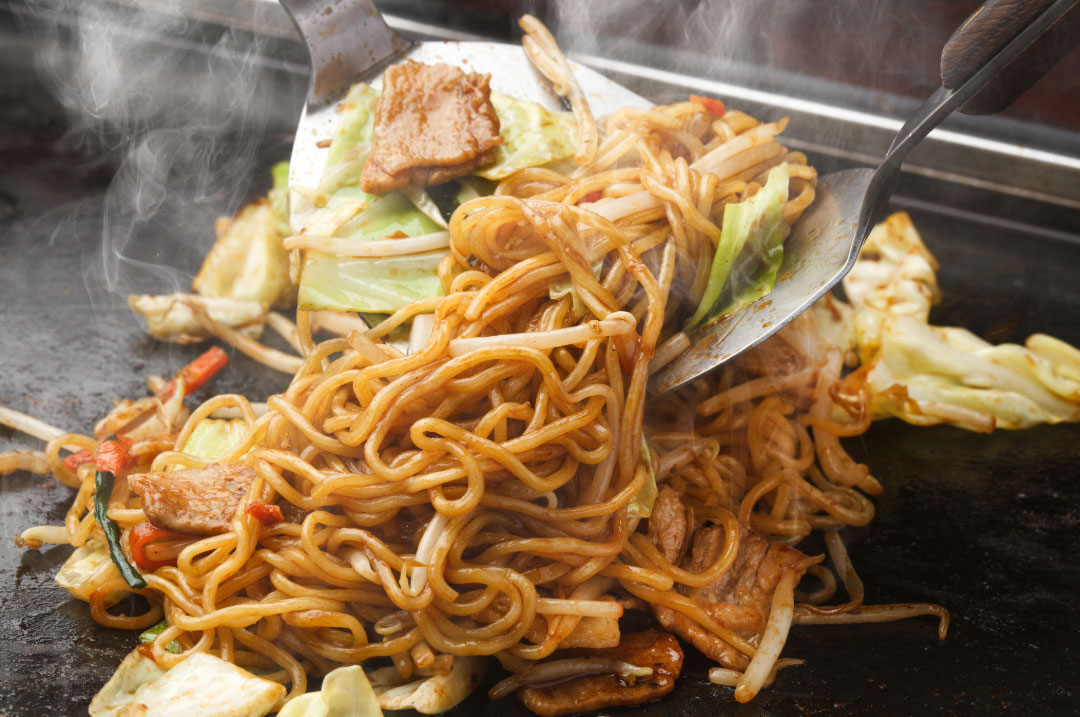
One of last year’s barbecue trends was the arrival—make that the explosion—of the stand-up griddle, which we used to cook foods you simply can’t do on a grill: pancakes, eggs, and fried rice, to name a few. Armed with some leftover spaghetti and a hot griddle, I made fried noodles recently. The thin strands of egg pasta—now crunchy and crisp—came as a revelation. Incidentally, griddle-fried noodles are a longstanding delicacy in Japan, where they go by the name of yakisoba.

Move over cauliflower. Make way for cabbage.

Caveman Slaw

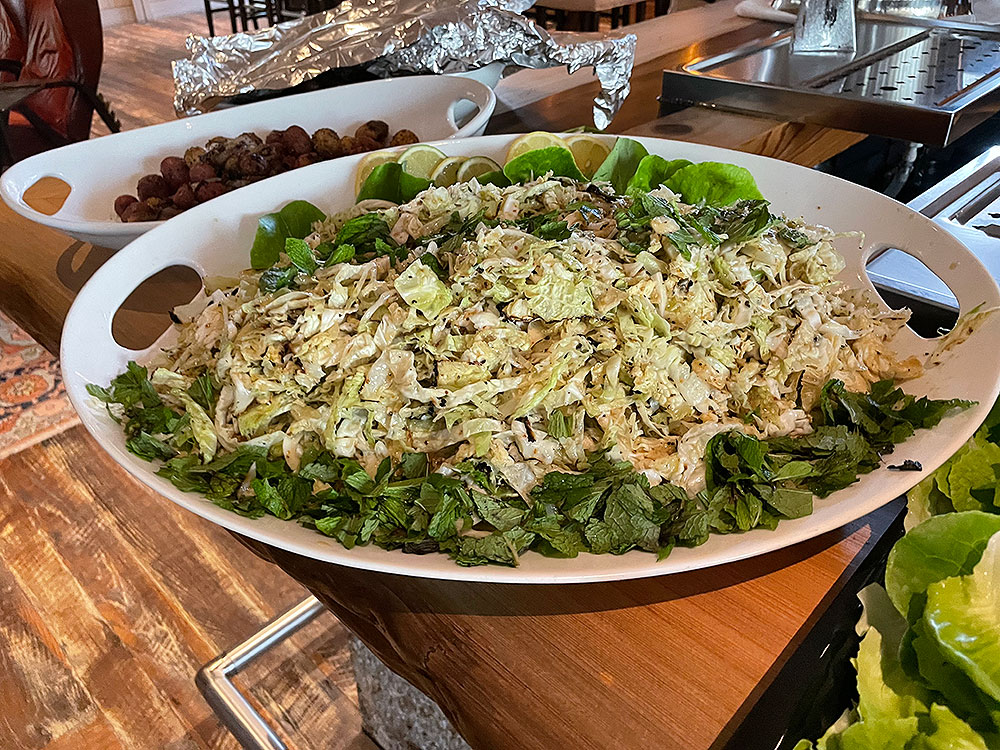
Yes, according to the blogosphere, the new it vegetable is… cabbage—replacing the cauliflower and Brussels sprouts of yesterday. Roast it whole in the embers. Cut it into wedges and grill it. (Insert a bamboo skewer to keep the wedges from falling apart.) Grill it or smoke it before you shred it to make the best coleslaw on the planet.

Move over Austin. Make way for Atlanta.

Lewis Atlanta

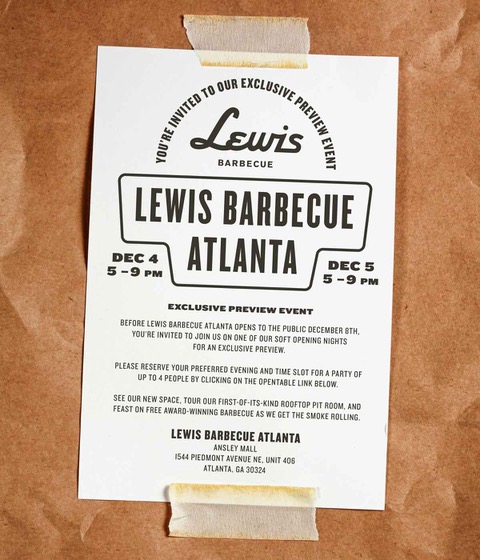
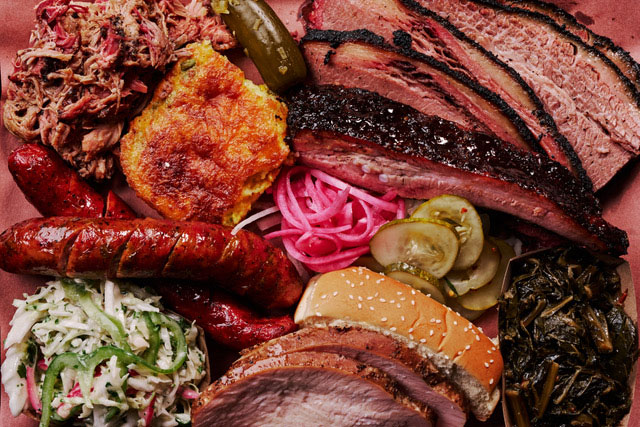
Atlanta’s barbecue scene got a huge boost with the arrival of John Lewis—the one-time Aaron Franklin acolyte who wowed Austin barbecue buffs with the peerless smoked meats at his La Barbecue in Austin and current Lewis Barbecue in Charleston. Now he brings his personally built smokers, his infinite patience (his brisket cooks for 18 hours), and a pedigree that includes stints at Franklin Barbecue and a recent Bibb award from Michelin to a city that’s no slouch when it comes to food. “We believe barbecue is all about patience,” Lewis said recently. “Atlanta, you’ve waited long enough to indulge—it’s salvation time.” Amen!

And in case you’re wondering, here’s how John Lewis makes his signature hatch chili corn pudding!

Lewis Barbecue Hatch Green Chile Corn Pudding

Creamy, smoky, and just spicy enough, this Hatch Green Chile Corn Pudding from Lewis Barbecue blends roasted chiles, sweet corn, and cheddar into a rich, cast-iron–baked side that’s at home next to brisket, ribs, or grilled chicken.

Lewis BBQ

Get The Recipe »

Move over nightclubs. Make way for restaurants.

Restaurant

One new trend I absolutely hate is loud music and DJs in restaurants (be they barbecue restaurants or not). Part of the joy of dining out is conversing with your family and friends at the table. A restaurant should be a place to relax, restore, and discover, not a damn discotheque. (Ava, Aviv, and other new restaurants in Miami: I’m talking to you.) I encourage you to complain as loudly as I do.

The scrooge has now left the room. Happy New Year!

Check out our 1000+ Recipes section here on Barbecue Bible.Com

Also, sign up for our Up in Smoke newsletter so you don't miss any blogs and receive some special offers! PLUS get Raichlen's Burgers! PDF for free!

Follow Steven on Facebook, Instagram, YouTube, TikTok, Reddit, and Pinterest!

Check out our store powered by BBQGuys!

The post Steven Raichlen’s Crystal Ball: The Barbecue Trends that will Define 2026 appeared first on Barbecuebible.com.
How Miami Celebrates the Holidays: Cuban Roast Pig

As I write this, it’s 85 degrees in Miami. Not the sort of Christmas weather I was used to when I lived in New England. Yes, everything is different here in Miami, include the barbecue. Which brings us to a dish that will be served in countless households here in South Florida. Lechon Asado—Cuban style roast pig.


Miami’s Lechon Asado – Cuban Pig Roast

The day before Christmas, Miami’s sky is filed with smoke from a thousand backyard barbecues. Not just any smoke: I’s the fragrant aroma of lechon asado, pork marinated in a garlicky adobo, wrapped in banana leaves, and slow roasted over an ember-filled pit. It’s the quintessential smell of Miami this time of year, and everywhere you turn preparations are underway for la Noche Buena, the traditional Cuban Christmas Eve feast

In South Florida, the Cuban Americans Jokingly refer to Miami as the fifteenth province of Cuba. And at Christmas, Miami’s Cuban roots are at their most visible— and most festive. Butcher shops advertise young pigs, while supermarket produce sections bulge with yucea, sour oranges, and ripe plantains. Bakeries are crowded with customers buying buñuelos(syrup-soaked fritters) and a nougat like candy called turron.

Catholics around the world honor Christmas Eve, but Latin Americans—particularly Cubans— have made it one of the most festive days (or more accurately nights) of the year. The holiday begins with a late-night feast, followed by dancing and socializing. At midnight, people attend a misa del gallo, literally a rooster mass, so called because it’s said to end around the time the first rooster crows. A Cuban Noche Buena celebration in Miami combines the belt loosening largesse of American Thanksgiving with the conviviality of a Fourth of July barbecue.

My own Initiation into the Noche Buena festivities came from a man who knows a thing or two about pig roasts, Octogenarian Efrain Veiga Sr. whom my wife and I call Papi, was a butcher in Havana and continued to work in the meat industry after immigrating to the United States in 1959. (His son, also named Elrain, opened the nation’s first Nuevo Latino restaurant, YUCA,) The family invited me to participate in a traditional Noche Buena—and help with everything from buying the pig to eating it

Picking A Pig

My alarm clock went off at 6am. After fortifying ourselves with steaming cups of café con leche Papi and I drove to Cabrera’s in Hialeah Gardens, a blue cinder block building on the outskirts of Miami. Even at this very early hour, we found a line at the rough-and-tumble slaughterhouse. We waited our turn to get our pig, a forty-nine-pound macho (male) that Papi had selected on account of its plumpness. On a normal day, Cabrera’s will process three hundred pigs: right before Christmas, they process twelve hundred in a single day! It’s customary for the whole family to come along to Cabrera’s when the pig Is selected for a Noche Buena dinner.

Bullding the pit with cinder blocks, chickon wire, and rebar.
Building the pit with cinder blocks, chicken wire, and rebar.

The honor of making the choice is given to the grandfather. Thanks to our early arrival, we left forty-five minutes later with el macho safely stowed in the trunk.

Preparing The Pig

Once back home, our first task was to soak the pig in a tangy marinade called adobo. Adobo turns up throughout the Spanish speaking world, varying widely from country to country. Mexico’s adobo, for example, is a spicy paste of ancho chiles and orange juice. Cuban adobo pits the breath-wilting pungency of fresh garlic (lots of it) against the fragrance of cumin and oregano with a greenish fruit called rraranja agria (sour orange) providing a snappy acidity.

Papi supervised the digging of the pit, a rectangular hole, about one foot deep, three feet wide, and four feet long, dug at the end of the driveway. When the dimensions of the hole were just right, Papi lined the pit with a sheet of galvanized steel, then built a fire with a couple of bags of charcoal.

Banana leaves are placed over the pig to hold in the smoke and moisture.

As the coals blazed down to embers, Papi raked them into an area roughly the size of el macho, with extra coals at either end to cook the shoulders and hams more quickly. We placed the pig, skin side down, on a grate fashioned from rebars and chicken wire. We splashed on more adobo and covered the pig with banana leaves. The leaves will hold in the moisture and smoke while imparting a distinctive flavor, Papi explained

Meanwhile, Esther “Mami” Velga worked on the accompaniments, for no Noche Buena would be complete without a trio of classic Cuban side dishes: moros y christianos, yuca con mojo, and fried plantains. The first, literally Moors and Christians, is a Cuban staple consisting of soupy black beans ladled over white rice. Yucea is Cuban comfort food, starchy white tuber that tastes vaguely buttery but mostly bland. It’s enjoyed the way Anglos eat boiled or mashed potatoes, but instead of adding a mere pat of butter, Cubans use an explosively flavorful sauce called mojo, made with fried garlic, cumin, and sour orange juice. The same sauce will be slathered over the grilled pork. As for plantains, these jumbo cooking bananas are another mainstay of the Cuban table and Mami took great pains to procure the softest blackest, ripest plantains she could find, for these will be delectably sweet

Like all great barbecue, lechon asado requires bursts of intense activity, followed by lots of sitting around watching the pig roast. As we sipped beer, Papi recalled his last Noche Buena in Cuba. He and his friends cooked an enormous pig, which they strung between two palm trees like a hammock. They swung it back and fourth over the fire until the skin was as crisp as a potato chip, “But Castro changed all that,” Papi said and sighed.

After two hours, we tuned the pig over, its skin now brown. and crackling, We added enough fresh coals for an additional hour and a half of roasting. Our talk turned to another artifact of a Cuban Noche Buena: the caja china, or Chinese box. This is a metal crate a bit larger than a steamer trunk, which many Cubans use in place of a barbecue pit. You place the pig in the box, close it, and shovel coals on the top. The box acts like a giant oven and produces pork of extraordinary succulence. You can buy cajas chinas at hard- ware stores in Miami, But Papi and I agreed that we’d miss the live fire flavor that comes from roasting the pig over a pit.

Feliz Navidad

By nightfall, el macho was as shiny and dark as mahogany and tender enough to pull apart with your fingers, precisely what Papi invited me to do. The table sagged under the weight of lechon asado and its various accompaniments. We splashed garlicky mojo over the pork and licked our fingers. At the end, Mami brought out a shimmering flan delicately flavored with lemon and cinnamon for dessert.

Cooking a whole pig can be challenging if you’re an apartment dweller—or even if you’re an accomplished griller. Click here, you’ll find a recipe for making lechon asado with a more manageable cut, pork shoulder. Like the pig, the roast marinates in garlicky adobo, and for additional flavor you can poke holes in the meat, so it absorbs even more marinade. But if you’re ever in Miami on Christmas Eve, try to get yourself invited to a Noche Buena dinner. You won’t regret it.

Excerpted from Barbecue USA.

Lechón Asado: Frequently Asked Questions

What is lechón asado?
Lechón asado is a traditional Cuban roast pig dish, typically marinated in a garlic-forward adobo made with sour orange, cumin, and oregano, then slow-roasted over live fire or coals.
Why is lechón asado eaten on Christmas Eve?
In Cuban culture, lechón asado is the centerpiece of Noche Buena, the Christmas Eve celebration. Families gather late into the night for a festive meal, music, and community centered around the roast.
What does lechón asado taste like?
The pork is deeply savory and aromatic, with intense garlic flavor balanced by citrusy acidity. When cooked properly, the meat is juicy and tender, with crisp, crackling skin.
How is lechón asado traditionally cooked?
Traditionally, the pig is roasted whole over an ember-filled pit, often wrapped in banana leaves to retain moisture and add flavor. Some cooks use a caja china, a sealed roasting box that cooks the pig evenly from above.
Can you make lechón asado without roasting a whole pig?
Yes. Many home cooks adapt the dish using pork shoulder, which is marinated the same way and slow-roasted or grilled to capture the essential flavors without the scale of a whole pig.

Related Posts

Check out our 1000+ Recipes section here on Barbecue Bible.Com

Also, sign up for our Up in Smoke newsletter so you don't miss any blogs and receive some special offers! PLUS get Raichlen's Burgers! PDF for free!

Follow Steven on Facebook, Instagram, YouTube, TikTok, Reddit, and Pinterest!

Check out our store powered by BBQGuys!

The post How Miami Celebrates the Holidays: Cuban Roast Pig appeared first on Barbecuebible.com.

The Thanksgiving Turkey Steven Raichlen will be Making This Year – With a Twist!!

Planning Thanksgiving on the grill opens up a whole new world of flavor, and this year we’re taking you through it step by step. The Barbecue Bible Complete Thanksgiving Guide is a three-part series designed to help you build your entire holiday meal outdoors—from the main turkey, to the sides, to the show-stopping alternatives if you’re ready to try something different.

Each post digs into the techniques, gear, and recipes that make live-fire Thanksgiving cooking not just possible, but deeply satisfying. Whether you’re chasing crisp skin, smoky depth, or dishes that bring a spark to the table, this guide walks you through the essentials so you can create a feast that feels fresh, fun, and full of flavor.


The Thanksgiving Turkey Steven Raichlen will be Making This Year

Over the years, I’ve written a lot of recipes. More than 4000 by recent reckoning!

And over the years, as Thanksgiving approaches, I’ve written a lot of turkey recipes. Dozens, if not more.

I’ve marinated turkeys Miami-Cuban style, with adobo (cumin, garlic, and sour orange), and served them with mojo (fried garlic lime sauce)

I’ve stuffed turkeys under the skin with truffles and butter.

Truffle Stuffed Smoked Turkey

I’ve blasted turkey breasts with pastrami spice and cured them with citrus and rock salt.

I’ve cooked turkeys on the rotisserie, on beer cans, on the grill, and in my smoker.

But there’s one turkey I keep coming back to: bourbon-brined turkey smoke-roasted in a kamado.

It’s the turkey I’ll be preparing for Thanksgiving this year, and it never fails to bring down the house.

Bourbon-Brined Turkey

So let me break it down for you.

First, the bird. I always buy an organic bird—ideally around 12 to 14 pounds. Organic, because I know it was cleanly and humanely raised. Twelve pounds because it’s easier to stay on top of the cooking. If I have a lot of people to feed, I buy two birds that size. I don’t like cooking 20-pound monsters—it’s too hard to insure even cooking and accurate doneness.

D'artagnan Turkey

Next the brine. Turkey breast is intrinsically dry. Brining adds moisture. I like to flavor my brine with bourbon, which adds a sweet, woodsy flavor. (Bourbon is aged in charred oak barrels. Wood + fire? It’s the liquid equivalent of barbecue.

I also flavor my brine with lemon zest, cloves, and bay leaves). Turkey needs salt, so the salt in the brine provides flavor too.

Brining Turkey

As for the cooking, I use a method I call smoke-roasting. You do it at a higher temperature than traditional smoking, and that helps cook and crisp the skin. (Traditional smoking produces great tasting meat, but rubbery skin.)

As for the smoke component, turkey is one of those meats that just begs for the soulful tang of woodsmoke. I typically use oak or hickory, but any hardwood will do. Except, possibly, for mesquite, which produces a stronger smoke than the other hardwoods. But, hey, if you like mesquite, smoke your bird with that.

As for the cooker, I typically use a kamado (like a Primo or Big Green Egg). I like how the thick ceramic walls and felt gasket between the cook chamber and lid seal in moistness. But I’ve also smoke-roasted turkey on a charcoal kettle grill and in a pellet grill. All will produce admirable birds.

This year, I’m adding one new twist to the traditional Raichlen bird. I’m taking a page from the fried turkey school. Smoke-roasting produces a turkey skin that’s crisper than traditional smoking. But not as crackling crisp as a fried turkey.

So once my bird comes off the grill, I’m placing it on a wire rack over a roasting pan. I’ll heat a couple cups of vegetable oil to 350 degrees in a saucepan. And I’ll CAREFULLY ladle the hot oil over the bird—carefully—to crisp the skin just before serving.

Bourbon-Brined Turkey Recipe

Smoke-Roasted Turkey for Beginners

Get The Recipe »

It’s the best of all possible worlds.

Cooking turkey this year? I’d love to see how YOU do it! Post pix on my social media pages. Happy Thanksgiving to all!

Thanksgiving Turkey: Frequently Asked Questions

Why brine a turkey before smoking or roasting?
Turkey breast can dry out fast. Brining helps it pull in moisture and seasoning so the meat stays juicy and flavorful.
What size turkey cooks most evenly on a grill or smoker?
A 12–14 pound bird is ideal. It cooks more predictably, holds moisture better, and avoids the uneven doneness big birds often have.
What wood works best for smoke-roasting turkey?
Oak, hickory, apple, or pecan pair well with poultry. Mesquite works too, but has a stronger flavor that not everyone loves.
How do I get crisp skin when smoking a turkey?
Use higher “smoke-roast” temps and finish by ladling hot oil over the bird. It adds a fried-style crackle without deep-frying.
Can I make this recipe on a kettle or pellet grill?
Absolutely. A kamado holds moisture best, but kettle and pellet grills can produce great results with the same method.

Related Posts

Check out our 1000+ Recipes section here on Barbecue Bible.Com

Also, sign up for our Up in Smoke newsletter so you don't miss any blogs and receive some special offers! PLUS get Raichlen's Burgers! PDF for free!

Follow Steven on Facebook, Instagram, YouTube, TikTok, Reddit, and Pinterest!

Check out our store powered by BBQGuys!

The post The Thanksgiving Turkey Steven Raichlen will be Making This Year – With a Twist!! appeared first on Barbecuebible.com.
5 Dishes Everyone Should Know How to Grill

Over In the course of my career, I have written 34 books—12 of them devoted to grilling, smoking, and now griddling. That translates to something on the order of 4000 recipes—more than 500 recipes in Barbecue Bible alone.

So distilling that down to five indispensable recipes that everyone—beginner or expert—should know how to grill might seem like an impossible task.

It is an impossible task, but I’m going to try. After all, if you’re just starting out with live fire cooking, you don’t want to know how to grill 4000 recipes. You want to have a four or five fail-proof showstoppers in your repertory that you prepare on demand without breaking a sweat.

Here’s my list of the indispensables:

5 essential grilling recipes

Steak: The first thing everyone should know how to grill is a steak. Not necessarily, a 2-pound porterhouse that will set you back $100 or more. (I’ll tell you how to grill one of those in a future blog—stay tuned.). No, you want to know how to grill a steak that’s readily available, flavor-packed, and mercifully affordable. Enter the skirt steak. Cut from the steer’s undercarriage, skirt steak has flavor in spades. The secret to grilling skirt steak? Bold seasonings. Hot fire. And remember to slice it across the grain. Here’s a bourbon-marinated skirt steak that will smoke the competition.

Chicken breasts: We food writers like to dump on chicken breasts because they’re mild-tasting, uncomplicated, and quick. The same reasons that you—and we—probably have some in the freezer. Chicken breast is about easiest food there is to grill, and although it’s bland, it absorbs flavors like a sponge. Just rub it or marinate it, oil or baste it, and cook it fast to keep the lean meat from drying out on the grill. My favorite way to cook chicken breasts takes a page from the Italian playbook. It’s called pollo al mattone (“chicken under a brick”) and it’s guaranteed to steal the show at your next cook-out.

Whole chicken: While we’re on the subject of poultry, a whole roast chicken is about the most comforting dish on the planet—especially when spit-roasted on a grill, preferably in the presence of woodsmoke. If you have a rotisserie, you’re ahead of the game. Just brush the bird with olive oil and season it with your favorite barbecue rub (or with salt and pepper—either works). Set up the rotisserie following the grill manufacturer’s instructions. Add wood chunks or chips to the coals or place in your gas grill’s smoker box. Oh, and my trick for producing a tender bird every time: overcook it, that is cook it to an internal temperature of 175 to 185 degrees. That’s how the French do it, and they make the best roast chicken in the world.

Baby back ribs: If there’s one dish that epitomizes barbecue, it’s ribs. And if there’s one rib that everyone should know how to cook, it’s baby backs. Cut from high on the hog (yes, that’s where the expression came from), baby backs are generously marbled, naturally tender, and relatively quick to cook. You can smoke them “low and slow,” as you would true barbecue—a process that takes 3 to 4 hours. You can indirect grill them hotter and faster, delivering competition worthy ribs in 90 minutes. The secret? A four-ingredient barbecue rub (equal parts salt, pepper, paprika, and brown sugar) and a luscious lemon brown sugar barbecue sauce.

Pulled pork: The pork shoulder may be the most forgiving piece of meat ever set to fire. It, too, can be cooked low and slow or hot and fast. Thanks to its generous marbling, it always stays moist—even if you overcook it. Start with a Boston butt—cut from the top of the pork shoulder and so name for the wooden barrels (“butts”) it used to be stored in for shipping. Once it’s cooked (to 190 to 195 degrees on a meat thermometer), you shred it with meat claws link or two large forks and douse it with a Carolina vinegar sauce. The piquancy of the vinegar counterbalances the richness of the pork. Just remember to add hardwood chunks or chips (the latter soaked in cool water for 30 minutes, then drained) to add that authentic Southern smoke flavor.

Related Reads

Grilling: Frequently Asked Questions

What’s the best grill temperature for most foods?
Medium-high heat—around 400 to 450°F—is ideal for most grilling. It’s hot enough to sear while keeping meats juicy and vegetables crisp-tender.
Should I leave the grill lid open or closed?
Keep the lid open for quick-cooking foods like burgers or steak; close it for thicker cuts or anything that needs indirect heat, like chicken or ribs.
How can I tell when meat is done without overcooking it?
Use an instant-read thermometer—125°F for rare steak, 165°F for chicken, 190°F for pulled pork. It’s the simplest way to get perfect results every time.

Check out our 1000+ Recipes section here on Barbecue Bible.Com

Also, sign up for our Up in Smoke newsletter so you don't miss any blogs and receive some special offers! PLUS get Raichlen's Burgers! PDF for free!

Follow Steven on Facebook, Instagram, YouTube, TikTok, Reddit, and Pinterest!

Check out our store powered by BBQGuys!

The post 5 Dishes <u>Everyone</u> Should Know How to Grill appeared first on Barbecuebible.com.

A Revolutionary New Way to Cook Bratwurst

Refreshed for 2025

Succulence and smoke guaranteed.

He wouldn’t. He shouldn’t. He did.

He being me, and I found a revolutionary new way to grill bratwurst. It’s about to make you and your next tailgate party succeed like a million bucks!

From the beginning of time (or a least bratwurst), people have grilled this traditional German sausage directly over the fire.

Even the name suggest direct grilling: braten is the German word for to roast or grill.

Bratwurst "Hot Tub"

Direct grilling bratwurst and other fresh sausage has benefits and risks. Get it right, and you wind up with a crisp smoky casing and sizzling meat. Get it wrong and the bratwurst will split and the fat will gush onto the fire, turning your grill into a conflagration. Or one side will come out charred; the other side raw, which is an equally unhappy result.

But what if there was a way to grill brats without these fiery risks? There is and I discovered it a few years ago when I suddenly had to cook 60 brats for a book signing and my assistant was a no show.

Indirect grilling bratwurst

So I set up my grill for indirect grilling and lined up the brats on the grate. Then, in a moment of inspiration, I added hickory wood to the coals. The result was astonishing. Indirect grilling kept the casings and juices intact, which meant brats that were 30 percent juicier than the sausage I grilled using the direct method.

And the smoke flavor made the brats off the charts delicious. (Think bratwurst channeling barbecue.)

Indirect grilling bratwurst

Best of all, the method works for all manner of fresh wurst, from chorizo to Italian sausage.

Brats are indispensable for any self-respecting tailgate party. Use my indirect grilling with wood smoke method for the best brats you’ve ever tasted.

How to do it

  1. Set up for indirect. Two-zone fire (coals/burners on one side only). Aim for 350–375°F in the indirect zone.
  2. Add wood. Place a fist-size chunk of hickory (or a handful of chips) over the hot side.
  3. Cook gently. Arrange brats on the cool side, lid down, vents open. Cook to 155–160°F internal, 20–30 minutes, rotating once.
  4. Optional crisp. Roll brats over the hot side for 30–60 seconds to blister the casing.

Time & temp cheatsheet

  • Grill temp (indirect zone): 350–375°F
  • Wood: Hickory (oak or apple also fine)
  • Target internal temp: 160°F (USDA for fresh pork)
  • Typical time: 20–30 min indirect + 1 min crisp

Bratwurst Recipes

Bratwurst: Frequently Asked Questions

Why not grill brats directly over the fire?
Direct heat can split casings and dump fat onto the coals, causing flare-ups and uneven cooking. Indirect heat keeps juices in and cooks evenly.
What grill setup works best for this method?
Use a two-zone fire: coals or burners on one side, brats on the other. Maintain 350–375°F in the indirect zone with the lid closed.
Do I need wood for smoke?
A chunk of hickory (or oak/apple) over the hot side adds barbecue-level flavor without raising the indirect temperature. Highly recommended.
When are the brats done?
Pull at 155–160°F internal. If you want extra snap, sear 30–60 seconds over the hot side to blister the casing.
Does this work for other sausages?
Yes. Italian sausage, chorizo, kielbasa, and other fresh sausages benefit from the same indirect + smoke approach.
Check out our 1000+ Recipes section here on Barbecue Bible.Com

Also, sign up for our Up in Smoke newsletter so you don't miss any blogs and receive some special offers! PLUS get Raichlen's Burgers! PDF for free!

Follow Steven on Facebook, Instagram, YouTube, TikTok, Reddit, and Pinterest!

Check out our store powered by BBQGuys!

The post A Revolutionary New Way to Cook Bratwurst appeared first on Barbecuebible.com.
Porchetta Recipes You Can Grill at Home — Italian Flavor Made Easy

Quick: what’s your favorite flavoring for pork? Garlic? Sage? Rosemary? A salt and pepper rub? If you answered all of the above, do we have a dish for you!

Italians call it porchetta (pronounced pork-etta). I call paradise.

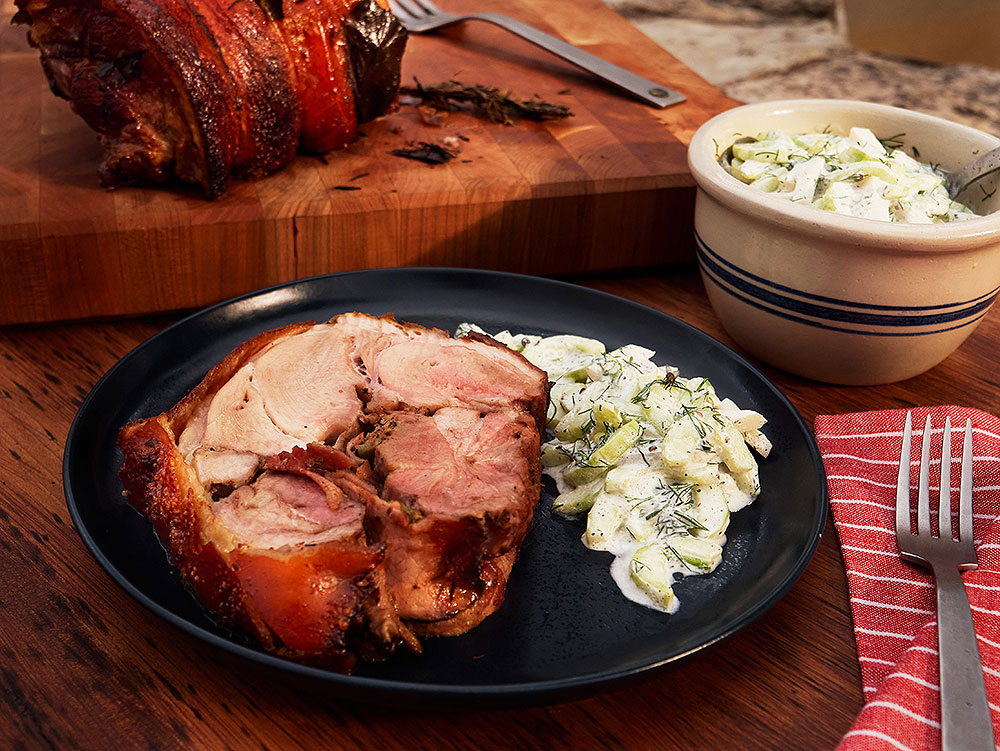
Born in ancient Rome, porchetta has been around for a long time. Over the centuries, it has evolved into a whole boned pig stuffed with an aromatic paste of garlic, fresh herbs, salt, pepper, and fennel, and spit-roasted or oven-roasted until the skin is as crisp as potato chips and the meat is as luscious and tender as butter.

In honor of Pork-tober, we’re showcasing three of our favorite porchetta recipes:

Porchetta Recipes

Porchetta (Italian Garlic & Herb Stuffed Pork Loin)

This roast bursts with garlic, sage, rosemary, and citrus in every juicy slice—crackling skin, tender pork—yet uses straightforward prep anyone can handle.

Porchetta (Italian Garlic and Herb Stuffed Pork Loin) - Porchetta Recipes

Get The Recipe »

Porchetta with Blueberries and Hazelnuts

Rustic pork belly wrapped around loin with a wild mix of blueberries, hazelnuts, thyme and pancetta gives you sweet, nutty, crisp flavor that feels gourmet but is totally doable.

Porchetta with Blueberries and Hazelnuts

Get The Recipe »

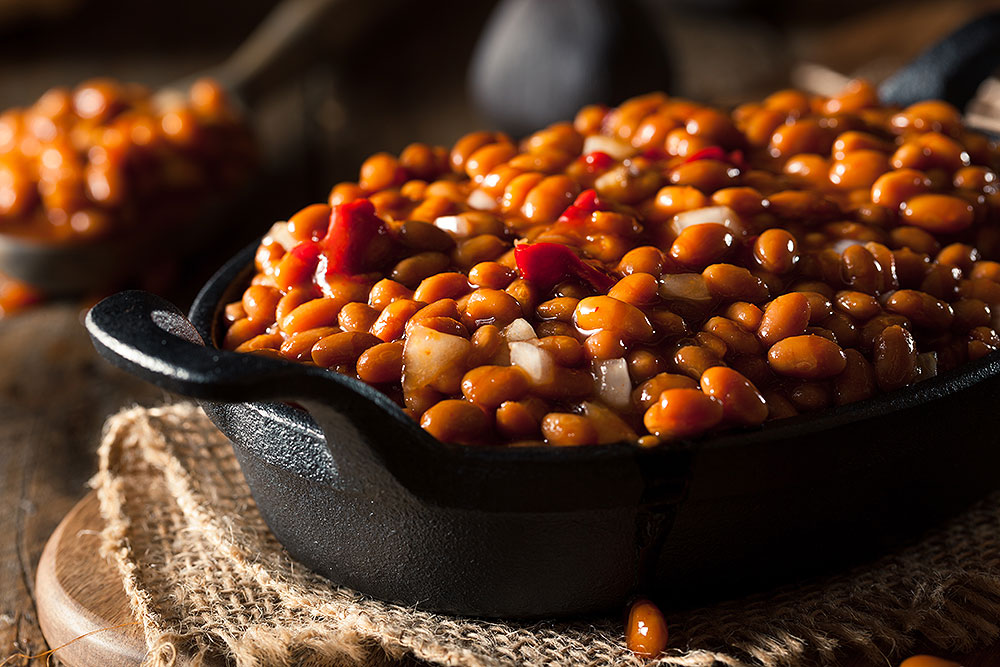
Yankee Porchetta: “Pork and Beans”

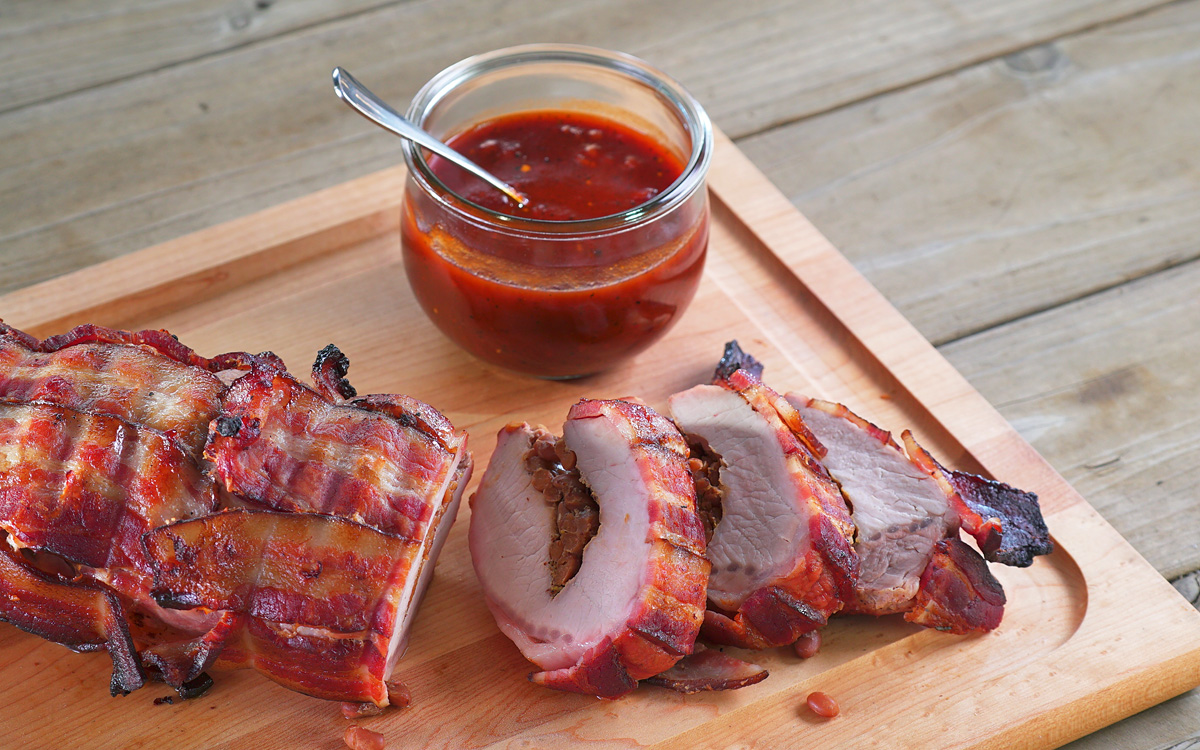
A clever mash-up of stuffed pork loin and baked beans wrapped in bacon and smoke-roasted—comforting, bold, smoky goodness made in a way that’s fun and not fussy.

Yankee Porchetta: “Pork And Beans” - Porchetta Recipes

Get The Recipe »

Porchetta may have ancient roots, but it feels right at home on a modern grill. Go classic with garlic and herbs, sweet with blueberries and hazelnuts, or smoky with beans and bacon—each version captures the spirit of Italian cooking: simple ingredients, bold flavor, and a little patience over the fire. Try one this Pork-tober and taste why this centuries-old roast still earns a spot at the table.

Related Reads

Porchetta: Frequently Asked Questions

What is porchetta, and which cut should I use?
Porchetta is Italian roast pork seasoned with garlic, herbs, and fennel; you can use pork belly wrapped around pork loin (classic) or a butterflied pork loin for an easier, leaner version.
Can I grill porchetta instead of roasting?
Yes—set up a two-zone fire and cook indirectly at 300–325°F (150–165°C), then finish over direct heat to crisp the skin or exterior.
How do I get shatter-crisp skin or a great crust?
Dry the surface overnight, season generously with salt, cook indirectly until tender, then blast with high heat (or a brief broiler/rotisserie finish) to puff and crisp.
What internal temperature should I cook porchetta to?
Cook to 145°F (63°C) in the center of the loin, then rest 10–15 minutes; the temperature will rise slightly and the juices will settle.
Do I need fennel, or can I swap flavors?
Fennel seed and pollen are classic, but you can lean more herb-forward (sage, rosemary, thyme), add citrus zest, or go sweet-savory with fruit and nuts.
How hard is it to roll and tie a porchetta?
It’s easier than it looks—spread the paste, roll snugly, and tie every 1–1½ inches; a butcher can also prep it for you.
Can I make porchetta ahead?
Yes—season and roll 24–48 hours ahead for deeper flavor; reheat slices gently in a 300°F (150°C) oven and re-crisp the exterior at the end.
Best wood or smoke for porchetta?
Mild to medium woods like apple, cherry, or oak complement the herbs; go easy so the smoke doesn’t overpower the fennel and garlic.

Check out our 1000+ Recipes section here on Barbecue Bible.Com

Also, sign up for our Up in Smoke newsletter so you don't miss any blogs and receive some special offers! PLUS get Raichlen's Burgers! PDF for free!

Follow Steven on Facebook, Instagram, YouTube, TikTok, Reddit, and Pinterest!

Check out our store powered by BBQGuys!

The post Porchetta Recipes You Can Grill at Home — Italian Flavor Made Easy appeared first on Barbecuebible.com.

Five Great Barbecue Sauces for Porktober!

Sauce is the lifeblood of American barbecue. Without it, Kansas City-style ribs would lack the sticky sweetness that keeps you licking your fingers. Carolina pulled pork would simply be a pile of shredded cooked Boston butt.

Traditional American barbecue sauces have always had an air of mystery. The lengthy ingredient lists. The complex layers of flavors. The secrecy bordering paranoia surrounding the recipe. The mythical pit masters who vow to take their secret sauce recipe to the grave.

Well, we’re about to break the code of silence. In honor of Pork-tober, here are five of our favorite barbecue sauces. Equally terrific on pork chops, tenderloin, ribs, and pork butts.

What’s even better: three of the sauces require only three ingredients. You read that right three ingredients!

So get out your saucepan and get cracking!

We at Barbecuebible.com wish you a happy Pork-tober!

Five Barbecue Sauces for Pork

North Carolina Vinegar Sauce

North Carolina Pulled Pork

Makes 2 cups.

This mouth-puckering condiment was America’s original barbecue sauce, and while a watery mix of cider vinegar, hot red pepper flakes, and salt and pepper may not seem like barbecue sauce to most Americans, North Carolina-style pulled pork just wouldn’t taste right without it. The vinegar counterpoints the fatty pork, while the black and hot peppers crank up the heat. In the western part of the state, ketchup is added for sweetness—a practice I’ve made optional here. Note: Some pit masters add liquid hot sauce in place of (or in addition to) hot red pepper flakes. Others add water to diminish the vinegary bite.

2 cups cider vinegar
1 to 2 tablespoons hot red pepper flakes
Salt and pepper (about 1 tablespoon of the former and 1 teaspoon of the latter)
2 tablespoons ketchup (optional)

Place the ingredients in a jar with a tight-fitting lid and shake until the salt dissolves. Alternatively, place the ingredients in a mixing bowl and whisk until the salt dissolves. To serve, mix with or spoon over pulled pork (smoked shredded or chopped pork shoulder). It’s also great with shredded barbecued chicken or duck.

South Carolina Mustard Barbecue Sauce

South Carolina Mustard Barbecue Sauce

Yield: Makes 2 cups.

South Carolina’s contribution to regional American barbecue is mustard sauce. BBQ buffs in these parts understand the wonders that mustard can work on pork; how the spice enhances the meat’s sweetness, while the acidity cuts through the fat. A good mustard sauce is a study in balance: the bite of mustard and mouth-pucker of vinegar offset by the sweetness of honey or brown sugar. Tradition calls for using ballpark-style mustard, which I’ve always found to be jarring on the taste buds. Call me a heretic, but I prefer the suaveness of Dijon-style mustard or a grainy mustard from Meaux in France.

2/3 cup Dijon-style mustard
2/3 cup dark brown sugar
2/3 cup cider vinegar
Salt and freshly ground black pepper (lots of pepper) to taste

Combine the ingredients in a saucepan and whisk to mix. Simmer for 3 minutes, then let cool to room temperature for serving.

Alabama White Barbecue Sauce

Big Bob Gibson's Pulled Pork Sandwich with White Barbecue Sauce

Visit Big Bob Gibson Bar-B-Q in Decatur, Alabama, and you’ll find a barbecue sauce unlike any on the planet. Created by a railroad man-turned-pit master in the 1920s, this piquant mixture of mayonnaise, vinegar, and black pepper has accompanied barbecued chicken for five generations of pit masters. Well, let me assure you, this singular sauce is equally delicious on pork. I know the mayo thing sounds strange if you’re not from Alabama, but take my word for it, it’s awesome.

Makes 3-1/2 cups.

2 cups mayonnaise
1 cup cider vinegar
1/2 cup prepared white horseradish (optional)
Freshly ground black pepper and salt (you’ll need about 2 teaspoons of the former and 1 teaspoon of the latter)

Place the ingredients in a deep mixing bowl and whisk until smooth. Add salt and pepper to taste.

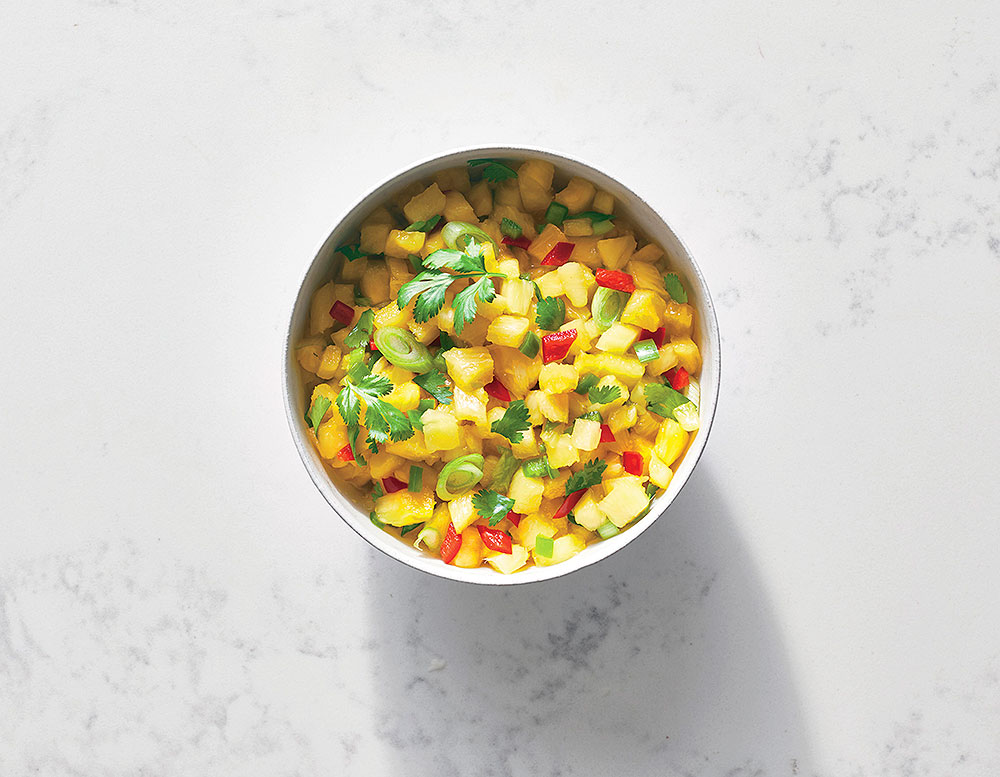
Pineapple-Chile Salsa

Recipe courtesy of Cooking Light Magazine.

Pineapple Chile Salsa

Serve at room temperature over grilled pork or fish.

Stir together 2 cups finely chopped fresh pineapple (about 12 oz.), 2 thinly sliced scallions, 1 seeded and finely chopped red Fresno chile, 1/2 seeded and finely chopped serrano chile, 1 Tbsp. chopped fresh cilantro, 1 tsp. lime zest, and 1/4 tsp. kosher salt in a medium bowl. Serve immediately, or store covered in refrigerator up to 2 days.

Chipotle Molasses Barbecue

Chipotle Molasses Barbecue Sauce

Smoke and fire are what make barbecue barbecue and they’re about to electrify the sauce to go with it. The smoke comes from chipotles—Mexican smoked jalapenos. The fire comes from the chilies, plus Sriracha and horseradish mustard.

2 cups ketchup
1/4 cup Sriracha
1/4 cup horseradish mustard or Dijon-style mustard
1/4 cup bourbon whisky
1/4 cup molasses
2 tablespoons brown sugar (light or dark—your choice), or to taste
1 tablespoon Worcestershire sauce
1 tablespoon Sambuca
1 tablespoon minced chipotle chili with can juices (or to taste)
1 teaspoon finely grated lemon zest
2 tablespoons fresh lemon juice
Freshly ground black pepper

Combine the ingredients in a heavy saucepan and bring to a boil over medium heat. Reduce the heat and gently simmer the sauce, uncovered, until thick and richly flavored, 10 minutes. Correct the seasoning, adding pepper or sugar as desired. Let the sauce cool to room temperature for serving. Store in clean jars away from heat or light. Refrigerated, the sauce will last for at least a week.

Whether you like your pork tangy, sweet, smoky, or spicy, there’s a sauce here that hits the spot. Each one tells a story from a different corner of American barbecue, and every spoonful adds its own twist to the meat we love most. Fire up the grill, grab your favorite cut of pork, and taste your way through these classics.

Hungry for more? Sign up for our Up in Smoke newsletter and get a FREE copy of Steven Raichlen’s Burgers e-book—packed with recipes and grilling tips you won’t want to miss.

Releated Posts

Check out our 1000+ Recipes section here on Barbecue Bible.Com

Also, sign up for our Up in Smoke newsletter so you don't miss any blogs and receive some special offers! PLUS get Raichlen's Burgers! PDF for free!

Follow Steven on Facebook, Instagram, YouTube, TikTok, Reddit, and Pinterest!

Check out our store powered by BBQGuys!

The post Five Great Barbecue Sauces for Porktober! appeared first on Barbecuebible.com.
Fire Meets Oktoberfest – Our Fall Favorites on the Grill

Skip to the FAQ: brats, smoke woods, beer pairings

Have you ever started in one place and found yourself the next morning in another—without the faintest idea of how you got there?

That pretty much describes my first Oktoberfest in the festival’s birthplace, Munich.

Fresh out of college and traveling through Europe, I wanted to see what Oktoberfest was all about. So I took a seat on a bench under a huge tent in Munich’s die Wiesn district, surrounded by jovial men in feathered hats and lederhosen, singing at the top of their lungs.

A waitress in a dirndl set a Maßkrug, a gray one-liter stoneware mug filled with Munich’s finest brew.

One liter is a lot beer. Like 33.8 fluid ounces. But I didn’t just drink one liter. I didn’t just drink two liters. I drank three. And the Brezn (soft pretzels) and Wurstl (grilled bratwurst) that accompanied them weren’t enough to counterbalance the alcohol in the beer.

I woke the next morning in a cheap hotel, my clothes still on, my backpack by my side. How I got there, I still don’t know to this day. Someone must have been looking out for me.

I don’t suggest you drink three liters of beer at your next Oktoberfest party (although I’m living proof it’s possible).

I do suggest you drink a little less beer and eat a little more food. Actually, a lot more food. Like the following dishes—German-inspired, but perfectly adapted to the grill in your backyard.

We start with….

Oktoberfest Recipes

Bratwurst “Hot Tub”

Indirect grilling may not be the way your grandfather cooked brats, but it works wonders. The gentle heat crisps the casing, locks in moisture, and avoids the flare-ups that can scorch your sausages. Add a touch of wood smoke, and you’ve got a brat that’s smoky, juicy, and packed with flavor. Of course, in Wisconsin, the traditional approach is direct grilling. The secret is to keep the heat moderate, leave yourself a cool zone in case of flare-ups, and never pierce the casing so the juices stay where they belong. Once cooked, slide the brats into a simmering bath of beer and onions—the classic “hot tub” treatment that makes them ideal for tailgates or Oktoberfest gatherings.

Bratwurst "Hot Tub" Oktoberfest Recipes

Get The Recipe »

Pearl District Spiessbraten

South Texas cuisine owes much to its Mexican roots, but the influence of German immigrants runs just as deep. In 1883, a German brewmaster opened San Antonio’s City Brewery—now the heart of the trendy Pearl District. German sausage traditions evolved into Texas’ famed “hot guts” beef links, and dishes like Spiessbraten crossed the Atlantic with settlers from the Palatinate region. Spiessbraten—pork roasted on a spit with little more than onions, garlic, salt, and pepper—is one of the great classics of German grilling. Steven’s Pearl District version nods to that heritage while adding a Texas twist: mustard, ham, cheese, and poblano chiles. Slow roasting over wood smoke ties it all together with a flavor that’s nothing short of spectacular.

Pearl District Spiessbraten with Jicama Salad - Oktoberfest Recipes

Get The Recipe »

Texas Barbecued Beef Shoulder Clod

Like many of the original Texas barbecue joints, Kreuz Market began as a butcher shop and grocery. At week’s end, any leftover cuts went into the smoker, paired with simple accompaniments you’d find right off the shelves—crackers, cheddar, onions, pickled peppers. No sides simmered for hours, no barbecue sauce—just smoked beef and groceries. The first bite of shoulder clod was a revelation: pure, unadorned beef flavor.

This is Texas barbecue at its boldest. The clod, a 16-pound cut from the beef shoulder, is massive, meaty, and virtually unknown outside the Lone Star State. Most of the time it’s broken down for steaks or ground into burgers, but cooked whole, it becomes one of barbecue’s great unsung treasures. If your local supermarket doesn’t carry it, a good butcher can special order one for you.

Texas Shoulder Clod (Barbecued Beef Shoulder)

Get The Recipe »

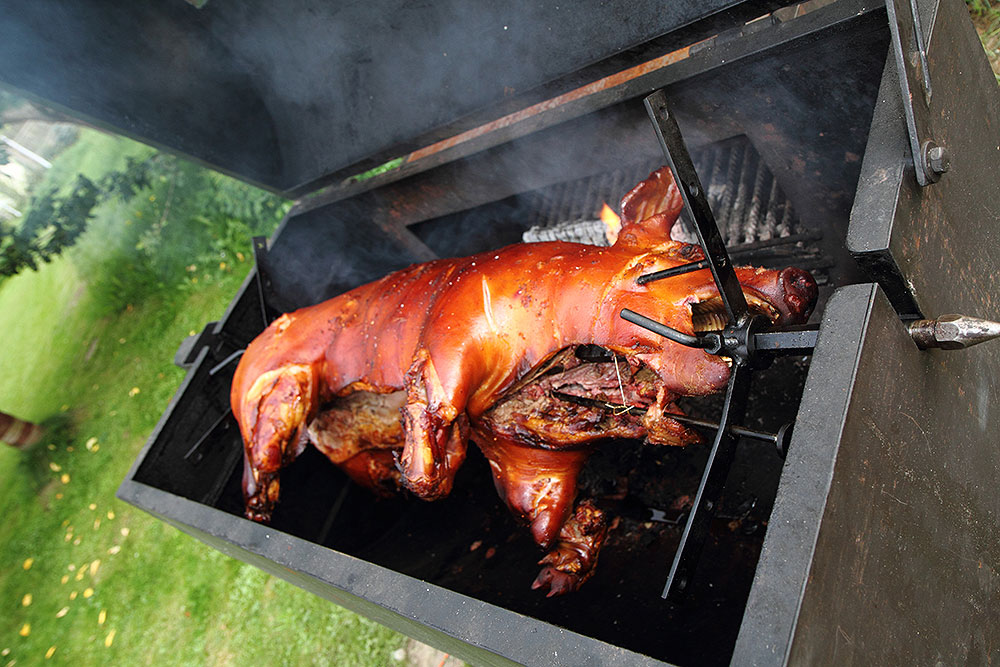
German Whole Hog (Spanferkel)

The pinnacle of German barbecue is spanferkel—a whole hog spit-roasted over wood after being rubbed with a fragrant spice paste. As it turns on the fire, the pork is basted with a glaze that speaks to Germany’s culinary soul: dark malty beer, honey, and ginger, the same flavors that give Nuremberg’s famous lebkuchen (gingerbread) its signature taste.

Barbecued Hog - Oktoberfest Recipes

Get The Recipe »

Oktoberfest Recipes: Frequently Asked Questions

What are the best Oktoberfest recipes to grill at home?
Start with bratwurst, a pork loin Spiessbraten, and a simple rotisserie pork roast.
Add soft pretzels and a beer-and-onion “hot tub” for serving.
Is indirect or direct heat better for grilling bratwurst?
Indirect heat crisps the casing and keeps brats juicy while avoiding flare-ups.
Finish briefly over direct heat for color if you like.
What wood smoke works well with German-style grilling?
Mild to medium woods like apple, cherry, or oak complement pork and sausages
without overpowering classic Oktoberfest flavors.
How do I make a bratwurst beer-and-onion hot tub?
Simmer sliced onions in beer with a little butter and mustard. Hold grilled brats
in the hot mixture to keep them juicy for serving.
What sides pair well with Oktoberfest grilling?
Sauerkraut, pickled peppers, mustard, rye or pretzel rolls, plus simple grocery-ready
sides like crackers, cheddar, and onions.
What beer styles pair best with Oktoberfest recipes?
Festbier and Märzen are naturals. Helles or Vienna lagers also shine, balancing smoke
and pork richness without too much bitterness.

Back to top ↑

Oktoberfest may have started in Munich, but the flavors translate perfectly to your backyard grill. From brats soaking in a beer-and-onion hot tub to smoky Spiessbraten and pork roasted over wood, these dishes are as festive as the beers they pair with. So pour yourself a stein, fire up the grill, and raise a toast—Prost!—to good food, good friends, and a taste of Oktoberfest at home.

More Fall Blogs

Check out our 1000+ Recipes section here on Barbecue Bible.Com

Also, sign up for our Up in Smoke newsletter so you don't miss any blogs and receive some special offers! PLUS get Raichlen's Burgers! PDF for free!

Follow Steven on Facebook, Instagram, YouTube, TikTok, Reddit, and Pinterest!

Check out our store powered by BBQGuys!

The post Fire Meets Oktoberfest – Our Fall Favorites on the Grill appeared first on Barbecuebible.com.
Three Spectacular Side Dishes for Tailgating

Call them best supporting actors. Call them MVP sideliners for taking your tailgating party over the top. You’ve mastered brisket and ribs, and your burgers are the stuff of legend.

But without killer side dishes, your barbecue will lack gravitas required to establish you as a true pro.

The Big Three Tailgating Side Dishes Everyone Loves

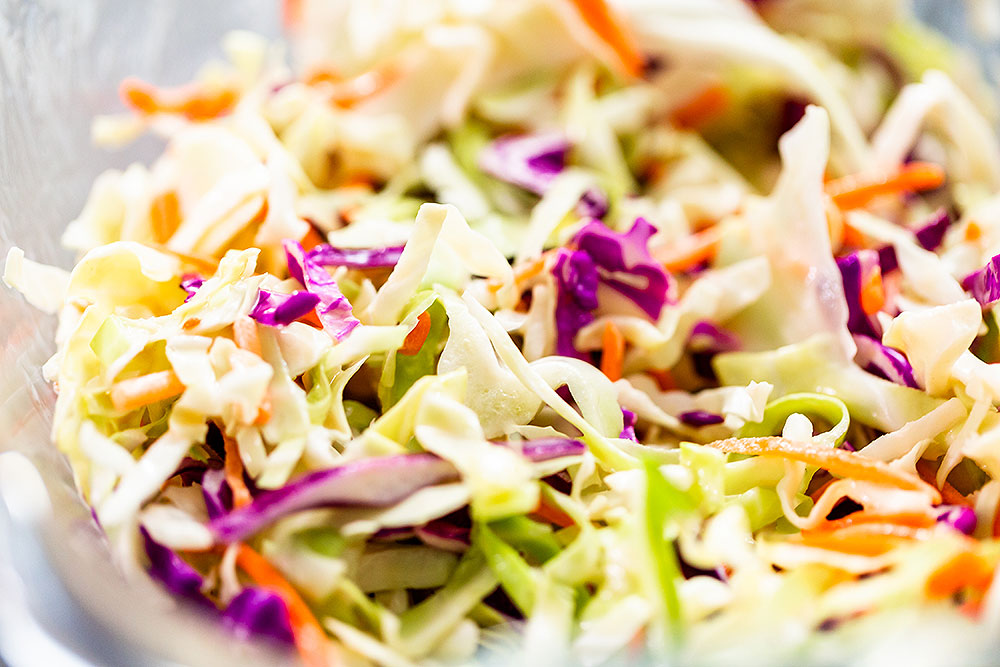
I’m talking about the big three: baked beans, potato salad, and coleslaw.

Of course, I could tell you how to make all three in your kitchen—no lighting of your grill or smoker required. They’d be good—even excellent. But they wouldn’t be barbecue.

No, to make side dishes that will, er, smoke the competition, they need to be kissed with fire.

First up, baked beans, which have been part of American culture since before there was an America. That’s right, long before the arrival of the Mayflower, the Iroquois, Abenaki, and other Algonquian peoples boiled beans in clay pots, with bear fat to make them rich and maple syrup for sweetness.

And long before the arrival of Pizarro, South Americans in the Andes Mountains cultivated hundreds of varieties of potatoes. The proto-American potato salad may well have been papas a la huancaina, a Peruvian potato salad flavored with piquant amarillo (yellow) chiles and salt queso fresco cheese.

As for coleslaw, our word comes from the Dutch kool, cabbage, and sla, salad—both favored by the early Dutch settlers of Manhattan.

Pro Tips for Adding Smoke Flavor

My baked beans get a double blast of smoke flavor—first from the addition of bacon (and brisket or pulled pork, if you have any extra in your refrigerator). Then from a long slow cook in your smoker.

To make coleslaw, I smoke the cabbage—just long enough to flavor it, but short enough to keep it crunchy and raw.

I also smoke the potatoes for my potato salad, adding pimenton (smoked paprika) to reinforce the flavor.

Yeah, it takes a little extra time, but you can smoke the vegetables at a previous grill session. Serve them, and your next cookout will win you access to the tailgating hall of fame.

Got your own favorite twists on game day sides? I’d love to see them! Share your creations and tag us on social—we’re always looking for new ideas to try (and cheer for).

Check out our 1000+ Recipes section here on Barbecue Bible.Com

Also, sign up for our Up in Smoke newsletter so you don't miss any blogs and receive some special offers! PLUS get Raichlen's Burgers! PDF for free!

Follow Steven on Facebook, Instagram, YouTube, TikTok, Reddit, and Pinterest!

Check out our store powered by BBQGuys!

The post Three Spectacular Side Dishes for Tailgating appeared first on Barbecuebible.com.
Smoked Osso Buco Recipe for Fall Cooking

As the days get shorter and the evenings turn crisp, few dishes bring more comfort than osso buco cooked low and slow.

Osso buco is one of the glories of Italian cuisine—veal shanks braised for hours with wine, herbs, and aromatic vegetables. It starts with an undisputably tough cut of meat—the shin—and you cook it low and slow until it’s tender enough to eat with a spoon. The best part might just be the buttery marrow inside the shank bone. (Hence the reference to a spoon—which you need for scooping the marrow out of the bone.)

What Is Osso Buco?

A specialty of Milan in the province of Lombardy in northern Italy, osso buco (literally “cow bone”) is the ultimate comfort food—perfect for winter. (Actually, it’s pretty perfect any time of the year.) It’s hard to imagine how you could improve on a dish Italians have been making for centuries. But I’m going try. And my secret weapon—you see this coming—is my smoker.

My osso buco upgrade involves a technique I call smoke-braising. You read about it in my book Project Smoke, where I used it to make smoke-braised Asian lamb shanks. I like to think of smoke as the umami of barbecue and it imbues this already amazing dish with the spirit of American barbecue.

How to Smoke Osso Buco

Despite its amazing flavors and a semi-long ingredient list, osso buco is quick and easy to make. Note I said to make. It does require 3 hours of cooking. But if you own a pellet grill, you pretty much set it and forget it. Ditto on a gas grill. A kamado grill, like a Big Green Egg, is perfect for osso buco. So is a charcoal smoker or grill, although with both you’ll need to replenish the charcoal and wood every hour.

osso buco with veggies - Smoked osso buco recipe

As you look at the following photos, you may be surprised to find aluminum foil wrapped around the pot. That’s to keep the smoke off the outside. (If the truth be told, it’s pretty easy for you to clean the pot with a blast of oven cleaner.)

Osso Buco Shanks - Smoked osso buco recipe

I give you smoked osso buco! It’s great the day you make it and even better served as leftovers.

Smoked osso buco isn’t just a dish—it’s a full fall feast. Pair it with sides like Grilled Smoked Mac and Cheese, Grilled Poblano Cornbread, or Plancha Potato Chips to round out the meal. For more autumn inspiration, check out our collection of fall-friendly sides and recipes

Check out our 1000+ Recipes section here on Barbecue Bible.Com

Also, sign up for our Up in Smoke newsletter so you don't miss any blogs and receive some special offers! PLUS get Raichlen's Burgers! PDF for free!

Follow Steven on Facebook, Instagram, YouTube, TikTok, Reddit, and Pinterest!

Check out our store powered by BBQGuys!

Enter here for your chance to win a Wildfire Ranch Pro 30-Inch Stainless Steel Griddle and Steven’s newest book, Project Griddle.

The post Smoked Osso Buco Recipe for Fall Cooking appeared first on Barbecuebible.com.
5 All-Time Favorite Grilled Shrimp Recipes You’ll Love

Why Shrimp Is America’s Favorite Shellfish

Quick: what’s America’s favorite shellfish?

Lobster? Maybe if you live in New England. Oysters? Yeah, we love them raw on the half-shell, but grilled they’re still pretty niche.

No, it turns out that our most consumed shellfish is the smallest in size. Shrimp.

By dollar and poundage, this diminutive crustacean remains our hands-down favorite. We Americans eat an average of 5.9 pounds per person per year.

Shrimp Around the World

We’re not alone. South Africans prize their piri-piri prawns, spiced up with fiery malagueta chiles. The Spanish pay exorbitant sums for carabinieros, briny crimson shrimp fished from the cold deep waters of the Bay of Biscay. Venetians thread their gamberoni onto skewers to be dusted with breadcrumbs and grilled kabab style. No Indian feast would be complete without yogurt- and spice-marinated tandoori shrimp.

BBQ Grill Pan - Grilled Shrimp

Regional Shrimp Varieties in the U.S.

But which shrimp? If you live on the southeastern seaboard, you eat delicate Carolina shrimp. If you come from Down East, you raise your fork for sweet white Maine shrimp. Down my way, in south Florida, we grill succulent Key West pinks. Californians and Hawaiians eat spot prawns (so named for the black eye-like carapace on the side of the shell.

Quite miraculously, in this age of global supply chains, shrimp remain mercifully regional, and each variety has its own distinct texture and flavor.

Buying Shrimp: Fresh, Farmed, or Imported?

But what if you don’t live near the coast? Seafood farms from around the globe (especially Southeast Asia) provide shrimp in all sizes as prices so modest, you wonder how they can do it.

Greek Grilled Shrimp

The short answer is don’t ask. The longer answer requires uncomfortable questions about dubious labor and environment practices. Whenever food comes cheap, you pay the price in other ways. But ask to sniff the shrimp before buying it: if it smells like bleach, don’t buy it.

For this reason, I always try to buy fresh local domestic shrimp. When in doubt, I buy from a store merchant that vets the provenance of its seafood, like Whole Foods, or I check with the Marine Stewardship Counsel.

Why Shrimp Is Perfect for Grilling

But my main job is to whet your appetite, not suppress it, and shrimp possesses many qualities that endear it to us grillers.

First, it’s quick to grill, delivering pure protein and superb taste in a matter of minutes. It readily absorbs spice, marinade, and smoke flavors, without losing its briny uniqueness. Speaking of taste, it has one of those flavors that seems to appeal to everyone—without the squeamishness often associated with sea urchin, oysters, or other shellfish.
Did we mention that it’s available everywhere and as seafood goes, mercifully affordable?

Five Key Questions Before Grilling Shrimp

But before you fire up your grill, you need to ask 5 key questions.

Does size matter? As in the bedroom, not really. Shrimp range in size from the diminutive Dutch garnall (so tiny you can fit a dozen in a tablespoon) to the Kenyan King (a single shellfish tips the scales at 3 pounds—split and grill as you would lobster). Here in the U.S., shrimp are sold by the “U” size—for example a U-16 means that there are 16 headless shrimp to a pound. When making kebabs, I use extra-large shrimp (U 16s). When grilling individual shrimp, I use U8s or U10s—also sold as “colossal.”

Head on or head off? In much of the world, people grill whole shrimp (that is with heads on). I’m down with that. Head on shrimp look cool and there’s a lot of flavor in the head. To paraphrase how Louisianans eat crawfish: suck the heads and pinch the tails.

Shell on or shell off? Both. I like grilling shrimp in the shell. Fire-charred shells add flavor and keep the meat moist. I like grilling peeled shrimp because they’re quicker and easier to eat. There’s time and occasion for both.

Tails on or off? Toss up here. A lot of restaurants leave the tails on (perhaps to remind you that the creature you’re about to heat once swam in the ocean). That fire charred tail adds a bit of flavor. But it also adds another step come time to eat the shrimp, so you can omit it with a clean conscience.

Emeril BBQ Shrimp - Grilled Shrimp Recipes

Should shrimp be deveined? Large ones yes. A visible black vein in a cooked shrimp is unsightly and can taste acrid. With smaller shrimp (or shrimp with no visible vein), I don’t bother peeling. Unless my wife is watching. Then I always peel shrimp.

How to Devein Shrimp (3 Easy Methods)

Tip: There are three ways to devein shrimp.

  1. Get yourself a shrimp peeler and deveiner. Insert the deveiner in the fat end of the shrimp and push. Vein removed QED.
  2. Butterfly the shrimp, that is make a V-shaped cut along the back of the shrimp to cut out the vein and flesh immediately surrounding it. Advantage of this method: the shrimp curls into an attractive butterfly shape as it cooks.
  3. The lazy way to devein a peeled shrimp: Insert the tine of a fork in the rounded part of the back under the vein and gently lift. Most of the time, the vein will pull right out.

How to Grill Shrimp

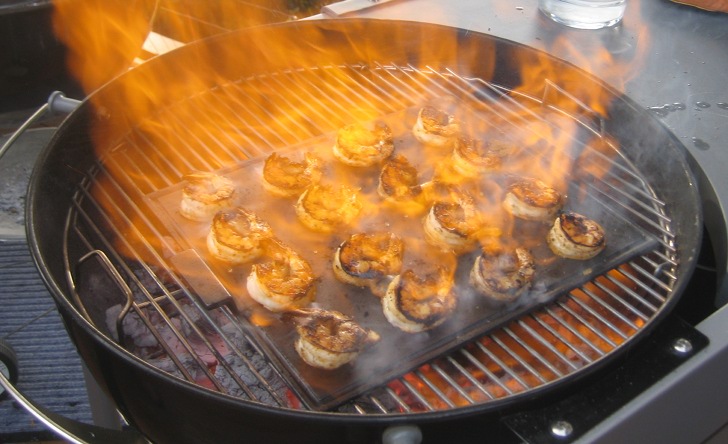
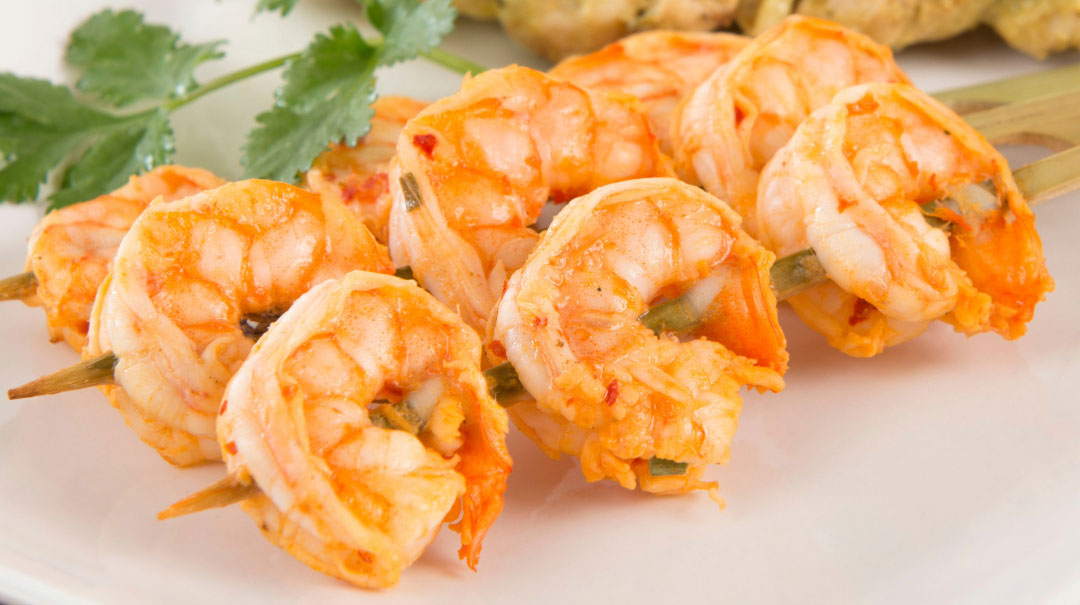
In a nutshell, direct grilled over high heat. I grill small shrimp kebab style (threaded on a bamboo or metal skewer). The skewer should pass through the head end and tail end so each shrimp lays flat on the grate. For the real monsters, I split them in half through the belly side, butterfly them open, and grill them as I would lobster.

Our 5 Favorite Shrimp Recipes

Check out our 1000+ Recipes section here on Barbecue Bible.Com

Also, sign up for our Up in Smoke newsletter so you don't miss any blogs and receive some special offers! PLUS get Raichlen's Burgers! PDF for free!

Follow Steven on Facebook, Instagram, YouTube, TikTok, Reddit, and Pinterest!

Check out our store powered by BBQGuys!

The post 5 All-Time Favorite Grilled Shrimp Recipes You’ll Love appeared first on Barbecuebible.com.
Salmon Candy 101: Tips for Smoking It Right

You’ve eaten salmon grilled, roasted, blackened, planked, and pan-fried; perhaps you’ve even chopped it to make burgers.

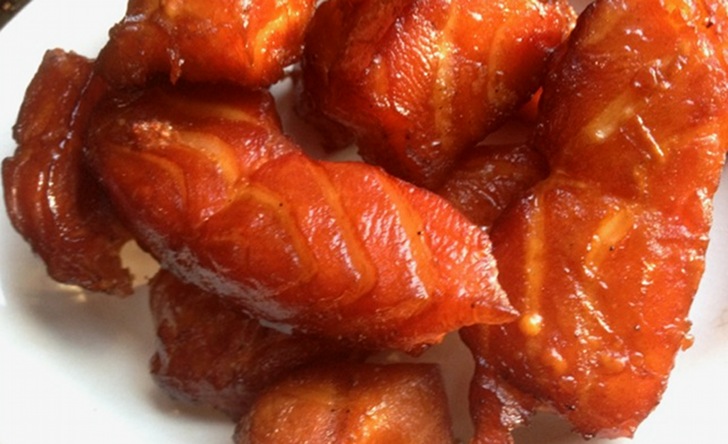
But have you made salmon candy, also known as Indian candy? (We no longer call it “squaw candy” by reason of political correctness.) British Columbians snack on it and it’s a staple in Pacific Northwest gift shops. Think of it as jerky, only better. Burnished to an Old Master chiaroscuro by hours of exposure to fragrant wood smoke—usually alder. Glazed with pure maple syrup or honey. Salty and sweet at the same time. It has a nice chew, too—but nothing that will threaten your molars.

Salmon Candy Bites

Salmon candy makes a great snack for a road trip, hike, or long day at the office. It’s addictive as all-get-out. Once you gnaw your last piece, you’ll instantly crave more.

Making a batch is a satisfying project for the waning days of winter. Yes, it requires some time—16 hours or more including brining and smoking—but very little actual work.

Before you get started, here are a few secrets for salmon candy success:

  • Use wild-caught Pacific salmon if possible. You’ll recognize it by its deeper red-orange color and leaner appearance. If in doubt, verify its origin with your fishmonger. It is illegal to farm salmon from the state of Alaska, so salmon from there is always wild, while salmon from the East Coast, Chile, and Norway is likely to be farmed.
  • A center-cut fillet will yield more uniform pieces of fish: It tapers and becomes sinewy the closer you get to the tail.
  • Remove the skin before slicing the salmon into strips. If using a whole fillet, place the salmon skin-side down on a cutting board. Firmly hold the tail with one hand and run a sharp knife between the skin and the flesh, holding it parallel to and against the board. Slide the knife away from the tail the length of the fish, being careful not to cut the flesh or the skin. Remove the skin, but don’t discard it. Make Pac-Rim potato chips by brushing the skin with toasted sesame oil and season it with salt and pepper. Indirect grill at 400 degrees until crisp. Five to ten minutes will do it.
  • You can cure salmon candy using either a dry or wet brine, but the ingredients are more uniformly distributed in a wet brine.
  • If the salmon smells fishy, soak it in cheap vodka, rum, gin, or Scotch before brining. I often do this when I smoke salmon.
  • Do not substitute table salt for kosher salt in the brine. Table salt contains iodine—a metal that “burns” the fish.
  • To achieve the translucency characteristic of commercially-produced salmon candy and jerky, add curing salt (sometimes sold as pink salt, InstaCure #1, or Prague powder, all available online) to the brine strictly following the manufacturer’s recommended proportions.
  • For the purest flavors, use spring water, not tap water, when making a wet brine.
  • Use a charcoal grill or smoker. Gas grills do not work well for smoking.
  • Store salmon candy in the refrigerator to prolong its shelf life. Refrigerated, it can be kept for at least 5 days—and likely much longer. (Both the salt and smoke act preservatives.)
  • For lip tingling heat sprinkle the salmon lightly with cayenne before smoking. Coarsely ground black pepper makes a less fiery option.

FAQ For Salmon Candy

What exactly is salmon candy?

Salmon candy a traditional dish of the Pacific Northwest—salmon cut into bitesize chunks, cured with salt and brown sugar, smoked, then glazed with maple syrup or honey. It’s sweet, salty, and smoky, playing to virtually every tastebud in your mouth.

What kind of salmon is best for salmon candy?

The richest, fattiest salmon: king.

What’s the secret to getting the perfect glaze?

Use maple syrup or honey and brush it on while the salmon is smoking. Add one final coat at the end.

How do you keep salmon candy from drying out?

Because the salmon pieces are relatively small, keep the smoking time short—20 minutes or so.

Can you make salmon candy without a smoker?

You can make brined, maple syrup-glazed salmon. Cook it on your grill, on the griddle (there’s a great griddle recipe in Project Griddle, or even in the oven. It won’t be smoked, but it certainly will be delicious!

How long does salmon candy last in the fridge or freezer?

Up to 5 days in the fridge. Several months in freezer, but it will lose some of its pizzaz in the freezer.

Try these other salmon recipes:

Check out our 1000+ Recipes section here on Barbecue Bible.Com

Also, sign up for our Up in Smoke newsletter so you don't miss any blogs and receive some special offers! PLUS get Raichlen's Burgers! PDF for free!

Follow Steven on Facebook, Instagram, YouTube, TikTok, Reddit, and Pinterest!

Check out our store powered by BBQGuys!

The post Salmon Candy 101: Tips for Smoking It Right appeared first on Barbecuebible.com.

Brisket in a Minute?—Impossible, But it’s True!

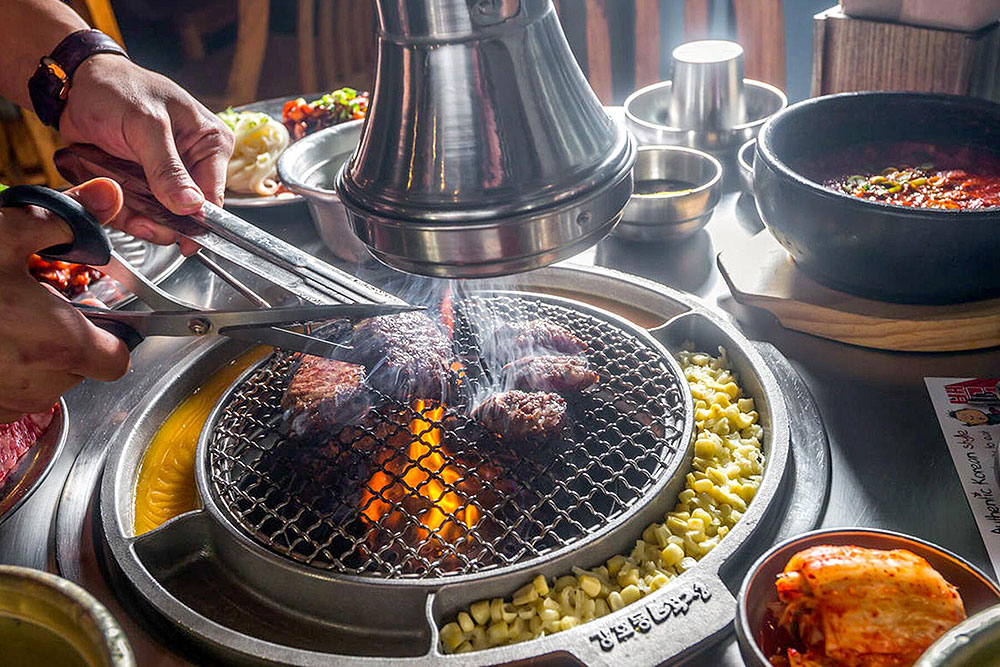
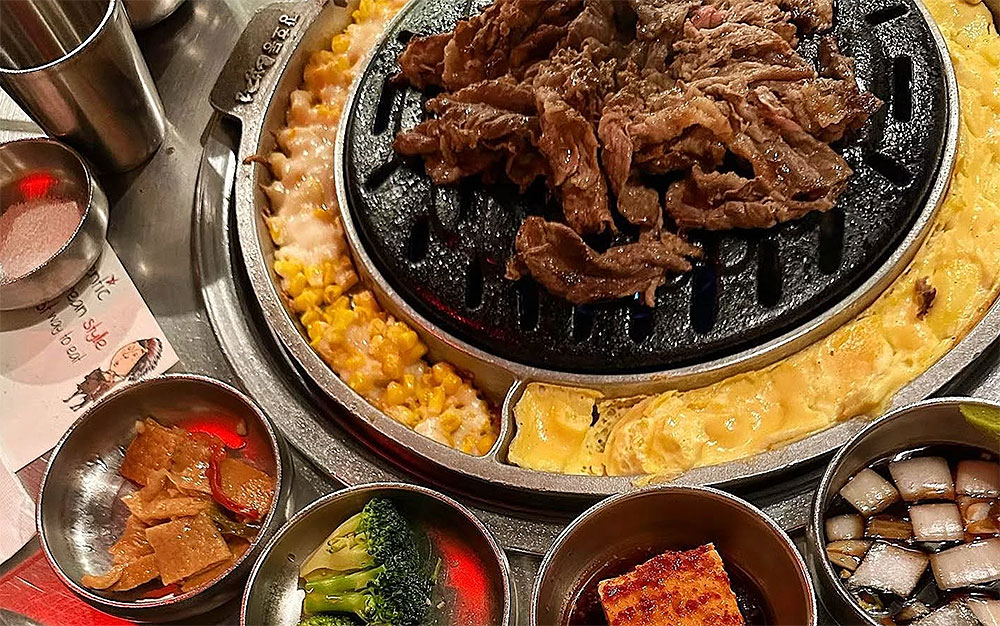
photo: baekjeongnyc – Instagram

 
It’s an article of faith, not to say dogma, that the proper way to cook brisket is low in slow—that is at a low heat for a very loooooooooong time—a half day or more for a full packer brisket. You need that slow, gentle heat to melt the collagen and make the meat tender without drying it out.

Yes, there are hot and fast briskets that cook in a few hours. Our test kitchen director made one that ranks pretty high on the deliciousness scale.

But what if I told you there’s a brisket dish you can cook in 2 minutes—I repeat 2 MINUTES—directly over a screaming hot fire. You’d think I was crazy.

The Secret to Cooking Brisket in Just Two Minutes

Or so I believed until I visited Baekjeong KBBQ restaurant in the heart of New York’s Koreatown. Here the chef slices frozen brisket points across the grain on a meat slicer. The slices come out so paper-thin, the meat cooks in a matter of minutes. It simply doesn’t have time or heft to get tough. You could think of this direct grilled brisket as steak on steroids, with a rich meaty beefy flavor every bit as intense as slow-cooked brisket, but as easy to chew as filet mignon.

Kang Ho Dong Baekjeong NYC


The brisket itself comes unseasoned. The fireworks come from a table-burying selection of sauces and condiments collectively known as panchan. Like so much Korean grilled meat, you eat grilled brisket taco-style: wrapped in lettuce leaves. Think of it as barbecue health food.

The easiest way to slice the meat for this extraordinary brisket is on an electric meat slicer. Serious carnivores may own one already. I’ve come up with a work-around using a food processor. In a pinch, you could try hand slicing. Either way, place the brisket in the freezer until softly frozen. You don’t want it hard as a rock. If you happen to live in an area with a large Korean community, you may be able to buy the brisket pre-sliced.

Baekjeong NYC

photo: Kang Ho Dong Baekjeong NYC – Instagram


Here, then, is a brisket dish most of us would never dream possible. Two minute brisket. Really! One bite of the luscious, seared, sizzling smoky beef will make you a believer.

Recipe: Two Minute Korean Brisket

Check out our 1000+ Recipes section here on Barbecue Bible.Com

Also, sign up for our Up in Smoke newsletter so you don't miss any blogs and receive some special offers! PLUS get Raichlen's Burgers! PDF for free!

Follow Steven on Facebook, Instagram, YouTube, TikTok, Reddit, and Pinterest!

Check out our store powered by BBQGuys!

The post Brisket in a Minute?—Impossible, But it’s True! appeared first on Barbecuebible.com.
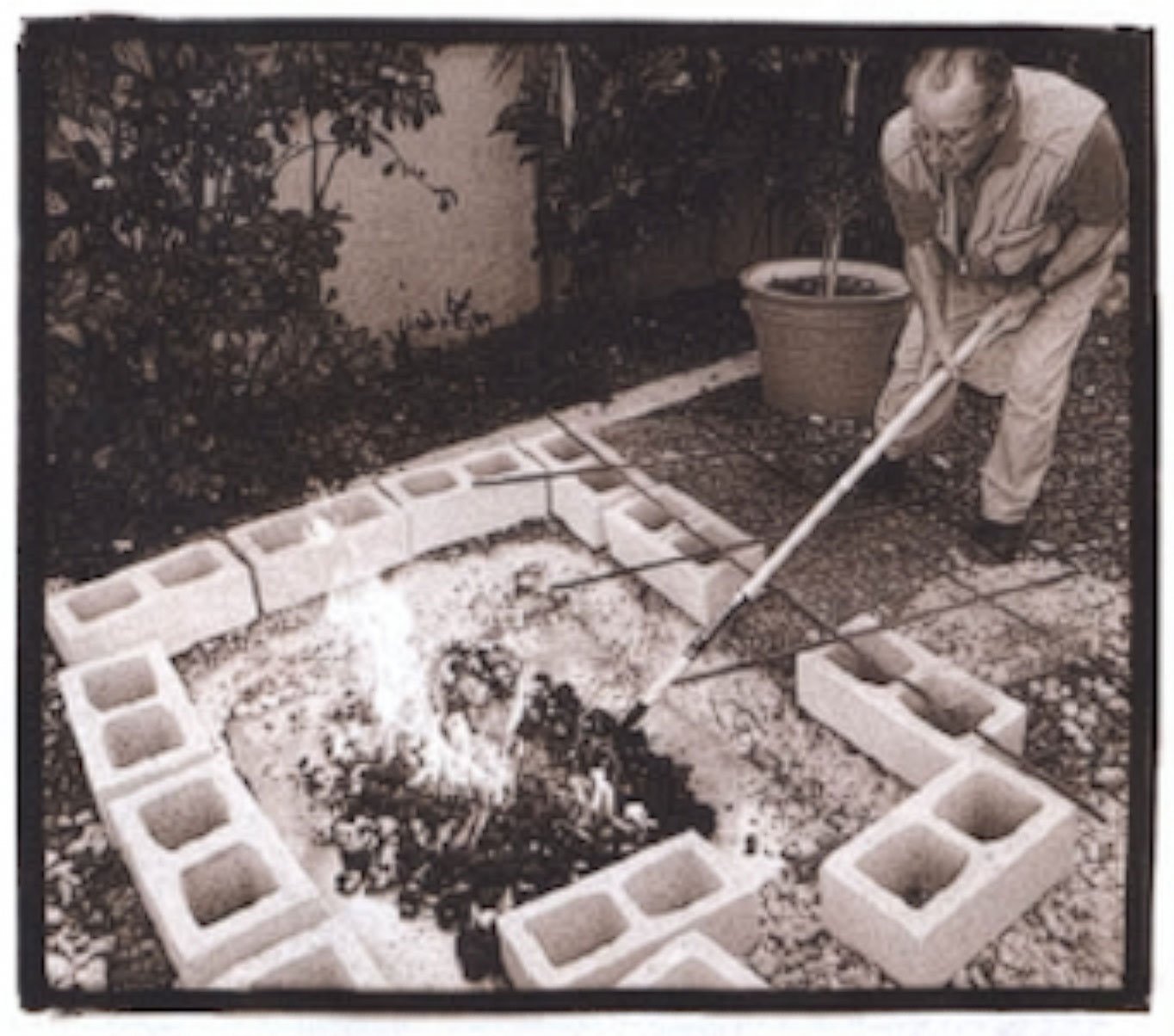
3-2-1 Ribs Revisited: Is It Time for New Math?

Most serious practitioners consider barbecue an art, the outcome of which depends on knowledge, skill, and intuition. Which is why I’m skeptical of formulaic approaches like the 3-2-1 method for cooking pork spare ribs. Last year, in what turned out to be one of my most visited blog posts to date, I wrote:

And if you serve ribs cooked by the 3-2-1 method, 95 percent of the people who taste them will react with delight and will declare you a genius. My guests sure did, and I did not deflect their praise. And yet … and yet … I felt a certain discomfort accepting my guests’ compliments. These were good ribs. Safe ribs. Ribs by rote. These were ribs almost anyone could love on account of their moistness and tenderness.

(If you are unfamiliar with it, the 3-2-1 approach calls for smoking the ribs for 3 hours, cooking for 2 hours tightly wrapped in foil, and unwrapping for the final hour for a total of 6 hours.)

This barbecue-by-the-numbers method is undeniably popular among backyard pit masters and on the competition circuit, where it is believed to have originated. So why do I keep revisiting it? I have never been totally satisfied with ribs barbecued according to the 3-2-1 formula. Sometimes, the chew skews from tender to mushy. The bark softens in the steam while the ribs are foiled. The rub disappears. The flavors seem dialed down, a bit washed out, almost like boiled ribs.

3-2-1 Barbecued Spare Ribs - Step 8

After experimenting, I identified the primary cause of the problems: The ribs were simply spending too much time in the steamy environment of the foil.

I’m now a proponent of the 3-1-1 method. (Not as catchy as 3-2-1, but oh well.) Below are the particulars. Note: If using baby back ribs, cut the smoking time down to 2 hours.

Step-by-Step Guide to the 3-1-1 Method Ribs

  • Start with the best spare ribs you can buy, preferably heritage breed and never frozen. Buy St. Louis-style ribs or trim them yourself. One rack feeds 2 to 3 people. Remove the papery membrane from the bone side of the ribs as it impedes the absorption of smoke and spices.

    St. Louis Ribs on the smoker - 3-1-1 Ribs

  • Apply your favorite rub (I’m partial to my Planet Barbecue Kansas City Smoke Rub) to both sides of the ribs an hour or so before you intend to cook. The salt in the rub draws some of the moisture from the surface of the meat, giving you better bark.

  • In the meantime, set up your smoker according to the manufacturer’s instructions and preheat to 250 degrees F. (Alternatively, set up your charcoal grill for indirect grilling and preheat to the same temperature.) If using wood chips to generate smoke, soak in water for at least 30 minutes, then drain. (I don’t bother soaking wood chunks.) Place a shallow pan of water in the cook chamber if not using a smoker with a built-in water pan. You could add moisture to the ribs by mopping, but repeated opening and closing of the lid compromises the temperature’s stability.

  • Once the temperature has stabilized in your smoker or grill, arrange the ribs on the grate, bone side down. If smoking several racks at once, use a rib rack. Immediately close the lid. Smoke for 3 hours, replenishing the fuel, water, and/or smoking wood as necessary.

  • For each rack of ribs, tear off a rectangle of heavy-duty aluminum foil large enough to completely enclose the ribs. Quickly remove the ribs from the smoker or grill and replace the lid to avoid heat loss. Place each rack, meat side down, on a piece of aluminum foil and bring up the sides. If desired, pour 1/4 cup of apple cider, beer, ale, or other flavorful liquid on top of the bones and dot with thin slices of butter. Bring the edges of the foil together and fold to make a tight package. Return to the smoker or grill and cook for 1 hour. (You no longer need to add smoking chips or chunks to the fire.)

    3-1-1 Barbecued Spare Ribs

  • Remove the ribs from the smoker or grill. (Again, work quickly to maintain cooking temperatures.) Carefully open the foil package; wear heatproof food gloves to avoid steam burns. Insert a toothpick between the bones in the thickest part of the meat; it should penetrate fairly easily. Using tongs, lift the ribs from the foil. Discard the foil. Reserve the juices, if desired, and boil down to make a glaze. Don’t bother if you’re only doing 1 or 2 racks.

  • If desired, dust the ribs lightly with more rub. Return to the smoker or grill, meat side up, or to the grill rack. Cover and continue to cook for 1 hour. Again, insert a toothpick between the bones to test for doneness. If the toothpick doesn’t penetrate easily, continue to cook until it does, testing at 15-minute intervals. (Another test for doneness requires you to lift the rack of ribs up by one end. If it begins to bend and form a shreddy crack between the middle bones, the ribs are tender.) If you made a glaze, apply it now. I like to serve barbecue sauce on the side. But you can apply it the last 30 minutes of the cook or sizzle it in over a hotter grill for the last 5 minutes. Please note that sweeter sauces burn easily, so watch them carefully.

St. Louis Ribs at Barbecue University

Bottom line? The success of ribs, like brisket or pork shoulder, still depends on human intuition. Use the above formulas as guidelines, recognizing that a particular rack of ribs might need more or less time on the grill. Be flexible. If the ribs are done before your guests arrive, loosely wrap them in foil and stow in an insulated cooler until serving time. If the ribs need more time, have some interesting grilled appetizers at the ready.

Do you have a fail-safe method for barbecuing ribs? Please share it with us on social media!

Related Reads

Check out our 1000+ Recipes section here on Barbecue Bible.Com

Also, sign up for our Up in Smoke newsletter so you don't miss any blogs and receive some special offers! PLUS get Raichlen's Burgers! PDF for free!

Follow Steven on Facebook, Instagram, YouTube, TikTok, Reddit, and Pinterest!

Check out our store powered by BBQGuys!

The post 3-2-1 Ribs Revisited: Is It Time for New Math? appeared first on Barbecuebible.com.
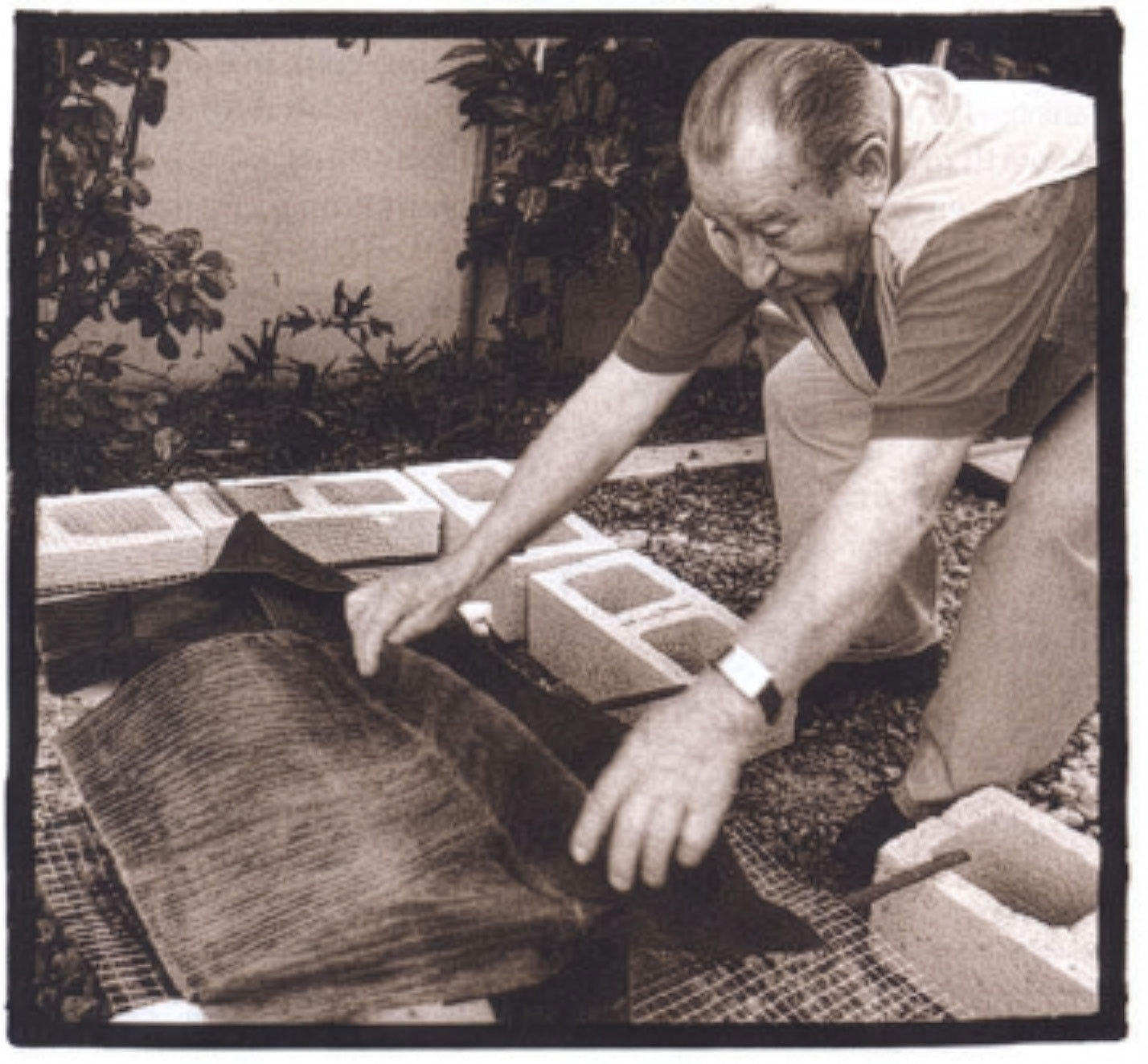
❌