A new federal filing from ICE demonstrates how commercial tools are increasingly being considered by the government for law enforcement and surveillance.
Google has started rolling out a new feature for its Photos app that can turn your images into memes. The feature, called Me Meme, uses Google Gemini to take meme templates and recreate them with the photo you use from within the app. It’s still in its experimental stages and will only be available for users in the US in the English language. In addition, it seems to be rolling out for Android users only at the moment, and Google warns that the generated images may not match the original photo at times. If you do get access to the feature soon, check out the instructions below on how to use it.
Open your Photos app. Go to the Create tab at the bottom and find the Me Meme option. If it’s not showing up even though you’re an Android user in the US, you’ll have to wait for it as it continues rolling out. Google told TechCrunch that it will reach iOS users over the coming weeks.
You’ll see onscreen instructions the first time you use it. The next time you access the feature, you’ll go straight to the meme creation process.
You can browse and choose one of the preset templates Google provides, but you can also upload a meme or any other image as a template.
You then have to upload a photo that you want to insert into the meme. Google advises using a selfie or a photo where your face is clearly visible.
After you tap Generate, you can save the meme if you’re satisfied with the result or share it directly to social media platforms online. You can also tap Regenerate to see a different output.
Android Authority spotted the feature in October 2025 and was able to try it out before its limited release. You can see an example of Me Meme’s output below.
The "Me meme" feature which I spotted back in October 2025 is finally announced by Google.
This is an experimental feature which will be available first for users in US only 😐
More ads are coming to App Store search results starting in March, Apple shared on an advertising help page. The company first said that it would increase the number of App Store ads last month, and this new rollout of search ads will begin on Tuesday, March 3, according to a developer email viewed by MacRumors.
"Search is the way most people find and download apps on the App Store, with nearly 65 percent of downloads happening directly after a search," Apple says. "To help give advertisers more opportunities to drive downloads from search results, Apple Ads will introduce additional ads across search queries." Up until this point, ads for related apps have appeared at the top of search results, but now they'll also appear "further down in search results," according to Apple.
App Store activity makes up a significant portion of what Apple calls its "services" business. The company makes money on every App Store transaction, whether it's an app download or an in-app purchase, and increasingly, by selling ad space to companies looking to reach users. App Store ads are hardly new, but the number of ads has steadily increased over the years. Apple added ads to the Today tab in 2022 — a space that's already home to editorial curation that doubles as marketing — and in 2025, Bloomberg reported the company planned to bring ads to Apple Maps.
Apple's decision to rebrand its advertising business from Apple Search Ads to Apple Ads in April 2025 was maybe the best indication that the company was interested in expanding the number of places it would help partners try and reach customers. And it makes sense: the company's billions of devices, each pre-installed with default apps, are some of the most valuable real estate it owns.
This article originally appeared on Engadget at https://www.engadget.com/apps/apple-will-begin-showing-more-app-store-ads-starting-in-march-192031226.html?src=rss
Hybrid Mesh Firewall introduces intent-based policy management across multi-vendor firewalls through Cisco Security Cloud Control with Mesh Policy Engine.
Microsoft CEO Satya Nadella recently went on record saying that AI still needs to prove its worth if society is to adopt it long-term, but he presumably thinks his company has cracked it with its latest innovation: AI coloring books.
A new Microsoft Paint feature currently rolling out to Windows Insiders allows you to generate coloring book pages based on the text prompt you enter. The example Microsoft uses is "a cute fluffy cat on a donut," to which the AI tool will spit out a set of slightly different options based on your prompt.
You can then choose which image you want, add it to your current workspace, copy or save it. Presumably you can also print it out for the purpose of entertaining your kids. No doubt the kind of real-world impact the Microsoft chief was alluding to.
The coloring book feature is exclusive to Copilot+ PCs, and Microsoft is also adding a fill tolerance slider that lets you adjust the precision with which the Fill tool adds color to your canvas.
As well as Paint’s new Coloring book feature, Microsoft has also improved its Write, Rewrite and Summarize AI functionality in Notepad, which integrates with GPT to fine-tune your writing and summarize complex notes. You’ll need to sign into your Microsoft account to use cloud features, but results will now appear more quickly and let you interact with the preview without having to wait for its full response. Again, you’ll need to be Windows Insider in the Canary and Dev channels on Windows 11 to take advantage of the updates initially.
This article originally appeared on Engadget at https://www.engadget.com/ai/you-can-now-create-ai-generated-coloring-books-in-microsoft-paint-163512527.html?src=rss
After years of uncertainty over TikTok's future in the United States, a deal for the app's US business has been finalized. The new US entity is called TikTok USDS Joint Venture. ByteDance has retained a 19.9 percent percent stake in the new business, with the rest controlled by a group of non-Chinese investors, including Oracle, Silver Lake and MGX, an Emirati-state owned investment firm, all of which have a 15 percent stake. Dell CEO Michael Dell and other investors have smaller stakes in the new company.
The terms of the deal were first leaked last month, after TikTok CEO Shou Chew reportedly told employees in a memo that TikTok and ByteDance had agreed to a group of investors. This ends a lengthy saga and months of slow progress as the agreement was being worked out, ensuring that the app will remain available in the US after years of being on the verge of a ban in the country.
President Donald Trump, who had tried to ban the app during his first term in office, praised the deal in a post on Truth Social. "It will now be owned by a group of Great American Patriots and Investors, the Biggest in the World, and will be an important Voice," he wrote."I only hope that long into the future I will be remembered by those who use and love TikTok."
According to TikTok’s announcement, the joint venture will protect American users’ data with Oracle's secure US cloud environment. It will also retrain TikTok’s algorithm on US users’ data and will be in charge of content moderation in the US. The entity promises interoperability, as well, promising that users will still get international content and, if they’re a creator, viewers. “The safeguards provided by the Joint Venture will also cover CapCut, and Lemon8 and a portfolio of other apps and websites in the US,” TikTok said.
The new entity will be overseen by a seven-member board of directors, most of whom are Americans. It includes, Shou Chew, the Chief Executive Officer of TikTok, Silver Lake co-CEO Egon Durban, Oracle Executive Vice President Kenneth Glueck and MGX Chief Strategy and Safety Officer David Scott. Adam Presser, who had previously been head of operations and trust and safety at TikTok, is the CEO of TikTok USDS Joint Venture.
Exactly what the new joint venture means for US users of TikTok is unclear. Shortly after the deal was announced, TikTok introduced new terms of service for US users. As the BBCnotes, the new terms include provisions relating to use of the app by kids under 13 (they are limited to the "Under 13 Experience") and that the "TikTok USDS Joint Venture does not endorse any content" in the app. The company hasn’t announced specific changes to the app’s algorithm or other core features.
Update, January 23, 2026, 10:58AM PT: This post was updated to add a statement from President Trump, and with additional information about TikTok’s new terms of service.
This article originally appeared on Engadget at https://www.engadget.com/big-tech/tiktok-finalizes-deal-for-its-us-entity-010543484.html?src=rss
It was only 16 months ago that Substack expanded into live video. Since then, it's become a widely adopted medium on the platform, including by its ever-growing list of cable news expats. Now, the company has decided it's ready for a bigger screen. Starting today, you can install a new Substack TV app on Apple TV and Google TV devices.
Substack describes the app's initial launch as focusing on "reliable, high-quality viewing" for the platform's long-form videos. It centers around video posts and livestreams from the creators and publications you follow. There's also a "For You" section that combines those videos with algorithmic recommendations. And you can browse dedicated pages for each channel.
Viewing access aligns with your subscription level. So, if a channel restricts videos to paying subscribers on Substack’s mobile app and website, the same paywall applies here. However, the company says it's working on adding previews of paid content for free subscribers. It also plans to add audio posts, search, improved discovery and separate sections for different shows within a single publication.
At least one of those legacy media expats who moved to Substack is optimistic about the feature. "This is a game-changing moment for the rise of independent media," former CNN anchor Jim Acosta wrote in the announcement post. "Substack has proven that legacy media consumers are not only searching for fresh alternatives; they are finding them."
Based on the comments in Substack’s announcement, some of the platform’s die-hards are less enthusiastic than Acosta. “File this under – thing we didn’t ask for,” Ashli Pollard wrote. “This is not YouTube,” a commenter named Dustin added. “Elevate the written word.” I personally don’t see any harm in another way to watch the videos Substack already hosts. (Its newsletters aren’t going anywhere.) But given how Big Tech companies tend to pivot further toward the most en vogue (and profitable) medium of the day, I can see why purists feel the need to dig in their heels.
Regardless, you can find the Substack TV app by searching for its name in the tvOS App Store or the Apps section on Google and Android TV devices. You can sign in by scanning a QR code with your phone.
This article originally appeared on Engadget at https://www.engadget.com/entertainment/streaming/substack-now-has-a-tv-app-195408592.html?src=rss
Workday CEO Carl Eschenbach on Thursday tried to ease worries that AI is destroying software business models. From a report: "It's an overblown narrative, and it's not true," he told CNBC's "Squawk Box" from the World Economic Forum in Davos, Switzerland, calling AI a tailwind and "absolutely not a headwind" for the company.
Software stocks have sold off in recent months on concerns that new AI tools will upend the sector and displace longstanding and recurring businesses that once fueled big profits. Workday shares lost 17% last year and have sunk another 15% since the start of 2026.
The new year was supposed to bring opportunities for beaten-down software stocks. Instead, the group is off to its worst start in years. From a report: The release of a new artificial intelligence tool from startup Anthropic on Jan. 12 rekindled fears about disruption that weighed on software makers in 2025.
TurboTax owner Intuit tumbled 16% last week, its worst since 2022, while Adobe and Salesforce, which makes customer relationship management software, both sank more than 11%. All told, a group of software-as-a-service stocks tracked by Morgan Stanley is down 15% so far this year, following a drop of 11% in 2025. It's the worst start to a year since 2022, according to data compiled by Bloomberg.
While unproven, the tool represents just the type of capabilities that investors have been fearing, and reinforces bearish positions that are looking increasingly entrenched, according to Jordan Klein, a tech-sector specialist at Mizuho Securities. "Many buysiders see no reasons to own software no matter how cheap or beaten down the stocks get," Klein wrote in a Jan. 14 note to clients. "They assume zero catalysts for a re-rate exist right now," he said, referring to the potential for higher valuation multiples.
Snapchat is updating its parental control features to give parents more detailed information about who their kids are connecting with in the app and which features they use the most. The app's Family Center already gives parents visibility into their child's friend list, but it will now surface contextual details when a new friend is added.
For example, the feature could highlight that the two share mutual friends or have each other's contact info saved in their phones. It could also indicate that they are classmates if both users have joined the same in-app “community.” If the two have no commonalities, then that could be a sign for a parent to "start a productive conversation," Snap says.
The company has long been criticized for making it too easy for teenagers to talk to strangers. The issue has come up in safety-related lawsuits, including an ongoing case brought by New Mexico's Attorney General. Snap says that adding additional "trust signals" to its parental control features "make it easier for parents to understand new connections and have greater confidence that their teen is chatting with someone they know in real life."
The update is also adding more granular stats about how exactly teens are spending their time in the app. Family Center's screen time dashboard now includes a breakdown of how much of their time spent in the app is in its messaging, camera, map or shortform video features. It will still be up to parents to decide what, if any, limits they want to put on their teens. But at a time when there's increasing conversation around banning teens from social media entirely, having access to more stats could better help parents understand their kids' relationship with Snapchat.
This article originally appeared on Engadget at https://www.engadget.com/social-media/snapchat-gives-parents-more-info-on-who-their-kids-are-talking-to-120000077.html?src=rss
Google’s hands-free voice search on Android is getting a major UI overhaul, replacing the bodyless face with a microphone, “Ask Anything,” and a colored arc.
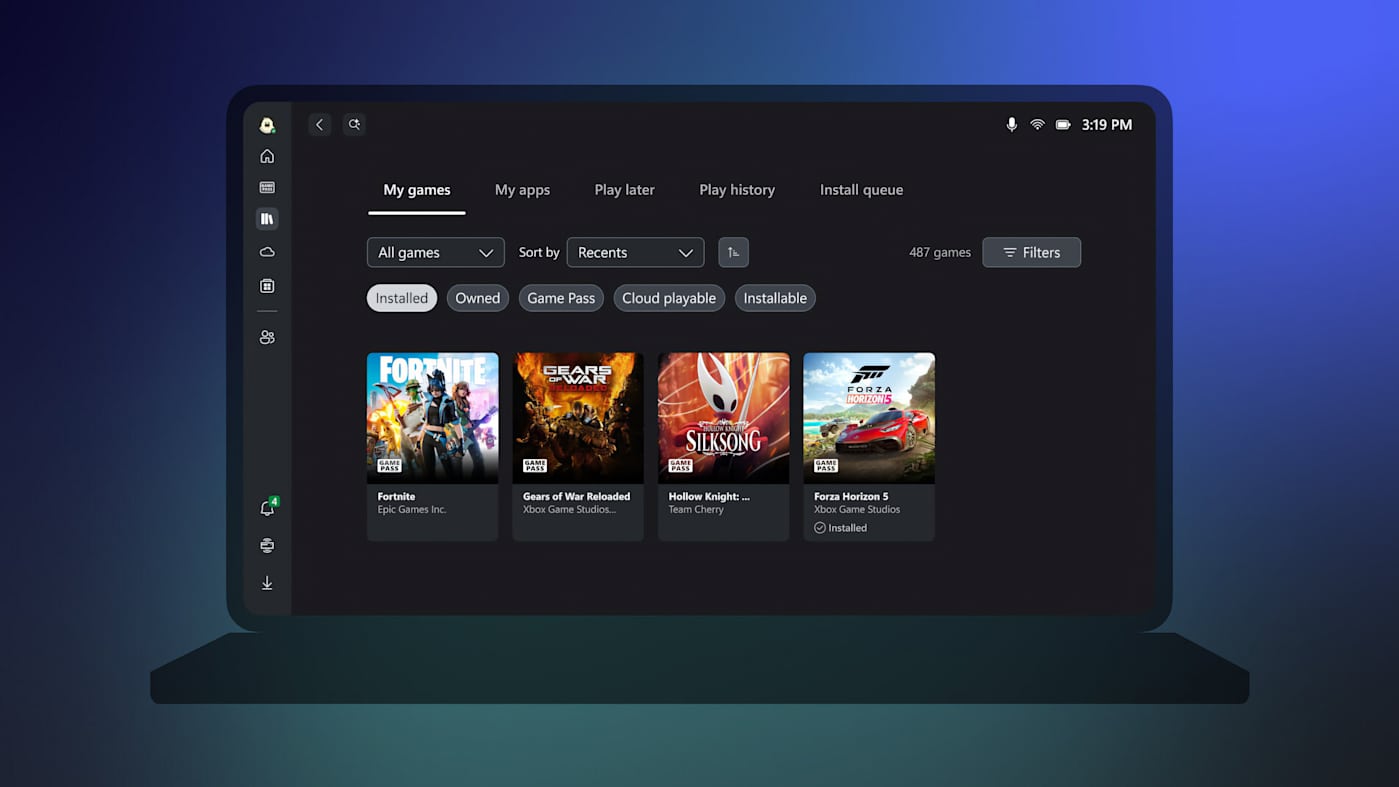
Microsoft has announced that the Xbox app is now available on all Arm-based Windows 11 PCs. The app's release follows an update Microsoft made to its Prism emulator in December 2025, which translates x86 and x64 apps to Arm, and now includes support for AVX and AVX2. Both extensions play a role in making games run efficiently on Windows.
Windows on Arm users will be able to use the Xbox app to purchase, download and stream PC games, and Microsoft says that "more than 85 percent of the Game Pass catalog" now runs on Arm PCs. Unlike Valve's SteamOS, Windows on Arm also supports anti-cheat software like Epic's Easy Anti Cheat, which means you can access a wider library of online multiplayer games in comparison to what you can get on the Steam Deck.
Microsoft has been working on getting Windows running on Arm for years at this point, and the company made a major push with its own Arm-based hardware and the launch of the Copilot+ PC program in 2024. Many Copilot+ PCs use Qualcomm's Snapdragon chips, the latest of which the company announced in September 2025. Up until this point Microsoft's handheld efforts have been focused on PCs running AMD chips, but expanded support for Arm and Qualcomm's own teases certainly makes it seem like an Arm-based Windows 11 handheld could be announced sooner rather than later.
This article originally appeared on Engadget at https://www.engadget.com/gaming/pc/microsoft-ports-the-xbox-app-to-arm-based-windows-pcs-191049475.html?src=rss
Google’s hands-free voice search on Android is getting a major UI overhaul, replacing the bodyless face with a microphone, “Ask Anything,” and a colored arc.
Back in August, Adobe debuted Acrobat Studio. The new service saw Adobe bring the humble PDF into the 21st century with support for a handful of new genAI features, including PDF Spaces, a hub where you can upload up to 100 documents and have AI summarize them. Now the company is enhancing the capabilities of those hubs with the introduction of four new genAI features inside of Adobe Acrobat, Acrobat Studio and Adobe Express.
The next time you add documents and files to a PDF Space, you can prompt Adobe's built-in AI assistant to generate a presentation from those materials. The software will first create an outline. From there, you can select from a handful of "professional" designs to build the presentation around, and then make tweaks. Adobe says the majority of changes, including copy edits and image swaps, can be made without the need to generate entirely new slides. Once you're happy with the results, you can share the presentation with your co-workers for further editing. Adobe has also made it easier to collaborate inside of PDF Spaces. With this latest update, you can invite others to add files and leave notes.
On the subject of editing, you can now carry out a dozen different tweaks using natural-language prompts. That includes adding text, comments, images and e-signatures. If you're old-fashioned like me, Adobe has also reworked the Help section to offer step-by-step instructions on how to complete most tasks.
Last but not least, Adobe is borrowing a page from NotebookLM by adding a feature that allows users to generate podcasts from a PDF Space. This works much like it does in Google's app. Acrobat will default to centering the generated podcast around two hosts having a conversation about the material you want summarized.
Adobe says Acrobat's AI features have been highly popular, in part because users are finding those tools are saving them time. As you might expect, the company reports students have had a particularly strong response to its efforts to add AI inside of Acrobat, seeing as the app can generate summaries of course material while providing citations for fact checking.
This article originally appeared on Engadget at https://www.engadget.com/ai/adobe-acrobat-can-now-generate-presentations-and-audio-podcasts-from-your-documents-140000146.html?src=rss
Microsoft patched a Windows Remote Assistance flaw that lets attackers bypass Mark of the Web, weakening protections against malicious downloads and phishing files.
 Login
Login