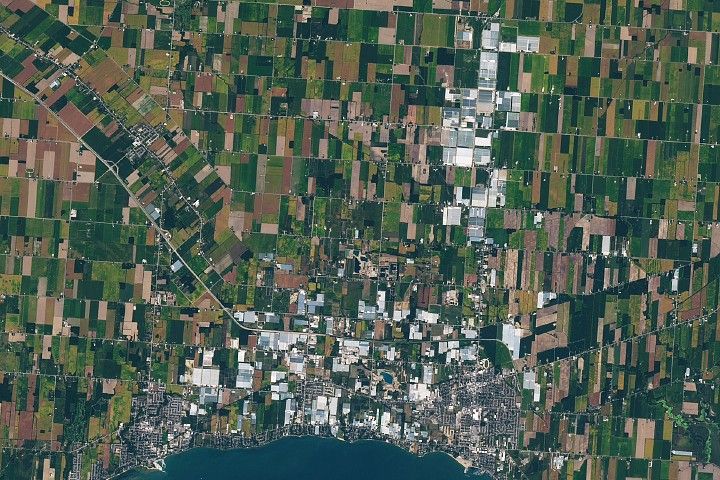
A thin, watery layer coating the surface of ice is what makes it slick. Despite a great deal of theorizing over the centuries, though, it isn't entirely clear why that layer forms.
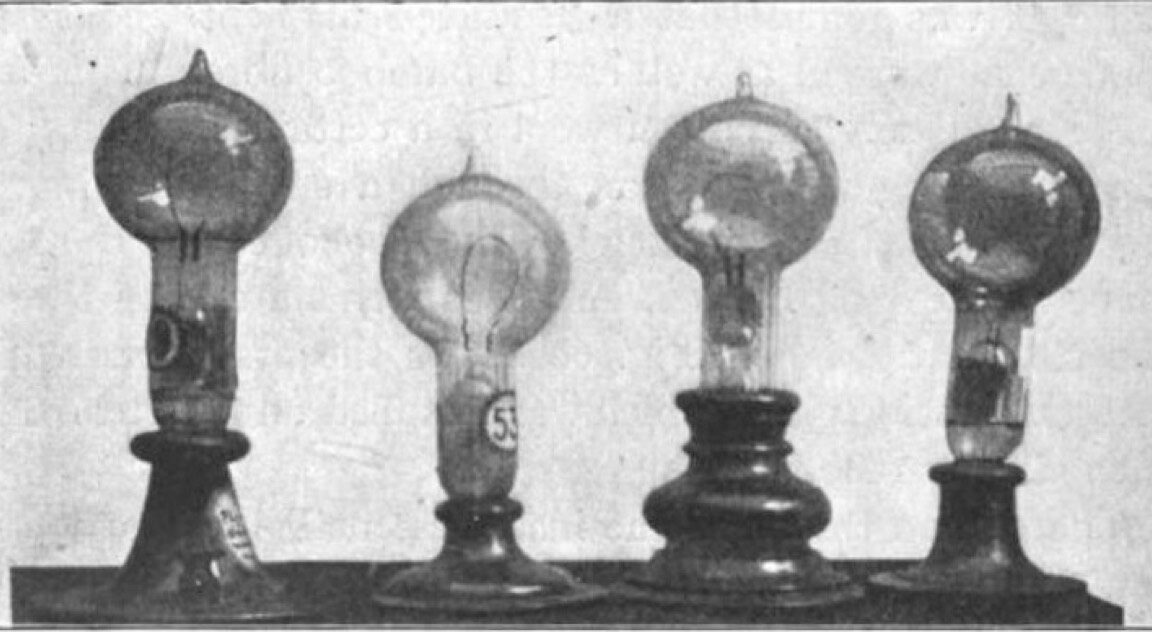
Graphene is the thinnest material yet known, composed of a single layer of carbon atoms arranged in a hexagonal lattice. That structure gives it many unusual properties that hold great promise for real-world applications: batteries, super capacitors, antennas, water filters, transistors, solar cells, and touchscreens, just to name a few. The physicists who first synthesized graphene in the lab won the 2010 Nobel Prize in Physics. But 19th century inventor Thomas Edison may have unknowingly created graphene as a byproduct of his original experiments on incandescent bulbs over a century earlier, according to a new paper published in the journal ACS Nano.
“To reproduce what Thomas Edison did, with the tools and knowledge we have now, is very exciting,” said co-author James Tour, a chemist at Rice University. “Finding that he could have produced graphene inspires curiosity about what other information lies buried in historical experiments. What questions would our scientific forefathers ask if they could join us in the lab today? What questions can we answer when we revisit their work through a modern lens?”
Edison didn't invent the concept of incandescent lamps; there were several versions predating his efforts. However, they generally had a a very short life span and required high electric current, so they weren't well suited to Edison's vision of large-scale commercialization. He experimented with different filament materials starting with carbonized cardboard and compressed lampblack. This, too, quickly burnt out, as did filaments made with various grasses and canes, like hemp and palmetto. Eventually Edison discovered that carbonized bamboo made for the best filament, with life spans over 1200 hours using a 110 volt power source.
If there is one thing we took from [azwankhairul345’s] environmental monitor project, it is this: sensors and computing power for such a project are a solved problem. What’s left is how to package it. The solution, in this case, was using recycled plastic containers, and it looks surprisingly effective.
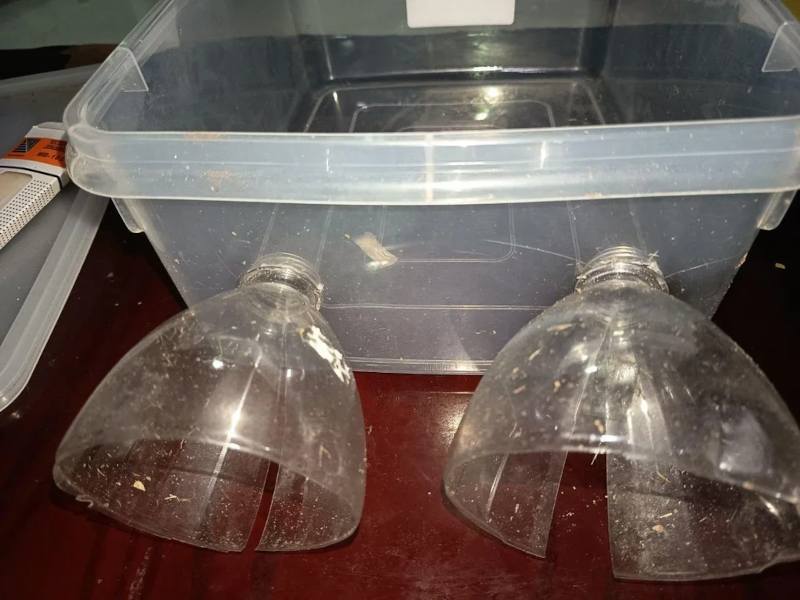
A Raspberry Pi Pico W has the processing capability and connectivity for a project like this. A large power bank battery provides the power. Off-the-shelf sensors for magnetic field (to measure anemometer spins), air quality, temperature, and humidity are easy to acquire. The plastic tub that protects everything also has PVC pipe and plastic covers for the sensors. Those covers look suspiciously like the tops of drink bottles.
We noted that the battery bank inside the instrument doesn’t have a provision for recharging. That means the device will go about two days before needing some sort of maintenance. Depending on your needs, this could be workable, or you might have to come up with an alternative power supply.
This probably won’t perform as well as a Hoffman box-style container, and we’ve seen those crop up, too. There are a number of ways of sealing things against the elements.
Bruce66423 shares a report from the Guardian: New filtration technology developed by Rice University may absorb some Pfas "forever chemicals" at 100 times the rate than previously possible, which could dramatically improve pollution control and speed remediations. Researchers also say they have also found a way to destroy Pfas, though both technologies face a steep challenge in being deployed on an industrial scale. A new peer-reviewed paper details a layered double hydroxide (LDH) material made from copper and aluminum that absorbs long-chain Pfas up to 100 times faster than commonly used filtration systems.
[...] [Michael Wong, director of Rice's Water Institute, a Pfas research center] said Rice's non-thermal process works by soaking up and concentrating Pfas at high levels, which makes it possible to destroy them without high temperatures. The LDH material Rice developed is a variation of similar materials previously used, but researchers replaced some aluminum atoms with copper atoms. The LDH material is positively charged and the long-chain Pfas are negatively charged, which causes the material to attract and absorb the chemicals, Wong said. [...]
Pfas are virtually indestructible because their carbon atoms are bonded with fluoride, but Rice found that the bonds could be broken if the chemicals in the material were heated to 400-500C -- a relatively low temperature. The fluoride gets trapped in the LDH material and is bonded to calcium. The leftover calcium-fluoride material is safe and can be disposed of in a landfill, Wong said. The process works with some long-chain Pfas that are among the most common water pollutants, and it also absorbed some smaller Pfas that are commonplace.
Wong said he is confident the material can be used to absorb a broad array of Pfas, especially if they are negatively charged. Most new Pfas elimination systems fail to work at an industrial scale. Wong said the new material has an advantage because its absorption rate is so strong, it can be used repeatedly and it is in a "drop in material," meaning it can be used with existing filtration infrastructure. That eliminates one of the major cost barriers.
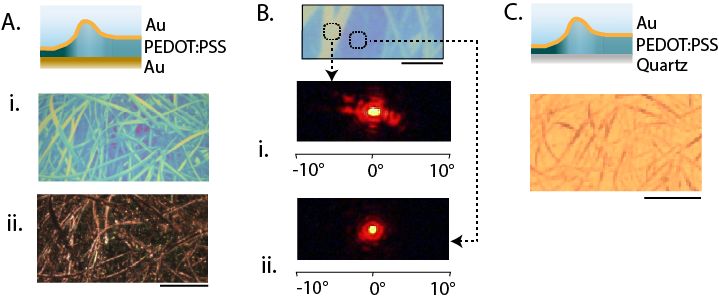
Researchers at Stanford University recently came up with an interesting way (Phys.org summary) to create patterns and colors that emerge when a polymer is exposed to water. Although the paper itself is sadly paywalled with no preprint available, it’s fairly easily summarized and illustrated with details from the Supplementary Data section. The polymer used is poly(3,4-ethylenedioxythiophene) polystyrene sulfonate (PEDOT:PSS), which when exposed to an electron beam (electron-beam lithography) undergoes certain changes that become apparent when said water is added.
The polymer is hygroscopic, but the electron beam modifies the extent to which a specific area swells up, thus making it possible to create patterns that depend on the amount of electron beam exposure. In order to ‘colorize’ the polymer, complex cavities are created that modify the angular distribution of light, as illustrated in the top image from the Supplemental Data docx file.
By varying the concentration of IPA versus water, the intermediate swelling states can be controlled. Although this sounds pretty advanced, if you look at the supplementary videos that are already sped up a lot, you can see that it is a very slow process. Compared to an octopus and kin whose ability to alter their own skin texture and coloring is legendary and directly controlled by their nervous system, this isn’t quite in the same ballpark yet, even if it’s pretty cool to watch.
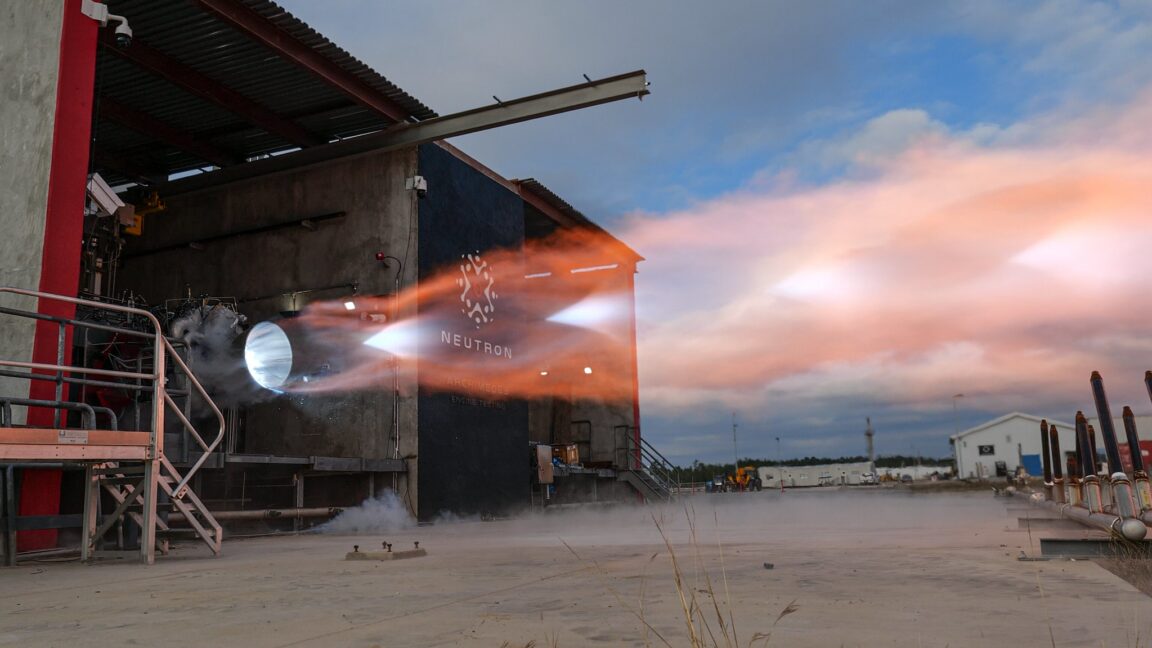
Welcome to Edition 8.26 of the Rocket Report! The past week has been one of advancements and setbacks in the rocket business. NASA rolled the massive rocket for the Artemis II mission to its launch pad in Florida, while Chinese launchers suffered back-to-back failures within a span of approximately 12 hours. Rocket Lab's march toward a debut of its new Neutron launch vehicle in the coming months may have stalled after a failure during a key qualification test. We cover all this and more in this week's Rocket Report.
As always, we welcome reader submissions. If you don't want to miss an issue, please subscribe using the box below (the form will not appear on AMP-enabled versions of the site). Each report will include information on small-, medium-, and heavy-lift rockets, as well as a quick look ahead at the next three launches on the calendar.
Australia invests in sovereign launch. Six months after its first orbital rocket cleared the launch tower for just 14 seconds before crashing back to Earth, Gilmour Space Technologies has secured 217 million Australian dollars ($148 million) in funding that CEO Adam Gilmour says finally gives Australia a fighting chance in the global space race, the Sydney Morning Herald reports. The funding round, led by the federal government's National Reconstruction Fund Corporation and superannuation giant Hostplus with $75 million each, makes the Queensland company Australia’s newest unicorn—a fast-growth start-up valued at more than $1 billion—and one of the country’s most heavily backed private technologyventures.
Every spring, raptors return to nesting sites across northern Michigan. The smallest of these birds of prey, a falcon called the American kestrel (Falco sparverius), flies through the region’s many cherry orchards and spends its days hunting for even tinier creatures to eat. This quest keeps the kestrels fed, but it also benefits the region’s cherry farmers.
Fruit farmers have been working symbiotically with kestrels for decades, adding nesting boxes and reaping the benefits of the birds eliminating the mice, voles, songbirds, and other pests that wreak havoc by feeding on not-yet-harvested crops. In addition to limiting the crop damage caused by hungry critters, new research suggests kestrels also lower the risk of food-borne illnesses.
The study, published in November in the Journal of Applied Ecology, suggests the kestrels help keep harmful pathogens off of fruit headed to consumers by eating and scaring off small birds that carry those pathogens. Orchards housing the birds in nest boxes saw fewer cherry-eating birds than orchards without kestrels on site. This translated to an 81 percent reduction in crop damage—such as bite marks or missing fruit—and a 66 percent decrease in branches contaminated with bird feces.
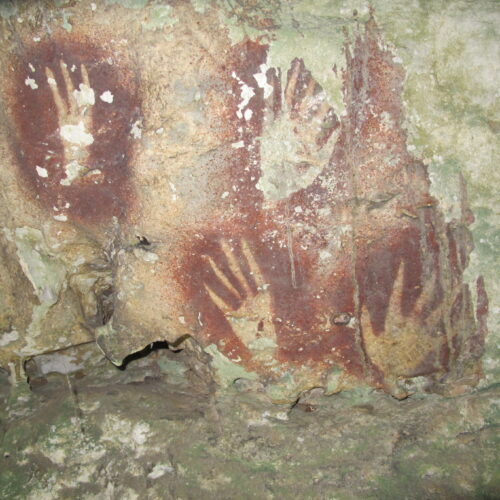
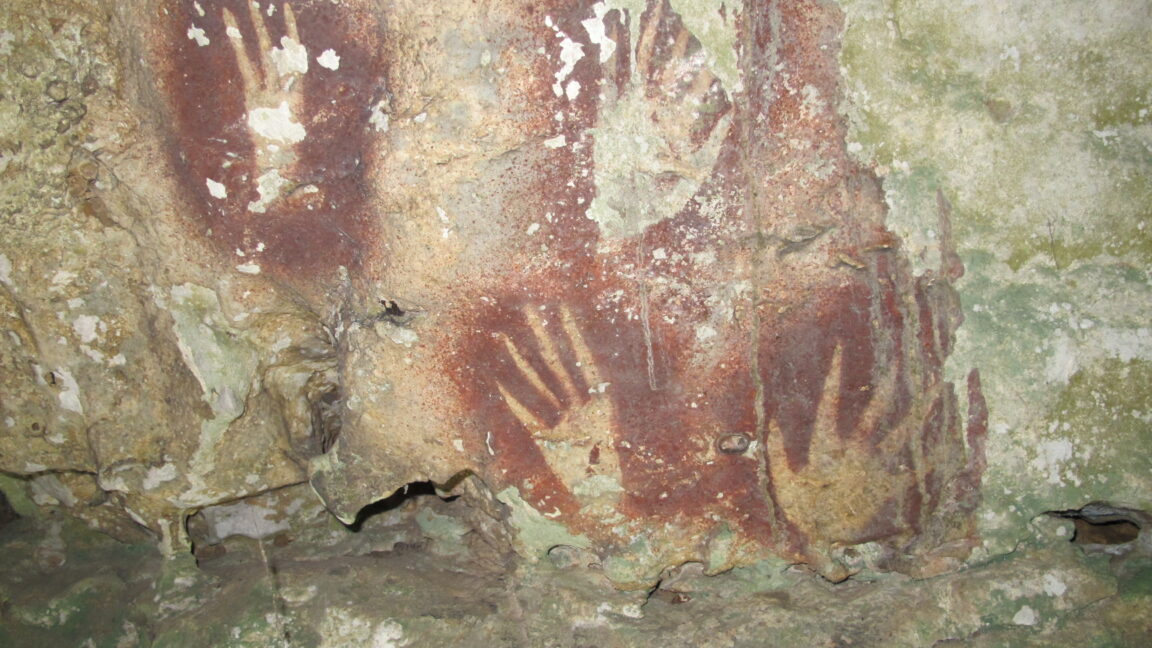
The world’s oldest surviving rock art is a faded outline of a hand on an Indonesian cave wall, left 67,800 years ago.
On a tiny island just off the coast of Sulawesi (a much larger island in Indonesia), a cave wall bears the stenciled outline of a person’s hand—and it’s at least 67,800 years old, according to a recent study. The hand stencil is now the world’s oldest work of art (at least until archaeologists find something even older), as well as the oldest evidence of our species on any of the islands that stretch between continental Asia and Australia.
Adhi Oktaviana examines a slightly more recent hand stencil on the wall of Liang Metanduno.
Credit:
Oktaviana et al. 2026
Hands reaching out from the past
Archaeologist Adhi Agus Oktaviana, of Indonesia’s National Research and Innovation Agency, and his colleagues have spent the last six years surveying 44 rock art sites, mostly caves, on Sulawesi’s southeastern peninsula and the handful of tiny “satellite islands” off its coast. They found 14 previously undocumented sites and used rock formations to date 11 individual pieces of rock art in eight caves—including the oldest human artwork discovered so far.
This letter from SARA is to issue a waiver for NASA grantees attending LPSC2026, allowing them to be reimbursed out of their grants for their actual lodging, although it’s expected to be above the approved GSA amount. This waiver does not supersede the travel policy of your institution if it is more restrictive. Note: I have specified grants (including cooperative agreements). This may also apply to those traveling on NASA contracts, but they should communicate with their contracting officers.
The host hotel for the 57th Lunar and Planetary Science Conference on March 16–20, 2026, is The Woodlands Waterway Marriott Hotel and Convention Center. Hotel information for this conference may be found at https://www.hou.usra.edu/meetings/lpsc2026/plan/
The GSA-allowed daily lodging expense for March 2026 for zip code 77380 (for The Woodlands Waterway Marriott Hotel and Convention Center) is $128 per night. Many of the hotels may be significantly higher than the GSA allowed rate of $128. Grantee travelers may need a waiver to cover lodging in excess of the GSA value, depending on the travel policy of your organization. This waiver does not supersede the travel policy of your institution if it is more restrictive.
By the power vested in me by the NSSC to issue approval of the actual lodging costs for a conference in “bulk” instead of individual approvals, I hereby affirm that for the 57th Lunar and Planetary Science Conference NASA, SMD grants may be charged up to $276/night plus taxes and fees, consistent with the average actual cost of the conference hotel, even though this exceeds the $128 allotted for lodging by GSA for The Woodlands for March 2026.
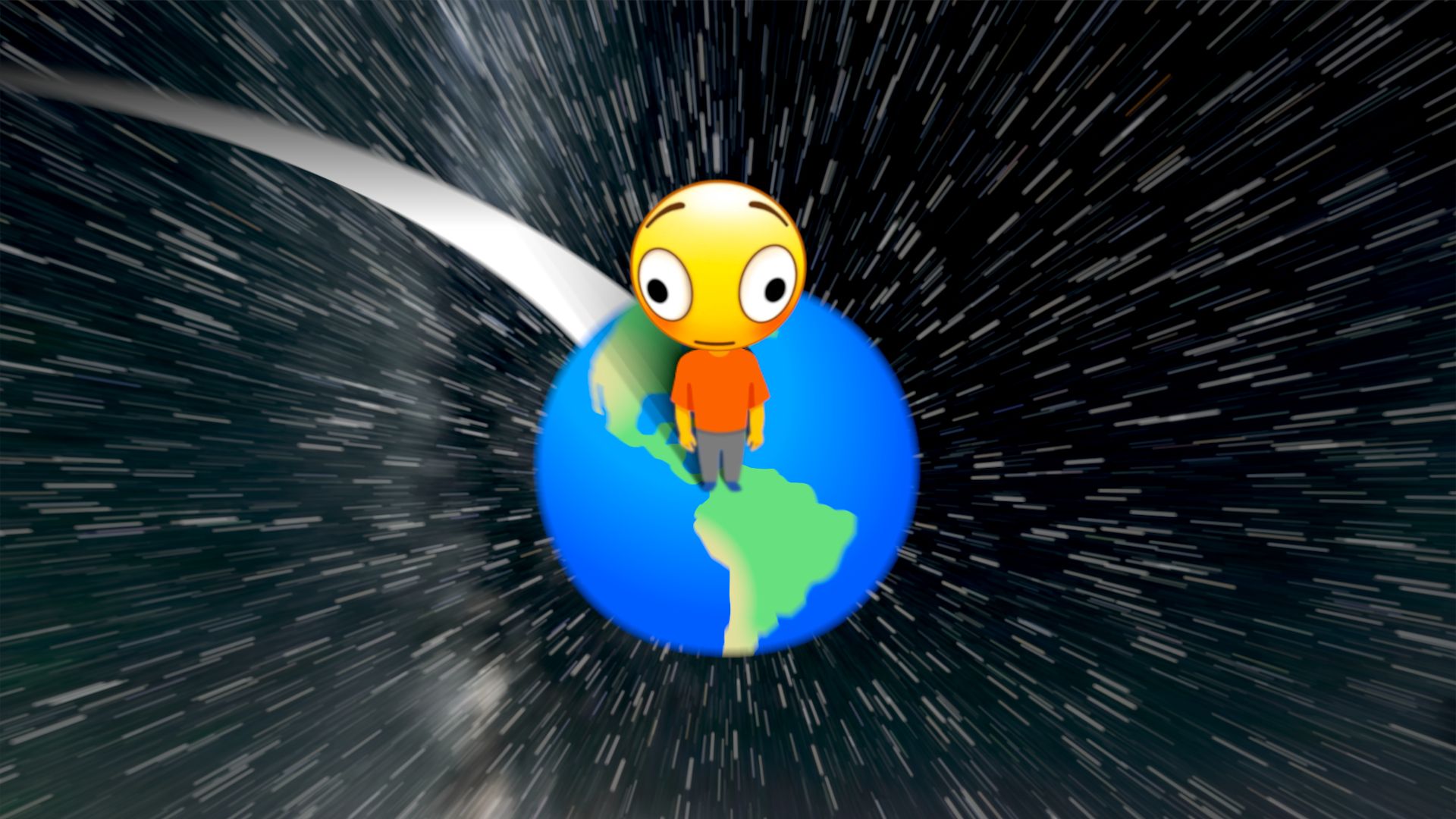
Here’s a fun and somewhat terrifying fact: you’re on a planet right now. We all know this, but it’s hard to really visualize. The good news is there’s a website for that, and it can tell you exactly how far Earth has traveled through space since you arrived on it.
NASA AI Model That Found 370 Exoplanets Now Digs Into TESS Data
This artist’s impression shows the star TRAPPIST-1 with two planets transiting across it. ExoMiner++, a recently updated open-source software package developed by NASA, uses artificial intelligence to help find new transiting exoplanets in data collected by NASA’s missions.
NASA, ESA, and G. Bacon (STScI)
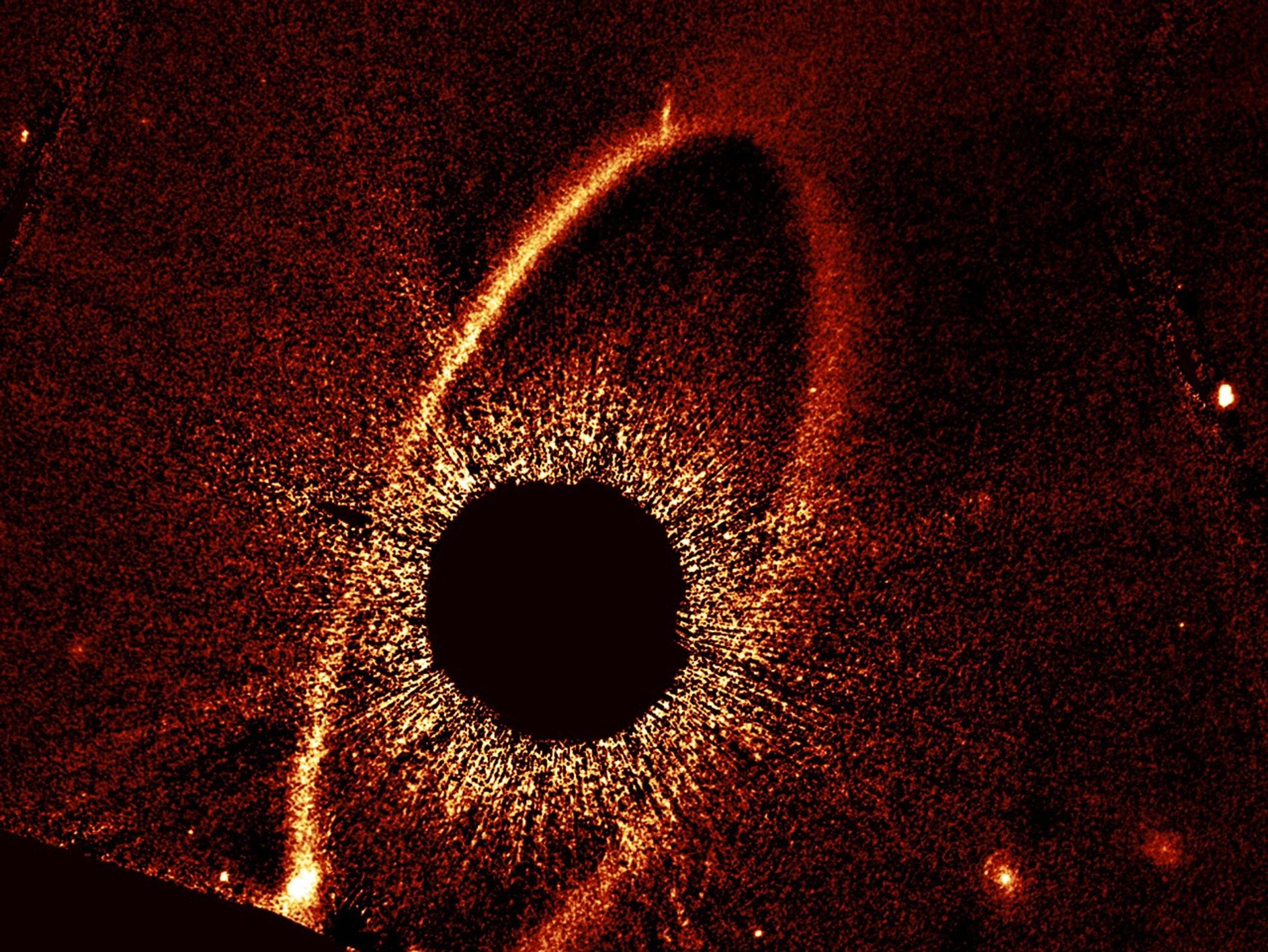
Scientists have discovered over 6,000 planets that orbit stars other than our Sun, known as exoplanets. More than half of these planets were discovered thanks to data from NASA’s retired Kepler mission and NASA’s current TESS (Transiting Exoplanet Survey Satellite) mission. However, the enormous treasure trove of data from these missions still contains many yet-to-be-discovered planets. All of the data from both missions is publicly available in NASA archives, and many teams around the world have used that data to find new planets using a number of techniques.
In 2021, a team from NASA’s Ames Research Center in California’s Silicon Valley created ExoMiner, a piece of open-source software that used artificial intelligence (AI) to validate 370 new exoplanets from Kepler data. Now, the team has created a new version of the model trained on both Kepler and TESS data, called ExoMiner++.
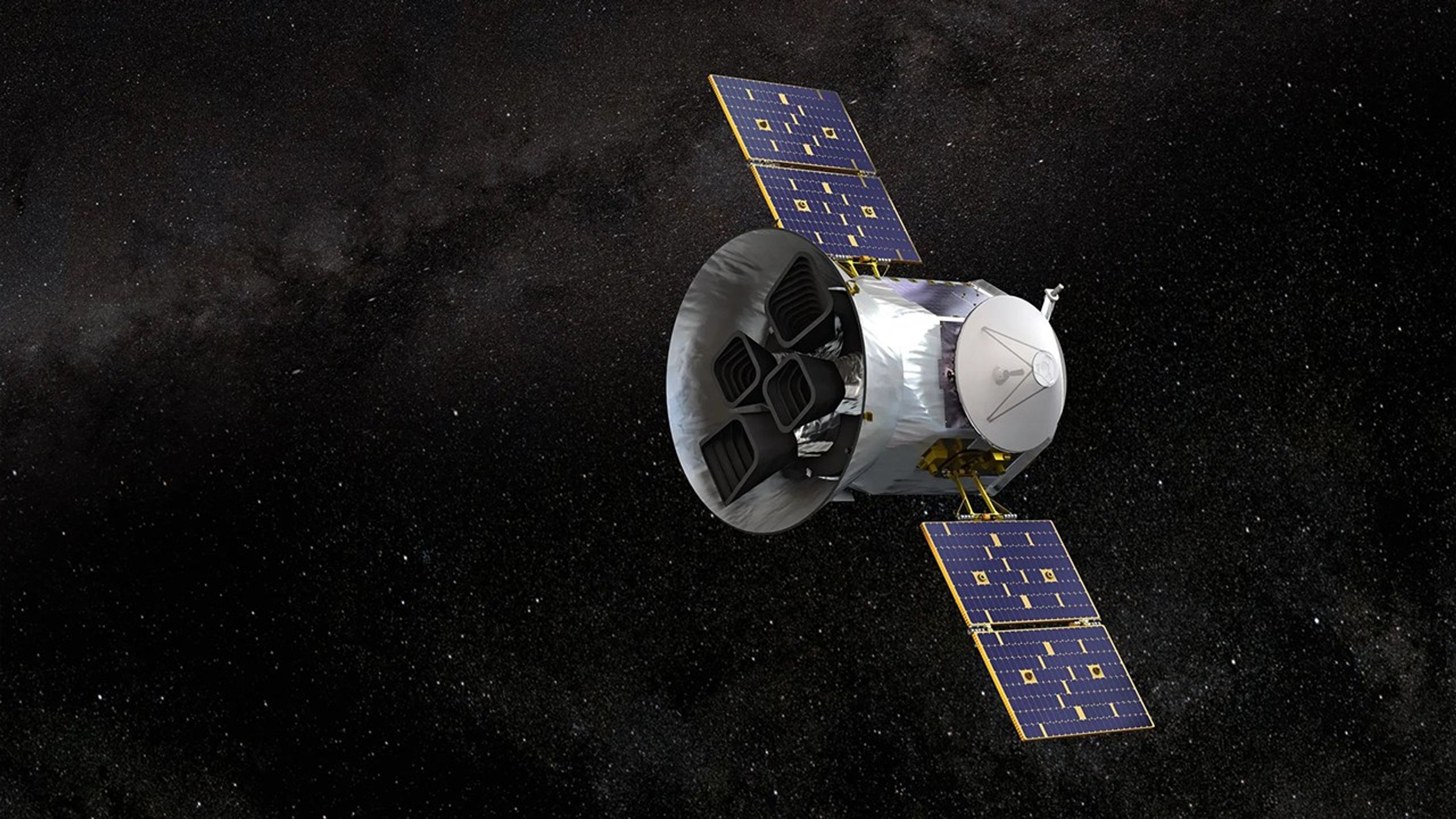
Artist’s impression of NASA’s Transiting Exoplanet Survey Satellite (TESS), which launched in 2018 and has discovered nearly 700 exoplanets so far. NASA’s ExoMiner++ software is working toward identifying more planets in TESS data using artificial intelligence.
NASA’s Goddard Space Flight Center
The new algorithm, which is discussed in a recent paper published in the Astronomical Journal, identified 7,000 targets as exoplanet candidates from TESS on an initial run. An exoplanet candidate is a signal that is likely to be a planet but requires follow-up observations from additional telescopes to confirm.
ExoMiner++ can be freely downloaded from GitHub, allowing any researcher to use the tool to hunt for planets in TESS’s growing public data archive.
“Open-source software like ExoMiner accelerates scientific discovery,” said Kevin Murphy, NASA’s chief science data officer at NASA Headquarters in Washington. “When researchers freely share the tools they’ve developed, it lets others replicate the results and dig deeper into the data, which is why open data and code are important pillars of gold-standard science.”
ExoMiner++ sifts through observations of possible transits to predict which ones are caused by exoplanets and which ones are caused by other astronomical events, such as eclipsing binary stars. “When you have hundreds of thousands of signals, like in this case, it’s the ideal place to deploy these deep learning technologies,” said Miguel Martinho, a KBR employee at NASA Ames who serves as the co-investigator for ExoMiner++.
This animation shows a graph of the tiny amount of dimming that takes place when a planet passes in front of its host star. NASA’s Kepler and TESS missions spot exoplanets by looking for these transits. ExoMiner++ uses artificial intelligence to help separate real planet transits from other, similar-looking astronomical phenomena.
NASA’s Goddard Space Flight Center
Kepler and TESS operate differently — TESS is surveying nearly the whole sky, mainly looking for planets transiting nearby stars, while Kepler looked at a small patch of sky more deeply than TESS. Despite these different observing strategies, the two missions produce compatible datasets, allowing ExoMiner++ to train on data from both telescopes and deliver strong results. “With not many resources, we can make a lot of returns,” said Hamed Valizadegan, the project lead for ExoMiner and a KBR employee at NASA Ames.
The next version of ExoMiner++ will improve the usefulness of the model and inform future exoplanet detection efforts. While ExoMiner++ can currently flag planet candidates when given a list of possible transit signals, the team is also working on giving the model the ability to identify the signals themselves from the raw data.
Open-source science and open-source software are why the exoplanet field is advancing as quickly as it is.
Jon Jenkins
Exoplanet Scientist, NASA Ames Research Center
In addition to the ongoing stream of data from TESS, future exoplanet-hunting missions will give ExoMiner users plenty more data to work with. NASA’s upcoming Nancy Grace Roman Space Telescope will capture tens of thousands of exoplanet transits — and, like TESS data, Roman data will be freely available in line with NASA’s commitment to Gold Standard Science and sharing data with the public. The advances made with the ExoMiner models could help hunt for exoplanets in Roman data, too.
“The open science initiative out of NASA is going to lead to not just better science, but also better software,” said Jon Jenkins, an exoplanet scientist at NASA Ames. “Open-source science and open-source software are why the exoplanet field is advancing as quickly as it is.”
NASA’s Office of the Chief Science Data Officer leads the open science efforts for the agency. Public sharing of scientific data, tools, research, and software maximizes the impact of NASA’s science missions. To learn more about NASA’s commitment to transparency and reproducibility of scientific research, visit science.nasa.gov/open-science. To get more stories about the impact of NASA’s science data delivered directly to your inbox, sign up for the NASA Open Science newsletter.
By Lauren Leese Web Content Strategist for the Office of the Chief Science Data Officer
Seattle-based Code.org laid off 18 employees, or about 14% of its staff, the nonprofit confirmed to GeekWire on Wednesday.
Following the cuts, Code.org’s staff now numbers 107.
“Code.org has made the difficult decision to part ways with 18 colleagues as part of efforts to ensure our long-term sustainability,” the organization said in an emailed statement. “Their contributions helped millions of educators and students around the world, and we are grateful for their efforts.”
Code.org was launched in 2013 by brothers Hadi and Ali Partovi with a mission to expand computer science education to K-12 students. Backed by nearly $60 million in funding from the likes of Microsoft, Amazon, Google and others, Code.org counts 102 million students and 3 million teachers on its platform today, with 232 million projects created by students around the world.
CEO Hadi Partovi is a former Microsoft manager and was an early investor in companies including Facebook, DropBox, Airbnb and Uber.
“Our mission remains unchanged,” the organization said in its statement. “We will continue our Hour of AI campaign, along with our work to reform policies and new curriculum supporting CS+AI education in classrooms.”
Students Across New England Contribute to Climate Science Through NASA’s GLOBE Green Down
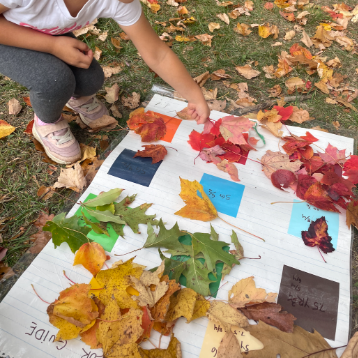
Students made observations and tracked the changing color of leaves on a variety of species.
In fall 2025, more than 50 educators and over 1,500 young people across Maine and New Hampshire participated in NASA’s Global Learning and Observation to Benefit the Environment (GLOBE) Green Down, a citizen science (also known as participatory science or community science) initiative that engages students and volunteers in tracking seasonal changes in plant life. By observing and documenting leaf color change and leaf drop, participants contributed valuable data used by scientists studying how ecosystems respond to a changing climate.
GLOBE Green Down is part of NASA’s Global Learning and Observation to Benefit the Environment (GLOBE) Program, which connects students, educators, and the public with authentic scientific research. Using a standardized color guide and observation protocols, participants measured changes in plant health as autumn progressed, generating consistent, high-quality data that can be analyzed alongside observations collected worldwide.
The 2025 field season was led by the Gulf of Maine Research Institute and focused on supporting educators in taking learning outdoors while strengthening students’ scientific observation and data literacy skills. Students from pre-kindergarten through high school studied a wide range of tree species—including maple, oak, birch, ash, beech, poplar, and apple—by making repeated observations in their local environments.
In Portland, Maine, students from five elementary schools conducted observations in their own schoolyards as part of environmental literacy and science education programs. Beyond New England, learners from Machias, Maine to British Columbia, and many locations in between, contributed observations, creating a geographically diverse dataset that reflects regional and continental patterns of seasonal change.
As they collected data, students also began asking their own research questions—mirroring the inquiry process used by scientists. Their questions explored differences in species behavior, the influence of sunlight, drought, wildfire smoke, and the built environment, and how these factors might affect the timing and progression of leaf color change.
Educators reported that participation in GLOBE Green Down helped students develop a stronger connection to their local ecosystems while gaining experience working with real-world scientific data. Many noted that learners were able to use their observations to discuss environmental change at both local and global scales, including potential climate change impacts on seasonal patterns.
This field season was hosted through NASA’s Science Activation program as part of the Learning Ecosystems Northeast (https://science.nasa.gov/sciact-team/gmri/) (LENE) project. LENE brings together educator learning communities across Maine, New Hampshire, Vermont, New York, and Massachusetts, fostering collaboration between school-based and out-of-school educators. Through this network, educators support STEM learning, data literacy, and local ecosystem stewardship—empowering young people to contribute meaningfully to NASA-supported scientific research.
Get Involved with GLOBE
Educators, students, and community members interested in doing NASA science can get involved. The GLOBE Observer app offers hands-on opportunities to collect and share environmental data used by scientists around the world, while building science skills and local environmental awareness. Learn more: https://science.nasa.gov/citizen-science-old/globe-observer/
LENE is supported by NASA under cooperative agreement award number NNX16AB94A and is part of NASA’s Science Activation Portfolio. Learn more about how Science Activation connects NASA science experts, real content, and experiences with community leaders to do science in ways that activate minds and promote deeper understanding of our world and beyond: https://science.nasa.gov/learn/about-science-activation/
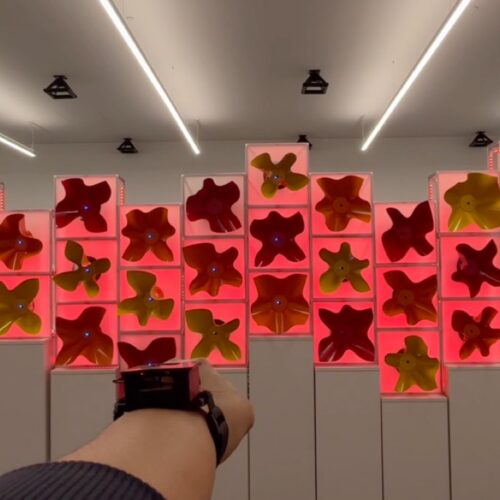
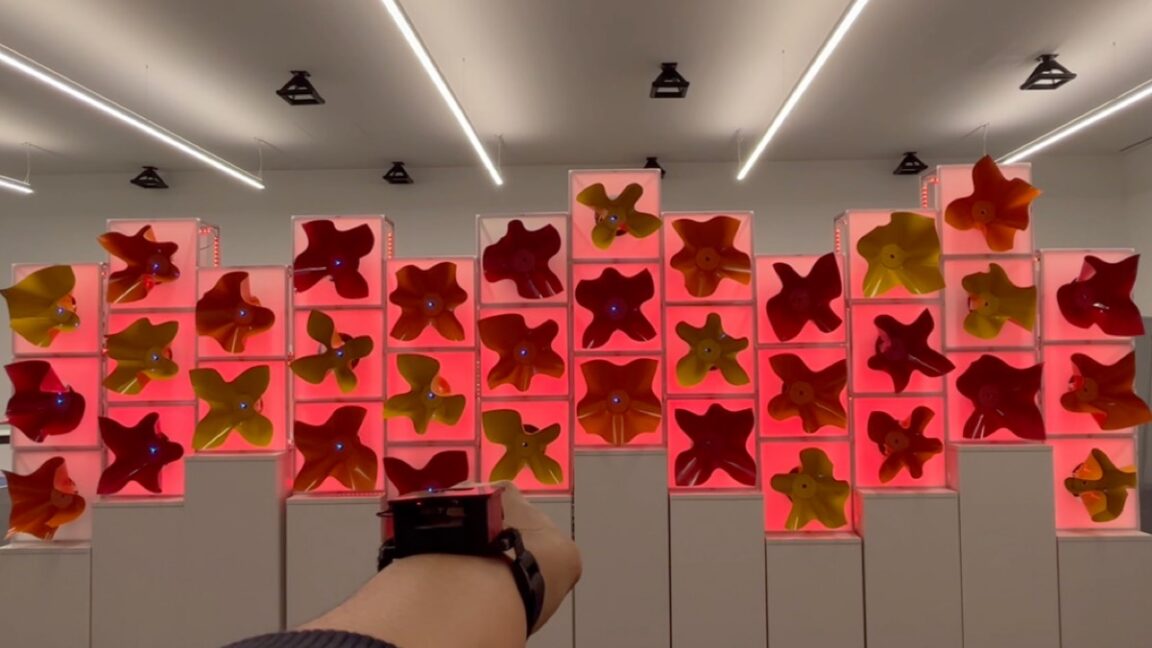
Researchers at Princeton University have built a swarm of interconnected mini-robots that "bloom" like flowers in response to changing light levels in an office. According to their new paper published in the journal Science Robotics, such robotic swarms could one day be used as dynamic facades in architectural designs, enabling buildings to adapt to changing climate conditions as well as interact with humans in creative ways.
The authors drew inspiration from so-called "living architectures," such as beehives. Fire ants provide a textbook example of this kind of collective behavior. A few ants spaced well apart behave like individual ants. But pack enough of them closely together, and they behave more like a single unit, exhibiting both solid and liquid properties. You can pour them from a teapot like ants, as Goldman’s lab demonstrated several years ago, or they can link together to build towers or floating rafts—a handy survival skill when, say, a hurricane floods Houston. They also excel at regulating their own traffic flow. You almost never see an ant traffic jam.
Naturally scientists are keen to mimic such systems. For instance, in 2018, Georgia Tech researchers built ant-like robots and programmed them to dig through 3D-printed magnetic plastic balls designed to simulate moist soil. Robot swarms capable of efficiently digging underground without jamming would be super beneficial for mining or disaster recovery efforts, where using human beings might not be feasible.
Elon Musk is reportedly looking to finally take SpaceX public after years of resistance, according to sources who spoke to TheWall Street Journal. The company has long said it wouldn't choose an IPO until it had established a presence on Mars. That isn't happening anytime soon.
So why now? Company insiders have suggested it's because Musk wants to build AI data centers in space. Google recently announced it was looking into putting a data center in space, with test launches scheduled for 2027. Musk reportedly wants to beat his rival to the punch, but SpaceX would need the billions of dollars in capital that an IPO would deliver. Putting a giant center in space isn't cheap.
Our TPUs are headed to space!
Inspired by our history of moonshots, from quantum computing to autonomous driving, Project Suncatcher is exploring how we could one day build scalable ML compute systems in space, harnessing more of the sun’s power (which emits more power than 100… pic.twitter.com/aQhukBAMDp
Sources say that Musk wants to complete the IPO by July. SpaceX is reportedly expected to select banks to lead the stock offering in the near future.
This is also being seen as an attempt to boost xAI, which trails behind rivals like OpenAI and Google in the AI race. If SpaceX were to be successful in putting data centers in space, it's likely that xAI would get a sweetheart deal given that Musk runs both companies. Then they could pass money to one another in perpetuity, which seems to be the AI way.
Other companies have also begun considering jettisoning data centers into the great beyond. Blue Origin CEO Jeff Bezos recently suggested that shifting data centers to orbit makes sense. OpenAI CEO Sam Altman has been looking into partnering or purchasing a rocket maker called Stoke Space for a similar reason.
Of course, putting data centers in space is an extraordinary undertaking. There are serious issues that must be overcome, from latency to heat dissipation and radiation. Components must be launched and the structure must be built in space. WSJ reports that SpaceX made a breakthrough of some sort last year, but the company hasn't announced specifics.
If we need giant data centers to generate Garfield memes or whatever, I'd rather them in space. Microsoft's latest AI data center in Wisconsin takes up 325 acres. Meta recently announced a data center that would be nearly the size of Manhattan. These structures hoover up energy and water, strain local resources, create pollution and offer just a few long-term local jobs.
This article originally appeared on Engadget at https://www.engadget.com/science/space/elon-musk-is-reportedly-trying-to-take-spacex-public-170337053.html?src=rss
 Login
Login








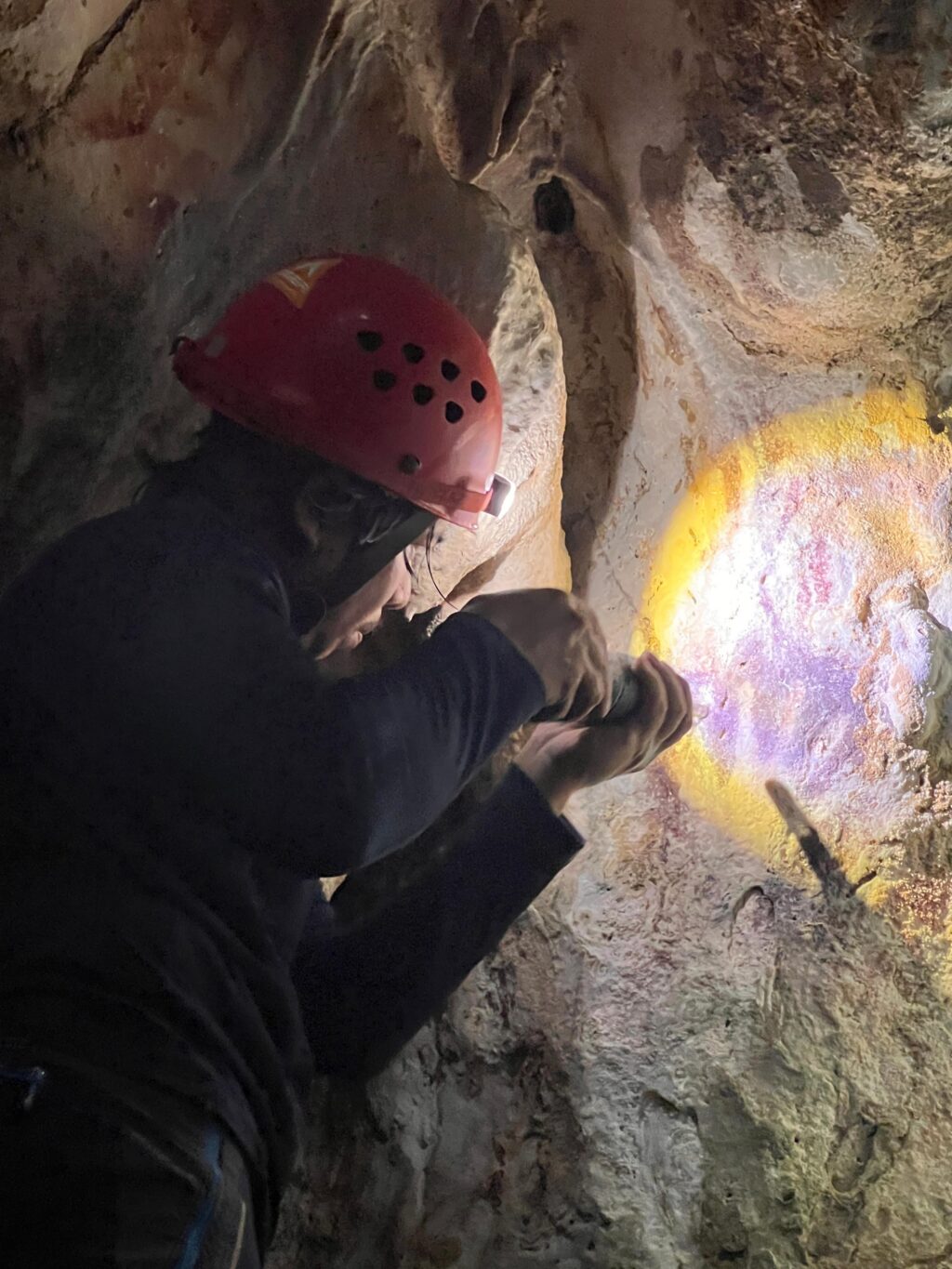 Adhi Oktaviana examines a slightly more recent hand stencil on the wall of Liang Metanduno.
Credit:
Oktaviana et al. 2026
Adhi Oktaviana examines a slightly more recent hand stencil on the wall of Liang Metanduno.
Credit:
Oktaviana et al. 2026