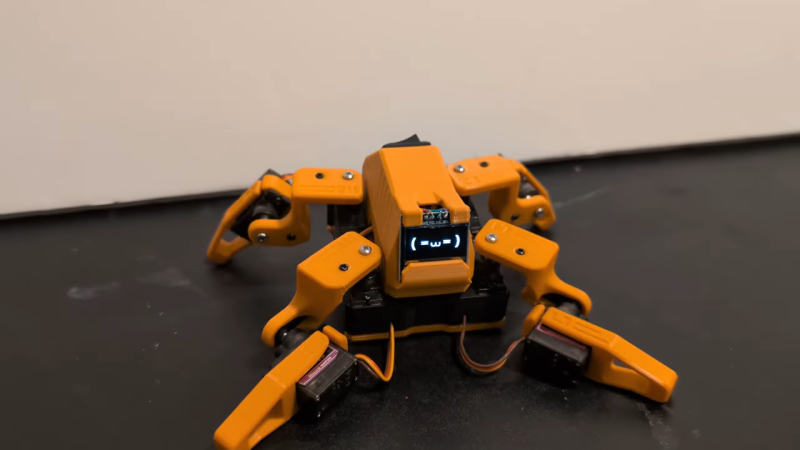
This little fellow is named Sesame. A quadruped robot, it’s built out of 3D-printed components. Each leg features a pair of MG90S hobby servos, one of which rotates the leg around the vertical axis, while the other moves the foot. The ESP32 microcontroller controls all eight servos, enabling remote control of Sesame via its built-in wireless connectivity. Sesame also gets a 128×64 OLED display, which it uses to display a range of emotions.
Mechanically, the Sesame design isn’t particularly sophisticated. Where it shines is that even with such a limited range of motion, between its four legs and its little screen, this robot can display a great deal of emotion. [Dorian] shows this off in the project video, in which Sesame scampers around a desktop with all the joy and verve of a new puppy. It’s also very cheap; [Dorian] estimates you can build your own Sesame for about $60. Files are on GitHub for the curious.
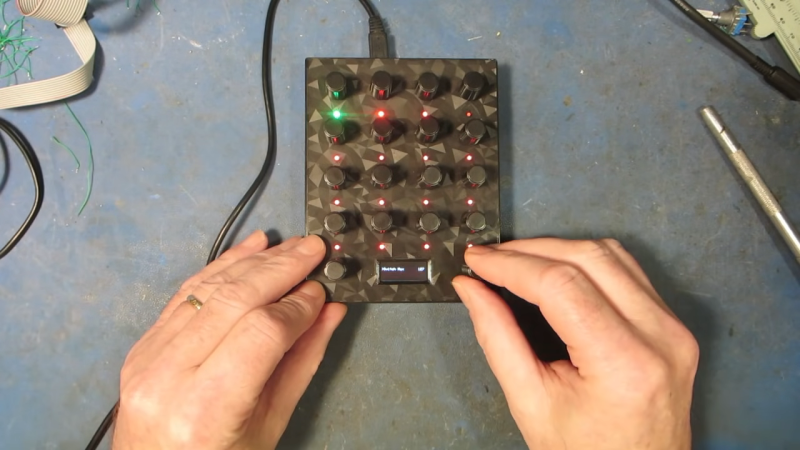
We live in a golden age for MIDI controllers. [rheslip]’s contribution to the milieu is a twisty take on the format, in that it’s covered in an array of knobs. Thus the name—Twisty 2.
The controller can be built using the Raspberry Pi Pico or Pico 2. It’s set up to read a 4×4 array of clickable encoders, plus two bonus control knobs to make 18 in total, which are read via a 74HC4067 analog mux chip. There’s also an SK6812 RGB LED for each encoder, and an OLED display for showing status information. MIDI output is via USB, or, if you purchased the W variant of the Pi Pico/Pico 2, it can operate wirelessly over Bluetooth MIDI instead. The controller is set up to send MIDI CC messages, program changes, or note on/off messages depending on its configuration. Flipping through different modes is handled with the bottom set of encoders and the OLED display.
Few musicians we’ve ever met have told us they learned how to play the encoders, and yet. The cool thing about building your own MIDI controller is you can tune it to suit whatever method of performance strikes your fancy. If the name of this build alone has you inspired, you could always whip up a MIDI controller out of a Twister mat.
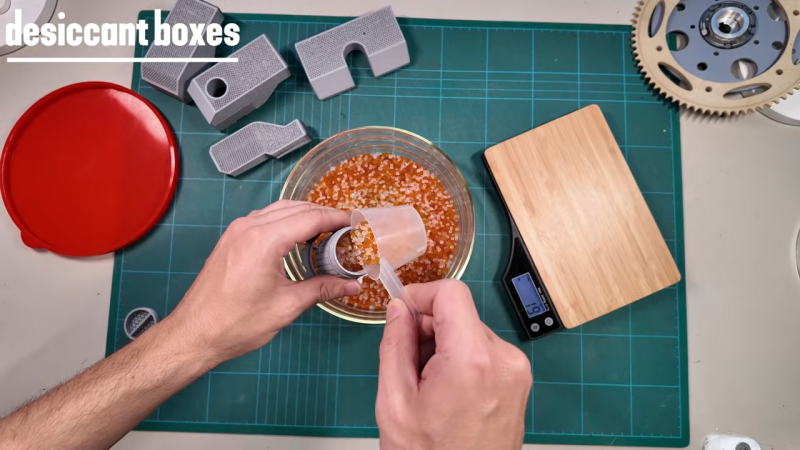
It’s possible to improve your 3D prints in all kinds of ways. You can tune your printer’s motion, buy better filament, or tinker endlessly with any number of slicer settings. Or, as [Dirt-E-Bikes] explains, you could grab yourself some silica gel.
If you’re unfamiliar with silica gel, it’s that stuff that comes in the “DO NOT EAT” packet when you buy a new pair of shoes. It’s key feature is that it’s hygroscopic—which means it likes to suck up moisture from the atmosphere. When it comes to 3D printing, this is a highly useful property—specifically because it can help keep filament dry. Over time, plastic filament tends to pick up some moisture on its own from the atmosphere, and this tends to interfere with print quality. This can be avoided by storing filament in a sealed or semi-seaeled environment with silica gel. The gel will tend to suck up most of the moisture from the air in the sealed container, helping to keep the filament drier.
[Dirt-E-Bikes] does a great job of explaining how best to integrate silica gel with your filament spools and automatic material changer (if you have one). He also explains the value of color changing silica gel which indicates when the material is saturated with water, as well as how to dry it out for reuse. You can even combine some of the color changing beads with the more common plain white beads recycled from your shoe boxes, since you only need a few colored beads to get an idea of the water content.
Sleep apnea is a debilitating disease that many sufferers don’t even realize they have. Those afflicted with the condition will regularly stop breathing during sleep as the muscles in their throat relax, sometimes hundreds of times a night. Breathing eventually resumes when the individual’s oxygen supply gets critically low, and the body semi-wakes to restore proper respiration. The disruption to sleep causes serious fatigue and a wide range of other deleterious health effects.
Treatment for sleep apnea has traditionally involved pressurized respiration aids, mechanical devices, or invasive surgeries. However, researchers are now attempting to develop a new drug combination that could solve the problem with pharmaceuticals alone.
Breathe Into Me
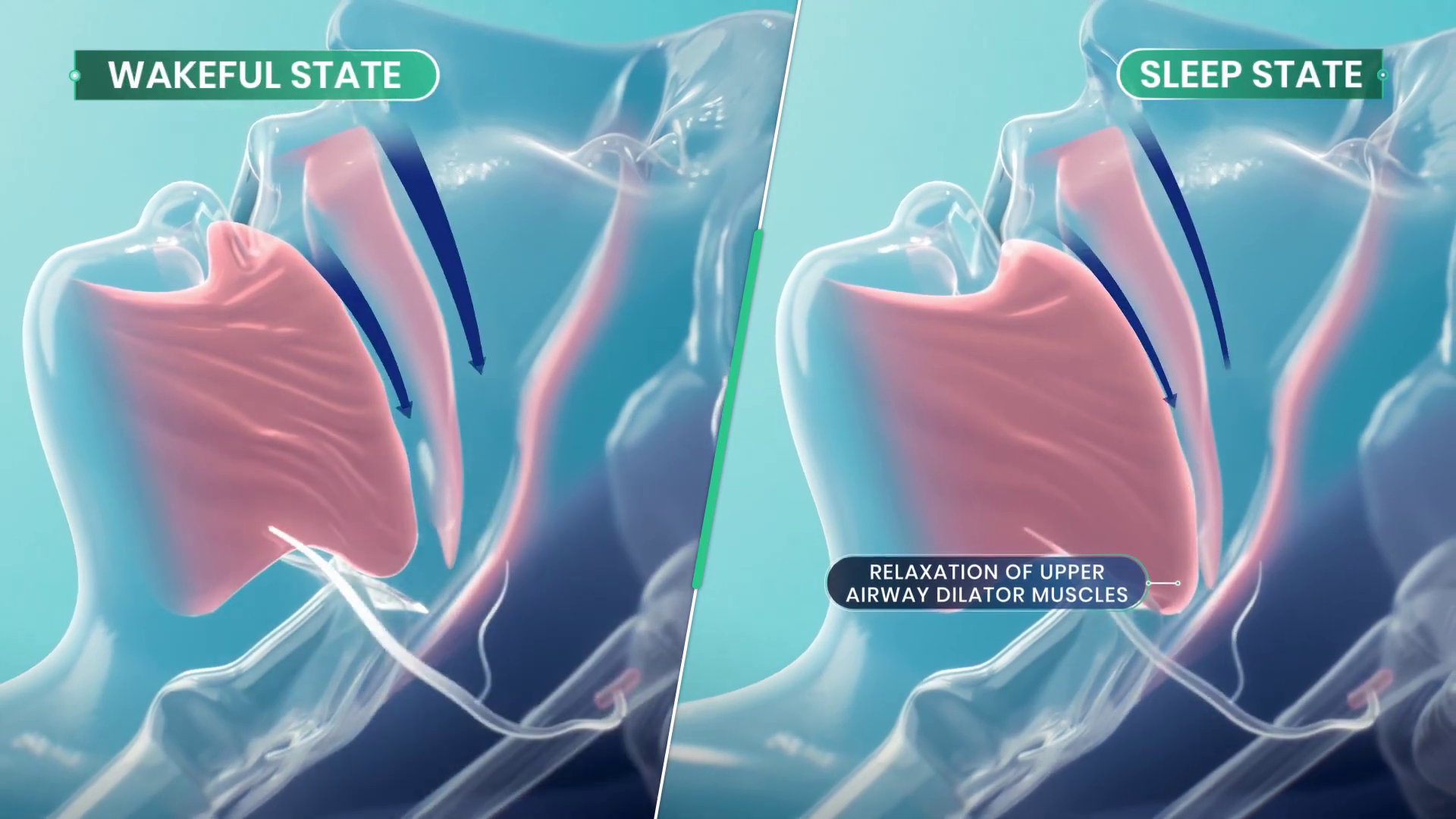
There are a variety of conditions that fall under the sleep apnea umbrella, with various causes and a range of imperfect treatments. Perhaps the most visible is obstructive sleep apnea (OSA), in which the muscles in the throat relax during sleep. Under certain conditions, and depending on anatomy, this can lead the airway to become blocked, causing a cessation of breathing that requires the sufferer to wake to a certain degree to restore proper respiration. Since the 1980s, OSA has routinely been treated with the use of Continuous Positive Airway Pressure (CPAP) machines, which supply pressurized air to the face and throat to forcibly keep the airway open. These are effective, except for one major problem—a great deal of patients hate them, and compliance with treatment is remarkably poor. Some studies have shown up to 50% of patients give up on CPAP treatment within a year due to discomfort around sleeping with a pressurized air mask.
Obstructive sleep apnea occurs when upper airway muscles relax excessively during sleep, ultimately restricting or totally blocking the airway. Credit: Apnimed
Against this backdrop, a simple pill-based treatment for sleep apnea is a remarkably attractive proposition. It would allow the treatment of the condition without the need for expensive, high-maintenance CPAP machines which a huge proportion of patients hate using in the first place. Such a treatment is now close to being a reality, under the name AD109.
The treatment aims to directly target the actual cause of obstructive sleep apnea. OSA is a neuromuscular condition, and one that only occurs during sleep—as those afflicted with the disease don’t suffer random airway blockages while awake. When sleep occurs, neurotransmitter levels like norepinephrine tend to decrease. This can can cause the upper airway muscles to excessively relax in sleep apnea sufferers, to the point that the airway blocks itself shut. AD109 tackles this issue with a combination of drugs—an antimuscarinic called aroxybutynin, and a norepinephrine reuptake inhibitor called atomoxetine. In simple terms, the aroxybutynin blocks so-called muscarinic receptors which decrease muscle tone in the upper airway. Meanwhile, the atomoxetine is believed to simultaneously improve muscle tone in the upper airway by maintaining higher activity in the hyperglossal motor neurons that control muscles in this area.
Results in phase 2 testing showed a marked decrease in AHI compared to those taking a placebo. Credit: research paper
Thus far, clinical testing has been positive, suggesting the synergistic combination of drugs may be able to improve airflow for sleep apnea patients. Phase 1 and Phase 2 clinical trials have been conducted to verify the safety of the treatment, as well as its efficacy at treating the condition. Success in the trials was measured with the Apnea-Hypopnea Index (AHI), which records the number of airway disruptions an individual has per hour. AHI events were reduced by 45% in those taking AD109 when compared to the placebo group in a phase 2 trial featuring 211 participants. It achieved this while proving generally safe in early testing without causing detectable detriments to attention or memory. However, some side effects were noted with the drug—most specifically dry mouth, urinary hesitancy, and a level of insomina. The latter being particularly of note given the drug’s intention to improve sleep.
Testing on AD109 continues, with randomized Phase 3 trials measuring its performance in treating mild, moderate, and severe obstructive sleep apnea. For now, commercialization remains a ways down the road. And yet, for the first time, it appears promising that modern medicine will develop a simple drug-based treatment for a disease that leaves millions fatigued and exhausted every day. If it proves viable, expect it to become a major pharmaceutical success story and the hottest new drug on the market.
The Nintendo Wii first launched in 2006, and quickly became a fixture in living rooms around the world. It offered motion-controlled bowling, some basic internet features, and a pretty decent Zelda game. On top of all that, though, you could also use it to order a pizza, as [Retro Game Attic] demonstrates.
The Wii used to organize different features of the console into “channels.” Way back in the day, you could install the Demae Channel on your Wii in Japan, which would let you order fast food from various outlets using the Demaecan service.
The Demae Channel service was discontinued in 2017. However, it has since been resurrected by WiiLink, which is a homebrew project which replicates the functionality of the original Nintendo WiiConnect 24 and Wi-Fi Connection servers. As it stands, you can load the WiiLink version of the Demae Channel (or Food Channel) on to your Wii, and use it to order pizza from your local Domino’s Pizza. It only works in the United States and Canada right now, and there are no other restaurants available, at least until further development is completed to add JustEat compatibility. It’s not entirely clear how much of the functionality was recreated from the original Demae Channel; what is clear is that plenty of custom development has been done on the WiiLink version to integrate it with modern delivery services.
What’s so exciting about this is how well it actually works. The app perfectly nails the classic Wii Channel visual style. It also seems to integrate well with the Domino’s API for digital orders, even displaying simple updates on holiday opening hours and order times. Pricing data and images of the pizzas are all available right in the app, and you can even make modifications. It might be a gimmick… but it actually works. Notably, though, the app avoids any stickiness with handling payment—thankfully, pay-on-delivery is still legitimate in the pizza world in 2026.
Will this revolutionize how you order pizza on a daily basis? Probably not. Is it one of the coolest Wii hacks we’ve seen in a while? Undeniably. Video after the break.
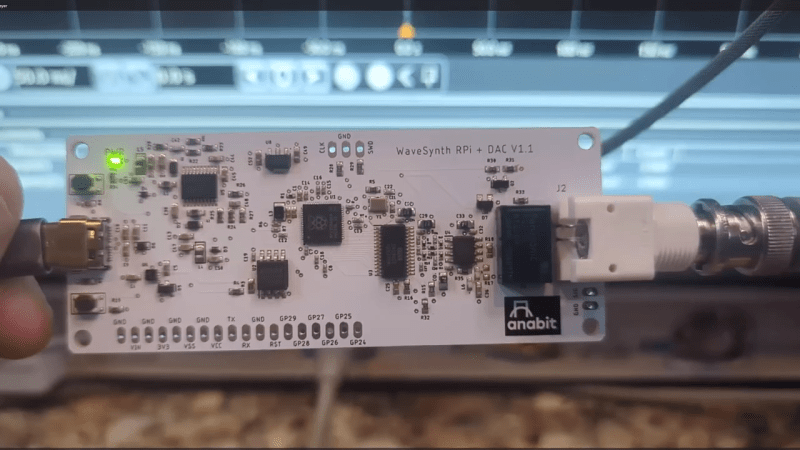
Normally, if you want to blast out samples to a DAC in a hurry, you’d rely on an FPGA, what with their penchant for doing things very quicky and in parallel. However, [Anabit] figured out a way to do the same thing with a microcontroller, thanks to the magic of the Raspberry Pi Pico 2.
The design in question is referred to as the PiWave 150 MS/s Bipolar DAC, and as the name suggests, it’s capable of delivering a full 150 million samples per second with 10, 12, or 14 bits of resolution. Achieving that with a microcontroller would normally be pretty difficult. In regular linear operation, it’s hard to clock bits out to GPIO pins at that sort of speed. However, the Raspberry Pi Pico 2 serves as a special case in this regard, thanks to its Programmable I/O (PIO) subsystem. It’s a state machine, able to be programmed to handle certain tasks entirely independently from the microcontroller’s main core itself, and can do simple parallel tasks very quickly. Since it can grab data from RAM and truck it out to a bank of GPIO pins in a single clock cycle, it’s perfect for trucking out data to a DAC in parallel at great speed. The Pi Pico 2’s clock rate tops out at 150 MHz, which delivers the impressive 150 MS/s sample rate.
The explainer video is a great primer on how this commodity microcontroller is set up to perform this feat in detail. If you’re trying for accuracy over speed, we’ve explored solutions for that as well. Video after the break.
Older fiber optic lamps use a dim filament lamp or halogen lamp to light them up. They also often feature a spinning color disk to vary the light patterns, which does have the side effect of absorbing some of the already-limited light output.
When it came to upgrading his own decades-old lamp, [Braniac75] decided to initially stick within the specs of the original halogen lamp. The fixture was rated for 12 volts at 5 watts, with a GU4/GZ4 compatible base, and white light was desired so the color wheel could still do its thing. Swapping out the original 5 W halogen for a 2.5 W LED unit brought a big upgrade in brightness, since the latter is roughly equivalent to a 20 W halogen in light output. Upgrading to a 4.2 W LED pushed things even further, greatly improving the look of the lamp.
The video also explores modding a modern fiber optic lamp, too. It was incredibly cheap, running off batteries and using a single color-changing LED to illuminate the fibers. [Braniac75] decided to try illuminating the plastic fibers with an RGB stage lighting laser rig—namely, the LaserCube Ultra 7.5 W from Wicked Lasers. With this kind of juice, the fiber lamp is eye-searingly bright, quite literally, and difficult to film. However, with the laser output dialed way down, the lamp looks amazing—with rich saturated colors dancing across the fiber bundle as the lasers do their thing.
When you’re driving a car with a stickshift, it’s pretty easy to keep track of which gear you’re in. That can be a little bit more difficult on something like a motorcycle with a sequential shifter. [decogabry] built a neat gearshift indicator to solve this issue.
An ESP32 devboard is used as the brain of the build. It’s paired with an ELM327 dongle over Bluetooth, which is able to hook into the bike’s ODB diagnostic port to pick up data like engine RPM, wheel speed, and coolant temperature. The first two factors are combined in order to calculate the current gear, since the ratio between engine RPM and wheel speed is determined directly by the gear selection. The ESP32 then commands a Philips ZM1020 Nixie tube to display the gear, driving it via a small nest of MPSA42 transistors. A separate self-contained power supply module is used to take the bike’s 12 volt supply up to the 170 volts needed to run the tube. There is also a small four-digit display used to show status information, RPM, and engine temperature.
Notably, [decogabry] made this build rather flexible, to suit any bike it might be installed upon. The gear ratios are not hard coded in software. Instead, there is a simple learning routine that runs the first time the system is powered up, which compares RPM and wheel speed during a steady-state ride and saves the ratios to flash.
We’ve featured projects before that used different techniques to achieve similar ends. It’s also interesting to speculate as to whether there’s a motorcycle vintage enough to suit a Nixie display while still having an ODB interface on board as standard. Meanwhile, if you’re cooking up your own neat automotive builds, don’t hesitate to drop us a line.
Modern cellular networks are built to serve millions upon millions of users, all while maintaining strict encryption across all communications. But earlier cellular networks were by no means so secure, as [Nostalgia for Simplicity] demonstrates in a recent video.
The video begins with an anecdote — our narrator remembers a family member who could listen in on other’s conversations on the analog AMPS phone network. This was easily achieved simply by entering a code that would put an Ericsson handset into a test mode, in which it could be switched to tune in any desired AMPS channel. Since the communications were transmitted in a purely analog manner, with no encryption of any sort, any conversation on such a network was basically entirely open for anyone to hear. The video shows a recreation of this method, using a software-defined radio to spin up a low-power, very local AMPS network. A phone call is carried out between two handsets, with a third handset able to listen in just by using the special test mode.
If you’re particularly keen to build your own first-generation AMPS phone network, just know that it’s not really allowed due to rules around spectrum allocations. Still, it’s entirely possible as we’ve covered before. It doesn’t even take much hardware in our modern SDR era.
For those born with certain types of congenital deafness, the cochlear implant has been a positive and enabling technology. It uses electronics to step in as a replacement for the biological ear that doesn’t quite function properly, and provides a useful, if imperfect, sense of hearing to its users.
New research has promised another potential solution for some sufferers of congenital deafness. Instead of a supportive device, a gene therapy is used to enable the biological ear to function more as it should. The result is that patients get their sense of hearing, not from a prosthetic, but from their own ears themselves.
New Therapy
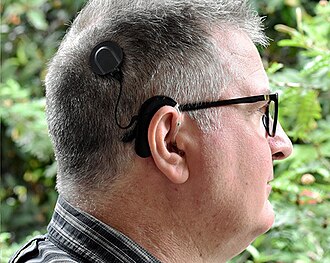
Cochlear implants are a popular treatment for many types of congenital deafness. Credit: Hear hear, CC BY SA 4.0
There are a number of causes of congenital deafness, each of which presents in its own way. In the case of OTOF-related hearing loss, it comes down to a genetic change in a single critical protein. The otoferlin gene is responsible for making the protein of the same name, and this protein is critical for normal, functional hearing in humans. It’s responsible for enabling the communication of signals between the inner hair cells in the ear, and the auditory nerve which conducts these signals to the brain. However, in patients with a condition called autosomal recessive deafness 9, a non-functional variant of the otoferlin gene prevents the normal production of this protein. Without the proper protein available, the auditory nerve fails to receive the proper signals from the hair cells in the ear, and the result is profound deafness.
The typical treatment for this type of congenital hearing loss is the use of a cochlear implant. This is an electronic device that uses a microphone to pick up sound, and then translates it into electrical signals which are sent to electrodes embedded in the cochlear. These simulate the signals that would normally come from the ear itself, and provide a very useful sense of hearing to the user. However, quality and fidelity is strictly limited compared to a fully-functional human ear, and they do come with other drawbacks as is common with many prosthetic devices.
The better understanding that we now have of OTOF-related hearing loss presented an opportunity. If it were possible to get the right protein where it needed to be, it might be possible to enable hearing in what are otherwise properly-formed ears.
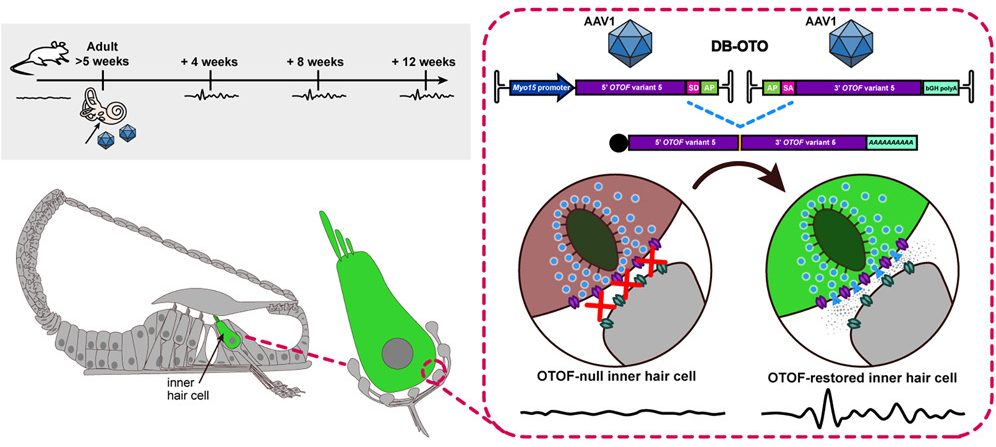
DB-OTO was initially trialled in mice, where it was able to improve hearing response by creating the protein necessary for nerve conduction between inner ear hair cells and the auditory nerve. Credit: research paper
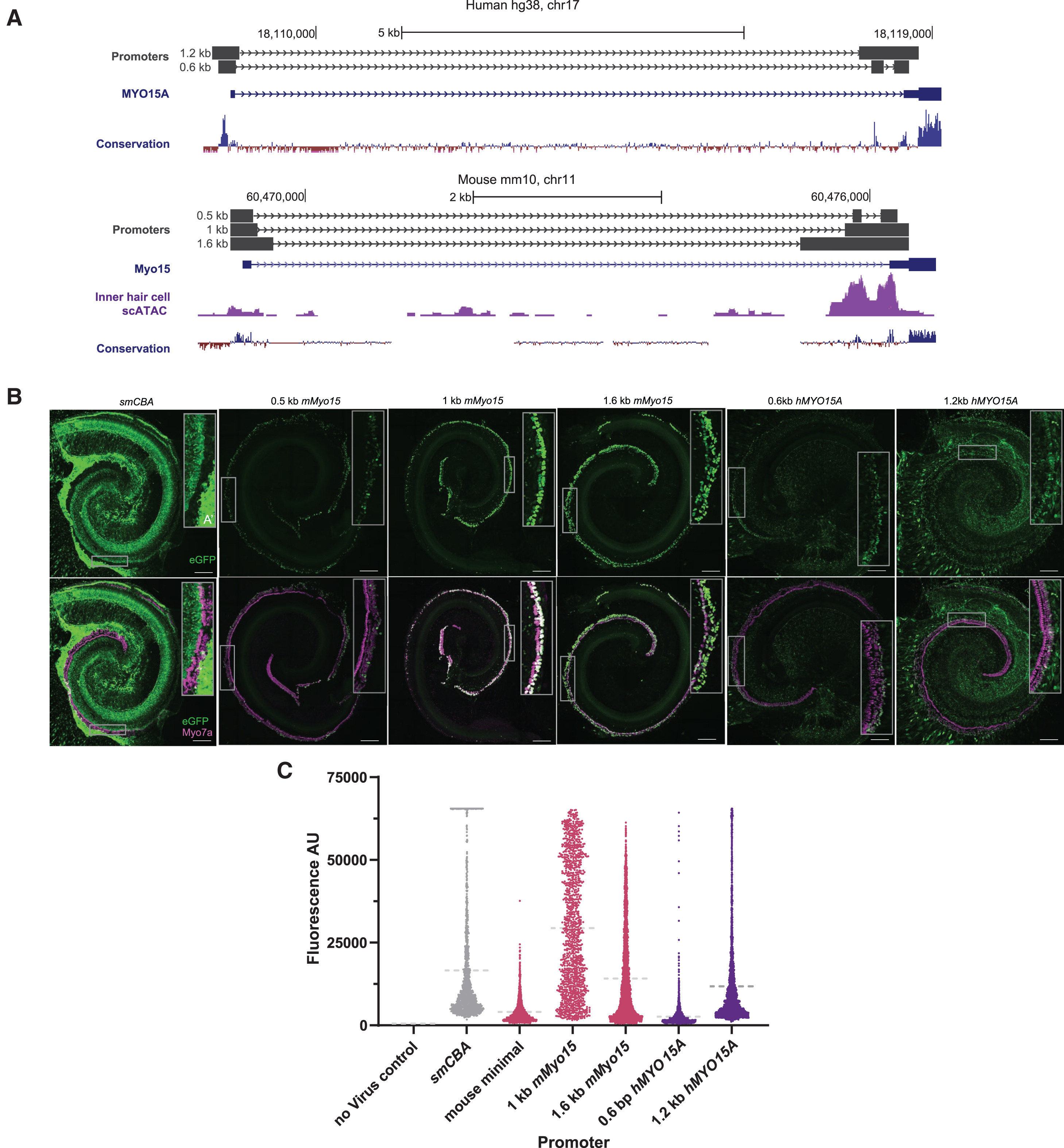
The treatment to do that job is called DB-OTO. It’s a virus-based gene therapy which is able to deliver a working version of the OTOF gene. It uses a non-pathogenic virus to carry the proper genetic code that produces the otoferlin protein. However, it’s no good if this gene is expressed in just any context. Thus, it’s paired with a special DNA sequence called a Myo15 promoter which ensures the gene is only expressed in cochlear hair cells that would normally express the otoferlin protein. Treatment involves delivering the viral gene therapy to one or both ears through a surgical procedure using a similar approach to implanting cochlear devices.
Researchers pursued a number of promoter sequences to ensure the gene was only expressed with the correct cells. Credit: research paper
An early trial provided DB-OTO treatment to twelve patients, ranging in age from ten months to sixteen years. eleven out of twelve patients developed improved hearing within weeks of treatment with DB-OTO. Nine patients were able to achieve improvements to the point of no longer requiring cochlear implants and having viable natural hearing.
Six trial participants could perceive soft speech, and three could hear whispers, indicating a normal level of hearing sensitivity. Notably, hearing improvements were persistent and there were some signs of speech development in three patients in the study. The company behind the work, Regeneron, is also eager to take the learnings from its development and potentially apply it to other kinds of hearing loss from genetic causes.
DB-OTO remains an experimental treatment for now, but regulatory approvals are being pursued for its further use. It could yet prove to be a viable and effective treatment for a wide range of patients affected by this genetic issue. It’s just one of a number of emerging treatments that use viruses to deliver helpful genetic material when a patient’s own genes don’t quite function as desired.
The electric vehicle revolution has created market forces to drive all sorts of innovations. Battery technology has progressed at a rapid pace, and engineers have developed ways to charge vehicles at ever more breakneck rates. Similarly, electric motors have become more powerful and more compact, delivering greater performance than ever before.
In the latter case, while modern EV motors are very capable things, they’re also reliant on materials that are increasingly hard to come by. Most specifically, it’s the rare earth materials that make their magnets so good. The vast majority of these minerals come from China, with trade woes and geopolitics making it difficult to get them at any sort of reasonable price. Thus has sprung up a new market force, pushing engineers to search for new ways to make their motors compact, efficient, and powerful.
Rare
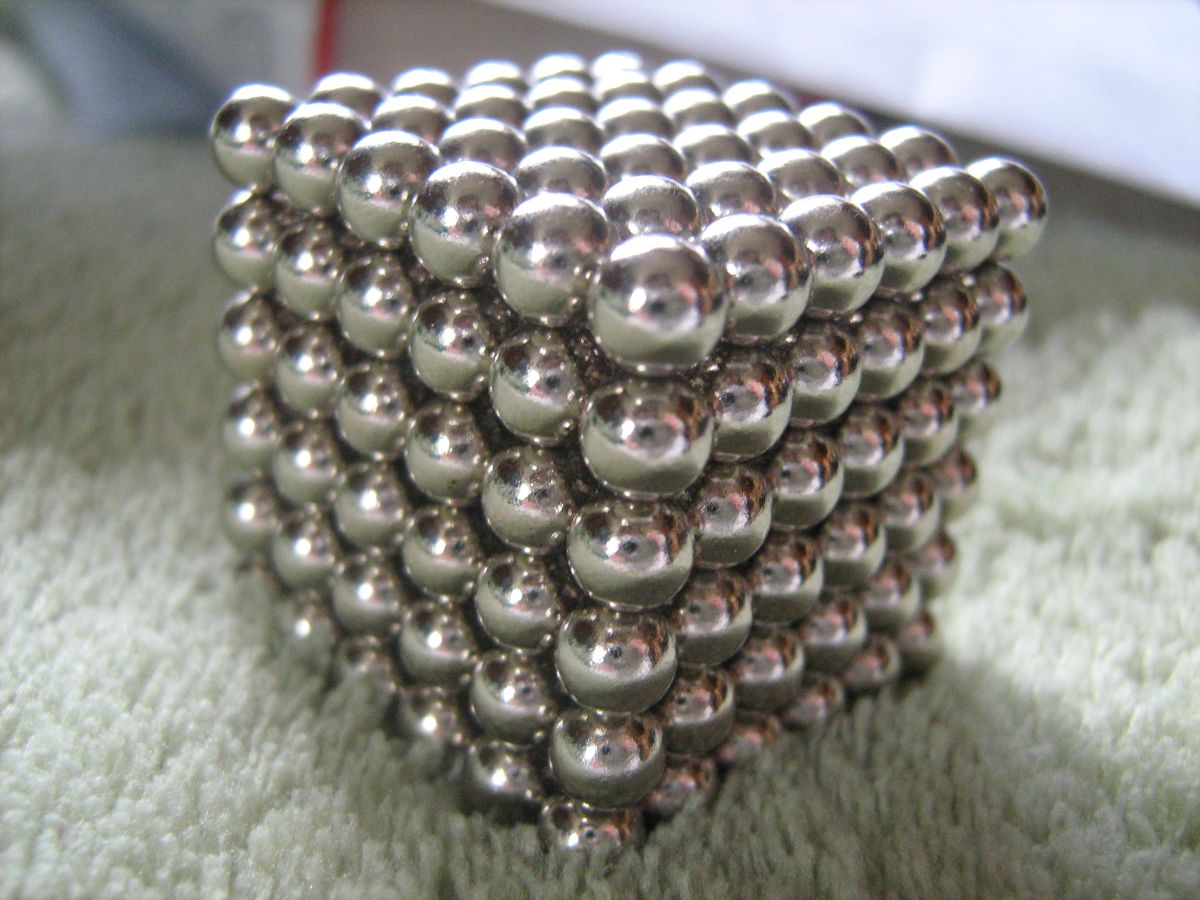
Many of us first came across neodymium magnets as a simple curiosity. Credit: XRDoDRX, CC BY-SA 3.0
Rare earth materials have become a hot button issue in recent decades, and they’ve also become a familiar part of our lives. If you remember playing with some curiously powerful magnets at some point, you’ve come across neodymium—a rare earth material of wide application. The element is alloyed with iron and boron to produce some of the strongest magnets readily available on the commercial market. You’ll find them in everything from hard drives to EV motors, and stuck to a great many fridges, where they’re quite hard to peel off. At times, neodymium is also alloyed with other rare earths, like terbium and dysprosium, which can help create powerful magnets that are able to resist higher temperatures without failure.
We come across these magnets all the time, so they might not feel particularly rare. Indeed, the rare earth elements—of which there are 17 in total—are actually fairly abundant in the Earth’s crust. The problem is that they are thinly spread, often only found as trace elements rather than in rich ore deposits that are economical to mine. Producing any useful amount of rare earth materials tends to require processing a great deal of raw material at significant cost. As it stands, China has gained somewhat of a monopoly on rare earths, controlling up to 92% of global processing capability and 60 to 70% of mining capacity. In happier times, this wouldn’t be such a problem. Sadly, with the extended battles being fought over global trade at the moment, it’s making access to rare earths both difficult and expensive.
This has become a particular problem for automotive manufacturers. It’s no good to design a wonderful motor that needs lots of fancy rare earth magnets, only to find out a year later that they’re no longer available and that production must shut down. Thus, there is a serious desire on the part of major automakers to produce high-performance motors that don’t require such fancy, hard-to-come-by materials. Even if they come with a small cost penalty in materials or manufacturing, they could save huge sums of money if they avoid a production shutdown at some point in the future. Large manufacturing operations are slow, lumbering things that need to run on long timescales to operate economically, and they can easily be derailed by supply disruptions. Securing a solid motor supply is thus key to companies looking to build EVs en masse in the immediate future.
BMW’s new EV motors use electrically-excited coils in the rotor to generate the necessary magnetic field, instead of rare-earth magnets. Credit: BMW
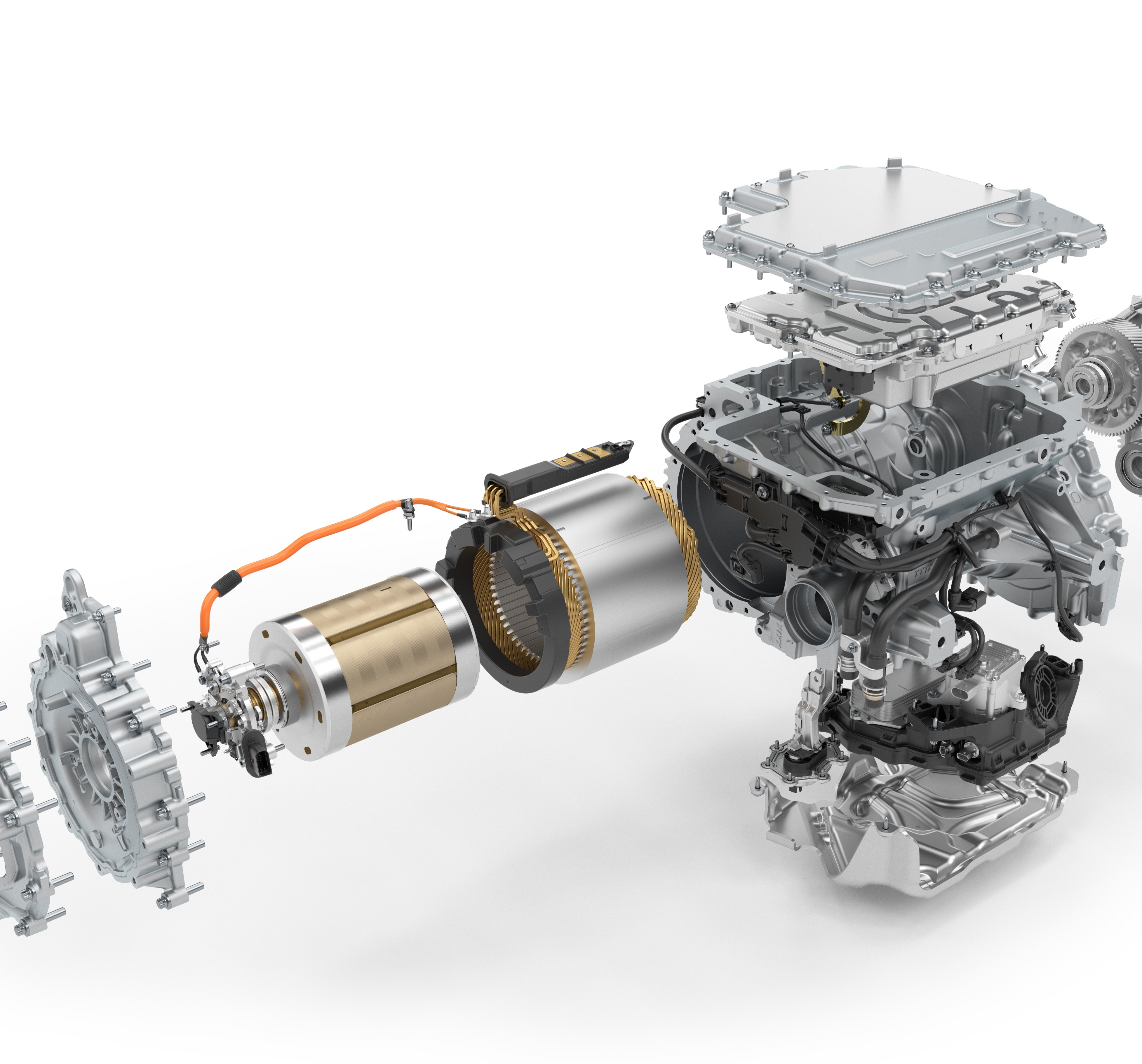
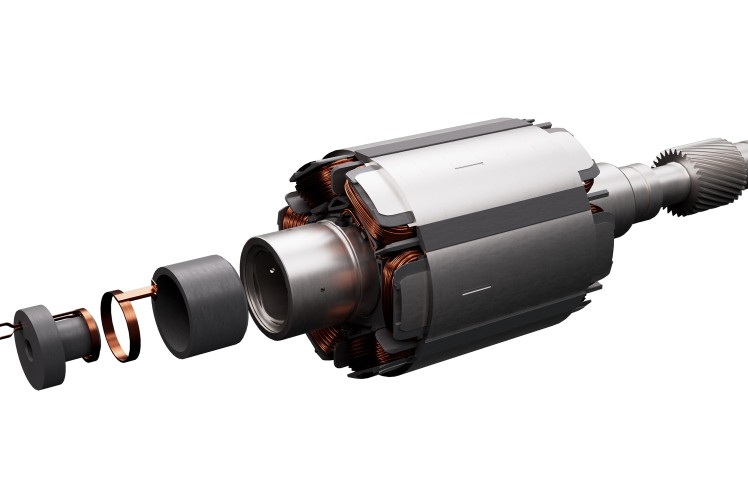
BMW has, to a degree, solved the problem by making different kinds of motors. Rather than trying to find other ways to make powerful magnets, the German automaker put engineering efforts into developing highly-efficient motors that generate their own magnetic fields via electricity. Instead of using permanent magnets on the rotor, they use coils, which are electrically excited to generate a comparable magnetic field. Thus, rare earth magnets are replaced with coil windings, which are much easier to source. These motors are referred to as Electrically Excited Synchronous Motors (EESM), and are distinct from traditional induction motors as they are creating a magnetic field in the rotor via supplied electric current rather than via induction.
This method of construction does come with some trade offs, of course, such as heat generated by the rotor coils, and the need for slip rings or brushes to transfer power to the coils on the rotor. However, they manage to neatly sidestep the need for rare earth materials entirely. They are also more controllable. Since it’s possible to vary the magnetic field in the rotor as needed, this can be used to make efficiency gains in low-load situations. They’re also less susceptible to damage from overtemperature that could completely destroy the magnets in a permanent magnet motor.
ZF is one of a number of motor manufacturers that has developed a range of EESM motors. Note the coils in the rotor where the permanent magnets would usually go. Credit: ZF
BMW was inspired to take this route because of a spike in neodymium prices well over a decade ago. Today, that decision is bearing fruit—with the company less fearful of supply chain issues and production line stoppages due to some pesky magnets. You’ll find EESM motors in a range of BMW products, from the iX1 to the i7, and even the compact CE 02 scooter. The company’s next generation of electric models will largely use EESM motors for rear-wheel-drive models, while using asynchronous motors up front to add all-wheel-drive to select models. The German automaker is not the only player in this space, either. A range of third-party motor manufacturers have gotten on board the EESM train, as well as other automakers like Nissan and Renault.
Nissan has similarly gotten onboard with EESM technology. Note the contact surfaces for the brushes used to deliver electricity to the coils in the motor.
Don’t expect every automaker to rush into this technology overnight. Retooling production lines to make different types of motors takes time, to say nothing of the supporting engineering required to control the motors and integrate them into vehicle designs. Many automakers will persevere with permanent magnet motors, doing what they can to secure rare earth supplies and shore up their supply chains. However, if the rare earth crisis drags on much longer, expect to see ever more reliance on new motor designs that don’t need rare earth magnets at all.
The trick behind this is simple. On a standard CRT, the deflection yoke uses magnetic coils to steer the electron beam in the X and Y axes, spraying electrons at the phosphors as needed. To rotate the display as a whole, you could do some complicated maths and change how you drive the coils and steer the electron beams… or you could just rotate the entire yoke instead. [Jeri] achieves this by putting the whole deflection yoke on a custom slip ring assembly. This allows it to receive power and signal as it rotates around the neck of the tube, driven by a stepper motor.
Amusingly, [Jeri] even found a super nifty way to drive the stepper. There are no microcontrollers or fancy driver logic here—instead, the quadrature output from a rotary encoder outputs a perfectly legible pulse train which can drive the stepper as needed. [Jeri] notes this provides a nicely instantaneous response. There’s still work to be done, too. The project is due to get a 3D-printed housing, a homing system, and some improvements to the DIY slip ring setup.
If [Jeri’s] name sounds familiar, that’s because she’s built many a grand project over the years. You might have seen her work on the C64 DTV or the breadbin keytar.
Named roo_display for unclear reasons, the library is Arduino-compatible, and suits a wide range of ESP32 boards out in the wild. It’s intended for use with common SPI-attached display controllers, like the ILI9341, SSD1327, ST7789, and more. It’s performance-oriented, without skimping on feature set. It’s got all kinds of fonts in different weights and sizes, and a tool for importing more. It can do all kinds of shapes if you want to manually draw your UI elements, or you can simply have it display JPEGs, PNGs, or raw image data from PROGMEM if you so desire. If you’re hoping to create a touch interface, it can handle that too. There’s even a companion library for doing more complex work under the name roo_windows.
If you’re looking to create a simple and responsive interface, this might be the library for you. Of course, there are others out there too, like the Adafruit GFX library which we’ve featured before. You could even go full VGA if you wanted, and end up with something that looks straight out of Windows 3.1. Meanwhile, if you’re cooking up your own graphics code for the popular microcontroller platform, you should probably let us know on the tipsline!
Food poisoning is never a fun experience. Sometimes, if you’re lucky, you’ll bite into something bad and realize soon enough to spit it out. Other times, you’ll only realize your mistake much later. Once the tainted food gets far enough into the digestive system, it’s too late. Your only option is to strap in for the ride as the body voids the toxins or pathogens by every means available, perhaps for several consecutive days.
Food poisoning cases tend to boil down to two categories—those involving toxins, and those involving bacterial pathogens. In either case, affected food must be destroyed. Particularly in the latter case, as bacteria reproduce—even the tiniest contamination will quickly spiral in size.
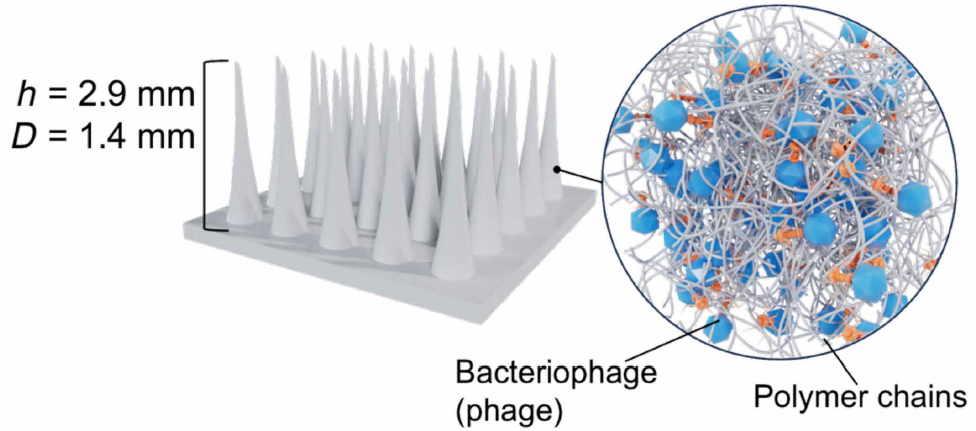
The concept involves creating microneedle arrays loaded with bacteriophages which target common foodborne pathogens. Credit: research paper
However, new research published in Scientific Advances may have a solution to the problem of bacterial-based food poisoning. It involves using patches to deliver specially-crafted viruses to fight and kill the bacteria that would otherwise infect and sicken a human who eats the food. The patches are to be applied to the food itself—attacking and killing the bacteria before the food is eaten.
The viruses in question are bacteriophages—specifically, viruses that can infect bacteria and reproduce within them from its own genetic material. When a bacteriaphage virus comes into contact with certain bacteria, it breaches the cell’s wall, typically with a syringe-like motion in which the viral genetic material is injected into the cell. Once inside, the genetic material is processed by the bacteria and reproduces more phages that can then go on to infect further bacteria. In the specific case of lytic phages, the bacterial cells are quickly destroyed as the virus reproduces inside, spreading the new phages quickly and killing the original host.
Two bacteriophages were used in this research. The T7 phage was chosen for its ability to infect and kill Escherichia coli bacteria, which are a common foodborne pathogen. The S.enterica phage was in turn chosen as it readily infects and kills Salmonella enterica bacteria, which are similarly a common cause of food poisoning.
The bacteriophages quickly destroy the infected bacteria while reproducing en masse within the cell. Credit: research paper
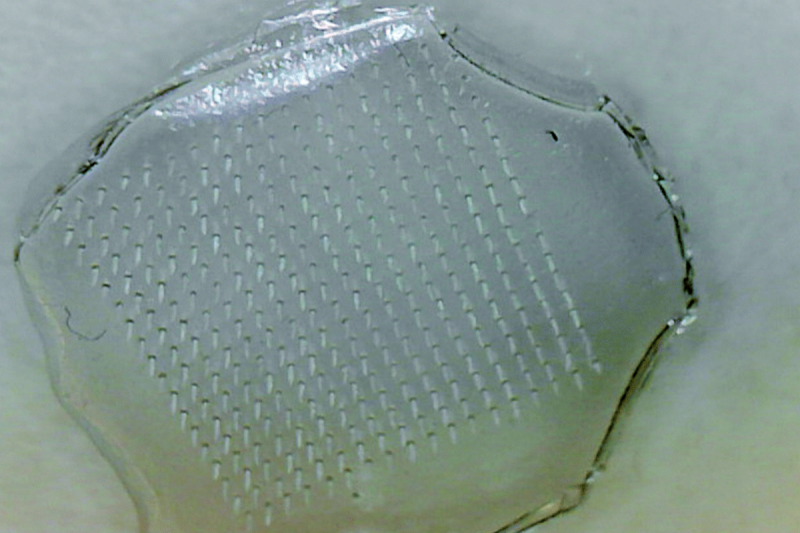
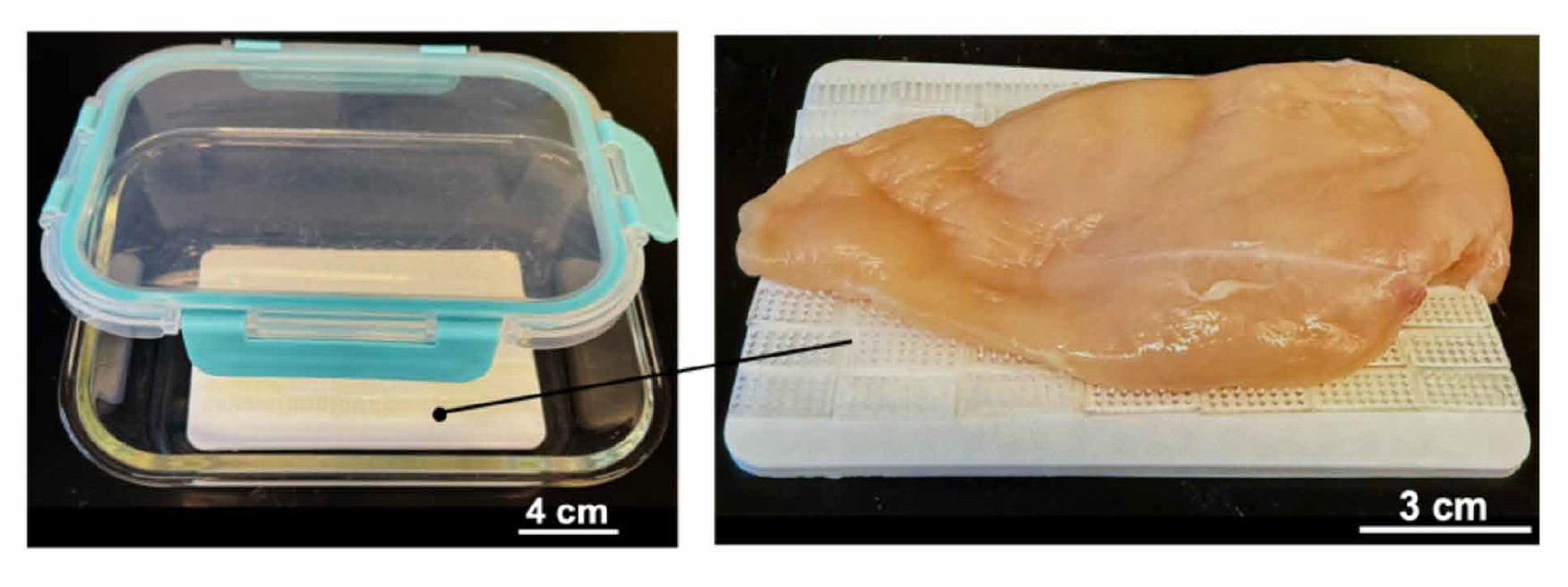
To get the phages into food items, the research team developed a novel “patch” delivery system. This involved creating patches out of food-compatible polymers that were covered in tiny microneedles that could penetrate the surface of common foods. Once the microneedles penetrate the food, passing bacteria would interact with the bacteriophages, producing more phages as they burst open and die. This has the effect of propagating phages further to other bacteria in the food. The most successful microneedle patches were crafted out of PMMA polymer, after researchers investigated a wide range of other materials including PVA, PDMS, and gelatin. The microneedles are dosed with bacteriophages by simply incorporating the bacteriophage solution with a PMMA solution prior to casting in molds.
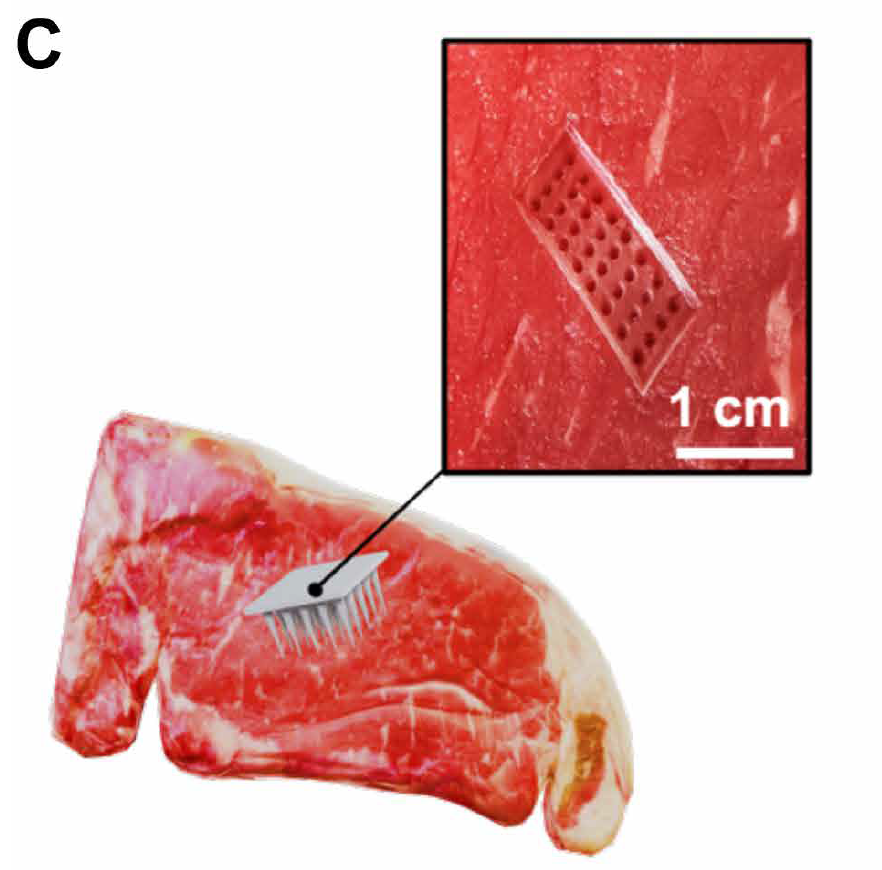
The patches proved effective in testing. One test involving contaminated cooked chicken saw 99.9% of E. coli bacteria wiped out in the sample. A similar test on raw beef saw a similar reduction of E.coli by 99%. These samples could effectively be considered decontaminated from the bacterial threat. The use of microneedles is key to the technique’s effectiveness. By penetrating up to a centimeter into the meat, it allows the bacteriophages to best get into contact with pathogens inside the food. In comparison, flat patches without needles performed less well, only reducing bacteria levels by three-quarters.
A beef sample with a microneedle array applied. Credit: research paper
The research around using patches to deliver bacteriophages to food was only just published in October this year. However, the use of phages as a food safety measure actually goes back quite some time. The FDA first approved the use of bacteriophage products in 2006, initially for killing bacteria in ready-to-eat poultry and meat products. The same techniques can be applied to all sorts of foods, though use thus far has been limited. The US has actually been a leader in approving these food treatment methods; as a contrast, the European Union is yet to approve any use of bacteriophage products for food use.
As to whether these patches could enter wider use, that remains to be seen. There are some limitations with the technique. For one, it involves punching many small holes in food, which isn’t super attractive to those going to eat it later. There are also concerns about the effectiveness of phages in real-world use, and whether it would be practical to dose patches with a wide range of phages to counter the many strains of foodborne pathogens out there. It also depends on the perception of the tecnnology—we’d all rather eat food free of bacteria, but whether we want to eat food that is full of viruses is another thing entirely.
Researchers have contemplated the use of large microneedle arrays as a normal part of packaging to keep food safe. Credit: research paper
It will be a while before this technology reaches the mainstream food processing world, if it does at all. Regardless, the researchers can see a future where food packaging regularly includes a microneedle pad or membrane to take out any nasty bacteria before the product reaches the customer. That could promise to land better, safer food on our tables even if a few nasty bacteria did try to get involved in the action.
Once upon a time, a car phone was a great way to signal to the world that you were better than everybody else. It was a clear sign that you had money to burn, and implied that other people might actually consider it valuable to talk to you from time to time.
There was, however, a way to look even more important than the boastful car phone user. You just had to rock up to the parking lot with your very own in-car fax machine.
Dial It Up
Today, the fax machine is an arcane thing only popular in backwards doctor’s offices and much of Japan. We rely on email for sending documents from person A to person B, or fill out forms via dedicated online submission systems that put our details directly in to the necessary databases automatically. The idea of printing out a document, feeding it into a fax machine, and then having it replicated as a paper version at some remote location? It’s positively anachronistic, and far more work than simply using modern digital methods instead.
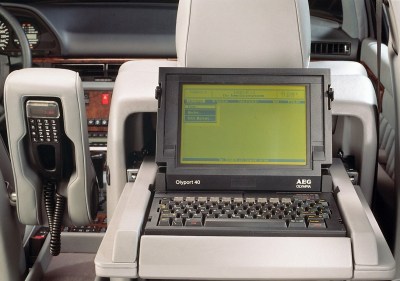
In 1990, Mercedes-Benz offered a fully-stocked mobile office in the S-Class. You got a phone, fax, and computer, all ready to be deployed from the back seat. Credit: Mercedes-Benz
Back in the early 90s though, the communications landscape looked very different. If you had a company executive out on the road, the one way you might reach them would be via their cell or car phone. That was all well and good if you wanted to talk, but if you needed some documents looked over or signed, you were out of luck.
Even if your company had jumped on the e-mail bandwagon, they weren’t going to be able to get online from a random truck stop carpark for another 20 years or so. Unless… they had a fax in the car! Then, you could simply send them a document via the regular old cellular phone network, their in-car fax would spit it out, and they could go over it and get it back to you as needed.
Of course, such a communications setup was considered pretty high end, with a price tag to match. You could get car phones on a wide range of models from the 1980s onwards, but faxes came along a little later, and were reserved for the very top-of-the-line machines.
Mercedes-Benz was one of the first automakers to offer a remote fax option in 1990, but you needed to be able to afford an S-Class to get it. With that said, you got quite the setup if you invested in the Büro-Kommunikationssystem package. It worked via Germany’s C-Netz analog cellular system, and combined both a car phone and an AEG Roadfax fax machine. The phone was installed in the backrest of one of the front seats, while the fax sat in the fold-down armrest in the rear. The assumption was that if you were important enough to have a fax in the car, you were also important enough to have someone else driving for you. You also got an AEG Olyport 40/20 laptop integrated into the back of the front seats, and it could even print to the fax machine or send data via the C-Netz connection.
BMW would go on to offer faxes in high-end 7 Series and limousine models. Credit: BMW
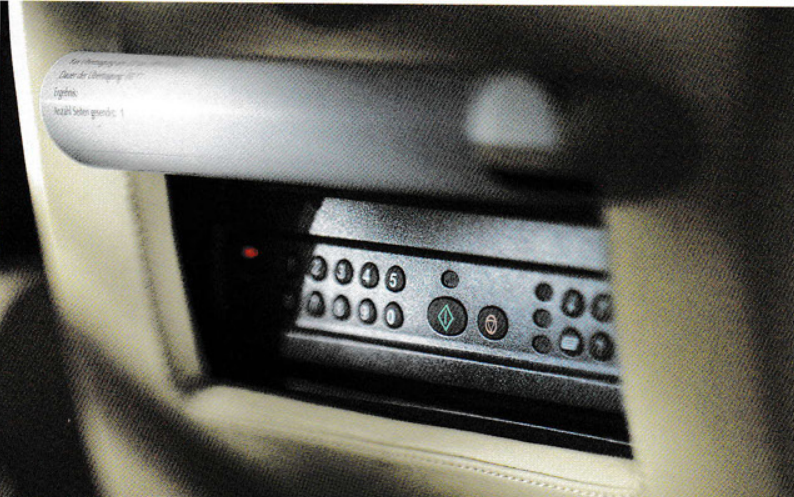
Not to be left out, BMW would also offer fax machines on certain premium 7 Series and L7 limousine models, though availability was very market-dependent. Some would stash a fax machine in the glove box, others would integrate it into the back rest of one of the front seats. Toyota was also keen to offer such facilities in its high-end models for the Japanese market. In the mid-90s, you could purchase a Toyota Celsior or Century with a fax machine secreted in the glove box. It even came with Toyota branding!
Ultimately, the in-car fax would be a relatively short-lived option in the luxury vehicle space, for several reasons. For one thing, it only became practical to offer an in-car fax in the mid-80s, when cellular networks started rolling out across major cities around the world.
By the mid-2000s, digital cell networks were taking over, and by the end of that decade, mobile internet access was trivial. It would thus become far more practical to use e-mail rather than a paper-based fax machine jammed into a car. Beyond the march of technology, the in-car fax was never going to be a particularly common selection on the options list. Only a handful of people ever really had a real need to fax documents on the go. Compared to the car phone, which was widely useful to almost anyone, it had a much smaller install base. Fax options were never widely taken up by the market, and had all but disappeared by 2010.
The Toyota Celsior offered a nice healthy-sized fax machine in the 1990s, but it did take up the entire glove box.
These days, you could easily recreate a car-based fax-type experience. All you’d need would be a small printer and scanner, ideally combined into a single device, and a single-board computer with a cellular data connection. This would allow you to send and receive paper documents to just about anyone with an Internet connection. However, we’ve never seen such a build in the wild, because the world simply doesn’t run on paper anymore. The in-car fax was thus a technological curio, destined only to survive for maybe a decade or so in which it had any real utility whatsoever. Such is life!
As the video explains, you generally can’t simply throw a JPEG into Notepad and start making changes all willy nilly. That’s because it’s very easy to wreck key pieces of the image format that are required to render it as an image. Particularly because Notepad likes to sanitize things like line endings which completely mess up the structure of the file. Instead, you’re best off using a binary editor that will only change specific bytes in the image when you tell it to. Do this, and you can glitch out an image in all kinds of fun digital ways… or ruin it completely. Your choice!
If you’d like to tinker around with this practice, [Patrick] has made a tool for just that purpose. Jump over to the website, load the image of your choice, and play with it to your heart’s content.
This practice is often referred to as “datamoshing,” which is a very cool word, or “databending,” which isn’t nearly as good. We’ve explored other file-format hacks before, too, like a single file that can be opened six different ways. Video after the break.
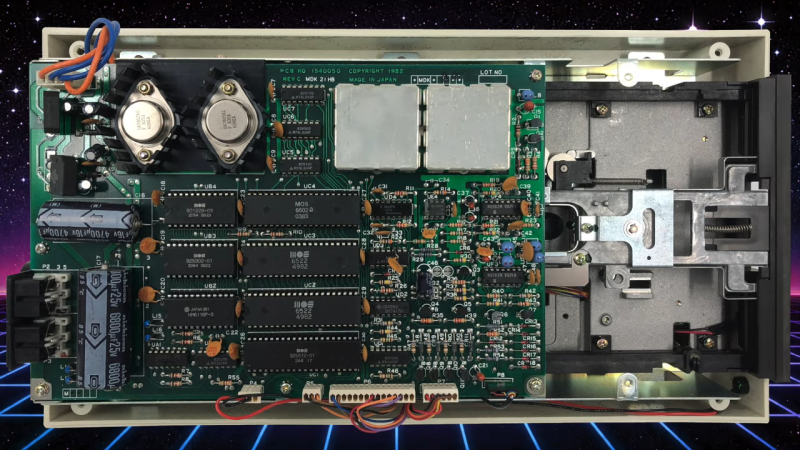
The Commodore 1541 was built to do one job—to save and load data from 5.25″ diskettes. [Commodore History] decided to see whether the drive could be put to other purposes, though. Namely, operating as a standalone computer in its own right!
It might sound silly, but there’s a very obvious inspiration behind this hack. It’s all because the Commodore 1541 disk drive contains a MOS 6502 CPU, along with some RAM, ROM, and other necessary supporting hardware. As you might remember, that’s the very same CPU that powers the Commodore 64 itself, along with a wide range of other 1980s machines. With a bit of work, that CPU can indeed be made to act like a general purpose computer instead of a single-purpose disk controller.
[Commodore History] compares the 1541 to the Commodore VIC-20, noting that the disk drive has a very similar configuration, but less than half the RAM. The video then explains how the drive can be reconfigured to run like the even-simpler MOS Technology KIM-1 — a very primitive but well-known 8-bit machine. What’s wild is that this can be achieved with no hardware modifications. It’s not just a thought exercise, either. We get a full “Hello World!” example running in both BASIC and machine code to demonstrate that it really works.
In the world of social media, “keeping receipts” refers to the practice of storing evidence that may come in handy for a callout post at a later date. For [Teddy Warner], though, it’s more applicable to a little printer he whipped up to record the very best banter from his cadre of friends.
[Teddy’s] idea was simple. He hoped to capture amusing or interesting quotes his friends made in his apartment, and store them in a more permanent form. He also wanted to allow his friends to do the same. To that end, he whipped up a small locally-hosted web interface which his friends could use to record quotes, along with proper attribution. Hosted on a Raspberry Pi 5, the web interface can then truck those quotes out to an 80 mm thermal receipt printer. The anecdote, epithet, or witticism is then spat out with a timestamp in a format roughly approximating a receipt you might get from your local gas station. What’s neat is that [Teddy] was also able to install the entire system within the housing of the Miemieyo receipt printer, by 3D printing a custom base that could house the Pi and a suitable power supply.
Beyond being fun, this system also serves a critical purpose. It creates a paper trail, such that in-jokes, rumors, and insults alike can be traced back to their originating source. No more can Crazy Terry claim to have invented “the Malaga bit,” because the server and the receipt clearly log that Gerald dropped it first at the Boxing Day do.

 Login
Login