Reading view

There are new articles available, click to refresh the page.

This Week in Scams: Netflix Phishing and QR Code Espionage

Couple watching Netflix

This week in scams, attackers are leaning hard on familiar brands, everyday tools, and routine behavior to trigger fast, unthinking reactions. From fake Netflix billing alerts to malicious browser extensions and QR code phishing tied to foreign espionage, the common thread is trust being weaponized at exactly the right moment. 

Every week, this roundup breaks down the scam and cybersecurity stories making news and explains how they actually work, so readers can better recognize risk and avoid being manipulated. 

Let’s get into it. 

Netflix Billing Emails Are Back… And Still Catching People Off Guard 

The big picture: Subscription phishing is resurging, with scammers impersonating Netflix and using fake billing failures to push victims into handing over payment details. 

What happened: Multiple Netflix impersonation emails circulated again this month, warning recipients that a payment failed and urging them to “update payment” to avoid service interruption. The messages closely mirror Netflix’s real branding and include polished formatting, official-looking language, and even PDF attachments designed to feel like legitimate billing notices. 

What makes these scams effective is timing. Victims often receive them while actively reviewing subscriptions, updating payment methods, or considering canceling services. That context lowers skepticism just enough for a quick click before slowing down to verify. 

McAfee’s Scam Detector flagged the messages (which one of our own employees received this week) as phishing, confirming they were designed to steal payment information rather than resolve a real billing issue. 
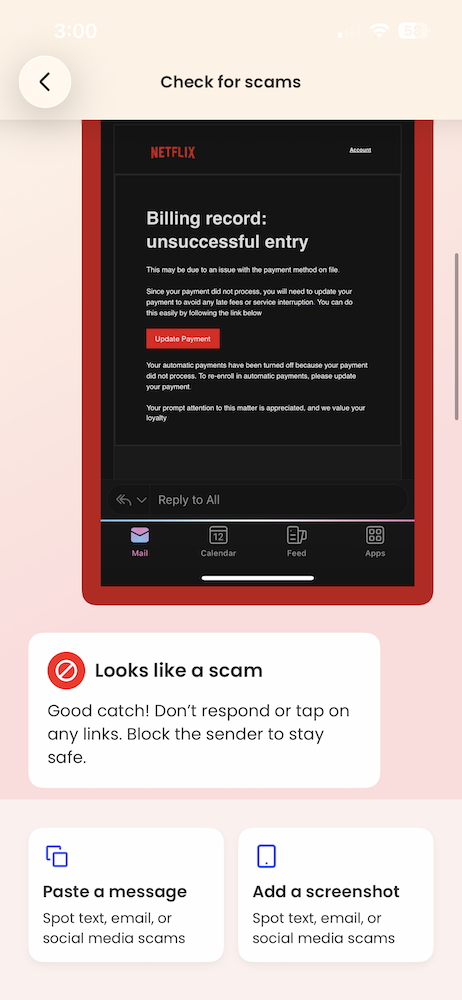
Example of McAfee detecting the Netflix phishing scam

Red flags to watch for: 

  • Unexpected billing problems paired with urgent calls to act 
  • Payment requests delivered by email instead of inside the app 
  • Attachments or buttons asking you to “fix” account issues 
  • Sender addresses that don’t match official Netflix domains 

How this scam works: This is classic brand impersonation phishing. Scammers don’t need to hack Netflix itself. They rely on people recognizing the logo, trusting the message, and reacting emotionally to the idea of losing access. The attachment and clean design help bypass instinctive spam filters in the brain, even when technical filters catch it later. 

Netflix has warned customers about these scams and offers advice on its site if you encounter one.

What to do instead: If you get a billing alert, don’t click. Open the Netflix app or manually type the site address to check your account. If there’s no issue there, the email wasn’t real. 

Fake Ad Blocker Crashes Browsers to Push “Fix It” Malware 

The big picture: Attackers are exploiting browser crashes themselves as a social engineering tool, turning technical disruption into a pathway for malware installation. 

What happened: Researchers reported a malvertising campaign promoting a fake ad-blocking browser extension called “NexShield,” which falsely claimed to be created by the developer of a well-known, legitimate ad blocker. Once installed, the extension intentionally overwhelmed the browser, causing freezes, crashes, and system instability. 

After restart, victims were shown fake security warnings instructing them to “fix” the problem by running commands on their own computer. Following those instructions triggered the download of a remote access tool capable of spying, executing commands, and installing additional malware. The reporting was first detailed by Bleeping Computer, with technical analysis from security researchers. 

Red flags to watch for: 

  • Browser extensions promising performance boosts or “ultimate” protection 
  • Crashes immediately after installing a new extension 
  • Pop-ups instructing you to run commands manually 
  • “Security fixes” that require copying and pasting code 

How this scam works: This is a variant of ClickFix attacks. Instead of faking a problem, attackers cause a real one, then position themselves as the solution. The crash creates urgency and confusion, making people more likely to follow instructions they’d normally question. It turns frustration into compliance. 

FBI Warns QR Code Phishing Is Being Used for Cyber Espionage 

The big picture: QR codes are being used as stealth phishing tools, with highly targeted attacks tied to foreign intelligence operations. 

What happened: The Federal Bureau of Investigation issued a warning about QR code phishing, or “quishing,” campaigns linked to a North Korean government-backed hacking group. According to reporting by Fox News, attackers sent emails containing QR codes that redirected victims to fake login pages or malware-hosting sites. 

In some cases, simply visiting the site allowed attackers to collect device data, location details, and system information, even if no credentials were entered. These campaigns are highly targeted, often aimed at professionals in policy, research, and technology sectors. 

Red flags to watch for: 

  • QR codes sent by email or messaging apps 
  • QR codes leading to login pages for work tools or cloud services 
  • Messages that feel personalized but unexpected 
  • Requests to scan instead of click 

How this scam works: QR codes hide the destination URL, removing the visual cues people rely on to judge safety. Because scanning feels faster and more “passive” than clicking a link, people often skip verification entirely. That moment of trust is what attackers exploit. 

Read our ultimate guide to “quishing” and how to spot and avoid QR code scams here. 

McAfee’s Safety Tips for This Week 

  • Verify inside official apps. Billing or security issues should be confirmed directly in the app or website you normally use, not through email links or QR codes. 
  • Treat extensions like software installs. Only install browser extensions from trusted publishers you already know, and remove anything that causes instability. 
  • Slow down with QR codes. If a QR code leads to a login page or download, close it and navigate manually instead. 
  • Watch for urgency + familiarity. Scammers increasingly rely on brands, tools, and behaviors you already trust to short-circuit caution. 

McAfee will be back next week with another roundup of the scams making headlines and the practical steps you can take to stay safer online. 

The post This Week in Scams: Netflix Phishing and QR Code Espionage appeared first on McAfee Blog.

Today’s Microsoft Outage Explained and Why it Triggers a Scam Playbook

Microsoft users across the U.S. experienced widespread disruptions Thursday after a technical failure prevented people from sending or receiving email through Outlook, a core service within Microsoft 365. 

The outage occurred during U.S. business hours and quickly affected schools, government offices, and companies that rely on Outlook for daily operations. Microsoft confirmed the issue publicly and said it was working to restore service. There is no indication the disruption was caused by a cyberattack, according to company statements.

Still, McAfee warns in these situations to be wary of phishing attempts as scammers latch onto these outages to take advantage of innocent users. 

“Outages like this create uncertainty, and scammers move fast to take advantage of it,” said Steve Grobman, McAfee’s Chief Technology Officer. “When people can’t get into email or the tools they use every day, it’s easy to assume something is wrong with your account — and that’s exactly the moment attackers look for.”

“Fake alerts start circulating that look like they’re coming from the real company, with logos and urgent language telling you to reset a password or verify your information,” Grobman added. “Some push fake support numbers or messages claiming they can restore access. If you’re impacted, slow down, go straight to the official source for updates, and don’t share passwords, verification codes, or payment details in response to an unexpected message.”

“Tools that can spot suspicious links and fake login pages help reduce risk — especially when people are trying to get back online quickly,” Grobman said.

Here, we break down what happened and why outages are prime time for scammers.

What happened to Microsoft Outlook? 

A Microsoft infrastructure failure disrupted email delivery. 

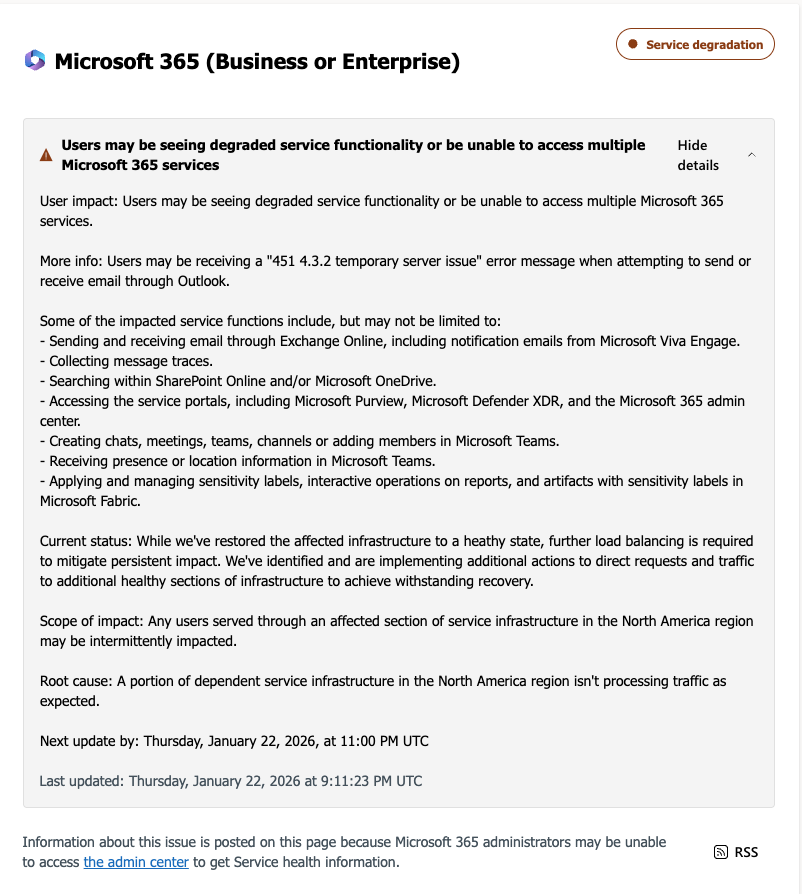
Microsoft said the outage was caused by a portion of its North American service infrastructure that was failing to properly handle traffic. Users attempting to send or receive email encountered a “451 4.3.2 temporary server issue” error message.

Microsoft also warned that related services, including OneDrive search and SharePoint Online, could experience slowdowns or intermittent failures during the incident.

When did the Microsoft outage happen? 

The disruption unfolded over several hours on Thursday afternoon (ET). 

Based on timelines reported by CNBC and live coverage from Tom’s Guide, the outage progressed as follows: 

Around 2:00 p.m. ET: User reports spike across Microsoft services, especially Outlook, according to Down Detector data cited by Tom’s Guide.

2:37 p.m. ET: Microsoft confirms it is investigating an Outlook email issue, per CNBC.

3:17 p.m. ET: Microsoft says it identified misrouted traffic tied to infrastructure problems in North America, CNBC reports.

4:14 p.m. ET: The company announces affected infrastructure has been restored and traffic is being redirected to recover service.

Tom’s Guide reported that while outage reports declined after Microsoft’s fix, some users continued to experience intermittent access issues as systems rebalanced. 

Was this a hack or cyberattack? 

No. Microsoft says the outage was caused by technical infrastructure issues. 

According to CNBC, Microsoft has not indicated that the outage was the result of hacking, ransomware, or any external attack. Instead, the company attributed the disruption to internal infrastructure handling errors, similar to a previous Outlook outage last July that lasted more than 21 hours. 

Message from Microsoft

A message sent by Microsoft about the server issue.

Why outages  cause widespread disruption 

Modern work depends on shared cloud infrastructure. 

That sudden loss of access often leaves users unsure whether: 

  • Their account has been compromised 
  • Their data is at risk 
  • They need to take immediate action 

That uncertainty is exactly what scammers look for. 

How scammers exploit big tech outages

They impersonate the company and trick users into signing in again. 

After major outages involving Microsoft, Google, or Amazon Web Services, security researchers, including McAfee, have observed scam campaigns emerge within hours. 

These scams typically work by: 

Impersonating Microsoft using logos, branding, and language copied from real outage notices 

Sending fake “service restoration” emails or texts claiming users must re-authenticate 

Linking to realistic login pages designed to steal Microsoft usernames and passwords 

Posing as IT support or Microsoft support and directing users to fake phone numbers 

Once credentials are stolen, attackers can access email accounts, reset passwords on other services, or launch further phishing attacks from a trusted address. 

How to stay safe during a Microsoft outage 

Outages are confusing. Scammers rely on urgency and familiarity. 

To reduce risk: 

  • Do not click links in emails or texts about outages or “account recovery.” 
  • Go directly to official sources, such as Microsoft’s status page or verified social accounts. 
  • Never re-enter your password through links sent during an outage. 
  • Ignore urgent fixes that ask for downloads, payments, or credentials. 

If you already clicked or entered information: 

  • Change your Microsoft password immediately 
  • Update passwords anywhere you reused it 
  • Turn on or refresh two-factor authentication 
  • Review recent account activity 
  • Run a trusted security scan to remove malicious software (check out our free trial) 

How McAfee can help 

Using advanced artificial intelligence, McAfee’s built-in Scam Detector automatically detects scams across text, email, and video, blocks dangerous links, and identifies deepfakes, helping stop harm before it happens. 

McAfee’s identity protection tools also monitor for signs your personal information may be exposed and guide you through recovery if scammers gain access. 

FAQ 

Q: Is Microsoft Outlook still down?
A: Microsoft said Thursday afternoon that it had restored affected infrastructure and was redirecting traffic to recover service, according to CNBC. Some users may still experience intermittent issues. 
Q: Was the Microsoft outage caused by hackers?
A: No. Microsoft has not reported any cyberattack or data breach related to the outage, per CNBC. 
Q: Can scammers really use outages to steal accounts?
A: Yes. During major outages, scammers often impersonate companies like Microsoft and trick users into signing in again on fake websites. 
Q: Should I reset my password after an outage?
A: Only if you clicked a suspicious link or entered your credentials somewhere outside Microsoft’s official site. Otherwise, resetting passwords isn’t necessary. 


The post Today’s Microsoft Outage Explained and Why it Triggers a Scam Playbook appeared first on McAfee Blog.

Didn’t Request an Instagram Password Reset? Here’s What to Do

If you recently received an unexpected email from Instagram asking you to reset your password, you are not alone. Over the past several days, thousands of users reported receiving legitimate password reset emails they did not request. 

The sudden wave of messages led to widespread confusion and concern about whether Instagram had suffered a data breach. Instagram and its parent company Meta deny that a breach occurred, stating instead that they fixed an issue that allowed an external party to trigger password reset emails for some users. 

While the exact source of the activity remains disputed, the situation highlights a broader and more important issue. Password reset emails, even when legitimate, are often the first signal users get that their information may be exposed, reused, or being targeted by attackers. 

Here is what we know so far and what this incident reveals about how password compromises really happen. 

Was Instagram Hacked? 

Instagram says no. 

In statements reported by the BBC and BleepingComputer, Meta said it resolved a problem that allowed an external party to request password reset emails on behalf of users. The company maintains there was no breach of its systems and that accounts remain secure. 

At the same time, cybersecurity researchers and firms, including Malwarebytes, have warned about a dataset circulating on hacking forums that allegedly contains information linked to more than 17 million Instagram accounts. According to reporting, that data may include usernames, email addresses, phone numbers, locations, and account IDs, but not passwords. 

Some researchers believe the dataset may be a compilation of older scraped data rather than evidence of a new breach. Others say the timing of the password reset emails and the appearance of the data raises unresolved questions. 

What matters for users is this: regardless of whether this was a new breach, old scraped data, or a technical abuse of password reset systems, attackers routinely use exposed personal information to launch phishing, account takeover attempts, and social engineering attacks. 

What Counts as a Data Breach and What Does Not 

A true data breach occurs when attackers gain unauthorized access to internal systems and steal protected data such as passwords, financial information, or private communications. 

In many cases, personal data is also exposed through: 

  • API scraping of publicly accessible information 
  • Older leaks that are resold or repackaged 
  • Credential stuffing using passwords stolen from unrelated sites 
  • Abuse of account recovery or password reset features 

That distinction matters because even when passwords are not leaked, exposed personal data can still be weaponized. Names, emails, phone numbers, and locations are often enough for scammers to craft convincing phishing messages that appear legitimate. 

Why You Might Receive a Password Reset Email You Did Not Request 

There are several common reasons this happens, and none of them require your Instagram password to be stolen. 

  • Someone may be testing whether your email address is linked to an account. 
  • Attackers may be attempting credential stuffing using passwords from past breaches. 
  • Your information may appear in older datasets that are being reused or resold. 
  • A platform bug or abuse of recovery systems may trigger reset emails at scale. 

Scammers often use these moments to send fake follow-up emails that look nearly identical to legitimate ones. That is why security experts consistently recommend going directly to the app or official website rather than clicking links in unexpected messages. 

What to Do If You Received an Instagram Password Reset Email 

If you did not request the reset:  

  1. Do not click links in the email. 
  2. Open the Instagram app or visit the official site directly to review security settings.  
  3. Check recent login activity and remove any unfamiliar sessions. 
  4. Enable two-factor authentication (2FA) if it is not already turned on. 

If you decide to change your password, make sure the new one is unique and not used anywhere else. 

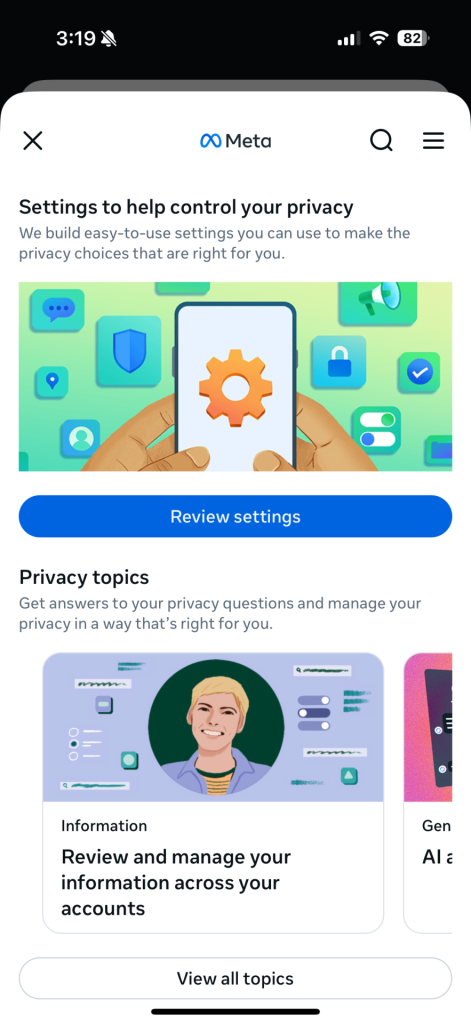
Meta/IG Accounts Center Screenshot

Click “Review Settings” to enable 2FA in your Account Center

How to enable multi-factor authentication for Instagram 

  1. Click More in the bottom left, then click Settings. 
  2. Click See more in Accounts Center, then click Password and Security. 
  3. Click Two-factor (2FA) authentication, then select an account. 
  4. Choose the security method you want to add and follow the on-screen instructions. 

When you set up two-factor authentication on Instagram, you’ll be asked to choose one of three security methods: an authentication app, text message, or WhatsApp. 

And here’s a link to the company’s full walkthrough: https://help.instagram.com/566810106808145 

How to Manage Passwords the Right Way 

Remembering dozens of unique, strong passwords is not realistic for most people. That is why password managers exist. 

A password manager can: 

  • Generate strong, unique passwords for every account 
  • Store them securely so you do not need to remember them 
  • Alert you if your credentials appear in known breaches 
  • Reduce the risk of account takeover from reused passwords 

Using a password manager removes the pressure to reuse passwords and helps close one of the most common doors attackers walk through.  

McAfee’s password manager helps you secure your accounts by generating complex passwords, storing them and auto-filling your info for faster logins across devices. It’s secure and, best of all, you only have to remember a single password. 

FAQ: Instagram Password Reset Emails and Account Safety 

Was my Instagram password stolen?
There is no evidence that passwords were leaked in this incident. 
Should I reset my password anyway?
If you are unsure or reuse passwords elsewhere, resetting it directly in the app is a smart precaution. 
Are the emails real or phishing?
Some emails were legitimate, but scammers often mimic them. Always go directly to the app or website. 
Why is password reuse dangerous?
Because a breach on one site can expose all accounts that share the same password. 


The post Didn’t Request an Instagram Password Reset? Here’s What to Do appeared first on McAfee Blog.

What Is Quishing? How QR Code Scams Work and How to Avoid Them

qr code illustration

You thought you were scanning a menu. 

Or paying for parking. Or checking a package notice taped to your door. A quick scan, a familiar logo, a page that loads instantly on your phone. 

Nothing about it felt risky. 

That’s exactly why QR code scams are spreading so quickly. 

QR codes have become part of everyday life. They’re on restaurant tables, public signs, emails, mailers, and payment screens. We’re taught to treat them as shortcuts—faster than typing a URL, easier than downloading an app, safer than clicking a link. 

Scammers know that. 

Instead of asking you to click something suspicious, they ask you to scan something ordinary. Once you do, you can be routed to fake login pages, payment requests, or malicious sites designed to steal your information before you realize anything is wrong. 

This tactic has a name: quishing.

And as QR codes continue to replace links in the real world, understanding how quishing works is essential to staying safe online. 

What Is Quishing? 

Quishing is a form of phishing that uses QR codes instead of clickable links to trick people into visiting malicious websites or giving up sensitive information. 

The term combines QR and phishing, and it reflects a simple but dangerous shift in scam tactics: instead of asking you to click, scammers ask you to scan. 

Once scanned, a fake QR code can lead to: 

  • Credential-harvesting login pages 
  • Payment requests or fake invoices 
  • Malware downloads 
  • Fake customer support portals 
  • Subscription traps 

Because QR codes don’t show a visible URL before you scan, they remove one of the most important scam warning signs people rely on. 

Common QR Code Scams to Watch Out For

While quishing attacks vary, most fall into a few predictable patterns.

1. Fake parking and payment QR codes

Scammers place stickers over legitimate parking meter QR codes. When scanned, victims are taken to fake payment pages that steal card details.

Red flag: A QR code that asks for full payment details without redirecting to a known parking or city service.


2. Restaurant menu swaps

Fraudsters replace real menu QR codes with fake ones that redirect to phishing pages or malicious downloads.

Red flag: A menu page that asks you to “sign in,” download an app, or confirm personal details.


3. Delivery and package alerts

Flyers or door tags claim you missed a delivery and instruct you to scan a QR code to reschedule.

Red flag: Vague delivery details and pressure to act quickly.


4. Fake account security warnings

QR codes claim your bank, streaming service, or email account needs verification.

Red flag: Any QR code that demands immediate action for “security reasons.”


5. Subscription traps and fake offers

Some QR codes promise discounts, refunds, or rewards but quietly enroll users in recurring charges.

Red flag: Fine print that’s hard to find, or missing entirely.


What Makes Quishing Especially Dangerous

QR scams succeed not because people are careless, but because they exploit trust and routine.

Unlike traditional phishing emails, quishing:

  • Happens offline and online at the same time
  • Often appears in trusted physical locations
  • Feels faster and more “legit”
  • Bypasses visual link inspection

Once a victim lands on a fake site, the damage can escalate quickly, from stolen credentials to drained accounts to identity theft.


How to Spot a Fake QR Code Before You Scan

You don’t need to avoid QR codes entirely, but you do need to slow down.

Check the physical context

Is the QR code taped on, scratched, or layered over another code? That’s a common tactic.

Look for branding inconsistencies

Misspellings, generic logos, or mismatched colors are red flags.

Preview the link

Most phone cameras now show the URL before opening it. Take a second to read it.

Be skeptical of urgency

Any QR code that pressures you to act immediately deserves extra scrutiny.


How to Protect Yourself From QR Scams

Step 1: Treat QR codes like links

A QR code is a shortcut to a website. Apply the same caution you would to any link.

Step 2: Avoid entering sensitive information

Legitimate services rarely ask for passwords, payment info, or personal details via QR codes.

Step 3: Use mobile security tools

Security software can help detect malicious sites and block risky downloads before damage is done.

Step 4: When in doubt, go direct

Instead of scanning, manually visit the official website or app you trust.


What to Do If You Scanned a Suspicious QR Code

If you think you interacted with a malicious QR code:

  • Stop engaging with the site immediately
  • Do not enter additional information
  • Monitor your financial accounts for unusual activity
  • Change passwords if credentials were entered
  • Run a security scan on your device, check out our free trial
  • Report the incident to the business or location involved

Early action can limit long-term fallout.


Frequently Asked Questions

What is quishing in simple terms?
Quishing is phishing that uses QR codes to trick people into visiting fake or malicious websites.

Are QR codes inherently unsafe?
No, but they can be exploited. The risk comes from where they lead, not the code itself.

Can scanning a QR code install malware?
In some cases, yes, especially if it prompts a download or redirects to a malicious site.

Are QR scams increasing?
Yes. As QR codes become more common, scammers are increasingly using them to bypass traditional defenses.

The post What Is Quishing? How QR Code Scams Work and How to Avoid Them appeared first on McAfee Blog.

This Week in Scams: Fake Brand Messages and Account Takeovers

This week in scams, social engineering sits at the center of several major headlines, from investment platform breaches to social media account takeovers and new warnings about AI-driven fraud.  

Every week, this roundup breaks down the scam and cybersecurity stories making news and explains how they actually work, so readers can better recognize risk and avoid being manipulated. 

Let’s get into it:  

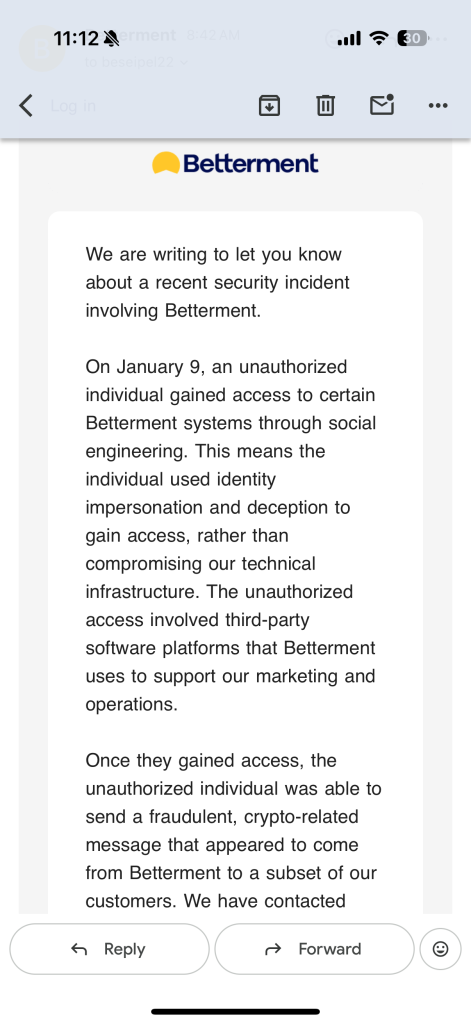
Betterment Warns Customers of Breach 

The big picture:
Attackers accessed third-party systems used by Betterment, then used the information they stole to impersonate the company, contact customers, and promise scam crypto investment opportunities with too-good-to-be-true returns. 

What happened: 

  • Attackers used social engineering to compromise third-party tools Betterment uses for marketing and operations, as reported by TechCrunch 
  • With access to internal systems, they sent messages to customers that appeared legitimate. 
  • The messages promised to triple crypto holdings if recipients sent $10,000 to a wallet controlled by the attackers, a classic “send money to get more back” lure, later detailed by The Verge. 
  • Betterment says no account logins or passwords were compromised, but personal data like names, contact details, and dates of birth were exposed, enough to make the messages feel real. 

Red flags to watch for: 

  • Promises of guaranteed or multiplied crypto returns 
  • Requests to send money first to “unlock” a benefit 
  • Messages tied to a breach but asking for immediate action outside the app 
An image of Betterment's email to customers.
An image of Betterment’s email to customers

How the breach happened: 

Social engineering is a type of scam that targets people rather than software or security systems. Instead of hacking code, scammers focus on tricking someone into giving them access 

Attackers research how a company operates, which tools it uses, and who is likely to have permissions. They then impersonate a trusted source, such as a vendor, coworker, or automated system, and send a realistic message asking for a routine action.  

That action might be approving a login, resetting credentials, sharing a file, or clicking a link. Once the person complies, the scammer gains legitimate access and can move through systems using real permissions. Social engineering works because it exploits trust, familiarity, and urgency, making normal workplace behavior the pathway to a breach. 

Social Engineering Scams Fueled by AI On the Rise 

Big picture:
Fraud is increasingly driven by impersonation, automation, and trust abuse rather than technical hacking, according to new industry forecasts. 

What happened:
A new Future of Fraud Forecast from Experian warns that fraudsters are rapidly weaponizing AI and identity manipulation. The report highlights agentic AI systems committing fraud autonomously, deepfake job candidates passing live interviews, cloned websites overwhelming takedown efforts, and emotionally intelligent bots running scams at scale. 

The scope of the problem is already visible. Federal Trade Commission data shows consumers lost more than $12.5 billion to fraud in 2024, while nearly 60% of companies reported rising fraud losses between 2024 and 2025. Experian’s forecast suggests these losses will accelerate as fraud becomes harder to attribute, trace, and interrupt. 

Red flags to watch: 

  • Requests or actions initiated without clear human ownership 
  • Identity verification steps that feel automated or unusually frictionless 
  • Transactions triggered by AI systems with unclear accountability 

Phishing Scam Locks Users Out of X Accounts 

Big picture: Officials are warning of increasing phishing attacks that steal X users’ accounts and then use their profile to sell crypto. 

What happened: The Better Business Bureau issued a warning about phishing messages targeting users on X, particularly accounts with large followings. Victims receive direct messages that appear to come from colleagues or professional contacts, often asking them to click a link to support a contest, event, or opportunity. 

Once the link is clicked, victims are locked out of their accounts. The compromised accounts are then used to promote cryptocurrency and other products, while automatically sending the same phishing message to additional contacts. 

Red flags to watch: 

  • Unsolicited direct messages containing links 
  • Requests framed as favors, votes, or professional support 
  • Sudden loss of account access after clicking a link 

How this happened and what to learn:
The scam relies on account impersonation and lateral spread. Instead of reaching strangers, attackers move through existing trust networks, using one compromised account to reach the next.  

The takeaway is that familiarity does not equal legitimacy. Even messages from known contacts should be treated with caution when links or logins are involved. 

McAfee’s Safety Tips for This Week 

  • Verify inside official apps or sites. If you get a security email, don’t click any links. Instead, open the official app or type the website address yourself for more information. 
  • Stay alert to trending scams. Weight-loss drug fraud like Ozempic offers is already surging in the new year, and awareness is your first defense. 

McAfee will be back next week with another roundup of the scams making headlines and the practical steps you can take to stay safer online. 

The post This Week in Scams: Fake Brand Messages and Account Takeovers appeared first on McAfee Blog.

McAfee and Pat McAfee Turn a Name Mix-Up Into a Push for Online Safety

Pat McAfee

If a message popped up in your feed tomorrow promising a cash refund, a surprise giveaway, or a limited-time crypto opportunity, would you pause long enough to question it? 

That split second matters more than ever.

Most modern scams don’t rely on panic or obvious red flags. They rely on familiarity. On things that feel normal. On moments that seem too small to question. 

And those moments are exactly what scammers exploit. 

Why Today’s Scams Are So Easy to Fall For 

There was a time when spotting a scam was relatively straightforward. The emails were badly written. The websites looked rushed. The warnings were obvious. 

Scammers don’t just rely on obvious spam or panic-driven messages. Instead, many now use: 

  • Friendly, natural language 
  • Faces of celebrities and figures you trust 
  • Messages that arrive through trusted apps 
  • Conversations that unfold gradually 
  • Requests that feel routine instead of suspicious 

McAfee’s Celebrity Deepfake Deception research shows how common and convincing these scams have become: 72% of Americans say they’ve seen a fake or AI-generated celebrity endorsement, and 39% say they’ve clicked on one that turned out to be fraudulent. When scam content shows up in the same feeds, apps, and formats people use every day, it feels normal. 

That’s the danger zone. It’s also why McAfee chose to use a familiar, culturally recognizable moment to talk about a much bigger issue.

Why McAfee Partnered with Pat McAfee 

Whether you’ve been saying mack-uh-fee or mick-affy, the long-running name mix-up is harmless in everyday conversation. 

Online, though, small moments of confusion can have outsized consequences. 

Scammers rely on quick assumptions: that a familiar name means legitimacy, that a recognizable face means trust, that a message arriving in the right place must be real. They move fast, hoping people act before stopping to verify 

Pat McAfee knows firsthand how scammers exploit familiarity and trust. 

In recent months, fake social media giveaways promising cash and prizes have circulated using Pat’s likeness, and even a fraudulent “American Heart Association fundraiser” made the rounds, falsely claiming he was collecting donations. 

Pat wants his fans to know: if you ever see a giveaway, fundraiser, or message claiming to be from him, double-check it on his official channels first. If it feels off, it probably is. 

Unfortunately, these scams work because people trust Pat. Scammers exploit that trust to lower people’s guard and make fraudulent requests feel legitimate. 

It’s the same tactic used across countless impersonation scams today: borrow the authority of a familiar face, add a sense of urgency, and move fast before anyone stops to verify, “is this legit?” We’ve seen it happen with Taylor Swift, Tom Hanks, Al Roker, Brad Pitt, and numerous others. 

Remember, no legitimate giveaway will ask for payment, banking details, login credentials, or account access. And no nonprofit fundraiser tied to a celebrity should ever come from a personal message or unfamiliar social account. 

Watch: Pat McAfee Explains How McAfee Is More Than an Antivirus 

In the video below, Pat McAfee playfully demonstrates how easily familiar moments online can turn into risk, and why digital safety today can’t rely on perfect judgment alone. 


How to Protect Yourself Right Now 

You don’t have to stop using your favorite platforms. But you do have to change how you verify online threats. 

Before You Trust Any Urgent Message or Offer: 

  • Be skeptical of sudden financial opportunities 
  • Assume giveaways that require payment or credentials are scams 
  • Never connect accounts, wallets, or payment methods from social links 
  • Verify claims on official websites, not just inside apps 
  • Be cautious of messages that replace clear context with urgency 

If a video or message feels real but the request feels extreme, that’s a red flag. 

McAfee offers more than traditional antivirus, combining multiple layers of digital protection in one app 

Final Takeaway 

If a scam looks obvious, most people won’t fall for it. 

But modern scams don’t look obvious. They look familiar. They use your favorite faces. They look normal. They look safe. And that’s where people get hurt. 

Staying safe now means slowing down, verifying independently, and having protection work quietly in the background while you stay focused on what you actually came online to do. 

McAfee’s built-in Scam Detector, included in all core plans, automatically detects scams across text, email, and video, blocks dangerous sites, and identifies deepfakes, stopping harm before it happens. 

And because today’s risks aren’t just about what you click, a VPN and Personal Data Cleanup add additional layers of defense by helping protect your connection and limit how much personal information is available to be exploited in the first place. 

Ready to get Pat’s Picks? Learn more here. 

FAQs 

For clarity, and because these questions come up often, here’s the straightforward explanation: 

Q: Is Pat McAfee the founder of McAfee antivirus?
A: No. Pat McAfee is not associated with the founding or leadership of McAfee. McAfee was founded by John McAfee and operates independently. 
Q: Are Pat McAfee and McAfee the same company?
A: No. Pat McAfee is a sports media personality. McAfee is a cybersecurity company. They are separate entities. 
Q: Why does McAfee work with Pat McAfee?
A: McAfee partnered with Pat McAfee to raise awareness about online scams, impersonation fraud, and digital safety using culturally relevant examples. 


The post McAfee and Pat McAfee Turn a Name Mix-Up Into a Push for Online Safety appeared first on McAfee Blog.

McAfee’s Scam Detector Earns Third Major Award Within Months of Launch

McAfee Scam Detector

McAfee’s Scam Detector has been named a Winner of the 2026 BIG Innovation Awards, presented by the Business Intelligence Group, marking the third major industry award the product has earned since launching just months ago. 

The recognition underscores a growing consensus across independent judges: as scams become more sophisticated and AI-driven, consumers need protection that works automatically, explains risks clearly, and helps stop harm before it happens. 

Big Innovation Award 2026

What Is the BIG Innovation Award? 

The BIG Innovation Awards recognize products and organizations that deliver measurable innovation with real-world impact. The program focuses not only on technical advancement, but on how solutions improve everyday life for individuals and households. 

For consumer cybersecurity products like Scam Detector, that means being evaluated on: 

  • Real-world relevance 
  • Ease of use for non-experts 
  • Societal impact 
  • Demonstrated adoption and need 

The award highlights Scam Detector’s role in helping people stay safer online as scams grow more sophisticated, more personal, and increasingly powered by AI.  

Why Scam Detector Stands Out 

According to feedback from the BIG Innovation Awards judging panel, Scam Detector was recognized for: 

Strong real-world relevance: Scams are now an everyday risk, not a niche technical issue 

Clear consumer value: Protection that runs automatically in the background without requiring expert knowledge

AI used responsibly: Applying advanced models to reduce harm, not increase it

Early impact: Rapid adoption, with more than one million users in its first months 

Judges also noted the importance of Scam Detector’s educational alerts, which don’t just block threats, but explain why something is risky, helping people build confidence over time. 

Using AI to Fight AI-Driven Scams 

Scam Detector is McAfee’s AI-powered protection designed to detect scams across text, email, and video, block dangerous links, and identify deepfakes, before harm occurs. 

As scammers increasingly use generative AI to impersonate people, brands, and institutions, protection needs to operate at the same speed and scale. Scam Detector is built to do exactly that, quietly working in the background while users go about their day. 

Scam Detector is included with all core McAfee plans and is available across mobile, PC, and web. 

In Good Company: Consumer Innovation Across Industries 

McAfee was recognized alongside other consumer-facing innovators whose products directly serve individuals and households. Fellow 2026 BIG Innovation Award winners include: 

Capital One Auto – Chat Concierge: A consumer-facing service designed to help car buyers and owners navigate financing and ownership decisions. 

Starkey – Omega AI Hearing Aid: A wearable hearing aid that integrates AI assistance, health monitoring, and real-time translation. 

Phonak – Virto R Infinio: Custom-fit hearing aids designed to deliver personalized hearing solutions for individual users. 

EZVIZ – 9c Dual 4G Series Camera: A smart home security camera built for personal and household use. 

Sinomax USA: Consumer mattresses and comfort products focused on everyday home use. 

beyoutica 1905: A wellness product designed for health- and lifestyle-focused consumers. 

Wheels – Pool CheckOut: A consumer-oriented solution designed to simplify vehicle service and checkout experiences. 

Together, these winners reflect how innovation increasingly shows up in tools people rely on at home, in their cars, and on their phones. 

Scam Detector Awards and Industry Recognition 

Since launch, McAfee’s Scam Detector has earned recognition across multiple independent award programs, each highlighting a different dimension of its impact: 

2026 BIG Innovation Awards

Winner and Top 10 Innovator – Large Business, recognizing real-world consumer impact and responsible AI use. 

2026 Big Innovation Award

2025 A.I. Awards

Winner, Best Use of AI in Cybersecurityhonoring Scam Detector’s automated scam detection and deepfake identification. 
The AI Awards - Winner 2025

2025 Tech Ascension Awards 

Winner, Best AI/ML Powered Cybersecurity Solution, recognizing real-time protection across text, email, and video. 
Tech Ascension Awards

Together, these awards reinforce a consistent message from independent judges: consumer cybersecurity works best when advanced technology is paired with clarity, usability, and trust. 

What Is McAfee’s Scam Detector? 

McAfee’s Scam Detector is an AI-powered scam protection feature designed to spot and stop scams across text messages, emails, and videos. Built in response to the rapid rise of AI-generated fraud, Scam Detector automatically analyzes suspicious content, blocks dangerous links, and identifies deepfakes, while explaining why something was flagged so users can make more confident decisions online. 

What Scam Detector Does 

Detects text message scams across popular apps and messaging platforms 

Flags phishing and suspicious emails with clear explanations, helping users learn what to watch for

Identifies AI-generated or manipulated audio in videos, including potential deepfakes

Offers on-demand scam checks, allowing users to upload a message, link, or screenshot for analysis

Runs primarily on-device, helping protect user privacy without sending personal content to the cloud 

Scam Detector is designed to work quietly in the background, providing protection without requiring constant decisions or technical expertise. Scam Detector is included at no extra cost with all core McAfee consumer plans. Learn more here. 

The post McAfee’s Scam Detector Earns Third Major Award Within Months of Launch appeared first on McAfee Blog.

Google Ends Dark Web Report. What That Means and How to Stay Safe

Google has officially discontinued its Dark Web Report, the tool that alerted users when their personal information appeared in dark web breach databases. New scans stop on January 15, 2026, and on February 16, 2026, Google will permanently delete all data associated with the feature. 

This does not mean Google.com or Google Accounts are going away. It means Google is no longer scanning the dark web for leaked data tied to your account, and it is no longer storing or updating any breach information that was collected for the report. 

For people who relied on Google’s alerts, this change creates a real gap. After January 16, you will no longer get new notifications if your information shows up in breach databases. That is why it is worth taking a few minutes now to lock down the basics. 

According to reporting from TechCrunch, Google said it ended the service after concluding that it did not give users enough clarity about what to do once their data was found. 

That decision highlights a much larger shift in online security: Finding leaked data is no longer enough. Protecting identity is now the real challenge. 

What did Google’s Dark Web Report do? 

The Dark Web Report was a Google Account feature that searched known data breach dumps and dark web marketplaces for personal information tied to a user, such as email addresses, phone numbers, and other identifiers. 

If Google found a match, it sent an alert. 

What it did not do was show which accounts were at risk, whether financial or government ID data was involved, or how to prevent fraud from happening next. That gap is why some users said the tool fell short. 

What is the dark web, and why does  stolen data end up there? 

The internet has three layers: 

  1. The surface web is what search engines index. 
  2. The deep web includes anything behind a login, like email, banking, and medical portals. 
  3. The dark web is a hidden part of the deep web that is not indexed by search engines and is accessed through specialized networks or browsers like Tor. 

The dark web is where data from breaches is commonly sold, traded, and packaged for scams. When a company is hacked, stolen files often end up in dark web databases that include email addresses, passwords, Social Security numbers, bank details, and full identity profiles. 

Scammers use this data to commit account takeovers, financial fraud, tax fraud, and identity theft.  

Even without passwords, this personal information can be enough for scammers to target you with convincing phishing and social engineering scams.  

How to check if your personal information is on the dark web: 

Looking up an email address is no longer enough. Modern identity theft relies on things like Social Security numbers, government IDs, bank and credit card numbers, tax records, insurance data, usernames, and phone numbers. 

To understand whether any of that is exposed, people need to monitor the dark web for identity-level data, not just logins. 

Here is what that looks like in practice: 

  • Scan breach databases for government ID numbers and financial data 
  • Look for full identity profiles being sold or traded 
  • Match leaked records back to real people 

Tools like McAfee’s Identity Monitoring are designed to look for those types of data so you can act before fraud happens. 

Have 30 minutes right now? Do this: 

Been meaning to bolster your security? Here are three quick ways you can enhance your identity protection and reduce real-world damage in a breach: 

Freeze your credit

Estimated time: 10 minutes 

This is a powerful free protection option that many forget about. A credit freeze blocks anyone from opening new loans, credit cards, or accounts in your name, even if they have your Social Security number and full identity profile. 

You can do this for free with any of the major credit bureaus. If you do it with one, the others are notified. 

Why this matters: Most identity theft today is not account hacking. It is criminals opening accounts in your name. A credit freeze stops that cold. 


Set up fraud and login alerts on your financial accounts 

Estimated time: 10 minutes 

Go into your main bank and credit card apps and turn on: 

  • Login alerts
  • Transaction alerts
  • Password or profile change alerts
  • These are not the same as marketing notifications. They tell you when someone is trying to access or move money. 

You’ll find these somewhere under Settings>Alerts.

Why this matters: Identity thieves often test stolen data with small charges or login attempts before stealing larger amounts. These alerts are how you catch it early.

Lock down account recovery paths

Estimated time: 10 minutes 

This is one of the most overlooked vulnerabilities. 

Go into: 

  • Your email account 
  • Your Apple ID or Google account 

Check and update: 

  • Recovery email 
  • Recovery phone number 
  • Backup codes 
  • Trusted devices 

Remove anything you do not recognize. 

Why this matters: Even if you change your password, attackers can still take over accounts through recovery systems if those are compromised. This closes that back door. 


FAQ: 

Is Google deleting my Google Account data?
No. Google is only deleting the data it collected specifically for the Dark Web Report feature. Your Gmail, Drive, Photos, and other Google Account data are not affected. 
Is Google still protecting my account from hackers?
Yes. Google continues to offer security features like two-factor authentication, login alerts, and account recovery tools. What it removed is the dark web scanning and alert system tied to breach data. 
Does the dark web report website still exist?
No. After February 16, 2026, Google no longer operates or updates the Dark Web Report feature. There is no active scanning, no dashboard, and no stored breach data tied to it. 
Does this mean dark web monitoring is useless?
No. It means email-only monitoring is not enough. Criminals use far more than emails to commit fraud, which is why identity-level monitoring is now more important. 
What kind of information is most dangerous if it appears on the dark web?
Social Security numbers, government IDs, bank and credit card numbers, tax records, insurance IDs, usernames, and phone numbers are the data types most commonly used for identity theft and financial fraud. 
How can I check if my information is exposed right now?
You can use an identity monitoring service like McAfee that scans dark web sources for sensitive personal data, not just email addresses. That is how people can see whether their identity is being traded or abused today. 


The post Google Ends Dark Web Report. What That Means and How to Stay Safe appeared first on McAfee Blog.

How to Spot a Fake GLP-1 Weight-Loss Drug Before You Buy

weight loss drugs

“I thought I was getting a trusted weight-loss medication, but instead, I ended up sick and scammed. I never imagined something like this could happen to me.” 

Fiona, like many others, turned to Ozempic as a way to lose weight. With high demand making it difficult to find and prices soaring, she turned to an online pharmacy she found on social media. After placing an order, she received the medication and began taking it, only to experience severe side effects, including migraines, dizziness, and nausea.

“When my symptoms got worse, I knew something was wrong,” she told McAfee. Concerned, she sought professional advice. “doctor friend showed me what real Ozempic packaging looks like—and it was nothing like what I had received.” 

“I was putting something in my body that I thought was safe. Instead, I was taking an unknown substance that made me seriously ill,” she told McAfee. “That’s terrifying.” 

When she reached out to the pharmacy for a refund, they cut off all communication. Nearly a year later, Fiona still avoids online shopping altogether and hopes her experience will warn others to research online pharmacies carefully before making a purchase. 

“As soon as I questioned the pharmacy about the product, they vanished. No refund, no explanation. Just silence. That’s when I knew I had been completely scammed.” 

Unfortunately, Fiona’s story is one of many as surging interest in GLP-1 medications spurs scammers into action. 

If you’ve searched for GLP-1 medications online, you’ve probably noticed how crowded and confusing it’s become. Between ads, telehealth offers, and social media posts promising easy access, it can be hard to tell what’s real. 

That confusion isn’t accidental. McAfee’s researchers previously reported a wave of fake pharmacy sites and scam messages designed to catch people in exactly that moment of uncertainty.  

What are GLP-1 medications? 

GLP-1 (glucagon-like peptide-1) medications are prescription drugs that help regulate blood sugar and appetite. Doctors have used them to treat Type 2 diabetes for nearly two decades, and some have also been approved to support weight management. 

Because these medications affect insulin levels and digestion, they require medical supervision and a valid prescription. There is currently no legitimate over-the-counter version that works the same way. 

Why GLP-1 scams are exploding 

GLP-1 drugs have moved from a specialized medical treatment to a mainstream topic almost overnight, with a recent poll finding that 1 in 8 U.S. adults say they are currently taking a GLP-1 for weight loss.  

Whenever high demand, high prices, and limited supply collide online, scammers move in 

McAfee’s threat researchers have previously found that phishing attempts and fake websites tied to GLP-1 drugs increased by more than 180% during periods when interest in these medications surged. Hundreds of risky domains and hundreds of thousands of scam messages have been linked to searches for weight-loss drugs. 

At the same time, consumer watchdogs such as the Better Business Bureau (BBB) report a spike in complaints from people who clicked on fake ads, visited fraudulent pharmacies, or received scam texts promising instant access to GLP-1 prescriptions. 

Google Trends data showing the growth in searches around weight-loss drugs.

Common GLP-1 scams to watch out for

1. AI-generated celebrity and doctor endorsements

Scammers are using artificial intelligence to create realistic-looking videos and images of public figures and medical professionals promoting weight-loss products. One recent incident saw a fake, AI Oprah selling scam weight loss drugs  

These ads often appear in social media feeds and look legitimate, but the endorsements are fabricated.  

The goal is to build trust quickly with a familiar face and then push people toward a purchase page. From there, you’re left with a fake product, or no product at all, and your information exposed. 

Red flag: Any ad claiming a celebrity or doctor is selling GLP-1 drugs through a link or social media page. 

2. Fake prescription texts and emails

Some scams arrive as urgent messages saying you are “approved” or “eligible” for GLP-1 treatment. These messages typically include a link to a fake medical website that collects personal, insurance, or payment information. 

Red flag: Real prescriptions are not issued through unsolicited texts, emails, or DMs. 

3. Fake online pharmacies

Fraudulent websites advertise GLP-1 medications at discounted prices. After payment, victims may receive nothing, diluted products, or face repeated unauthorized charges. 

Consumer reports describe sites that look professional but provide only chat-box support and ignore cancellation requests. 

Red flag: Pharmacies that don’t require a prescription or don’t list a physical U.S. address and phone number. 

4. Subscription traps

Some scam offers quietly enroll buyers in recurring billing. Be wary of a “company” trying to offer a minimal “membership” or free “trial” with plans locking you into larger, more expensive future subscription plan without your clear consent. 

Red flag: Vague billing terms or hidden subscription language.

5. Missing or fake shipments

Some scam sites provide tracking numbers that never update, claim packages were lost, or ask for more shipping fees … while continuing to charge customers. 

Red flag: No real customer service and no way to cancel or dispute orders. 

What makes these scams especially dangerous 

Unlike many online scams, GLP-1 fraud carries real health risks. 

Some victims report receiving substances that do not match what was advertised, including mislabeled or unverified injectables. 

Because GLP-1 medications affect blood sugar and metabolism, taking the wrong substance or dosage can be dangerous. 

In addition to the medical risks, illegitimate storefronts pose a real threat to your private information. During your purchase, you may be tricked into sharing our address, contact info, payment details, and insurance information.  

How to safely pursue GLP-1 treatment 

If you’re considering GLP-1 medications for health or weight management, these steps can help reduce risk: 

Step 1: Start with a licensed healthcare provider 

Only a doctor or licensed medical professional can determine if GLP-1 treatment is appropriate for you. 

Step 2: Use verified pharmacies 

If you use telehealth or online pharmacies, confirm they are properly licensed and require a prescription. 

Step 3: Research before you pay 

Look up unfamiliar pharmacies through trusted consumer-protection resources before entering payment or insurance information. If you’re in doubt, it’s better not to share any personal info. 

Step 4: Be skeptical of miracle claims 

There is no over-the-counter or legal “natural GLP-1,” patch, salt trick, or supplement that produces the same effect as prescription medication. 

What to do if you think you were targeted: 

If you clicked a link, entered information, or made a purchase: 

  1. Stop communicating with the seller 
  2. Monitor your bank and credit accounts for unusual activity 
  3. If you notice suspicious charges, contact your bank directly
  4. Change any passwords you shared 
  5. Run a security scan on your device (here’s our free trial) 
  6. Report the incident to consumer-protection agencies 

Reporting helps stop the same scams from spreading to others. This is where you can get more information from the FDA and report scams.

How to Spot a Fake GLP-1 Weight-Loss Drug If You’ve Already Bought One 

If you’ve already ordered a GLP-1 weight-loss drug and something feels off, trust that instinct. Counterfeit GLP-1 products are increasingly convincing at first glance, but many show clear warning signs once you look closely. 

Here’s what to check: 

Packaging and Label Red Flags 

Poor print quality or spelling errors
Examine the carton, label, and insert carefully. Misspelled words, inconsistent fonts, blurry printing, or incorrect manufacturer details are common signs of counterfeit medication. 

Packaging that looks tampered with or unfamiliar
Authentic GLP-1 medications come in sealed, tamper-resistant packaging. If the box appears opened, resealed, relabeled, or noticeably different from what you’ve received from a legitimate pharmacy before, stop using it and contact a pharmacist. 

Incorrect or missing language
Medications sold legally in the U.S. should include labeling and instructions in English. Missing inserts or foreign-language packaging can be a red flag. 

Unusual product form
Be especially cautious of GLP-1 products sold as powders in vials that require mixing. These formulations are not authorized and have been linked to serious health risks. 

Check Lot and Serial Numbers 

Most legitimate GLP-1 medications include lot numbers or serial information that can be verified. 

If your product includes these details, compare them against information published by the manufacturer or alerts from regulators. If the numbers don’t match, or are missing entirely, that’s a warning sign. 

What to Do If You’re Unsure 

If anything about your medication doesn’t match what you expect: 

  • Stop using the product 
  • Contact a licensed pharmacist or healthcare provider 
  • Avoid purchasing refills from the same source 

When it comes to injectable medications, uncertainty isn’t something to push through. If you can’t confidently verify what you have, it’s safer to assume it may not be real. 

Final Thoughts 

Wanting to get healthier in the new year is a good thing. Falling for fake prescriptions, AI-generated endorsements, or fraudulent pharmacies is not. 

McAfee is here to help keep your devices, identity, and finances safe while you focus on your goals in 2026. 

Frequently Asked Questions 

For clarity, and because these questions come up often, here’s the straightforward explanation: 

Are GLP-1 drugs available without a prescription?
No. Legitimate GLP-1 medications require a prescription and medical oversight. 
Are social media GLP-1 ads real?
It depends. While there are certainly real ads out there, many are fake. AI-generated celebrity and doctor endorsements are commonly used in scams. So be wary and verify who is behind a post. 
Are GLP-1 patches, gummies, or “salt tricks” legitimate?
No over-the-counter product works the same way as prescription GLP-1 medication. 
Why do scammers use crypto or payment apps?
These payment methods are harder to reverse, which makes them attractive for fraud. 


The post How to Spot a Fake GLP-1 Weight-Loss Drug Before You Buy appeared first on McAfee Blog.

McAfee Earns 29th Consecutive AAA Rating From SE Labs

McAfee earns AAA rating from SE Labs

McAfee has once again earned the highest possible AAA rating from SE Labs, marking the 29th consecutive time our consumer protection has received this top-tier recognition. 

In SE Labs’ latest Q4 Home Anti-Malware Test, McAfee Total Protection achieved 100% protection with zero false positives, reinforcing a streak that has remained unbroken since December 2018. 

SE Labs AAA Security Evaluation EPS Protection Home December 2025

What the SE Labs AAA Rating Measures 

SE Labs is an independent, UK-based security testing organization known for evaluating products against real-world threats, not just controlled lab samples. Its test results are therefore referenced and trusted by numerous journalists and product reviewers alike.  

Their Home Anti-Malware tests simulate the types of attacks people actually face, including: 

  • Email-based threats 
  • Malicious websites 
  • Targeted attacks designed to appear relevant or trustworthy 
  • Common malware encountered during everyday online activity 

To earn an AAA rating, products must demonstrate: 

  • Strong threat detection 
  • Effective prevention before harm occurs 
  • Minimal false positives that disrupt normal use 

Why This Recognition Matters for Consumers 

For people choosing security software, independent testing helps answer a simple question: Does this protection actually work when it matters? SE Labs’ results show that McAfee continues to block threats accurately, without over-flagging safe activity. 

Independent recognition like this reinforces McAfee’s ongoing commitment to consumer-first security that is tested, proven, and trusted over time. 

Learn more about McAfee’s core protection plans and how we can help keep you safe online. And find the full SE Labs report here. 

The post McAfee Earns 29th Consecutive AAA Rating From SE Labs appeared first on McAfee Blog.

This Week in Scams: Explaining the Fake Amazon Code Surge

blogging on social media

This week in scams, the biggest threats showed up as routine security messages, viral consumer “warnings,” and AI-generated content that blended seamlessly into platforms people already trust. 

Every week, we bring you a roundup of the scams making headlines, not just to track what’s happening, but to explain how these schemes work, why they’re spreading now, and what you can do to stay ahead of them.  

Here are scams in the news this week, and safety tips from our experts at McAfee: 

Amazon One-Time Passcode Scam: How Fake Security Calls Hijack Real Accounts 

Scammers are increasingly impersonating Amazon customer support to take over accounts using real one-time passcodes (OTPs), not fake links or malware. 

Here’s how the scam works in practice. 

What is the Amazon one-time passcode scam? 

Victims receive an unsolicited phone call from someone claiming to work for Amazon. The caller says suspicious activity has been detected on the account and may reference expensive purchases, often items like smartphones, to make the threat feel credible. 

The call usually comes from a spoofed number and the scammer may already know your name or phone number, which helps lower suspicion. 

How scammers use real Amazon security codes 

While speaking to you, the scammer attempts to access your Amazon account themselves by entering your phone number or email address on the login page and selecting “forgot password” or triggering a login from a new device. 

That action causes Amazon’s real security system to send a legitimate one-time passcode to your phone or email. 

If you read that code aloud or share it, the scammer can immediately: 

  • Complete the login process 
  • Change your account password 
  • Access saved payment methods 
  • Place fraudulent orders or lock you out of the account 

The scam works precisely because the code is real—and because it arrives while the caller is convincing you it’s part of a routine security check. 

Key red flags to watch for 

  • Unsolicited calls claiming to be from Amazon 
  • Requests to share a one-time passcode 
  • Pressure to act quickly “to secure your account” 

Important to remember: Amazon will never contact you first to ask for your password, verification codes, or security details. If you receive a one-time passcode you didn’t request, do not share it with anyone. 

AI Deepfake Scam on TikTok Uses Fake Princess to Steal Money 

A growing scam on TikTok shows how AI-generated deepfake videos are now being used not just for misinformation, but for direct financial fraud. 

This week, Spanish media and officials warned that scammers are circulating fake TikTok videos appearing to show Princess Leonor, the 20-year-old heir to Spain’s throne, offering financial assistance to users.  

According to The Guardian, the videos show an AI-generated version of Leonor promising payouts running into the thousands of dollars in exchange for a small upfront “fee.”  

Once victims send that initial payment, the scam doesn’t end. Fraudsters repeatedly demand additional fees before eventually disappearing. 

This case highlights how deepfakes are moving beyond novelty and into repeatable, high-reach fraud, where trust in familiar public figures is weaponized at scale. 

Viral Reddit “Whistleblower” Scam: When AI-Generated Posts Fool Millions 

A viral post on Reddit this week shows how AI-generated text can convincingly impersonate whistleblowers, and even mislead experienced journalists. 

The post claimed to come from an employee at a major food delivery company, alleging the firm was exploiting drivers and users through opaque AI systems. Written as a long, confessional screed, the author said he was drunk, using library Wi-Fi, and risking retaliation to expose the truth. 

The claims were believable in part because similar companies have faced real lawsuits in the past. The post rocketed to Reddit’s front page, collecting over 87,000 upvotes, and spread even further after being reposted on X, where it amassed tens of millions of impressions. 

As Platformer journalist Casey Newton later reported, the supposed whistleblower provided what appeared to be convincing evidence, including a photo of an employee badge and an 18-page internal document describing an AI-driven “desperation score” used to manage drivers. But during verification attempts, red flags emerged. The materials were ultimately traced back to an AI-generated hoax. 

Detection tools later confirmed that some of the images contained AI watermarks, but only after the post had already gone viral. 

Why AI-generated hoaxes like this are dangerous 

  • They mimic real whistleblower behavior and language 
  • They exploit existing public distrust of large platforms 
  • They can mislead journalists, not just casual readers 
  • Debunking often comes too late to stop spread 

This incident underscores a growing problem: AI-generated misinformation doesn’t need to steal money directly to cause harm. Sometimes, the damage is to trust itself — and by the time the truth surfaces, the narrative has already taken hold. 

McAfee’s Safety Tips for This Week 

As scams increasingly rely on a combination of realism and urgency, protecting yourself starts with slowing down and verifying before you act. 

If a message or video promises money or financial help: 

  • Be skeptical of any offer that requires an upfront “fee,” no matter how small. 
  • Remember that public figures, charities, and foundations do not distribute money through social media DMs or comment sections. 
  • If an offer claims to come from a well-known individual or organization, verify it through official websites or trusted news sources. 

When content appears viral or emotionally convincing: 

  • Pause before sharing or acting on posts framed as warnings, whistleblower revelations, or exposés. 
  • Look for confirmation from multiple reputable outlets — not just screenshots or reposts. 
  • Be cautious of long, detailed posts that feel personal or confessional but can’t be independently verified. 

When AI may be involved: 

  • Assume that realistic images, videos, and documents can be generated quickly and at scale. 
  • Don’t rely on appearance alone to determine authenticity, even high-quality content can be fake. 
  • Treat unsolicited financial requests, account actions, or “inside information” as red flags, regardless of how credible they seem. 

If you think you’ve engaged with a scam: 

  • Stop responding immediately. 
  • Secure your accounts by changing passwords and enabling multi-factor authentication. 
  • Monitor financial statements and account activity for unusual behavior. 

Final Takeaway 

The scams making headlines this week share a common theme: they don’t look like scams at first glance. Whether it’s an AI-generated video of a public figure or a viral post posing as a consumer warning, today’s fraud relies on familiarity, credibility, and trust. 

That’s why McAfee’s Scam Detector and Web Protection help detect scam messages, dangerous sites, and AI-generated deepfake videosalerting you before you interact or click. 

We’ll be back next week with another roundup of the scams worth watching, the stories behind them, and the steps you can take to stay one step ahead. 

The post This Week in Scams: Explaining the Fake Amazon Code Surge appeared first on McAfee Blog.
New Year Reset: A Quick Guide to Improving Your Digital Hygiene in 2026

Scams didn’t slow down in 2025—and all signs point to the problem getting worse in 2026.

While the final numbers aren’t in yet, reported losses are already on track to break records. Through just the first half of 2025, the Federal Trade Commission (FTC) cited nearly $6.5 billion in scam-related losses, putting the year on pace to surpass 2024’s total. And it’s not just isolated incidents: 73% of Americans say they’ve experienced at least one scam or online attack.

As scams become more convincing, often powered by AI and designed to blend into everyday digital life, basic “spot the red flag” advice isn’t enough anymore. Protecting yourself now means tightening up your digital hygiene: how you manage passwords, personal data, online accounts, and the everyday tools you rely on to stay safe.

The good news is that modern protection has evolved just as quickly as the threats. Many of the most effective safeguards can be set up quickly and then work in the background over time.

Below, we’ll walk through practical steps you can take to improve your digital hygiene for 2026, using protections included with McAfee+ to help reduce your exposure to scams, data misuse, and identity theft.

1) Replace every weak password, starting with your email. 

Think about your passwords and everything they give you access to … your finances, online shopping accounts, banking, and of course every important thing in your email account. 

Now are any of those passwords weak, re-used, or highly similar? Don’t worry if the answer to that is “yes.” You can switch them over to strong, unique passwords across all your accounts. Using a password manager like ours helps you create strong, unique while also storing them securely. Quickly. 

Q&A   Q: Should I use a password manager? 

A: Yes. It’s the easiest way to create strong, unique passwords for all your online accounts, which protects you from data breaches and hacks.  


So, what makes up a “strong and unique” password? 

It contains a mix of 16 uppercase and lowercase letters, numbers, and symbols while never reusing that password elsewhere. That makes the password incredibly tough to crack and protects your other accounts if that password gets caught up in a breach (it won’t work on any other account). 

Yes, creating strong and unique passwords for your dozens and dozens of accounts can be … demanding. But that’s where a password manager comes in. It does that work for you. 

2) Delete those old accounts and protect yourself from data breaches. 

Speaking of all the accounts you have, how many of them do you really need? And how many of them have you forgotten about altogether? It’s time to track them down and close them up. Why? Data breaches of various sizes hack into an estimated 3.5 million accounts on average each day, so the odds of an old account of yours getting compromised are better than you might think. But where do you even start? 


Q&A 

 Q: Should I delete my old accounts? 

A: Yes. When you delete old accounts, you reduce your digital footprint and lower the risk of exposure to data breaches, both of which help protect your personal info.  


Our Online Account Cleanup can track down those old accounts for you. It scans for accounts you no longer use and helps you delete the ones you choose, along with your personal info. In our McAfee+ Advanced and McAfee+ Ultimate plans, you get full-service Online Account Cleanup, which sends the data deletion requests for you. 

3) Keep spammers and scammers at bay by removing personal info from the internet. 

Data brokers sell all kinds of info that power all kinds of spam and scams. It’s one way spammers and scammers get contact info like emails and phone numbers, and it’s yet another way they get detailed info to target their ads and their attacks. 

For example, beyond your full name, home address, phone numbers, email addresses, and date of birth, many also have info about your family members, employment, and past purchases. Data brokers might gather and sell other info like religious and political leanings, health conditions, and employment history. Simply put, this detailed profile makes it easier for spammers and scammers to target you. 


Q&A 


 Q: Can people find my detailed personal info online?  

Yes, and some of the easiest places to find it are on data broker sites. They collect and analyze up to hundreds of bits of personal info, often without your knowledge or consent. Further, they’ll sell it to any buyer, including scammers. 


Where do they harvest this info? From public records, shopper loyalty programs, and even from app data—all kinds of sources. And that underscores the problem, some data brokers keep exhaustive amounts of data about people, all in one place.  

And they’ll sell it to anyone who pays for it. You can help reduce those scam texts and calls by removing your info from those sites. A service like our Personal Data Cleanup can do that work for you. It scans some of the riskiest data broker sites, shows you which ones are selling your personal info, and helps you remove it. 

4) Protect privacy with a VPN (it’s not just for travel anymore). 

One of the first things that comes to mind about VPNs is travel, a great way you can stay secure while using public Wi-Fi in airports and cafes. It works at home as well, giving you an extra layer of security when you bank, shop, or do anything that involves sensitive info. Yet it offers another big benefit. It helps make you more private, because it’s not just hackers who want to snoop on you online. 


Q&A Block 


 Q: What is a VPN? 

 A: A VPN, or Virtual Private Network, hides your IP address and encrypts your internet connection in a secure “tunnel” that shields your online activity from snoops, advertisers, and your Internet Service Provider (ISP). 


For example, some ISPs collect your browsing data. In the United States and many other countries, ISPs can legally monitor and record info about the websites you visit and the apps you use. They can use it for advertising and analytics purposes, and, in some cases, they may share it with third parties. 

When you use a VPN, it encrypts all the data leaving your device and routes it through a secure server. As a result, your ISP can only see that you are connected to a VPN server, and it can’t track which websites you visit or the data you send and receive. Without a doubt, going online with a VPN makes you safer and keeps you more private.  

5) As AI scams become the norm, get a scam detector working for you. 

We saw big spikes in several types of scams over the year, and naturally a spike in reported losses followed. One reason for the jump is that AI tools have made it even easier for scammers to create convincing texts, emails, and deepfake videos designed to rip people off.   


Q&A 

 Q: How bad are scams today? 

 A: According to a 2025 Pew Research Center survey, 73% of U.S. adults said they’ve experienced at least one online scam or attack, with 32% reporting an incident within the past year.iv  


They’re getting tougher to spot too. In the earlier days of AI-created content, you could often spot the telltale signs of a fake. That’s not always the case anymore, and scams are looking more and more sophisticated as AI tools evolve. 

But you have tools of your own. Our Scam Detector protects you across text, email, and video by spotting scams and detecting deepfake videos (like the one of a deepfaked Taylor Swift promoting a bogus cookware offer). You also have our Web Protection which detects links to scam sites and other sketchy corners of the internet while you browse. Both will alert you if a link might take you to a sketchy site. It’ll also block those sites if you accidentally tap or click on a bad link. 

6) And just in case, get the reassurance of identity theft protection. 

So, let’s say the unfortunate happens to you. You get scammed. Maybe it’s a few bucks, maybe it’s more. You’re faced with a couple issues. One, that money could be gone for good depending on how you paid the scammer. Two, also depending on the payment method, the scammer might have your financial info.   


Q&A Block 


 Q: What is the cost of identity theft? 

A: Based on reports to the FTC, the median loss was about $500 in 2024, with more than 10% of victims claiming they lost $10,000 or more. However, it levels an emotional cost as well. The time and stress involved in resolving identity theft can be significant. 


This is where something like our ID Theft & Restoration Coverage comes in. It gives you up to $2 million in identity theft coverage and identity restoration support if it’s determined you’re a victim of identity theft.​ Further, it puts a licensed recovery pro on the case to restore your credit and your identity, which takes that time-consuming burden off your shoulders. 

The post New Year Reset: A Quick Guide to Improving Your Digital Hygiene in 2026 appeared first on McAfee Blog.

Think That Party Invite Is Real? Fake E-Vite Scams Are the New Phishing Trap

It looks harmless enough.

A digital party invitation lands in your inbox or phone. You click to see the details. Then it asks you to log in or create an account before revealing the event. 

That’s where the scam begins. 

Fake e-vite phishing scams are on the rise, and they take advantage of something simple: social trust. You’re far more likely to click an invitation than a generic “account alert” or “delivery notice.” 

And that’s exactly why scammers are using them. 

In fact, here’s a screenshot of a fake phishing email I recently got this holiday season:

Screenshot of a Phishing Email sent this holiday season

When you click the “open invitation” link, it immediately asks you to sign in or create an account with your personal information. That’s the step where scammers steal your private data. 

What Is a Fake E-Vite Scam? 

A fake e-vite scam is a phishing attack that pretends to be a real invitation from platforms like Paperless Post or other digital invitation services. 

The goal is to trick you into: 

  • Entering your email and password 
  • Creating a fake account on a malicious site 
  • Clicking links that lead to credential-stealing pages 
  • Downloading malware disguised as an invitation 

Once scammers have your login information, they can: 

  • Take over your email 
  • Reset passwords on other accounts 
  • Send scams to your contacts 
  • Launch identity theft attempts 

How These Fake Invitation Scams Usually Work 

Here’s the most common flow: 

  1. You receive a digital invitation that looks normal 
  2. The message prompts you to “view the invitation” 
  3. You’re redirected to a login or signup page 
  4. You enter your email, password, or personal info 
  5. The invitation never appears 
  6. Your credentials have now been stolen 

Because this starts with something familiar and social, many people don’t realize it’s phishing until accounts are already compromised. Plus, scammers then use your email and name to trick friends and family into trusting more fake e-vites from your account.

How to Tell If a Paperless Post Invite Is Real 

Paperless Post has publicly acknowledged these scams and shared what legitimate messages actually look like. 

Legitimate Paperless Post Emails Will Never: 

  • Include .EXE attachments 
  • Include .PDF attachments 
  • Include any attachments other than image files 

Official Paperless Post Email Domains: 

Legitimate invitations and account messages only come from: 

Official support emails only come from: 

If the sender does not match one of these exactly, it’s a scam. 

Paperless Post also notes that verified emails may display a blue checkmark in supported inboxes to confirm authenticity.  

The Biggest Red Flags of a Fake E-Vite 

If you see any of the following, do not click: 

  • You’re forced to log in to “see” who invited you 
  • The sender email doesn’t match the official domains above 
  • The invitation creates urgency 
  • You’re asked for payment to view the event 
  • The message feels generic instead of personal 
  • The site address looks slightly off 

Why These Scams Are So Effective Right Now 

Modern phishing attacks don’t rely on sloppy design anymore. Many now use: 

  • Polished branding 
  • Clean layouts 
  • Familiar platforms 
  • Friendly language 
  • Social pressure 

Invitation phishing is especially powerful because: 

  • It triggers curiosity 
  • It feels harmless 
  • It mimics real social behavior 
  • It doesn’t start with fear or threats 
  • By the time the scam turns risky, your guard is already down. 

What To Do If You Clicked a Fake E-Vite 

If you entered any information into a suspicious invitation page: 

  1. Immediately change your email password 
  2. Change any other account that reused that password 
  3. Enable two-factor authentication 
  4. Check for unknown login activity 
  5. Warn contacts if your email may have been compromised 
  6. Run a security scan on your device 

The faster you act, the more damage you can prevent. 

The post Think That Party Invite Is Real? Fake E-Vite Scams Are the New Phishing Trap appeared first on McAfee Blog.
McAfee Named ADVANCED+ in Real-World Protection — What That Means for You

When it comes to online safety, independent testing matters. And in the latest AV-Comparatives Real-World Protection Test, McAfee earned the highest possible rating, ADVANCED+, with a 99.5% protection rate. It’s the kind of recognition that helps shoppers understand which tools truly hold up in real-life conditions, not just in controlled lab environments.

For anyone navigating today’s mix of emails, downloads, suspicious links, and AI-driven scams, independent results like these are a clear signal: strong protection still makes a real difference.

What Is the AV-Comparatives Real-World Protection Test?

The Real-World Protection Test is an independent evaluation run by AV-Comparatives, a trusted third-party security testing lab. The test measures how well antivirus and online protection tools block real threats that people encounter every day, including dangerous URLs, malicious downloads, phishing pages, and harmful files attempting to run on a device.

This type of testing is widely cited by major tech publications and review sites because it reflects actual user behavior rather than controlled lab simulations.

Why This Recognition Matters

According to AV-Comparatives, their Real-World Protection Test is designed to measure how security products perform in situations people face every day: clicking a link, opening a file, visiting a site for the first time.

It’s one of the most widely cited sources in tech journalism and consumer product reviews, and it often shapes how online shoppers evaluate cybersecurity tools.

Here’s why tests like these are used in tech reviews, buying guides, and search engine rankings:

  • They compare multiple brands under the same conditions
  • They use real-world threats, not theoretical malware
  • They measure false positives, which impact everyday usability
  • They influence third-party reviews and product roundups
  • They help shoppers choose trustworthy protection without guesswork

McAfee has earned an ADVANCED+ rating in all tests since June 2022, demonstrating our consistency and reliability in the moments that matter most: when a threat appears disguised as something routine.

About the AV-Comparatives Real-World Protection Test

The latest evaluation included 19 consumer security products, each tested across the full attack chain, from the moment a malicious URL is accessed to the instant a dangerous file tries to execute.

Unlike benchmark tests that focus on one part of the process, this assessment mirrors real user behavior. AV-Comparatives notes that the methodology is meant to be “as realistic as possible,” and the results often reveal meaningful differences in both protection and false positives.

With this round of testing, McAfee maintains its cycle of highest ratings in every Real-World Protection Test, while several well-known competitors were downgraded due to high false-positive counts.

What This Means for Everyday Users

A high protection score matters most when you’re simply going about your day — shopping, banking, downloading a file, or clicking a link you think is safe. Independent recognition signals three core things:

1. Trustworthy Protection

Strong results indicate that advanced threats, misleading links, and malicious downloads are blocked before they can cause harm.

2. Fewer False Alarms

With only four false positives out of nearly 500 samples, McAfee flagged less than 1% of clean files incorrectly. For context: the industry average in this test was 10 false positives, and one competitor even misidentified 75, meaning it labeled nearly 16% of harmless activity as a threat.

The takeaway is simple: strong protection shouldn’t get in your way, and these results show it doesn’t.

3. Innovation That Keeps Pace With Scammers

Criminals now use AI to make fake emails, websites, and support messages look real. Testing that mirrors those real-world conditions helps consumers see which tools stay ahead of that curve.

A Note on McAfee Protection Tools

McAfee’s threat protection, the same technology validated in this test, is built into McAfee+ Premium, McAfee+ Advanced, McAfee+ Ultimate, McAfee Total Protection, and McAfee LiveSafe.

McAfee’s built-in Scam Detector, included in all core plans, automatically detects scams across text, email, and video, blocks dangerous links, and identifies deepfakes—stopping harm before it happens.

The post McAfee Named ADVANCED+ in Real-World Protection — What That Means for You appeared first on McAfee Blog.

The Most Impersonated Brands in Holiday Shopping, Ranked

Scammers aren’t worried about ending up on the naughty listIf anything, they’re doubling down in 2025.  

This year, scammers are impersonating major brands with startling accuracy, from fake delivery updates to cloned checkout pages.

Our McAfee Labs researchers analyzed real scam texts, emails, and URLs from October through early November, along with consumer survey data, to identify the patterns shaping this season’s fraud.

Here’s what shoppers need to know, what’s trending upward, and how to spot the fakes before they reach your cart.

What Is a Holiday Brand-Impersonation Scam?

A brand-impersonation scam is when criminals copy a real brand, like a retailer, tech company, bank, or delivery service, to make fake emails, texts, ads, or websites that look legitimate.

Their goal is to trick shoppers into clicking, entering account details, or making a payment.

McAfee Labs’ brand impersonation analysis shows criminals focusing on the items people shop for most — tech gifts, luxury goods, and high-demand drops.

Fake versions of these brands typically include:

  • Copied product photos
  • Familiar layouts
  • Holiday sale graphics
  • Support pages designed to capture logins
An example of a phishing attempt this holiday season.
An example of a phishing attempt this holiday season. THIS IS A FAKE PHISHING EMAIL!

Which Brands Are Being Faked the Most This Holiday Season?

Top 5 most impersonated luxury brands

  1. Coach
  2. Dior
  3. Ralph Lauren
  4. Rolex
  5. Gucci
Top 5 most impersonated mainstream consumer brands
  1. Apple
  2. Nintendo
  3. Samsung
  4. Disney
  5. Steam

Other Key Research Takeaways US:

  • Email scams are exploding, up ~50% in retail and ~85% in tech as the holidays approach.
  • Fake storefronts are rising, with technology URL scams up nearly 50% and consumer URL scams up ~5%.
  • Trusted brands are the most impersonated, including Amazon, Microsoft, Apple, Walmart, and Costco.
  • 96% plan to shop online
  • 91% see ads from unfamiliar retailers
  • 37% may buy from brands they don’t recognize
  • AI is reshaping scams, with 46% of Americans encountering fake celebrity or influencer endorsements.

Other Key Research Takeaways UK:

  • 97% plan to shop online
  • 86% see ads from unfamiliar retailers
  • 30% may buy from brands they don’t recognize
  • AI is reshaping scams, with 42% of Americans encountering fake celebrity or influencer endorsements.

How to Stay Safe While Brands Are Being Faked This Season

Scammers are getting better at copying the brands you trust, but avoiding the fakes gets much easier when you slow down, verify what you see, and use tools that check links and messages before you click.

Here’s what actually helps during a season when realistic-looking scams are everywhere:

1. Go straight to the source

If you get a message about an order, refund, delivery issue, or account lockout, don’t click the link.

Go directly to the retailer’s app or type the URL manually.

This single habit eliminates most holiday scams.

This may look exactly like the Netflix login page... but it's not. This scam landing page is meant to steal your username and password.
This may look exactly like the Netflix login page… but it’s not. This scam landing page is meant to steal your username and password.

2. Inspect the sender, not the graphics

Scammers can recreate logos, colors, and templates perfectly.

What they can’t easily mimic:

  • A legitimate domain
  • A verified phone number
  • A support email that matches the company’s format

If the sender looks off, the message is off.

3. Let security tools check the link for you

McAfee’s online protection adds a critical layer of holiday safety, especially when scammers imitate retailers with near-perfect accuracy.

Key protections include:

Web Protection
Blocks malicious or suspicious websites before they load — including fake checkout pages, login portals, and support sites.

Scam Detector
Built into all core McAfee plans. It flags scam texts, emails, and even deepfake-style video promotions, letting you know a link or message is unsafe before you interact with it.

Password Manager
Creates and stores strong, unique passwords so a stolen login from one retailer doesn’t unlock your whole digital life.

Identity & Financial Monitoring
Transaction Monitoring and Credit Monitoring can alert you to unusual activity — a crucial safety net when stolen logins, card numbers, or personal details circulate quickly during the holidays.

These tools help counter the exact tactics scammers rely on: cloned websites, fake brand emails, and phishing links disguised as legitimate retailers.

This shows a SMishing text from a fake Amazon. Companies won't text you like this.
This shows a SMishing text from a fake Amazon. Companies won’t text you like this.

4. Turn on two-factor authentication everywhere you shop

Even if a scammer gets your password, they can’t get in without your one-time code.

5. Treat urgency as a red flag

Legitimate companies don’t ask you to “act in minutes,” pay fees to “unlock” an account, or claim you must stay on the line.

Pressure is a tactic — not customer service.

6. Keep an eye on your accounts

Check your banking and shopping accounts weekly.

Small unauthorized charges often appear before large ones.

The post The Most Impersonated Brands in Holiday Shopping, Ranked appeared first on McAfee Blog.
The World’s Most Deepfaked Celebrities Revealed

A deepfaked image of Taylor Swift from a scam video that has since been taken down.

You’ve seen the videos: a too-perfect Taylor Swift promoting free cookware. A fake Tom Hanks offering dental insurance.

They look real—but they’re not.

New research from McAfee Labs shows just how common these scams have become.

Our 2025 Most Dangerous Celebrity: Deepfake Deception List ranks the stars and influencers whose likenesses are most hijacked by scammers, and reveals a growing market for AI-powered fake endorsements.

At the top of the list? Taylor Swift, followed by Scarlett Johansson, Jenna Ortega, and Sydney Sweeney. Globally, names like Brad Pitt, Billie Eilish, and Emma Watson also appear among the most exploited.

McAfee also released its first-ever Influencer Deepfake Deception List, led by gamer and streamer Pokimane, showing that scammers are now targeting social platforms just as aggressively as Hollywood.

Top 10 Most Dangerous Celebrities (2025): U.S 

List of the top 10 celebrities most exploited by scammers in 2025 according to McAfee, led by Taylor Swift.
McAfee’s 2025 report reveals the most impersonated celebrities in online scams, with Taylor Swift ranking number one in the U.S.

Top 10 Most Dangerous Celebrities (2025): Global

McAfee’s 2025 global ranking of the most exploited celebrity names used in online scams.
Taylor Swift tops McAfee’s global list of celebrities most hijacked by scammers in 2025, followed by Scarlett Johansson and Jenna Ortega.

Top 10 Most Dangerous Influencers  (2025): Global 

Top 10 influencers most impersonated by scammers online in 2025, according to McAfee, with Pokimane ranking first.
From Pokimane to MrBeast, McAfee’s 2025 list shows which influencers’ likenesses are most exploited in scams.

Why Scammers Love Famous Faces

The formula is simple: use someone people trust to sell something that doesn’t exist.

Criminals clone celebrity voices and faces with AI to promote fake giveaways, skincare products, crypto investments, or “exclusive” deals that lead straight to malware or payment fraud.

According to McAfee’s survey of 8,600 people worldwide:

  • 72% of Americans have seen fake celebrity or influencer endorsements.
  • 39% have clicked on one.
  • 1 in 10 lost money or personal data, an average of $525 per victim.

Scammers exploit trust. When you see a familiar face, your brain automatically lowers its guard. And that’s exactly what they count on.

How Deepfakes Are Making Headlines

AI has made these scams look frighteningly real.

Modern deepfake generators can mimic voices, facial movements, and even micro-expressions with uncanny precision. Only 29% of people feel confident identifying a fake, and 21% admit to having low confidence spotting deepfakes.

That’s how fake endorsements and AI romance scams have exploded online.

  • A woman in France lost nearly $900,000 to a scammer posing as Brad Pitt, complete with AI-generated images and voice messages.
  • TV host Al Roker was recently targeted by a fake deepfake video claiming he’d suffered heart attacks.
  • Tom Hanks, Oprah, and Scarlett Johansson have all been used in fraudulent ads for products they never touched.

“Seeing is believing” doesn’t apply anymore, and scammers know it.

The Psychology of The Scam

Deepfake scams don’t just rely on technology; they prey on parasocial relationships, the one-sided emotional bonds fans form with public figures.

When a “celebrity” DMs you, it doesn’t always feel strange. It feels personal. That sense of intimacy makes people act before thinking.

It’s the same psychological playbook behind romance scams, now supercharged by AI tools that make fake videos and voice messages sound heartbreakingly real.

How to Protect Yourself

  1. Pause before you click. If an ad or post seems out of character or “too good to be true,” it probably is.
  2. Verify at the source. Check the celebrity’s verified account on social media. Scammers often copy profile photos and bios but miss subtle details like posting style or engagement patterns.
  3. Look for signs of AI manipulation. Watch for off-sync lip movements, robotic tone, or lighting that looks inconsistent.
  4. Never share personal or payment details via messages, even if the sender appears to be verified.
  5. Use McAfee’s Scam Detector, included in all core plans, to automatically analyze texts, emails, and videos for signs of fraud or deepfake manipulation.

Key Takeaways

Celebrity and influencer culture has always shaped what we buy, but now it’s shaping how scammers deceive. These deepfakes don’t just steal money; they chip away at our trust in what we see, hear, and share online.

The celebrities at the center of these scams aren’t accomplices, they’re victims, too, as criminals hijack their likenesses to exploit the bond between fans and the people they admire. And as deepfake tools become easier to use, the line between real and fake is vanishing fast.

The next viral “giveaway” might not be an ad at all…it could be bait.

You can’t stop scammers from cloning famous faces, but you can stop them from fooling you. Use McAfee’s Scam Detector to scan links, messages, and videos before you click.

The post The World’s Most Deepfaked Celebrities Revealed appeared first on McAfee Blog.

Holiday Shopping Scams: What to Watch as Black Friday & Cyber Monday Approach

It’s an all-too-familiar trap. You’re scrolling TikTok when an ad for your favorite shoe brand pops up. Black Friday and Cyber Monday sales are everywhere, and this one—buy one, get one free—looks completely legit.

The site it links to looks real too. The logo, the product pages, even the checkout cart all match what you’d expect from the brand. You place your order and move on.

A few days later, you notice the charge on your bank statement. It’s the right amount—but the payment didn’t go to the store you thought. Instead, there’s a company name you don’t recognize.

That’s when it hits you: the site wasn’t real at all. You’ve been scammed.

Peak shopping season is peak scam season, with fake deals and ads making up one major tactic used to deceive shoppers.

Nearly all U.S. adults plan to shop online this season, with about half planning to do so daily or more. Scammers know that when people are rushing to buy gifts and click “checkout,” they’re also less likely to slow down and verify what they’re seeing.

That’s when fraudsters strike, often using artificial intelligence to make their fake messages and websites look authentic.

McAfee’s 2025 holiday shopping research revealed that almost half of Americans (46%) say they’ve already encountered these AI-powered scams while shopping.

How AI is Powering Holiday Scammers

The era of “obvious scams” is over.

Generative AI tools have made it simple to clone brand websites, copy influencer voices, and even create realistic video ads promoting fake sales. And our recent State of the Scamiverse research found  people struggle identifying deepfakes, with 39% of people saying deepfake video scams are getting more sophisticated and harder to spot.

That’s why deepfake-driven scams utilizing advanced tactics are multiplying across platforms like TikTok and Instagram. Scammers are impersonating celebrity likenesses, or well-known brands, to advertise “exclusive” promotions or fake giveaways. For holiday shoppers, the line between what is authentic and fraudulent continues to blur.

By the Numbers

  • 1 in 5 Americans say they’ve been scammed during a past holiday season
  • The average loss per victim is $840
  • 57% of those surveyed are more concerned about AI scams this year than last
  • 38% of those surveyed believe they can spot scams, yet 22% have fallen for one
  • Detected deepfakes surged 1,740% in North America last year


What to Watch For in 2025

1. Fake Retail Sites and Counterfeit “Deal” Pages

These scams mimic major brand websites down to the logo, product photography, and even customer service pages. The only difference is the URL—a single extra letter or misplaced period (“target-sale.com” instead of “target.com”).

When shoppers enter their payment details or passwords on these fraudulent websites, that information goes directly to criminals. According to McAfee research, this fear of scams while shopping has stopped 40% of consumers from completing a holiday purchase.

How to spot it: Always check the full web address, look for “https,” and avoid clicking through from an ad or social post. It’s best to just type the retailer’s name directly into your browser instead to reach the official site.

2. TikTok and Social Media Scams

Even cybercriminals follow trends, and short-form videos are scam hotspots. Scammers use deepfakes or stolen influencer content to make “exclusive” deals look legitimate.

For example, a TikTok clip may show a celebrity promoting a discount code that redirects to a counterfeit store.

According to McAfee research, 1 in 5 people (20%) say they or someone they know has fallen victim to a deepfake scam in the past year. And overwhelmingly, respondents said they came across deepfakes on social media.

How to spot it: Check if the creator’s account is verified. Look at past posts and engagement patterns. Real brands rarely share one-off videos with unfamiliar links.

3. Delivery and Shipping Text Scams

You’ll receive a text saying a package can’t be delivered or that a small fee is needed to confirm your address.

McAfee found that 43% of people have encountered fake delivery notifications, and many victims say they entered credit card information thinking they were resolving a legitimate issue.

How to spot it: Real shipping companies rarely send texts with clickable payment links. Visit the carrier’s official website or app to verify any delivery problems.

4. Gift Card and Account Verification Scams

These scams pressure you to “verify” your account or make an urgent payment. Messages may claim your PayPal or Amazon account is locked and request you to confirm details. Others ask for gift cards to “resolve” a billing issue.

Scammers count on urgency—once you send a code or card number, the funds are gone instantly.

How to spot it: No legitimate company will ask for payment in gift cards or ask you to share one-time codes over text. Always log in to your account directly, never through a link sent via message.

How to Shop Safely This Holiday Season

Go straight to the source. If you see an offer on social media, type the retailer’s URL yourself instead of clicking through the post. Fraudulent ads often lead to look-alike domains.

Pause before you click. Take a moment to verify emails and DMs. Check the sender’s address, look for misspellings, and hover over links to preview where they lead.

Use AI to fight AI. McAfee’s Scam Detector can identify suspicious messages, fake websites, and deepfake content before harm occurs.

Keep your software up to date. Many scams exploit outdated browsers or apps. Regular updates patch vulnerabilities before criminals can use them.

Avoid public Wi-Fi while shopping. Public networks are easy for hackers to monitor. Use a secure or mobile connection instead. Check out McAfee’s VPN to stay protected while browsing and shopping.

Never pay with gift cards: Legitimate companies and businesses will never ask for you to pay or verify a purchase in exchange for gift cards.

Be suspicious of requests to pay with crypto: A legitimate company will not force you to pay in crypto or other specific crypto assets.

How McAfee Can Help

McAfee’s Scam Detector uses advanced artificial intelligence to automatically detect scams across text, email, and video. It blocks dangerous links, identifies deepfakes, and stops harm before it happens.

McAfee’s identity protection tools also monitor for signs that your personal information may have been exposed and guide you through recovery steps.

You can sign in to your McAfee account to scan for recent breaches linked to your email, or try a free trial of McAfee antivirus to keep your devices secure throughout the shopping season.

The post Holiday Shopping Scams: What to Watch as Black Friday & Cyber Monday Approach appeared first on McAfee Blog.

The Louvre Used Its Own Name as a Password. Here’s What to Learn From It

The Louvre at night

If you’ve been watching the news, you’ve probably seen the headlines out of Paris: one of the most audacious heists in decades took place at the Louvre, where thieves made off with centuries-old crown jewels worth tens of millions of dollars.

But amid the cinematic drama, a quieter detail emerged that’s almost harder to believe—according to French newspaper Libération (via PC Gamer), auditors discovered that the password protecting the museum’s video surveillance system was simply “Louvre.”

While it’s not yet confirmed whether this played a direct role in the robbery, cybersecurity experts point out that weak or reused passwords remain one of the easiest ways for criminals—digital or otherwise—to get inside.

Safety Lessons You Can Learn from The Louvre

The Louvre’s cybersecurity audits, dating back to 2014, reportedly revealed a pattern of outdated software and simple passwords that hadn’t been updated in years. Subsequent reviews noted “serious shortcomings,” including security systems running on decades-old software no longer supported by developers.

That situation mirrors one of the most common security issues individuals face at home. Whether it’s an email account, a social media login, or your home Wi-Fi router, using an easy or repeated password is like leaving the front door open. Hackers don’t need to break in when they can just walk through.

As experts here at McAfee have explained, cybercriminals routinely rely on “credential stuffing” attacks, in which they test stolen passwords from one breach against other sites to see what else they can access. If you’ve used the same password for your streaming account and your online banking, it’s not hard to imagine what could go wrong.

What’s A Bad Password?

  • Obvious or guessable: Anything like “password,” “123456,” or even the name of the service (“Louvre,” “Netflix,” “Chase”) can be cracked in seconds.
  • Dictionary words: Real words or phrases are easier for hacking programs to guess, even when combined creatively.
  • Repeated passwords: Reusing a password across multiple sites means one breach can expose everything.
  • Personal details: Pet names, birthdays, and favorite bands can all be scraped from social media—making them the first thing a hacker will try.

What Makes A Strong Password

A strong password is long, complex, and unique. Cybersecurity experts recommend at least 12–16 characters that mix uppercase and lowercase letters, numbers, and symbols. A short password can be guessed in minutes; a long one can take decades to crack.

If that sounds like a lot to juggle, you’re not alone. That’s why password managers exist.

Why A Password Manager Is Your Best Guard

A password manager takes the work—and the guesswork—out of creating and remembering complex passwords. It generates random combinations that are nearly impossible to crack, then stores them securely using advanced encryption.

The added bonus? You’ll never have to reuse a password again. Even if one account is theoretically compromised in a breach, your others remain protected because each password is unique.

McAfee’s password manager also uses multi-factor authentication (MFA), meaning you’ll need at least two forms of verification before signing in—like a code sent to your phone. That extra step can stop hackers cold, even if they somehow get your password.

How to protect yourself

To keep your digital treasures safer than the Louvre’s jewels:

  • Use strong, unique passwords for every account. Longer is better.
  • Change passwords regularly and especially after any breach or suspicious activity.
  • Turn on MFA wherever possible—it’s one of the simplest and most effective protections.
  • Avoid public Wi-Fi for sensitive logins, or use a secure VPN.
  • Store passwords safely with a reputable password manager instead of your browser or a notepad.

The bottom line

Reports of the Louvre’s weak password might make for an easy punchline, but the truth is that millions of people make the same mistake every day—reusing simple passwords across dozens of accounts. Strong, unique passwords (and the right tools to manage them) are still one of the most powerful defenses against data theft and identity fraud.

As scams and breaches continue to evolve, your best defense is awareness and protection that adapts just as fast. McAfee’s built-in Scam Detector, included in all core plans, automatically detects scams across text, email, and video, blocks dangerous links, and identifies deepfakes—stopping harm before it happens.

The post The Louvre Used Its Own Name as a Password. Here’s What to Learn From It appeared first on McAfee Blog.

Frankenstein Data: How Data Brokers Stitch Together—and Sell—Your Digital Self

Your digital life is being stitched together—one purchase, one search, one swipe at a time.

Data brokers collect and combine fragments of your personal information to build detailed profiles they can sell to advertisers, employers, and anyone willing to pay.

While you can request that these brokers delete your data, many make it almost impossible to do so.

A joint investigation by CalMatters and The Markup found that 35 data brokers had intentionally hidden their opt-out pages from search results, making it harder for people to remove their information.

The result: a patchwork version of you exists online—a Frankenstein of your data, stitched together without your consent.

Moreover, practically anyone can purchase this sensitive info. That ranges from advertisers to law enforcement and from employers to anyone on the street who wants to know a lot more about you.

Here’s what’s happening, and what you can do about it.

Data brokers making it tougher to remove personal data from their sites

As part of the article, reporters analyzed 499 data broker sites registered in the state of California. Of them, 35 had search-blocking code. Additionally per the article, many opt out pages “required scrolling multiple screens, dismissing pop-ups for cookie permissions, and newsletter sign-ups and then finding a link that was a fraction the size of other text on the page.”[i]

Once the publications contacted the data brokers in question, multiple companies halted the practice, some responding that they were unaware their site had search-blocking code. Several others didn’t respond by the time the article was published and kept their practices in place.

Where do data brokers get such personal info?

There are several ways information brokers can get your info about you …

Sources available to the public: Some of your personal records are easily available to the public. Data brokers can collect public records like your voter registration records, birth certificate, criminal record, and even bankruptcy records. By rounding them up from multiple sources and gathering them in one place, it takes someone seconds to find out all these things about you, rather than spending hours poring over public records.

Search, browsing, and app usage: Through a combination of data collected from internet service providers (ISPs), websites, and apps, data brokers can get access to all kinds of activity. They can see what content you’re interested in, how much time you spend on certain sites, and even your daily travels thanks to location data. They also use web scraping tools (software that pulls info from the web), to gather yet more. All this data collecting makes up a multi-billion-dollar industry where personal data is gathered, analyzed, sold, and then sold again and again—all without a person’s knowledge.

Online agreements: As it is with smartphone apps, you’ll usually have to sign an agreement when signing up for a new online service. Many of these agreements have disclosures in the fine print that give the company the right to collect and distribute your personal info.

Purchase history: Data brokers want to know what products or services you’ve purchased, how you paid for them (credit card, debit card, or coupon), and when and where you purchased them. In some cases, they get this info from loyalty programs at places like supermarkets, drugstores, and other retailers. Kroger, one of the largest grocery chains, is a good example of how purchasing insights end up in the hands of others. According to Consumer Reports, the company draws 35% of its net income from selling customer data to other companies.

What can I do about companies collecting my data?

For starters, there aren’t any data privacy laws on the federal level. That, so far, has fallen to individual states to enact. As such, data privacy laws vary from state-to-state, with California having some of the earliest and strongest protections on record, via the California Consumer Privacy Act (CCPA) and the California Privacy Rights Act (CPRA).

In all, 20 states currently have comprehensive privacy laws in place, with five others that have put narrower privacy protections in place, covering data brokers, internet service providers, and medical/biometric data.

States with Comprehensive Data Privacy Laws

·       California

·       Virginia

·       Colorado

·       Connecticut

·       Utah

·       Iowa

·       Indiana

·       Tennessee

·       Texas

·       Florida

·       Montana

·       Oregon

·       Delaware

·       New Hampshire

·       New Jersey

·       Kentucky

·       Nebraska

·       Rhode Island


For specific laws in your state and how they can protect you, we suggest doing a search for “data privacy laws [your state]” for more info.

Even if your state has no or narrow data privacy laws in place, you still have several ways you can take back your privacy.

How to protect your data from data brokers.

The first thing you can do is keep a lower profile online. That can limit the amount of personal info they can get their hands on:

  • Be selective about what you share online.Don’t overshare personal info on social media. Avoid things like online quizzes and sweepstakes. And be aware that some data brokers indeed scour the web with scraping tools that gather up info from things like forum posts.
  • Go private. Even better, lock down your privacy on social media. Social media platforms like Facebook, Instagram, and others have several settings that keep your profile from being scraped in the ways mentioned above. Features like our
  • Use a virtual private network (VPN) whenever possible.A VPN hides your IP address and encrypts your data while you surf the web. McAfee’s Secure VPN protects your personal data and credit card information so you can browse, bank, and shop online without worrying about prying eyes, like data brokers and internet service providers (ISPs) that collect info about what you do online.

Remove your info from data brokers quickly with McAfee.

The list of data brokers is long. Cleaning up your personal data online can quickly eat up your time, as it requires you to reach out to multiple data brokers and opt out.

Rather than removing yourself one-by-one from the host of data broker sites out there, you have a solution: our Personal Data Cleanup.

Personal Data Cleanup scans data broker and people search sites and shows you which ones are selling your personal info. It also provides guidance on how you can remove your data from those sites. And if you want to save time on manually removing that info, you have options. Our McAfee+ Advanced and Ultimate plans come with full-service Personal Data Cleanup, which sends requests to remove your data automatically.

If the thought of your personal info getting bought and sold in such a public way bothers you, our Personal Data Cleanup can put you back in charge of it.

The post Frankenstein Data: How Data Brokers Stitch Together—and Sell—Your Digital Self appeared first on McAfee Blog.
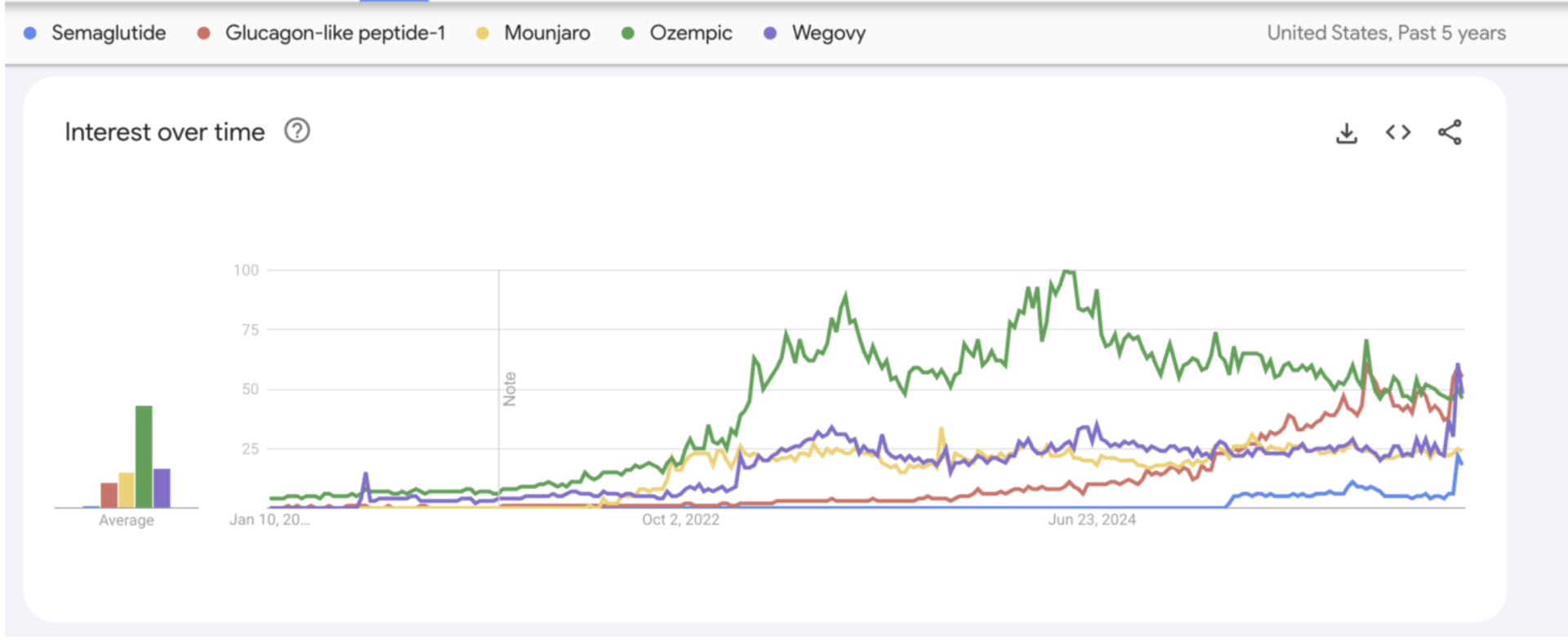
Vampire Wifi: How Public Wi-Fi Traps Travelers in Cyber Attacks

They’re not hiding in dark alleys—they’re hiding in plain sight. Airports, cafés, hotels, even libraries can harbor dangerous Vampire Wi-Fi networks.

These vampires pass themselves off as legitimate public Wi-Fi hotspots, using names that look innocent enough, such as “FREE_WIFI” and “AT&T_FREE_WIFI”.  These can potentially be “evil twin networks,” they often mimic the name of the airport you’re in, or the place where you’re grabbing a quick coffee and some laptop time while you’re on the road. In fact, when you connect to a vampire or evil twin network, you’re connecting to a hacker.

These networks are relatively easy to set up. With just a few hundred dollars of gear, attackers can set up these digital bloodsuckers anywhere. The moment you log on, they begin feeding on your data, using tools called packet sniffers to capture and analyze every bit you send.

So say you’re on the road and log into one of these networks, a hacker on the network can see what you’re connecting to and what data you’re passing along. Your credit card number while you shop. Your password when you bank. That confidential contract you just sent to a client. And your email password when your app regularly checks for mail every few minutes or so.

What tools let hackers snoop? Network analyzers, or packet sniffers as many call them. A bad actor can gather up data with a packet sniffer, analyze it, and pluck out the sensitive bits of info that are of value. Before you know it, you’re a victim of identity theft.

Another common vampire Wi-Fi ploy is to set up a phony login screen that asks for a username and password, often for popular online services like Google and Apple. In this case, the hacker gets the keys to all the personal info, apps, files, and financial info connected to them.

How to spot phony evil twin public Wi-Fi networks

Hackers typically take lengths to make these networks look legitimate, but they may give off signs:

  • The Wi-Fi network has no password.
  • The Wi-Fi network is not set up with Wi-Fi protected access (WPA) on the router.
  • The Wi-Fi network is open to Secure Sockets Layer (SSL) attacks. (An SSL is a digital certificate that authenticates a website’s identity and allows for secure, encrypted connections to banking, shopping, and financial sites, to name a few.)

Still, even with some of these flags, they can be tough to spot. And that’s a reason why our mobile security apps for iOS and Android analyze Wi-Fi networks before you connect to them—letting you know if a connection is Safe, Risky, or altogether Unsafe.

How to stay safe from evil twin networks when using public Wi-Fi

Your best bet when using any public Wi-Fi at all is to use a VPN.

A VPN is an app that you install on your device to help keep your data safe as you browse the internet. With your VPN on, your device makes a secure connection to a VPN server that routes internet traffic through an encrypted “tunnel.” This keeps your online activity private on any network, shielding it from prying eyes.

While you’re on a VPN, you can browse and bank with the confidence that your passwords, credentials, and financial info are secure. If a hacker attempts to intercept your web traffic, they’ll only see garbled content, thanks to your VPN’s encryption functionality.

With that, choosing a secure and trustworthy VPN provider is a must. A VPN like ours has both your security and privacy in mind. In a VPN, look for:

  • The same encryption strength that banks use.
  • One that doesn’t log or track what you do online, so your online activity remains private. ​
  • A VPN that’s independently audited for security and privacy.
  • One that covers plenty of devices and that offers unlimited data.
  • Automatically connects when you connect to public Wi-Fi.

Not every VPN offers these features. Selecting one that does gives you the protection you want paired with the privacy you want. You’ll find them all in our VPN, which is also included as part of our McAfee+ plans.

More ways you can stay safe on public Wi-Fi

Several other straightforward steps can keep you safer from vampire and evil twin Wi-Fi—and safer while using public Wi-Fi in general:

  • Double-check the network name: If you’re at a café, hotel, or airport, check with an employee for the exact name of their official Wi-Fi network before connecting. Don’t automatically trust a network just because its name looks right or has a particularly strong signal. (In fact, some hackers boost their phony Wi-Fi signals to make them look more attractive.)
  • Disable auto-join: Turn off the auto-join feature for Wi-Fi on your devices. This prevents your phone or laptop from connecting to malicious networks automatically.
  • See if it can wait: If you can wait to bank, shop, check email, or do anything that involves passwords or sensitive info, do it on a secure connection at home. If it absolutely can’t wait, use your VPN or cellular connection.
  • Use your own hotspot: Another secure option is to use a personal hotspot from your phone’s cellular data. This gives you a private connection that is much harder for attackers to exploit. That might leave you with a slower connection and possibly eat into your data plan, but those are small concerns compared to the major headache of identity theft.


Vampire Wi-Fi networks aren’t going anywhere. Hackers will keep setting up these traps because they work. People see “free Wi-Fi” and click without thinking twice. But now you know better. You’ve got the tools to spot the red flags, the habits to stay protected, and most importantly, you understand why a quality VPN isn’t optional anymore—it’s essential.

McAfee+ gives you everything we’ve talked about: bank-level encryption, zero-logging policies, independent security audits, and that smart auto-connect feature that kicks in when you need it most. Plus, unlimited data across all your devices, because who has time to ration their security?

Your personal information is worth protecting. Your financial data, your work files, your private conversations, they’re all valuable to the wrong people. Don’t hand them over just because someone dangled “free Wi-Fi” in front of you.

Ready to stop gambling with your data? Get comprehensive protection with McAfee+ and never worry about vampire networks again.

The post Vampire Wifi: How Public Wi-Fi Traps Travelers in Cyber Attacks appeared first on McAfee Blog.

❌