 Login
LoginRandall Munroe’s XKCD ‘Fifteen Years’
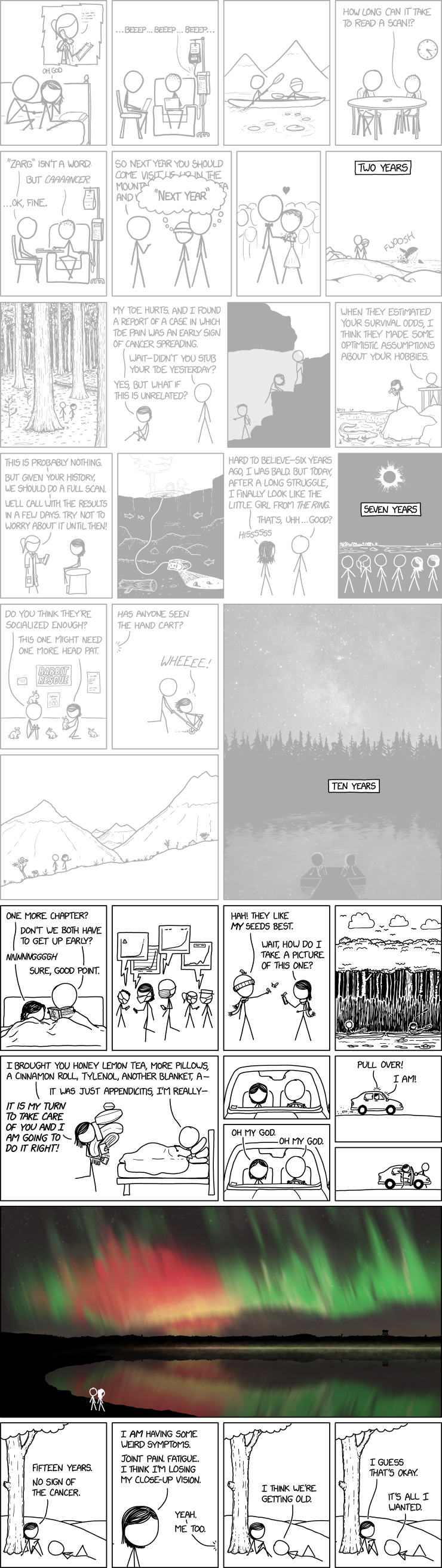
via the insightful artistry and dry wit of Randall Munroe, creator of XKCD
The post Randall Munroe’s XKCD ‘Fifteen Years’ appeared first on Security Boulevard.

via the insightful artistry and dry wit of Randall Munroe, creator of XKCD
The post Randall Munroe’s XKCD ‘Fifteen Years’ appeared first on Security Boulevard.
Session 6C: Sensor Attacks
Authors, Creators & Presenters: Yan Jiang (Zhejiang University), Xiaoyu Ji (Zhejiang University), Yancheng Jiang (Zhejiang University), Kai Wang (Zhejiang University), Chenren Xu (Peking University), Wenyuan Xu (Zhejiang University)
PAPER
NDSS 2025 - PowerRadio: Manipulate Sensor Measurement Via Power GND Radiation
Sensors are key components to enable various applications, e.g., home intrusion detection, and environment monitoring. While various software defenses and physical protections are used to prevent sensor manipulation, this paper introduces a new threat vector, PowerRadio, which can bypass existing protections and change the sensor readings at a distance. PowerRadio leverages interconnected ground (GND) wires, a standard practice for electrical safety at home, to inject malicious signals. The injected signal is coupled by the sensor's analog measurement wire and eventually, it survives the noise filters, inducing incorrect measurement. We present three methods that can manipulate sensors by inducing static bias, periodical signals, or pulses. For instance, we show adding stripes into the captured images of a surveillance camera or injecting inaudible voice commands into conference microphones. We study the underlying principles of PowerRadio and find its root causes: (1) the lack of shielding between ground and data signal wires and (2) the asymmetry of circuit impedance that enables interference to bypass filtering. We validate PowerRadio against a surveillance system, broadcast system, and various sensors. We believe that PowerRadio represents an emerging threat that exhibits the pros of both radiated and conducted EMI, e.g., expanding the effective attack distance of radiated EMI yet eliminating the requirement of line-of-sight or approaching physically. Our insights shall provide guidance for enhancing the sensors' security and power wiring during the design phases.
ABOUT NDSS
The Network and Distributed System Security Symposium (NDSS) fosters information exchange among researchers and practitioners of network and distributed system security. The target audience includes those interested in practical aspects of network and distributed system security, with a focus on actual system design and implementation. A major goal is to encourage and enable the Internet community to apply, deploy, and advance the state of available security technologies.
Our thanks to the Network and Distributed System Security (NDSS) Symposium for publishing their Creators, Authors and Presenter’s superb NDSS Symposium 2025 Conference content on the Organizations' YouTube Channel.
The post NDSS 2025 – PowerRadio: Manipulate Sensor Measurement Via Power GND Radiation appeared first on Security Boulevard.
Session 6C: Sensor Attacks
Authors, Creators & Presenters: Zizhi Jin (Zhejiang University), Qinhong Jiang (Zhejiang University), Xuancun Lu (Zhejiang University), Chen Yan (Zhejiang University), Xiaoyu Ji (Zhejiang University), Wenyuan Xu (Zhejiang University)
PAPER
PhantomLiDAR: Cross-Modality Signal Injection Attacks Against LiDAR
LiDAR is a pivotal sensor for autonomous driving, offering precise 3D spatial information. Previous signal attacks against LiDAR systems mainly exploit laser signals. In this paper, we investigate the possibility of cross-modality signal injection attacks, i.e., injecting intentional electromagnetic interference (IEMI) to manipulate LiDAR output. Our insight is that the internal modules of a LiDAR, i.e., the laser receiving circuit, the monitoring sensors, and the beam-steering modules, even with strict electromagnetic compatibility (EMC) testing, can still couple with the IEMI attack signals and result in the malfunction of LiDAR systems. Based on the above attack surfaces, we propose the alias attack, which manipulates LiDAR output in terms of Points Interference, Points Injection, Points Removal, and even LiDAR Power-Off. We evaluate and demonstrate the effectiveness of alias with both simulated and real-world experiments on five COTS LiDAR systems. We also conduct feasibility experiments in real-world moving scenarios. We provide potential defense measures that can be implemented at both the sensor level and the vehicle system level to mitigate the risks associated with IEMI attacks.
ABOUT NDSS
The Network and Distributed System Security Symposium (NDSS) fosters information exchange among researchers and practitioners of network and distributed system security. The target audience includes those interested in practical aspects of network and distributed system security, with a focus on actual system design and implementation. A major goal is to encourage and enable the Internet community to apply, deploy, and advance the state of available security technologies.
Our thanks to the Network and Distributed System Security (NDSS) Symposium for publishing their Creators, Authors and Presenter’s superb NDSS Symposium 2025 Conference content on the Organizations' YouTube Channel.
The post NDSS 2025 – PhantomLiDAR: Cross-Modality Signal Injection Attacks Against LiDAR appeared first on Security Boulevard.
Session 6B: Confidential Computing 1
Authors, Creators & Presenters: Martin Unterguggenberger (Graz University of Technology), Lukas Lamster (Graz University of Technology), David Schrammel (Graz University of Technology), Martin Schwarzl (Cloudflare, Inc.), Stefan Mangard (Graz University of Technology)
PAPER
TME-Box: Scalable In-Process Isolation through Intel TME-MK Memory Encryption
Efficient cloud computing relies on in-process isolation to optimize performance by running workloads within a single process. Without heavy-weight process isolation, memory safety errors pose a significant security threat by allowing an adversary to extract or corrupt the private data of other co-located tenants. Existing in-process isolation mechanisms are not suitable for modern cloud requirements, e.g., MPK's 16 protection domains are insufficient to isolate thousands of cloud workers per process. Consequently, cloud service providers have a strong need for lightweight in-process isolation on commodity x86 machines. This paper presents TME-Box, a novel isolation technique that enables fine-grained and scalable sandboxing on commodity x86 CPUs. By repurposing Intel TME-MK, which is intended for the encryption of virtual machines, TME-Box offers lightweight and efficient in-process isolation. TME-Box enforces that sandboxes use their designated encryption keys for memory interactions through compiler instrumentation. This cryptographic isolation enables fine-grained access control, from single cache lines to full pages, and supports flexible data relocation. In addition, the design of TME-Box allows the efficient isolation of up to 32K concurrent sandboxes. We present a performance-optimized TME-Box prototype, utilizing x86 segment-based addressing, that showcases geomean (geometric mean) performance overheads of 5.2 % for data isolation and 9.7 % for code and data isolation, evaluated with the SPEC CPU2017 benchmark suite.
ABOUT NDSS
The Network and Distributed System Security Symposium (NDSS) fosters information exchange among researchers and practitioners of network and distributed system security. The target audience includes those interested in practical aspects of network and distributed system security, with a focus on actual system design and implementation. A major goal is to encourage and enable the Internet community to apply, deploy, and advance the state of available security technologies.
Our thanks to the Network and Distributed System Security (NDSS) Symposium for publishing their Creators, Authors and Presenter’s superb NDSS Symposium 2025 Conference content on the Organizations' YouTube Channel.
The post NDSS 2025 – TME-Box: Scalable In-Process Isolation Through Intel TME-MK Memory Encryption appeared first on Security Boulevard.
Session 6B: Confidential Computing 1
Authors, Creators & Presenters: Caihua Li (Yale University), Seung-seob Lee (Yale University), Lin Zhong (Yale University)
PAPER
Blindfold: Confidential Memory Management by Untrusted Operating System
Confidential Computing (CC) has received increasing attention in recent years as a mechanism to protect user data from untrusted operating systems (OSes). Existing CC solutions hide confidential memory from the OS and/or encrypt it to achieve confidentiality. In doing so, they render OS memory optimization unusable or complicate the trusted computing base (TCB) required for optimization. This paper presents our results toward overcoming these limitations, synthesized in a CC design named Blindfold. Like many other CC solutions, Blindfold relies on a small trusted software component running at a higher privilege level than the kernel, called Guardian. It features three techniques that can enhance existing CC solutions. First, instead of nesting page tables, Blindfold's Guardian mediates how the OS accesses memory and handles exceptions by switching page and interrupt tables. Second, Blindfold employs a lightweight capability system to regulate the OS's semantic access to user memory, unifying case-by-case approaches in previous work. Finally, Blindfold provides carefully designed secure ABI for confidential memory management without encryption. We report an implementation of Blindfold that works on ARMv8-A/Linux. Using Blindfold's prototype, we are able to evaluate the cost of enabling confidential memory management by the untrusted Linux kernel. We show Blindfold has a smaller runtime TCB than related systems and enjoys competitive performance. More importantly, we show that the Linux kernel, including all of its memory optimizations except memory compression, can function properly for confidential memory. This requires only about 400 lines of kernel modifications.
ABOUT NDSS
The Network and Distributed System Security Symposium (NDSS) fosters information exchange among researchers and practitioners of network and distributed system security. The target audience includes those interested in practical aspects of network and distributed system security, with a focus on actual system design and implementation. A major goal is to encourage and enable the Internet community to apply, deploy, and advance the state of available security technologies.
Our thanks to the Network and Distributed System Security (NDSS) Symposium for publishing their Creators, Authors and Presenter’s superb NDSS Symposium 2025 Conference content on the Organizations' YouTube Channel.
The post NDSS 2025 – Blindfold: Confidential Memory Management By Untrusted Operating System appeared first on Security Boulevard.
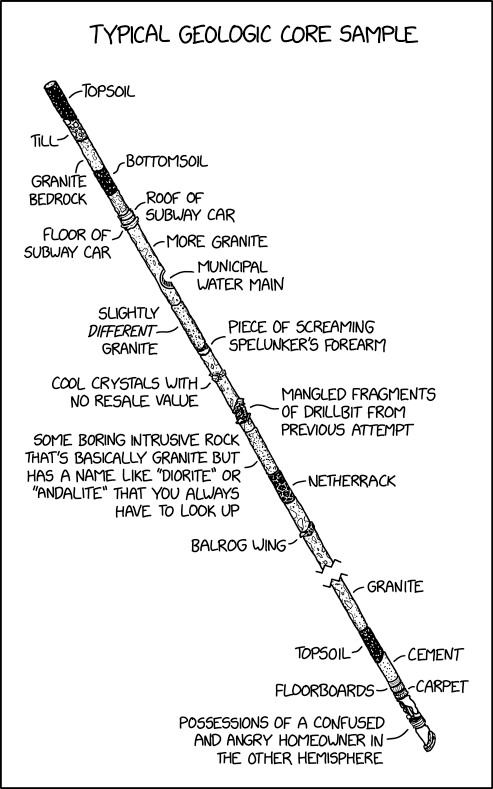
via the comic artistry and dry wit of Randall Munroe, creator of XKCD
The post Randall Munroe’s XKCD ‘Geologic Core Sample’ appeared first on Security Boulevard.
Session 6B: Confidential Computing 1
Authors, Creators & Presenters: Caihua Li (Yale University), Seung-seob Lee (Yale University), Lin Zhong (Yale University)
PAPER
Blindfold: Confidential Memory Management by Untrusted Operating System
Confidential Computing (CC) has received increasing attention in recent years as a mechanism to protect user data from untrusted operating systems (OSes). Existing CC solutions hide confidential memory from the OS and/or encrypt it to achieve confidentiality. In doing so, they render OS memory optimization unusable or complicate the trusted computing base (TCB) required for optimization. This paper presents our results toward overcoming these limitations, synthesized in a CC design named Blindfold. Like many other CC solutions, Blindfold relies on a small trusted software component running at a higher privilege level than the kernel, called Guardian. It features three techniques that can enhance existing CC solutions. First, instead of nesting page tables, Blindfold's Guardian mediates how the OS accesses memory and handles exceptions by switching page and interrupt tables. Second, Blindfold employs a lightweight capability system to regulate the OS's semantic access to user memory, unifying case-by-case approaches in previous work. Finally, Blindfold provides carefully designed secure ABI for confidential memory management without encryption. We report an implementation of Blindfold that works on ARMv8-A/Linux. Using Blindfold's prototype, we are able to evaluate the cost of enabling confidential memory management by the untrusted Linux kernel. We show Blindfold has a smaller runtime TCB than related systems and enjoys competitive performance. More importantly, we show that the Linux kernel, including all of its memory optimizations except memory compression, can function properly for confidential memory. This requires only about 400 lines of kernel modifications.
ABOUT NDSS
The Network and Distributed System Security Symposium (NDSS) fosters information exchange among researchers and practitioners of network and distributed system security. The target audience includes those interested in practical aspects of network and distributed system security, with a focus on actual system design and implementation. A major goal is to encourage and enable the Internet community to apply, deploy, and advance the state of available security technologies.
Our thanks to the Network and Distributed System Security (NDSS) Symposium for publishing their Creators, Authors and Presenter’s superb NDSS Symposium 2025 Conference content on the Organizations' YouTube Channel.
The post NDSS 2025 – Blindfold: Confidential Memory Management By Untrusted Operating System appeared first on Security Boulevard.
Session 6B: Confidential Computing 1
Authors, Creators & Presenters: Maryam Rostamipoor (Stony Brook University), Seyedhamed Ghavamnia (University of Connecticut), Michalis Polychronakis (Stony Brook University)
PAPER
LeakLess: Selective Data Protection against Memory Leakage Attacks for Serverless Platforms
As the use of language-level sandboxing for running untrusted code grows, the risks associated with memory disclosure vulnerabilities and transient execution attacks become increasingly significant. Besides the execution of untrusted JavaScript or WebAssembly code in web browsers, serverless environments have also started relying on language-level isolation to improve scalability by running multiple functions from different customers within a single process. Web browsers have adopted process-level sandboxing to mitigate memory leakage attacks, but this solution is not applicable in serverless environments, as running each function as a separate process would negate the performance benefits of language-level isolation. In this paper we present LeakLess, a selective data protection approach for serverless computing platforms. LeakLess alleviates the limitations of previous selective data protection techniques by combining in-memory encryption with a separate I/O module to enable the safe transmission of the protected data between serverless functions and external hosts. We implemented LeakLess on top of the Spin serverless platform, and evaluated it with real-world serverless applications. Our results demonstrate that LeakLess offers robust protection while incurring a minor throughput decrease under stress-testing conditions of up to 2.8% when the I/O module runs on a different host than the Spin runtime, and up to 8.5% when it runs on the same host.
ABOUT NDSS
The Network and Distributed System Security Symposium (NDSS) fosters information exchange among researchers and practitioners of network and distributed system security. The target audience includes those interested in practical aspects of network and distributed system security, with a focus on actual system design and implementation. A major goal is to encourage and enable the Internet community to apply, deploy, and advance the state of available security technologies.
Our thanks to the Network and Distributed System Security (NDSS) Symposium for publishing their Creators, Authors and Presenter’s superb NDSS Symposium 2025 Conference content on the Organizations' YouTube Channel.
The post NDSS 2025 – Selective Data Protection against Memory Leakage Attacks for Serverless Platforms appeared first on Security Boulevard.
Session 6A: LLM Privacy and Usable Privacy
Authors, Creators & Presenters: Yuhao Wu (Washington University in St. Louis), Franziska Roesner (University of Washington), Tadayoshi Kohno (University of Washington), Ning Zhang (Washington University in St. Louis), Umar Iqbal (Washington University in St. Louis)
PAPER
IsolateGPT: An Execution Isolation Architecture for LLM-Based Agentic Systems
Large language models (LLMs) extended as systems, such as ChatGPT, have begun supporting third-party applications. These LLM apps leverage the de facto natural language-based automated execution paradigm of LLMs: that is, apps and their interactions are defined in natural language, provided access to user data, and allowed to freely interact with each other and the system. These LLM app ecosystems resemble the settings of earlier computing platforms, where there was insufficient isolation between apps and the system. Because third-party apps may not be trustworthy, and exacerbated by the imprecision of natural language interfaces, the current designs pose security and privacy risks for users. In this paper, we evaluate whether these issues can be addressed through execution isolation and what that isolation might look like in the context of LLM-based systems, where there are arbitrary natural language-based interactions between system components, between LLM and apps, and between apps. To that end, we propose IsolateGPT, a design architecture that demonstrates the feasibility of execution isolation and provides a blueprint for implementing isolation, in LLM-based systems. We evaluate IsolateGPT against a number of attacks and demonstrate that it protects against many security, privacy, and safety issues that exist in non-isolated LLM-based systems, without any loss of functionality. The performance overhead incurred by IsolateGPT to improve security is under 30% for three-quarters of tested queries.
ABOUT NDSS
The Network and Distributed System Security Symposium (NDSS) fosters information exchange among researchers and practitioners of network and distributed system security. The target audience includes those interested in practical aspects of network and distributed system security, with a focus on actual system design and implementation. A major goal is to encourage and enable the Internet community to apply, deploy, and advance the state of available security technologies.
Our thanks to the Network and Distributed System Security (NDSS) Symposium for publishing their Creators, Authors and Presenter’s superb NDSS Symposium 2025 Conference content on the Organizations' YouTube Channel.
The post NDSS 2025 – IsolateGPT: An Execution Isolation Architecture For LLM-Based Agentic Systems appeared first on Security Boulevard.
Session 6A: LLM Privacy and Usable Privacy
Authors, Creators & Presenters: Guanlong Wu (Southern University of Science and Technology), Zheng Zhang (ByteDance Inc.), Yao Zhang (ByteDance Inc.), Weili Wang (Southern University of Science and Technolog), Jianyu Niu (Southern University of Science and Technolog), Ye Wu (ByteDance Inc.), Yinqian Zhang (Southern University of Science and Technology (SUSTech))
PAPER
I Know What You Asked: Prompt Leakage via KV-Cache Sharing in Multi-Tenant LLM Serving
Large Language Models (LLMs), which laid the groundwork for Artificial General Intelligence (AGI), have recently gained significant traction in academia and industry due to their disruptive applications. In order to enable scalable applications and efficient resource management, various multi-tenant LLM serving frameworks have been proposed, in which the LLM caters to the needs of multiple users simultaneously. One notable mechanism in recent works, such as SGLang and vLLM, is sharing the Key-Value (KV) cache for identical token sequences among multiple users, saving both memory and computation. This paper presents the first investigation on security risks associated with multi-tenant LLM serving. We show that the state-of-the-art mechanisms of KV cache sharing may lead to new side channel attack vectors, allowing unauthorized reconstruction of user prompts and compromising sensitive user information among mutually distrustful users. Specifically, we introduce our attack, PROMPTPEEK, and apply it to three scenarios where the adversary, with varying degrees of prior knowledge, is capable of reverse-engineering prompts from other users. This study underscores the need for careful resource management in multi-tenant LLM serving and provides critical insights for future security enhancement.
ABOUT NDSS
The Network and Distributed System Security Symposium (NDSS) fosters information exchange among researchers and practitioners of network and distributed system security. The target audience includes those interested in practical aspects of network and distributed system security, with a focus on actual system design and implementation. A major goal is to encourage and enable the Internet community to apply, deploy, and advance the state of available security technologies.
Our thanks to the Network and Distributed System Security (NDSS) Symposium for publishing their Creators, Authors and Presenter’s superb NDSS Symposium 2025 Conference content on the Organizations' YouTube Channel.
The post NDSS 2025 -I Know What You Asked: Prompt Leakage Via KV-Cache Sharing In Multi-Tenant LLM Serving appeared first on Security Boulevard.
Session 6A: LLM Privacy and Usable Privacy
Authors, Creators & Presenters: Xiaoyuan Wu (Carnegie Mellon University), Lydia Hu (Carnegie Mellon University), Eric Zeng (Carnegie Mellon University), Hana Habib (Carnegie Mellon University), Lujo Bauer (Carnegie Mellon University)
PAPER
Transparency or Information Overload? Evaluating Users' Comprehension and Perceptions of the iOS App Privacy Report
Apple's App Privacy Report, released in 2021, aims to inform iOS users about apps' access to their data and sensors (e.g., contacts, camera) and, unlike other privacy dashboards, what domains are contacted by apps and websites. To evaluate the effectiveness of the privacy report, we conducted semi-structured interviews to examine users' reactions to the information, their understanding of relevant privacy implications, and how they might change their behavior to address privacy concerns. Participants easily understood which apps accessed data and sensors at certain times on their phones, and knew how to remove an app's permissions in case of unexpected access. In contrast, participants had difficulty understanding apps' and websites' network activities. They were confused about how and why network activities occurred, overwhelmed by the number of domains their apps contacted, and uncertain about what remedial actions they could take against potential privacy threats. While the privacy report and similar tools can increase transparency by presenting users with details about how their data is handled, we recommend providing more interpretation or aggregation of technical details, such as the purpose of contacting domains, to help users make informed decisions.
ABOUT NDSS
The Network and Distributed System Security Symposium (NDSS) fosters information exchange among researchers and practitioners of network and distributed system security. The target audience includes those interested in practical aspects of network and distributed system security, with a focus on actual system design and implementation. A major goal is to encourage and enable the Internet community to apply, deploy, and advance the state of available security technologies.
Our thanks to the Network and Distributed System Security (NDSS) Symposium for publishing their Creators, Authors and Presenter’s superb NDSS Symposium 2025 Conference content on the Organizations' YouTube Channel.
The post NDSS 2025 – Evaluating Users’ Comprehension and Perceptions of the iOS App Privacy Report appeared first on Security Boulevard.
United States of America’s NASA Astronaut Jessica Meir’s Hanukkah Wishes from the International Space Station: Happy Hanukkah to all those who celebrate it on Earth! (Originally Published in 2019)

United States of America’s NASA Astronaut Jessica Meir
The post Infosecurity.US Wishes All A Happy Hanukkah! appeared first on Security Boulevard.
Session 5D: Side Channels 1
Authors, Creators & Presenters: Jonas Juffinger (Graz University of Technology), Fabian Rauscher (Graz University of Technology), Giuseppe La Manna (Amazon), Daniel Gruss (Graz University of Technology)
PAPER
Secret Spilling Drive: Leaking User Behavior through SSD Contention
Covert channels and side channels bypass architectural security boundaries. Numerous works have studied covert channels and side channels in software and hardware. Thus, research on covert-channel and side-channel mitigations relies on the discovery of leaky hardware and software components. In this paper, we perform the first study of timing channels inside modern commodity off-the-shelf SSDs. We systematically analyze the behavior of NVMe PCIe SSDs with concurrent workloads. We observe that exceeding the maximum I/O operations of the SSD leads to significant latency spikes. We narrow down the number of I/O operations required to still induce latency spikes on 12 different SSDs. Our results show that a victim process needs to read at least 8 to 128 blocks to be still detectable by an attacker. Based on these experiments, we show that an attacker can build a covert channel, where the sender encodes secret bits into read accesses to unrelated blocks, inaccessible to the receiver. We demonstrate that this covert channel works across different systems and different SSDs, even from processes running inside a virtual machine. Our unprivileged SSD covert channel achieves a true capacity of up to 1503 bit/s while it works across virtual machines (cross-VM) and is agnostic to operating system versions, as well as other hardware characteristics such as CPU or DRAM. Given the coarse granularity of the SSD timing channel, we evaluate it as a side channel in an open-world website fingerprinting attack over the top 100 websites. We achieve an F1 score of up to 97.0. This shows that the leakage goes beyond covert communication and can leak highly sensitive information from victim users. Finally, we discuss the root cause of the SSD timing channel and how it can be mitigated.
ABOUT NDSS
The Network and Distributed System Security Symposium (NDSS) fosters information exchange among researchers and practitioners of network and distributed system security. The target audience includes those interested in practical aspects of network and distributed system security, with a focus on actual system design and implementation. A major goal is to encourage and enable the Internet community to apply, deploy, and advance the state of available security technologies.
Our thanks to the Network and Distributed System Security (NDSS) Symposium for publishing their Creators, Authors and Presenter’s superb NDSS Symposium 2025 Conference content on the Organizations' YouTube Channel.
The post NDSS 2025 – Secret Spilling Drive: Leaking User Behavior Through SSD Contention appeared first on Security Boulevard.
Session 5D: Side Channels 1
Authors, Creators & Presenters: Fabian Rauscher (Graz University of Technology), Carina Fiedler (Graz University of Technology), Andreas Kogler (Graz University of Technology), Daniel Gruss (Graz University of Technology)
PAPER
A Systematic Evaluation Of Novel And Existing Cache Side Channels
CPU caches are among the most widely studied side-channel targets, with Prime+Probe and Flush+Reload being the most prominent techniques. These generic cache attack techniques can leak cryptographic keys, user input, and are a building block of many microarchitectural attacks. In this paper, we present the first systematic evaluation using 9 characteristics of the 4 most relevant cache attacks, Flush+Reload, Flush+Flush, Evict+Reload, and Prime+Probe, as well as three new attacks that we introduce: Demote+Reload, Demote+Demote, and DemoteContention. We evaluate hit-miss margins, temporal precision, spatial precision, topological scope, attack time, blind spot length, channel capacity, noise resilience, and detectability on recent Intel microarchitectures. Demote+Reload and Demote+Demote perform similar to previous attacks and slightly better in some cases, e.g., Demote+Reload has a 60.7 % smaller blind spot than Flush+Reload. With 15.48 Mbit/s, Demote+Reload has a 64.3 % higher channel capacity than Flush+Reload. We also compare all attacks in an AES T-table attack and compare Demote+Reload and Flush+Reload in an inter-keystroke timing attack. Beyond the scope of the prior attack techniques, we demonstrate a KASLR break with Demote+Demote and the amplification of power side-channel leakage with Demote+Reload. Finally, Sapphire Rapids and Emerald Rapids CPUs use a non-inclusive L3 cache, effectively limiting eviction-based cross-core attacks, e.g., Prime+Probe and Evict+Reload, to rare cases where the victim's activity reaches the L3 cache. Hence, we show that in a cross-core attack, DemoteContention can be used as a reliable alternative to Prime+Probe and Evict+Reload that does not require reverse-engineering of addressing functions and cache replacement policy.
ABOUT NDSS
The Network and Distributed System Security Symposium (NDSS) fosters information exchange among researchers and practitioners of network and distributed system security. The target audience includes those interested in practical aspects of network and distributed system security, with a focus on actual system design and implementation. A major goal is to encourage and enable the Internet community to apply, deploy, and advance the state of available security technologies.
Our thanks to the Network and Distributed System Security (NDSS) Symposium for publishing their Creators, Authors and Presenter’s superb NDSS Symposium 2025 Conference content on the Organizations' YouTube Channel.
The post NDSS 2025 – A Systematic Evaluation Of Novel And Existing Cache Side Channels appeared first on Security Boulevard.
Session 5D: Side Channels 1
Authors, Creators & Presenters: Lukas Maar (Graz University of Technology), Jonas Juffinger (Graz University of Technology), Thomas Steinbauer (Graz University of Technology), Daniel Gruss (Graz University of Technology), Stefan Mangard (Graz University of Technology)
PAPER
KernelSnitch: Side Channel-Attacks On Kernel Data Structures
The sharing of hardware elements, such as caches, is known to introduce microarchitectural side-channel leakage. One approach to eliminate this leakage is to not share hardware elements across security domains. However, even under the assumption of leakage-free hardware, it is unclear whether other critical system components, like the operating system, introduce software-caused side-channel leakage. In this paper, we present a novel generic software side-channel attack, KernelSnitch, targeting kernel data structures such as hash tables and trees. These structures are commonly used to store both kernel and user information, e.g., metadata for userspace locks. KernelSnitch exploits that these data structures are variable in size, ranging from an empty state to a theoretically arbitrary amount of elements. Accessing these structures requires a variable amount of time depending on the number of elements, i.e., the occupancy level. This variance constitutes a timing side channel, observable from user space by an unprivileged, isolated attacker. While the timing differences are very low compared to the syscall runtime, we demonstrate and evaluate methods to amplify these timing differences reliably. In three case studies, we show that KernelSnitch allows unprivileged and isolated attackers to leak sensitive information from the kernel and activities in other processes. First, we demonstrate covert channels with transmission rates up to 580 kbit/s. Second, we perform a kernel heap pointer leak in less than 65 s by exploiting the specific indexing that Linux is using in hash tables. Third, we demonstrate a website fingerprinting attack, achieving an F1 score of more than 89 %, showing that activity in other user programs can be observed using KernelSnitch. Finally, we discuss mitigations for our hardware-agnostic attacks.
ABOUT NDSS
The Network and Distributed System Security Symposium (NDSS) fosters information exchange among researchers and practitioners of network and distributed system security. The target audience includes those interested in practical aspects of network and distributed system security, with a focus on actual system design and implementation. A major goal is to encourage and enable the Internet community to apply, deploy, and advance the state of available security technologies.
Our thanks to the Network and Distributed System Security (NDSS) Symposium for publishing their Creators, Authors and Presenter’s superb NDSS Symposium 2025 Conference content on the Organizations' YouTube Channel.
The post NDSS 2025 – KernelSnitch: Side Channel-Attacks On Kernel Data Structures appeared first on Security Boulevard.

via the comic artistry and dry wit of Randall Munroe, creator of XKCD
The post Randall Munroe’s XKCD ‘EPIRBS’ appeared first on Security Boulevard.
Session 5C: Federated Learning 1
Authors, Creators & Presenters: Duanyi Yao (Hong Kong University of Science and Technology), Songze Li (Southeast University), Xueluan Gong (Wuhan University), Sizai Hou (Hong Kong University of Science and Technology), Gaoning Pan (Hangzhou Dianzi University)
PAPER
URVFL: Undetectable Data Reconstruction Attack on Vertical Federated Learning
Vertical Federated Learning (VFL) is a collaborative learning paradigm designed for scenarios where multiple clients share disjoint features of the same set of data samples. Albeit a wide range of applications, VFL is faced with privacy leakage from data reconstruction attacks. These attacks generally fall into two categories: honest-but-curious (HBC), where adversaries steal data while adhering to the protocol; and malicious attacks, where adversaries breach the training protocol for significant data leakage. While most research has focused on HBC scenarios, the exploration of malicious attacks remains limited. Launching effective malicious attacks in VFL presents unique challenges: 1) Firstly, given the distributed nature of clients' data features and models, each client rigorously guards its privacy and prohibits direct querying, complicating any attempts to steal data; 2) Existing malicious attacks alter the underlying VFL training task, and are hence easily detected by comparing the received gradients with the ones received in honest training. To overcome these challenges, we develop URVFL, a novel attack strategy that evades current detection mechanisms. The key idea is to integrate a discriminator with auxiliary classifier that takes a full advantage of the label information and generates malicious gradients to the victim clients: on one hand, label information helps to better characterize embeddings of samples from distinct classes, yielding an improved reconstruction performance; on the other hand, computing malicious gradients with label information better mimics the honest training, making the malicious gradients indistinguishable from the honest ones, and the attack much more stealthy. Our comprehensive experiments demonstrate that URVFL significantly outperforms existing attacks, and successfully circumvents SOTA detection methods for malicious attacks. Additional ablation studies and evaluations on defenses further underscore the robustness and effectiveness of URVFL
ABOUT NDSS
The Network and Distributed System Security Symposium (NDSS) fosters information exchange among researchers and practitioners of network and distributed system security. The target audience includes those interested in practical aspects of network and distributed system security, with a focus on actual system design and implementation. A major goal is to encourage and enable the Internet community to apply, deploy, and advance the state of available security technologies.
Our thanks to the Network and Distributed System Security (NDSS) Symposium for publishing their Creators, Authors and Presenter’s superb NDSS Symposium 2025 Conference content on the Organizations' YouTube Channel.
The post NDSS 2025 – URVFL: Undetectable Data Reconstruction Attack On Vertical Federated Learning appeared first on Security Boulevard.
Session 5C: Federated Learning 1
Authors, Creators & Presenters: Dzung Pham (University of Massachusetts Amherst), Shreyas Kulkarni (University of Massachusetts Amherst), Amir Houmansadr (University of Massachusetts Amherst)
PAPER
RAIFLE: Reconstruction Attacks on Interaction-based Federated Learning with Adversarial Data Manipulation
Federated learning has emerged as a promising privacy-preserving solution for machine learning domains that rely on user interactions, particularly recommender systems and online learning to rank. While there has been substantial research on the privacy of traditional federated learning, little attention has been paid to the privacy properties of these interaction-based settings. In this work, we show that users face an elevated risk of having their private interactions reconstructed by the central server when the server can control the training features of the items that users interact with. We introduce RAIFLE, a novel optimization-based attack framework where the server actively manipulates the features of the items presented to users to increase the success rate of reconstruction. Our experiments with federated recommendation and online learning-to-rank scenarios demonstrate that RAIFLE is significantly more powerful than existing reconstruction attacks like gradient inversion, achieving high performance consistently in most settings. We discuss the pros and cons of several possible countermeasures to defend against RAIFLE in the context of interaction-based federated learning. Our code is open-sourced at https://github.com/dzungvpham/raifle
______________
ABOUT NDSS
The Network and Distributed System Security Symposium (NDSS) fosters information exchange among researchers and practitioners of network and distributed system security. The target audience includes those interested in practical aspects of network and distributed system security, with a focus on actual system design and implementation. A major goal is to encourage and enable the Internet community to apply, deploy, and advance the state of available security technologies.
Our thanks to the Network and Distributed System Security (NDSS) Symposium for publishing their Creators, Authors and Presenter’s superb NDSS Symposium 2025 Conference content on the Organizations' YouTube Channel.
The post NDSS 2025 – RAIFLE: Reconstruction Attacks On Interaction-Based Federated Learning appeared first on Security Boulevard.
