House Republicans are seeking annual reauthorization of key programs at the Veterans Affairs Department. Top lawmakers on the House VA Committee are leading a series of bills that would reauthorize the department’s Veteran Readiness and Employment program. This is the third wave of VA reauthorization bills lawmakers have introduced. The legislation would also move the Labor Department’s Veterans Education and Training Service program to the VA.
The protests of GSA's OneGov deals for AI tools don't make the grade. The Government Accountability Office dismissed the complaints filed by AskSage over the low-cost contracts for artificial intelligence tools made by GSA under its OneGov program. In a decision released yesterday, GAO says its dismissal is on jurisdictional grounds as it does not review matters of contract administration. GAO says because GSA modified existing contracts under its schedule program, it doesn't generally review protests of allegedly improper contract modifications because such matters are related to contract administration and therefore not subject to review pursuant to its bid protest function. AskSage filed multiple protests in August, claiming GSA's deals for these AI tools are inconsistent with commercial practices and risked “an impermissible vendor lock-in scenario."
President Trump has tapped Lt. Gen. Joshua Rudd to lead both U.S. Cyber Command and the National Security Agency. NSA and Cyber Command have been without a permanent leader since April when Trump fired Gen. Timothy Haugh from the role. The Defense Department also announced the nomination of Marine Corps Maj. Gen. Lorna Mahlock to serve as deputy commander of U.S. Cyber Command. The role does not require congressional approval.
Most civilian federal employees are set for a 1% pay bump beginning in January. President Trump signed an executive order Thursday afternoon, finalizing the 1% pay raise for 2026, for most feds on the General Schedule. It’s the smallest annual increase civilian employees have received since 2021, and does not include any locality pay adjustments. Both law enforcement officers and military members will likely receive a larger pay raise of 3.8% in the new year.
Federal employees are in for a holiday treat, with two additional days off next week. President Donald Trump signed an executive order yesterday declaring both the day before and the day after Christmas as holidays for the federal workforce this year. Christmas Day is already a federal holiday, but presidents will often give additional days off for feds around the holidays. Certain employees, however, will still need to report for duty those days for national security, defense and other public needs.
The IRS is moving 1,000 IT employees out of its tech shop with few signs of what work they’ll do next. Impacted employees say they have few details about what work they’ll be doing, and have been told by the agency to instead “focus on completing an orderly transition of your current work.” The notice they received states that they will no longer be working on IRS IT projects. Employees must upload their resumes to be considered for other jobs at the IRS and the Treasury Department. Last month, IRS IT directed hundreds of its employees to complete a “technical skills assessment.”
More than 4,300 8(a) small businesses have extra time to collect and submit data to the Small Business Administration as part of the agency's ongoing program audit. SBA set a new deadline of Jan. 19, giving vendors nearly two more weeks to compile 13 different datasets. Along with deadline extension, SBA also posted answers to 14 questions it received from firms to help inform the process. SBA asked every company in the 8(a) program on Dec. 5 to submit information to help inform its ongoing audit seeking to root out fraud.
President Trump’s “Warrior Dividend” bonus for service members, which he suggested would be funded by tariff revenue, is actually a one-time basic allowance for housing stipend already approved by Congress. The $1,776 bonus payment Trump announced while addressing the nation Wednesday night will be paid using funds Congress appropriated to the Defense Department in the One Big Beautiful Bill Act to supplement the basic allowance for housing. The funding was originally intended to address rising housing costs and reduce service members’ out-of-pocket housing expenses. The Pentagon will disburse $2.6 billion of that funding as a one-time payment to roughly 1.28 million active-duty service members.
Federal employees have a final chance to weigh in on their experience in the workplace this year. The window for taking the Partnership for Public Service’s “Public Service Viewpoint Survey” closes at midnight tonight. The Partnership launched its own external questionnaire for federal employees, after the Trump administration canceled the 2025 Federal Employee Viewpoint Survey earlier this year.
Veteran Affairs building near the White House in Washington, Feb. 14, 2018. An internal watchdog's investigation has found that Veterans Affairs Secretary David Shulkin improperly accepted Wimbledon tennis tickets and likely wrongly used taxpayer money to cover his wife's airfare for an 11-day European trip. (AP Photo/Pablo Martinez Monsivais)
Last-minute shopping doesn't have to be stressful. We've sifted through hundreds of items on Amazon to find thoughtful, standout gifts that beat the shipping cutoff.
CNET has been testing robot vacuums for years, but we're always refining our testing procedures. Here's the process we use to evaluate robot vacuums for cleaning, navigation performance, obstacle avoidance, noise levels and more.
We put a dozen new air purifiers through comprehensive lab testing to find out which ones offer the best particle filtering, noise levels and energy efficiency. Here are our five new winners.
Merge Labs, a brain-computer interface startup that seeks to read brain activity using ultrasound, is being spun out of Forest Neurotech, a Los Angeles nonprofit.
Renowned AI scientist Yann LeCun confirmed on Thursday the worst-kept secret in the tech world: that he had indeed launched a new startup. Although he did say he will not be running the new company as its CEO.
The hardware world had a brutal week, with iRobot, Luminar, and Rad Power Bikes all filing for bankruptcy. Each company faces its own mix of tariff pressures, supply chain issues, and shifting markets, but together they tell a larger story about the challenges of building physical products in an era of global trade tensions and cheap overseas competition. From […]
The Securities and Exchange Commission filed proposed final consent judgments today seeking officer-and-director bars against three former FTX executives who testified against Sam Bankman-Fried, with Caroline Ellison facing a decade-long prohibition, while Gary Wang and Nishad Singh would receive eight-year restrictions.
The filings in Manhattan federal court formalize settlement terms for executives who cooperated extensively with prosecutors during Bankman-Fried’s criminal trial but still face permanent securities law injunctions.
Ellison, Wang, and Singh agreed to permanent injunctions barring future violations of federal antifraud provisions, along with five-year conduct-based restrictions, according to SEC Litigation Release 26450.
The proposed judgments require court approval before taking effect.
The U.S. SEC said it has filed proposed final consent judgments in the Southern District of New York against Caroline Ellison, former CEO of Alameda Research, Zixiao “Gary” Wang, former CTO of FTX, and Nishad Singh, former co-lead engineer of FTX. Subject to court approval, the…
Notably, the latest SEC enforcement action was conducted by Amy Burkart alongside investigators Devlin Su, Ivan Snyder, David Brown, Brian Huchro, and Pasha Salimi under the supervision of Laura D’Allaird and Amy Flaherty Hartman from the Cyber and Emerging Technologies Unit.
FTX Executives Consent to Permanent Securities Fraud Injunctions
The SEC’s original complaints alleged that from May 2019 through November 2022, the executives participated in raising over $1.8 billion from investors through false claims about FTX’s safety measures and risk controls.
Prosecutors charged that Bankman-Fried, Wang, and Singh exempted Alameda Research from automated risk mitigation while granting the trading firm unlimited access to customer deposits.
Wang and Singh wrote software that diverted FTX customer funds to Alameda, while Ellison directed misappropriated assets toward the hedge fund’s trading operations.
Bankman-Fried subsequently transferred hundreds of millions in additional customer funds to Alameda for venture investments and personal loans to executives, including Wang and Singh.
The three defendants consented to final judgments without admitting or denying the SEC’s allegations.
Beyond permanent antifraud injunctions under Securities Exchange Act Section 10(b) and Securities Act Section 17(a), they accepted conduct-based restrictions that would prevent similar violations for five years.
Caroline Ellison moved to community confinement after 11 months, projected release February 2026 following FTX fraud cooperation.#FTX#Cryptohttps://t.co/gFUZ1a4Tdu
Judge Lewis Kaplan sentenced her to two years despite defense requests for probation, praising her substantial cooperation while maintaining that the fraud’s severity warranted incarceration.
During her September 2024 sentencing hearing, Ellison expressed deep remorse while holding back tears.
“On some level, my brain doesn’t even comprehend all the people I harmed,” she told the court.
Her attorneys had requested no prison time, but Kaplan rejected what he termed a “literal get-out-of-jail-free card” despite acknowledging her unprecedented cooperation.
Federal prosecutors emphasized Ellison’s critical testimony in their September sentencing recommendation, noting the “what” and “how” of the crimes would have been difficult to prove without her three days of trial testimony.
She revealed that Bankman-Fried instructed executives to invest billions in customer assets that had been secretly siphoned from FTX through Alameda Research.
Wang and Singh received time-served sentences with supervised release after testifying that Bankman-Fried directed the creation of an “allow negative” feature that granted Alameda nearly unlimited access to customer funds.
Both avoided additional prison time entirely following their cooperation.
FTX Bankruptcy Delivers Creditor Repayments Exceeding Original Claims
FTX’s Chapter 11 reorganization plan resumed distributions in May 2025, delivering between 119% and 143% to eligible creditors who completed verification requirements through designated service providers BitGo or Kraken.
Around 98% of affected users with claims under $50,000 received 119% of their declared funds under the bankruptcy court’s approved restructuring framework.
BlackRock’s spot Bitcoin exchange-traded fund IBIT, has emerged as a notable outlier on the 2025 ETF flow leaderboard, ranking sixth by year-to-date inflows despite posting a negative return for the year, according to data highlighted by Bloomberg Intelligence analyst Eric Balchunas.
$IBIT is the only ETF on the 2025 Flow Leaderboard with a negative return for the year. CT's knee-jerk reaction is to whine about the return but the real takeaway is that is was 6th place DESPITE the negative return (Boomers putting on a HODL clinic). Even took in more than $GLD… pic.twitter.com/68uq3HFRuO
IBIT is currently the only ETF among the top flow leaders showing a year-to-date loss, with returns down roughly 9.6%. Yet the fund has still attracted approximately $25.4 billion in net inflows, placing it ahead of a range of established equity and commodity products — including the SPDR Gold Trust (GLD), which is up more than 64% over the same period.
The divergence between price performance and investor demand underscores a structural shift in how capital is engaging with Bitcoin exposure through regulated vehicles. Rather than reacting to short-term price movements, investors appear to be using periods of drawdown to accumulate positions via ETFs.
\Balchunas describes the trend as a “HODL clinic,” suggesting that longer-term allocators are increasingly driving flows into spot Bitcoin ETFs, treating them as strategic holdings rather than momentum trades.
Equity ETFs Still Dominate, but Bitcoin Stands Out
By comparison, the largest inflows in 2025 have gone to broad-based equity ETFs such as Vanguard’s S&P 500 tracker VOO, which has drawn more than $145 billion in net inflows alongside a mid-teens return. Other top-ranking funds include large-cap and total market products such as IVV, VTI, and SPYM, all benefiting from strong equity market performance.
IBIT’s presence among these vehicles is notable given Bitcoin’s higher volatility and its relatively recent introduction as an ETF asset class.
The data also highlights a contrast with gold ETFs. While GLD has benefited from strong price appreciation in 2025, its inflows have lagged behind IBIT’s, indicating that performance alone has not been the primary driver of allocation decisions this year.
According to Balchunas, the more significant takeaway may be what IBIT’s inflows imply for future cycles. If a Bitcoin ETF can attract more than $25 billion in a year marked by negative returns, the potential for substantially larger inflows during a strong market environment could be considerable.
As spot Bitcoin ETFs continue to mature within traditional portfolio frameworks, flow data is increasingly being viewed as a leading indicator of long-term adoption. IBIT’s 2025 performance suggests that, even amid price weakness, investor conviction in regulated Bitcoin exposure remains resilient.
The Marine Corps is implementing changes to its physical fitness test and body composition standards in accordance with the secretary of war's military fitness standards memorandum issued Sept. 30.
AI is transforming the data center — and straining its limits.
Traditional cooling methods can’t keep up with the rising density and power demands of artificial intelligence (AI) workloads, which are expected to drive a 4.2x increase in data center energy consumption between 2023 and 2028. In response, organizations are modernizing their infrastructure to achieve new performance goals without compromising energy efficiency or sustainability.
This is the story of how Schneider Electric turned inward, using its own liquid cooling and infrastructure offerings to reshape its global IT operations.
The challenge: Cooling for AI-era demands
Schneider Electric manages the data of over 130,000 employees across more than 200 plants and distribution sites worldwide, supporting 7 million compute hours per month with 46 petabytes of live storage. It’s one of the largest internal IT footprints in the world. As AI drove a surge in demand for high-density compute, conventional air cooling became insufficient.
Schneider also faced visibility, efficiency, and uptime challenges. Coordinating and optimizing energy across global locations with different workloads and equipment required new levels of monitoring, insight, and control. These demands led Schneider to pursue liquid cooling alongside new monitoring and infrastructure management tools.
Schneider’s approach: Drink your own champagne
Liquid cooling absorbs and transfers heat away from servers more efficiently than air, allowing data centers to support hotter chips, denser racks, and higher-performance systems without significantly increasing energy use. It also helps reduce cooling energy consumption, improve thermal efficiency, and shrink the physical footprint required to run advanced workloads. These capabilities are increasingly vital for organizations balancing aggressive AI adoption with equally aggressive carbon reduction goals.
Schneider Electric first established a baseline: How much energy was its IT infrastructure consuming, and where were the biggest opportunities to reduce load and emissions? Its EcoStruxure IT Data Center Infrastructure Management platform captured real-time power and emissions data across sites, then its Resource Advisor team built a dashboard to visualize trends over time. This allowed the company to make more informed decisions about refresh cycles and new technology migrations.
Schneider upgraded cooling systems to InRow Cooling units, deployed Smart-UPS devices to field locations to reduce downtime, and modernized its rack infrastructure with NetShelter solutions. Across all global sites, these changes addressed Schneider’s core challenges: modernizing cooling infrastructure, enhancing energy visibility, improving operational efficiency, and increasing uptime.
Results: Efficiency, resilience, and ROI
The benefits came almost immediately. In just one year, Schneider achieved:
30% reduction in energy consumption and carbon emissions;
50% fewer day-to-day IT tickets;
6x increase in business continuity across critical sites; and
a payback period of under one year.
These results reinforced Schneider’s belief in liquid cooling as a driver of high-performance, sustainable infrastructure.
Rethinking infrastructure for what’s next
Schneider Electric demonstrated how AI preparations must go beyond capacity planning. Modern organizations need to rethink how they build, cool, and manage infrastructure to meet the challenges of the future.
Similar pledges to fight scam networks were made by members of the Association of Southeast Asian Nations in the months leading up to the Bangkok conference.
A screenshot shows how Hydrology Copilot can turn a simple query into an interactive, color-coded map. (Microsoft Infographic)
Microsoft and NASA say they’re applying artificial intelligence to a challenge that has become increasingly urgent: how to cope with flooding and other disasters driven by extreme weather.
The result of their efforts is Hydrology Copilot, a set of AI agents aimed at making hydrological data easier to access and analyze. The platform is built on the foundation that was established for NASA Earth Copilot, a cloud-based AI tool that can sift through petabytes of Earth science data.
Hydrology is the scientific study of Earth’s water cycle, which encompasses precipitation, runoff, evaporation and the movement of water through rivers, lakes and soil. It’s not just an academic exercise: Hydrologic insights are put to use in fields ranging from agriculture to forestry to urban development.
“NASA has long produced advanced hydrology and land-surface datasets, powering breakthroughs in drought early-warning systems, environmental planning and environmental research,” Juan Carlos López, a senior solution specialist at Microsoft who focuses on space and AI, wrote in a blog post. “Yet despite their value, these datasets and the specialized tools required to navigate and interpret them remain difficult to access for many who could benefit most.”
That’s where Hydrology Copilot comes in: Powered by Microsoft Azure OpenAI Service and Microsoft Foundry, the platform lets researchers and others query NASA’s data using straightforward questions — for example, “Which regions may be facing elevated flood risk?”
Hydrology Copilot simplifies access to one of NASA’s most advanced hydrology datasets, the North American Land Data Assimilation System Version 3. The dataset integrates satellite measurements with computer models to present a continuously updated, high-resolution, continental-scale view of the water cycle.
Insights gleaned from the database can help planners figure out how to improve drought monitoring, agricultural planning, water resource management, flood risk assessment and emergency preparedness. Recent flooding in Western Washington, fueled by a succession of atmospheric rivers, shows how important it can be to gain such insights — and how useful Hydrology Copilot can be.
“The goal of this project is to provide the tools that can enable local officials, city planners and emergency responders to more easily understand weather patterns and better prepare for the types of hydrological events we are seeing now in the Pacific Northwest and around the world, and will likely continue to see in the future,” a Microsoft spokesperson told GeekWire in an emailed statement.
Hydrology Copilot is still under development, and is being used primarily by researchers for now. Microsoft’s Azure AI team can provide further information about the platform. To take a test spin through more publicly accessible hydrology datasets, check out King County’s Hydrologic Information Center and the interactive map provided by the National Water Prediction Service.

 Login
Login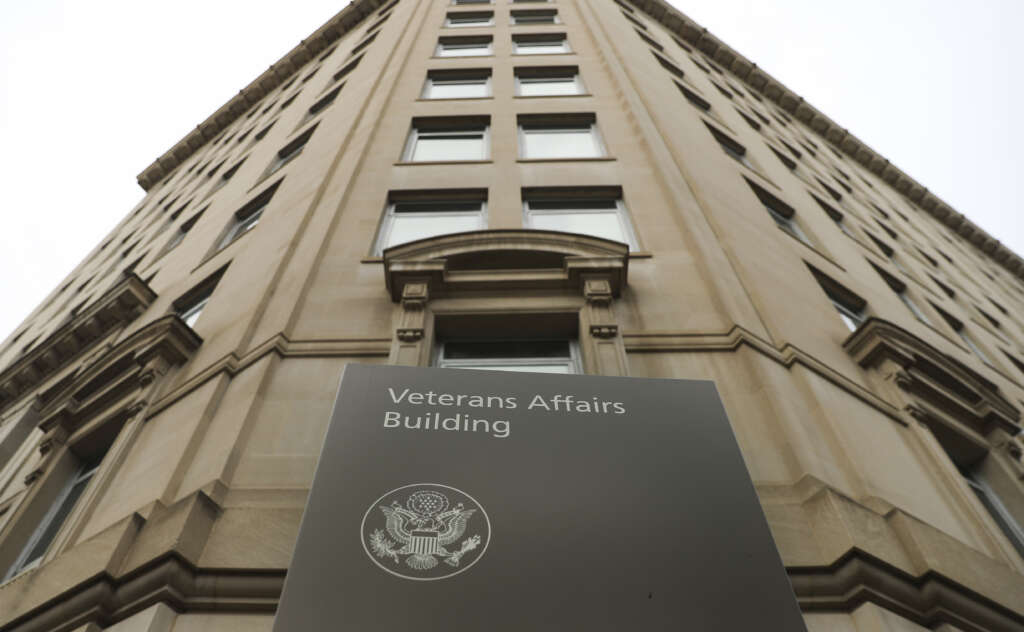


 Caroline Ellison moved to community confinement after 11 months, projected release February 2026 following FTX fraud cooperation.
 Sam Bankman-Fried (SBF) is pushing for a new trial this week following his 2023 conviction tied to his time at FTX.