 Login
LoginWhat Can Security Leaders Learn From Prevented University Attack?
Campus police were targeted in a planned university attack.


Campus police were targeted in a planned university attack.
The Reg Standards Bureau was plunged into uproar this week when a reader suggested a new unit for weight, inspired by Cornwall's revamped food recycling service.…
Explore biometric mfa for enhanced security. Learn about implementation, benefits, hacking techniques, and how to protect your systems. A must-read for developers.
The post Exploring Biometric Multi-Factor Authentication appeared first on Security Boulevard.
Security leaders can help defend their organization’s reputation through proper protective measures.

The IRS is moving about 1,000 IT employees out of its tech shop, as part of a reorganization plan that’s been underway for months.
Impacted employees say they have few details about what work they’ll be doing, and have been told by the agency to instead “focus on completing an orderly transition of your current work.” The notice they received last week states that they will no longer be working on IRS IT projects.
According to the notice, obtained by Federal News Network, the reassignments will go into effect on Dec. 28.
“As part of the IRS’s restructuring of the IT organization, approximately 1,000 positions across IRS IT are being reassigned,” the Dec. 11 notice states. “Your position is among those identified for a directed reassignment to the Chief Operating Officer.”
Employees who received the email have until Jan. 9 to complete an “orderly transition.” That includes wrapping up current work, offloading assignments and supporting project handoffs.
“You are not expected to take IRS IT project work with you into the COO organization,” the email states. “IRS IT project work will remain within IRS IT.”
Impacted employees told Federal News Network they’re not sure what kind of work they’ll be doing as part of this reassignment. Federal News Network spoke to four IRS employees. The IRS and the Treasury Department did not respond to requests for comment.
“While this is a permanent realignment out of the CIO organization, it is not a permanent realignment into COO,” a separate internal document states. “We will be collaborating with the Human Capital Office (HCO) to align and qualify employees for positions across IRS and Treasury.”
Reassigned employees are being asked to upload their resumes no later than Jan. 23, 2026.
Two employees who received reassignment notices told Federal News Network that they also received reduction-in-force notices during the recent government shutdown.
Those RIF notices were rescinded, as part of the stopgap spending bill Congress passed in November, ending the 43-day shutdown. Language in the continuing resolution bars agencies from carrying out layoffs through Jan. 30, 2026.
“Morale at the IRS is at an all-time low, and nobody trusts anyone,” one IRS employee told Federal News Network. “This administration is getting precisely what it wanted — to destroy the IRS from within.”
The IRS told employees that the reassignments “are based on organizational alignment decisions and is not a reflection of individual performance.” The agency notice also states that reassignment will not affect an employee’s pay, benefits or bargaining unit status.
“Still complete chaos, grievances being filed for unfair moves without explanation and just fueled by who you know and connections,” a second IRS employee told Federal News Network.
Last month, IRS IT directed hundreds of its employees to complete a “technical skills assessment.” According to two IRS IT employees, the test, conducted by HackerRank, consisted of several multiple-choice questions and a coding question that made up the majority of the overall grade. One employee said the questions “had zero to do with our jobs.”
“They did this to say, ‘Look, 98% of our people failed, so we are going to move you or RIF you,’” the employee said.
The Treasury Department RIF sent RIF notices to 1,377 employees during the shutdown. Court filings showed most of those notices went to IRS employees, especially those working in human resources and IT.
Sam Corcos, Treasury’s chief information officer and a Department of Government Efficiency representative, defended the IRS layoffs as “painful” in a recent podcast interview, but said they were a necessary tool to get the agency’s stalled IT modernization efforts back on track.
“It’s very hard to fire people. The only way that you can really reduce the size of government is through the reduction-in-force process,” Corcos said on an Oct. 9 episode of the Modern Wisdom podcast.
During the nearly three-hour interview, Corcos said much of his time as Treasury CIO has been focused on projects at the IRS, and that the agency’s IT workforce doesn’t have the necessary skills to deliver on its long-term modernization goals.
“We’re in the process of recomposing the engineering org in the IRS, which is we have too many people within the engineering function who are not engineers,” he said.
“The goal is, let’s find who our engineers are. Let’s move the people who are not into some other function, and then we’re going to bring in more engineers,” he added.
In March, the IRS removed 50 of its IT leaders from their jobs and put them on paid administrative leave. Corcos defended that decision, saying the IRS “has had poor technical leadership for roughly 40 years.”
During the interview, Corcos said the layoffs in the federal government are more restrictive than what’s allowed in the private sector. In practice, he said government RIFs often result in agencies losing younger employees with in-demand skills, but with less tenure — something he said should be corrected.
“When you do these reductions in force, it’s basically tenure. So it doesn’t matter who your top performers are. It’s effectively irrelevant to a RIF. If you want a 20% RIF, you can your 20% youngest people, who are often your top performers, and you’ve got to remove them,” Corcos said. “I think most people would probably say that performance-based RIFs is probably good instead of tenure-based. I’m sure that’s something people are pushing for, but that would make a really big impact.”
The IRS lost more than 25% of its workforce this year, largely through voluntary incentives, including early retirements and the deferred resignation program. Despite these widespread cuts, Corcos said the agency hasn’t seen “that much fallout yet,” because the agency had increased its staffing “to ahistoric levels” under the Biden administration.
“It’s a scalpel. It’s not a chainsaw,” he said.
The IRS, in a separate memo dated Dec. 15, told staff that it is moving ahead with a reorganization of its IT division, its first major restructuring in more than 20 years. IRS IT is replacing its associate chief information officers with four “mission-focused verticals” and five “foundational areas.”
Those four verticals are:
The five foundational areas are:
“Each area is designed to support a specific part of the tax administration ecosystem and improve how technology and agency needs come together,” the memo states.
According to the internal notice, IRS IT has about 5,100 full-time employees. The agency wrote that reorganization offers a “simplified structure that strengthens the connection between technical work and the agency’s core functions.”
IRS Chief Information Officer Kaschit Pandya told employees this summer that IRS IT needed to “reset and reassess” in part because more than 2,000 IT employees have left the agency this year.
The memo states that approximately 94% of IRS IT employees work in technical roles. The remaining 6% work in operational or support staff roles — including planning, financial, contractual, governance and program work.
The Treasury Department announced in April that it is planning to consolidate IT, human resources, procurement, travel and other administrative functions carried out by multiple offices at its component agencies.
The post IRS moves 1,000 IT employees out of its tech shop, with few signs of what work they’ll do next first appeared on Federal News Network.

© AP Photo/Susan Walsh
Firefox is addressing recent community concerns about AI integration by confirming it will include the option to completely disable all AI features within the browser. The team has been calling this functionality the "AI kill switch" internally, which is what I hope it ends up being called.

There have been a number of high-profile cases where scientific papers have had to be retracted because they were filled with AI-generated slop—the most recent coming just two weeks ago. These instances raise serious questions about the quality of peer review in some journals—how could anyone let a figure with terms like “runctitional,” “fexcectorn,” and “frymblal” through, especially given the ‘m’ in frymblal has an extra hump? But it has not been clear whether these high-profile examples are representative. How significantly has AI use been influencing the scientific literature?
A collaboration of researchers at Berkeley and Cornell have decided to take a look. They’ve scanned three of the largest archives of pre-publication papers and identified ones that are likely to have been produced using Large Language Models. And they found that, while researchers produce far more papers after starting to use AI and the quality of the language used went up, the publication rate of these papers has dropped.
The researchers began by obtaining the abstracts of everything placed in three major pre-publication archives between 2018 and mid-2024. At the arXiv, this netted them 1.2 million documents; another 675,000 were found in the Social Science Research Network; and bioRxiv provided another 220,000. So, this was both a lot of material to work with and covered a lot of different fields of research. It also included documents that were submitted before Large Language Models were likely to be able to produce output that would be deemed acceptable.


© selimaksan
Snowflake pushed an update this week that caused a “major outage” worldwide, leaving many users unable to query data, experiencing failures when ingesting files, and receiving error messages for 13 hours, the company wrote in an impact statement.…
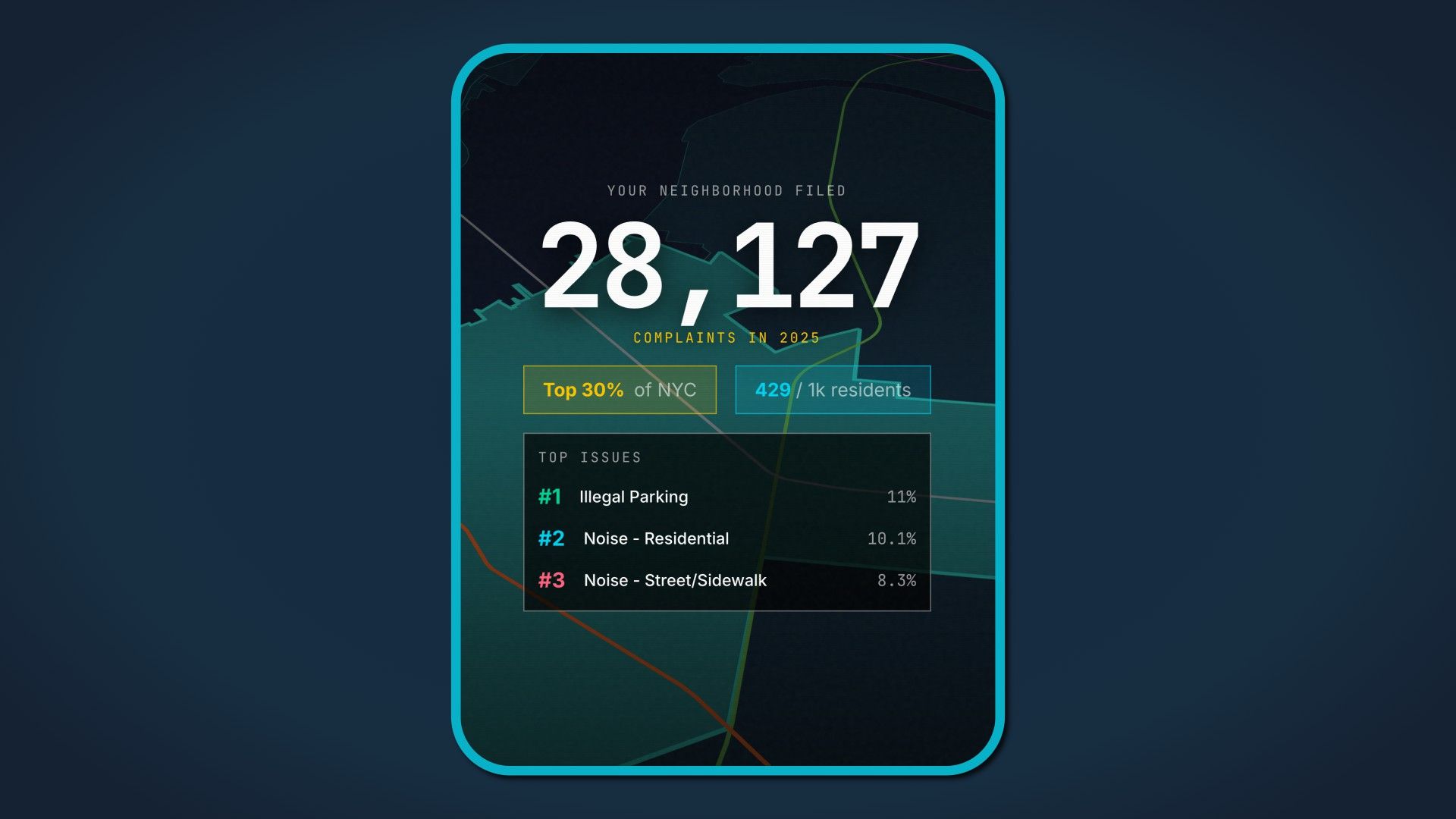
Every app seems to end the year with a Spotify Wrapped-style recap now, but what if you could get one for the neighborhood where you live? How many people complained about potholes? What was the most complained-about spot? A new project turns neighborhood complaints into a personalized highlight reel for your city.
I'm often searching YouTube for the latest movie trailers, full of excitement for the next big release. However, I typically find the results full of AI-generated trailers, sometimes ranking higher than the real trailer from the studio's official channel. I bet you've experienced the same. Now, YouTube is finally doing something about that.


Google is expanding its content transparency tools within the Gemini app. It is now possible to verify videos generated by the company's own artificial intelligence models. Keep in mind, this is exclusive to anything Gemini made, because the AI uses an ID that only it can see.

Last month, Google and Disney had a bit of a spat over YouTube TV licensing. One of the unexpected consequences was that Google Play and YouTube movie purchases disappeared from the Movies Anywhere service. The dust has finally settled, but you’ll need to take action to get your media back.

North Korea's yearly cryptocurrency thefts have accelerated, with Kim's state-backed cybercriminals plundering just over $2 billion worth of tokens in 2025.…
Amazon is bringing conversational AI to Ring doorbells with the launch of a new feature called Alexa+ Greetings. This new tool is designed to handle visitors and deliveries using natural conversation when you cannot get to the door yourself.

The team behind the Raspberry Pi OS alternative Armbian published on GitHub a new image flashing application this week. It's a cross-platform alternative to software like the official Raspberry Pi Imager, but with the ability to directly download Armbian images.

You've likely had a printer that didn't work and needed to be replaced or disposed of. However, it's not a big pile of plastic and metal heading straight for a dump. If you are a resourceful maker, an engineer, or even just a hobbyist, a broken printer is actually a treasure chest.

While not quite a separate dialect, Formula 1-speak can be heavy on the jargon at times. They say “box” instead of pit, “power unit” to describe the engine and hybrid system, and that’s before we get into all the aerodynamics-related expressions like “outwash” and “dirty air.” Next year is a big technical shakeup for the sport, and it seems we’re getting some new terminology to go with it. So forget your DRS and get ready to talk about Boost mode instead.
The F1 car of 2026 will be slightly narrower and slightly lighter than the machines that raced for the last time earlier this month. But not by a huge amount: minimum weight is decreased by 30 kg to 724 kg, the wheelbase is 200 mm shorter at 3,400 mm, and the car’s underfloor is 150 mm narrower than before.
The front wing is 100 mm narrower and has just two elements to it, although for the first time in F1 history, this is now an active wing, which works in conjunction with the three-element active rear wing. Active rear wings have been a thing in F1 since the introduction of DRS—the drag reduction system—in 2011, but now there’s a philosophical change to how they’ll work.


© Formula 1


