Reading view

There are new articles available, click to refresh the page.

SEC Charges Bitcoin Miner for Duping Investors Out of $48.5 Million 

Bitcoin Magazine

SEC Charges Bitcoin Miner for Duping Investors Out of $48.5 Million 

The U.S. Securities and Exchange Commission has charged Danh C. Vo, founder and CEO of bitcoin mining company VBit Technologies Corp., with defrauding investors out of $48.5 million. 

According to the SEC, Vo misused the funds for gambling, cryptocurrency purchases, and gifts to family members, while misleading investors about the operations of his business.

The complaint, filed in the U.S. District Court for the District of Delaware, alleges Vo raised over $95.6 million from approximately 6,400 investors between December 2018 and February 2022. 

He sold “hosting agreements,” which promised investors a share of profits from bitcoin mining rigs operated by VBit. Most customers chose this passive investment option rather than purchasing rigs themselves.

Vo misrepresented how many mining rigs were actually operational, effectively selling more hosting agreements than the company could support. 

“While some investors received returns, others suffered substantial losses,” the complaint stated. Vo either knew or was reckless in not knowing that the company could not meet the obligations tied to the hosting agreements.

Vo, 37, exercised complete authority over VBit, including its promotional materials, website content, and investor account information. 

The SEC said the hosting agreements qualify as securities because investors relied on Vo and VBit’s efforts to generate profits.

SEC: Family members received misappropriated funds

In addition to the misappropriation, Vo allegedly transferred $5 million to family members, including his ex-wife, mother, brother, and sister, the commission said. He reportedly left the U.S. with the remaining misappropriated funds following his divorce in November 2021. 

Several family members are named as relief defendants in the lawsuit and have consented to disgorge the funds they received, pending court approval, per the SEC.

VBit was acquired by Advanced Mining Group in 2022 and is now defunct. The action seeks disgorgement of ill-gotten gains, civil penalties, and a ban on Vo from participating in future securities offerings.

The lawsuit also comes as Congress debates federal measures to address cryptocurrency scams. A bipartisan proposal would create a dedicated task force to identify and address fraud in the digital asset sector.

The SEC said they want Vo’s alleged conduct to be a reminder that investors should carefully evaluate claims of passive income from crypto and confirm that operations are transparent and verifiable.

This post SEC Charges Bitcoin Miner for Duping Investors Out of $48.5 Million  first appeared on Bitcoin Magazine and is written by Micah Zimmerman.

Bitcoin Price Crashes to $84,000 – Is $70,000 Next?

Bitcoin Magazine

Bitcoin Price Crashes to $84,000 – Is $70,000 Next?

The bitcoin price dropped sharply today after a brief pump near $90,000, sliding to $84,544 as the price sell-off continued into its second month. 

Bitcoin lost 2% over the past 24 hours. It remains 5% below its seven-day high of $89,220 and hovers near the week’s low of $84,596. Trading volume reached $56 billion. Bitcoin’s market capitalization stands at $1.69 trillion. The circulating supply is roughly 19.96 million BTC out of a total 21 million, according to Bitcoin Magazine Pro data. 

The drop follows a brief rally that earlier saw the Bitcoin price test $89,000. The surge came after the U.S. released new Consumer Price Index data. Inflation rose 2.7% year over year in November, lower than expected. Core CPI, which excludes food and energy, fell to 2.6%, the lowest since early 2021.

Bitcoin jumped from intraday lows near $86,000 to challenge $89,000. Traders viewed the cooler inflation report as a potential signal for looser Federal Reserve policy in 2026. CME FedWatch data suggested slightly higher odds of a rate cut by March, though January moves remain unlikely.

The rally did not last. The bitcoin price failed to break $90,000 and slid to $84,4000. This pattern is familiar: sharp spikes followed by quick retracements.

What’s dragging down the bitcoin price?

A persistent challenge is U.S.-listed spot Bitcoin ETFs. These funds, once a major source of demand, have seen net redemptions. The outflows remove institutional support that previously helped stabilize the price. Without consistent ETF inflows, breakouts above $89,000 are harder to sustain.

Other economic indicators add uncertainty. Recent labor market data showed U.S. unemployment rising to 4.6%, its highest since 2021. Job growth remains uneven. The mixed signals complicate Federal Reserve policy, suggesting a cautious approach despite easing inflation.

Political factors add to market complexity. President Donald Trump has publicly urged lower interest rates and suggested nominating a Fed chair favoring aggressive easing. Markets have largely treated the comments as noise, but the statements add a variable to the macro picture.

Technically, the bitcoin price is consolidating rather than trending. Resistance forms just below $90,000. Supply above this level remains strong, held by investors who bought during prior rallies. 

Analysts at Bitwise recently suggested Bitcoin could break its historical four-year cycle. The firm noted BTC might reach new all-time highs in 2026 with lower volatility and reduced correlation to equities.

The Bitcoin Fear and Greed Index currently sits at 17/100, signaling extreme fear. Historically, readings in this range have coincided with undervaluation. Contrarian investors see potential buying opportunities, though sentiment remains cautious.

Is $70,000 next? 

Technical analysts from Bitcoin Magazine wrote earlier this week that the $84,000 support level is under pressure. If the bitcoin price falls below this point, it could test the $72,000 to $68,000 zone. Initial bounces are expected, but a break below $84,000 could trigger faster declines toward $70,000.

Bitcoin’s price may drop to the $72,000–$68,000 support zone after breaking the $84,000 level, with bears currently in control. A strong bounce is likely from that lower zone, potentially retesting $84,000, though the 4-Year Cycle suggests further downside could occur later in 2026.

Resistance extends from $94,000 to $118,000. Bulls will need substantial buying volume to break above these levels, per Bitcoin Magazine analysts. 

Short-term momentum favors sellers. Last week, the Bitcoin price closed the weekly candle in red, failing to sustain gains near $94,000. Bears are well-positioned to push prices lower this week. 

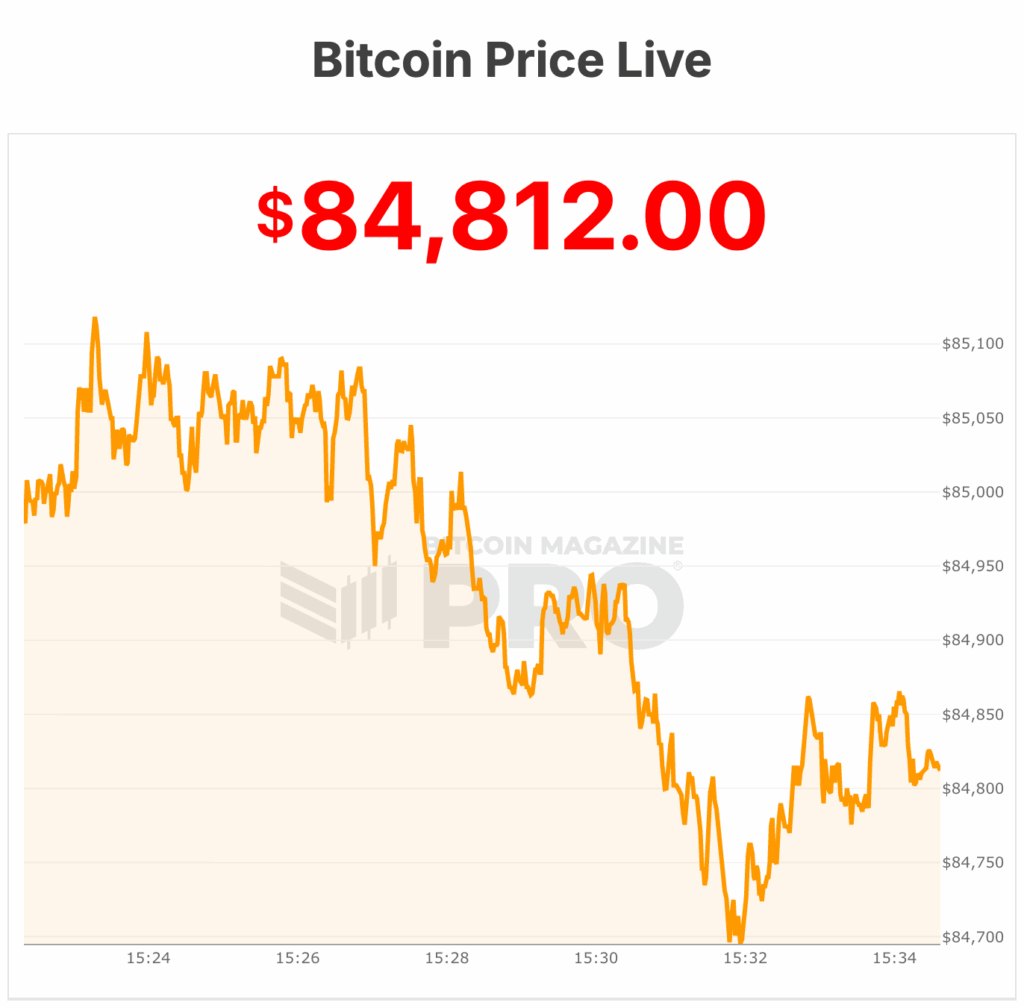
At the time of writing, the bitcoin price is $84,812. Trading volume reached $56 billion. Bitcoin’s market capitalization stands at $1.69 trillion. The circulating supply is roughly 19.96 million BTC out of a total 21 million, according to Bitcoin Magazine Pro data. 

Bitcoin price

This post Bitcoin Price Crashes to $84,000 – Is $70,000 Next? first appeared on Bitcoin Magazine and is written by Micah Zimmerman.
Fold Launches Nationwide Bitcoin Services Across All 50 States With BitGo

Bitcoin Magazine

Fold Launches Nationwide Bitcoin Services Across All 50 States With BitGo

Fold Holdings, Inc. ($FLD), a publicly traded Bitcoin financial services company, just announced that its platform is now available in all 50 U.S. states.

The expansion follows a strategic partnership with BitGo Bank & Trust, which recently became one of the first digital asset companies to secure a federal bank charter from the Office of the Comptroller of the Currency (OCC).

The move marks a rare milestone in U.S. consumer Bitcoin services: Fold is the first platform to operate nationwide under a single federally supervised trust framework. 

Previously, state-by-state licensing and regulatory barriers constrained consumer access, particularly in states like New York. With BitGo’s charter, Fold can now provide Bitcoin exchange and custody services across the entire country, including historically restrictive markets, this is according to the company’s statement shared with Bitcoin Magazine. 

Fold wants a ‘national framework’ for Bitcoin

“BitGo B&T’s federal bank charter combined with Fold’s Bitcoin financial products gives the U.S. its first true national framework for Bitcoin access,” said CEO Will Reeves. “It replaces a patchwork of state rules with a single, regulated structure, creating a clear path forward for both companies and consumers.” 

Reeves emphasized that nationwide availability allows the company to scale its offerings and deliver Bitcoin products in line with federal oversight.

The company’s consumer-facing products include its Bitcoin Gift Card™ and the upcoming Fold Bitcoin Credit Card™, which will now reach previously untapped markets. 

BitGo provides the digital asset infrastructure through its Crypto-as-a-Service platform, enabling them to operate within a federally supervised compliance framework while continuing to innovate in rewards, payments, and custody services.

“This is a meaningful moment for both BitGo B&T and Fold,” said Frank Wang, Executive Director of Fintech Sales at BitGo. “Our conversion to a federal bank charter allows us to support consumer platforms at a national level, and Fold is a natural partner in that effort. Access has been limited by geography, but with a national framework, both companies can now operate as intended — responsibly and across the entire U.S.”

This partnership positions FLD to capture a wider audience while aligning consumer crypto services with federal standards. At the same time, reliance on BitGo introduces dependencies: any regulatory or operational issues at BitGo could affect the company’s nationwide offering. 

Fold is beginning to onboard users nationwide, the company said, with details of product availability to be shared as the rollout progresses. 

This post Fold Launches Nationwide Bitcoin Services Across All 50 States With BitGo first appeared on Bitcoin Magazine and is written by Micah Zimmerman.

NYSE Owner in Talks to Invest in Crypto Firm MoonPay: Report

Bitcoin Magazine

NYSE Owner in Talks to Invest in Crypto Firm MoonPay: Report

Intercontinental Exchange Inc. (ICE), the operator of the New York Stock Exchange, is in discussions to invest in crypto payments company MoonPay, people familiar with the matter said, per Bloomberg. 

The potential funding round could value MoonPay at roughly $5 billion, up from its previous $3.4 billion valuation, according to the sources, who requested anonymity due to the private nature of the talks.

MoonPay, based in New York, provides infrastructure for users to buy and sell cryptocurrencies. The company recently secured a Limited Purpose Trust Charter from the New York Department of Financial Services, a move that complements its existing BitLicense and allows it to expand custody and other crypto services in the state. 

The combination of these regulatory approvals positions MoonPay alongside companies such as Coinbase and PayPal, which are permitted to operate under New York’s strict digital asset framework.

ICE’s potential investment reflects its ongoing efforts to broaden its presence in the digital asset sector. The firm also operates Bakkt, a crypto platform, and has recently committed $2 billion to Polymarket, a prediction market platform. Analysts view these moves as part of a wider strategy by ICE to engage with emerging financial technologies.

CFTC Acting Chair Caroline Pham is joining MoonPay

The announcement comes amid leadership changes at MoonPay. Caroline Pham, the acting chair of the Commodity Futures Trading Commission (CFTC), has confirmed she will join the company as chief legal officer and chief administrative officer after leaving the agency. 

Pham has played a key role in the CFTC’s crypto initiatives over the past year, including the “Crypto Sprint,” which aimed to clarify regulatory rules for digital assets. She also recently helped the agency withdraw guidance on the “actual delivery” of digital assets, which she described as outdated.

Pham’s move underscores the company’s emphasis on compliance and regulatory expertise. CEO Ivan Soto-Wright praised her leadership at the CFTC, noting that her experience will help translate regulatory progress into practical outcomes for the company’s users and partners. 

Pham’s exact start date has not been confirmed, pending the confirmation of Mike Selig as CFTC chair.

Earlier this year, Rumble announced an exclusive partnership with MoonPay to launch Rumble Wallet, enabling creators to manage earnings outside traditional banking. The company said the wallet will allow users to buy, sell, and swap Bitcoin and other digital assets directly on the platform, leveraging MoonPay’s infrastructure.

This post NYSE Owner in Talks to Invest in Crypto Firm MoonPay: Report first appeared on Bitcoin Magazine and is written by Micah Zimmerman.

KindlyMD ($NAKA) Board Announces Authorization of Share Repurchase Program

Bitcoin Magazine

KindlyMD ($NAKA) Board Announces Authorization of Share Repurchase Program

KindlyMD Inc., the healthcare firm operating a Bitcoin treasury through its subsidiary Nakamoto Holdings, said Wednesday its board has authorized a share repurchase program, giving management discretion to buy back stock as shares trade below the value of the company’s bitcoin holdings.

The Nasdaq-listed company said it may repurchase shares through open-market purchases, privately negotiated transactions, block trades, or other legally permissible methods.

Buybacks may also be executed under Rule 10b5-1 trading plans and will comply with Rule 10b-18 of the Securities Exchange Act.

“This share repurchase program reflects our confidence in the long-term value of the Company and adds an important degree of flexibility to our capital allocation framework,” said David Bailey, Chairman and CEO of KindlyMD.

 “As shareholders ourselves, we remain focused on deploying capital with discipline and intention, balancing continued investment in our strategic priorities with actions we believe will drive durable value for all shareholders.”

The authorization does not commit KindlyMD to repurchase any specific number of shares. Management will determine the timing and size of any buybacks based on market conditions, capital requirements, trading liquidity, and regulatory considerations. 

The board may modify, suspend, or terminate the program at any time, the company said. 

$NAKA, KindlyMD stock merger

The move comes after a steep selloff in KindlyMD’s stock following its merger earlier this year with Nakamoto Holdings, a bitcoin-native treasury firm. 

Shares of KindlyMD, which trade under the ticker ‘NAKA,’ have fallen more than 95% from their peak during the bitcoin treasury company surge in the spring. Shares are currently trading near $0.37. 

According to the company’s public dashboard, KindlyMD holds 5,398 bitcoin on its balance sheet. At a bitcoin price near $88,000, those holdings are valued at roughly $1 billion — well above the company’s enterprise value, estimated at about $400 million.

KindlyMD has positioned bitcoin as a long-term balance-sheet asset rather than a short-term trading instrument, while continuing to operate integrated healthcare clinics and data-driven care services. 

The share repurchase authorization adds another financial lever as the company navigates market volatility, regulatory pressure, and investor scrutiny following its rapid rise and fall in 2025.

Disclosure: Nakamoto is in partnership with Bitcoin Magazine’s parent company BTC Inc to build the first global network of Bitcoin treasury companies, where BTC Inc provides certain marketing services to Nakamoto. More information on this can be found here.

This post KindlyMD ($NAKA) Board Announces Authorization of Share Repurchase Program first appeared on Bitcoin Magazine and is written by Micah Zimmerman.

Taiwan Reveals It Holds 210 Bitcoin Seized in Criminal Cases, Valued at $18 Million

Bitcoin Magazine

Taiwan Reveals It Holds 210 Bitcoin Seized in Criminal Cases, Valued at $18 Million

Taiwan’s Ministry of Justice has disclosed that the government holds more than 210 bitcoin seized through criminal investigations, placing the island among the world’s top government holders of the asset by volume.

The disclosure, confirmed by legislator Ko Ju-chun, shows that judicial authorities held 210.45 BTC as of Oct. 31. At current market prices, their BTC is worth about $18 million. According to data from Bitcoin Treasuries, this would put Taiwan as the 10th-largest government holder of BTC globally.

Ko said the information was released in response to a legislative inquiry and shared an image documenting the total amount held under state custody. The ministry said the bitcoin was confiscated in cases tied to financial crime and illegal digital asset activity.

Back in November, Taiwan’s Premier and Central Bank reportedly agreed to study Bitcoin as a strategic reserve, draft pro-Bitcoin regulations, and pilot BTC treasury holdings, starting with seized BTC that is ‘awaiting auction.’  

While many countries have accumulated BTC through enforcement actions, few have provided clear guidance on custody standards or long-term policy.

Taiwan’s Ministry of Justice did not outline any plans to liquidate, auction, or convert the seized BTC into fiat currency. Officials also did not disclose where or how the BTC is custodied, or whether it is held through self-custody or third-party services.

BREAKING: 🇹🇼 The Ministry of Justice has just revealed that Taiwan now holds 210.45 Bitcoin in seized assets.

Another nation-state holding Bitcoin pic.twitter.com/bp6VJ90rDM

— Bitcoin Magazine (@BitcoinMagazine) December 18, 2025

United States’ bitcoin holdings from seizures 

The United States, which leads global government BTC holdings with more than 328,000 BTC, has seized crypto linked to cybercrime and fraud cases. China and the United Kingdom rank next after the U.S.

Collectively, governments worldwide hold more than 640,000 BTC, or about 3% of bitcoin’s total supply, according to public data. Most of these holdings stem from law enforcement seizures rather than formal reserve strategies.

Taiwan has not announced any intention to adopt BTC as part of its national reserves. 

Still, the disclosure lands amid broader debates in the country over digital asset regulation and the treatment of confiscated crypto. Lawmakers have pressed agencies to clarify whether seized assets should be sold, retained, or managed under a standardized framework.

The Ministry of Justice said the BTC was obtained as part of its broader effort to track and process virtual assets tied to criminal proceedings. 

At the time of writing, the price of Bitcoin is near $88,000.

This post Taiwan Reveals It Holds 210 Bitcoin Seized in Criminal Cases, Valued at $18 Million first appeared on Bitcoin Magazine and is written by Micah Zimmerman.

Bitcoin Price Briefly Pumps Above $89,000 As Cooler CPI Data Rolls In

Bitcoin Magazine

Bitcoin Price Briefly Pumps Above $89,000 As Cooler CPI Data Rolls In

Bitcoin briefly surged above $89,000 on Thursday as a sharply cooler-than-expected U.S. inflation report came in.

At the time of writing, the bitcoin price was trading near $88,374, down roughly 2% over the past 24 hours, according to market data. The pullback leaves BTC about 2% below its recent seven-day high of $90,165 and roughly 4% above its week’s low near $85,374. Bitcoin’s market capitalization stands at approximately $1.77 trillion, with 19.96 million BTC currently in circulation.

The initial rally was sparked by fresh Consumer Price Index (CPI) data from the U.S. Bureau of Labor Statistics, which showed inflation cooling faster than economists expected. Headline CPI rose 2.7% year over year in November, well below consensus expectations of around 3% and down from earlier readings. Core CPI, which strips out food and energy, fell to 2.6%—its lowest level since early 2021.

The bitcoin price reacted swiftly around the time of the data, jumping from intraday lows near $86,000 to briefly challenge the psychologically important $89,000 level, according to Bitcoin Magazine pro data.

The move reflected renewed optimism that easing inflation could give the Federal Reserve greater room to cut interest rates in 2026, a backdrop that has historically supported risk assets, including bitcoin.

According to CME FedWatch data, odds of a rate cut by March edged higher following the release, though expectations for a January move remain muted.

Bitcoin price action 

Still, the rally proved short-lived. The bitcoin price failed to reclaim $90,000 decisively and slipped back as the session wore on, currently sitting near $88,000. This has been a market dynamic that has become familiar in recent weeks: sharp, data-driven bursts higher followed by rapid retracements.

One key headwind remains sustained outflows from the U.S.-listed spot bitcoin exchange-traded funds. After serving as a major source of demand earlier in the year, ETFs have seen steady net redemptions, removing a layer of institutional support that previously helped absorb selling pressure. Market participants say the absence of consistent ETF inflows has made it harder for bitcoin to sustain breakouts, even on positive macro news.

Macro signals remain mixed beyond inflation. Earlier this week, delayed U.S. labor market data showed unemployment rising to 4.6%, its highest level since 2021, while job growth remained uneven. The data complicates the Federal Reserve’s outlook, reinforcing expectations that policymakers will proceed cautiously despite cooling inflation.

Political uncertainty is also lingering in the background. President Donald Trump has publicly called for significantly lower interest rates and indicated he plans to nominate a Federal Reserve chair who supports more aggressive easing. While markets have so far treated the comments as noise, they add another variable to an already complex policy landscape.

Zooming out, bitcoin’s price appears to be consolidating rather than trending. Despite remaining near record highs on a historical basis, price action has tightened, with resistance forming just below $90,000 and strong supply reported above that level from investors who accumulated during earlier rallies.

Analysts at Bitwise recently released a report suggesting Bitcoin could break away from its historical four-year market cycle, potentially achieving new all-time highs in 2026 while exhibiting lower volatility and reduced correlation with equities.

The Bitwise report argues that the Bitcoin price’s historical four-year cycle, tied to halvings and marked by gains followed by pullbacks, may no longer hold. The firm also challenged the long-standing criticism that BTC is too volatile for mainstream investors.

According to Bitwise, BTC was less volatile than Nvidia stock throughout 2025, a comparison Hougan says underscores the asset’s ongoing maturation.

Market in ‘extreme fear’

At the time of writing, the Bitcoin Fear and Greed Index sits at 17/100, signaling extreme fear among market participants. Historically, readings in this range have often coincided with undervalued market conditions, suggesting a contrarian buying opportunity for those willing to navigate the emotional volatility.

Two days ago, the market sat near 11/100 despite a higher bitcoin price point. 

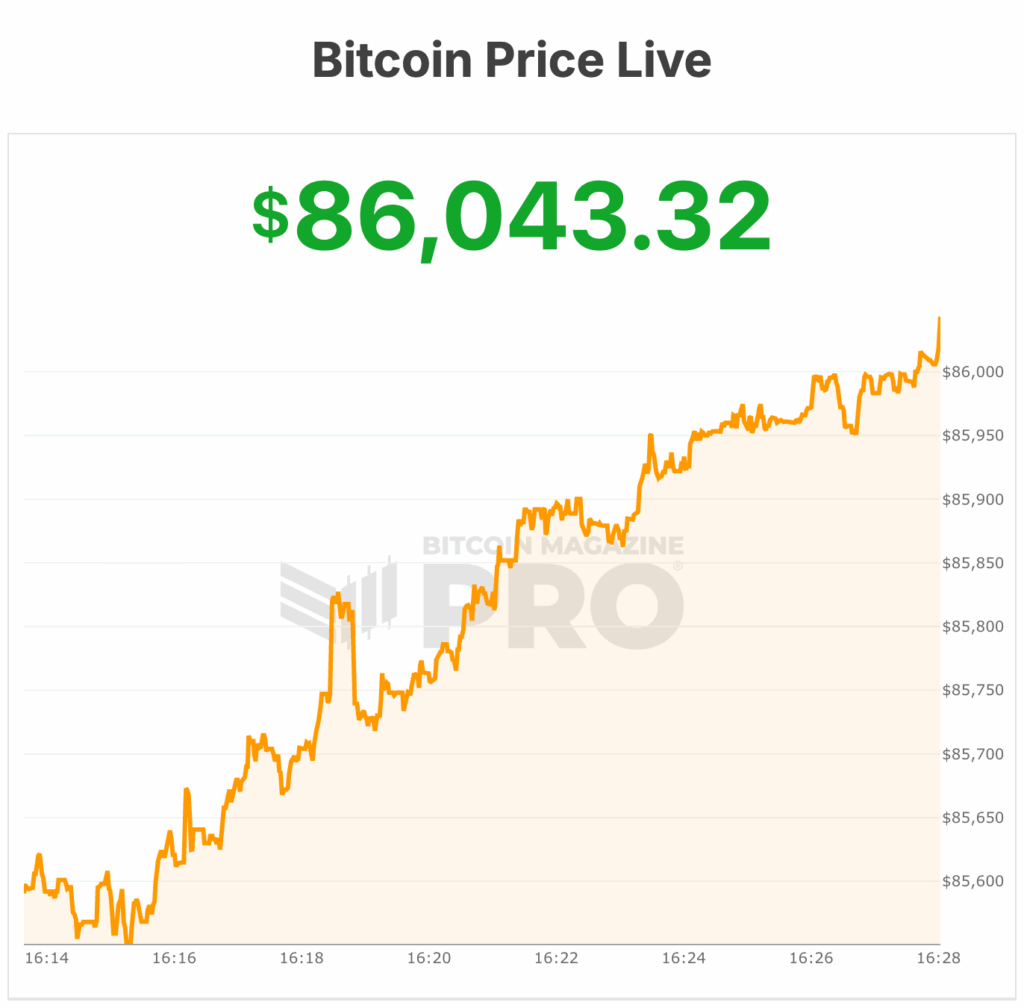
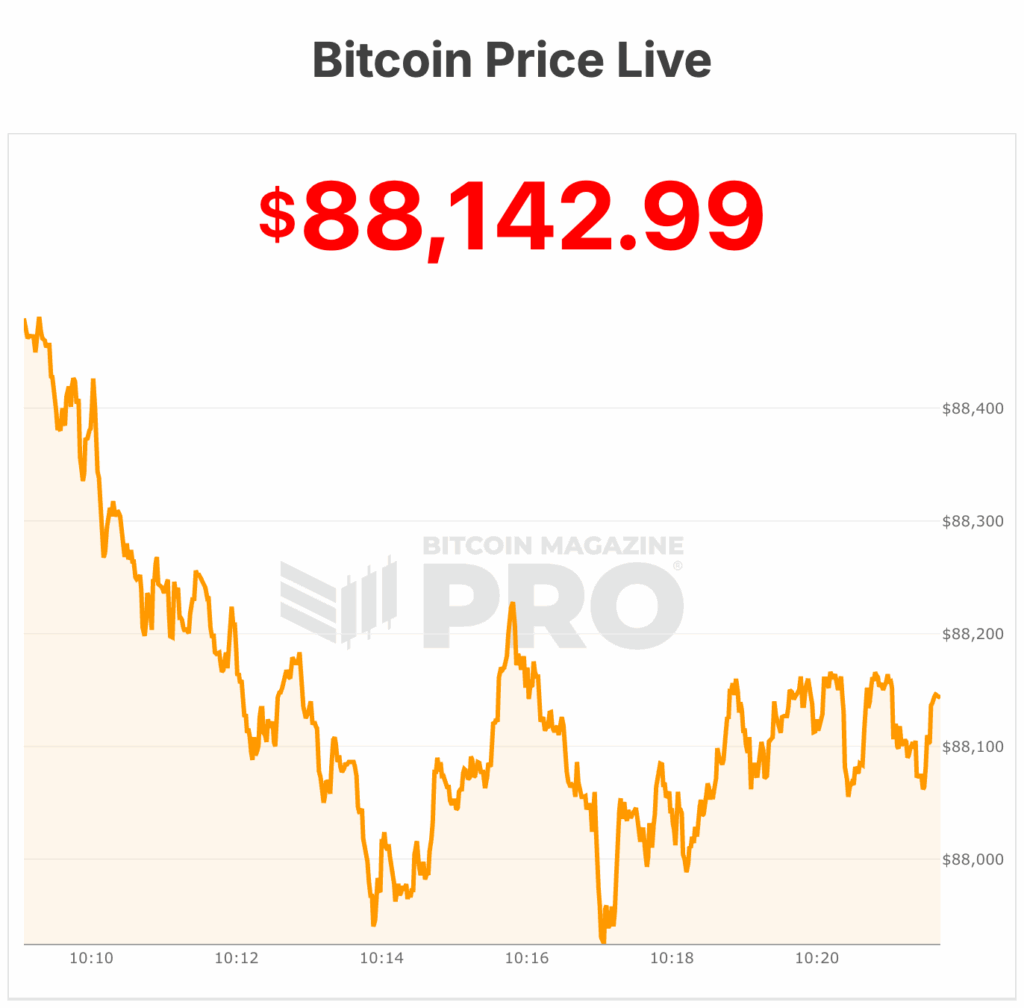
For now, bitcoin’s response to softer inflation highlights its continued sensitivity to macroeconomic data, but the inability to sustain gains above $89,000 suggests conviction remains limited. At the time of writing, the bitcoin price is $88,142. 

bitcoin price

This post Bitcoin Price Briefly Pumps Above $89,000 As Cooler CPI Data Rolls In first appeared on Bitcoin Magazine and is written by Micah Zimmerman.

BitGo Enables Lightning Network Payments Directly from Custody

Bitcoin Magazine

BitGo Enables Lightning Network Payments Directly from Custody

BitGo, a digital asset infrastructure company, announced it now offers Bitcoin Lightning Network access directly from its qualified custody platform. The move makes it one of the first companies to provide Lightning payments for institutional custody.

The service aims to give clients faster and cheaper Bitcoin transactions while keeping institutional security standards intact. It builds on BitGo’s earlier self-custody Lightning solution.

The new offering is powered through a partnership with Voltage, a Lightning Network infrastructure provider. Clients can now use Lightning without running their own nodes or managing keys. BitGo and Voltage handle infrastructure, channels, liquidity, and key management.

Through simple APIs, clients can create wallets, send payments, generate invoices, and track transactions. The platform integrates fully with BitGo’s existing wallet infrastructure, policies, and permissions.

Enterprises adopting Lightning usually face challenges like maintaining nodes, channels, liquidity, and keys. BitGo removes these hurdles. Institutions can now access Lightning with minimal setup and zero operational overhead.

BitGo, along with Ripple, Circle, Fidelity Digital Assets, and Paxos, received conditional approval from the OCC to become federally chartered national trust banks.

This shift from state to federal oversight allows them to offer nationwide fiduciary and digital asset custody services, enhancing regulatory clarity, institutional confidence, and the mainstream adoption of cryptocurrencies.

Lightning Network hits an all-time high

This move comes as Bitcoin’s Lightning Network hits a new all-time high of 5,637 BTC in capacity, driven largely by institutional inflows even as broader user adoption and node growth lag. 

Data from AMBOSS shows the surge, concentrated in November and December, surpasses the previous peak from March 2023, signaling renewed confidence among major exchanges like Binance and OKX, which have added significant BTC to Lightning channels.

 Despite rising capacity, the network’s number of nodes and channels remains below historical highs, highlighting a gap between capitalization and widespread use. 

The increase coincides with ecosystem developments, including Tether’s $8 million investment in Lightning-focused startup Speed and Lightning Labs’ release of Taproot Assets v0.7, enabling reusable addresses, auditable asset supplies, and larger, more reliable transactions. 

These upgrades position the Lightning Network as more than a micropayment system, offering potential for higher-value transfers that leverage Bitcoin’s security, speed, and low fees while expanding real-world financial applications on the network.

“By offering institutional access to Lightning directly from custody, we are allowing our clients to focus on innovation instead of infrastructure,” said Mike Belshe, BitGo CEO and co-founder. “We are combining the speed and lower transaction costs of Lightning with the trusted security of BitGo to make bitcoin practical for everyday payments.”

This post BitGo Enables Lightning Network Payments Directly from Custody first appeared on Bitcoin Magazine and is written by Micah Zimmerman.

Bitcoin Price Pumps Above $90,000 Then Dumps to $85,000 in 4 Hours

Bitcoin Magazine

Bitcoin Price Pumps Above $90,000 Then Dumps to $85,000 in 4 Hours

The bitcoin price (BTC) briefly surged above $90,000 early Wednesday in U.S. trading, only to tumble back below $87,000 within minutes, reflecting a fragile and volatile crypto market.

The largest cryptocurrency rallied from roughly $87,000 to above $90,000 around 10:00 a.m EST before rapidly retracing to the $86,500–$87,500 range. 

At the time of writing, Bitcoin price was near $86,000, down over 0.5% over the past 24 hours despite having been higher by more than 3% minutes earlier. 

The swift swings triggered more than $190 million in liquidations across crypto derivatives markets, hitting both long positions — bets on rising prices — worth $72 million, and short positions — bets on declines — totaling $121 million, according to CoinGlass data.

Bitcoin price support during an ‘exhausted market’

Market observers point to the sharp losses in AI-focused technology stocks as a primary factor behind Bitcoin’s erratic moves. Shares of Nvidia, Broadcom, and Oracle dropped between 3% and 6%, dragging the Nasdaq down more than 1% in early trading. 

Contributing to the deflation in AI sentiment, Blue Owl Capital reportedly withdrew from funding a $10 billion Oracle data center project in Michigan, unsettling traders who had leaned on tech optimism to fuel risk appetite.

“I think we’re now seeing an exhausted market,” Hunter Rogers, co-founder of bitcoin yield protocol TeraHash wrote to Coindesk. “In that environment, even mild selling activity pushes the market lower.”

Shrinking liquidity, particularly over weekend trading periods, amplifies these moves, leaving the bitcoin price vulnerable to sharp whipsaws with limited buy-side support.

Bitcoin price downsides 

Technical analysts are closely watching the $80,000–$85,000 range as critical support. Holding this zone could prevent deeper retracement, while a sustained break below it may open the door to further declines. 

Short-term caution, however, remains prevalent. Georgii Verbitskii, founder of crypto investment platform TYMIO, warned to DLnews that a prolonged period of consolidation or correction is a likely scenario, with potential downside moves toward $60,000 or $70,000 possible if current levels fail to hold. 

Mike McGlone, senior commodity strategist at Bloomberg Intelligence, has even suggested Bitcoin could drop as low as $10,000 in 2026, highlighting the divergence of expert opinions on the coming year.

Despite the near-term uncertainty, longer-term narratives remain largely intact. Institutional participation in Bitcoin continues to grow, supported by spot bitcoin ETFs and a more defined regulatory landscape. 

Analysts at Bitwise recently released a report suggesting Bitcoin could break away from its historical four-year market cycle, potentially achieving new all-time highs in 2026 while exhibiting lower volatility and reduced correlation with equities.

The Bitwise report argues that Bitcoin’s historical four-year cycle, tied to halvings and marked by gains followed by pullbacks, may no longer hold. Analyst Matt Hougan noted that the traditional drivers — halving effects, interest rate swings, and leverage-driven booms — are weaker now. 

He cited diminishing halving impact, expected lower interest rates in 2026, and reduced systemic leverage after October 2025’s record liquidations. Greater regulatory clarity is also seen as reducing the risk of major market crashes, potentially altering the cycle.

The firm also challenged the long-standing criticism that BTC is too volatile for mainstream investors.

According to Bitwise, BTC was less volatile than Nvidia stock throughout 2025, a comparison Hougan says underscores the asset’s ongoing maturation.

Data cited in the report shows bitcoin’s volatility has steadily declined over the past decade as its investor base has diversified and traditional investment vehicles like ETFs have expanded access.

Market in ‘extreme fear’

At the time of writing, the Bitcoin Fear and Greed Index sits at 16/100, signaling extreme fear among market participants. This reflects heightened investor anxiety, with many traders potentially overreacting to recent price movements. 

Historically, readings in this range have often coincided with undervalued market conditions, suggesting a contrarian buying opportunity for those willing to navigate the emotional volatility.

Yesterday, the market sat near 11/100 despite a higher bitcoin price point. At the time of writing, the bitcoin price is trading below $86,000. 

bitcoin price

This post Bitcoin Price Pumps Above $90,000 Then Dumps to $85,000 in 4 Hours first appeared on Bitcoin Magazine and is written by Micah Zimmerman.

Bitcoin’s Lightning Network Capacity Hits New-All Time High

Bitcoin Magazine

Bitcoin’s Lightning Network Capacity Hits New-All Time High

Bitcoin’s Lightning Network, the layer-2 payments system designed to make Bitcoin faster and cheaper to use, has reached a new all-time high in capacity, signaling renewed institutional interest even as grassroots adoption lags.

Data from AMBOSS shows Lightning capacity climbed to 5,637 BTC yesterday, surpassing its previous peak in March 2023. 

The surge, concentrated in November and December, follows a year of declining capacity, as more Bitcoin is added to existing channels, enabling off-chain payments that settle nearly instantly and at minimal fees.

Yet, the network’s growth in BTC held has not been mirrored by an increase in users or nodes. Lightning currently has around 14,940 nodes, per Bitcoin Visuals, down from a peak of 20,700 in early 2022, and 48,678 channels, also below historical highs. This gap highlights a network that is becoming more capitalized but not necessarily more widely used.

Institutional Bitcoin Lightning Surge

“It’s not just one company that’s putting more Bitcoin into the Lightning Network; it’s across the board,” said Amboss, pointing to major exchanges such as Binance and OKX, which have deposited significant BTC into Lightning channels in recent weeks. 

This institutional influx contrasts with the slower adoption among smaller operators and individual users.

The surge coincides with broader ecosystem developments. Yesterday, stablecoin issuer Tether announced it had led an $8 million investment round in Lightning-focused startup Speed, which facilitates stablecoin payments over Bitcoin’s Lightning Network. 

Meanwhile, Lightning Labs rolled out version 0.7 of Taproot Assets, a multi-asset Lightning protocol. The upgrade introduces reusable addresses, auditable asset supplies, and support for larger, more reliable transactions. 

Taproot Assets enables stablecoins to leverage Bitcoin’s security while benefiting from Lightning’s speed and low fees, offering a potential alternative to Ethereum-based stablecoin networks.

All this movement could expand Lightning beyond micropayments, positioning it as a viable infrastructure for higher-value transfers. Lightning Labs called the release a foundation for “trillions of dollars to flow on Bitcoin and Lightning,” reflecting ambitions to merge Bitcoin’s security with real-world payments and financial applications.

The Lightning Network is fundamentally a system for updating and enforcing off-chain agreements on BTC balances between users, using pre-signed transactions and mechanisms to ensure the most recent state can be securely settled on-chain. 

While the current implementation relies on specific channel designs, HTLCs, and routing protocols, these components are modular and can evolve or be replaced over time without changing the core principle of secure, instant, off-chain BTC payments.

This post Bitcoin’s Lightning Network Capacity Hits New-All Time High first appeared on Bitcoin Magazine and is written by Micah Zimmerman.

Norway’s Sovereign Wealth Fund Backs Metaplanet’s Bitcoin Strategy

Bitcoin Magazine

Norway’s Sovereign Wealth Fund Backs Metaplanet’s Bitcoin Strategy

Norway’s Norges Bank Investment Management (NBIM), the manager of the country’s $1.7 trillion sovereign wealth fund, has voted in favor of all five management proposals at Metaplanet’s upcoming Extraordinary General Meeting (EGM) on Dec. 22, endorsing the firm’s bitcoin treasury strategy.

NBIM, which held roughly a 0.3% stake in Metaplanet as of June 30, disclosed its vote via Dylan LeClair, Metaplanet’s director of bitcoin strategy.

The five proposals are designed to expand the company’s capital flexibility and support non-dilutive bitcoin accumulation.

One proposal would reduce capital stock and capital reserves, allowing funds to be transferred to surplus. This would enable dividends, share buybacks, or bitcoin acquisitions without increasing the number of outstanding common shares.

Another proposal seeks to increase the company’s authorized share count, including the introduction of new preferred share classes. Metaplanet said this would allow it to raise capital in the future to fund bitcoin purchases while preserving flexibility in its capital structure.

JUST IN: 🇳🇴 Norway’s sovereign wealth fund just backed all the Bitcoin treasury company Metaplanet’s proposal.


Norway is embracing #Bitcoin 🚀 pic.twitter.com/lRwwDXtE2l

— Bitcoin Magazine (@BitcoinMagazine) December 17, 2025

Metaplanet’s shares proposal

A key component of the plan is the introduction of perpetual preferred shares. The proposed Class A preferred shares, branded as MARS, would offer variable monthly dividends and rank senior in the capital structure.

The company also plans to introduce perpetual Class B preferred shares, known as MERCURY, which would feature fixed quarterly dividends, conversion options, and cash redemption features. 

Metaplanet is seeking authorization to issue MERCURY shares to institutional investors as part of a planned $150 million third-party allotment to fund additional bitcoin purchases.

Metaplanet said the preferred share structure is intended to attract long-term institutional capital while limiting dilution to common shareholders.

The Tokyo-listed firm has increasingly positioned itself as a corporate bitcoin treasury vehicle, drawing comparisons to U.S. firms that have adopted similar strategies.Metaplanet’s common shares are up about 8% year-to-date. 

Last month, Metaplanet, was the world’s fourth-largest corporate holder of bitcoin with 30,823 BTC, and continually says they are planning new capital toward additional bitcoin purchases, with the remainder directed to income-generating bitcoin strategies and the redemption of outstanding corporate bonds.

In early November, Metaplanet drew $100 million from its $500 million credit facility, secured by just 3% of its 30,823 BTC holdings, to fund further Bitcoin purchases, expand its income-generating options business, and potentially repurchase shares.

The flexible, no-fixed-maturity loan allows repayment at any time and is tied to U.S. benchmark rates, though the lender remains undisclosed.

This post Norway’s Sovereign Wealth Fund Backs Metaplanet’s Bitcoin Strategy first appeared on Bitcoin Magazine and is written by Micah Zimmerman.

Bhutan Pledges Up to 10,000 Bitcoin to Build New Mega-City

Bitcoin Magazine

Bhutan Pledges Up to 10,000 Bitcoin to Build New Mega-City

Bhutan has committed up to 10,000 bitcoin to support the long-term development of Gelephu Mindfulness City (GMC), marking one of the most ambitious sovereign uses of bitcoin for national infrastructure and economic development to date.

The Himalayan kingdom unveiled the Bitcoin Development Pledge this week, allocating a portion of its sovereign bitcoin holdings — valued at roughly $860 million to $1 billion at current prices — to back the new special administrative region in southern Bhutan. 

Officials emphasized that the allocation is intended to preserve capital over the long term rather than fund near-term spending through asset sales.

Instead, Bhutan is exploring mechanisms such as collateralized lending, treasury and yield strategies, and intentional long-term holding to finance infrastructure and development while maintaining exposure to bitcoin’s potential appreciation. 

Final decisions on how the assets will be deployed are expected in the coming months, according to the government.

Gelephu Mindfulness City is central to Bhutan’s broader effort to diversify its economy beyond hydropower and tourism, while remaining aligned with the country’s development philosophy centered on sustainability and social well-being. 

The project, launched in 2024, is designed as a future economic hub focused on finance, technology, green energy, healthcare, agriculture, and high-value tourism.

The city spans roughly 1,544 square miles — about 10% of Bhutan’s territory — near the Indian border.

Bitcoin as a commitment to Bhutan’s youth

King Jigme Khesar Namgyel Wangchuck announced the bitcoin commitment during his National Day Address, framing it as a generational investment aimed at creating quality jobs and opportunities for Bhutan’s youth.

“As your King, I must ensure that every Bhutanese is a custodian, stakeholder, and beneficiary of GMC,” he said. “This commitment is for our people, our youth, and our nation.”

A new land policy associated with the project will treat landowners as shareholders in the city’s development, ensuring citizens across all regions share in the economic upside. Since much of the land involved is state-owned, the government says the benefits will be broadly distributed nationwide.

Bhutan’s bitcoin holdings stem from years of state-backed mining operations powered by surplus hydroelectric energy. Beginning around 2019–2020, the country quietly converted excess renewable power into digital assets, positioning itself as one of the earliest sovereign bitcoin miners. Officials say the strategy allows Bhutan to monetize unused energy capacity without increasing environmental impact.

Estimates of Bhutan’s total bitcoin reserves vary by analytics provider, ranging from roughly 6,000 to more than 11,000 BTC, placing the kingdom among the world’s largest sovereign bitcoin holders. 

The bitcoin pledge builds on a broader national blockchain strategy already underway. Bhutan has rolled out crypto-enabled payments across its tourism sector through partnerships with DK Bank and Binance Pay, allowing visitors to pay with more than 100 digital assets at hotels, airlines, and local merchants. More than 100 tourism-related businesses now accept crypto payments.

The country has also introduced TER, a sovereign-backed digital token reportedly supported by physical gold reserves, and recently anchored its national digital identity system on Ethereum, enabling nearly 800,000 citizens to access public services through blockchain-based verification.

GMC itself has designated bitcoin and two other crypto as strategic reserve assets, making it one of the earliest jurisdictions to formally hold multiple cryptocurrencies at the municipal or regional level. 

Green Digital Ltd., the infrastructure firm leading GMC’s development, is focused on green energy-powered data centers and blockchain infrastructure as part of the city’s long-term vision.

Earlier this month, Bhutan also entered a multi-year partnership with Cumberland DRW to support bitcoin reserve management, sustainable mining expansion, and broader digital asset infrastructure, including potential stablecoin initiatives.

At current bitcoin prices, 10,000 BTC would be worth $877,500,000.

CoinDesk reporting helped with the background of this article.  

This post Bhutan Pledges Up to 10,000 Bitcoin to Build New Mega-City first appeared on Bitcoin Magazine and is written by Micah Zimmerman.

Bitcoin Miner Hut 8 Secures Google-Backed Deal to Build Up to 2.3 GW of AI Capacity

Bitcoin Magazine

Bitcoin Miner Hut 8 Secures Google-Backed Deal to Build Up to 2.3 GW of AI Capacity

Hut 8 Corp. announced a sweeping AI infrastructure partnership on Wednesday with AI model developer Anthropic and compute provider Fluidstack, marking a pretty clear signal that the bitcoin miner is pivoting to a large-scale energy and data center developer.

Under the agreement, Hut 8 will develop between 245 megawatts (MW) and up to 2,295 MW of AI-focused data center capacity in the United States, beginning with a flagship project at its River Bend campus in Louisiana. 

The partnership is structured across multiple tranches, creating a pathway to scale from an initial deployment to gigawatt-level infrastructure over time.

The first phase centers on a 245 MW IT deployment at River Bend, supported by roughly 330 MW of utility power. Hut 8 will develop the site, while Fluidstack will operate high-performance compute clusters for Anthropic. Construction of the initial data halls is expected to be completed by early 2027.

Beyond the initial phase, Fluidstack has secured a right of first offer for up to an additional 1,000 MW of IT capacity at River Bend, contingent on further power expansion. 

A third tranche gives Hut 8 and Anthropic the option to jointly diligence and develop up to 1,050 MW of additional capacity across Hut 8’s broader development pipeline.

Financially, the River Bend project is anchored by a 15-year triple-net lease with Fluidstack valued at approximately $7 billion over the base term, with total contract value rising to roughly $17.7 billion if all renewal options are exercised. 

Alphabet-owned Google is providing a financial backstop covering lease payments and certain operating obligations over the base term, underscoring the strategic importance of securing long-term AI compute capacity, per Reuters reporting. 

JUST IN: #Bitcoin mining company Hut 8 just announced it partnered with Google for financial backing on a 15-year lease.

Bullish 🚀 pic.twitter.com/NQN9JmW0ob

— Bitcoin Magazine (@BitcoinMagazine) December 17, 2025

Hut 8 ($HUT) stock soars

Hut 8 shares surged more than 20% in premarket trading following the announcement, extending a rally that has seen the stock rise roughly 80% year-to-date. 

Investors appear to be rewarding the company’s pivot toward AI infrastructure at a time when access to power, cooling, and suitable real estate has become a bottleneck for leading model developers.

“Scaling frontier AI infrastructure is, at its core, a power challenge,” Hut 8 CEO Asher Genoot said in a statement, emphasizing the company’s “power-first” development strategy. 

He added that the partnership aligns power sourcing, data center design, and compute deployment into a single integrated platform capable of operating at gigawatt scale.

For Anthropic, the deal expands an existing relationship with Fluidstack and provides a new channel for bringing capacity online as demand for advanced models continues to grow.

“Hut 8’s ability to source and deliver infrastructure at scale provides the runway necessary to continue advancing the capabilities of our models,” said James Bradbury, Anthropic’s head of compute.

The agreement also reflects a broader industry shift. Former crypto miners such as Hut 8, CoreWeave, or Bitfarms are increasingly repurposing their energy-heavy infrastructure for AI workloads as demand for Nvidia-powered compute accelerates. 

While execution risk remains — particularly around power delivery timelines and construction— Hut 8’s latest deal positions it among a small but growing group of firms bridging the worlds of energy, AI, and large-scale digital infrastructure.

Hut 8 recently reduced some of its bitcoin holdings by 389 BTC during the last month, standing out among a small group of miners and corporates trimming exposure.

While some firms added modest amounts and ETF flows turned positive, the data points to a split market in which Hut 8 and a few others acted as sellers amid pressure, contrasting with disciplined treasury buyers and programmatic accumulation elsewhere.

At the time of writing, Hut 8 shares are up 17%. Earlier in pre-market trading, shares were up over 25% at times. The price per share is currently $43.75.

This post Bitcoin Miner Hut 8 Secures Google-Backed Deal to Build Up to 2.3 GW of AI Capacity first appeared on Bitcoin Magazine and is written by Micah Zimmerman.

Bitcoin Price Trades Near $87,000 as Market Slips Into ‘Extreme Fear’

Bitcoin Magazine

Bitcoin Price Trades Near $87,000 as Market Slips Into ‘Extreme Fear’

Bitcoin price hovered above $87,000 today as market sentiment and the Crypto Fear and Greed Index plunged to 11 out of 100, a level signaling extreme fear among investors.

At the time of writing, the bitcoin price is trading at $87,696, up roughly 2% over the past 24 hours, according to market data. Despite the modest rebound, BTC remains trapped in a choppy consolidation range, sitting just 0.2% below its seven-day high of $87,918 and 2% above its weekly low near $85,575.

Yesterday, the bitcoin price cratered from close to $90,000 to the mid $85,000s.

Trading volume over the past day totaled approximately $51 billion, suggesting continued participation but little conviction on either side of the market. Bitcoin’s total market capitalization stood at $1.75 trillion, reflecting a 2% increase over the prior 24 hours, according to Bitcoin Magazine Pro data.

The uneasy price action comes as sentiment has turned decisively bearish. The Fear and Greed Index—a composite indicator that incorporates volatility, volume, social media trends, and momentum—has fallen deep into its lowest category, historically associated with panic-driven selling and heightened emotional decision-making.

Extreme fear hits crypto markets

A reading of 11 places the market firmly in “extreme fear,” a zone typically marked by heightened downside anxiety and risk aversion. Historically, such conditions have often coincided with local bottoms, though timing remains uncertain.

The index operates on a 0–100 scale, where readings below 25 indicate extreme fear and levels above 75 suggest extreme greed. 

At current levels, investors appear more concerned about further downside than missing potential upside, reinforcing the defensive tone seen across digital asset markets.Market participants often view extreme fear as a contrarian signal, arguing that widespread pessimism can create favorable long-term entry points. 

Thin liquidity amplifies downside moves

Bitcoin price’s recent slide below the $90,000 level occurred during typically illiquid weekend trading, exacerbating volatility as sellers encountered limited buy-side support. Prices fell from the low-$92,000 range late last week to weekend lows near $87,000, marking one of the sharpest short-term pullbacks since October’s all-time high.

The broader crypto market mirrored bitcoin’s weakness. Major altcoins continued to post double-digit monthly losses, while bitcoin dominance climbed toward 57%, underscoring a flight to relative safety within the digital asset complex.

Muted volumes suggest the move lower reflects caution rather than capitulation, with traders reluctant to deploy fresh capital ahead of key macroeconomic events.

Globally, attention is also turning to Japan, where the Bank of Japan is widely expected to raise interest rates. Such a move could pressure yen-funded carry trades that have supported global risk assets over the past year, potentially adding another headwind for crypto markets.

Bitcoin price levels in focus

From a technical perspective, analysts are closely watching the mid-$80,000 range as near-term support. A sustained break below this zone could open the door to a deeper retracement toward the low-$80,000s or below. 

Conversely, holding current levels would reinforce the view that the bitcoin price remains range-bound rather than entering a prolonged bearish phase.

Despite the gloomy mood, long-term narratives remain intact for many investors, particularly as institutional participation continues to expand through spot bitcoin ETFs and broader regulatory clarity.

For now, however, bitcoin’s price action reflects a market caught between structural optimism and short-term fear—an uneasy balance that has pushed sentiment to one of its most pessimistic readings of the year.

Despite all this, earlier today, asset manager Bitwise released a new report that argues that bitcoin is poised to break from its historical four-year market cycle, setting new all-time highs in 2026 while becoming less volatile and less correlated with equities.

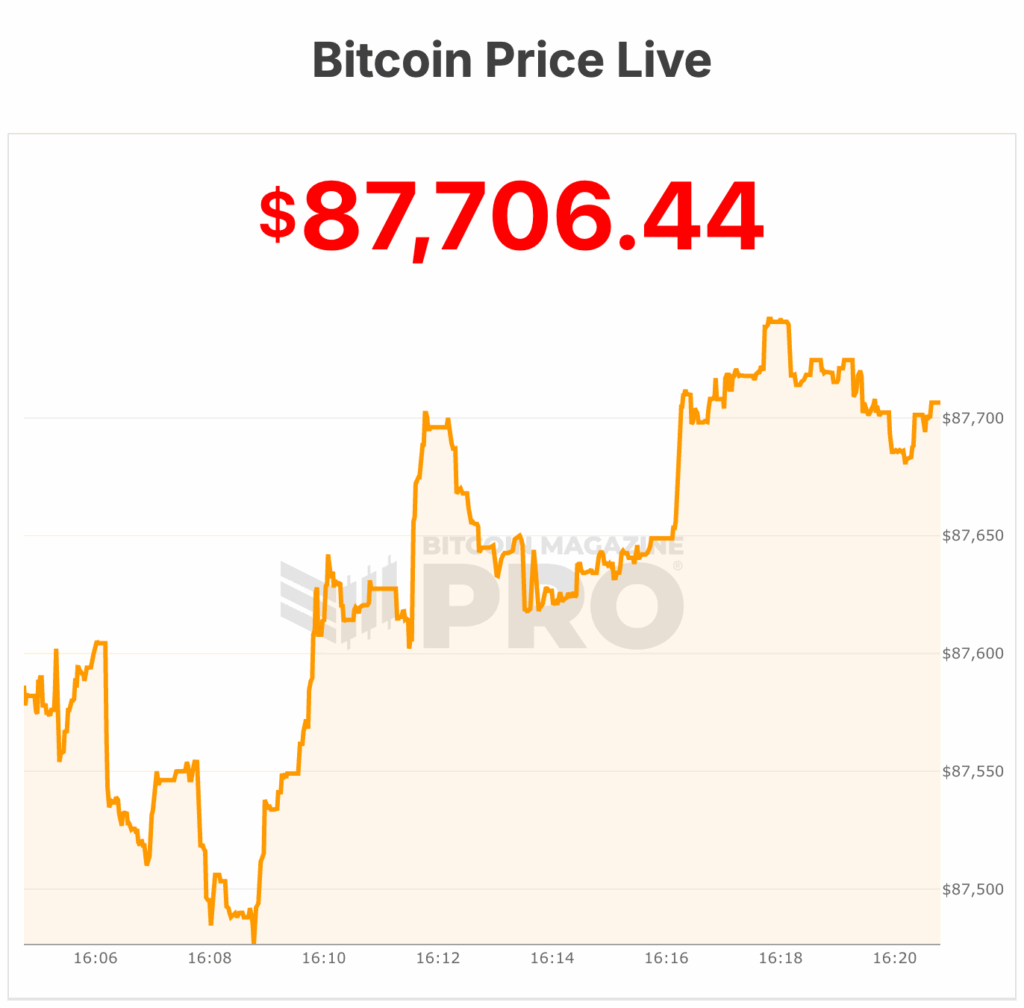
At the time of writing, the bitcoin price is $87,706.

bitcoin price

This post Bitcoin Price Trades Near $87,000 as Market Slips Into ‘Extreme Fear’ first appeared on Bitcoin Magazine and is written by Micah Zimmerman.

Bitwise Says Bitcoin’s Four-Year Cycle Is Dead, Predicts Bitcoin New Highs in 2026

Bitcoin Magazine

Bitwise Says Bitcoin’s Four-Year Cycle Is Dead, Predicts Bitcoin New Highs in 2026

Asset manager Bitwise released a new report that argues that bitcoin is poised to break from its historical four-year market cycle, setting new all-time highs in 2026 while becoming less volatile and less correlated with equities.

Bitwise’s Chief Investment Officer Matt Hougen outlined three forecasts he says matter most for crypto investors: the end of the four-year cycle, continued volatility compression, and declining correlation between BTC and traditional stock markets.

The four-year cycle is ‘significantly weaker’

Bitcoin has historically followed a four-year pattern tied to the halving cycle, typically marked by three years of gains followed by a sharp pullback. Under that framework, 2026 would be expected to be a down year.

Bitwise disagrees.

“The forces that previously drove four-year cycles — the BTC halving, interest rate cycles, and crypto’s leverage-fueled booms and busts — are significantly weaker than they’ve been in past cycles,” Hougan wrote.

He pointed to the diminishing impact of successive halvings, expectations for falling interest rates in 2026, and reduced systemic leverage following record liquidations in October 2025. Improving regulatory clarity is also expected to lower the risk of major market blow-ups.

More importantly, Bitwise expects institutional capital flows to accelerate. With spot bitcoin ETFs approved in 2024, the firm anticipates broader participation from major wealth platforms such as Morgan Stanley, Wells Fargo, and Merrill Lynch, alongside increased adoption from Wall Street and fintech firms amid a more favorable regulatory environment following the 2024 U.S. election.

Bitwise believes these factors could push bitcoin to fresh all-time highs, effectively ending the relevance of the four-year cycle.

NEW: $15 billion asset manager Bitwise predicts #Bitcoin will break the 4 year cycle and set a new all time high in 2026 🐂 pic.twitter.com/5UkwidKKkf

— Bitcoin Magazine (@BitcoinMagazine) December 16, 2025

Bitcoin volatility continues to decline

The firm also challenged the long-standing criticism that BTC is too volatile for mainstream investors.

According to Bitwise, BTC was less volatile than Nvidia stock throughout 2025, a comparison Hougan says underscores the asset’s ongoing maturation. Data cited in the report shows bitcoin’s volatility has steadily declined over the past decade as its investor base has diversified and traditional investment vehicles like ETFs have expanded access.

Bitwise expects that trend to continue into 2026, likening bitcoin’s evolution to gold’s transition following the launch of gold ETFs in the early 2000s.

Lower correlation with equities

Finally, Bitwise predicts BTC’s correlation with stocks will fall further in 2026. While critics often claim bitcoin trades in lockstep with equities, Hougan noted that rolling 90-day correlations with the S&P 500 have rarely exceeded 0.50.

Looking ahead, Bitwise expects crypto-specific catalysts—such as regulatory progress and institutional adoption—to drive bitcoin independently, even as equity markets grapple with valuation concerns and slowing economic growth.

Taken together, the firm sees 2026 shaping up as a favorable year for bitcoin investors, characterized by strong returns, lower volatility, and reduced correlation with traditional assets.

“That’s the trifecta for investors,” Hougan wrote, adding that these dynamics could drive tens of billions of dollars in new institutional inflows.

This post Bitwise Says Bitcoin’s Four-Year Cycle Is Dead, Predicts Bitcoin New Highs in 2026 first appeared on Bitcoin Magazine and is written by Micah Zimmerman.

Michael Saylor’s Bitcoin Treasury Strategy Now Accounts for 3.2% of BTC Supply

Bitcoin Magazine

Michael Saylor’s Bitcoin Treasury Strategy Now Accounts for 3.2% of BTC Supply

Over the last two months, the broader bitcoin market has bled to semi-surprising lows and it seems like fear has crept into the forefront of market sentiment. But Strategy’s Michael Saylor, in true Saylor fashion, just put his head down and bought more bitcoin. 

Over the past two weeks, Strategy has spent nearly $2 billion just on Bitcoin.

Strategy has steadily expanded their Bitcoin treasury over the years, now holding 671,268 BTC — equivalent to 3.2% of all Bitcoin ever expected to exist, the company says.

The firm’s average purchase price for its holdings sits at roughly $75,000 per BTC, with a total acquisition cost of $50 billion and a current Bitcoin net asset value of $60 billion. 

Strategy has added Bitcoin in every quarter since Q3 2020, totaling 90 separate acquisitions.

Per Bitcointreasuries.net, Strategy’s Bitcoin holdings tower over every other publicly traded treasury, owning 12 times the next largest holder, MARA Holdings. 

While most companies in the top 10 hold between 13,000 and 53,000 BTC, Strategy’s accumulation dwarfs them, underscoring its unprecedented scale of BTC holdings. 

Earlier this month, Strategy created a $1.44 billion cash reserve to safeguard future dividends and interest payments, in an effort to reassure investors it would not need to sell any of its roughly $56 billion in Bitcoin amid broader Bitcoin market weakness.

Funded by recent Class A stock sales, the reserve initially covered 21 months of obligations, with plans to extend to 24 months. CEO Phong Le said the move sharply reduced the likelihood of BTC liquidation, addressing fears from prior comments. 

JUST IN: Michael Saylor's Strategy now owns 3.2% of all Bitcoin ever to be in existence 🤯 pic.twitter.com/R907KnHsee

— Bitcoin Magazine (@BitcoinMagazine) December 16, 2025

Strategy wants more bitcoin: ‘We are going to buy all of it’

At the Bitcoin MENA conference, Saylor discussed his bitcoin beliefs more, saying that Bitcoin was the foundation of a new digital capital and credit era. Addressing sovereign wealth funds, banks, and investors, Saylor framed Bitcoin as “digital capital,” contrasting it with traditional assets like gold, real estate, and equities, and emphasizing its potential as a core store of value in the digital economy. 

Saylor emphasized the growing institutional adoption of Bitcoin, with major U.S. banks—including Bank of America, Wells Fargo, JP Morgan, and Citi—now offering custody solutions and credit against Bitcoin. 

He also cited bipartisan government support from agencies like the Treasury, SEC, and CFTC.

Central to Strategy’s vision is converting volatile Bitcoin into predictable, yield-generating credit. Through over-collateralized instruments like STRK (8% dividend) and STRF (10% perpetual bond), Strategy delivers steady cash flows while enhancing long-term Bitcoin exposure.

Saylor claimed these mechanisms allow the company to double Bitcoin per share every seven years, creating liquidity and aligning corporate growth with investor returns. He likened Bitcoin-backed credit to gold-backed financial systems, envisioning a global shift toward digital gold-supported credit integrated into traditional banking.

Earlier this week, news came out that Strategy will retain its spot in the Nasdaq 100 index despite an annual reshuffle that removed six companies and added three.

Strategy
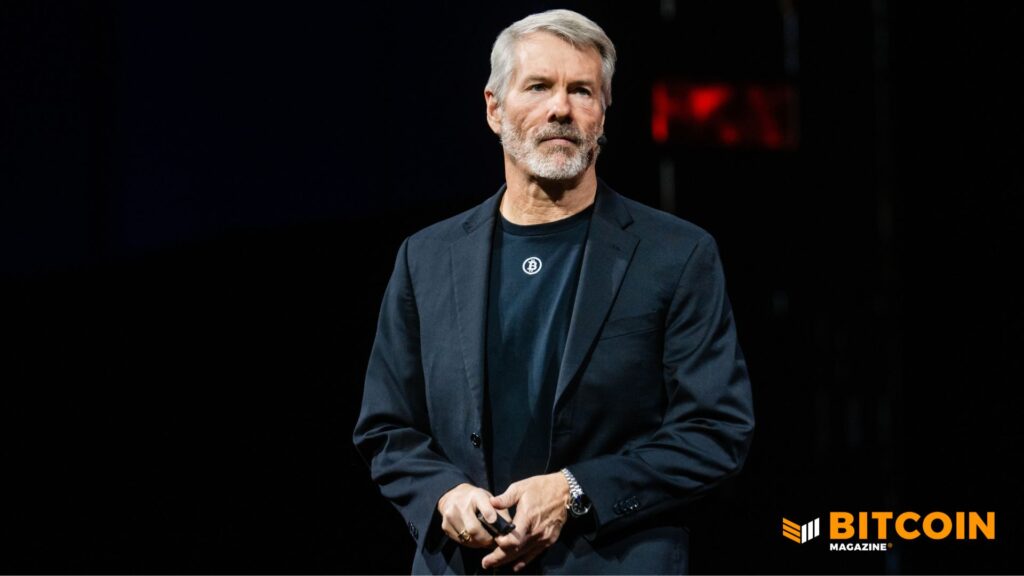
Strategy’s Michael Saylor speaking at Bitcoin Amsterdam

This post Michael Saylor’s Bitcoin Treasury Strategy Now Accounts for 3.2% of BTC Supply first appeared on Bitcoin Magazine and is written by Micah Zimmerman.

Tether Leads $8 Million Investment in Lightning-Powered Payments Startup Speed

Bitcoin Magazine

Tether Leads $8 Million Investment in Lightning-Powered Payments Startup Speed

Tether, the issuer of the world’s largest stablecoin USDT, announced a strategic investment in Speed1, Inc. (“Speed”), a payments infrastructure company leveraging the Bitcoin Lightning Network and stablecoins to build instant, global settlement rails.

Tether led the company’s $8 million funding round alongside ego death capital, signaling a strong push to expand Bitcoin-aligned financial infrastructure and increase the real-world utility of USDT.

Speed provides payment solutions for a diverse range of users, including consumers, creators, platforms, and enterprise merchants. The company processes over $1.5 billion in annual payment volume and serves roughly 1.2 million users through its Speed Wallet and Speed Merchant products.

These tools enable near-instant settlement in both bitcoin and USDT while offering global routing capabilities optimized for enterprise-level integrations.

The company’s architecture combines Lightning-based transaction execution with stablecoin settlement, addressing key challenges in cross-border payments such as speed, cost, and price volatility. 

This combination allows users and merchants to transact efficiently while maintaining price stability when required, making it suitable for international transfers, creator payouts, merchant payments, and platform-level settlements.

Bitcoin networks are ready for mainstream commerce 

“Speed is showing what Lightning can achieve when paired with a stable, liquid digital dollar like USDT,” said Paolo Ardoino, CEO of Tether.

 “We support teams building practical infrastructure that reduces friction in payments and expands access to reliable settlement rails. Speed’s execution and adoption signal that Bitcoin-rooted networks are ready for mainstream commerce,” Ardoino said. 

Niraj Patel, CEO of Speed, added, “Crypto has lived in the world of speculation for too long. Speed is making it usable – instantly, globally, and at scale. Lightning gives us speed; stablecoins give us universal access; our infrastructure brings it all together for consumers, creators, and merchants.”

Tether likes to hold bitcoin 

This move aligns with Tether’s ongoing diversification strategy. Earlier this year, the company acquired nearly 8,889 BTC, bringing its primary treasury holdings to over 86,000 BTC, and expanded into physical assets such as gold and agribusiness through a 70 percent stake in Adecoagro. 

Per BitcoinTreasuries.net, Tether holds 87,475 bitcoin. 

Per the companies, the $8 million funding will support Speed’s infrastructure expansion and additional integrations with merchants and platforms, further solidifying its role in building the next generation of global financial rails anchored in Bitcoin and USDT.

Tether

This post Tether Leads $8 Million Investment in Lightning-Powered Payments Startup Speed first appeared on Bitcoin Magazine and is written by Micah Zimmerman.

American Bitcoin ($ABTC) Enters Top 20 Public Bitcoin Treasury Companies, Holds 5,098 BTC

Bitcoin Magazine

American Bitcoin ($ABTC) Enters Top 20 Public Bitcoin Treasury Companies, Holds 5,098 BTC

American Bitcoin Corp. (Nasdaq: ABTC) has entered the top 20 publicly traded bitcoin treasury companies by holdings after growing its strategic reserve to approximately 5,098 BTC as of December 14, according to company disclosures.

The Miami-based firm said its bitcoin was accumulated through a combination of in-house mining and strategic market purchases. The total includes bitcoin held in custody as well as BTC pledged as collateral for miner purchases under a supply agreement with hardware manufacturer Bitmain, per the company release

Based on rankings from BitcoinTreasuries.net, the milestone places American Bitcoin among the largest public bitcoin holders globally, just over three months after its Nasdaq listing.

As part of its treasury reporting, the company also highlighted growth in its proprietary Satoshis Per Share (SPS) metric, which measures the amount of bitcoin attributable to each outstanding common share. As of December 8, SPS stood at 507 satoshis per share, representing a more than 17% increase in just over one month.

American Bitcoin is also introducing a new disclosure metric, Bitcoin Yield, which tracks the percentage change in SPS over a defined period. The company said the combined metrics are intended to give investors clearer insight into both per-share bitcoin exposure and how that exposure evolves over time.

“I am incredibly proud of our tremendous growth,” said Eric Trump, co-founder and chief strategy officer of American Bitcoin. “In just over three months since our Nasdaq listing, we have surged past dozens of companies — propelling us into the top 20 publicly traded bitcoin treasury companies.”

Earlier this month, American Bitcoin reported adding roughly 416 BTC in a single week, lifting holdings from approximately 4,783 BTC as of December 8. 

The company said its accumulation strategy prioritizes long-term bitcoin exposure over short-term price movements, supported by an operating model designed to maximize BTC retention.

JUST IN: 🇺🇸 Trump family backed American #Bitcoin increases its BTC holdings to 5,098 BTC.

Nothing stops this train 🚀 pic.twitter.com/I9ub8DuWBP

— Bitcoin Magazine (@BitcoinMagazine) December 16, 2025

American Bitcoin ($ABTC) stock struggles

In early December, the American Bitcoin stock (ABTC) plunged more than 50% shortly after markets opened, triggering multiple trading halts and erasing months of speculative gains. 

The stock fell to an intraday low of $1.75 before recovering slightly, though it remained down over 35% at the time of writing. 

The sell-off followed a broader downturn in crypto markets, with bitcoin sliding into the mid-$85,000 range. Nearly $1 billion in leveraged crypto positions were liquidated the day before, worsening already fragile market conditions.

Now, with Bitcoin trading above $87,000, $ABTC shares trade down at $1.61 per share. 

This post American Bitcoin ($ABTC) Enters Top 20 Public Bitcoin Treasury Companies, Holds 5,098 BTC first appeared on Bitcoin Magazine and is written by Micah Zimmerman.

Trump Says He Will Consider A Pardon for Samourai Bitcoin Wallet Co-Founder

Bitcoin Magazine

Trump Says He Will Consider A Pardon for Samourai Bitcoin Wallet Co-Founder

President Donald Trump said he’ll review the case of Keonne Rodriguez, co-founder of Samourai Wallet, as questions mount over the federal conviction of the Bitcoin privacy software developer. 

When asked about Rodriguez’s upcoming prison sentence, Trump said, “I’ve heard about it. I’ll look at it.”

“I don’t know anything about it,” President Trump said. “But we’ll take a look.” 

Rodriguez publicly acknowledged Trump’s sentiment, tweeting “Your continued noise is working. Thank you to everyone pushing @realDonaldTrump to pardon Bill and me. Let’s get this over the line. #pardonsamourai”

Rodriguez, along with co-founder William “Bill” Hill, was convicted of conspiracy to operate an unlicensed money transmitting business, a charge stemming from Samourai Wallet, a Bitcoin privacy tool that allowed users to mix coins and maintain financial anonymity without giving up custody of their funds.

JUST IN: 🇺🇸 President Trump says he will consider a pardon for the CEO of privacy-focused Bitcoin wallet Samourai.

"I've heard about it, I'll look at it. Let's take a look at it." pic.twitter.com/WfpLPYOlfj

— Bitcoin Magazine (@BitcoinMagazine) December 15, 2025

Details of the Samourai Wallet case

The case, which began under the Biden administration and continued through the Trump Justice Department, culminated in Rodriguez receiving a five-year sentence and Hill four years, though Hill’s age and recent autism diagnosis led to a reduced sentence.

Critics of the prosecution argue the case represents a dangerous precedent for the cryptocurrency industry. The U.S. Department of Justice claimed that Samourai Wallet facilitated over $2 billion in unlawful transactions and laundered more than $100 million from criminal sources. However, only the “unlicensed money transmission” charge survived a high-profile trial, raising questions about the strength of the case. 

Samourai Wallet’s mixing services, Whirlpool and Ricochet, were designed to obscure the origin of criminal proceeds from activities including drug trafficking, darknet marketplaces, fraud, cybercrime, and murder-for-hire operations. 

Court documents reveal the developers actively encouraged criminal use, describing the service as “money laundering for bitcoin” and promoting its tools on darknet forums.

The Department of Justice framed the case as part of a broader crackdown on crypto mixing services. Rodriguez had requested a light sentence, but the court imposed the statutory five-year maximum.

Trump’s comments come amid his campaign promises to defend the right to self-custody and financial privacy. During the 2024 Bitcoin Conference in Nashville, he pledged to end what he described as the “anti-crypto crusade” of the prior administration.

A pardon for Rodriguez and Hill would signal a clear commitment to those promises, protecting developers from legal exposure for building tools that enhance privacy and security for everyday Americans.

With Rodriguez set to report to prison on December 18 and Hill already sentenced, the Trump administration faces a high-profile decision that could shape the future of financial privacy, software development, and cryptocurrency regulation in the United States.

This post Trump Says He Will Consider A Pardon for Samourai Bitcoin Wallet Co-Founder first appeared on Bitcoin Magazine and is written by Micah Zimmerman.

Fidelity Flags Short-Term Crypto Risks, Discusses Bitcoin’s Historic 4-Year Cycle 

Bitcoin Magazine

Fidelity Flags Short-Term Crypto Risks, Discusses Bitcoin’s Historic 4-Year Cycle 

Bitcoin and the broader crypto market is heading into 2026 with more questions than clear answers.

A new outlook from Fidelity urges caution for investors chasing short-term gains, while arguing that long-term holders may still have room to enter the market. 

The message reflects a broader shift: crypto is no longer just a high-beta trade for speculators. It is being treated as a strategic asset by governments, corporations, and institutional investors.

That shift accelerated this year.

This year, more governments and companies added digital assets to their treasuries, creating a new source of demand that didn’t exist in prior cycles. 

In March, President Donald Trump signed an executive order establishing a Strategic Bitcoin Reserve for the United States. The order formally designated BTC and select cryptocurrencies already held by the federal government as reserve assets.

The long-term impact of that decision remains unclear. But the symbolism matters. BTC is now officially recognized by the U.S. government as a store of value. That recognition is feeding debate over whether crypto’s familiar four-year market cycle still applies, the report argued. 

Is Bitcoin’s four-year cycle over? 

Bitcoin has historically moved in boom-and-bust patterns tied loosely to its halving schedule. Major tops formed in 2013, 2017, and 2021. Each was followed by deep drawdowns. Today, prices are again pulling back around the four-year mark, raising the question of whether the current bull market has already peaked.

JUST IN: Fidelity reports that Bitcoin's 4 year cycle may be over 👀

Investors "believe we could be entering a supercycle…For reference, a supercycle in commodities in the 2000s spanned nearly a decade." 🚀 pic.twitter.com/SVQs61lz7N

— Bitcoin Magazine (@BitcoinMagazine) December 15, 2025

Some investors think the cycle is breaking down. The argument is simple: structural demand is changing. Sovereign adoption and corporate balance sheet buying could dampen volatility and reduce the severity of future bear markets. 

Others go further, suggesting bitcoin may be entering a “supercycle” that extends higher for years, with only shallow corrections along the way.

Fidelity Digital Asset’s Chris Kuiper isn’t convinced cycles are dead. Human behavior hasn’t changed, he notes, and fear and greed still drive markets. If the four-year pattern holds, bitcoin would need to have already set its cycle high and be entering a sustained bear market. 

So far, it’s too early to say. The recent drawdown could mark the start of a downturn. Or it could be another mid-cycle shakeout.

Governments and corporations are buying Bitcoin

Also, government adoption adds another layer of complexity. A growing number of countries already hold crypto, but few have formally designated it as a reserve asset. 

That may change. Kyrgyzstan passed legislation establishing a crypto reserve in 2025. In Brazil, lawmakers advanced a proposal that would allow up to 5% of foreign reserves to be held in bitcoin.

Kuiper points to game theory. If one country adopts bitcoin as a reserve, others may feel pressure to follow. Any incremental demand, he says, could support prices, though the scale matters and selling pressure can offset buying.

Corporations are also playing a larger role. More than 100 publicly traded companies now hold crypto, with roughly 50 firms controlling over one million bitcoin combined, per Fidelity. Strategy remains the most visible buyer, but it’s no longer alone. For some firms, bitcoin offers a way to access capital markets and arbitrage investor demand for exposure.

That demand cuts both ways. Corporate buying can lift prices. Forced selling in a downturn could amplify losses.

So, is it too late to buy?

Fidelity’s Kuiper says it depends on the time horizon. Short-term investors may face poor odds if the cycle is near its end. Long-term holders face a different equation. On a multi-decade view, Kuiper argues bitcoin’s fixed supply remains its core appeal. If that holds, the question isn’t timing the cycle. It’s whether adoption continues. In 2026, that answer is still unfolding.

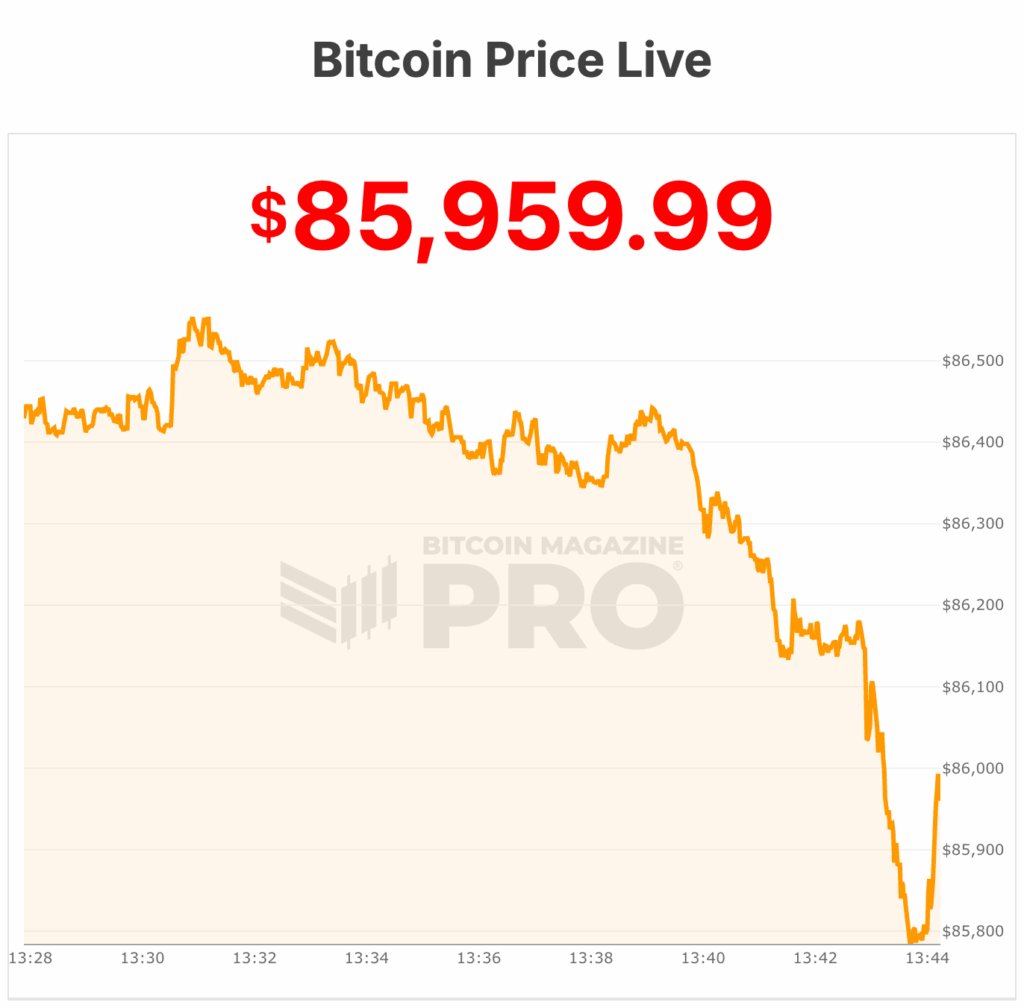
At the time of writing, Bitcoin’s price is rapidly dipping near $86,000.

bitcoin

This post Fidelity Flags Short-Term Crypto Risks, Discusses Bitcoin’s Historic 4-Year Cycle  first appeared on Bitcoin Magazine and is written by Micah Zimmerman.

❌