Reading view

There are new articles available, click to refresh the page.

Bhutan Says 10,000 Bitcoin Will Help Shape Its New Administrative City

Bhutan has pledged up to 10,000 bitcoin — roughly $1 billion — to back the development of Gelephu Mindfulness City, a new special economic zone the crown is promoting as a hub for sustainable industry and jobs.

Reports have disclosed the allocation was announced on national day and framed as a long-term commitment to fund the city’s growth rather than a quick selloff of reserves.

King Announces Bitcoin Allocation

According to King Jigme Khesar Namgyel Wangchuck, the pledge is meant “for our people, our youth, and our nation,” and aims to make every Bhutanese “a custodian, stakeholder, and beneficiary” of the project. The statement linked the Bitcoin allocation directly to the government’s plan to support economic opportunity inside Gelephu.

Bhutan and Cumberland DRW have signed a multi-year MoU to build a responsible digital asset ecosystem in Gelephu Mindfulness City, guided by the vision of His Majesty King Jigme Khesar Namgyel Wangchuck.

The partnership focuses on sustainable digital asset infrastructure,… pic.twitter.com/IJR7t3oHYl

— gmcbhutan (@gmcbhutan) December 15, 2025

Plan For Digital Reserves

Based on reports, officials say the 10,000 BTC will be held with an eye toward preserving value while generating returns through careful, risk-managed strategies — not by liquidating the holdings immediately.

The government has also signed a multi-year memorandum of understanding with market maker Cumberland DRW to help build digital-asset infrastructure and explore reserve management, stablecoins, and renewable energy-based mining inside the zone.

City Details And Goals

The Mindfulness City covers a very large area and has been pitched as an economic response to youth emigration, low birth rates, and lagging jobs.

Reports from earlier coverage describe the plan as a mix of green energy, tech, tourism, and regulated finance, with space set aside for vetted businesses and infrastructure projects such as an airport and dry port. the project’s promoters present it as a way to create higher-value work without abandoning Bhutan’s environmental and social aims.

Partnerships And Practical Steps

Officials say the partnership with Cumberland will focus on building market access and institutional-grade operations for the city’s crypto activities, including experimenting with a national stablecoin and sustainable mining tied to renewable power. Local leaders have sought legal and investment partners to give investors a clearer route into the zone’s projects.

Global Implications And Risks

Analysts note this is one of the larger sovereign moves toward using bitcoin as a development tool, and the pledge raises clear questions about governance, transparency, and the possible exposure of state coffers to crypto price swings.

Reports flag both opportunity and risk: the funds could underwrite major projects, but they also require careful oversight to avoid losses that would hurt public services.

Featured image from Visit Bhutan, chart from TradingView

Saylor’s Long Bitcoin Bet Has Left Corporate Rivals Behind: Crypto Entrepreneur

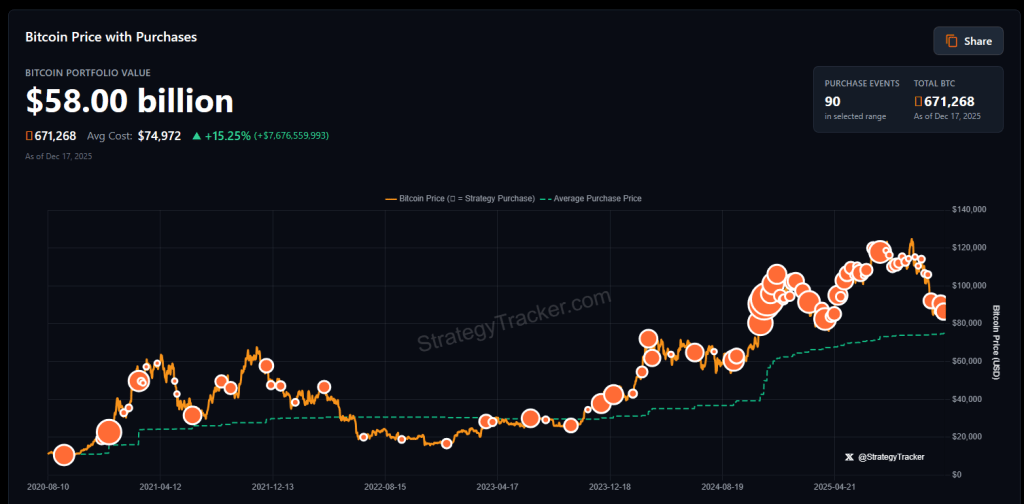
Michael Saylor’s firm Strategy continues to make Bitcoin headlines with its enormous purchases, making it one of the largest holders in the world.

Reports show the company owns 671,268 Bitcoin, roughly 3.2% of the total supply, valued at about $58.61 billion at the time of publication, according to Saylor Tracker.

Bitcoin entrepreneur Anthony Pompliano said on his podcast that it would be extremely difficult for any other public company to match Strategy’s buying pace.

Massive Holdings And Recent Purchase

Strategy announced a fresh buy of 10,645 Bitcoin for $980.3 million, paying an average of $92,098 per coin. That move pushed its total hoard to roughly 3.2% of all Bitcoin in existence. Those are large figures. They also show why rivals would need huge sums to close the gap.

Pompliano On The Scale Needed To Compete

According to comments made on The Pomp Podcast, Pompliano said that a company trying to match Strategy would have to “raise hundreds of billions of dollars.” He said it would be “very hard to see that happening.”

He pointed to Strategy’s early entry in 2020, when Saylor’s initial purchase was about $500 million while Bitcoin traded between $9,000 and $10,000.

That initial stake, based on current prices cited in reports, is now worth more than $4.8 billion with Bitcoin trading around $86,950.

Market Impact And Buying Method

Market watchers have flagged Strategy’s growing share as something to watch. Some worry a single large holder could influence price moves. Others note the firm does most of its buying through over-the-counter desks.

OTC trades are used to handle big orders without sending shockwaves through exchange order books. Many investors see the regular, large purchases as a positive sign for Bitcoin demand.

Holding Strategy And Influence Concerns

Pompliano described 3.2% as “a big number, but it’s also a small number.” He added, “It’s not like they own 10%.” That view captures a split: the holding is large enough to matter for supply dynamics and market psychology, but not so large that it gives absolute control. Still, the combination of size and repeated buys draws attention from traders and regulators alike.

Outlook And Long Term Plans

Reports quote Strategy’s CEO Phong Lee as saying the company probably won’t sell any Bitcoin until at least 2065. Saylor has also posted that he plans on “buying the top forever.” Those statements reinforce a long-term stance rather than short-term trading. The market tends to treat such commitments as bullish, and many participants adjust expectations for future demand accordingly.

A Dominant Buyer

With 671,268 Bitcoin on the books and a steady program of purchases, Strategy remains a dominant public buyer.

Based on current numbers and public comments, it will be difficult for another listed company to match that level of accumulation without very large capital raises or a dramatic change in corporate behavior.

The pace set by Strategy is likely to keep drawing attention from investors watching supply and demand for Bitcoin.

Featured image from Pexels, chart from TradingView

Crypto ETP Boom Set To Go Into Overdrive In 2026, Bitwise Says

More than 100 new crypto exchange-traded products could hit the market in 2026 after a recent rule change by the US securities regulator, a researcher at Bitwise said. According to Ryan Rasmussen, that drop in red tape will let firms file many more ETPs without the long, individual approval process that slowed launches in the past.

Regulatory Shift Lowers Bar

The SEC issued generic listing standards in October that remove the need for separate 19(b) approvals for qualifying crypto ETPs. That step cuts out a process some issuers had to wait through — a delay that could stretch to a 240-day clock under earlier practice.

Reports have disclosed that the number of crypto ETPs already sits above 300, based on data from Fineqia International, which shows the market is no longer limited to just a few funds.

LIVE NOW – 10 Crypto Predictions for 2026: $1M BTC, Wall Street Onchain & ETF Takeover@BitwiseInvest’s @Matt_Hougan and @RasterlyRock return with 10 big predictions for 2026.

We get into:

– The $1M BTC case and why the classic 4-year cycle might be dead. – A world where ETFs… pic.twitter.com/fgELVnu6Zu

— Bankless (@Bankless) December 16, 2025

Institutional Appetite

Market watchers say new listings make it easier for issuers. But easier access is not the same thing as strong buying. Bitfinex analysts warned in August that altcoins are unlikely to enjoy a major rally until ETFs that track assets beyond the largest coins are available and attract real money. Liquidity, investor interest, and clear use cases still matter a lot. An ETF wrapper does not fix those basic needs by itself.

Issuers Race To Expand Menus

Rasmussen said issuers can now plan a variety of products — spot crypto, index funds, equity-linked ETPs, smart beta strategies and momentum plays.

He compared the change to moving from a tiny menu to a much larger one, saying investors will have more choices about where to put money. He also noted it has been about 15 years since the Winklevoss twins first filed for a Bitcoin ETF, and yet only a handful of crypto ETPs are widely held today.

Many New Products, Few Big Winners

Expect a wave of filings. But expect concentration too. In the wider ETF market, most assets gather in a few large funds while many other listings see thin trading.

That pattern is likely to repeat in crypto: dozens of niche products may be launched, while a smaller group gathers most assets under management. Issuers get to plant flags quickly. Investors will sort the winners from the rest over time.

WOW. The SEC has approved Generic Listing Standards for “Commodity Based Trust Shares” aka includes crypto ETPs. This is the crypto ETP framework we’ve been waiting for. Get ready for a wave of spot crypto ETP launches in coming weeks and months. pic.twitter.com/xDKCuj41mc

— James Seyffart (@JSeyff) September 17, 2025

Market Reaction Hinges On Demand

On Sept. 17, Bloomberg ETF analyst James Seyffart said the rule change could trigger a “wave of spot crypto ETP launches.”

He added that clearer rules could lead to several similar products being rolled out around the same time, raising competition among issuers while making it harder for weaker funds to gain traction.

Featured image from Unsplash, chart from TradingView

5,606 Bitcoin: Lightning Network Sets Fresh Capacity Record

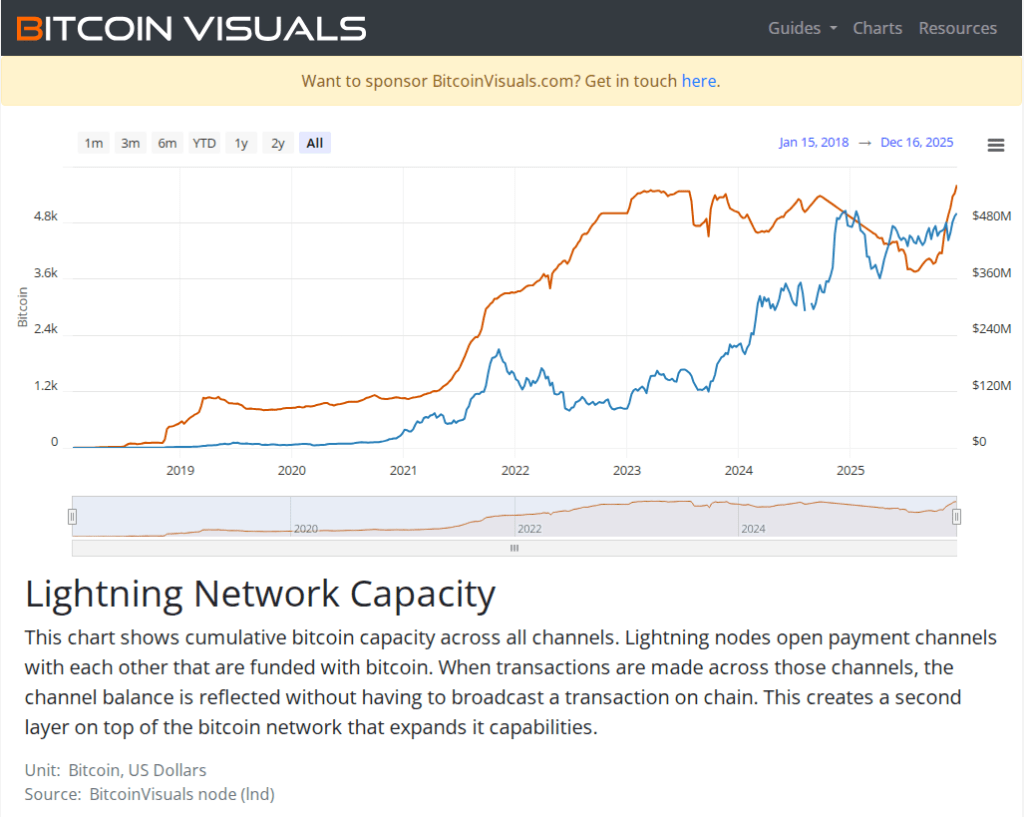
Lightning Network capacity hit a new high this week as major exchanges put more Bitcoin into off-chain channels, boosting the network’s total liquidity and changing how users move BTC.

Exchange Support Drives Capacity

According to reports, the Lightning Network’s public capacity climbed to about 5,606 BTC, with some trackers briefly showing a peak near 5,637 BTC. That is a clear uptick from earlier levels and marks the highest recorded total so far.

Exchanges including Binance and OKX have been named as contributors that added Bitcoin to Lightning channels, and other platforms such as Kraken and Bitfinex are expanding their support as well. These deposits are aimed at speeding up deposits and withdrawals and cutting fees for customers.

Network Activity Vs. Public Nodes

Based on reports, that increase in capacity has not been matched by a big rise in the number of public nodes or channels. Public node counts sit near 14,940, while public channels are roughly 48,678.

In other words, more Bitcoin is available inside the network, but the number of hands handling traffic has not jumped in the same way. Some of this extra liquidity is concentrated in larger, custodial channels run by exchanges, which can move big sums without creating many new public routes.

That makes on-chain metrics a bit harder to read. Transaction counts and on-chain fee savings do show real user benefits, even when the node graph looks stable.

A separate figure that shows real usage is the share of exchange traffic routed over Lightning. Based on reports, one exchange has routed around 15% of its Bitcoin transactions via Lightning rails after adopting Lightning integrations, pointing to meaningful operational changes at major platforms.

New Use Cases And Funding

Funding and protocol work are following capacity growth. Tether led a round that raised about $8 million for a startup focused on payments over Lightning, indicating interest in stablecoin flows on the network.

Announcing Taproot Assets v0.7, now with reusable addresses, a fully auditable asset supply, and larger, more reliable transactions. ✅

With this release, we are laying the foundation for trillions of dollars to flow on bitcoin and Lightning. 💸

Read more below. Upgrade today!

— Lightning Labs⚡🌐 (@lightning) December 16, 2025

Protocol upgrades — including work around Taproot-related asset handling and reliability improvements — are also being rolled out to support more varied payments and token types. These developments point to Lightning being used for things beyond tiny tips: remittances, merchant payments, and stablecoin transfers are being tested more widely.

Market watchers say this mix of exchange liquidity, developer upgrades, and rising on-platform usage could make Lightning a more practical rail for everyday BTC movement.

Some critics warn that heavier reliance on custodial channels raises centralization risks and reduces the visibility of true peer-to-peer routing. Others note that improved user experience, lower costs, and faster finality are what ordinary users will notice first.

Featured image from Unsplash, chart from TradingView

Trump Signals Possible Pardon For Convicted Samourai Wallet Co-Founder

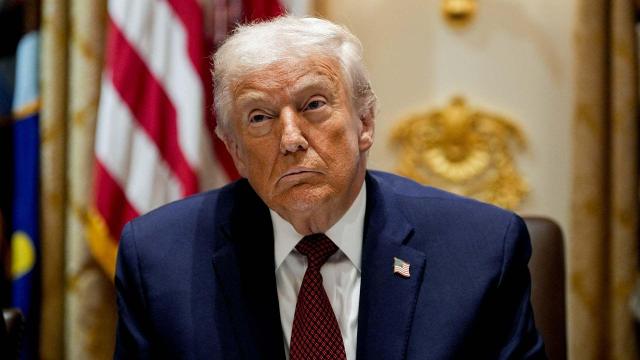
United States President Donald Trump said he would review the case of Keonne Rodriguez, a co-founder of the Samourai Wallet, and signaled he might consider clemency.

According to reporters present at a White House exchange, Trump said he would “take a look” and asked that the matter be examined by the Attorney General.

The comment came after federal prosecutors secured guilty pleas and later sent Rodriguez to prison.

Statement On A High-Profile Sentencing

According to the US Attorney’s Office for the Southern District of New York, Rodriguez and a co-defendant, William Lonergan Hill, pleaded guilty to charges tied to running an unlicensed money-transmitting business and related conspiracy counts.

Reports have disclosed that the service was linked to more than $230 million in criminal proceeds. Prosecutors said those transfers were connected in their factual recitation to narcotics trafficking, darknet markets, cyber intrusions, frauds, sanctioned jurisdictions and other criminal activity.

Sentencing And Legal Outcomes

Based on court filings and public notices, the guilty pleas were entered in late July 2025 and sentencing took place on November 19, 2025.

The Department of Justice has also pursued forfeiture tied to the amounts it described in court, and fines were assessed at the time of sentence.

These actions were carried out by federal prosecutors in Manhattan, who handled the investigation and prosecution.

Responding to Trump’s remarks, Rodriguez said “This President knows all about lawfare.”

I have always said that the most challenging aspect of getting a pardon for me and Bill would be getting the attention of @realDonaldTrump. He is very busy with many people competing for his attention. Today, thanks to the journalist at Decrypt, the President is aware of our… https://t.co/lmYljfFax9

— Keonne Rodriguez (@keonne) December 15, 2025

Trump Pardon: How A Presidential Review Might Move Forward

The process for clemency typically involves the Office of the Pardon Attorney at the Justice Department, which vets petitions and may seek input from prosecutors and judges.

The president, however, has broad constitutional authority to grant pardons or commutations for federal offenses.

In this case, press accounts say the president asked that the Attorney General examine the matter, which could lead to a formal review of any clemency petition.

Political And Public Reactions

Reports have varied in tone, with some outlets focusing on the scale of the funds prosecutors said were moved — $237 million — and others highlighting the unusual nature of a president publicly saying he would “look into” an active clemency matter shortly after sentencing.

Legal experts note that public comments from a sitting president can speed attention to a case, but they do not guarantee relief.

Opinions among commentators are mixed; some urge careful review while others stress that federal sentences reflect convictions from established court processes.

Featured image from Bloomberg via Getty Images, chart from TradingView

💾

Join RSBN in a Medal Presentation for defending the Mexican Border at the Oval Office with President Donald TrumpTune in at 1:00 pm EDT on December 15, 2025....

Visa Deepens Crypto Push With New Stablecoin Advisory Unit

According to reports, Visa has created a new stablecoin advisory service through its Visa Consulting & Analytics (VCA) division.

The initiative is designed to help banks, fintechs, merchants, and other large companies explore how stablecoins can be used for payments, treasury operations, and other business processes.

The program combines market research, technology integration support, and training to give clients practical guidance as they test and adopt stablecoin solutions.

Visa Expands Advisory Services

Sources indicate the advisory practice will provide market-fit assessments, strategy development, go-to-market planning, and technical enablement.

Visa has even launched a specialized stablecoin course via Visa University to train clients on the fundamentals and practical application of these digital assets.

The service aims to help organizations move from pilot programs to fully operational stablecoin systems while maintaining compliance with regulatory requirements.

🚨 BREAKING: Visa launches Stablecoin Advisory Practice

Every bank is asking the same question right now: “What’s our stablecoin strategy?”

And when they don’t know the answer, who do they call?

Their card network.

Visa just formalized what was probably happening…

— Simon Taylor (@sytaylor) December 15, 2025

Early Clients And Market Context

Based on reports, several US financial institutions are among the first clients, including Navy Federal Credit Union, VyStar Credit Union, and Pathward.

The digital payments technology company has reported that its stablecoin settlement volume has reached an annualized run rate of roughly $3.5 billion as of late November 2025. The company supports over 130 stablecoin-linked card programs across more than 40 countries.

The overall stablecoin market has surpassed $250 billion in total value, highlighting strong interest from both retail and institutional participants.

Partnerships And Pilot Programs

Reports show Visa has been piloting stablecoin settlements for several years, including early work with USDC in 2023. Partnerships with firms like Aquanow have expanded settlement capabilities in regions such as Central and Eastern Europe, the Middle East, and Africa.

Visa also experimented with initiatives allowing businesses to make cross-border payments using stablecoins for pre-funding, in an effort to lower transaction costs and manage liquidity.

The Importance And Rise Of Stablecoins

According to analysts quoted in news reports, the use of stablecoins by banks and fintechs for various purposes such as cross-border payments and business-to-business payments is being explored.

The advisory service offered by Visa assists the traditional firm in understanding the options available to them while implementing controls and incorporating new technology into existing payment systems. Such overall expertise in technology and regulations puts the company on their advisory panel to pilot their stablecoin offering.

Featured image from Wikimedia, chart from TradingView

TechCrunch Founder Names XRP Among His Largest Crypto Positions

Michael Arrington, the founder of TechCrunch and CrunchBase, has placed XRP among his largest personal crypto holdings, according to a recent social post.

He listed XRP as one of his top five positions by dollar value, alongside Bitcoin, Ethereum, Solana and Immutable. The disclosure landed plenty of attention online and reignited debate about who is buying what and why.

Arrington’s Holdings And Community Reaction

Reports have disclosed that his post drew heavy engagement, with replies running the gamut from Bitcoin-only stances to more mixed portfolios.

Several industry figures echoed Arrington’s mix; Tony Edward, for example, listed XRP with BTC and ETH when discussing core positions.

The debate was loud and fast on social feeds. Some users framed the move as a vote of confidence. Others warned that one investor’s choices do not equal a market-wide shift.

Tell me your top five crypto holdings (by total dollar value).

Mine are XRP, BTC, ETH and IMX

— Michael Arrington 🏴‍☠️ (@arrington) December 13, 2025

Institutional Moves Follow

Based on reports, Arrington’s public support is tied to direct institutional activity. In October, Arrington Capital joined Ripple and SBI Holdings to back an initiative by Evernorth aimed at building a large institutional XRP treasury.

The project, which has been described in some circles as among the biggest of its kind, aims to increase institutional use of XRP and to support on-ledger activity such as decentralized finance and lending.

That involvement means Arrington is more than a vocal supporter; he is also tied to projects that could change how institutions use the token.

XRP Market Moves And Key Figures

XRP’s market picture has been mixed. As of December 16, 2025, the token was trading around $1.98, having held in a roughly $2.00 to $2.20 band in recent sessions.

There was a small daily lift of about 1.2% to roughly $2.08 on Monday, which helped the token cover some ground after early-December weakness.

The year has seen bigger swings: XRP peaked near $3.65 in July before giving back some gains. Activity in regulated derivatives has also grown.

Reports point to XRP futures on the CME reaching a record open interest of roughly $3 billion in late October 2025, a figure that market watchers say reflects rising institutional appetite for regulated exposure.

A Past Claim That No Longer Holds

Arrington has previously highlighted XRP’s strong performance. In March, he tweeted that XRP had been the best-performing major asset across multiple time frames — 90 days, 180 days, one year and three years.

That claim no longer lines up with current rankings. Performance metrics have shifted since then, and the statement has been overtaken by later results.

Featured image from Bitpanda Blog, chart from TradingView

Bitcoin Could Break Records Again In 6 Months, Grayscale Says

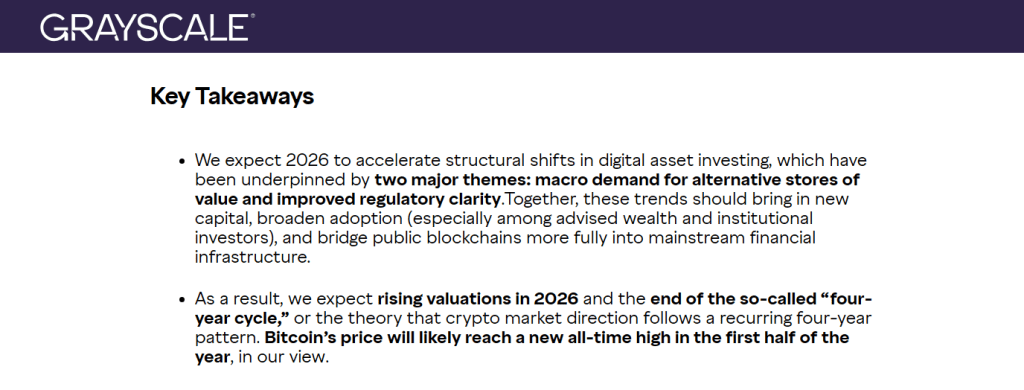
According to a Grayscale outlook released Monday, the asset manager expects rising demand for alternatives and clearer rules in the US to push Bitcoin to a new all-time high in the first half of 2026.

The report lays out 10 key investing themes for 2026 and ties the Bitcoin call to two main forces: growing portfolio demand for stores of value and what Grayscale describes as improving regulatory clarity.

Spot-Bitcoin ETPs reached the market in 2024, the firm notes, and Congress passed the GENIUS Act in 2025, steps that the report says reduce barriers for big investors.

Macro Risks And Demand For Crypto

Grayscale frames its outlook around a simple macro point. Rising public debt and the risk that fiat currencies lose buying power are pushing some money toward Bitcoin and Ether, the report says.

That argument will sound familiar to many institutional buyers. It is also a broad claim. No exact price targets were offered for Bitcoin, only a view that valuations will climb in 2026 and that the so-called four-year cycle may be ending.

Stablecoins are another major theme. Grayscale expects stablecoin use to grow: cross-border payments, collateral on derivatives, even use on corporate balance sheets are all mentioned as likely developments.

Asset Tokenization And DeFi Growth

Reports have disclosed that Grayscale sees asset tokenization reaching an inflection point next year. Lending protocols and staking are singled out as areas where activity could expand.

The firm foresees practical outcomes: stablecoins in payment rails, more institutional access to staking, and tokenized assets showing up in trading and custody systems.

Grayscale also flags two narratives it does not expect to move markets in 2026 — quantum computing risk for crypto and digital asset treasuries — saying research will continue but valuations are unlikely to be affected this soon.

Over the past 3 months, the average return across nearly all crypto sectors has underperformed Bitcoin. This persistent relative weakness highlights a market environment where capital concentration favours BTC.

📊 https://t.co/rFisuVfSY7 https://t.co/lpXqEe9bbW pic.twitter.com/WNtKEKclX7

— glassnode (@glassnode) December 16, 2025

Onchain Data Suggests Quiet Caution

Meanwhile, data from onchain analytics group Glassnode was also cited in this context. Over the last three months, Glassnode reports, the average return across most crypto sectors has underperformed Bitcoin, indicating capital concentration in BTC.

That has not translated into strong faith in leadership. A separate institutional feed, Bitcoin Vector, said dominance fell in the second half of the year, with ETH rotations cutting into BTC’s lead and a weaker rebuild after deleveraging events. In short: funds appear to prefer holding Bitcoin, but are not placing big new bets.

Featured image from YourStory, chart from TradingView

Blockchain Privacy Shouldn’t Automatically Raise Red Flags—SEC Chair

Crypto executives pushed the US Securities and Exchange Commission on Monday to reconsider its approach to blockchain privacy, arguing that not all users of these tools are criminals.

The meeting, the SEC’s sixth crypto-focused roundtable this year, drew sharp exchanges between regulators and industry representatives over how privacy, identity verification, and stablecoin adoption intersect.

SEC Chair Paul Atkins opened the session with a warning: mishandling privacy could turn crypto into “the most powerful financial surveillance architecture ever invented.”

He cautioned that treating every wallet like a broker or every protocol as an exchange could create a system where every transaction is monitored.

Presumption Of Good Intent For Blockchain Privacy Users

Katherine Kirkpatrick Bos, general counsel at StarkWare, told reporters that regulators should not assume users of privacy tools are primarily engaged in wrongdoing. “Why must someone prove they are compliant upfront?” she asked.

“Instead, shouldn’t the starting point be that they are using it for legitimate purposes until proven otherwise?” She added that criminal use exists, but a balance is needed to avoid unfair suspicion.

More highlights from the @SECGov Crypto Task Force Roundtable on Financial Privacy & Surveillance

Three powerful voices made the case for privacy in crypto at the SEC’s roundtable:

J.W. Verret @theblockprof (George Mason Law) dropped a legal bombshell: He can’t find statutory… pic.twitter.com/jtSkFaltRK

— Paul Brigner 🛡 (@paulbrigner) December 15, 2025

On Blockchain, AML And KYC Rules

The discussion also examined anti-money laundering (AML) and Know Your Customer (KYC) rules. Kirkpatrick Bos criticized current practices, noting that photo IDs can be faked in seconds.

She suggested cryptography-based tools could verify identity without exposing unnecessary personal information, such as home addresses, while still preventing fraud. Projects like Sam Altman’s World are already testing cryptographic keys that prove users are human without revealing private data.

Wayne Chang, CEO of SpruceID, said privacy is a growing demand among users of stablecoins. Reports indicate millions of dollars in stablecoins could move on-chain if privacy features are available.

Some percentage of users will want to keep transactions private, Chang said. Privacy can drive adoption of stablecoins that haven’t fully migrated to on-chain systems, he said.

Atkins noted that blockchain and privacy tools have legitimate uses, including helping firms execute trades without tipping off competitors. Balancing public safety with privacy is critical, the SEC chief said.

SEC Commissioner Hester Peirce, who leads the agency’s crypto task force, opened the roundtable alongside Atkins and Commissioner Mark Uyeda, discussing ways regulators might protect investors while respecting privacy as blockchain financial activity grows.

Blockchain: Ongoing Tensions On The Spotlight

Industry insiders said the roundtable did not result in immediate policy changes but highlighted ongoing tensions.

Regulators are weighing the benefits of privacy against risks of misuse, while market participants push for protections that could influence adoption and growth.

Based on reports, these conversations are likely to continue as technology evolves and crypto use becomes more mainstream.

Featured image from Yellow, chart from TradingView 

Shiba Inu Scores US Regulated Derivatives Entry Via Coinbase

According to reports, Coinbase has launched regulated futures linked to Shiba Inu, opening the token to trading on a US derivatives venue.

The new products include perpetual-style contracts and monthly futures tied to what Coinbase calls the 1k SHIB index (a 1,000 token index), with trading scheduled to run 24/7.

The rollout began on December 5, 2025, as part of a broader push by the exchange to add altcoin derivative listings under US rules.

Regulated Futures Hit The Market

Reports have disclosed that the perpetual contracts operate like offshore swaps in form but are offered through Coinbase’s regulated platform and are designed to include a funding-rate mechanism to keep prices close to spot.

Now live: Trade US Perpetual-Style Futures for all altcoins on Coinbase Derivatives, available 24/7.

→ Shiba Inu $SHIB → Avalanche $AVAX → Bitcoin Cash $BCH → Cardano $ADA → Chainlink $LINK → Dogecoin $DOGE → Hedera $HBAR → Litecoin $LTC → Polkadot $DOT → SUI $SUI →… pic.twitter.com/yjS2XsQ2jN

— Coinbase Markets 🛡 (@CoinbaseMarkets) December 15, 2025

Monthly contracts were made available as an initial phase. Clearing and settlement are handled inside systems compatible with US oversight, and the products are described as compliant with Commodity Futures Trading Commission frameworks.

What Traders And Institutions Might Do

Market participants say having regulated futures can change who trades a token. Institutional desks and some large funds often need regulated venues and clearer custody paths before they increase exposure.

Added liquidity and round-the-clock pricing may attract more active traders, and that could raise volume. At the same time, access to futures also makes it easier to bet against the token, which can push volatility up. Reports note that immediate moves in spot markets have been mixed, showing that access to derivatives does not automatically lift the token’s price.

Because SHIB has regulated futures on Coinbase (“1k Shib Index”), it qualifies for spot ETF consideration under the same SEC pathway Bitcoin and Ethereum followed.

The big picture for SHIB

•SHIB now joins the “ETF-watchlist club” with other futures-backed cryptos. •If/when… pic.twitter.com/cZPxUWWhBn

— 𝐋𝐔𝐂𝐈𝐄 (@LucieSHIB) September 18, 2025

Market Context And Exchange Strategy

Coinbase’s decision follows steps the exchange has taken to grow its derivatives arm. Company filings and public letters in 2025 framed derivatives growth as a strategic priority, and the firm has pursued deals and product launches to expand those capabilities.

One notable deal disclosed earlier involved an agreement valued at close to $3 billion to strengthen derivatives know-how and infrastructure. This background helps explain why Coinbase is offering altcoin futures that trade continuously, under a regulated roof.

Featured image from Gemini, chart from TradingView

Bitcoin Mining Hit Hard: 10% Hashrate Loss Linked To China Shutdowns

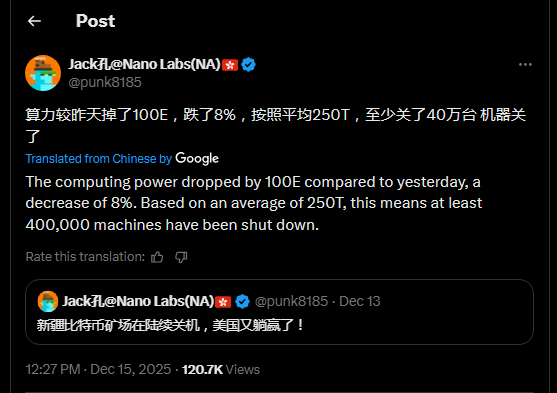
According to a post by former Canaan (a Chinese tech company) executive Jianping Kong, Bitcoin’s estimated hashrate fell roughly 10% in a single day, sliding from about 1,053 TH/s to just under 943 TH/s.

Kong said the decline equated to roughly 100 TH/s to 110 TH/s lost since Sunday and blamed the change on mining farms in China’s Xinjiang region shutting down.

He wrote that “at least 400,000 machines” were taken offline, using an assumed rate of 250 TH/s per ASIC as his basis.

China Mining Instability

Based on reports, China remains a volatile source of hashrate. Before 2021, China supplied a majority of the network’s computing power. Now estimates place its share closer to 14% to 20% depending on the data provider.

Cheap power has drawn miners back, but political and regulatory swings can push large clusters off the grid with little warning.

Kong framed the recent shutdowns bluntly, saying the temporary loss hands an advantage to other countries, adding that “the US wins without lifting a finger.”

Impact On Network

Data recorded the drop from 1,053 TH/s to about 943 TH/s, a decline of just over 110 TH/s and roughly 10%. That kind of move can change mining conditions.

Blocks may be found a little slower until the next difficulty adjustment. The network’s total hashrate is always an estimate inferred from on-chain data, so exact figures are not precise, but the size of this swing is large enough to show how concentrated pockets of mining can still move global metrics.

Kong’s machine-count estimate — and the 250 TH/s-per-ASIC figure he used — are his calculations, not a confirmed inventory count from operators on the ground.

Bitcoin Mining Operations And Market Shifts

Reports have disclosed that US mining companies are expanding capacity as global hashrate reallocates.

Hut 8 announced it is building four new mining sites in Texas, Louisiana and Illinois, adding 1.5 gigawatts of power capacity.

American Bitcoin, a company tied to the Trump family, is now part of that growth story; the firm acquired a fleet of 16,299 Antminer U3S21EXPH units from Bitmain and its board includes Eric Trump, the second-eldest of US President Donald Trump’s three sons. These moves underline a clear shift in where large-scale mining is happening.

Featured image from Unsplash, chart from TradingView

Crypto Firms Face Daily ‘Fake Zoom’ Attacks Linked To North Korea, Experts Say

North Korean-linked hackers are using fake Zoom calls to drain crypto wallets in what security researchers say has become a near-daily threat to the cryptocurrency community. According to multiple security reports, the campaign has already netted roughly $300 million in stolen funds and shows few signs of slowing.

Fake Zoom Meetings Used To Drain Wallets

According to Security Alliance (SEAL) and other researchers, attackers first contact targets through messaging apps such as Telegram. They then invite victims to a video call that looks legitimate.

During the call, the impostors claim there is a problem with sound or video and offer a “fix” — a file or a link that appears to be an official update. When the victim runs the file, malware installs and begins stealing credentials, browser data, and crypto keys.

Several attacks are reported every day, and many follow the same pattern. Researchers say these staged calls let attackers bypass normal caution because people tend to trust someone they see on camera.

SEAL is tracking multiple DAILY attempts by North Korean actors utilizing “Fake Zoom” tactics for spreading malware as well as escalating their access to new victims.

Social engineering is at the root of the attack. Read the thread below for pointers on how to stay secure. https://t.co/2SQGdtPKGx

— Security Alliance (@_SEAL_Org) December 13, 2025

NimDoor, Other Malware Strains Target macOS And Wallets

Based on reports, one strain tied to these schemes is NimDoor, a macOS backdoor that can harvest keychain items, browser-stored passwords, and messaging data.

Security teams link NimDoor and related tools to BlueNoroff, a group connected to the Lazarus Group network. BlueNoroff has a long record of attacking crypto firms and exchanges.

Once the malware is in place, wallets have been emptied within minutes. Victims often discover the theft only after seeing outgoing transactions on the blockchain.

Deepfakes And Calendar Invites Make Scams More Convincing

Researchers warn that attackers are not simply using fake names. They are also deploying AI-assisted deepfake video and voice tools to impersonate executives or known contacts.

Attackers sometimes send calendar invites that look like genuine meeting requests from platforms such as Calendly, directing targets to attacker-controlled Zoom links.

The level of social engineering makes the calls seem urgent and official, which reduces the time victims take to question what they are being asked to install.

Attackers Target Individuals And Small Firms Alike

Reports have disclosed that victims include individual traders, startup employees, and small teams at crypto companies. Losses are concentrated but widespread, with estimates around $300,000,000.

Some victims have lost funds tied to browser wallets and hot wallets; others had recovery phrases captured and used to drain accounts.

Security teams urge quick action when a suspicious update is offered during a remote session: They warn not to run it, verify separately, and treat unsolicited meeting fixes as high risk.

Featured image from Unsplash, chart from TradingView

Ethereum Meets Wall Street: JPMorgan Rolls Out Tokenized Fund

JPMorgan Asset Management has introduced a tokenized money-market fund built on the Ethereum blockchain, according to company filings and industry reports.

The fund, called My OnChain Net Yield Fund (MONY), issues shares as digital tokens that live on the public Ethereum network and are aimed at qualified investors through the bank’s Morgan Money platform.

JPMorgan Issues Tokenized Fund On Ethereum

Based on reports, MONY holds familiar, low-risk instruments such as US Treasury securities and repurchase agreements fully backed by Treasuries.

The bank says the token shares represent direct ownership of the fund and can be held at blockchain addresses, opening up on-chain settlement and recordkeeping for a product that normally sits in traditional custody systems.

Seeded With $100 Million

Reports have disclosed that JPMorgan seeded MONY with $100 million of its own capital at launch. The move is meant to kickstart liquidity and show institutional seriousness about putting cash management products on-chain.

The tokenization work is being handled by internal teams tied to JPMorgan’s digital-assets efforts, and the bank has been testing ways to move conventional securities into token form for several years.

How The Tokens Work And Who Can Use Them

Investors receive tokenized fund shares that may be transferred or recorded on Ethereum. Based on reports, access is limited: the fund is offered only to qualified clients via Morgan Money, not to the general retail public.

The token structure mirrors traditional fund economics — holders are exposed to the same short-term instruments that underpin money-market products — but the record of ownership is stored on a public ledger.

Qualified Investors And Access

According to coverage, institutional clients with asset levels above $25 million and accredited individuals with at least $5 million are among those eligible, and the minimum initial investment sits at roughly $1 million.

That narrow access aligns with regulatory guardrails for tokenized securities and with the bank’s goal of serving big, sophisticated cash managers first.

Analysts say the launch is part of a broader push by big asset managers to experiment with tokenized share classes and on-chain settlement.

Other firms have run pilots with similar ideas, and some have already put cash-like products on Ethereum. Based on reports, the move points to an industry desire to test whether blockchain can speed up settlement, increase transparency, or create new on-chain liquidity for institutional cash flows.

Featured image from Unsplash, chart from TradingView

UK To Bring Crypto Under Financial Services Laws By 2027

According to reports, the UK Treasury will extend existing finance laws to cover cryptoasset firms, with the new rules set to take effect in October 2027.

This means exchanges, wallet providers and other crypto service companies will move beyond current anti-money-laundering registration and into the same regulatory space as banks and brokers.

Regulators To Apply Existing Rules

Based on statements from ministers and officials, the Financial Conduct Authority will be the main supervisor for the sector. Firms will be required to meet standards on reporting, governance and customer protections similar to those applied in traditional finance.

The shift is described as bringing clarity for businesses that want to operate long term in the UK, while giving regulators tools to act against fraud and market abuse.

UK TO REGULATE CRYPTO UNDER FINANCIAL LAW FROM 2027

– The UK will bring cryptocurrencies like Bitcoin under full financial regulation from 2027, placing crypto alongside traditional financial products, per Reuters.

– The Treasury plans to extend existing financial laws to… pic.twitter.com/RhWK96NN51

— BSCN (@BSCNews) December 15, 2025

Consumer Safeguards And Market Integrity

Reports have disclosed that one of the core aims is stronger consumer protection. Officials say the changes will help block bad actors and reduce scams, and that the Treasury is also considering tighter rules around political donations made with crypto. The move follows a series of high-profile fraud cases and growing public concern about safety in crypto markets.

The road to full regulation will be gradual. The Treasury has circulated draft legislation and ministers expect complementary rules from the FCA and the Bank of England to be ready by the end of 2026, ahead of the legal regime going live in 2027. Consultations and regulatory sandboxes are under way, giving firms time to adjust.

How This Compares Internationally

Based on reports, the UK’s plan is being framed more like the US approach than the EU’s Markets in Cryptoassets (MiCA), which was introduced in 2024.

Officials say closer alignment with US practice should help international firms that operate across borders, but it also raises questions about how UK rules will differ from both US and EU requirements in practice.

A draft bill has been prepared and it has had only minor edits since first being published, according to government sources.

Industry responses are mixed: some firms welcome the certainty, while lawyers and trade groups want clearer detail on how existing conduct rules will apply to crypto business models. The FCA is running targeted workstreams, including tests for stablecoin issuers and custody providers.

Featured image from Unsplash, chart from TradingView

Shiba Inu Remains A Familiar Crypto Name As Losses Pile Up

Shiba Inu has kept a spot in crypto talk even as its price has slid sharply. According to reports, the network had a market cap of $5 billion as of Dec. 6, and it still draws attention because people know the name. That visibility, however, does not settle the debate over whether the token belongs in a long-term portfolio.

Shiba Inu’s Price And Market Size

Based on reports, Shiba Inu has seen massive moves over several years. Roughly five years ago it traded near $0.0000000001684; at the time of writing, it is quoted at about $0.000008439.

SHIB’s all-time high stands at $0.00008845, which means the token trades roughly 85% below that peak. Reports have disclosed that SHIB has tanked about 55% so far this year, and some data points show almost a 60% decline over a recent 12-month span. Those drops have pushed many investors to ask whether the story that once lifted SHIB has faded.

On-Chain Signals And Holder Counts

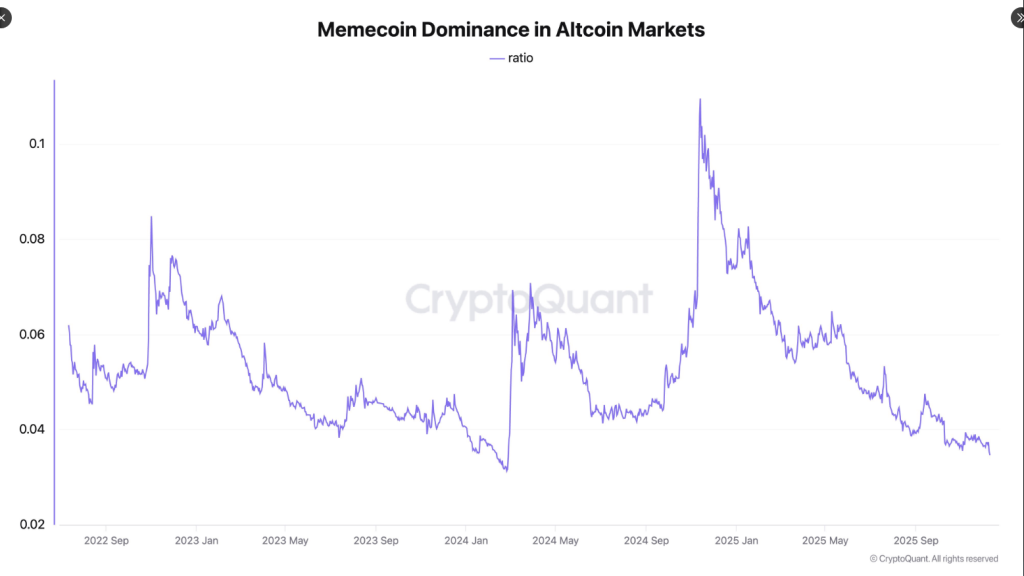
There are mixed signals on the chain. Data from CryptoQuant is reported to show memecoin dominance falling to its lowest level since early 2024, a sign that speculative interest across similar tokens has ebbed.

At the same time, the number of wallets holding SHIB moved from about 1.45 million at the start of the year to around 1.52 million more recently. That jump in holders was noted alongside the price slide. It suggests distribution rather than complete abandonment; small increases in holders do not always mean increased trading activity, but they can show steady retail interest.

Memecoin markets are dead. pic.twitter.com/6kymLWH4JX

— Ki Young Ju (@ki_young_ju) December 11, 2025

Pundit Views And The Utility Question

Meanwhile, crypto pundit Neil Patel has listed reasons he would not treat Shiba Inu as a proper investment. He argues the memecoin doesn’t solve a clear, large-scale problem and points out that developer activity for SHIB is limited compared with many other networks.

The claim is that much of SHIB’s value has been driven by hype cycles and not by broad real-world use. Those views were presented in firm terms, and they have been repeated across a range of commentaries that warn about hype-driven tokens.

Investor Takeaways And Risks

Investors who want exposure to crypto are often told to look at major networks such as Bitcoin for scarcity-driven arguments; that point was brought up in several reports. At the same time, SHIB’s supporting projects — a layer-two chain, a decentralized exchange, a metaverse concept — are real but appear to have small adoption so far.

Featured image from Unsplash, chart from TradingView

Bitcoin Could Drop To $70K As Bank Of Japan Rate Move Approaches—Analysts

Bitcoin risks a further drop toward the $70,000 area if the Bank of Japan follows through with an expected interest-rate rise on Dec. 19, analysts focused on macro forces warned.

According to multiple macro-focused voices, the move could sap global liquidity and put fresh downward pressure on risk assets, with some traders already bracing for a sharp pullback.

Japan’s policy shift matters because higher rates tend to strengthen the yen and raise the cost of borrowing. When that happens, traders who previously borrowed cheaply in yen to invest elsewhere are often forced to unwind those positions.

That process can pull money out of global markets in a short period of time, and Bitcoin has often felt that impact as investors cut exposure during risk-off stretches.

BOJ Tightening Drains Global Liquidity

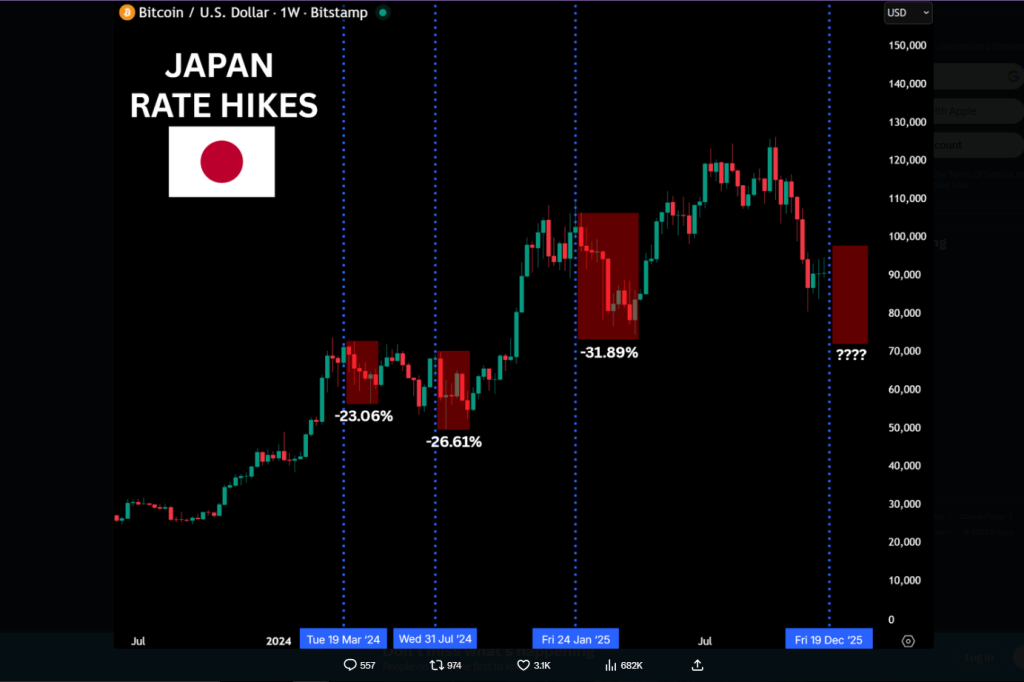
According to AndrewBTC, every BOJ hike since 2024 has coincided with Bitcoin drawdowns of more than 20%. Based on reports, the analyst pointed to declines of roughly 23% in March 2024, 26% in July 2024, and 31% in January 2025.

🚨 BREAKING: JAPAN WILL CRASH $BTC

Bank of Japan is set to hike rates +25 bps on Dec 19. Japan = largest holder of US government debt 🇯🇵

📉 Look at the $BTC chart:

Every BoJ rate hike → Bitcoin dumps over 20%+👇

• March 2024 → -23% • July 2024 → -26% • January 2025 →… pic.twitter.com/grN3QRNUg4

— AndrewBTC (@cryptoctlt) December 13, 2025

Traders are not only watching central bank calendars. Bitcoin’s daily chart also flashed a classic bear flag formation after a steep fall from the $105,000–$110,000 area in November.

Market Positioning Widens Ahead Of Key Data

Bitcoin slipped below $90,000 in thin trading on Sunday, a move that traders took as a cautionary sign rather than a definitive trigger. Based on reports, Ether held up better than many altcoins, suggesting selective risk taking in the market.

Traders are positioning before a busy slate of US data and central bank events that could sway flows. Analyst EX bluntly warned BTC will collapse “below $70,000” under the stated macro conditions, a stark forecast that highlights how crowded bets can amplify moves when liquidity is pulled.

EVERY TIME JAPAN HIKES RATES, BITCOIN DUMPS 20–25%

NEXT WEEK, THEY WILL HIKE RATES TO 75 BPS AGAIN.

IF THE PATTERN HOLDS, $BTC WILL DUMP BELOW $70,000 ON DECEMBER 19.

POSITION ACCORDINGLY. pic.twitter.com/IWU8JbXjn3

— ΞX (@rektbyEX) December 13, 2025

What This Means For Investors

The story tying BOJ policy to Bitcoin’s swings is simple in outline: when funding costs in Japan rise, global borrowing becomes pricier, and risk assets can be sold as positions are reduced.

That dynamic helps explain why past BOJ moves lined up with 20-30% declines in Bitcoin. Still, markets often try to price events ahead of time; a hike that’s already built into prices may have a smaller effect than one that comes as a surprise.

Featured image from Nikkei Asia, chart from TradingView

Crypto Wallets Targeted In JavaScript Library Exploit—Cybersecurity Firm

A critical flaw in React Server Components is being used by attackers to inject malicious code into live websites, and that code is siphoning crypto from connected wallets.

Reports note that the vulnerability, tracked as CVE-2025-55182, was published by the React team on December 3 and carries a maximum severity rating.

Cybersecurity firm Security Alliance (SEAL) has confirmed that multiple crypto websites are actively being targeted, and they urge operators to review all React Server Components immediately to prevent wallet-draining attacks.

Security teams say the bug allows an unauthenticated attacker to run code on affected servers, which has been turned into wallet-draining campaigns across several sites.

A Wide Risk To Sites Using Server Components

SEAL said the flaw affects React Server Components packages in versions 19.0 through 19.2.0, and patched releases such as 19.0.1, 19.1.2, and 19.2.1 were issued after disclosure.

Crypto Drainers using React CVE-2025-55182

We are observing a big uptick in drainers uploaded to legitimate (crypto) websites through exploitation of the recent React CVE.

All websites should review front-end code for any suspicious assets NOW.

— Security Alliance (@_SEAL_Org) December 13, 2025

The vulnerability works by exploiting unsafe deserialization in the Flight protocol, letting a single crafted HTTP request execute arbitrary code with the web server’s privileges. Security teams have warned that many sites using default configurations are at risk until they apply the updates.

Attackers Inject Wallet-Draining Scripts Into Compromised Pages

According to industry posts, threat actors are using the exploit to plant scripts that prompt users to connect Web3 wallets and then hijack or redirect transactions.

In some cases the injected code alters the user interface or swaps addresses, so a user believes they are sending funds to one account while the transaction actually pays an attacker. This method can hit users who trust familiar crypto sites and connect wallets without checking every approval.

Scanners And Proof-Of-Concepts Flooded Underground Forums

Security researchers report a rush of scanning tools, fake proof-of-concept code, and exploit kits shared in underground forums shortly after the vulnerability was disclosed.

Cloud and threat-intelligence teams have observed multiple groups scanning for vulnerable servers and testing payloads, which has accelerated active exploitation.

Some defenders say that the speed and volume of scanning have made it hard to stop all attempts before patches are applied.

More Than 50 Organizations Reported Compromise Attempts

Based on reports from incident responders, post-exploitation crypto activity has been observed at more than 50 organizations across finance, media, government, and tech.

In several investigations, attackers established footholds and then used those to deliver further malware or to seed front-end code that targets wallet users.

SEAL has emphasized that organizations failing to patch or monitor their servers could experience further attacks, and ongoing monitoring is essential until all systems are verified safe.

Featured image from Unsplash, chart from TradingView

Bitcoin Pulls Back Under $89K, Michael Saylor Smells Opportunity

Strategy chair Michael Saylor signaled that his firm may add to its Bitcoin holdings just as the market slid again on Sunday, a move that kept traders on edge and fed fresh debate over what is driving the declines.

Back To More Orange Dots

According to a post on X, Saylor shared a chart with the phrase “Back to More Orange Dots,” a shorthand that investors interpret as fresh buying.

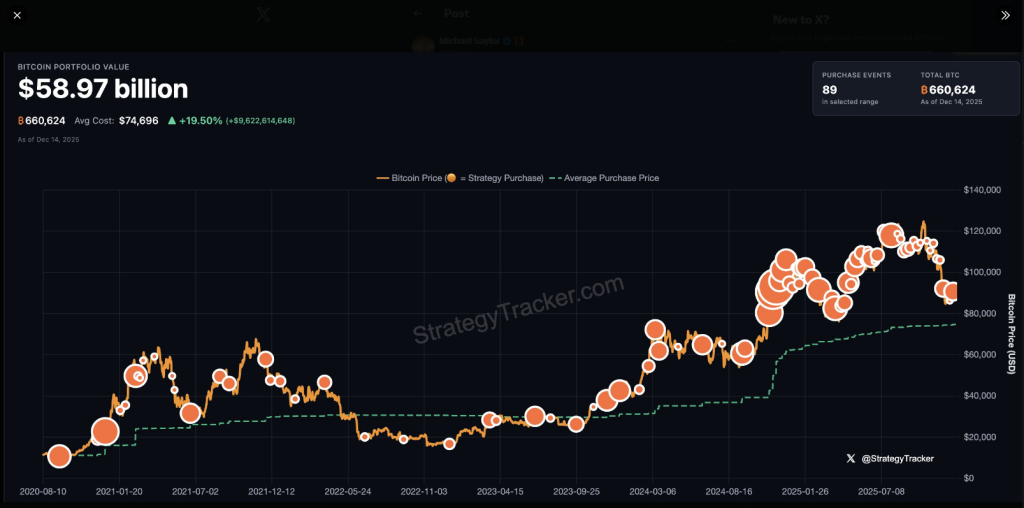
Based on reports tracked by SaylorTracker, Strategy bought 10,624 BTC on Dec. 12 — its biggest single purchase since late July.

The firm now holds about 660,624 BTC, which at current prices is worth roughly $58.5 billion, and its average cost per coin stands at $74,696.

₿ack to More Orange Dots. pic.twitter.com/rBi1aagDVO

— Michael Saylor (@saylor) December 14, 2025

Sunday Wick, Low Liquidity

Bitcoin briefly dipped to a two-week low near $87,750 in late trading on Sunday, before climbing back above $89,000 by the time of writing.

Traders pointed to a familiar pattern: quick wick-downs on weekends when liquidity is thin. Ether showed relative strength while major altcoins lagged, and market participants were seen positioning ahead of a packed calendar of US data and central bank decisions this week.

Analysts Eye Bank Of Japan

According to analyst commentary, some market participants blame the selling on expectations around the Bank Of Japan.

People are seriously underestimating what the bank is about to do to crypto, said one analyst using the handle NoLimit.

Justin d’Anethan, head of research at Arctic Digital, said the slide toward $88,000 “feels like a defeat,” and linked the move to fear of a carry trade unwind tied to Japanese rate expectations.

Markets May Have Priced It In

Sykodelic, another market watcher, argued that Japan’s actions are largely priced in. “Markets are forward-thinking, forward-moving. They move in anticipation of events, not when those events happen,” they wrote.

Based on that view, the recent drop is less about a fresh shock and more about ordinary back-and-forth: macro funds trimming exposure, short-term traders taking profit, and buyers stepping in at lower levels.

That push-and-pull helps explain why Bitcoin keeps snapping lower on thin pockets of liquidity but does not break decisively below key support.

Meanwhile, the tension between long-term holders — represented by companies like Strategy — and short-term macro flows is shaping price action.

There is no sign yet of widespread liquidations or a funding crisis, which suggests the declines are measured rather than chaotic.

Featured image from Australian Farmers, chart from TradingView

Fanatics Launches Fanatics Markets Through Strategic Partnership With Crypto.com

Fanatics, a leading global sports platform, has launched Fanatics Markets, a fan-led prediction market platform developed through a strategic partnership with Crypto.com, bringing together sports, finance, and culture.

Fanatics Markets is a simple, user-friendly platform built to let people trade on the moments shaping sports, finance, and culture. Through the partnership, the platform introduces customers to markets and pricing offered by Crypto.com | Derivatives North America (CDNA), a CFTC-registered exchange and clearinghouse and affiliate of Crypto.com. The platform provides users with a way to pick a side and potentially profit on outcomes that matter most, including sporting events, movements in the price of gold, and cultural moments. The Fanatics Markets app is available on iOS and Android.

Users are able to trade contracts across sports, finance, economics, and politics, including event outcomes such as whether a team will score more than 20 points or whether a cultural storyline will unfold. Crypto.com’s CFTC-registered derivatives exchange provides institutional-grade security, while Fanatics Markets maintains control over the user experience and interface design. The platform features a sleek and intuitive design that reflects real-time market sentiment and is live in multiple U.S. states, including California, Texas, Florida, and Washington.

Travis McGhee, Global Head of Predictions at Crypto.com, said that Crypto.com was the first to launch sports prediction markets and continues to grow its reach through partnerships with platforms such as Fanatics. He added that the partnership provides fans with a safe and compliant way to access prediction markets.

Matt King, Chief Executive Officer of Fanatics Betting and Gaming, said Fanatics Markets offers fans a safe, intuitive, and rewarding way to engage with moments that move sports and culture, while allowing them to pick a side and potentially profit if their prediction is correct.

Fanatics Markets is launching in two phases. The first phase is live with event contracts across sports, finance, economics, and politics. The second phase, launching early next year, will expand the platform to include event contracts related to crypto, stocks and IPOs, climate, pop culture, technology and AI, movies, and music.

The Fanatics Markets app is available today in Alaska, Delaware, Hawaii, Idaho, Maine, New Hampshire, North Dakota, Rhode Island, South Dakota, and Utah. Additional launches are planned in states including Alabama, California, Florida, Georgia, Minnesota, Mississippi, Nebraska, New Mexico, Oklahoma, Oregon, South Carolina, Texas, Washington, and Wisconsin.

Fanatics Markets will include consumer protections and provide tools that allow customers to manage exposure, trade responsibly, and make informed trading decisions, including deposit limits, session limits, timeouts, and self-exclusion.

Fanatics joins other brands collaborating with Crypto.com to offer access to prediction markets, following recent partnerships announced with Underdog, Truth Social, Hollywood.com, and MyPrize.

Learn more at https://crypto.com.

Crypto.com Announces Updated App Referral Feature to Expand User Participation Across the Crypto.com Platform

Referral Feature to Enable Users to Earn and Track CRO Rewards Through App-Based Referrals

Crypto.com App Referral Feature December 2025 – Crypto.com, a global leader in cryptocurrency services, today announced an updated App Referral feature to expand user participation across the Crypto.com platform and enable users to earn CRO rewards through app-based referrals.

The updated App Referral feature, which aims to allow users to earn CRO by inviting friends to join the Crypto.com App, marks a significant step in broadening participation in Crypto.com’s ecosystem. The referral feature is designed to provide users with clearer visibility into referral activity and reward progression, while enabling both existing and newly referred users to track CRO rewards more effectively within the app. Additionally, the updated feature prioritizes ease of use, transparent tracking, and scalable participation, making it accessible for a broad range of users.

“We are pleased to introduce updates to the App Referral feature to help expand user participation across the Crypto.com platform through a more structured and transparent referral experience,” said a Crypto.com representative. “The updated referral feature reinforces our commitment to providing users with clear tools to track rewards and engage more actively with the Crypto.com App.”

“Providing more ways for users to engage with cryptocurrency services remains central to our vision of further mainstreaming crypto,” said Eric Anziani, President and COO of Crypto.com. “The App Referral feature update enables users to participate more directly in the growth of the Crypto.com ecosystem while earning CRO rewards tied to referral activity.”

Under the updated referral feature, users can earn up to US$100 in CRO for every friend successfully referred to the Crypto.com App. The feature includes a dedicated dashboard, which allows users to track referred friends, monitor earnings milestones, and view total CRO rewards earned through referrals, all in one place. The updated dashboard provides a consolidated view of referral activity, enabling users to monitor progress more efficiently.

The referral feature also introduces trading-based earning, under which CRO rewards increase based on the trading activity of referred users. As referred users generate trading volume within the Crypto.com App, referral rewards progress accordingly, allowing for smoother reward accumulation and structured milestone tracking.

In addition, the updated referral feature provides more personalised ways to share referral codes and links, enabling users to distribute referrals more easily across supported channels. These updates are intended to allow users to grow their referral networks while maintaining a consistent and streamlined sharing experience within the app.

The referral feature update applies to both existing Crypto.com users and newly referred users. Referred users are also eligible to earn up to US$100 in CRO, track their reward progress more easily, and begin referring additional users themselves once eligible, expanding participation across the Crypto.com ecosystem.

This referral feature update follows Crypto.com’s continued efforts to enhance user experience and expand access to cryptocurrency services across its platform.

About Crypto.com

Founded in 2016, Crypto.com is trusted by millions of users worldwide and is the industry leader in regulatory compliance, security and privacy. Our vision is simple: Cryptocurrency in Every Wallet™. Crypto.com is committed to accelerating the adoption of cryptocurrency through innovation and empowering the next generation of users to participate in a more accessible digital ecosystem.

Learn more at https://crypto.com.

❌