Login
LoginMercedes-Benz CLA first drive: Head of the EV class
This one's been a long time coming. Mercedes-Benz has been researching, refining and even reshaping the car that would ultimately be the CLA for years now, teasing us with technical briefings and even showing off a sultry crimson concept car a full two years ago.
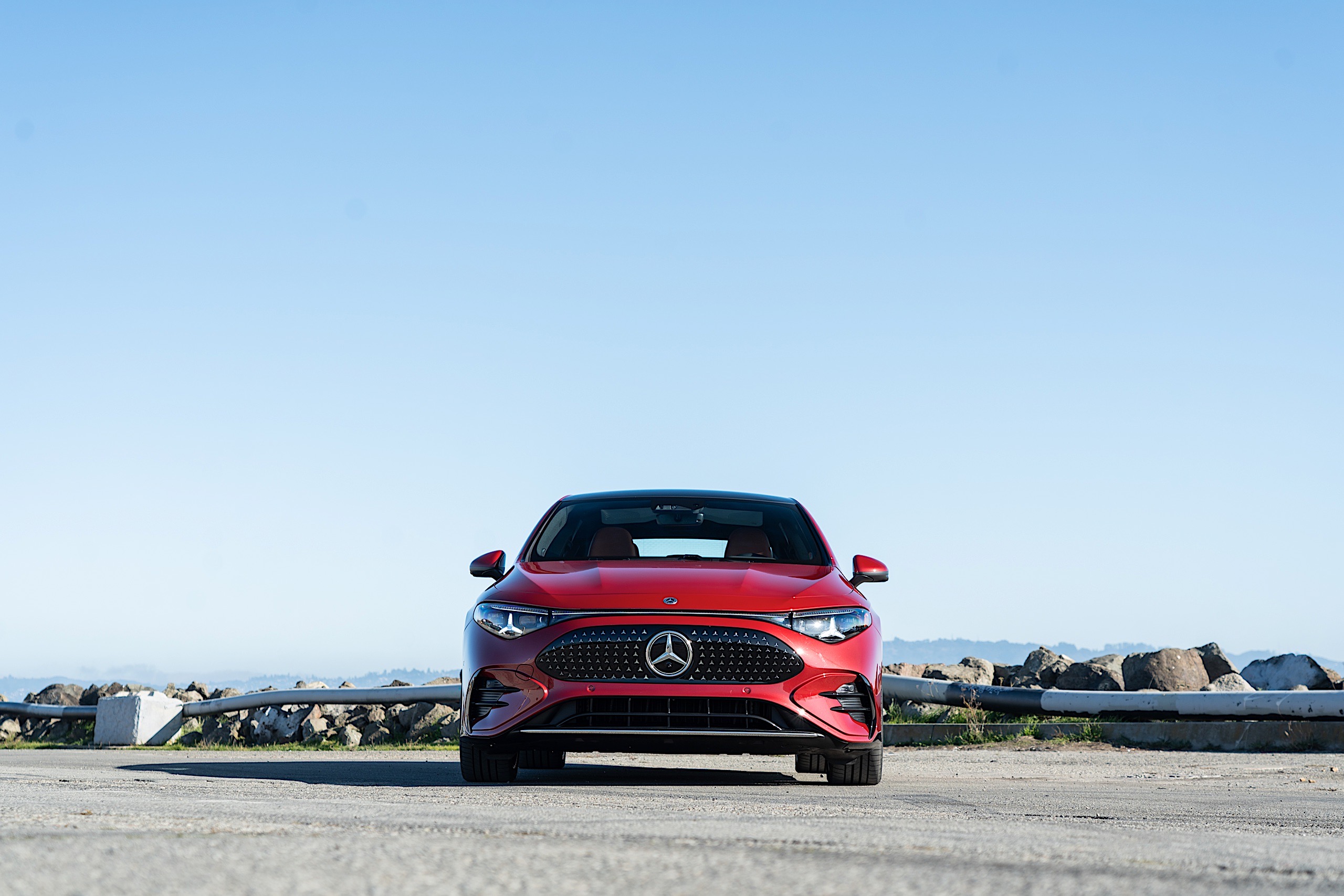
That was the Concept CLA, and while the production CLA you see here doesn't look quite that good, it is a fine-looking little electric sedan. More importantly, it goes as far as you'd think its slippery, 0.21-coefficient-of-drag body would carry it: up to 374 miles on a charge.
With a $47,250 starting price, is this electric CLA the complete package? After spending a day behind the wheel of one, I think it might just be.
Higher density
The CLA has long been Mercedes-Benz's most attainable sedan, a machine for those wanting something fun and stylish that offers a taste of the M-B lifestyle without breaking the bank.Attainability is still a big focus of this newly rebooted CLA, which serves as the debut venue for the company's latest generation of electrification. While most luxury auto makers would have you swing for their top-tier models to get the newest tech, Mercedes is actually bringing it to the lower end first.
The new CLA is built around a new battery pack that offers 20 percent more energy density than the company's previous EVs. There's a big boost in efficiency, too. Where the EQS, the company's current range meister, does up to 390 miles on a charge from roughly 110 kilowatt-hours, the CLA manages 374 miles from just 85. It's a much smaller car, sure, and lighter too at about 4,500 pounds versus 5,500 and up for the EQS, but there are bigger efficiencies at play here thanks to advanced motors and the aforementioned aerodynamics.
The CLA’s 0.21 coefficient of drag slots it right in between the 0.20 rating for the EQS sedan and 0.22 for the EQE. Crucially, though, despite being just as slippery as those cars, Mercedes-Benz's designers also managed to make the CLS stylish, a big step up from the efficient but amorphous profiles of its previous EVs.
That aerodynamic efficiency is a big part of what delivers the 374-mile range for the single-motor CLA 250+ with EQ Technology model, the formal and long-winded designation for what I drove. It delivers 268 horsepower through the rear wheels. Those wanting a bit more oomph can step up to the 349-hp, dual-motor, all-wheel-drive 350 4MATIC model. That extra power and low-grip surety costs an extra $2,550, but the bigger penalty is range: the dual-motor model maxes out at 312 miles on a charge. (There is a hybrid version of the new CLA coming as well, but we'll cover that on its own later.)
When it comes to charging, the new CLA impresses there, too. Charging at up to 320 kilowatts via the company's first NACS plug, the CLA adds a whopping 200 miles of range in 10 minutes. Weirdly, the car also has a separate, older-style J1772 plug for slower, level-two charging.
Accessible, not basic
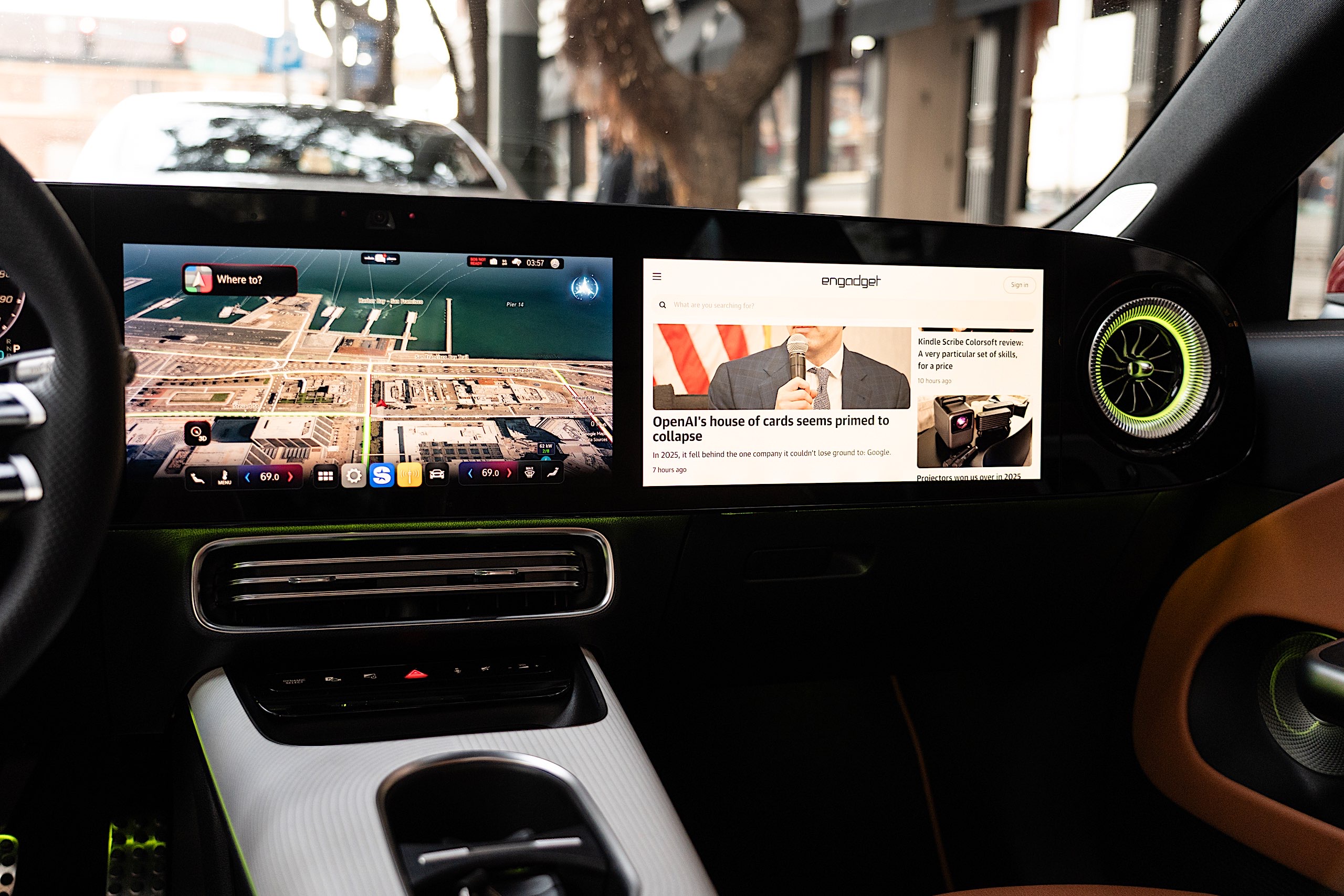
As a more attainable machine, you wouldn't necessarily expect the CLA to be completely loaded with features. Still, tick enough boxes and you can definitely get it there. While it doesn't have the luscious, curving Hyperscreen display as the EQS, it does offer a similar experience called Superscreen. You can get up to three displays spread across the dashboard: a 10.25-inch gauge cluster on the left, a 14-inch touchscreen in the center and an optional third display (also 14 inches) on the right for the passenger to play Angry Birds or stream videos. If, for some reason, they wouldn't rather just look at their phone.
All those displays run the latest version of the MBUX user interface, similar to what we've seen in the company's other EVs, but it’s a bit simpler and easier to use here. That's backed by a wholly new system-level operating system called MB.OS running on NVIDIA silicon, also making its debut on the CLA. Mercedes says this not only has far more capability but can also be more comprehensively updated via the car's 5G connection.
One of the features in the latest Mercedes software is baked-in AI. Say "Hey, Mercedes," and you can not only change just about any setting in the car, but also engage in any number of inane conversations. I asked for a weather update for my next trip to Chicago, the latest releases from a few of my forgotten bands and even got an explanation of why the lyrics in the song "Water's Edge" by Seven Mary Three are so very creepy. (Don't go down there, friends.)
It's all reasonably snappy and quite useful, but not perfect. When I said "I'm hungry," I got a quick listing of restaurants and offers for quick routing. When I said, "I need a hospital," the system, flummoxed, just stopped talking to me. Thankfully, I did not need a hospital. I was actually feeling pretty okay.
That extensive software upgradability is also opening the door to a new era of car upgrades. Yes, the automotive DLC era is here, and you can pay extra to unlock additional active features like automated parking, navigation, a dashcam function and whatever else Mercedes-Benz's product planners can dream up in the future. Hopefully, there's no horse armor involved.
We'll see how that shakes out, but my only real complaint about the interior was that it felt a bit cramped. It's a sedan on the small side, sure, but the layout feels a bit claustrophobic. That dashboard with all the displays is situated nearly vertically, as are the sides of the center console. Sitting in the passenger seat felt like being tucked in a box.
Mind you, it was a very comfortable box, well-upholstered and featuring a lovely interior trim made of recycled paper, grooved to give the effect of a Zen garden. Headroom up front is generous and actually isn't too bad in the rear, but ducking under that sweeping roofline to get into the back seats requires a bit of flexibility.
Drive time
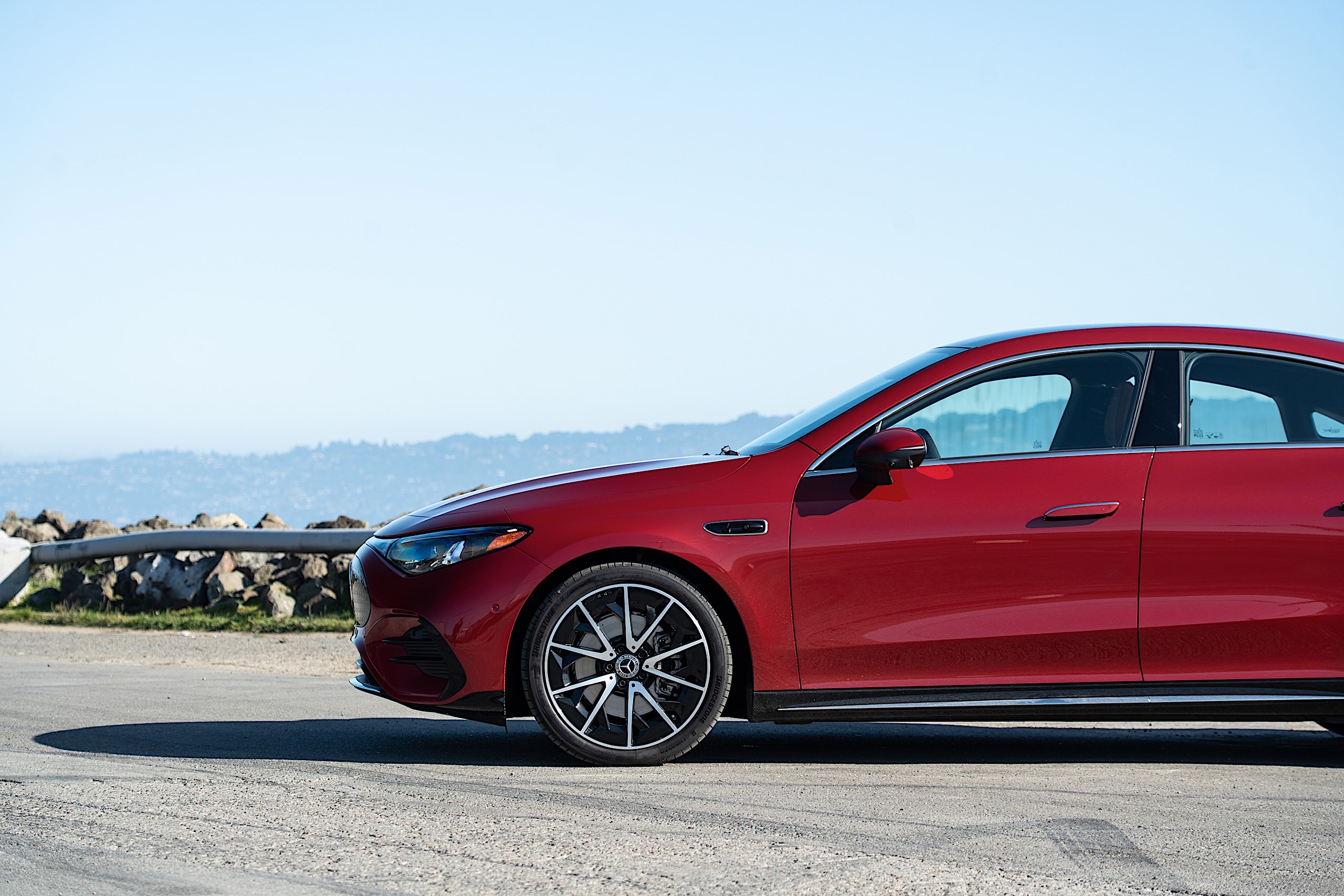
Despite being the slowest electric CLA, this little sedan gets off the line quickly. A 6.6-second 0-to-60 time under-sells the feeling of instant acceleration and throttle response that make EVs so very compelling. You only start to feel the CLA's relative lack of horsepower at higher speeds, but even there, it's hardly lacking.
That made it a blast to scoot from light to light as I was escaping from San Francisco, but it was much more fun in the foothills of Mt. Tamalpais. The CLA's steering is light yet has good feedback. I could really feel the road beneath the front tires, making for a more engaging machine than I was expecting.
That battery pack in the floor keeps body roll in check, but a positively pliant suspension makes for a relaxed affair. The CLA did a great job of soaking up the countless imperfections in and around San Francisco, making for an extremely comfortable commuter, if one that felt a bit floaty at times.
It'll be a safe commuter, too. The car is festooned with sensors, including 10 cameras of various resolutions and focal lengths, five radar sensors firing in every direction and 12 ultrasonic sensors. You'll need to pay extra for the digital keys to unlock their full functionality, though, like advanced lane-keeping and automated lane changes. There's even an advanced, point-to-point driver assistance system coming called MB.DRIVE Assist Pro that'll let the car handle most of the steering — even on secondary roads. More details on that to come.
For now, the car did great at managing itself on the highway, changing lanes with enough initiative to get through commuter traffic without issue, and not only bringing itself to a complete stop in traffic, but resuming again as soon as the cars ahead moved.
It even delivered good efficiency. I saw 3.9 miles per kWh, which would equate to a theoretical 331 miles from the 85 kWh battery pack. That's despite my driving with a good amount of enthusiasm and a heavy right foot. Edmunds, driving more conservatively, got 434 miles from a single charge,
Wrap-up
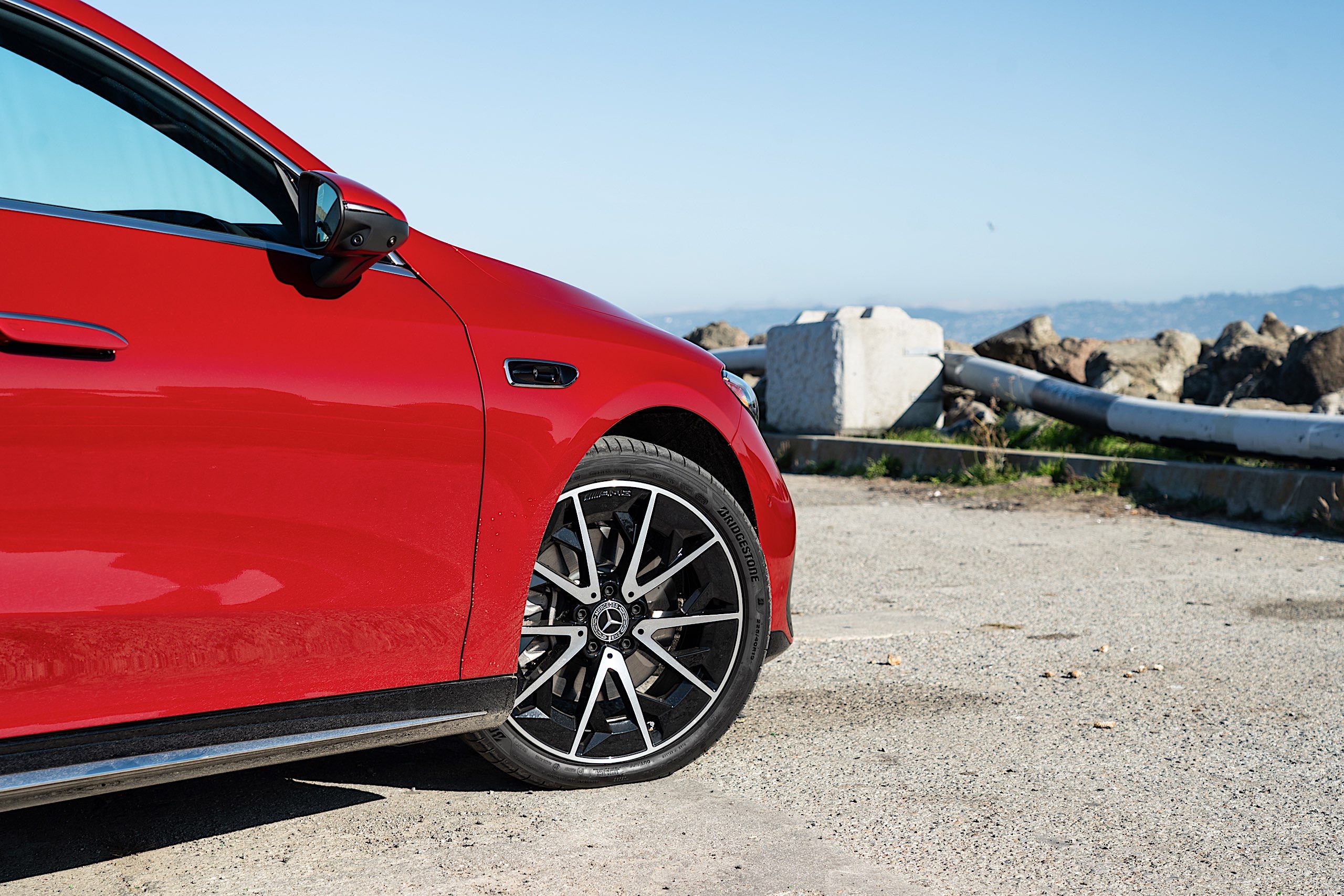
So the CLA looks great, drives well, has plenty of range and again, starting at $47,250, feels well-priced. Yes, you'll need to pay extra if you want to get all the toys, like the epic Dolby Atmos-capable Burmester sound system or the lovely Natural Fiber Zen interior trim. But when I ticked all the boxes I wanted, I still came out under $60,000. That put me about $5,000 below the base price of the company's next-bigger EV, the EQE.
The CLA really is a big step forward on the EV front, and it’s a car that's hard to fault. The new CLA is hitting dealerships presently, and I have a feeling you'll be seeing plenty of them on the road soon.
This article originally appeared on Engadget at https://www.engadget.com/transportation/evs/mercedes-benz-cla-first-drive-head-of-the-ev-class-140000562.html?src=rss
©