
Reading view

There are new articles available, click to refresh the page.

SEC Wraps Up Investigation Into Aave Protocol, Confirms CEO Stani Kulechov

The US Securities and Exchange Commission (SEC) has officially concluded its investigation into the decentralized finance (DeFi) protocol Aave (AAVE), marking a significant development in the ongoing evolution of regulatory approaches within the cryptocurrency industry. 

Stani Kulechov, the founder and CEO of the Aave protocol, confirmed the end of the four-year investigation in a post on social media, expressing relief and optimism about the future of DeFi.

Aave Founder Celebrates End Of SEC Investigation

In his announcement, Kulechov emphasized the considerable effort and resources invested by the Aave team throughout this process. He stated, “We are finally ready to share that the SEC has concluded its investigation into the Aave Protocol.” 

Highlighting the impact of regulatory scrutiny on DeFi, he added, “This process demanded significant effort… to protect Aave, its ecosystem, and DeFi more broadly.” 

Kulechov expressed hope for a new chapter in which developers can freely innovate and contribute to the future of finance, asserting, “DeFi will win.”

This conclusion is notable against the backdrop of heightened regulatory pressure that DeFi projects have faced in recent years. Under the previous SEC chair, Gary Gensler, the agency made a concerted effort to enforce regulations in the crypto space. 

In 2021, the SEC initiated 19 enforcement actions related to cryptocurrency in just the first nine months. However, recent patterns reveal a substantial shift in the commission’s stance on crypto enforcement.

SEC Eases Crypto Enforcement Actions By Over 60% 

Since President Donald Trump returned to the White House, the SEC has reportedly eased enforcement actions in over 60% of ongoing cryptocurrency cases. 

A New York Times investigation published recently analyzed thousands of government documents and court records, revealing that the SEC has either dismissed, paused, or reduced penalties for a significant majority of active crypto cases since January 20, 2021. 

While Trump’s first term saw an average of one high-profile cryptocurrency case per month—including the notable action against Ripple Labs—the current landscape indicates a less aggressive regulatory approach for major players like Binance, Ripple, and Gemini. 

Following the administration shift, enforcement actions against these companies have either been withdrawn or significantly softened.

Paul S. Atkins, the newly appointed SEC chair under the Trump administration, has labeled this regulatory shift a “new day” for the cryptocurrency industry. 

Aave

At the time of writing, the protocol’s native token, AAVE, was trading at $187, having only surged by 1% following the announcement. However, on a year-to-date basis, the AAVE token has seen a significant 52% drop, with prices currently 72% down from the all-time high of $661 reached in May 2021.  

Featured image from DALL-E, chart from TradingView.com 

Cantor Fitzgerald Projects Major Growth For Hyperliquid (HYPE) In Explosive New Report

Cantor Fitzgerald, one of the world’s leading asset management firms, has released an in-depth report highlighting the promising future of the decentralized exchange (DEX) Hyperliquid (HYPE). 

The 62-page analysis predicts significant growth for both the platform and its native token over the next decade, painting a bullish outlook for investors. 

Hyperliquid As ‘The Exchange Of All Exchanges’

As detailed in the report, Hyperliquid operates as a decentralized exchange specializing in trading perpetual futures and is built on a custom layer-1 blockchain. Currently, HYPE has a fully diluted market cap of approximately $15.8 billion. 

Year-to-date (YTD) 2025, the platform has generated an impressive $874 million in fees from a staggering $2.947 trillion in trading volume. 

A key feature that makes HYPE particularly attractive, and highlighted in the report, is its unique fee structure: approximately 99% of all fees generated by the protocol are allocated to repurchasing and burning the underlying token. 

This mechanism not only supports the value of HYPE but also reduces its circulating supply. In early 2025 alone, about 2.6% of all HYPE tokens expected to be in circulation, or roughly 5% of the current supply, were repurchased and burned. 

With the anticipation of new product launches, Cantor Fitzgerald views HYPE as “the exchange of all exchanges” and believes there’s a realistic path for annual fees to soar to $5 billion within the next decade.

Why Market Dynamics Favor HYPE

When it comes to the platform’s native token, HYPE has successfully captured considerable market share and emerged as one of the standout products in the cryptocurrency space over the past year. 

In addition to perpetual trading, Hyperliquid has launched spot trading and HIP-3 markets, enabling users to create new markets for a variety of assets including stocks and commodities.

Cantor Fitzgerald’s report emphasizes that the immediate determinant of HYPE’s market price will hinge on industry sentiment regarding competition. The ability of emerging rivals to challenge HYPE and affect its fee-generating capacity is paramount. 

However, the report argues that current fears surrounding competition may be overstated. It posits that “point tourists”—those who shift from platform to platform seeking incentives—are likely to return to the platform offering the deepest liquidity and best execution, which, according to Cantor Fitzgerald, is Hyperliquid.

A mere 1% increase in market share from CEX competitors in the perpetuals sector could translate to approximately $600 billion in trading volume. Based on existing perpetual fee rates, this could result in an additional $272 million in annual fees. 

By applying a conservative 25x valuation multiple to these fees, the potential market capitalization would rise to $6.8 billion.

HYPE Price To Reach $271?

Assuming moderate share gains over the next decade—projecting around 17% in perpetual trades and 18% in spot trading—Hyperliquid’s annual fees could surpass the $5 billion mark. 

A conservative valuation multiple of 25x, this would suggest a future market capitalization of approximately $125 billion. Given that nearly all generated fees will be used to repurchase HYPE tokens, a large portion of the circulating supply could potentially be bought back by the time the platform reaches these fee levels.

With a forecasted expansion of the fully diluted market cap from roughly $15.8 billion today to $125 billion in the future, combined with a declining supply of HYPE tokens, the projected share price is poised to increase at an even faster pace. 

If 20% of the Hyperliquid token float is repurchased—valued at around $3.5 billion today—the report suggests that the HYPE price could reach $271 at a fully diluted valuation of $125 billion.

The projections suggest that if HYPE captures just 1% of the market share annually and maintains consistent trading volumes from CEXs, the price of HYPE could grow substantially. 

By year 10, the asset manager believes that circulating supply could decrease from 577.2 million to approximately 144.9 million, while the market cap could remain around $16.1 billion based on conservative fee estimates excluding spot and HIP-3 revenues.

Hyperliquid

At the time of writing, Hyperliquid’s native token is trading at $26.49, having recorded major losses of almost 32% over the past month. This represents a 55% gap from the current trading levels and the all-time high of $59.30.

Featured image from DALL-E, chart from TradingView.com 

Bitcoin Bottom Forecast: Top Expert Predicts $40,000 Target Next Year, Here’s The Analysis

Bitcoin (BTC) has been struggling to regain momentum in the market, failing to surpass its nearest resistance level of $94,000 for over a month. The cryptocurrency is currently trading within a broad range between $85,000 and $93,000, leading to growing concerns about further price corrections in the upcoming months.

Amid this uncertainty, market expert NoLimit recently expressed on social media platform X (formerly Twitter) that he anticipates Bitcoin could bottom out at around $40,000 sometime in 2026. This forecast implies a significant 54% decline from current levels, which are just above $87,860.

A Historical Perspective On Market Cycles

NoLimit’s analysis outlines several reasons for this predicted downturn. He points out that Bitcoin has a historical tendency to surprise investors, often when confidence in the market is high. While each price cycle may appear unique on the surface, NoLimit argues that the underlying mechanics remain largely unchanged.

He emphasizes the cyclical nature of Bitcoin, noting that it moves within a four-year cycle influenced by liquidity, leverage, and human behavior rather than mere sentiment. 

According to him, the market is currently late in this cycle, and Bitcoin has consistently followed a three-step process during past upward movements.

First, Bitcoin tends to surge in price following the Halving event. This is typically followed by an influx of maximum leverage and late-stage buyers. Finally, the cycle concludes with a sharp and often chaotic reset before the next significant price expansion occurs.

Historically, Bitcoin has experienced steep declines during these resets, such as an approximate 85% drop in 2013-2014, an 84% drop in 2017-2018, and a 77% drop during the 2021-2022 cycle. In each scenario, investors were convinced that the conditions were different, yet the outcomes remained consistent.

$40,000 As Foundation For Bitcoin’s Next Bull Run 

Considering the current market situation, NoLimit highlights several critical indicators. He notes that Bitcoin has already seen substantial price appreciation, with institutional interest and exchange-trade fund (ETF) approvals now part of the landscape. 

He also observes that many traders are over-leveraged, market volatility is compressed, and there exists widespread hope for further price increases. These factors often signal a heightened risk of downside movement in the market.

A potential drop toward the $40,000 range should not be viewed as an unforeseen disaster, according to NoLimit. He argues that significant price declines have historically preceded major upward movements. 

Additionally, this price target aligns well with several technical indicators, including previous resistance levels that have turned into support, long-term moving averages, and the liquidity gap created by ETF approvals. 

Such factors suggest that a move toward this region could exhaust forced sellers and provide a solid foundation for recovery.

Bitcoin

Featured image from DALL-E, chart from TradingView.com 

Banks Can Soon Issue Stablecoins: FDIC Begins Rulemaking Under GENIUS Act

The Federal Deposit Insurance Corporation (FDIC) has announced a new framework that outlines how banks can apply to issue payment stablecoins through subsidiaries as part of the implementation of the country’s stablecoin bill, the GENIUS Act. 

FDIC’s First Move On GENIUS Act

In a statement, Acting Chair Travis Hill emphasized that the proposed process is tailored to allow the FDIC to thoroughly evaluate the safety and soundness of applications from banks seeking to enter the stablecoin market. 

According to a summary from FDIC staff, banks wishing to issue payment stablecoins will need to submit detailed applications outlining various aspects of their proposed activities.

Each application must include a description of the intended payment stablecoin, along with a comprehensive overview of the subsidiary’s activities. 

Additionally, institutions must provide financial information, details regarding the ownership and control structure of the subsidiary, and pertinent policies related to customer agreements, including provisions for custody. Applicants will need to submit an engagement letter from a registered public accounting firm.

30-Day Review Period For Stablecoin Applications

The FDIC aims to promptly review submissions, notifying stablecoin applicants within 30 days whether their application has been deemed substantially complete. Following that, the agency must make a decision on approval within 120 days from the time the application reaches this status.

“This proposed rule is the FDIC’s first action to implement the GENIUS Act,” stated Acting Chairman Travis Hill. He added that in the coming months, the agency plans to introduce proposals to establish the required management standards for subsidiaries of FDIC-supervised institutions that are approved to issue payment stablecoins. 

The FDIC is also committed to providing comprehensive regulatory clarity regarding activities associated with digital assets and tokenized deposits. The plan will undergo a public consultation period before it can be finalized.

Stablecoins

Featured image from DALL-E, chart from TradingView.com 

OCC’s Approval Of Crypto Charters Faces Pushback From Banking Lobbyist Groups

The Office of the Comptroller of the Currency (OCC) recently sparked a wave of criticism from traditional finance groups following its approval of conditional bank charters for five cryptocurrency firms: Ripple, Circle, BitGo, Paxos, and Fidelity. 

Stablecoins Seen As Direct Threat

Following the OCC’s announcement, industry stakeholders quickly voiced their concerns. Traditional banks expressed apprehension that these approvals stretch the definition and historical purpose of the national trust bank charter. 

Rebeca Romero Rainey, president and CEO of the Independent Community Bankers of America, stated that the conditional approvals endanger consumers and create institutions that the OCC may not effectively manage. 

She further remarked that the new framework allows stablecoin operators access to the federal banking system without the rigorous capital and regulatory requirements that traditional banks must uphold.

Todd Phillips, a professor at Georgia State University and former attorney with the Federal Deposit Insurance Corporation, also noted that stablecoins pose a direct threat to the conventional banking model. 

He remarked that banks are reacting aggressively to counter this emerging competition from stablecoins, which are perceived as encroaching on their market share.

In defense of the OCC’s actions, Comptroller of the Currency Jonathan Gould emphasized the benefits of new entrants in the federal banking sector, asserting that they would introduce fresh products and services while enhancing competition. He views this as a positive move for consumers and the broader banking industry.

Banks Raise Alarm Over OCC’s Crypto Trust Charters

One key difference between trust banks and conventional banks is their inability to accept deposits or make loans. Nonetheless, banks are wary that these newly chartered firms may venture beyond merely holding assets to back stablecoins. 

Rob Nichols, president and CEO of the American Bankers Association, expressed concern that this expansion of the trust charter blurs the lines defining banking activities and could lead to regulatory arbitrage.

The Bank Policy Institute (BPI) also raised questions about the OCC’s approval process, urging transparency to help the public understand the rationale behind these decisions. Greg Baer, the BPI’s president and CEO, emphasized the need for clarity around the applications.

The current conditional approvals for crypto trust banks present a more viable litigation landscape than earlier fintech charters, according to Andrew Grant, co-founder of Runway Group, a consultancy focused on financial technology. 

Many banks are reportedly unhappy about the momentum of the OCC’s recent decisions, suggesting they may take steps to introduce regulatory friction against these new entrants.

Furthermore, the provisions of the GENIUS Act permit the establishment of national banks without deposit insurance, which complicates the ability of traditional banks to mount effective legal challenges against the approved cryptocurrency firms. 

Todd Baker, a senior fellow at the Richman Center for Business, Law and Public Policy at Columbia Business School, noted that while litigation may yield some restrictions on crypto-related activities, it is unlikely to impact stablecoin issuance, redemption, or custody.

Crypto

Featured image from DALL-E, chart from TradingView.com

Crypto Market Structure Bill Stalled: Senate Banking Committee Pushes Markup To Early 2026

The anticipated US crypto market structure bill, seen as a landmark piece of legislation following the GENIUS Act, is unlikely to pass this year as Senate Banking Committee Chair Tim Scott announced the postponement of a committee vote. Instead, discussions regarding the bill are expected to resume in early 2026.

Pushing Crypto Bill Discussions To Next Year

In a statement released on Monday, a spokesperson for Chair Scott, a South Carolina Republican, noted that the Senate Banking Committee is actively negotiating with its Democratic counterparts in pursuit of a bipartisan approach to digital asset market legislation. 

“Chairman Scott and the Senate Banking Committee have made strong progress,” said spokesperson Jeff Naft, emphasizing the ongoing efforts to create a robust regulatory framework that would provide clarity for the crypto industry and position the US as a leader in the digital asset space.

The delay comes at a time when the committee has produced multiple draft versions of the bill. However, with Congress preparing to return from its holiday break, the immediate focus will shift to funding the federal government, as the current funding bill is set to expire on January 30. 

The negotiations had intensified over the past week, with Republicans from the Banking Committee collaborating with Senate Democrats to find a workable compromise. 

Democrats have advocated for additional time in discussions, reflecting concerns about various issues, including financial stability, market integrity, and ethical considerations

In particular, the ethics concerns have been linked to President Donald Trump and his family’s crypto-related business dealings, which have reportedly increased their wealth.

Regulators Intensify Oversight Of Digital Assets

Despite the legislative stall, federal regulators are continuing to engage with the cryptocurrency sector. The Securities and Exchange Commission (SEC) has issued multiple staff statements and convened roundtable discussions to explore how existing securities laws apply within the crypto market. 

In parallel, the Commodity Futures Trading Commission (CFTC) has begun allowing licensed institutions to engage in spot crypto trading and recently granted no-action relief to specific prediction market operators regarding data requirements.

Additionally, the Federal Deposit Insurance Corporation (FDIC) is set to take significant steps towards implementing the country’s stablecoin bill, or most commonly known as the GENIUS Act. 

The FDIC board is expected to review a proposed rule that will outline approval requirements for banks issuing payment stablecoins through their subsidiaries, opening the proposal for public commentary and discussion.

Travis Hill, the FDIC chair nominee, who may be confirmed by the Senate as soon as this week, highlighted that the FDIC is are already working on establishing prudential standards for stablecoin issuers under FDIC supervision. These standards would cover areas such as capital requirements, reserves, and risk management.

Crypto

Featured image from DALL-E, chart from TradingView.com 

Will Bitcoin Suffer A 20% Decline After Japan’s Rate Hike? Historical Patterns Suggest So

Bitcoin (BTC) has experienced a 4% drop, falling below the $86,000 mark on Monday, as market speculation grows regarding the cryptocurrency’s future following the Bank of Japan’s (BOJ) interest rate decision. 

In a recent poll conducted from December 2 to 9, an overwhelming 90% of economists—63 out of 70—predicted that the BOJ would increase short-term interest rates from 0.50% to 0.75% at this week’s planned meeting.

Experts Warn Of Impact From BOJ Rate Hikes

Experts on social media have noted a concerning trend: during the last three rate hikes by the BOJ, Bitcoin has typically dropped significantly. The statistics reveal the following declines: a 23% drop in March 2024, a 26% decline in July 2024, and a 31% dip in January of this year. 

Based on current prices just below $86,000, this would imply that if the cryptocurrency sees another 20% correction, it could drop all the way to 68,800. This would mean extending the gap compared to the all-time high of $126,000 by almost 46%. 

Bitcoin

The group of experts further highlighted that the dynamics at play in Japan significantly impact Bitcoin’s performance as Japan holds the largest amount of US debt of any nation. 

When Japanese interest rates rise, capital tends to flow back to Japan, leading to reduced liquidity in dollars. This decrease in dollar liquidity often results in the selling of riskier assets like Bitcoin.

On November 30, a foreboding sign of this potential downturn appeared when confirmation of Japan’s impending rate hike caused Bitcoin to dip to around $83,000, erasing approximately $200 billion from the overall cryptocurrency market.

However, the bearish sentiment affecting Bitcoin is not solely the result of Japan’s actions. Market analyst known as NoLimit recently pointed to another critical factor: China’s renewed crackdown on Bitcoin mining. 

China’s Mining Crackdown Spurs Bitcoin Sell-Off

The analyst recently asserted that China has tightened regulations, particularly affecting operations in Xinjiang, where a significant number of crypto mining setups were shut down in December. This led to the abrupt offline status of roughly 400,000 miners.

The repercussions of such a sudden shift in mining activity are already evident. The Bitcoin network hashrate has fallen by about 8%, indicating that fewer miners are actively contributing to the network. 

NoLimit suggests that this sudden reduction creates immediate revenue-loss for miners, who may need to liquidate Bitcoin to cover operational costs or to relocate their equipment. Consequently, this generates actual selling pressure on the market, contributing to the downward price trend seen on Monday.

Despite the short-term pain this creates, the analysts clarified that it does not indicate a long-term bearish outlook for Bitcoin. Instead, he views it as a temporary supply shock driven by regulatory decisions rather than a shift in demand. 

Historical patterns support this notion: when China has previously cracked down on miners, the cycle follows a familiar trajectory: miners are forced offline, hashrate dips occur, prices fluctuate, and eventually, the network adapts before Bitcoin moves forward again.

Featured image from DALL-E, chart from TradingView.com

Ripple Announces RLUSD Growth Strategy: L2 Expansion On Ethereum Planned For 2026

Ripple, the issuer of the fast-growing RLUSD stablecoin, has recently announced an ambitious multichain strategy aimed at enhancing its presence in the crypto space. 

This initiative will see RLUSD integrated into Layer-2 (L2) solutions on the Ethereum (ETH) blockchain, facilitated by a partnership with Wormhole, one of the largest protocols for cross-chain interoperability.

Ripple Targets Broader Blockchain Integration

In a press release issued on Monday, Ripple and Wormhole detailed their plans to initiate testing on several notable L2 networks, including Optimism (OP), Base, Ink, and Unichain. 

The collaboration will leverage Wormhole’s Native Token Transfers (NTT) standard, which is designed to ensure efficient movement of liquidity across various blockchain ecosystems while allowing Ripple to maintain native control over RLUSD.

Originally launched on both the XRP Ledger (XRPL) and Ethereum, RLUSD aims to enhance cross-chain functionalities and decentralized finance (DeFi) opportunities. 

Jack McDonald, Senior Vice President of Stablecoin at Ripple, emphasized the significance of stablecoins in the DeFi landscape, stating:

Stablecoins are the gateway to DeFi and institutional adoption. RLUSD is designed from the ground up to be the trusted, liquid medium necessary for users to seamlessly enter, interact with, and exit the entire digital asset economy.

The executive also highlighted that by launching RLUSD as the first US Trust Regulated stablecoin on these L2 networks, Ripple is also setting a standard where compliance meets on-chain efficiency. Looking toward, Ripple plans to launch RLUSD on additional chains, pending final regulatory approval. 

RLUSD Becomes Third-Largest US-Regulated Stablecoin

Notably, RLUSD has achieved a market capitalization of $1.3 billion in less than a year, making it the third-largest stablecoin among US-regulated options, according to CoinGecko data

Positioned for compliance with the GENIUS Act, RLUSD’s circulating supply surged by 28% in November alone, crossing the billion-dollar threshold. It currently ranks behind only Circle’s USDC and PayPal’s PYUSD in the US-regulated dollar tokens. 

In a significant development in November of this year, Ripple also initiated a new pilot program with traditional finance giants Mastercard, WebBank, and crypto exchange Gemini aimed at facilitating credit card transaction settlements using RLUSD on the XRP Ledger. 

This partnership allows WebBank to send RLUSD over the XRPL for instant settlement of daily payment obligations with Mastercard, eliminating the traditional delays associated with bank ACH transfers.

Ripple’s president, Monica Long, described this pilot as a “meaningful step” toward demonstrating how regulated digital assets can expedite institutional payment processes. 

Ripple

XRP, which is also associated with the company, is trading at $1.90. This represents a 5% drop over the past 24 hours, in line with the broader correction in the crypto market cap, which has seen Bitcoin (BTC) and other leading altcoins resume the downtrend witnessed over the past two months. 

Featured image from DALL-E, chart from TradingView.com 

XRP Price Forecast: Key Factors That Could Propel It To $3 In Early 2026

As the week began, the XRP price experienced a 4% decline, bringing it nearly 50% below its all-time highs. However, analysts forecast significant gains for one of the market’s leading altcoins in January 2026, citing three major catalysts that could reshape its market outlook.

A Major Step Towards Broader Access

In a recent analysis, Sam Daodu, a market expert from 24/7 Wall St., emphasized the importance of Vanguard’s decision to approve trading of XRP exchange-traded funds (ETFs).

Daodu emphasized that the real significance lies in the facilitation of distribution; with Vanguard’s advisors able to allocate XRP exposure through regulated ETFs without additional cumbersome processes.

He indicated that three interrelated factors are now at play: the influx of institutional capital through ETF investments, a reduction in supply, and the influence of Vanguard in altering the approach towards the asset.

Notably, the results of the token’s exchange-traded fund launch have already been notable, with XRP inflows hitting $1 billion within the first four weeks of trading, making it one of the fastest-growing crypto ETF launches to date. 

Additionally, XRP’s market supply has contracted significantly, dropping by 45% from approximately 3.9 billion tokens at the beginning of 2025 to about 1.6 billion by December. 

This contraction can be attributed to large holders refraining from distributing their tokens, leading to an accumulation in whale wallets and the removal of tokens from liquid markets due to ETF custody.

This decreased supply implies that smaller inflows now carry greater influence. With only 1.6 billion tokens available on exchanges, investments of $20-30 million in daily ETF purchases can have a substantive impact on market supply. 

A Key Driver For Price Appreciation 

The Vanguard XRP ETF launch is particularly significant in this context, as it locks tokens into regulated custody vehicles that are less likely to be sold frequently. 

Unlike tokens held on exchanges that can be quickly moved in and out, ETF custody tends to encourage a buy-and-hold strategy, fostering conditions for gradual price appreciation fueled by sustained institutional demand amid a diminishing available supply.

Given that the decision to provide ETF access came late in the year, year-end trading typically focuses on maintaining existing allocations rather than creating new positions. 

While the ETF adds credibility to XRP without causing immediate price pressure, its journey to a $3 valuation by January will depend on how swiftly advisory capital mobilizes, the durability of supply compression, and the overall stability of the markets.

XRP Price Path To $3

Three potential scenarios present themselves for XRP’s future. The most optimistic scenario sees advisory capital moving quicker than typical, perhaps allowing advisors to integrate small XRP allocations during January’s rebalancing. 

In this case, XRP ETF inflows could remain robust, ranging from $40-60 million daily, while the locked-up supply on exchanges supports a price increase that could see the XRP price surpass $2.25, aim for $2.60, and potentially test $3 by the end of January.

The middle-ground perspective suggests a more conventional institutional timing. In this scenario, while the XRP ETF access will gain attention in December, actual allocations might ramp up gradually, leading to a daily influx of about $20-30 million instead of the earlier expected pace. 

Here, the XRP price could establish higher lows and breach the $2.25 mark, facing resistance between $2.40 and $2.80. Price fluctuations would focus more on future adoption rather than immediate implications.

According to Daodu’s conclusions, and given these circumstances, the XRP price reaching $3 could take until the first or second quarter of 2026 rather than being an immediate milestone. 

XRP price

Featured image from DALL-E, chart from TradingView.com

Hyperliquid’s Latest Announcement: Why It Could Be A Game Changer For HYPE Investors

Hyperliquid (HYPE), one of the largest decentralized exchanges (DEXs) in the industry, has announced the pre-alpha launch of a portfolio margin system on its testnet, marking a significant advance for traders by unifying spot and perpetual (perps) trading to enhance capital efficiency. 

This system supports various trading strategies, such as carry trades, wherein spot balances can collateralize short perps. Additionally, idle assets will automatically earn yield, creating a more dynamic trading environment.

Hyperliquid’s New Upgrade

In this initial rollout, users can only borrow Circle’s USDC stablecoin, with the exchange’s native token HYPE designated as the sole collateral asset. However, Hyperliquid plans to introduce Native Market’s USDH and Bitcoin (BTC) before transitioning to the alpha version. 

The portfolio margin framework is designed to be applicable across all HIP-3 decentralized exchanges and is expected to extend to future asset classes under the HyperCore umbrella. 

An upcoming upgrade will provide smart contract access via CoreWriter, allowing developers to create on-chain strategies using ERC-20-based wrappers, which will further broaden the platform’s functionality.

Market expert Austin King recently articulated the importance of this launch in a post on X (formerly Twitter), noting on the historical significance of portfolio margin, reflecting on its introduction in traditional finance (TradFi) that added an impressive $7.2 trillion to the derivatives market within a few years.

The Essential Role Of Portfolio Margin

The expert recalled that the government had introduced margin requirements in 1934 in response to excessive leverage during the 1929 crash. 

While well-intentioned, these regulations simplified the complex nature of liquidity and often exacerbated volatility in markets. The inability to run delta-neutral strategies efficiently meant that significant margin was required for each position, presenting a challenge for traders.

The introduction of portfolio margin by the Chicago Mercantile Exchange (CME) in 1988 transformed this landscape by reducing margin requirements through a comprehensive analysis of overall risk across combined positions. 

Yet it wasn’t until 2006 that retail customers gained access to these benefits, as they had been historically limited to broker-dealers and market makers.

So, what does this mean for Hyperliquid? According to King’s thesis, the introduction of portfolio margin is poised to significantly enhance liquidity growth on the platform. 

Increased Open Interest and trading volume can be expected for every dollar of margin in the system. Effectively, this will create a substantial liquidity multiplier for every new dollar that enters Hyperliquid. Moreover, portfolio margining serves as an essential tool for large-scale liquidity providers in the traditional financial sector. 

The expert asserted that without this capability, it would be economically challenging for significant TradFi players to participate in providing liquidity on Hyperliquid, as the returns per dollar of margin would be considerably lower compared to traditional exchanges that offer portfolio margin. King concluded the following:

There is more work to be done, but with this rollout one of the biggest issues I repeatedly heard cited will no longer be a blocker.

Hyperliquid

At the time of writing, HYPE was trading at $28.83, having recorded significant losses of 18% and 25% over the fourteen- and thirty-day time frames, respectively. However, it is one of the few tokens that remains in the green zone on a year-to-date basis, with gains of 60% recorded in this period.

Featured image from DALL-E, chart from TradingView.com 

Tether Eyes Stock Tokenization Option In Ambitious $20 Billion Raise

As Tether (USDT), the issuer of the world’s largest stablecoin, USDT, prepares for a significant fundraising effort aimed at entering the US market, the company is actively seeking ways to bolster liquidity for its investors. 

This initiative comes in the wake of Tether’s intervention to prevent some existing shareholders from offloading their stakes at a substantial discount.

Tether In Talks With Major Firms

According to Bloomberg, Tether is contemplating various strategies, including share buybacks and the tokenization of the company’s shares on a blockchain once the fundraising deal is complete. 

These discussions have been prompted by concerns that the sale of shares by certain investors could jeopardize Tether’s ambitious fundraising goals. 

In response to inquiries from Bloomberg News, Tether confirmed that it has successfully halted plans from at least one shareholder seeking to divest their stock, emphasizing that it would be “imprudent” for any investor to attempt to bypass the established processes managed by top-tier global investment banks. 

Tether’s management is actively managing these situations to ensure that the forthcoming fundraising effort remains robust. Reports indicate that the company aims to attract “strategic” investors as part of its capital raise and has held discussions with firms such as SoftBank Group Corp. and Ark Investment Management LLC. 

However, Tether has not provided a timeline for a potential initial public offering (IPO), suggesting that both new and existing investors may face delays before any liquidity events occur.

Juventus Acquisition Proposal

Tether also announced on Friday a binding cash proposal to acquire Exor’s entire stake in the Italian Football giant, Juventus Football Club. This proposal aims to secure Exor’s shareholding, which represents 65.4 percent of Juventus’ total issued share capital. 

The completion of this acquisition is contingent upon Exor’s acceptance, the signing of final agreements, and the receipt of necessary regulatory approvals.

Tether intends to make a public tender offer for any remaining shares at the same price, fully backed by its own capital, reflecting a long-term commitment to Juventus. 

Paolo Ardoino, CEO of Tether, expressed a deep personal connection to the club, emphasizing that his experiences with Juventus have instilled values of commitment, resilience, and responsibility in him.

With plans to invest €1 billion in the club’s development and support, the firm’s proposal extends beyond mere ownership; it aims to forge a meaningful partnership that reinforces Juventus’ legacy and enhances its global brand, the firm disclosed.

Ardoino articulated his belief in the club’s importance, stating that Juventus is more than just a football team; it represents a cultural and sporting identity that has inspired loyalty among fans worldwide.

Tether

Featured image from DALL-E, chart from TradingView.com 

Kalshi To Power Coinbase New Internal Prediction Platform, Insider Reveals

According to a report from CNBC, Coinbase (COIN), the largest cryptocurrency exchange in the US, is preparing to launch its own prediction market in collaboration with Kalshi, one of the largest federally regulated financial exchanges in the country. 

Coinbase Teases Major Updates

The anticipation surrounding the prediction market has been building for nearly a month. Recently, a screenshot of what appears to be Coinbase’s prediction markets dashboard was shared by Silicon Valley researcher Jane Manchun Wong in a post on social media site X (previously Twitter), shedding some light on the features of the forthcoming product. 

The Information first indicated on November 19 that Coinbase planned to introduce these prediction markets powered by Kalshi, with a formal unveiling set for the “Coinbase System Update” event scheduled for December 17. Formal announcements regarding this new platform are expected soon, potentially as early as next week.

Bloomberg corroborated this report, stating that the cryptocurrency exchange is also likely to announce a tokenized stock offering during the same event, in line with Tether’s same vision reported earlier this week.

While Coinbase has refrained from confirming these developments directly to CNBC, the company has encouraged stakeholders to tune in to its upcoming event for more details. The firm did not disclose a specific timeline for when the prediction markets will become available to users.

‘Everything Exchange’ Status 

Coinbase’s push to launch a prediction market is part of a broader strategy to transform itself into an “everything exchange”—a comprehensive platform for trading a wide variety of assets, including cryptocurrencies, tokenized stocks, and event contracts. 

CEO Brian Armstrong articulated this vision earlier in May, stressing that the cryptocurrency exchange aims to evolve into a leading financial services application within the next decade.

This development comes as Coinbase faces increasing competition from rivals like Robinhood (HOOD), Gemini (GEMI), and Kraken, all of whom have introduced tokenized equity offerings for users outside the US and are exploring prediction markets to varying extents. 

Coinbase is expanding its range of financial instruments while making a series of acquisitions this year. These include major deals such as the purchase of the crypto derivatives exchange Deribit and the on-chain advertising firm Spindl, as well as seven other major acquisitions. 

This also follows a shift in investor sentiment in the digital asset space, with the largest cryptocurrencies — including Bitcoin (BTC) — having retraced by over 30% since October amid fears of a new bear market beginning. 

Coinbase

Over the past months, the exchange’s stock, which trades under the ticker name COIN, has also seen a significant drop of over 39%, with the current valuation standing at $267 per share. 

Featured image from DALL-E, chart from TradingView.com 

Crypto Exchange Binance To Assist Pakistan In Tokenizing $2 Billion In Government Bonds

As Pakistan continues to deepen its involvement in the digital asset landscape, the country has signed a memorandum of understanding (MoU) with crypto exchange Binance, aiming to explore the tokenization of up to $2 billion in sovereign bonds, treasury bills, and commodity reserves to enhance liquidity and attract foreign investors.

$2 Billion Asset Tokenization Initiative

According to Reuters, the agreement sets the stage for a potential collaboration focused on allowing the tokenization and blockchain-based distribution of various real-world assets (RWAs) held by the Pakistani government. 

These assets may include sovereign bonds, treasury bills, and a range of commodity reserves such as oil, gas, metals, and other raw materials. 

The country’s finance ministry, Muhammad Aurangzeb, indicated that while the initiative could involve assets valued at up to $2 billion, final approval is still pending. The goal is to improve liquidity, transparency, and access to international markets for these assets. 

Aurangzeb remarked that the memorandum of understanding signifies Pakistan’s commitment to a reform-oriented economic trajectory and establishes a long-term partnership with Binance.

Binance founder Changpeng Zhao expressed optimism about the agreement, calling it “a great signal for the global blockchain industry and for Pakistan.” He suggested that this partnership marks the beginning of a significant shift toward fully implementing the tokenisation initiative.

PVARA Provides Initial Clearance For Binance And HTX 

In addition to this MoU, Pakistan has granted initial clearance for Binance and cryptocurrency exchange HTX, to register with local regulators as part of their efforts to establish domestic subsidiaries. This step allows both companies to prepare applications for full exchange licenses. 

The Pakistan Virtual Assets Regulatory Authority (PVARA) provided these early approvals after assessing the governance and compliance frameworks of both platforms.

Chairman Bilal bin Saqib indicated that these clearances initiate Pakistan’s phased licensing process, emphasizing that the strength of compliance will play a crucial role in determining which exchanges will proceed. 

This move comes as Pakistan accelerates its digital finance overhaul, which has included the formation of the Pakistan Crypto Council and the establishment of the PVARA, alongside the drafting of a formal licensing regime.

As Bitcoinist reported at the time, Pakistan’s growing involvement in digital assets drew the attention of industry leaders such as Michael Saylor, co-founder of the Bitcoin proxy firm Strategy, who praised the country’s efforts and described it as a sign that the country understands how to handle this new market. 

Notably, Pakistan ranks as the world’s third-largest cryptocurrency market by retail activity, according to Saqib. The government is also planning a pilot program for a central bank digital currency (CBDC) and a comprehensive Virtual Assets Act.

Binance

At the time of writing, the exchange’s native cryptocurrency, Binance Coin (BNB), is trading at $878, down 35% from all-time highs just above $1,369.

Featured image from DALL-E, chart from TradingView.com

Ripple, Circle, Paxos Secure Path To National Banking Charters In The US

On Friday, the Office of the Comptroller of the Currency (OCC) approved national trust charter applications from several key firms in the industry including Circle’s First National Digital Currency Bank, Ripple National Trust Bank, BitGo Bank & Trust, Fidelity Digital Assets, and Paxos Trust Company. 

OCC’s Approval Of Digital Asset Trust Banks

Once finalized and full approval is reached, these national trust bank charters would empower the crypto companies to manage and hold assets on behalf of their customers, enabling faster payment settlements. 

Currently, Anchorage Digital is the only digital asset company that holds a national trust bank charter from the OCC, which oversees a total of 60 such institutions. 

Comptroller Jonathan Gould emphasized that each application underwent a thorough and rigorous review process, underscoring the necessity for each entity to meet additional conditions before gaining full operational status. 

He explained that welcoming new entrants into the banking landscape aids in modernizing the system, diversifying offerings, and enhancing access to innovative financial products.

Ripple CEO Challenges Banking Lobbyists

Brad Garlinghouse, CEO of Ripple, commented on the approval via social media, highlighting it as a significant advancement for Ripple’s stablecoin, RLUSD. He stated that it sets a high standard for compliance under both federal and state regulation.

Garlinghouse also took a moment to address banking lobbyists who may have opposed this move, asserting that their “anti-competitive tactics” are evident.

The executive pointed out that while these lobbyists have argued that the crypto industry does not abide by the same regulations, the recent approvals demonstrate that the crypto sector is operating transparently under the supervision of the OCC. 

Stuart Alderoty, Ripple’s Chief Legal Officer, noted that the firm is among the first entities to receive conditional approval following the enactment of the GENIUS legislation, ensuring the sustainability of Ripple’s stablecoin business for the long term.

Ripple

Featured image from DALL-E, chart from TradingView.com 

Inside JPMorgan’s Latest Crypto Strategy And Solana’s Key Involvement

On Thursday, JPMorgan, one of the largest banking institutions globally, marked a pivotal moment in the intersection of traditional finance and cryptocurrency by successfully arranging a US Commercial Paper (USCP) issuance for Galaxy Digital. 

This significant transaction, valued at $50 million, was executed on the Solana (SOL) blockchain and was purchased by Coinbase Global and crypto exchange-traded fund (ETF) issuer Franklin Templeton.

JPMorgan’s Future Plans For Blockchain Structures

This issuance stands out as one of the first instances leveraging blockchain technology for the issuance and servicing of securities, signaling a growing trend of traditional financial firms embracing new technologies. Scott Lucas, the head of Markets Digital Assets at JPMorgan, shared insights on future developments, stating: 

In the first half of next year, we intend to build on this momentum by exploring how this structure and JPMorgan’s role in it can be expanded, not just in terms of the investor and issuer base but also security type.

Acting as the arranger for the deal, JPMorgan also created the on-chain USCP token. The process for both issuance and redemption will be conducted in Circle’s USDC stablecoin. 

This issuance marks Galaxy’s inaugural foray into commercial paper, enhancing the firm’s short-term funding capabilities and facilitating access to a growing array of institutional investors who are increasingly incorporating blockchain-money market instruments into their portfolios. 

Solana Foundation’s Role 

Jason Urban, Global Head of Trading at Galaxy, highlighted the potential of public blockchains in enhancing capital markets’ operational efficiency. 

Urban noted that by actualizing the first on-chain commercial paper offering and aiding in structuring one of the earliest US transactions of its kind, Galaxy is actively promoting an open, programmable infrastructure that supports “high-caliber financial products.”

Sandy Kaul, Head of Innovation at Franklin Templeton, remarked on the industry’s shift towards practical blockchain usage, emphasizing the pivotal role of the investment in backing Galaxy’s initiatives and accelerating progress towards a more open, efficient, and resilient financial ecosystem.

Nick Ducoff, Head of Institutional Growth at the Solana Foundation, highlighted the critical advancement achieved by bringing the security and efficiency of public blockchains to institutional finance. 

He further disclosed that Solana’s architecture facilitates secure and trustworthy financial transactions, providing a robust foundation for institutions like JP Morgan to arrange transactions with enhanced trust and performance standards.

Brett Tejpaul, Co-CEO of Coinbase Institutional, emphasized the transformative impact JPMorgan’s initiative and the milestone transaction in institutional finance’s adoption of public blockchain technology. 

JPMorgan

At the time of writing, Solana’s native token, SOL, was trading at $136, having recorded a significant 12% decline over the past 30 days. This price action also positions SOL’s valuation down by over 53% from the all-time high of $293 reached earlier in the year. 

Featured image from DALL-E, chart from TradingView.com 

Crypto Market Dips: The Reasons Behind Bitcoin Plunge Below $90,000 Despite FOMC Optimism

On Thursday, Bitcoin (BTC) once again fell below the critical $90,000 mark, even after what many had anticipated to be a bullish event stemming from the US Federal Reserve’s (Fed) decision to cut rates by a quarter point. Analysts from Bull Theory note several factors contributing to this unexpected downturn.

Bitcoin Sell-Off Amid Market Unease

The analysts pointed out that the rate cut itself was largely anticipated by investors weeks prior, with a 95% probability already priced into the market. 

Ahead of the announcement, they identified that many positioned themselves in expectation of some form of liquidity support from the Fed, leading to a rally in Bitcoin prices. 

However, when the actual cut and the accompanying plan for $40 billion in monthly T-bill purchases were confirmed, many of these “whales”—large investors in the market—began to take profits. 

Adding to the market’s unease was Fed Chair Jerome Powell’s post-announcement press conference, where he highlighted persistent weaknesses in the labor market and ongoing inflation concerns. Furthermore, the Fed’s dot plot projections indicated the likelihood of only one additional rate cut in 2026.

The situation was compounded by disappointing earnings results from Oracle, which reported its second quarter’s financials after the market’s close. The tech giant missed its adjusted revenue estimates, and higher capital expenditure projections led the stock to plunge by more than 11% in after-hours trading. 

This drop also negatively impacted US stock futures, as concerns grew that the artificial intelligence (AI) boom may be peaking. The widespread fear from Oracle’s results quickly spread from equities into the cryptocurrency space.

Ultimately, all three factors converged to create a significant sell-off: the rate cut was already factored into the market, liquidity trades had been preemptively enacted, and Powell’s remarks did not provide the strong easing signal that some traders had hoped for. 

Positive Liquidity Conditions Expected In 2026

Interestingly, Bull Theory analysts assert that the crypto market’s recent decline is not indicative of a fundamental shift towards bearish conditions but rather an overreaction based on high expectations leading up to the Fed’s announcement. 

The Fed has now enacted rate cuts three times in as many meetings, and their plans to purchase $40 billion in T-bills over the next month are designed to inject liquidity into the markets. 

Moreover, Powell indicated that further rate hikes are not on the horizon as a base case, and forecasts for solid economic growth next year remain intact.

Although job gains may have been overstated, suggesting a softer labor market, this could afford the Fed greater flexibility to ease monetary conditions in the future if necessary. 

The current market movements illustrate that the dumping of assets was largely driven by overly optimistic expectations rather than any deterioration in underlying fundamentals.

Looking ahead, the analysts believe that next year is expected to be more favorable for Bitcoin and broader crypto prices in terms of liquidity, contrasting sharply with the conditions projected for 2025. 

Bitcoin

Bitcoin recovered above $91,100 as of this writing, amid rising volatility. This puts the top cryptocurrency 26% behind its all-time high of $126,000, set in October of this year. 

Featured image from DALL-E, chart from TradingView.com 

Lawmakers Rally Behind Crypto: SEC Chair Urged To Allow Digital Assets In 401(k)s

The US Congress is moving rapidly to support President Donald Trump’s Executive Order 14330, signed on August 7, 2025, which is focused on “democratizing access to alternative assets, including crypto, for 401(k) Investors.”

This order mandates the Department of Labor (DOL) and the Securities and Exchange Commission (SEC) to lower regulatory barriers that currently prevent investments in alternative assets—such as private equity, real estate, digital assets, and commodities—from being included in 401(k) retirement plans.

Congressional Push For Crypto In 401(k)s

In a joint letter signed by Republican Congressman French Hill and Democratic ranking member Maxine Waters of the House Financial Services Committee, lawmakers expressed their endorsement of the Executive Order. 

They highlighted the importance of providing all Americans with access to alternative asset investments as a means to enhance net risk-adjusted returns on their retirement savings. 

The letter emphasized that the Executive Order instructs the Secretary of Labor to work alongside the SEC to assess the need for regulatory adjustments. It also calls on the SEC to alter its guidelines to facilitate access to these alternative assets in participant-directed defined contribution retirement plans.

The legislators urged the SEC to act promptly, suggesting that revisions to existing regulations are essential to allow 90 million Americans currently restricted from investing in alternative assets to secure a more dignified retirement.

However, the implementation of this Executive Order may face further delays as the American Federation of Teachers (AFT) has publicly voiced its opposition to this initiative as well as to the proposed cryptocurrency market structure bill, which has already encountered notable delays in Congress.

AFT Raises Alarm Over Executive Order 

As reported by Bitcoinist on Wednesday, December 10, AFT President Randi Weingarten criticized the Executive Order, describing it as “as irresponsible as it is reckless.” 

The federation’s President further expressed significant concern over the alleged risks that this order poses to working families’ pensions and the broader economy. 

Weingarten pointed out that the current draft of the order raises “deep concerns” regarding retirement plans, including those related to the union’s own pensions. Her argument centers on the fear that advancing crypto legislation could pave the way for widespread fraud and unethical practices within retirement schemes.

Among the specific worries mentioned by the AFT is a provision allowing non-crypto companies to issue stock on the blockchain, thereby circumventing established regulatory frameworks for securities. 

Weingarten warned that this could lead to the erosion of traditional securities laws and potentially disastrous outcomes. She cautioned that retirement plans, including pensions and 401(k) accounts, might be invested in unsafe assets even under the guise of being traditional securities.

Crypto

Featured image from DALL-E, chart from TradingView.com 
Report Reveals 65% Of Bitcoin Treasury Companies Struggling With Major Unrealized Losses

A recent report from BitcoinTreasuries.Net highlights significant challenges faced by Bitcoin-focused treasury companies since November. The findings revealed that the vast majority of these firms are now grappling with substantial unrealized losses, prompting many to sell off considerable amounts of their Bitcoin holdings.

Market Struggles Continue

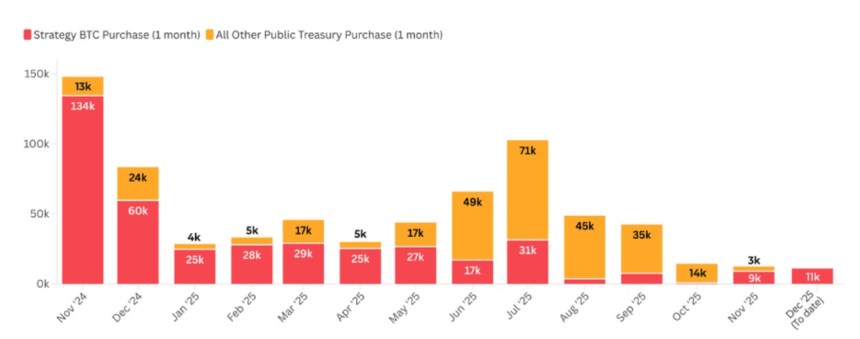
In a sample analysis of 100 companies with reliable cost basis measurements, approximately 65% purchased Bitcoin at prices that now exceed the current market value, leaving a considerable number of these treasuries with substantial unrealized losses. 

Bitcoin’s market downturn in late November pushed spot prices down towards $90,000, leaving many buyers from 2025 at a financial disadvantage. 

Now, the market’s leading crypto has retraced below this key level on Thursday, even despite the Federal Reserve (Fed) rate cut announcement. Among the companies surveyed, about two-thirds are found to be sitting on unrealized losses based on current market values. 

But despite the volatility in pricing, some of the largest balance sheets continued to acquire Bitcoin. Notably, firms like Strategy (previously MicroStrategy) and Strive significantly contributed to net additions in November, with Strategy accounting for approximately 75% of all monthly purchases following their sell-offs.

Bitcoin

Mining companies remain steadfast as a cornerstone of public market Bitcoin holdings. In November, they represented about 5% of new additions to the market and around 12% of the total balances held by public companies. 

Bitcoin Demand Remains Strong

Even as Bitcoin treasury stocks have shown softness compared to Bitcoin itself and broader equity benchmarks, many companies still pursued strategies to add BTC to their balance sheets while refining their capital-market approaches. 

BitcoinTreasury.Net’s analysis indicates that nearly 50 firms have managed to achieve gains of at least 10% over the last 6 to 12 months.

Over time, losses have begun to soften for some. Currently, around 140 companies have experienced declines of at least 10% over a 1 to 3 month period, while about 105 companies have seen similar declines year-to-date. 

However, not all corporate holders opted to weather the storm of price fluctuations. In November alone, at least five companies decided to sell Bitcoin, with Sequans leading the charge by offloading roughly one-third of its holdings.

Looking forward, the fourth quarter of 2025 is expected to close with about 40,000 BTC added to public company balance sheets. This figure is notably below the totals from each of the prior four quarters and aligns closely with the additions seen in the third quarter of 2024. 

The report concluded that despite a clear easing in the “summer buying frenzy,” demand for Bitcoin has not entirely diminished as public corporations are adapting to a more cautious and selective approach as they reassess their recent purchases.

Bitcoin

At the time of writing, BTC traded at $89,920, down over 2% in the previous 24 hours. This places the cryptocurrency 27% behind its all-time high of $126,000 set in October of this year. 

Featured image from DALL-E, chart from TradingView.com
Terraform Labs Co-Founder Do Kwon Sentenced To 15 Years In Prison

The legal saga surrounding Do Kwon, co-founder of Terraform Labs, has culminated in a significant ruling, with the crypto magnate sentenced to 15 years in prison this Thursday. 

This decision follows a tumultuous period marked by the collapse of two digital currencies created by the firm, which collectively erased an estimated $40 billion from the market in 2022, leading to widespread repercussions within the broader cryptocurrency industry.

Do Kwon’s 15-Year Sentence

During the sentencing hearing, US District Judge Paul A. Engelmayer underscored the seriousness of Do Kwon’s actions, stating, “Your fraud was unusually serious. For four years you publicly lied to the market.” 

The judge emphasized that Kwon misrepresented TerraUSD as a stablecoin backed by a system designed to sustain its peg to the dollar, asserting that Kwon’s claims were ultimately fraudulent when the peg faltered.

Judge Engelmayer remarked that Do Kwon’s actions had devastating effects, contributing to the collapse of investments for “hundreds of thousands of investors.” He noted that a lighter sentence would be unacceptable, stating: 

“Five years would be so implausible it would require appellate reversal. Others must be deterred. People are watching this [live]. There will be future entrepreneurs. This case will serve as a reminder of breaking bad and what happens.” 

With that, the US District Judge imposed a 15-year sentence, factoring in time already served—17 months and eight days while in pre-extradition custody.

Judge Hints At Fort Dix Transfer

Interestingly, there were suggestions from both the judge and prosecutors that Kwon could be transferred to Fort Dix, a facility where some high-profile inmates are held. There’s also the possibility that part of his sentence could be served in South Korea, where he is facing additional legal challenges.

In January, Do Kwon was charged with nine criminal counts that included securities fraud, wire fraud, commodities fraud, and conspiracy to commit money laundering. 

Do Kwon

Featured image from ABC, chart from TradingView.com 

OCC Highlights Major Concerns Over Crypto Debanking Practices Among Major Banks

On Wednesday, the Office of the Comptroller of the Currency (OCC) released findings that have raised alarm bells regarding crypto debanking, reigniting fears of what some are dubbing “Operation Chokepoint 2.0” within the financial sector. 

This supervisory review focused on nine of the largest national banks under OCC supervision, including JPMorgan Chase, Bank of America, Citibank, Wells Fargo, US Bank, Capital One, PNC Bank, TD Bank, and BMO Bank.

‘Harmful Debanking Policies’

The preliminary findings from the OCC reveal troubling trends: between 2020 and 2023, these banks appeared to make unwarranted distinctions among customers based on their legal business activities. 

Specifically, many of these institutions maintained policies that either restricted access to financial services or required heightened scrutiny and approvals for certain clients. 

The OCC identified examples where at least one bank imposed limitations on various sectors, including crypto, due to their engagement in activities considered “contrary to [the bank’s] values,” even though those activities were not illegal.

Sectors affected by these policies included oil and gas exploration, coal mining, firearms, private prisons, tobacco and e-cigarettes, adult entertainment, and notably, digital assets

The findings indicated that many banks placed strict limitations on crypto-related activities as well, which often stemmed from concerns about financial crime.

These practices, the OCC confirmed, were prevalent at each of the banks examined in the review. Comptroller Jonathan V. Gould expressed frustration regarding the situation, stating: 

It is unfortunate that the nation’s largest banks thought these harmful debanking policies were an appropriate use of their government-granted charter and market power. 

Gould noted that while many of these policies were publicly announced, some banks have maintained that they did not participate in debanking.

In his comments, Comptroller Gould emphasized the OCC’s commitment to eliminating practices that would “weaponize finance,” whether instigated by regulators or the banks themselves. 

National Banks To Facilitate Crypto Transactions

The agency disclosed that it is still evaluating “thousands of complaints” related to allegations of political and religious debanking, with plans to report on these findings “in due course.” The OCC aims to hold banks accountable for these actions and ensure that unlawful debanking practices do not persist. 

This follows Tuesday’s letter from the banking regulator that allows national banks to participate in “riskless principal transactions” involving cryptocurrencies. This permits national banks to buy and sell cryptocurrencies for their customers’ accounts. 

This new structure allows users to transact in crypto-assets through established national banks, resulting in a more regulated environment than exchanges that operate outside of strict oversight regulation. 

Crypto

Featured image from DALL-E, chart from TradingView.com 

❌