 Login
LoginWorld Liberty proposes using 5% of treasury to boost its stablecoin

The Trump-linked firm is considering using $120 million from its treasury to boost USD1 stablecoin adoption and challenge larger rivals.

The Trump-linked firm is considering using $120 million from its treasury to boost USD1 stablecoin adoption and challenge larger rivals.
Less than 24 hours after undergoing a heart procedure in an Indiana hospital, former NBA star and owner of the successful cannabis/hemp company Viola Brands, Al Harrington, was all smiles as we sat down to commence a candid conversation. That’s all you need to know about this extraordinary athlete’s toughness, tenacity and determination: When there’s a job to do, Al Harrington shows up and shines. And shine he did.
Born and raised in New Jersey, Harrington was the 25th overall pick in the 1998 NBA draft after being selected as a McDonald’s High School All-American. Bypassing college hoops altogether, Harrington played six seasons with the Indiana Pacers then spent the following decade with the Atlanta Hawks, Golden State Warriors, New York Knicks, Denver Nuggets, Orlando Magic and Washington Wizards before retiring in 2015. In all, Harrington played in 16 seasons in the NBA—that’s quite an impressive run to be sure.
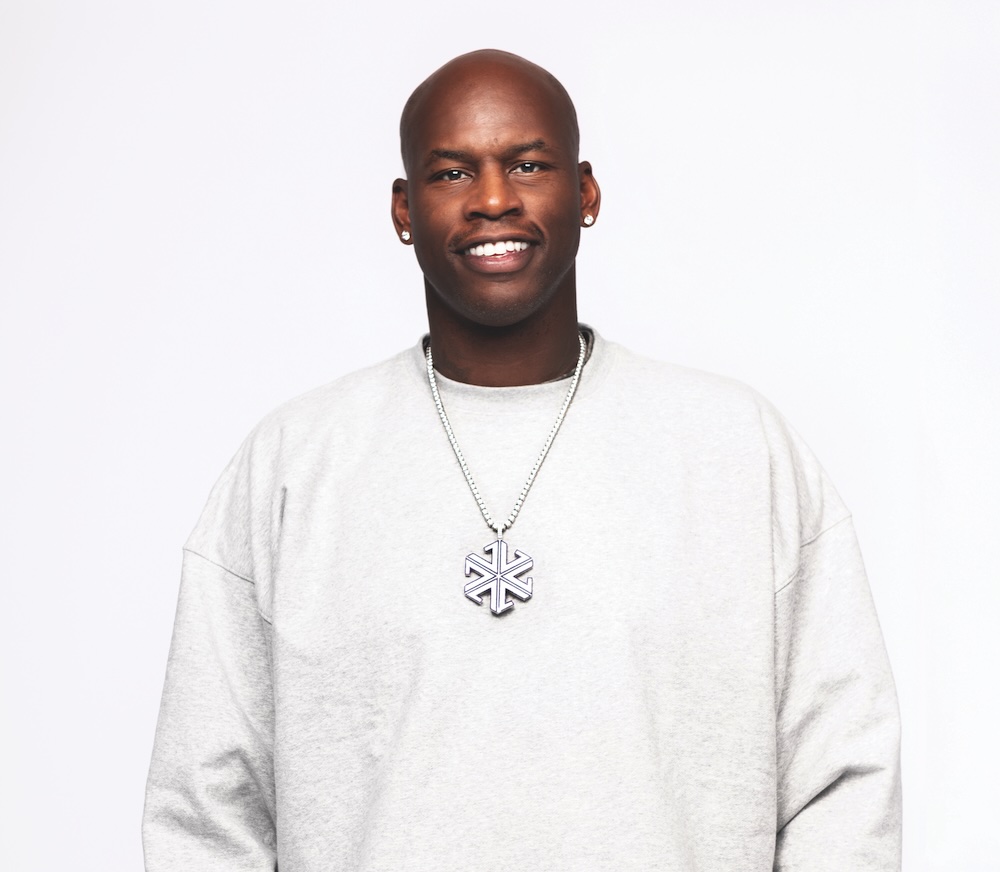
So it wasn’t a complete surprise when Harrington applied that hard-earned discipline from his playing days to his next venture, Viola Brands, the largest Black-owned cannabis brand producing products since 2011. Currently available in nine states—Arizona, California, Colorado, Florida, Michigan, Missouri, Nevada, New Jersey and Pennsylvania—Viola’s mission, according to Harrington, is to “increase equity and ensure Black and brown people are afforded the opportunity to be a part of a fast-growing industry that has historically left them disenfranchised.”
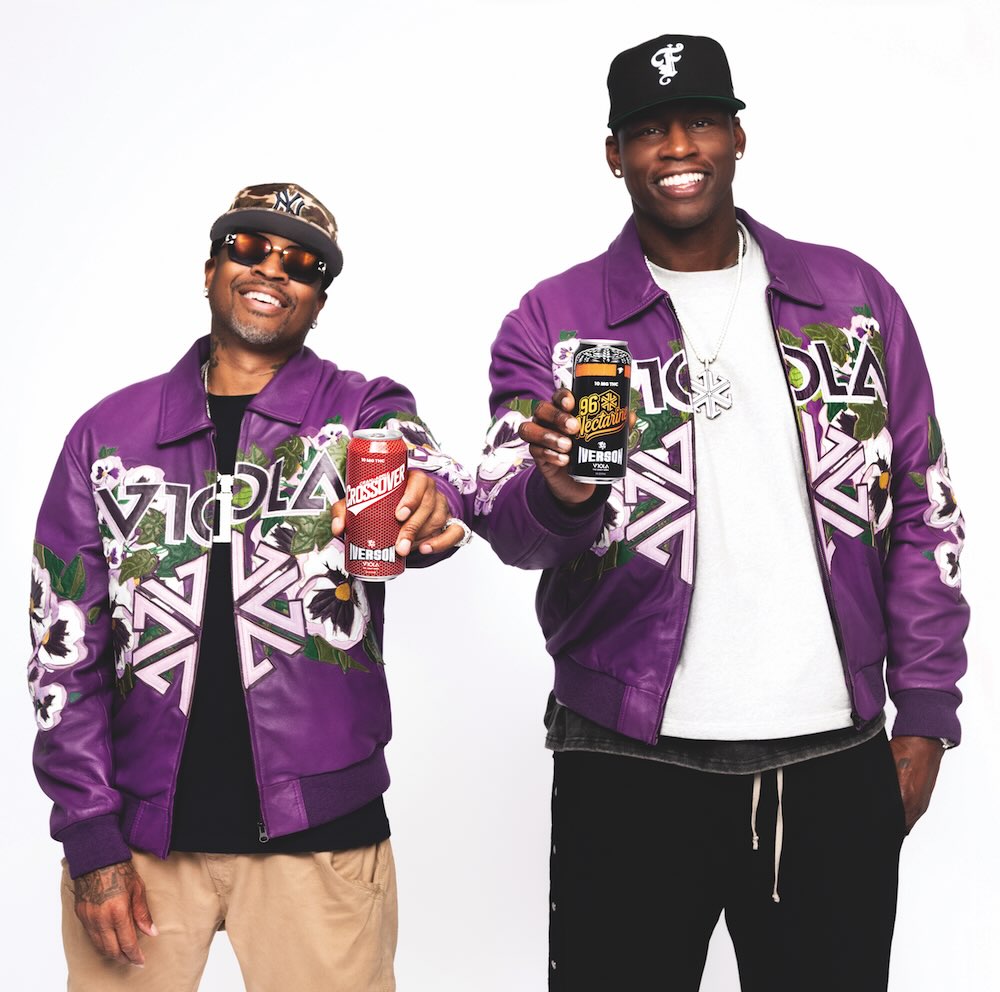
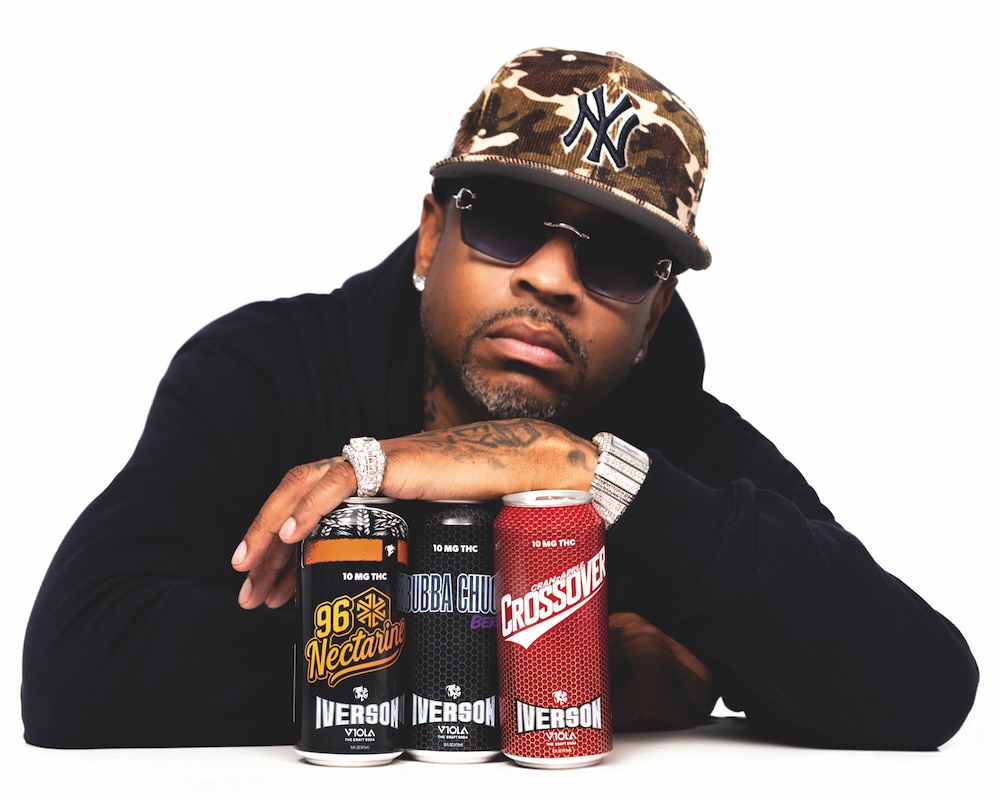
Viola Brands’ latest big moves involve his recent collabs with fellow former NBA star, Allen Iverson, by partnering in distributing the popular strains Iverson ’01 and ’96. Most exciting, perhaps, is the latest news out of this team: Viola Brands recently announced they’re once again partnering with Iverson as well as Horticulture Co. and Circle K to launch a line of Allen Iverson-branded, hemp-derived THC beverages called IVERSON. Circle K is the exclusive retailer for this national rollout, which is considered one of the very largest for THC products in American mainstream retail.
This is a very big deal.
It’s with this knowledge and energy that we entered our conversation with Al Harrington, the tough as nails, eloquent ambassador for all things cannabis. He’s all heart. But you already knew that didn’t you?
Let’s go back to when you were a McDonald’s High School All Star pick—you must’ve been pursued by every top college team—what went into the decision to go straight into the NBA draft?
Yeah, man. Well, my story goes, when I was young, I was always the clumsiest kid in the room. Never got picked to play sports. At the end of my eighth-grade year, I was diagnosed with Osgood-Schlatters, which is basically a huge growth spurt—I grew from 5’10” to 6’4” in one summer. When I got to high school, I wasn’t even gonna try out for basketball, but the JV coach, thank God, put me on the team. I was the worst player on the team. I couldn’t dunk. I couldn’t catch. But the next summer, I met this guy named Sandy Pyonin, who became my AAU coach, and that’s when everything changed, man. He taught me how to play basketball, how to dribble, shoot, run. Everything. I switched high schools and by my junior year, it all started to click. My senior year, I went to the Nike All-American Camp and ended up being MVP there, which put me in the top ten in the country. And I told my coach if I become No.1, I want to go pro. And he was like, “I don’t know about all that.”
It sounds as if you could’ve used a couple of years in college before going pro.
You know what, I probably could have. My AAU coach always says that. But I mean, shit, I played 16 years—so let’s not get it twisted. [Laughs] When I got to the league, I never, not once thought I didn’t belong. I never thought that my teammates, or the guys I played against, were that much better than me or that I should’ve gone to college. You know what I’m saying?
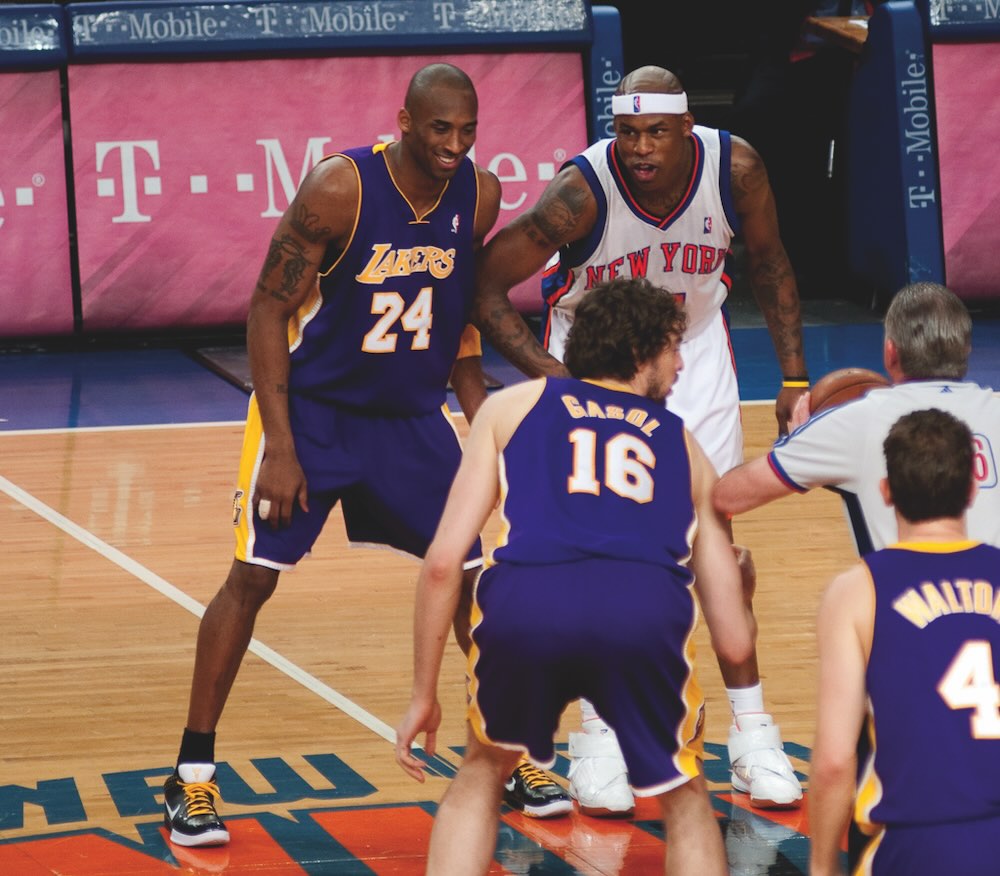
Let’s talk about New York City—I remember you with the Knicks, and all of a sudden, everything clicked for you. You scored more points than ever. Was something different playing at Madison Square Garden versus other places?
I’ll say why I had success in New York was really because I just never wanted to get booed. [Laughs] In New York City, they’ll boo your ass in a minute. So, I always made sure I had my best games in New York because I never wanted to get booed. But I can say I never got booed once in my two years playing there!
How did Viola, your successful cannabis brand since 2011, get its name?
So, my grandmother’s name is Viola. Right around the time I started playing for the Denver Nuggets, cannabis was just making its way onto the medical scene and I was reading about it every day in the newspapers—I’m a big newspaper reader—and at the end of that year, my grandmother came to see me play. When she got there, she was taking all this medication for high blood pressure, diabetes, glaucoma…I told her I’d just read that cannabis can cure glaucoma. She looked at me and she said, “Reefer?! Boy, you trying to get me to smoke reefer?! You outta your mind!” And she laughed and laughed. But the next day I come home and she’s sitting in the kitchen complaining about how bad her eyes hurt, and I told her “Grandma, look, you’re in a legal market here. Doctors recommend cannabis for patients dealing with what you’re dealing with, so why don’t you just give it a try?” I called a dispensary, and they recommended a strain called Vietnam Kush. We bought this Volcano bag system, had her go outside and she tried it. I asked her how she was feeling. She was crying, and she said, “I’m healed! I haven’t been able to read the words in my Bible in more than three-and-a-half years.” I hug her and we call my mother, and she’s telling her, “God gave me my sight back. Everything’s so bright.” That’s what inspired me to just start learning more about cannabis, weed, reefer—whatever you want to call it—because of the medicinal benefit—the miracle it was for my grandmother.
Did she live long enough to see the company?
Yep, she did. She died in 2021, so she lived to 91 years. When I launched the company, she came to the launch party. And after we got done with dinner and everything, we were driving home and she was like, “Al, that was a lot of people, and everybody was saying my name, my name was everywhere.” She’s like, “If anything happens bad, will I go to jail?” [Laughs]
Not only do you have the deep medical origin story, but Viola is legitimately committed to entrepreneurs of color.
I mean it’s always been the focus once I got into the industry. This industry isn’t easy and it’s not really set up for us to be successful, especially when people have limited resources. And after COVID, it’s been in this kind of wonky place because so many people lost money betting on these huge players that couldn’t produce. But you know, at the end of the day, it’s like sports—you come into a game with a game plan to stop Steph Curry, and if it don’t work, you got to readjust the plan. So, we’ve pivoted into the adult beverage space; we continue to stay relevant and make sure that we keep a seat at the table as this industry continues to evolve.
A few years ago, you wrote an article stating there was still a war on marijuana. Do you think that’s still in place, particularly given the recent—and shocking— federal ban on hemp Trump signed into law?
Yeah, you see it all the time, man. Obviously, it makes no sense, right? You’d think that train has left the station already when it comes to banning any cannabis at this point. But that’s just the world we live in, especially in the US. Like the fact that there’s still Red Dye 40 in damn near everything we eat—it’s so funny the things they choose to care about when there’s other things that are really, really affecting and hurting all of us, even children. It’s just a weird time and the war on cannabis is continuing. [US Senator] Mitch McConnell throwing that in there in a budget bill is just criminal, right? Because who’s gonna stop a budget bill to address a hemp ban?
And Trump’s not gonna read the fine print, as we know.
I mean, even if he did, he’s not going to stop it—people have been out of work for more than 40 days, right? He can’t stop that to say, “I don’t want hemp in there” and go back and forth. But there’s always gonna be hurdles along the way, ’cause we’re going through prohibition, and we’ll find a way to come out good on the other side, it’s just gonna take us more time and money—and energy that a lot of people don’t seem to have anymore, because we kinda tired and beat up from getting to where are today. But at the end of the day, we see how much good is done and it’d be crazy for us to stop now.
You said post-COVID’s been wonky for the cannabis industry and capital’s sort of dried up—what I’ve seen is a lot of consolidations and collaborations. I’ve seen your recent work with Allen Iverson. I see you with Ricky Williams. How have you teamed up, and how are collaborations a part of Viola now?
Being an NBA player for 16 years, I understand that no matter how good Reggie Miller was by himself, if it wasn’t all of us collectively working together, he ain’t gonna win no games. So that’s kind of how I see it. For me, being able to join forces with people that are like-minded and come from sports is important—I know that athletes don’t quit. And what we do is really intentional.
Is the Iverson collaboration just on the beverage line?
No, so we actually started our collaboration with Allen Iverson in 2021, and it started with just flower. Then it went from flower to vapes to edibles and pre-rolls. Then we started concocting these beverages about two years ago, and we did a collaboration with a company called Tempters, where we provided the terpenes. We’re coming up on our two-year anniversary with them. Last month, we launched the IVERSON beverage and we got a national mandate with Circle K. So we’ll be in 3,000 Circle Ks.
Huge news. What a massive win.
Thank you, bro. I mean that came together so fast, man. God has always been on my side. And the fact that we met Circle K when we did and they allowed us to get in on that fourth quarter set, which was already done six months ago, was a huge play for us. We have all of our beverage line in there, five different brands. Spec’s, which is the biggest grossing THC beverage liquor store chain in the country, based in Texas, we just launched in there last week, and we’re just growing it from there—Goody Goody, Total Wine, Gopuff, we’re working on more. Obviously, with this bill, they just snuck a monkey wrench in there, but we’re still business as usual, we’re just going to have to work and lobby. We got a year to fight it, and I think we’ll make some weight because these products are too good and they’re helping so many people.
We’ve seen a lot of celebrity brands who come into the space, and don’t succeed. Is Viola’s success also partly due because you do enjoy the plant and it’s part of your life? What are some of the strains or forms of consumption that you enjoy?
So for me, I prefer OGs, you know, I just love the way OGs make you feel, it checks all the boxes. It gives you the body high, a little bit of a head high and relaxes me. I’m not a big sativa smoker because it makes my heart race and I get in my head. For OGs, I like the Skittles for flavor and high, so we’ve been doing a lot of variations of cuts with Skittles. Lemon Cherry Gelato had a huge run; we’re doing a lot of crossing with that. We’re crossing a lot of stuff with Blue Nerds right now. I prefer a hybrid, because I don’t like being too high where I can’t do anything. I’m looking more for functional, right? And that’s what we brought to the beverages—I drink beverages every single day and I smoke more socially. All our beverages have clean ingredients—low sugar, low calorie. Always standing true to our roots of health and wellness. I’ve literally lost millions of dollars because I wanted to make sure we stayed with the quality. Bottom line? This brand has my grandmother’s name. If it’s not good enough for Grandma Viola to smoke, then we’re not allowing nobody else to smoke it. And to your point, I honestly believe that’s why we’re still here and well respected after all these years.
Yeah, nobody’s booing you in the cannabis space either, that’s for sure.
No doubt. I still got that fear. [Laughs]
Where are you in five years?
In five years, man, I hope that we’re still in this game. I think we’ll have some of the best spirits in the cannabis space, maybe circle back to edibles. I think we’ll be one of the biggest brands in convenience, through Circle K, hopefully 7-Eleven and we’re talking to Target. You know, when I started I never would’ve thought that I’d ever be sitting in a store next to Doritos and Pepsi. [Laughs] It’s just amazing where we’ve come, and we’re not gonna stop. We’ll keep trying to break down all those damn barriers.
The post Al Harrington: The Heart of a Lion appeared first on Cannabis Now.
Securitize plans to launch compliant, natively tokenized stocks in early 2026, enabling real equity ownership to trade 24/7 fully onchain.

Solana has partnered with a security company to test quantum-resistant technology on a Solana testnet, claiming to offer a scalable end-to-end solution.

Aave’s 2026 plan focuses on scaling via v4's Hub and Spoke architecture, $1 billion in real-world assets, and growing its new mobile app.

Visa launched USDC settlement for US financial institutions, starting with Cross River and Lead Bank on Solana, with a wider rollout planned for 2026.

Solana co-founder Anatoly Yakovenko claims the network is facing an industrial-scale 6 Tbps DDoS attack that has shown little visible impact.
Need a better way to plan projects? Discover mind map examples that help you visually organize tasks, ideas, and strategies for clearer decision-making.
The post 5 Mind Map Examples for Smarter Planning & Strategy appeared first on TechRepublic.

As someone who’s been tracking crypto and stocks for years, I often feel overwhelmed by data.
Prices, charts, metrics, news — the sheer amount of information can paralyze even experienced investors.
I decided to run a simple experiment: I tested three AI tools designed to help analyze portfolios. My goal: see which one actually improves decision-making, not just looks cool on a dashboard.
Here’s what I found.
2. Too many alerts = decision fatigue.
3. Combine AI with your own strategy. Tools enhance decisions, they don’t replace judgment.
4. Simplicity often beats flashy dashboards.
If you’re overwhelmed by portfolio analysis:
Personally, I now rely on a lightweight AI assistant that helps me stay on top without overthinking, and it’s been a game-changer for consistent, calmer investing.
I Tested 3 AI Tools for Portfolio Analysis — Here’s What Actually Helped Me Make Better Decisions was originally published in Coinmonks on Medium, where people are continuing the conversation by highlighting and responding to this story.
Need a better way to plan projects? Discover mind map examples that help you visually organize tasks, ideas, and strategies for clearer decision-making.
The post 5 Mind Map Examples for Smarter Planning & Strategy appeared first on TechRepublic.
Compare monday.com vs Jira to find out which project management tool is best for your team. Explore features and pricing to help make an informed decision.
The post Jira vs monday.com: Decide the Best Platform for Project Management appeared first on TechRepublic.
Compare monday.com vs Jira to find out which project management tool is best for your team. Explore features and pricing to help make an informed decision.
The post Jira vs monday.com: Decide the Best Platform for Project Management appeared first on TechRepublic.
Users can now buy, swap, send, and receive Bitcoin directly within the popular Ethereum-focused wallet, expanding its multichain reach.

Grayscale’s 2026 outlook cites institutional demand and clearer US regulation as key catalysts for Bitcoin’s surge in the first half of 2026.


If you’re new to crypto — or even if you’ve been here a while — you’ve probably heard the same question again and again:
“Is Bitcoin still relevant?”
With thousands of altcoins, fast blockchains, AI-driven networks, and tokenized everything…
why does the oldest cryptocurrency still dominate the market in 2025?
Let’s break it down in the simplest way possible — no jargon, no hype, just the core ideas.
Most blockchains today have:
Bitcoin has none of that.
No CEO. No marketing department. No headquarters.
It runs like the internet:
distributed, global, owned by no one.
This matters because:
In a world where trust in institutions is falling, Bitcoin remains the only money that does not depend on trust at all.
Bitcoin has only 21 million coins — forever.
In 2025:
Bitcoin doesn’t care.
Its supply is fixed. The rules are unchangeable.
This makes it the digital equivalent of economic gravity.
And every four years, the supply gets even tighter because of the halving.
That scarcity is why big companies, hedge funds, and even pension funds continue buying — not selling.
In 2017, Bitcoin was mostly a retail phenomenon.
In 2021, it became mainstream.
In 2024–2025, it became institutional.
We now have:
This influx of “slow, long-term money” stabilizes the market and pushes Bitcoin into a different category:
from speculative asset → to global financial infrastructure.
2025 is the year Bitcoin stopped being “just a currency” and started becoming a base layer for innovation:
Ironically, the slowest blockchain became the most reliable foundation for the next generation of applications.
Even today:
Bitcoin is still the weather system of the entire crypto market.
This happens for a simple reason:
Bitcoin is the only asset in crypto with global liquidity, deep institutional demand, and long-term credibility.
Everything else is positioned around it.
Most crypto projects solve crypto problems.
Bitcoin solves a human problem:
“How do we store value in a form that cannot be inflated, seized, or manipulated?”
That’s why people in inflation-heavy countries use Bitcoin to protect savings.
That’s why businesses accept Bitcoin globally.
That’s why institutions treat it as “digital gold”.
Bitcoin isn’t perfect.
It doesn’t try to be everything.
It tries to be one thing extremely well: sound money.
And in 2025, sound money is rare.
Bitcoin matters in 2025 for the same reason gold mattered for 5,000 years:
Everything else in crypto can change.
Bitcoin is the constant the market orbits around.
If you understand Bitcoin, you understand the foundation of the entire crypto economy.
Why Bitcoin Still Matters in 2025 — Explained in Simple Terms was originally published in Coinmonks on Medium, where people are continuing the conversation by highlighting and responding to this story.


The 2026 Playbook: Autonomous Markets, Smarter Liquidity, and a New Era of On-Chain Intelligence

If 2024–2025 was the era of LLMs writing code, answering emails, and powering chatbots, then 2026 will be the year AI starts trading crypto — autonomously, intelligently, and at scale.
Not the bots we have today.
Not the “RSI + MACD” scripts running on Binance.
Not the noisy Telegram indicators.
I’m talking about AI trading agents — autonomous decision-making systems built on top of advanced models that can:
By 2026, these agents will not just join the market.
They will reshape it.
This article breaks down why, how, and what comes next — in simple, practical language.
Today’s automated trading tools work like this:
IF A happens → THEN execute B.
They are fixed, predictable, rigid, and easy to beat.
But AI-powered agents operate differently:
Price, volumes, options data, on-chain flows, wallets movements.
News, X/Twitter sentiment, whale behavior, macro trends.
Each mistake becomes training data.
They open, adjust, and close trades with zero prompts.
This difference is massive:
agents evolve; bots repeat.
That’s why 2026 will be a turning point.
Traditional finance moves slowly — regulation, clearing times, limited access to real-time data.
Crypto is the opposite.
AI doesn’t sleep. Humans do. Markets don’t wait.
Every transaction on-chain becomes free training fuel.
Agents thrive in fast-changing environments where humans get emotional.
No gatekeepers. No brokers. No delays.
AI agents can directly interact with smart contracts, DEXs, L2s, bridges and liquidity pools.
Crypto is not just suitable for AI trading —
it is the ideal playground.
Here’s what will go mainstream:
Agents will run strategies no human can track manually:
All automated. All adaptive.
Agents will identify:
This unlocks defensive and predictive strategies never available to retail traders.
2026 agents will read:
…and adjust their trades instantly.
Humans process information slowly.
Agents process the entire internet in seconds.
Agents will rebalance portfolios automatically based on:
No fear.
No greed.
No revenge trading.
No FOMO.
The future is not one agent.
It’s a team of specialized agents, each with a role:
They will communicate with each other and vote on decisions.
This is already starting in early prototypes.
In 2026 it becomes mainstream.
Agents will move liquidity before humans even notice the trend.
Arbitrage will last seconds, not minutes.
Agents react instantly → micro swings get sharper.
Macro decisions will be data-driven, not emotional.
This is the most important outcome:
You won’t be competing with other humans anymore.
You will be competing with machines.
Three technological shifts will mature specifically by 2026:
1. Local & edge LLMs become cheap
Trading agents will run on:
This reduces cost close to zero.
2. On-chain AI tools become mature
Projects like:
…will become production-ready.
3. Latency + gas optimization improves with L2s
Fast rollups + AI agents = unbeatable execution speed.
2026 won’t be perfect. Expect:
Highly reactive agents may trigger chain reactions.
Strategy collisions will cause short-term chaos.
You can’t fully understand their reasoning.
Governments will intervene — slowly but inevitably.
But the trend is unstoppable.
Here’s my prediction for 2026 — in order:
2. On-chain autonomous execution grows
DEXs will have built-in “agent mode”.
3. AI-driven liquidity wars
Protocols will use agents to fight for TVL.
4. Multi-agent trading systems dominate professional trading
Hedge funds → early adopters.
5. AI agents become the core of market microstructure
Bid/ask spreads, liquidity depth, and price discovery become AI-mediated.
By the end of 2026, the crypto market will look nothing like 2024.
AI trading agents are not “coming”.
They’re already here — quietly learning, preparing, and improving.
2026 will be the year they step into the spotlight and start redefining how crypto markets move, react, and grow.
For traders, builders, and investors, the question is no longer:
“Will AI change crypto?”
but
“Are you prepared for the markets when AI becomes the dominant player?”
Why AI-Powered Trading Agents Will Redefine Crypto Markets in 2026 was originally published in Coinmonks on Medium, where people are continuing the conversation by highlighting and responding to this story.
