
 Login
LoginPentagon diverted over $2 billion from barracks, schools to fund border mission
A group of lawmakers found the Pentagon has diverted at least $2 billion intended for barracks repairs, school upgrades for children of service members and training programs to support the southern border mission.
In a report released last week, Democratic members of Congress say the Pentagon redirected funding from a range of military construction and infrastructure projects to support immigration operations, including elementary schools at Fort Knox, a medical and dental facility at Naval Air Station Whidbey Island in Washington, Marine Corps barracks in Japan and a jet-training facility in Mississippi.
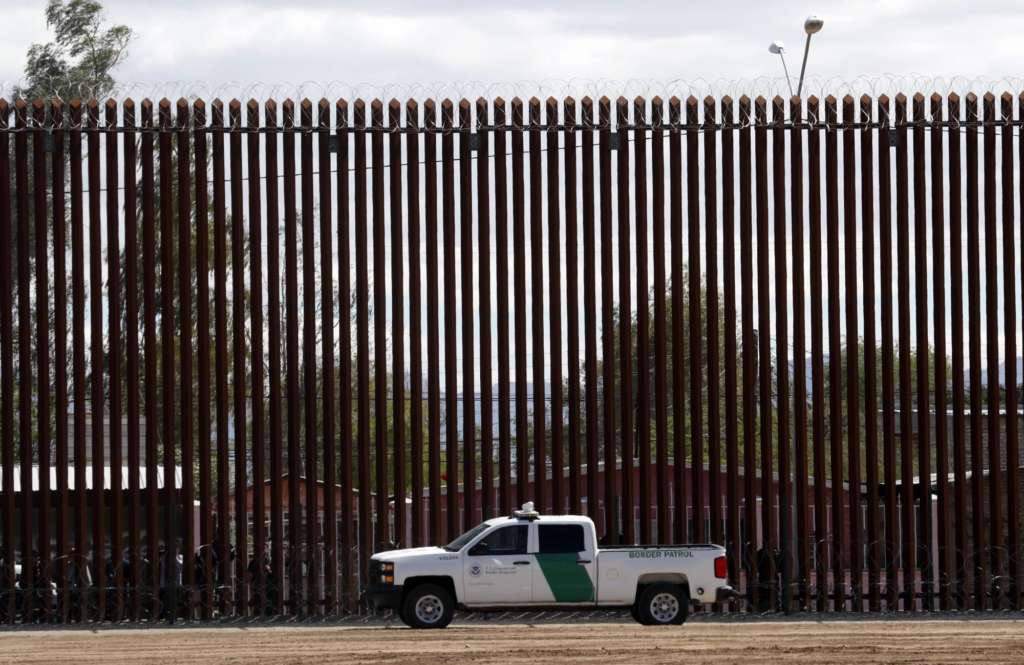
Funds originally allocated for the now-cancelled jet-training facility at Columbus Air Force Base and overseas barracks were reprogrammed to construct roughly 20 miles of border wall. In total, about $1 billion was shifted from barracks repairs to support border operations.
The report, based on the Pentagon’s reprogramming requests to Congress and open source information, is the first comprehensive account to date of the known costs associated with using the military for immigration operations.
In addition to the cost breakdown associated with providing military support to immigration enforcement, the lawmakers warned that military readiness “will suffer as a direct result of diverting” DoD resources for immigration enforcement, arguing that the role is “not consistent with DoD’s mission and that service members have neither signed up nor been trained for.”
For instance, the 10th Mountain Division had recently been trained and certified to conduct large-scale combat operations in a multi-domain operational environment, but hundreds of its soldiers were deployed to the southern border in early 2025, where the division assumed control of the mission. The Army later rotated in the 101st Airborne Division — the service’s only air assault division — to replace the 10th Mountain Division at the border.
“Instead of standing ready for true national security missions, deployment-ready units are being sent to Texas and other states to control the U.S. southern border in support of [U.S. Customs and Border Protection],” the lawmakers said.
Some of those costs are also intangible, the lawmakers argue. During peak fire season, for example, the California National Guard’s firefighting unit was understaffed due to nearly half its members being deployed to Los Angeles to “protect [ICE] in the execution of their duties,” according to Defense Secretary Pete Hegseth.
The lawmakers say it is unclear whether the Pentagon has assessed the impacts of shifting these funds and resources on the department’s readiness. The Pentagon did not respond to a request for comment on whether such an analysis has ever been conducted.
The cost of military involvement in immigration enforcement
President Donald Trump has pushed to expand the military’s role in immigration enforcement since taking office, including by deploying National Guard and active-duty troops to the southern border and U.S. cities; transferring federal land along the border to DoD control; conducting military deportation flights; permitting the detention of noncitizens on military installations within the U.S. and overseas; and allowing military lawyers to serve as immigration judges.
The lawmakers found that approximately $1.3 billion — the largest share of the diverted funds — was used to pay for the deployment of troops to the southern border.
“Many of these troops at the border may be doing little more than ‘standing around.’ Yet their presence has not been cheap: earlier this year, DoD’s own data showed it was spending an estimated $5.3 million per day on its border operations,” the lawmakers said.
More than $420 million was redirected to support immigration detention operations on U.S. military installations and at overseas bases, including Guantánamo Bay in Cuba and Camp Lemonnier in Djibouti.
The Trump administration began detaining noncitizens at Fort Bliss, an Army post in Texas, in August. By September, the department had spent more than $363 million to support the Fort Bliss Montana Avenue facility in El Paso and a related Customs and Border Protection processing center. The facility initially opened with about 1,000 beds, with plans to expand its capacity to 5,000 by 2027 at an estimated cost of up to $1.2 billion. ICE’s detention oversight unit found the unfinished facility was already in violation of at least 60 federal immigrant detention standards, according to the report.
The lawmakers also found that the department diverted at least $40.3 million to pay for military flights used to deport noncitizens, which are a lot more costly to operate than civilian aircraft. While it costs $28,500 an hour to fly a C-17, which was used to conduct deportation flights, a flight contracted by the Department of Homeland Security costs $8,500 an hour.
By the end of September, the Trump administration had conducted at least 88 deportation stops along 63 flight routes using military aircraft.
“Before this administration, military aircraft appear to have never been used for deportations,” the lawmakers said.
In addition, the report found that domestic deployments of National Guard and active-duty troops to Los Angeles; Portland, Oregon; Memphis, Tennessee; and Chicago cost at least $258 million.
“As the number of mobilizations grows, so will the financial costs of paying, transporting, housing, feeding, and equipping troops — as well as the mounting personal costs to the individuals who serve in their state National Guards, and to their families. These servicemembers are being pulled from their homes, families, and civilian jobs for indefinite periods of time to support legally questionable political stunts,” the lawmakers said.
Hegseth also approved a plan to detail up to 600 military lawyers to the Justice Department as temporary immigration judges earlier this year — an effort aimed at easing a backlog of roughly 3.5 million cases that has grown in recent years.
While the Office of Legal Counsel issued an opinion advising the Justice Department to reimburse the Defense Department for military lawyers serving as temporary immigration judges, it is unclear whether DoJ has begun the process.
The lawmakers said the information obtained for this report “confirms that the vast majority of these DoD funds have not been reimbursed to date — even though DHS recently received an unprecedented influx of $170 billion, giving ICE a budget bigger than any other law enforcement agency in the United States and bigger than many countries’ militaries.”
“Allowing DHS to continue to pick DoD’s pockets puts our military readiness at risk,” the lawmakers said.
While the fiscal 2026 defense policy bill fully funds deployments of National Guard and active-duty troops to support the southwest border mission, the Defense Department is forced to divert funding from other military accounts in the meantime. The defense policy bill also fully funds the establishment and enforcement of National Defense Areas along the southwest border and authorizes the department to provide additional support to CBP through the use of private contractors.
The post Pentagon diverted over $2 billion from barracks, schools to fund border mission first appeared on Federal News Network.
© AP Photo/Jacquelyn Martin
