Reading view

There are new articles available, click to refresh the page.

YANA Wellness Becomes First Women-Owned and Operated THC Drink Line in All Virginia Total Wine Locations

YANA Wellness, a women-owned and operated cannabis brand with a licensed dispensary in Washington, DC, officially makes history as the first hemp-derived THC beverage line in all Total Wine retail locations across Virginia. Their e-commerce platform also reaches consumers with their plant-based alternative drinks nationwide. This marks a major milestone not only for YANA as a small, women-owned business, but for all women pioneering plant-based wellness products for nationwide distribution.

The Founder and CEO of YANA, Ariana Fleishman, has made a blueprint for minority small business owners to create accessible, compliant and community-driven products. Fleishman utilizes her social media platforms to educate consumers and business owners alike.

“YANA stands for You Are Not Alone, and it is also the nickname my mom gave me as a kid. I’ve always wanted to create a community around this mission. Mental health issues are at an all-time with everything going on in the world today. I truly believe you can’t change the world until you change your own community,” Fleishman says. “Adderall and alcohol—these are so normalized in today’s society. My doctor would prescribe me Adderall for the workday to combat my ADHD. Then at night, bars and restaurants only have alcohol on the menu, which completely impairs my memory and makes me feel so sick the next day. Why is this lifestyle still so normalized? Why do we have to be so quiet when we choose to consume plants over poison?”

“Cannabis and Mushrooms are already clinically proven to be an effective medicine and provide so many life-changing benefits when purchased from lab-tested and credible sources,” she continues. “But still, the norm is to take highly addictive drugs prescribed by doctors and to drink alcohol to socialize with friends. My goal is to change this stigma by providing plant-based alternatives in mainstream settings.”

Breaking Down Prohibition Barriers and Entering the Mainstream Market

With cannabis still under federal prohibition, Fleishman purposely developed a variety of plant-based alternative blends so that at least one of their drinks on the product line would meet all jurisdictional regulations in every state. This was her strategy for expanding the brand and the plant-based alternatives culture into new markets while cannabis legalization is still uncertain nationwide.

Consumers can now find YANA drinks on restaurant menus in the DMV area and can explore the benefits of cannabinoids, functional mushrooms and adaptogens without fear of the negative stigma. YANA’s Rizzi Mushroom Elixir is a consumer favorite that contains no THC or CBD—just a federally legal blend of nootropic and adaptogenic mushrooms. Rizzi Elixir is featured at premiere social clubs in DC, like Ciel Rooftop at Marriott’s Downtown Hotel and Spark Social, DC’s first non-alcoholic social club for the LGBTQ+ community. These mainstream venues showcase how plant-based alternative drinks can be part of a holistic social wellness lifestyle—and it’s only the beginning. Virginia can now legally sell hemp-derived THC drinks in bars and restaurants with a hemp license as well. Learn more about their full product line and check out where you can buy YANA drinks near you here.

Women Leading the Future of Cannabis

YANA’s success story symbolizes the perseverance of women who have navigated the cannabis industry’s challenging transition from prohibition to legitimacy. Fleishman and her team have emerged from the “gray market” era in DC after five years in the industry to now operating a fully legal, women-run cannabis dispensary. The Chief Strategy Officer of YANA Wellness Brands, Hannah Clarke, a longtime cannabis lobbyist and consultant, emphasizes the significance of their achievements: “Women are not just participating in the industry anymore—we’re building it,” Clarke says. “This is about changing perceptions, policy and the path forward for future generations of women in cannabis.”

YANA prioritizes education, research and inclusion, integrating science, advocacy and entrepreneurship opportunities for their team of young women entering the workforce. Through wellness program collaborations with clinical psychologist Dr.Vivid and university internship programs with American University and the University of Maryland, YANA Wellness offers students the rare opportunity to study the psychological effects of cannabis and mushrooms to properly sell and promote these alternative medicines to conscious consumers.

“I’ve been interested in psychology for a while, but I never imagined I’d find an internship that focuses on the psychological effects of cannabis and mushrooms, at least not so early in my career,” said Lucrezia Brody, a YANA psychology intern and student at American University. “The research we conduct isn’t just filed away—it directly informs our patients and wellness consultants to help improve our community.”

Expanding While Stimulating the Local Economy

YANA is operated by a small team of 10 women, but their strategic partnerships with local, family-owned businesses in Virginia are how YANA is scaling effectively and stimulating the local economy. Fleishman knows that the cannabis market is already dominated by MSOs (multi-state operators) in healthcare, largely owned by publicly traded companies and pharmaceutical businesses, so she has devoted herself to working with local small businesses in all parts of the supply chain.

Pure Shenandoah is a family-owned hemp manufacturing business that provides high-quality cannabis extractions, and Brothers Craft Brewery is a family-owned brewery that YANA uses for canning their drinks. “It was very important to me to stimulate the local economy that I grew up in and keep my mission of building community through plant medicine alternatives,” Fleishman states.

YANA also just signed with Specialty Beverage, a family-owned beverage distribution company known for its large-scale deliveries to mainstream businesses. This partnership increases the accessibility of hemp-derived THC beverages to reach retail locations and restaurant menus that want to provide plant-based alternatives to alcohol.

The Evolution of YANA

In 2019, Ariana Fleishman, also known as “Ari Tokes” on social media, founded YANA Wellness as Cannabis Creatives Collectives for the DC metropolitan area to connect with others through curated social experiences. As the laws changed in DC, YANA evolved into a Holistic Wellness Center and Licensed Cannabis Dispensary.

Fleishman simultaneously spent two years developing the YANA drink line while opening the retail location so she could reach people nationwide with a variety of plant-based alternative blends. Through their social media platforms, YANA continues to advocate for responsible, inclusive and research-backed cannabis culture nationwide. Stay tuned in on their social media for updates on community events, cannabis news, and the culture here.

The post YANA Wellness Becomes First Women-Owned and Operated THC Drink Line in All Virginia Total Wine Locations appeared first on Cannabis Now.


JPMorgan expands blockchain push with tokenized money-market fund on Ethereum

  • The fund is seeded with $100 million and requires a minimum investment of $1 million.
  • Tokenized money-market funds offer faster settlement, continuous trading, and onchain ownership visibility.
  • The tokenized money-market sector has grown to $9 billion in assets over the past year.

JPMorgan Chase is preparing to deepen its push into blockchain-based finance through a tokenized money-market fund on Ethereum, according to a Wall Street Journal report published on Monday.

The bank has not formally announced the product, but the report suggests JPMorgan is moving closer to offering onchain versions of traditional cash-management tools as institutional interest in tokenization grows.

The reported initiative comes as large investors look for ways to deploy idle cash more efficiently while maintaining regulatory compliance.

With about $4 trillion in assets under management, JPMorgan’s reported plans highlight how tokenization is evolving from experimental pilots into investment products associated with major global balance sheets.

The proposed fund would enter a fast-growing segment of digital finance where money-market products are increasingly viewed as a bridge between traditional markets and blockchain infrastructure.

Tokenized money-market fund rollout

The fund, known as My OnChain Net Yield Fund, or MONY, has been seeded with $100 million from JPMorgan’s asset management division, the Wall Street Journal stated.

The product is expected to open to external, qualified investors this week, although no official confirmation has been issued by the bank.

The minimum investment is set at $1 million, keeping the fund focused on institutional participation rather than retail investors.

MONY is designed to operate in line with conventional money-market funds, holding short-term debt instruments and paying interest on a daily basis.

Investors would be able to redeem their shares either in cash or through Circle’s USDC stablecoin, reflecting the growing use of regulated stablecoins in institutional settlement and liquidity management.

Why Ethereum and tokenization matter

JPMorgan has built the reported fund on Kinexys Digital Assets, its in-house tokenization platform, with Ethereum selected as the underlying blockchain, according to the Wall Street Journal.

Tokenized funds record ownership onchain, allowing faster settlement, real-time visibility, and continuous trading beyond standard market hours.

These features are attracting attention from asset managers, trading firms, and treasury desks seeking operational efficiency while continuing to rely on low-risk instruments.

Tokenized money-market funds are also increasingly used within decentralised finance ecosystems as reserve assets and as collateral for trading and asset management.

Competition among financial giants

JPMorgan’s reported plans place it alongside other large financial institutions that have already launched tokenized money-market products.

Franklin Templeton introduced its BENJI fund in 2021, becoming one of the earliest traditional asset managers to adopt blockchain-based fund infrastructure.

BlackRock followed in 2024 with its BUIDL fund, developed with tokenization specialist Securitize, which has since attracted about $2 billion in assets, according to data from RWA.xyz.

The post JPMorgan expands blockchain push with tokenized money-market fund on Ethereum appeared first on CoinJournal.

Interactive Brokers Begins Allowing Stablecoin Deposits for U.S. Retail Clients

Global electronic brokerage Interactive Brokers has begun allowing U.S. retail clients to fund individual brokerage accounts with stablecoins, allowing customers to transfer funds directly from personal crypto wallets.

The feature, powered by crypto infrastructure provider Zerohash, marks a major expansion of the firm’s digital-asset capabilities. The rollout will occur in phases, with availability determined by account type, jurisdiction, and regulatory requirements.

In addition to the U.S. pilot, Interactive Brokers said it has also started offering stablecoin deposits to a wider group of global users, allowing transfers in USDC that are automatically converted to U.S. dollars upon arrival.

The company said the move gives traders faster and more flexible funding options, particularly compared to traditional banking rails that are limited by clearing times and operating hours.

JUST IN: Financial giant 'Interactive Brokers' to allow brokerage accounts to be funded by crypto stablecoins. pic.twitter.com/rJgWvxtWWA

— Watcher.Guru (@WatcherGuru) December 12, 2025

How USDC Funding Works

To deposit via stablecoin, clients must log into the Interactive Brokers Client Portal, go to Transfer & Pay, select Deposit Funds, and choose “Fund with Stablecoin.” Users then select a blockchain network—such as Ethereum, Solana, or Base—and Zerohash generates a unique wallet address and QR code for the transaction.

Clients must send USDC from their personal crypto wallets to the provided address, ensuring that the selected blockchain network matches the one chosen during the deposit setup. Interactive Brokers strongly advises against manually typing wallet addresses due to the risk of irreversible errors.

Transaction Limits, Fees, and Supported Assets

Stablecoin deposits come with several constraints: a $10 minimum per transfer, a $25,000 per-transaction cap, a $25,000 daily limit, and a monthly ceiling of $100,000. At present, only USDC is supported; deposits in other stablecoins or cryptocurrencies will not be processed.

Interactive Brokers said it does not charge deposit fees, though users must cover blockchain gas fees associated with the chosen network. Zerohash applies a 0.3% conversion fee, with a $1 minimum. Most deposits are credited within minutes following blockchain confirmation, offering speed advantages over ACH or wire transfers.

Interactive Brokers cautions that USDC must be sent on the exact blockchain network selected during setup. Sending assets via the wrong network or to an incorrect wallet address may result in rejection, delays, or permanent loss of funds. Users encountering issues are directed to the firm’s stablecoin deposit FAQ for troubleshooting.

Step Toward 24/7 Bank-Free Funding?

By allowing deposits directly from crypto wallets, Interactive Brokers is moving toward a funding model that is faster, continuously available, and less dependent on banking intermediaries.

The phased U.S. rollout shows growing institutional acceptance of stablecoins as a practical settlement tool, particularly for active traders seeking real-time funding flexibility.

Coinbase Predicts Stablecoins Will Enter the Mainstream

Stablecoins are set to move firmly into the financial mainstream next year, according to Keith Grose, UK CEO of Coinbase, who expects continued acceleration in consumer adoption and regulatory clarity.

Speaking ahead of expected policy developments in the UK, Grose outlines why he believes stablecoins are becoming a central pillar of the next phase of digital finance.

“We see stablecoins transitioning into mainstream payment rails in the UK and worldwide in 2026,” Grose said. “More consumers are now using stablecoins for seamless everyday payments, without needing to change how they transact.”

He added that global investors are increasingly turning to digital-currency alternatives to diversify away from traditional dollar-denominated instruments.

The post Interactive Brokers Begins Allowing Stablecoin Deposits for U.S. Retail Clients appeared first on Cryptonews.

Banking Giant JPMorgan Takes On Solana In Grand Style – Here’s What They Did

America’s largest bank, JPMorgan, has taken a bold step into the future of finance by issuing commercial debt on the Solana blockchain. This move has caught the attention of the broader crypto and traditional markets, as it marks one of the first times a US commercial debt was brought into a public blockchain.

JPMorgan Brings Commercial Debt Papers To Solana

According to a press release published on December 11, JPMorgan has successfully arranged a US Commercial Paper (USCP) Issuance for Galaxy Digital Holdings LP, an affiliate of Galaxy Inc., on the Solana blockchain. The issuance represents one of the earliest debt offerings executed on a public blockchain in the US.

JPMorgan had served as the arranger, creating the on-chain USCP token and managing the delivery-versus-payment settlement for the issuance. Meanwhile, Galaxy Digital Partners LLC had structured the offerings, while US technology company Coinbase Global Inc. and global investment management firm Franklin Templeton had purchased the issuance. 

Scott Lucas, the Head of Markets Digital Assets at JPMorgan, emphasized that the new commercial debt transaction was a key demonstration of institutional demand for digital assets and the transformative potential of blockchain technology in the future of financial markets. He added that, as a user-focused banking institution, JPMorgan is committed to meeting the evolving demand for digital asset exposures

Notably, the USPC token issuance is the first commercial paper offered by Galaxy, enhancing the company’s short-term funding capabilities and providing access to a broader institutional investor base interested in blockchain-based money-market instruments. Details from the press release reveal that both the issuance and the redemption proceeds will be paid in USDC stablecoins issued by Circle, marking a first for the US commercial paper market. 

What Other Executives Have To Say

In the press release, Jason Urban, Global Head of Trading at Galaxy, stated that the issuance demonstrates how public blockchains can enhance the functioning of capital markets. He emphasized that bringing Galaxy’s first commercial paper offering on-chain and structuring one of the earliest US transactions of its kind are significant milestones. 

It underscores Galaxy’s vision of using open and programmable infrastructure to support institutional-level financial products. Urban also expressed satisfaction in collaborating with JPMorgan, Coinbase, Solana, and Franklin Templeton to integrate these innovations into daily market operations.

Sandy Kaul, Head of Innovation at Franklin Templeton, highlighted that institutions are moving from experimenting to actively transacting on the blockchain. She noted that deals like Galaxy’s on-chain issuance help build a more open, efficient, and resilient financial system while supporting broader adoption of digital infrastructures in traditional markets

Nick Ducoff, Head of Institutional Growth at the Solana Foundation, described the issuance as a key step in bringing the security and efficiency of blockchains to institutional finance. Brett Tejpaul, the Co-CEO of Coinbase Institutional, stated that the transaction shows how institutional finance is embracing public blockchain technology, with Coinbase playing a foundational role as an investor, wallet provider, and custodian for the USPC token.

Solana

5 Best Strains for Superior Socializing

Opening a jar of Super Lemon Haze, I’m hit with an overwhelming wave of citrus aroma. The crystal covered buds smell like a lemonade stand: sweet, sticky and a little bit tart. When I take the first inhalation, the taste reminds me of lemon meringue pie, so light and sweet, but with the unmistakable flavor of lemons. A few seconds later, a smile spreads across my face. I feel uplifted, energized and ready for conversation. Time to go socialize!

Cannabis can sometimes have a bad reputation when it comes to socializing. Since some strains make people feel sleepy, anxious or anti-social, many avoid using marijuana in social contexts. Fortunately, cannabis is an incredibly varied plant with many different effects. While certain strains may have you hiding in the corner rather than talking to friends, others are the ideal party companion, leaving you relaxed, energized and talkative. These differences have everything to do with the terpene and cannabinoid profile of the plant. Some profiles promote social tendencies while others increase anxiety, or leave you too tired to talk. The trick is finding the strains that promote your prosocial tendencies. Here are our top picks for social strains:

Super Lemon Haze

This sweet and sour sativa, described above, has a zippy, energetic high that’s a favorite among sativa smokers. The citrusy taste isn’t just a delicious flavor, it also indicates a terpene profile rich in limonene. This terpene is known for its relaxing, energizing and uplifting effects. If cannabis makes you sleepy, try sativas rich in limonene for a high that won’t put you to sleep.

Hawaiian

Another popular sativa strain for socializing is Hawaiian. Its strong topical aroma has notes of pineapple, guava and passionfruit and will leave you feeling like you just stepped onto a tropical island. The flavor is light and sweet with hints of fruit, but the real vacation is the happy and relaxed high that comes from these beautiful buds. With a perfect blend of terpenes like limonene, pinene (which aids focus and alertness) and myrcene (which has calming effects), this strain has been described as euphoric, talkative and giggly. Hawaiian is likely to leave your whole party smiling.

ACDC

ACDC is a woody, earthy sativa, with notes of pine. This clear-minded social strain is known for its 20:1 CBD:THC ratio and its relaxed, focused effects. Most strains have relatively high levels of THC, which often causes increased anxiety. If you find yourself to be more anxious after smoking a THC-heavy strain, try a sativa like ACDC that’s rich in CBD, as CBD counteracts this anxiety — leaving you relaxed and ready to mingle.

Cabbage Patch

Cabbage Patch is a sweet but tart sativa-dominant hybrid. This tasty flower is rich in THCV, a cannabinoid that can help side-step heightened anxiety from THC. While THCV offers all the energizing and euphoric effects of THC, it also relaxes users and is less likely to cause anxiety and paranoia. Cabbage Patch leaves users feeling relaxed, giggly, and energetic, which is the perfect mix for any party.

Afgoo

For those who prefer the high from indicas, Afgoo is an amazing choice when you want to get social. These sweet and slightly earthy flowers have notes of pine and berry. With high levels of myrcene, Afgoo is exceptionally relaxing and always leaves me feeling happy, warm and loving. It’s an exceptional strain for spending time with loved ones.

Originally published in the print edition of Cannabis Now. LEARN MORE

TELL US, what are your favorite strains to smoke when socializing?

The post 5 Best Strains for Superior Socializing appeared first on Cannabis Now.

Ars Live: 3 former CDC leaders detail impacts of RFK Jr.’s anti-science agenda

By: Beth Mole

The Centers for Disease Control and Prevention is in critical condition. This year, the premier public health agency had its funding brutally cut and staff gutted, its mission sabotaged, and its headquarters riddled with literal bullets. The over 500 rounds fired were meant for its scientists and public health experts, who endured only to be sidelined, ignored, and overruled by Health Secretary Robert F. Kennedy Jr., an anti-vaccine activist hellbent on warping the agency to fit his anti-science agenda.

Then, on August 27, Kennedy fired CDC Director Susan Monarez just weeks after she was confirmed by the Senate. She had refused to blindly approve vaccine recommendations from a panel of vaccine skeptics and contrarians that he had hand-selected. The agency descended into chaos, and Monarez wasn’t the only one to leave the agency that day.

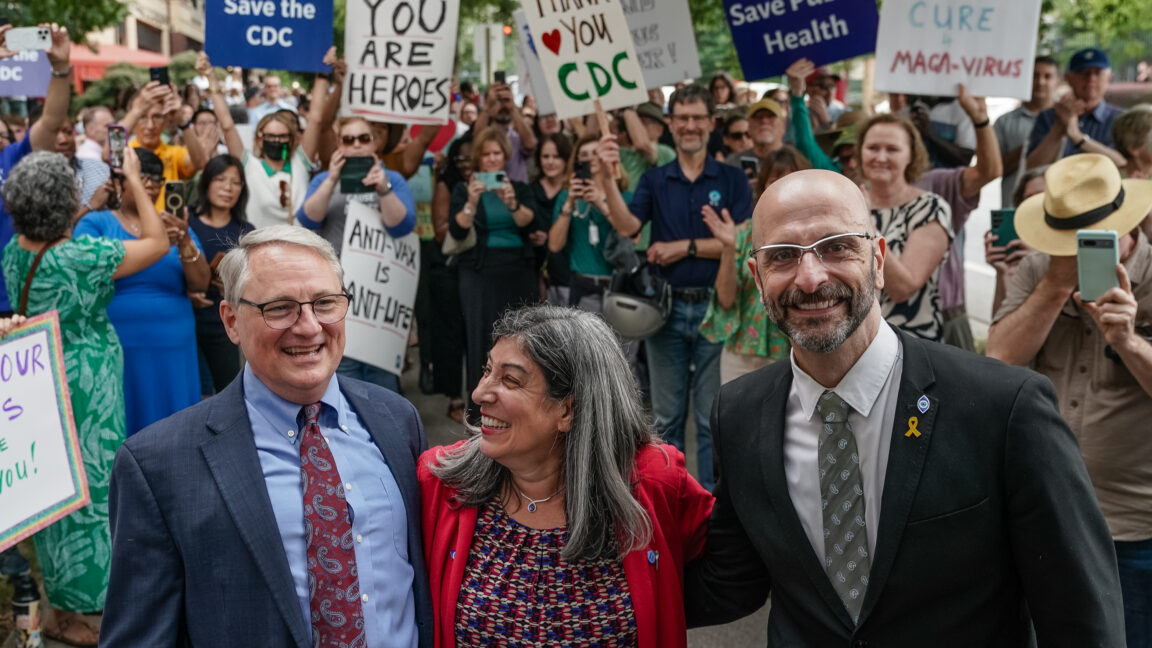
Three top leaders had reached their breaking point and coordinated their resignations upon the dramatic ouster: Drs. Demetre Daskalakis, Debra Houry, and Daniel Jernigan walked out of the agency as their colleagues rallied around them.

Read full article

Comments

© Getty | Elijah Nouvelage

Coinbase expands Solana trading access with integrated on chain swaps

  • Coinbase now lets users trade any Solana token instantly through its app via on-chain liquidity.
  • New tokens become accessible immediately, boosting visibility and reducing barriers for Solana builders.
  • Deeper Solana integration and shifting exchange models signal a move toward open, blockchain-driven access.

Coinbase is reshaping how people interact with Solana’s fast-moving token market by allowing anyone to trade any Solana asset directly inside its app.

The change removes the wait for formal listings and gives users immediate on-chain liquidity through the same interface they already rely on.

It marks a shift toward a more open, blockchain-driven model of exchange activity.

The company is positioning this as a way for users to keep pace with Solana’s rapid token creation cycle while staying inside a familiar environment that does not require jumping between new platforms.

Trading through a trusted app

The new workflow lets people swap for any Solana token the moment it appears on chain.

They can pay with USDC, a bank account, cash, or a debit card.

This makes access to Solana’s expanding ecosystem far simpler for users who want to participate in early market activity without navigating outside tools.

The update turns the Coinbase app into a bridge that pulls liquidity straight from Solana decentralised exchanges.

People keep the same basic experience they are used to, but the range of assets becomes dramatically wider because the app now connects directly to on-chain markets.

Support for builders

The change also affects developers launching new tokens.

Any asset with enough liquidity on Solana becomes immediately available to the millions of people who use Coinbase.

This removes the long-standing barrier of visibility for early-stage projects.

Instead of waiting for a centralised listing or marketing push, a token becomes discoverable as soon as it is tradable on chain.

It streamlines access for builders and reduces friction around early user acquisition.

The update also demonstrates how exchanges are adapting their mechanisms so that discovery and access are tied directly to the blockchain rather than traditional gatekeeping processes.

More Solana features coming

Coinbase confirmed that deeper Solana integration is underway.

Soon, Solana assets will appear natively within the app interface, positioned beside Bitcoin and Ethereum instead of being placed in a separate category.

This signals a stronger commitment to supporting the network’s ecosystem.

Breakpoint added further activity around Solana with Ellipsis Labs introducing Phoenix Perpetuals, a Solana native perpetuals exchange that allows gasless trading and instant onboarding.

These developments highlight how infrastructure around the network is expanding at a pace and how established platforms are adjusting to meet user demand for faster access.

Changing exchange models

The update reflects a wider shift in how exchanges operate.

Instead of deciding which new assets qualify for listing, platforms are now giving users direct access to whatever appears on the chain.

This hands more control to traders while reducing bottlenecks associated with centralised processes.

With activity on Solana continuing to accelerate, Coinbase’s timing aligns with broader market interest.

The company is adapting its product to match the speed of blockchain-based innovation and responding to the growing preference for open access to newly launched tokens.

The result is a model where the blockchain itself determines what becomes tradable.

The post Coinbase expands Solana trading access with integrated on chain swaps appeared first on CoinJournal.

Norway decides not to pursue digital currency for now

  • Norway pauses CBDC plans, saying its current payment system remains secure and efficient.
  • Central bank will keep studying retail and wholesale CBDCs as payment habits evolve.
  • Norges Bank shifts focus to tokenisation tests while monitoring global digital-currency moves.

Norway has decided that its payment system works well enough without introducing a central bank digital currency right now, even after several years of research into the idea.

The decision reflects how stable and efficient the country’s existing infrastructure has remained, despite Norway being one of the world’s most cash-light economies.

It also shows that the priority for the central bank is making sure payments keep functioning securely rather than rushing to release a digital krone before it is needed.

Norges Bank announced on Wednesday that a CBDC is not necessary at this stage, following a broad assessment of how a digital version of the krone might support payment security and efficiency.

Cash use in Norway has continued to fall to some of the lowest levels globally, which had intensified discussions about whether the country required a digital option to keep the national currency attractive for consumers, banks and merchants.

The central bank said the current system offers stable operations, fast settlement, low economic costs, and strong contingency arrangements.

It also noted that several projects are already in place to strengthen these backup systems further.

Decision timing

The central bank made clear that its decision is not permanent and that the question could return as payment habits evolve.

Norges Bank said it wants to be ready to introduce a digital krone if it becomes necessary to maintain a secure and efficient system.

The bank continues to distinguish between two main CBDC models.

A retail CBDC would act as a widely accessible means of payment, similar to physical cash or bank deposits.

A wholesale CBDC would be designed only for financial institutions and would allow interbank transactions through tokenised units recorded in a digital ledger based on blockchain technology.

CBDC types

This distinction has shaped much of Norway’s work so far.

A retail model would give everyday users direct access to central bank money in digital form, while a wholesale model would mirror existing deposits at the central bank using tokenised units.

Both versions remain under study as part of Norway’s broader assessment of future payment needs.

The country’s low reliance on cash had previously added urgency to these evaluations.

Yet Norges Bank concluded that keeping the existing system strong and reliable is the immediate priority, with a CBDC being considered only if payment risks or gaps emerge down the road.

Tokenisation tests

Although Norway is pausing on a digital krone, it is increasing its focus on tokenisation.

The bank said token-based systems can improve efficiency, enable innovation and reduce settlement risk.

It also warned that uncertainty remains about how widely tokenisation will be used and what kinds of risks may appear as the technology grows.

Norges Bank plans to continue practical experiments in collaboration with industry players to understand how tokenised solutions function in real transactions.

These tests are part of a broader strategy to prepare for future developments in digital finance, even without committing to a CBDC at this stage.

The central bank will publish a detailed report on its CBDC research in the first quarter of next year.

This will outline the work completed so far, its next steps, and how it plans to monitor progress in other regions.

Norway is watching international projects closely, including the Eurosystem’s work on a possible digital euro and emerging global standards that may support shared CBDC systems in the future.

The post Norway decides not to pursue digital currency for now appeared first on CoinJournal.

Norway Rules Out Immediate Need For A CBDC — Here’s Why

Norway’s central bank has decided it does not need a central bank digital currency (CBDC) for now, capping several years of research and signalling that the country’s existing payment system still does the job for consumers, banks and merchants.

Norges Bank said Wednesday that introducing a digital krone is “currently not warranted” after assessing whether a CBDC is needed to keep payments in Norwegian currency secure, efficient and attractive.

Cash use in Norway has fallen to among the lowest levels globally, which had added urgency to the debate over a potential digital alternative.

“The Norwegian payment system is efficient and secure,” the bank said, citing stable operations, fast settlement, low economic cost and “sound” contingency arrangements. It added that work is already under way to further strengthen these back up systems.

Norway Leaves Room For A CBDC While Citing No Immediate Requirement

Governor Ida Wolden Bache stressed that the decision is about timing, not closing the door.

“Norges Bank has concluded that introducing a central bank digital currency is currently not warranted. The need for such a currency may, however, change in the future. We will be ready to introduce a central bank digital currency if it becomes necessary to maintain an efficient and secure payment system,” she said.

The bank distinguishes between two main types of CBDC, retail and wholesale. A retail CBDC would serve as a universally accessible means of payment similar to cash and deposits, while a wholesale CBDC would be limited to banks and other financial institutions. In the wholesale model, deposits at the central bank are represented as digital units, or tokens, in a ledger based on blockchain technology and can be used for interbank settlement.

Bank Expands Tokenization Research While Deferring A Digital Krone Decision

Norges Bank is not stepping away from tokenization. It says token-based systems can deliver innovation, efficiency gains and lower settlement risk, even as it warns that other risks and open questions remain and the eventual scale of use is uncertain.

The bank plans to keep running experiments, often with other payment system participants, to test tokenised solutions in practice.

The central bank will publish a report on its CBDC research and lay out more detailed plans for further work in the first quarter of next year. It will also continue to monitor international developments, including the Eurosystem’s work on a potential digital euro and emerging standards that could one day support shared CBDC infrastructure.

The post Norway Rules Out Immediate Need For A CBDC — Here’s Why appeared first on Cryptonews.

Rep. Keith Self Files Amendment to Prevent a US CBDC in Defense Bill

By: Amin Ayan

Rep. Keith Self (R-Texas) on Tuesday introduced an amendment to the massive annual defense bill that would block the creation of a US central bank digital currency.

Key Takeaways:

  • Rep. Keith Self moved to add an anti-CBDC amendment back into the defense bill.
  • Conservatives say GOP leaders broke a promise to include CBDC restrictions.
  • The amendment would block a Fed digital dollar and protect cash-like privacy.

Self said GOP leaders had previously promised that anti-CBDC language would be included in the legislation, but it was missing from the version released Sunday.

“Promises were broken to include this language in the NDAA,” he wrote on X. “My amendment would fix the bill.”

House Pushes Ahead on Defense Bill as Self Seeks to Block Fed Digital Dollar

House leaders are aiming to pass the defense package on Wednesday afternoon, according to Politico, though negotiations remain fluid.

Self’s proposal, titled the “Anti-CBDC Surveillance State” amendment, would bar the Federal Reserve from developing, testing, or issuing a central bank digital currency, or any similar digital asset under a different name.

It would also prohibit Federal Reserve banks from offering accounts or financial services directly to individuals, a move supporters say is critical to preventing government-controlled consumer banking.

The amendment includes an exception for “dollar-denominated currency that is open, permissionless, and private,” a carve-out aimed at ensuring paper-cash-level privacy protections.

The broader defense bill, formally known as the annual authorization for Pentagon spending and policy, spans more than 3,000 pages and is typically considered one of Congress’s few must-pass measures each year.

The absence of the CBDC language angered conservatives, who saw it as a retreat from earlier commitments.

Self told Fox Business that House Republicans had been promised the amendment authored by Majority Whip Tom Emmer, one of Congress’s most outspoken CBDC critics.

After reviewing the bill, Self said it was clear the provision had been dropped.

“We have to pass an NDAA, because it’s one of the must-pass bills we have in Congress,” he said. “We’ve got to fix it and get it passed.”

Conservatives were promised that language banning a Central Bank Digital Currency (CBDC) would be included in the must-pass National Defense Authorization Act (NDAA).

Unconscionably, it wasn't included.

Leadership needs to fix this bill IMMEDIATELY. pic.twitter.com/r9RxsmTctk

— Rep. Keith Self (@RepKeithSelf) December 8, 2025

CBDC Could Give Government Control Over Americans’ Money

Several Republicans echoed his frustration. Rep. Marjorie Taylor Greene (R-Ga.) said she supports cryptocurrency but opposes any system that could allow the federal government to restrict how Americans use their money.

Rep. Warren Davidson (R-Ohio) warned that a CBDC would “insert the government between you and your money” and said Congress must pass a statutory ban, not rely solely on executive action.

Earlier this year, President Trump signed an executive order barring federal agencies from issuing or promoting any form of CBDC, citing risks to privacy and national sovereignty.

However, House GOP aides told The Hill that negotiations over a separate bipartisan housing package derailed efforts to include a CBDC ban in the defense bill, saying the final language “was not something that was ultimately going to be acceptable to our members.”

The post Rep. Keith Self Files Amendment to Prevent a US CBDC in Defense Bill appeared first on Cryptonews.

Abu Dhabi Steps Up Crypto Regulation: Tether, Circle Secure Major Approvals

Tether and Circle, issuers of the two largest stablecoins in the world, have just received major regulatory greenlights in UAE’s Abu Dhabi.

Tether’s Stablecoin Recognized As ARFT, While Circle Obtains FSP License

Major developments related to the cryptocurrency sector have occurred in the United Arab Emirates (UAE) this week, with Tether and Circle both winning approvals in Abu Dhabi Global Market (ADGM), the international financial center and free economic zone of Abu Dhabi, UAE’s capital.

First, as Tether has announced in a press release, USDT issued on a number of blockchains has been recognized as an Accepted Fiat-Referenced Token (ARFT) in ADGM. USDT already received approval from ADGM last year, but the previous recognition only included the Ethereum, Solana, and Avalanche versions. With the new regulatory nod, USDT available on Aptos, Celo, Cosmos, Kaia, Near, Polkadot, Tezos, TON, and TRON has also entered the market.

“By extending recognition to USD₮ on several major blockchains, ADGM further strengthens Abu Dhabi’s position as a global hub for compliant digital finance,” said Tether CEO Paolo Ardoino.

USDT being considered as an ARFT means that authorized persons licensed by ADGM’s Financial Services Regulatory Authority (FSRA) can offer regulated activities involving the stablecoin on nearly all its native blockchains. “Introducing USD₮ within ADGM’s regulated digital asset framework reinforces the role of stablecoins as essential components of today’s financial landscape,” noted Ardoino.

Meanwhile, Circle, the issuer of USDC, has also advanced in the region with a new license from the FSRA, according to an announcement. The license, called the Financial Services Permission (FSP), allows the company to operate as a Money Services Provider in ADGM.

Arvind Ramamurthy, ADGM Chief Market Development Officer, said:

Circle’s regulated presence in ADGM reinforces our ambition to build a trusted, institutional-grade digital asset ecosystem in Abu Dhabi, one that enhances market confidence, supports real-world use cases, and cements the UAE’s role as a leading hub for regulated digital finance.

The greenlight from ADGM follows the recognition of Circle’s USD and EUR stablecoins by the Dubai Financial Services Authority (DFSA) in February of this year. The move made USDC and EURC the first stablecoins to be approved in the Dubai International Financial Centre (DIFC).

The new FSP license means “Circle is positioned to expand regulated payment and settlement use cases in the UAE for businesses, developers, and financial institutions,” the statement noted.

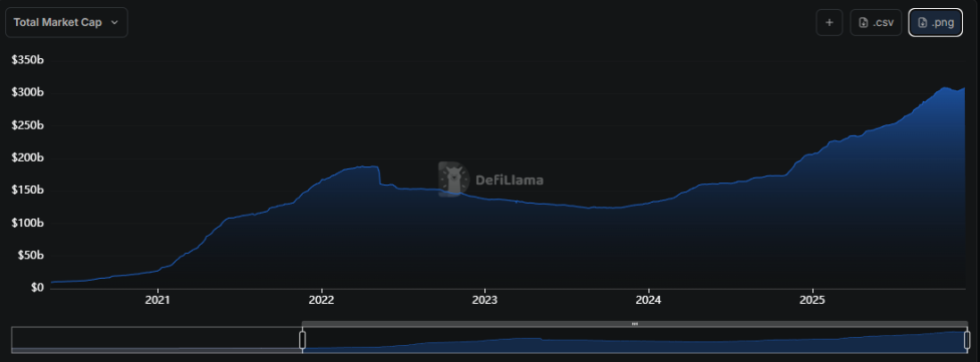
Stablecoins have witnessed rapid growth throughout 2025, setting multiple records. The near-constant growth in these tokens, however, saw a break in October, as the combined market cap of this side of the cryptocurrency sector reversed course.

Stablecoin Market Cap

As the above chart from DefiLlama shows, the stablecoin market cap declined to a low in mid-November. Since this bottom, though, capital inflows have returned for these fiat-tied assets, with the market cap once again nearing in on a new record.

Bitcoin Price

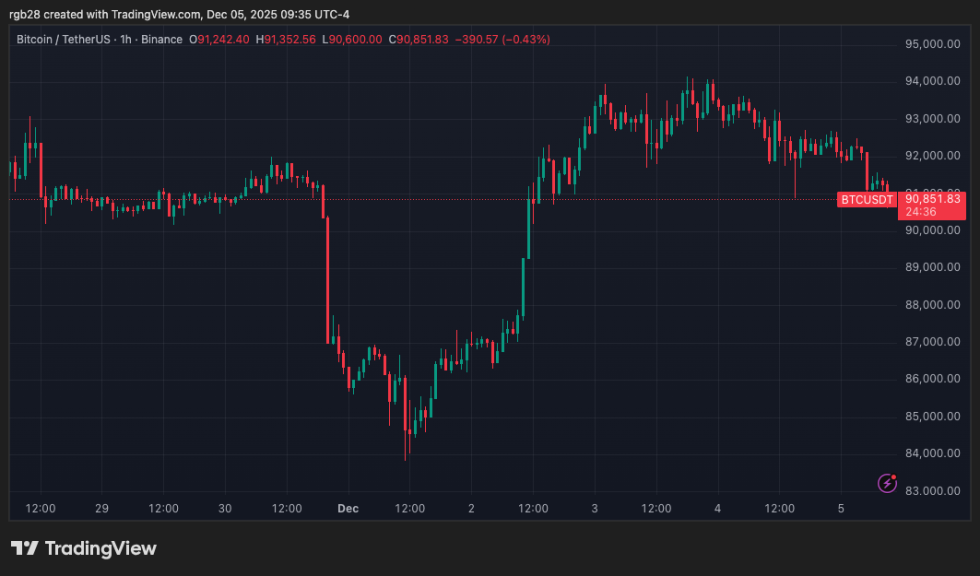
At the time of writing, Bitcoin is floating around $90,100, up almost 4% in the last seven days.

Bitcoin Price Chart

New CFTC Crypto Initiative: Bitcoin, Ethereum, To Serve As Collateral In Derivatives Trading

Caroline Pham, the acting chair of the US Commodity Futures Trading Commission (CFTC), has announced the launch of a pilot program allowing Bitcoin (BTC), Ethereum (ETH), and USD Coin (USDC) to be utilized as collateral in US derivatives markets. 

New CFTC Guidance For Crypto

The pilot program was unveiled on Monday, accompanied by new guidance regarding the use of tokenized collateral. The CFTC’s Market Participants Division, Division of Market Oversight, and Division of Clearing and Risk outlined their stance on tokenized assets in today’s announcement, emphasizing that the agency’s regulations are technology-neutral. 

Key topics covered in the guidance include eligible tokenized assets, legal enforceability, custody arrangements, valuation methods, and operational risks. The new directives also encompass tokenized real-world assets (RWAs), like US Treasury securities and money market funds. 

In a move designed to provide regulatory clarity, the CFTC issued a no-action position regarding certain requirements for Futures Commission Merchants (FCMs) that accept non-securities crypto assets as customer margin collateral or that hold stablecoins in segregated accounts. 

This position aims to promote a clearer understanding of the application of segregation and capital requirements for FCMs integrating digital assets into their operations.

CFTC Withdraws Outdated Advisory

Under this pilot program, FCMs will be permitted to accept BTC, ETH, and USDC as margin collateral for an initial three-month period. During this time, the firms must provide weekly reports on the amount of digital assets held in customer accounts, detailing each asset type. 

Additionally, they are required to inform CFTC staff of any significant issues that arise concerning the use of these digital assets as collateral. 

The CFTC has also withdrawn Staff Advisory No. 20-34, which previously restricted FCMs from accepting cryptocurrencies as customer collateral. 

The statement asserts that the advisory had become outdated due to the substantial advancements in the digital asset landscape and the enactment of the GENIUS Act, making it no longer relevant. Acting Chair Pham emphasized the importance of these changes, stating:

Under my leadership this year, the CFTC has led the way forward into America’s Golden Age of Innovation and Crypto. This imperative has never been more important given recent customer losses on non-U.S. crypto exchanges. Americans deserve safe U.S. markets as an alternative to offshore platforms.” 

Pham added that the initiative to allow spot crypto trading on CFTC-registered exchanges and the establishment of a digital assets pilot program set clear guardrails for protecting customer assets, while enhancing the monitoring and reporting capabilities of the CFTC.

Through these initiatives, Pham aims to provide regulatory clarity for tokenized collateral related to real-world assets and respond to the needs of the broader cryptocurrency market.

Crypto

Featured image from DALL-E, chart from TradingView.com 

Circle gains full ADGM approval to offer regulated USDC payment services

  • The ADGM license allows Circle to offer fully regulated USDC stablecoin services in the UAE.
  • Circle is expanding its reach with institutional payment and settlement rails.
  • UAE has strengthened its position as a hub for compliant digital-asset activity.

Circle has secured a major foothold in the Middle East after receiving full regulatory approval from Abu Dhabi Global Market (ADGM) to operate USDC services under comprehensive oversight.

Circle expands its regulatory footprint in the UAE

Announced at Abu Dhabi Finance Week:
→ Secured an @ADGlobalMarket FSRA Financial Services Permission to operate as a Money Services Provider

This milestone builds on USDC and EURC being the first stablecoins recognized by… pic.twitter.com/BCSDOpo3mb

— Circle (@circle) December 9, 2025

The approval marks one of the company’s most significant international expansions and reinforces the UAE’s fast-growing role as a hub for regulated digital assets.

A strategic license with wide reach

Circle’s new Financial Services Permission, granted by the Financial Services Regulatory Authority, authorises the company to operate as a fully regulated Money Services Provider within Abu Dhabi’s financial free zone.

The approval provides Circle with a formal operating base in one of the world’s most active jurisdictions for digital asset regulation.

The license allows Circle to offer payment, settlement, and digital-asset services tied to USDC directly to businesses and financial institutions.

By operating under a clear regulatory framework, Circle can now support wholesale payments, cross-border settlement rails, and custody-linked services with institutional-grade compliance standards.

This also deepens ADGM’s growing reputation as a safe and predictable regulatory environment for digital-asset firms.

A boost for the UAE’s digital-asset ambitions

The UAE has been pushing to attract companies building fiat-referenced tokens, tokenised financial services, and enterprise-grade payment infrastructure, and Abu Dhabi, in particular, has positioned itself as a leading centre for compliant crypto activity, and Circle’s arrival reinforces that strategy.

The UAE has carved out a reputation for offering clear rules for stablecoins and digital-finance companies, which has become a major draw for global platforms seeking regulatory certainty.

Circle’s expansion also arrives as stablecoins gain more formal regulatory footing worldwide since the passage of the GENIUS Act in the United States, which created a federal framework for the issuance and supervision of fiat-backed tokens.

The GENIUS Act triggered a wave of stablecoin initiatives from major US financial institutions, creating renewed demand for licensed, enterprise-ready providers such as Circle.

The UAE’s dual financial zones are also aligning around stablecoin oversight.

Earlier this year, Dubai recognised USDC and EURC under the Dubai Financial Services Authority’s crypto token regime, giving Circle regulatory support across the country’s two main jurisdictions.

Tether’s USDT has also been recognised as an approved fiat-referenced token across multiple blockchains, while Binance recently obtained full authorisation to operate its flagship platform under ADGM oversight.

These approvals reflect a deliberate shift toward a more organised and transparent digital-asset market in the UAE.

 Circle strengthens regional strategy with senior leadership appointment

Circle sees immediate opportunities in enabling faster corporate payments, treasury operations, and trade settlements since it can now provide these services to regional businesses under a recognised regulatory structure.

For companies in the Middle East, this means the ability to settle transactions in seconds instead of days and do so through a trusted, licensed issuer.

And as part of its regional push, Circle has appointed Dr Saeeda Jaffar as Managing Director for the Middle East and Africa.

Dr Jaffar, currently serving as a senior executive at Visa, will guide Circle’s strategy, develop institutional partnerships, and work to expand the use of USDC in business payments and financial infrastructure.

The post Circle gains full ADGM approval to offer regulated USDC payment services appeared first on CoinJournal.

Bybit partners with Circle to scale USDC access across trading and settlement

  • Bybit and Circle deepen USDC integration to boost liquidity, fiat access, and cross-chain support.
  • USDC nears $80B market cap in 2025 as regulated stablecoins gain global momentum.
  • Partnership comes amid fierce stablecoin competition, with Tether and USDC both expanding rapidly.

Circle and cryptocurrency exchange Bybit have entered a new phase of collaboration aimed at expanding how USDC operates across global markets.

The announcement was made on Monday and reflects a rising emphasis on regulated stablecoins as users demand clearer liquidity pathways, stronger compliance standards, and faster settlement.

The partnership arrives during a period when USDC is approaching an $80 billion market cap, marking one of the fastest expansions in the stablecoin sector this year.

Broader USDC access across Bybit’s ecosystem

Bybit has partnered with an affiliate of Circle to widen the reach of USDC within its trading and payment infrastructure.

The exchange plans to strengthen how users access the stablecoin across spot markets, derivatives platforms, and payment channels.

This marks a continuation of Bybit’s long-running effort to integrate USDC into its core systems, supporting more predictable liquidity and creating a consistent experience across multiple products.

The goal is to refine the underlying rails that allow users to trade, store, and move USDC with improved stability.

Improving liquidity, fiat connectivity, and cross-chain support

A major part of the collaboration focuses on enhancing how users convert between fiat and USDC.

Bybit and Circle are working on expanding both on-ramps and off-ramps so customers can move funds more efficiently.

The partnership also aims to raise liquidity quality, which is increasingly important as stablecoins become embedded in everyday trading activity.

Alongside this, the firms plan to expand cross-chain support for USDC, allowing the stablecoin to operate across more networks with higher reliability.

These upgrades align with Circle’s regulatory framework in the EEA under MiCA, giving the company a stronger position in regions that prioritise compliance.

Deepening integration after years of stablecoin expansion

USDC has been part of Bybit’s trading infrastructure for several years.

The exchange first introduced the stablecoin through spot and perpetual trading pairs, then expanded it to savings products, institutional settlement features, conversion channels, and fiat payment tools.

The new partnership builds on this foundation by improving liquidity provisioning and strengthening the systems that support settlement and use cases.

With USDC now operating across a wide range of services on the platform, the added infrastructure is designed to support growth in both retail and institutional demand.

USDC posts rapid market cap growth in 2025

The timing of the partnership aligns with a strong year of expansion for USDC.

The stablecoin’s market cap has increased by 77% since 1 January 2025, rising from about $44 billion to $78 billion.

USDC
Source: CoinGecko

This surge has been supported by Circle’s engagement with traditional finance through collaborations with organisations such as Deutsche Börse and Mastercard.

The trend highlights the growing role of regulated stablecoins in both decentralised and institutional environments, as users look for predictable and transparent digital dollar instruments.

Stablecoin competition rises as Tether also expands

Bybit’s partnership with Circle unfolds within a competitive stablecoin landscape.

Tether, the largest stablecoin by market capitalisation, has seen its supply increase from $137 billion to $185.6 billion since the beginning of the year, a rise of about 36%.

The sector’s rapid expansion is pushing exchanges to refine their stablecoin strategies and strengthen the systems that support them.

Bybit maintains support for multiple stablecoins and continues to emphasise user choice as it updates its architecture for global markets.

The post Bybit partners with Circle to scale USDC access across trading and settlement appeared first on CoinJournal.

‘Stablecoins Are Here To Stay’: IMF Calls For Global Cooperation To Prevent Financial Risks

As stablecoins continue to gain worldwide momentum, the International Monetary Fund (IMF) has called for global cooperation to avert potential macro financial stability risks related to the rapidly growing sector and to turn the industry “into a force for good.”

Stablecoins To Foster Innovation, Financial Inclusion

On Thursday, the IMF released a 56-page report discussing the growing influence of stablecoins, their potential use cases in mainstream financial markets, and the risks associated with the sector’s varying oversight.

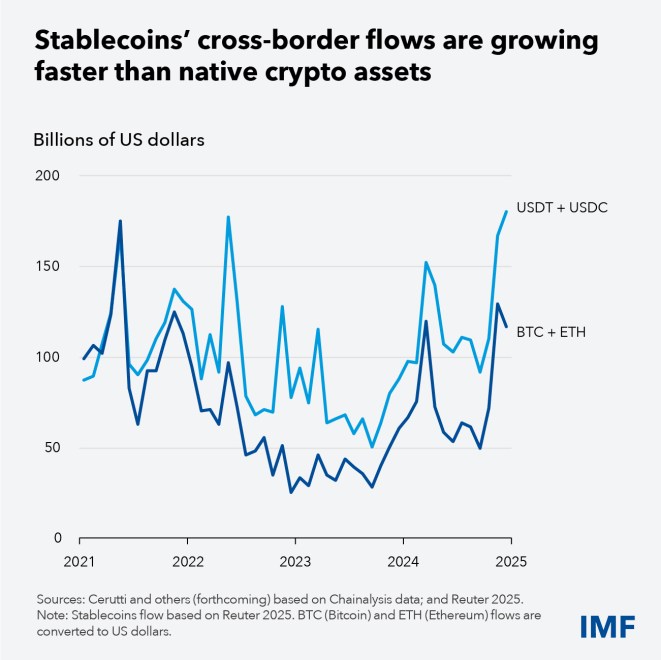
Amid the sector’s rapid growth, the organization highlighted that the two largest stablecoins, USDT and USDC, have tripled their market capitalization since 2023, reaching a combined $260 billion. Meanwhile, their trading volume has increased by around 90% to $23 trillion in 2024, with Asia surpassing North America in stablecoin activity volume.

stablecoins

The IMF noted two major potential benefits from stablecoins. First, they could enable faster and cheaper cross-border payments, especially for remittances, which can cost 20% of the amount being sent and face some delays.

However, “being a single source of information, blockchains can greatly simplify the processes linked with cross-border payments and reduce costs,” the Fund’s economists explained in a blog post.

Second, stablecoins could expand financial access, driving innovation by increasing competition with established payment service providers, therefore, making retail digital payments more accessible to underserved customers.

They could facilitate digital payments in areas where it is costly or not profitable for banks to serve customers. Many developing countries are already leapfrogging traditional banking with the expansion of mobile phones and different forms of digital and tokenized money.

Notably, competition with already established providers could lower costs and lead to enhanced product diversity, “leveraging synergies between digital payments and other digital services.”

IMF Warns Of Fragmented Oversight

Despite their potential benefits, stablecoins also carry significant risks, the IMF explained, including de-pegging and collapsing if the underlying assets lose value or if users lose confidence in the ability to cash out. Per the report, this could also trigger fire sales of the reserve assets and disrupt financial markets.

Stablecoins could also accelerate a “currency substitution” dynamic, where individuals and companies abandon their national currency in favor of a foreign one, like US dollars or euros, due to instability or high inflation.

The organization noted that the dynamic decreases a country’s central bank’s ability to control its monetary policy and serve as the lender of last resort, damaging the financial sovereignty of affected nations.

In addition, the potential to reduce cross-border frictions and make faster and cheaper transactions could be undermined by a lack of interoperability if various networks are unable to connect or are restricted by different regulations and other hurdles.

“Stablecoin regulation is in its infancy, so the ability to mitigate these risks remains uneven across countries,” the organization affirmed, noting that “the IMF and the Financial Stability Board have issued recommendations to safeguard against currency substitution, maintain capital flow controls, address fiscal risks, ensure clear legal treatment and robust regulation, implement financial integrity standards, and strengthen global cooperation.”

As reported by Bitcoinist, the FSB vowed in October to address the evolving threats from private finance and the growing use of stablecoins, promising to increase the global watchdog’s policy response and overhaul its surveillance system to make it more flexible and quicker.

Nonetheless, major jurisdictions have taken different stances in key areas, as the IMF detailed, which could result in the exploitation of gaps between jurisdictions and issuers to locate where oversight is weaker.

All this underscores the need for strong international cooperation to mitigate macrofinancial and spillover risks (…). Tokenization and stablecoins are here to stay. But their future adoption and the outlook for this technology are still mostly unknown.

The organization concluded that “improving the existing global financial infrastructure might be easier than replacing it. Achieving the best possible balance will require close cooperation among policymakers, regulators, and the private sector.”

stablecoins, bitcoin, btc, btcusdt

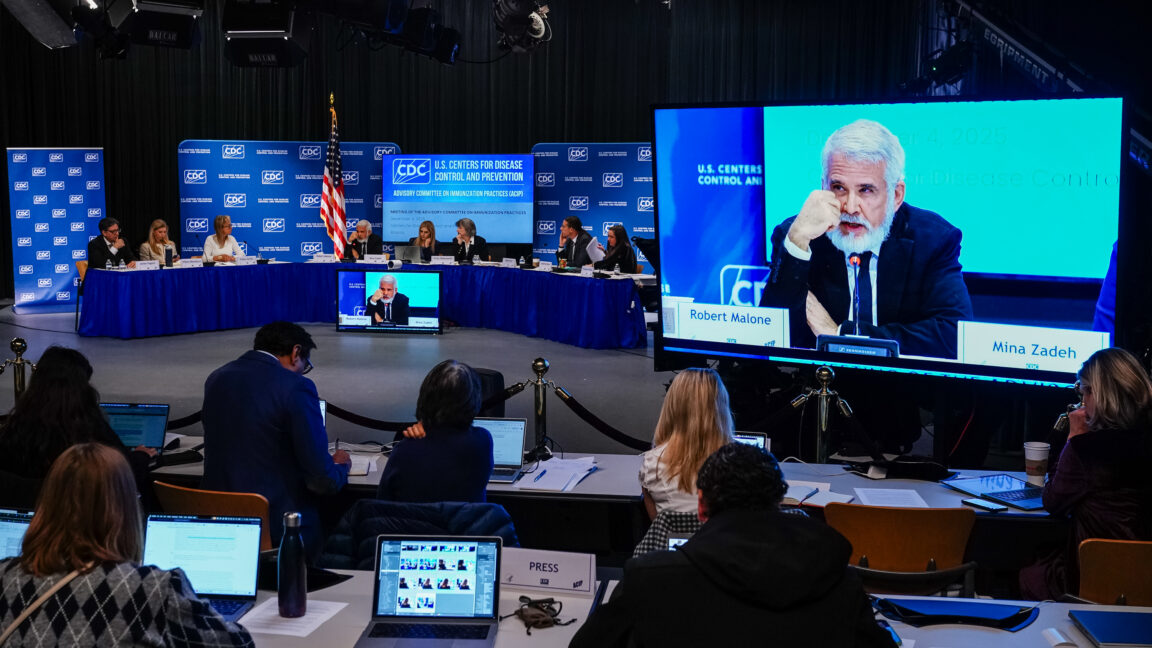
Without evidence, RFK Jr.’s vaccine panel tosses hep B vaccine recommendation

By: Beth Mole

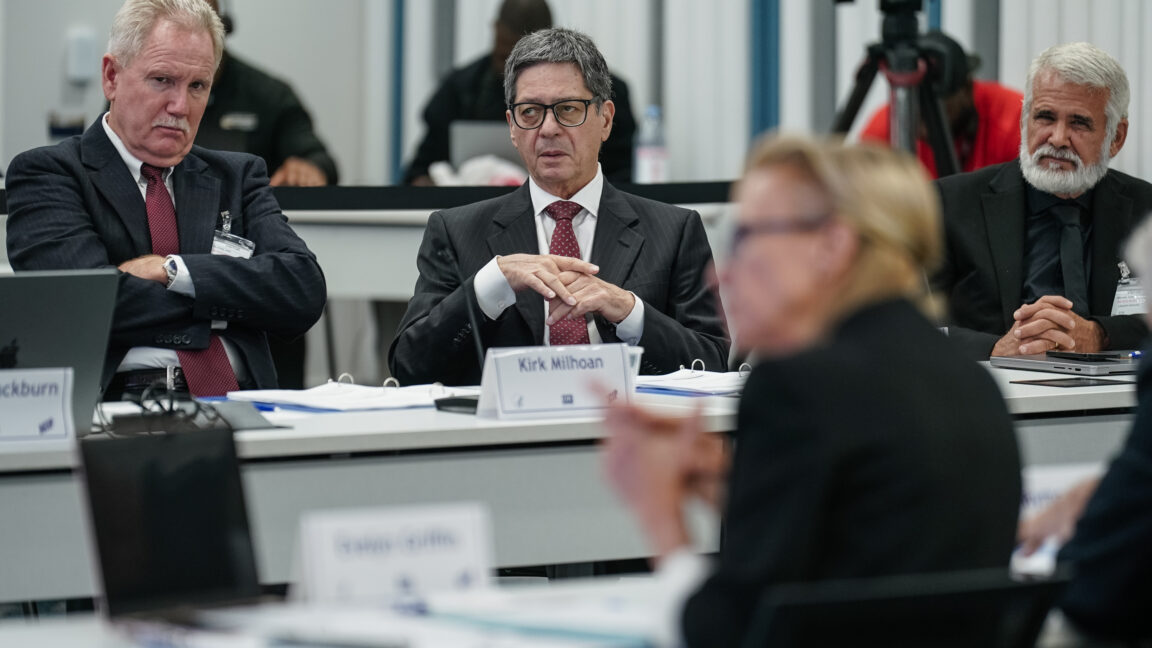
Federal vaccine advisors hand-selected by anti-vaccine Health Secretary Robert F. Kennedy Jr. have voted to eliminate a recommendation that all babies be vaccinated against hepatitis B on the day of birth. The decision was made with no evidence of harm from that dose and no evidence of any benefit from the delay.

Public health experts, medical experts, and even some members of the panel decried the vote, which studies and historical data indicate will lead to more infections in babies that, in turn, will lead to more cases of chronic liver disease, liver cancer, and premature death.

“I will just say we have heard ‘do no harm’ is a moral imperative. We are doing harm by changing this [recommendation],” Cody Meissner, a pediatrician and voting member of the Advisory Committee on Immunization Practices (ACIP), said as he voted against the change.

Read full article

Comments

© Getty | Tim Clayton

CDC vaccine panel realizes again it has no idea what it’s doing, delays big vote

By: Beth Mole

The panel of federal vaccine advisors hand-selected by anti-vaccine Health Secretary Robert F. Kennedy Jr. has once again punted on whether to strip recommendations for hepatitis B vaccinations for newborns—a move it tried to make in September before realizing it didn’t know what it was doing. The decision to delay the vote today came abruptly this afternoon when the panel realized it still does not understand the topic or what it was voting on.

Prior to today’s 6–3 vote to delay a decision, there was a swirl of confusion over the wording of what a new recommendation would be. Panel members had gotten three different versions of the proposed recommendation in the 72 hours prior to the meeting, one panelist said. And the meeting’s data presentations this morning offered no clarity on the subject—they were delivered entirely by anti-vaccine activists who have no subject matter expertise and who made a dizzying amount of false and absurd claims.

“Completely inappropriate”

Overall, the meeting was disorganized and farcical. Kennedy’s panel has abandoned the evidence-based framework for setting vaccine policy in favor of airing unvetted presentations with misrepresentations, conspiracy theories, and cherry-picked studies. At times, there were tense exchanges, chaos, confusion, and misunderstandings.

Read full article

Comments

© Getty | Elijah Nouvelage

12 former FDA chiefs unite to say agency memo on vaccines is deeply stupid

By: Beth Mole

On Friday, Vinay Prasad—the Food and Drug Administration’s chief medical and scientific officer and its top vaccine regulator—emailed a stunning memo to staff that quickly leaked to the press. Without evidence, Prasad claimed COVID-19 vaccines have killed 10 children in the US, and, as such, he announced unilateral, sweeping changes to the way the agency regulates and approves vaccines, including seasonal flu shots.

On Wednesday evening, a dozen former FDA commissioners, who collectively oversaw the agency for more than 35 years, responded to the memo with a scathing rebuke. Uniting to publish their response in the New England Journal of Medicine, the former commissioners said they were “deeply concerned” by Prasad’s memo, which they framed as a “threat” to the FDA’s work and a danger to Americans’ health.

In his memo, Prasad called for abandoning the FDA’s current framework for updating seasonal flu shots and other vaccines, such as those for COVID-19. Those updates currently involve studies that measure well-characterized immune responses (called immunobridging studies). Prasad dismissed this approach as insufficient and, instead, plans to require expensive randomized trials, which can take months to years for each vaccine update.

Read full article

Comments

© Getty | Joe Raedle

Meet CDC’s new lead vaccine advisor who thinks shots cause heart disease

By: Beth Mole

When the federal vaccine committee hand-picked by anti-vaccine Health Secretary Robert F. Kennedy Jr. meets again this week, it will have yet another new chairperson to lead its ongoing work of dismantling the evidence-based vaccine recommendations set by the Centers for Disease Control and Prevention.

On Monday, the Department of Health and Human Services announced that the chairperson who has been in place since June—when Kennedy fired all 17 expert advisors on the committee and replaced them with questionably qualified allies—is moving to a senior role in the department. Biostatistician Martin Kulldorff will now be the chief science officer for the Office of the Assistant Secretary for Planning and Evaluation (ASPE), HHS said. As such, he’s stepping down from the vaccine committee, the Advisory Committee on Immunization Practices (ACIP).

Kulldorff gained prominence amid the COVID-19 pandemic, criticizing public health responses to the crisis, particularly lockdowns and COVID-19 vaccines. He was a co-author of the Great Barrington Declaration that advocated for letting the deadly virus spread unchecked through the population, which was called unethical by health experts.

Read full article

Comments

© Getty | Elijah Nouvelage

❌