Login
LoginInaccuracies plague government security clearance data
- More than 60% of the government’s security clearance data last year was either inaccurate or incomplete. That’s according to a recent review conducted by the Government Accountability Office. In a new report, GAO said delays and issues with IT systems continue to make the security clearance process a top management challenge in the federal government. The issue has remained on GAO’s High Risk List since 2018.(Personnel security clearances: Actions needed to address significant data reliability issues that impact oversight - Government Accountability Office)
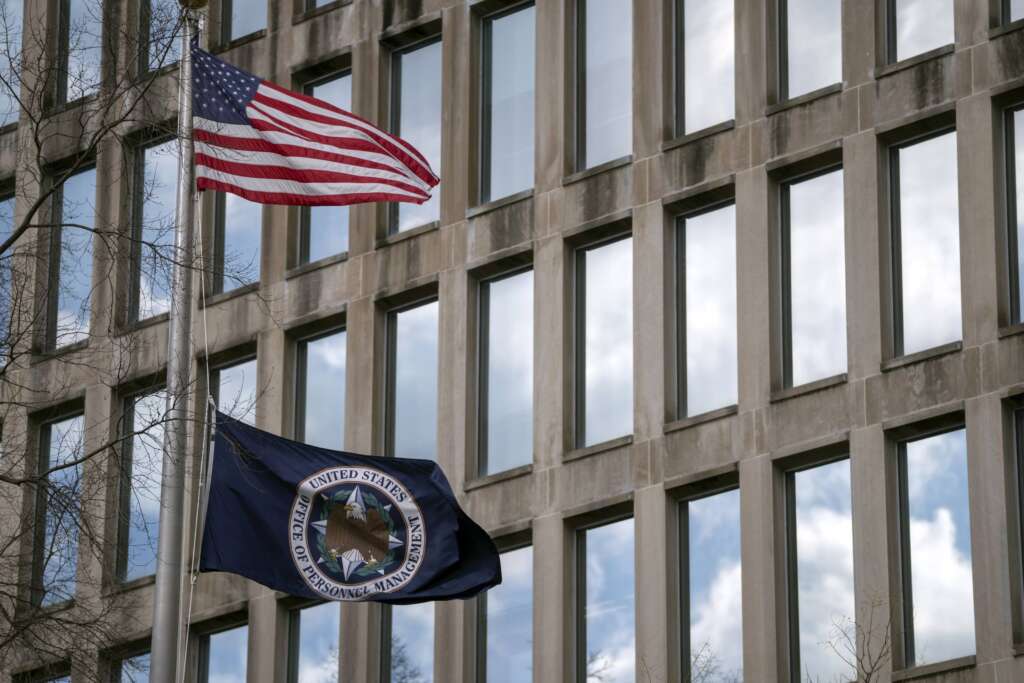
- Amid the Trump administration’s workforce reductions, Office of Personnel Management Director Scott Kupor touts that 92% of departing feds left voluntarily. But in response to Kupor’s comments, James Walkinshaw (D-Va) said calling the departures “voluntary” is misleading. Walkinshaw argues that many federal employees were coerced into leaving, rather than choosing to go on their own. Nothing about that, the congressman said, was voluntary.(Response to OPM Director Scott Kupor on federal workforce comments - Rep. James Walkinshaw (D-Va.))
- The Department of the Navy is pouring nearly half a billion dollars into artificial intelligence and autonomous technologies to modernize shipbuilding operations. The Shipbuilding Operating System, or Ship OS, will leverage Palantir’s software to aggregate data from enterprise resource planning systems, legacy databases and operational sources to identify bottlenecks, streamline workflows and support proactive risk mitigation. Early pilot deployments of these AI capabilities have already shown some results, including reducing submarine schedule planning at General Dynamics Electric Boat from 160 manual hours to under 10 minutes. At Portsmouth Naval Shipyard, material review times dropped from weeks to less than an hour. The initial rollout will focus on the Submarine Industrial Base, with plans to expand to surface ship programs as the Navy validates and scales the approach.
- Agencies have new acquisition considerations when buying artificial intelligence capabilities. Agencies have three months to update their acquisition clauses and policies to ensure contracts for large language models comply with two overarching principles. In a new memo, OMB said by March 11, agencies must ensure new contracts for AI tools include the requirements that demonstrate the LLMs are truth seeking and ideologically neutral. OMB detailed how agencies can ensure both commercial and internally developed LLMs meet these two principles. Agencies should ask vendors for documentation that includes enough information to assess a vendor’s risk management actions at the model, system and/or application level to establish compliance with these principles. As for existing contracts for LLMs, agencies must add these new clauses prior to exercising an option period.(OMB outlines new procurement requirements for LLMs - Office of Management and Budget)
- Agencies are taking more advantage of financial management shared services than ever before. The Government Accountability Office found in a new report that agencies spent $183 million through the financial management marketplace in fiscal 2024. That is a $180 million increase over 2023. The reason for this increase, auditors found, is that the number of providers and products in the financial management marketplace has grown over the past several years. There are now 25 providers that are offering 139 different services. GAO said this is the first in a series of reports addressing shared services as required by the 2023 spending bill. (Use of financial management shared services on the rise - Government Accountability Office)
- The Department of Homeland Security is moving to strip airport security screeners of union rights for the second time this year. The Transportation Security Administration said it will officially rescind a collective bargaining agreement for transportation security officers in early January. That decision comes after Homeland Security Secretary Kristi Noem signed a new determination that TSA staff should not be allowed to participate in collective bargaining. In June, a federal judge issued a preliminary injunction that blocked DHS’s previous attempt to dissolve TSA’s collective bargaining agreement. The American Federation of Government Employees has vowed to fight Noem’s latest action in court as well. (DHS moves to eliminate TSA collective bargaining agreement, again - Federal News Network)
- Republican lawmakers have introduced legislation that would codify a part of President Donald Trump’s AI Action Plan and allow the Defense Department to establish a National Security and Defense AI Institute to advance defense innovation, workforce development and AI readiness. Lawmakers say the institute would “host testbeds for defense-related AI data management, reliable AI, and AI readiness.” It would also play an important role in developing a skilled workforce capable of implementing these emerging technologies. A companion bill led by Rep. Ronny Jackson (R-Texas) has already passed the House as part of the annual defense policy bill.(Lawmakers move to stand up a Defense AI Institute - Sen. John Cornyn (R-Texas))
- The Cybersecurity and Infrastructure Security Agency is out with new cyber performance goals for tens of thousands of organizations across the country. CISA’s Cybersecurity Performance Goals 2.0 document is geared toward critical infrastructure sectors. The agency updated the voluntary goals last week to be more in line with the National Institute of Standards and Technology’s latest Cybersecurity Framework. CISA’s updated goals include new guidance on governance, emerging threats and third-party risks. Other agencies have used CISA’s performance goals to set cybersecurity standards and requirements for specific sectors. (CISA unveils enhanced cross sector cybersecurity performance goals - Cybersecurity and Infrastructure Security Agency)
The post Inaccuracies plague government security clearance data first appeared on Federal News Network.

© Amelia Brust/Federal News Network