Reading view

There are new articles available, click to refresh the page.

‘No Time To Experiment’: Russia To Establish Strict Crypto Regulations In 2026

Vladimir Chistyukhin, First Deputy Chairman of the Central Bank of Russia (CBR), has shared crucial details of Russia’s upcoming crypto regulations. The framework is expected to amend key laws related to digital financial assets and the securities market, while potentially prohibiting new digital asset purchases for most investors.

New Crypto Framework Could Ban New Purchases

On Thursday, Vladimir Chistyukhin told Russian news media outlet RIA Novosti that the Central Bank of Russia, the Ministry of Finance, Rosfinmonitoring, and other federal agencies have been discussing proposals to regulate the crypto market.

The executive affirmed that the new framework will provide rules on how and through whom crypto transactions will be carried out. He detailed that these will likely be executed only by existing market participants under existing licenses.

As reported by Bitcoinist, CBR’s First Deputy Chairman previously announced that local banks would be allowed to engage in limited crypto operations under strict regulatory conditions.

Nonetheless, the executive has noted that they will need to consider whether exchanges should be included in a separate category that enables them to be eligible for a new license.

In the case of investors, he informed that they are stepping away from their initial Experimental Legal Regime (EPR), introduced at the start of the year. The EPR proposed allowing only “highly qualified investors” to transact directly with digital assets.

Currently, cryptocurrencies are used not only as an investment but also as a means of cross-border payments. This is a very important point that cannot be ignored. Of course, we want to protect Russian retail investors as much as possible from transactions with such a risky asset. On the other hand, we understand that in the current circumstances, in some cases, international payments can only be made using cryptocurrencies. Therefore, the discussion continues.

Now, they are looking to allow qualified investors into the market after passing certain tests, although discussions are not final. There are only about one million qualified investors in Russia, Chistyukhin added, which could place millions of retail investors in the country in a “gray” zone.

Unqualified investors who already acquired cryptocurrencies “will be able to either keep them, sell them, or exchange them for some fiat currency or other assets. There are no restrictions on exiting crypto assets – neither in terms of time nor volume. Only new purchase transactions will be restricted,” he stated.

Russia To Adopt Regulations ‘As Quickly As Possible’

Chistyukhin affirmed that the Russian financial market has “all the necessary infrastructure to work with cryptocurrencies.” Although it will be “essential to amend the laws on digital financial assets, the securities market, and banking legislation.”

Chistyukhin explained that the authorities believe it is “fundamentally important” to legitimize the crypto sector and ensure that it is compliant with the law. To achieve this, regulators are considering establishing strict restrictions and prohibitions. “Anything that falls outside this framework will be considered illegal activity.”

Discussing why the financial authorities decided not to experiment with and test crypto rules, he noted that the country needs to adopt regulations quickly due to “international attention” and “scrutiny.”

The issue of cryptocurrency regulation is attracting serious international attention, primarily from the FATF. (…) We need to adopt regulations as quickly as possible. (…) We simply do not have the time to experiment first and then spend several years analyzing it and launching something permanent.

Therefore, the executive revealed that the legislation could be passed during the spring of 2026 and be enacted before the end of next year. However, Russian watchdogs are preparing transitional periods to give market participants time to move out of the regulatory “gray” zone and into the new legal framework. Liability for illegal operations is expected to come into effect in mid-2027.

Crypto, bitcoin, btc, btcusdt

Hong Kong’s New Critical Infrastructure Ordinance will be effective by 1 January 2026 – What CIOs Need to Know

By: NSFOCUS

As the clock ticks down to the full enforcement of Hong Kong’s Protection of Critical Infrastructures (Computer Systems) Ordinance on January 1, 2026, designated operators of Critical Infrastructures (CI) and Critical Computer Systems (CCS) must act decisively. This landmark law mandates robust cybersecurity measures for Critical Computer Systems (CCS) to prevent disruptions, with non-compliance risking […]

The post Hong Kong’s New Critical Infrastructure Ordinance will be effective by 1 January 2026 – What CIOs Need to Know appeared first on NSFOCUS, Inc., a global network and cyber security leader, protects enterprises and carriers from advanced cyber attacks..

The post Hong Kong’s New Critical Infrastructure Ordinance will be effective by 1 January 2026 – What CIOs Need to Know appeared first on Security Boulevard.

South Korea’s Stablecoin Legislation Hits Roadblock As FSC Misses December 10 Deadline

South Korea’s government has reportedly missed the deadline to submit its highly anticipated stablecoin legislation, risking a delay of the second phase of the country’s regulatory efforts to align with global standards and foster innovation.

FSC Misses Key Deadline Amid BOK Disagreement

On Wednesday, local media outlets affirmed that the South Korean government failed to submit the long-awaited bill for the Second Phase of the Virtual Asset User Protection Act, which is expected to address the issuance and distribution of won-denominated stablecoins.

Chosun Biz reported that the Financial Services Commission (FSC) did not meet the National Assembly’s submission deadline for the government’s legislation. On December 1, authorities set December 10 as the deadline to submit the bill to the National Policy Committee.

According to political circles cited by the report, the government bill was delayed because the FSC and the Bank of Korea (BOK) failed to resolve their differences over the issuance of won-pegged stablecoins.

As reported by Bitcoinist, local outlets stated in late November that South Korea’s stablecoin legislation risked being delayed due to a disagreement between financial authorities and the central bank over the extent of banks’ role.

The BOK and FSC seemingly agreed that the financial institutions must be involved in the issuance of won-pegged tokens. However, the central bank has been pushing for a consortium of banks owning at least 51% of any stablecoin issuer seeking regulatory approval in the country.

Meanwhile, the FSC was willing to involve diverse players in the process, expressing concern that giving a majority stake to banks could reduce participation from tech firms and limit the market’s innovation.

The November report noted that the regulatory standoff appeared to leave the market in limbo, with some tech companies actively preparing to get approval and others taking a cautious approach due to the unclear regulatory direction.

Stablecoin Legislation Risks ‘Prolonged Deliberation Process’

Chosun Biz noted that the Democratic Party of Korea (DPK) initially intended to advance the second phase of its virtual asset bill by reviewing the government bill. Nonetheless, if the government draft continues to be delayed, the bills previously introduced by lawmakers could be reviewed first.

Since June, multiple bills related to the issuance and distribution of won-pegged stablecoins have been introduced in the National Assembly. Min Byung-deok, a member of the National Assembly’s Government Committee, introduced the “Digital Assets Basic Act, proposing enabling the issuance of won-pegged stablecoins and establishing a Digital Asset Committee under the direct authority of the president.

In July, South Korea’s ruling and opposition parties proposed rival bills to establish the highly anticipated regulatory framework. Notably, Ahn Do-gil, a member of the Planning and Finance Committee from the Democratic Party, introduced the “Act on the Issuance and Distribution of Value-Stable Digital Assets.”

Similarly, Kim Eun-hye, a member of the Land, Infrastructure, and Transport Committee from the People Power Party (PPP), proposed the “Act on Payment Innovation Using Value-Fixed Digital Assets.”

The two bills shared similarities, like the assignment of stablecoin oversight to the FSC. However, they differed over the issue of interest payments, with the PPP’s bill allowing interest payments and the DPK’s bill completely banning them to prevent market disruption.

It’s worth noting that the FSC chairman, Lee Eun-won, recently affirmed that the regulatory agency will “fundamentally prohibit the payment of interest on stablecoins as a principle,” adopting the same principle as the US framework, the GENIUS Act, which prohibits interest payments on the holding or use of payment-purpose stablecoins.

Following the Wednesday delay, a member of the National Policy Committee from the Democratic Party affirmed that, “for now, it looks difficult to narrow the differences between the FSC and the BOK.”

“If the government bill continues not to be submitted, the deliberation process could be prolonged, so we should at least review the bills introduced by lawmakers first,” they concluded.

Bitcoin, btc, btcusdt, stablecoin

Crypto Market Structure Talks: Senator Lummis Addresses Latest Legislation Plans

Senators engaged in bipartisan discussions regarding the anticipated crypto market structure bill met on Tuesday amid ongoing disagreements about the timing of a committee vote on the legislation. 

According to a report from Politico, Sen. Cynthia Lummis, a key negotiator for the Republican side, expressed optimism that a new draft of the bill could be released this week. 

Lummis aims to have the bill ready for markup before Congress adjourns for the holiday break, stating, “Knock on wood, I hope to share a draft at the end of this week that reflects our best efforts to date.”

Lummis Urges Swift Progress On Crypto Legislation

During a panel discussion hosted by the Blockchain Association, Sen. Lummis emphasized the urgency of progressing with the legislation. She remarked that it might be advantageous for lawmakers to finalize a product and proceed with the markup next week, allowing everyone to take a break for the Christmas holidays. 

In related developments, Politico reported that Senate Banking Republicans submitted a proposal to their Democratic counterparts last week, suggesting over 30 amendments to a previous draft of the legislation. 

The three-page document, which comes from GOP senators on the Banking Committee, seeks to maintain certain elements of the original bill while incorporating adjustments acceptable to Democratic lawmakers.

Senate Banking Committee Chair Tim Scott and other Republicans are eager to finalize the markup next week, although some Democrats have expressed skepticism about this ambitious timeline. Following a meeting on Monday, Democrats sent a response to the GOP offer, but details of their feedback remain unclear.

Concessions In GOP’s Proposal 

The GOP’s proposal outlines the aspects from a September crypto market structure framework that they agree to integrate into a bipartisan bill, hoping to reconcile differences with their Democratic colleagues. 

The proposal includes a two-column table delineating 38 concessions the Republicans are willing to make, in exchange for retaining or modifying 32 sections of the original Responsible Financial Innovation Act discussion draft.

Among the concessions is language that reflects White House approval, which could address Democratic concerns regarding appointments to the Securities and Exchange Commission (SEC) and the Commodity Futures Trading Commission (CFTC). 

Additionally, the proposal contains ethics provisions aimed at addressing scrutiny over the Trump family’s business connections in the crypto sector. 

However, Lummis noted a previous ethics proposal she negotiated with Sen. Ruben Gallego was rejected by the White House, and she plans to collaborate further with Democrats to revisit the issue.

Other notable concessions from the Republicans include a section on consumer protection standards for digital assets, proposed language regarding bankruptcy, the establishment of a federal baseline for crypto ATMs, and risk management standards for digital asset intermediaries. 

Crypto

Featured image from DALL-E, chart from TradingView.com 

CEOs Of Leading Banks To Discuss Crypto Market Structure With US Senators This Week

In the wake of the GENIUS Act, which was signed into law by President Donald Trump in July, attention is now turning to the CLARITY Act, commonly known as the crypto market structure bill. This legislation has encountered substantial delays, exacerbated by the recent government shutdown and a lack of consensus in Congress.

Bank Leaders To Engage With Congress On Key Crypto Topics

This week, the CEOs of Citigroup, Wells Fargo, and Bank of America are scheduled to meet with both Republican and Democratic senators to discuss the evolving legislation surrounding crypto market structure. 

The meetings are set for Thursday, and congressional staff have indicated that the CEOs would welcome the chance to share insights on US Global Systemically Important Bank (GSIB) market structure priorities.

The bank leaders are anticipated to hold separate discussions with lawmakers from both parties, emphasizing collaboration to shape effective policies that position the United States as a leader in crypto assets. Among the topics on the agenda are bank permissibility, interest payments, and concerns surrounding illicit finance. 

Senate Faces Hurdles

Recent updates on social media platform X (previously Twitter) from Eleanor Terret of Crypto In America, also indicate that obtaining a markup for the crypto market structure bill before the Christmas break poses challenges. 

Senator Mark Warner has expressed concerns about pending language from the White House regarding two critical components of the bill—ethics and quorum. 

Warner noted the importance of addressing these issues thoughtfully, stating that bipartisan discussions are ongoing, yet productive progress is essential.

The Senate’s approach to the legislation is further complicated by its division into two committees: the Banking Committee, which oversees securities laws, and the Agriculture Committee, which focuses on commodities law

Both committees have released drafts of their work during the fall, with markup sessions—the process for voting on amendments before a full Senate vote—upcoming. However, both committees are proceeding cautiously due to unresolved issues.

Senators Demand Conflict Of Interest Provisions

The most pressing concerns include the treatment of stablecoin yields, potential conflicts of interest, and the regulatory approach to decentralized finance (DeFi). 

Some Democratic senators have indicated that they will not support the legislation unless it includes provisions addressing any possible conflicts relating to the President’s family and their business involvements in the crypto realm. 

Moreover, while market structure legislation primarily targets centralized platforms managing user funds, there is a push from the traditional finance sector to classify virtually all crypto-related entities, including developers and validators, as intermediaries.

Market analyst MartyParty provided an encouraging update on December 4, noting that the bipartisan crypto market structure bill is gaining momentum in Congress. 

A markup session with the Senate Banking Committee has been tentatively scheduled for December 17-18, just prior to the holiday recess.

Crypto

Featured image from DALL-E, chart from TradingView.com 

‘Stablecoins Are Here To Stay’: IMF Calls For Global Cooperation To Prevent Financial Risks

As stablecoins continue to gain worldwide momentum, the International Monetary Fund (IMF) has called for global cooperation to avert potential macro financial stability risks related to the rapidly growing sector and to turn the industry “into a force for good.”

Stablecoins To Foster Innovation, Financial Inclusion

On Thursday, the IMF released a 56-page report discussing the growing influence of stablecoins, their potential use cases in mainstream financial markets, and the risks associated with the sector’s varying oversight.

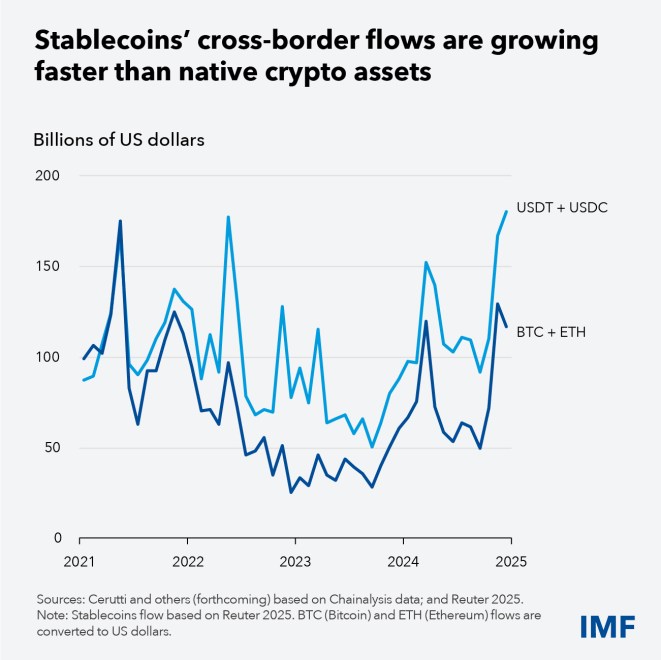
Amid the sector’s rapid growth, the organization highlighted that the two largest stablecoins, USDT and USDC, have tripled their market capitalization since 2023, reaching a combined $260 billion. Meanwhile, their trading volume has increased by around 90% to $23 trillion in 2024, with Asia surpassing North America in stablecoin activity volume.

stablecoins

The IMF noted two major potential benefits from stablecoins. First, they could enable faster and cheaper cross-border payments, especially for remittances, which can cost 20% of the amount being sent and face some delays.

However, “being a single source of information, blockchains can greatly simplify the processes linked with cross-border payments and reduce costs,” the Fund’s economists explained in a blog post.

Second, stablecoins could expand financial access, driving innovation by increasing competition with established payment service providers, therefore, making retail digital payments more accessible to underserved customers.

They could facilitate digital payments in areas where it is costly or not profitable for banks to serve customers. Many developing countries are already leapfrogging traditional banking with the expansion of mobile phones and different forms of digital and tokenized money.

Notably, competition with already established providers could lower costs and lead to enhanced product diversity, “leveraging synergies between digital payments and other digital services.”

IMF Warns Of Fragmented Oversight

Despite their potential benefits, stablecoins also carry significant risks, the IMF explained, including de-pegging and collapsing if the underlying assets lose value or if users lose confidence in the ability to cash out. Per the report, this could also trigger fire sales of the reserve assets and disrupt financial markets.

Stablecoins could also accelerate a “currency substitution” dynamic, where individuals and companies abandon their national currency in favor of a foreign one, like US dollars or euros, due to instability or high inflation.

The organization noted that the dynamic decreases a country’s central bank’s ability to control its monetary policy and serve as the lender of last resort, damaging the financial sovereignty of affected nations.

In addition, the potential to reduce cross-border frictions and make faster and cheaper transactions could be undermined by a lack of interoperability if various networks are unable to connect or are restricted by different regulations and other hurdles.

“Stablecoin regulation is in its infancy, so the ability to mitigate these risks remains uneven across countries,” the organization affirmed, noting that “the IMF and the Financial Stability Board have issued recommendations to safeguard against currency substitution, maintain capital flow controls, address fiscal risks, ensure clear legal treatment and robust regulation, implement financial integrity standards, and strengthen global cooperation.”

As reported by Bitcoinist, the FSB vowed in October to address the evolving threats from private finance and the growing use of stablecoins, promising to increase the global watchdog’s policy response and overhaul its surveillance system to make it more flexible and quicker.

Nonetheless, major jurisdictions have taken different stances in key areas, as the IMF detailed, which could result in the exploitation of gaps between jurisdictions and issuers to locate where oversight is weaker.

All this underscores the need for strong international cooperation to mitigate macrofinancial and spillover risks (…). Tokenization and stablecoins are here to stay. But their future adoption and the outlook for this technology are still mostly unknown.

The organization concluded that “improving the existing global financial infrastructure might be easier than replacing it. Achieving the best possible balance will require close cooperation among policymakers, regulators, and the private sector.”

stablecoins, bitcoin, btc, btcusdt

Crypto Gets Legal Recognition: UK Enacts Property Act 2025 For Digital Assets

The United Kingdom (UK) has reached a significant milestone in its approach to digital assets with the recent passage of the Property Act 2025, which now officially categorizes cryptocurrencies as legal property. 

UK’s New Law Sets Criteria For Digital Assets

The creation of this dedicated legal category for digital assets followed recommendations from the Law Commission, which advocated for a framework that acknowledges assets not fitting traditional definitions of personal property.

This legal evolution is seen as part of a broader strategy to position the UK as a leading digital finance hub, responding to experts’ calls for the country to align its regulatory environment with that of the United States in order to promote growth in the digital asset market. 

According to law firm Clyde & Co, a key provision in the law states that “a thing (including a thing that is digital or electronic in nature) is not prevented from being the object of personal property rights merely because it is neither (a) a thing in possession, nor (b) a thing in action.” 

This phrase confirms that digital assets can now be recognized as a third category of personal property, distinct from the traditional classifications of tangible and intangible assets.

However, the Act does not guarantee that any specific type of asset qualifies as personal property; rather, it aims to “unlock” the common law’s ability to adapt to technological advancements and new asset types, as outlined in the Explanatory Notes from Parliament. 

The interpretation of existing digital assets—such as cryptocurrencies and non-fungible tokens (NFTs)—as well as any emerging forms will ultimately depend on future court rulings. 

The law firm also noted that, under this new law, a digital asset must meet certain criteria to qualify as personal property: it must be definable and identifiable by third parties and capable of being assumed by them, as well as possess a degree of permanence.

Additionally, digital assets will be included in bankruptcy and insolvency proceedings, allowing them to be treated as part of the overall asset pool available to creditors and heirs. 

Government Moves To Ban Crypto Donations

While momentum continues for digital asset recognition, the UK government is also addressing concerns surrounding cryptocurrency in the political sphere. 

Ministers are reportedly working on legislation aimed at banning political donations made through digital currencies, although this crackdown may not be ready in time for the upcoming elections bill in the new year. 

Officials have raised alarms that cryptocurrency donations pose risks to the integrity of the electoral process, primarily due to their difficult-to-trace nature, which could open the door to exploitation by foreign entities or criminal organizations.

Crypto

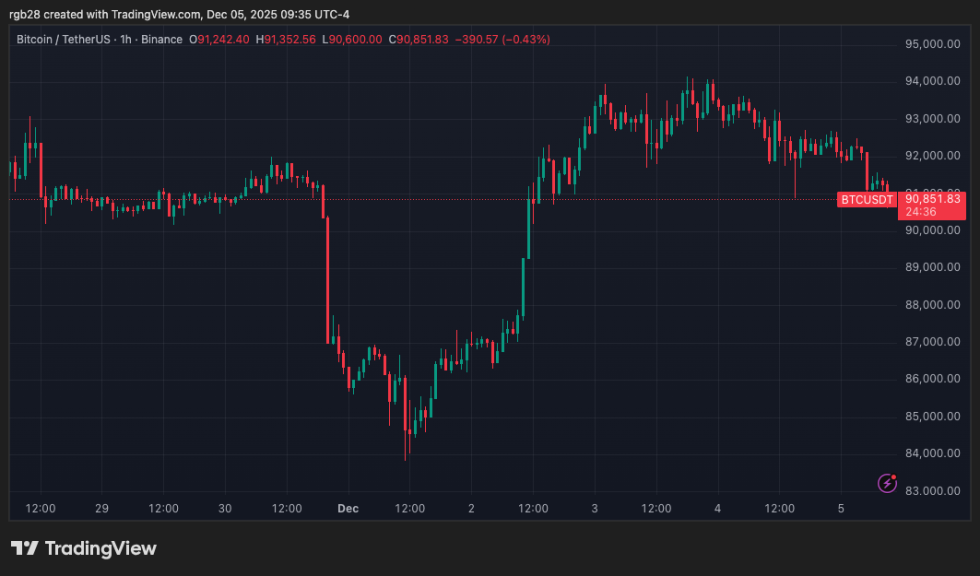
At the time of writing, the market’s leading cryptocurrency, Bitcoin, was trading at $92,180, surging 4% in the past 24 hours. 

Featured image from Shutterstock, chart from TradingView.com 

Poland’s President Vetoes Crypto Market Bill Due To ‘Overregulation’ Concerns

The President of Poland has vetoed a controversial bill that aimed to set strict rules on the crypto assets market, following multiple concerns of a startup exodus, “overregulation” of the sector, and stifling market innovation.

Poland’s President Vetoes Divisive Crypto Bill

On Monday, Poland’s President Karol Nawrocki refused to sign a crypto market legislation over concerns that it could pose a real threat to the freedoms of Poles, the stability of the state, and market innovation.

In an official statement, the president’s office announced Nawrocki’s decision to veto the Crypto-Asset Market Act, introduced in June, to prevent “overregulation” and abuse of the “legal mess” proposed by the Polish government.

As reported by Bitcoinist, Poland’s crypto community previously raised concerns about the legislation in September, noting that the bill exceeded the European Union (EU)’s minimum regulatory requirements and could drive small businesses and startups abroad.

Notably, the bill’s text required all Crypto Asset Service Providers to obtain a license from the Polish Financial Supervision Authority (KNF) to operate in the market. It also proposed heavy fines and potential prison time for participants who breached the law.

Rafal Leśkiewicz, Press Secretary of the President, listed on X three main reasons for Nawrocki’s decision to reject the bill. He asserted that the legislation risks power abuse and overreach, as some provisions allow the government to shut down websites of companies offering crypto services “with a single click.”

“This is unacceptable. Most European Union countries use a simple list of warnings that protects consumers without blocking entire websites,” he noted.

In addition, the regulation’s size and lack of transparency risked overregulation, noting that countries like the Czech Republic, Slovakia, and Hungary implemented concise and comprehensive frameworks. Meanwhile, Poland’s text surpasses the one-hundred-page mark.

He argued that “Overregulation is a straight path to driving companies abroad—to the Czech Republic, Lithuania, or Malta—instead of creating conditions for them to earn money and pay taxes in Poland.”

Lastly, the Press Secretary listed the amount of supervisory fees as an issue, affirming that the government set them at a level that would have prevented small businesses and startups from developing, favoring foreign corporations and banks. To him, “this is a reversal of logic, killing the competitive market and posing a serious threat to innovation.”

Community Praises The ‘Necessary Decision’

Leśkiewicz emphasized that regulation is necessary, but added that it must oversee the market in a way that’s “reasonable, proportionate, and safe” for users, rather than overreaching and potentially harming the Polish economy.

“The government had two years to prepare a bill in line with the European MiCA regulation on the crypto-asset market in the European Union. Instead, it produced a legal mess that hurts Poles and Polish companies,” he asserted. “The decision to veto was necessary and was made responsibly. The president will defend the economic security of Poles.”

Polish economist Krzysztof Piech praised the president’s decision to veto the crypto bill, affirming that it was “a very bad law” that “violated the Polish Constitution and was contrary to the EU regulation it was supposed to implement in Poland.”

Piech also refuted claims that Poland will become a “paradise” for criminals and fraudsters, who will “be grateful” to President Nawrocki for “a crypto market without state supervision.”

The economist asserted that the government’s version of the bill “did not provide for any assistance to victims of fraudsters,” adding that, “as of July 1, 2026, the entire Polish market will be regulated and supervised — even without any legislation. After all, we are in the EU.”

crypto, bitcoin, btc, btcusdt

Japan Moves to Put Bitcoin Under Financial Product Rules, Slash Crypto Taxes to 20%

Bitcoin Magazine

Japan Moves to Put Bitcoin Under Financial Product Rules, Slash Crypto Taxes to 20%

Japan’s Financial Services Agency (FSA) has reportedly finalized a sweeping plan to reclassify 105 cryptocurrencies — including bitcoin — as financial products under the Financial Instruments and Exchange Act, marking one of the country’s most significant regulatory shifts since the Mt. Gox era.

According to outlet Asahi, the move would subject these 105 assets to the same disclosure, reporting, and market surveillance standards used in Japan’s traditional securities markets. 

Exchanges listing the assets would have to publish detailed information on each token, including whether it has an issuer, the underlying blockchain architecture, and the level of price volatility.

The FSA also plans to introduce explicit insider trading rules for the crypto sector for the first time. Issuers, exchange executives, and related parties would be prohibited from trading tokens using non-public information — a category that includes planned listings, delistings, bankruptcies, or other material events.

These amendments are expected to be submitted during the 2026 ordinary Diet session.

Japan’s tax overhaul: From 55% to 20%

Alongside the reclassification, the FSA is pushing to slash the country’s notoriously high crypto tax rate. Currently, Japanese residents must declare crypto profits as “miscellaneous income,” which can push the effective tax burden to 55% for high-earning traders.

The agency wants to bring crypto taxation in line with equities — a flat 20% rate — for profits generated from the newly recognized financial products. The proposal will be reviewed during next fiscal year’s tax reform cycle and could take effect as early as 2026.

The lower rate would apply not only to individual traders but also to firms, including banks and insurers that sell crypto through securities subsidiaries.

The regulatory shift comes as Japan accelerates its Web3 ambitions. The FSA has recently reviewed rules that previously barred banks from holding volatile assets like bitcoin, opening the door for lenders to treat digital assets more like stocks or government bonds.

It is also considering allowing banks to operate crypto exchanges and custody services.

This follows rapid growth in domestic adoption in the country — more than 12 million crypto accounts were registered as of early 2025 — and a push for a regulated yen-stablecoin ecosystem. MUFG, SMBC, and Mizuho are already collaborating on yen-pegged tokens, while Japan’s first locally regulated stablecoin, JPYC, launched on October 27.

JUST IN: 🇯🇵 Japan’s FSA plans to classify #Bitcoin and crypto as financial products, lowering the tax on crypto gains from 55% to 20%.

Bullish 🚀 pic.twitter.com/VSoBYAyEjS

— Bitcoin Magazine (@BitcoinMagazine) November 17, 2025

Major Japanese banks have already signaled their interest in expanding crypto services. Mitsubishi UFJ Financial Group, Sumitomo Mitsui Banking Corp., and Mizuho Bank have collaborated to issue stablecoins pegged to both the Japanese yen and the U.S. dollar.

A great example of the country’s booming crypto market comes from Metaplanet. Metaplanet has acquired and held Bitcoin as a treasury reserve while launching Bitcoin-backed financial products to generate income in Japan’s low-yield market. 

The company raises capital through equity and preferred shares, similar to Strategy, to fund its Bitcoin purchases. 

This post Japan Moves to Put Bitcoin Under Financial Product Rules, Slash Crypto Taxes to 20% first appeared on Bitcoin Magazine and is written by Micah Zimmerman.

❌