Zimperium zLabs reveals DroidLock, a new Android malware acting like ransomware that can hijack Android devices, steal credentials via phishing, and stream your screen via VNC.
Instagram is doubling down on user empowerment with two major fronts: creator-centric upgrades to its Edits video app and a new "Your Algorithm" feature that lets users tune their Reels feed.
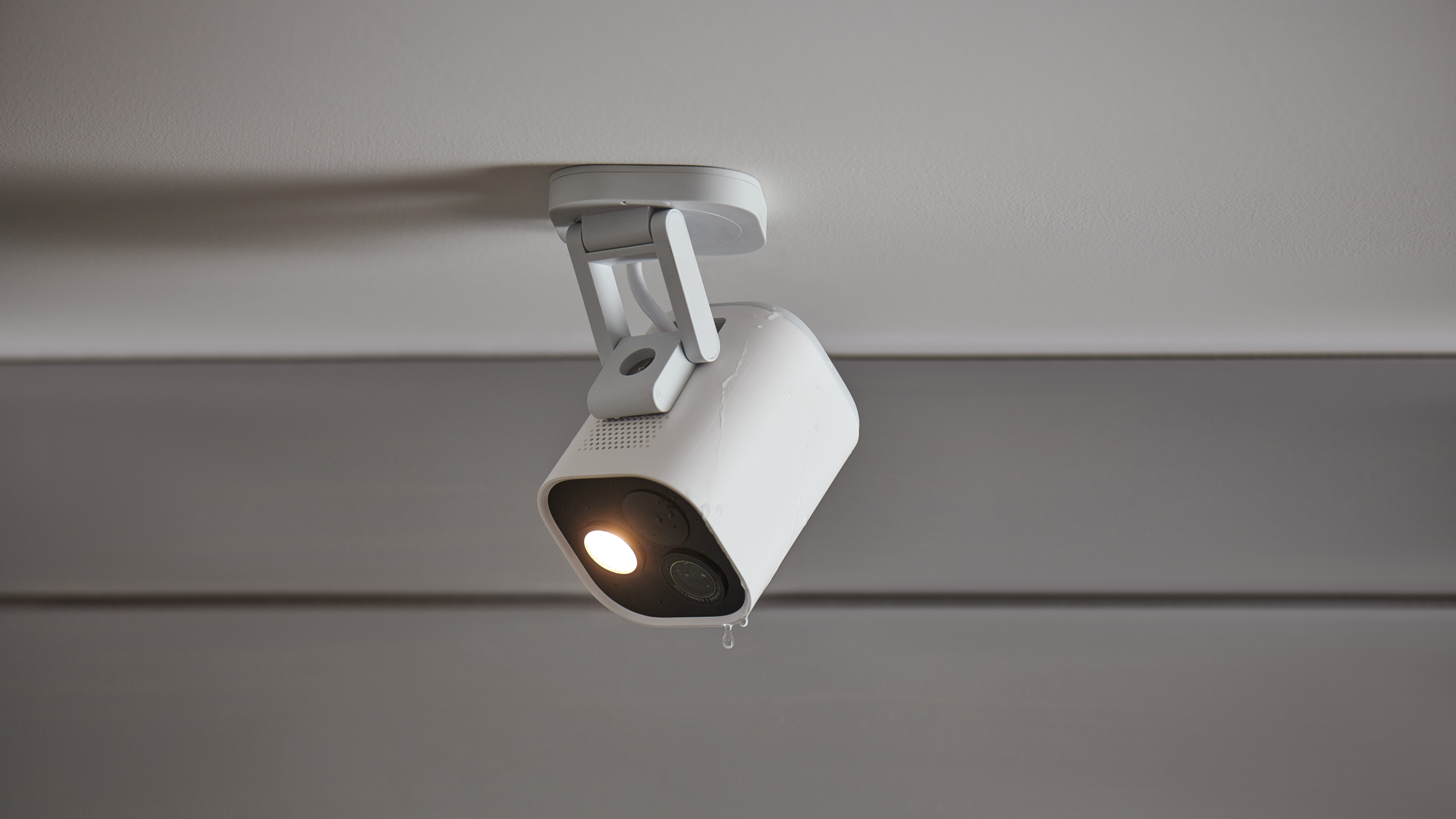
IP security cameras are a dime a dozen, so you might not think to look twice at the Aqara Camera Hub G5 Pro, except to note its premium design. However, beneath this flagship smart home camera is a cutting-edge smart home device.
If you were expecting a big camera leap on the Galaxy S26, a leak suggests Samsung may stick with the same setup as the S25. Instead of costly hardware changes, improvements might rely more on AI processing and software tuning.
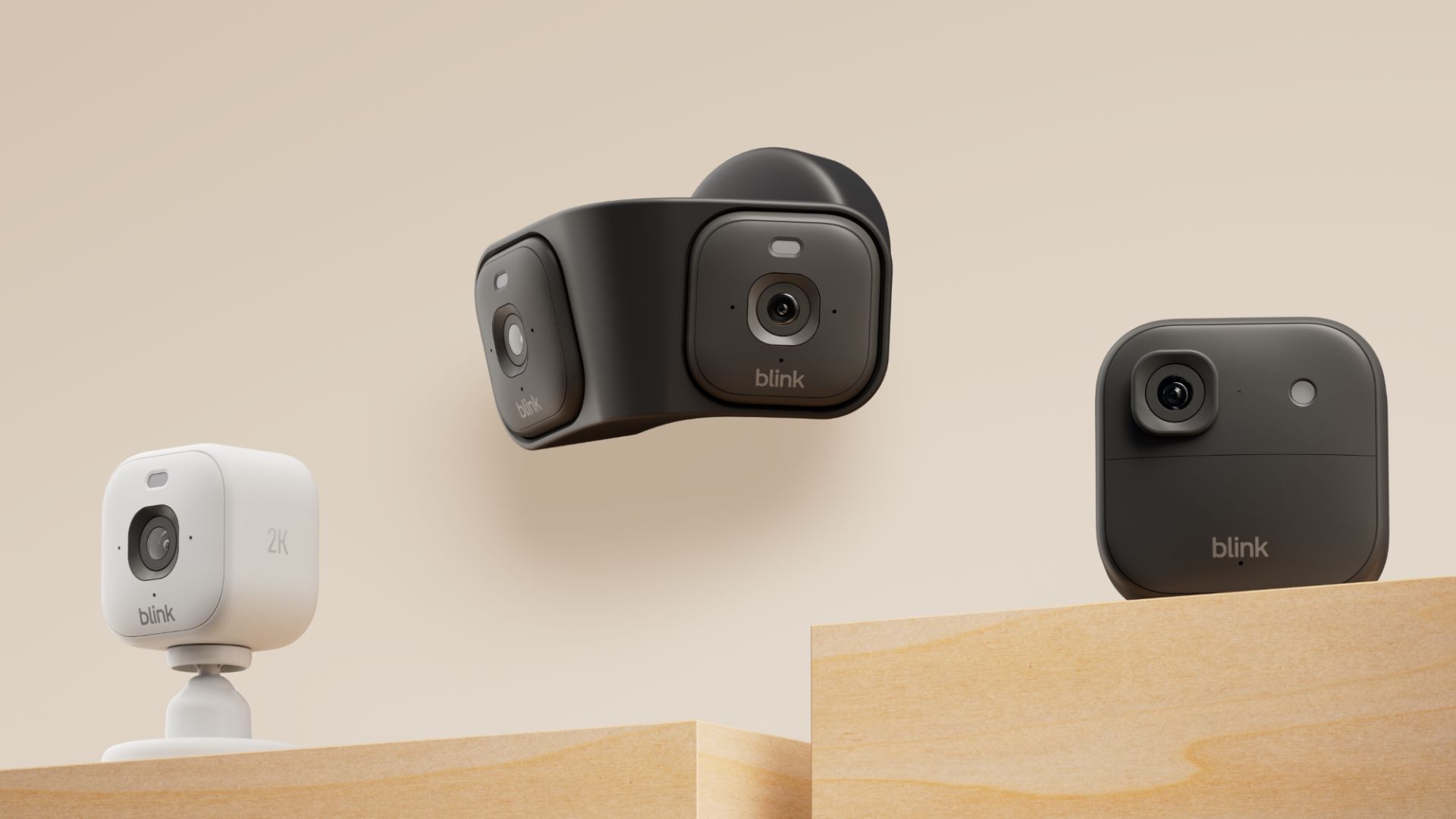
Blink, the Amazon-owned company known for its affordable smart home security cameras, just announced a big upgrade to its camera software. Do you ever wish your cameras were a bit more descriptive with alerts and notifications? If so, you'll be happy to hear about these new features.
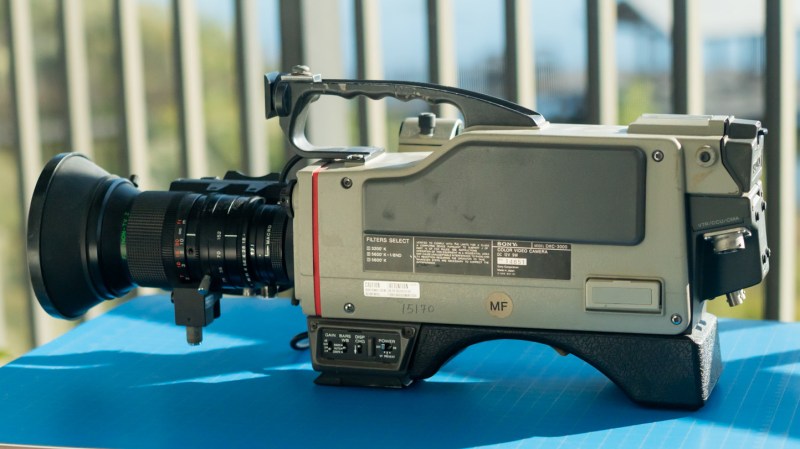
Although it might seem like there was a sudden step change from analog to digital sometime in the late 1900s, it was actually a slow, gradual change from things like record players to iPods or from magnetic tape to hard disk drives. Some of these changes happened slowly within the same piece of hardware, too. Take the Sony DXC-3000A, a broadcast camera from the 1980s. Although it outputs an analog signal, this actually has a discrete pixel CCD sensor capturing video. [Colby] decided to finish the digitization of this camera and converted it to output HDMI instead of the analog signal it was built for.
The analog signals it outputs are those that many of us are familiar with, though: composite video. This was an analog standard that only recently vanished from consumer electronics, and has a bit of a bad reputation that [Colby] thinks is mostly undeserved. But since so many semi-modern things had analog video outputs like these, inspiration was taken from a Wii mod chip that converts these consoles to HDMI. Unfortunately his first trials with one of these had confused colors, but it led him to a related chip which more easily outputted the correct colors. With a new PCB in hand with this chip, a Feather RP2040, and an HDMI port the camera is readily outputting digital video that any modern hardware can receive.
Besides being an interesting build, the project highlights a few other things. First of all, this Sony camera has a complete set of schematics, a manual meant for the end user, and almost complete user serviceability built in by design. In our modern world of planned obsolescence, religious devotion to proprietary software and hardware, and general user-unfriendliness this 1980s design is a breath of fresh air, and perhaps one of the reasons that so many people are converting old analog cameras to digital instead of buying modern equipment.
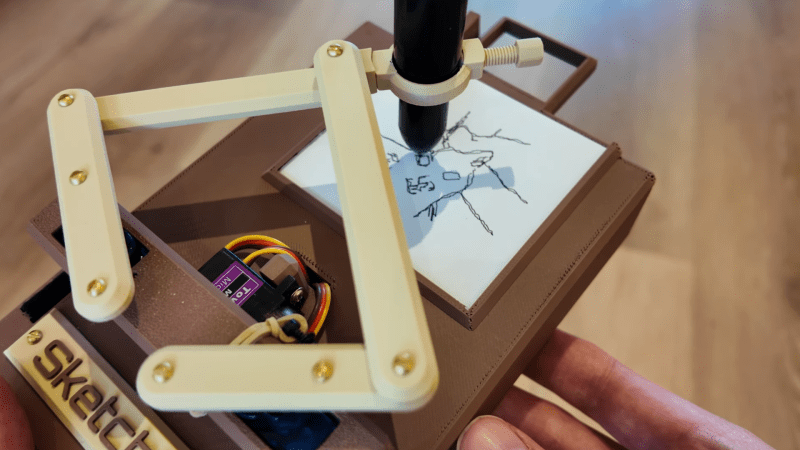
These days, everyone’s got a million different devices that can take a passable photo. That’s not special anymore. A camera that draws what it sees, though? That’s kind of fun. That’s precisely what [Jens] has built—an instant sketch camera!
The sketch camera looks like a miniature drawing easel, holding a rectangular slip of paper not dissimilar in size to the Polaroid film of old. The 3D-printed frame rocks a Raspberry Pi controlling a simple pen plotter, using SG90 servos to position the drawing implement and trace out a drawing. So far, so simple. The real magic is in the image processing, which takes any old photo with the Pi camera and turns it into a sketch in the first place. This is achieved with the OpenCV image processing library, using an edge detection algorithm along with some additional filtering to do the job.
If you’ve ever wanted to take Polaroids that looked like sketches when you’re out on the go, this is a great way to do it. We’ve featured some other great plotter builds before, too, just few that are as compact and portable as this one. Video after the break.
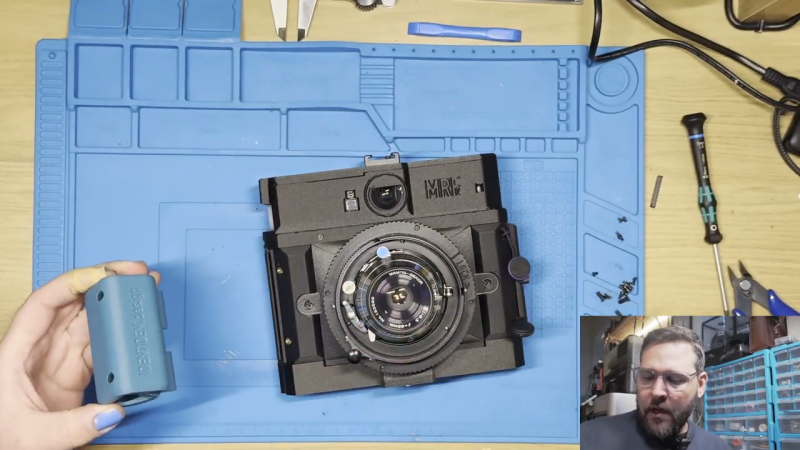
Medium format cameras have always been a step up from those built in the 35 mm format. By virtue of using a much larger film, they offer improved resolution and performance. If you want a medium format film camera, you can always hunt for some nice vintage gear. Or, you could build one from scratch — like the MRF2 from [IDENTIDEM.design.]
The MRF2 might be a film camera, but in every other way, it’s a thoroughly modern machine. It’s a rangefinder design, relying on a DTS6012M LIDAR time-of-flight sensor to help ensure your shots are always in sharp focus. An ESP32 is responsible for running the show, and it’s hooked up to OLED displays in the viewfinder and on the body to show status info. The lens is coupled with a linear position sensor for capturing accurate shots, there’s a horizon indicator in the viewfinder, and there’s also a nice little frame counter using a rotary encoder to track the film.
Shots from a prototype on Instagram show that this camera can certainly pull off some beautiful shots. We love a good camera build around these parts. You can even make one out of a mouse if you’re so inclined.
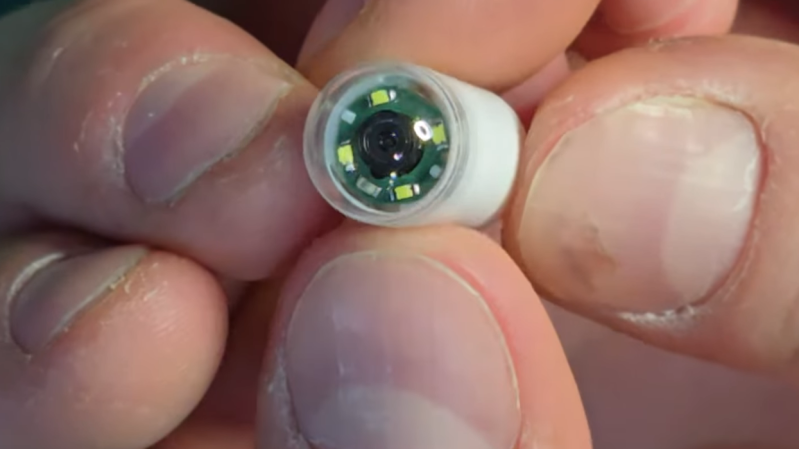
A gastroscopy is a procedure that, in simple terms, involves sticking a long, flexible tube down a patient’s throat to inspect the oesophagus and adjacent structures with a camera fitted to the tip. However, modern technology has developed an alternative, in the form of a camera fitted inside a pill. [Aaron Christophel] recently came across one of these devices, and decided to investigate its functionality.
[Aaron’s] first video involves a simple teardown of the camera. The small plastic pill is a marvel of miniaturization. Through the hemispherical transparent lens, we can see a tiny camera and LEDs to provide light in the depths of the human body. Slicing the camera open reveals the hardware inside, however, like the miniature battery, the microcontroller, and the radio hardware that transmits signals outside the body. Unsurprisingly, it’s difficult to get into, since it’s heavily sealed to ensure the human body doesn’t accidentally digest the electronics inside.
Unwilling to stop there, [Aaron] pushed onward—with his second video focusing on reverse engineering. With a little glitching, he was able to dump the firmware from the TI CC1310 microcontroller. From there, he was able to get to the point where he could pull a shaky video feed transmitted from the camera itself. Artists are already making music videos on Ring doorbells; perhaps this is just the the next step.
Cybersecurity researcher Noam Moshe of Claroty met up with The Security Ledger Podcast at this year's Black Hat Briefings to discuss his presentation on critical Axis IP camera vulnerabilities that could let hackers spy, manipulate video feeds, and pivot into sensitive networks—and what organizations can do to defend against these (and other) IoT threats.

 Login
Login