
 Login
LoginHackaday Links: December 14, 2025

Fix stuff, earn big awards? Maybe, if this idea for repair bounties takes off. The group is dubbed the FULU Foundation, for “Freedom from Unethical Limitations on Users,” and was co-founded by right-to-repair activist Kevin O’Reilly and perennial Big Tech thorn-in-the-side Louis Rossman. The operating model works a bit like the bug bounty system, but in reverse: FULU posts cash bounties on consumer-hostile products, like refrigerators that DRM their water filters or bricked thermostats. The bounty starts at $10,000, but can increase based on donations from the public. FULU will match those donations up to $10,000, potentially making a very rich pot for the person or team that fixes the problem.
So far, it looks like FULU has awarded two $14,000 bounties for separate solutions to the bricked Nest thermostats. A second $10,000 bounty, for an air purifier with DRM’d filters, is under review. There’s also a $30,000 bounty outstanding for a solution to the component pairing problem in Xbox Series X gaming consoles. While we love the idea of putting bounties on consumer-unfriendly products and practices, and we celebrate the fixes discovered so far, we can’t help but worry that this could go dramatically wrong for the bounty hunters, if — OK, when — someone at a Big Tech company decides to fight back. When that happens, any bounty they score is going to look like small potatoes compared to a DMCA crackdown.
From the “Interesting times, interesting problems” Department comes this announcement by NASA of a change in vendor for the ground support vehicles for the Artemis program. The US space agency had been all set to use EVs manufactured by Canoo to whisk astronauts on the nine-mile trip from their prep facility to the launch pad, but when the company went belly up earlier this year, things abruptly changed. Now, instead of the tiny electric vans that look the same coming and going, NASA will revert to type and use modified Airstream coaches to do the job. Honestly, we think this will be better for the astronauts. The interior of the Airstream is spacious, allowing for large seats to accommodate bulky spacesuits and even providing enough headroom to stand up, a difficult proposition in the oversized breadloaf form-factor of the Canoo EV. If they’re going to strap you into a couple of million pounds of explosives and blast you to the Moon, the least they can do is make the last few miles on Earth a little more comfortable.
Speaking of space, we stumbled across an interesting story about time on Mars that presented a bit of a “Well, duh!” moment with intriguing implications. The article goes into some of the details about clocks running slower on Mars compared to Earth, thanks to the lower mass of the Red Planet and the reduced gravity. That was the “duh” part for us, as was the “Einstein was right” bit in the title, but we didn’t realize that the difference would be so large — almost half a millisecond. While that might not sound like much, it could have huge implications when considering human exploration of Mars or even eventual colonization. Everything from the Martian equivalent of GPS to a combined Earth-Mars Internet would need to take the differing concept of what a second is into account. Taking things a bit further, would future native-born Martians even want to use units of measurement based on those developed around the processes and parameters of the Old World? Seems like they might prefer a system of time based on their planet’s orbital and rotational characteristics. And why would they measure anything in meters, being based (at least originally) on the distance between the North Pole and the equator on a line passing through Paris — or was it Greenwich? Whatever; it wasn’t Mars, and that’s probably going to become a sticking point someday. And you thought the U.S. versus the metric system war was bad!
Sticking with space news, what does it take to be a U.S. Space Force guardian? Brains and brawn, apparently, as the 2025 “Guardian Arena” competition kicked off this week at Florida’s Space Force Base Patrick. Guardians, as Space Force members are known, compete as teams in both physical and mental challenges, such as pushing Humvees and calculating orbital properties of a satellite. Thirty-five units from across the Space Force compete for the title of Best Unit, with the emphasis on teamwork. It’s not quite the Colonial Marines, but it’s pretty close.
And finally, Canada is getting in on the vintage computer bandwagon with the first-ever VCF Montreal. In just a couple of weeks, Canadian vintage computer buffs will get together at the Royal Military College of Saint-Jean-sur-Richelieu for an impressive slate of speakers, including our friend “Curious Marc” Verdiell, expounding on his team’s efforts to unlock the secrets of the Apollo program’s digital communications system. Along with the talks, there’s a long list of exhibitors and vendors. The show kicks off on January 24, so get your tickets while you can.
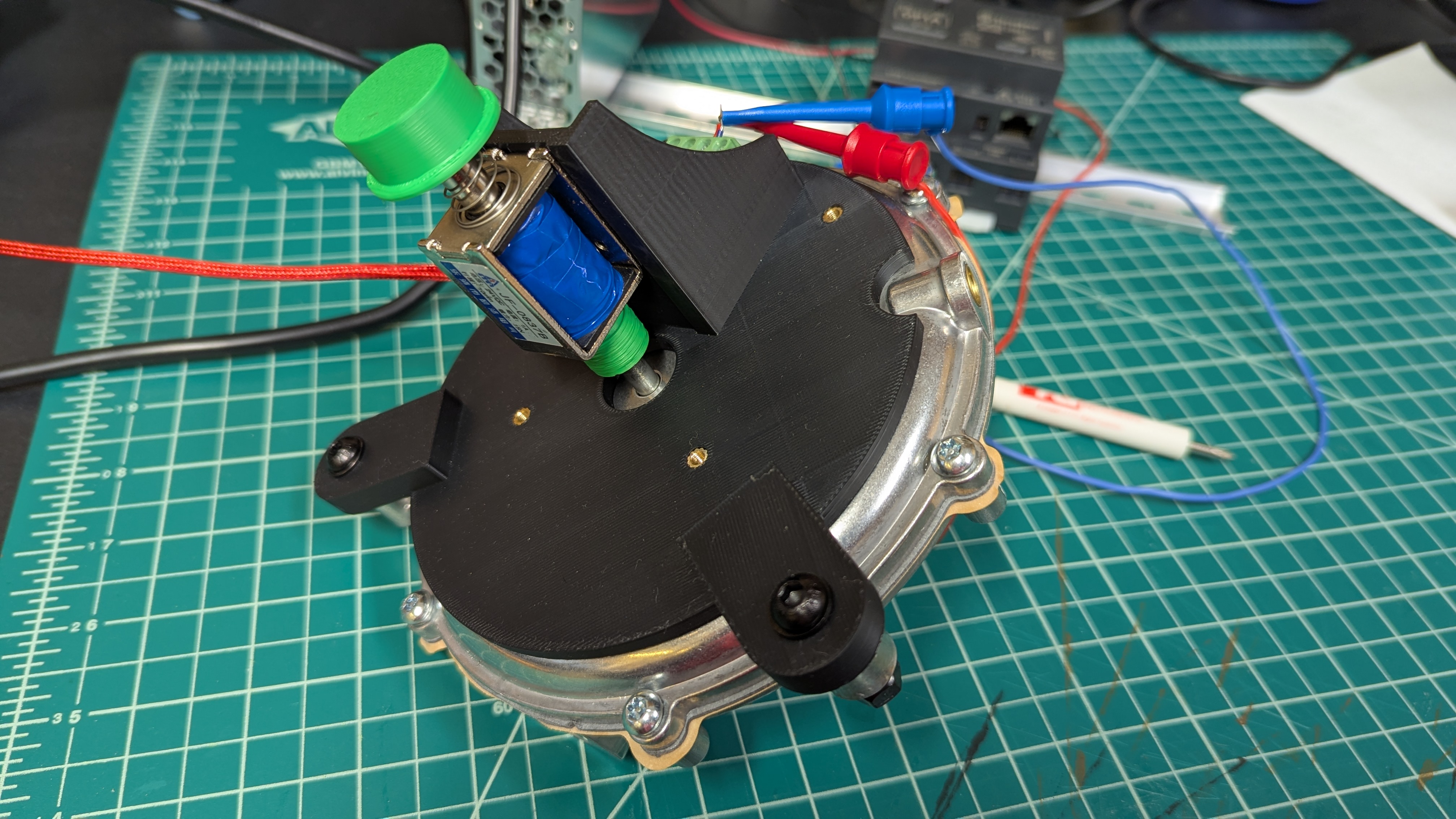
 Now, I’m not going to turn this into a printer review — that’s not really the point of this article. What I want to get across is that I decided to buy a solution rather than take on a new hobby. I got the Bambu up and running in about an hour and was cranking out prototype parts for my project later that afternoon. Yes, I might have had the same experience with a returned printer at about half the price of the Bambu, but I felt like the perceived value of a new printer was worth the premium price, at least in this case.