Honestly, compiling the biggest losers for Engadget is more fun than talking up the winners. While we reviewed nothing as atrocious as those ill-fated AI assistant gadgets from 2024, AI companies and services straddled both the winner and loser podiums.
The losers might be you, the American consumer. (Sorry.) In the US, anyone wanting a drone will have to find something that isn’t made by DJI. The company has been targeted by regulators since 2017 over concerns its products could spy on sensitive US infrastructure on behalf of China.
The problem is DJI has such a high market share (over 75 percent) that its absence will effectively upend the industry. Oh, and its drones are consistently the best too. The US government hasn’t yet attempted to work with DJI to assess whether its products pose a risk. DJI recently made a final plea for a security review, sending letters to five US agencies that could assess its products. If that fails, US drone options will shrink massively.
In the same 12 months, EV sales across the globe are up around 25 percent this year. Germany set a record in the first half of 2025, with electric cars accounting for nearly one in five new registrations. In China, EV sales are growing so fast (over 50 percent market share) that the country is flooding the global market with gas-powered cars it can’t sell at home. However — remember this is about losers — in the US, the Trump administration ended the EV tax credit. And shock! Sales of EVs in the US slumped, with some automakers, such as Ford, seeing a 60 percent year-over-year decline.
As Sam Rutherford puts it, this policy change puts more roadblocks (his inadvertent pun, not mine) in the way of making cheaper battery-powered cars. It also affects EV investment and could mean US automakers fall even further behind their rivals elsewhere.
We also point and shake our heads at Xbox, Grok and TV streaming. Check it all out right here.
If you missed The Game Awards 2025, you missed a historic sweep by Sandfall Interactive’s Clair Obscur: Expedition 33. The Belle Epoque saga, which was expected to win several categories, even bagged Game of the Year and eventually picked up more wins than any title in the show’s 12-year history.
Naturally, there were trailers and game reveals too, which were pleasantly notable. We got a first look at the Control sequel, Resonant, Star Wars: Fate of The Old Republic is coming, headed by Mass Effect veterans, while Larian Studios is returning to the Divinity series following the success of Baldur’s Gate 3. Heck, if you want a good chance of winning at The Game Awards, hire Jennifer English to voice one of your main characters — she was in both BG3 and Clair Obscur.
Disney announced a three-year licensing agreement with OpenAI to bring more than 200 of its characters, including those from Star Wars and Pixar, to the Sora app and ChatGPT. With the deal in place, OpenAI users will be able to prompt ChatGPT to generate images that tap into Disney’s intellectual property, with costumes, props, vehicles and environments covered. Additionally, Disney will invest $1 billion in OpenAI, with the option to purchase additional equity down the road.
Learn about tennis from Serena Williams or music from John Legend.
If you’re struggling to find a good present for the holidays, MasterClass has discounted its subscriptions by up to 40 percent. I secured a similar deal for myself and was pleasantly surprised by the solid interface and the number of courses. I also forgot to update my subscription, whoops. Maybe this offer will get me back on board.
It’s already getting the details wrong on its own shows.
Amazon’s plan to offer AI-generated recaps of Prime Video shows isn’t off to a great start. The company’s recap of the first season of Fallout has multiple errors. First, the AI-generated recap incorrectly identifies the era of the show’s Los Angeles-set flashbacks as being the 1950s — they’re actually 2077. Perhaps more egregiously for a recap, it misunderstands the ending of the first season, which sets up season two’s partnership between vault dweller Lucy and The Ghoul.
As we wrap up 2025, we’re looking at the year’s biggest winners: the people, companies, products and trends that made the most impact over the year. Almost at the top of the pile, of course, are the tech billionaires.
According to a recent report by Oxfam, the 10 richest US billionaires (who are all tech leaders, save for Warren Buffet) increased their wealth by $698 billion in 2025. Some of that has been spent treating and lavishing donations on President Trump. Elon Musk reportedly donated nearly $300 million to Trump and Republican allies, and several tech companies have pitched in to build the president’s White House ballroom.
Thanks to updates from Meta, Google, OpenAI and others, AI video is more realistic and easier to make than ever. AI video is everywhere. It’s not only overtaken your Facebook and Instagram recommendations, but Meta created an entirely separate feed just for users’ AI-generated fever dreams. The numbers are huge: OpenAI’s Sora, which lets you make AI videos of real people, was downloaded a million times in just a few days. And Google’s Veo generated more than 40 million videos in a few weeks of launching. AI slop is here to stay, and it’s everywhere.
We didn’t say the winners would all be positive. But hey, the Switch 2 is great.
The Warner Bros. studios water tower. (Reuters / REUTERS)
Paramount wasn’t going to let Netflix pick up Warner Bros. Discovery (WBD) without a fight. Following the streaming service’s $82.7 billion deal to buy much of WBD, Paramount is making a hostile takeover bid of $108 billion, pitching directly to WBD shareholders with an all-cash offer of $30 per share, which expires on January 8.
Last week, the WBD board unanimously accepted Netflix’s offer of $27.75 per share. That breaks down to $23.25 per share in cash and another $4.50 per share in Netflix stock. Paramount, however, wants to pick up the entirety of WBD, while Netflix only wants the studios and streaming businesses.
Whoever bought (or buys?) WBD would face government opposition from all sides. Paramount had already sent WBD a letter questioning the “fairness and adequacy” of the acquisition bidding process before its hostile takeover bid.
President Trump warned the Netflix deal could be a “problem.” According to data from JustWatch, a combined Netflix and HBO would account for 33 percent of the US streaming video market.
Katsuhiro Harada is departing Bandai Namco at the end of 2025. He announced the news both with a farewell note shared on X and, of course, an hour-long DJ mix. Harada’s 30-year career has been most closely involved with Tekken, and he’s a familiar face in the fighting game community.
Harada wrote on X: “To everyone who has supported me, to communities around the world, and to all the colleagues who have walked alongside me for so many years, I offer my deepest gratitude.”
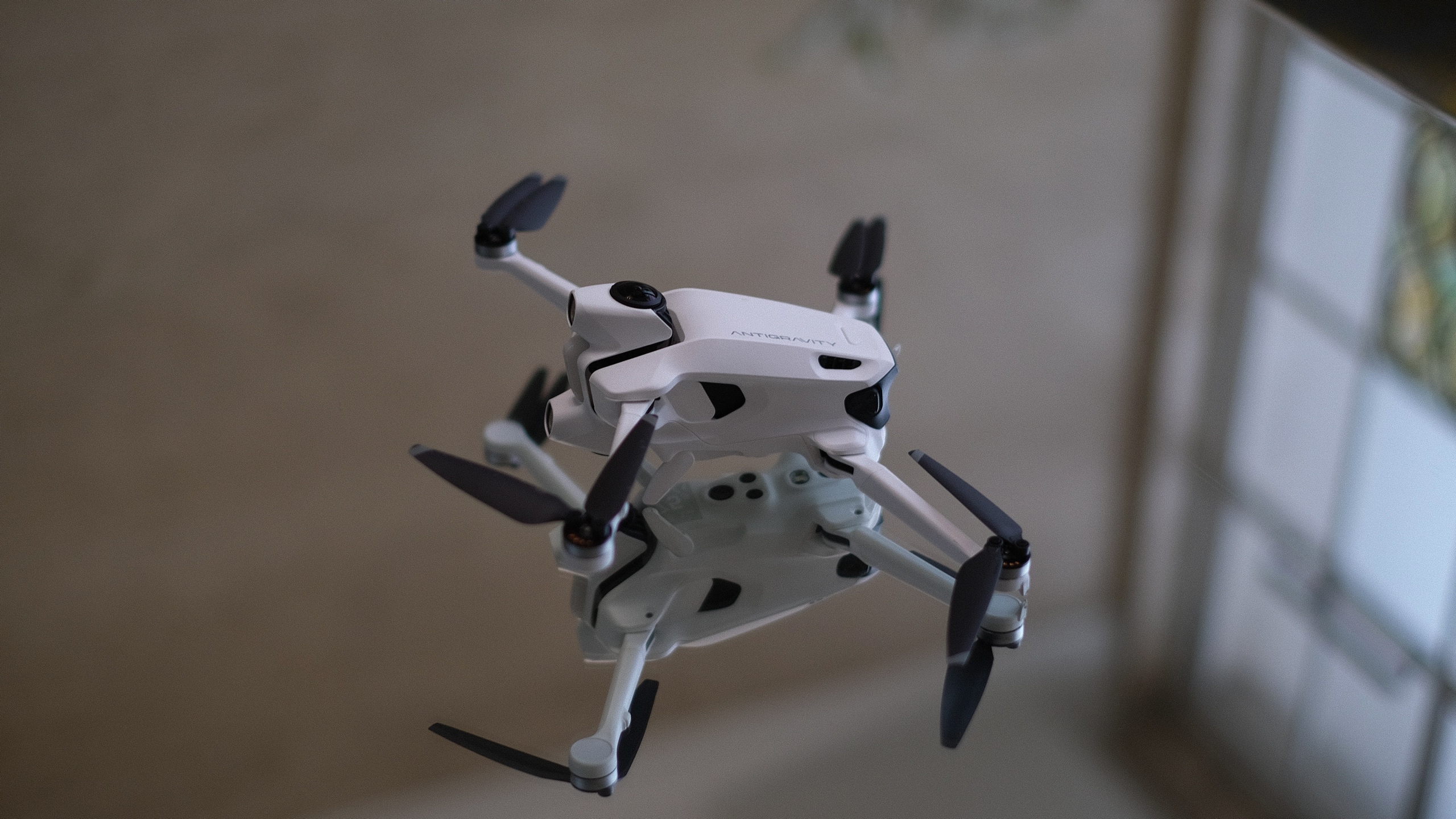
Spinning off from the action-camera company Insta360, Antigravity now has its debut drone on sale. With 360-degree cameras that capture 8K and offer you a truly unconstrained view of the skies, the A1 is a different drone from everything else out there. Sorry, DJI.
Instead of typical drone joysticks, you get a motion controller that lets you point and shoot like video game gesture controls, while crisp FPV goggles put you right inside the cockpit.
It’s easy to fly after takeoff, but the A1’s myriad parts are often tricky to sync together — and pulling video down to the companion app is even trickier. Going on specs alone, like speed and camera sensor size, it doesn’t stand up to cinematic drones from the likes of DJI.
Still, it’s not meant to be a cinematic drone. It’s a hybrid mix of flight experience, FPV drone and a not-miss-a-thing camera drone. It’s truly unique — and fun.
Amazon has quietly removed its terrible AI-generated English dubs for several anime shows on Prime Video, following widespread ridicule from viewers and the industry. AI dubs were recently added to Banana Fish, No Game, No Life and Vinland Saga, where they were labeled “AI beta” in the Languages section of the app.
For shows lacking an English-language dub, it was a seemingly cheap way to consume anime for Amazon. However, it quickly became clear that the dubs were really quite bad. Baaaad.
Voice actor Daman Mills called the AI-generated dub for Banana Fish a “massive insult to us as performers” in a post on X.
The company continues to invest heavily in its own shipping network.
An Amazon double today. According to The Washington Post, Amazon is considering discontinuing use of the US Postal Service and building its own shipping network to rival it. The e-commerce behemoth spends more than $6 billion a year on the public mail carrier — almost 8 percent of the service’s total revenue. That’s up from just under $4 billion in 2019. That split might be due to a breakdown in negotiations between Amazon and the USPS rather than Amazon proactively pulling its business.
Amazon has invested heavily in all kinds of delivery methods, including shipping logistics, buying its own Boeing planes, launching its own electric delivery vans and slowly building a drone delivery network.
A triple? Sorry. Amazon didn’t have a specific release date to share beyond “later this year” for its latest Scribe slates. And talk about brinkmanship! Here we are in December. The company says the devices will be available on December 10. This is the third generation of the Kindle Scribe line of E Ink writing tablets — the first time Amazon has three versions of the Scribe. At the entry level, the Scribe without a front light starts at $430, while the model with a light starts at $480. The Kindle Scribe Colorsoft will start at $630. You always have to pay more for color.
A highly capable cinema camera at a reasonable price.
The Nikon ZR could be a breakthrough for content creators, largely because it incorporates technology from RED — a company now owned by Nikon. The combination of professional-grade video quality (specifically RED RAW) and autofocus comes at a fraction of the cost of dedicated cinema rigs. There are some compromises on battery life and the lack of a viewfinder, but the ZR arguably offers the best video quality for the money.
The Antigravity A1 is what happens when Insta360’s 360-degree cameras are given wings and flying feels like a video game. Spinning out as its own brand, Antigravity’s debut drone is a big swing: a three-piece set with a drone that captures 8K 360-degree video, FPV goggles and a motion controller.
Challenging the dominance of DJI’s (many!) consumer drones is a big ask. Antigravity’s approach is to play to its strengths in 360-degree video and smartphone-first editing. A lot of the appeal comes from how the A1 captures 8K video in all directions, meaning you can edit, cut and swap around your footage — and hopefully rarely miss a moment you’re trying to document. It’s a lot of fun, too, if you can get through the early teething issues, updates and the learning curve.
The drone
Antigravity A1 drone review
Image by Mat Smith for Engadget
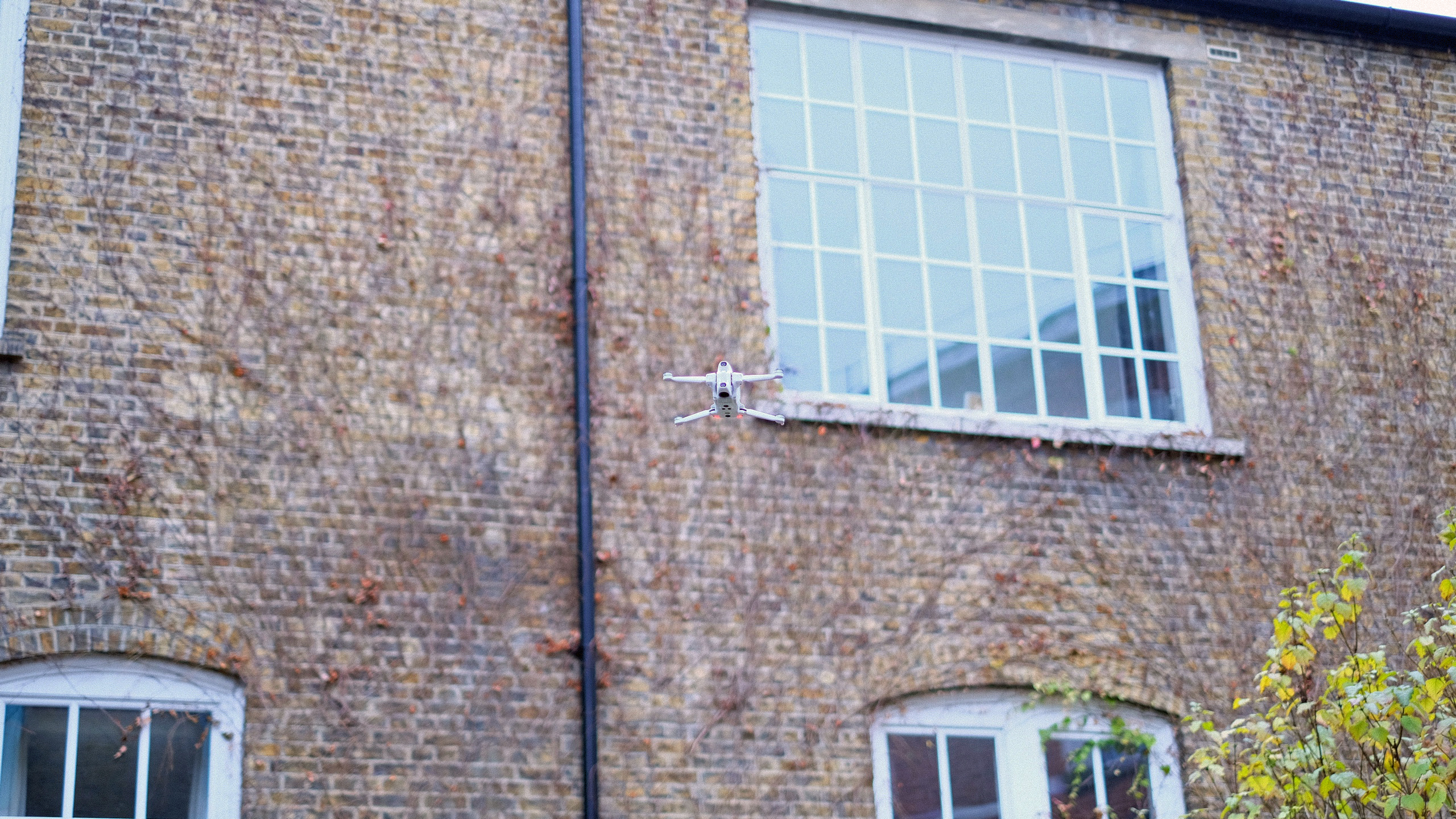
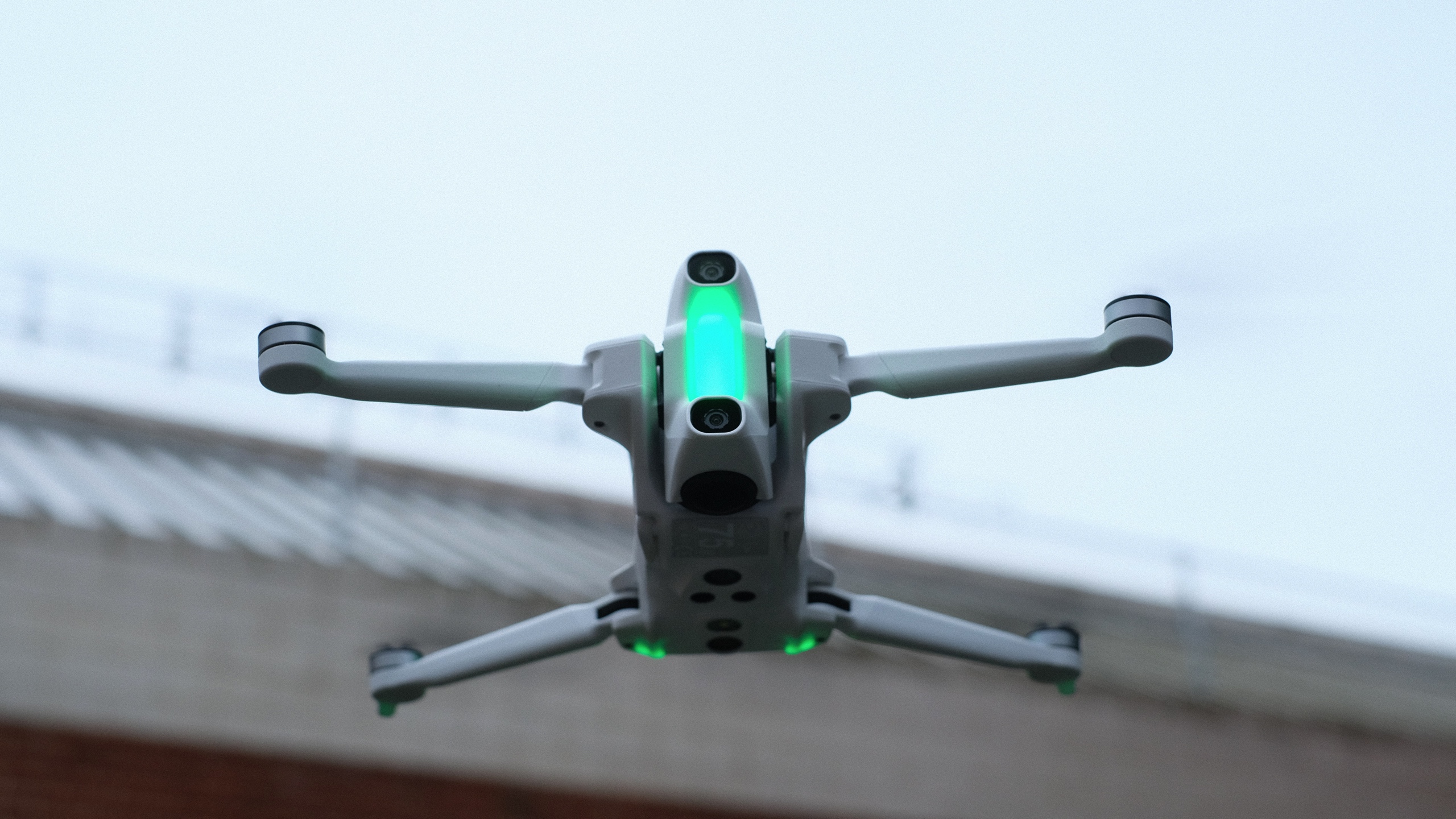
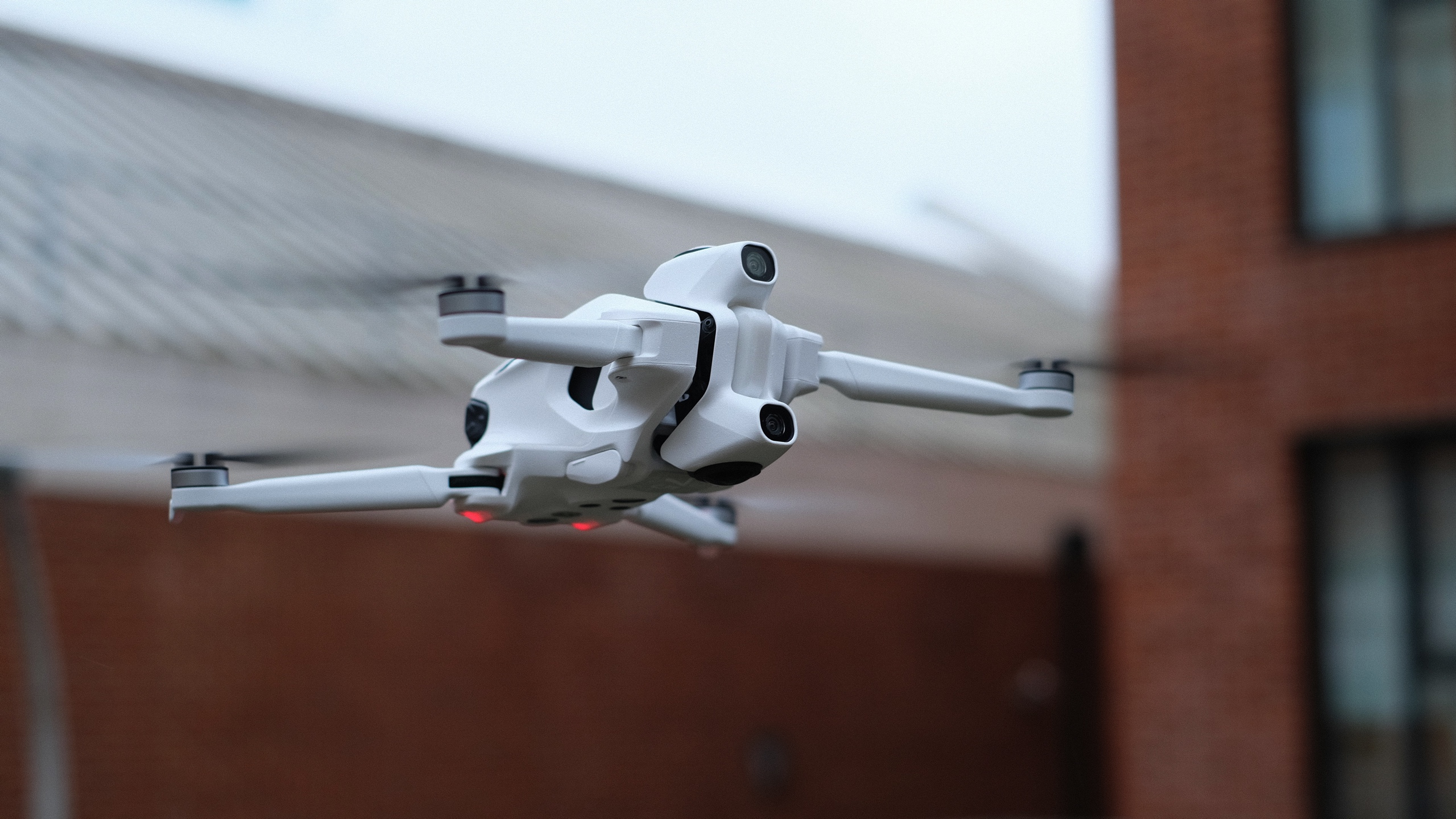
The A1 drone is just 249 grams (0.548 lbs). This helps it bypass some drone regulations, though flying permissions vary by region. The pair of cameras mounted on the top and bottom of the drone's body is one of its unique features. It’s difficult to directly compare the A1 against competitor drones, as it offers a mix of features found across different categories and some unique tools of its own.
The A1 can capture 360-degree video at up to 8K resolution, and thanks to Insta360’s action cam experience, it can magically remove the drone body from video. This means you can capture video and never see propellers or, well, any part of the drone itself.
Along the base of the drone, two landing gears automatically lower when you attempt to land the A1, although you will have to manually retract them when you’re looking to launch the drone. You can also lower the landing gear from one of the controller’s many buttons.
The removable battery has a handy one-touch gauge to monitor levels and provides over 20 minutes of flight time, depending on conditions and whether you’re recording video. Antigravity suggests it should last up to 24 minutes during normal filming use. My review device came with two spare batteries and a charging dock. It’s very easy to swap out the batteries, and the charging dock can fully charge a single cell in 45 minutes and even charge all three slots at once. There’s a microSD card slot on the rear of the drone, alongside a USB-C port for (slowly) charging the battery.
Antigravity A1 drone review
Image by Mat Smith for Engadget
The cameras have a 1/1.28-inch sensor, f/2.2 lens aperture and an ISO range from 100 to 6,400. To adjust those settings beyond auto, you’ll have to dive into the menu inside the goggles, which can be laborious to navigate with a gesture-based controller. Fortunately, auto ISO and white balance are usually good enough. Pro-level content creators might want to tinker with levels here, and there’s a histogram you can toggle on or even a zebra pattern to highlight overexposed shots and areas. and the A1 can record 8K video at up to 30fps or 4K at up to 100fps. You can also meet in the middle, with a 5.2k recording mode.
There are also three different flying modes, which are easy to select on the controller. Alongside Normal mode, Sport mode increases the maximum flight speed and offers “enhanced flight performance,” improves control sensitivity and turns off obstacle avoidance. Sport mode offers a tangible difference when flying the A1: it doubles the horizontal flight speed compared to Normal mode. There’s also a Cinematic (C) mode, with a lower max speed for smoother video footage.
The controller and goggles
Antigravity A1 drone review
Image by Mat Smith for Engadget
The flight mode switcher is one of many controls, wheels, buttons and sliders that pepper the surface of the A1’s grip controller. Intriguingly, though, the main way to control the A1 drone is through gestures, not joysticks or buttons. Instead of pitching control sticks to the left and right, up and down, it’s more akin to a video game, where you point the controller where you want to go, shown with a reticle, and pull the trigger. The A1 then shoots off in that direction.
The crucial part is that this doesn’t have to be where you’re “looking” from the drone’s POV. This means you can strafe and fly in any direction without your view being constrained by static cameras. It’s a sensation unlike any other drone I’ve flown. It feels more like playing a video game — like piloting a helicopter in GTA 5. You’re able to look in any direction, both while in motion and while hovering stationary.
There are controls for recording video, controlling vertical flight and rotating your POV without turning your head. There’s even a RTH (return to home) function that can be accessed by long-pressing the emergency brake button.
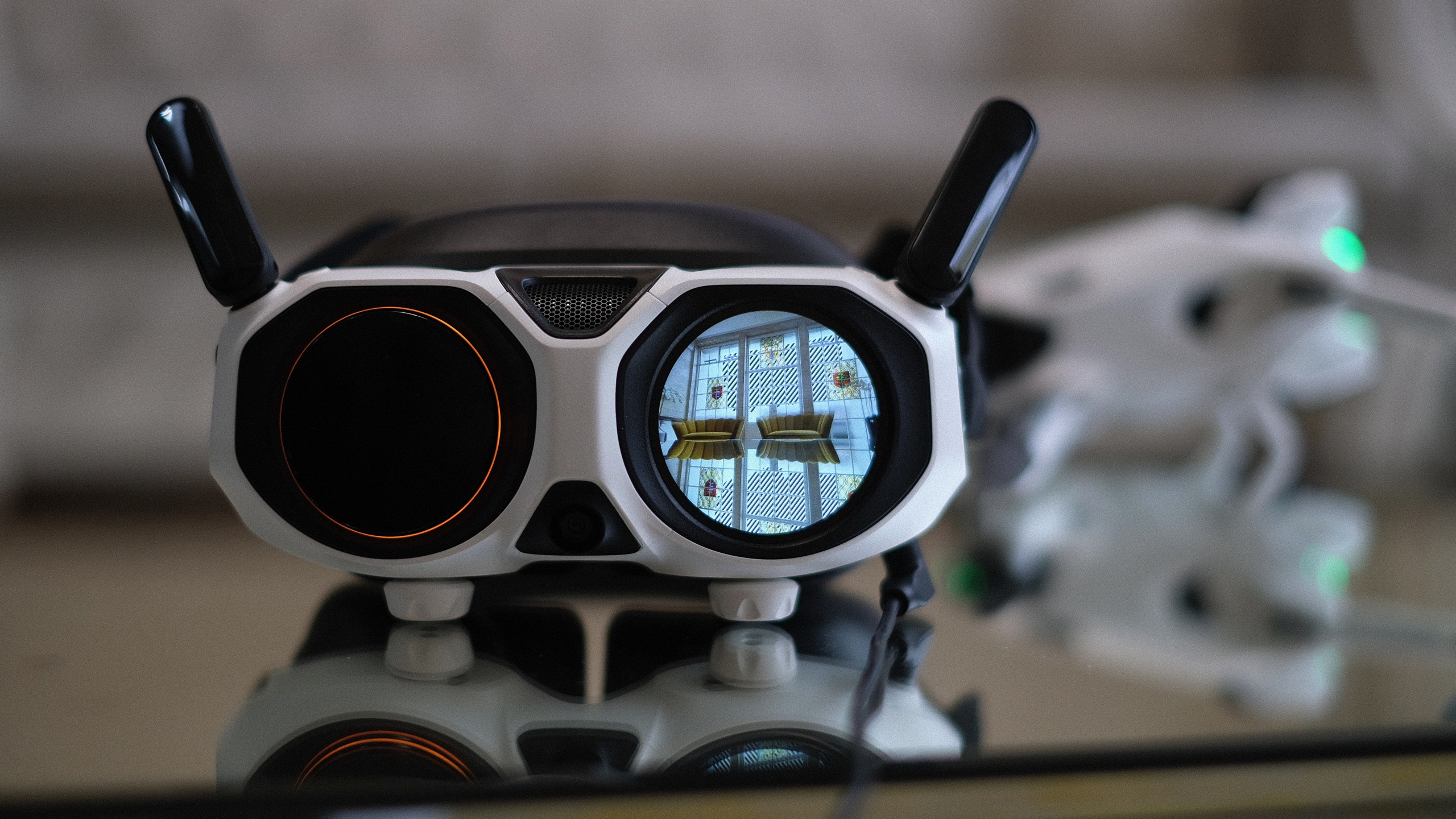
The included goggles deliver a crisp view of everything, with a pair of 1.03-inch micro-OLED displays with a resolution of 2,560 × 2,560 and a 72Hz refresh rate. Other FPV drone goggles typically offer 100Hz refresh rates, but it wasn’t a dealbreaker for me. I feared that latency hiccups could make airsickness an issue while flying the A1, but I didn’t experience it. My take is that being able to fully control your view makes nausea less of an issue.
Another nice touch, especially if you’re flying with friends, is a circular outer display on the goggles, so everyone can see what the A1 sees. Naturally, it can’t encompass the entire view of the drone pilot, but there’s also nothing duller than watching someone else fly a drone. This offers a mild respite. The other eyepiece is a touchpad for steering through menus inside the goggles without having to point and click with the controller.
Performance
Antigravity A1 drone review
Image by Mat Smith for Engadget
While the Antigravity A1 may offer a more immersive drone-flying experience, in pure numerical terms, it lags behind some competitors. For example, even in Sport mode, the A1 tops out at a maximum speed of just under 36 mph, falling behind the likes of DJI’s Avata 2 (60 mph).
I was still pleasantly surprised by how responsive the A1 felt, especially in Sport mode. An additional FPV mode (accessible from the goggles) adds more sensitive controls, although I haven’t been able to test it much since it was introduced in a recent firmware update.
For someone with more gaming experience than drone piloting hours, Antigravity’s central control system fits like a glove. I could fly where I wanted, confident in the controls and in the knowledge that I would capture what I wanted to. According to Antigravity, you can fly the A1 within a 10km transmission range, although I didn’t manage to test that limit in central London.
The experience of starting with the drone felt, at times, unnecessarily arduous. Pairing everything together has to be done in a specific order: power up drone, power up goggles, power up controller. And turning off each item isn’t a typical long press of the power button. Instead, you use a press-once-press-it-again-and-hold method that I forget pretty much every time.
Downloading video from the A1 to your phone is also laborious, but that’s not a flaw specific to this drone. Antigravity has attempted some shortcuts, including a microSD card quick reader that connects to your phone or PC via USB-C.
However, at the time of testing, manually connecting the microSD is less of an option and more of a necessity. The drone repeatedly failed to connect to the companion app and reliably transfer video files. Some video files recorded seemingly evaporated between firmware updates, only to reappear later. Another file had been converted to two separate circular views, one from each camera, which made it essentially unusable. Hopefully these intial teething problems have been solved by firmware updates and won't be in retail devices.
It’s a shame everything isn’t more stable, especially when both flying the A1 and using Antigravity’s editing software are bothis so beginner-friendly. It's something I’ve mentioned before with the parent company’s action cams, but the ability to create barrel rolls, tilt rotations with just one tap or click is, again, just fun. And because you can reframe and tinker with video warping, create tiny planet effects or simply crop to a more traditional, cinematic camera view, Antigravity’s software offers almost infinite ways to present your drone footage. Deeptracking can be done both during recording and editing in post, keeping a moving subject or point of interest centered as the A1 zips around.
There are also AI-powered video editing features to chop up your 20 minutes of flying footage into something digestible and engaging with minimal effort. Because it’s a 360-degree video, the footage can be easily cropped to suit both horizontal and vertical formats.
However, with a smaller sensor and 8K resolution spread across a 360-degree view, the A1 is not the best video drone. The video is pleasingly crisp and clear, and while the footage is best recorded in bright daylight or other well-lit locations, murky British November days didn’t affect it much. As the A1 has to stitch together its two sensors, there’s often a visible seam to your video, but it’s usually a very subtle glitch. It might stop some video creators from tapping it for their most polished aerial shots though. Recording video later in the day resulted in more noise and less detail. This is when the A1’s Cinematic mode (and generally slower flying) is a good idea, but it still won’t make up for the fact that this drone’s sensors are covering such wide angles. More video-centric drones will deliver cleaner video and better performance in less-than-ideal lighting conditions.
Wrap-up
Antigravity A1 drone review
Image by Mat Smith for Engadget
The Antigravity A1 is available now, with a standard bundle including the drone, controller and goggles for $1,599. The Infinity Bundle ($1,999) adds two extra batteries, quick reader dongle, sling bag and a charging dock. That does make it substantially more expensive than rival FPV drones like the DJI Avata 2, but the A1 is also a very different kind of drone.
The intuitive controls and ability to look all around you make it unlike anything else currently available. It’s a delightful introduction to drones, FPV or otherwise, but a shame that software issues marred my tests. Plus, pairing all the devices can be convoluted and frustrating at times.
If Antigravity is thinking about what to do next, I’d be intrigued to see a version with the camera bonafides to take on similarly priced DJI drones. But that shouldn’t detract from the company’s debut model since the A1 is arguably the most intriguing consumer drone since the Mavic Pro.
This article originally appeared on Engadget at https://www.engadget.com/cameras/antigravity-a1-drone-review-140026021.html?src=rss

 Login
Login