Why have one Star Wars game announcement at an edition of The Game Awards when you can have two? Star Wars: Galactic Racer is a podracing (and speeder racing) game from Fuse Games, a studio established in 2023 by former Burnout and Need for Speed developers. It's scheduled to hit PS5, Xbox Series X/S and PC in 2026.
The action here is set after the fall of the Empire. With the galaxy in rebuild mode after dealing with that whole mess, an unsanctioned, underground racing circuit called the Galactic League comes into being in the Outer Rim. Here, according to the game's Steam page, "syndicates bankroll chaos and champions are forged."
Star Wars: Galactic Racer is run-based, so if your podracer blows up, it might be game over. The action takes place across well-known Star Wars planets in addition to some new ones. The races have branching routes and you'll unlock new abilities on each run.
There's a story-driven, single-player campaign, as well as PvP modes. The vehicles are customizable too. Dig it. Where do I sign up, Watto?
This article originally appeared on Engadget at https://www.engadget.com/gaming/star-wars-galactic-racer-is-a-podracing-game-set-for-2026-035508891.html?src=rss
It didn't take too long for a game that a whole bunch of people are excited about to swoop into Grand Theft Auto VI's old release week. Or maybe Rockstar had an idea of was what was coming and delayed its blockbuster by six months to get out of the way of Lego Batman: Legacy of the Dark Knight.
Either way, TT Games and Warner Bros. Games brought a new trailer to The Game Awards and revealed that the Caped Crusader's next adventure will hit PS5, Xbox Series X/S, Steam and the Epic Games Store on May 29. The base game will cost $70 and pre-orders are open as of 11PM ET on December 11.
Lego games often have a massive cast of characters and, as the trailer revealed, this one will be no different. It will feature the likes of Robin, Nightwing, Batgirl and Catwoman, as well as a murderer's row of super-villains, such as The Joker, Two-Face, Poison Ivy, Mr. Freeze, The Penguin and Bane.
Warner Bros. Games is announcing the release date at a bit of an awkward time. Netflix recently had an $82.7 billion bid accepted for a chunk of Warner Bros. Discovery that includes the gaming division. However, Netflix co-CEO Gregory Peters said the company didn't factor Warner Bros. Games into its valuation.
"While they definitely have been doing some great work in the game space, we actually didn’t attribute any value to that from the get-go because they’re relatively minor compared to the grand scheme of things," Peters said, according to PC Gamer. "Now we are super excited because some of those properties that they’ve built, Hogwarts [Legacy] is a great example of that, have been done quite well, and we think that we can incorporate that into what we’re offering. They’ve got great studios and great folks working there. So we think that there’s definitely an opportunity there. But just to be clear, we haven’t built that into our deal model."
This article originally appeared on Engadget at https://www.engadget.com/gaming/lego-batman-legacy-of-the-dark-knight-swoops-onto-pc-and-consoles-on-may-29-024729940.html?src=rss
Larian Studios didn’t rest on its laurels for long. Two years after taking home the Game of the Year prize for Baldur’s Gate III at The Game Awards, the developer popped up again at the 2025 edition of the ceremony to announce its upcoming project, which is the next entry in the Divinity series. Simply called Divinity, this will be the studio’s biggest game to date with “more breadth and depth than ever before,” according to TGA host Geoff Keighley.
After 2017’s Divinity: Original Sin II, Larian took a break from the series with which it established itself to make BG3. The rumor mill had been churning about a new Divinity game after Keighley shared a photo of a statue that was erected in the Mojave Desert. The shape of the statue matched a Divinity logo that was trademarked recently.
Before the reveal trailer was shown at The Game Awards, a short (and rather neat) live performance took place in which some actors were hoisted into the air. The trailer itself is pretty gruesome. It references The Wicker Man, as large wooden effigies with people chained inside are set ablaze. I won’t spoil what else happens other than to say it’s pretty gruesome, so maybe don’t watch it quite yet if you’ve just had dinner.
Larian hasn’t announced a release window for Divinity yet.
This article originally appeared on Engadget at https://www.engadget.com/gaming/larian-studios-is-returning-to-the-divinity-series-with-divinity-015833088.html?src=rss
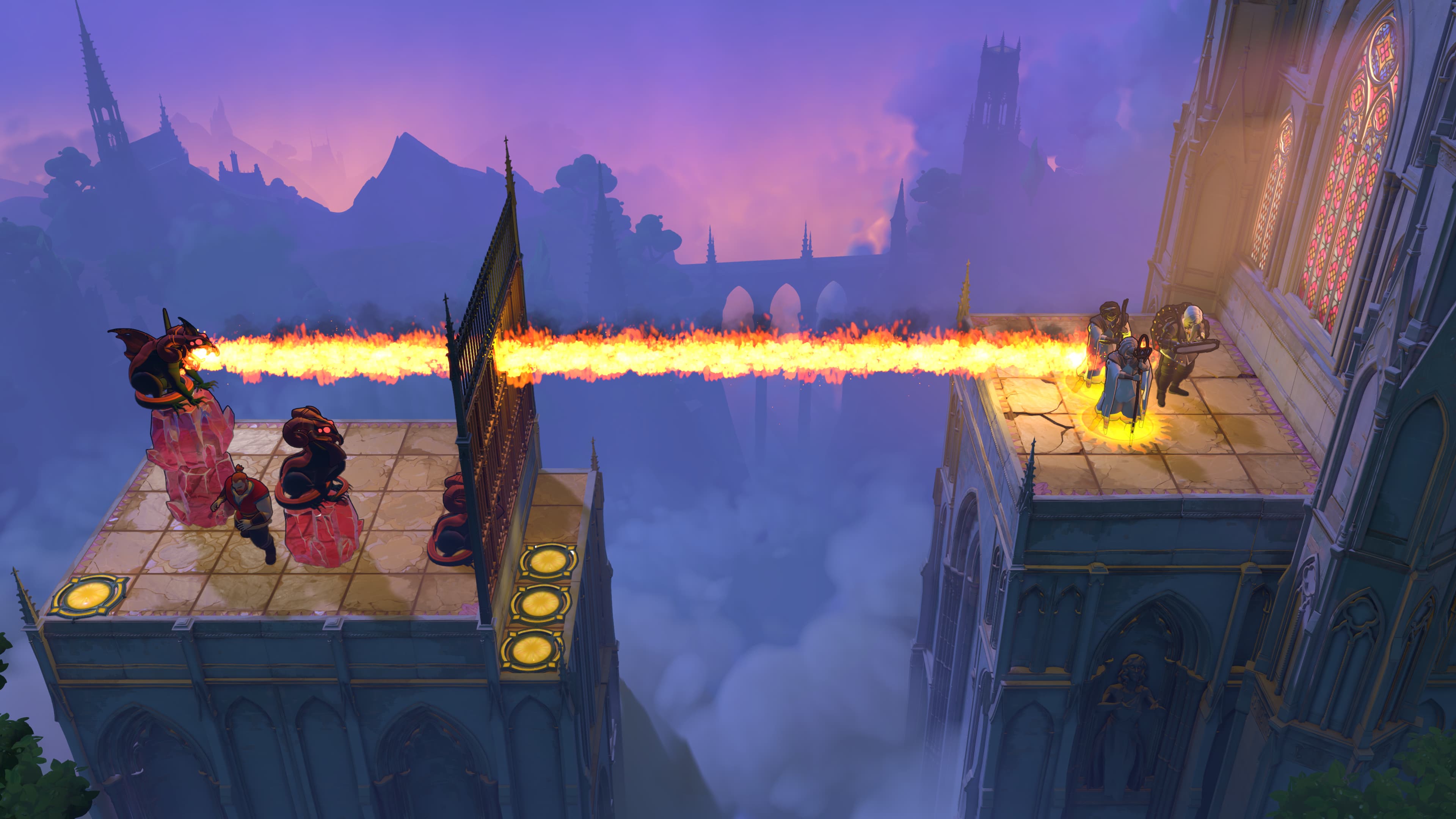
Many of the big announcements at The Game Awards are for completely new projects, some of which are total surprises (if you had an Okami sequel on your bingo card last year, you're either in the know or probably used up all your luck for the next few years). We'll often get updates on games that were previously announced too. The trailer for Order of the Sinking Star is something a little different, as it's a game that Braiddesigner Jonathan Blow has been working on fairly openly since releasing The Witnessin 2016.
The trailer revealed some new details, including confirmation of the expected title and a release window (2026 on Steam, with more platforms to be announced). Ahead of The Game Awards, Blow gave Engadget a preview of the game and explained some of its many complexities.
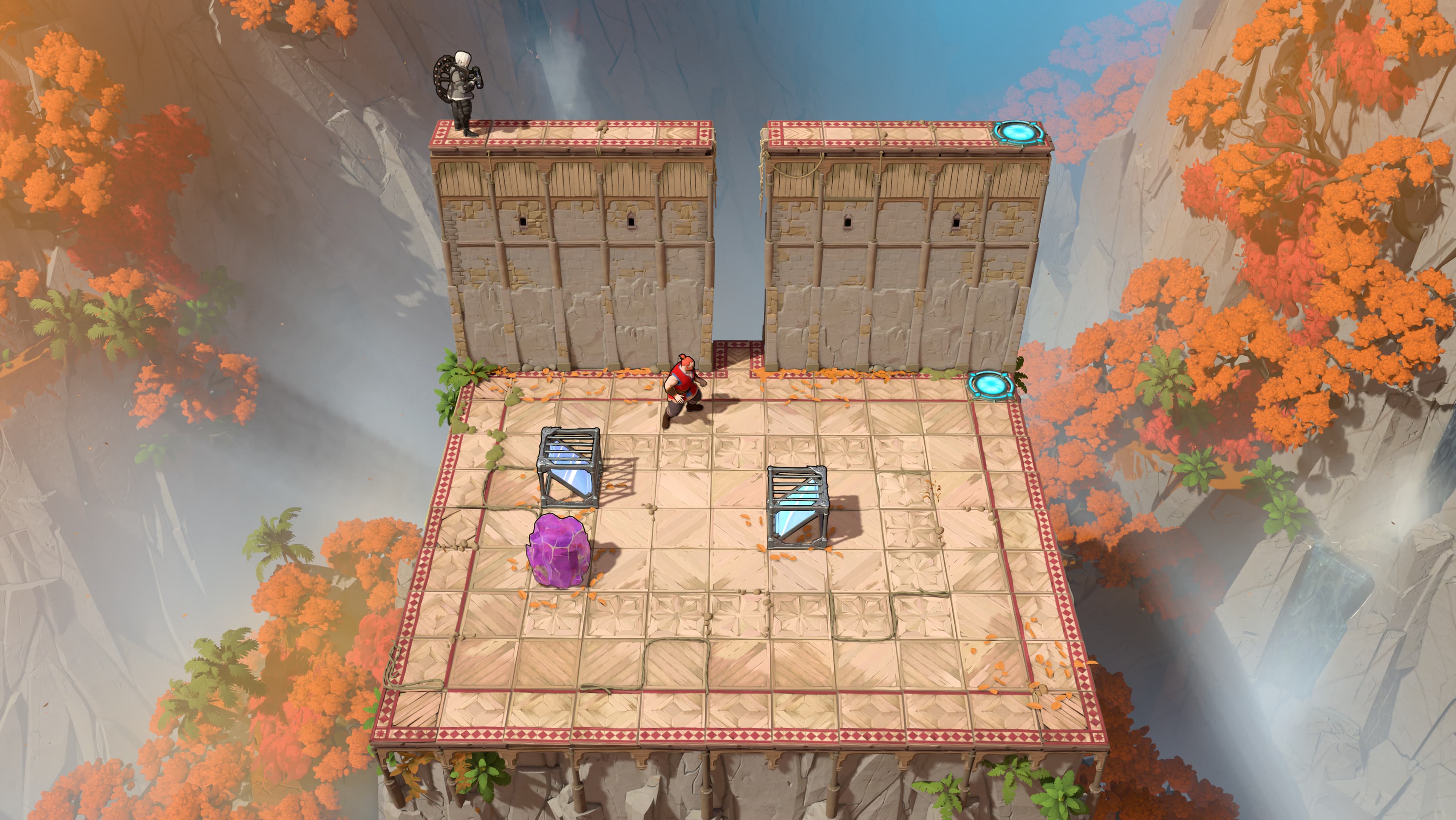
Fundamentally, Order of the Sinking Star is a grid-based puzzle game in which you'll move blocks around to complete an objective. You might know of this as a Sokoban game, named after the series Hiroyuki Imabayashi created about pushing boxes around a warehouse.
But this is a Jonathan Blow game, so nothing stays too simple for very long. Blow and his team took the core concept of pushing objects around and built on it in myriad ways, with a wide array of environments, mechanics and characters for you to get to grips with.
Order of the Sinking Star starts with you playing as a deposed queen from another world who is transported to a strange place. This turns out to be the tutorial. Among other things, you'll find out about the undo button, a handy option you can use to revert your actions if you get stuck. It's probably worth being careful with this button, as Blow says it's possible to undo thousands of moves with it. There's a level reset option too.
The first phase of the game has four distinct territories with their own characters, stories and gameplay mechanics. One of these realms has a fantasy theme with a warrior character who can push multiple objects that are in a row. His friend, the thief, can only pull objects. The wizard, meanwhile, can teleport and swap positions with objects or other characters. Sometimes, you'll use multiple characters in a level and swap between them to solve puzzles. There’s a talking boat somewhere, too.
You'll take what you learn within individual levels into the overworld so you can make progress there. For one thing, the queen can wear a warrior, wizard or thief outfit to adopt their abilities and solve puzzles in the north section of this phase.
Over in the east, there’s a world with mirror-based puzzles. By positioning the mirrors and where you stand, you'll use the mirror's reflection to teleport at a right angle. If your character (or an object) has a reflection in two mirrors, they can be duplicated, which is something you might have to do a few times if a level requires you activate multiple switches at the same time.
Once you near the end of two of the phase one worlds, you can enter one of six gold rooms. In these rooms, which are the gateways to the second phase of Order of the Sinking Star, some of your characters meet each other for the first time. For instance, the guy from The Mirror Isles and the wizard might encounter each other in a gold room and then you can use their combined abilities to solve puzzles. Given that later-game levels combine mechanics from the early stages, they are naturally more complex. Shifting to 3D perspectives will ramp things up too.
Order of the Sinking Star
Thekla/Arc Games
You can tackle the four worlds that make up the first phase in any order. Collectively, they contain "days worth of gameplay," Blow said. And yet he claimed this first phase accounts for about five percent of the entire game.
All told, there are about 1,400 puzzles, many of which are optional. If you're a completionist, you'll need to be pretty dedicated to see this through. Blow estimates that it'll take around 500 hours for a player to do absolutely everything in the game.
The overworld has more than 100 screens from which you can jump into individual levels. "All the levels are about ideas. They're not just random puzzles," Blow said. "We don't add puzzles to the game unless they show something cool about how the objects interact. Then, once you see the cool thing, you come back to the overworld, and you navigate from that screen using the cool mechanic that you learned."
"We" is a key word there, because it's not as if Blow has been making Order of the Sinking Star by himself for the last decade. His studio, Thekla, has around 10 people working on the game full-time along with another 10 or so part-time contractors. Those who contributed include puzzle game designers Alan Hazelden and Marc ten Bosch. Some members of Blow's Twitch community who "contributed some idea to one of the levels somewhere" will receive design credits too.
Blow and his team use custom game engines for their projects. Starting in around 2013, he started livestreaming his work on the programming language that Order of the Sinking Star is written in (Thekla will eventually make the engine available for free as an open-source project). "Once I was working on the game, it was a good way to show people what the programming language was about and also how game programming works, and so I would frequently do just streams where we would sit down and implement something," Blow said. Some of the design work he did on stream ended up in the final game.
Order of the Sinking Star
Thekla/Arc Games
After such a long time of working on Order of the Sinking Star, the end is in sight for Blow and his team. The main focus for the last year or so has been on making sure all of the puzzles align with the overworld. Making art for many hundreds of levels is a major undertaking too, while Blow is still refining the story.
"Because there's a lot of these levels and a lot of characters in the levels, it's just natural for them to talk to each other," Blow said. "And so what is that dialog and what does it do? Is it just little jokes that don't add up to anything? Or do you get little peeks into a larger narrative? I think the latter is obviously better. And so that's my main task between now and release, is making sure that the story is really good."
Blow had the core concept of having separate worlds with mechanics that work across them in place from the very beginning, though how that worked in practice evolved a lot over time. For instance, the overworld idea wasn't set in stone from the outset. There was an overworld in place by around 2021, "but it wasn't organized in the way the current one was. It was just sort of areas smushed together," Blow said. "At some point, I came up with this concept that it was spatially organized in an almost ritualistic manner or a mathematical manner, whichever way you want to think about it. And we redesigned the overworld from that point, and from then till now, it's been just sort of a continuous improvement."
Order of the Sinking Star was originally supposed to be a much smaller game that took around 10 or 20 hours to play, but "it just blew up," Blow said. "Part of development has just been dealing with that fact. Like, oh, my God, this game took so long to make. It actually feels really good to be here toward the end. We still have a fair bit of work to do before it's done, but we can see the ending from where we are now, and that's great."
This article originally appeared on Engadget at https://www.engadget.com/gaming/ten-years-after-the-witness-jonathan-blows-next-massive-puzzle-game-is-almost-ready-for-primetime-015727378.html?src=rss
Capcom’s long, long-delayed sci-fi shooter Pragmatafinally has a release date. It’s headed your way on April 24, 2026 on Steam, PS5, Xbox Series X/S and — as Capcom confirmed in a trailer at The Game Awards — Nintendo Switch 2. You don’t have to wait another four months to try it out, though. A gameplay demo is out now on Steam. It will be available for consoles at a later date.
Pragmata first emerged all the way back in 2020 and Capcom initially planned to release it in 2022. After multiple delays, the game will arrive four years later than the company anticipated.
This is the first entry in a new franchise from Capcom, so taking extra time to get things right is not exactly a bad idea. Pragmata, which is set in a dystopian near-future, features the dual protagonists of Hugh Williams (a heavily armored fella) and Diana (an android with special powers). The two have to work together if they want to escape from a lunar research station that’s filled with malevolent robots. To defeat these clankers, Diana has to hack them to disable their defense systems and make a weak point available for Hugh to attack.
This article originally appeared on Engadget at https://www.engadget.com/gaming/capcoms-pragmata-is-coming-your-way-on-april-24-010826258.html?src=rss
CloverPitis one of my favorite games of the year so far. Developer Panik Arcade took the formula that helped make Balatro so successful — using various tools to bend the rules of the game to help you rack up obscenely high scores — and based it around a slot machine rather than poker. It’s been a hit so far on PC, where it has sold more than a million copies since September, and on Xbox. CloverPit has been among the top 20 most-played titles on Game Pass since its surprise debut there last month. Now, the horror-tinged roguelite is venturing into new territory, as it’s coming to iOS and Android on December 17.
The mobile versions of the game are said to have a fully-optimized interface, as well as all of the post-launch updates, such as the Hard Mode that Panik Arcade recently added. CloverPit will cost $5 on mobile and it will have no microtransactions or “predatory mechanics.” That might seem surprising for a game centered around a slot machine, but CloverPit isn’t really about gambling (which the developers say they don’t like anyway). It’s about breaking the rules to tilt the odds in your favor.
The setup is pretty straightforward. You’re imprisoned in a rusty cell and you have a rapidly increasing debt to pay off. The only way to do that, and hopefully leave through the door, is to earn enough coins from the slot machine to pay what you owe. There are more than 150 items (which are called charms here) to experiment with that affect things like the number of spins, how much each symbol or pattern is worth and how many tickets you earn. Tickets are what you need to buy more charms.
Figuring out combinations of items that work well together is key to quickly scaling up the number of coins and tickets you can earn from each visit to the slot machine. Fail to pay off your debt by a deadline (i.e. after a certain number of spins) and it’s game over, as you plunge into the titular pit.
CloverPit is strange and beguiling and heaps of fun. I’ve plowed around 39 hours into it on Steam, and I’m sure it’ll take up much of my attention on my phone after it hits mobile next week. Doomspinning seems slightly healthier for my brain than doomscrolling.
This article originally appeared on Engadget at https://www.engadget.com/gaming/cloverpit-a-balatro-style-game-with-a-grungy-slot-machine-hits-ios-and-android-on-december-17-154500028.html?src=rss
Somewhere along its never-ending quest to increase engagement, Meta realized that giving Facebook users more of what they want would make it more likely that they'll stick around. The company has announced a bunch of updates designed to help improve the feed and the broader Facebook experience by making it easier to find, create and share interesting things. (Because primarily showing updates from your friends with the occasional ad or meme post is maybe just too complicated.)
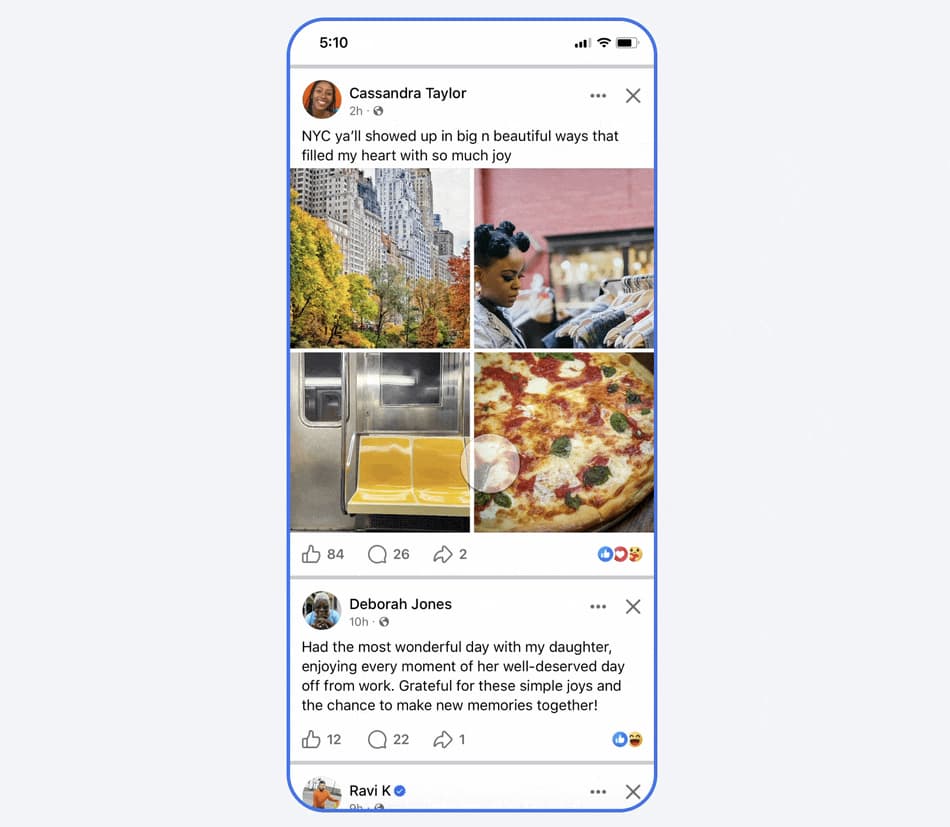
Simplification is a big focus of this overhaul. First, the Facebook feed will be a bit more streamlined. Whenever you post multiple photos, Facebook will arrange them into a standardized grid. When you click into anything on the feed, you'll be able to see it in a full screen view. And there's a very welcome change in that you'll be able to like a photo by double-tapping it. Just be careful with that when you're swiping through an ex's or a crush's photos.
Simplified Facebook feed.
Meta
Search results are now said to "show more content in a more immersive grid layout that supports all content types," according to Meta. The company is trying out a new full-screen viewer for Facebook that "lets you explore different photo and video results without losing your place in search," which it plans to expand to "more content and post types in the coming months."
In addition, the company says you’ll be able to provide feedback on a Facebook post or Reel to help make future recommendations more relevant. More ways for you to "shape your feed" and offer feedback on what the algorithm serves up are coming soon.
The Facebook feed sucks, and it's good that Meta knows it sucks. There have been numerous occasions over the last couple of years where I've had to scroll through a couple dozen uninteresting posts from pages and creators I've never heard of before seeing something from a friend. The glut of spam and AI slop isn't helping (things are pretty grim for creators who have been dealing with content thieves too).
There was a spell of several months last year when, every single time I opened Facebook, I would see an utterly garbage AI-generated image of a "tiny house," a supposedly cozy domicile where not much actually made sense (three TVs in a living room, stairs and railings that had the telltale signs of AI warping). I'd always provide feedback that I didn't want to see any posts from that page again. But the next day there'd be another rotten "tiny house" image from a different page in my feed.
Here's hoping Meta will actually take feedback related to recommendations on board and act on it. If the company does, it might actually make the feed more interesting to scroll through again.
Elsewhere, Facebook will place the most-used tab bar features — such as Reels, Friends, Marketplace and Profile — front and center on the tab bar for easier and faster access. Meta is also promising a refreshed look for the menu and "cleaner" tab notifications.
Facebook Story creation screen
Meta
Facebook is making it easier to access more popular Story and Feed post creation tools like music and friend tagging by giving them more prominent placement. Advanced options like text background colors will be an extra tap or two away. The post and Story composer feature audience and cross-post settings prominently, so that you have ease of control over who can see what you're sharing. Meta has updated how comments work across the feed, Groups and Reels as well to make things more streamlined and easier to follow.
On top of all of that, when you make changes to your profile, you might start seeing suggestions for friends with shared interests. Meta suggested that, "if you update your profile to show you're into sourdough bread baking or planning a trip to Nashville, Facebook will show you friends who can give you sourdough starter tips or offer suggestions on the best local spots." As always, though, you can decide who sees what on your profile or simply opt to share none of this personal info with Facebook at all, especially if you feel that Meta already knows too much about you.
This article originally appeared on Engadget at https://www.engadget.com/social-media/meta-is-trying-to-make-facebook-suck-less-by-simplifying-things-a-bit-171910771.html?src=rss
Congrats to any budding Nostradamus out there who peered into the future to boldly predict that Amazon would bring more shopping features to Alexa+ sooner rather than later. A gold star for you. Yes, it hasn't taken too long for Amazon to weave more features into the generative AI-powered version of Alexa that are designed to get you to buy more stuff.
Shopping features were part of the original Alexa from the jump, of course, but Amazon is doing some interesting things with the latest iteration. For instance, the company is rolling out a new price tracking feature. Tell it the product you want and how much you’re willing to pay for it. As soon as the item goes on sale for below that price, Alexa+ will automatically order it for you using your default payment method and delivery address. This deal tracking feature also keeps an eye on items in your cart and wishlists. Maybe remember to turn this off when you’re going out of town for a while, though.
Another feature that Alexa+ users can start trying today is a Shopping Essentials tool on Echo Show 15 and 21. You'll be able to see real-time tracking for your orders, your recent orders, household essentials that it may be time to reorder, saved items and your shopping list. Tap the screen and you can find out more info about products, add them to your cart and complete your purchase. You'll soon be able to add a shopping widget to your Echo Show home screen, but for now you can check this out by saying "Open Shopping Essentials" or "Alexa, where's my stuff?"
Elsewhere, Alexa+ can offer personalized product recommendations after you share details about a special occasion or a person you're buying for. That could be handy if you haven't completed your gift shopping yet. There's also an option to add extra items onto a current order until just before it leaves an Amazon warehouse. Alexa+ might make some suggestions here, such as asking if you need batteries for a new gadget or toy.
Amazon was always going to be interested in tapping into Alexa+ to prompt you to buy more goods from the company, but some of these features are pretty interesting, especially for deal hawks and those who order items frequently. It makes even more sense now as to why Amazon is trying to prevent third-party AI agents (such as the one in Perplexity's Comet browser) from carrying out purchases on the platform.
This article originally appeared on Engadget at https://www.engadget.com/ai/amazon-is-rolling-out-new-shopping-features-for-alexa-because-of-course-it-is-150000355.html?src=rss
Rivian is about to give the public and its investors another taste of its future with an event focused on autonomy and AI on December 11. The company's Autonomy and AI day starts at 12PM ET. You can watch the event via the Rivian website. We'll be liveblogging the Autonomy and AI day right here on Engadget, so we'll be recapping the major news as it happens and sharing our reactions.
As for what to expect, the name of the event clearly indicates that Rivian will be talking about autonomous operation of its vehicles. RivianTrackr speculates, quite reasonably, that the company will share more about what CEO RJ Scaringe has referred to as a Universal Hands Free feature. Scaringe recently said he'd spent two hours traveling around Palo Alto, California, in a second-gen Rivian R1 with the vehicle taking care of everything by itself. It stands to reason that Rivian will at least offer up a demo of Universal Hands Free ahead of the company’s more affordable R2 model making its debut in 2026.
Earlier this year, Rivian said that, for 2026, "a hands-off/eyes-off feature is planned for controlled conditions with our current Gen 2 vehicles." So, this Autonomy and AI day seems as good an opportunity as any for the company to share more details about that. When Rivian unveiled the first-generation R1T and R1S in 2018, it said those would support Level 3 autonomy, allowing for the driver to take their hands and eyes off the road for short spells while they're on the freeway.
RivianTrackr also suggests that we may hear more about Rivian's sensor strategy as well as its AI and fleet-learning initiatives. The company may offer up a more detailed autonomy roadmap as well. However, the publication suggests Rivian isn't quite ready to announce rollout retails or firm pricing for full hands-off driving features.
This article originally appeared on Engadget at https://www.engadget.com/transportation/evs/how-to-watch-rivians-autonomy-and-ai-day-and-what-to-expect-192838410.html?src=rss
Paramount has been none too pleased about Netflix striking an $82.7 billion deal to buy much of Warner Bros. Discovery (WBD). Now, Paramount is making a hostile takeover bid for WBD. It's making its pitch directly to WBD shareholders with an all-cash offer of $30 per share that expires on January 8.
Late last week, the WBD board unanimously accepted Netflix's offer of $27.75 per share. That breaks down to $23.25 per share in cash and another $4.50 per share in Netflix stock. Netflix's overall bid is valued at $82.7 billion, while Paramount's totals $108.4 billion.
There's a key difference when it comes to the Paramount offer, as it’s for all of WBD. The latter is scheduled to split into two companies next year. Netflix only wants the Streaming and Studios side of WBD's business, which includes HBO Max and the Warner Bros. film, TV and game studios.
Paramount is after the whole shebang, including WBD's cable channels (Global Networks). "WBD's Board of Directors recommendation of the Netflix transaction over Paramount's offer is based on an illusory prospective valuation of Global Networks that is unsupported by the business fundamentals and encumbered by high levels of financial leverage assigned to the entity," Paramount said in a press release on Monday.
As of the end of September, WBD was carrying $34.5 billion of gross debt. It planned to saddle the Global Networks company (aka Discovery Global) with most of that. The Paramount offer includes $40.7 billion in financing from the family of Paramount CEO David Ellison — his father is Oracle co-founder Larry Ellison — and RedBird Capital, but it would be taking on more debt to secure a deal for WBD. The bid includes "$54 billion of debt commitments from Bank of America, Citi and Apollo." (Apollo owns a majority stake in Yahoo, Engadget's parent company).
According to an SEC filing [PDF], other entities are backing the Paramount bid, including Jared Kushner’s investment firm Affinity Partners and the sovereign wealth funds of Saudi Arabia (the Public Investment Fund), Qatar and Abu Dhabi. Tencent was a financing partner in a previous Paramount offer, but it’s not involved with the hostile takeover attempt.
In a letter sent to WBD CEO David Zazlav before the company accepted Netflix's offer, Paramount questioned the "fairness and adequacy" of the sale process. It asked whether WBD was acting in the best interest of shareholders after the management team allegedly appeared to favor the Netflix offer.
"Despite Paramount submitting six proposals over the course of 12 weeks, WBD never engaged meaningfully with these proposals which we believe deliver the best outcome for WBD shareholders," Paramount said. "Paramount has now taken its offer directly to WBD shareholders and its Board of Directors to ensure they have the opportunity to pursue this clearly superior alternative."
Paramount — which Skydance bought for $8 billion this year — also claims that its offer is likely to face less regulatory scrutiny than the Netflix offer, which wouldn't close until sometime after WBD splits in two later in 2026. According to CNBC, Paramount executives believe that the company's smaller size and cozy relationship with the Trump administration will help streamline the regulatory process. Over the weekend, President Donald Trump said that Netflix's bid for WBD has "got to go through a process, and we’ll see what happens. But it is a big market share. It could be a problem."
In a statement to Variety, WBD said it will consider Paramount’s latest bid and provide a recommendation to its stockholders within 10 business days — in other words, by December 19. The company said it “is not modifying its recommendation with respect to the agreement with Netflix” for the time being and it is asking shareholders “not to take any action at this time with respect to Paramount Skydance’s proposal.”
Meanwhile, Netflix co-CEO Ted Sarandos said at an event on Monday that Paramount’s new offer was “entirely expected. We have a deal done, and we are incredibly happy with the deal. We think it’s great for our shareholders. It’s great for consumers. We think it’s a great way to create and protect jobs in the entertainment industry. We’re super confident we’re going to get it across the line and finish.”
Update December 8, 2025, 11:14AM ET: Added details about the involvement of sovereign wealth funds and Affinity Partners.
Update December 8, 2025, 2:38PM ET: Added the responses from WBD and Netflix.
This article originally appeared on Engadget at https://www.engadget.com/big-tech/paramount-makes-a-108-billion-hostile-takeover-bid-for-warner-bros-discovery-152248473.html?src=rss
Welcome to our latest roundup of what's going on in the indie game space. A bunch of titles that are arriving very late to make it into game of the year conversations debuted this week, and we learned some new details about upcoming projects, such as a release date for a rad-looking arena shooter called Don't Stop, Girlypop.
It's an enjoyable enough game, largely thanks to the variety of characters and how differently they play. Captain America is one of my favorites. Each character has a secondary move (often a ranged attack) to go with their basic melee strikes, and Cap's one has no ammo or cooldown. I never grew tired of spamming his shield projectile attack and knocking enemies off the screen.
I really enjoyed playing as She-Hulk too. Her secondary move involves grabbing an enemy and throwing them around. She-Hulk can also toss them into the air then leap with McTominay-esque athleticism to deliver a kick and send the baddie crashing into its cohorts. The character swap system (each player chooses two and can switch between them any time) evokes tag fighting games and the co-op features work well too.
Routine offers up a slice of liminal space terror with a dash of retro-futurism. Lunar Software based the aesthetic on "how people from the 1980s might envision a believable moon base" with analogue technology.
Your mission is to explore the base and try to determine how it got to this state. Lunar wanted Routine to feel as immersive as possible, so there are no waypoint markers and you won't see a heads-up display. Instead, you have a personal data assistant that connects to wireless access points throughout the base and provides you with information about your current goals.
Here's another horror title we've been looking forward to for several years. Sleep Awake deals with things that go bump in the night. It's a first-person psychedelic horror game in which a force called The HUSH makes anyone who falls asleep vanish. So, our hero Katja and other residents of the last-known city on Earth try various ways to stay awake, but they’ll inevitably have to deal with the effects of sleep derivation.
Sleep Awake is from Eyes Out — a studio formed by Spec Ops: The Line director Cory Davis and Nine Inch Nails guitarist Robin Finck — and publisher Blumhouse Games. It's out now on Steam, PlayStation 5 and Xbox Series X/S for $30.
How about another horror game? It's the last one we have this week, I promise. Tingus Goose has been on my radar for a while because it just looks so deeply strange. This is billed as "a cozy body horror idle game" in which you "plant seeds in patients, bounce babies for profit and ascend through surreal worlds toward riches."
I'm glad for that description from the game's PR team, because I don't fully know what to make of the trailer. A goose emerges from a human being's torso and grows a giant neck and human fingers stick out of it and… it's all just so strange. But I kinda dig it?
Tingus Goose is from SweatyChair and co-publishers Playsaurus and UltraPlayers. It's on Steam for $5.94 until December 8, and it will cost $7 after that.
I haven't seen anything that looks quite like Effulgence RPG before. It's a party-based RPG with a 3D ASCII art style. Here, you'll need to take out enemies to acquire better gear.
Andrei Fomin released Effulgence RPG in early access on Steam this week for $10. The solo developer is aiming to release the full version of the game in June and to add more content and quality-of-life updates in the meantime. It's not usually the kind of game that I'd normally be drawn toward, but that art style alone is cool enough to make me want to try it.
Looking for something a little more relaxing? Log Away is a cozy cabin builder from The-Mark Entertainment. There are several environments to choose from and a variety of decorations at your disposal depending on your interests. You can have a pet too, so that qualifies Log Away as this week's dog game.
I've played it a bit and found it to be quite relaxing, a soothing counter punch to the non-stop action of Cosmic Invasion. It's out now on Steam for $10, but if you buy it by December 11 you'll save a dollar and get a Christmas-themed DLC at no extra cost.
I adore Sayonara Wild Hearts with every fiber of my being and I appreciated what Simogo did with Lorelai and the Laser Eyes, even if I never stuck with it for long. I haven't played any of the studio's earlier games, though. That's something I'm planning to fix very soon now that the Simogo Legacy Collectionis here.
The studio reworked all of its first seven mobile games — including Year Walk and Device 6 — and combined them into a collection that's available on Steam, Nintendo Switch and Switch 2. It costs $15 though there's a 15 percent discount until December 12. I'm very much looking forward to digging into this over the holidays.
Upcoming
I've been very much looking forward to Don’t Stop, Girlypop! for a while. It's a movement-focused arena shooter with a Y2K aesthetic. Think of it as an anti-capitalist, hyperpop riff on games like Doom Eternal.
The demo is a lot of fun and I'm glad there's finally a release date for this game from Funny Fintan Softworks and publisher Kwalee. It's coming to Steam on January 29.
Limbot seems like it could be a fun party game. You can play it by yourself, but having three friends join you seems like the optimal way to go. In that case, each of you will take control of one of a cardboard robot's limbs. So you'll have to coordinate to move around this papercraft world effectively and complete precision-based objectives. It sounds like a recipe for an Overcooked-style tiff between friends.
This physics-based game from Ionized Studios is coming to Steam, Xbox One and Xbox Series X/S. It's slated to arrive between April and June next year.
Polyperfect's Zlin City: Arch Moderna is a diorama city builder inspired by historical events of the 1930s and '40s and the architecture of Zlin, a town in Czechia (Czech Republic). The developers used 3D printing, photogrammetry and 3D scanning to capture the objects that are used in the game. The result is something that — at least at first glance — looks beautifully textured.
There's no confirmed release window for Zlin City: Arch Moderna as yet. It'll be available on Steam.
This article originally appeared on Engadget at https://www.engadget.com/gaming/a-marvel-beat-em-up-long-awaited-survival-horror-and-other-new-indie-games-worth-checking-out-120000228.html?src=rss
Philo has a decent discount for newcomers who are looking for a solid bundle of live TV channels and on-demand streaming services. New subscribers can get their first month of access to the Core plan for $25. That's a discount of $8.
For your 25 bucks, you'll gain access to more than 70 channels, including AMC, BBC America, Comedy Central, Food Network, Hallmark Channel, several MTV stations, Nickelodeon and TLC. AMC+, HBO Max basic with ads and Discovery+ are included at no extra cost.
Philo is our pick for the best cheap live TV streaming service. Having unlimited DVR is welcome and recordings expire after one year, which is three months longer than many competing platforms. There's no contract either, so you can cancel at any time.
The platform also offers more than 110 free channels, but unfortunately there are no local channels and there's not much in the way of sports programming. Other notable channels, such as Bravo and Freeform are missing too. However, if the lineup of channels and streaming services covers all your needs, Philo is a solid streaming option, especially with the discount.
This article originally appeared on Engadget at https://www.engadget.com/deals/new-philo-subscribers-can-get-their-first-month-of-access-for-25-171033925.html?src=rss
The New York Times and the Chicago Tribune have filed separate lawsuits against Perplexity over alleged copyright infringement. The Times said it had sent Perplexity several cease-and-desist demands to stop using its content until the two reached an agreement, but the AI company persisted in doing so.
In the lawsuit [PDF], the Times accused Perplexity of infringing on its copyrights at two main stages. First, by scraping its website (including in real time) to train AI models and feed content into the likes of the Claude chatbot and Comet browser. Second, in the output of Perplexity's products, with the Times accusing the company’s generative AI products of often reproducing its articles verbatim. The Times also says Perplexity damaged its brand by falsely attributing completely fabricated information (aka hallucinations) to the newspaper.
The Chicago Tribune also filed a lawsuit against Perplexity for similar reasons. "Perplexity’s genAI products generate outputs that are identical or substantially similar to the Chicago Tribune’s content,” the newspaper claimed in its suit. “Upon information and belief, Perplexity has unlawfully copied millions of copyrighted Chicago Tribune stories, videos, images and other works to power its products and tools."
These lawsuits are the latest in dozens of legal cases involving copyright holders and AI companies in the US. The Times, for instance, previously sued OpenAI and Microsoft. It accused the companies of training their large language models on millions of its articles without permission. That case is ongoing.
Copyright holders have licensed their content to AI companies in some cases, though. OpenAI has struck multiple deals with media companies. The Times and Amazon reached an agreement this year that's said to be worth as much as $25 million per year to the media company.
This article originally appeared on Engadget at https://www.engadget.com/ai/the-new-york-times-and-chicago-tribune-sue-perplexity-over-alleged-copyright-infringement-153656431.html?src=rss
Sony Interactive Entertainment has signed a deal to produce and publish a game from Bad Robot, JJ Abrams’ production company. The two sides are keeping most of the details close to their chest for now, but the game is a four-player co-op shooter for PlayStation 5 and PC directed by someone who knows a thing or two about that genre: Left 4 Dead creator Mike Booth.
Bad Robot Games — which is a fully remote studio — was formed in 2018 with the help of Tencent. It has lent a hand on games including Weird West (as an investor and creative consultant) as well as interactive streaming series Silent Hill: Ascension. This new game is the first one that Bad Robot Games is developing in-house.
A few months back, Booth dropped into the Left 4 Dead subreddit to say that he was working on a new co-op game “built on the foundations of what made L4D special. If you enjoyed the teamwork, tension and replayability of my past games, you’ll probably find this one interesting. It expands on the co-op formula in ways I’ve wanted to explore for a long time.” He added that, while the game was still in early development, Bad Robot was opening up a waitlist for access to playtests.
According to a press release, “Bad Robot Games is a dedicated game studio working on new and existing transmedia franchises.” So, this project could well be part of an entirely new franchise, but the prospect of co-op shooter from the designer of Left 4 Dead that’s set in the Cloverfield universe is pretty darn intriguing.
This article originally appeared on Engadget at https://www.engadget.com/gaming/playstation/playstation-teams-up-with-bad-robot-and-the-creator-of-left-4-dead-for-a-co-op-shooter-144637802.html?src=rss

 Login
Login