❌

Reading view

There are new articles available, click to refresh the page.

Altcoin Season Shows Flickers As Bitcoin Tests Support Near $90,000

Market conditions appear steadier today, even though risk appetite has not recovered fully. The Fear and Greed Index sits at 29, down slightly from 30 yesterday but still clear of the extreme fear zone that dominated most of last week.

The Altcoin Season Index has climbed to 20 from 18, showing only a small improvement. Bitcoin is trading near $90,000 after slipping about 1.7% from yesterday’s levels, yet it continues to hold above the threshold that traders have treated as the main psychological line for the month.
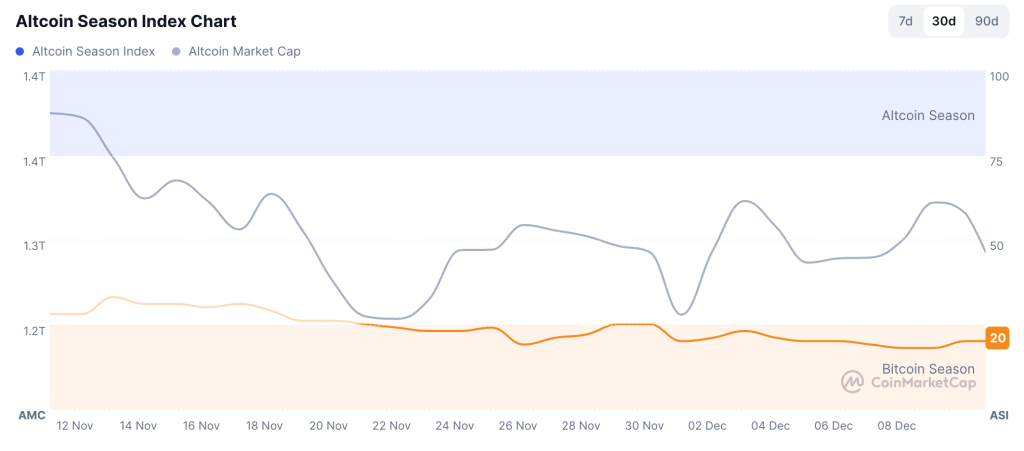
Altcoin Season Index (Source: CoinMarketCap)

The absence of sharp losses across major tokens and the presence of steady gains in several mid-cap names suggest that traders remain cautious but active. It is not a pivot toward a wide rally, though it offers a clearer read on where liquidity concentrates when conditions ease slightly.

MYX Finance Edges Higher With Firm Turnover

MYX Finance (MYX) is trading around $3.10, up by about 6% in 24 hours. Volumes remain above its recent baseline, and order books still show tight ranges across venues. The project continues to benefit from interest in liquid restaking strategies and from consistent engagement within its own community.

Current flows look less driven by headlines and more by a pattern of rotation into assets that maintain liquidity even when conditions soften. That places MYX among the few tokens that can hold modest upward movement during quieter sessions.

Tezos Shows Small Lift On Development Steadiness

Tezos (XTZ) is now trading near $0.51, up by roughly 3.4%. The token has not produced any major announcements in recent days, but its long-running emphasis on regular upgrades and predictable development cycles has helped maintain a stable user base.

The Tezos ecosystem is built by the community.

Builders, artists, bakers, collectors… All in one place. pic.twitter.com/XMl3w26VJO

β€” Tezos (@tezos) December 10, 2025

Activity across staking and smart contract deployments has held steady through the recent pullback, which supports the view that XTZ tracks network involvement more closely than speculative surges. Today’s move fits that pattern of limited but reliable upside during calmer trading periods.

UNUS SED LEO Maintains Its Defensive Profile

UNUS SED LEO (LEO) is trading around $9.40, up by about 1.4%. The token is known for its defensive behavior during uncertain stretches since a large share of its trading occurs within venues that already interact heavily with it.

Volumes remain consistent rather than explosive, and the move today aligns with its historical tendency to rise modestly when broader volatility eases. Market screens show fewer abrupt swings in its pairs compared with many large caps, which shows its role as a lower velocity asset during consolidation phases.

What These Moves Say About Altcoin Season

The combination of MYX Finance, Tezos, and UNUS SED LEO inching higher while indices remain in the fear zone points to an environment defined by selectivity rather than momentum.

Bitcoin’s hold above $90,000 limits pressure on the rest of the market, yet the absence of strong inflows keeps the altcoin season distant. Even so, the persistence of small but steady gains suggests that capital has not retreated fully and continues to search for tokens that carry clear liquidity or stable network participation.

These conditions do not generate a broad rally, yet they show that the market can stabilize after deep fear. If sentiment holds near current levels and Bitcoin avoids large swings, pockets of altcoin activity may continue to form even without a decisive shift toward risk-taking.

The post Altcoin Season Shows Flickers As Bitcoin Tests Support Near $90,000 appeared first on Cryptonews.


Why Traders Now Treat Crypto Prediction Markets Like Real-Time Shadow Polls

Prediction markets tied to crypto rails now function like shadow polls that update in real time, with prices that embed money-backed views on elections, technology milestones, and macro data.

Traders who once scanned polling averages and pundit columns increasingly check market odds first, because order flow reacts within minutes to new information and compresses competing narratives into a single number that moves with conviction.

Media desks and professional bettors have folded these indicators into their workflow precisely because liquidity concentrates attention, while order books reveal when conviction is thin. Prices that shift before poll releases or commentary give forewarning that sentiment has just turned, and the speed advantage often appears during weekends, holidays, or late nights when traditional coverage slows.

Prediction Market Liquidity and Signal Quality

Liquidity and fee structures shape how useful these markets can be, because tighter spreads and deeper books reduce noise and let prices carry more information. Where order books fill quickly, small traders cannot shove prices around with shallow size, and that dynamic improves the odds that an observed move is a genuine shift rather than an echo of thin volume.

Calibration against final outcomes remains the test that matters, so traders track how often pre-event odds sat near the realized probability.

Misses still occur and sometimes cluster during polling errors, yet the markets tend to pull back toward neutrality faster once contradictory evidence appears, since stale views cost money when the other side steps in.

The platforms that standardize wording, enforce clear resolution sources, and police ambiguous markets give participants more confidence that the edge will not evaporate at settlement.

Regulation, Media Adoption, and the Next Test

Policy treatment determines how far these markets can scale in the United States, and rulemaking over event contracts now sits at the center of that path.

Against all odds.

Polymarket’s U.S app is now being rolled out to those on the waitlist.

We’re launching with sports β€” followed by markets on everything. pic.twitter.com/WOoVMszrqc

β€” Polymarket (@Polymarket) December 3, 2025

Clearer distinctions between illegal gambling and permissible information markets would channel demand into supervised venues, enable stronger surveillance, and support broader participation without forcing activity offshore.

Newsrooms and research shops now publish charts that track market odds alongside polling, because readers want to see what money thinks at the very moment a headline breaks.

That feedback loop can turn prices into part of the story, yet it also raises the bar for verification, since a fast price move still needs context on who is trading, how much size hit the book, and whether liquidity conditions magnified the jump.

Crypto rails changed the mechanics by removing banking friction for small stakes, enabling near-instant deposits, and keeping markets open through the night, which means odds now update during periods when legacy venues sit idle.

The next test arrives during policy-heavy weeks when central-bank decisions, court rulings, or election filings hit in quick succession, because stacked catalysts expose whether markets digest information or simply amplify noise.

If depth holds, spreads stay tight, and prices step rather than lurch, the signal strengthens, and more desks will treat these odds not as a sideshow but as a baseline input that earns a permanent slot on the dashboard.

The post Why Traders Now Treat Crypto Prediction Markets Like Real-Time Shadow Polls appeared first on Cryptonews.

Ethereum Rises As Altcoin Season Fear Eases And Select Tokens Join The Move

Sentiment across the market shows a mild improvement today, with the Fear and Greed Index rising to 30 after spending much of the past two weeks in the lower twenties and briefly touching extreme fear levels that had pushed many participants into defensive positioning.

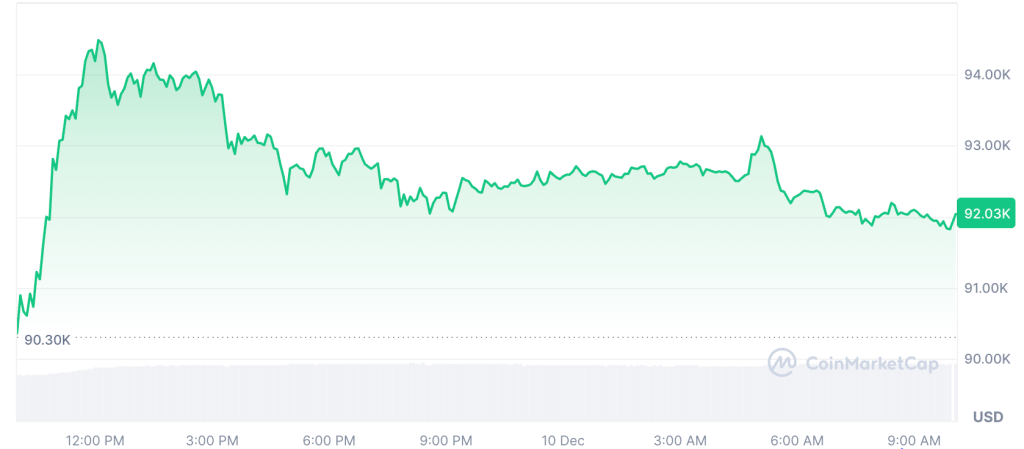
Bitcoin is trading near $92,000 after a stretch of uneven activity that began in late November, and the steadier tone around the largest asset has created a backdrop in which a small group of altcoins can advance without relying on abrupt, flow-driven bursts.

Bitcoin Price (Source: CoinMarketCap)

Ethereum sits at the center of that shift as its performance often sets expectations for how much risk the market is willing to take.

Ethereum Extends Its Climb On Firmer Market Structure

Ethereum (ETH) is currently trading around $3,330, up by about 7% over 24 hours, and the increase is supported by an improvement in both spot and derivatives participation, with deeper books and steadier bidding in ranges that had previously struggled to hold during last week’s retreat.

Activity across major venues indicates that traders who had reduced exposure during the November drawdown are gradually re-entering positions, not because sentiment has shifted dramatically, but because the asset’s day-to-day usage and continued demand for block space provide a degree of stability even when the wider environment remains cautious.

This pattern allows Ethereum to function as an early gauge of whether the current relief has staying power, since its liquidity and scale often give it the ability to recover before smaller assets regain enough confidence to follow.

Monero Gains As Privacy Demand Holds Steady

Monero (XMR) is trading near $404, up by roughly 12% in 24 hours, and the climb aligns with periods in which privacy-oriented tokens receive renewed attention from communities that maintain consistent usage regardless of broader sentiment shifts.

The MAGIC Monero Fund has started a second fundraiser to further increase Monero's fuzzing harnesses!

'The goal of this proposal is to continue working with AdaLogics to improve the overall code coverage of Monero in general.' https://t.co/8QMBp9XeVm

β€” Monero (XMR) (@monero) December 8, 2025

Depth across several exchanges shows more orderly conditions than last week, with a distribution of bids that implies steady interest rather than isolated buying, which is notable because privacy assets often strengthen when markets search for tokens with established user bases and reliability rather than speculative catalysts.

Mantle Tracks Layer 2 Engagement As Liquidity Improves

Mantle (MNT) is trading near $1.20, up by about 7% in 24 hours, supported by consistent throughput and engagement across the Layer 2 ecosystem that underpins its value.

The token has climbed back above ranges that came under pressure during last week’s downturn, and turnover now sits noticeably higher than the levels seen during the most severe portion of the recent selloff.

This behavior aligns with the tendency for infrastructure and scaling tokens to recover earlier than many smaller assets when sentiment begins to ease, because they rely on live activity and measurable network growth rather than short-term narrative swings.

Altcoin Season Still Out Of Reach Despite Signs Of Relief

The rise in the market sentiment and today’s scattered gains among Ethereum, Monero, and Mantle demonstrate that the market is willing to experiment with selective positioning, yet the structure of flows suggests that a broad altcoin season remains distant.

Bitcoin continues to anchor sentiment near $92,000, and most major tokens remain confined to narrow ranges while participants wait for clearer macro signals, steadier global liquidity conditions, and confirmation that the recent improvement does not fade with the next shift in funding or equities.

For now, the recovery resembles the early-stage attempt to stabilize rather than the altcoin season ready for wide rotation, although the presence of consistent activity in a few established networks shows that the market has not fully retreated from altcoin exposure even as caution remains the prevailing influence.

The post Ethereum Rises As Altcoin Season Fear Eases And Select Tokens Join The Move appeared first on Cryptonews.

The Unbanked Billion: Why AGI Will Choose Bitcoin Over Dollars

Software agents now plan travel, shop online, and negotiate subscriptions; the next step extends that autonomy from clicks to settlement, since a wallet can be created in code and funded without manual steps.

That shift recasts payments as an API call, and it places public chains and stablecoins in the centre of a new transaction layer that never sleeps.

The idea is not science fiction for distant horizons; it follows directly from how agents already fetch data, route tasks, and make bounded choices, which means a wallet simply gives those choices a way to clear. Once an agent can hold value, it can pay for compute, storage, and data, and it can accept income for work completed, such as labeling, scraping, modelling, or orchestration.

The practical consequence lands in market microstructure rather than marketing slogans, because autonomous clients transact in small bursts at high frequency, and that behaviour rewards always-on rails with low fees, programmable controls, and finality that does not depend on banking hours.

AI Agents and On-Chain Wallets

An agent that operates through a browser or a scripted environment can generate an address, set spending rules, and move funds under policy constraints defined by its owner, and that capability removes the need for a traditional account in many machine contexts.

Bitcoin and major stablecoins already settle value at any hour, and they provide deterministic outcomes that agents can reason about, which reduces operational risk for machine workflows.

In this setting, the wallet becomes a permissions system as much as a purse, since owners can impose daily limits, permitted counterparties, and audit trails, while services can demand proof of funds, time-locked payments, or escrow before fulfilling requests.

Machine wallets then pay other machines for access to GPUs, curated datasets, retrieval bandwidth, or specialised tools, with pricing expressed in tokens that settle quickly and atomically.

A parallel economy can emerge from these loops, because agents often trade with other agents rather than with people, which creates a constant order flow that ties token liquidity to the cost of compute and the value of data.

πŸš€ Nansen launches @Nansen_AI a mobile agent bringing onchain data, portfolio insights & soon tradingβ€”AI-driven markets. #Crypto #AIhttps://t.co/IEk2JBvVUV

β€” Cryptonews.com (@cryptonews) September 25, 2025

Policy, KYC, and the Fiat-Crypto Bridge

Rules will decide the shape of this market as surely as code will, since financial regulators must map identity, liability, and records to transactions that no banker keys in by hand.

A workable pattern places a verified human or company at the perimeter, delegates spend authority to an agent, and binds the wallet to controls that can be inspected, suspended, or revoked when thresholds or alerts trigger.

Consumer protection fits into that model through disclosures and limits that mirror card frameworks, while anti-abuse controls track flows without forcing every low-value machine payment through manual review.

Payment companies can bridge fiat and crypto by linking fiat balances to on-chain rails for settlement, and by allowing agents to draw against prefunded sources that are tied to known principals.

The result is a system where Bitcoin and major stablecoins clear routine tasks and periodic invoices, banks remain central for fiat entry and exit, and auditability improves because policies live in code rather than policy binders.

The post The Unbanked Billion: Why AGI Will Choose Bitcoin Over Dollars appeared first on Cryptonews.

Bitcoin Stalls Near $90K as Select Altcoins Rally, Leaving β€˜Altcoin Season’ on Hold

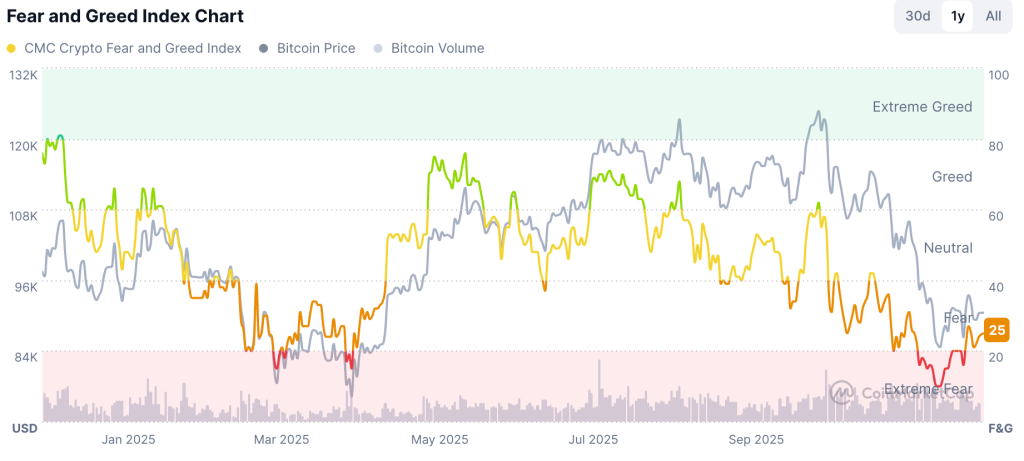
Fear continues to shape the market even though the sharp panic of late November has eased. The Fear and Greed Index now prints 25, placing sentiment inside the fear band without dipping back into extreme readings.

Bitcoin is trading a little above $90,000 with a small recovery from earlier lows, and the market continues to behave as though it is still sorting through recent losses rather than preparing for a broad turn in risk appetite.

Within that restrained environment, only a few altcoins are showing clear strength. Zcash, MemeCore, and Cardano are moving higher while the majority of large caps remain muted. Their performance offers a narrow window into how traders position themselves when the wider market hesitates but does not fully retreat.

Fear and Greed Index (Source: CoinMarketCap)

Zcash Shows Its First Meaningful Bounce After Heavy Losses

Zcash (ZEC) is now trading around $426, up by about 10% in 24 hours, and its rise stands out because the token fell sharply from a peak near $700 in November before losing close to 30% across the month.

Trading data today shows firmer depth and a pickup in spot volume across several venues, which indicates that market participants are revisiting liquid privacy names now that the steepest part of the decline has passed.

The rebound still leaves ZEC far from last month’s high, yet the current structure looks steadier than earlier attempts at recovery. Activity is spread across several markets rather than concentrated in narrow windows, which suggests a more stable footing for the token as sentiment steadies around the mid-twenty fear readings.

MemeCore Advances On Continued Community Activity

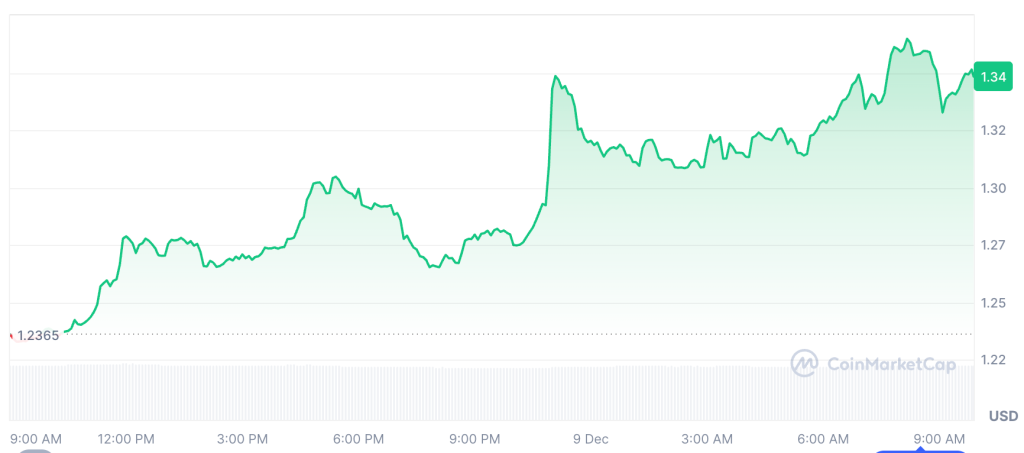
MemeCore (M) is trading near $1.34, up by about 9% in 24 hours. The move follows a period where engagement inside its community continued even during last week’s extreme fear conditions.

MemeCore Price (Source: CoinMarketCap)

Trading screens show stable liquidity on its active pairs, and on-chain usage linked to staking and social features remains visible enough to support small bursts of momentum whenever market pressure slows.

The rise today appears tied to that ongoing participation instead of a single driver. MemeCore has tended to perform best when traders look for tokens supported by active user bases rather than one-off events.

Cardano Edges Higher With Large Cap Rotation

Cardano (ADA) is trading near $0.45, up by about 3% in 24 hours. The growth is modest but aligns with behavior seen across other large caps in recent sessions, where liquidity remains firm and flows turn balanced once Bitcoin stabilizes.

Help shape the next generation of DeFi and RWA startups building on Cardano.

We are seeking Service Providers to deliver sessions and workshops for the Cardano Accelerator Program on startup relevant disciplines.

Interested? Apply by 4 January: https://t.co/5mkP8cv1TJ

β€” Cardano Foundation (@Cardano_CF) December 8, 2025

Trading volumes today show measured participation rather than strong accumulation, yet ADA continues to benefit from being one of the more established networks during risk-averse periods.

Cardano’s move does not alter its longer trend, but it illustrates how stable large caps often move first when markets pause after declines.

Altcoin Season Still Out Of Reach Despite Small Pockets Of Strength

The overall picture still leans toward caution. A fear reading of 25, Bitcoin holding just above $90,000, and limited rotation across major assets all point to a market that has not regained the breadth usually associated with altcoin season.

The advances in Zcash, MemeCore, and Cardano show that selective interest persists, but the gains remain narrowly concentrated and depend heavily on liquidity and existing user activity rather than broad enthusiasm.

For now, altcoin season sits at a distance, with only small pockets of momentum taking shape while sentiment remains anchored in the lower bands of the fear index.

The post Bitcoin Stalls Near $90K as Select Altcoins Rally, Leaving β€˜Altcoin Season’ on Hold appeared first on Cryptonews.

OKX CEO Star Xu Says 50% of Global Economy Will Run On Blockchain

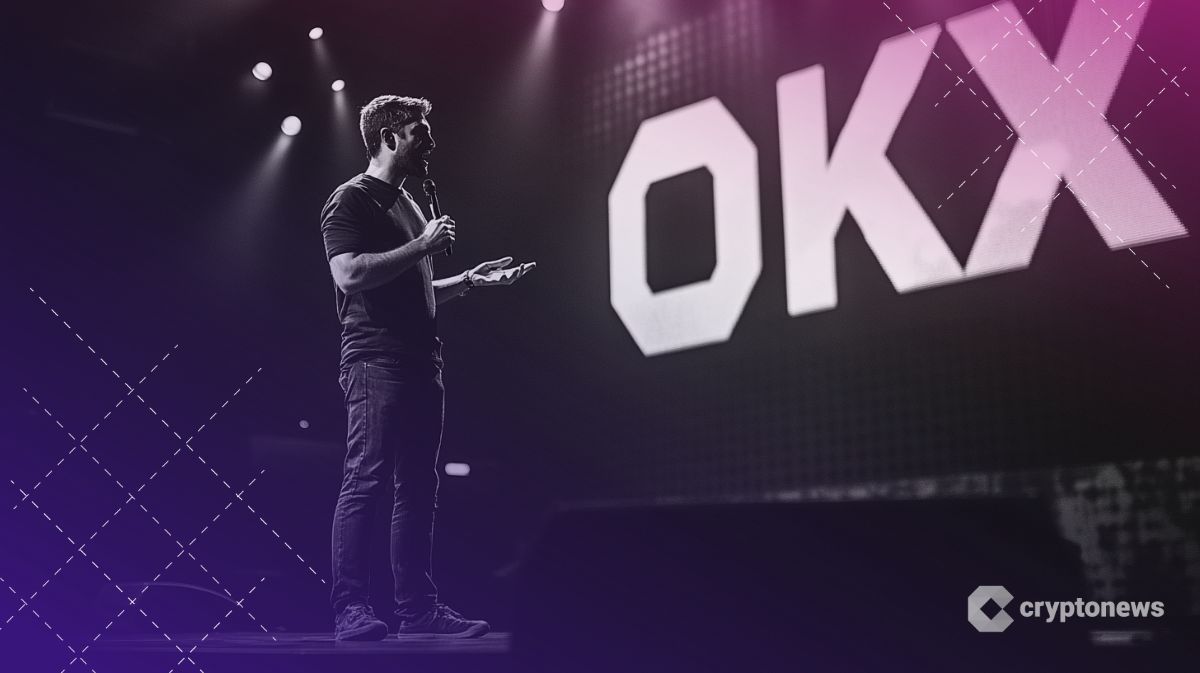
During Abu Dhabi Finance Week, OKX Chief Executive Star Xu said, β€œapproximately 50% of global economic activities will operate on blockchain” in the coming decades.

He framed the shift as demand from a generation raised on digital services, mobility, and artificial intelligence. Xu described blockchains as programmable financial rails that move value β€œfreely, instantly, and globally, 24/7.”

He positioned the trend as infrastructure, not a trading call, pointing to stablecoin settlement growth, multi-trillion on-chain asset values, and expanding wallet counts. He also noted ongoing regulatory work in major markets that is building channels for compliant activity.

The next chapter of an onchain economy begins with trust.

Our Founder & CEO @Star_okx takes the stage at @ADFinanceWeek to discuss how blockchain can drive global economic empowerment.

πŸ—“ 8 Dec | 1:35pm
πŸ“ Mainstage, ADQ Arena pic.twitter.com/jgq6MchLZz

β€” OKX (@okx) December 8, 2025

Why OKX’s Xu Sees Demand For On-Chain Finance

Xu linked the moment to past cycles in internet, mobile, and cloud, arguing the next step is a β€œfinancial internet” where storage, transfer, and settlement are software-driven and auditable.

He said current infrastructure can meet institutional needs, citing account integrations, low-friction user flows without gas fees, and throughput targets measured in millions of transactions per second.

Security goals mirror bank accounts, while on-chain identity, analysis, and audit features are intended to raise transparency. His view is that open and efficient systems tend to win over time, and that the internet generation is pressing finance toward an always-on standard.

He added that regulators in jurisdictions such as the United States and Singapore are building frameworks that move activity from pilots to production.

Bitcoin, Stablecoins, And Tokenization In Practice

Xu called Bitcoin β€œdigital gold” for younger holders and pointed to institutions adding exposure on balance sheets. He portrayed stablecoins as a parallel payment channel that allows near real-time cross-border settlement, including units tied to the U.S. dollar and regional fiat.

He placed tokenization at the center of market structure change, with funds and government bonds entering continuous on-chain venues that offer transparent pricing and compliance controls.

Looking ahead, he outlined a model where users hold self-custody wallets, identity is portable, and issuance and settlement run on a single base layer.

β€œMore open, transparent, and efficient systems will ultimately prevail,” Xu said, adding that the internet generation is already building toward that outcome.

The post OKX CEO Star Xu Says 50% of Global Economy Will Run On Blockchain appeared first on Cryptonews.

Altcoin Season Breathes Lightly As Canton, Ethena And Ondo Rise In A Cautious Market

The crypto market continues to operate under a cautious tone, yet today shows a small improvement. The Fear and Greed Index sits near 24, a level that keeps sentiment inside the fear range but still marks progress from last week’s deeper lows.

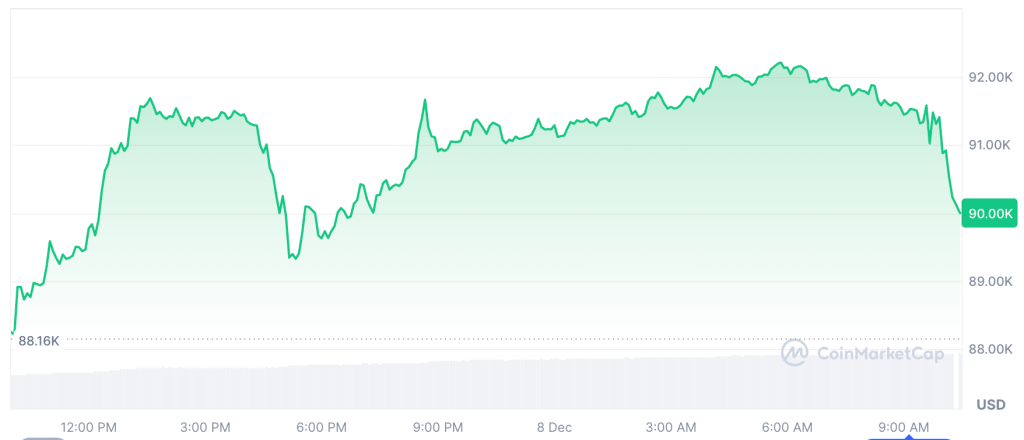
Bitcoin is now trading around $90,000 with a gain of about 1% over 24 hours, and that move has eased some of the pressure that defined recent sessions.

Bitcoin Price (Source: CoinMarketCap)

Most large caps remain quiet, although several mid-caps are advancing. Canton, Ethena, and Ondo stand out with steady climbs that align with a backdrop where traders engage selectively while still avoiding widespread risk-taking. These moves do not indicate a broad altcoin season, but they reveal where participation resumes when the market shifts from extreme stress to controlled caution.

Canton Shows Renewed Interest In Its Network Activity

Canton (CC) is trading around $0.074, up by roughly 19% in 24 hours. Liquidity has improved across major venues, and order flow is more balanced than earlier this week.

Privacy should be the foundation. Not an update to the system.

β€” Canton Network (@CantonNetwork) December 6, 2025

On-chain activity around its coordination and settlement functions continues to draw attention from users who track enterprise-oriented experiments, and this interest appears to support today’s rise. The price structure suggests a transition from quiet trading toward a more stable upward pattern.

Ethena Lifts As Its Synthetic Dollar System Steadies

Ethena (ENA) is trading near $0.28, up by about 11% in 24 hours. Recent data show a more consistent balance between funding costs and open interest, which indicates that its synthetic dollar framework is operating without the uneven spikes seen in previous weeks.

Spot flows lean toward accumulation and remain spread across several active venues. The token continues to act as a reference point for yield-related designs during periods when the market prefers moderate exposure.

Ondo Climbs On Ongoing Interest In Tokenized Yield

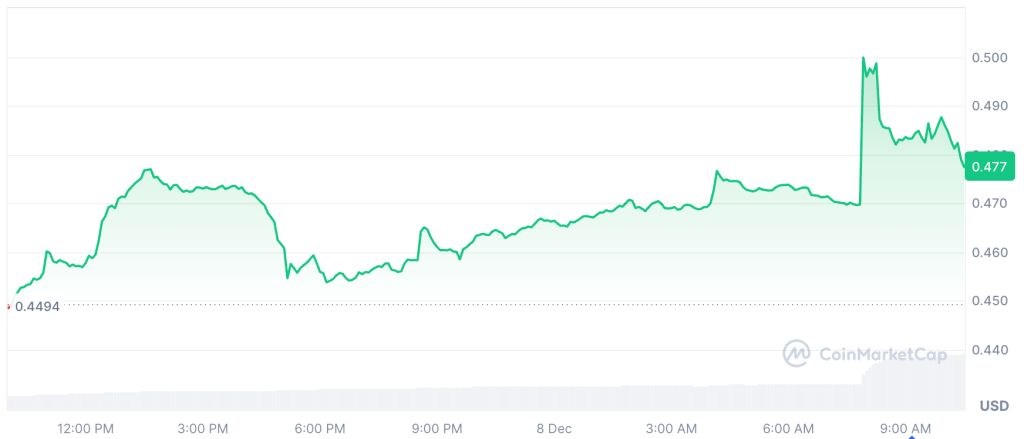
ONDO is trading near $0.48 with an increase of about 8% over 24 hours. Trading activity suggests continued interest in tokenized treasury products, supported by steady demand for yield that connects crypto infrastructure with traditional markets.

ONDO Price (Source: CoinMarketCap)

Liquidity on major pairs remains firm, and turnover now exceeds levels recorded in recent sessions. This behaviour keeps Ondo inside rotation lists whenever market tension eases.

Altcoin Season Still Limited, but No Longer Suffocated

Altcoin season remains distant, yet the rise from extreme fear levels has lowered stress across the market. Bitcoin’s ability to remain above $90,000 reduces forced selling and gives the market enough space for selective rotation.

The strength in Canton, Ethena, and Ondo shows that capital is returning slowly to tokens with steady activity and clear user bases, even though most participants still prefer caution.

For now, the environment remains defensive, but the combination of a higher Fear and Greed reading and several advancing names indicates a market that has moved from severe pressure to a quieter, more balanced phase.

The post Altcoin Season Breathes Lightly As Canton, Ethena And Ondo Rise In A Cautious Market appeared first on Cryptonews.

❌