Ali Martinez says the TD Sequential indicator on the daily chart flashed a sell signal for Circle after previously identifying the recent local bottom.
Tether and Circle, issuers of the two largest stablecoins in the world, have just received major regulatory greenlights in UAE’s Abu Dhabi.
Tether’s Stablecoin Recognized As ARFT, While Circle Obtains FSP License
Major developments related to the cryptocurrency sector have occurred in the United Arab Emirates (UAE) this week, with Tether and Circle both winning approvals in Abu Dhabi Global Market (ADGM), the international financial center and free economic zone of Abu Dhabi, UAE’s capital.
First, as Tether has announced in a press release, USDT issued on a number of blockchains has been recognized as an Accepted Fiat-Referenced Token (ARFT) in ADGM. USDT already received approval from ADGM last year, but the previous recognition only included the Ethereum, Solana, and Avalanche versions. With the new regulatory nod, USDT available on Aptos, Celo, Cosmos, Kaia, Near, Polkadot, Tezos, TON, and TRON has also entered the market.
“By extending recognition to USD₮ on several major blockchains, ADGM further strengthens Abu Dhabi’s position as a global hub for compliant digital finance,” said Tether CEO Paolo Ardoino.
USDT being considered as an ARFT means that authorized persons licensed by ADGM’s Financial Services Regulatory Authority (FSRA) can offer regulated activities involving the stablecoin on nearly all its native blockchains. “Introducing USD₮ within ADGM’s regulated digital asset framework reinforces the role of stablecoins as essential components of today’s financial landscape,” noted Ardoino.
Meanwhile, Circle, the issuer of USDC, has also advanced in the region with a new license from the FSRA, according to an announcement. The license, called the Financial Services Permission (FSP), allows the company to operate as a Money Services Provider in ADGM.
Arvind Ramamurthy, ADGM Chief Market Development Officer, said:
Circle’s regulated presence in ADGM reinforces our ambition to build a trusted, institutional-grade digital asset ecosystem in Abu Dhabi, one that enhances market confidence, supports real-world use cases, and cements the UAE’s role as a leading hub for regulated digital finance.
The greenlight from ADGM follows the recognition of Circle’s USD and EUR stablecoins by the Dubai Financial Services Authority (DFSA) in February of this year. The move made USDC and EURC the first stablecoins to be approved in the Dubai International Financial Centre (DIFC).
The new FSP license means “Circle is positioned to expand regulated payment and settlement use cases in the UAE for businesses, developers, and financial institutions,” the statement noted.
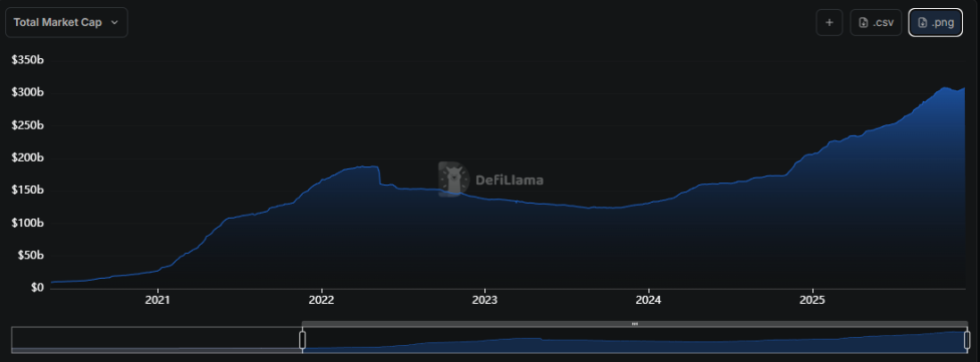
Stablecoins have witnessed rapid growth throughout 2025, setting multiple records. The near-constant growth in these tokens, however, saw a break in October, as the combined market cap of this side of the cryptocurrency sector reversed course.
As the above chart from DefiLlama shows, the stablecoin market cap declined to a low in mid-November. Since this bottom, though, capital inflows have returned for these fiat-tied assets, with the market cap once again nearing in on a new record.
Bitcoin Price
At the time of writing, Bitcoin is floating around $90,100, up almost 4% in the last seven days.
Circle’s slow but steady expansion into the Middle East has taken a decisive step forward, as the USDC issuer secured a Financial Services Permission (FSP) license from Abu Dhabi Global Market (ADGM).
The move positions the company at the center of the UAE’s growing digital-asset ecosystem, strengthening its ability to scale stablecoin adoption across the region.
For a market actively developing clearer regulatory frameworks and attracting global crypto players, Circle’s entry underscores the central role stablecoins have come to play in payment infrastructure and cross-border finance.
Circle Secures ADGM Approval and Expands Regional Strategy
This follows preliminary approval earlier this year and gives the firm formal permission to offer USDC-powered payment, settlement and on-chain financial tools to businesses and institutions across the UAE.
Alongside the approval, Circle appointed Dr. Saeeda Jaffar as managing director for the Middle East and Africa. A long-time payments executive with leadership experience at Visa and major consulting firms, she will guide Circle’s expansion efforts, deepen local partnerships, and help integrate USDC into regional prospects.
Her appointment reflects Circle’s intent to localize operations and strengthen ties with banks, enterprises, and government entities.
UAE Supports Push Toward Regulated Digital Finance
Circle’s regulatory milestone comes as the UAE increases its efforts to build an institutional-grade digital asset ecosystem. ADGM and Dubai’s DIFC have both issued stablecoin and token frameworks designed to offer clarity for companies operating in the sector.
USDC and EURC were recognized earlier this year under Dubai’s crypto token regime, providing Circle with visibility across both major financial zones in the country.
The approval also coincides with a wave of regulatory progress for other major players. Binance received full authorization to operate its global platform under ADGM oversight this week, while Tether secured recognition for USDT across multiple blockchain networks.
These developments show how Abu Dhabi is positioning itself as a global hub for regulated stablecoin activity, driven by remittance demand, trade flows, and a growing emphasis on compliance.
Stablecoin Adoption Enters New Phase
The UAE’s structured approach comes at a time when stablecoins are gaining broader acceptance in global finance.
With regulatory guardrails expanding internationally and stablecoins increasingly used for cross-border payments, Circle’s license opens the door for wider USDC adoption in corporate finance, developer applications, and digital-asset settlement.
For Circle, the ADGM license marks a pivotal foothold in one of the world’s fastest-moving regulatory environments. For the UAE, it reinforces an ambition to lead in compliant digital-asset innovation while shaping standards for a rapidly evolving sector.
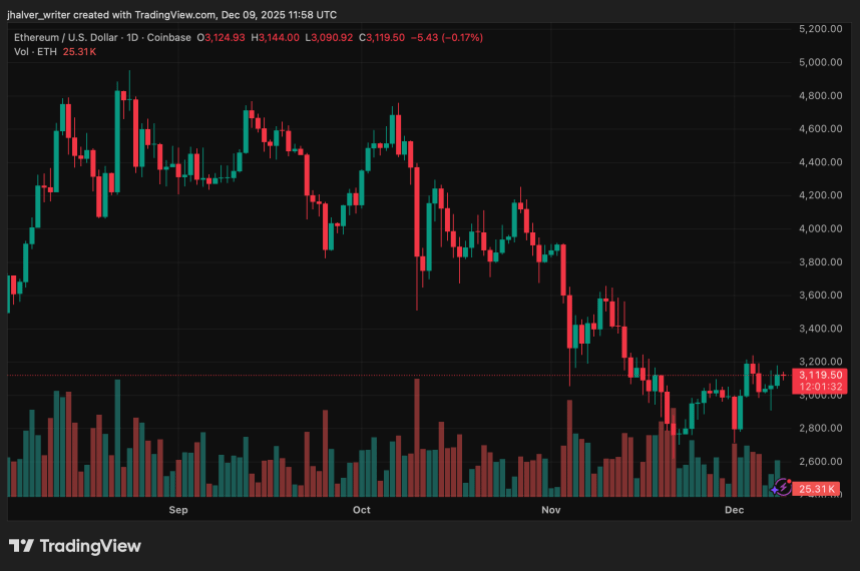
Cover image from ChatGPT, ETHUSD chart from Tradingview
The ADGM license allows Circle to offer fully regulated USDC stablecoin services in the UAE.
Circle is expanding its reach with institutional payment and settlement rails.
UAE has strengthened its position as a hub for compliant digital-asset activity.
Circle has secured a major foothold in the Middle East after receiving full regulatory approval from Abu Dhabi Global Market (ADGM) to operate USDC services under comprehensive oversight.
Circle expands its regulatory footprint in the UAE
Announced at Abu Dhabi Finance Week: → Secured an @ADGlobalMarket FSRA Financial Services Permission to operate as a Money Services Provider
This milestone builds on USDC and EURC being the first stablecoins recognized by… pic.twitter.com/BCSDOpo3mb
The approval marks one of the company’s most significant international expansions and reinforces the UAE’s fast-growing role as a hub for regulated digital assets.
A strategic license with wide reach
Circle’s new Financial Services Permission, granted by the Financial Services Regulatory Authority, authorises the company to operate as a fully regulated Money Services Provider within Abu Dhabi’s financial free zone.
The approval provides Circle with a formal operating base in one of the world’s most active jurisdictions for digital asset regulation.
The license allows Circle to offer payment, settlement, and digital-asset services tied to USDC directly to businesses and financial institutions.
By operating under a clear regulatory framework, Circle can now support wholesale payments, cross-border settlement rails, and custody-linked services with institutional-grade compliance standards.
This also deepens ADGM’s growing reputation as a safe and predictable regulatory environment for digital-asset firms.
A boost for the UAE’s digital-asset ambitions
The UAE has been pushing to attract companies building fiat-referenced tokens, tokenised financial services, and enterprise-grade payment infrastructure, and Abu Dhabi, in particular, has positioned itself as a leading centre for compliant crypto activity, and Circle’s arrival reinforces that strategy.
The UAE has carved out a reputation for offering clear rules for stablecoins and digital-finance companies, which has become a major draw for global platforms seeking regulatory certainty.
Circle’s expansion also arrives as stablecoins gain more formal regulatory footing worldwide since the passage of the GENIUS Act in the United States, which created a federal framework for the issuance and supervision of fiat-backed tokens.
The GENIUS Act triggered a wave of stablecoin initiatives from major US financial institutions, creating renewed demand for licensed, enterprise-ready providers such as Circle.
The UAE’s dual financial zones are also aligning around stablecoin oversight.
Earlier this year, Dubai recognised USDC and EURC under the Dubai Financial Services Authority’s crypto token regime, giving Circle regulatory support across the country’s two main jurisdictions.
Tether’s USDT has also been recognised as an approved fiat-referenced token across multiple blockchains, while Binance recently obtained full authorisation to operate its flagship platform under ADGM oversight.
These approvals reflect a deliberate shift toward a more organised and transparent digital-asset market in the UAE.
Circle strengthens regional strategy with senior leadership appointment
Circle sees immediate opportunities in enabling faster corporate payments, treasury operations, and trade settlements since it can now provide these services to regional businesses under a recognised regulatory structure.
For companies in the Middle East, this means the ability to settle transactions in seconds instead of days and do so through a trusted, licensed issuer.
And as part of its regional push, Circle has appointed Dr Saeeda Jaffar as Managing Director for the Middle East and Africa.
Dr Jaffar, currently serving as a senior executive at Visa, will guide Circle’s strategy, develop institutional partnerships, and work to expand the use of USDC in business payments and financial infrastructure.
Circle has secured a major regulatory win in the United Arab Emirates, gaining a Financial Services Permission (FSP) license from the Abu Dhabi Global Market’s Financial Services Regulatory Authority (FSRA).
Key Takeaways:
Circle obtained an ADGM license to operate USDC services under full regulatory oversight.
The approval strengthens Abu Dhabi’s push to become a global hub for regulated digital assets.
Circle appointed Dr. Saeeda Jaffar to lead regional expansion and drive USDC adoption.
The approval allows Circle to operate as a fully regulated Money Services Provider within the UAE’s capital market free zone, the company said in a Tuesday’s press release.
Circle Gains Full Regulatory Entry Into UAE’s Fast-Growing Crypto Hub
The license grants Circle the ability to offer regulated payment, settlement, and digital-asset services tied to USDC, giving the company a formal operating presence inside one of the world’s fastest-growing hubs for compliant crypto activity.
The move comes as the UAE continues to position itself as a global center for digital-asset regulation, with ADGM leading efforts to attract firms seeking clear rules for fiat-referenced tokens and tokenized financial services.
As part of its expansion, Circle appointed Dr. Saeeda Jaffar as Managing Director for the Middle East and Africa.
Dr. Jaffar, currently a senior executive at Visa overseeing the GCC region, will join Circle to guide its strategy, build regional partnerships, and push for broader adoption of USDC in business payments and financial infrastructure across the UAE and beyond.
Circle expands its regulatory footprint in the UAE
Announced at Abu Dhabi Finance Week: → Secured an @ADGlobalMarket FSRA Financial Services Permission to operate as a Money Services Provider
This milestone builds on USDC and EURC being the first stablecoins recognized by… pic.twitter.com/BCSDOpo3mb
“Regulatory clarity is the foundation of a more open and efficient internet financial system. We are honored to work with the FSRA in ADGM,” Circle co-founder and CEO Jeremy Allaire said.
With the license in hand, Circle plans to expand regulated USDC use in corporate payments, settlement rails and developer infrastructure across the region.
The law’s passage triggered a wave of new stablecoin initiatives from major financial institutions, including Bank of America, Morgan Stanley, and Robinhood.
Tether, Binance Secure Regulatory Approval in ADGM
As reported, Tether’s USDT stablecoin has also secured regulatory recognition as an approved fiat-referenced token across a wide range of blockchains inside the ADGM.
Tether said ADGM now permits licensed institutions in the financial free zone to conduct regulated activities involving USDT across Aptos, Celo, Cosmos, Kaia, Near, Polkadot, Tezos, TON and TRON.
These approvals expand on earlier recognition for USDT on Ethereum, Solana and Avalanche.
On Monday, Binance disclosed that it has also secured full authorization to operate its flagship Binance.com platform under ADGM oversight, a milestone that comes after years of regulatory scrutiny.
Binance will operate through three distinct legal entities in the zone, an exchange, a clearing house and a broker-dealer, reflecting a traditional financial-market structure designed to enable regulated trading, custody, settlement and off-exchange services.
Bybit and Circle deepen USDC integration to boost liquidity, fiat access, and cross-chain support.
USDC nears $80B market cap in 2025 as regulated stablecoins gain global momentum.
Partnership comes amid fierce stablecoin competition, with Tether and USDC both expanding rapidly.
Circle and cryptocurrency exchange Bybit have entered a new phase of collaboration aimed at expanding how USDC operates across global markets.
The announcement was made on Monday and reflects a rising emphasis on regulated stablecoins as users demand clearer liquidity pathways, stronger compliance standards, and faster settlement.
The partnership arrives during a period when USDC is approaching an $80 billion market cap, marking one of the fastest expansions in the stablecoin sector this year.
Broader USDC access across Bybit’s ecosystem
Bybit has partnered with an affiliate of Circle to widen the reach of USDC within its trading and payment infrastructure.
The exchange plans to strengthen how users access the stablecoin across spot markets, derivatives platforms, and payment channels.
This marks a continuation of Bybit’s long-running effort to integrate USDC into its core systems, supporting more predictable liquidity and creating a consistent experience across multiple products.
The goal is to refine the underlying rails that allow users to trade, store, and move USDC with improved stability.
Improving liquidity, fiat connectivity, and cross-chain support
A major part of the collaboration focuses on enhancing how users convert between fiat and USDC.
Bybit and Circle are working on expanding both on-ramps and off-ramps so customers can move funds more efficiently.
The partnership also aims to raise liquidity quality, which is increasingly important as stablecoins become embedded in everyday trading activity.
Alongside this, the firms plan to expand cross-chain support for USDC, allowing the stablecoin to operate across more networks with higher reliability.
These upgrades align with Circle’s regulatory framework in the EEA under MiCA, giving the company a stronger position in regions that prioritise compliance.
Deepening integration after years of stablecoin expansion
USDC has been part of Bybit’s trading infrastructure for several years.
The exchange first introduced the stablecoin through spot and perpetual trading pairs, then expanded it to savings products, institutional settlement features, conversion channels, and fiat payment tools.
The new partnership builds on this foundation by improving liquidity provisioning and strengthening the systems that support settlement and use cases.
With USDC now operating across a wide range of services on the platform, the added infrastructure is designed to support growth in both retail and institutional demand.
USDC posts rapid market cap growth in 2025
The timing of the partnership aligns with a strong year of expansion for USDC.
The stablecoin’s market cap has increased by 77% since 1 January 2025, rising from about $44 billion to $78 billion.
This surge has been supported by Circle’s engagement with traditional finance through collaborations with organisations such as Deutsche Börse and Mastercard.
The trend highlights the growing role of regulated stablecoins in both decentralised and institutional environments, as users look for predictable and transparent digital dollar instruments.
Stablecoin competition rises as Tether also expands
Bybit’s partnership with Circle unfolds within a competitive stablecoin landscape.
Tether, the largest stablecoin by market capitalisation, has seen its supply increase from $137 billion to $185.6 billion since the beginning of the year, a rise of about 36%.
The sector’s rapid expansion is pushing exchanges to refine their stablecoin strategies and strengthen the systems that support them.
Bybit maintains support for multiple stablecoins and continues to emphasise user choice as it updates its architecture for global markets.
Israel plans tighter stablecoin oversight as adoption surges globally.
Regulators warn dominance of Tether and Circle poses systemic risk.
Digital shekel roadmap advances for 2026 as CBDC development accelerates.
Israel is moving towards tighter supervision of stablecoins as the Bank of Israel positions them as a core part of the country’s future payments system.
The shift comes as regulators reassess how private digital dollars fit into daily financial flows.
Stablecoins are no longer seen as fringe tokens used only by crypto traders. Instead, they are being treated as major payment instruments with global scale and influence.
The Bank of Israel stressed that global stablecoin usage has expanded to levels that can no longer be ignored.
The sector has passed a market capitalisation of more than $300 billion, with monthly transaction volumes above $2 trillion.
As per CoinDesk, officials noted that these levels place stablecoins on par with the balance sheets of mid-sized international commercial banks.
This surge has been driven by their role in trading, cross-border transfers, and the need for a digital instrument that avoids the price swings of other cryptocurrencies.
The expanding footprint creates new urgency for clear, enforceable rules.
Concerns over market concentration
A key theme at the conference was the dominance of two stablecoin issuers.
About 99% of market activity is tied to Tether and Circle, creating a heavy concentration of risk in a sector that underpins a large share of digital asset transactions.
Israeli policymakers warned that this structure heightens systemic vulnerability.
They view that any disruption or weakness at the issuer level could ripple through global payment channels.
To mitigate this, officials highlighted the need for strict reserve practices, including fully backed 1:1 reserves and liquid assets that can handle sudden redemption waves.
Digital shekel plans move forward
Alongside the stablecoin discussion, Israel advanced its own central bank digital currency plans.
Yoav Soffer, who leads the digital shekel project, described the currency as central bank money designed for broad use.
He released a 2026 roadmap that sets out the next stages and confirmed that official recommendations are expected by the end of this year.
The update signals an acceleration similar to moves made by the European Central Bank.
Industry observers noted that the faster timeline reflects how central banks are adjusting to competition from private digital money and the rapid evolution of the payments landscape.
The roadmap triggered commentary within the crypto sector.
Attention centred on how the Bank of Israel’s accelerated schedule positions the digital shekel as a response to fast-growing private alternatives.
Market participants linked the timing to a broader global trend in which central banks are racing to modernise their own digital money strategies.
With stablecoins gaining influence in international transactions, the digital shekel project is being viewed as a strategic step to maintain control over national payments infrastructure while supporting innovation in regulated channels.
Lookonchain reported $436.5 million in USDC moved to Kraken.
Project revenue fell to $27.3 million in November.
Wallets still held over $855 million in stablecoins and $211 million in SOL.
Pump.fun’s internal fund activity has drawn intense scrutiny after pseudonymous co-founder Sapijiju challenged claims that the project cashed out more than $436 million in stablecoins.
The discussion began when blockchain analytics platform Lookonchain reported that wallets linked to the Solana memecoin launchpad had transferred large amounts of USDC to the crypto exchange Kraken.
The activity raised fears of selling pressure and uncertainty about how the project handled its reserves.
The story quickly spread across X, where users analysed the movement of funds, debated the project’s finances, and questioned the clarity of the explanations offered.
USDC flows tied to internal management
In an X post, Sapijiju said the transfers were part of Pump.fun’s treasury management process and were not sales.
The post said the USDC originated from the PUMP token’s initial coin offering and was moved between internal wallets to support the company’s runway and reinvestment plans.
The post also stated that Pump.fun had never worked with Circle.
Treasury management typically involves reorganising wallets, allocating capital, and preparing budgets, and does not always indicate selling or liquidation.
Lookonchain’s report said the transfers to Kraken had reached $436.5 million in USDC since mid-October.
The timing drew more attention because Pump.fun’s monthly revenue had fallen to $27.3 million in November, its first drop below $40 million since July, according to DefiLlama.
Despite the concerns, data from DefiLlama, Arkham, and Lookonchain showed that the Pump.fun-tagged wallet still held more than $855 million in stablecoins and $211 million in Solana SOL, which traded at $136.43.
Analysts and community respond
Nansen research analyst Nicolai Sondergaard interpreted the reported transfers as a sign that more selling could follow.
In contrast, EmberCN suggested the activity reflected institutional private placements of the PUMP token rather than active dumping.
The competing interpretations led to a broader review of the token’s performance and project structure.
CoinGecko data showed that PUMP traded at $0.002714, down 32% from its ICO price of $0.004 and almost 70% below its September high of $0.0085.
Currently, PUMP is trading at $0.002738, rising 6.9% in the past 24 hours.
The price movement added more tension to community discussions as users examined whether the treasury actions aligned with the token’s market conditions.
Across X, multiple posts highlighted the divide in sentiment.
Some users argued that the explanation raised more questions, pointing to inconsistencies and asking for clearer communication.
Others dismissed the statement entirely and linked the treasury activity to concerns about token performance and execution.
A separate group of users said Pump.fun had the right to manage its revenue, ICO proceeds, and reserves as it saw fit.
They described treasury movements as common practice after an ICO and said the main issue was whether USDC reserves properly backed the circulating supply.
Treasury structure becomes central issue
As more users examined the fund flows, the debate shifted from selling pressure to the broader structure of Pump.fun’s treasury.
The discussion focused on the scale of reserves, how the project organised its wallets, and whether the team provided enough visibility into its financial management.
The presence of more than $855 million in stablecoins indicated that large amounts of capital remained under project control, but users continued to question the timing, communication, and purpose behind the transfers.
The situation highlighted how treasury management can become a point of market sensitivity, especially when combined with falling revenue, volatile token prices, and community scepticism.
With attention across X still focused on the movements, the conversation has moved toward transparency expectations, reserve backing, and the company’s approach to supporting long-term development.
 Login
Login