Reading view

There are new articles available, click to refresh the page.

“Our Staffs Are Exhausted”: Senator Lummis Pushes for Crypto Market Structure Markup Next Week

Senator Cynthia Lummis said she wants the Senate Banking Committee to move ahead with a markup of the long-delayed crypto market structure bill as early as next week, showing that negotiations in Washington have reached another pressure point.

Speaking at the Blockchain Association Policy Summit on Tuesday, Lummis said she hoped the Responsible Financial Innovation Act, the committee’s version of market structure legislation, would be ready for a formal markup before Congress leaves for the holidays.

Lummis said the industry had begun to worry about the pace of progress, noting that bipartisan drafts had been rewritten repeatedly in recent weeks.

She described a process that has strained both Republican and Democratic staff members, adding that the constant revisions were no longer sustainable.

“Our staffs are exhausted,” she said, explaining that she and Senator Kirsten Gillibrand wanted to present a draft by the end of this week, circulate it to industry and lawmakers, and then bring the bill to a markup next week.

Source: Blockchain Association

A markup hearing would allow senators to amend the legislation before sending it to the full Senate. Also, Lummis said in September that she expected the bill to be signed into law by 2026.

Crypto Bill Stalls in Senate as Lawmakers Restart Negotiations

Her push comes after the House passed its own bill, the Digital Asset Market Clarity Act of 2025, in July. Since then, it has been waiting in the Senate for the next round of action.

🇺🇸 GENIUS Act, Anti-CBDC Act, and CLARITY Act pass crucial procedural vote 215-211 in Congress after Trump's decisive Oval Office intervention rescues stalled crypto agenda.#GeniusAct #Trumphttps://t.co/Lm2tCBbimp

— Cryptonews.com (@cryptonews) July 16, 2025

The House legislation, formally introduced in May by Chairman French Hill, gives the Commodity Futures Trading Commission primary oversight of digital commodities while preserving the Securities and Exchange Commission’s authority over fundraising and token issuance.

The Senate Banking Committee has been developing its own version of a market structure framework, but progress stalled after the record-setting government shutdown and disagreements over how decentralized finance should be regulated.

🇺🇸 Senate introduces new Crypto Market Structure Bill draft to expand @CFTC authority over digital commodities like $BTC and $ETH.

#ClarityAct #CFTChttps://t.co/qKO9rR7aYs

— Cryptonews.com (@cryptonews) November 11, 2025

Although senators released a discussion draft in July, the shutdown and the backlog that followed pushed talks deeper into the fall.

A report from Politico on Monday indicated that bipartisan negotiations had picked up again, with plans to hold a markup in December. That aligns with Senator Cynthia Lummis’ push to keep the timeline on track.

However, not everyone is pleased with how slow things have been moving. At the same policy event on Monday, Senator Bernie Moreno said the process had become “decently frustrating,” adding that he would rather see no bill at all than one that leaves major regulatory gaps untouched.

🇺🇸 Sen. Moreno warns U.S. lawmakers: “No deal is better than a bad deal.” U.S. crypto legislation may be delayed

#Regulation #CLARITYActhttps://t.co/Z9QlO4yiD4

— Cryptonews.com (@cryptonews) December 9, 2025

He plans to meet with Democratic lawmakers this week in an effort to break the stalemate.

Lawmakers Race Clock as Crypto Bill Risks Election-Year Freeze

Earlier this year, Congress managed to push a stablecoin bill through with support from both parties, but the broader market structure package has been a far tougher lift.

One point of tension lies in how the House and Senate drafts define which tokens should not be regulated as securities.

The Senate version uses the term “ancillary assets,” while the Agriculture Committee’s proposal expands the CFTC’s authority instead. Both drafts still need markups, revisions, and formal votes before they can move forward.

There was a brief moment of optimism last week when Banking Committee Chair Tim Scott said a markup could take place on December 17 or 18.

But Senator Mark Warner suggested that wrapping everything up before the holiday recess would be difficult, noting that the White House still hadn’t provided final language on quorum and ethics rules.

The pressure to move faster is rising. Senator Thom Tillis warned that if negotiations drift into February, the bill could get stuck for the rest of the year once the election cycle takes over.

🚨 @SenThomTillis has said Congress has until February to move the US Crypto Bill forward before election politics slow progress. #ClarityAct #USCongress #MarketStructurehttps://t.co/LwL7ZwiOje

— Cryptonews.com (@cryptonews) October 28, 2025

That sense of urgency has only increased since the 43-day shutdown ended on November 13, leaving several crypto-focused bills, including the CLARITY Act, waiting for attention.

The post “Our Staffs Are Exhausted”: Senator Lummis Pushes for Crypto Market Structure Markup Next Week appeared first on Cryptonews.

Malaysia’s Crown Prince Launches $121M Crypto Treasury – Despite Bubble Fears

Malaysia’s Crown Prince has formally stepped into the digital-asset sector with a new state-backed stablecoin initiative and a large crypto-treasury plan, even as concerns grow over whether the global digital-asset treasury boom has already entered a fragile phase.

Bullish Aim Sdn. Bhd., chaired and owned by His Royal Highness Tunku Ismail Ibni Sultan Ibrahim, the Regent of Johor, announced the launch of RMJDT, a ringgit-backed stablecoin issued on Zetrix, the Layer-1 blockchain that powers Malaysia’s national Malaysia Blockchain Infrastructure.

The rollout took place under the supervision of the country’s regulated sandbox, which is overseen by both the Securities Commission and Bank Negara Malaysia, to test financial innovations ranging from stablecoins to programmable payment systems.

🇲🇾 Malaysia's central bank will explore asset tokenization and digital assets, collaborating with the private sector on potential use cases for tokenized deposits and CBDCs.#BankNegaraMalaysia #CBDChttps://t.co/FAnsrg2yY6
— Cryptonews.com (@cryptonews) March 24, 2025

Crown Prince Drives RMJDT Rollout With $121M Digital Asset Reserve

RMJDT is intended to strengthen the ringgit’s profile in cross-border settlements and attract foreign direct investment, echoing Malaysia’s broader push into tokenization and digital-asset modernization.

The Crown Prince said the initiative is part of Johor’s effort to align with the country’s Digital Asset National Policy, which encourages real-world asset tokenization and experiments in supply-chain finance.

Alongside the stablecoin launch, Bullish Aim confirmed plans to establish a Digital Asset Treasury Company with an initial allocation of 500 million ringgit, roughly $121 million, in Zetrix tokens.

The firm intends to expand the treasury to one billion ringgit over time. The treasury will be used to stabilize gas fees for RMJDT transactions and to support up to 10% of validator nodes within the national blockchain infrastructure.

The move draws inspiration from high-profile corporate treasury strategies such as those employed by Strategy, which has accumulated more than 660,000 Bitcoin since 2020.

Additionally, Ismail’s reported $2.7 billion bid for a land deal in Singapore back in August shows how some well-capitalized players are still willing to take major swings, even as worries grow about others mimicking the same strategies.

The Regent of Johor said the Zetrix reserve was necessary to ensure predictable operations and tighter alignment with the national blockchain.

Source: CoinGecko

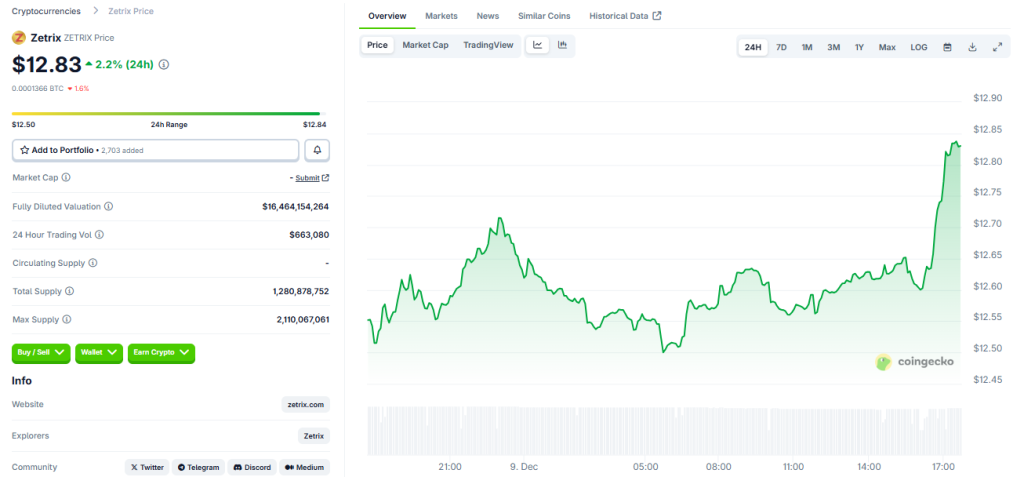
The launch comes at a time when Zetrix trades around $12.60, well below its peak above $20 recorded roughly a year earlier, according to CoinGecko data.

Malaysia Ramps Up Crypto Treasuries Even as Global Inflows Slow

The timing also places Johor’s initiative inside a broader regional shift. In recent months, Malaysia has seen a series of digital-asset treasury announcements.

On November 12, VCI Global said it would acquire $100 million worth of OOB tokens in a deal that will make Tether the company’s largest shareholder.

🛒 VCI Global has announced plans to acquire $100 million worth of OOB tokens, the native asset of Tether-backed crypto payments company Oobit.#Malaysia #Cryptohttps://t.co/OLLT57dQ9T

— Cryptonews.com (@cryptonews) November 12, 2025

VCI Global plans to fold the token into its AI and fintech platforms and establish its own digital treasury division.

The firm had already purchased $50 million worth of tokens through a restricted share issuance and intends to buy another $50 million on the secondary market after Oobit completes its migration from Ethereum to Solana.

These developments are unfolding as Malaysia’s regulators accelerate reforms to support a more active digital-asset ecosystem.

🔍 @SecComMalaysia proposes regulatory enhancements to the digital asset exchange framework by accelerating token listings. #DigitalAssets #Malaysiahttps://t.co/EV3L8ir6m1

— Cryptonews.com (@cryptonews) July 1, 2025

The Securities Commission has proposed an overhaul of exchange rules after trading volumes more than doubled in 2024 to nearly 14 billion ringgit.

The new framework would allow certain tokens to be listed without prior approval, provided they meet strict criteria, while requiring operators to adopt tighter governance and risk controls.

Source: DefiLlama

But the broader digital-asset treasury sector is showing signs of fatigue. Data from DefiLlama shows corporate crypto treasuries recorded their slowest month of the year in November, with inflows dropping to $1.32 billion, down sharply from September’s peak.

Galaxy Research described the market as entering a “Darwinian phase,” with leverage unraveling and several treasury-backed stocks trading at deep discounts.

Even major players like Strategy, despite adding nearly $1 billion in Bitcoin last week, have seen their equity fall more than 35% over the past month.

The post Malaysia’s Crown Prince Launches $121M Crypto Treasury – Despite Bubble Fears appeared first on Cryptonews.

ASIC Unveils Major Stablecoin Relief and Omnibus Rights — But There’s a Catch

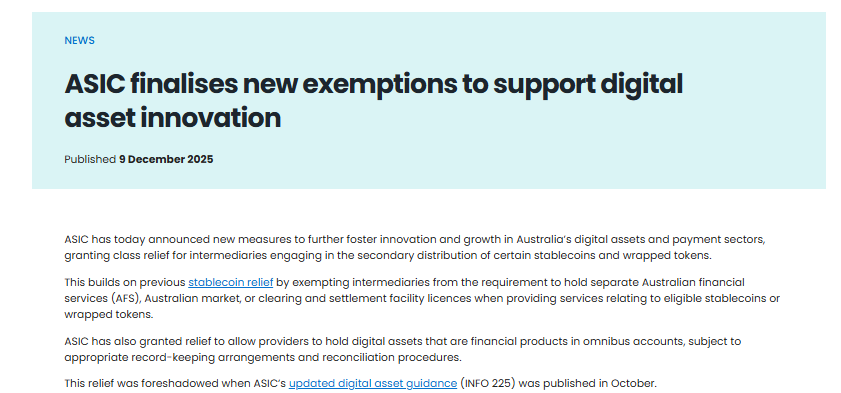
Australia’s securities regulator has introduced a sweeping set of exemptions aimed at easing the path for digital asset businesses while making clear that the reprieve is temporary and tied to a broader overhaul of the country’s crypto framework.

The Australian Securities and Investments Commission (ASIC) on Tuesday finalized class relief for intermediaries handling the secondary distribution of certain stablecoins and wrapped tokens.

The decision allows exchanges and other service providers to operate without holding separate Australian financial services, market, or clearing and settlement licenses when dealing with eligible products.

ASIC said the move is intended to support innovation as the government works on a permanent regime for digital asset platforms and payment systems.

Source: ASIC

ASIC Confirms Omnibus Custody Relief After Industry Feedback

The relief also extends to custody, as providers will be permitted to hold tokenized financial products in omnibus accounts, a structure commonly used in traditional markets but long restricted in crypto.

ASIC said the exemption will only apply if firms maintain proper records and reconciliation procedures. The regulator initially signaled this shift in October when it published the latest update to its key digital-asset guidance, INFO 225.

Tuesday’s announcement marks the end point of a consultation that began on 29 October, when ASIC released Simple Consultation 32 outlining proposed exemptions for stablecoins and wrapped assets.

🇦🇺 Australia requires stablecoin and digital asset providers to obtain financial services licenses under new ASIC guidance effective June 2026.#Australia #Stablecoinhttps://t.co/OECNhNHLUz

— Cryptonews.com (@cryptonews) October 29, 2025

The regulator received five non-confidential submissions, with industry groups largely supporting the plan but requesting clearer definitions and wider eligibility.

ASIC responded by expanding the scope to include tokens issued by entities that have applied for licenses.

The changes sit on top of a broader framework that ASIC has been assembling throughout the year.

The regulator’s updated INFO 225 guidance, published in late October, confirmed its long-held view that many stablecoins, wrapped tokens, tokenized securities, and even digital asset wallets fall under existing financial product rules.

Stablecoin Issuers Get Temporary Breather Under ASIC’s Transition Plan

That interpretation requires most service providers to hold AFS licenses and comply with investor-protection laws already in force.

To ease the transition, ASIC has adopted a sector-wide no-action stance until June 30, 2026.

Companies will have time to review the new guidance, lodge license applications, or adjust their operations.

🇦🇺 Australia's ASIC grants stablecoin intermediary relief from licensing requirements until 2028, with Catena Digital as the first qualified issuer.#Australia #Stablecoinhttps://t.co/vi2mBPwPbb

— Cryptonews.com (@cryptonews) September 18, 2025

The temporary relief is expected to remain in place until mid-2028, by which time the government aims to replace it with legislation covering tokenized payments and custody structures.

ASIC has indicated it may add more issuers after several firms said existing licensing hurdles threatened the commercial viability of launching Australian-regulated stablecoins.

Intermediaries must still provide retail investors with Product Disclosure Statements, a condition ASIC argues balances flexibility with consumer safeguards.

Regulators Tighten Grip as Australia Races to Catch Up in Digital Assets

The exemptions land at a moment when policymakers say Australia risks slipping behind global competitors.

ASIC Chair Joe Longo warned last month that tokenization is reshaping capital markets and urged the country to modernize quickly or face what he called a “missed opportunity.”

Government proposals released in September would require exchanges to obtain AFS licenses and impose penalties of up to 10% of annual turnover for rule breaches. Smaller platforms meeting low-threshold criteria would be exempt.

💸 Australia is set to slap crypto platforms with fines as steep as 10% of turnover under tough new draft rules, the Treasury said Thursday.#Australia #CryptoRegulation https://t.co/eVdrLlJgnd

— Cryptonews.com (@cryptonews) September 25, 2025

The push for tighter supervision has not stopped enforcement actions. In October, ASIC obtained a temporary travel ban against Blockchain Global director Ryan Xu as it investigates the collapse of the ACX Exchange, which left creditors owed more than A$58 million.

The case remains before the Federal Court.

Australia’s digital-asset sector has grown rapidly, with adoption climbing to 31% in 2025. Self-managed superannuation funds have increased their crypto exposure sevenfold since 2021, reaching A$1.7 billion.

🇦🇺 Australia's crypto adoption hits 31% outpacing other developed nations as stablecoins power $46T in transactions and crypto market cap crosses $4T globally.#Australia #Crypto #Adoptionhttps://t.co/ujNdEiEQDn

— Cryptonews.com (@cryptonews) October 24, 2025

Large exchanges have begun targeting this market, with Coinbase preparing a dedicated service for retirement accounts.

The post ASIC Unveils Major Stablecoin Relief and Omnibus Rights — But There’s a Catch appeared first on Cryptonews.

Do Kwon Sentencing: Judge Demands Clarity on Looming 40-Year South Korea Prison Term

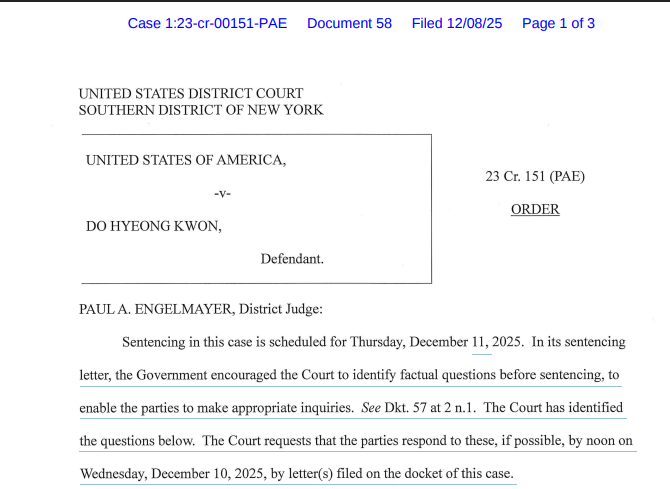
US District Judge Paul Engelmayer has asked prosecutors and defense lawyers for detailed clarification on a series of unresolved issues ahead of Terraform Labs co-founder Do Kwon’s sentencing.

This includes the possibility of the crypto entrepreneur facing an additional 40-year prison term in South Korea after serving time in the United States.

The judge issued the order on December 8, laying out multiple questions that he wants answered before the December 11 hearing.

Source: Court Document

The filing shows that the court is weighing how Kwon’s foreign legal exposure, previous detention, and the mechanics of international prisoner transfer programs may affect the punishment imposed in New York.

Court Seeks Clarity on Kwon’s Potential 40-Year Korean Prison Term

The judge’s first set of questions focuses on South Korea’s ongoing criminal case against Kwon.

He asked both parties whether they have any reliable information about the likely outcome of the charges he faces there, whether any agreements have been made with Korean authorities, and what sentencing ranges apply if he is convicted.

South Korean prosecutors previously said they would seek up to 40 years in prison for the same conduct that forms the basis of the US case.

The court also asked whether a Korean sentence could run concurrently or consecutively with a US sentence, a detail that could influence the final terms.

The order also seeks clarification on how to treat the nearly two years Kwon spent in custody in Montenegro. He was arrested in March 2023 while traveling under a false passport and remained detained until extradition.

The judge wants to know whether the Bureau of Prisons will credit any portion of that 21-month period toward his US term and whether the government’s recommendation of a 12-year sentence was based on the assumption that none of that time will count.

Federal prosecutors have already urged the court to impose the full 12 years permitted under Kwon’s plea agreement.

US prosecutors demand 12-year sentence for Do Kwon after Terra's $40B collapse that destabilized crypto markets and aided FTX implosion.#FTX #DoKwon #TerraFormhttps://t.co/LfzwEWH4XG

— Cryptonews.com (@cryptonews) December 6, 2025

Defense Pushes Back as Prosecutors Call TerraUSD Collapse “Colossal”

They described the TerraUSD collapse as “colossal in scope,” citing the broader market chain reaction that contributed to the downfall of major firms, including Sam Bankman-Fried’s FTX.

Kwon pleaded guilty in August to conspiracy and wire fraud, admitting that he made false statements about TerraUSD’s stability mechanisms and concealed Jump Trading’s role in supporting the stablecoin during a 2021 depeg event.

⚖ US agrees to recommend a 12-year prison sentence and a $19m fine for Do Kwon after he has pleaded guilty to wire fraud and conspiracy#DoKwon #TerraUSD https://t.co/ktCCrKzob4

— Cryptonews.com (@cryptonews) August 12, 2025

Kwon’s lawyers have asked for a five-year term instead, arguing that the time he spent in Montenegro was served in “brutal conditions” and should weigh heavily in the court’s decision.

They also point to the likelihood that he will be extradited to South Korea after completing his US sentence, where he faces a much longer potential punishment.

The defense says that imposing the full recommended term would result in an excessively long combined period of imprisonment.

Judge Seeks DOJ Clarification on Victim Compensation and Asset Forfeiture

The judge’s order shows he is taking that possibility seriously. He asked both sides to explain whether supervised release would even matter if Kwon is likely to be removed from the United States.

He also questioned what guarantees the U.S. would have that another country would enforce the rest of Kwon’s sentence if he is transferred overseas.

Prosecutors have already said they will support a transfer request once Kwon serves half of his sentence.

But the judge noted that these transfers usually require detailed recommendations to the Bureau of Prisons before they can move forward.

The filing also points to several administrative problems tied to forfeiture and victim payments.

The judge asked the Justice Department to clarify how its remission process would decide which victims qualify for compensation from the seized assets.

This question is especially important because the losses span multiple countries, and no restitution order was requested in the case.

The post Do Kwon Sentencing: Judge Demands Clarity on Looming 40-Year South Korea Prison Term appeared first on Cryptonews.

Sen. Moreno Warns “No Deal is Better Than a Bad Deal” as Crypto Bill Talks Stall

Talks on the United States’ long-awaited crypto market structure bill have entered another tense stretch, with Sen. Bernie Moreno saying negotiations have become “decently frustrating” as lawmakers struggle to align on the next major step for digital-asset regulation.

Speaking Monday at the Blockchain Association Policy Summit in Washington, D.C., Moreno said he does not want Congress to advance a weak bill simply to show progress, adding that “no deal is better than a bad deal.”

He is scheduled to meet with Democrats on Tuesday to determine whether the two sides can break the recent deadlock.

Progress Slows on Crypto Oversight Bill Despite Earlier Bipartisan Momentum

Earlier this year, Lawmakers to pass a stablecoin law marking a rare moment of bipartisan agreement.

However, the broader market structure bill, intended to decide which federal agency has jurisdiction over different types of crypto assets and how consumer protections should be applied, has been difficult to finalize.

Both the House and Senate have their own versions, and lawmakers will need to resolve these differences before the bill can move toward.

The House passed its version, the Digital Asset Market Clarity Act, in July. The bill gives the Commodity Futures Trading Commission primary authority over digital commodities and preserves the Securities and Exchange Commission’s power over fundraising and token issuances.

🇺🇸 GENIUS Act, Anti-CBDC Act, and CLARITY Act pass crucial procedural vote 215-211 in Congress after Trump's decisive Oval Office intervention rescues stalled crypto agenda.#GeniusAct #Trumphttps://t.co/Lm2tCBbimp

— Cryptonews.com (@cryptonews) July 16, 2025

The Senate Banking Committee, where Moreno sits, has its own draft that introduces the term “ancillary assets” in an effort to define which tokens should not be treated as securities.

That committee must also coordinate with the Senate Agriculture Committee, which released a separate draft last month expanding CFTC authority. Both proposals would still require markup hearings, revisions, and a formal vote before advancing.

There was brief optimism last week when Senate Banking Committee Chair Tim Scott told attendees at a “Crypto Christmas” event that there was a realistic path to hold a markup hearing on December 17 or 18.

But other members are less confident. Sen. Mark Warner said on Monday that completing a markup before the holidays would be difficult, in part because lawmakers are still waiting for the White House’s language on quorum and ethics provisions.

Industry lawyers have also raised concerns about unresolved issues in the bill, including how stablecoin yield products should be treated and how decentralized finance should be regulated.

Congress Faces Tightening Window as Political Friction Slows U.S. Crypto Rulemaking Efforts

Political complications continue to cloud the process. Several Democrats have voiced concerns about President Donald Trump’s financial ties to crypto ventures, which Bloomberg estimated at $620 million in July.

📜 Democratic lawmakers have launched a new probe into former President Donald Trump’s growing involvement in the crypto industry.#Crypto #Regulationhttps://t.co/Wli5QqlNdu

— Cryptonews.com (@cryptonews) May 15, 2025

His family’s involvement in a stablecoin project and a mining firm has fueled questions about potential conflicts of interest. The debate has added another layer of tension as Congress attempts to write rules that would shape the industry for years.

The negotiations are unfolding at a time when the U.S. is trying to put a more permanent structure around the digital-asset market.

Earlier this year, the GENIUS Act became law, marking the country’s first attempt at a federal framework for stablecoins. The law requires stablecoin issuers to hold full reserves, undergo monthly audits, and follow strict anti-money-laundering rules.

A key point in the legislation is the clarification that stablecoins are not to be treated as securities. With that clarification in place, agencies now have until July 2026 to finish writing the rules that will put the law into practice.

🇺🇸 @RepBryanSteil presses regulators to speed up GENIUS Act rulemaking before the July 2026 deadline amid concerns over potential delays#GENIUSAct #CryptoRegulationhttps://t.co/KF4aPx4der

— Cryptonews.com (@cryptonews) December 3, 2025

Officials from the FDIC, OCC, Federal Reserve, and NCUA told members of Congress last week that they have already begun the work and expect to roll out the new rules in two phases starting next year.

Even with that, lawmakers say time is running short. Sen. Thom Tillis warned that Congress has only a small window to move forward. He said that if discussions continue into February, the election season could bring everything to a stop.

The post Sen. Moreno Warns “No Deal is Better Than a Bad Deal” as Crypto Bill Talks Stall appeared first on Cryptonews.

JPMorgan CEO Drops Debanking Bombshell: “We Cut Republicans and Democrats” – No One’s Safe

JPMorgan Chase CEO Jamie Dimon has rejected claims that the bank engages in politically motivated “debanking,” saying the firm does not target customers based on their political views and only acts under strict legal and regulatory obligations.

His remarks come as fresh accusations from political and crypto figures keep the debate over bank account closures at the center of U.S. financial and political scrutiny.

Operation Chokepoint 2.0 Debate Flares as Dimon Defends JPMorgan

Dimon addressed the issue during an appearance on Fox News’ “Sunday Morning Futures,” where host Maria Bartiromo asked him about allegations from Devin Nunes, the CEO of Trump Media Group.

Nunes previously claimed that Trump Media’s bank records were subpoenaed during the federal investigation into President Donald Trump’s efforts to overturn the 2020 election results and suggested the company was effectively debanked.

Dimon rejected the political framing of the claim, saying JPMorgan follows government subpoenas when required but does not close accounts based on political affiliation.

He emphasized that the bank’s actions are guided by federal law and regulatory expectations, not ideology.

The comments arrive against the backdrop of wider political tension over access to banking services, especially for crypto firms, conservative figures, and controversial industries.

The debate intensified in November after Strike CEO Jack Mallers said JPMorgan abruptly closed his personal accounts without explanation.

🚫 Strike CEO @jackmallers says JPMorgan @Chase abruptly terminated his personal bank accounts in September without offering any explanation.#Strike #JPMorganhttps://t.co/nia2Vj4dYV

— Cryptonews.com (@cryptonews) November 24, 2025

Mallers said the bank cited “concerning activity” under the Bank Secrecy Act while refusing to provide specific details.

Mallers’ disclosure reignited concern over what the crypto industry calls “Operation Chokepoint 2.0,” an alleged extension of the Obama-era initiative that discouraged banks from serving high-risk sectors.

Crypto executives and Republican lawmakers argue that the modern version has been used to quietly restrict crypto firms’ access to the U.S. banking system.

Democrats and regulators have repeatedly denied that such a coordinated campaign exists, saying enforcement actions are driven by anti-money-laundering and fraud risks.

Trump Allies, Lawmakers Clash With Banks as Debanking Probes Continue

The issue took on new political weight after President Donald Trump signed an executive order in August intended to prevent financial institutions from denying services solely on the basis of crypto-related activity.

📜 A White House draft order may fine banks for cutting clients over politics, amid claims of bias against conservatives and crypto firms.#CryptoPolicy #debanking https://t.co/Jk5Wuvc3lk

— Cryptonews.com (@cryptonews) August 5, 2025

After Mallers went public, Bo Hines, a former adviser to Trump’s digital assets council and now a strategic adviser to Tether, publicly criticized JPMorgan, suggesting that the end of Operation Chokepoint had not translated into meaningful change on the ground.

Trump has previously said he was personally affected by debanking due to his politics, while his son Eric Trump has also claimed that several major banks cut ties with the family at the end of Trump’s first term.

Other conservative figures, including MyPillow CEO Mike Lindell and several religious and nonprofit groups, have made similar claims.

At the same time, Democratic lawmakers have raised concerns that some account closures disproportionately affect Muslim Americans and minority communities due to broad “de-risking” policies.

Regulators and banks continue to maintain that these decisions are based on compliance demands.

Under U.S. law, banks are required to monitor customer activity, report suspicious transactions, and comply with subpoenas under frameworks such as the Bank Secrecy Act and anti-money-laundering rules.

Banks argue that failure to do so exposes them to severe penalties.

Dimon, during the same Fox News appearance, also addressed broader economic and national security issues, including JPMorgan’s newly launched $1.5 trillion security and resiliency investment initiative and the bank’s cautious approach to China-related business.

However, his comments on debanking drew the most immediate political attention. The controversy continues as congressional investigations remain active.

Republican lawmakers on the House Financial Services Committee previously released a report alleging that dozens of crypto firms and individuals lost banking access under regulatory pressure.

Federal agencies have pushed back, saying supervision is risk-based, not political.

The post JPMorgan CEO Drops Debanking Bombshell: “We Cut Republicans and Democrats” – No One’s Safe appeared first on Cryptonews.

Mantra CEO Issues Urgent Warning: “Withdraw Your OM From OKX Now” – Migration Crisis Escalates

Tensions between blockchain platform Mantra and the crypto exchange OKX escalated sharply this week after Mantra CEO John Patrick Mullin accused the exchange of publishing “incorrect and misleading” information about the project’s upcoming token migration.

In a strongly worded statement posted on X, Mullin urged OM holders on the exchange to withdraw their tokens immediately and complete migration independently through official Mantra channels.

On December 5, 2025, OKX published a statement entitled “OKX to support OM crypto migration”. This statement contained multiple factual errors and misrepresentations not present in official MANTRA governance proposals. We are incredibly concerned by this development, which shows…

— JP Mullin (🕉, 🏘) (@jp_mullin888) December 8, 2025

Mantra Accuses OKX of Publishing “False” OM Migration Dates

The conflict surfaced on Monday after OKX released an announcement outlining its support for the OM migration, including a detailed schedule that placed the conversion window between December 22 and December 25, 2025.

The exchange said it planned to delist OM spot pairs, halt deposits and withdrawals, conduct an account snapshot, and process the conversion at a 1:4 ratio in line with what it described as Mantra’s Proposal 17 and Proposal 26.

OKX also said it would suspend futures, margin trading, and related services ahead of the migration.

Mullin disputed nearly every part of OKX’s timeline. He said the exchange had published dates that were “technically impossible.

He added that official governance documents state the migration can only begin after the ERC-20 OM token is fully deprecated on January 15, 2026.

According to him, this makes any December 2025 migration window unworkable.

He also argued that the exchange had rearranged the intended process by placing the token split ahead of deprecation, reversing the sequence outlined in Proposal 26.

He described the exchange’s timeline as “arbitrary,” noting that no final launch date has been announced because it depends on a pending technical review.

The CEO said the publication of what he called “demonstrably false information” raises concerns about negligence or possible malicious intent.

He added that OKX has not communicated with Mantra since April 13, the date of OM’s extreme market collapse that saw the token fall more than 90% in a single day.

📉 Mantra lost 90% of its value in just one hour — $6B gone. No hack, no clear reason. Just “liquidations,” team silence, and big wallet moves. What really happened, and which red flags did investors ignore?https://t.co/2HeL1ZiMhG

— Cryptonews.com (@cryptonews) April 14, 2025

He argued that the communication breakdown has now resulted in market confusion during a period in which other exchanges have coordinated closely with Mantra on migration details.

After $6B Collapse, OM Holders Face New Uncertainty Amid Exchange Frictions

The April collapse, which erased more than $6 billion from OM’s market capitalization within 24 hours, continues to cast a long shadow over the project.

Some traders described the crash as a rug pull, though Mantra denied wrongdoing and blamed the event on sudden liquidations during low-liquidity weekend trading.

A later post-mortem attributed the crash partly to aggressive leverage policies on centralized exchanges and said the incident exposed wider structural risks in the industry.

In its response at the time, the project pledged more transparency, reduced internal validator control, and a 150 million OM token burn by Mullin himself.

Since then, several exchanges have taken action around the token. INDODAX delisted OM during the initial shift away from ERC-20.

Meanwhile, Binance temporarily suspended OM deposits and withdrawals during network upgrades before relisting the redenominated MANTRA token.

Other platforms paused trading as part of broader migration adjustments.

In the same period, OKX removed multiple unrelated assets, such as BAL, PERP, FLM, PSTAKE, CLV, and RACA, because of low activity or listing-criteria issues, a trend that has raised wider questions about the exchange’s handling of assets undergoing structural changes.

The current dispute has left many OM holders trying to determine the safest migration path.

Mullin called on users to avoid depending on OKX during this phase and to maintain direct custody to ensure they do not act on incorrect timelines.

He said Mantra will continue coordinating with all other major exchanges and will support retail holders through the transition.

OKX, for its part, has indicated that its schedule may face delays due to coordination requirements, but it has not publicly addressed Mullin’s accusations or clarified its interpretation of the governance proposals.

The post Mantra CEO Issues Urgent Warning: “Withdraw Your OM From OKX Now” – Migration Crisis Escalates appeared first on Cryptonews.

MetaPlanet CEO Reveals Strategy-Style ‘MARS’ Plan to Supercharge Bitcoin Buying

Tokyo-listed Metaplanet is preparing to roll out a new preferred-share structure modeled on Strategy’s widely watched Bitcoin funding vehicle, as the company doubles down on its push to expand its corporate Bitcoin treasury.

The plan was confirmed this week by Metaplanet CEO Simon Gerovich during remarks at the Bitcoin for Corporations Symposium, where he appeared alongside Strategy Chairman Michael Saylor.

JUST IN: MetaPlanet $MTPLF CEO just announced plan to launch their version of Strategy's $STRC (MARS) to buy more #Bitcoin.#Bitcoin-backed credit is booming 🚀🔥 pic.twitter.com/72RsD0NNug

— BitcoinTreasuries.NET (@BTCtreasuries) December 8, 2025

Gerovich told attendees that shareholders will vote later this month on launching a new capital instrument called MARS, short for MetaPlanet Acquisition and Reserve Strategy.

He described it as the company’s version of Strategy’s STRC preferred stock, specifically designed to raise capital dedicated to buying more Bitcoin.

Metaplanet Details Structure of ‘Mars’ Bitcoin-Backed Preferred Equity

Metaplanet formally outlined the structure earlier in November when its board approved two new classes of preferred equity known internally as Mars and Mercury.

🚀 Metaplanet raises $135M for Bitcoin acquisitions as Saylor defends treasury strategy, saying Strategy can withstand 80-90% drawdowns.#Metaplanet #Bitcoinhttps://t.co/pikptcs4nb

— Cryptonews.com (@cryptonews) November 21, 2025

The Mars shares are structured as senior, non-dilutive Class A preferred stock. They sit above both Mercury shares and common equity in Metaplanet’s capital stack, carry no conversion rights, and provide holders with a senior claim on dividends and assets.

Proceeds from these shares are intended to be directed toward Bitcoin accumulation as part of Metaplanet’s long-term treasury strategy.

Mars shares are also designed to pay adjustable monthly dividends.

The dividend rate is structured to rise when the stock trades below par and fall when it trades above that level.

This mechanism is intended to reduce price volatility while offering steady income to investors seeking Bitcoin-linked exposure without direct equity risk.

STRC Delivers 10% Returns as Metaplanet look to mirror it

The structure mirrors Strategy’s STRC stock, a variable-rate perpetual preferred share launched in July 2025.

🚀 @Strategy has launched a $4.2B at-the-market program for $STRC preferred shares, building on record Q2 profits and expanding its Bitcoin treasury. #Strategy #Bitcoin #saylor https://t.co/Xtg8Yf40H1

— Cryptonews.com (@cryptonews) July 31, 2025

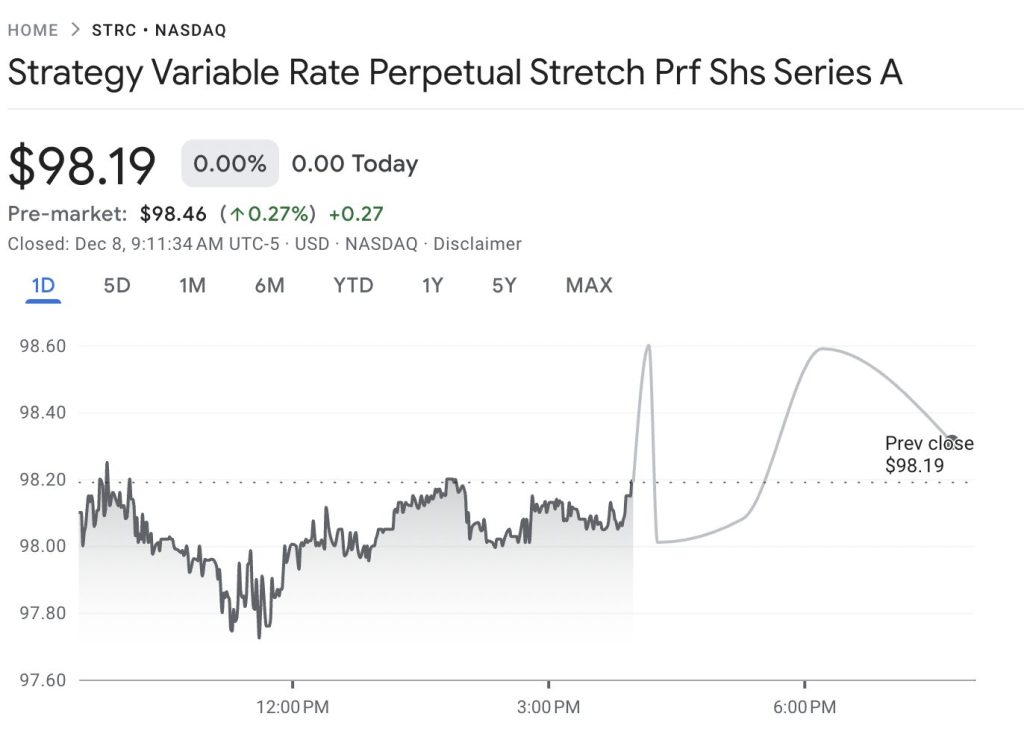
STRC currently trades near $98 and pays an annualized dividend of about 10.75%, with an effective yield close to 11%.

The dividend is adjusted monthly to keep STRC trading near its $100 target price.

Source: Google Finance

Strategy uses proceeds from STRC and other preferred programs to fund Bitcoin purchases.

Since launch, STRC has returned just over 10%, while remaining far less volatile than Strategy’s common stock or Bitcoin itself.

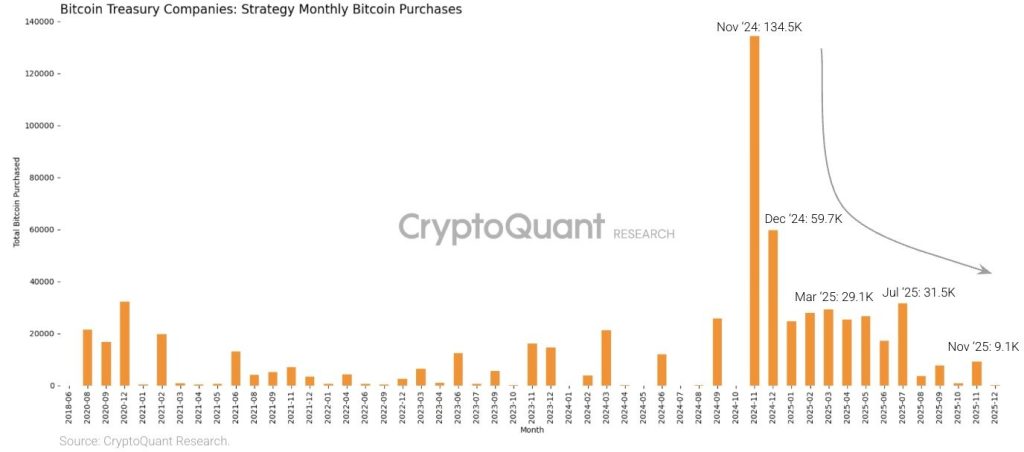
Strategy’s approach has driven an aggressive expansion of its Bitcoin treasury. By late 2025, the company held 650,000 BTC after adding tens of thousands of coins throughout the year.

About 21,000 BTC were purchased using STRC IPO proceeds alone.

Additional purchases in October and November lifted total holdings beyond 641,000 BTC at the time, funded through various preferred offerings and at-the-market share sales.

Metaplanet Turns to Buybacks as Japan’s Bitcoin Treasury Trade Cools

Metaplanet appears to be adapting that same funding blueprint to Japan’s market conditions.

The company has already issued Mercury Class B preferred shares, which combine quarterly fixed dividends with the option to convert into common stock.

On Nov. 20, Metaplanet approved the issuance of 23.61 million Mercury shares through a third-party allocation, raising about ¥21.25 billion, or roughly $135 million.

🇯🇵 Metaplanet approves the issuance of new Class B shares via a third-party allotment.#Bitcoin #Metaplanethttps://t.co/p8fYF0FyZt
— Cryptonews.com (@cryptonews) November 20, 2025

The conversion price was set well above the company’s market price, limiting immediate dilution.

At the same time, Metaplanet has relied heavily on debt secured by its Bitcoin holdings.

In late November, the company disclosed a new $130 million loan backed entirely by BTC under a previously announced $500 million credit facility.

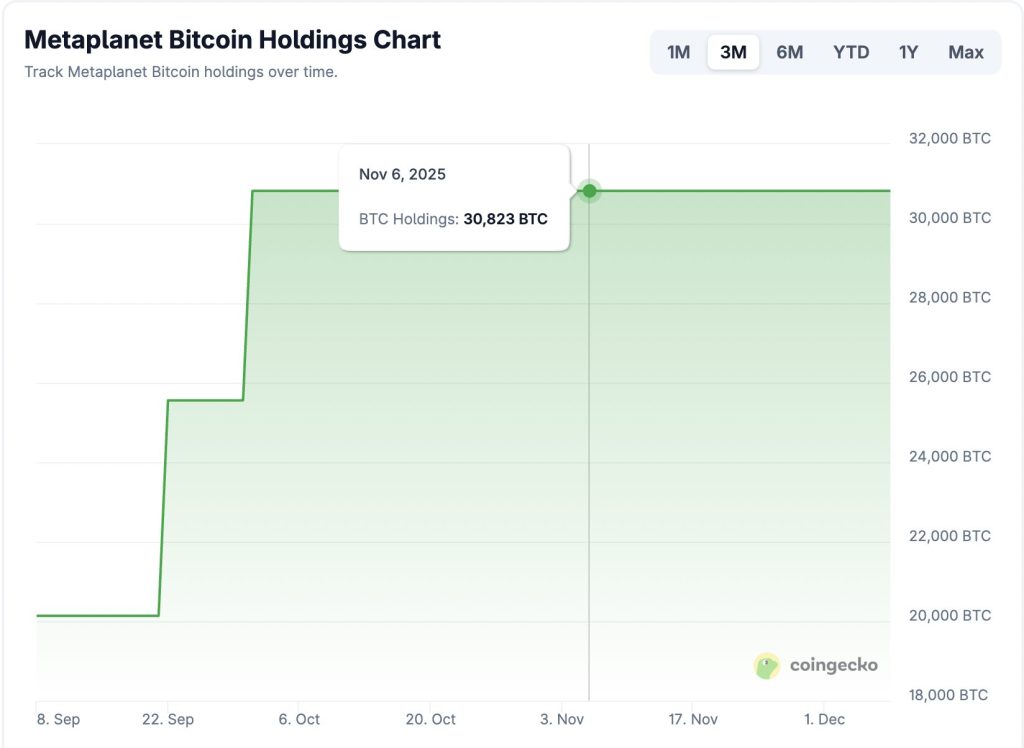
As of its latest treasury update, Metaplanet holds 30,823 BTC valued near $2.7 billion, with an average acquisition cost of $108,070 per coin.

Source: Coingecko

With Bitcoin trading below that level, unrealized losses stood at roughly $636 million.

The timing of the Mars announcement comes during a slowdown across corporate Bitcoin treasuries. DefiLlama data shows that digital asset treasury inflows dropped to $1.32 billion in November, the lowest monthly total of 2025.

Notably, In November alone, Strategy shares fell more than 35%, while Metaplanet’s stock dropped over 20% as Bitcoin slid nearly 25% from October highs.

The post MetaPlanet CEO Reveals Strategy-Style ‘MARS’ Plan to Supercharge Bitcoin Buying appeared first on Cryptonews.

SEC Closes Ondo Finance Probe Without Charges – End of Biden-Era Crypto Crackdown?

The U.S. Securities and Exchange Commission has formally closed its multi-year investigation into Ondo Finance without filing any charges, marking another high-profile reversal of a crypto enforcement action that began under the Biden administration.

Ondo disclosed the decision in a blog announcement, confirming that the probe examined whether its tokenized real-world asset products complied with federal securities laws and whether its ONDO token itself qualified as a security.

The SEC has formally closed a confidential Biden-era investigation into Ondo — without any charges.

The inquiry began in 2024, focused on whether Ondo’s tokenization of certain real-world assets complied with federal securities laws as well as whether the ONDO token was a… pic.twitter.com/yV4xVX7Qrx

— Ondo Finance (@OndoFinance) December 8, 2025

Ondo Joins Coinbase, Kraken, and Co. as SEC Closes Key Crypto Investigations

The investigation began in 2024 during a period of heightened scrutiny of digital-asset firms and remained confidential until its resolution. The company said it fully cooperated throughout the process.

At the time the inquiry was opened, Ondo was emerging as one of the earliest and largest platforms for tokenized U.S. Treasuries and one of the few firms working toward large-scale tokenized access to publicly listed equities.

The company was also seeing rapid adoption from international investors, placing it squarely within the SEC’s enforcement focus during a period shaped by exchange bankruptcies, retail speculation, and regulatory uncertainty.

The closure of the Ondo investigation comes as Washington indicates a broader recalibration of its crypto policy posture following the appointment of Paul Atkins as SEC chair.

🚨 Paul Atkins was sworn in as SEC Chairman on Monday, and is expected to have a private ceremony with President Trump at the Oval Office today.#PaulAtkins #SECChair https://t.co/lqyUZN3B7H

— Cryptonews.com (@cryptonews) April 22, 2025

Since his takeover, the agency has moved to unwind several of the most aggressive crypto cases launched during the Biden years.

The SEC’s landmark lawsuit against Coinbase, filed in 2023 over allegations that the exchange operated as an unregistered securities platform, was dismissed with prejudice in February 2025.

A similar enforcement case against Kraken, also alleging unregistered exchange and broker activities, was closed a month later with no fines, no admissions of wrongdoing, and no required business changes.

📊 The @SECGov agrees to dismiss its lawsuit against @krakenfx, dropping all charges without penalties or operational changes. #CryptoRegulations #Kraken #SEChttps://t.co/dH1nPi6VFK

— Cryptonews.com (@cryptonews) March 3, 2025

Also, in February, the SEC shut down its investigation into Robinhood’s crypto unit without taking enforcement action, and scrutiny of Uniswap Labs was quietly dropped as well.

Not all Biden-era crypto cases have disappeared. Criminal proceedings brought by the U.S. Department of Justice remain active in the Tornado Cash case.

Co-founder Roman Storm was convicted in August for conspiring to operate an unlicensed money-transmitting business and now faces a potential prison sentence, while fellow co-founder Roman Semenov remains at large.

Although Treasury sanctions against the Tornado Cash protocol itself were lifted earlier this year following an appellate ruling, the individual prosecutions continue.

Ondo Brings Tokenized U.S. Stocks to Over 500 Million Investors Worldwide

Ondo’s regulatory clearance also comes as tokenization moves deeper into regulated financial markets.

In September, the company launched Ondo Global Markets, a platform offering tokenized access to more than 100 U.S. stocks and ETFs for eligible non-U.S. investors across Asia-Pacific, Africa, and Latin America.

📈 Ondo opens tokenized U.S. stocks and ETFs to global users via Ethereum, with real-time pricing and DeFi compatibility built in.#ondo #rwa #tokenizationhttps://t.co/F7dKdEShfH

— Cryptonews.com (@cryptonews) September 3, 2025

The service runs on Ethereum and is expanding to BNB Chain, Solana, and its own Ondo Chain, with tokenized securities backed one-to-one by underlying assets held at U.S.-registered broker-dealers.

That international expansion accelerated in November when Liechtenstein’s Financial Market Authority granted Ondo approval to offer tokenized stocks and ETFs across the European Economic Area under the MiCA regulatory framework.

The approval positions the company to serve more than 500 million retail investors across 30 European countries through passported authorization.

At the infrastructure level, Ondo has also expanded its tokenized treasury-backed yield product, USDY, to the Stellar blockchain.

The integration, announced in September at the Stellar Meridian conference in Rio de Janeiro, allows Stellar users to access on-chain yield tied to U.S. government debt through a global payments-focused network.

Meanwhile, the SEC itself has begun publicly examining how tokenization could modernize traditional securities markets.

🏛 The SEC is weighing an “innovation exemption” to boost tokenization, just as the House passes a landmark stablecoin bill reshaping US crypto policy.#Tokenization #CryptoPolicy https://t.co/za9zOMVvfm

— Cryptonews.com (@cryptonews) July 18, 2025

The agency’s Investor Advisory Committee is now studying how digital issuance, trading, and settlement could reshape equity infrastructure, a marked shift from the enforcement-first approach that dominated earlier policy.

The post SEC Closes Ondo Finance Probe Without Charges – End of Biden-Era Crypto Crackdown? appeared first on Cryptonews.

Canada’s $72M Crypto Tax Crackdown Targets 2,500 Dapper Labs Users — But No Charges Yet

Canada’s tax authority has widened its crypto enforcement net, targeting 2,500 users of Vancouver-based NFT firm Dapper Labs in a probe tied to an estimated C$72 million ($54 million) in suspected unpaid taxes.

The probe sits within a larger Canada Revenue Agency (CRA) campaign that has already generated more than C$100 million in recovered taxes through crypto audits over the past three years, according to a report by The Canadian Press

Yet despite the growing sums involved, authorities confirm that no criminal charges have been laid in any crypto tax case since 2020, showing the gap between civil enforcement and criminal prosecution in Canada’s digital asset sector.

CRA Secures Rare ‘Unnamed Persons’ Order in Dapper Labs Tax Probe

The report stated that the CRA sought and received approval in September to compel Dapper Labs to disclose information tied to thousands of users under what is known as an “unnamed persons requirement.”

The legal tool allows tax authorities to obtain records on an identifiable group of taxpayers without accusing the company itself of wrongdoing.

Dapper, which operates one of the most prominent non-fungible token platforms and runs its own blockchain and digital wallets, did not oppose the application.

The report shows the CRA initially sought information on roughly 18,000 Dapper users, but following negotiations, the scope was narrowed to 2,500 accounts.

It marks only the second time Canadian courts have granted such an order against a domestic crypto firm, the first being issued against Coinsquare in 2020.

In an affidavit supporting the application, CRA project lead Predrag Mizdrak said crypto markets are deeply embedded in the underground economy and present “significant non-compliance” risks.

Internal agency figures show that about 15% of Canadian crypto users fail to file taxes on time or at all, while 30% of those who do file are classified as high risk for non-compliance.

The agency estimates that up to 40% of taxpayers using crypto platforms fall into non-filing or high-risk categories.

The CRA currently employs 35 dedicated cryptoasset auditors working across more than 230 files.

Since 2020, five criminal investigations involving digital assets have been launched, with four still ongoing as of March.

The agency says the cases are complex and often hinge on cross-border evidence and cooperation, contributing to long timelines and the absence of charges to date.

Canada Prepares New Crypto Reporting Rules as Federal Crackdown Widens

The crackdown on Dapper users comes as Canada tightens its wider crypto oversight. Under long-standing CRA policy, cryptocurrencies are treated as commodities rather than currencies.

Casual investors generally face capital gains tax, with only 50% of profits taxable at marginal rates, while frequent traders, miners, and crypto businesses are taxed on full business income.

Most crypto transactions, including sales, swaps, and crypto-based purchases, are treated as taxable dispositions under existing rules.

New reporting rules are also on the way as Canada is preparing to implement the OECD-backed Crypto-Asset Reporting Framework starting in 2026. The framework will require exchanges, brokers, and crypto ATM operators to report transaction data and customer information directly to the CRA.

Crypto firms in Canada will soon face increased disclosure obligations, per regulations introduced in Tuesday's 2024 federal budget.#Canada #crypto #CanadaBudgethttps://t.co/pkdV878DXM

— Cryptonews.com (@cryptonews) April 17, 2024

The 2024 federal budget set aside more than C$50 million over five years to support that effort.

At the same time, Ottawa plans to establish a national financial crimes agency by 2026 to focus on sophisticated money laundering and online financial fraud.

Finance officials describe it as the country’s first unit focused exclusively on sophisticated financial crime.

Beyond taxes, enforcement has intensified on the anti-money-laundering front. FINTRAC recently issued a record C$19.6 million fine against KuCoin for failing to register and report large transactions.

👨🏻‍⚖️ Canada’s financial intelligence agency @FINTRAC_Canada

has fined the operator of @kucoincom C$19.6 million (US$14.09 million).#KuCoin #Canadahttps://t.co/O2k1Fskkgd

— Cryptonews.com (@cryptonews) September 26, 2025

Meanwhile, another firm, Xeltox Enterprises, was hit with penalties totaling nearly C$177 million.

In September, the Royal Canadian Mounted Police shut down TradeOgre and seized more than C$56 million in assets, marking Canada’s first full crypto exchange takedown.

The post Canada’s $72M Crypto Tax Crackdown Targets 2,500 Dapper Labs Users — But No Charges Yet appeared first on Cryptonews.

Indiana Bill Would Mandate Bitcoin in Pensions and Shield Self-Custody Rights

A newly introduced bill in Indiana would require public retirement programs to offer Bitcoin-related investment options and would also limit how much power local governments have to restrict the use of digital assets.

The proposal was filed on Thursday by State Representative Kyle Pierce, a Republican from Anderson. Known as House Bill 1042, the legislation was presented during a meeting of the House Financial Institutions Committee.

It focuses on giving public workers access to cryptocurrency investments while setting clear legal boundaries around digital asset use, custody, payments, and mining.

Indiana Targets First-in-the-Nation Mandate for Bitcoin in Public Pensions

Under the bill, administrators of several state-run retirement and savings plans would be required to include cryptocurrency exchange-traded funds as standard investment choices.

It would also permit certain public pension funds to invest directly in crypto-linked ETFs and give the state treasurer authority to place funds from specific accounts into stablecoin-based ETFs.

Pierce said the bill is designed to give Indiana residents more financial flexibility as digital assets become a larger part of the broader economy.

He added that the legislation is intended to balance investment choice with regulatory guardrails while allowing the state to explore potential government use of blockchain technology through pilot programs.

Source: Indiana House Republicans

The legislation goes beyond retirement investing and takes aim at local regulation. Cities and counties would be prohibited from passing rules that place “unreasonable” limits on digital assets if similar rules do not apply to traditional financial activity.

That protection would extend to crypto payments, private ownership of digital wallets, and mining operations.

The bill adds clear safeguards for self-custody. It states that private digital asset keys could only be demanded through a court order and only when no other legal method of access is available.

It would also prevent local governments from zoning out mining facilities from industrial zones and would protect properly zoned residential mining activity.

If enacted, Indiana would become the first state in the country to require publicly managed retirement programs to provide Bitcoin exposure as a standard option.

While some states permit limited crypto investment flexibility, none currently mandate it.

U.S. States Expand Crypto Access in Pensions, Payments, and Property Laws

Other states have taken related but narrower steps. Oklahoma passed a law in 2024 protecting residents’ right to hold crypto in self-custody wallets and blocking special taxes on Bitcoin transactions.

In 2025, Kentucky followed by formally recognizing self-custody as a protected property right. Wyoming has also approved laws that allow public pension funds to invest in digital assets.

Elsewhere, Arizona introduced legislation that would allow Bitcoin ETFs in retirement accounts, while Florida outlined legal pathways for holding digital assets through ETFs in certain state funds.

✅ Arizona’s push to integrate digital assets into state financial infrastructure is nearing a critical milestone. #Arizona #Bitcoinhttps://t.co/jNb7UnYvX1

— Cryptonews.com (@cryptonews) April 18, 2025

Indiana’s proposal stands apart by making crypto ETF access a requirement rather than a choice.

Momentum around crypto-linked retirement exposure continues to build nationwide. In August, Michigan’s state retirement system tripled its Bitcoin ETF holdings to 300,000 shares, valued at about $11.4 million, according to regulatory filings.

📈 The State of Michigan Retirement System has increased its exposure to Bitcoin, tripling its holdings in the @ARKInvest 21Shares Bitcoin ETF.#Michigan #Bitcoinhttps://t.co/lUxWycmp4A

— Cryptonews.com (@cryptonews) August 6, 2025

The fund also holds roughly $13.6 million in Ethereum through the Grayscale Ethereum Trust. Wisconsin’s state investment board has also disclosed more than $387 million in Bitcoin ETF exposure.

States are also widening their use of digital assets outside of investing. In September, Ohio finalized plans to accept Bitcoin and other cryptocurrencies for official state payments.

In October, California updated its Unclaimed Property Law to ensure dormant crypto is not automatically converted into cash when

transferred to state custody.

✅ California has become the first US state to formally protect unclaimed crypto from being forcibly converted to cash.#California #Bitcoinhttps://t.co/PoV40lmZi9

— Cryptonews.com (@cryptonews) October 14, 2025

New York City has taken its own steps by setting up a municipal Office of Digital Assets and Blockchain.

The move followed an executive order from Mayor Eric Adams aimed at coordinating crypto policy and encouraging blockchain development.

🗽 Bitcoin NYC Mayor Adams established the “nation’s first-ever” municipal office for crypto and blockchain to position the city as the global crypto hub.#EricAdams #NYCMayor #CryptoOfficehttps://t.co/oVEBRTRp5y

— Cryptonews.com (@cryptonews) October 15, 2025

At the federal level, broader regulatory efforts are also underway. Lawmakers are preparing new frameworks that could shape how states approach crypto policy, including updated guidance on 401(k) crypto exposure expected in 2026.

The post Indiana Bill Would Mandate Bitcoin in Pensions and Shield Self-Custody Rights appeared first on Cryptonews.

Poland Stalls MiCA-Style Crypto Rules as Lawmakers Fail to Override Presidential Veto

Poland’s efforts to align its crypto market with the European Union’s Markets in Crypto-Assets framework have hit a major political roadblock after lawmakers failed to override a presidential veto on a sweeping digital-asset bill.

This leaves the country as the last EU member without a national MiCA-style regime.

According to a Bloomberg report, the vote was held in the lower house of parliament on Friday, falling short of the three-fifths majority required to overturn President Karol Nawrocki’s decision to reject the legislation.

The outcome halts Prime Minister Donald Tusk’s push to place Poland’s crypto sector under tight regulatory control and forces the government to restart the legislative process from scratch.

Tusk Flags Crypto as National Security Threat Amid Russia Sabotage Claims

Tusk had framed the bill as a national security measure in the days leading up to the vote.

Addressing parliament, he said the unregulated crypto market had become a conduit for money laundering and foreign interference, including activity linked to Russia and Belarus.

He told lawmakers that Polish authorities had identified “several hundred” foreign entities operating in the domestic crypto market and warned that Russian intelligence and organized crime groups were exploiting digital assets for covert financing.

Government officials have tied those concerns to recent security incidents.

Last month, Warsaw blamed Russia for a blast on a key railway route used for supply traffic to Ukraine, an allegation Moscow dismissed.

Polish security services have also cited cases of underground groups allegedly paid in cryptocurrencies to carry out sabotage activities inside the country.

⚔ Russia is using cryptocurrencies to pay saboteurs carrying out hybrid attacks across the European Union, according to a Polish security official. #Russia #Cryptohttps://t.co/MsOjIZjSfu

— Cryptonews.com (@cryptonews) October 14, 2025

The veto has deepened an already sharp political confrontation between Nawrocki, a nationalist conservative, and Tusk’s pro-European coalition.

The president rejected the bill earlier this month, arguing that it went far beyond EU requirements and threatened civil liberties, property rights, and the stability of the state.

📜 Polish President Karol Nawrocki vetoed a sweeping crypto law, saying it threatens property rights and personal freedoms.#Crypto #Regulationhttps://t.co/BXYSh74MPF

— Cryptonews.com (@cryptonews) December 2, 2025

The blocked law would have implemented MiCA-style rules in Poland, introducing licensing for crypto-asset service providers, investor protection standards, stablecoin reserve requirements, market abuse bans, and strict anti-money laundering controls.

It also proposed granting authorities the power to block crypto-related websites through administrative orders, a provision the president described as opaque and vulnerable to abuse.

Political Tensions Rise After Poland Blocks Sweeping Crypto Oversight Bill

Nawrocki also criticized the scale of the bill, which exceeded 100 pages, contrasting it with far shorter implementing laws in neighboring Czechia and Slovakia.

He warned that heavy supervisory fees and added domestic restrictions would drive Polish crypto firms to register in other EU countries, costing Poland tax revenue and talent.

His chief of staff, Zbigniew Bogucki, said on Friday that the president is open to regulation as long as future proposals are not excessively restrictive.

The failure to override the veto leaves crypto companies operating in Poland without a clear national legal framework ahead of the EU’s July 1, 2026, MiCA compliance deadline.

The political dispute has increasingly drawn in industry players.

Nawrocki has portrayed himself as a defender of the crypto sector and was endorsed before his election by Kristi Noem, a senior U.S. official, at a conference in southeast Poland sponsored by trading platform Zondacrypto.

🇵🇱 Poland has elected Karol Nawrocki, a conservative who says crypto should be “born in freedom, not buried in red tape.”#poland #cryptohttps://t.co/BVJXhQBnrK
— Cryptonews.com (@cryptonews) June 2, 2025

The exchange later stated that it accepts no Russian clients and fully complies with anti-money laundering rules.

Foreign Minister Radosław Sikorski added another dimension to the dispute on Friday, saying on radio RMF FM that the crypto industry sponsors figures across the right wing of Polish politics, explaining the sharp resistance to tighter oversight.

The veto follows months of turbulence around crypto regulation in Poland. In September, lawmakers had initially passed the bill, triggering strong backlash from industry leaders who warned that Poland’s version of MiCA amounted to overregulation.

Zondacrypto’s chief executive at the time described it as a “step backwards” that risked criminalizing core blockchain development activity.

The post Poland Stalls MiCA-Style Crypto Rules as Lawmakers Fail to Override Presidential Veto appeared first on Cryptonews.

Exposed: “Ramarxyz” Sniped 70% of $WET Presale With 1,000+ Wallets – Then Demanded Refund

A chaotic token launch on Solana has placed decentralized finance platform HumidiFi and Jupiter Exchange under intense scrutiny after blockchain investigators linked a single actor to the mass botting of the $WET public presale, capturing the majority of the allocation within seconds.

According to a detailed on-chain investigation published by Bubblemaps, one entity operating under the alias “Ramarxyz” used more than 1,000 wallets to claim roughly 70% of the $WET public presale allocation.

BREAKING: We found the identity of the $WET sniper

"Ramarxyz" claimed 70% of the @HumidiFi presale using 1,000+ wallets

Then dared to ask for a refund

🧵pic.twitter.com/YhWnOrZRNZ

— Bubblemaps (@bubblemaps) December 5, 2025

The sale, which took place through Jupiter’s Decentralized Token Formation (DTF) launchpad, sold out in just two seconds before most retail participants could interact.

HumidiFi Confirms Bot Attack as Blockchain Data Traces Sale to One Actor

HumidiFi later confirmed that a large bot farm had overwhelmed the public sale. Bubblemaps found that at least 1,100 of the 1,530 participating addresses were controlled by the same actor.

The wallets followed a repetitive funding pattern, with each receiving exactly 1,000 USDC from centralized exchanges shortly before the sale.

Source: Bubblemaps

One wallet allegedly broke the pattern by receiving funds from a private address that could be traced to the Twitter handle @ramarxyz through previous public blockchain activity.

Rather than acknowledging the activity, the individual later publicly suggested that HumidiFi should refund the sniper’s allocation, despite being linked to the exploit.

Shortly afterward, HumidiFi confirmed that all suspected bot allocations had been canceled and that legitimate presale participants would instead receive a prorated airdrop.

A separate on-chain analysis by trader Gautam Mgg showed that 4% of the public allocation went to just 10 wallets, with four wallets alone committing 40% of the entire public sale supply using bots.

🚨 $WET @humidifi : 4% Public Sale Supply went to just 10 wallets

Presale was completely botted, basically rugged And yes, @JupiterExchange is also at fault.

Here’s the proof: These 4 wallets alone committed 40% of the 4% public sale allocation using bots (finding more… pic.twitter.com/5dGz3bHwjZ

— Gautamgg 🕵 (@Gautamguptagg) December 4, 2025

The wallets were publicly listed using Solana explorers. Gautam also blamed Jupiter Exchange for failing to introduce basic bot protection measures, such as CAPTCHA or last-minute address rotation.

Jupiter had earlier announced that the $WET token sale was fully completed, raising $5.57 million across its Wetlist, JUP stakers, and public sale phases.

It’s official: Public sale phase for $WET has SOLD OUT!

The Decentralized Token Formation for @HumidiFi is now officially concluded, raising a grand total of $5.57m across the Wetlist, JUP stakers and public sale phases.$WET token for successful contributors will be claimable… pic.twitter.com/o5Hleg91z1

— Jupiter (🐱, 🐐) (@JupiterExchange) December 4, 2025

The public phase offered 30 million tokens at $0.069 per token, capped at $1,000 USDC per wallet. The token is scheduled to become claimable on December 9 alongside the launch of liquidity pools.

HumidiFi to Reissue Token After Aborting Disrupted $WET Launch

Following the incident, HumidiFi announced it would abandon the compromised launch and create a new token instead.

The protocol said all legitimate Wetlist and JUP staker participants would receive a pro-rata airdrop under a newly deployed contract that has been audited. A new public sale is now scheduled.

Some real dry shit happened today.

Humidifi started 6 months ago from nothing, straight from the trenches of DeFi 1.0.

In those 6 months, for SOL-USD, we started quoting tighter and doing more volume than Binance. We did not kiss any ass or bend the knee to anyone. We started…

— HumidiFi (@humidifi) December 5, 2025

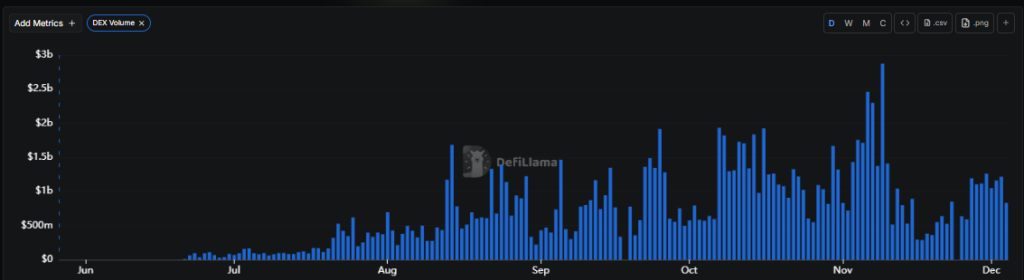
HumidiFi launched in mid-2025 and has grown into one of Solana’s most active decentralized exchanges, processing over $1 billion in daily trading volume and often accounting for more than one-third of all spot trading on the network.

According to DefiLlama, its Dex volume currently sits close to $30 billion over 30 days, while its cumulative volume sits at over $122 billion.

The $WET token was introduced as the protocol’s staking and fee-rebate asset and was promoted as a community-driven distribution using Jupiter’s DTF platform.

The incident has revived broader concerns over token distribution fairness across launchpads.

In September, Bubblemaps also flagged a separate Sybil attack linked to the MYX token airdrop, where roughly 100 newly created wallets claimed nearly $170 million in tokens after being funded simultaneously from OKX.

That case similarly raised questions about identity controls and launch design weaknesses.

Jupiter DTF was introduced as a transparent, trust-minimized alternative to traditional token launches, combining curation and on-chain verification. The $WET sale was its first live deployment, making the failure a major test for the model.

Neither Jupiter Exchange nor the individuals accused have issued a detailed technical breakdown of what failed at the infrastructure level.

The post Exposed: “Ramarxyz” Sniped 70% of $WET Presale With 1,000+ Wallets – Then Demanded Refund appeared first on Cryptonews.

ZachXBT: British Hacker Linked to $243M Genesis Theft Likely Nabbed in Dubai

A suspected British hacker linked to one of the largest single Bitcoin thefts ever recorded may have been detained in Dubai, according to claims made Friday by on-chain investigator ZachXBT.

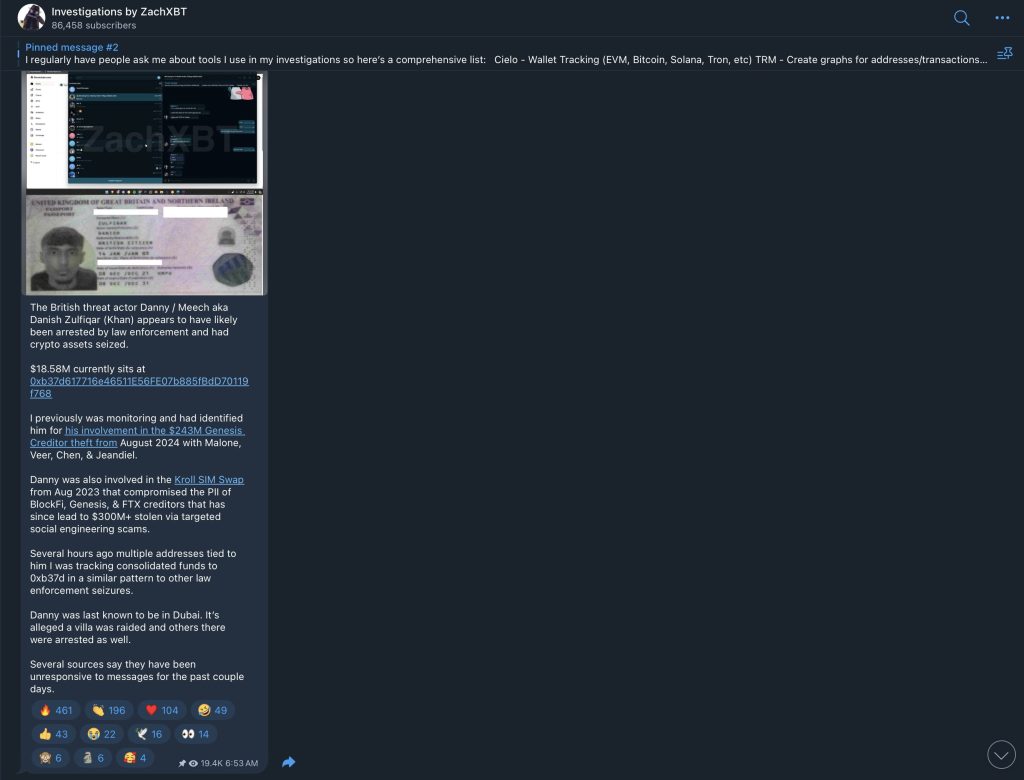
In a post shared on his Telegram channel on December 5, ZachXBT said a man known online as “Danny” or “Meech,” identified as Danish Zulfiqar, appears to have been taken into custody by authorities, with a portion of the stolen crypto allegedly seized.

Source: ZachXBT

He pointed to roughly $18.58 million in digital assets now held in a single Ethereum wallet that he says is connected to the suspect.

ZachXBT noted that several wallets previously tied to the alleged hacker had funneled funds into the same address in a pattern commonly seen during law enforcement seizures.

He also claimed Zulfiqar was last known to be in Dubai, where a villa was reportedly raided.

Authorities Silent as Reports Surface of Possible Arrest in $243M Bitcoin Hack

According to the investigator, others linked to the suspect have also gone silent in recent days.

So far, there has been no official confirmation from Dubai Police or UAE authorities regarding any arrest, asset seizure, or raid connected to the case.

Local media outlets in the region have also not verified the claims.

The possible arrest follows months of investigation into the August 19, 2024, theft of 4,064 Bitcoin, worth about $243 million at the time. The funds were taken from a single Genesis creditor who accessed assets through Gemini.

ZachXBT made the case public in September, alleging the theft was carried out through a coordinated social engineering attack.

According to his findings, the attackers posed as Google support staff and convinced the victim to reset two-factor authentication.

They then used remote access software to take control of the account. After extracting the private keys, the attackers drained the wallet and moved the Bitcoin through a web of exchanges and swap services in an attempt to launder the funds.

ZachXBT initially tied the attack to three online aliases, “Greavys,” “Wiz,” and “Box”, later naming Malone Lam, Veer Chetal, and Jeandiel Serrano as the people behind those accounts.

He said his findings were shared with law enforcement authorities.

U.S. Charges, UK Guilty Plea, Thailand Arrest Mark New Phase of Crypto Crime Probes

U.S. prosecutors later filed criminal cases connected to related activity. In September 2024, the Department of Justice charged two suspects in a $230 million crypto fraud scheme.

Broader racketeering charges later described an operation totaling more than $263 million, including the Genesis-linked Bitcoin theft. Court documents outlined a mix of SIM swaps, social engineering tactics, and even physical burglaries.

Prosecutors said the stolen funds were spent on high-end cars, travel, and nightlife. One of the defendants, Veer Chetal, was later accused of carrying out another $2 million crypto theft while out on bond.

ZachXBT has also connected Zulfiqar to the August 2023 Kroll SIM swap incident, which exposed the personal data of creditors tied to BlockFi, Genesis, and FTX.

That breach later played a role in more than $300 million worth of crypto thefts through follow-up phishing and impersonation schemes.

The reported Dubai development comes as crypto-related law enforcement activity continues to pick up worldwide.

In October, Thai authorities arrested Liang Ai-Bing in Bangkok over an alleged $31 million crypto Ponzi scheme that ZachXBT had previously exposed.

🇹🇭 Thai police arrest alleged FINTOCH mastermind behind $31 million crypto Ponzi scheme that defrauded investors across multiple Asian countries.#Thailand #Policehttps://t.co/Mccq2KpZfb

— Cryptonews.com (@cryptonews) October 30, 2025

In the UK, authorities recently secured a guilty plea from Zhimin Qian in a case tied to what officials described as the largest crypto seizure in history, involving more than $6.7 billion in Bitcoin.

Outside of investigations, ZachXBT has also remained active in public disputes.

In November, he clashed with UFC fighter Conor McGregor over comments about Khabib Nurmagomedov’s NFT project, redirecting attention to McGregor’s own failed meme coin venture earlier this year.

The post ZachXBT: British Hacker Linked to $243M Genesis Theft Likely Nabbed in Dubai appeared first on Cryptonews.

Bitcoin Price Could Hit $170K — But Strategy ‘Resilience’ Is Vital: JPMorgan

JPMorgan analysts say the near-term direction of Bitcoin’s price now depends less on miner behavior and more on the financial resilience of Strategy, the world’s largest corporate holder of Bitcoin, even as mining pressure and market volatility persist.

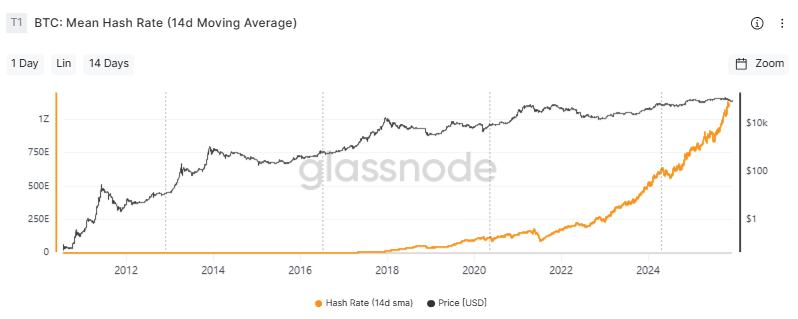
In a report led by managing director Nikolaos Panigirtzoglou, the bank identified two forces currently weighing on Bitcoin. The first is a recent decline in Bitcoin’s network hashrate and mining difficulty.

The second is the growing market focus on Strategy’s balance sheet and its ability to avoid selling its Bitcoin holdings during the ongoing market downturn.

High-Cost Bitcoin Miners Capitulate as Hashrate Slips and Margins Collapse

The decline in hashrate reflects a combination of China reiterating its ban on private mining activity and high-cost miners outside the country retreating as falling Bitcoin prices and elevated electricity costs squeeze profitability.

JPMorgan now estimates Bitcoin’s production cost at $90,000, down from $94,000 last month. The estimate assumes electricity priced at $0.05 per kilowatt hour, with every $0.01 increase adding roughly $18,000 to production costs for higher-cost miners.

Source: Glassnode

With Bitcoin trading near $92,000, JPMorgan said the asset continues to hover close to its estimated production cost, creating sustained selling pressure from miners.

As profits tighten, several high-cost producers have been forced to liquidate Bitcoin holdings in recent weeks to remain solvent.

Despite those pressures, JPMorgan said miners are no longer the key driver of Bitcoin’s next major move. Instead, attention has shifted to Strategy’s ability to maintain its Bitcoin position without being forced into sales.

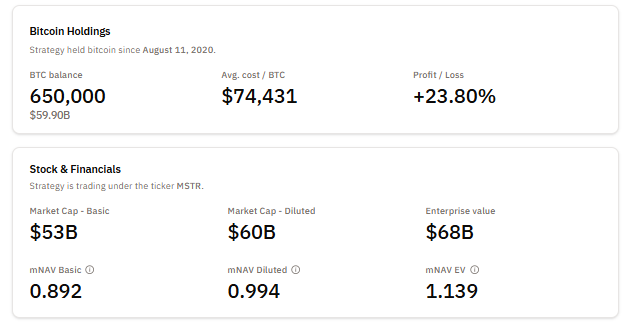
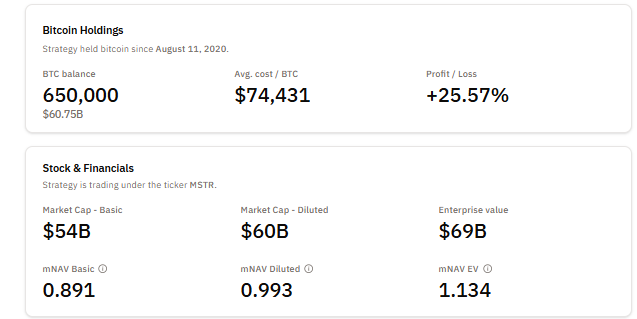
Strategy’s enterprise-value-to-Bitcoin-holdings ratio currently stands at 1.13. That figure reflects the combined market value of its debt, preferred stock, and equity relative to the market value of its Bitcoin treasury.

Source: BitcoinTreasuries.NET

According to JPMorgan, the fact that the ratio remains above 1.0 is “encouraging” because it shows that Strategy is unlikely to face pressure to sell Bitcoin to meet interest or dividend obligations.

The company recently reinforced that position by creating a $1.44 billion U.S. dollar reserve through ongoing at-the-market equity sales.

The reserve is designed to cover dividend payments and interest expenses for at least 12 months, with the company targeting coverage of up to 24 months.

JPMorgan said the reserve significantly reduces the risk of forced Bitcoin sales in the foreseeable future.

JPMorgan Sees $170K Bitcoin Scenario Despite Strategy’s MSCI Index Risk

Strategy’s Bitcoin accumulation has slowed sharply in recent months, though it remains deeply exposed to price movements.

In November, it added 8,178 BTC in its largest purchase since July, bringing total holdings to roughly 650,000 BTC. Its basic market capitalization stands near $54 billion, with an enterprise value of about $69 billion.

Markets are also watching an upcoming decision by MSCI on whether to remove Strategy and other digital-asset treasury companies from its equity indices. JPMorgan said the downside risk from exclusion is largely priced in.

Since MSCI launched its review in October, Strategy’s share price has fallen roughly 40%, underperforming Bitcoin by about $18 billion in market value.

JPMorgan estimates that an MSCI exclusion could trigger $2.8 billion in passive outflows, with as much as $8.8 billion at risk if other index providers follow suit.

Even so, the bank said further downside would likely be limited. By contrast, if MSCI keeps Strategy in major indices, JPMorgan said both Strategy and Bitcoin could rebound sharply toward pre-October levels.

Beyond corporate balance sheets, JPMorgan continues to point to broader crypto market structure for longer-term upside. The bank said perpetual futures deleveraging appears largely complete following record liquidations in October.

At the same time, Bitcoin’s volatility ratio relative to gold has improved, strengthening its risk-adjusted appeal to investors.

Based on those metrics, JPMorgan reiterated its volatility-adjusted comparison of Bitcoin to gold, which implies a theoretical Bitcoin price near $170,000 over the next six to twelve months if market conditions stabilize.

Notably, Bitcoin is currently trading about $68,000 below that level.

The post Bitcoin Price Could Hit $170K — But Strategy ‘Resilience’ Is Vital: JPMorgan appeared first on Cryptonews.

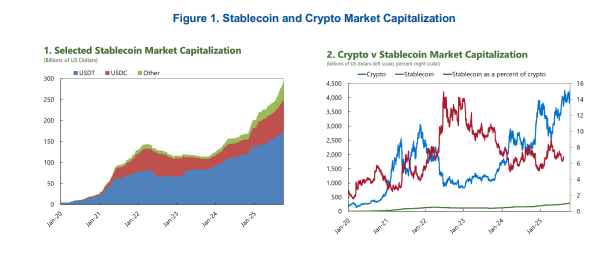
IMF Warns: Fragmented Stablecoin Rules Create “Roadblocks” – New Guidelines Released

The International Monetary Fund on Thursday released a new global assessment of the stablecoin market, warning that fragmented regulatory frameworks across countries are now creating structural “roadblocks” that threaten financial stability, weaken oversight, and slow the development of cross-border payments.

In its report titled “Understanding Stablecoins,” the IMF reviewed how major economies, including the United States, the United Kingdom, the European Union, and Japan, regulate stablecoins and found that national approaches remain widely inconsistent.

Stablecoins have the potential to reshape cross-border payments and capital flows. They offer opportunities, but also bring new risks—financial integrity, regulatory oversight, consumer protection, capital flow management, monetary sovereignty, and more. Learn more:… pic.twitter.com/cOlZKuqLDF

— IMF (@IMFNews) December 4, 2025

While some countries treat stablecoins as securities, others regulate them as payment instruments, permit only bank-issued tokens, or leave large parts of the market unregulated.

Stablecoins Are Moving Faster Than Regulators Can Track, IMF Warns

The IMF said this regulatory patchwork allows stablecoins to move across borders faster than oversight can follow.

Issuers can operate from lightly regulated jurisdictions while serving users in stricter markets, limiting authorities’ ability to monitor reserves, redemptions, liquidity management, and anti-money laundering controls.

The fund warned that this creates regulatory arbitrage and weakens global supervision.

The report also pointed to technical fragmentation. Stablecoins increasingly operate across different blockchains and exchanges that are not always interoperable.

According to the IMF, this lack of coordination raises transaction costs, slows market development, and creates barriers to efficient global payments.

Differences in national regulatory treatment further complicate cross-border usage and settlement.

Source: IMF

Stablecoins remain dominated by U.S. dollar-denominated tokens. The IMF said the global stablecoin market is now worth more than $300 billion. Tether’s USDT and Circle’s USDC make up the majority of that supply. About 40% of USDC’s reserves are held in short-term U.S. treasuries, while roughly 75% of USDT’s reserves are in short-term treasuries, with another 5% held in Bitcoin.

The concentration of reserves in government debt markets links stablecoins directly to traditional financial systems

Widespread use of foreign-currency stablecoins can weaken domestic monetary control, lower demand for local currency, and accelerate digital dollarization. Stablecoins also make it easier to bypass capital controls through unhosted wallets and offshore platforms.

In addition to monetary concerns, the fund cited broader financial stability concerns. Large-scale redemptions could force rapid sales of Treasury bills and repo assets, potentially disrupting short-term funding markets that are critical for monetary policy transmission.

The IMF also noted that the increasing interconnection between stablecoin issuers, banks, custodians, crypto exchanges, and funds also increases the risk of contagion spreading from digital markets into the wider financial system.

IMF Urges Unified Stablecoin Regulation as Cross-Border Risks Grow

To address these risks, the IMF released new global policy guidelines intended to reduce fragmentation. It called for harmonized definitions of stablecoins, consistent rules for reserve assets, and shared cross-border monitoring frameworks.

The fund said issuers should be subject to the principle of “same activity, same risk, same regulation,” regardless of whether the issuer is a bank, fintech company, or crypto platform.

The IMF also said stablecoins should be backed only by high-quality liquid assets such as short-term government securities, with strict limits on risky holdings. Issuers must guarantee full one-to-one redemption at par, on demand, at all times.

Strong international coordination on anti-money laundering enforcement, licensing, and supervision of large global stablecoin arrangements was also included in the new guidance.

The IMF’s warning comes as regulatory pressure is rising worldwide. In Europe, the European Central Bank recently warned that stablecoins, despite their small footprint in the euro area, now pose spillover risks due to their growing ties to U.S. Treasury markets.

🇪🇺 The ECB warns that stablecoins are growing fast, now topping $280B, with rising spillover risks as USDT and USDC dominate 90% of the market. #Stablecoins #ECBhttps://t.co/ef16HZzqYL

— Cryptonews.com (@cryptonews) November 24, 2025

The European Systemic Risk Board has also called for urgent safeguards against cross-border stablecoin structures operating under the EU’s MiCA framework.

In China, the central bank has described stablecoins as a threat to financial stability and monetary sovereignty, while the Bank of England and Basel regulators are reassessing how banks should hold capital against stablecoin exposure as usage expands.

The IMF concluded that without consistent global regulation, stablecoins could bypass national safeguards, destabilize vulnerable economies, and transmit financial shocks across borders at high speed.

The post IMF Warns: Fragmented Stablecoin Rules Create “Roadblocks” – New Guidelines Released appeared first on Cryptonews.

“First Time Ever”: CFTC Greenlights Spot Crypto Trading on Regulated U.S. Exchanges

For the first time in the United States, spot cryptocurrency trading is set to take place on federally regulated futures exchanges, a step that reshapes how digital assets fit into the country’s financial system.

The update was announced on Thursday by Acting Chair of the Commodity Futures Trading Commission (CFTC), Caroline Pham. She said that exchanges registered with the agency will soon be allowed to list spot crypto products, following months of behind-the-scenes coordination among U.S. regulators.

The move also reflects guidance from the President’s Working Group on Digital Asset Markets.

Pham Calls Spot Crypto Approval on U.S. Exchanges a “Historic Moment”

Pham described the announcement as a historic moment, saying spot crypto will now be able to trade on exchanges that have operated under strict federal standards for nearly a century.

She said the goal is to give U.S. investors access to familiar, well-regulated venues that already enforce strong protections and market safeguards.

🚨 You can now trade listed spot crypto on @CFTC exchanges. We’re working smarter and faster to protect Americans who deserve safe U.S. markets, not offshore exchanges 🇺🇸 https://t.co/2yNTjDsCFV

— Caroline D. Pham (@CarolineDPham) December 4, 2025

Until now, the CFTC’s role in crypto has mostly centered on derivatives such as futures and options.

Spot markets, the direct buying and selling of assets, fell mostly outside its jurisdiction, pushing significant trading activity to offshore platforms with looser rules.

Under the new framework, the CFTC will apply its existing authority to oversee spot trading for digital assets it considers commodities, including Bitcoin and Ethereum.

The change also folds leveraged retail crypto trades into the same regulated exchange system that has long governed traditional commodities markets.

The decision also reflects growing regulatory cooperation in Washington. In early September, the CFTC and the Securities and Exchange Commission issued a joint statement clarifying that exchanges registered with either agency are not barred from supporting certain spot crypto trades.

🔎 Spot crypto trading is moving closer to mainstream finance after the SEC and CFTC cleared registered exchanges to facilitate certain spot products.#SpotCrypto #SEC #CFTChttps://t.co/5C5uy800Ju

— Cryptonews.com (@cryptonews) September 3, 2025

That guidance eased longstanding jurisdictional tensions between the two regulators.

Pham said the approval ties into the CFTC’s wider Crypto Sprint initiative, which spans several areas of digital finance.

The program includes work on tokenized collateral, the use of stablecoins in derivatives markets, and updates to clearing, settlement, and recordkeeping rules using blockchain-based systems.

The change also responds to years of pressure from the crypto industry for clearer rules. Under current law, leveraged retail commodity trades must take place on registered exchanges and involve physical delivery of the asset within 28 days.

That requirement created uncertainty for crypto markets and pushed much of the activity overseas. Allowing spot and leveraged crypto trading on Designated Contract Markets offers a regulated option within the U.S. system.

CFTC in Talks With CME, Coinbase, and Others as Crypto Market Oversight Expands

Several major platforms have already held talks with the CFTC about launching products under the new framework. These include CME Group, Cboe Futures Exchange, ICE Futures, Coinbase Derivatives, Kalshi, and Polymarket U.S.

Earlier this month, Pham confirmed that the agency was in direct discussions with multiple firms seeking approval for spot and leveraged crypto offerings.

📈 The CFTC is reportedly set to approve leveraged crypto trading on regulated U.S. exchanges next month. Acting Chair @CarolineDPham confirmed talks are underway to bring these products under the agency's oversight.

#crypto #regulation https://t.co/wSaWVJ4lEh

— Cryptonews.com (@cryptonews) November 10, 2025

The policy change is unfolding at a time when the CFTC itself is going through a leadership transition. Pham took over as acting chair in January after former Chair Rostin Behnam stepped down.

She is set to leave once the Senate confirms President Donald Trump’s nominee, Michael Selig, whose confirmation vote is now moving toward the full chamber.

Meanwhile, lawmakers in Congress are advancing legislation that could officially place crypto spot markets under the CFTC’s primary supervision. As those plans take shape, some lawmakers have questioned whether the agency has the manpower to manage the expanded duties.

Right now, the CFTC employs just over 500 staff members, a small figure compared with the more than 4,000 employees at the Securities and Exchange Commission.

Outside of its enforcement role, the agency is also stepping up its work with the private sector.

In November, Pham announced plans to launch a new CEO Innovation Council and opened public nominations to help shape future policy on digital assets and prediction markets.

The post “First Time Ever”: CFTC Greenlights Spot Crypto Trading on Regulated U.S. Exchanges appeared first on Cryptonews.

Record $12M Crypto Donation to Reform Rocks UK Politics as Government Weighs Ban

Reform UK has landed its biggest donation yet, after receiving £9 million ($12 million) from crypto investor and aviation businessman Christopher Harborne, according to newly released figures from the Electoral Commission.

The sum is now the largest single political donation ever made by a living person to a UK political party.

Harborne, a British investor living in Thailand, has long been active in UK political donations. He donated heavily to the Conservatives during Boris Johnson’s time in office and also supported the Brexit Party, which later became Reform UK, in both 2019 and 2020.

Two companies tied to him, AML Global and Sherriff Group, operate in the private aviation sector.

Harborne’s £9M donation Reshapes UK as Crypto Money Enters UK Politics

Harborne’s donation comes at a time when, as the next general election is not due until 2029, but local elections are scheduled for May. It also comes as Reform UK has remained at the top of several national opinion polls since the spring.

Harborne’s £9 million donation breaks the previous record of £8 million, which was set in 2019 by supermarket heir Lord David Sainsbury in support of the Liberal Democrats.

Separately, Lord John Sainsbury left £10 million to the Conservatives through his will in 2022.

Figures released by the UK Electoral Commission show that Reform UK raised more than £10.2 million between July and September, over twice the amount collected by the Conservatives in the same period, which brought in £4.6 million.

Source: Electoral Commission UK

Labour brought in £2.1 million, and the Liberal Democrats reported £1 million. This makes it the first full quarter in which Reform will outpace Conservatives in fundraising since the general election in 2024.

Still, the longer-term numbers slightly favor the Conservatives, showing that since July 2024, they have raised around £14.4 million in total, compared with Reform’s £13.5 million.

Conservative leader Kemi Badenoch downplayed the impact of Harborne’s contribution, describing it as a “one-off” and insisting her party remains stronger when it comes to steady, repeat donors

Beyond fundraising, the donation has reignited debate around the role of cryptocurrency in UK politics.

In May, Reform leader Nigel Farage announced that the party would begin accepting Bitcoin donations, making it the first UK political party to do so.

The party later launched a dedicated digital donation portal and confirmed that it had already received a small number of crypto contributions, the first recorded instance of such donations in British political history.

Foreign Influence Fears Drive UK Review of Crypto Political Funding

That decision is now under increasing political scrutiny. The UK government says it’s now looking into whether cryptocurrency donations should be blocked entirely for political parties.

While no formal proposal has been confirmed, officials say discussions are underway across Whitehall about it, driven by rising concerns over transparency and the risk of foreign interference in British politics.

🚨 UK considers crypto political donation ban, threatening @Nifel_Farage Reform UK’s campaign and fundraising amid foreign interference and money-laundering concerns.#UKPolitics #ReformUK https://t.co/WBR07U05bb

— Cryptonews.com (@cryptonews) December 2, 2025

Additionally, security specialists caution that while blockchain records are public, the real origin of funds can still be obscured through layered wallets, intermediaries, and offshore structures.

The debate gained urgency after former Reform Wales leader Nathan Gill was convicted and sentenced to over 10 years in prison for accepting payments to push pro-Russian narratives while serving as a Member of the European Parliament.

The Ministry of Housing, Communities and Local Government, which is leading work on the Elections Bill, has also warned that existing rules leave the political system exposed to covert foreign influence.

Proposed changes are expected to focus on donations funneled through shell companies and to introduce stricter risk checks for politically sensitive contributions.

The discussion unfolds as the UK moves ahead with its wider digital asset rules. On December 3, Parliament passed a law recognizing cryptocurrencies and stablecoins as legal property for the first time under UK law.

The post Record $12M Crypto Donation to Reform Rocks UK Politics as Government Weighs Ban appeared first on Cryptonews.

Florida Court Revives $80M Binance Lawsuit Over Stolen Bitcoin Claims

A Florida appeals court has reinstated a lawsuit accusing Binance of failing to freeze and recover roughly $80 million worth of stolen Bitcoin, reopening a case that had previously been dismissed over jurisdictional grounds.

According to Bloomberg Law, Florida’s Third District Court of Appeal ruled Wednesday that the lower court erred when it concluded it lacked personal jurisdiction over Binance Holdings Inc.

According to Bloomberg Law, Florida’s Third District Court of Appeal ruled Wednesday that a user who alleges roughly $80 million in BTC was stolen on Binance may revive a state-level lawsuit, finding the trial court erred in concluding it lacked personal jurisdiction over…

— Wu Blockchain (@WuBlockchain) December 4, 2025

The decision allows the plaintiff to proceed with a state-level lawsuit alleging that Binance failed to act quickly after the theft was reported.

Appeals Court Reverses Dismissal Saying Use of AWS Ties Binance to Florida

The case stems from a 2022 incident in which the plaintiff, identified as Michael Osterer, reported that about 1,000 Bitcoin was stolen from his wallet.

He claims the hackers transferred the funds to a Binance account, where the assets were converted and withdrawn before the exchange intervened.

Osterer alleges that Binance was negligent, breached its contractual duties, and enabled the laundering of stolen property by failing to freeze the assets promptly.

Osterer is seeking the full value of the stolen Bitcoin, estimated at roughly $80 million, along with interest. In 2023, he also attempted to expand the case into a class action on behalf of other victims whose stolen assets were allegedly routed through Binance.

A trial court initially dismissed the lawsuit after determining that Binance, which operates offshore, did not have sufficient connections to Florida to be sued in the state.

The appeals court overturned that finding, ruling that Binance’s U.S.-facing affiliates and its reliance on U.S. infrastructure were enough to establish jurisdiction.

The court specifically pointed to the exchange’s use of Amazon Web Services and its U.S. operational footprint as valid contacts with Florida.

The decision sends the case back to trial court, where Osterer will again be allowed to argue his claims under Florida state law.

The ruling adds to legal pressure on offshore crypto exchanges that have previously relied on jurisdictional defenses to block U.S. lawsuits involving stolen assets.

Binance may still seek to appeal the ruling or attempt to shift the dispute into arbitration, a strategy the company has pursued in other U.S. cases.

Even After Zhao’s Pardon, Binance Faces Fresh Legal Heat in the U.S.

The revived lawsuit comes as Binance continues to face sustained legal scrutiny in the United States. In November, the exchange and its founder, Changpeng Zhao, were named in a federal lawsuit filed by the families of victims of the October 2023 Hamas attack.

🔫 Families of the Hamas 2023 attack victims have sued Binance and CZ for facilitating $1 billion in crypto to the accounts of terror groups.#HamasCryptoFunding #Binance #ChangpengZhaohttps://t.co/lLG1d5D75l

— Cryptonews.com (@cryptonews) November 25, 2025

The plaintiffs accused Binance of knowingly facilitating crypto transactions tied to the militant group and helping move more than $1 billion through accounts linked to terrorist organizations.

Binance has denied the allegations and said it complies with international sanctions laws.

Earlier this year, Binance also sought to dismiss a separate class action brought by U.S. investors in California, arguing that an arbitration clause in its user agreement required private dispute resolution.

That case is tied to broader securities law claims alleging the exchange promoted unregistered crypto tokens and misled investors.

⚖ Binance is trying to dismiss a U.S. class action lawsuit, saying users agreed to arbitration—not court.#Binance #Securities #CryptoLawsuithttps://t.co/c8VGpdC7CI

— Cryptonews.com (@cryptonews) May 20, 2025

Binance’s legal disputes in the United States have already led to some of the largest settlements in crypto history. In November 2023, the exchange agreed to pay $4.3 billion to resolve charges brought by the DOJ over violations of the Bank Secrecy Act.

Also, CZ pleaded guilty to a related criminal offense and accepted a separate $150 million personal settlement. Binance also paid $2.7 billion to settle a civil case with the Commodity Futures Trading Commission.

In May 2025, the U.S. Securities and Exchange Commission dropped its civil enforcement lawsuit against Binance and Zhao, bringing an end to a legal battle that had lasted more than two years.

Months later, in October, President Donald Trump issued a pardon to Zhao, wiping away the criminal conviction tied to the Justice Department case.

The post Florida Court Revives $80M Binance Lawsuit Over Stolen Bitcoin Claims appeared first on Cryptonews.

Strategy Sets $1.44B Buffer for Bitcoin Bear Market Risk: CryptoQuant

Strategy, the world’s largest corporate holder of Bitcoin, has set aside a $1.44 billion U.S. dollar reserve as a liquidity buffer against a prolonged market downturn, a move that analysts at CryptoQuant say signals preparation for a potential bear market phase.

The company, the world’s largest corporate holder of Bitcoin, raised the funds through ongoing at-the-market equity sales.

Strategy’s Bitcoin buying has collapsed through 2025.

Monthly purchases fell from 134K BTC at the 2024 peak to just 9.1K BTC in November 2025, only 135 BTC so far this month.

A 24-month buffer makes one thing clear: they’re bracing for the bear market. pic.twitter.com/qEwXR3JQ82

— CryptoQuant.com (@cryptoquant_com) December 3, 2025

The reserve is designed to cover dividend payments on preferred stock and service interest obligations for at least 12 months, with the stated goal of extending coverage to 24 months or more.

Strategy also disclosed that it may sell Bitcoin or Bitcoin derivatives as part of its risk-management toolkit if market conditions deteriorate.

Strategy Pivots to Dual-Reserve Treasury as Bitcoin Buying Slows

CryptoQuant described the move as a structural change from Strategy’s long-standing playbook of issuing equity and convertibles primarily to buy more Bitcoin.

Instead, the company is now operating a dual-reserve treasury model that pairs long-term Bitcoin exposure with short-term dollar liquidity aimed at reducing the risk of forced BTC sales during market stress.

The shift comes as Strategy’s pace of Bitcoin accumulation has slowed sharply through 2025. Monthly purchases fell from 134,000 BTC at the 2024 peak to 9,100 BTC in November 2025, with just 135 BTC added so far this month, according to CryptoQuant.

Source: CryptoQuant

The analytics firm said the scale and timing of the dollar buffer signal preparation for a sustained bear market.

Despite the slowdown, Strategy remains deeply exposed to Bitcoin. On Nov. 17, the firm bought 8,178 BTC for roughly $835.5 million in its largest purchase since July, bringing total holdings to about 650,000 BTC.

Strategy’s stock trades under the ticker MSTR, with a basic market capitalization of about $54 billion and an enterprise value near $69 billion.

Source: BitcoinTreasuries.NET

Market net asset value metrics show the stock trading close to the value of its Bitcoin holdings. Basic mNAV stands at 0.892, diluted mNAV at 0.994, and enterprise-value mNAV at 1.136, reflecting the effect of debt and preferred obligations.

Falling Shares Put Strategy’s Bitcoin Treasury Model Under the Microscope

CEO Phong Le has said the company would only consider selling Bitcoin if its shares fall below net asset value and access to new financing dries up.

He described such sales as a last resort to protect what he calls “Bitcoin yield per share,” stressing that selling would occur only if issuing new equity became more dilutive than reducing holdings.

Strategy’s annual fixed obligations tied to preferred shares are estimated at $750 million to $800 million. Le said the new dollar reserve currently covers about 21 months of dividends.

Founder and Executive Chairman Michael Saylor described the reserve as the next stage in Strategy’s evolution as a Bitcoin-focused treasury company, positioning it to navigate market volatility while maintaining its long-term digital-asset strategy.

To reassure investors, the company recently launched a “BTC Credit” dashboard, stating that it has sufficient dividend coverage even if Bitcoin prices remain flat for extended periods.

Strategy also said its debt remains well-covered if Bitcoin falls to its average cost of roughly $74,000 and remains manageable even at $25,000.

The reserve strategy has drawn mixed reactions from the market. Bitcoin critic Peter Schiff argued that the shift shows the company is being forced to sell stock to buy dollars rather than Bitcoin in order to meet its obligations.

Today is the beginning of the end of $MSTR. Saylor was forced to sell stock not to buy Bitcoin, but to buy U.S. dollars merely to fund MSTR's interest and dividend obligations. The stock is broken. The business model is a fraud, and @Saylor is the biggest con man on Wall Street.

— Peter Schiff (@PeterSchiff) December 1, 2025

Strategy’s share price has fallen more than 60% from recent highs even as Bitcoin has traded between $95,000 and $110,000 in late 2025, adding to investor scrutiny of the model.

Strategy’s stance is also being watched by index providers. MSCI is currently reviewing how companies with large digital-asset treasuries should be treated in major equity indexes.

Any change in classification could force benchmark-tracking funds to rebalance, adding another layer of volatility to a stock that already trades with a high Bitcoin beta.

The post Strategy Sets $1.44B Buffer for Bitcoin Bear Market Risk: CryptoQuant appeared first on Cryptonews.

❌