Meta wants to make its AI hardware slicker and more fashion-forward. It also needs to make its software more usable. The way to do all that appears to be hiring design maestros away from Apple.
By rolling back auto industry fuel efficiency goals, US president Donald Trump hopes to make new cars cheaper. But prices won’t drop for years, and consumers will spend more on gas in the meantime.
Recent exploits show iPadOS windows running on an iPhone, hinting at the future of Apple hardware and software alike—while also possibly revealing its incoming foldable phone experience.
The streaming giant quietly removed the feature that lets you control content on your TV screen using a mobile device. The company says the feature was not widely used.
Swatch will laser unique gold snowflakes on every new “Cold Moon” MoonSwatch, but there’s a catch: You’ll only be able to buy one when it’s snowing in Switzerland.
Mexico's consumer protection agency and FIFA are working on a “ticket relocation system” that will allow those with extra World Cup tickets to sell them safely and at appropriate prices.
In the complicated world of cannabis seed banks, where innovation and tradition often go hand in hand, Night Owl Seeds presents itself as a new and exciting option for autoflowering seed lovers. Founded by Daz, a passionate breeder with a clear vision, this seed bank‘s mission is to elevate autoflowering strains to the next level, combining ease of cultivation with terpene profiles and effects worthy of the finest photoperiod genetics.
From humble beginnings to becoming a benchmark in the industry, Night Owl Seeds has maintained a philosophy centered on quality, originality, and closeness to its community. Today, we invite you to explore its origins, some of its most iconic strains—available at Alchimia—and why you should consider including them in your next grow. Let’s get to it!
Origins of Night Owl Seeds
Night Owl Seeds was born from the restless mind of Daz, a passionate breeder who, after his time at Mephisto Genetics, decided to embark on his own path in 2014. His goal was clear: to elevate autoflowering strains to a level of quality never seen before, with easy cultivation and organoleptic qualities beyond all doubt. Indeed, Daz’s goal is to match the quality of autos as closely as possible to that of photoperiod strains.
With meticulous attention to detail and a constant search for new genetic combinations, Night Owl Seeds has managed to create strains that are not only potent and flavorful but also aesthetically stunning. Their commitment to the community and transparency in their breeding processes have cemented a reputation for trust and excellence in the cannabis world, something that is not easy to achieve in this sector.
Featured varieties of Night Owl Seeds at Alchimia
Before taking a look at each of the gems this bank offers, it’s worth taking a moment to consider the pedigree of their ancestors, so you know which parents were used to create them. Because, as with any well-done breeding, origins are everything.
Night Owl Seeds doesn’t just select genetics for their potency or their flavor—which they do too—but for their history, their growing behavior, and their ability to combine the best of both worlds: stability and personality. Many of their hybrids come from meticulously selected crosses from strains like Chem 91 , an absolute classic with a diesel profile and devastating power; Cookie Smasher, heir to the Girl Scout Cookies lineage with that characteristic resin density and sweetness on the palate; Cosmic Queen, with its psychedelic and floral note; or Creme de la Chem, which brings depth, complexity, and an absolutely recognizable funky character.
Other parent strains such as Wilson! F1, a legacy of Masonic Genetics, or Zamaldelica Express, courtesy of Ace Seeds, adds exoticism and more creative effects. And we can’t forget Sour Hound, White Stomper, or Blue Microverse: less well-known names but essential to the aromatic architecture of many of their varieties.
This genetic symphony is what allows each Night Owl hybrid not only to function but to stand out on its own merits. Let’s now look at some of the most desirable ones in Alchimia:
91 Berries Auto
An exceptional hybrid resulting from the cross between Cookie Smasher and Chem 91 F4 Auto, which results in medium to large-sized plants with a leafy and robust structure. The buds of 91 Berries Auto, the size of a soda can, are covered in a generous layer of resin, a direct inheritance from its parent, Cookie Smasher. The aromatic profile is a delicious combination of cookies, red berries, and chemical notes, offering a unique sensory experience. With a potent and euphoric effect, it is ideal to enjoy in the afternoons or evenings. Additionally, its flowering cycle is rapid, completing in approximately 70 days from germination.
91 Berries Auto by Night Owl Seeds is a productive hybrid between Cookie Smasher and Chem 91 F4 Auto
Strawberry Popesicle Auto
A delight for the senses, Strawberry Popesicle Auto is the result of crossing Popesicle with Cookie Smasher, which we already saw in the previous hybrid. This strain stands out for its intense aromas of grapes, gas, and candied blueberries, accompanied by a potent resin production. The plants are large, with branches that exceed many individual autoflowering plants in size, offering remarkable yields. The flavor profile is a sweet blend of berries, grapes, and gas notes, resulting in an extremely potent and stimulating flower. It is an irresistible choice for lovers of sweet and exotic flavors, perfect for daytime consumption and social situations.
CPT OG Auto
This hybrid strain is the result of crossing Marathon OG F3 and Creme de la Compton F3, two true legends of the American West Coast. CPT OG Auto plants are large and robust, with a branched structure that supports dense, heavy flowers, displaying remarkable hybrid vigor. The buds exhibit red and purple hues in cooler growing conditions, enhancing their visual appeal. The flavor profile combines classic OG fuel notes with a citrusy punch of lemon and lime, courtesy of Creme de la Compton. The effects are a potent combination of cerebral and physical sensations, providing a motivating euphoria that can transition into deep relaxation. The full cycle is approximately 75 days from germination.
CPT OG Auto by Night Owl Seeds combines potency, flavor, and a spectacular appearance.
Sirius Blue Auto
An exceptional creation that combines the potency and flavors of two legendary genetics: Blue Microverse F5 and Chem 91 F4 Auto, which we’ve previously seen in 91 Berries Auto. Sirius Blue Auto is ideal for growers looking for a robust, tasty, and fast-producing plant, while still delivering potent and relaxing effects. The plants are medium-sized, exhibiting excellent vigor and with a compact, branched structure. The buds are dense and flavorful, with an aromatic profile that fuses blueberries with the characteristic chemical notes of Chemdog. It completes its cycle in just 65 days from germination, making it an excellent choice for fast, efficient, and highly satisfying cultivation. Highly recommended for resin extractions!
Vanilla Fizz F2 Auto
A rare gem in the world of autoflowering cannabis, Vanilla Fizz F2 Auto is the result of a meticulous cross between White Stomper, Sour Hound, and Cosmic Queen. This strain stands out for its intense aromas of creamy vanilla and sweet caramel, accompanied by a fizzy touch and a light note of funky cheese. A real treat if you’re a lover of strange and unusual flavors and aromas! With a flowering cycle of approximately 74 days from germination, it produces medium to large plants with abundant resin production. Its balanced effects make it ideal for both day and night consumption, making it a very versatile genetic for the consumer.
Compton F3 Auto Cream
Creme de la Compton F3 Auto is a unique autoflowering strain born from a special collaboration between Night Owl Seeds and Masonic Genetics. Nicknamed “forced collaboration”, this cross pays homage to Masonic Genetics’ iconic practice of selecting high-quality genetics to cross with its famous Wilson clone. Creme de la Compton F3 genetics are a blend of Creme de la Chem F4 and Wilson! F1, which stands out for offering rich, complex aromas and potent effects, making it the preferred choice for connoisseurs and growers looking for top-notch autoflowering seeds.
Creme de la Compton F3 Auto by Night Owl Seeds develops spectacular colors
If you’re looking for top-quality buds from your crop, Night Owl Seeds is a safe bet. Their autoflowering varieties combine the best of both worlds: ease of cultivation and exceptional flavor, aroma, and effect. Plus, the availability of these genetics at Alchimia guarantees you access to fresh, reliable seeds.
Whether you’re a novice grower or a veteran looking for a new experience, Night Owl Seeds’ creations offer a unique and rewarding experience. So, why not give them a try and discover the charm of these genetic gems for yourself? They’re all available in our store—don’t wait any longer!
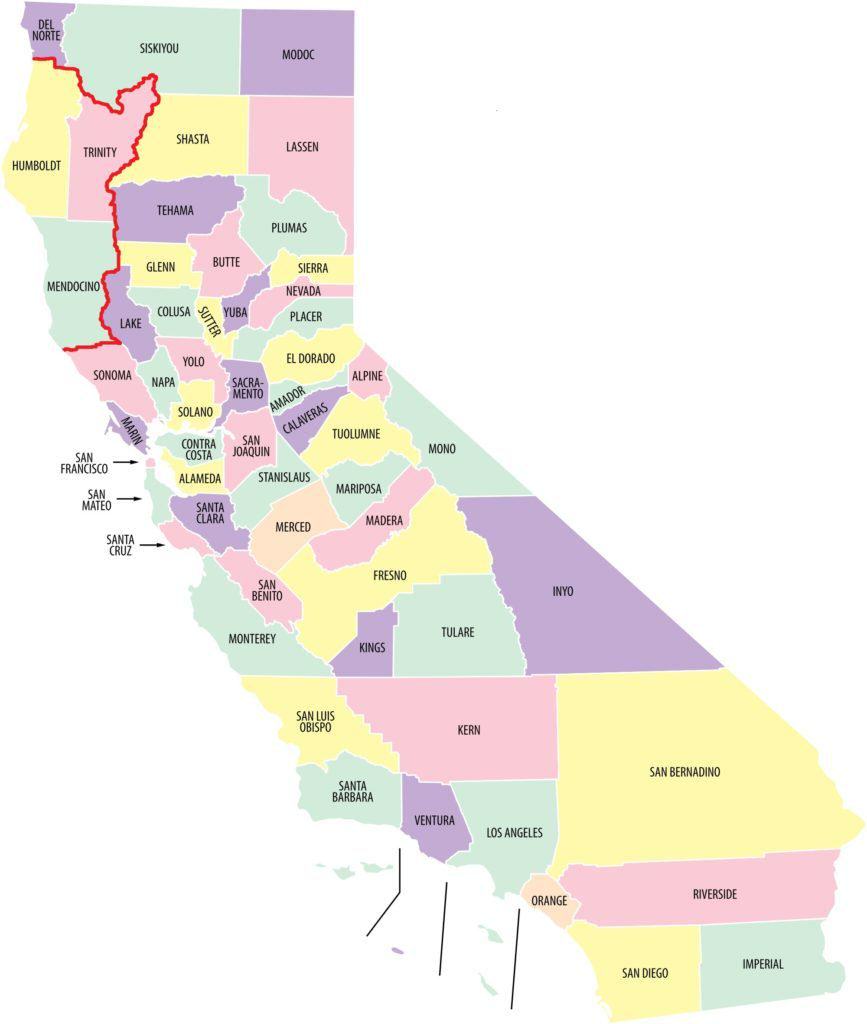
The Emerald Triangle refers to an area located on the northwest coast of the United States (northern California) and comprises Mendocino, Humboldt, and Trinity counties. To delve into the origins and traditions of cannabis cultivation in this region, we must go back to the 60s, during the Summer of Love in San Francisco. During the second half of the decade, and with the hippie counterculture as a backdrop, a good number of growers settled in this area in search of a place that would meet the ideal conditions for the outdoor cultivation of cannabis, namely isolation and a privileged climate.
Since then, the Emerald Triangle has been one of the main sources of cannabis supply to California. As of 1996, and after the approval of California’s Proposition 215 for medical cannabis, the production in these three counties shot up due to the increase in demand, reaffirming the Emerald Triangle as one of the main producing areas of the country.
Map of California with the Emerald Triangle outlined in red
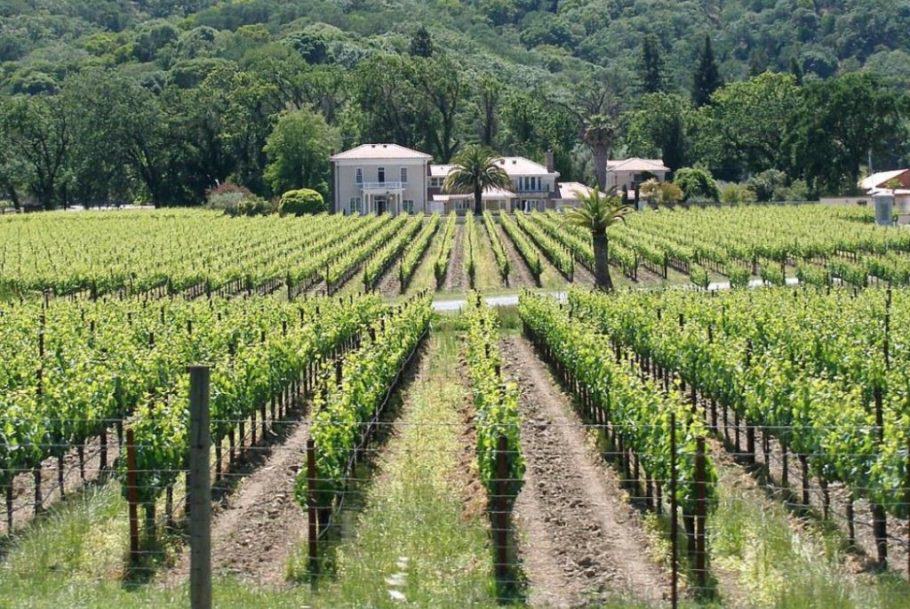
This region is often referred to as the Napa Valley (famous for its vineyards and the quality of its wine) or the Silicon Valley of cannabis, given the large proportion of the population devoted directly or indirectly to the cultivation of this plant, and also to the incredible quality of its produce, be it flowers or cannabis seeds. As we have said, this area has a series of characteristics that make it ideal for this activity: the population is scarce and widely dispersed, with large tracts of unpopulated land.
In addition, it enjoys an ideal climatology for growing cannabis, with great solar exposure, absence of strong winds, an excellent and fertile soil, and optimal temperatures. All this means that the cultivation and breeding of this plant has become, without doubt, one of the main and most profitable activities in this region, with excellent varieties of cannabis developed by local breeders.
In fact, it is estimated that this area, which includes the three counties, produces more cannabis than anywhere else in the country, and it has been speculated that it could be one of the most important production areas worldwide. Besides the high number of growers living there, every autumn, hundreds of people come to the Emerald Triangle looking for work harvesting cannabis; these are mostly itinerant trimmers, known as trimmigrants. However, this green rush is not limited to these three counties; indeed, it’s increasingly common to find trimmers looking for jobs in other neighbouring counties such as Sonoma or the aforementioned Napa.
The cultivation of wine grapes is also popular in the valleys and hills of the Emerald Triangle
All classes of people arrive constantly in the Emerald Triangle: backpackers, trimmers, growers, breeders, specialists in resin extractions… anyone who feels an affinity for some aspect of the plant will be at home in this area like. Not without reason, the profits that can be obtained, in particular for those who grow outdoors and don’t have to pay expensive electricity bills, are an incentive that can be difficult to turn down.
So the cannabis culture and industry grow ceaselessly in these three counties where the love for the plant has, for decades, been well-rooted in many families, many boasting third-generation growers. According to a 2014 report, cannabis was already turning over more money than traditional wine production, and there is now talk of creating a series of Denominations of Origin to distinguish the flowers grown in the different areas of the Triangle.
Although until recently the locations of the crops were chosen more for their capacity to keep crops hidden rather than on the quality of the soil and the microclimate, now thanks to the legalisation of cannabis, farmers are beginning to exploit the sites that are theoretically the best suited to cultivating cannabis: Mattole Valley (Humboldt), Bell Springs/Spyrock (Mendocino), Hayfork Valley (Trinity) or Mid Klamath (Humboldt and Trinity) are some of these areas.
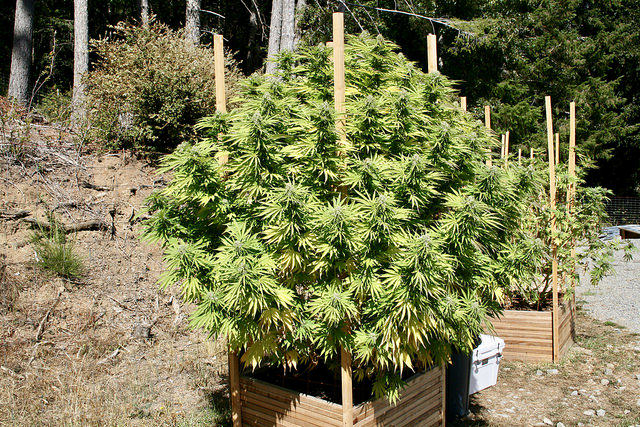
A beautiful cannabis plant flowering in the Emerald Triangle (Photo: Brian Shamblen)
Past, present & future of the Emerald Triangle
The area saw a significant increase in population several decades ago. Many remote places were populated by young people who in the decades of the 60?s and 70?s wanted to return to the land to escape the social unrest of the time (for example, the Vietnam War) and have a more sustainable and ecological lifestyle. Groups like the Diggers, a community of activists from the Haight-Ashbury neighbourhood of San Francisco, were pioneers of cannabis cultivation in this area, followed by hundreds of young (and not so young) folk who simply looked for a different way of life.
Today, many of these activists who moved to the Emerald Triangle in the 1960s are still cultivating, as are their children and, in many cases, their grandchildren. The cultivation of cannabis in this area is already something of a tradition for the new generations, who view it as one of the daily activities carried out by local people to obtain economic sustenance, as well as the hundreds of people who continue to arrive at the end of each summer to work on the harvest. In addition, January 1, 2018, saw the legalization of the adult use of marijuana in California, which will allow many more growers and users to “come out of the closet.”
But what is the future of the Emerald Triangle among the growing wave of legalisation that more and more states in the US are experiencing? Will it hold its reputation as the largest cannabis producer in the country? The fact that growers in many other areas can carry out their activity freely and professionally could slightly demystify the products from the Triangle, although tradition, soil, climate, and the knowledge and experience of the nearly 20,000 growers in these three counties will surely mean their produce will continue to be considered among the best in the world.
The spectacular Mendocino Skunk from Paradise Seeds
Cannabis varieties originating in the Emerald Triangle
The counties of Mendocino, Humboldt, and Trinity are not only renowned for the quality of their herb, but also for the cannabis cultivars that have been created in this beautiful corner of the world. Here are just a few of them:
All that’s left is for us to encourage you to try some of these excellent genetics and, if you can afford it, choose the Emerald Triangle for your next holiday…or go and work for a local grower! You won’t be disappointed, we’re certain of it!
In recent years, cannabis resin extractions have gained prominence in the cannabis scene. From traditional hashish to innovations like BHO, live resin, and rosin, these products offer intense and varied experiences, prioritizing purity, potency, and flavor.
With increasing sophistication in both extraction methods and consumption devices, such as rigs, bubblers, and concentrate vaporizers, the world of dabs has won over veteran users and curious newcomers alike. Concentrate culture has become a movement, with its own language, rituals, and, of course, its own day on the calendar. Today we’ll tell you more about this important date on the cannabis calendar.
Spectacular resin concentrate ready to dab
710 or July 10: The day of the concentrates
Although less well-known than the iconic 420, also known as World Marijuana Day, July 10, or 710, has become a key date for the cannabis community. The explanation is ingenious: flipping the number 710 over forms the word “OIL,” a direct reference to the oils and extracts that are the centerpieces of this celebration, such as BHO and Rosin. Thus, both July 10 (10/7) and 7:10 (whether AM or PM) have become symbols of this passion for dabbing concentrates, a date and time where the most fanatical fans pay tribute with a good dab (or several).
[productes tipus=”fitxa” cerca=”prensas de rosin”]
The origin of this holiday dates back to the underground cannabis scene in the United States, where concentrates began gaining popularity in the 2010s. Some attribute the term to internet forums and digital communities, where the 710 began to be used as a knowing nod among dabbing enthusiasts. Since then, July 10th has been celebrated as a day to celebrate excellence in extraction, the creativity of producers, and the evolution of consumption.
According to what we read on the internet, the first to use it was the rapper Taskrok, from the group Task and Linus, also known for creating an ode to BHO with their song “Boil the oil”, thus demonstrating his passion for resin extractions and definitively making the expression “710” fashionable to refer to this whole movement.
High-quality resin extraction (Image: Andres Rodriguez – Flickr)
Activities, events, and special offers for the cannabis industry on July 10th
In the United States, 710 is celebrated in style with fairs, extraction competitions, gatherings between growers, tasters, and concentrate producers, and launches of limited-edition cannabis derivatives. Events like the 710 Degree Cup in Arizona or the Camp Sessions-themed festivals in Oregon are just a few examples of how this celebration gains followers year after year.
Brands and dispensaries also take advantage of the opportunity to offer discounts, combos, and new products like wax, shatter, crumble, and sauce. It’s an ideal opportunity to try new genetics, compare textures, flavors, and aromas, and discover the work of the best artisanal extractors. It’s also a great opportunity to discover the most anticipated new extraction techniques and consumption methods, with new dabbers, electric nails, bubblers, vaporizers, rosin accessories, and everything related to extracts and their consumption.
In Spain, although the celebration is more low-key, some cannabis associations and social clubs organize dabbing sessions, extraction competitions, and educational activities on concentrate safety and quality. Some online retailers also participate in special discounts on related products, such as Alchimia.
A multitude of textures can be achieved when making concentrates (Image: Andres Rodriguez – Flickr)
Concentrate strains: the new frontier of breeding
Not all cannabis strains perform equally well when it comes to making concentrates, either in terms of quality or quantity. Therefore, seed banks have begun developing genetics specifically geared toward maximizing resin and terpene production.
These extraction varieties, selected for their extremely high trichome density and unique aroma profiles, are ideal for obtaining high-quality extracts. Strains like Gorilla Glue, Sherbet, Tropicanna Cookies, and Banana Punch have become favorites for their performance in BHO, rosin, or live resin.
Don’t hesitate, choosing the right genetics can be the difference between a mediocre strain and one worthy of a competition. And in the 710 universe, that’s everything.
[productes tipus=”fitxa” tag=”88″ nfitxes=”3″]
As you can see, July 10, or 710, is more than just a date: it’s a statement of intent from a community that values innovation, quality, and respect for cannabis in its most concentrated form.
Whether you’re a rosin fanatic, a live resin enthusiast, or a lover of classic hash, 710 is your day to celebrate, share, and, why not, explore new flavors. Do it wisely, with good friends, and with a lot of passion.
CBD Extractions: Potency Without Paranoia, Liquid Gold for Wellness
Although July 10th is usually dominated by the most potent concentrates —those THC bombs that leave even the most seasoned cannabis users staring into space—not everything is high in the realm of extracts. There’s also room for subtlety, balance…and cannabidiol.
CBD-rich extracts are having their moment in the sun. Rosin, hash, distilled oils, and full-spectrum oils made from high-CBD strains offer relaxing effects without uncontrolled euphoria. They’re ideal for those seeking a functional experience without compromising the ritual and aromatic intensity of a high-quality resin.
The best part: by eliminating large amounts of THC, these extractions allow you to enjoy the benefits of cannabis without compromising mental clarity. In other words: relief and relaxation, but without the trip. What more could you ask for?
Are you interested in the world of cannabis and want to deepen your knowledge in this field? We have great news for you! The University of Barcelona (UB) launches a new edition of the Master’s Degree in cannabis together with CannabisHub, designed to offer comprehensive and quality training. This program has an outstanding cast of experts and personalities from the sector as teachers, guaranteeing a high-level education alongside some of the most famous people in this industry.
In this article, we will tell you everything you need to know about this innovative Master’s Degree, which without any doubt promises to be a reference in the academic and professional field of cannabis. Join us and discover all the details!
Thanks to this Master in Cannabis, getting a job in this sector will be much easier
Official studies on cannabis, a new reality
The possibility of pursuing higher education related to cannabis is excellent news for all those interested in this growing industry. This advancement not only validates the importance and potential of cannabis in various fields but also opens up a range of professional opportunities. From scientific research and medicine to agriculture, business, and legislation, the number of career opportunities and possible specializations is enormous.
With an online Master organized by CannabisHub and accredited by an institution as prestigious as the University of Barcelona (UB), and with several editions already finished, students can acquire specialized knowledge and position themselves at the forefront of a rapidly expanding sector. This advanced training is a crucial step for those seeking to contribute meaningfully and ethically to the development of cannabis globally and increase their chances of landing a job related to their passion. The future is bright for those who decide to embark on this educational adventure!
Who is the Master in Cannabis for?
The Master in Cannabis from the University of Barcelona and CannabisHub is designed for a wide variety of professional and academic profiles:
Agronomist consultants: Ideal for agronomy specialists who offer consulting or advisory services in the cultivation of cannabis or hemp. This master’s degree will allow you to expand your technical knowledge and skills in resource management and use advanced Artificial Intelligence tools to be at the forefront of technology.
Business professionals: If you work in a company related to the cultivation of cannabis, its processing, or derived products, this master’s degree will offer you a specific specialization in the cannabis market chain, helping you grow professionally and improve your particular skills.
Recent graduates: Those who have just obtained a degree in areas such as agronomy, business, digital marketing, business management, computing, communication, or advertising, will find in this Master an opportunity to specialize in a field that will enhance their employability and open new doors in the market labor.
Cannabis growers and entrepreneurs: If you have a company in the cannabis sector and are looking to take it to the next level, or if this is your idea for the future, this master’s degree will provide you with the necessary tools to improve the performance of your processes and generate greater business opportunities.
This program is designed to provide comprehensive and advanced training in the cannabis sector, adapting to the needs of various professional and academic profiles. We are sure that you will find a specific field that interests you and in which you can develop your professional activity in the future!
You’ll learn about advanced growing techniques from renowned growers
Online Master’s in Cannabis study program
These studies cover a variety of modules designed to provide comprehensive training in this emerging sector. Here we present a summary of the main points of the study program:
Introduction: This module offers an overview of cannabis, its history, and its evolution to become a plant of scientific, medicinal, and commercial interest. The botanical aspects and genetic diversity of the plant will be explored.
Legal: This module addresses the legal framework that regulates cannabis at the national and international levels. Current legislation, legal challenges, and future perspectives will be studied, preparing students to navigate a complex regulatory environment. Among others, you will have as teachers people of the caliber of Bernardo Soriano (Co-CEO and Founder at S&F Abogados), Òscar Parés (Deputy Director of ICEERS & CEO Clínica Synaptica) or Miguel Torres (Senior Counsel at Baker Tilly Abogados).
Cultivation: This module focuses on cannabis cultivation techniques, both indoors and outdoors. Sustainable practices, pest management, and yield optimization will be taught to ensure high-quality production. Some of the teachers in this field will be the famous Jorge Cervantes
(+40 years of experience, has published “The Cannabis Encyclopedia”), Diego Bertone (Independent Consultant on Industrial Hemp – Hemp Bio Soluciones), Philipp Matzneller (Senior Consultant & Co-Founder at Sostanza) or Ferran Aguer Ymbert (Commercial Technician in Agricamp SL).
Extraction: Here we delve into the extraction methods of active cannabis compounds, such as cannabinoids and terpenes. Traditional and modern techniques will be reviewed, and the importance of purity and safety in derived products will be discussed. These will be some of the professors who will teach these subjects: Genlizzie Garibay–Polita Pepper (PhD Social Anthropology and President and Co-Founder of the Cannativa Civil Association), Sergio González (Weedzard, Expert in cannabis cultivation and extraction), Javier Ruano (Founder Medical Seeds, Founder of Medical Nets) or Xavier Nadal Roura
(Director at EthnoPhytoTech Research & Consulting SLU).
Medicinal: This module explores the medicinal applications of cannabis, including its therapeutic effects, dosage, and modes of administration. Clinical studies and use cases in the treatment of various medical conditions will be discussed. Some of the personalities who will participate in these subjects will be Dr. Yesid AR (Senior Medicinal Chemist), Adán de Salas Quiroga (Neurobiologist, researcher in medicinal cannabis – R&D consulting with cannabinoids), Sandra Carrillo (Professor, Medical Cannabis Research & Education – Co-Founder Medicann IPS Cannabis Clinics) or Robert Uhlenbrock
(Physician specialized in medical cannabis & endocannabinology).
More Modules: In addition to those mentioned, the program includes additional modules that cover topics such as the marketing and commercialization of cannabis products, ethics, and sustainability in the industry, and advanced scientific research.
This master’s degree is designed to provide students with an in-depth, multidisciplinary knowledge of cannabis, preparing them for a wide range of career opportunities in this expanding field. Without a doubt, an excellent opportunity to round out your resume not only with knowledge but with an official title that supports it.
Grow as an expert with CannabisHub and the University of Barcelona
AI and Cannabis: Specializing in the Future of the Industry
Who would have thought that growing cannabis and training language models could end up going hand in hand? Well, Artificial Intelligence has fully entered the cannabis industry, and everything indicates it’s here to stay. From optimizing crops to fine-tuning marketing strategies, AI—and specifically tools like ChatGPT—is revolutionizing every link in the chain.
Did you know that 25% of companies that have integrated AI into their processes have increased their revenue by up to 10%? Practical applications such as demand forecasting, product customization, or generating technical or legal content make everything flow faster, cheaper, and more accurately.
And you? Are you going to stand by and watch, or are you going to jump on the bandwagon? With a specialized Master’s degree that incorporates AI into its curriculum, you’ll not only understand the present of cannabis, but you’ll also position yourself as a professional of the future. Because yes, knowing how to use AI is no longer an eccentricity; it’s another strategic advantage in the world of work.
More information about the Master in Cannabis
If you want more information about this interesting academic year, you can visit the Master in Cannabis website by following the link. Keep in mind that this is the first university degree specializing in cannabis, so you will be one of the first to have access to these studies and, once completed, access the job market in this sector with the security of not only having the knowledge, strategies, and techniques necessary but to be able to present an official degree that supports it. Something that few people in this sector can boast of!
Remember that everything you are going to learn is 100% focused on the world of work, so if you want to dedicate yourself to the world of cannabis and regardless of your current knowledge, this Master will put the icing on the cake and will allow you to access positions that would be frankly difficult. to achieve without these official studies. Don’t hesitate and request information on their website, your future is in your hands!
During the last few years, and more especially after the 2020 pandemic, a new drug has become popular on the streets of Morocco and, to a lesser extent, Spain. This is Karkubi, also often called the “drug of the poor”, a potent mixture of substances with high psychoactive power that sees its number of users increase day by day.
Produced mainly in areas of Morocco and Algeria with raw materials imported from Spain, the preparation of this drug involves several clearly delimited stages: getting the drugs in Europe (mainly Spain), taking them to North Africa where the mixture is made, and finally distributing it throughout these same areas, including Spain. Today we tell you everything you need to know about this new substance.
Karkubi tablets can look different depending on the lab that made them (Image: Pixabay)
What exactly is Karkubi?
Karkubi is the name given to a mixture of antidepressant, anxiolytic, and antiepileptic drugs, majoun (a paste made with dried fruit, honey, and hashish) and which may also contain alcohol and/or glue. Although psychotropic drugs such as diazepam, lorazepam and tetrazepam were used years ago, today the most popular drugs when Karkubi are clonazepam (anxiolytic whose most popular trade names are Rivotril and Zatrix) and phenobarbital (antiepileptic, with trade name Gardenal).
The exact mixture and proportions are unknown, basically because it is prepared with the medicines that are available at that time, many times already expired. Once the tablets or capsules are prepared, they can be transported to their respective destinations quickly and without too many problems, certainly much less than if you want to transport hashish or fragrant cannabis flowers.
The “success” of this new drug basically lies in two fundamental aspects: on the one hand, the resulting mixture is really powerful and easy to use, while on the other the price is quite affordable, it is not for nothing that it is called the “drug of the poor”. It is not strange, then, that the first places where its use spread were in humble areas and neighborhoods, with low purchasing power and where there are not many alternatives for most young people.
Effects of Karkubi
The effects of this mixture of benzodiazepines (clonazepam and the like) with barbiturates such as phenobarbital and other substances such as hashish or alcohol are frankly overwhelming, greatly affecting the capabilities of the consumer. Among the main effects can be highlighted:
Hallucinations
Psychopathic behaviors
Increased aggressiveness
Amnesia (the events that occurred after taking it are not usually remembered)
A feeling of euphoria/power
Serious behavioral disturbances
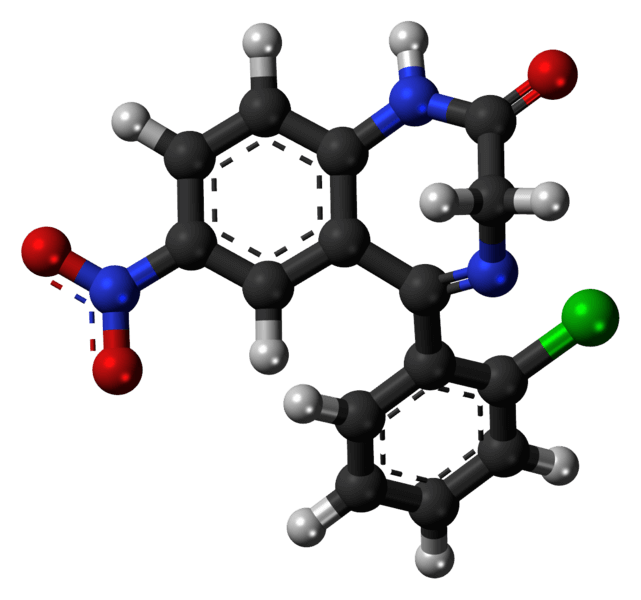
Chemical structure of clonazepam, the main base ingredient of Karkubi
However, these are just some of the noticeable symptoms after taking these tablets. Its use can lead to severe intoxication (which can lead to coma), in addition to facilitating accidents and violent/reckless behavior (and what is usually derived from it). As if that were not enough, developing a tolerance to this type of compound makes anesthetizing the subject – in case surgery is needed – really complicated.
Indeed, the habitual use of these substances can generate a strong tolerance to the active principles, which translates into what you surely already know: higher doses will be needed to achieve the same effects, which in turn continues to reinforce said tolerance. The snake bites his own tail. It is not uncommon, then, to find cases of serious addiction to the substance, with obvious withdrawal symptoms in case of not consuming it, in addition to psychiatric disorders derived from its prolonged consumption.
First uses in Morocco
Although in Spain it can be considered a relatively new drug, testimonies say that similar mixtures were already used in areas of Morocco in the 1970s. Since it was something new, powerful, and also in an easy and convenient format to use such as tablets, it quickly spread through the most disadvantaged neighborhoods in the country, especially in the North. Of course, its low price only helped its dispersal in these areas.
For decades this mixture was used exclusively in Morocco (maybe Algeria as well) either as Karkubi or by taking medicines on the one hand and hashish and/or alcohol on the other. The cases of addiction increased rapidly, with all the problems that this brings to society, especially when those affected are young adolescents. Can you imagine the risk prevention information about the drug he was taking that a teenager from a slum in Morocco had in the 1980s?
The Karkubi crosses the strait
At the beginning of the new millennium, the situation becomes even more worrying. Mafias that obtain medicines in Spain in various ways have already been established, from prescriptions to drug addicts to theft or false prescriptions. These medicines are transported to Ceuta and Melilla, from where they are taken to their destination, the clandestine laboratories scattered throughout Morocco and Algeria where the mixture is made and the Karkubi tablets are manufactured.
The waters of the Strait of Gibraltar have also become a transit area for the Karkubi (Photo: Gaspar Serrano)
Once manufactured, these tablets make the reverse trip and return to the streets of Morocco, Ceuta and Melilla. But they do not stop there, because during the first decade of the 2000s the first cases of possession and consumption began to be found in Spain. Undoubtedly, one of the things that most attracts attention about the “morality” of these mafias is their main objective: schools, institutes, and basically any place where young people with a few dirhams (or euros) in their pockets can meet.
Post-pandemic situation: The Karkubi boom
Since the start of the COVID-19 pandemic, the situation has only worsened, especially in Spain, where Karkubi has established itself as another option within the supply of illegal drugs that can be obtained on the black market. Today the Spanish-Moroccan mafias continue to operate on a larger scale than ever before, and the first laboratories dedicated to the manufacture of Karkubi tablets have already been found in Spain, thus being the first in Europe.
Since then, the number of seizures and arrests has not stopped growing, with a record operation carried out in January 2022 in which more than 500,000 pills were seized between Spain and Morocco. The flow of benzodiazepines and barbiturates arriving in Morocco from Spain and returning to this country in the form of Karkubi does not stop, something that has set off all the alarms both from the State security forces and from the pharmaceutical community.
You will no doubt continue to hear about the Karkubi for years to come, and we are very much afraid that it will not be good news. Given the brutal effect it causes on the user and the ease with which – at least until now – the mafias that produce and distribute it have operated, we have no doubt that, unfortunately, it seems that this substance is here to stay. We hope we are wrong!
 Login
Login