Login
LoginWhat Is GRC, and How AI Governance Is Transforming It in 2026

What Is GRC and How AI Governance Is Transforming It in 2026
The world of Governance, Risk, and Compliance (GRC) is evolving faster than ever. With enterprises adopting AI-powered tools across all departments, organisations are realising that effective AI governance is no longer optional. It is now a core pillar of modern GRC.
This article explains what GRC means today, how AI governance fits inside GRC, the global frameworks shaping AI adoption, the maturity models, the Responsible AI skills companies expect, and why mastering AI governance creates a competitive advantage for professionals entering or growing in GRC.
1. What Is GRC? (Simple Definition)
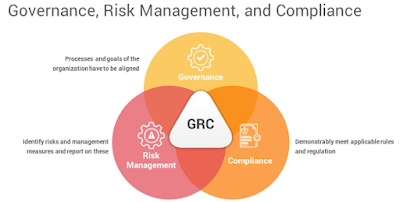
GRC stands for Governance, Risk, and Compliance. It is a structured approach that ensures an organization:
- Governance: Makes decisions responsibly and ethically
- Risk Management: Identifies, assesses, and reduces risks
- Compliance: Meets laws, standards, and regulatory requirements
In 2026, GRC is no longer just about audits or documentation. It is a strategic capability that helps companies scale, respond to cyber threats, maintain trust, and prevent legal problems.
Traditional GRC Pillars
- Policies & Governance Models
- Risk Management Frameworks
- Compliance Requirements
- Internal Controls & Testing
- Audit Management
- Reporting & Continuous Monitoring
2. Why AI Governance Is Becoming the Heart of GRC
AI systems now influence major business decisions across finance, HR, cybersecurity, fraud detection, privacy, and more. Because AI models can make mistakes, show bias, or act unpredictably, companies need clear processes to govern them.
AI Governance means:
- Ensuring AI is used ethically and responsibly
- Managing AI-specific risks (bias, drift, transparency)
- Protecting privacy and sensitive data
- Building explainable and trustworthy AI models
- Implementing continuous monitoring and audits
In simple words: AI Governance adds a new risk category → “AI Risk”.
3. Global AI Governance Standards and Frameworks
AI governance is becoming increasingly standardized. These are the most influential frameworks globally:
1. ISO/IEC 42001:2023 – AI Management System (AIMS)
The world’s first certifiable AI governance standard. It focuses on:
- AI risk management
- AI lifecycle controls
- Transparency and accountability
- Model and data governance
- Ethical requirements
2. NIST AI Risk Management Framework
Includes four core functions:
- Govern
- Map
- Measure
- Manage
3. EU AI Act
The strongest AI regulation, classifying AI into:
- Unacceptable risk
- High risk
- Limited risk
- Minimal risk
4. OECD AI Principles
Focus on fairness, human-centered design, transparency, and accountability.
5. India’s Emerging AI Governance Approach
India is steadily moving toward Responsible AI policies aligned with global frameworks.
4. AI Governance Adoption Approach
Organizations follow a structured approach when integrating AI governance:
- Establish governance structure: AI committees, ethics boards
- Identify AI use cases: especially high-risk systems
- Perform AI risk assessments: data, model, fairness, privacy
- Implement Responsible AI controls: explainability, bias checks
- Continuous monitoring: real-time model behavior tracking
- Compliance alignment: ISO 42001, NIST, EU AI Act, DPDP
5. Responsible AI Training – A Mandatory Skill
Companies now require employees to complete:
- Responsible AI training
- Bias detection & prevention courses
- AI risk assessment workshops
- Privacy & data protection training
This makes AI safer, fair, and accountable—and increases the value of GRC professionals.
6. AI Governance Maturity Assessment
Organizations measure their AI readiness through the following levels:
- Level 1 – Initial: No structure; ad-hoc AI use
- Level 2 – Repeatable: Basic AI policies
- Level 3 – Defined: Governance framework established
- Level 4 – Managed: Formal monitoring and AI audits
- Level 5 – Optimized: Fully integrated AI governance
Most organizations in 2026 fall between Level 2 and 3.
7. Why AI Governance Matters for Your GRC Career
AI governance is the fastest-growing discipline within GRC. Here’s why:
- New AI regulations require expert interpreters
- AI introduces new risk categories
- AI audits are becoming mandatory
- There is a huge skill gap in the industry
- AI governance intersects with all GRC functions
Learning AI governance immediately boosts long-term career value.
8. Key Takeaways
- AI governance is transforming modern GRC
- ISO 42001 and NIST are leading global frameworks
- Responsible AI is now a requirement
- AI maturity models help organizations evolve
- Professionals with AI governance knowledge are in high demand
FAQs