❌

Reading view

There are new articles available, click to refresh the page.

Sabudana Ladoo | Sago Laddu

Sabudana Ladoo is a quite easy to make sweet made using simple ingredients. This has mild sweet taste and soft texture that melts in your mouth when you bite. These ladoos are perfect for festival time or even when you feel to make something quick and different. The small pearls of sago gives a light crunch and coconut adds nice flavor to it.
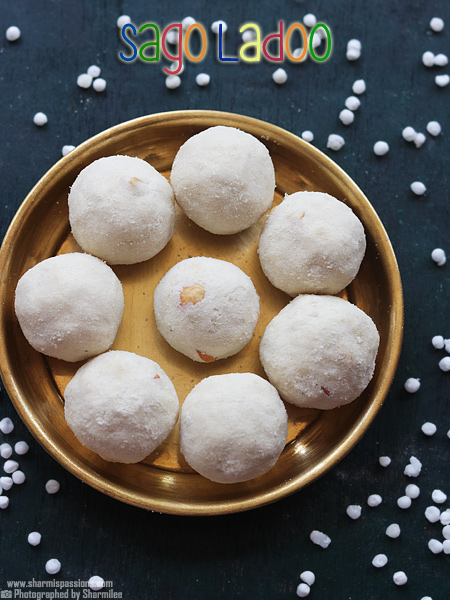
sabudana ladoo served

This is a lovely sweet to try when you run out of rice flour or regular ingredients for other ladoos. It takes less time and gives good quantity also. I like how ghee binds everything well and makes the ladoos smell so good. Each bite feels light, rich and full of flavor. You can make them easily in small batch too.

[feast_advanced_jump_to]

About Sabudana Ladoo

Sabudana Ladoo or Sago Laddu is a traditional Indian sweet but not very common compared to other ladoos. It is made by dry roasting sago till puffed and grinding it to powder. Then sugar, coconut and fried cashews are added along with melted ghee to form soft balls.

This ladoo has a nice aroma from roasted sago and ghee. The coconut in this recipe gives body and mild taste that balance the sweetness. Also cashews adds crunch and cardamom brings traditional smell. The best part is it stays soft even after few days because ghee keeps it moist. It is light and not very heavy to eat, so perfect for small snack or treat.

You can use desiccated or fresh coconut, anything you have at home works fine. Desiccated coconut gives longer shelf life while fresh ones gives little more flavor. It is important to roast sago in low flame patiently else it will remain hard inside. Once powdered and mixed, shaping ladoos is very easy.

I usually make this when I want something quick during festive season. I like to make small ladoos and serve with tea or just after meal. The texture is so unique from other sweets and my family also likes the mild taste. It stays good for few days so I keep few in jar always.
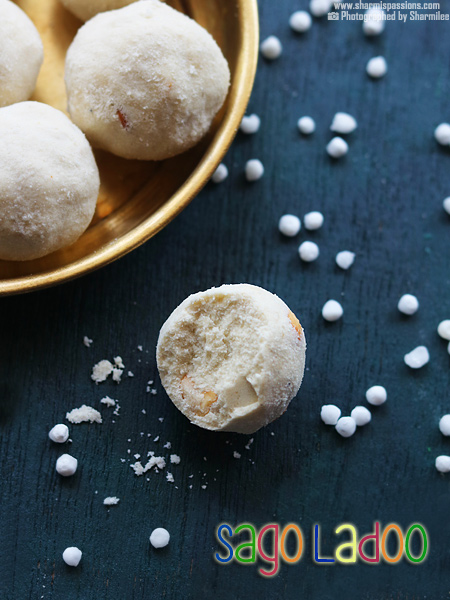
sabudana ladoo served

Sabudana Ladoo Ingredients

  • Sabudana (Sago) - I added white sago, it turns crisp when roasted nicely. It gives light crunch and acts as main base for the ladoo. You can use small size sago so it roasts even without getting burnt.
  • Sugar - I used normal white sugar and made it into fine powder for smooth texture. It gives mild sweetness and helps to bind all things together.
  • Cardamom - I used one cardamom pod for light aroma. You can use cardamom powder also if you already have at home.
  • Cashews - I fried few broken cashews in ghee and mixed. It gives crunchy bite and rich taste. You can add raisins or almonds too if you like some mix texture.
  • Ghee - I melted ghee to bind the ladoo and make it shiny. Just add little by little while mixing so that the texture stays soft and not oily.
  • Coconut - I added desiccated coconut for nice flavor and light aroma. You can also use fresh grated coconut if you like more rich taste and soft feel.

Why This Recipe Works

  • This recipe is very easy and use few ingredients which are mostly available.
  • Sago gives nice crisp bite and light nutty flavor after roasting.
  • It does not need any sugar syrup or tricky cooking step.
  • Ghee make the ladoos soft, aromatic and give rich taste.
  • It stay fresh for many days and perfect during festival or for quick sweet craving.

Similar Recipes

How to make Sabudana Ladoo Step by Step

1.Dry roast sago in low flame.Roast until it becomes golden and puffs up a bit, it will take at least 20 minutes. You can see a closer look at this.
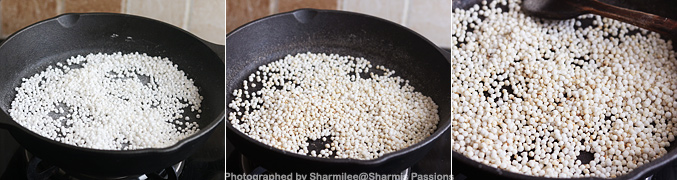
how to make sabudana ladoo step1

2.Cool down then transfer to a mixer jar. Powder it and transfer to a mixing bowl. Now add sugar and cardamom.
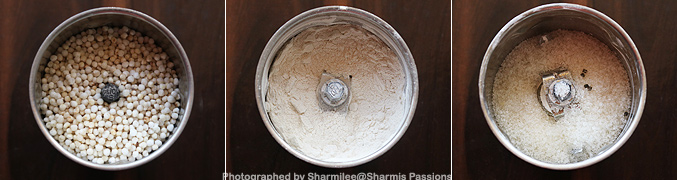
how to make sabudana ladoo step2

3.Powder it fine, transfer to mixing bowl, add desiccated coconut. Now add a teaspoon of ghee and fry broken cashews until golden brown, transfer to mixing bowl.
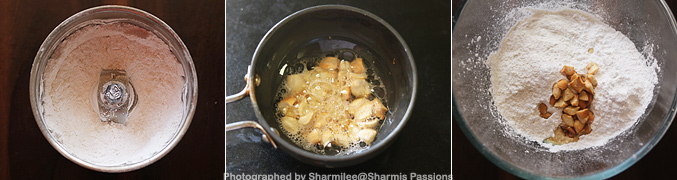
how to make sabudana ladoo step3

4.Mix well. Now add ghee little by little and keep mixing.
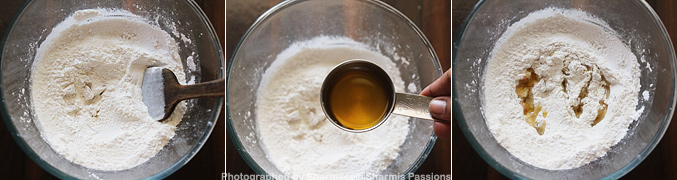
how to make sabudana ladoo step4

5.Mix it well with your hands, break the lumps and keep mixing. Start rolling balls. If you press like this.
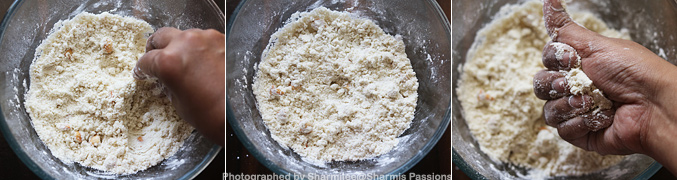
how to make sabudana ladoo step5

6.it should hold together without falling. This is the right consistency. Form balls by holding tight. Shape all the ladoos and arrange it in a plate. Set aside for sometime then store in a clean container.
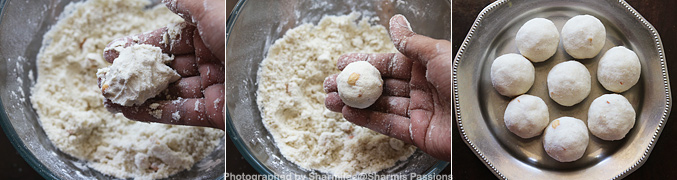
how to make sabudana ladoo step6

Keeps well for a week in room temperature itself.
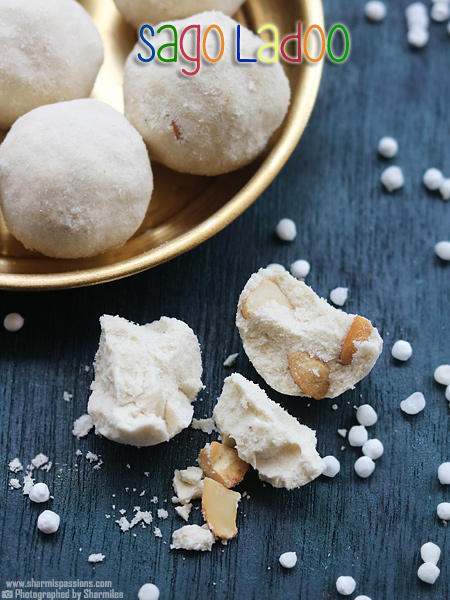
sabudana ladoo served

Expert Tips

  • Roast sago - I have roasted sago in low flame till it puffed slightly. This step is important else it will stay hard after grinding.
  • Add ghee - I usually add melted ghee little by little while mixing. If you add all together it becomes too greasy.
  • Powder fine - I have powdered sago and sugar separately to make it smooth. Coarse powder makes ladoo break easily.
  • Mix by hand - I prefer mixing with hands to feel the texture and break any lumps before shaping ladoos.
  • Shape while warm - I have noticed shaping becomes easier when mixture still little warm. Once it cools too much, it becomes dry.

Serving and Storage

Serve Sabudana Ladoo as sweet snack or after meal dessert. It goes well with a cup of tea also. Store the ladoos in airtight jar at room temperature. It stays good for about a week. If you are using fresh coconut, keep in fridge and use within 3 to 4 days.

FAQS

1.Can I use nylon sago?

No, I will not suggest nylon type. Use white regular sago as it roasts well and gives right texture.

2.Why my ladoos not holding shape?

It means mixture needs little more ghee. Add few drops warm ghee and try shaping again.

3.Can I use jaggery?

Yes, you can but melt and strain it before adding. The taste will change slightly.

4.Can I skip coconut?

Yes, you can skip or reduce it. Ladoo will still come good but flavor will be less rich.

5.How long it stays good?

If stored in dry container it stays good for one week. If using fresh coconut keep refrigerated and use soon.
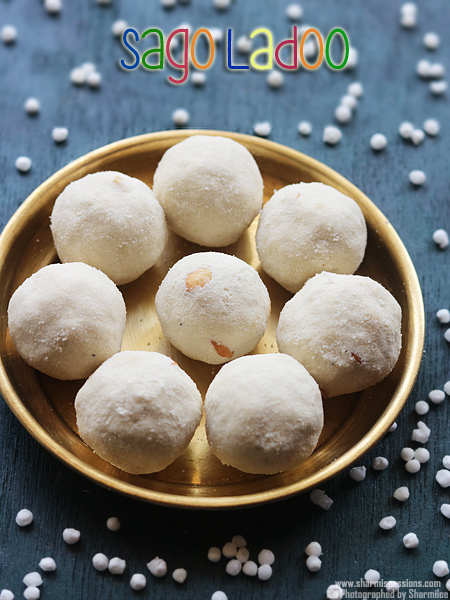
sabudana ladoo served

If you have any more questions about this Sabudana Ladoo Recipe do mail me at sharmispassions@gmail.com. In addition, follow me onΒ Instagram,Β Facebook,Β PinterestΒ ,YoutubeΒ andΒ TwitterΒ .

Tried this Sabudana Ladoo Recipe? Do let me know how you liked it. Also tag us on Instagram @sharmispassions and hash tag it on #sharmispassions.

πŸ“– Recipe Card

30163949452 859434f729 o
Print

Sabudana Ladoo Recipe | Sago Laddu Recipe

Sabudana Ladoo is a quite easy to make sweet made using simple ingredients. This has mild sweet taste and soft texture that melts in your mouth when you bite. These ladoos are perfect for festival time or even when you feel to make something quick and different. The small pearls of sago gives a light crunch and coconut adds nice flavor to it.
Course Snack, sweet
Cuisine Indian
Keyword 30 mins recipes, diwali dishes, diwali food, diwali mithai, diwali recipes, diwali sweets, diwali sweets recipes, easy diwali recipes, laddu, ladoo recipes, sabudana recipes, sago recipes, sweet recipes, virtual diwali party
Prep Time 10 minutes
Cook Time 20 minutes
Total Time 30 minutes
Servings 10 ladoos
Calories 81kcal
Author Sharmilee J

Ingredients

  • Β½ cup sabudana
  • β…› cup sugar
  • 1 no cardamom
  • 8 nos cashews broken
  • ΒΌ cup melted ghee
  • Β½ cup desiccated / fresh coconut

Instructions

  • Dry roast sago in low flame. Roast until it becomes golden and puffs up a bit, it will take at least 20 mins.
  • Cool down then transfer to a mixer jar. Powder it and transfer to a mixing bowl.
  • Now add sugar and cardamom.
  • Powder it fine, transfer to mixing bowl. Add dessicated coconut
  • Now add a teaspoon of ghee and fry broken cashews until golden brown, transfer to mixing bowl.
  • Mix well. Now add ghee little by little and keep mixing.
  • Mix it well with your hands, break the lumps and keep mixing. Start rolling balls.
  • Form balls by holding tight. Shape all the ladoos and arrange it in a plate. Set aside for sometime then store in a clean container.
  • Sago Laddu keeps well for a week in room temperature itself.

Notes

  • Roast sago - I have roasted sago in low flame till it puffed slightly. This step is important else it will stay hard after grinding.
  • Add ghee - I usually add melted ghee little by little while mixing. If you add all together it becomes too greasy.
  • Powder fine - I have powdered sago and sugar separately to make it smooth. Coarse powder makes ladoo break easily.
  • Mix by hand - I prefer mixing with hands to feel the texture and break any lumps before shaping ladoos.
  • Shape while warm - I have noticed shaping becomes easier when mixture still little warm. Once it cools too much, it becomes dry.

Nutrition

Serving: 25g | Calories: 81kcal | Carbohydrates: 10g | Protein: 0.2g | Fat: 5g | Saturated Fat: 3g | Polyunsaturated Fat: 0.2g | Monounsaturated Fat: 1g | Cholesterol: 12mg | Sodium: 0.3mg | Potassium: 7mg | Fiber: 0.1g | Sugar: 3g | Vitamin C: 0.03mg | Calcium: 2mg | Iron: 0.2mg

The post Sabudana Ladoo | Sago Laddu appeared first on Sharmis Passions.
Sago Murukku | Javvarisi Murukku

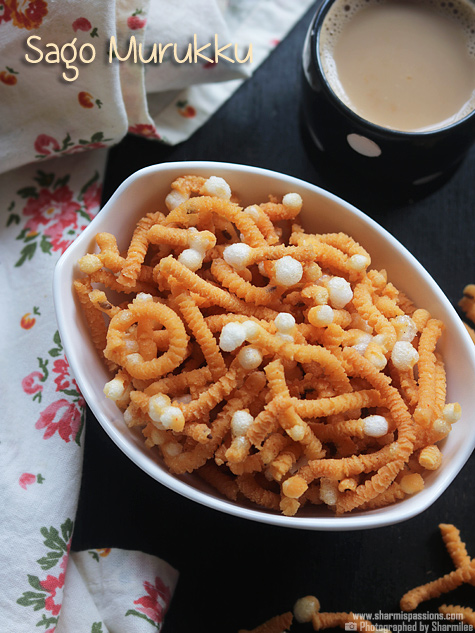
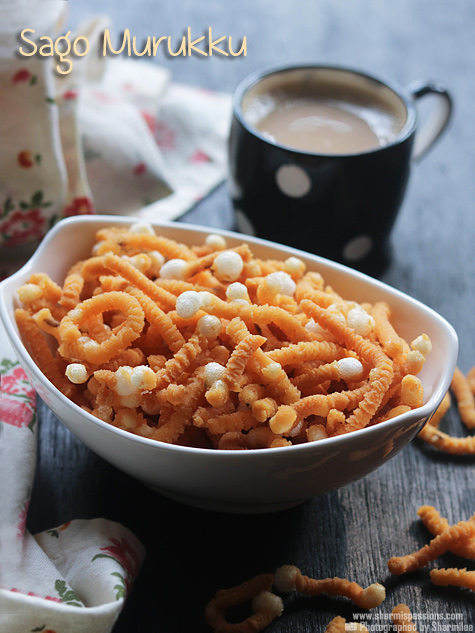
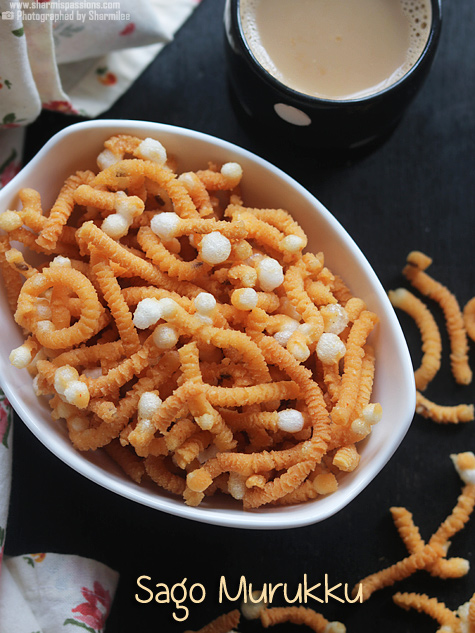
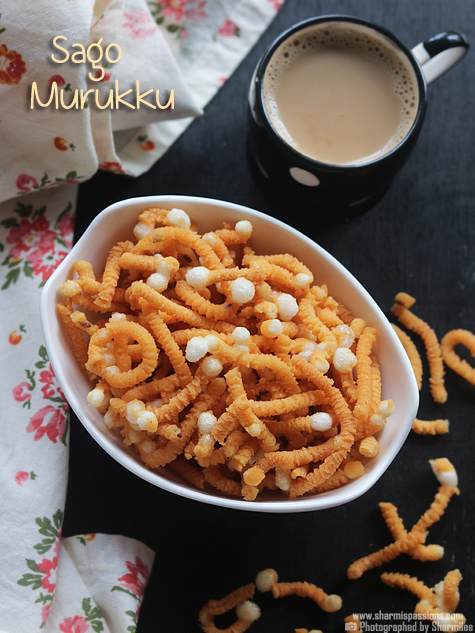
Sago Murukku is a crispy snack made with rice flour and sago pearls as main ingredients. It has that perfect crunch with mild spicy flavor which makes it a great tea time snack in the evening. The texture is bit different from regular murukku because of the soaked sago, it gives nice bubbly look and extra crisp feel when you bite.

sago murukku served with coffee

This murukku is very popular during festival time but also a nice choice for casual snacking anytime. The method is quite simple but the soaking of sago should be done properly else it may burst while frying. Once fried, the murukku turns golden and crunchy with that little taste of cumin and butter which make it so addictive.

[feast_advanced_jump_to]

About Sago Murukku

Sago Murukku, also called Javvarisi Murukku, is one interesting twist to the usual South Indian murukku recipe. Instead of using only rice flour, this version adds soaked sago pearls which give lovely crisp texture and airy bubbles on top when fried. The look itself is tempting and taste is even more.

The recipe mainly uses rice flour, sago, curd, and butter. The curd and soaked sago helps in binding the dough easily and adds slight tangy flavor too. Once deep-fried in medium hot oil, the murukku puffs up slightly, gets crunchy on the outside and remains light inside.

This version is perfect for those who are bored of making same old thenkuzhal or butter murukku every time. It is something new and flavorful with nice crispness. Even though soaking part takes little time, the actual mixing and frying are very simple and quick to do.

At my home, I usually make this in small batches during festive or when guests come. It stays good for many days and goes well with tea, coffee or even with rasam rice. Kids also love it because of its crunch and mild spicy taste.

sago murukku served with coffee

Sago Murukku Ingredients

  • Rice flour - I add homemade flour as it gives the best crisp texture. You can use store bought also, but make sure it is fine and smooth.
  • Sago (Javvarisi) - This is the main ingredient that gives the murukku its bubbly look and light crunchy feel. I always soak it well in curd, else it may pop while frying. The soaking part is really important.
  • Curd - I have used thick curd to soak the sago, it helps to soften it and gives mild tang taste too. If the curd is very thick, I add little water or sometimes use buttermilk instead.
  • Butter - I add a small piece of butter to give rich flavor and soft crispness. Too much butter will make dough break while pressing, so I always add carefully.
  • Red chilli powder - I used mild red chilli powder just for light spice and color. You can add more if you like little extra heat.
  • Cumin seeds - I like adding cumin seeds as it gives nice aroma and also helps for easy digestion. Sometimes I mix few sesame seeds also for change in flavor.
  • Hing (asafoetida) - I always add one small pinch of hing for flavor and also to avoid gas trouble after eating fried snacks. It adds nice subtle aroma.
  • Oil - I used refined oil for deep frying, it helps to makes the murukku more crispy and tasty. You can also use groundnut oil for better taste.

Similar Recipes

How to make Sago Murukku Step by Step

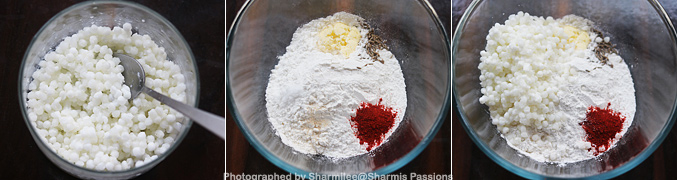
1.Measure and soak sago in curd at least for 6 hours. I soaked it overnight

how to make sago murukku step1

2.Morning when you see the sago pearls will be soft. Now in a mixing bowl - add rice flour, red chili powder, sago, jeera, butter, hing.

how to make sago murukku step2

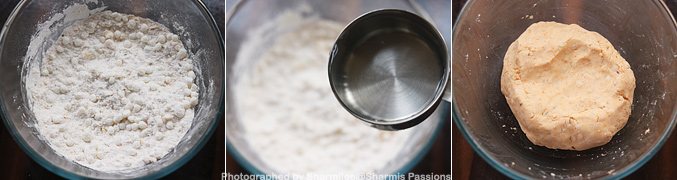
3.Mix it well with your hands, then add water little by little. Gather together to form a non sticky dough like this.

how to make sago murukku step3

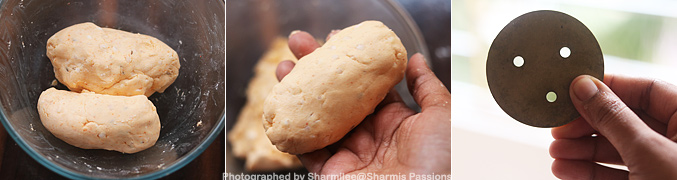
4.Shape it into a log and keep it ready. Fix your thenkuzhal murukku mold.

how to make sago murukku step4

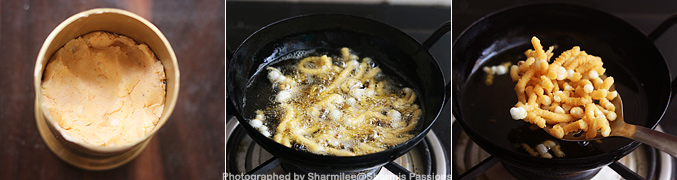
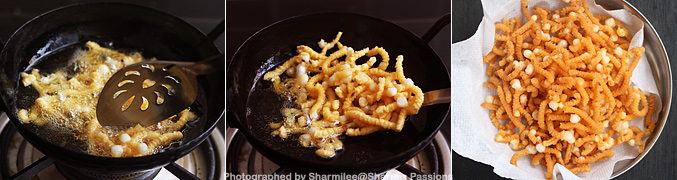
5.Now fill the murukku press with the dough, in parallel heat oil. When oil is hot, drop a pinch of batter to check it comes up immediately, then oil is at the correct temperature. Squeeze in a spread manner, do not crowd. Fry till golden and until shh sound ceases.

how to make sago murukku step5

6.t will stick together just break it while frying. You can break it after frying. Drain in tissue paper. Once it cools down, break it and set aside.

how to make sago murukku step6

Store in a dry jar.

sago murukku served with coffee

Expert Tips

  • Soaking sago- I always soak sago for minimum 6 hours or overnight. When I press it between fingers it should feel soft, else it may burst while frying.
  • Dough consistency - The dough should be smooth and soft. If it feels dry, I sprinkle few drops of water and knead again till it becomes even.
  • Oil temperature - I check the oil by dropping tiny piece of dough, it should come up slowly. If oil is too hot, murukku will turn brown fast and stay soft inside.
  • Shaping method - Because of the sago, the dough will not come perfectly in circles. So i just press directly into oil to make uthiri murukku, it comes more crunchy this way.
  • Storage - I always cool the murukku completely before storing. I keep it in airtight tin box and it stays crisp for about 10 days easily.

Serving and Storage

Serve this Sago Murukku along with evening tea or filter coffee as a light crunchy snack. It is also a nice addition to your festive snacks box to share with friends and family. Once cooled completely, transfer to clean airtight container or steel box. If kept away from moisture, it stays fresh and crispy up to 10-12 days easily.

FAQS

1.Can I skip curd and use only water?

Yes, but curd helps to soften the sago and gives slight flavor. Only water may make the murukku little hard in texture.

2.My sago is popping while frying, what to do?

That happens when sago is not soaked enough. Soak it for more hours till it turns soft when pressed.

3.Can I make in air fryer?

No, it will not give same texture as deep frying, it gives best crisp and taste for this murukku.

4.Can I use ghee?

You can use ghee also, but butter gives a lighter and flakier result with nice golden color.

5.Why my murukku is breaking while pressing?

It means the dough is too dry. Sprinkle little water, knead again till soft and then press gently.

sago murukku served with coffee

If you have any more questions about this Sago Murukku RecipeΒ do mail me at sharmispassions@gmail.com. In addition, follow me on Instagram,Β Facebook,Β PinterestΒ ,YoutubeΒ andΒ TwitterΒ .

Tried this Sago Murukku Recipe? Do let me know how you liked it. Also tag us on Instagram @sharmispassions and hash tag it on #sharmispassions.

πŸ“– Recipe Card

30284045920 218726727d o
Print

Sago Murukku | Javvarisi Murukku

Sago Murukku is a tasty, savoury snack made by frying a dough of powdered sago passed through murukku press. Sago Murukku is an alternate murukku to try for Diwali & other festivals. Sago Murukku translated as Javvarisi Murukku is a healthy snack compared to the packed foods.
Course Snack
Cuisine Indian
Keyword diwali dishes, diwali recipes, diwali snacks, diwali snacks recipes, easy diwali recipes, easy diwali snacks, Festival, fry, fry recipes, sago recipes, savoury recipes, snack recipes, virtual diwali party
Prep Time 15 minutes
Cook Time 30 minutes
Total Time 45 minutes
Servings 10 Murukku
Calories 87kcal
Author Sharmilee J

Ingredients

  • 1 cup rice flour
  • β…“ cup sago
  • ΒΌ cup curd
  • ΒΎ tablespoon butter
  • Β½ teaspoon red chilli powder
  • Β½ teaspoon cumin seeds
  • a tiny pinch hing
  • salt to taste
  • oil to deep fry

Instructions

  • Measure and soak sago in curd at least for 6 hrs. I soaked it overnight. Morning when you see the sago pearls will be soft.
  • Now in a mixing bowl - add rice flour, red chilli powder, sago, jeera, butter, hing.
  • Mix it well with your hands, then add water little by little. Gather together to form a non sticky dough.
  • Shape it into a log and keep it ready.
  • Fix your thenkuzhal murukku mould and fill the murukku press with the dough.
  • Now, in parallel heat oil. When oil is hot, drop a pinch of batter to check it comes up immediately, then oil is at the correct temperature. Squeeze in a spreaded manner, do not crowd.
  • Fry till golden and until shh sound ceases. It will stick together just break it while frying. You can break it after frying.
  • Drain in tissue paper. Once it cools down, break it and set aside.
  • Serve Sago Murukku with tea!

Notes

  • Do not overcook, it should golden.
  • As sago is more in this recipe, I recommend to make it as uthiri murukku as I don't think we can make circles with this recipe.
  • Soaking for more hours is required else sago may pop out so be at a safer distance while frying.
  • When you squeeze the dough will stick to each other, when it becomes crispy try to break with the ladle else after frying you can break it.
  • Regulate flame and cook, do not cook in high flame.
  • I used my thenkuzhal press to get this shape.
  • If you are making in larger quantity keep the dough closed to avoid from drying.
    If the dough is too dry sprinkle little water.

Nutrition

Serving: 25g | Calories: 87kcal | Carbohydrates: 17g | Protein: 1g | Fat: 1g | Saturated Fat: 1g | Polyunsaturated Fat: 0.1g | Monounsaturated Fat: 0.4g | Trans Fat: 0.03g | Cholesterol: 3mg | Sodium: 18mg | Potassium: 26mg | Fiber: 1g | Sugar: 0.3g | Vitamin A: 63IU | Vitamin C: 0.2mg | Calcium: 11mg | Iron: 0.1mg

The post Sago Murukku | Javvarisi Murukku appeared first on Sharmis Passions.
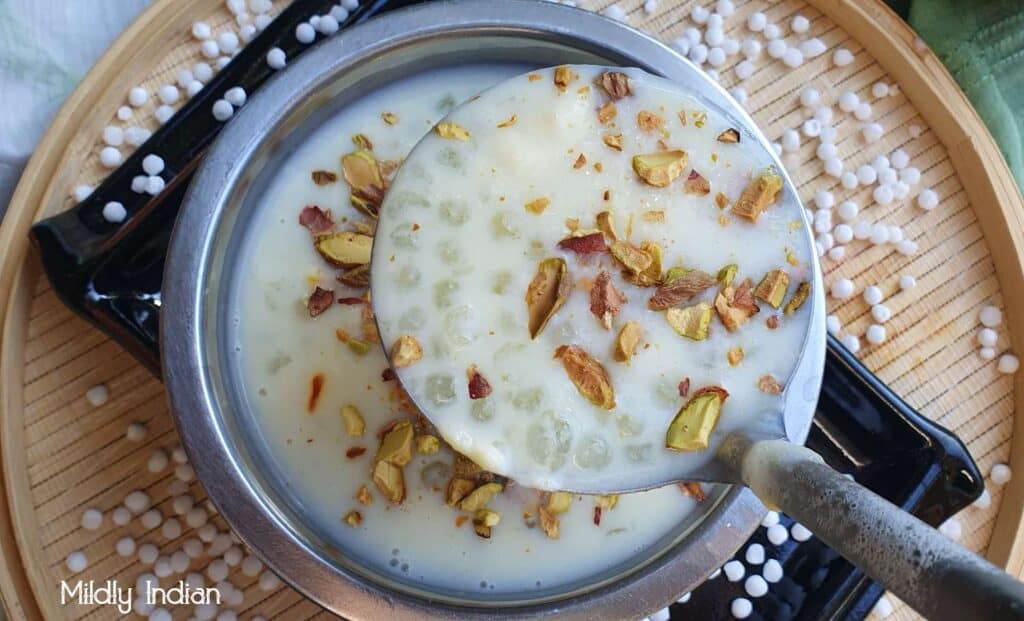
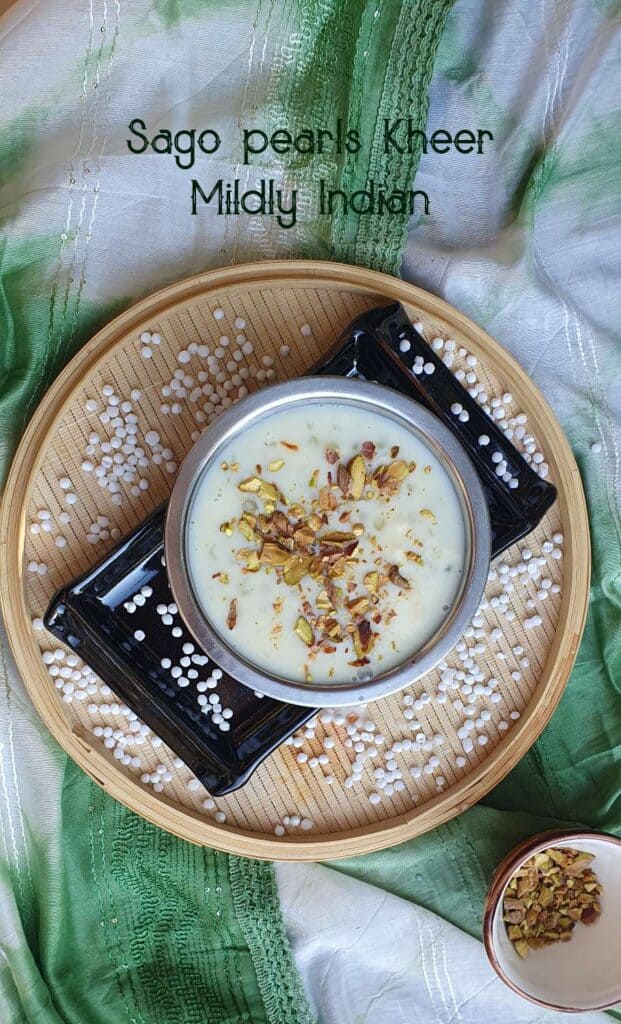
Sabudhana Kheer | Indian sago pearls dessert

Sabudhana kheer
The sabudhana kheer is literally tapioca pearls boiled in milk. Yet, it tastes simply divine in some households and mediocre in othersΒ  if you are curious like I was here are the best collated ideas to make the best tasting sabudhana kheer.

What is sabhudhana kheer?

Sabudhana kheer is a creamy milk basedΒ  dessert popular in India and Pakistan. The recipe uses tapioca pearls cooked in milk and is flavoured with nuts, seeds and saffron. Made during festivals like Holi, Shivrathri, Diwali and Ramzan the dessert is either served warm or chilled.
In the south of India, the same is served slightly more liquid and warm. This is javarisi payasam or sago payasam.
As you travel towards Asian countries, you will find very similar dessert versions of this sago kheer like the Ginataang bayabas we made from Filipino cuisine.

Ingredients to make sabhdhana kheer

Sago pearls:medium sized tapioca pearls are the ones I use for making sago kheer. Choose the ones that have a milky centre. This cooks better than the glassy ones.
Milk: full cream milk is best for the recipe as it gives the desired creaminess to the kheer. Since you will be cooking to reduce a fair bit of this milk, you can use evaporated milk combined with the full cream milk too. Skim milk does make a fairly decent kheer, but it doesn’t have the full bodied flavour. Among plant based milks, I prefer coconut milk or cashew milk to make this recipe.
Sugar: Regular sugar is often preferred to make this kheer. Caramel syrup, dates syrup or stevia are excellent replacements.
Saffron:the fragrance of he saffron in this kheer is delightful, so don’t skip. It doesn’t matter if you choose the long stamens or the short. The saffron infused milk slightly turns the colour of the kheer toΒ  creamy colour then white.
Cardamom: The cardamom fragrance in any kheer is just divine. Use the seeds of green cardamom is what you use. You can powder this with some sugar and store to stir into the kheer.
Nuts and seeds: Pistachios, almonds, melon seeds and cashews are the best for this recipe. Crush the almonds and pistachios to add to the kheer.
sabudhana kheer
Let’s make sabhdhana kheer
Boil the milk:Β to get the best results, slow cook and reduce 4 cups of milk to half the volume. Use a thick bottomed vessel and constant stirring. This ensures that the kheer has a creamy consistency.
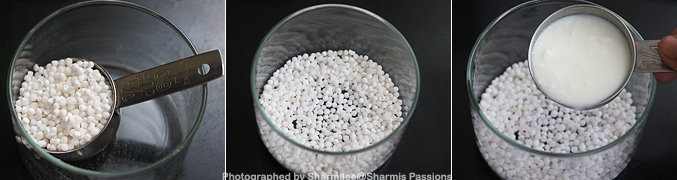
Soak the sago pearls: The sago pearls are a bit hard to start with. I prefer to soak them for 2 hours before cooking to reduce time on the stove. You can use hot water to soak them for half hour as well. The pearls when soaked will be soft and double in size.
Cool the pearls in milk: once soaked, cook on a slow heat. Once the water reduces, add the milk and slow cook till the tapioca pearls are cooked well. The center of the pearls will be glassy when cooked well.
Add the sugar: Once the sago is cooked in the milk remove from heat and add the sugar.
Add the aromatics and nuts: Stir in the cardamom powder and the crushed nuts. Mix well and the kheer is ready.

What are the best tips to make sabhdhana kheer better?

Sabudhana kheer is a very simple. However the most delicious sabudhana kheer recipes have a few little tweaks that elevate them.
  • Cooking down the milk: reducing the milk actually brings forth a creamy density. This flaours the tapicoa pearls really well.
  • Evaporated milk cuts down a fair bit of the cooking time. It also doesn’t take away from the flavour.
  • In certain recipes for the kheer you will find the addition of milk powder. This again increases the creaminess of the milk.
  • Soak the tapioca pearls: it is no fun to bite into a hard centered tapioca pearl. So ensure you wash and then soak the tapioca pearls for a couple of hours

Is jaggery suitable to be added to this kheer instead of sugar?

You can certainly use jaggery in the place of sugar to make this recipe. If using jaggery, do not add it like you do with sugar. Instead dissole the jaggery in a bit of warm water and make a syrup. oil the syrup and remove the impruitirs that skim on top. When the cooking process for the kheer is finished, add the jaggery syrup after you remove the kheer from the heat. This will ensure the kheer is not curdled.

Meal prep for this kheer

If serving chilled the kheer has a fantastic jelly like mouth feel. It stays God in the fridge for up to a week. If serving later,it is a good idea to make this kheer thinner as the tapioca pearls sit in the milk and swell a bit more.

Serving ideas for sabhudhana kheer

As said before, this kheer can be served warm or cold.
If serving warm: serving in small sized glasses topped with crushed nuts and a spoon to enjoy this dessert warm.
If serving cold: the traditional serving style is shallow bowls with a spoon. However you can make it into a parfait style using crushed nuts, chopped fruits, pieces of jelly etc layered with the chilled kheer. This is perfect for summer months. You can also add pieces of jilebi or jamun for the festive days to create fusion kheer dessert.

Can I make this kheer vegan?

If using coconut milk in place of regular milk you have made this kheer vegan easily. Since the coconut milk doesn’t curdle upon boiling it makes it easy to get this dessert creamy. You could try the same with oat milk too if you prefer.

Can I make this a sugar free dessert?

If you replace the sugar used in this recipe as stevia, monk fruit or aspartame, then you have a sugar free dessert. However, don’t add these to boil, rather make the kheer completely without sugar and then stir in the sugar free before serving. This ensure that the slight bitterness you feel with the sugar free is not accentuated.
Print

Sabudhana kheer

The sabudhana kheer is literally tapioca pearls boiled in milk. Yet, it tastes simply divine in some households and mediocre in othersΒ  if you are curious like I was here are the best collated ideas to make the best tasting sabudhana kheer.
Course Desserts
Cuisine gluten free, Indian
Keyword festival offerings, iftar recipes, Indian desserts, pot luck recipes
Prep Time 10 minutes
Cook Time 20 minutes
soaking time 2 hours
Total Time 2 hours 30 minutes
Servings 4 people

Equipment

  • deep pot
  • measuring cups and spoons

Ingredients

  • 1/2 cup tapioca pearls
  • 1 cup water
  • 4 cups milk
  • 1/4 tsp green cardamom powder
  • 1/4 cup Assorted nuts crushed

Instructions

  • Wash and soak the sago (tapioca pearls).
  • Once it is swollen and has doubled in size it is ready to cook.
  • Boil the milk and reduce to half the volume. Ensure you are contantly stirring and scraping the solids that accumulate on the sides.
  • Add the soaked tapioca pearls and water to a deep pot and bring to a slow boil
  • Half way through add the milk and let the sago boil till the center turns glassy of each pearl.
  • Don't miss to keep stirring at this stage as it can catch the bottom easily.
  • Stir in the sugar, cardamom powder and mix well.
  • Remove from heat and stir in the crushed nuts .
  • Once he sugar is dissolved the kheer is ready to be served.
Stay connected
We make sabudhana kheer for any festivals and sometimes just on a whim. It is that easy and provides a comforting feeling always.Β 
Hope you like making this recipe.
Pin this kheer for later.
Stay subscribed and see you in the next post.
sago pearls kheer
❌